
-
Van Put Shares A Flyfisher’s Revelations
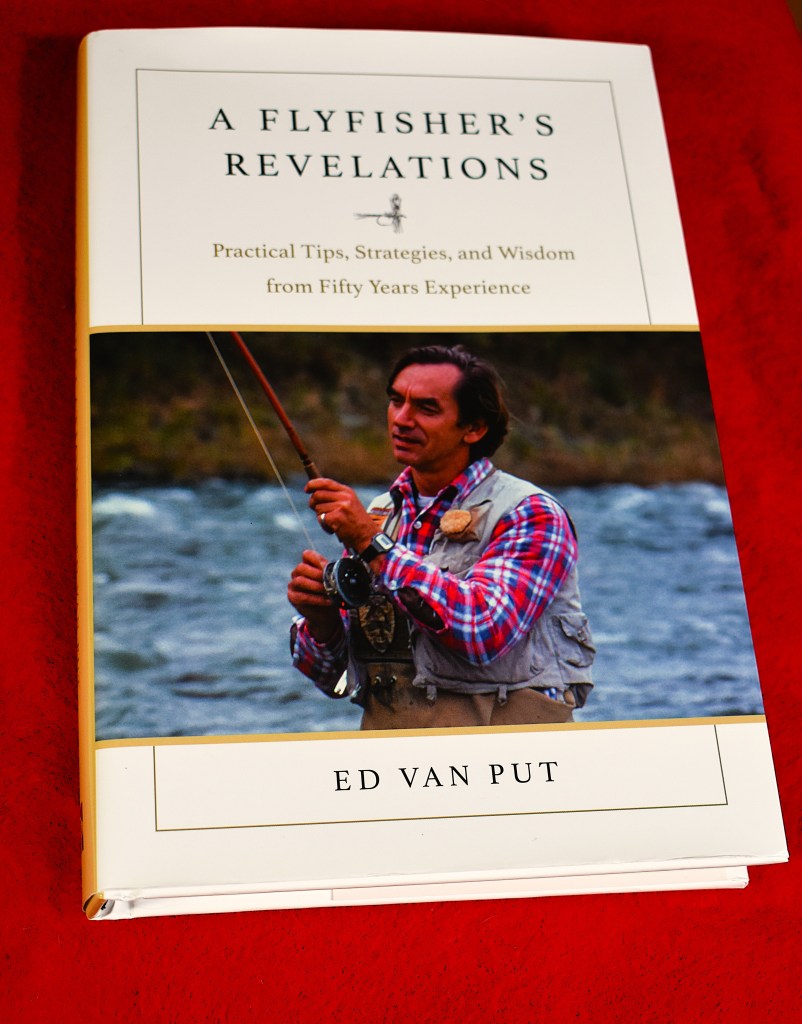
The name Ed Van Put is truly legendary in these Catskills and along the Delaware River. An angler of these rivers for sixty years, our region was saddened by his passing in December. As fellow members of the Catskill Fly Tyers Guild expressed our condolences and support for his wife Judy, she told us that he had reached a final goal, one that was most important to him, before his death. Thanks to Ed’s perseverance and the work and support of his family and friends, he has shared that goal with all of us.
“A Flyfisher’s Revelations” (ISBN: 9781510783331) will be released by Skyhorse Publishing on July 8th. Copies are available in Ed’s hometown of Livingston Manor, New York at the Catskill Fly Fishing Center and Museum.
As an author, Ed Van Put has contributed greatly to the history of our region. His previous works: The Beaverkill, Trout Fishing In The Catskills and The Remarkable Life of James Beecher represented a monumental amount of research driven by Ed’s love for the Catskills and their people. Revelations is the product of his love of trout fishing and his decades of time spent along Catskill rivers both as a remarkably effective angler and as a fisheries professional.
This is the book that many Ed Van Put fans asked for, an opportunity for him to share the knowledge acquired in his decades of work for New York State’s Department of Environmental Conservation as well as his fifty years spent studying and chasing the magic of trout and fly. Ed kept journals of his fishing, detailing the locations and conditions of all of his fishing days, and recording the flies used and the number, species and origins of the trout taken.
Part of the Van Put legend comes from the fact that he caught remarkable numbers of trout using a very small selection of flies. He was known as the champion of the Adams dry fly, catching seventy percent of the trout taken on a dry fly on that favorite pattern. To begin this book, Ed examined thirty years of his journals in detail to answer his own questions as to what made him so successful in catching trout, taking time to consider these memories and reevaluate the conclusions that shaped his angling techniques.
A Fly Fisher’s Revelations is a lovely read, full of the honesty, honor and humility of a true gentleman angler. Van Put appreciated the beauty and mystery of Nature and never tired of the magic of his immersion in the beauty of a Catskill trout stream. There are lessons to be learned here for each and every angler. They are offered gently, with the kindness and grace of a gentleman. There is no sales pitch, no insistence that this master’s way is the only way to catch a trout. Revelations is more like a quiet, friendly talk with a mentor, one willing to share his passion without any overbearing airs.
The Delaware River No comments on Van Put Shares A Flyfisher’s Revelations
-
A Modern Take on Tradition
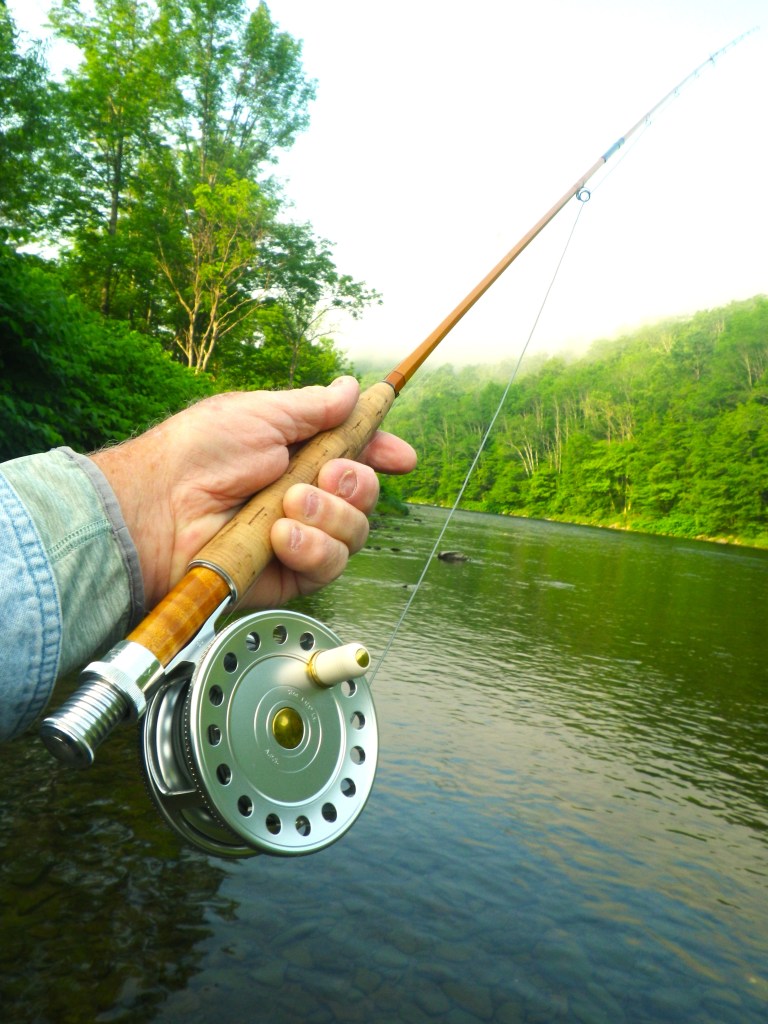
A Maxwell Leonard 50 DF bamboo fly rod wears a Trutta Perfetta fly reel designed and crafted by Vlad Rechenko of VR-Reels. Craftsmanship and inspired design will always beget classics!
What constitutes classic tackle? Are classics simply artifacts from the last century, or does that title connote something more?
The H.L. Leonard Rod Company did not create the first ever fly rod from split bamboo, but they are considered the fountainhead of classic bamboo rodmaking in America. Founder Hiram Leonard revolutionized the craft with his marvelous machine, the beveler, bringing a new precision to a hand craft industry. His innovations allowed the growth of his business, and he showed impressive judgement in assembling a cadre of talented craftsmen to make the rods his fame created a demand for. Leonard, Thomas, Edwards, Hawes and Payne comprise the pantheon of classic rodmakers, each eventually leading their own companies and partnerships to the top of the art.
Of all the heralded Leonard fly rods, the model 50 DF became their most revered and highest selling. It grew from the Catskill beginnings of dry fly fishing in America and today defines classic in bamboo trout rods. As dry fly fishing grew, the 50 DF was refined, its tapers modified to meet the demands of new generations of fly casters. Late in the company’s history, a rodmaker named Tom Maxwell came to Leonard to supervise their rod shop.
Maxwell was one of the “two Toms” who revitalized bamboo rodmaking after synthetic tackle had taken the lion’s share of the market. Maxwell and his brother-in-law partner Tom Dorsey called their venture Thomas & Thomas, and became known for uncompromising craftsmanship and gorgeous fishing instruments.
At Leonard, Tom Maxwell set about polishing the legendary name of H.L. Leonard and bringing their rods back to the epitome of the industry. He quickened tapers and rod actions, and set higher standards for rod finishing during his short tenure, modernizing the classic rods including the 50 DF. Last May, I acquired one of the 50 DF fly rods made during Tom Maxwell’s reign, and it is a powerful casting instrument, equal in performance potential to the highly touted graphite rods of it’s era yet offering the grace and control of traditional bamboo. It may be rightfully called a modern classic.
In early 2021, I learned of Vlad Rechenko and his company VR Design. A Ukranian aerospace engineer and fly angler, Vlad had made his mark in fly fishing by designing and machining amazingly beautiful and functional fly reels from titanium. He offered a new design for a traditional trout reel, the 3″ diameter Trutta Perfetta, machined from aluminum and thus priced in reach of most serious fly anglers. I ordered a reel that winter and paired it with a custom rod designed for me by Sweetgrass Rods. Enamored of the Perfetta’s quality and performance, I waited for Vlad to introduce a larger model for 5 and 6 weight lines and rods. Several weeks ago, I saw his announcement that the first small batch of 3-1/2″ Trutta Perfetta reels was available and I ordered one immediately. Thank you, Vlad for another modern classic!
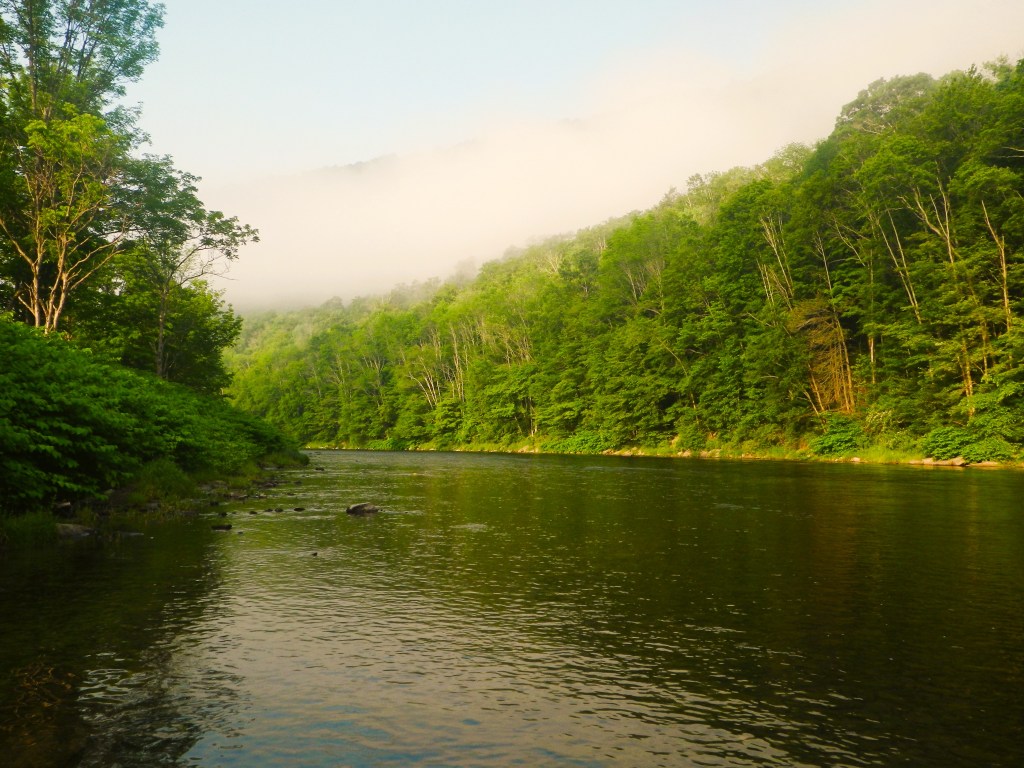
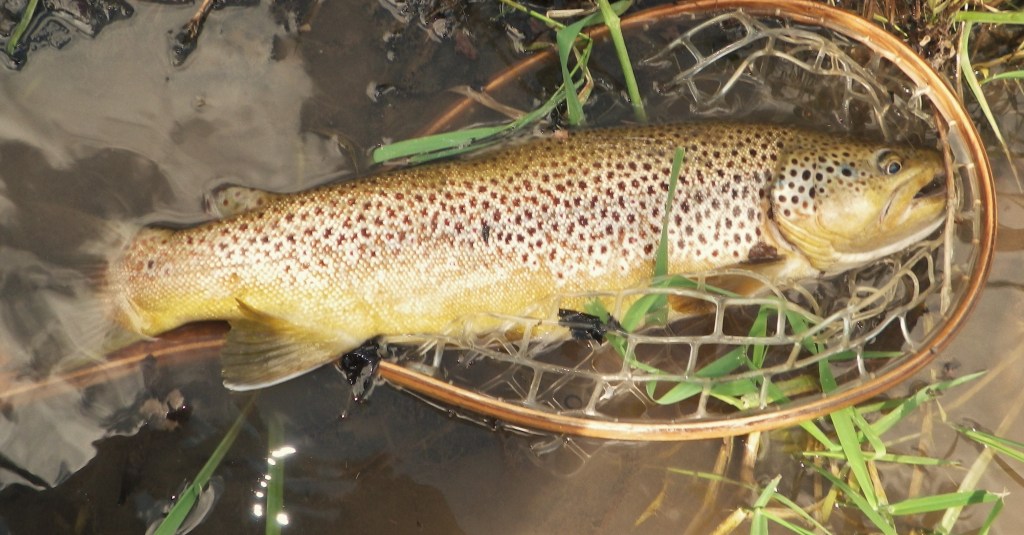
The breathless beauty of a June morning in the Catskills! Pairing these two amazing pieces of tackle was inevitable, and like my original Trutta and Sweetgrass, a beautiful Catskill June morning would be the scene. I found a rapid reach of river to meet the challenge of distance and control amid strong, gusty winds. The 50 DF laid my little size 16 olives gently upon the frothy currents despite the buffeting the Red Gods unleashed, and the Trutta Perfetta controlled the rushes of the big, wise brown trout in deep, fast, rocky water. Reel makers have fashioned spring and pawl drags for well more than a century, many allowing some adjustment. Rachenko has designed his own version, offering perfect resistance without need of adjustment. Perhaps the ball bearing smoothness of his design is responsible, or his asymmetrical pawl. Whatever it is, his reel is matchless for smoothness and control with light leaders and heavy trout!
Brown trout exceeding twenty inches have been scarce this season, with too many lost fishing days, and compromised hatches and water levels. I appreciated this one, a perfect foil to christen my new pairing of classic tackle!
-
Rising Water
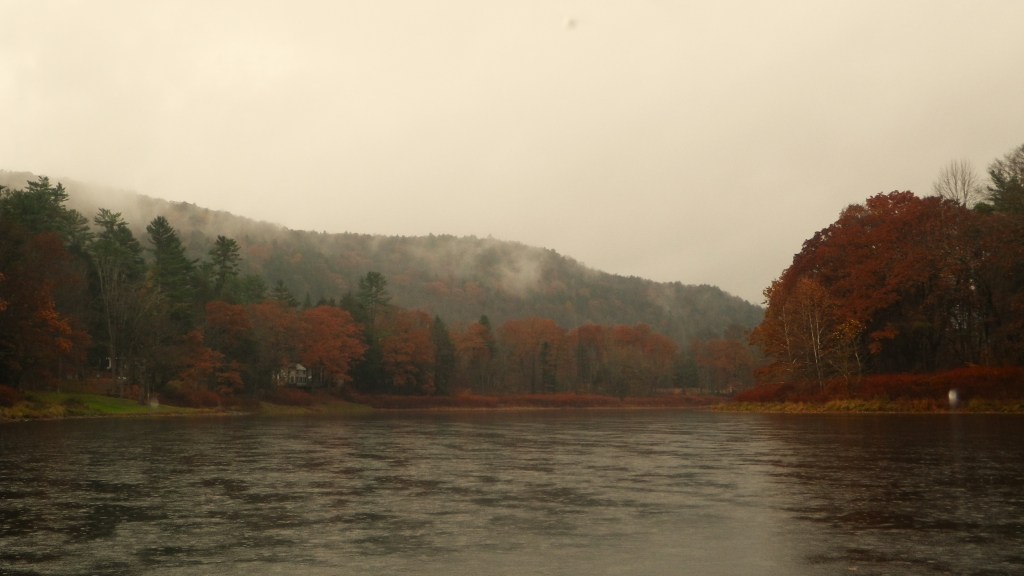
Awakened once more by the sounds of running water, rain tapping upon the roof and running down the gutters. You should have seen the clouds holding tight to the river, well beneath the mountain tops as I drove to the Rodmaker’s Workshop last Saturday. Should have stopped to shoot photos.
All of my tip strips have been finished planed! I made it through after sixty hours or so of toil, and soon they will be glued and subjected to the same filing and sanding the butt and mid sections are getting. At last, I can actually envision these coming together into a rod blank. Much still remains to be done of course, with ferrules to be fitted to the bamboo along with the lovely nickel silver and curly maple reel seat the folks at Classic Sporting Enterprises have crafted for me. I have a spool of rust colored silk I believe will complement the cane and the maple!
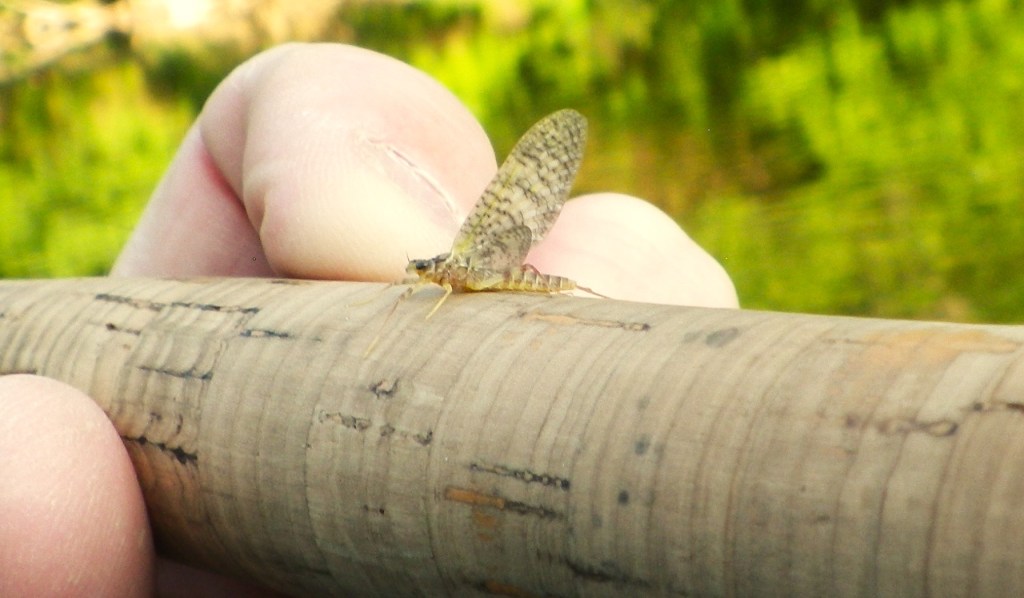
Remember spring sunshine? We are a week and a half into June and I still seem to greet each day with thoughts of rising rivers rather than rising trout. I stole a day yesterday, hoping that the rains that awakened me early would not resist my need to wade bright water. I thought perhaps the cool, damp day might elicit some insect activity and bring a good trout to the surface, though I walked away come afternoon still wanting.
They say the Red Gods have another half an inch or so in store for the Catskills today.
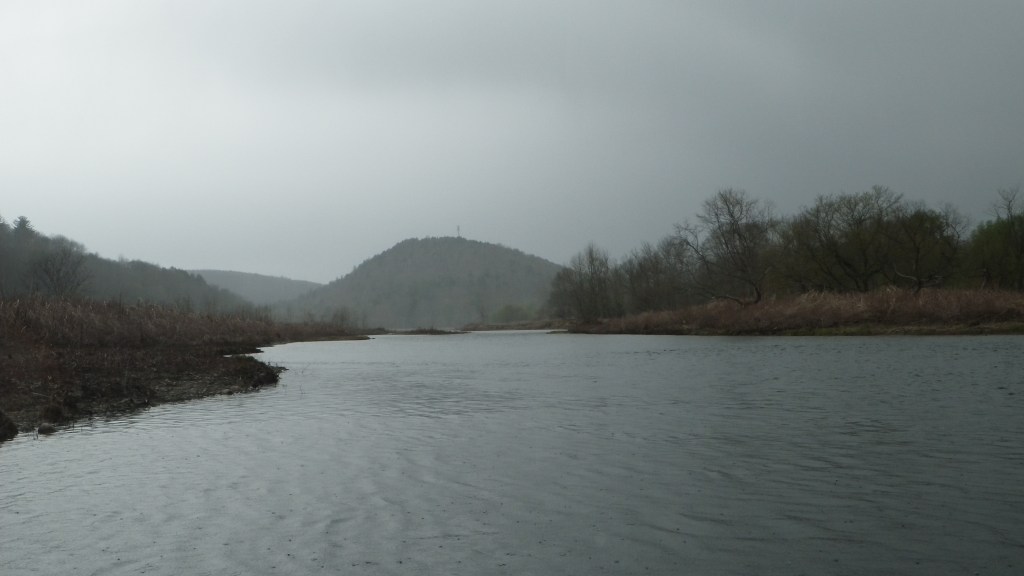
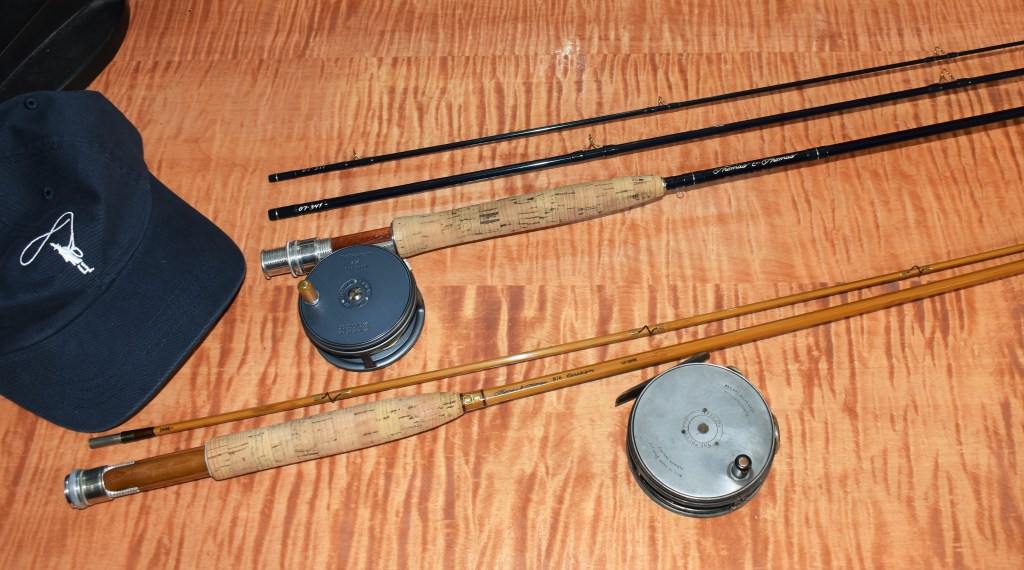
The perennial high water has forced me to fish graphite rods, rather than the delight of bamboo. When one cannot wade within ideal presentation distance for the situation, every foot of distance casting is called for. My old Thomas & Thomas Paradigm casts with a familiar grace after more than two decades, but the sweet magic of bamboo is missing. If the Red Gods allow me to go forth today, perhaps the 8-foot Paradigm shall walk with me. If I find that one fish rising between my longest cast with cane and my longest cast with sibling graphite, so be it!
-
More
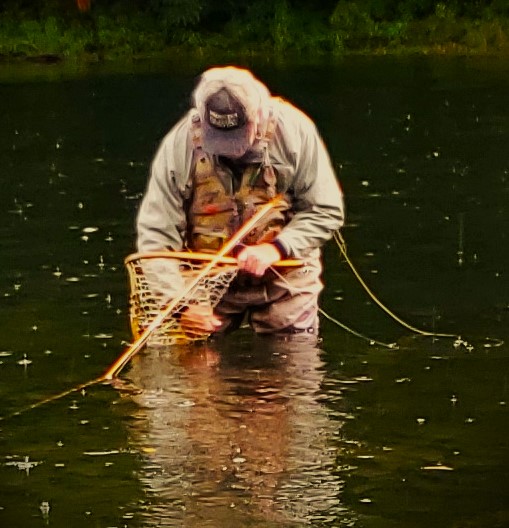
I was fishing yesterday evening, hoping for a taste of the kind of action that has been largely missing from this spring season. The air was warm, the river still a bit higher than ideal for fishing effectively, there were even a few insects showing at a distance. I saw one very hard rise. Now I peppered that entire area of faster water with accurate casts and good drifts, but the fish that had wanted something so bad didn’t want anything more; at least, not what I was offering. As I conceded and wound the fly line back onto my reel, I saw it. Out there, beyond my reach with my chosen tackle at this level of river flow. God, I know what lives there…
We, and I mean a very large area of New York’s Southern Tier covering all of these Catskill Mountains and more, are under a serious flood watch as I write this. More rain. More, with the Delaware reservoirs still spilling from last week’s downpours, and most rivers still high for ideal wading. Well, it’s a hell of a lot better than a continuation of the drought.
I’m wavering, half determined to rise and grab my waders to try to get in a few hours on the river before the storms begin. Though these past two days have been hot and summer-like, it is still spring, so I don’t truly have that summer itch for early morning fishing. I know my luck too. I am far more likely to find no activity and get drenched with a sudden storm. You gotta have that itch, that sixth sense that says yeah, today. Go now!
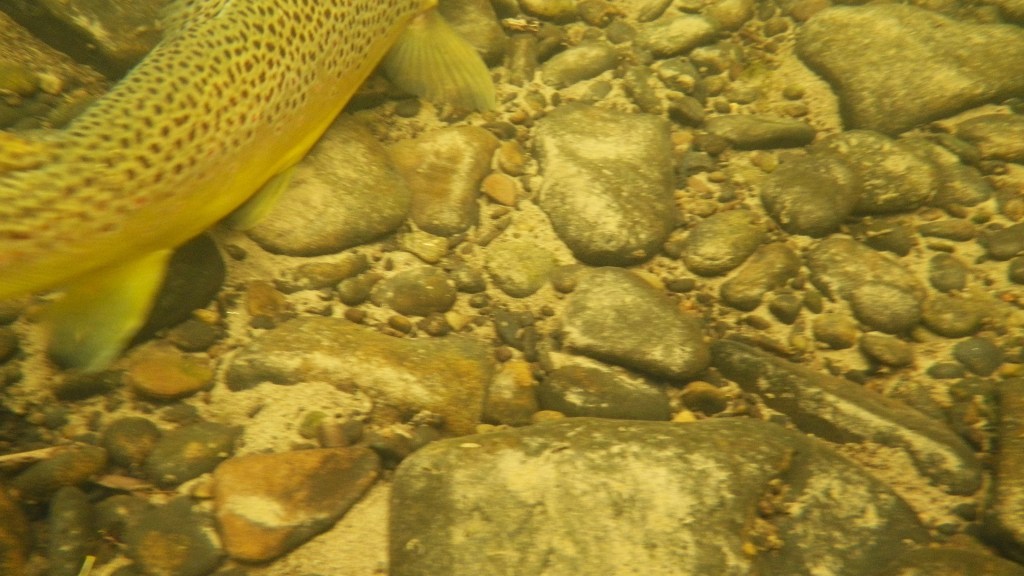
Just missed! It’s kind of like that this spring; almost a great picture but not quite the way things were planned. This may be the toughest spring season I have had since I retired to these Catskills. We all have dry spells, but this one has staying power, and another band of drenching rains might just push my count of too much river to fish days right through to the beginning of summer. There are a lot of things good about this season though.
Foremost, there’s the fact that I am still alive and well and out there fishing when the rivers allow. I didn’t have a long expectation when I turned my back on the grind in 2018. Stress will kill you, and it had done a damned good job of killing me. Ever stumble over a stone and find yourself off balance at the edge of a precipice? Well, that was me. I regained my balance, walked away from the stress and the crazy. Cathy and I built a new little life here in these mountains that I love so deeply. I fish, you see.
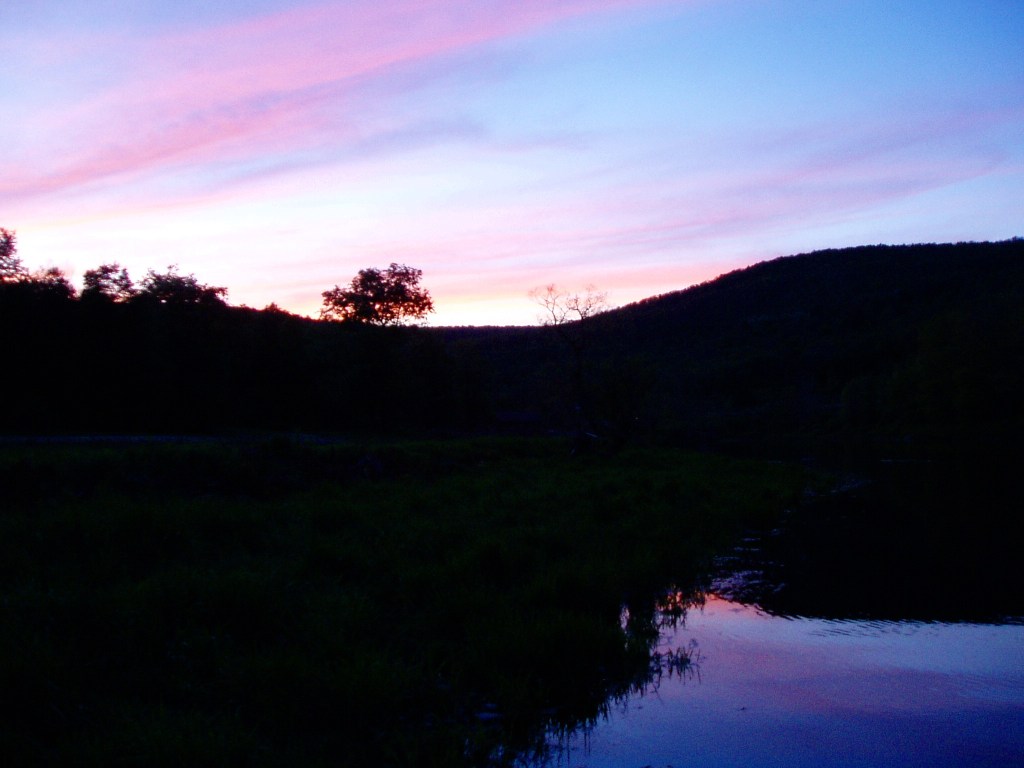
Despite the slim pickings with my beloved Hendricksons, there have been a few special moments this spring. Every cast doesn’t end with a trophy fish brought to hand. I’d get tired of it quickly if that was the case. Sometimes the best experiences don’t end in victory. I spent a lot of time working on one supremely difficult fish this spring. Perhaps the epitome of those encounters was the last day I saw more than a handful of Hendricksons. It wasn’t a heavy hatch by any means, thin might be the best adjective. My foe was feeding in the middle of a very gnarly bit of cover. The wind was ridiculous, blowing whitecaps upstream and right into this trout’s lie. The few duns that drifted through the spot got bounced around and tossed back upstream a time or two by all of this, but that old warrior would just wait for one to recover from a wave and then suck it down with a smile! I did everything I could do with a fly rod, a sweet old Leonard, to put my Hendrickson in his face with a good drift, but nothing was good enough. There can be a lot of satisfaction in a dissatisfying experience like that.
I expect this dry spell will find it’s end eventually. I mean, this entire wild and wet spring has been about Nature healing these rivers. She heals them so they may heal us, the travelers who find solace amid the caress of their currents.
I’ll keep a favorite cane rod handy, and there are always plenty of trout flies around this place. I can slip out and be knee deep in a Catskill river in ten minutes, and I’m pretty darned happy about that state of affairs.

(Photo courtesy Andy Boryan)
-
Nick Lyons

Can it be June already? So little of May was spent upon bright water. June has begun, though on a bright note despite high waters.
A group of anglers gathered yesterday to celebrate the life of Ed Van Put. The Wulff Gallery of the Catskill Fly Fishing Center and Museum was filled with relatives and friends, fellows of the Catskill Fly Tyers Guild, food and drink. The Guild presented a special shadowbox of flies to Judy Van Put, who the night before was honored by the Museum as a Catskill Legend. The flies were all Ed’s favorite dry fly, the Adams, tied by the Guild during the first Zoom tying session after Ed’s passing in December, and Judy was visibly touched. She had attended that session, though the collecting of the flies and Pete Leitner’s masterful making of the shadowbox was kept secret until yesterday’s celebration.
Judy told us of Ed’s last book, and introduced a special guest, author, publisher and professor Nick Lyons, who had come out of retirement to edit the book and ensure it’s timely publication. In my own sentiments regarding Van Put’s passing, it was Nick Lyons’ story “The Emperor’s New Fly” that summed the gracious ways of this renowned expert angler, conservationist and gentlemen. It was this story that Nick shared with us yesterday in his brief remarks.
Among the small group of favorite authors, those whose works I revisit frequently, Nick Lyons occupies the top shelf. He has been a favorite for some forty years, a gentleman I had always hoped to meet.
Thirty years ago, I sent a manuscript out to inquire about publication. I sent that manuscript to Nick Lyons, a writer I recognized as a kindred spirit. Getting a fly-fishing memoir published is a difficult quest, for they are not the commercial component of publishing for the genre. How to and where to tomes rule the bookshelves of fly shops and sporting booksellers. I was deeply moved by Nick’s kind letter in response to my manuscript. He liked the work, saying it deserved to be published, before telling me that he sadly could not take it on at that time. I still remember his words; that he received some 500 fly-fishing memoir style manuscripts each year “and I read every one”. He explained that, with his existing commitments, and the fact that he could publish only one or two volumes each year, he simply could not take on my “Limestone Meanderings”. Though it was a rejection letter, that letter has meant a great deal to me for all these many years.
It was wonderful to shake Nick’s hand, to say how much his writing has meant to me, and does again each season, and to let him know how special his letter was in encouraging me as a writer. I came hard up against that how to, where to wall when I submitted to a few other publishers in later years. I continued writing my weekly Outdoors column for Chambersburg, Pennsylvania’s “Public Opinion” newspaper for twenty-two years, most often sharing moments in fly fishing and fly tying. After retirement and relocation to the Catskills, I began this blog, still feeling the need to share the magic of angling bright water. Nick Lyons’ influence continues to move me.
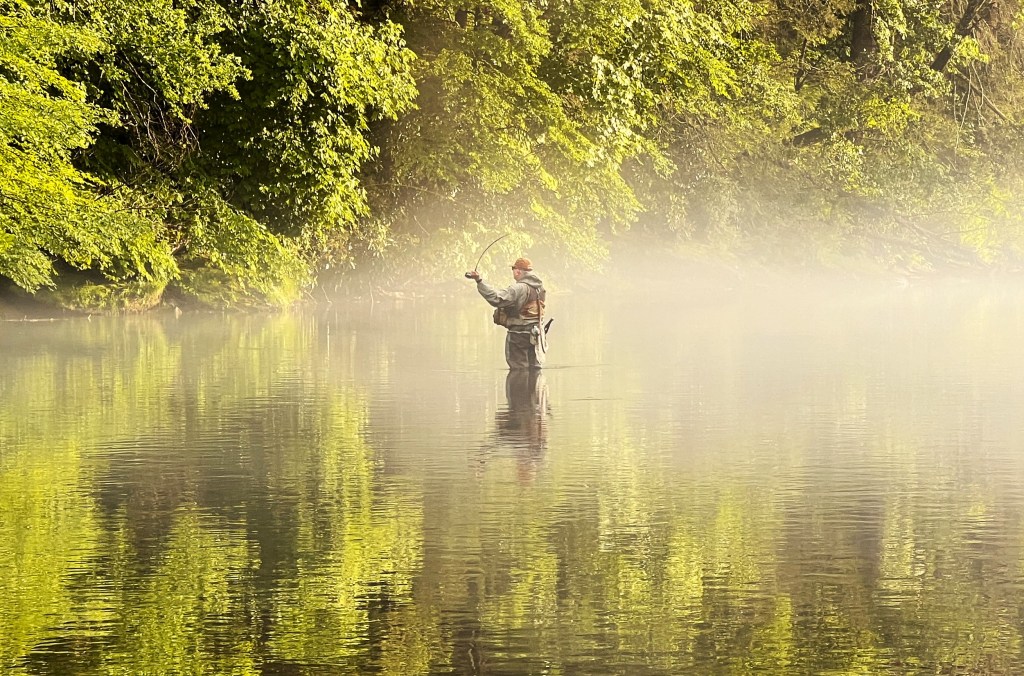
Mist Caster
(Photo courtesy Michael Saylor)
-
Then Came the Last Days of May
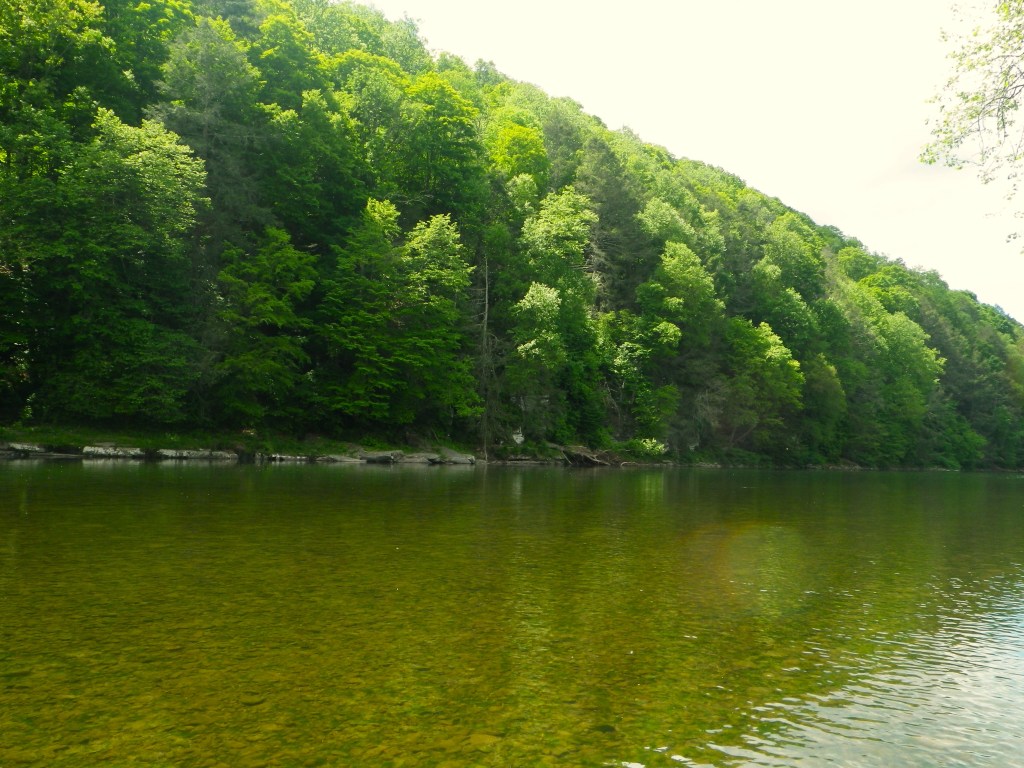
I awakened to rainfall this morning, a full, steady drumming punctuated by the brighter tapping notes against the window glass. It seemed as if our Catskill rivers just reached ideal wading levels, though a few were getting low with warmer weather on the way.
Water temperatures have stayed mostly in the fifties, for our nights have required the furnace to ignite sometime before dawn. The Beaver Kill peaked above 62 degrees yesterday though, for the first time in this last week of May. Fishing has stayed somewhat hard to predict.
The long, wet month brought very high flows, and the drift boat armada flailed the rushing tailwaters in their madness for money over resource. As waters receded, the trout felt the marching feet of two months’ worth of wading anglers tremble the gravel, and their response to flies has been predictable. Nature’s gift of rain included a reasonable dose of mayflies, but the wild trout in well-travelled reaches demurred from surface feeding. It has been a hard spring for the dry fly man.
The appearance of the Green Drakes was welcome, though it proved more than challenging. During five days fishing I could count the number of duns I saw taken on the fingers of my tired casting hand, though the boils proved that the trout took advantage of the rising emergers.
I felt the excitement grow as I waded gently into the pool on Thursday, my brand new Crippled Green Drake knotted to a length of 5X fluorocarbon. I watched for a while, until a subtle sip in a knee-deep flat provided a target. I am pleased to say that the first wild trout I showed this sleep imagined creation to took it solidly. He fought well, a solid heavy brownie taped at eighteen inches, and I was giddy as I slipped him back into the flow. Creator’s rush? I wish I could say that fly was medicine for all of the feeders beneath the film, though I cannot. Inscrutable to the last!
The two best fish taken during those five days succumbed to the quill version of my 100-Year Drake. Imagine, two fish willing to eat a dun, a fly wholly on the surface! The first was the 22-inch brown reported from Monday’s campaign; the second expressed his dining preference late Thursday afternoon.
I had changed locations by several miles, choosing open water with just a pair of anglers in view. I walked a bit, searching the wide expanse of water before me with my gaze. A sparse mixture of Drakes and Gray Fox duns danced upon the surface. I have witnessed trout feeding on the move more than once there, and lofted a cast to every rise or swirl withing range. Nearly fooled, once my fly had drifted well below the swirl that drew my cast, I glanced away toward another above me. The take was hard, in that split-second when I turned, and I struck by instinct at the sound, as the quiet pool exploded!
Such a trout! Thrashing, running hard against the drag and boiling multiple times to betray a glimpse of silver! The hookup proved solid, though he gave me everything he had. Wild Delaware rainbows give no quarter, they fight with a mad abandon which straightens hooks and fractures leaders. A bow exceeding twenty inches is a special fish, for the challenges of life in the Upper Delaware rarely allow for a long life span. In thirty years on the Delaware system, I have been privileged to bring to hand five such specimens, this last stretching the tape to twenty-two inches. I wanted a photo badly, but this valiant warrior deserved an instant return to the cold, bright waters from which he came. I submerged the net as I twisted the hook free, turned him loose and watched him streak away.
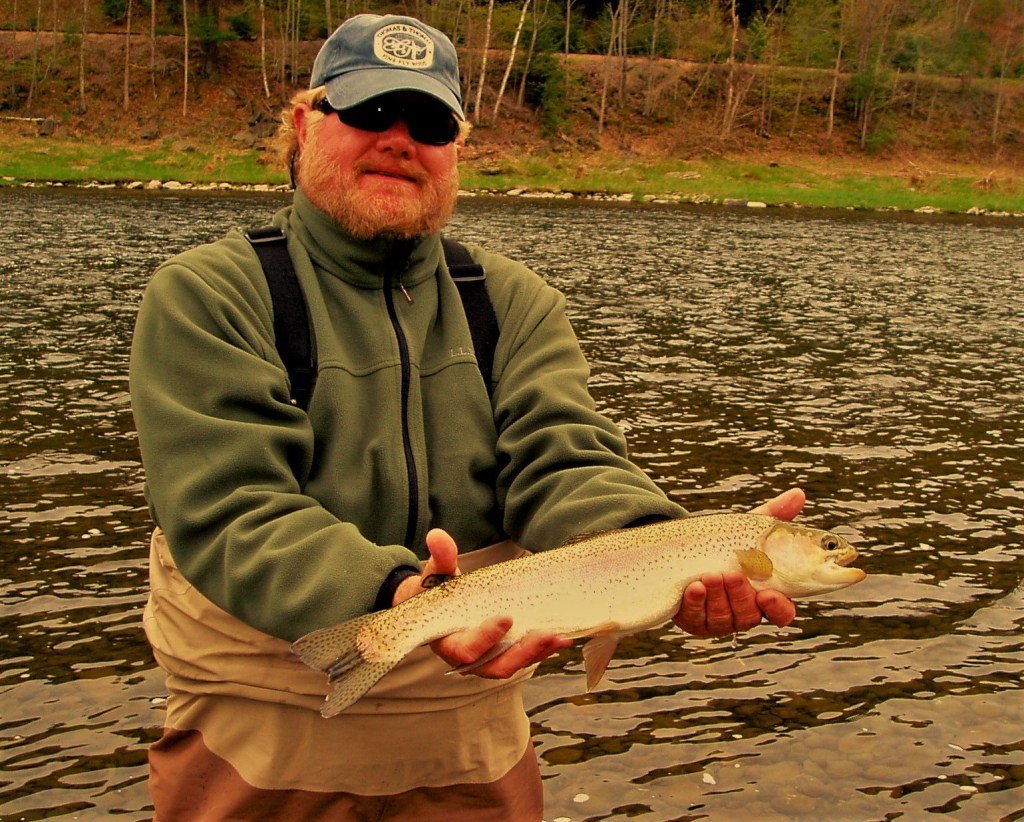
One out of five – my first Delaware rainbow exceeding the coveted twenty-inch mark, far down the Mainstem and many years gone. Guiding, netting and photo courtesy of the incomparable Captain Patrick Schuler.
-
Conception
There is a certain sweet pain in watching a three-and-a-half-pound wild rainbow launch itself into the air to blast a struggling mayfly, then cast your dry fly a dozen times over the fish’s lie without response. I feel that pain… deeply.
Yes, there have been a few Green Drakes this year, seemingly part of Nature’s gift of multitudes of bright water that has befuddled wading anglers for much of the prime time of the season. There have been some Gray Fox too, the first time I have seen these beautiful big mayflies in several years. The trout have been eating them selectively, that is, they have been eating those in transformation from nymph to dun as they struggle to rise to the surface.
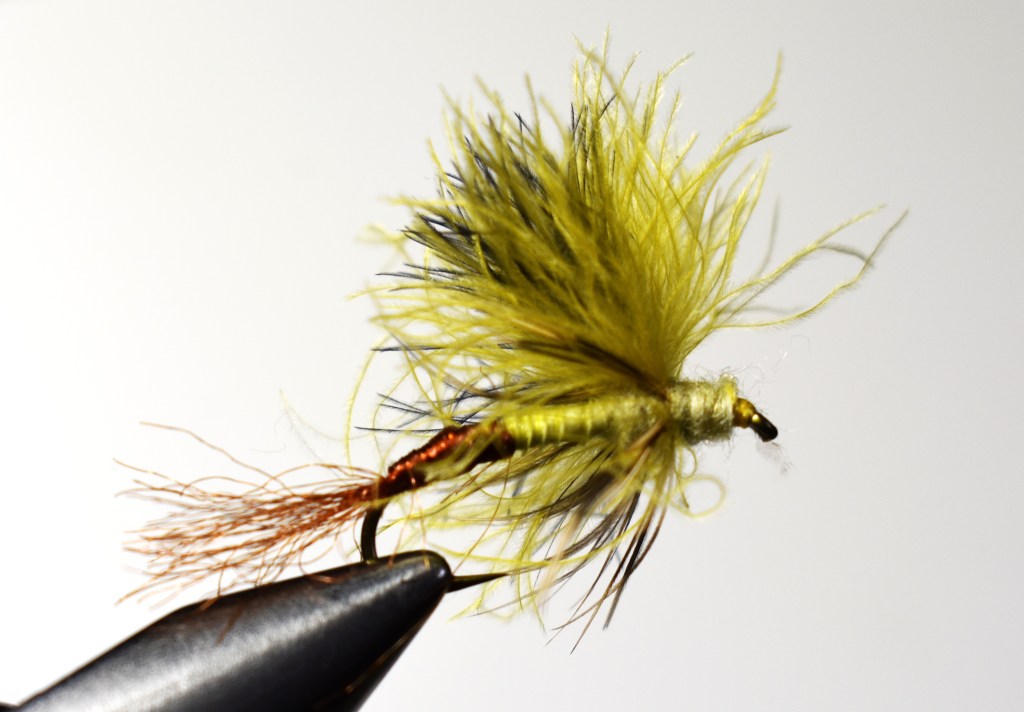
My best dun has produced one 22-inch brownie and one splashy refusal. The emerger that fooled my best Catskill brown trout has been ignored. Soft hackles in the film, both dead drifted and gently swung – nothing. It is both Heaven and Hell for the dry fly angler. Nothing man may contrive from fur, feathers and steel will wiggle and squirm as it swims to the surface like those big mayflies.
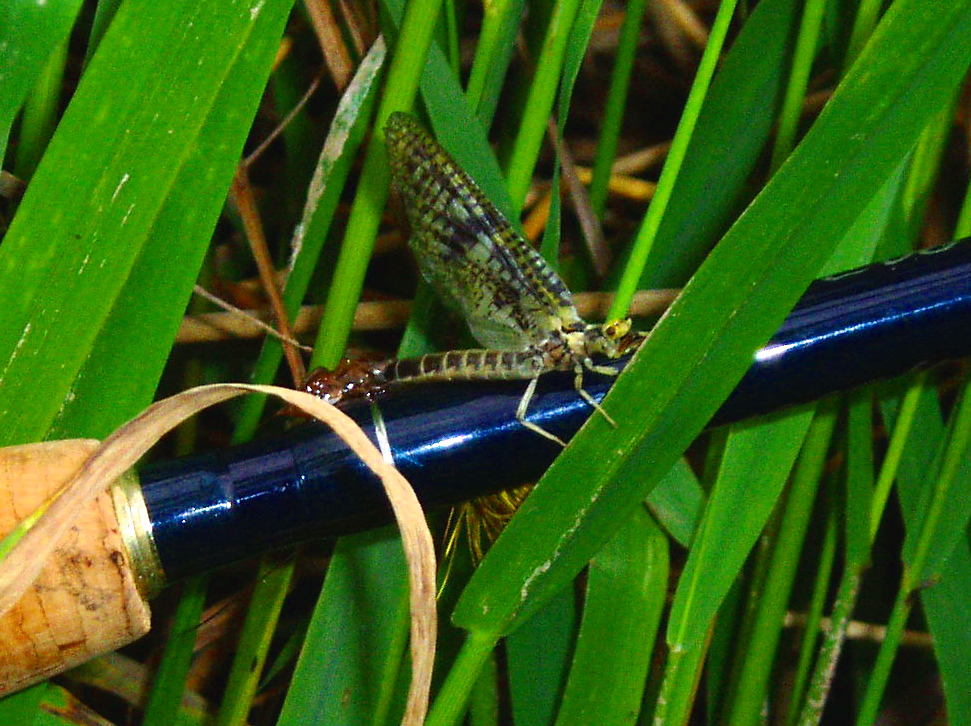
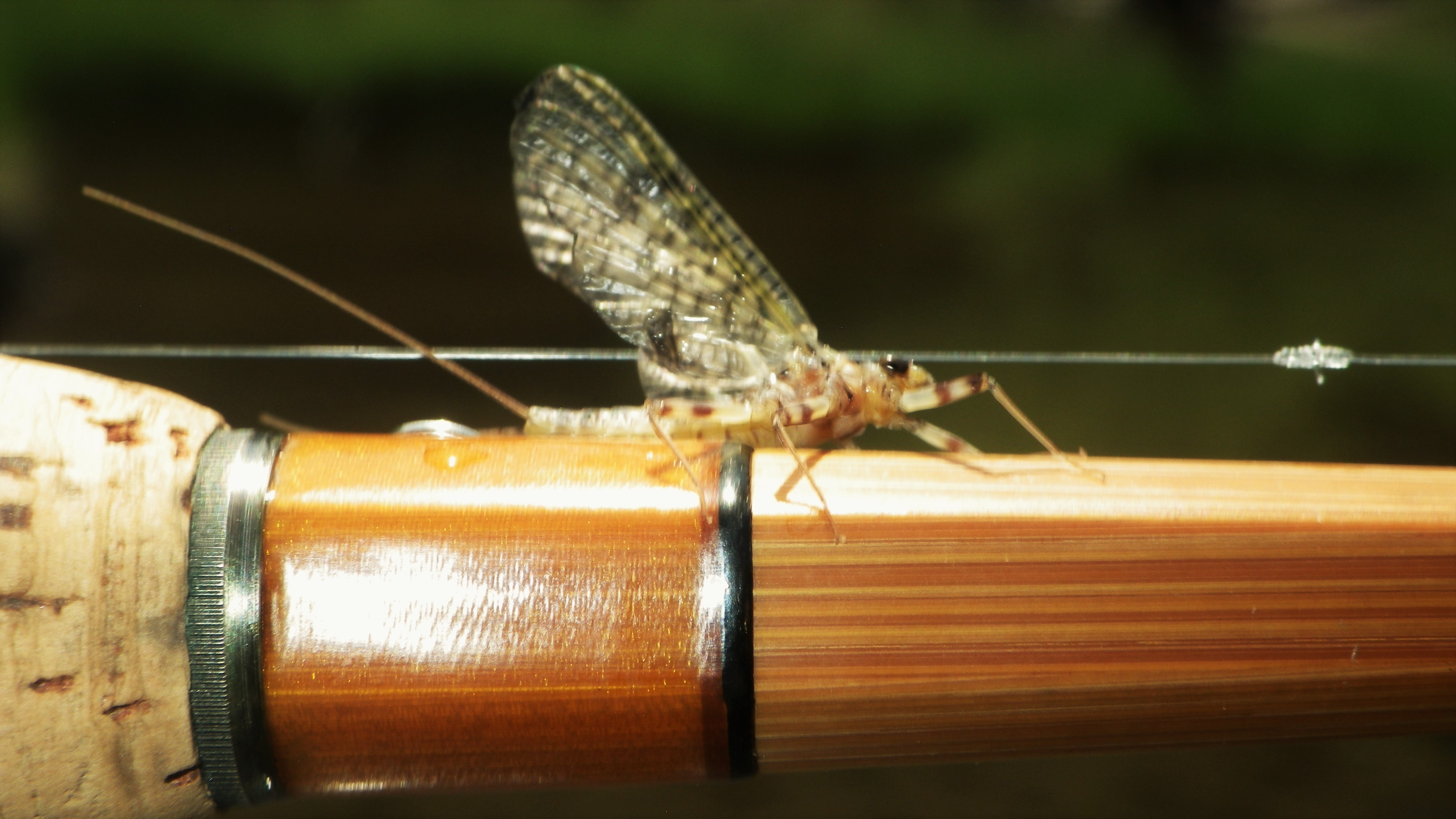
I took this photo nigh on 25 years ago, after plucking this emerging Green Drake dun from the surface, still stuck in his nymphal shuck. He was nearly free when I found him! Sometime in the middle of the night, my mind was working, conceiving the fly at the top of the page. By four thirty AM I was up and headed here to my tying bench. Just a few little touches: the partially shed shuck, the bright yellow-green ribbed abdomen, the struggling legs and a shortened, emergent wing. Can they make the difference? Might this new pattern flip the switch in a few of those big trouts’ predatory brains and light the Free Meal lamp? I will do my best to find out…
-
Old and New

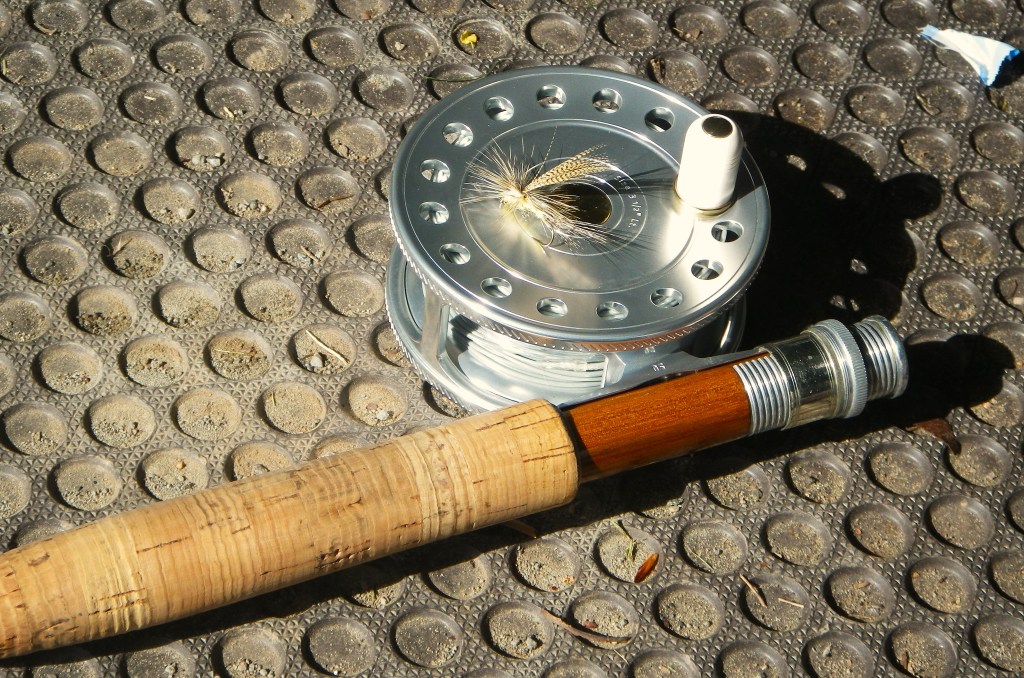
My early Thomas & Thomas Paradigm resting along the Beaver Kill with a 1929 Hardy Perfect I took an old friend along with me the other day and introduced him to a new one. My favorite graphite fly rods are a pair of Thomas & Thomas Paradigms that I have fished for twenty years or more. They boast a smooth, graceful action, something the major fly rod companies forgot long ago. The late Thomas Dorsey designed the taper to offer the closest action to a bamboo rod, the instrument that brought fame to him and his partner, the late Tom Maxwell back in 1969. He did a very fine job.
For many of those years, I dreamed of fishing the original, one of the first Paradigm models crafted by this duo from Tonkin cane. To say that these were out of my price range is most certainly understatement. Time passes and markets change, particularly an angler and collector driven market like that which trades in vintage bamboo rods. I looked, I wished, and time continued on.
I picked up another fine rod one spring, a beautiful thing whose owner was anxious to sell, and I got a major bargain in that deal. As happens sometimes, the rod turned out not to be a favorite, it’s action more suited to a different casting style. I was a little disappointed, but I held onto the rod and “banked” the value the deal had given me. Eventually I had a chance to trade that rod for the Holy Grail, an 8-foot six-weight Thomas & Thomas Paradigm, one made by Dorsey and Maxwell during their early years.
My Paradigm is a sweet casting fly rod if ever there was one, and it has that hidden power the marque is known for. I reserve it for special occasions, as it has a lot of meaning to me. Far across the ocean, there is another craftsman who has influenced my angling. Vlad Rachenko made his bones creating some of the most gorgeous fly reels in the world. He designed and machined these special reels from titanium in his workshop in the Ukraine, VR Design. Titanium is an expensive metal, difficult to machine, and his world class fly reels were likewise costly to own. A few years ago, he designed a beautiful and innovative trout reel, the Trutta Perfetta and decided to make a very affordable model in aluminum as well as titanium. I ordered a 3″ aluminum reel as soon as I became aware of it, and it has been a wonderful reel and a delight to fish.
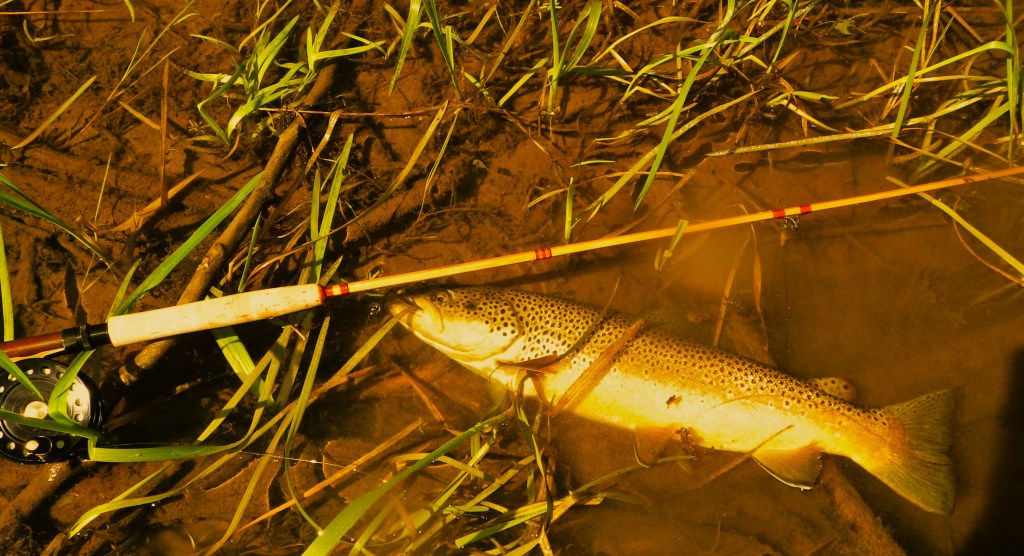
My 3″ Trutta Perfetta enjoyed a very special introduction to the Catskill rivers, bringing sweet music to my ears! Thankfully, Vlad and his family are safe today, after fleeing Ukraine under the clouds of war, and he has been able to get his business operating in Germany. He had promised a larger version of the Trutta Perfetta a year or more ago, and in mid-May I saw his announcement that the first small batch of the new 3-1/2″ reels were available. A little something for my birthday arrived in time to see the rivers rounding into fishable condition, and on Monday afternoon, I matched the beautiful new reel to my treasured old T&T Paradigm, and went fishing.
Now fishing has been kind of rare and difficult this season. Mother Nature healed the Catskills from the drought that spanned most of 2024 and the early months of 2025. Rivers have only been wadable for a small portion of May. With a favorite reach fishable at last, I looked upon the day as a celebration.
Nature agreed with my assessment it seems, for she sent a variety of mayflies to greet me. The weather was fair and the water sublime, though the Red Gods made certain the trout would not be easy. My new Trutta got along very well with my treasured old Paradigm, and at last I enjoyed the chance to really hear her sing!
-
Weather
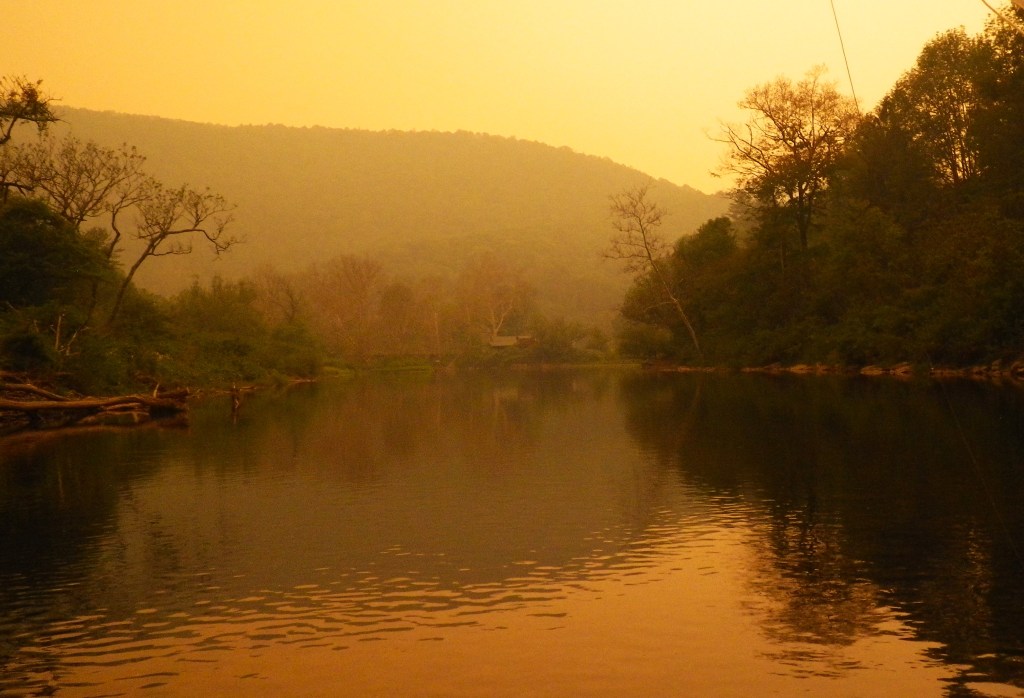
Smoke On The Water I cringed somewhat when I observed today’s forecast. It is a day before Memorial Day Weekend begins, boasting it’s temperatures in the forties with a side of wind and rain. Cringe-worthy for a fly angler in the prime of the season, though it triggered a memory… and a smile.
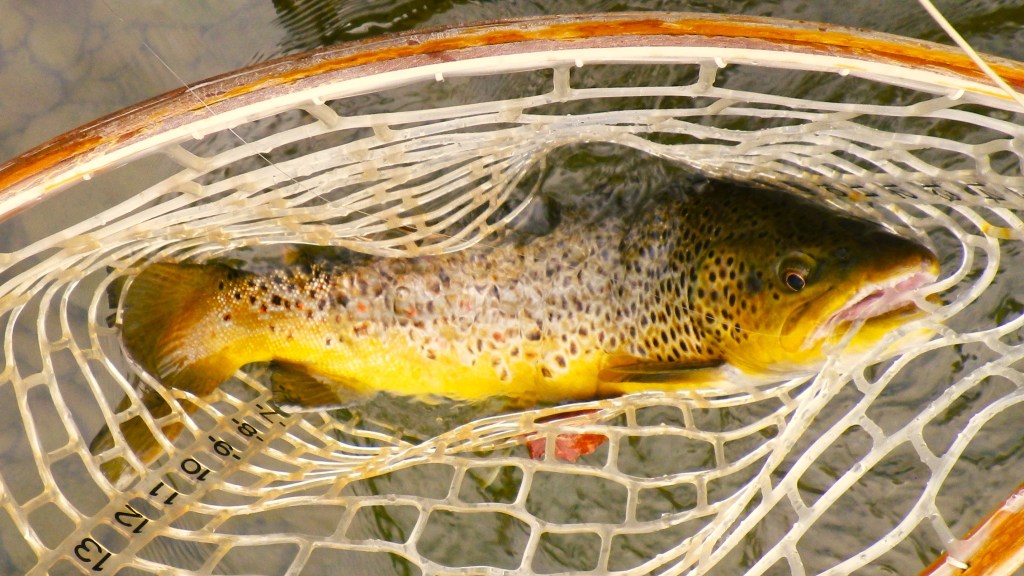
It was very close to this date, and easily fifteen years ago. The word had gone out regarding the progression of the hatches so far that spring, and I had set my vacation and travelled North to West Branch Angler. The Drakes were due! I was then fully entranced by that spectacle, a card-carrying member of the Cult of the Green Drake, and I had arrived when the mystics predicted the miracle. An unseasonable cold, wet front then descended upon the Catskills, and tore my heart out!
I remember wading the river on a day that would barely touch forty-five degrees, sunless and damp, wishing for an extra layer of insulation. My friend stopped to check in on my progress, and I worked to muster a little cheer in my voice as I answered his greeting. Very little.
Sometime in mid-afternoon I blinked twice as I stared at one particular thread of upstream current, for there was a tall-winged creature riding through the mist – the first Green Drake! Mother Nature had commanded that it was their time, and the mayflies seemed powerless to refuse her orders, forty-five degrees and be damned.
That was a fine and amazing fishing day, the flies coming in sparse waves as they were wont to do in those years, on and off throughout the afternoon. There was no one save I on that reach of river, no one to witness the event. The great flies struggled to the surface to be quelled by the cold, damp air, so they drifted a few hundred feet when not interrupted.
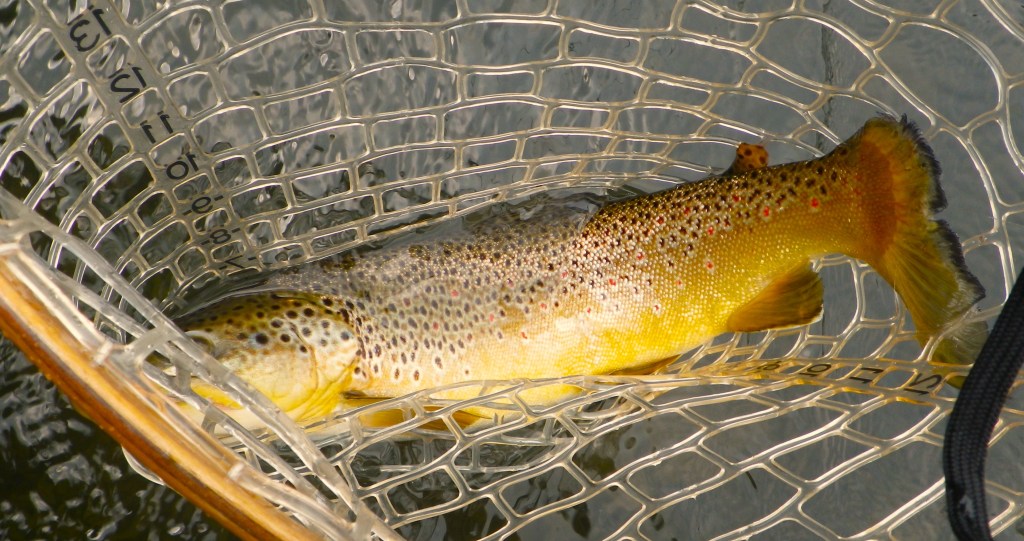
The wild brown trout likewise ignored the dour day and stationed themselves throughout the river, each in it’s favorite subtle thread of current, and partook of the feast. More than a few found their menu interrupted by a tasty looking mayfly with a bite of it’s own!

My 100-Year Drake, soggy after winning an epic battle. I do not recall the minute details of that day, nor those of the next, quite similar day of cold, clammy angling perfection. Both brought a number of trophy size brownies to hand. They ran long and jumped high those trout, giving more than just reward for suffering the cold through my dreams of May sunshine. The weather improved later in that trip; the fishing could not have.
Of course, my memory recalls any number of cold, wet days upon the water, days when my perseverance received only the reward of solitude, of playing the game well. Such is the nature of angling, for it is always a challenge, not the least of which tends to be proffered by weather!
-
Crowds
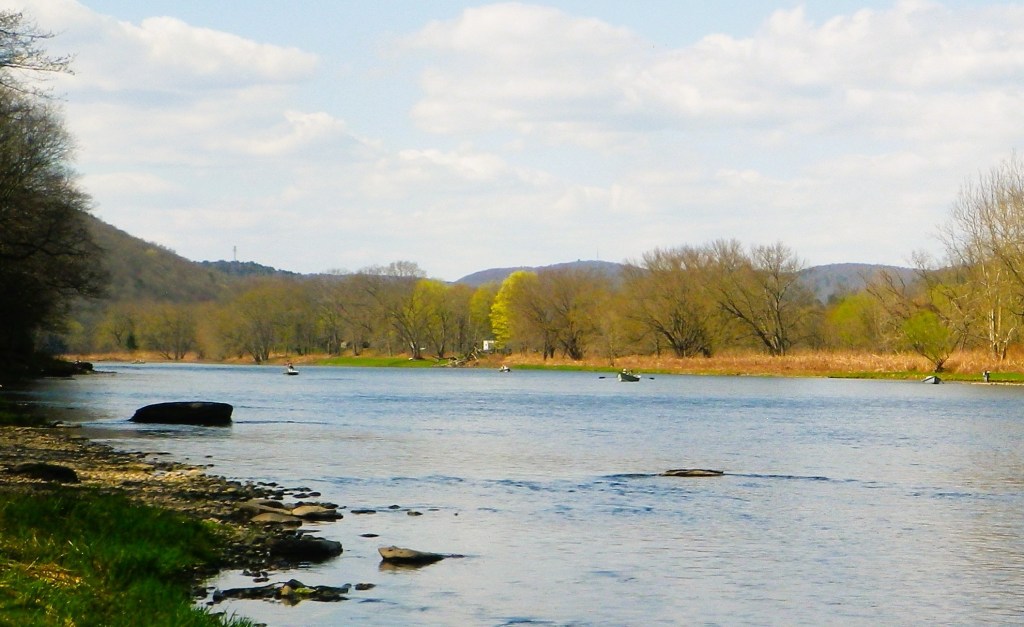
A Busy Day on the Delaware River: Six drift boats in 100 yards of water. One of the curses added to a season like this one, where the weather takes away many fishing days during the peak of the season, is the crowds which result from anglers’ desperation. Bad behavior abounds.
I usually try to fish those reaches of our rivers that are neglected by the majority of the thousands of fly fishers who flock to the Catskills. These are places with fewer, more difficult fish, the pools where stocking trucks are unknown. Weather is the equalizer though. When wadable water is at a premium, the crowds spread out across the landscape.
I have never really grasped the crowd mentality when it pertains to solitary pursuits like hunting and fishing. All that is required is one car at a pull off, one fisherman in a pool, and the crowd can materialize like magic. Do people think that occupied pool or run is the only one harboring a trout? Do they need the group experience?
I was fishing one of those secondary pools the other day when a pair of eyes began burning a hole in the back of my neck. There were two guys crouched on the bank watching me fish slowly downstream. No trout were rising and there hadn’t been throughout the day, so I was simply fishing cover to pass the time. Unfortunately, I caught a couple of small trout while they were watching, and that did it. Both guys piled in and started wading across right in front of me and closer than the length of my casts, intent upon cutting off my downstream course. The river there is easily better than 200 feet wide, and there was no one else there, but they had to move right in on the only angler in sight. Sportsmen, no doubt about it.
There are miles of rivers and streams here in the Catskills, a lot of good water, so there is no reason to act like that, though every season there are those that behave this way as a matter of course. Fly fishing used to be a game for gentlemen, those who showed courtesy to one another, offered help or a productive fly to a newcomer. Today a lot of that has been replaced by what those of us who remember those days recognize as combat fishing.
Back thirty years ago the sport of flyfishing was experiencing a period of large-scale growth. Thousands came into the sport, many attracted by the beauty and solitude of the natural environment. The mass mindset seemed to say that growth was good, more people to protect our rivers and streams, to advocate for clean water and wild trout. To some extent we got that, but at a cost. Though many were attracted by the beauty and solitude, they made it their mission to destroy it, crowding on top of other anglers wherever they went.
When I started out, there was a learning curve. When you encountered another angler on the stream you kept your distance and left him to his water in peace. If he looked like he was pretty good, it was okay to watch quietly from the bank for a few minutes and then pass on. No shouting a greeting, no sloshing in the water nearby. Speak only if spoken to. Treat others as you would wish to be treated. Remember those ideas?
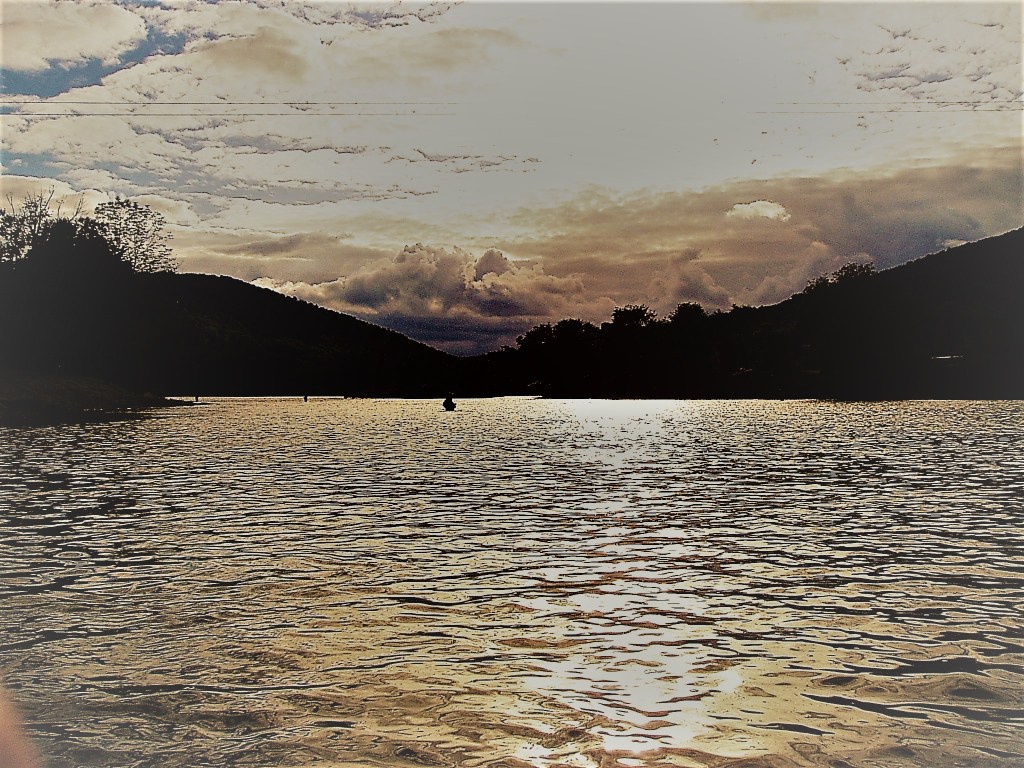
Space: Sharing the Water, Alone. I tend to get angry when combat fishing intrudes upon my experience, I am human, and angling and my time on the river means a great deal to me. When I think about these events, I also feel some regret for those who fish that way. They are depriving themselves of the best that angling has to offer by their actions, either because they don’t know any better, or simply don’t care.
-
May
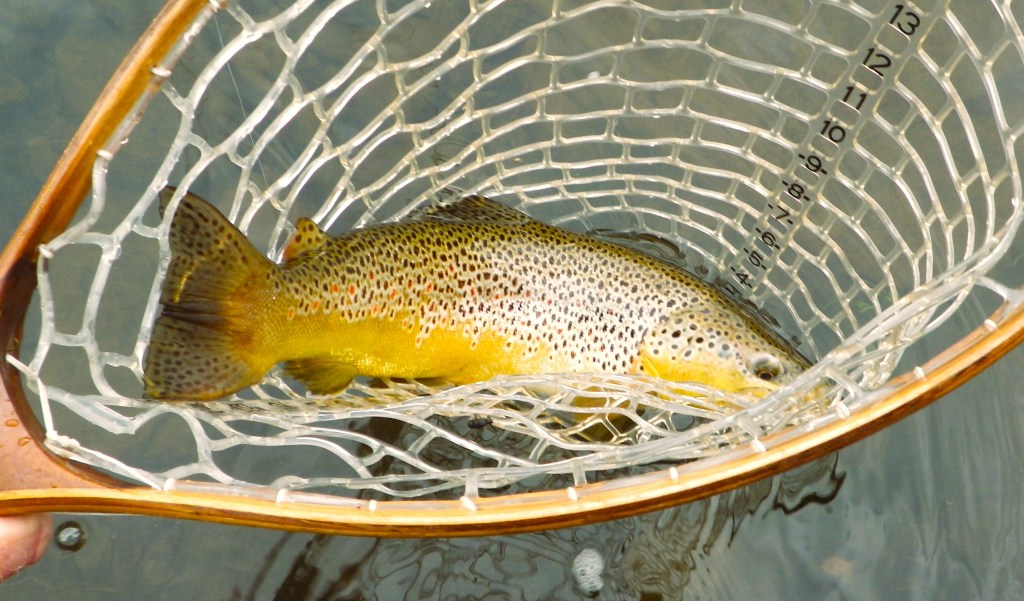
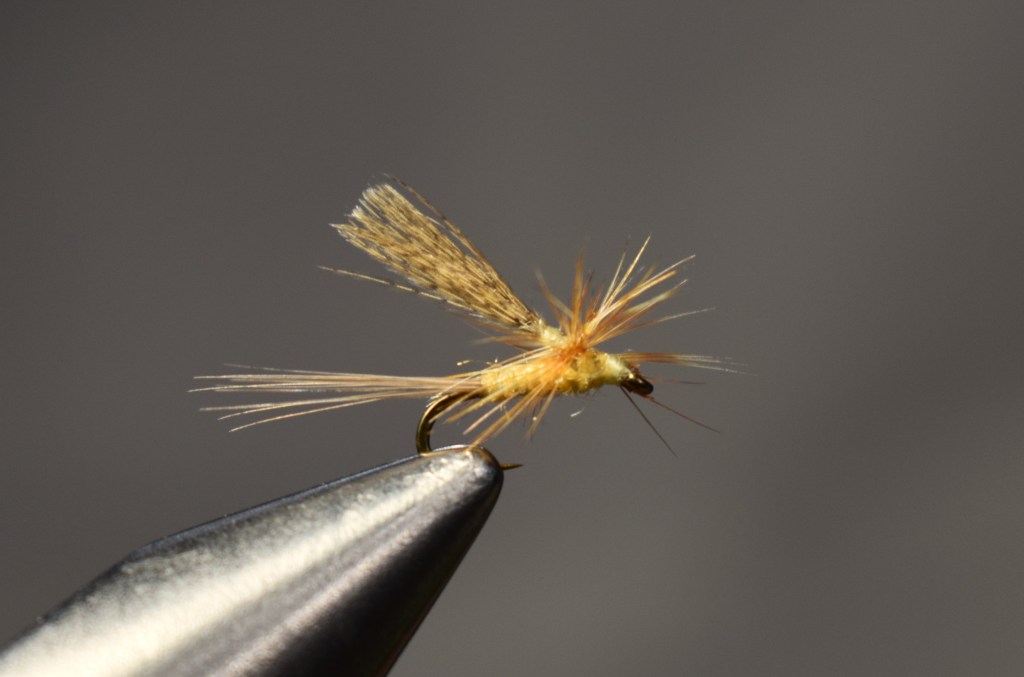
May is the epicenter of spring flyfishing, the climax of all of the hopes and dreams we shepherd through winter. Called to the outdoors since a very early age, it has always been one of my two favorite months of the year.
Well, it is May indeed, and more than half of this pivotal month has passed without fishing. Like most anglers, I waited, struggled with the loss of one quarter of the year’s perfection while doing my best to keep hope alive for the month’s legendarily glorious last half. But what truly lies ahead?
The week ahead boasts another grand helping of chilly, damp, rain-soaked weather in a season that has already raised questions as to the health of our rivers’ insect populations. So what indeed lies ahead?
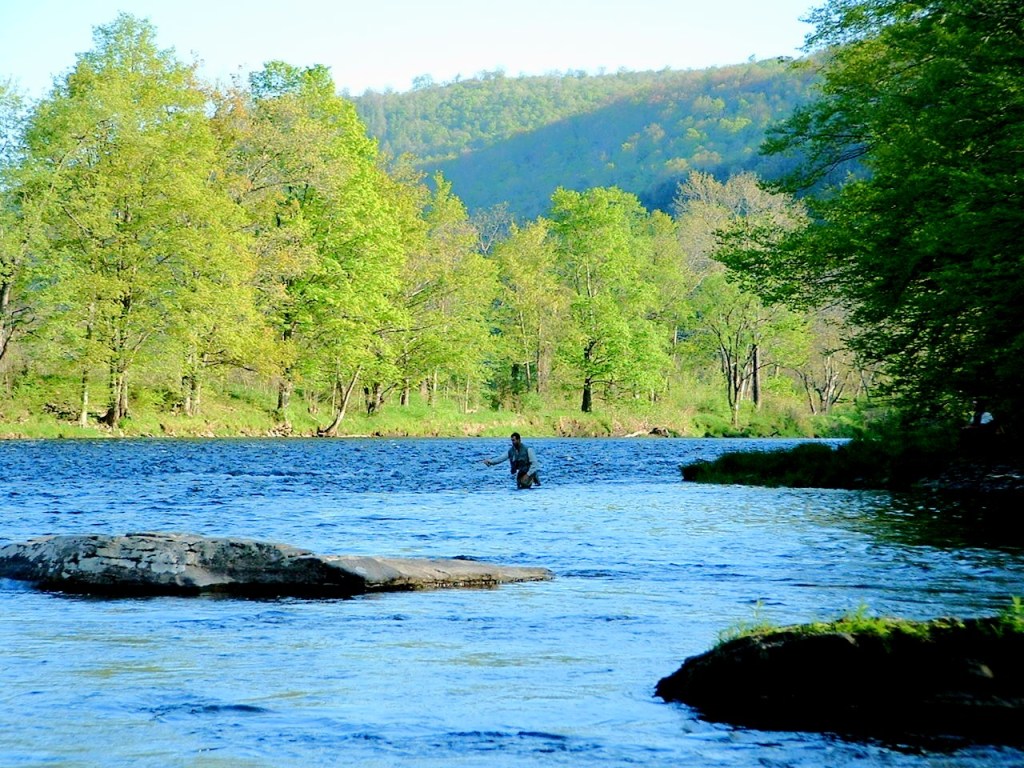
May on the Beaver Kill: View from Hendrickson’s Pool many decades ago. Though I confess a particular joy in spending a warm, sun-kissed day on the river, I have sought to always remember a few of the factual precepts of angling for trout: Fish are already wet; Chilly weather begets cold water where trout thrive; and mayflies often hatch best on damp, cloudy days. While these truths are not always correct, they have been written and recited since the first fly was cast because untold generations of anglers have suffered the less than perfect weather days to reap their rewards of the creel. In a month and a season like this one, it is best that we keep that in mind.
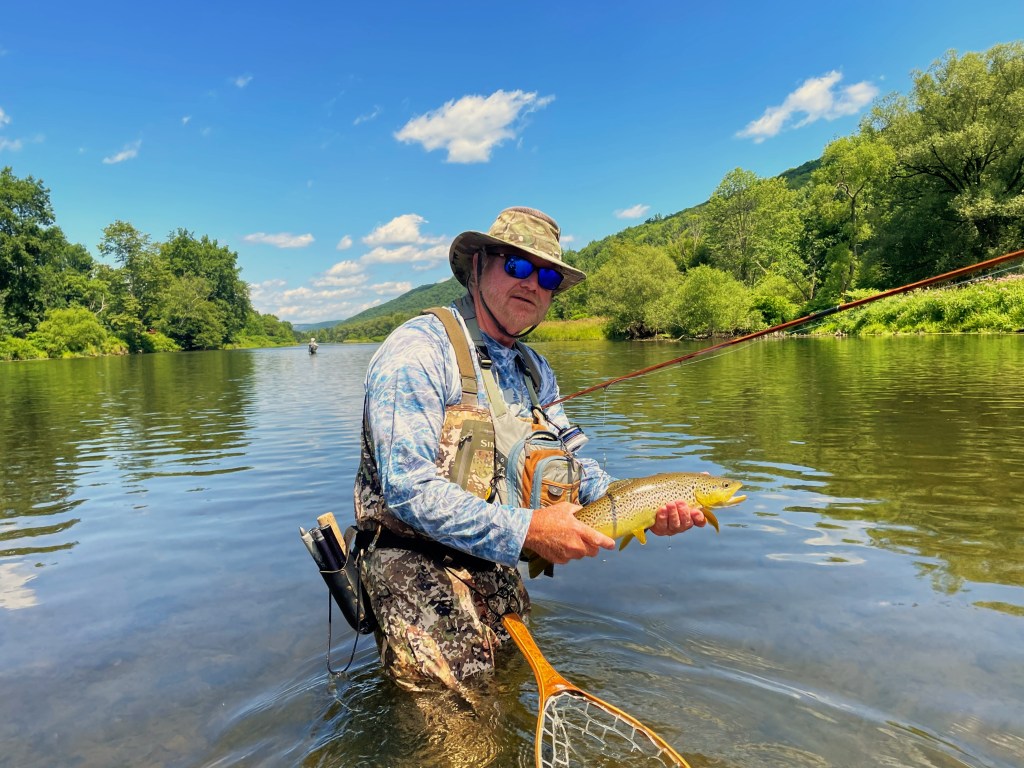
The blue skies and abundant sunshine of August, a beautiful wild brown trout in hand, and a favorite bamboo fly rod by my side – might heaven be made of this?
(Photo courtesy Henry Jeung)The first members of the group of pale-winged yellow mayflies we fondly call sulfurs should arrive upon the rivers’ surface this week. We shall hope to find their numbers impressive and the trout as excited as we are. In the back of my memory, I have stored any number of days when chilly, damp May afternoons held me shivering in my waders, unable to leave the water due to the continuous hatching and dining (on the trout’s part) to a heavy and extended hatch of sulfurs.
There is no rule requiring an angler to pack away his warm fishing clothing come May and, being a veteran Cumberland Valley angler who regularly enjoyed the 52-degree spring-fed streams during every month of the year, I have a goodly supply of said clothing. I also have at least two fishing rain jackets and waxed cotton caps, to say nothing of a pair of impregnated Thomas & Thomas fly rods. May? Well, might as well plan upon using them all!
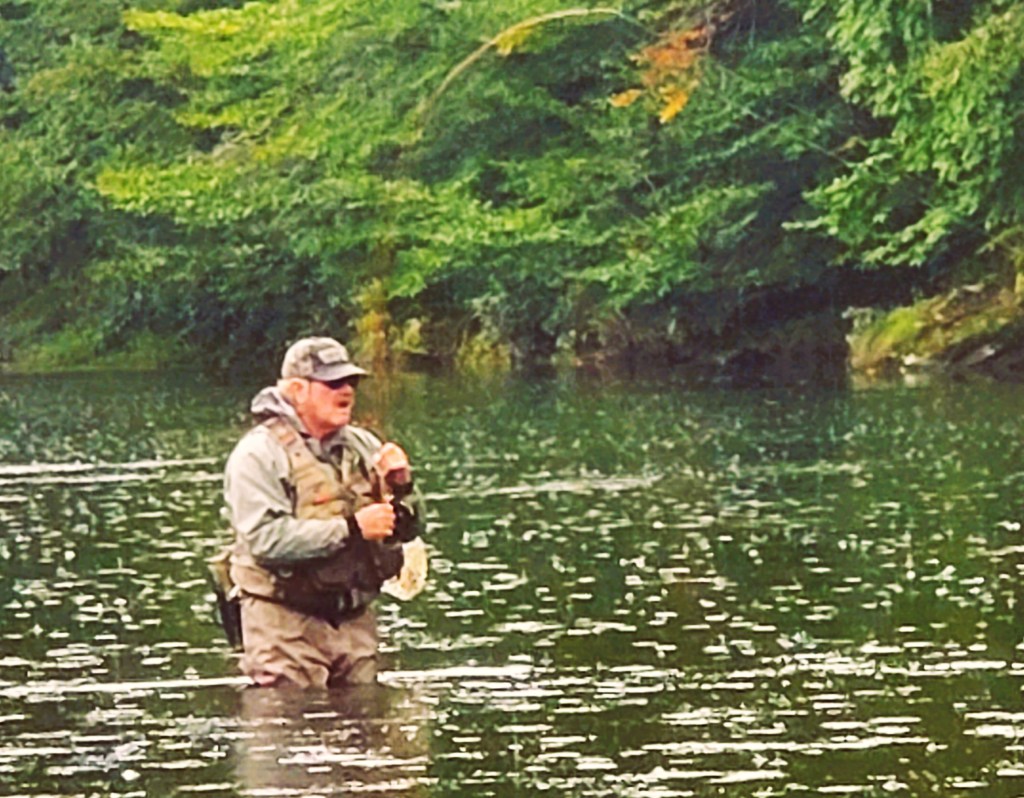
Photo courtesy John Apgar
-
Discovery in High Water

May along the Beaver Kill
(Photo courtesy Chuck Coronato)At last, the great river has returned to a glimpse of wadabilty! There are still many runs and glides beyond reach of fly casters, but the flows are slowly receding after two weeks. Each cloud in the sky wrought new anguish this past week, but the rain that fell was light, retarding the recession of high flows somewhat, but thankfully failing to drive them back toward flood stage.
I ventured out, committed to visiting some favorite haunts. These are reaches I visit early in the season, searching for good hatches and a handful of quality rising trout. For this season of 2025, I have found these beloved runs and glides barren, their mayflies and their trout casualties of the drought of 2024-25 and a long, ice laden winter. Could the belated arrival of the high flows of spring freshen these bright waters and renew my hope?
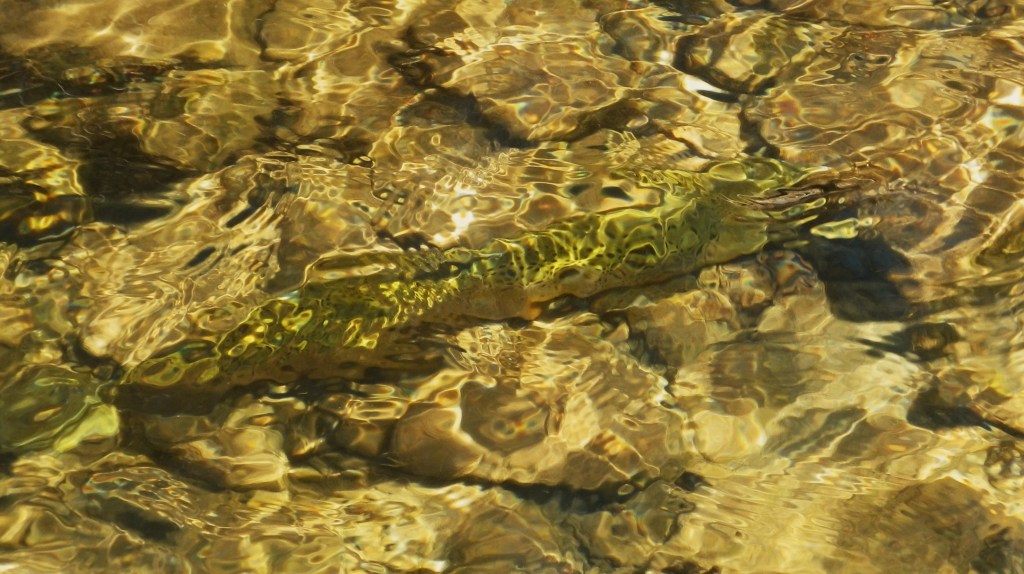
Does he still lie beneath? My first destination revealed no secrets as I sat along the riverbank after a passing thundershower. Still no signs of life in the drift, no rises and seemingly no hope. Travelling once more, I greeted my next destination with an upstream walk, finding a grassy place on the bank to wait.
The timing of this visit led me to hope for March Browns, and it was easy to let the depth of my longing cause me to see one of the big mayflies bobbing along in every leaf or bubble drifting a hundred feet away. The sight of splashing white water along a far bank led me upriver, only to have my vision dissolve into fast current amid a jumble of rocks.
At last, I witnessed an image of hope. I waded down, trying the heavy flow about my legs to determine if an approach might succeed, for the second rise, and a rise it was, was preceded by a live mayfly lifting from the rapid surface into the growing midday light!
For perhaps half an hour I saw them in ones and twos, hopping on the surface and taking wing, and every once in a while a trout would decide the treat was worth the effort to rise in that deep, fast flow. The nearest one was a long pitch away, but the rush of the current allowed no closer an approach. At last, I eased up on the nervous power the anticipation fueled in me, and the line unrolled as it shot far across the river. He came for it, and despite all the slack line I had piled onto the faster water in front of me, I managed to bring it taught at the right moment.
The fish was strong in that tumult of swirling water and I dared to believe. He rocketed out of the water and answered my prayer; a brown trout, fine and wild and up to the fight I would give him! He refused to leave that maelstrom, but I coaxed him closer a little at a time. Then suddenly he darted away and was in the air again!
I countered every move, thrilled to every run, though in the end it was not to be. Drawing him at last close for netting, the fickle hook released him. The sense of loss, though poignant, was quickly replaced by intense gladness that such a trout was there, once more hunting this reach of river so devastated by the drought.
Nature renews. The hatch was brief, and in truth there were very few of those big, bright mayflies on the water, but they were there, the building blocks for tomorrow!
-
The Pigpen Pool
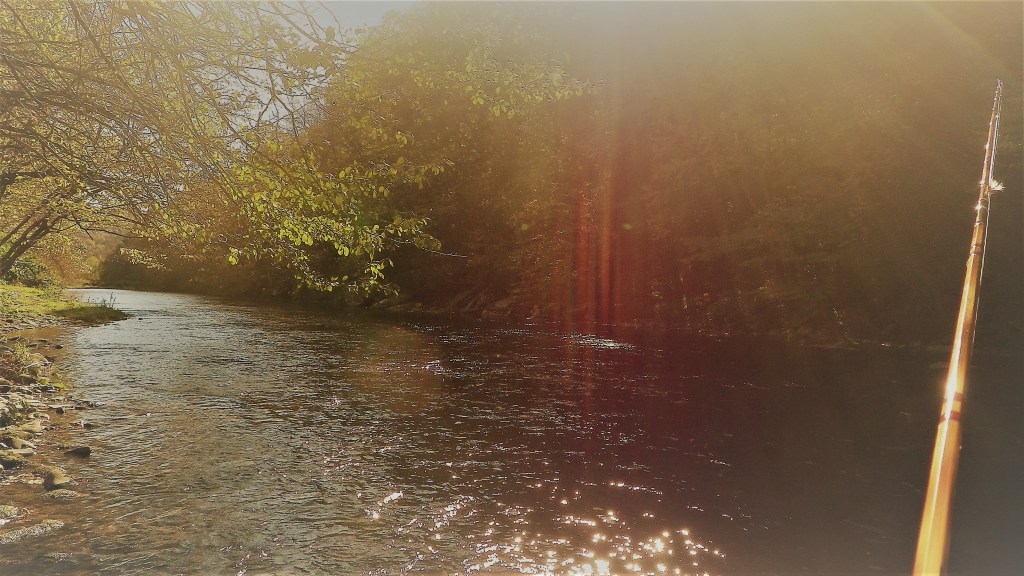
Dana Lamb’s Pigpen Pool, Beaver Kill River, in autumn. Given I had wandered the Willowemoc yesterday until the number of anglers exceeded my tolerance, I went on to sample another reach of small water. Though there are gorgeous, historic miles of the Beaver Kill above Roscoe’s Junction Pool, very little of that water allows public access and fishing. The “little river” has long been the domain of private angling clubs, and though the enjoyment of these shrines is restricted, it is their stewardship that has preserved the beauty and purity Nature has wrought there.
I read a great deal from those who angled there amid the Golden Age, icons like Sparse Grey Hackle, Gene Connett, Arnold Gingrich, and my favorite, Dana Storrs Lamb.
It was four years ago when I noted the fine print on a Catskill region recreational map denoting the location of Lamb’s “Pigpen Pool”, and though it was autumn and not the perfect time to visit the place, I was quite simply drawn there. Indeed, the Pigpen Pool was located along one of those rare reaches open for public fishing. I found it still just as beautiful as Dana had described it all those decades before my birth.
And so, in my desperation to find the solitude of fishing, I returned. There was no one about the place on this rainy afternoon, and I was excited when I saw a few mayflies winging above the bouncing currents. It looked every bit the fast run on this spring visit, very unlike the pools I fish on the lower river. I made a few casts of course, the old 7-1/2-foot Orvis bamboo being well suited to the environs, though I felt certain that the volume and velocity of the current would not entertain a trout to rise. Simply seeing those few mayflies in the air, standing amid that rush of bright water and hearing nothing above it’s passing save a hint of birdsong, caused me to feel the magic of the place.
Thank you once more, Mr. Lamb.

Search
Archives
- October 2026 (7)
- September 2026 (16)
- August 2026 (14)
- July 2026 (15)
- June 2026 (13)
- May 2026 (6)
- April 2026 (12)
- March 2026 (10)
- February 2026 (9)
- January 2026 (14)
- December 2025 (14)
- November 2025 (10)
- October 2025 (10)
- September 2025 (9)
- August 2025 (10)
- July 2025 (10)
- June 2025 (8)
- May 2025 (12)
- April 2025 (12)
- March 2025 (9)
- February 2025 (10)
- January 2025 (15)
- December 2024 (12)
- November 2024 (13)
- October 2024 (12)
- September 2024 (10)
- August 2024 (12)
- July 2024 (10)
- June 2024 (12)
- May 2024 (11)
- April 2024 (14)
- March 2024 (11)
- February 2024 (13)
- January 2024 (14)
- December 2023 (16)
- November 2023 (11)
- October 2023 (11)
- September 2023 (8)
- August 2023 (10)
- July 2023 (9)
- June 2023 (12)
- May 2023 (13)
- April 2023 (13)
- March 2023 (14)
- February 2023 (15)
- January 2023 (15)
- December 2022 (13)
- November 2022 (5)
- October 2022 (10)
- September 2022 (10)
- August 2022 (8)
- July 2022 (9)
- June 2022 (10)
- May 2022 (10)
- April 2022 (13)
- March 2022 (14)
- February 2022 (13)
- January 2022 (13)
- December 2021 (10)
- November 2021 (9)
- October 2021 (7)
- September 2021 (9)
- August 2021 (12)
- July 2021 (11)
- June 2021 (12)
- May 2021 (15)
- April 2021 (16)
- March 2021 (14)
- February 2021 (14)
- January 2021 (12)
- December 2020 (11)
- November 2020 (13)
- October 2020 (14)
- September 2020 (13)
- August 2020 (14)
- July 2020 (13)
- June 2020 (16)
- May 2020 (16)
- April 2020 (18)
- March 2020 (13)
- February 2020 (11)
- January 2020 (8)
- December 2019 (6)

