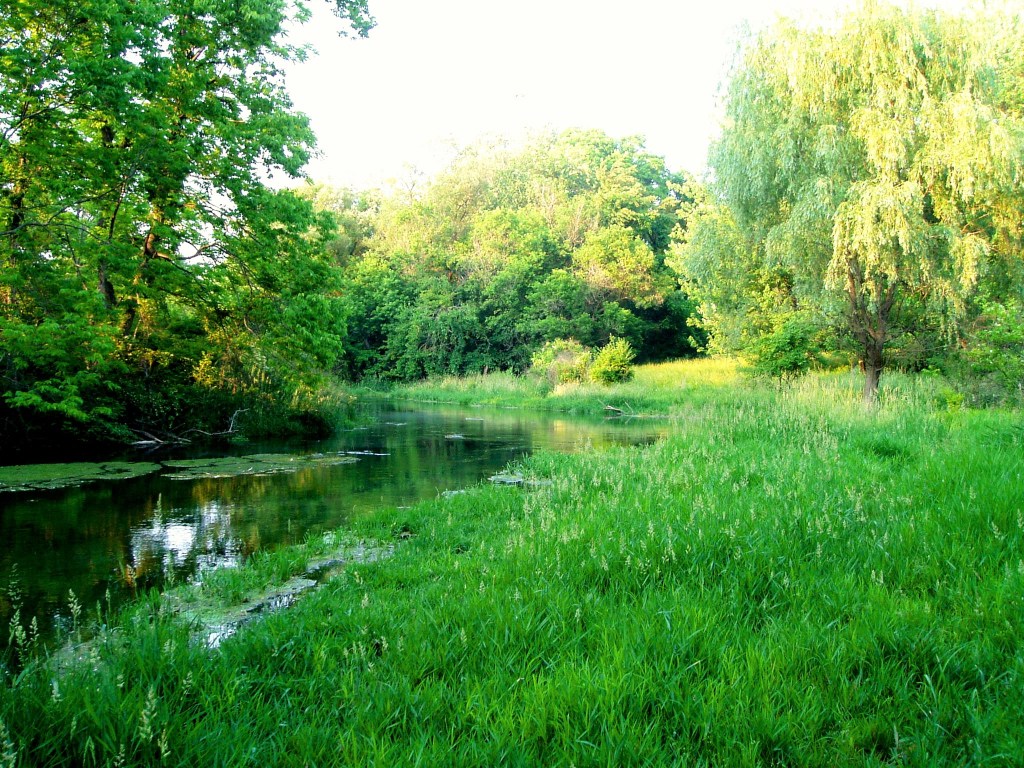
Sometimes a day brings a little surprise, even in January! I stepped out of the shower to brilliant sunshine streaming through the bedroom window, despite a forecast promising nothing but more cloudy weather. I dressed for the outdoors and set about a riverwalk, eager to take advantage of the moment before it slipped away.
I enjoyed the walk, despite the ice still clinging to the gravel road along the river, stopping to take a few photos and marveling at a flock of more than fifty Canada Geese spread out along a run of open water. My old bones need the exercise, and my soul a bit of deliverance, so any break from the recurrent ice and snow is more than welcome.
Going back out to retrieve a delivery a moment ago, I found not only that the sun still glided high, but had warmed the microhabitat of my little porch to a balmy 59 degrees! I stopped to ponder just how perfect that is for the cheer of a cold beverage and a porch sit! My little Angler’s Rest’s western exposure collects the direct rays of the afternoon sun, usually warming that small, covered porch eight to ten degrees higher than the ambient air temperature.
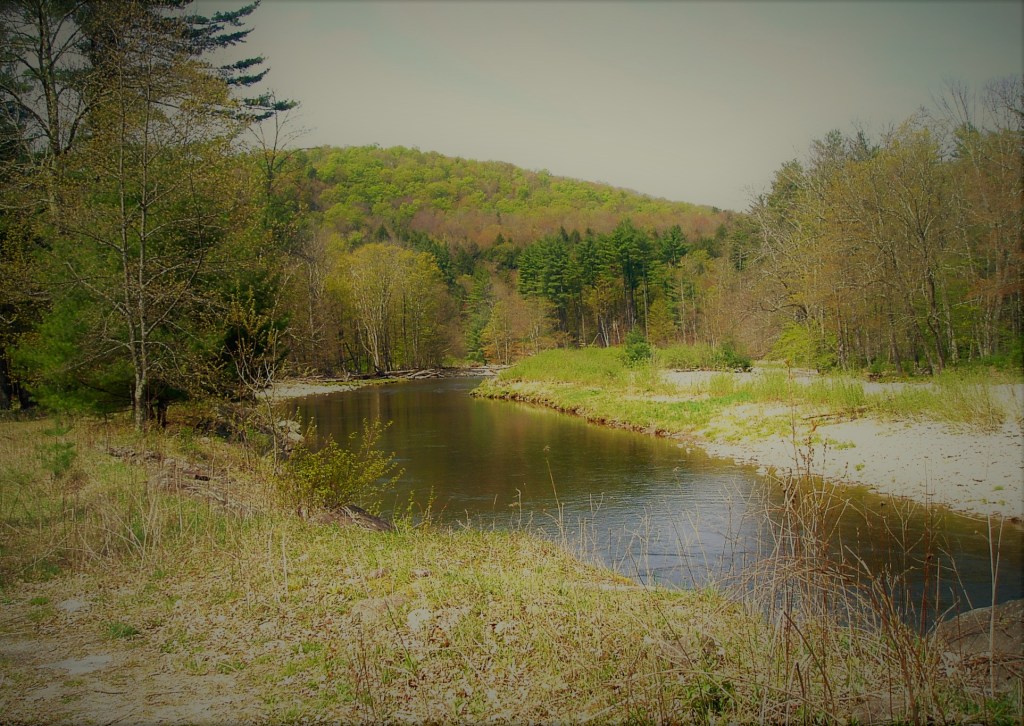
Winter sun on the Delaware
Ahh, I simply had to step away to enjoy those fifteen minutes in the warmth of that amplified sunshine. The ale which accompanied me was a favorite known as “Breakfast Juice”, brewed by the fine people at Hidden Springs Brewhouse in Norwich, New York. They describe this as “an American style wheat ale brewed with blood orange puree” and I find it most satisfying whether enjoyed in summer, winter, or any other season. My interlude was brief, for the sun was just above the top of the tree line along the summit of Point Mountain when I sat down, and over the top within fifteen minutes. Still, such moments are something special to enjoy on a January day.
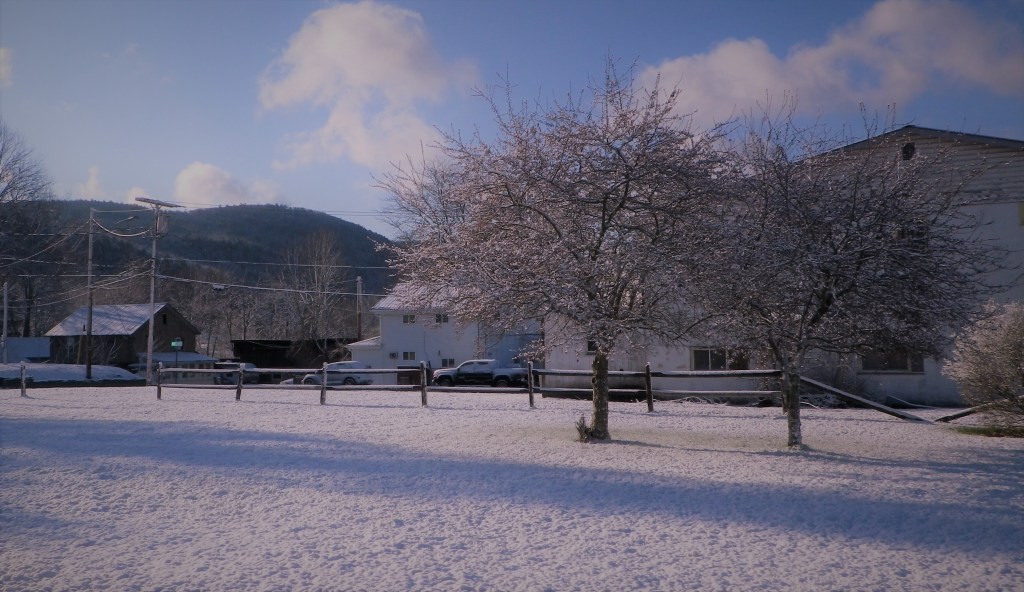
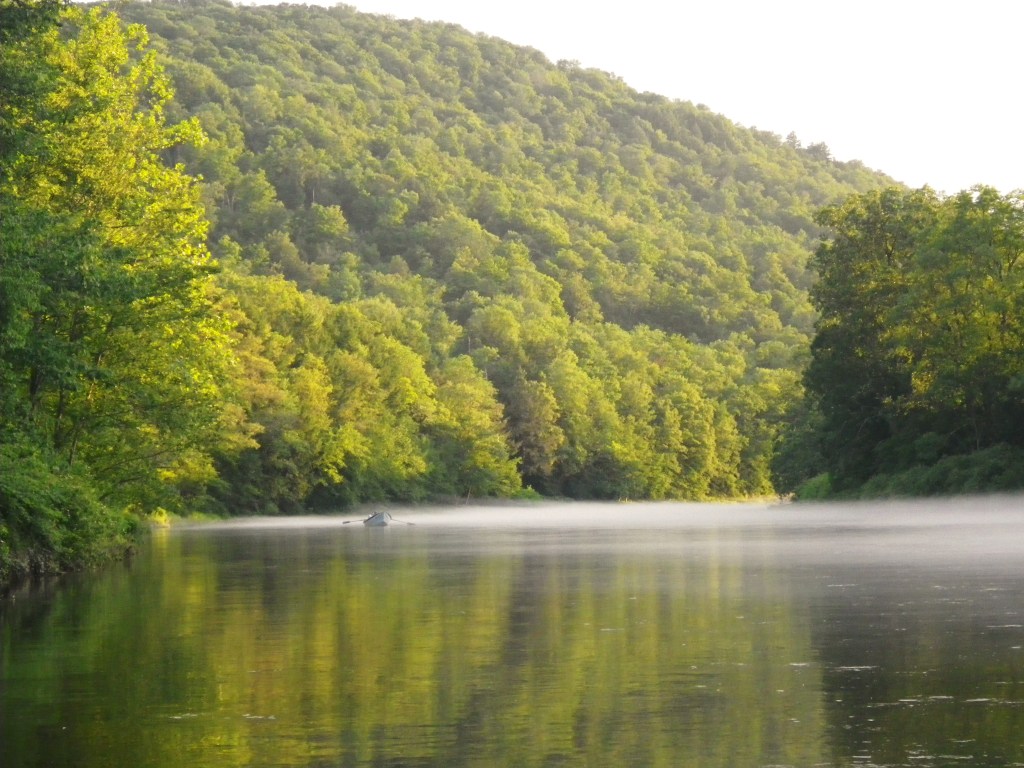
Point Mountain with mist rising as an April snowfallgreets spring sunlight
If you find yourself a snow and icebound angler, desperate for deliverance, raise an ale to celebrate any moment of sunshine and hope you encounter!
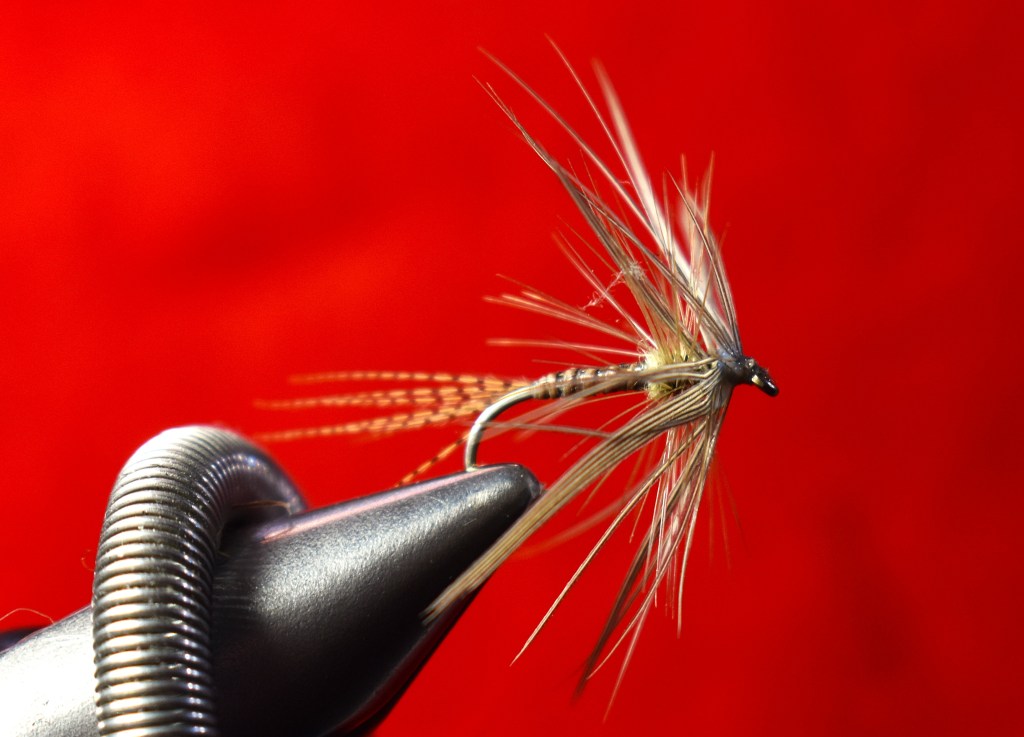
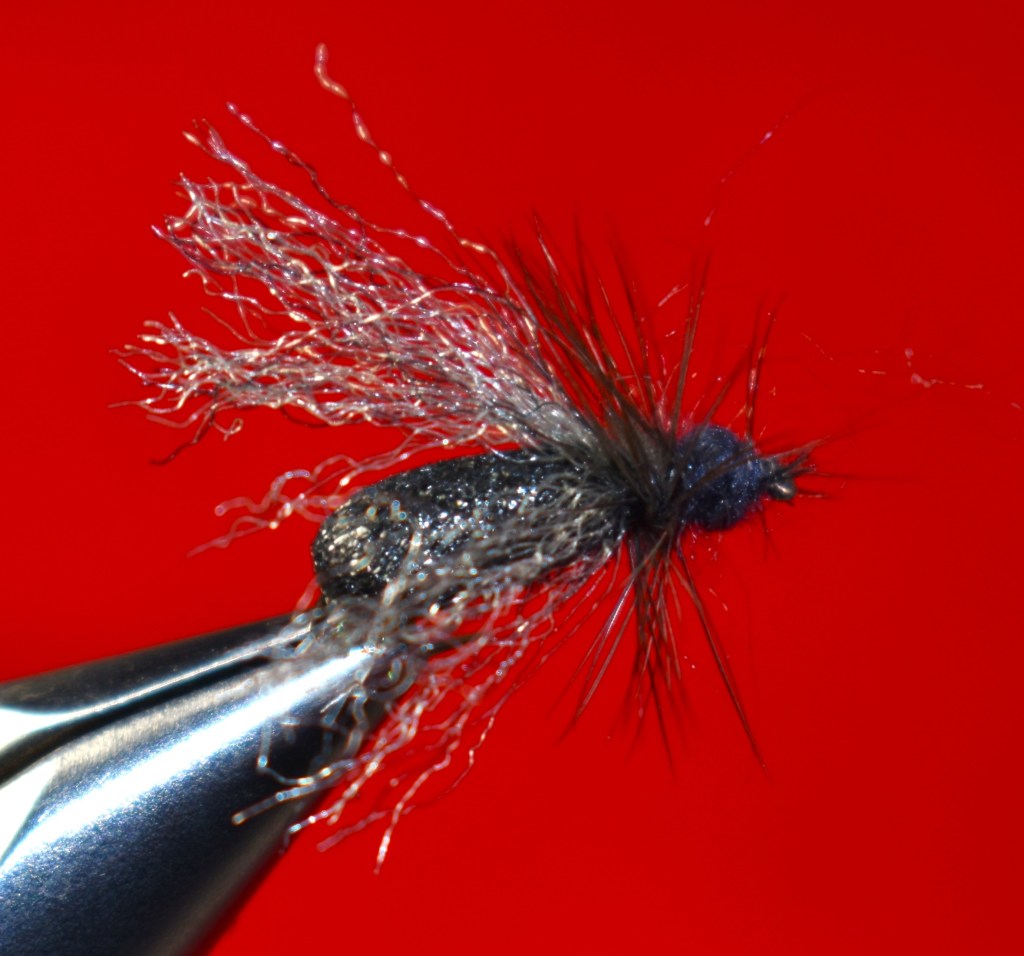
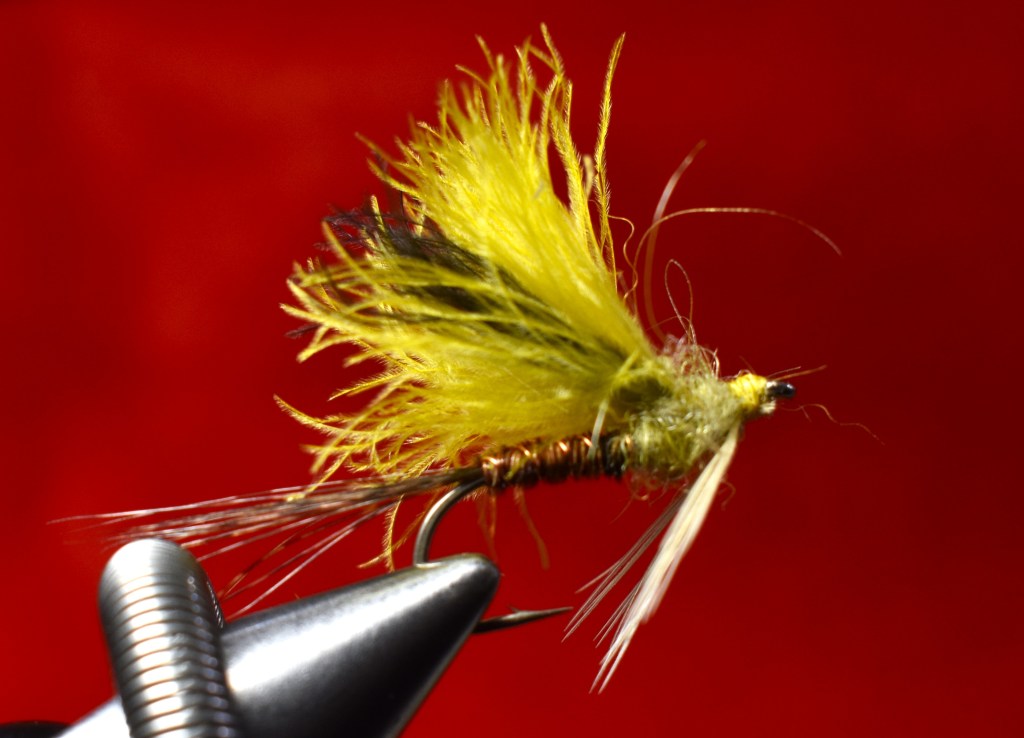
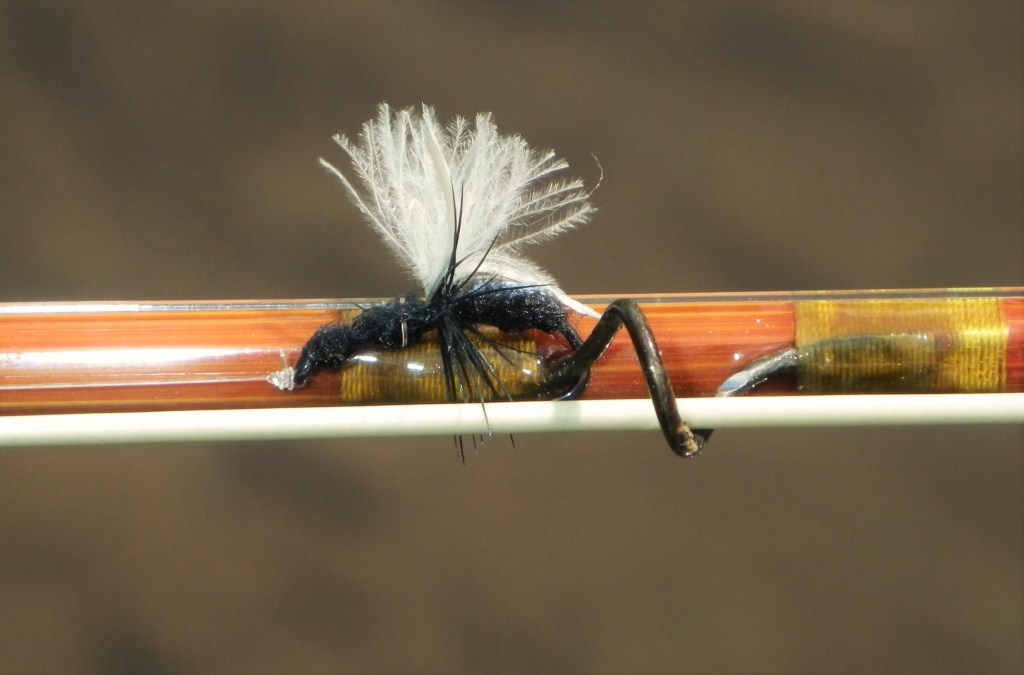
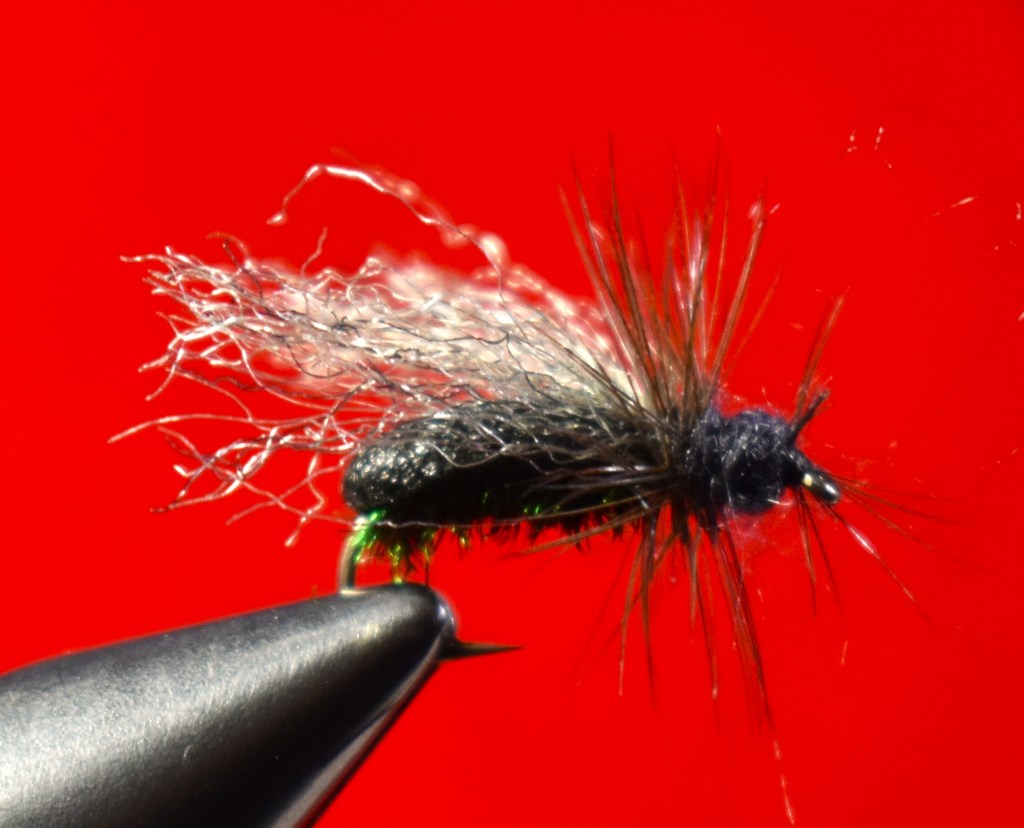
I stepped away from the classic dry fly the other day by tying a few hatch-matching soft hackles. Versatile flies to say the least, I most often fish these in the surface film to imitate drowned duns or spinners. In “Pheasant Tail Simplicity”, the recent collaboration between Yvon Chouinard, Craig Mathews and Mauro Mazzo, I noted the Pheasant Tail Dry Fly the authors presented with interest. Tied in a style that dated to the mid-1800’s according to the trio, a few turns of cock’s hackle behind a few turns of Hungarian Partridge, the fly recalled some of my own thinking, using wrapped CDC behind wrapped partridge for my “Drowned Hendrickson” pattern more than two decades ago.
In corresponding with Fellow Catskill Fly Tyers Guild Member Lou Duncan of late, he mentioned his fondness for and success in fishing various styles of soft hackles. Lou feels that movement in the fly itself is especially important to successful imitation, a belief that remains one of my own guiding principles in fly design. He shared an excellent article with me: “The Soft Hackled Dry Fly – The Phantom Among Us” from the Winter 2024 issue of “The American Fly Fisher”. Ably penned, and brilliantly researched by Stephen E. Wright.
Among Mr. Wright’s many discoveries related to the bi-hackled, dry behind wet tying style he dubs SHDF, perhaps the most surprising is the inclusion of 17 such patterns of fly in Frederick Halford’s 100 Best Dry Flies published in his “Dry Fly Entomology” in 1897. This gives so-called dry fly purists nothing short of holy guidance to tie and use this functional tying style in our dry fly fishing!
Reading the author’s bio and considering the familiarity of his photo, led me to believe he may well have been the gentleman I met at West Branch Angler a number of years ago. I recall a pleasant conversation or two in the Lodge, and at riverside, one of us going the other coming I believe, though I cannot recall the angler’s name. That has long been one of my little quirks of memory I am afraid, forgetting names though remembering most other details of a conversation. In any case, my compliments to Mr. Stephen Wright for a wonderful and valuable article!
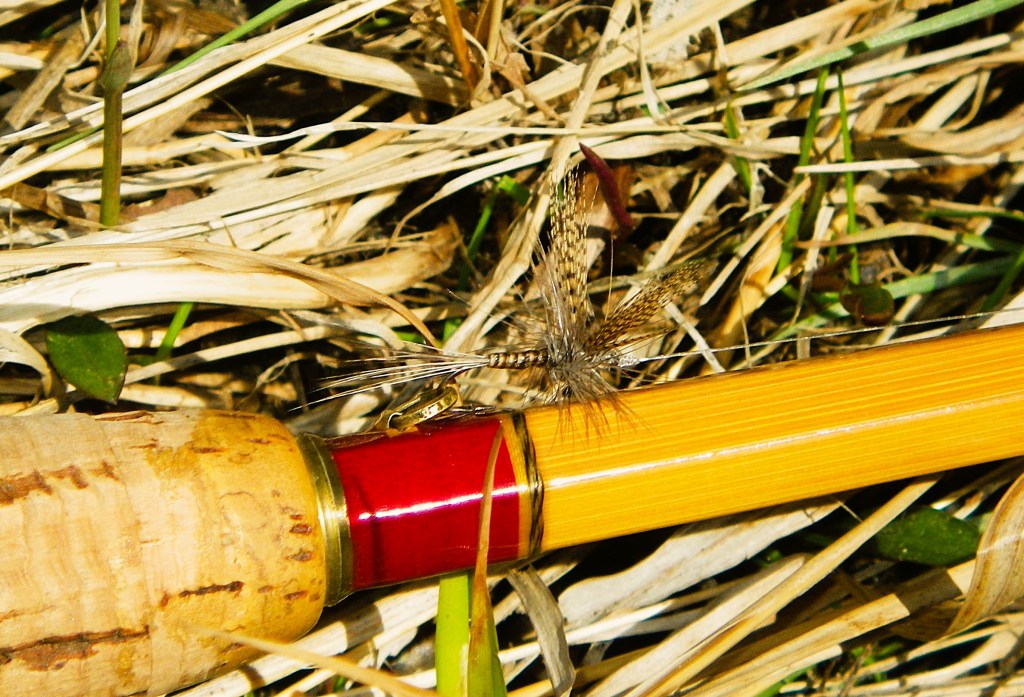
My Hendrickson and Male Hendrickson versions of soft hackled dry flies in the classic style!
It is good to know that I am on sound historical footing with both patterns, tied with my Atherton Inspired Hendrickson dubbing blend and reddish Beaver Kill Hendrickson blend to enhance their image of life.
The thought behind the Drowned Hendrickson all those years ago was to perfect the image of a dying Hendrickson dun awash in the film. Sparse winds of natural dun CDC added movement and clusters of air bubbles to simulate the mayflies crumpled wings while the sparse Hungarian Partridge hackle imitated the legs, with both materials moving gently in the currents.
The more recent Soft Hackled Spinnerfollowed the same design theory as the Drowned Hendrickson.
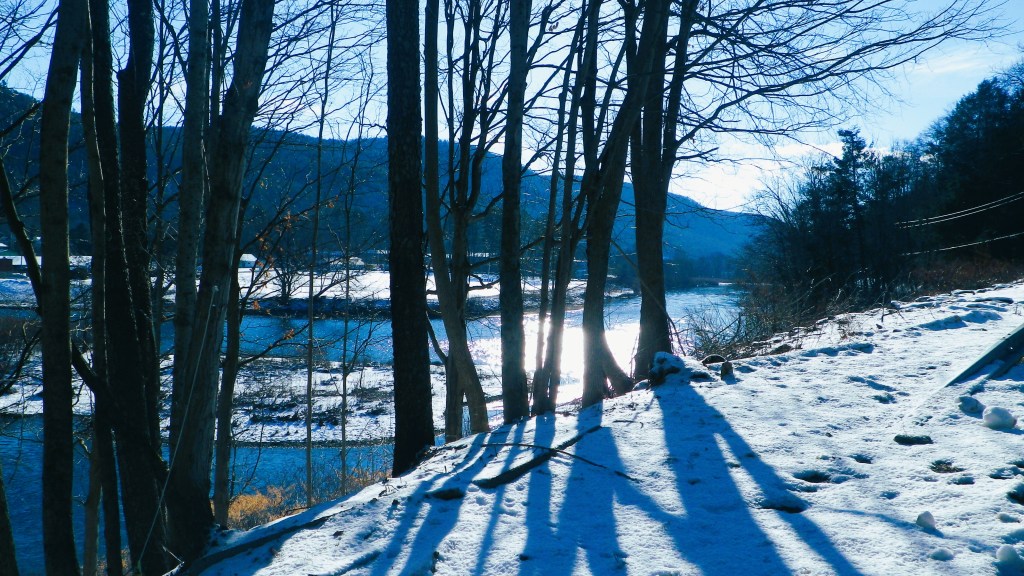
The early morning sunlight casts distinct shadows along land and riverscapes. Showcased by the extreme brilliance of winter sunlight upon snow, these stark pictures of the angler’s world inspire hope and trigger memory.
I recall those first moments when the thoughts of trout I could not catch inspired me: my first walk through Trego’s Meadow on the hallowed Letort, that first trip along the Falling Spring Branch, creeping low and slow while watching the bright flashes of her wild rainbows flee before me! These places were different from the waters I had fished in those early days as a bon-fide fly fisher, magical, impossibly difficult, the paths walked by the saints and giants of the sport.
Evening lights kisses the sky along the Falling Spring Branch
The legends of the Catskills called to me, even as I began to study those limestone streams, and here I found a new kind of difficulty. The rivers were wide and expansive, one moment lifeless, and the next alive with thousands of insects in the air above their currents. Those first hours upon the Beaver Kill, the most famous trout river in America, were impressive as well as mystifying. I found the answer on my last day of my inaugural trip, at least an answer to that moment on that particular run, and felt charged with discovery.
Hendrickson’s Pool, decades ago, amid the first blush of Spring
I would live near, fish and study Pennsylvania’s limestone springs for twenty-six years, learning solutions to many of their mysteries, yet still discovering new challenges each season. My visits to these Catskill Mountains were occasional at first, my list of rivers growing over time as my days here expanded. Three decades have passed in a whirlwind, yet there are impressions of all of these bright waters which remain etched into my soul.
There are common threads between these two regions which shaped my journey as an angler, for both are historical monuments in the history of fly fishing, particularly dry fly fishing, here in America. I have angled here throughout a modern resurgence and expansion of fly fishing. The young would say that there have been great advancements in knowledge, tackle and techniques during this age, though those of us with a greater store of years on the water know these to be the revelations of younger, inexperienced eyes, new pilgrims rediscovering the same truths.
Technology will not dispel the magic and the mysteries of trout and fly, though it convinces many that the answer to Nature’s puzzles as they confront them lie in some gadget in the palm of their hand. Those answers are there to discover, but they are as fleeting as the myriad questions which blossom in a day astream.
And so, a new year begins as the old one departs. There is bright sunshine this morning to belie the air temperatures in the teens. Wind driven air strafes the Catskills, such that a walker determined to enjoy it’s freshness must brave single digit wind chill. I can hear that wind howling past the window above my fly-tying bench.
My inspiration this day was tied to the hoped for early spring hatches, Epeorus and Ephemerella, the Quill Gordons and Hendricksons. I wound soft hen hackles around the dubbed thoraxes bunched just behind the eyes of heavy wet fly hooks, flies to probe the riffles on those cold, windy days of searching to find the forerunners of the hatch.
Blasphemy you say, for a brother of the dry fly, but not if they are fished in the film! There it is hoped the motion of those soft, sparse hackles might tempt a trout still too aware of winter’s lethargy to sample a bit of life riding high on the surface.
I have friends who chose soft hackles and spiders first and foremost, and I always mean to give these flies their chance. They do find their way to my cast, though not nearly as often as their history might deserve. The dry fly is a stern master, particularly in a season where hatches are terribly sparse, thus I think once more of expanding my repertoire and easing my self-discipline. Should I find myself giving as many hours to sitting and waiting as last season forced upon me, these flies deserve a few casts to ease the mental anguish of my endless waiting!
These months are the bowels of winter. January and February rarely bring respite in these mountains. I have enjoyed it once in seven seasons, two or three days when a wisp of warmer southerly air teamed with distant rays of sunlight to urge river temperatures to flirt with spring levels! I chose the perfect hour of the perfect day and brought leviathan to hand. I still wonder if such a February afternoon will be a once in a lifetime Catskill experience.
I ponder the making of a few more flies, whether to complete the first dozen of the New Year on the first day, or wait for another burst of inspiration. Perhaps I will decide, after lunch…
Indeed, that is the single question that taunts fly fishers and fly tyers. Many have theorized for answers for at least the past couple of centuries, and many believe we have found those answers. The catch is, and always will be that none of us know!
I wish I had had a steady platform to take that photo, for it’s sharpness of focus and minute detail suffers from the motion of the drift boat in the current. Those little grayish blurs are tiny olive mayflies you see, perhaps size 20 or 22. There is just enough clarity to tell that some are sitting tall with their wings upright, while others are in various postures, some struggling to remain afloat, others possibly crippled by incomplete emergence. There is no way to tell though, which one sparked the soft, dimpling rise of a large wild brown trout there in the margins of the West Branch Delaware.
Hendricksons during a fine hatch!
The second shot is older, and the camera of lesser quality, but I was wading and thus standing steadily along the riverbank. The Hendricksons are considerably larger mayflies too, a size 14, thus it is easier to see that most are floating with their wings upright, but a few are partially submerged and or struggling. These flies are drifting right along the bank. Out further, where the currents are stronger, faster and more variable, there were considerably more flies struggling with their emergence and drift.
The fairly conventional wisdom of selectivity as to which specimens the trout choose to take is based upon logical thinking: the flies that are encumbered or incompletely emerged are more likely to be taken for the trout sense that they cannot escape. I have touched on the recent book of two English chalk stream anglers, Peter Hayes and Don Stazicker who have performed a great deal of work with high speed photography and videography to prove that theory. As much as their body of work supports that conventional belief, even they cannot know what motivates the trout, and that is right at the heart of the magic we seek to immerse ourselves in when we wade into bright water with a fly rod in hand!
Consider the scene of that second photo above, taken on a darker, damp afternoon on the West Branch Delaware. The density of the flies on the water is obvious, and that density continued up and downstream and fully across the river as far as I could see. Thousands of mayflies, whether physically encumbered or not were staying on the surface for long, long drifts of fifty feet or more. No trout rose to meet them. Would not logical thinking demand that such abundance coupled with atmospheric conditions keeping flies drifting upon the surface, produce widespread feeding?
The subsurface fishers were not catching any trout on this afternoon either, and there were plenty of anglers plying various methods. Have you ever spent a day on the West Branch Delaware during the Hendrickson hatch? Solitude is not part of the occasion I assure you. The trout were simply not feeding. Puzzles like this remain, and I for one am very happy that they do, for challenge is the very essence of the game!
Too much emphasis is placed upon the idea of catching every trout in the brook. When was the last time you viewed an advertisement for any fly or tackle item that failed to promise you would “catch more fish”? I fear that mentality causes thousands who try fly fishing to abandon it without ever appreciating the challenge and the magic of bright water.
When I owned and operated a fly shop years ago, I often had a number of opening day trout fishers stop in looking for bait and spinning lures. Among them there were several who loved to brag about catching their limit of trout as quickly as possible and going home early. The saddest thing to me was to hear them teach their kids that this was the goal of trout fishing. I see fly fishers that seem to think the same way these days, and it saddens me.
If you are a newcomer to fly fishing, I hope whoever starts you along the path instructs you in the value of patience and observation and teaches you to appreciate the magic and wonder that is the essence of any activity in Nature. If you happen to walk the opposite bank, and have rushed along every river you have visited and spent a fortune on each new tackle item which claimed to be the answer, I hope that you stop and consider that fishing is not a competition, it is a meditation.
Between watching the snowflakes fall and shoveling our way to freedom, my annual milepost has slipped behind me. One hundred days represents the long down slide from winter to the angler’s spring, the beginning, or at least the fervent, daily hope for it, of another dry fly season on these beloved Catskill rivers. Today is day ninety-nine…
Though this run of winter days will be more than three months long, it is a season of hope for the snowbound angler. There will be more snow to be sure, but we will greet it as replenishment for the rivers born on these mountains. No doubt many of these days will be frigid, days when we gather close to fireplace, stove or heater, but we will tie our flies and oil our reels and think of sunshine!
It will be less than two weeks from today when the Catskill Museum will reopen for fly tyers to gather on Saturdays. Our Catskill Fly Tyers Guild will be well represented, and tyers of all skill levels are welcome to join us to share and learn and socialize.
Looking further ahead, the Guild will soon be planning our featured winter event: Fly Fest 2026!
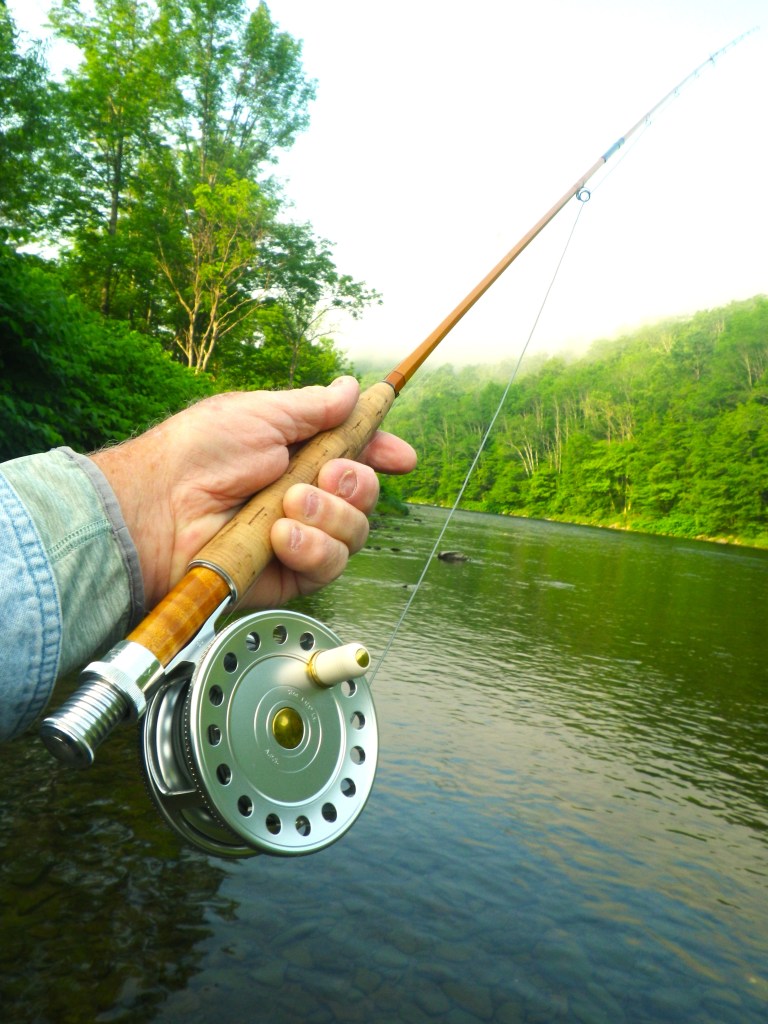
We shall all be watching the weather during the countdown, eager for a chance to cheat winter and slip out to bright water and feel the comfort of vintage cork between our fingers.
My own river legs get restless by March, when I will begin to head astream each day that Nature allows. There will always be dry flies in my vest, though only once in seven years has a trout risen during that third and often teasing month of the year!
March On The Beaver Kill
If nothing else, March days are for watching river gages and water temperatures as I pray for those fifty magic degrees that signal the first spring mayflies. I’ll wander riverbanks when those gages surpass forty nevertheless, as the fever builds until that first cast to a rising trout!
Truth is, the Red Gods do not offer a steady rise in temperatures, no matter how badly we crave them. Waters will rise past forty-five under weak spring sunshine, only to drop with a fast-moving cold front back into the thirties. Sometimes the rivers spend weeks in that holding pattern of the mid-forties, and these are the times that madness seems near for the dedicated dry fly angler!
Funny sometimes how the media reports the weather. It has been pretty clear for several days that the Catskill’s belated Christmas gift would be the worst winter storm of the season. Rather than just give us the clear picture though, our local forecasts are saying three to five inches today, repeating three to five inches tonight. They seem to think it best to mediate the impact, separating the storm front into halves, rather than telling us straight out we are looking at six to ten inches (and maybe more…) of snow within less than twenty-four hours.
Is that presentation supposed to be good news for older residents like me? I mean, I will only have to shovel three inches or so, if I go out and do it in the middle of the storm. Yea, oh by the way, I will have to do it twice.
Some snowcap in the mountains will help the rivers, but I’d still prefer a warm, wet winter with plenty of rain. A growing snowcap after six weeks of on and off rainfall days would be ideal, for there would be good flow in all of our rivers when the coldest weather settled in. Good, steady flow cleans and protects the precious gravel and silt beds where the stream life grows. Low flows and extreme cold mean anchor ice, and the sparse hatches of the 2025 season more than demonstrated how devastating that can be.
Things could still work out. If that foot of snow up high melts slowly, the rivers will get a fairly constant dose of water. If the weather continues to bounce up and down though, all of it could come rushing down at the same time, just like our previous snowpack. Floods and freezes are the problem, steady replenishment of ground water, springs and surface flows is the solution.
There are a lot of people pointing fingers at who is responsible: scientists, conservationists, big business, politicians, you name it. I tend to think that a lot of our increasingly unfriendly weather patterns are part of a natural cycle, though it makes a great deal of sense to me that man’s pollution and destruction of our natural resources is making things worse. I hope we wake up and get past the blame stage and do something positive about the problem. Wild fish and wild water are my passion, and I truly wish to see them outlast my time here.
This morning’s strong winds have cleared much of the decorative snow from the trees, but a White Christmas is a certainty for these Catskills. It seems the reflective landscape will stay with us once more, as Friday’s prediction offers nearly seven inches of new snow!
Reality has been outperforming prognostication since our first winter snowfall, where “three inches” fell as six. I cleared three inches from last week’s “inch”, and four inches of yesterday’s “two”. I hope the trend declines abruptly in light of the 6.8″ I viewed for Friday, too much for an older angler to shovel.
Reading produced another idea which resulted in a trial modification of a pair of mayfly emergers. Among the unusual patterns in the Hayes & Stazicker tome released this year, there were some ideas for sinking the rear of such flies involving a material I have not used for more than a decade.
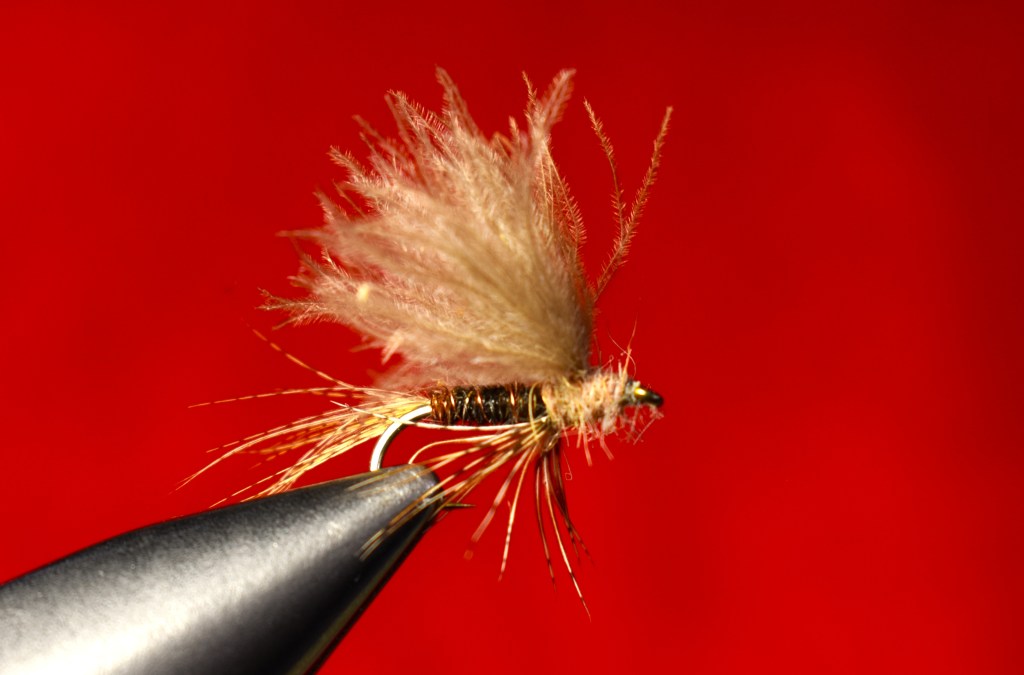
In the nineties, the twisted wire dubbing brush became a “thing” for a time, and I came across a couple of strands in a baggie marked “Rybarsky Sport, Fishing Sport, Angelsport” from the Czech Republic no less, acquired more than thirty years ago at the first Fly Tying Symposium. I set it aside for I had been interested by the aforementioned videographing Englishmen’s use of the material for a weighted trailing shuck, and finally pulled it out and tried the idea on my March Brown and Green Drake emergers this week.
The dubbing brush used for the trailing shuck and the rear of the abdomen, expected to pull the butt of the fly deeper beneath the film, bringing more of the multicolored CDC wing into contact with surface currents: always a good thing!
I tried two different styles of hooks that I had in my larder, the local fly shop being closed for the season. A Core emerger hook in size 12 seemed a good base for the March Brown, while a longer partridge Klinkhammer hook (also a 12) offered an even better shape and the greater length required for the drake. I think the Klinkhammer style will be the best choice to keep everything but the wing and head of the fly beneath the film, but trials must of course wait until spring.
I have more of these dubbing brushes somewhere. Once I find them, a Hendrickson pattern will take shape at the very least. The material is suitably sized for larger mayflies, though I seem to recall some of these brushes were thinner than others. I believe the style would be good for the sulfur hatches on our tailwaters, at least for the larger, size 16 flies encountered in May, though finding the style of hook I want in the smaller size may be a challenge.
Perhaps I will find the brushes as I work my way through restructuring my tackle room, for a little fly tying would help pass the snowbound conditions to come!
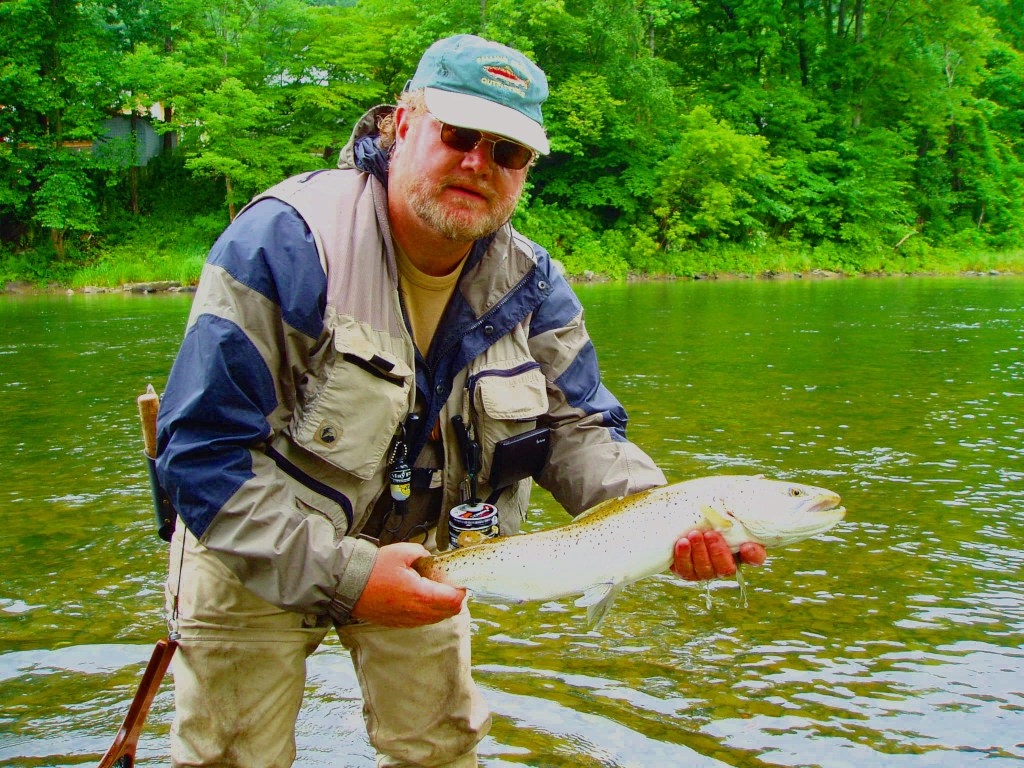
One of the things I miss this time of year is the chance to go fishing. For many of my years in Pennsylvania’s Cumberland Valley, the limestone springs offered the chance to angle for a Christmas fish. A bright Falling Spring rainbow seemed the perfect emblem for this cheery time of year! During most seasons, the weather would be suitable in December, though having one of those milder days coincide with my time off required some luck.
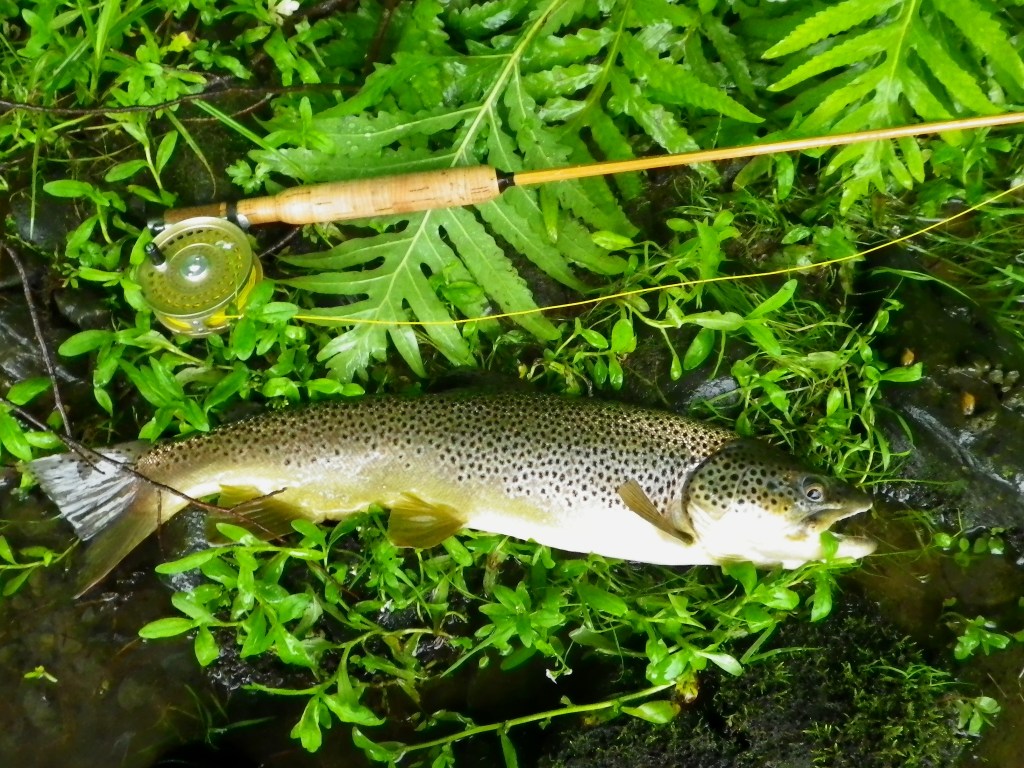
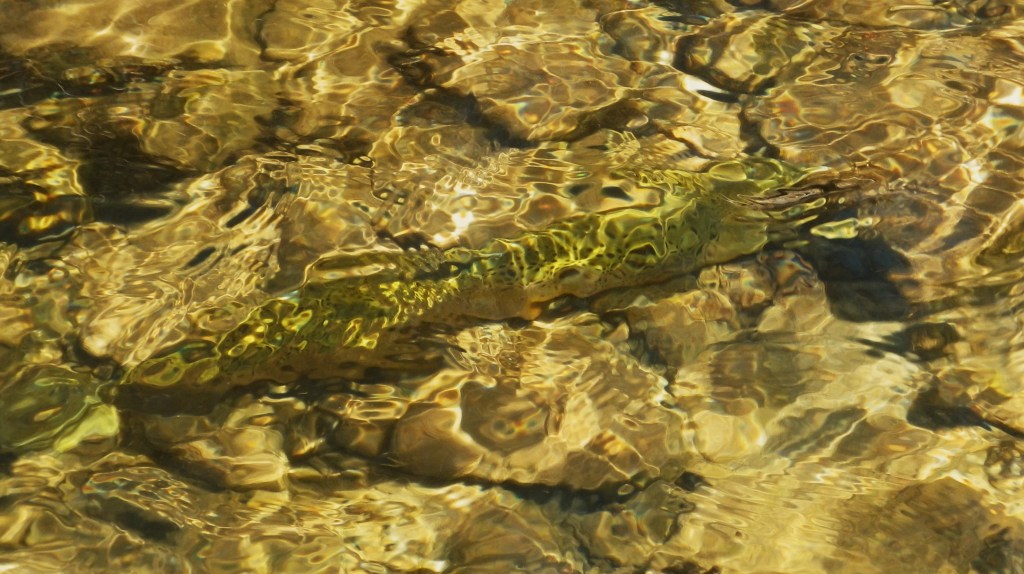
A winter rainbow from the limestone springs!
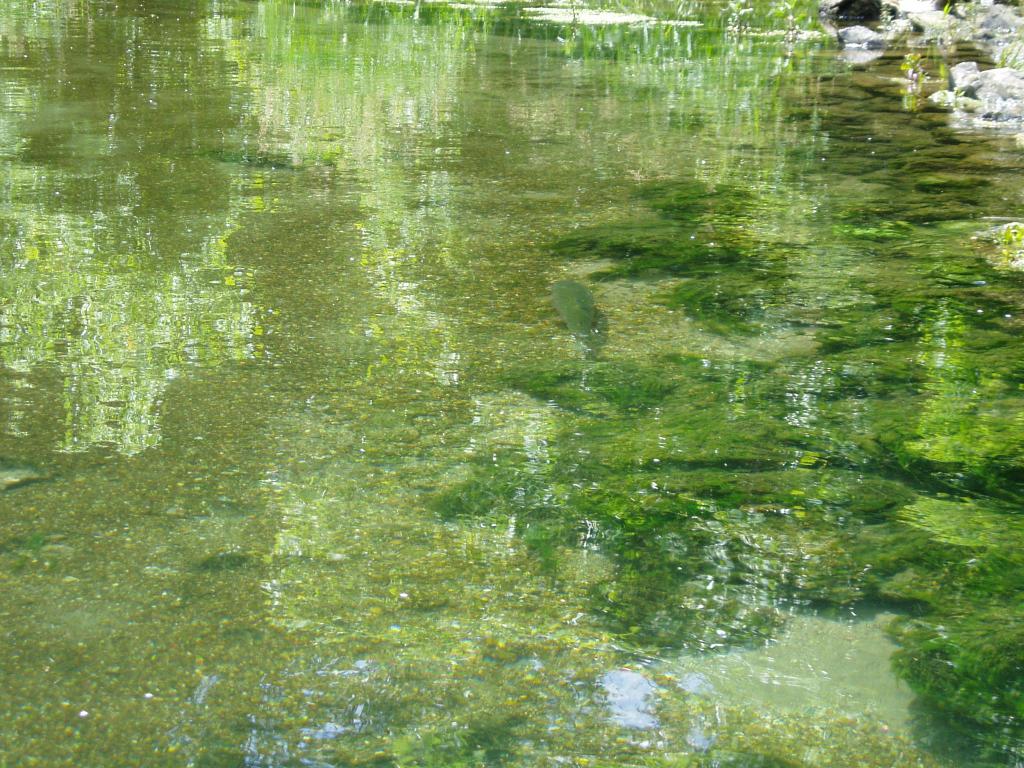
During the fly shop years, I fished mornings during most of the year. I even landed my personal best rainbow on a frosty January morning while trying out a new Orvis demo rod on Falling Spring. The key was always sunlight! Though the aquatic weeds died back in winter, they did not vanish. Morning sunlight started photosynthesis, adding oxygen to the water, and that generally activated the stream life, including the trout. That five-pound rainbow was more than active, leaping and thrashing the weed beds as it fought to escape!
This looks to be the third extremely cold winter in a row, so any chance to wander bright water and swing a fly will truly be a divine gift. If the rivers remain icebound for short periods between thaws, a two or three day warming trend could find me haunting a tailwater…
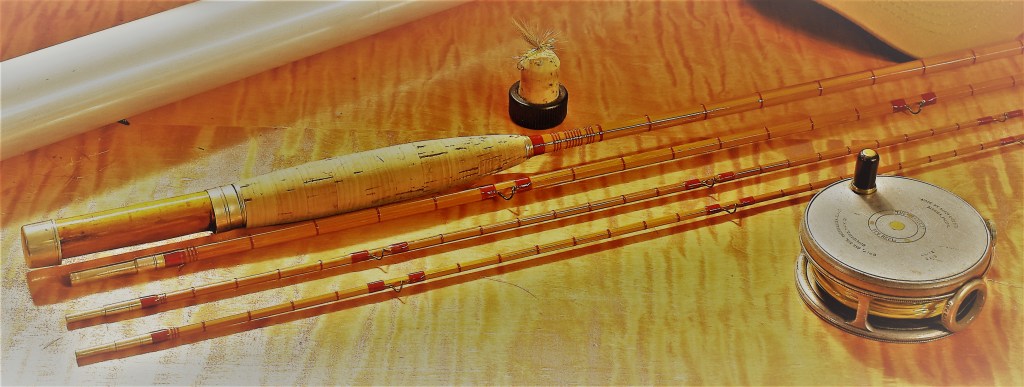
Catskill split cane and Autumn sunlight upon Dana Lamb’s beloved Pigpen Pool
I began my day with an old friend, wandering the timeless Beaver Kill with Dana Lamb…
This week I opened his first volume, “On Trout Streams and Salmon Rivers” to once more savor the highlights of my winter reading. We walked this morning the length of the Beaver Kill, dreaming of the rush of “red-letter days” and sobering over his laments. Lamb waded the greatest American trout river during the Golden Age, when gorgeous wild brown trout swam in all the pools from Turnwood to Peaksville, and he waded it still after World War II when automobiles and spinning rods brought throngs to the river to take every trout they might, and the angler’s solitude with them.
Remembering one pool during the halcyon days brought a knowing smile when he told just where he cast his “Fanwing”. Wild browns still abide there my friend, and on the right day perhaps a great one would come again to your favored Fanwing Royal!
There are still a great many anglers who flock to our most famous river, yet most seek the easy, cookie-cutter stockies that Lamb lamented. Few hunt the wild browns with devotion to the dry fly, and I rejoice in that, for it allows me to recapture something of the solitude he missed in those post-war years.
Along the route of his tour, he wrote that the “Acid Factory pool holds no charm for me and never has“, which brought my own earliest memories of the river to life. It was there that I found dozens of trout rising as the Shad Fly caddis boiled from the rushing flow. On my very first trip to the fabled Beaver Kill, it was I who had just the right fly! I remember most the fourteen-inch brook trout who demanded my best cast across the maelstrom before he deigned to take my fly. He was strong and darkly colored, and I still believe he was as wild as that water, having come down from Horton Brook to feed in the wealth of the big river! My hands shook when I turned out the fly and released him back to his kingdom.
Thirty-three seasons have passed since that day, nearly a third of a century, but I still feel the excitement of those first days each time I visit the river. Whether walking through time with Dana Lamb, or working out line amid the glimmer of spring sunlight, the Beaver Kill still captivates me, and always will!
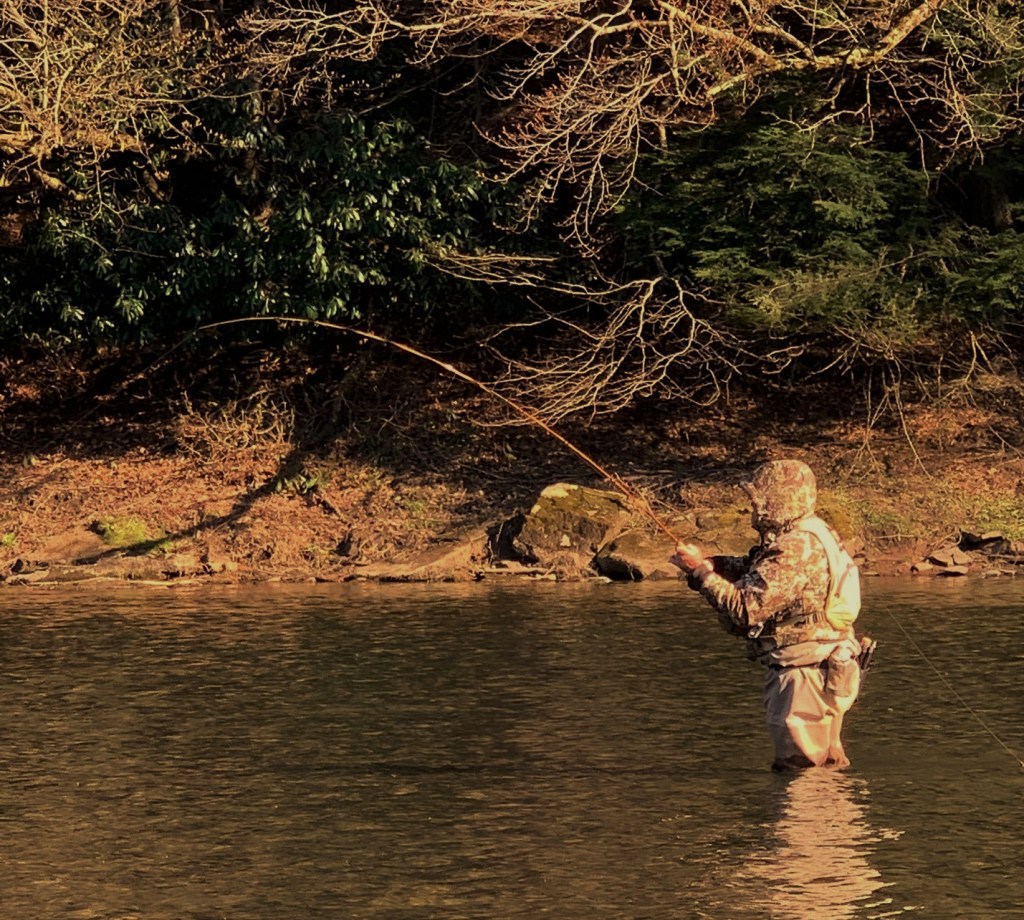
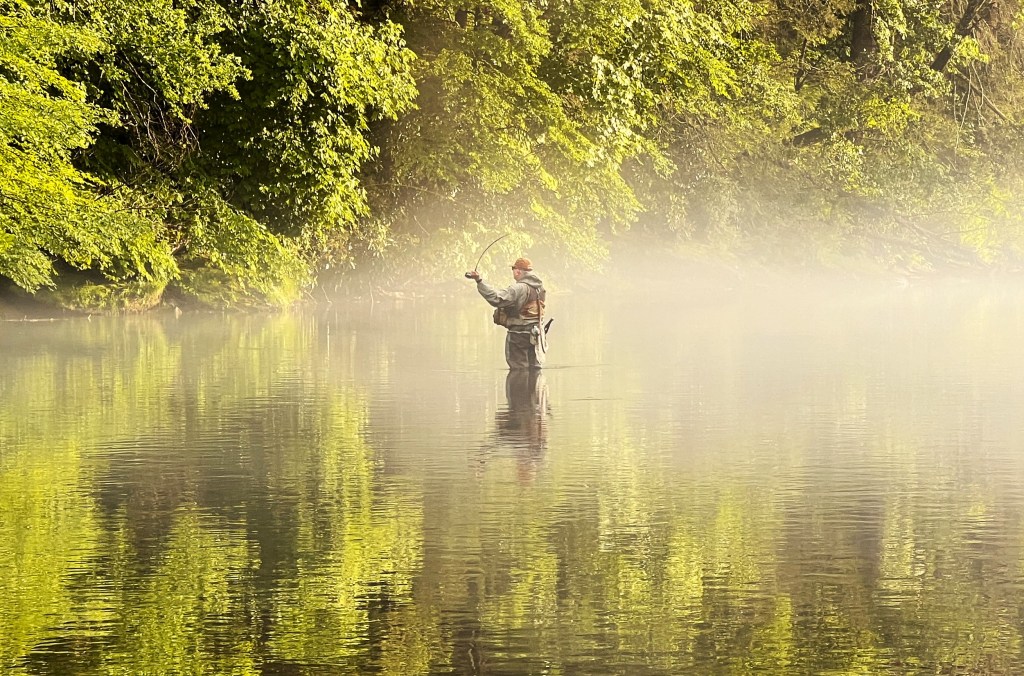
I found the East Branch free of ice just now, running clear through Hancock and into Crooked Eddy, and I saw something else I did not expect. A solitary fly fisher stood in the frigid water beside the riffles, swinging a fly down through the deepening flow.
It was a sunny twenty-nine degrees when I left the house, and the river gage just upriver from that stoic figure reads thirty-three as I write this. I would say that, to express that fellow’s chances of catching a trout, one would be most accurate to delve into the negative numbers. Is this a sign of desperation? I think not.
I could not recognize anything familiar at my distance, nor did the truck parked nearby stir any remembrance. Might he be a local? Perhaps, though I have seen anglers travel here in all seasons.
It might be he is no more expectant of a catch then I would be, but simply an angler who feels the need to say farewell to the river on this bright, ice-free day.
We will have snow tonight and more tomorrow, so this may well be the last day this year will allow a man to stand in the moving current and cast a fly, to bid farewell to bright water and it’s magic until springtime.
I too have waded these rivers beneath winter skies. If the Red Gods choose to offer a milder season, I will search for the warmest water on a day blessed with sunshine. Our tailwaters may even surrender a trout when water temperature rises to 37 or 38 degrees. I know that the possibility exists on that kind of day, though I certainly know the difference between possibility and likelihood. I choose to wander rivers on many days when the best I will carry from the river will be contentment; appreciation for a few hours of solitude in one of my favorite places.