
-
The Flies and the Fish – A Memory Walk

My winter abode: I do my best to keep the most-used materials easily accessible, and the bamboo tower at my right does a wonderful job of that! It was a welcome find at the Catskill Center’s Summerfest a few years back, and I could not do without it now. The sun shines brightly in the winter sky, threatening to warm our mountain air enough to flirt with fifty degrees. Oh, how I wish I could slip away and swing a fly for a couple of hours! Alas, an old enemy – bronchitis – has me coughing and retching horribly with even a short walk in the winter air. I am a prisoner of memories…
There has been a great deal of observation and fly tying experimentation these past few seasons, committed as I have become to hunting the great wild trout of the rivers of my heart. If I let my mind wander a bit, the patterns that worked exceptional magic bring a smile, brightened by the memory of the moments that crystallized my resolve to continue my quest.
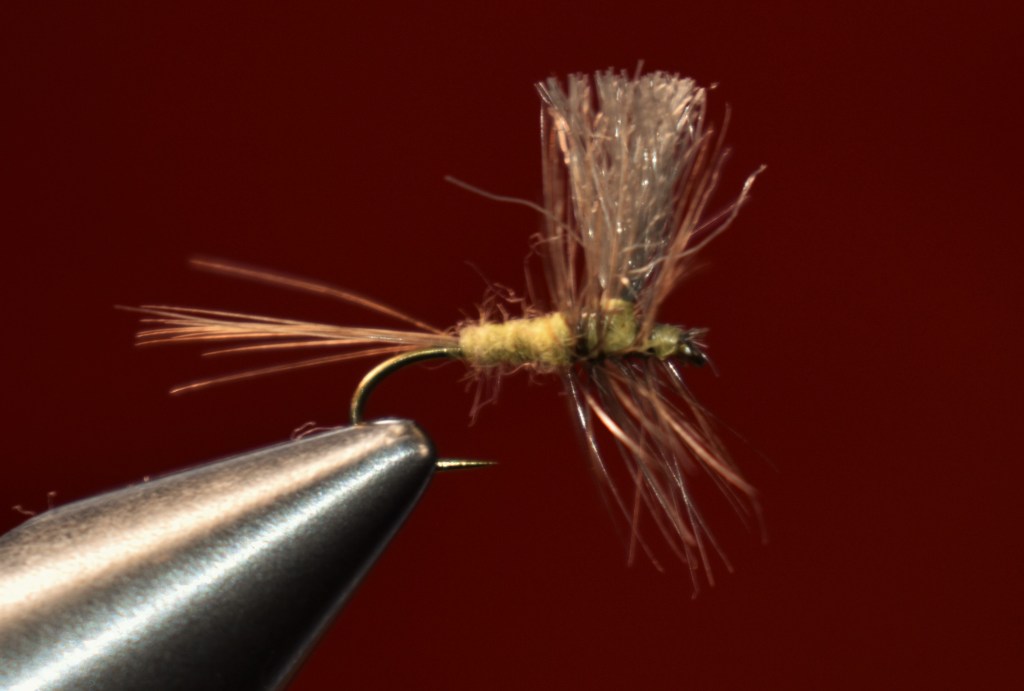
I called her a Little Dirty Yellow Hendrickson when I first found her bobbing down the currents on the Delaware. Tied first as a Poster, she produced some mesmerizing moments during a lull in the seasonal hatches. I was angling on a favorite reach of bright water on such a day. There were barely enough flies to bring a few soft rises intermittently, and the timing and location made me feel certain they were sulfurs. None of my tried-and-true sulfurs drew any interest from a trout, and then I remembered that Delaware morning. I set to work on one devilishly inviting riseform and the ensuing battle left me breathless when I brought a heavily muscled two-foot brownie to the net!
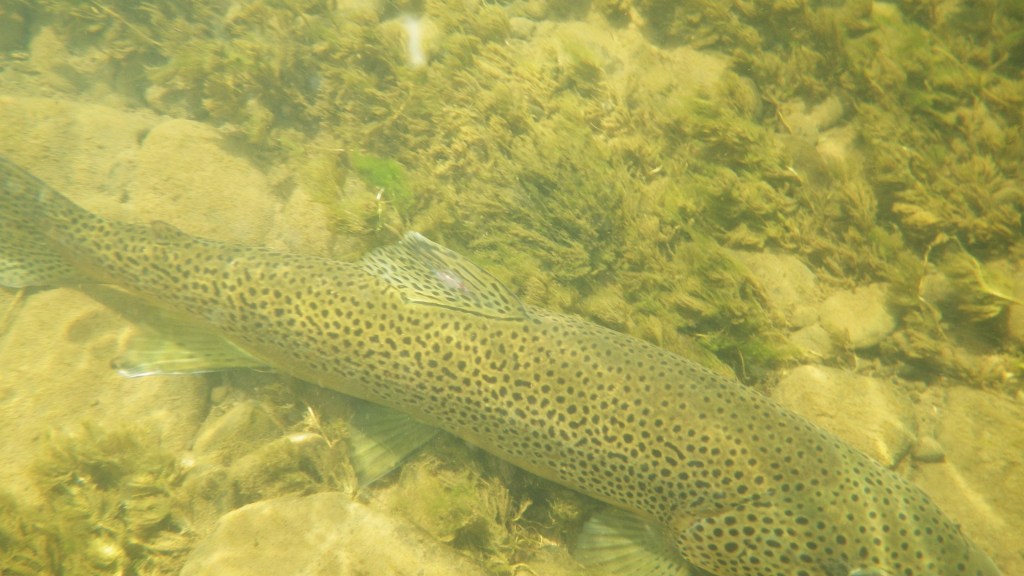
The trout that proved the little dirty yellow fly legit! That was not to be the end of my day, for the fly I have come to call the Lady H fooled another leviathan of like proportions come early afternoon. The lady has since earned her own fly box, which harbors an assortment of Posters, parachutes, CDC Duns and 100-Year Duns! She makes magic between the earlier Hendricksons and the March Browns, when long days on the river sometimes reveal few risers, thus the little Lady H has stolen this angler’s heart!
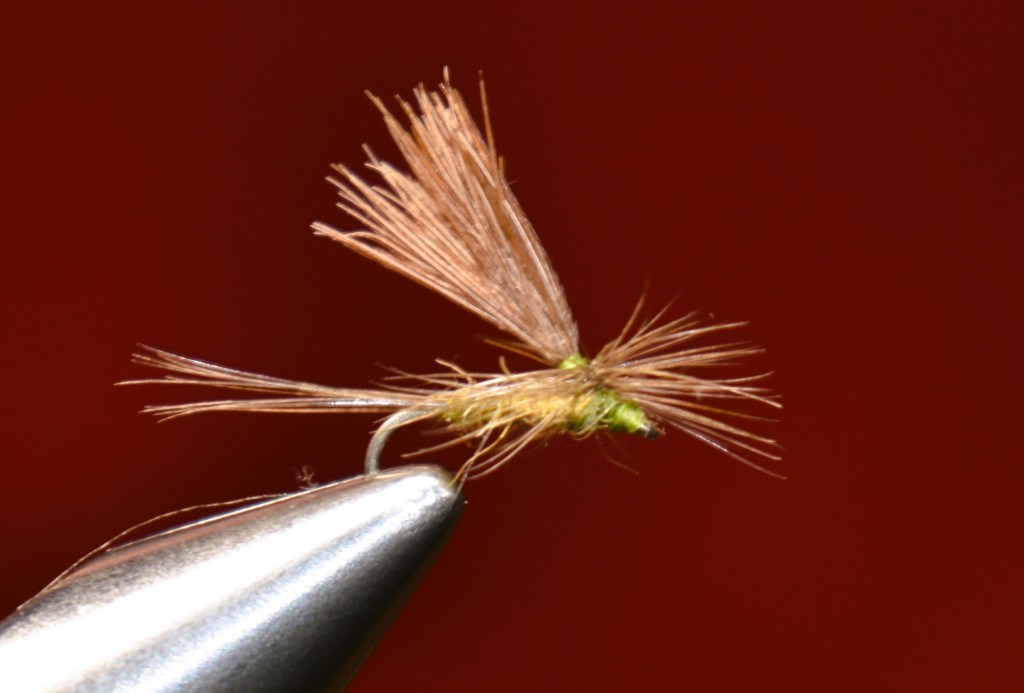
One of those first little olive 100-Year Duns, the flies that made magic! I recall showing some early 100-Year Duns to a friend who asked me why the wing was “pushed down like that”. I continually pay homage to the father, Theodore Gordon, for the inspiration to begin my journey tying the single canted wood duck wing. Though my signature fly began with the Green Drakes all those years ago, the expansion into all of the other primary Catskill hatches has revealed just how effective this style of fly can be. In particular, the small flies have been revolutionary.
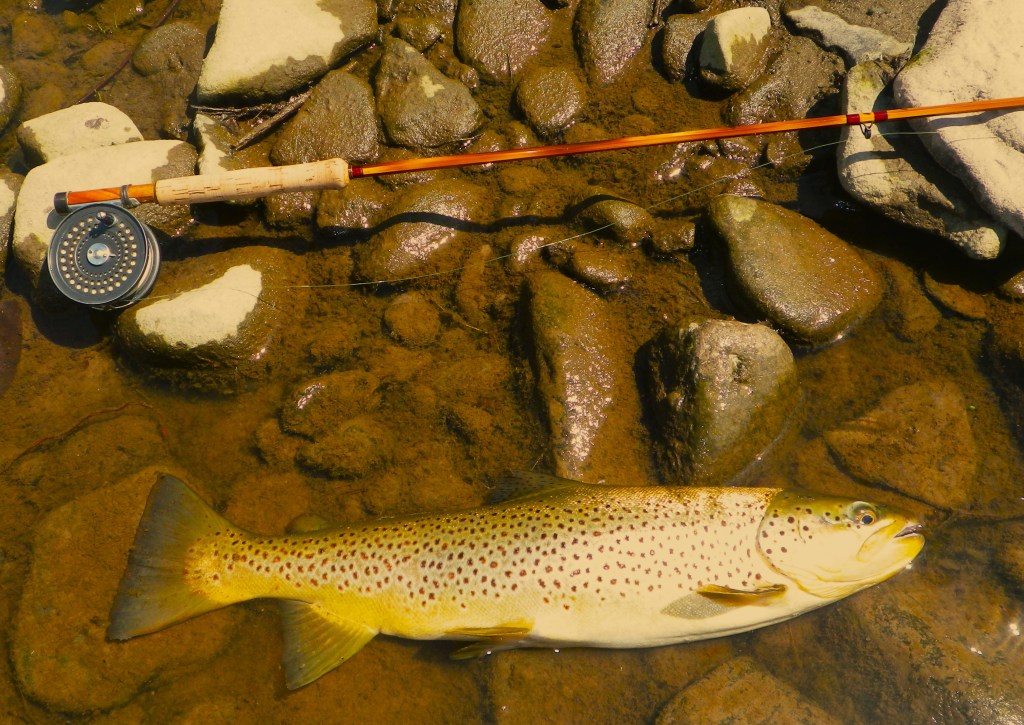
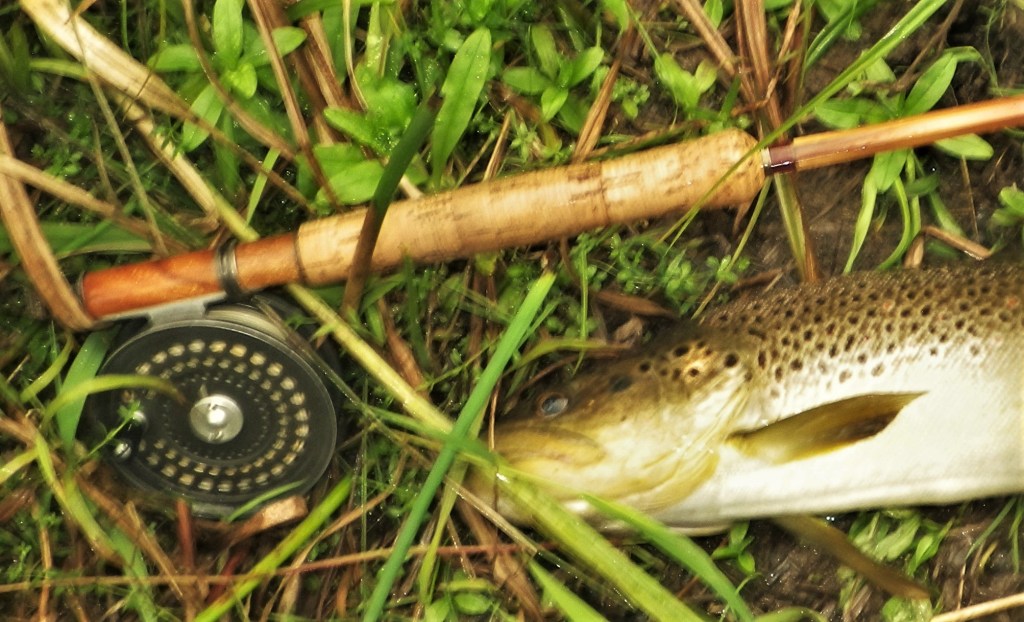
Last year, late October, and my season finale proved to be perfection. I had tied three little 100-Year Duns on size 18 hooks, dubbed with my old favorite olive muskrat fur, and winged with widgeon. Late in the afternoon I stalked a low, clear flat and discovered a gentle dimple near a fallen branch in the edge of the shade. The fly was cast short, one time to assess the float, then offered to the full soft ring before me. Oh, she spun the Hardy LRH madly as she streaked to mid-river, my coveted T&T Hendrickson bowed mercilessly! Captured, she was a gorgeous apparition of gold and bronze, my final trophy for the dry fly season.
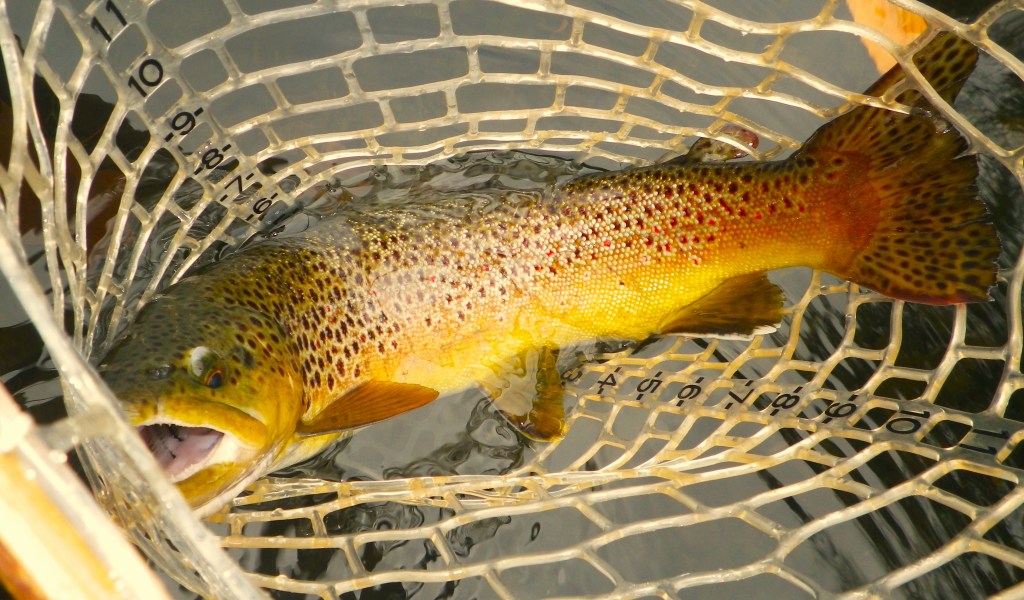
In April, I live and breathe for the Hendricksons, but even with a good hatch on the water, Nature can weave a mystery of deceit. It was not one of those days to find multiple risers, and when I finally found one good fish in a difficult lie, I gave my full attention. It took me some time to realize that, though there were plenty of plump Hendrickson duns dancing on the broken currents above that trout, I had failed to see even one vanish in the soft rings that betrayed my fish’s lie. There had been little flurries of smaller flies earlier in the day, but I was seeing only Hendricksons out there on that run.
My eyes fell upon the last of those little widgeon-winged olives tied last fall, and I smiled as I plucked it from my fly box. All hail the little 100-Year Duns!
 No comments on The Flies and the Fish – A Memory Walk
-
Back To The Bench
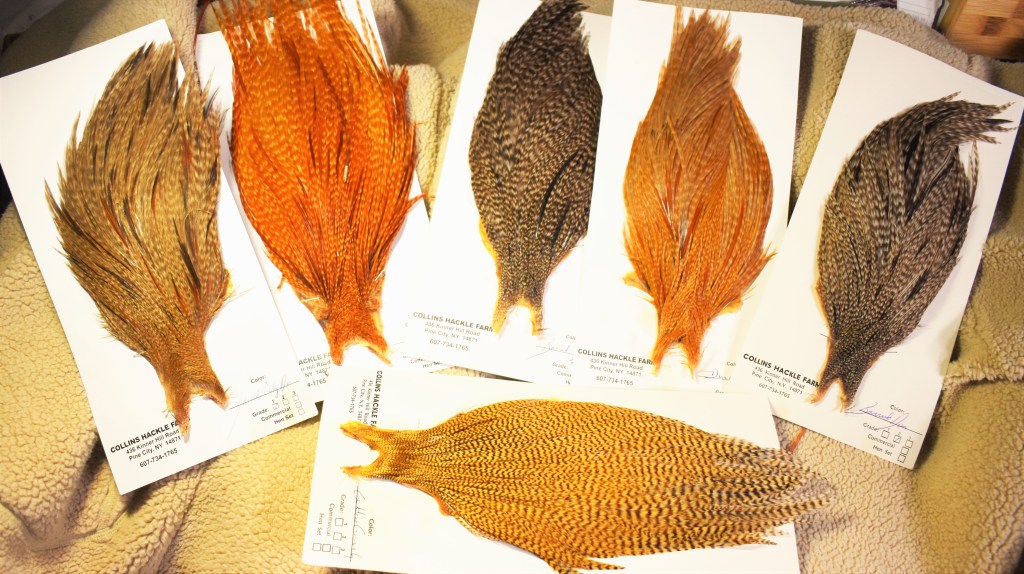
Some of Charlie Collins’ lovely, barred hackles, favorites for many of the flies I have designed. I missed last week’s Zoom gathering of the Catskill Fly Tyers Guild, not by intent certainly, but as a result of battling the end of a nasty head cold and the onslaught of the bronchitis that used to plague me during my working years. To avoid another misstep due to weariness, I have been playing with some hackles and dubbing this morning, preparing for tomorrow eveningof .
Though our tying sessions are intended to be casual, our President likes to have some attention brought to a classic Catskill fly to begin these meetings and looks to someone to volunteer to pick a fly and demonstrate it. This opening interlude does help to keep our group aware of our mission and appreciation of the history of Catskill fly tying, and it does help make members aware of some of the lesser known patterns. I am a fan of this week’s fly myself, none other than the late John Atherton’s No. 4 dry fly.
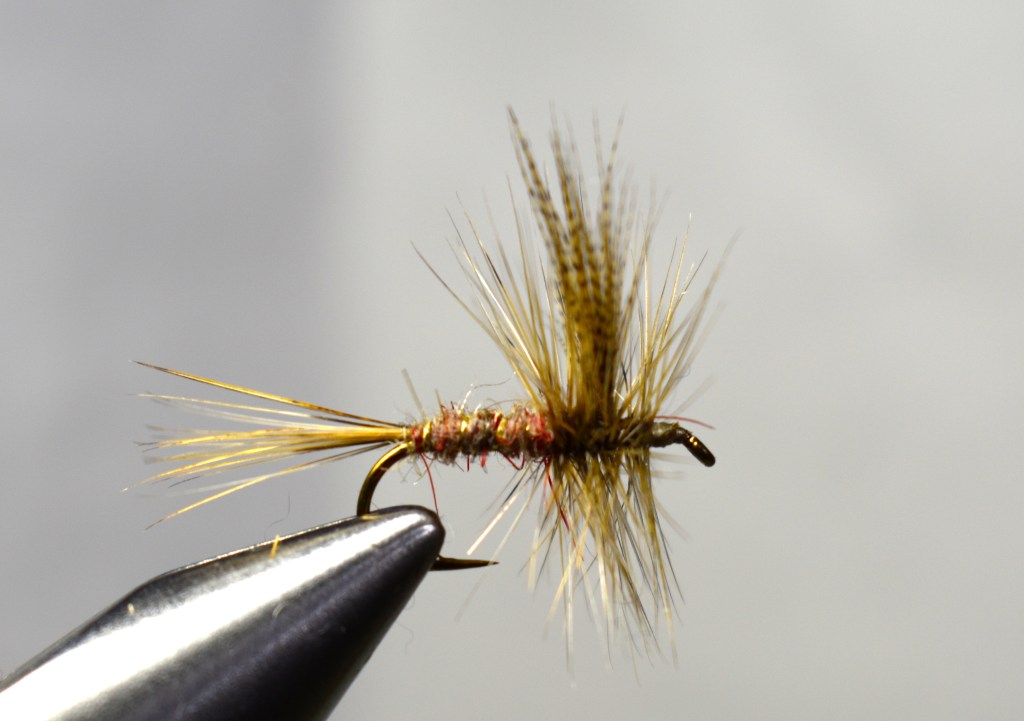
A rather dark rendition of an Atherton No. 4. Some may think of the No. 4 as the artist/angler’s Hendrickson, for his blend of natural and dyed red seal fur, muskrat and hare’s ear was mixed to produce a “grayed, mixed pink” coloration. In truth, he intended it to be fished when a variety of pinkish, reddish hued flies were on the water, including some of the spinners. My initial blend from a winter or two ago proved to be darker than I believe Atherton intended, so this morning’s first task was to lighten it up a bit. I have a piece of beaver pelt dyed pink, so I cut a little in various shades, adding that and a bit more silvery gray muskrat underfur. It looks better to me now, more like the color his words conveyed, so I will see how the trout like it.
Jack Atheron’s ideas of color in nature fit with my own concepts, borne of decades of observation. Natural things are not cast in plain solid colors, there are mixed shades of blended and primary colors and iridescence mingled in Nature’s hues. I unknowingly agreed with Atherton’s impressionistic theories of fly color long before I secured a copy of his only angling book; “The Fly and the Fish”. Becoming well acquainted with his ideas in recent years, I now count him as an influence in my own tying and fly design.
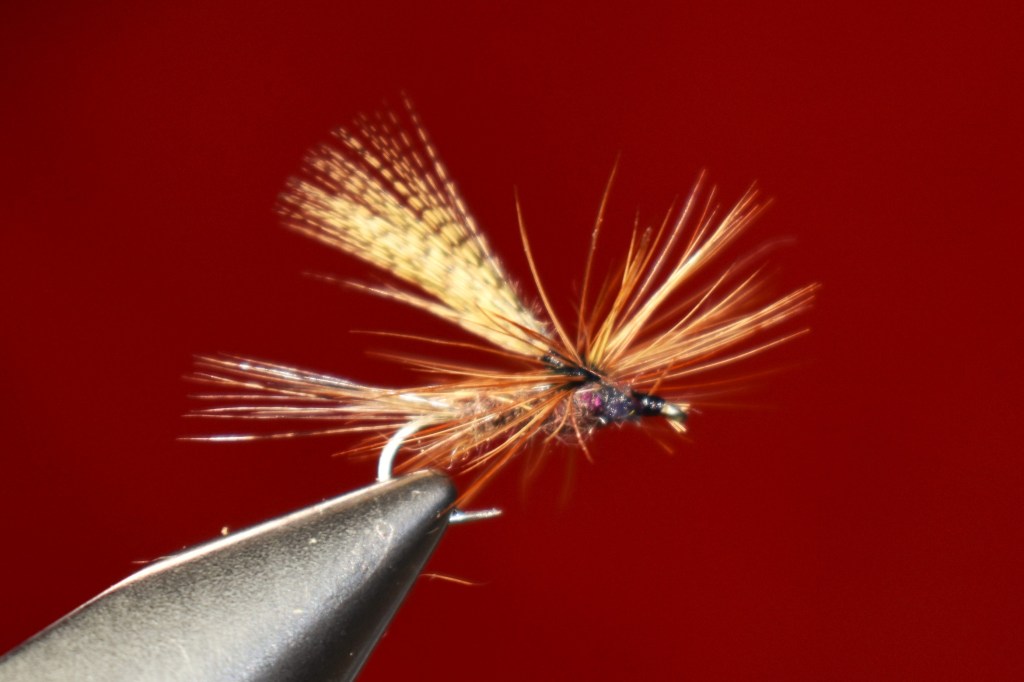
My A.I. Isonychia 100-Year Dun draws inspiration from Jack Atherton’s concepts and my own observations. It is one pattern in a series designed to incorporate the artist’s ideas with my own concentration upon matching insect coloration for specific hatches. I tied an initial pair of Number Fours in my 100-Year Dun style during my preparation for tomorrow evening’s meeting. I experimented with a mix of Cree and barred medium dun hackles on the first fly, then turned back to Atherton’s recipe, using Cree and medium dun for the second. This style of tie is less suited to the use of two individual hackles than a Catskill fly, so I expect that my final version will be tied with a beautifully barred Dun Cree Collins cape. I will see how I like that choice when I tie some during the Zoom meeting.
I began re-reading “The Fly and the Fish” yesterday, eager to refresh my memory. I’m about halfway through, just coming to the patterns and his discussions concerning their creation and use. Winter is my reading season after all.
-
Settled In
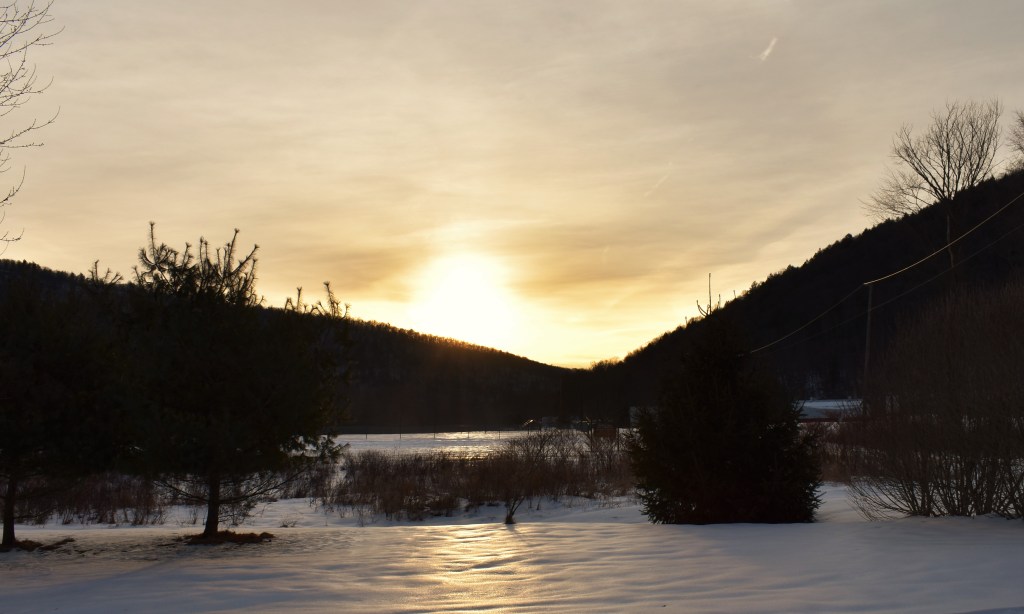
The dust upon the rod racks lies undisturbed, and the vise sits idly amid the clutter of my bench. The unrequited fervor of a season closed too soon has passed, and I have settled in for winter.
A dusting of snow greeted my first vision from Angler’s Rest this morning, bringing surprise later on as I learned of school delays throughout the region. While the snow didn’t amount to much, there must have been some icing on the roadways to elicit such panic over a dusting. Hopefully, all are safe.
I turned to my angling library this morning, choosing a little book from 1965; R. Palmer Baker’s “The Sweet of the Year”. Winter always finds me turning my thoughts to the Golden Age of which Mr. Baker writes.
There are many fine writers and anglers who chronicled those years, favorites like Dana Lamb and Sparse Gray Hackle, and world traveled Ernest Schwiebert. Their works provide my sustenance of the soul during the long months of a Catskill winter.
My fly tying has entered it’s annual lull, since there is no fishing on the horizon. Talk of Catskill patterns and history during our Thursday evening Guild meetings will spur my fingers into action soon enough. We will pass mid-December this week, leaving roughly four months of waiting for that first flutter of gray mayfly wings upon the leaden surface of a river still shivering from long days and nights of ice and snow.
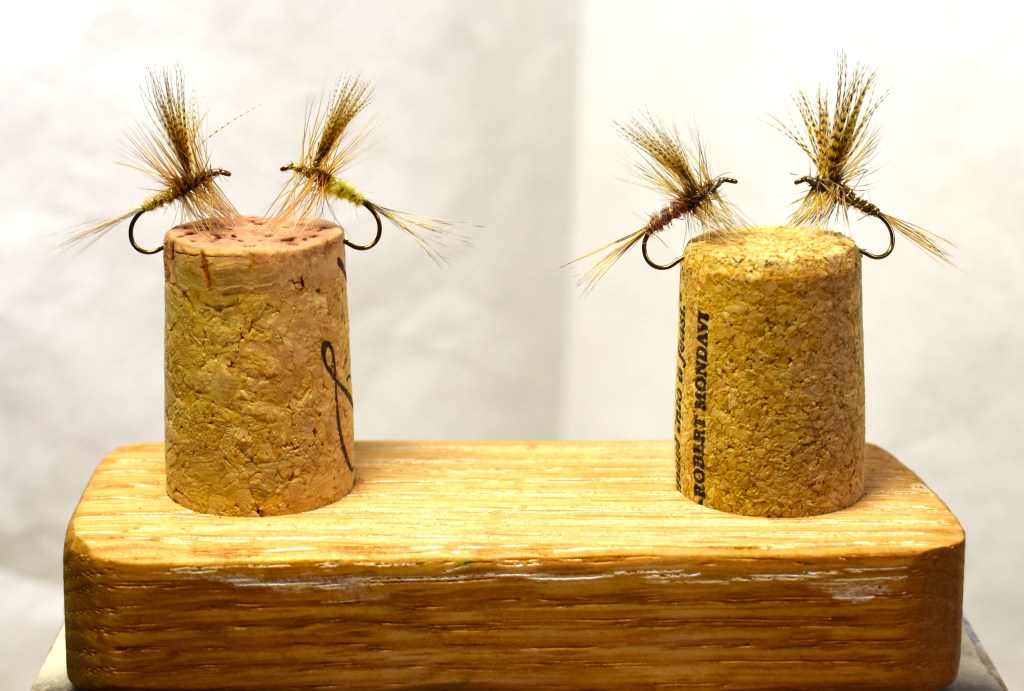
John Atherton’s dry flies, numbered 2, 3, 4 and 5. Four months still feels like an eternity to the dry fly angler; but four is better than six, eh?
-
An Ode to Gordon’s Quill

Ah, the “first” American dry fly! Theordore Gordon’s peacock quill bodied mayfly imitation enjoys that historic distinction, although it cannot be proved to be so. Certainly, this is the creation most associated with the enigmatic Mr. Gordon, and undoubtedly his most famous pattern, though no one can say it was positively his first attempt at imitating American Catskill river mayflies. Still beautiful and effective well more than a century after his death, the fly stands on it’s own merit.
This is the fly I chose to begin my 2023 season on the hallowed Beaver Kill. Lashed to the leader adorning my classic Leonard flyrod, Gordon’s Quill produced two much better than average size brown trout on day zero of my personal calendar countdown, a perfect beginning to my Catskill dry fly season! Could that be anything but magic?
I owe much to Mr. Gordon and his Quill. One preserved from his own vise has long been an inspiration to me.
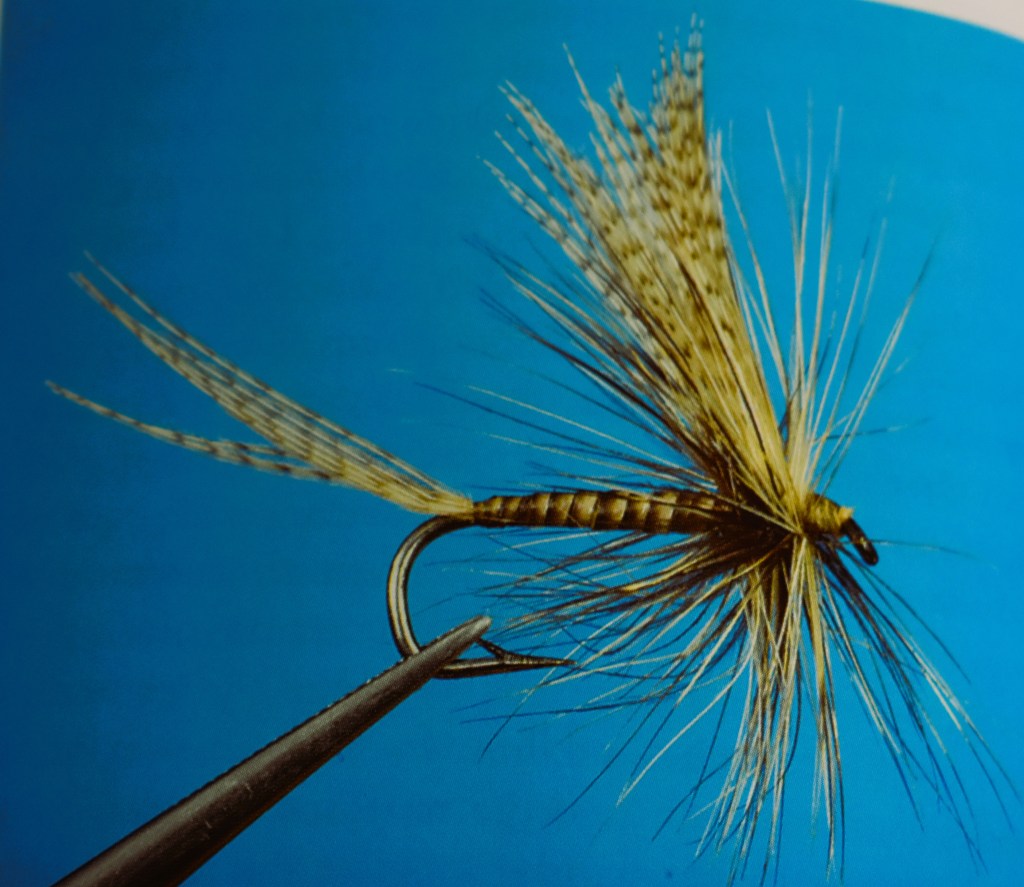
An original Theodore Gordon tie from the collection of the Catskill Fly Fishing Center and Museum photographed by Mike Valla for his remarkable book “Tying Catskill Dry Flies” Copyright 2009 by Headwater Books. Gordon’s canted wing style intrigued me, particularly as his followers who popularized the Catskill school of fly tying remained steadfast with the upright divided wing style. Gordon tied dry flies both ways, though he wrote that he thought the single canted wing produced the best imitation of the naturals. After nearly twenty years of experimenting with the single canted wing, I am convinced he was correct in his opinion.
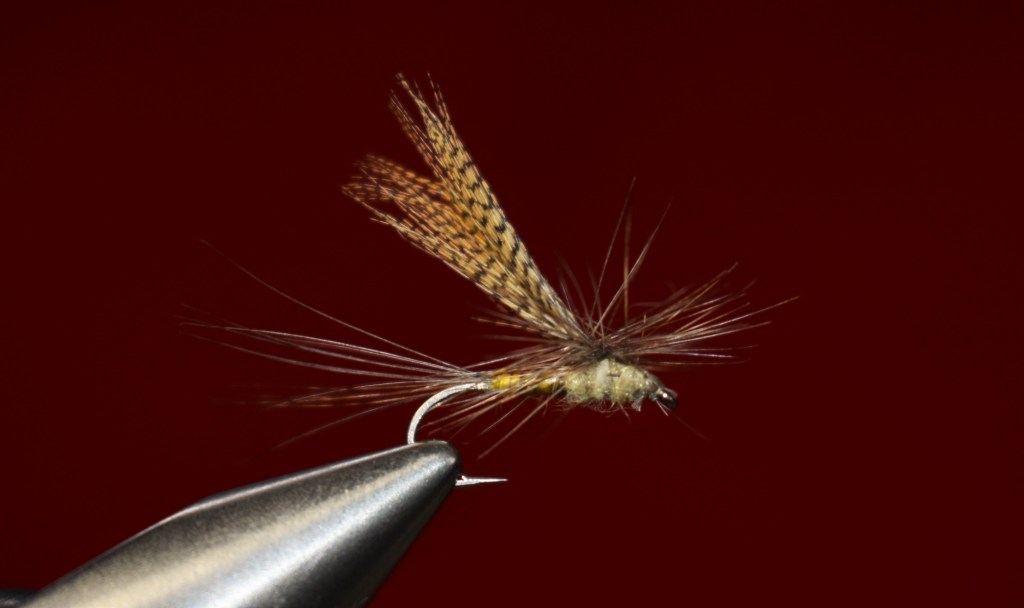
My own design, the 100-Year Dun, in homage to the father of American dry fly fishing. Indeed, Mr. Gordon has been a major influence on many of us enthralled by the magic of a trout and a mayfly, fueling our own best efforts to intercede in their dance. Tying a half dozen classic Gordon Quills is my transition from this season unto the next. I welcome December and the commencement of my winter fly tying, the long months of study and thought, hoped to bring me to a greater understanding of that magic ballet, new insights which we all seek as spring brings warmer days and warmer waters!

-
December
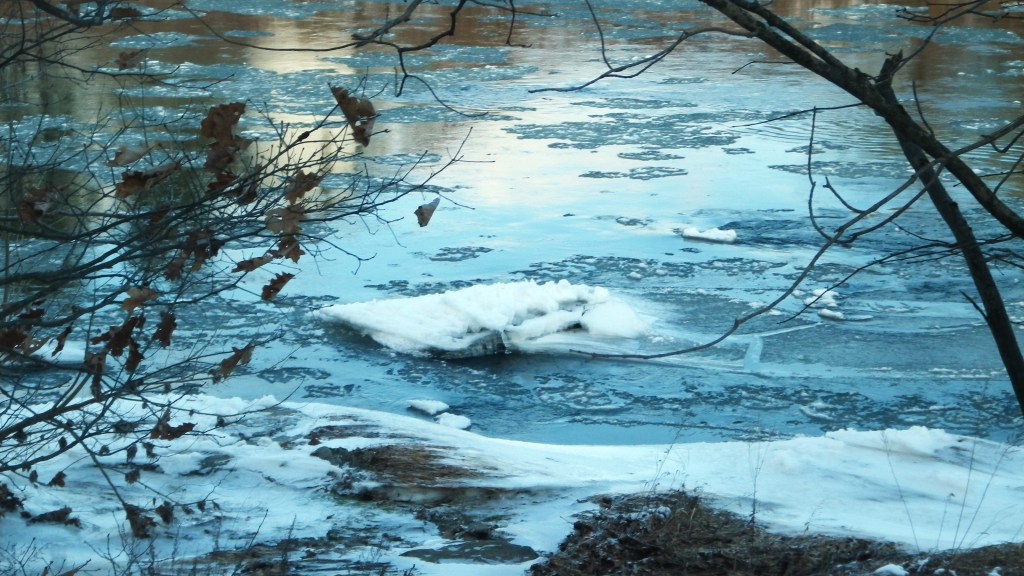
Welcome to December, where winter shall officially begin, if November’s snow squalls and twenty-something lows managed not to convince anyone.
Last night some 39 members of the Catskill Fly Tyers Guild met via Zoom to tie the late Jimmy Deren’s early season Catskill fly known as the 50 Degrees. The evening featured a variety of good-natured banter as usual, while any attendees who wished tied a few flies in the comforts of their own benches. I tied one of the Deren patterns myself, before wandering down another path of Catskill history.
While talking about the specified dubbing mixture of “muskrat, with a little brown” Seth Cavaretta mentioned the fly was similar to the Dark Hendrickson, which got me to thinking about sage tyer Harry Darbee’s version of same. Harry specified the fur as “brown and gray fox” and I had made myself a supply during a previous winter, taking the brown fur from the legs of a Red Fox pelt with it’s medium gray underfur for a ride in the coffee grinder. I had used a bit of that same brown fox leg fur to mix for my 50 Degrees stash. Thus the mind wanders in winter and the fingers follow. For the rest of the meeting, my vise was turning out Darbee Dark Hendricksons.
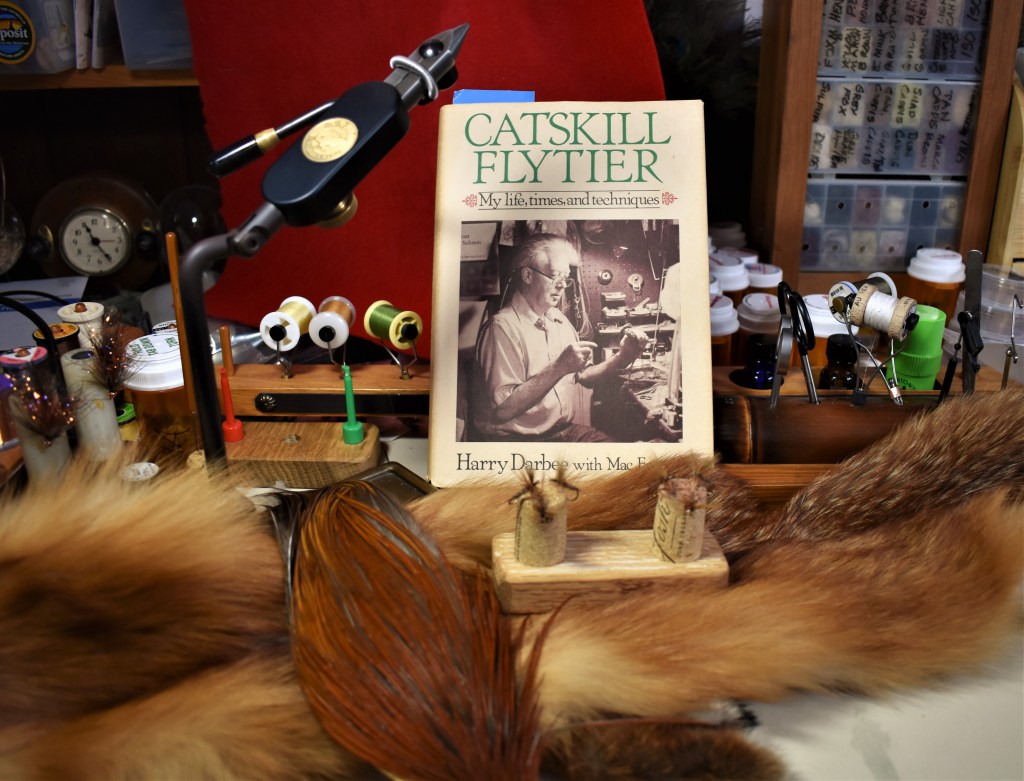
My winter re-read of Harry Darbee’s classic tome clued me into his version of the dark Hendrickson tied with brown and gray fox fur, rusty dun hackle and, of course, a wood duck flank feather! Thinking about Harry’s pattern, I recalled the little brownish alternative Hendricksons I collected and matched a few Aprils ago. These flies appeared after the expected tannish size fourteen flies had been on for a few days, copied on a size 16 hook, and displayed a delightful lightly creamed coffee brown color. I matched them with quill bodied CDC Duns and 100-Year Duns, taking some magnificent trout!
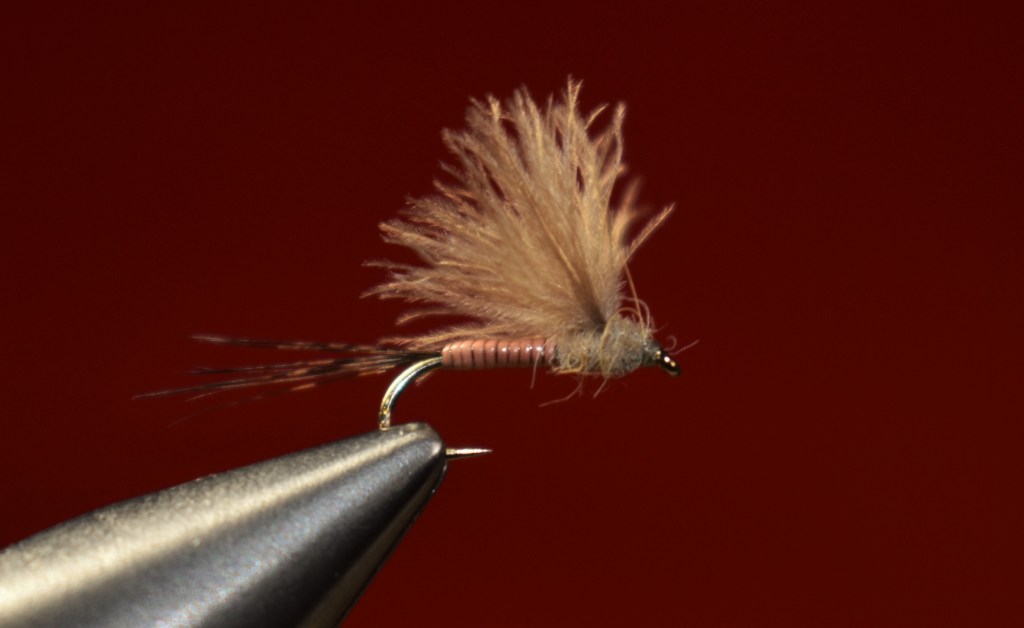
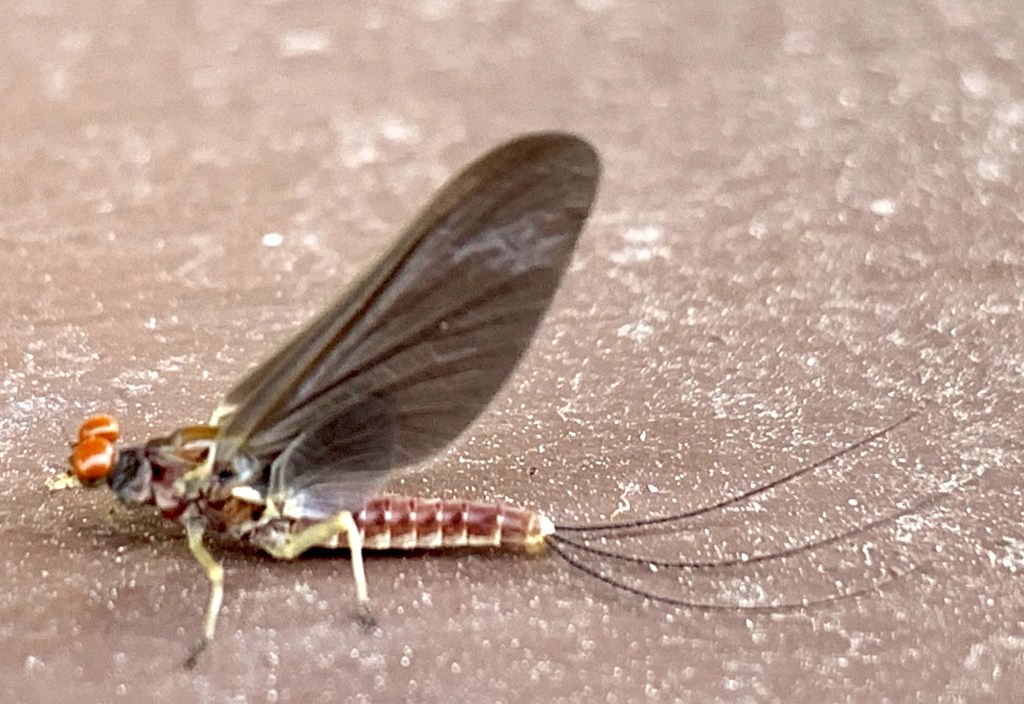
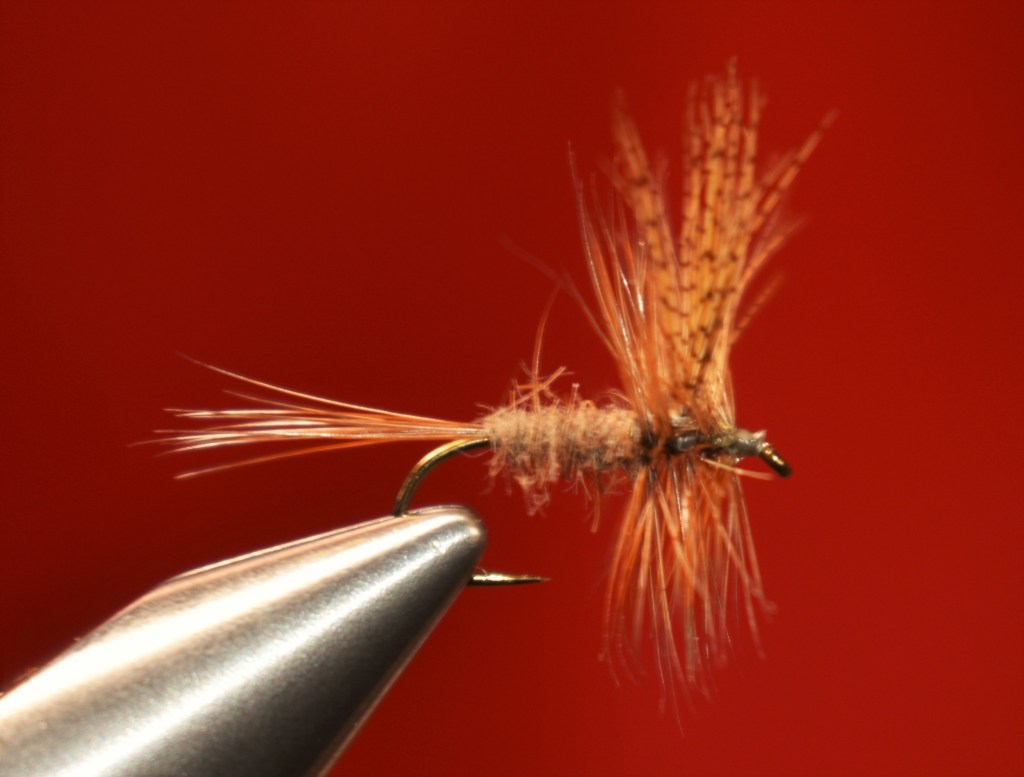
My Dark Quill Hendrickson CDC Dun, the mayfly itself, and my tie of Harry Darbee’s Dark Hendrickson. Despite the tan highlights along the edges of the mayfly’s abdomen pictured, the bottom or fish’s’ eye view exhibited the same brown color as the top. At one point in the evening’s conversation, one member hailed a newcomer whom it appeared was joining from a cabin somewhere in or very near these Catskill Mountains. It was suggested he stay and fish over the weekend, citing a 52-degree forecast. I observed that there would be no bugs and the trout would not rise. This morning the Beaver Kill flows at an ideal 543 cfs, lovely for wading and fishing if one ignores the sub-35 degree water temperature. Yes, dry fly season is over. The time has come to let our trout rest until recovered from the spawn. From my own decades of personal experience, there is no cold so numbing to both body and soul as a fifty-degree rainy day on the water can produce.
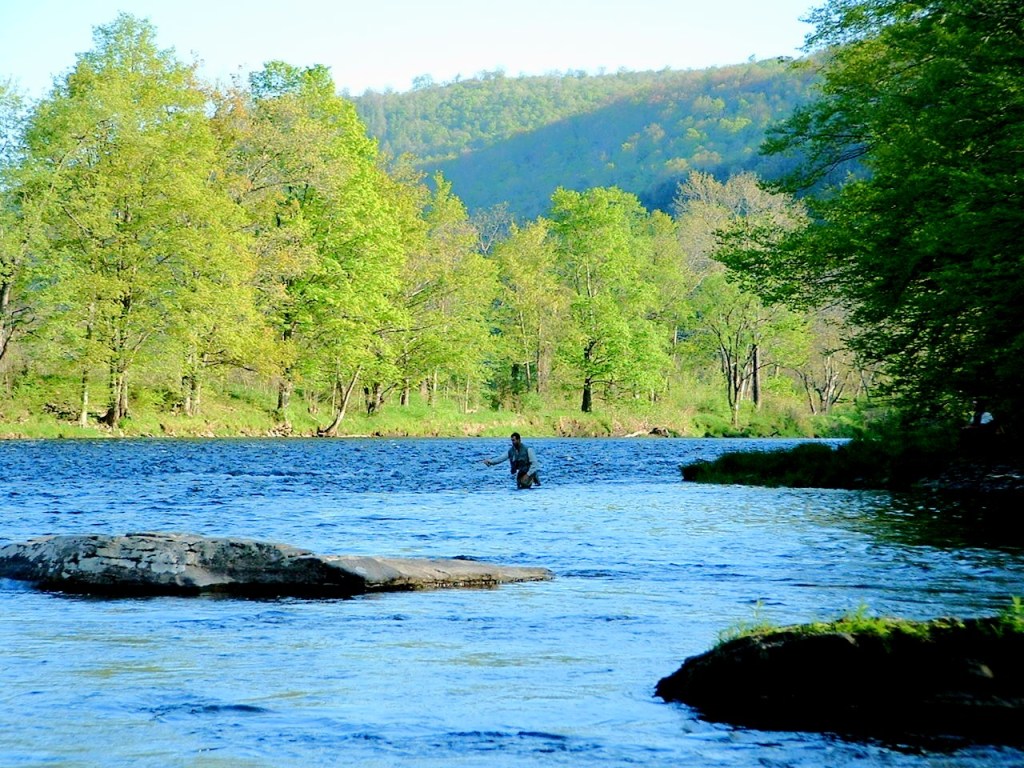
December, and it is better we sit back and enjoy the soothing effects of warmed Catskill bourbon and honey and wind the threads of next spring’s Gordon’s Quills and Hendricksons. We can dream a bit, beyond the months of ice and wind, on to blissful spring sunshine upon bright water!
-
A Line of White
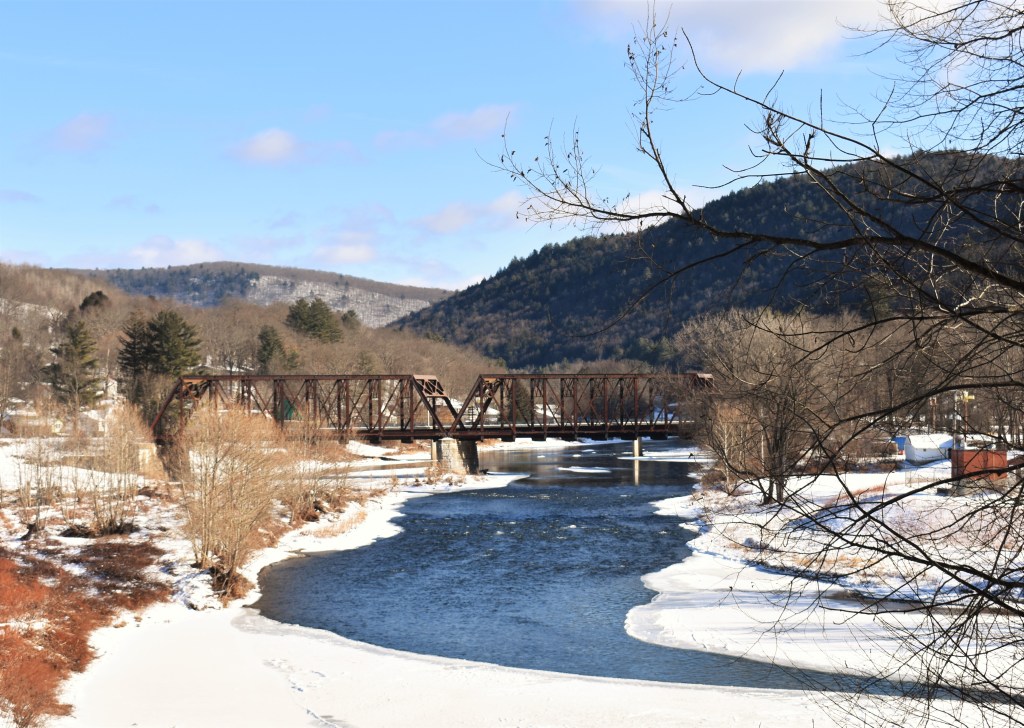
The East Branch Delaware winds into Crooked Eddy amid winter’s grip. On the weather map, it was nothing more than a thin line of white snaking along the border between New York’s Southern Tier and northern Pennsylvania. Here in Crooked Eddy the end of that line falls gently and turns our landscape white.
We expect no more than a dusting, though as near as Binghamton there are warnings for hazardous travel along the interstates. No worry for me, as I am tucked in here fighting a head cold, with no plans to travel further than the Town’s transfer station.
The Guild’s winter Zoom gatherings begin on Thursday evening, and I am hopeful that the coughing and hacking will subside by then. If not, perhaps a warmed combination of Catskill Bootlegger Bourbon and Falling Spring honey will soothe my throat sufficiently.
JA will reintroduce an old Jimmy Deren pattern to kick things off, and then the group will tie or not as they please and talk a bit about our season past. I will set aside some muskrat fur, Teal feathers and rusty dun hackle beforehand and see what I think of the old “50 Degrees”. The tale is that Deren, famed proprietor of New York City’s Angler’s Roost so named the fly as he had found it effective on Catskill rivers when the waters reached that prescribed temperature.
I expect I will defer to my own Catskill Adams when it comes to fishing. Natural Fox Squirrel fur provides a mixed gray and brown coloration along with the black and tan barred guard hairs to produce a rougher, spiky body. Teal flank feather wings provide the bold black and white wing barring and is more durable and more Catskill, and I dearly love Cree hackle!
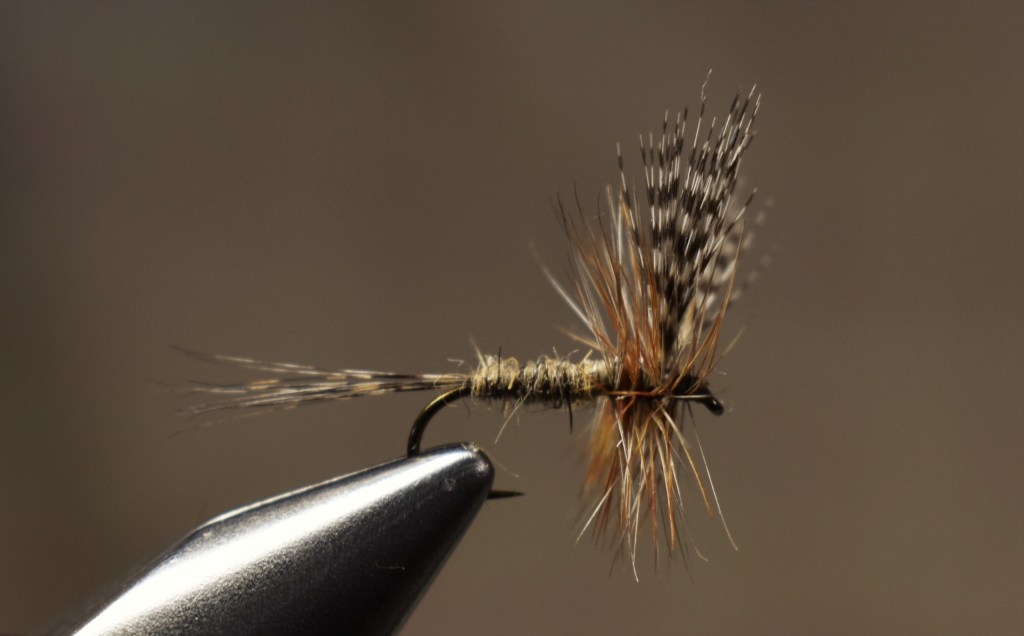
The Catskill Adams I do enjoy tying the classic Catskill patterns though. While looking through a can filled with decades worth of dubbing blends the other day I found the bag of special dubbing for the Davidson Special. Guild member Seth Cavaretta carefully researched the late Mahlon Davidson’s methods and, with the able assistance of Dave Catizone, dyed some cream fox fur with willow bark to produce a good supply of this pale green fur. He was kind to bring a large amount to a Guild meeting and offer some to all present. I look forward to shedding this fog in my head and trying my hand at this old classic!
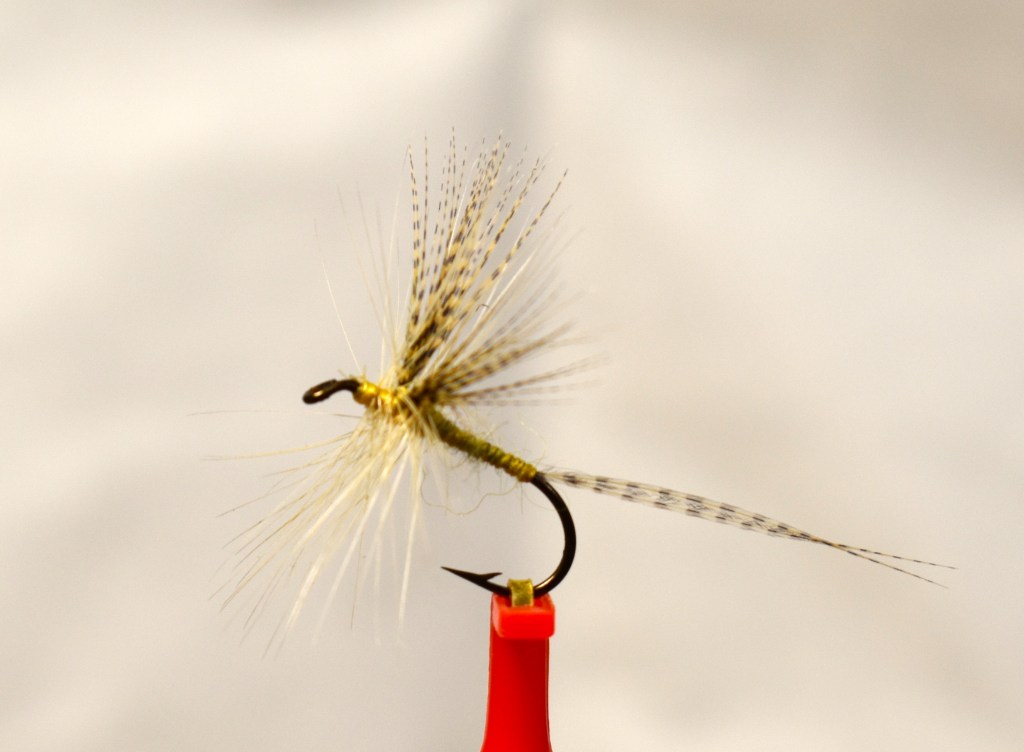
A classic Davidson Special, intricately tied and photographed by Tom Mason. Mahlon Davidson was a gifted Catskill fly tyer, and obviously had high regard for this particular coloration. I do not believe he recorded it as having been tied for a specific hatch, though it seems to be an ideal imitation for the Green Drake to me. When I sit down to tie it, I will have long shank size 8 and 10 hooks at the ready!
-
A Walk In The Wind

The Beaver Kill as winter turns toward spring. Before the bright glow of sunshine was hidden by the gray of winter skies, I set out for a riverwalk today. Too much time indoors this week had left my muscles tight and my joints stiff, and I sought to remedy that.
I felt but a little of that sun’s warmth. With a cold crosswind cutting through, I pulled the hood of my down jacket up overtop the wool baseball cap.
The walk along the river is my therapy during the long Catskill winter season. It gives me some time near bright water to be alone with my thoughts, and they are often thoughts of warmer days, of dappled sunlight kissing each riffle and pool.
I can feel the cut of a cold North wind as I make the turn at the end of the public road, always wishing I had leave to continue southward, on down to Junction Pool and the beginnings of the wide Delaware. Heading back into that wind I snug the zipper on my jacket and dip my head.

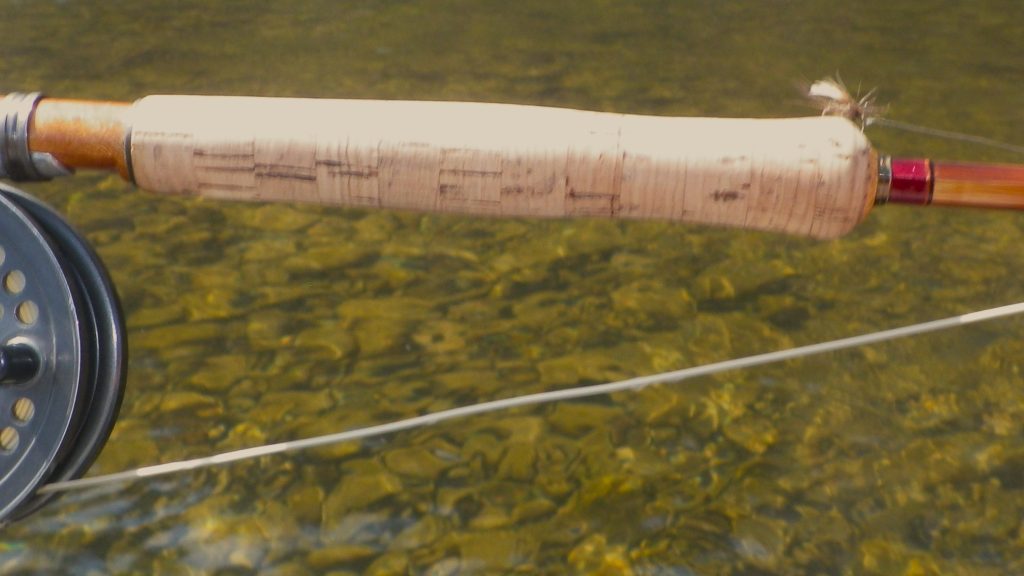
I am sitting on a grassy bit of riverbank, quietly watching the pool beyond for some evidence of life out there in the lingering morning mist. There is an old rod propped against a clump of that grass, a rod much older than I. It is a Catskill rod by birth, one from the old Leonard shop to the southeast, the Mills’ family’s gift to the working man. It is a rod made to the most famous taper known along these rivers, the classic 50 DF, and with the four-weight line strung through her guides she is simply perfection.
For the past half an hour, a few gentle yellow mayflies have drifted past my watch post, no more than one every ten minutes perhaps, but that is all it takes to bring my reverie to an end and focus all of my concentration on the wide currents in the foreground. Twenty minutes on there are enough flies to count, and at last a soft but significant ring along the shade line cast by an ancient sycamore.
I walk down the bank and slip into the water so the current will carry my wavelets downstream well below that rise. I have seen that ring once more, my better vantage allowing that there is a wide, soft bulge in the surface just as the ring appears. In ten minutes, I have moved a dozen steps, and the third bulge and ring lies fifty feet away.
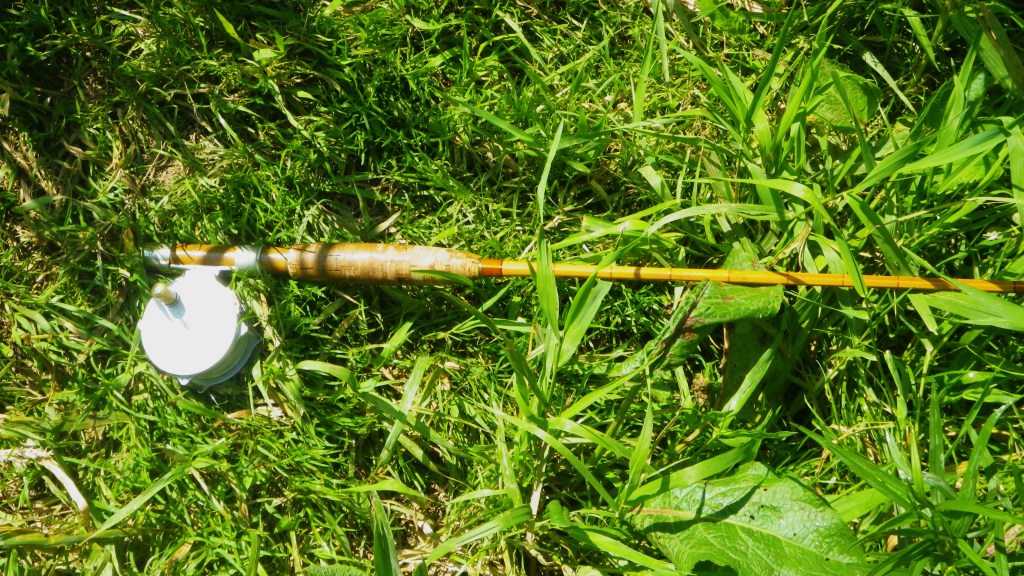
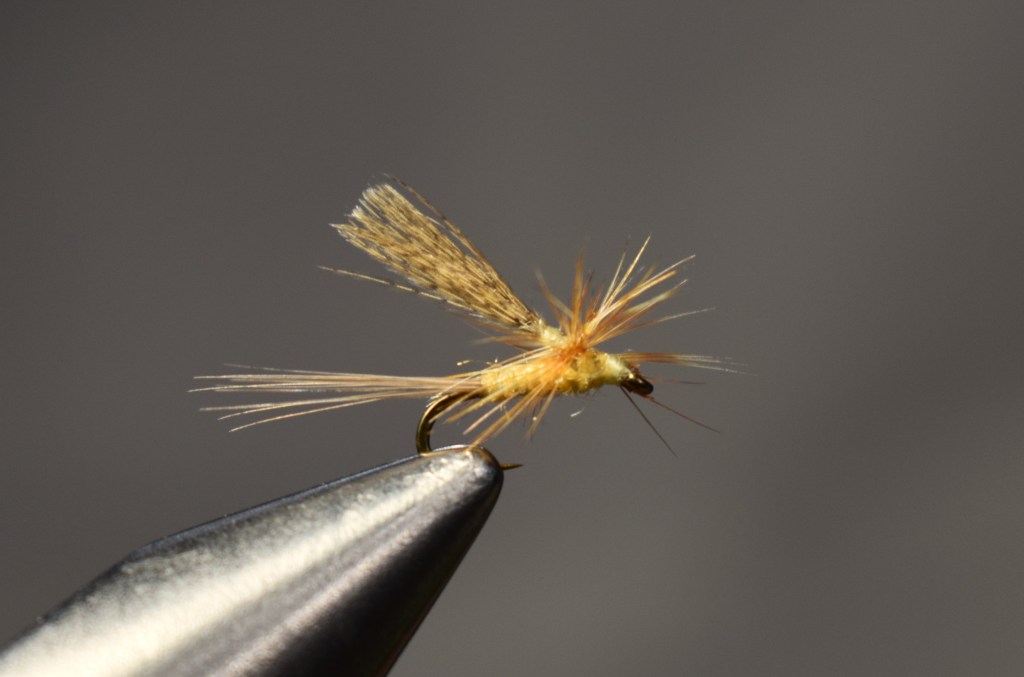
The line lays on the water in soft coils until the easy urging of the old rod pulls it up into the air on my back cast. One false cast aimed well downstream of the rise, a few more coils of line lifted as another back cast extends, and then line, leader and fly are willed to that certain line of drift, two feet up current from the faint trace of receding ripples that mark the trout’s lie.
At the bulge I tense, then hold for one count as the fly slips out of sight, and then the rod comes up in a terrible arc and the Hardy screams as he streaks away! If I could, I would hold that moment suspended in time, treasure it and the feeling invoked as the trout’s adrenaline becomes my own.
He is a fine brown trout, long and wide and beautiful, and he battles the straining rod with all of his wild energy. My rush of emotion grows as his slowly ebbs, until it climaxes in the folds of the net. The hook slips free, and he slides back to the cold caress of the river as the smile on my face blossoms in the sun.
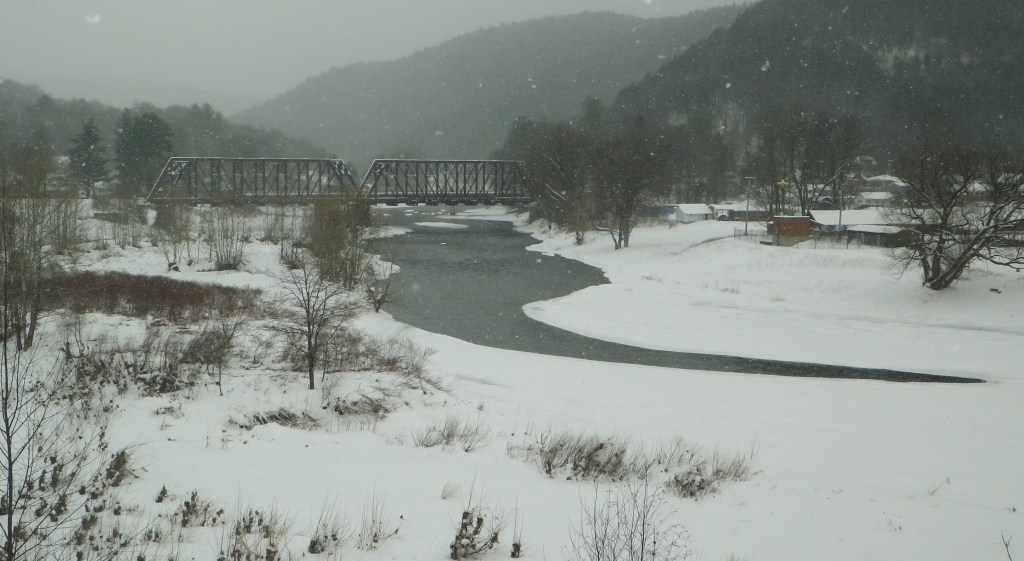
Another of many days that I will feel that cutting wind upon my face as I turn toward home. Five, six months? Nature alone knows how many days will pass before I once more sit quietly in the grass and watch the silken flow of bright water in hope of a subtle ring…
-
Snowfall
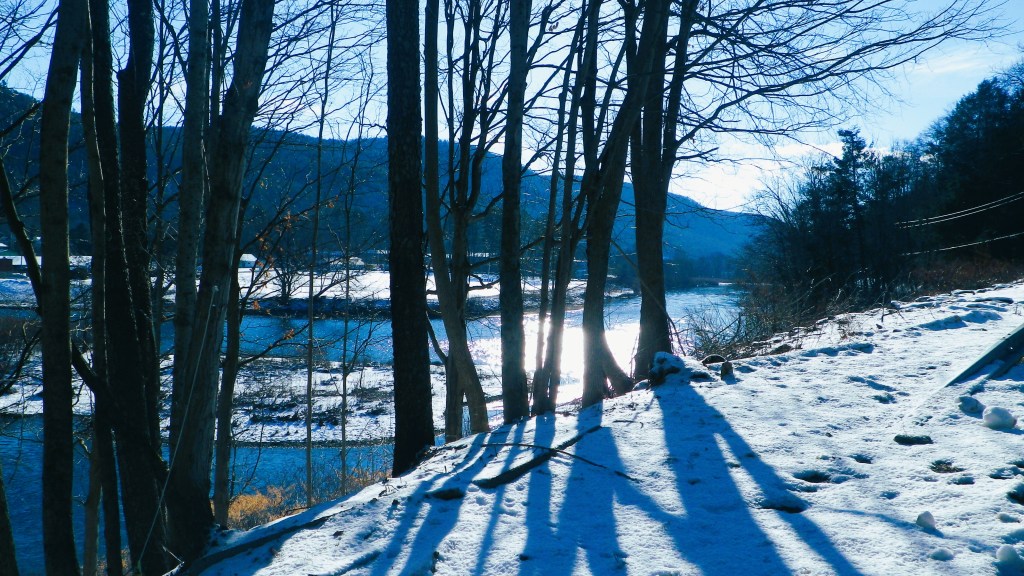
It is the twenty-first of November, the last day of the month’s third week, and a light snowfall caresses Crooked Eddy. Two seasons indeed: dry fly season and winter.
Saturday was the opening day of New York’s whitetail deer season, and JA and I wandered into the forest in darkness as per our tradition. I began with lofty goals, planning to stay out late into the morning and certain I was overdressed. The fierce winds saw to it that I didn’t make it. JA stuck it out for the duration, though neither of us saw hide nor hair of a deer.
The afternoon was better, the sun having warmed the landscape somewhat with the wind lessened, though still strong. Our fortunes failed to improve, though our attitudes were just fine. JA already has his New Jersey archery buck in the freezer and I, well, I long ago learned not to expect luck in deer hunting. The importance of the day remained on solid ground: two good friends sharing an outdoor tradition.
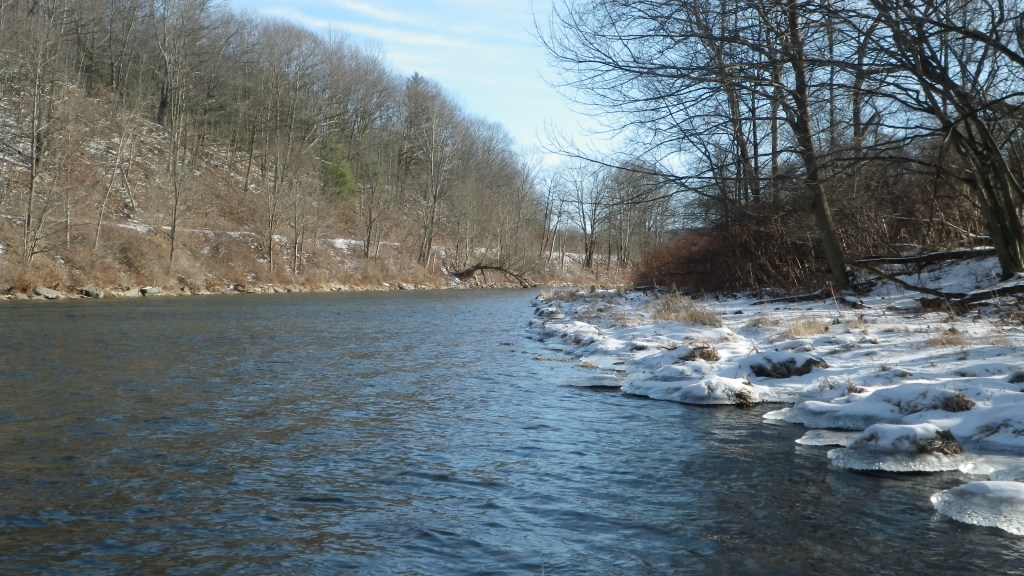
The weather is working hard to compromise the Thanksgiving holiday for all of those thousands of souls bent upon travelling to celebrate with family and friends. We’ll be right here in Crooked Eddy while the snow, rain or whatever else comes down and keep a warm and quiet holiday.
My concern for travel is limited to short trips to and from the mountains as the next couple of weeks of this deer season unfold. It’s not that I expect to even see a deer, other than those I routinely encounter driving to and from the hunt or here eating the grass and clover in my yard, but I appreciate the chance to get out on the mountain alone with my thoughts and hunt them.
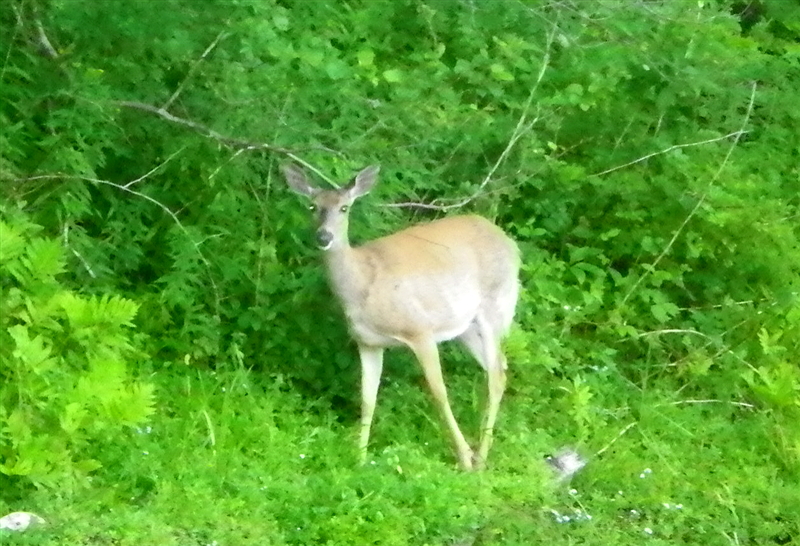
I see plenty of whitetails when I am hunting trout! I was hoping to find some snow early this morning, planning to head to the mountain if I did. I learned how much I enjoy hunting in falling snow during my decades living in Pennsylvania. There is a unique silence that’s almost there surrounding you, the sound of stillness, punctuated by the whispers of the snowflakes.
I saw the first hint of ice on the edges of some emergent boulders as I drove along the East Branch this morning; yet another sign that winter expects to stay awhile. The news feeds have been talking about a long, cold, snowy winter for the northeast, and I keep hoping they are off at least a little in their predictions. I would love to have a few snowy mornings to try to track a buck, but to match my ideal that snow would melt before nightfall. Icy mountain trails are not made for old men wandering aloft in the dark!
-
Passions
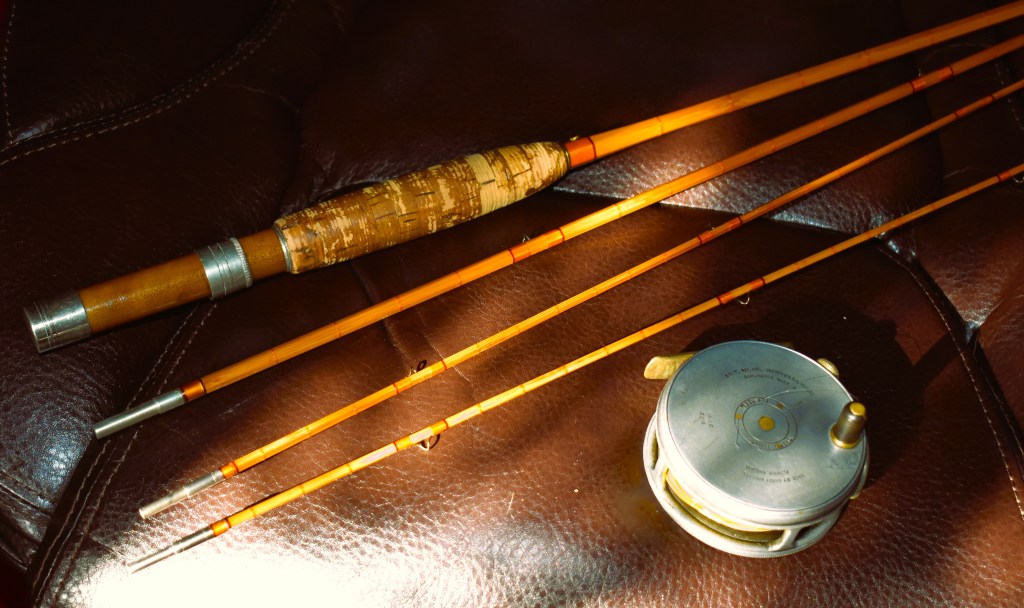
Angling with vintage cane rods and classic fly reels may have it’s beginnings as curiosity, though it often grows into blind passion! A sixty-degree day in mid-November; how could I resist the call to the river? Yes, a few hard frosts had caused the water temperatures to plummet, and in such cases the mind calculates the odds of actually taking trout, finding them low indeed. It is not the mind that draws me to the river when the Red Gods dangle such a clear, bright day in winter, it is the soul!
Of course, the tease was evident by way of a pair of tiny insects, drifting here and there, and even occasional soft rises from equally tiny fish. I remained content to swing my flies, never truly expecting the tug that dreams are made of.
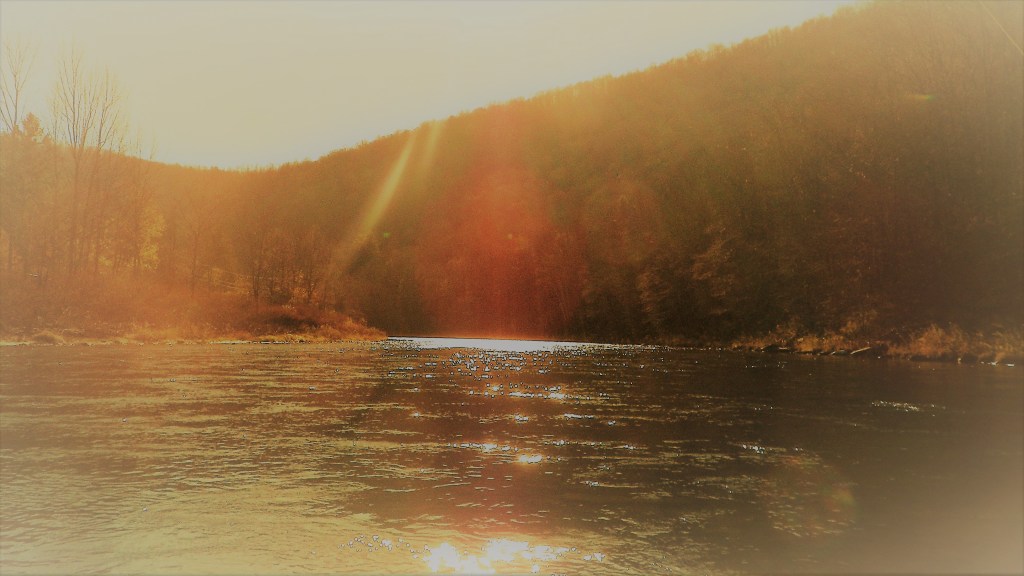
Within an hour, the deep chill of winter had made it through the sheath of waders and wool and fleece, and on into my bones, but the warm air still delighted something deeper inside, even wading down as the river was enveloped in shade.
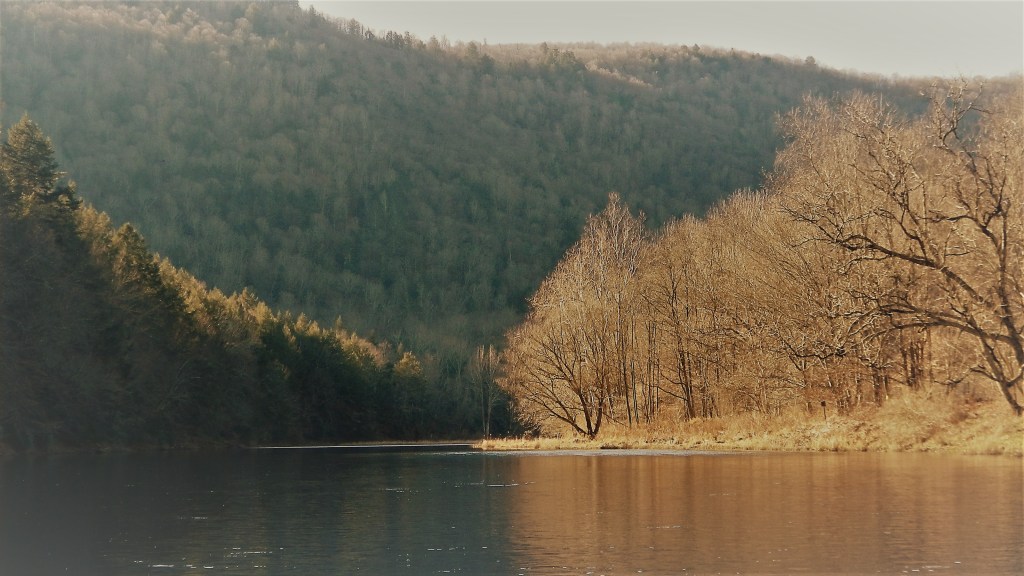
I lingered on the riverbank, where the rays of that gorgeous sun brought life and sensation back to my legs, lingered as the last moments of that glowing warmth saturated my being.
-
A Walk In The Forest
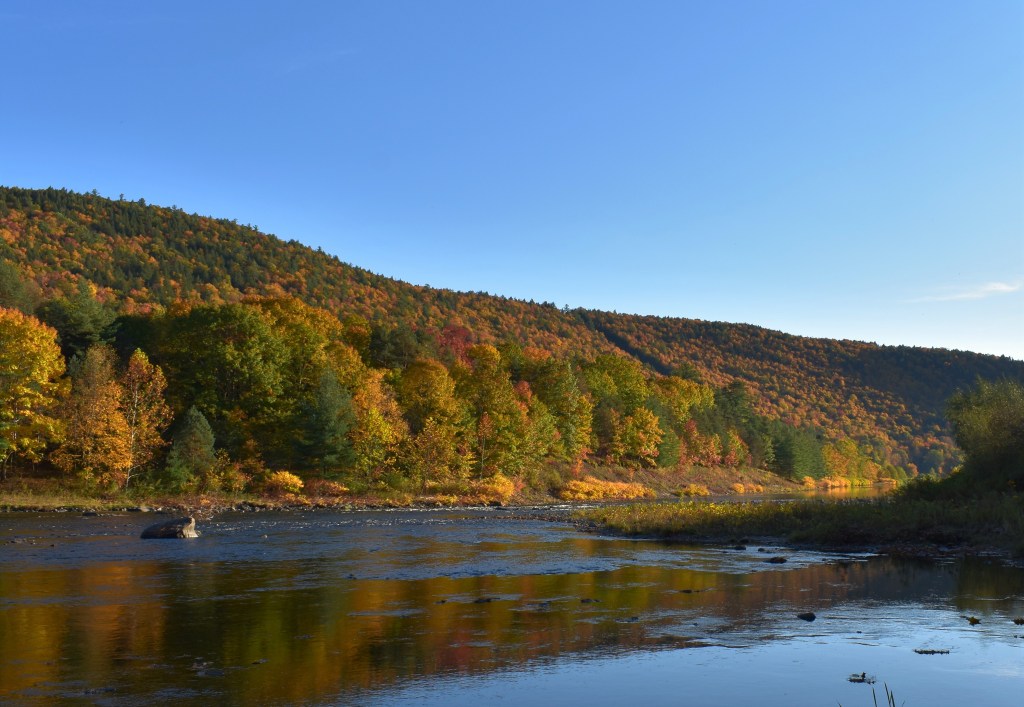
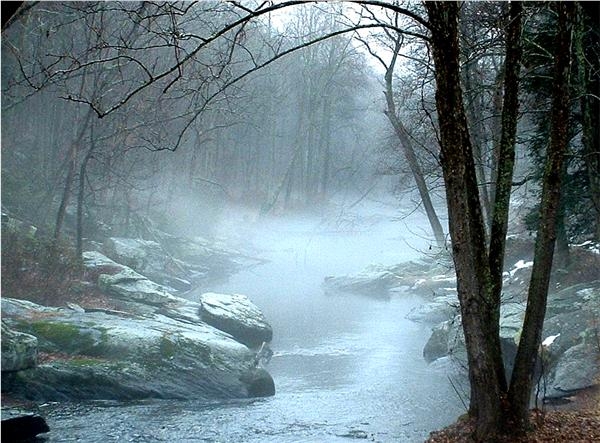
And above the rivers, mountains full of game… The hard frost yesterday morning retreated slowly from the gathering sunshine. The leaves underfoot still crunched an alarm, broadcasting my presence in the forest as per my desire. Hunting Ruffed Grouse the hard way (there isn’t an easy way if you were wondering) involves walking them up, and damp, silent conditions are not the best for this dogless gunner’s tactic. Better the hunter make some noise, moving slowly no more than a dozen steps at a time, with long pauses to let a bird sit and worry, wondering where you are.
I have the habit of stirring one foot through the leaves before taking the first step after each pause, for more than once a grouse has been waiting and listening during the pause and erupts in a thunder of wingbeats when he hears that leaf rattle. That tactic worked on the last bird of the morning, but let’s not get away from ourselves.
I began with a short walk along a newer path beside the brook, that is until it petered out into a steep sloping extension of the bank. I climbed then, up a short, workable grade to the rocks on top, guardians along the well-worn trail that runs high above the sparkling rill. My decision was whether to head north or south then, and the suspicion that some birds might be hanging near where I found them on my season opening hunt made the choice easy. I had no more than turned south when I heard the rush of wings, softer than expected, further off and shielded by the music of bright waters rollicking over their pebble bed. I never saw that bird depart.
I managed my dozen steps then, only to see a single flash of light and shadow through the trees, as two more birds flushed low and headed south, one after the other. Fifteen minutes into the morning walk and three birds on the wing, just one of them barely visible for a split second, the other pair ghosts! I didn’t make it through my second move when number four was heard, once more out of range at the flush, and unseen.
Shaking my head with a wry smile I moved through to the main trail, hopeful as I felt all four had headed south, that I knew where they were going.
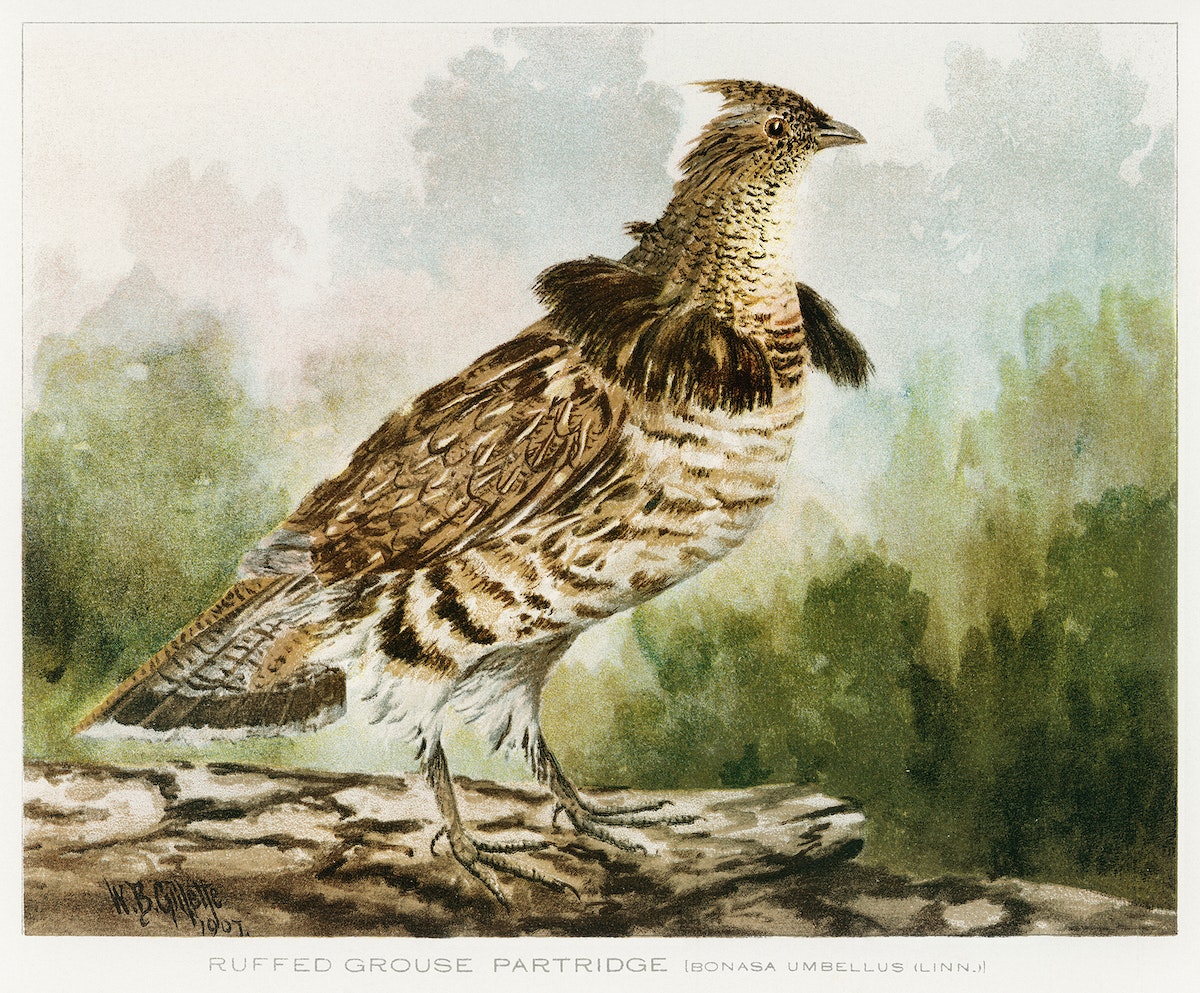
Of course, old Ruff isn’t known to be predictable, so I kept that smile on my face as I crossed the main trail and eased into my favorite little covert. This place has a bit of everything: mature trees, young saplings, heavy ground vegetation, deadfalls and brush piles, an old stone wall and one steep little ravine. Wildlife in general likes it there, and so does Mr. Ruff. One of those four flushed birds even used a patch of that thick ground vegetation to flush again, unseen, and depart on whispering wings.
I had planned to set up in this area for Saturday’s opening day of deer season, there being ample sign of a buck or two using the area recently. I chose a stand by the old stone wall, where two gnarled old trees stood as sentinels, kicking away the dried leaves to expose the soft, dark, quiet soil to keep my vigil silent. At my age, sitting like a statue is a thing of the past, so I like to be able to stand and take a step to watch either side while easing cold, stiff muscles and joints.
I gathered some deadfall limbs and built a simple screen in front of my little hide, then hunted back through that covert in case another of those invisible grouse was lurking in the far corner.
I walked out into the intervening field and crossed to begin a hunt through the Thornapple Covert. The mountain rains were gracious here this summer, and the trees held a good crop of fruit. The springy ground held enough water to puddle here and there and run along a slight rock-lined trace through the terrain. Food and water in heavy cover can be a magnet for grouse, and I did find one at the far end of the cover. He was the only bird to flush close, thundering aloft right in front of me, and completely screened by the trees and cover. You guessed it, my old eyes never caught so much as the flash of a single feather as he flew safely away.
Half a dozen flushes and I never so much as got the gun to my shoulder. That indeed is grouse hunting!
-
A Goal Accomplished
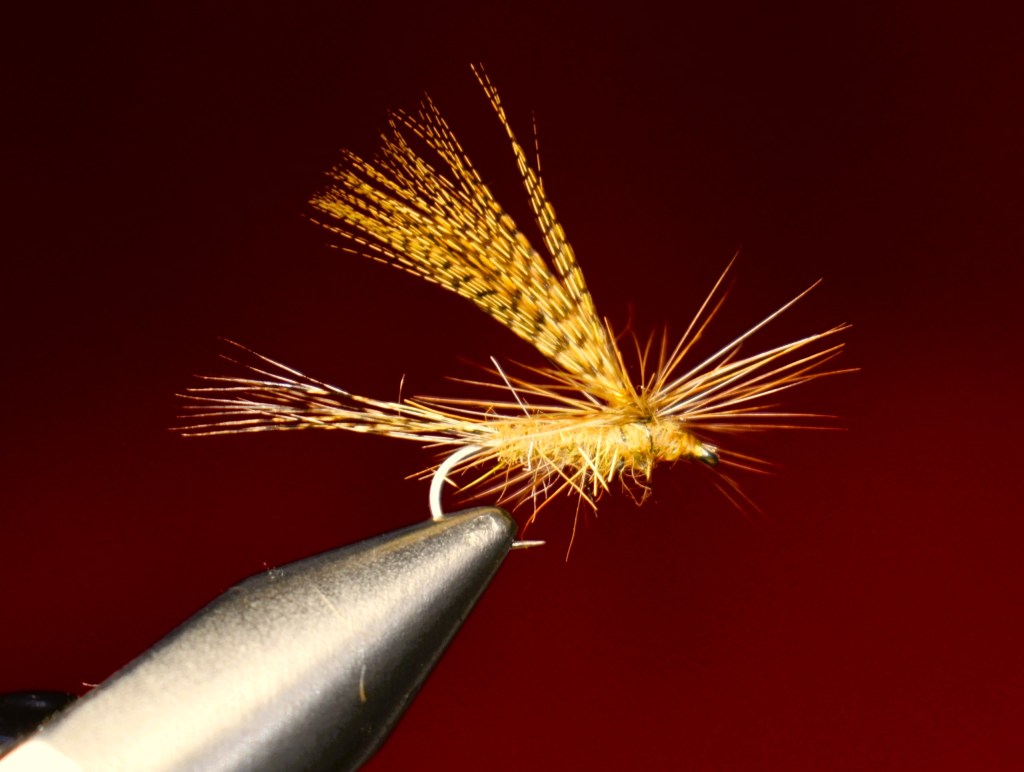
The original A.I. Hendrickson, designed, tested and proven in 2022. The fly is now one of a series of patterns to match the predominate mayfly hatches throughout the season. A glimpse of a speckled cream CDL tailing feather in the corner of my tying desk brought to mind the final pattern required for my A.I. (Atherton Inspired) series of hatch matching flies early this morning, and I wasted no time in blending the appropriate dubbing and tying half a dozen A.I. Light Cahills.
The series will now span the season, covering the major mayfly hatches: Quill Gordon, Blue Quill, Hendrickson, March Brown, Light Cahill and Isonychia. But wait, haven’t I left out the ubiquitous sulfurs and the majestic Green Drakes? Actually no, and yes. Drakes and sulfurs were the first two mayflies to be dealt with when my interest in John Atherton’s flies and theories put me on the road to combining his theories with my own.
When I acquired a supply of seals fur last winter, I prepared a dubbing blend for Green Drakes and sulfurs, using seal, beaver and fox furs of varied colors in accordance with Mr. Atherton’s theories. Later I also blended a similarly concocted Heritage Red dubbing that was applicable to the flies I call the Beaver Kill Hendrickson, as well as Red Quills and even Isonychia mayflies. When added to the selection of A. I. blends, these allow a very complete coverage of mayfly hatches.
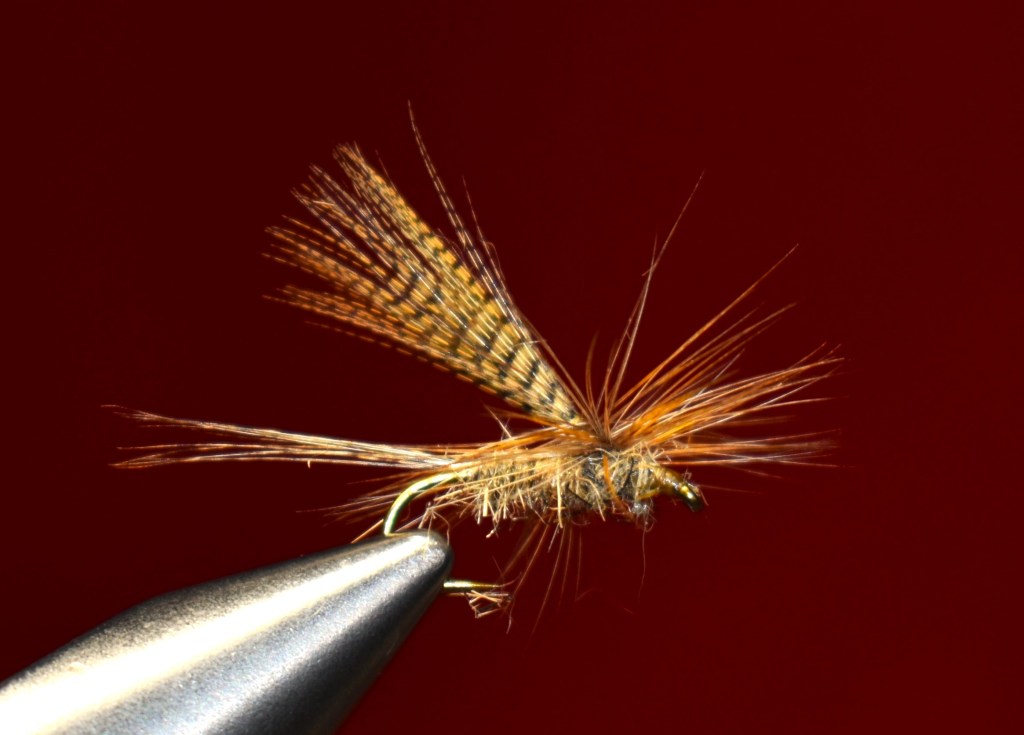
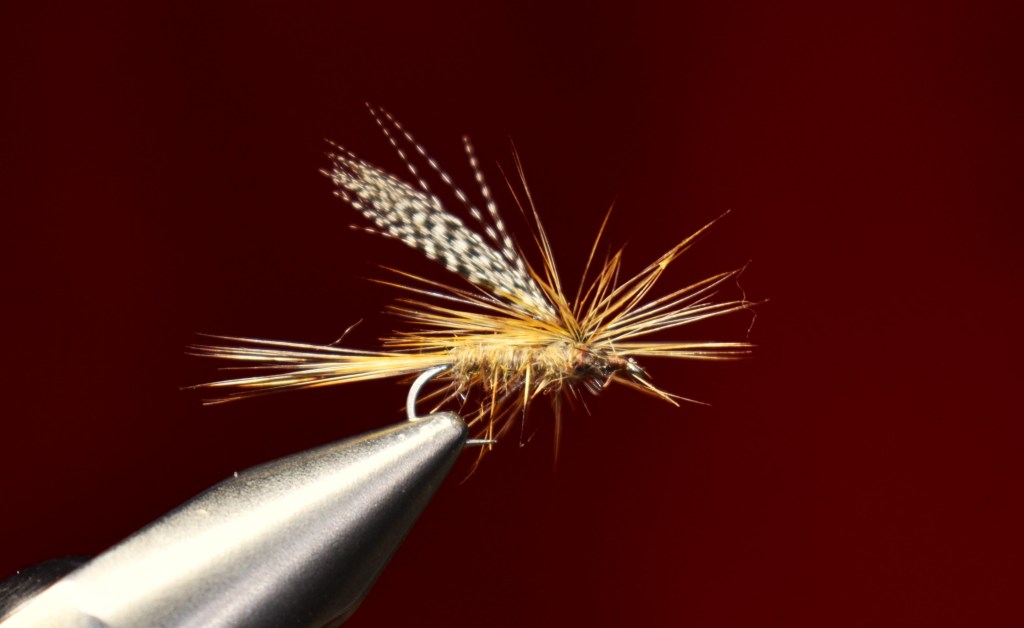
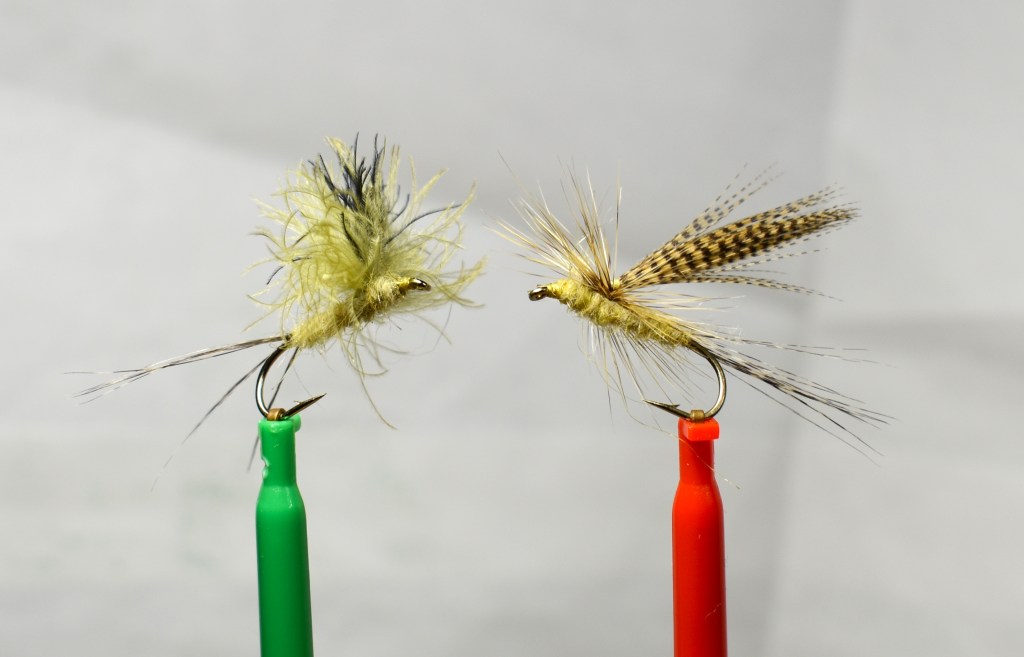
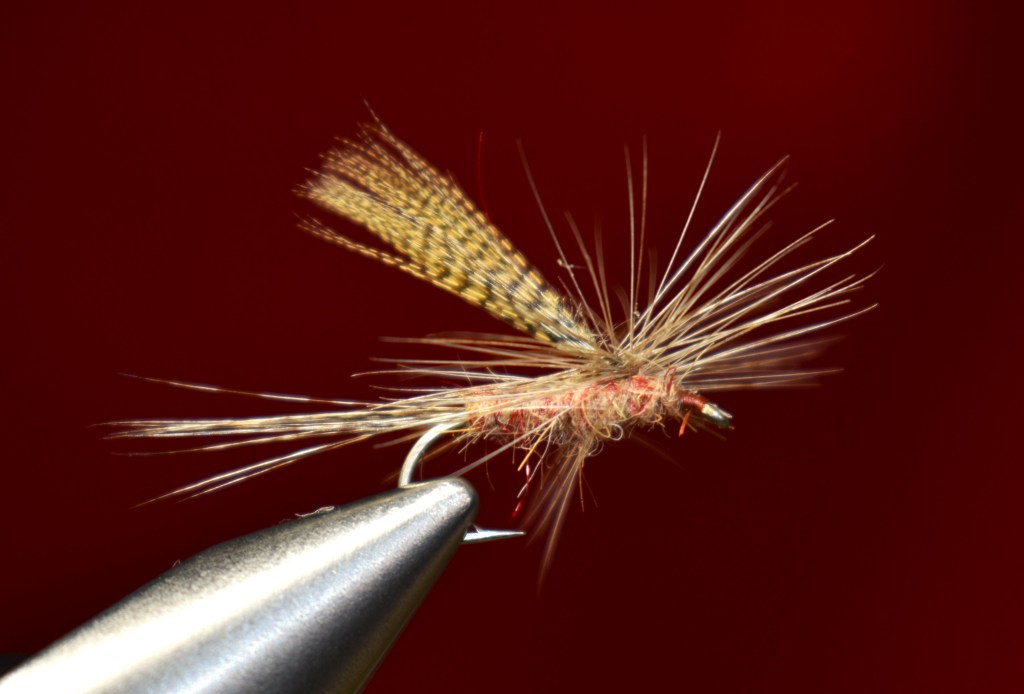
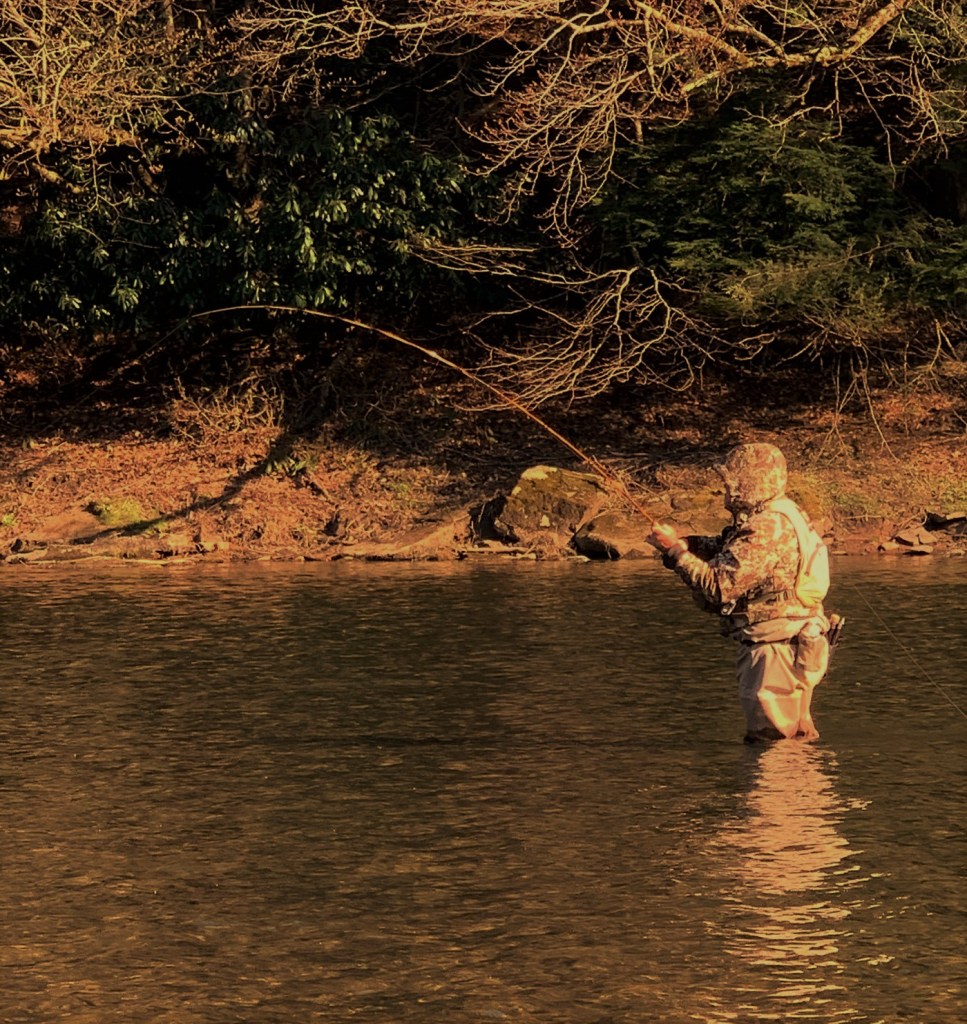
A variety of buggy flies for both hatch matching and general appeal My biggest challenge is thoroughly testing all of the experimental patterns I tie each season. Some hatches appear only sparingly and, even though I fish one hundred or more days per year, I don’t always get a chance to fish them. My tactics for proving new designs complicate things further, as I only go to an experimental pattern when a proven, commonly used fly fails to take a good trout. The purpose of my experimentation is to develop flies that take the most difficult trout, thus they should be reserved for instances where my usual patterns fail. I hope I will be granted the grace to live long enough to prove or disprove all of my fly tying designs.
-
Milestones
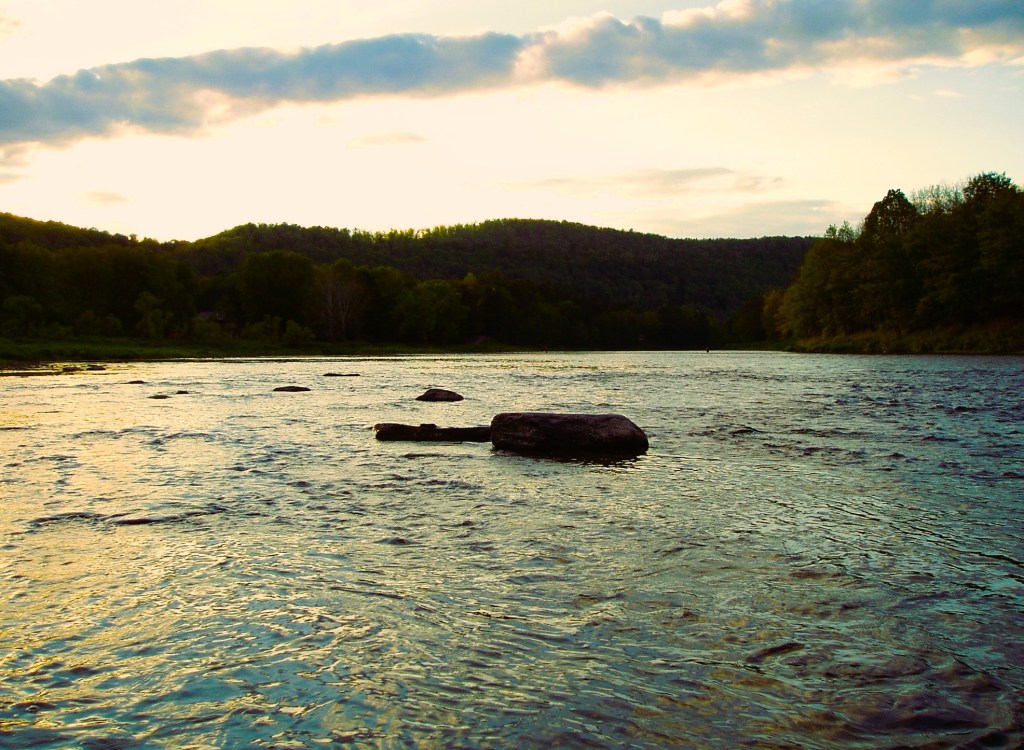
Evening on the Delaware Another season has come to a close and my mind recalls the memories made upon bright water. A look through the logbook I keep details the fishing, the flies tied and those new patterns and variations designed throughout the season. Moments shine as I read through those entries.
Each season has two beginnings, for I do wander the rivers on a handful of days each winter, with the beginning of dry fly season being the day most celebrated. Thus, this season began on the seventh of February, swinging a new winter pattern – the Dazed Dace, on the West Branch Delaware. The winter release had been lowered rather drastically, and I had to maintain concentration as the fly bounced off the rocks that stirred the skinny water of the run.

Cold water takes on a slowly swung fly are generally just another of those little bumps. Bouncing over a submerged limb, I felt that wonderful rubbery feeling as the loop of slack line between stripping guide and reel slipped from my fingers and raised the cane rod smoothly, pulling tight into a substantial fish. The old warrior fought well, heavy and darkly bronzed in winter’s cold, gray light, he measured twenty inches even in the net, inaugurating my season perfectly!
I began my riverbank vigil for that second season opener in the 62-degree sunshine of late March, finally finding it precisely at the end of my annual 100-day countdown on the tenth of April. The Beaver Kill surrendered a nineteen-inch brown and a pair just a bit smaller to my Leonard and Quill Gordon fly for a classic opening day of Catskill dry fly fishing.
A classic red wrap 1950’s Leonard wears the original classic American dry fly – the Quill Gordon! In terms of the final tally of trophy sized trout taken, the 2023 season was very close to my average success over five full-time Catskill seasons, though it proved to be above average in one sense. Five remarkable trout were landed on the dry fly that measured a minimum of twenty-four inches long, the best a twenty-six inch brute that stands as my largest Catskill trout to be taken on a surface fly. Wild brown trout of such proportions are truly magnificent creatures, and I am blessed to have enjoyed their strength and spirit through the arch of my rod! Most of these fish were taken on classic tackle, and that makes their memories even more priceless to me.
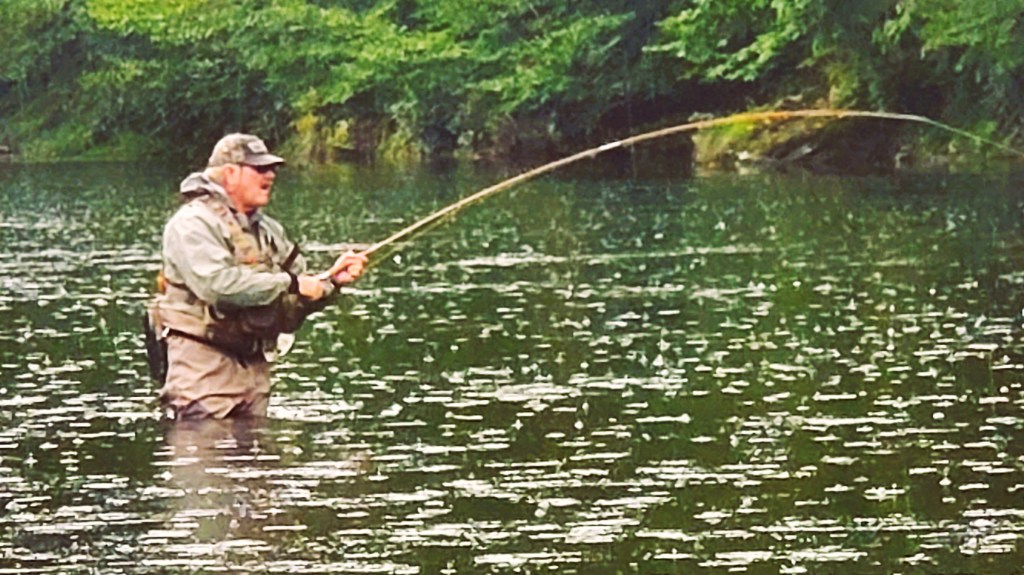
There is truly no music so sweet as the wailing solo of a vintage Hardy reel when a wild, trophy trout dashes away from the arc of split bamboo!
Now my attention turns to late autumn in the mountains: a search for Ruffed Grouse and some precious hours chasing whitetails with a great friend. My winter pattern of fly design and tying has already begun, working to incorporate the impressionistic concepts of the late John Atherton into my own dry fly designs.
There are long months between seasons, days upon days I will while away at the vise or spend polishing flamed bamboo with loving hands. Throughout this time, memories will flood my consciousness and bring a smile to my winter-worn face, for such is part of the celebration of a life outdoors.
-
Tying and Designing
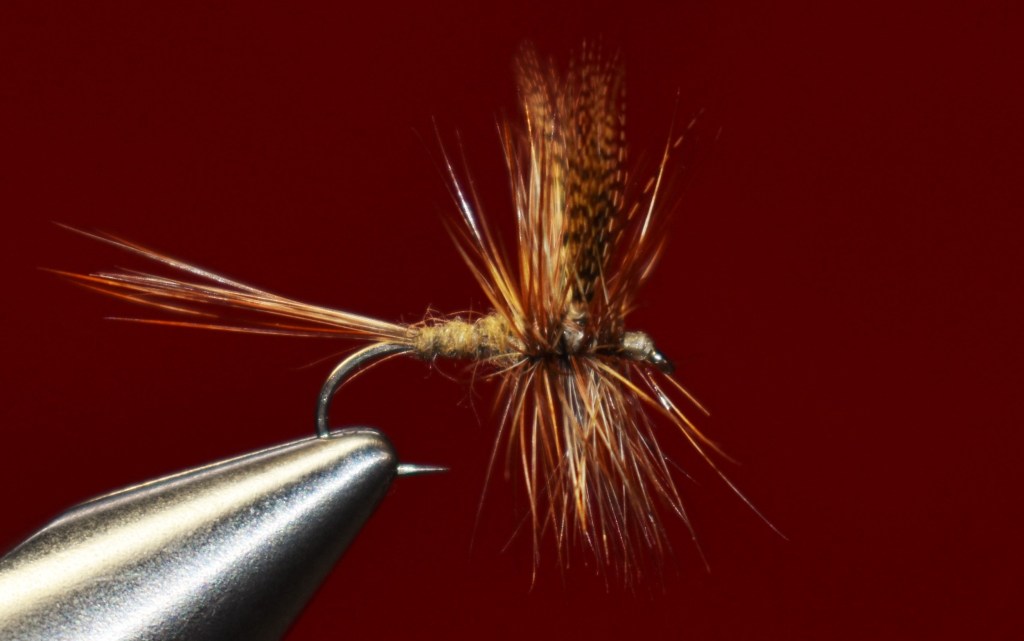
My Fox Squirrel pattern is a fly that gets the call when there may be a variety of early season mayflies about, but none hatching at the time. Tans, grays and a snippet of black in the fur suggest all of these species, and the cree hackle suggests movement. I have been moving on with my thoughts of expanding my “A.I.” or Atherton Inspired dubbing blends and flies, looking to take advantage of the multi-toned, sparkling and buggy combinations created to represent individual species of mayflies. Yesterday, I mixed a dubbing blend for an A.I. March Brown, and today another for the Blue Quills or Paraleptophlebia adoptiva.
I have recounted the success this past spring fishing the first such pattern, the one dubbed the A.I. Hendrickson. There are simply times when a buggy, more impressionistic fly gets better responses from the trout. Whether it is something to do with light intensity or penetration, or insect behavior on a given day, I will never know. The results were impressive enough that I will give the recently created Isonychia, March Brown and Blue Quill versions significant time on the water come spring 2024.
My best guess is that a buggy, bubble encrusted fly body may visually suggest a struggling, emerging mayfly, an easy target for a trout feeding efficiently on a hatch. Going back to English writings from a century ago, I have seen that theory applied to the classic Hare’s ear flies, both dries and wets. I think those gents were onto something!

One of my old reliables, a Hendrickson CDC Sparkle Dun. I have used the same dubbing blend for more than two decades, matching the color to Catskill Hendrickson dry flies tied by Mary Dette Clark. I use various shades from a Red Fox pelt, some tan beaver, and tan Antron dubbing to get there with a little extra sparkle and translucency. To date, I have used the A.I. blends to tie some of my 100-Year Duns. Trout have taken them hard on many occasions, furthering my belief in the struggling mayfly idea. The next step in the process will be to tie a few CDC duns in A.I. garb to see what our Catskill browns will think of them. If they take the buggy, muti-toned blends as struggling emergers, the addition of a CDC wing’s movement ought to excite them even further.

Search
Archives
- October 2026 (10)
- September 2026 (16)
- August 2026 (14)
- July 2026 (15)
- June 2026 (13)
- May 2026 (6)
- April 2026 (12)
- March 2026 (10)
- February 2026 (9)
- January 2026 (14)
- December 2025 (14)
- November 2025 (10)
- October 2025 (10)
- September 2025 (9)
- August 2025 (10)
- July 2025 (10)
- June 2025 (8)
- May 2025 (12)
- April 2025 (12)
- March 2025 (9)
- February 2025 (10)
- January 2025 (15)
- December 2024 (12)
- November 2024 (13)
- October 2024 (12)
- September 2024 (10)
- August 2024 (12)
- July 2024 (10)
- June 2024 (12)
- May 2024 (11)
- April 2024 (14)
- March 2024 (11)
- February 2024 (13)
- January 2024 (14)
- December 2023 (16)
- November 2023 (11)
- October 2023 (11)
- September 2023 (8)
- August 2023 (10)
- July 2023 (9)
- June 2023 (12)
- May 2023 (13)
- April 2023 (13)
- March 2023 (14)
- February 2023 (15)
- January 2023 (15)
- December 2022 (13)
- November 2022 (5)
- October 2022 (10)
- September 2022 (10)
- August 2022 (8)
- July 2022 (9)
- June 2022 (10)
- May 2022 (10)
- April 2022 (13)
- March 2022 (14)
- February 2022 (13)
- January 2022 (13)
- December 2021 (10)
- November 2021 (9)
- October 2021 (7)
- September 2021 (9)
- August 2021 (12)
- July 2021 (11)
- June 2021 (12)
- May 2021 (15)
- April 2021 (16)
- March 2021 (14)
- February 2021 (14)
- January 2021 (12)
- December 2020 (11)
- November 2020 (13)
- October 2020 (14)
- September 2020 (13)
- August 2020 (14)
- July 2020 (13)
- June 2020 (16)
- May 2020 (16)
- April 2020 (18)
- March 2020 (13)
- February 2020 (11)
- January 2020 (8)
- December 2019 (6)

