
-
A Farewell Tour
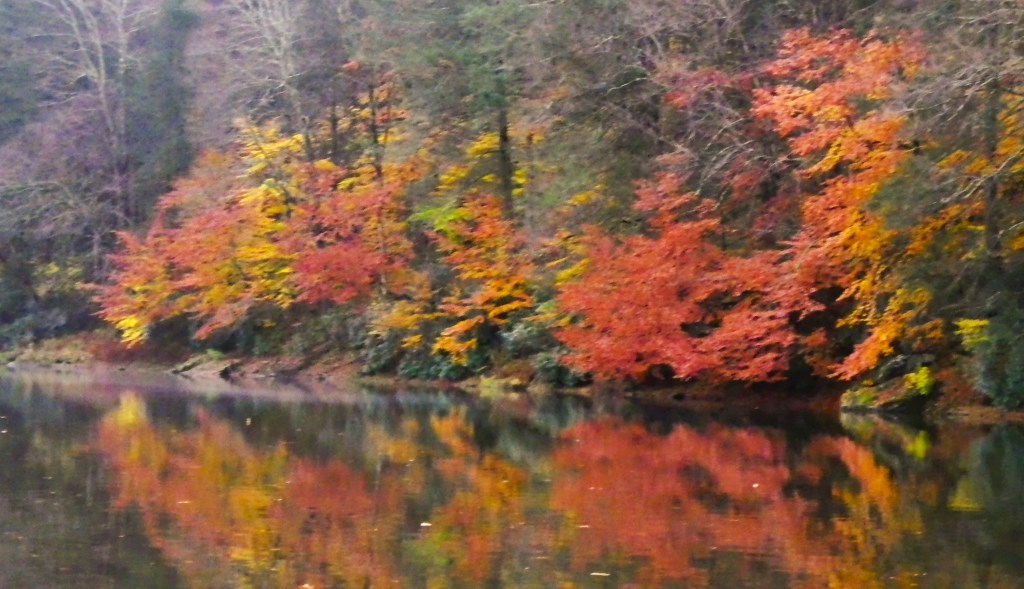
A last glimpse of color as October swiftly draws to a close. With no expectations, I headed out late this morning for another warm but misty encounter with the rivers of my heart. I am convinced that the season has exhausted it’s complement of mayflies, but I carry the Thomas & Thomas bamboo, the Hendrickson dry fly rod that accompanies me to greet the season each spring. If nothing else, the day was intended as a farewell tour of some particular haunts, a ride to visit various pools on various rivers, hoping against hope to find the ring of the rise. It is time to pay homage to those reaches of water where I find sweet solitude.
Our unusual weather pattern persists, with 62 degrees at dawn and a high of 64. Our river temperatures have been rising steadily for several days, and now mimic the perfection we hope for each spring. Our flows are low, typical for October, as the rain showers have been brief, enough to keep the day damp, with mist wraiths hanging atop the mountains, but doing nothing to increase the current.
The first stop proved my forgone conclusion: no flies and thus no rises, and it was with that resolve that I walked down to the second pool. No rod accompanied me, for I expected nothing, but my mood would change once my gaze studied the current. Retrieving my tackle, I waded in and knotted a tiny olive dun, assuming there were a few about to elicit the soft rise I had seen. I saw little on the water, but a ring here and then there told me there had to be something. The rises seemed to be singles, confirming there was no significant number of flies, so I continued on to position myself for the one good rise that drew me there for my farewell.
This pool has been the first visited in springtime, quite often surrendering some early evidence that the hatches were in que. When I spied one small mayfly flying past, I snipped my dun and replaced it with an emergent pattern one size larger. The smooth, effortless reach of the classic Hendrickson offered that fly to the next single riser in time to attract his interest, and I turned his bonus mayfly into a sting! That 16-inch trout bucked at the resistance of the cane and I enjoyed each moment until I twisted the fly from his jaw. No others would rise thereafter, whatever feeble hatch of flies having ended as quickly as it appeared. I changed the fly and probed the old favorite places anyway, building up to my bow of thanks and farewell until April returns.
I visited a handful of pools along several miles of river, visiting all but one which had it’s own crowd of hopeful anglers by Noon. No flies were encountered, no rises seen despite my wishful intentions. With a shower wetting me as I ducked into the car, I said my last goodbyes and drove on.
I found myself alone on my last reach of river for the day, the somber tones of autumn welcoming me to a mist laden pool. I stood for a while and watched, but there was nothing showing on the quiet surface save drifting leaves. I began with a twenty olive, and though there was no rise to cast to, a retrieve of my cast hooked one playful little brown. Come back to see me in a few years I thought, as I gently removed the hook.
I changed the little dun for a terrestrial, and then for an October Caddis, thinking I might attract one old fellow not yet drawn to the spawning gravel. My efforts proved fruitless.
There are times made for certain flies. A few days ago I had tied two 100-Year Duns to match an 18 Blue-winged olive, and I decided I would end my farewell tour with one of those patterns. An olive is a fly that should be around on such a day even if it isn’t. They are often the first and last mayflies of the season, and this season seemed wholly finished in my mind. I relaxed and waded slowly downstream, casting to lies remembered from dozens of years on this water.
From a distance, I had seen a pair of splashes along one stretch of bank, a good fish chasing minnows was my thought. an hour must have passed by the time I drew within casting range of that area, and I studied each raindrop that fell, dimpling the surface. When the ring appeared, there was no doubt that a good fish had found some morsel worth the effort. I lofted the line once more, lengthened it and let it unroll softly out there until the fly alighted. The answering wide, soft ring beside that shallow bank was magic!
Sometimes when we believe the end has come, we find something we did not expect, something like a deep throbbing bow in a lithe shaft of classic cane. I relished the gift, cherished each turn of the reel handle, each rasping note that escaped the old Hardy as that brownie resisted what was seemingly preordained. Less than a week until Halloween, the hatches finished for the year, and yet that trout and that little fly met in time and space as I said my farewell to another Catskill dry fly season.
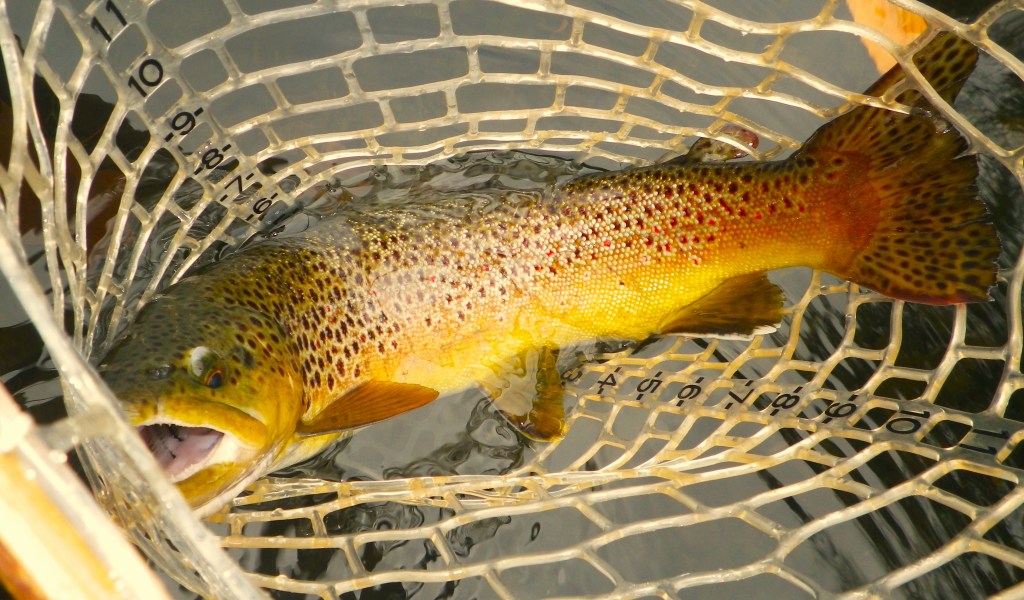
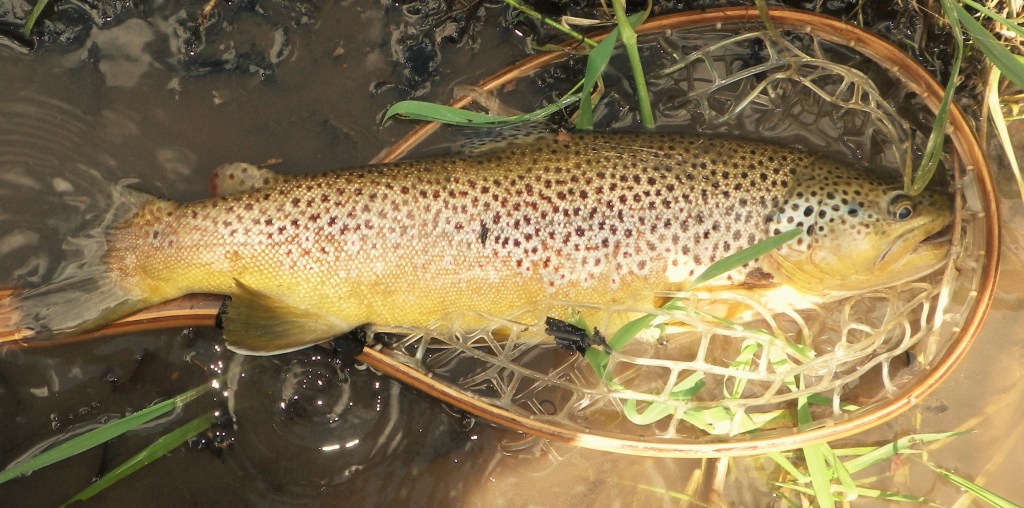
The butternut golden belly glows in the soft, diffused light of a misty October afternoon. The brown measured twenty-two inches, and I thanked her for her beauty and vitality. Already she has spawned somewhere in the riffles and returned to her home pool to gather strength for winter. 1 comment on A Farewell Tour
-
Turnabout
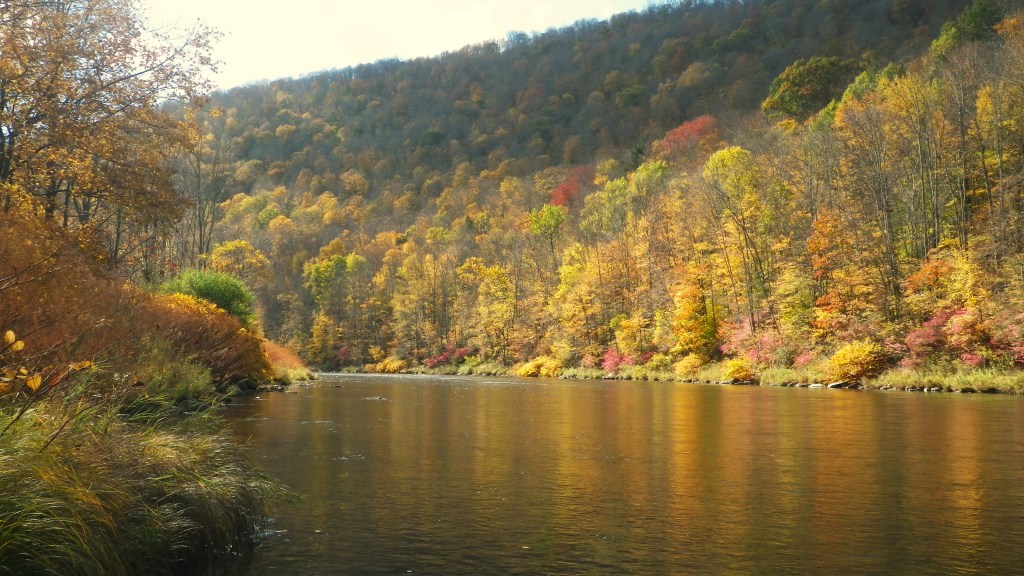
It is morning once again in Crooked Eddy, and a misty 62 degrees. The weather is playing a game of turnabout here in the Catskills more than a month into autumn. River temperatures have been rising fairly steadily, despite the lack of sunshine. Low flows and warm air have brought them from last week’s forties up into the fifties.
Cloudy, rainy days and warming water, fishing must have new life! Well, that seems to be the tease anyway. I went searching yesterday for an olive hatch on a perfect olive afternoon. I checked several pools that are usually worth fishing at this time of year, finding the barest handful of tiny mayflies on one of them for a brief span of time. One good fish was taking, selecting as they do the perfect spot to foil presentation of a dry fly.
He was moving up and downstream several feet within the fan of current coming off an obstruction, presumably a rock. The game presented not only required achieving a drag-free float within the confines of that current fan but determining just where in that realm he would be at that moment. Leave it to our Catskill trout to make things interesting.
I approached this hydraulic dilemma from an upstream angle, moving during the course of our engagement to make that angle ever sharper. I did get some drifts that looked quite good, though I failed miserably at predicting his random relocations. Eventually whatever morsels he was sampling disappeared (I had only seen two or three flies on the surface throughout) and he stopped feeding, never to rise again.
The fact of the matter is, the dry fly season technically continued for that one more day I ache for at this season, though I could have saved the effort of carrying my net. Despite seemingly perfect conditions, I believe that the autumn’s allotment of olive nymphs may simply have hatched by this fourth week of October, leaving the trout not already involved in procreation with nothing more to rise to.
Being a die hard, and totally unwilling to accept the impending onset of winter, I will slip into waders and rain jacket again today, joint my impregnated Thomas & Thomas Hendrickson, and seek to be humbled again.
-
A Late Warming Trend… For Naught ?

It is Friday October 21st and 28 degrees in Crooked Eddy. Rivers have felt the chill of advancing autumn – my bones bear witness! I have enjoyed a last late glimpse of the magic of the dry fly, and watched it pass into memory.
Yesterday I stood shivering as the winds blew whitecaps upriver, my wet hands icy from handling the line and fly. No rises greeted my gaze during the calm spells, and truly I did not expect them. My thermometer told the tale, the gin clear current registering forty-four degrees at half past noon. Now there is a brief warming trend knocking at our door, teasing me with empty promises.
Though my soul wants to believe a day of warmer breezes and sunshine might cause the magic to stir, to return for one last golden moment, my heart tells me the season has passed. Yet I am still called to the rivers…
I begin and end each season in the same manner, walking riverbanks and searching for the dream, and there are always strings of days that I do not find it. River temperatures in the forties seem to be the constants during these searching walks. In spring, that run of days eventually ends with the first rise of the season. In autumn though, the end always comes with acceptance that winter shall rule the rivers for nearly half the year.
Fighting the elements yesterday morning I cast through the wind thanks to a seven weight line that brought forth the power of my Kiley bamboo, driving the streamer out to swing through the fallen leaves. Yet sitting on the bank to let the sun warm me just a little, I knotted a size 20 olive with hope in my heart. Blind hope.
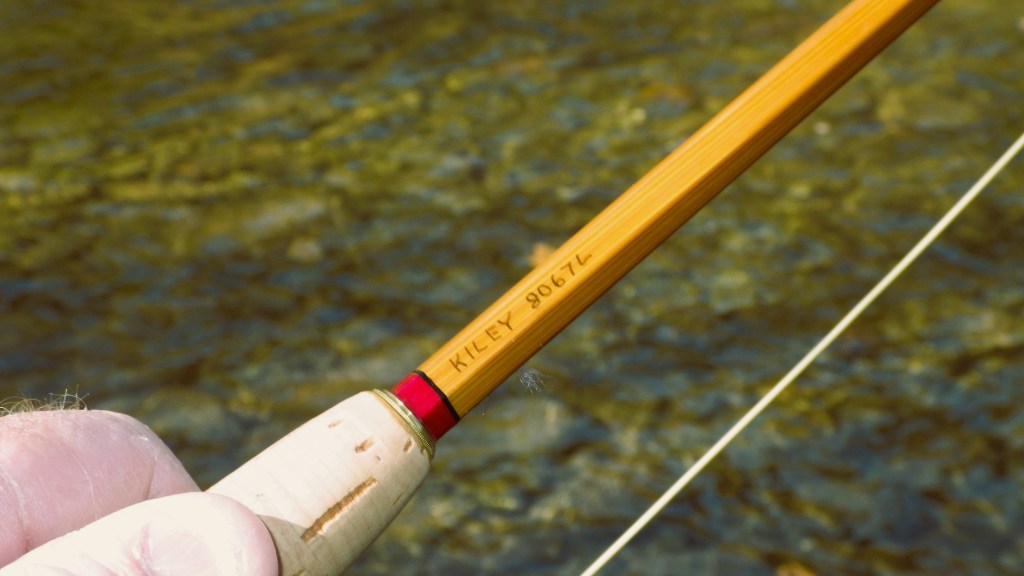
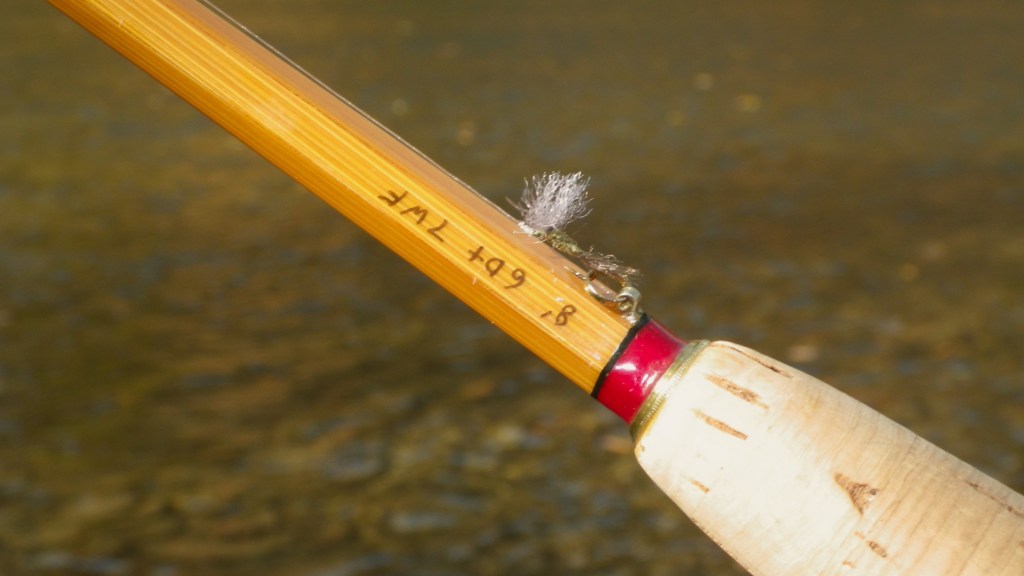
The presence of the heavy rod, my off-season rod, speaks to acceptance of season’s end, yet the tiny dry fly was knotted with hope in my heart. The seven weight Kiley will present that bit of nothing beautifully and delicately, even on low water, so though it represents a concession in spirit, it still allows that glimmer of hope within.
-
Parting Gifts
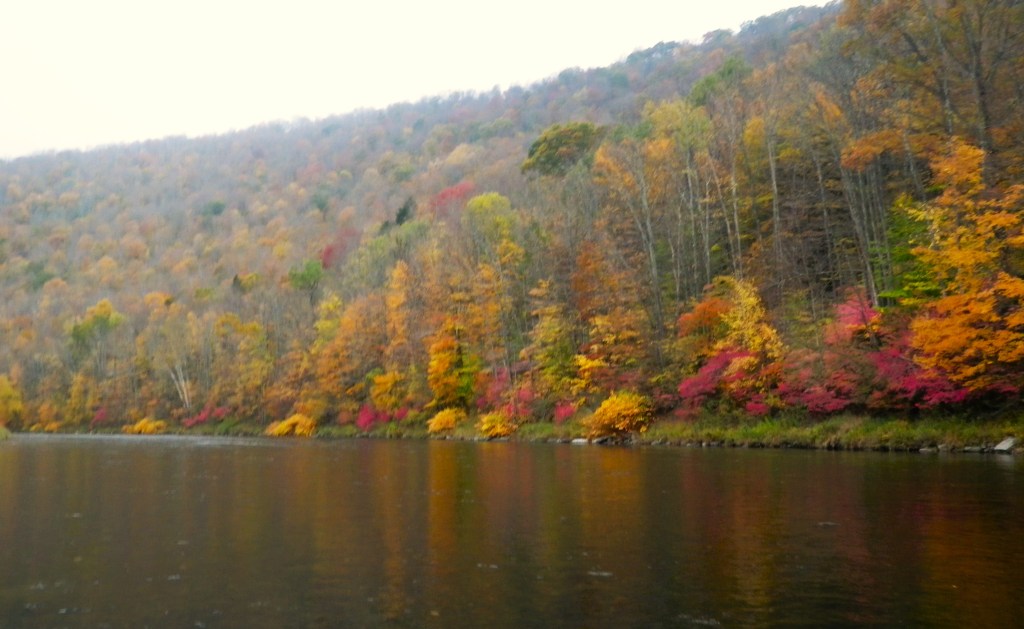
Though it is afternoon, the mist pervades everything… Though it is past Noon as I enter the river, the cold grasps at my legs immediately. There is a pervasive mist in the air from mountaintop to river, even down into that watery realm it seems. I am prepared for the afterlife, that second season some call it, with a big Isonychia soft hackle knotted to a substantial tippet. The river temperature is 47 degrees, and there will be no sun to warm it.
I move into the flow and cast the weighted fly across, mending a short loop so that it swings gently down over the cobbled channel. Step, retrieve, cast and swing: this is what must pass for fishing at this season. I continued my rhythm for an hour, but nothing bumps the fly. My gaze wanders, this off-season style of fishing depending upon feel rather than sight, and I see something that I do not expect.
Studying the flat surface, I find a procession of tiny wings and my heart jumps. There is reason indeed for the soft rises my eyes revealed along the glides, cold be damned!
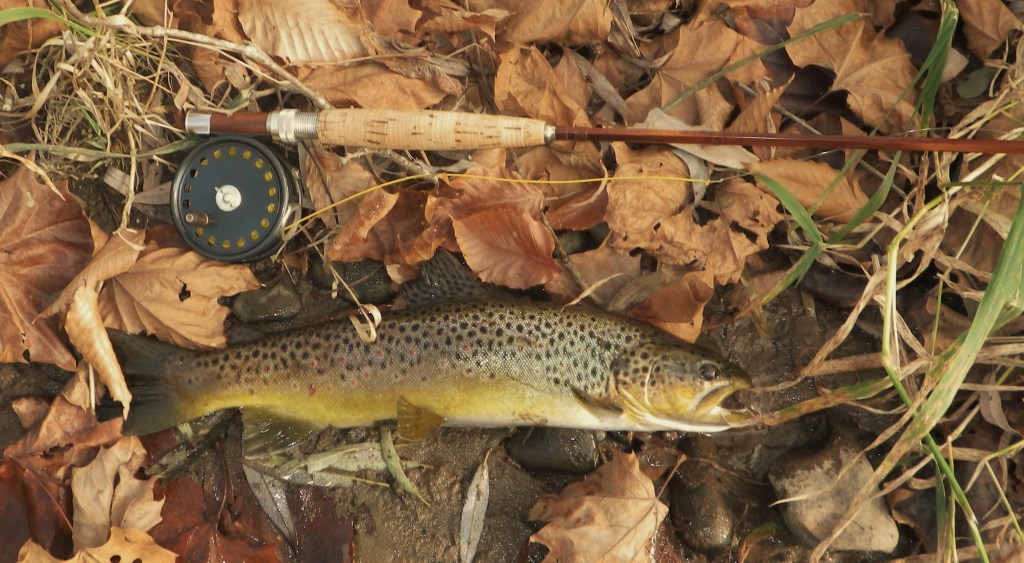
The ubiquitous Orvis Battenkill eight-foot 4 3/8-ounce bamboo fly rod might be the most versatile piece of gear there is. The old war horse lays heavy streamers and wets out there with repetitive ease, though with a six weight line it will present a tiny dry fly quite perfectly, making it the perfect foil when the Red Gods offer unexpected gifts! I rebuilt my leader as I stalked down and across the wide expanse of the river, smiling as those little rings amid the glide repeated themselves. The magic lives!
The flow was the equalizer on this day, leaving me long casts crossing complex currents even from my closest approach. Ah those bedeviling currents! I have battled them before, learned a few things as far as solving their puzzle of presentation. Every day, every flow is different in a living river, and those treacherous currents are constantly shifting, curling and finding new ways to trap a leader and skate a fly away from success.
The trout were moving, and despite the substantial number of flies upon the surface they refused to feed steadily. I invested the time, changed position a step at a time. I solved one riddle and the old rod bowed deep and throbbed with life!
I danced the edge, working the fish to the limits of the tiny hook. He had the advantage in the deep, fast water. I had worked into a casting position carefully, leaving no easy exit back to shallower environs. I would have to control and land him there or not at all. Invigorated by the cold, oxygenated water, he nearly leapt out of the net when I finally swept him from the river, my little dry fly lodged perfectly in the corner of his mouth!
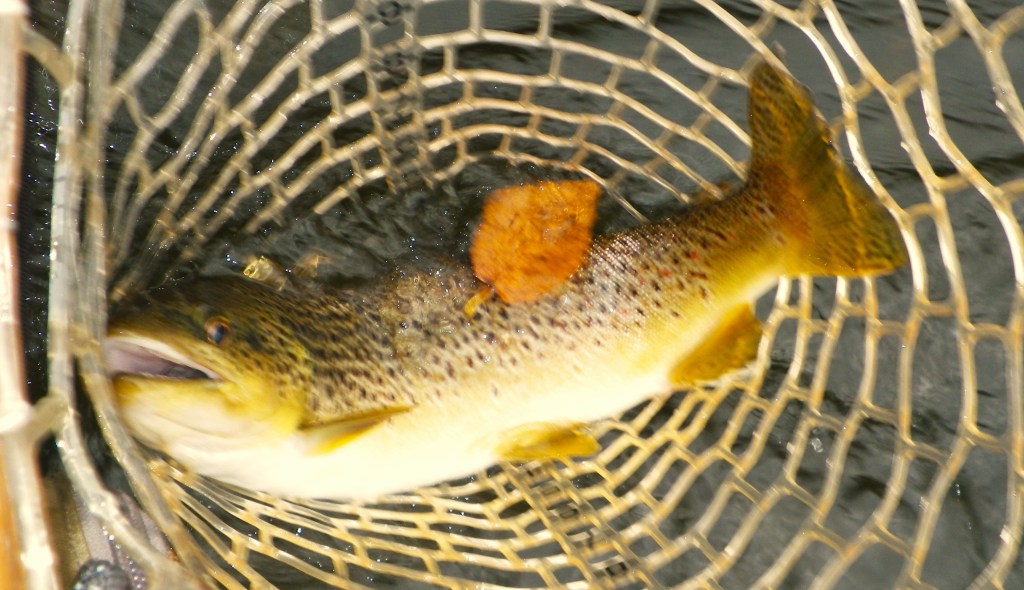
A 21″ Catskill brown poses in the net before his return to the cold, deep flow of the river and it’s buffet of tiny mayflies! As the afternoon deepened, the game continued. Each substantial change in position required wading back to shallow water, moving down, and then easing back over the treacherous portion of the riverbed to work another riser. The tiny olives marched in a wide phalanx down the current of the glides, yet the feeding remained spare: take one, perhaps two and then demure, each trout ghosting from the mist then vanishing again.
At last, I found myself in perfect position when another rose briefly, first to a mayfly awash, and then to my dainty fraud! The fight mirrored my earlier escapade, the resiliency of the old rod cushioning that little hook as I worked the trout around line cutting boulders. In the net, he was a twin to that first wonderfully energetic brownie!
The activity disappeared in the mist from whence it came, and I found the warmth of the car most welcome after convincing my tired, cold bones to work out of those mesmerizing currents.
In the morning I tentatively checked the porch thermometer, pleased that the expected freeze had not occurred. Thirty-four degrees doesn’t spell fishing, but the pull of the river was too strong given the gifts of the previous afternoon.
Bright sunshine greeted me at river’s edge, though the clouds gathered quickly as I scanned the surface for some evidence that my good fortune might be repeated. Each day at this season might be the last. There was no heavy leader today, no swinging. I simply waited and watched, easing gently into and downstream with the flow.
Eventually I witnessed a telltale ripple in the glides, enough to confirm life, and death for the mayfly’s part and began my stalk. As the sun became more hidden in the darkening sky, the wind rose just enough to thwart my best casts from yesterday’s proven position. A final play put the line too hard on the water, and the rises ceased. There were fewer flies this day, and the clouds did nothing to improve their numbers. Occasionally I would spot a single rise and work into a position to cast, only to find that rise would not be repeated.
Over the course of an hour, I managed to put the fly over one or two of those single rises without result. A larger mayfly drifted past, it’s light body and wings bringing to mind the September peach fly, and I turned to my vest pocket. A sixteen sulfur 100-Year Dun caught my eye and I reached for it instantly, replacing the twenty olive the wind rippled surface refused to let me see. When a good rise showed amid the water tumbling over a boulder, I cast that fly repeatedly, willing it to succeed where the little olive had failed.
The trout took greedily, my rod bucking instantly with his wild energy, and the vintage CFO began to sing. My first glimpse of my foe confirmed this was a good fish, but his heart belied his size. Some trout simply refuse to give up. I was powerless to control him in the deeper flow, surrendering my position and carefully working my way into shallower water. Still, he refused to come anywhere near me.
I understood when I finally made my first pass with the net: a heavy Delaware rainbow. When he was bested at last, I slipped the canted wing fly from the side of his jaw and thanked him. A fine example, pushing nineteen inches as he wriggled in the mesh, I tried to snap a quick photo before release. Looking at the result this morning, I wondered if it was the cold that made my hands shake so badly, or something else. Perhaps sharing his will and wildness through that arch of vintage cane affected me more than usual.
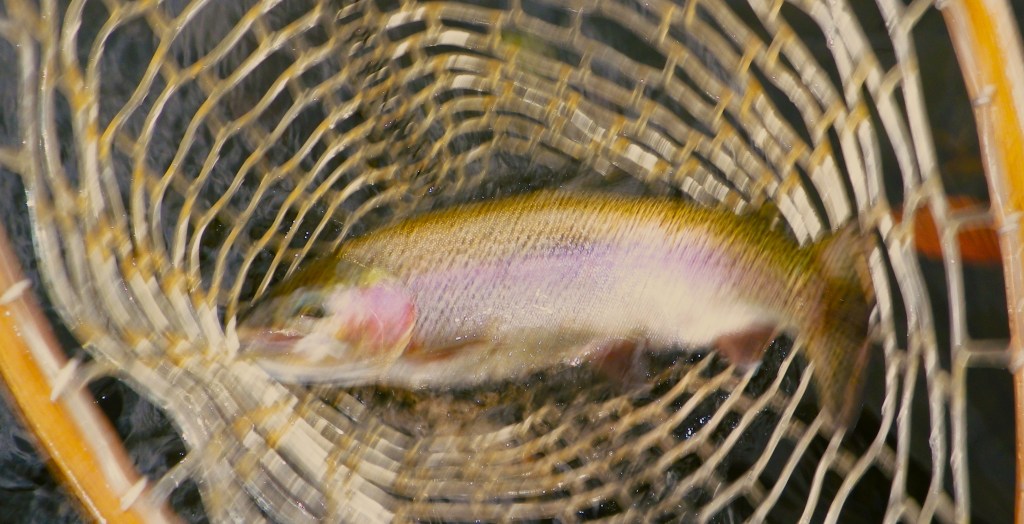
My shaking must have been the cold… There were no more rises after I released that beautiful bow, so I took a break from the cold the river had steeped into my bones. I checked another pool and then another, but the activity for the day appeared to have concluded. I did find a couple of friends lurking at that last pool, looking rather than casting as I arrived. The sun shone through the clouds and warmed me as we stood there and talked.
In turn, each of these anglers spotted a rise and excused themselves to slip into the chilly current, while I headed home envisioning the hot coffee waiting there.
Our first frost arrived this morning; thirty-one degrees at daybreak here in Crooked Eddy. Shall these two afternoons mark the end of my dry fly season I will remain thankful for Nature’s gifts, for they were golden!
-
Final Hours
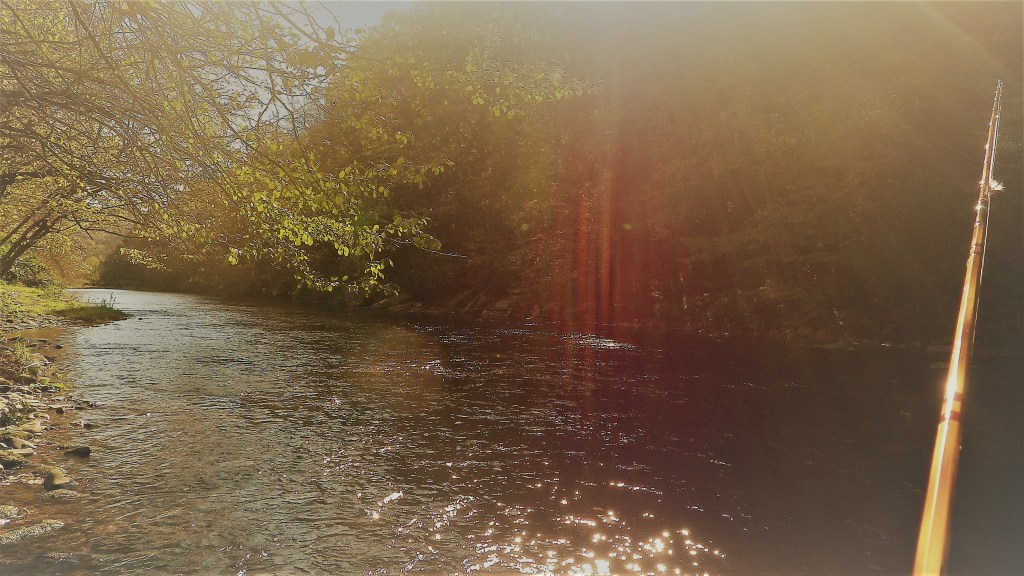
The end is near. Despite the beauty all around us, the end of another dry fly season looms. I can feel it slipping away. That most precious season of all the year is drawing swiftly to it’s finale.
The daily high temperatures for the coming week average just 52 degrees, despite the sunshine expected to accompany them. The nighttime lows will flirt with the freezing mark. River temperatures have remained in the fifties, but this will be the week I expect that to change. When the autumn flows reach the forties, I will look no more for rises and glistening wings upon the surface. Ten days have passed since I spotted the white mouth of the last great brown trout to succumb to the enticement of my gently presented dry fly. As each day passes, I wonder if that fish will be the last of the season.
Certainly, I will fish beyond October, beyond the moment of the last rise, though not with the same pleasure, the same burning desire or ultimate contentment when I lift the dripping meshes of the net from the river. The dry fly is special, as is each trout I might deceive and entice to drift up for my fraud; to me, the dry fly is the pure essence of flyfishing. Though I may walk along riverbanks with bamboo in hand, the best of the magic is gone, the moments lack their wonderful energy, their luminosity.
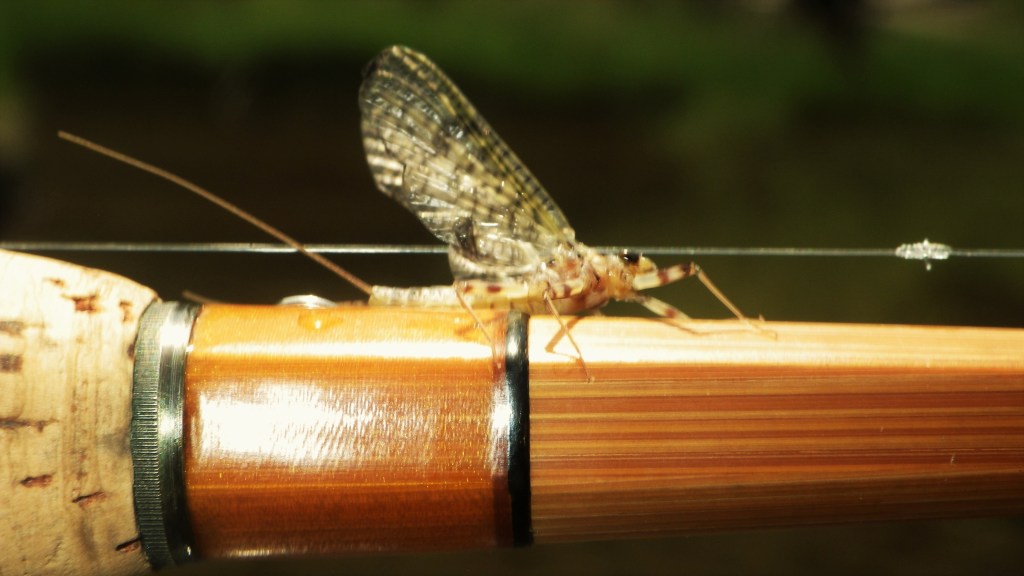
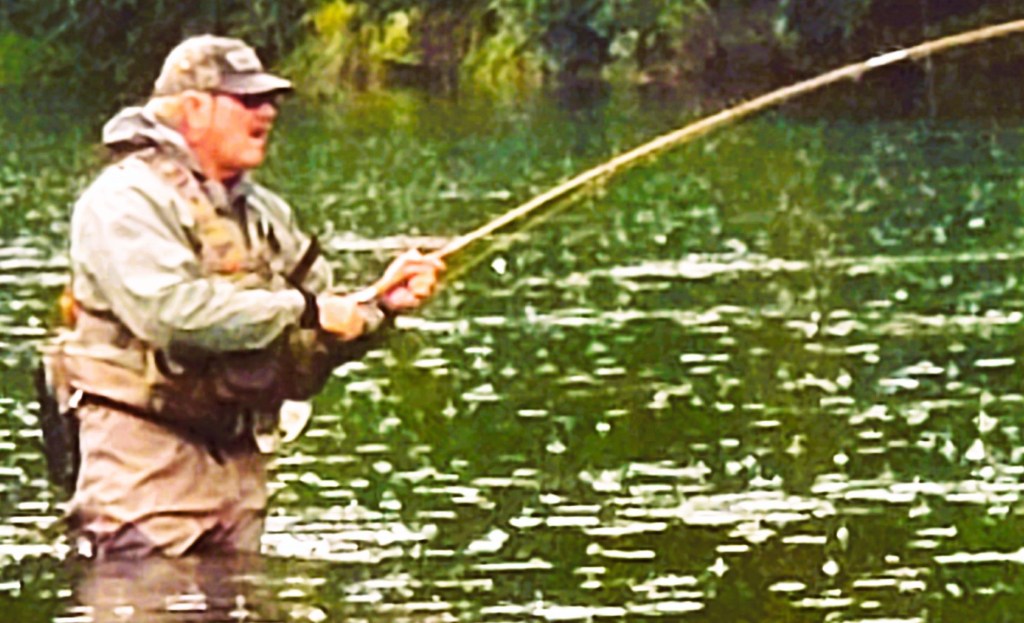
-
Autumn Wandering
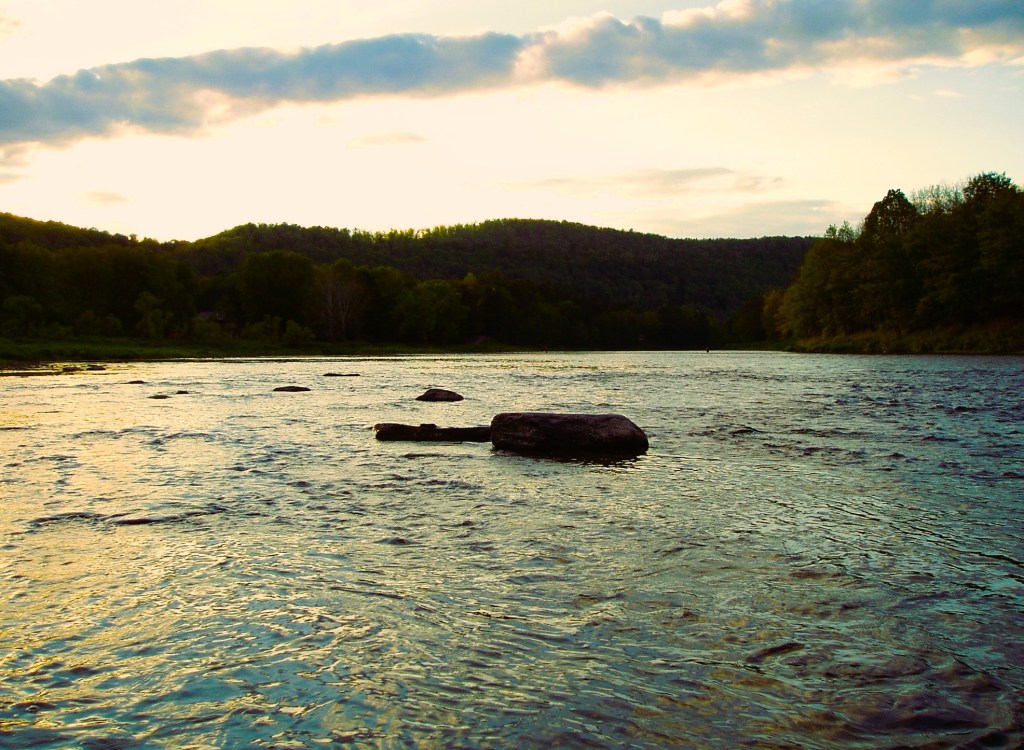
Evening light upon the Delaware. Early autumn often brings low water to the Delaware, making it ideal for long walks along the river’s graveled margins. Water temperatures are perfect for the trout once seasonal weather patterns kick in, and the river’s wild rainbows are looking for food while the brown trout turn to spawning.
One thing the great river doesn’t have enough of is access, but low water invites exploration thanks to the ease of traversing the shallows. Once I see evidence of spawning rites in our brown trout strongholds, the Delaware and her rainbows call to me.
The river has a reputation for it’s moods relative to fishing, and that will never change. Nature weaves her magic subtly here. If the angler finds the hatches, he has a good chance of finding trout at this time of year. Amid the bubbles of foam and fallen leaves defining the lines of drift, I search for tiny insects and subtle rings, looking closely for the evidence is not easy to see, particularly when autumn winds ruffle the wide open eddies.
Yesterday I took up my Delaware rod, the 8 1/2 foot pentagonal bamboo that Pittsburgh rod maker Tim Zietak made for me several years ago. The crisp action of the pent and it’s longer length offer extended reach with the delicacy necessary to present small dries on the wide, flat eddies. It is a rod I reach for at this season, perfectly suited for the tiny autumn mayflies yet lithe and powerful when battling a muscular Delaware rainbow. With a late start, my walk along the river would be shortened by good fortune.
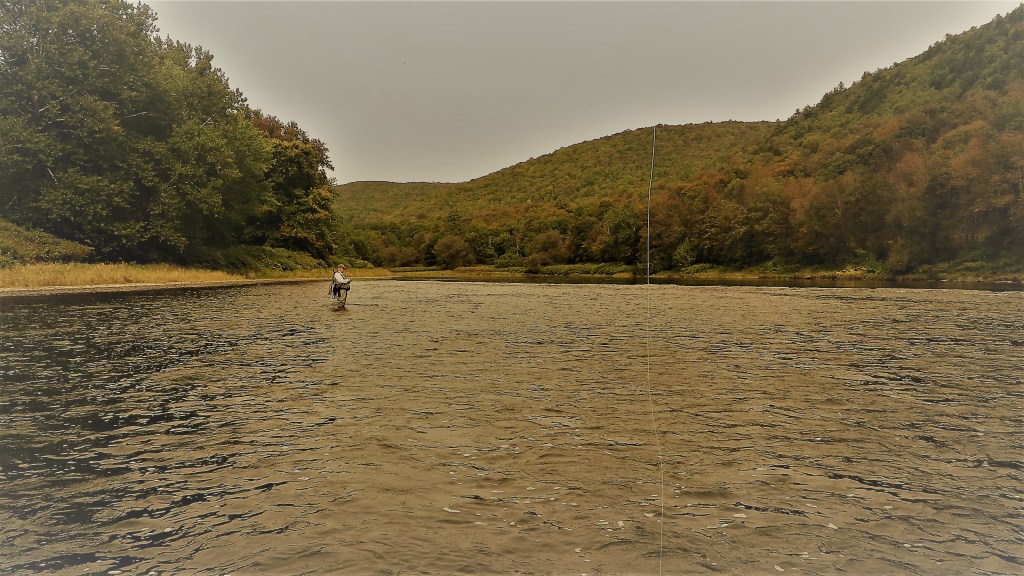
Mike Saylor considers his fly selection during a late September morning on the wide Lordville riff. Stopping to knot a fresh tippet and comparadun, I was startled with a heavy rise close at hand. I had seen one or two miniature rings in the shallows there as I walked down river, expecting the work of fingerlings. My initial reaction was that my presence had spooked a shallow hunter, but I was to be pleasantly surprised. The wind began to gust, taking the first fly from my fingers as I lifted it from the box, and I grabbed another firmly and secured it to the leader. I spotted the missing fly trapped in a tiny eddy between the stones, retrieved it, and placed it back in my vest as a soft ring appeared close to shore.
Rather than deal with the frustration of fishing a size 22 olive in the wind, the fly I had been so eager to secure was an 18 Hebe imitation, a seasonal mayfly I had seen on the rivers recently. I checked the brush behind me and offered the bright yellow fly to that recurring soft ring. The trout was moving, as Delaware trout often do, and it required several casts to synch the arrival of my drifting fly with his position until we were off to the races!
It became instantly clear that this was no fingerling as my reel spun with the trout’s departure. With so much shallow water surrounding his feeding ground, this bow opted for multiple runs and changes of direction as opposed to the reel emptying runs executed under spring conditions. I touched the drag knob after his first burst, adding a bit more resistance to his runs. The little dry fly had found a secure hold, and he eventually thrashed in my net, a wide flanked, colorful bow better than eighteen inches long!
I expected the commotion of our encounter had sent his brethren fleeing from those shallows, but it wasn’t long before I spied more soft rings perhaps twenty to thirty feet further out across the flat. The current seemed to be funneling the minute naturals down my half of the river and the trout were keyed on taking advantage of the skinny water buffet.
They were warier now I learned, as the closest rise shunned every perfect presentation. The afternoon wind began to gust harder and more frequently, and I guessed my sport would be short lived. I managed to send the fake Hebe to a meeting with another hungry bow who proved to be every bit as energetic as the first, before conditions deteriorated enough that the rises ceased.
The Red Gods played their games of course, teasing me as I waited to see if the winds might lessen and the trout return to feeding. Twice I waded out to reach an odd heavy rise in a trailing midriver current, both times greeted by heavier gusts that brought my casts up short. As I said, the Delaware has her moods.
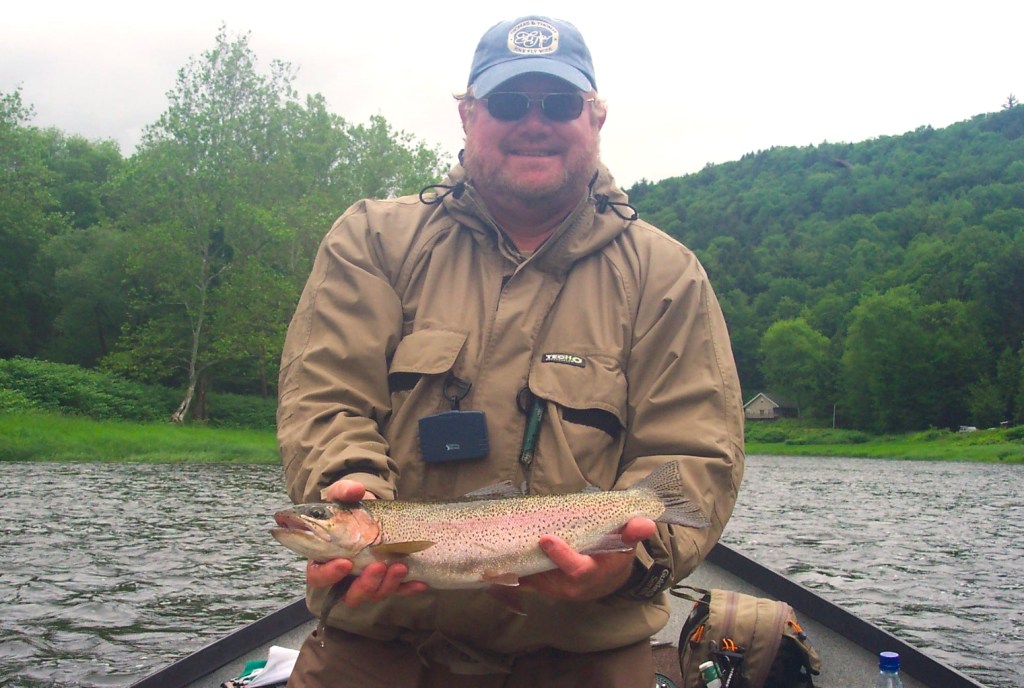
A heavy spring rainbow from the wet, moody Delaware, 2006. (Photo courtesy Pat Schuler)
-
Honoring A Friend
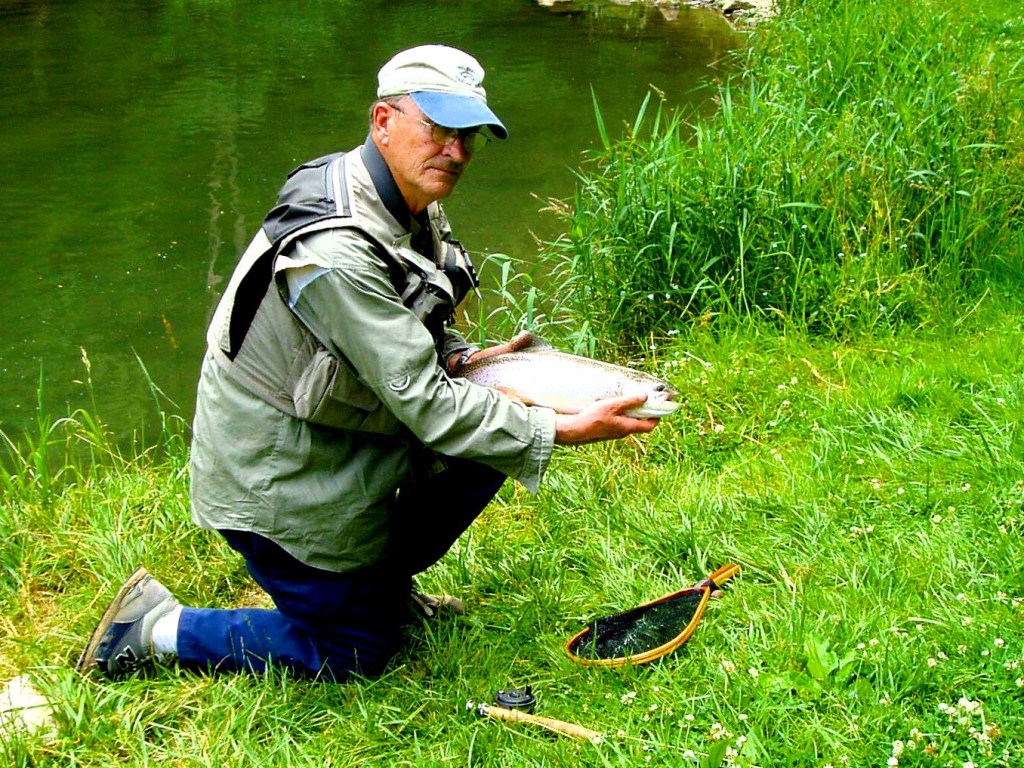
Charlie Meck lands a jumbo size rainbow trout on the banks of Pennsylvania’s legendary Spruce Creek in late June 2005. Yesterday afternoon I made a trip to the Catskill Fly Fishing Center and Museum to attend the induction ceremony for the Fly Fishing Hall of Fame. My visit was made to honor the memory of a friend, a man who became a friend to many fly fishers through the pages of his angling books, Charlie Meck. Charlie was enshrined yesterday with his entire family attending, an honor in recognition of a gentleman who dedicated many years of his life to his love of fly fishing and sharing that love with others.
I first met Charlie at Falling Spring Outfitters, my little fly shop in Pennsylvania’s Cumberland Valley in the 1990’s. When his friend Ken Rictor told him there was a new fly shop in the valley, Charlie simply had to stop by when he was in town. I liked him immediately. Charlie was one of those anglers who held a great passion for the wonders of trout and fly. He understood the magic that was there, out on bright waters, and how fortunate we are to share some part in it; and Charlie had a mission to share that wonderful realization, to teach others to witness it too.
Charlie certainly succeeded in his mission, writing some fifteen books that eloquently spread his knowledge and appreciation for the wonders of fly fishing. I remember one rather cold, bleak April day when I needed badly to get out on the water, to see a trout rise to a dry fly after a long winter. The streams that might have filled that need were all high, cold and roily, so I took out Charlie’s Meeting and Fishing The Hatches, finding a tale of a relatively unknown mayfly called the Great Olive Speckled Dun. As usual, Charlie told us where to find them and when, and gave a dressing for a hatch matching dry fly. The where included Clark’s Creek north of Harrisburg, a small tailwater I had never visited, and the when was squarely fixed in that week in April.
I tied a handful of size 12 imitations early that morning and headed north. I found a quiet stretch of water, found the hatch emerging at the appropriate time that afternoon, and got my much needed first dry fly fix of the season! The little tailwater was in perfect condition, insulated from the cold, dirty runoff that made the other regional trout waters unfishable, sheltered there in it’s lovely forested little valley below the Harrisburg Reservoir. Charlie Meck had come through again, as he had for thousands of his readers!
One of my fondest memories of Charlie and his kindness centered around a weekend in late June of 2005. Charlie was a long-time member of the prestigious Spruce Creek Rod and Gun Club and invited Mike Saylor and I to join him for a weekend of fishing that most famous limestone spring creek. We had fished with Charlie and provided him some local info on our home waters while he was writing his volume entitled Fishing Limestone Streams, and he made his most generous offer in friendship and gratitude.
We had a wonderful weekend including great fishing, great meals and tales of the history of the club. I recall sitting in the great room in the evening watching Charlie tying flies for the morning campaign. I was in a wistful mood, having had an absolutely huge rainbow escape by pulling so hard he stripped the braided loop connector right off the end of my fly line, taking loop, leader and fly back underneath his favorite log! Charlie’s company and his anecdotes about the Club and its history eased my anguish.
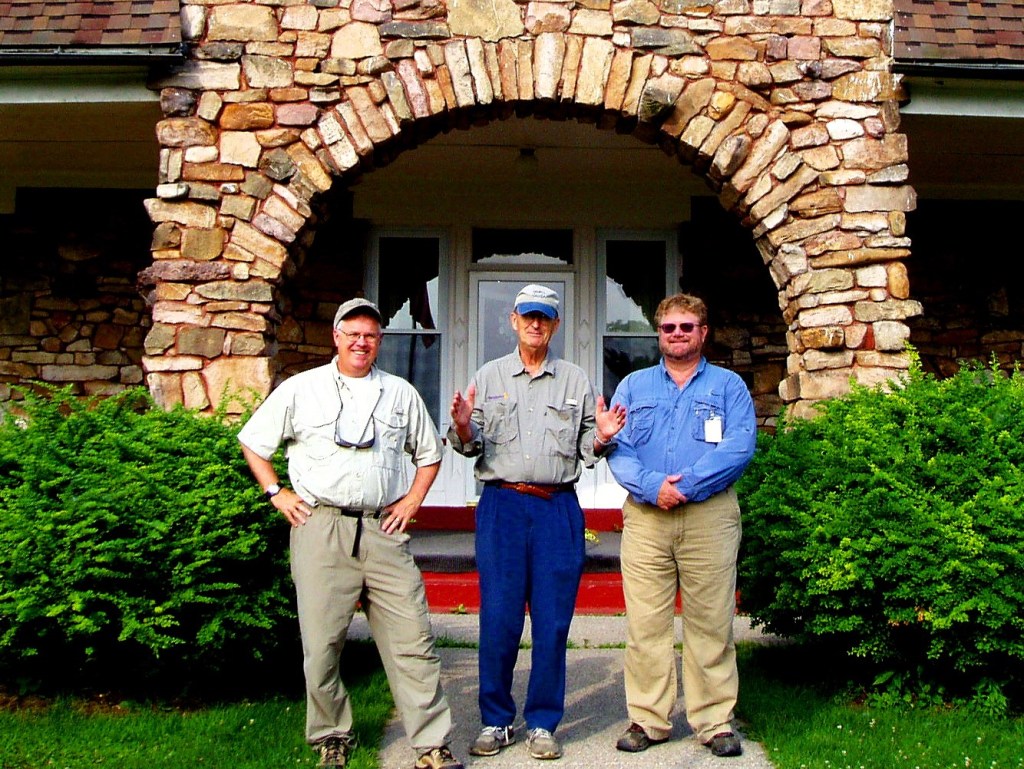
Mike Saylor, Hall of Famer Charlie Meck and yours truly in front of the great stone arch entryway of the famous Spruce Creek Rod & Gun Club: “Honest, he was this big!”. I was pleased to be able to attend the ceremony yesterday afternoon to see my late friend honored for a lifetime’s work on behalf of fly fishing, Nature and sportsmanship. Charlie loved to teach and share, bringing many joyful hours to thousands of anglers. He was always humble, never one to capture the limelight in his writings, always touting the skill and accomplishments of the many friends who fished with him.
I got the chance to meet Charlie’s son Bryan who gave some heartfelt remarks about his Dad. We had a nice conversation and I hope we get the chance to fish together one day. I would enjoy the opportunity to become friends with the son of my late friend and show him some of our best Catskill waters. I can tell that Charlie’s great love of fly fishing and the magic of trout and fly lives on in his son.
-
Valhalla In Color
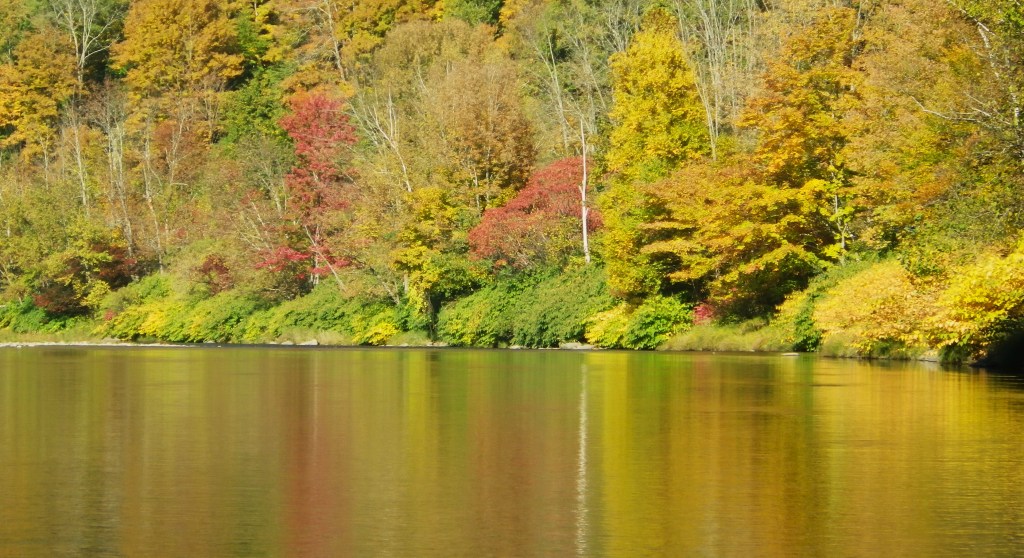
The mirror of the river… It is a Saturday, and today begins the second full week of October. The sun, rising over the mountains to the southwest, has driven back the cold rain and clouds that greeted me before dawn. This first week has been very much autumn, with more clouds and rain, more chill breezes than sunshine. Thursday though, proved to be a glowing exception.
Expecting afternoon temperatures in the seventies, I spent a couple of hours at a friend’s haunt, finally getting my hunting legs adjusted to ridges as opposed to riverbanks. Azure skies and brilliant sunshine made it tough to see in the forest cover, with blinding flares shooting through each gap in the ample canopy. There is a host of color in the mountains now, with every drive north revealing more. The birds were otherwise occupied it seems, as I counted no flushes working slowly through the early season covers that often provide some opening day excitement.
It got warm early, sixty-seven even there so close to the mountaintop, and I chose to enjoy my lunch and then trade my upland boots for waders. The radiant energy from all of that sunshine sealed my fate, simply drawing me toward the rivers. I will hunt more of these mountains on a chilly, somber day. I fear there will soon be many of them.
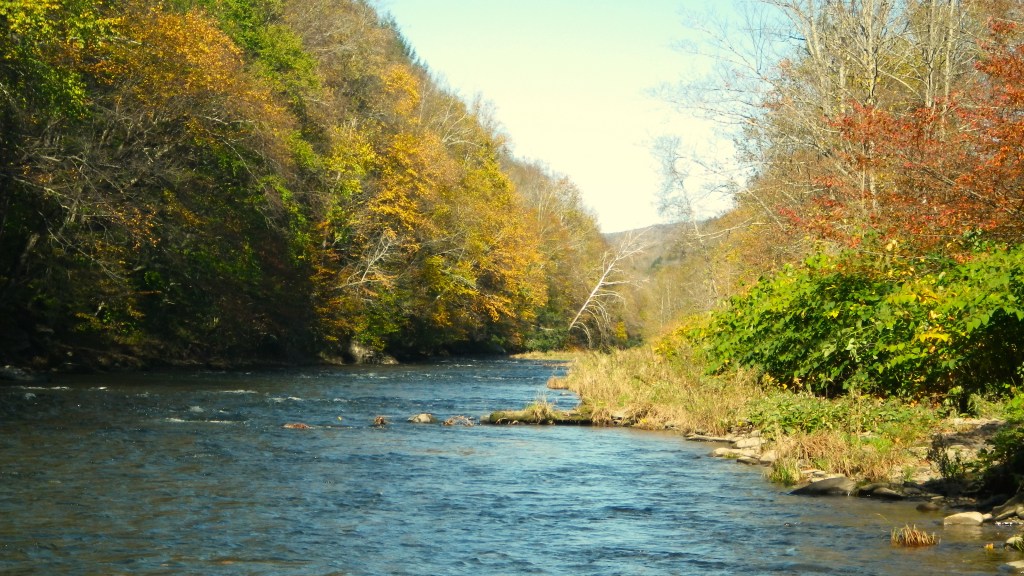
I had thought to visit a number of pools, to spend a little time exploring in search of a taste of dry fly activity. I found anglers seemingly everywhere. The first truly gorgeous day in October is a magnet for fly fishers near and far, eager for that same sweet taste of angling nirvana before winter brings our season to a close.
I had packed my little Orvis Madison bamboo and a seventies vintage Hardy LRH that fits it perfectly and assembled the outfit carefully when I finally found a small pool to myself. I hiked down to the river and took stock of the situation. Three quarters of the pool was brilliantly lit, with some shade along the far shore. A few tiny mayflies lifted from the gentle current of this low water paradise, and I knotted a favorite autumn olive pattern in anticipation.
Wading out, I spotted a tiny ring here and there, several feet back into the shaded water, and knew I would have to get close to that edge to see my fly tracking on the surface. Finally in casting position, I discerned soft rises from a couple of fish, but their locations and the tiny disturbances gave me concern. A large trout can feed with negligible evidence when he chooses to, though careful observation tends to reveal the subtlest bulge in the surface just before the ring of the rise appears. There were no bulges here, just the rises of a few very small fish. I cast a few times, finally seeing the splash of one of the little fellows to confirm my suspicions. I bade them goodbye. There was one more pool on my radar, and I headed there without delay.
There are pieces of trout water that appeal to the hunter, places that don’t bring smiles to the faces of every angler. These reaches do not offer a large number of willing trout, nor do they surrender the few they harbor to casual angling. I have spent many hours on this pool, and honestly, I leave more often than not without even the chance to make a cast. There are however moments, fleeting opportunities for worthy rewards for those with the patience to pass the empty hours and days between.
Easing along, I could see the occasional flutter of a few, sparse little mayflies, and that simple twenty olive remained knotted to my 6X tippet. The river was low, and as clear as glass, with that glorious sun blazing its glaring light into the deepest lies it looked like high summer, but the current glided along at a very comfortable fifty-eight degrees. My expectations were not high, though I held firm in my search: my fishing would take place here or it would not.
I had waded and watched for an hour or more with no sign of any disturbance in the surface, much less an actual rise. The number of flies had not increased, though here and there a few would float along unscathed. I was studying a section of rocky shoreline when I saw the white wink just to the rear of a protruding rock. That quick flash was easy to miss, and many would dismiss it as a floating leaf turning over in the current, a common enough occurrence on an autumn day; but I was watching intently and knew what I had seen – not a leaf, but a white mouth!
I began the stalk, moving as imperceptibly as possible. There was no strong current to take the waves from my wading downstream and away from that trout. One missed step, the roll of a stone underfoot, and the game would be over before it could even begin.
Halfway home, I was taunted again by movement in the current below that same rock, and the flash of a dorsal fin breaking the film. It is easy enough to let the growing excitement cause a few hurried steps and ruin the opportunity that seems so close to being offered. I fought the urge by stopping, studying to see if I could see any other motion, then continued slowly on my chosen path.
If I had timed my approach, I have no doubt that I spent fifteen minutes moving thirty yards. In position at last, I pulled line from the old reel and tested the fragile tippet: 6X in a rock field, what was I thinking? No choice, as the conditions demanded it.
I tried a couple of short casts, testing the current’s affect upon the fly and leader that lied between us, and then waited. The brown rose in full view this time, head, dorsal and tail breaking the surface in succession. As soon as he was down the cast was on it’s way, a bit sidearm even with the short rod, that the movement might be concealed. The olive alighted perfectly, floated for perhaps a foot, and was taken!
The big brown’s first reaction wasn’t violent, and I said a small thanks to the Red Gods as I stripped line to lead him out of his deeper pocket among those jagged rocks. When he entered the gently rippling current between us he turned and ran, allowing me to feather all of that loose line I had stripped in and get him on the reel. The old Hardy finally found it’s voice as the supple rod bucked in my hand!
I was thankful for the low water as the fight progressed. Had this adventure occurred in spring’s full flow I expect that brown would have emptied the reel on his way to the riffle downstream and won his freedom. As it was he fought close, making many shorter runs then turning back to those tippet hungry rocks. I managed to guide him away each time, finally bringing him to the net.
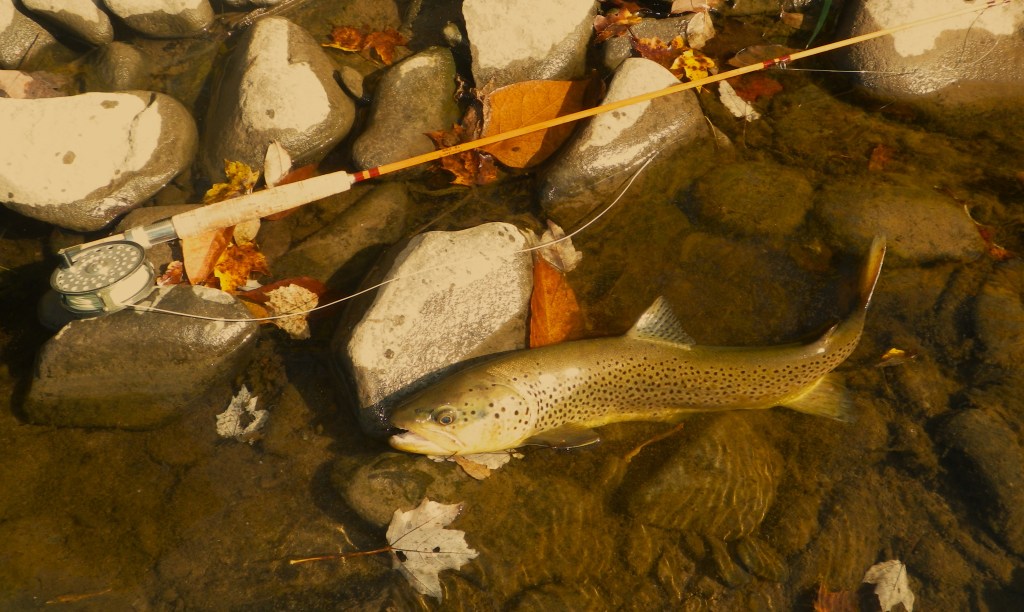
The brown was long, a bit better than 24 inches and fairly lean, a testament to survival in a terrible drought year. I was fortunate he allowed me a few precious seconds to snap a photo in the shallows before I cradled him gently and placed him back in the main flow. He rested there as I retrieved my rod, then shot out toward the rock lined thalweg of the river at my touch.
In my youth we called such days Indian Summer, days with bright cool mornings and long, warm sunlit afternoons. I have always welcomed such days, particularly when the first winds of autumn have awakened thoughts of winter and the rivers’ long sleep. Each precious day with the dry fly might be the last as October progresses.
-
October Reverie
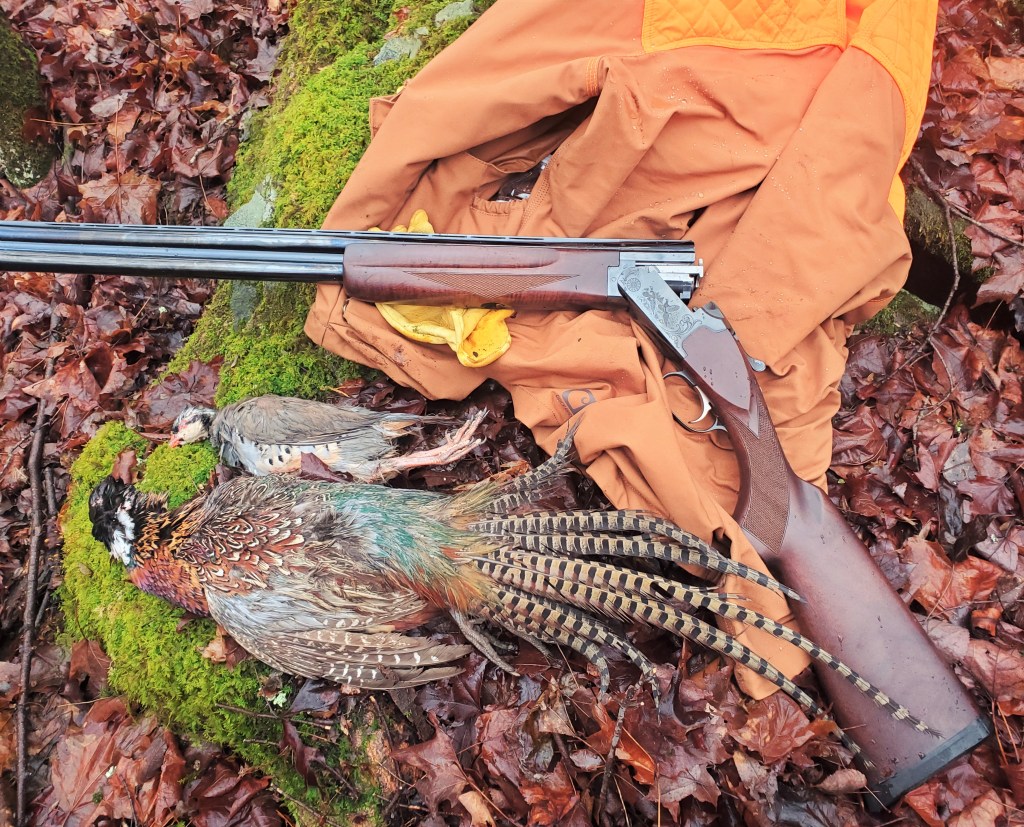
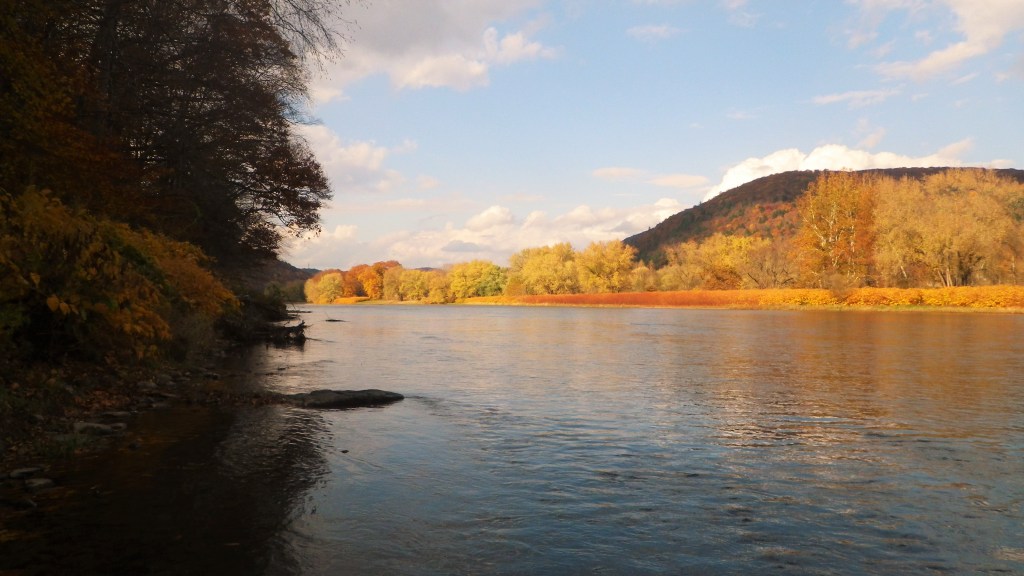
Visions of October: Mornings among the mountains, afternoons along the Delaware! Since boyhood, I have always counted October as one of my favorites. Along with May, I annually prayed that I might be released from the chains of working responsibilities for just these two most glorious months of the sportsman’s year. Retirement has finally answered those prayers, and I am grateful for full enjoyment of the gifts of both spring and autumn.
October is the quieter time among these Catskill Mountains, the crowds of visitors dispelled, youngsters back to school. Oh yes, the occasional report of a shotgun echoes between the ridges, but it is a welcome sound to the sportsman, reinforcing his anticipation of luck as he wonders of another who has found it.
The rains of September have passed, and our rivers are low once more. Thankfully their water temperatures are ideal as the wild trout turn their attention to propagation of the species. With the expected early autumn upon us, I have seen signs of an early winter. Just over a week ago I heard one river guide suggest that anglers eschew the upper West Branch, as his sport had caught a brown trout that week that was “ready to dig” her spawning redds. Early in September’s final week I was surprised by the newly formed kype on the countenance of a special old male I had seduced to the fly. I have not seen these signs of spawning in past Septembers. Nature tells the trout when it is time for their business.
I wish the trout well as they tend to their tasks and will give the browns some rest that they might succeed to further the wonder of their kind.
I bade them farewell for a time just the other day, stalking quietly away to avoid the intrusion of a pair of noisy, careless anglers whose appearance nixed my plan for an afternoon of solitude. My patience was rewarded with a beautiful dark, bronze flanked prize, testing the cane of my Menscer Hollowbuilt! I released her gently and quickly with my wish for many healthy fry swimming up through the gravel next spring.
October weather can be as variable as spring, but everything looks promising just now. Pleasant days lie ahead, with cool nights to bring that welcome crispness to the morning air and keep the waning flow of the rivers cold and vibrant. That special time has come for morning walks in the grouse woods and afternoons on the Delaware! The rainbows in the big river should have all thoughts turned toward feeding opportunities prior to their winter movements to the spawning areas. They can be tough to find in the miles of wide, shallow flows, but the low water invites long walks along the graveled banks, searching prime areas with a jaunty Isonychia dry!
I shall not think of winter. It will come in it’s own time whether I am ready or not. I will keep my thoughts right here, focused upon the glories of October in the Catskills!

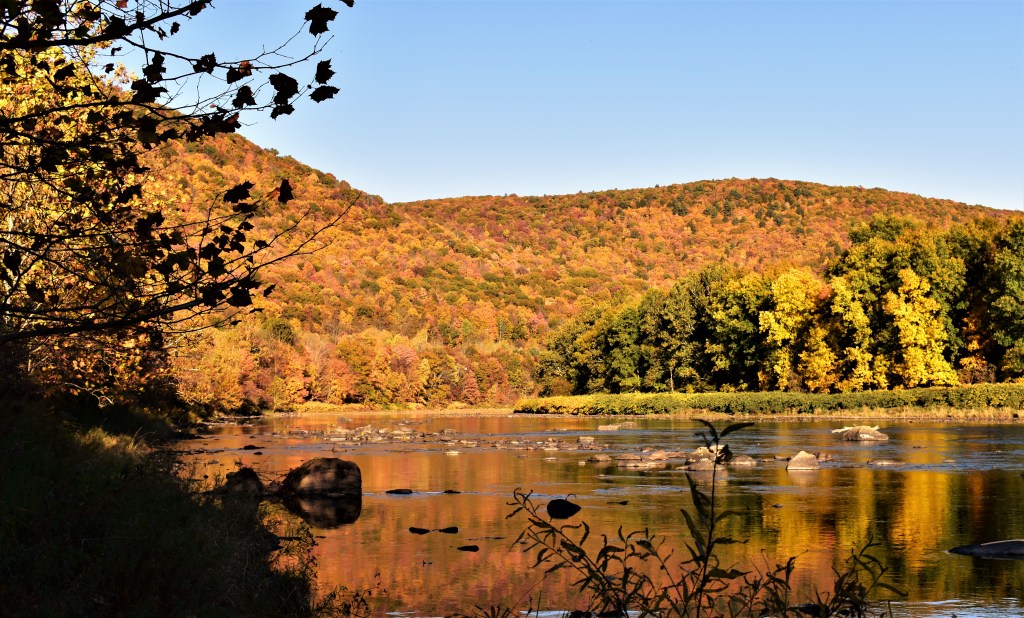
Hand-rubbed walnut and blued steel, or time polished varnish over amber cane and the soft mirror of worn nickel silver, all enhanced by the amber glow of autumn sunlight; these are the colors of the sportsman’s trappings. Lovely in their own way, each with a special meaning that speaks to our hearts, they cannot compete with Nature’s colors of the season, the forests’ sunlit canopy aflame! Our trappings are but accompaniments, artifacts that channel our bliss back to memory then beyond, to future dreams.
-
Truly Autumn

The cold rain and wind left no doubt: autumn is here and fully functional. All of the signs I observed during late August and those first weeks of September proved true, they kept telling me to expect an early autumn, and not the long run of sunlit days in the seventies, even touching eighty that often pass through September and well into October.
I was pleased to angle at last with my friend JA, too long sidelined this season. I had hoped for a better day for this reunion, as we stood on the river’s edge talking of flies and the haunts of wily old trout. I had observed a few good fish since the weather turned, and a few more flies. Hopeful signs, though the better trout had paid them no mind, while the little fellows rose cautiously when the mayflies were on the water.
We separated and waded into the flow, the wind carrying yellowed leaves and driving the rain into our bones with its gusts.
I knotted a big dry fly, keeping in mind some recent challenges, as I stalked a hint of motion I observed along the bank. Yes, indeed it proved to be a fish, sipping something there in the margins. I hoped the big dry would be welcomed.
I cast just off the bank, mindful of the need to work a moving fish gingerly. One over eager throw tight to the bank could end the game, and I knew it. Each cast worked over another foot, and then another rise appeared, tight to the shore, and I dropped the fly three feet up current on that same line of drift. There was no response, neither any interest in a repetition of the expected money cast. Moving again?
I resumed my little mantra, casting fifteen feet out from the bank, playing out each long drift and then tightening just enough to pull the fly under before slowly stripping it back for the pickup. The next cast dropped softly, I mended the line and extended the drift once more, but there was nothing. Pulling the rod tip slightly as the fly quivered at the end of its drift, I stripped once and felt a little tic. I paused, stripped again, expecting I had a leaf on the fly when the pull came, and I struck hard with both rod and line.
The leaf pulled harder, shaking its head, as the Leonard came up and swung to my right, the St. George breaking the silence of the cold rain with the first notes of the angler’s sweetest song!

Giving him the gently swelled butt of the Leonard, the St. George in full song, I was rivetted in the moment, oblivious to the cold rain pelting me. (Photo courtesy John Apgar) There are moments of reckoning. This same old warrior had bested me thrice since June, but not on this day. The battle lasted, yet I felt the confidence this time. JA waded closer and snapped photos, for which I am eternally grateful. This trout had grown to mythic proportions, and JA has shared the tales of his victories. Within sight as the fight turned decidedly my way, I guessed the brown at two feet. He missed that mark by perhaps half an inch. His bulk, brilliant coloring and early kype were as impressive as his oft demonstrated ability to escape my grasp.
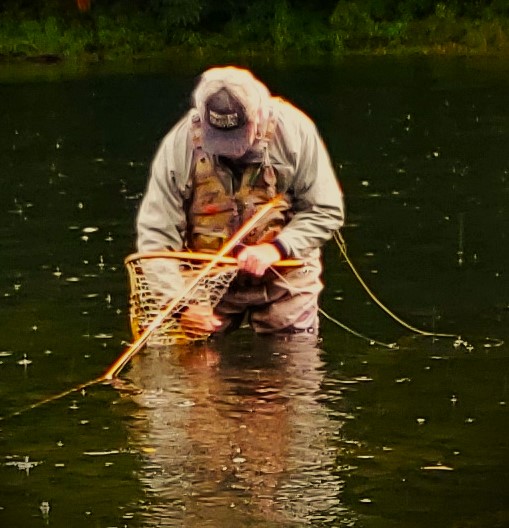
The rain lessens, light returns, and I bow my head to a very special adversary. (Photo courtesy John Apgar) 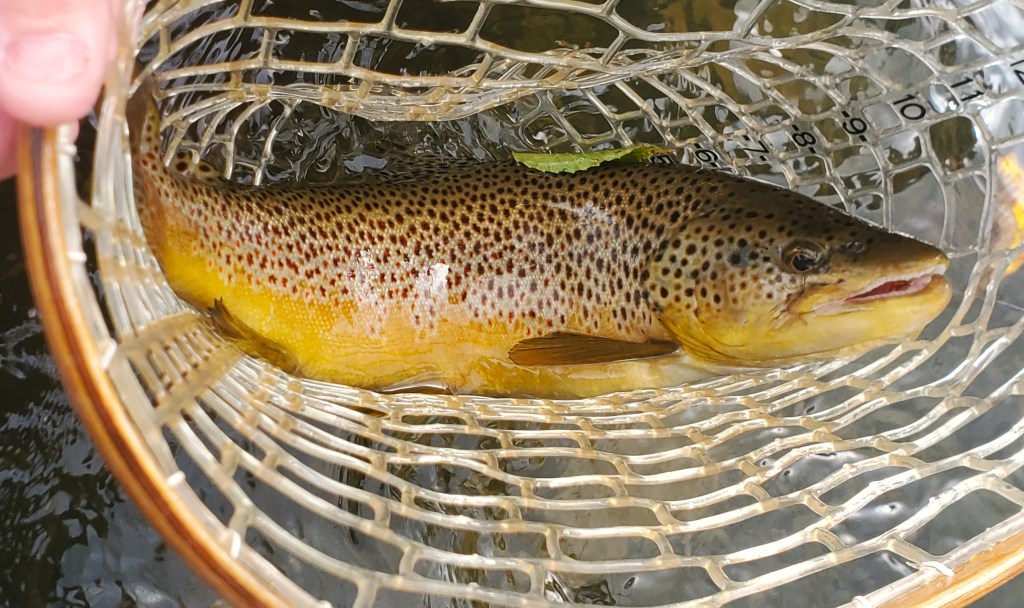
My old adversary is a male, his new kype heralding the coming of autumn. I slipped him back into the chill of the current with a wish that he sires many babies with the same kind of size, cunning and endurance! Though bands of rain passed through several times that afternoon, our final moments on the water were bathed in emerging sunlight, the young trout rising to delicate little mayflies, a fitting accompaniment for the celebration in my heart. Best of all this day was enhanced by the company of one of my best friends, company sorely missed throughout the breadth of the season.
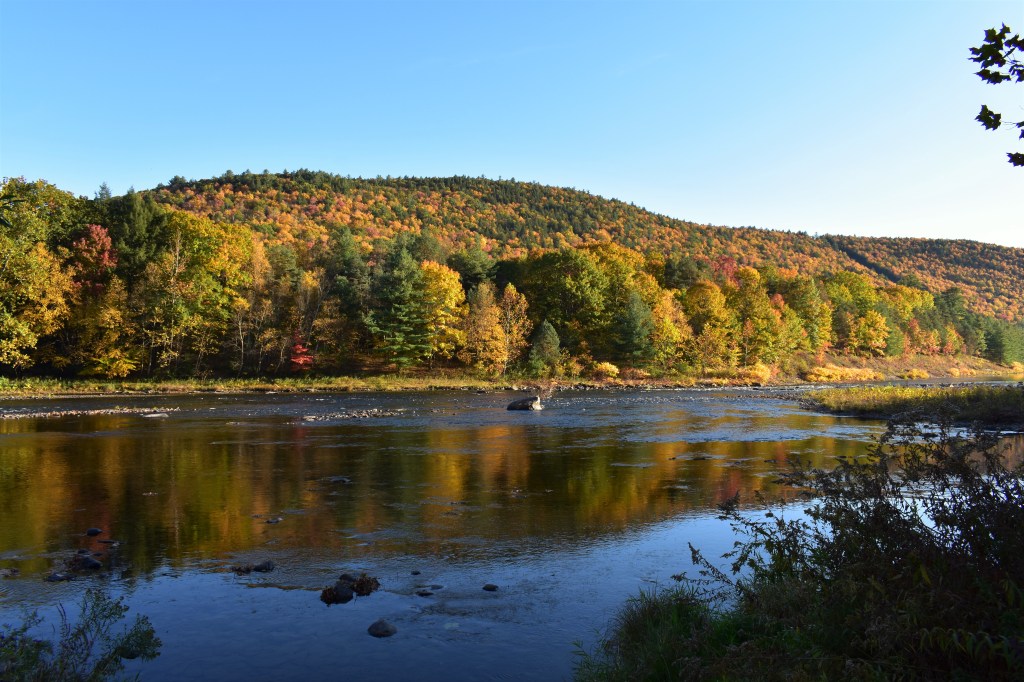
The sun felt good as we waded out, lingering on the riverbank to capture the scene. Autumn in the Catskill Mountains is haunting and beautiful, as are the rivers born there. It has been a difficult season of floods, droughts and growing challenges for the wild trout of the Catskills. May autumn linger, passing slowly with many more moments of golden sunlight to ignite the mountainsides with the full splendor of the season!
-
Sudden Chill
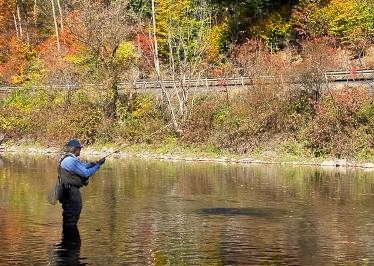
The idyll of a calm autumn day. Autumn did not start like that this year! (Photo courtesy Chuck Coronato) You know that you might be a bit too focused on fishing when you head to the river to meet 25 mile-per-hour winds on a sudden 55-degree day. Though the second official day of autumn, Friday felt a lot like winter as compared to the mid-seventies sunshine of summer’s finale.
I thought I had prepared for the weather, but those radical changes have more impact as the count of the years climbs. I still had that chill in my body hours later, relaxed in my easy chair in front of the ballgame!
We all know that wind like that is the enemy of fly fishing. It just limits our casting and presentation so much, in a game where those limitations truly matter. I had taken the rainy day off, and I really wanted to get out to greet the new season before the weekend and my commitment to tie flies at the Catskill Fly Tyers Guild/HVTU/CFFCM Roundtable on Saturday.
The Red Gods seem to enjoy needling fly fishers, there seems no other explanation. I have spent a lot of days on these rivers during a generally hatchless summer, so as soon as I waded out to battle the elements, they sent me some bugs. It was turmoil out there with the wind, the kind of conditions that trout don’t even try to surface feed in, but walking along the river’s edge I start to see mayflies: hebes and pale olives are drifting down the edge! After a while, I saw a couple of larger Cahills flying off the top of the wavelets.
I fished with a big dry fly, something that would be easy to spot, and I hoped might attract the attention of a hungry trout. These are not the kind of conditions for tiny flies on gossamer tippets. I tried the October Caddis, I tried the cricket, no dice. I did the best I could to control my line and leader in all of the swirling, gusting winds, all to no avail.
I decided to take one more shot at an old adversary, just to see if he felt the same kind of need to be out and about to greet the new fall season. I had tied on a nice size twelve Cahill, one of my Translucence flies that appeared to be a close match to the handful of pale, larger mayflies that I had seen flying from the wind tossed river. As I approached my final destination, I saw a sizeable surface disturbance in the vicinity of my target, just caught the commotion out of the corner of my eye. Was that a rise? Unlikely but possible I guess, though there have been branches blowing out of the trees and hitting the surface all afternoon. I continued my approach with determination.
Presentation is the final challenge. Fly design and selection, tackle choice and setup, wading and positioning are all critical, but in the end the cast must be executed despite the worst Mother Nature might throw at us and the fly presented perfectly naturally. The limitations presented by powerful winds blowing the line, leader, tippet and fly around as the cast unrolls will affect every aspect of our presentation, and not for the better.
The cast shot through the wind and unrolled with a significant amount of buffeting, and I backed the tip up with a gentle nudge as I dropped the rod tip to the water. The float looked pretty good considering, and it continued for several feet. I don’t know whether that old brown followed it down studying the fly, or if he was simply further downstream than I expected when the cast drifted toward him. I did get a nice, long float, but eventually I could see the first sign that my fly was beginning to slow down, a sure sign that all of the available slack in the leader and tippet had been expended. My next sensation was surprise and wonder at the explosion that erupted under that dry fly, like a missile strike had landed on my innocent Cahill! I burst into laughter and happily cursed that damned fish: “you just don’t want to be mine, do you?” I questioned. Of course, he had already given me his answer.

-
Autumn Rain
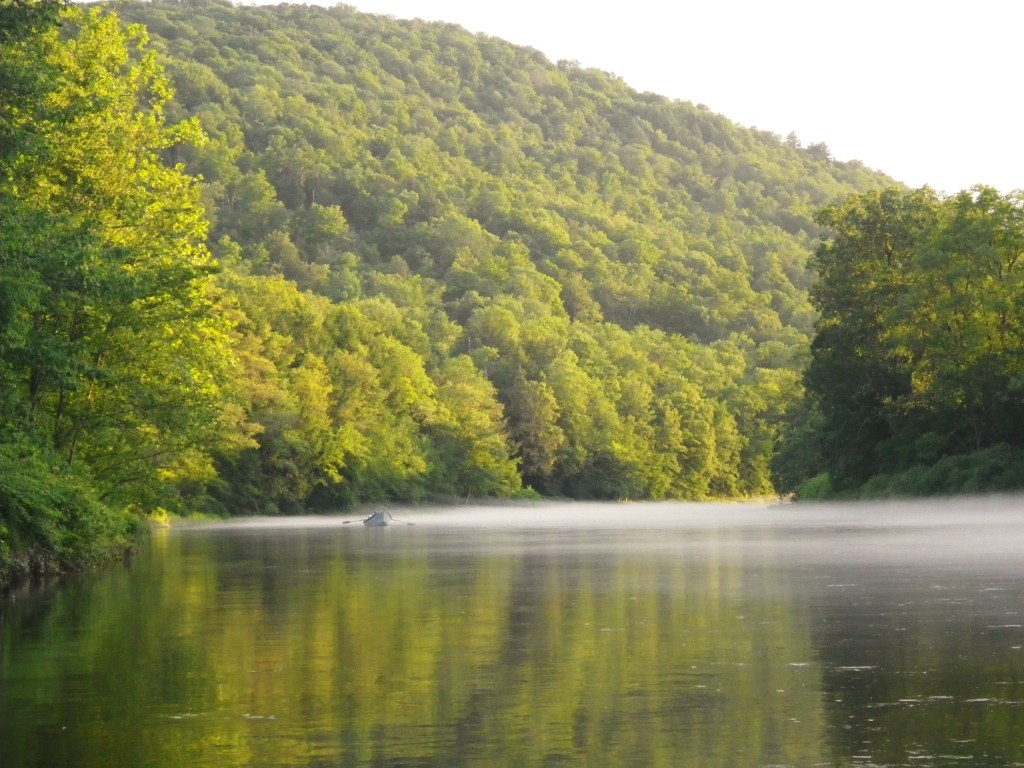
Summer’s final day passed gently, in solitude and beauty. The fishing was mostly uneventful, though I enjoyed my time on the river as always. Walking slowly upriver at the end of the afternoon I luxuriated at the feeling of the sun on my shoulders, acknowledging in my thoughts that few such moments may remain in this fleeting season.
Autumn’s first winds blew some welcome rain into the Catskills before dawn this morning, and I listen to it’s patter on my roof as I write. Flies have been tied and fly lines cleaned before breakfast with a thought to tomorrow’s fishing, when I hope one of my best friends will emerge from his long respite and join me on the stream.
JA has a beautiful new bamboo rod to christen, lovingly completed some months ago, and I pray the Red Gods will smile upon him and bring a very memorable trout to hand to commemorate the occasion.
There is no doubt that the dry fly season is winding down as autumn comes nocking, though there are gifts bestowed upon anglers at this lovely if somewhat melancholy time of year. Insect hatches do occur as the leaves rush to color and then eventually fall, it is simply that they are even more ephemeral than in spring or summer.
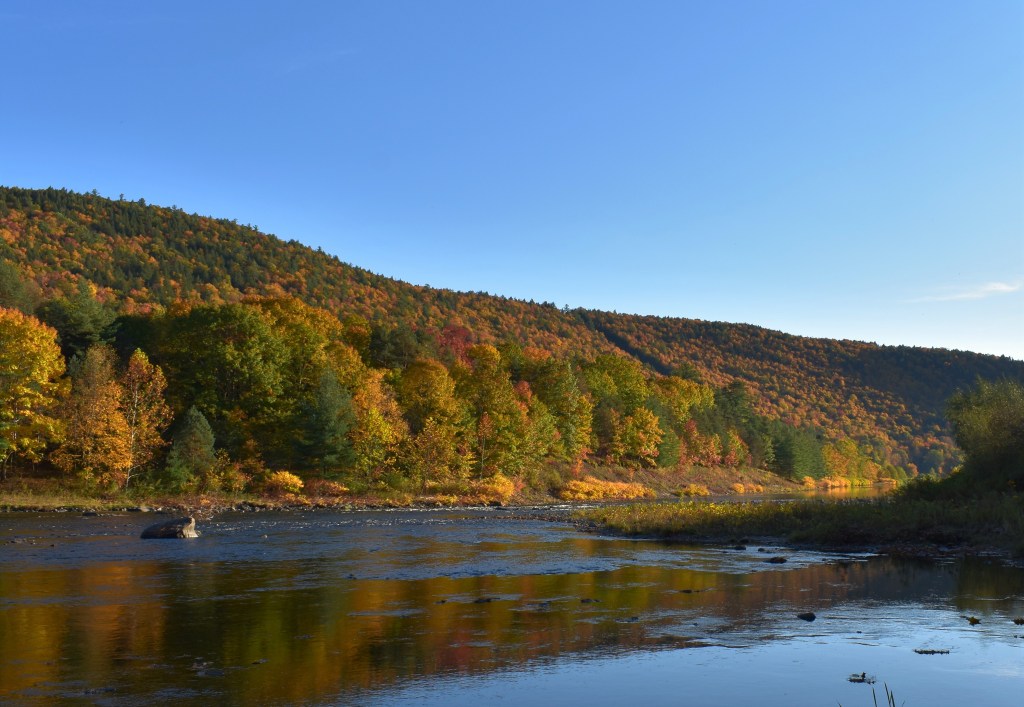
Autumn low water at Cadosia Riff. For me, summer departed in a quizzical manner, the phenomena my friends and I know as Mark Luck reaching a pinnacle in theory. Upon stepping into the river, I brushed some vegetation and dislodged a plump October Caddis. The big fellow plopped onto the water and fluttered, bringing a smile to my face. Though I know the species inhabits our Catskill rivers, I cannot recall ever seeing one that I could positively identify, and it was good to watch that one drop in to say hello.
I had two appropriate flies tucked into a small box in my vest and chose one of a pattern I have guarded closely for more than a decade. Understand that an October Caddis is a formidable fly, for it is tied on a big size ten dry fly hook, with large fluttering wings, a plump dubbed body and equally large hackle. My leader was freshly rigged for a 5X tippet. I knew I should have cut the leader back, retied a proper 4X point to deal with the air resistance of the fly, but I hate to waste the time and that expensive fluorocarbon material, so I didn’t. My four weight Maurer wand seemed to cast that big fly to distance with ease, so I accepted my choice rather smugly.
I was working the scene of a couple of dubious past encounters and honestly not expecting any response. At one point I cast long to lay my fly tight to the bank and lost it upon touchdown. I looked, squinted to employ my best eye, and nothing. I assumed the fly had sunk from the repeated immersion of stripping it back after long, downstream casts. While I was straining to find my fly on the water, I heard a solid plop, the rise of a very good fish. I caught the rise in the corner of my eye, much nearer to me than the bank I had cast to and well to my right. Upon retrieving my fly to cast to that fish, I instead retrieved an empty leader, the 5X tippet weakened by repeated casting of such a large, air resistant fly. I realized that the fly had separated from the tippet on its way to the bank and likely fallen into the nearer line of drift, resulting in that rise.
Now I cannot guarantee that things occurred as I have related, but there wasn’t anything else on the water eliciting rises from any trout, much less any big ones, and the timing upon my realization and consideration of the facts was perfect. Of course, I cast to the location of that rise multiple times after re-rigging, though not with my special October Caddis, my lone sample serving as his free lunch. I hope that trout enjoyed my untethered fly; so much so that he will eagerly accept another, the next time securely knotted to a 4X point!
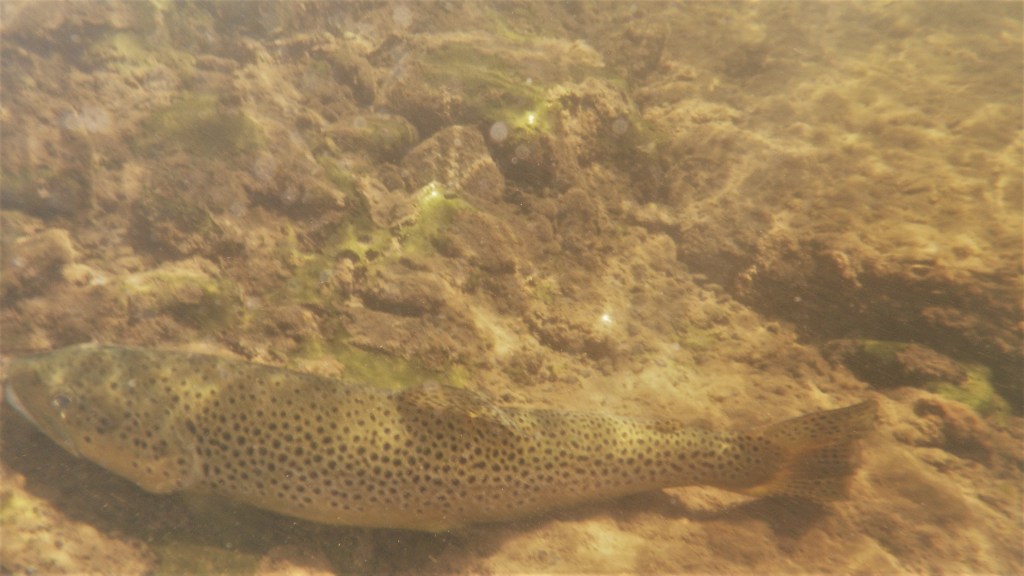
Is he smiling with gratitude for the free lunch?
-
A Farewell To Summer
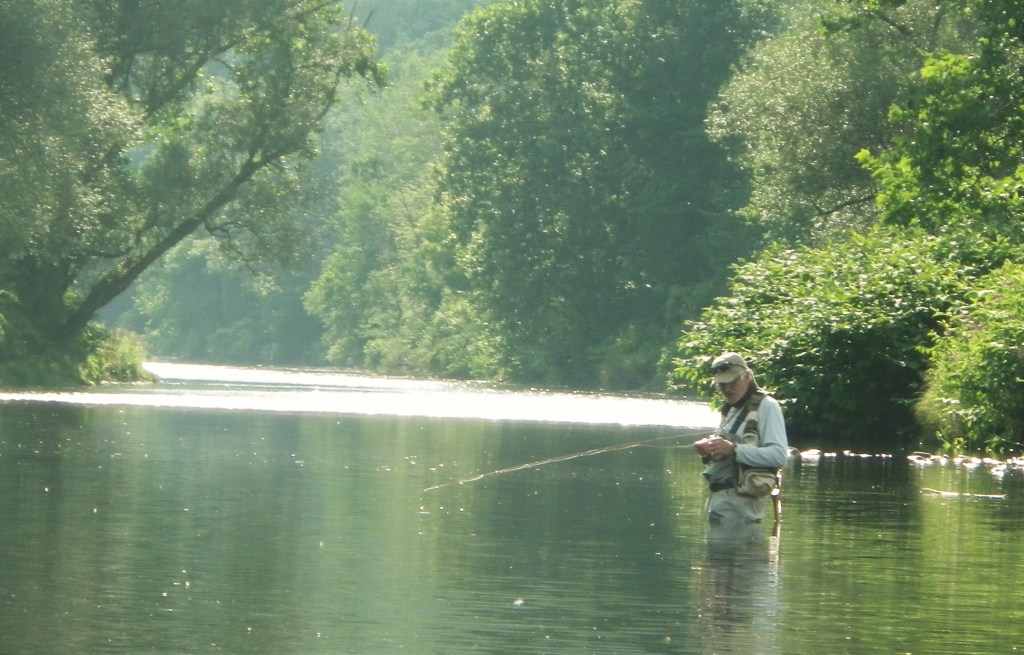
A late summer afternoon where we tried in vain to find the right fly to stimulate the jaded trout… And so, we have come at last to the turn of the seasons. Autumn awaits two days hence, and I contemplate my farewell to another Catskill summer. This time is always bittersweet for me; it has ever been so since my youth. More poignant now, as the passing of summer rapidly brings the dry fly season to a close.
This has not been a perfect summer; too little rain and too much heat pared the day-to-day fishing down to its bones at times, though as always there were bright moments. I enjoyed the hunt for trout even during the most difficult times, for that is the essence of my being: the grace of a bamboo fly rod and a classic reel, the hope to bring a fine wild brownie to the dry fly!
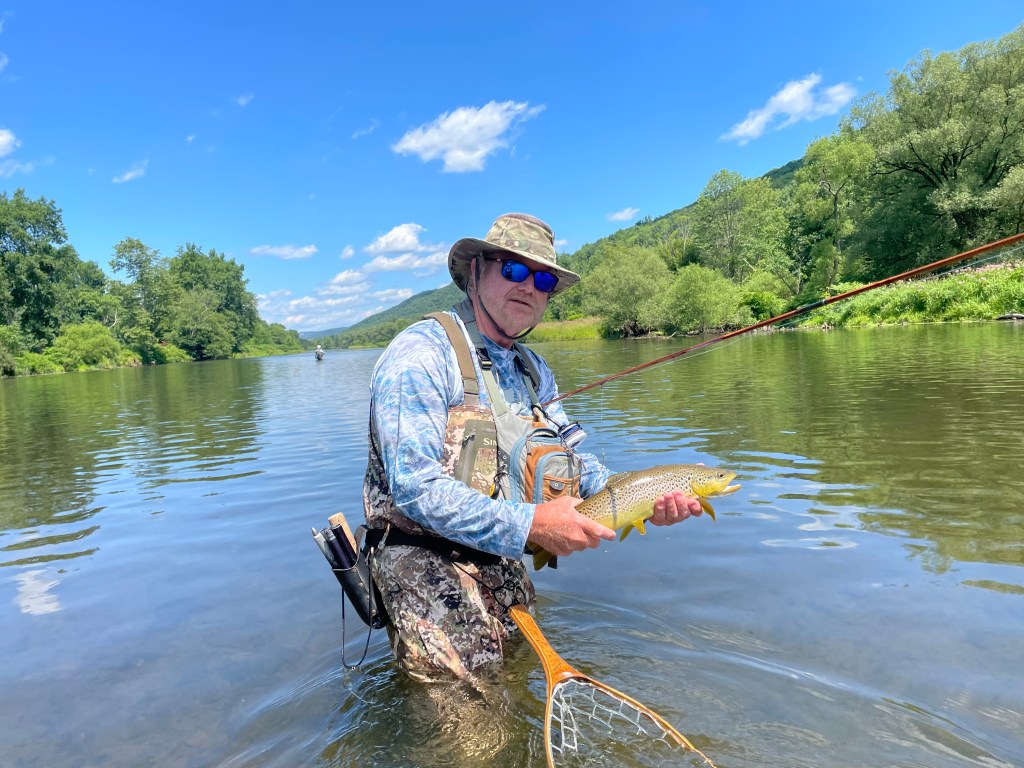
George Maurer’s Queen of the Waters and a hastily trimmed fly seduced this one on a gorgeous summer day with friends. Perhaps today I will take another long walk upon the Delaware, sans those azure skies and tiny flies we come to accept as the norm for summertime. It is a time to reach out on the big river, to test the riffles with a sturdy Isonychia, either floated or swung. What better way to awaken a Delaware rainbow from his summer nap?
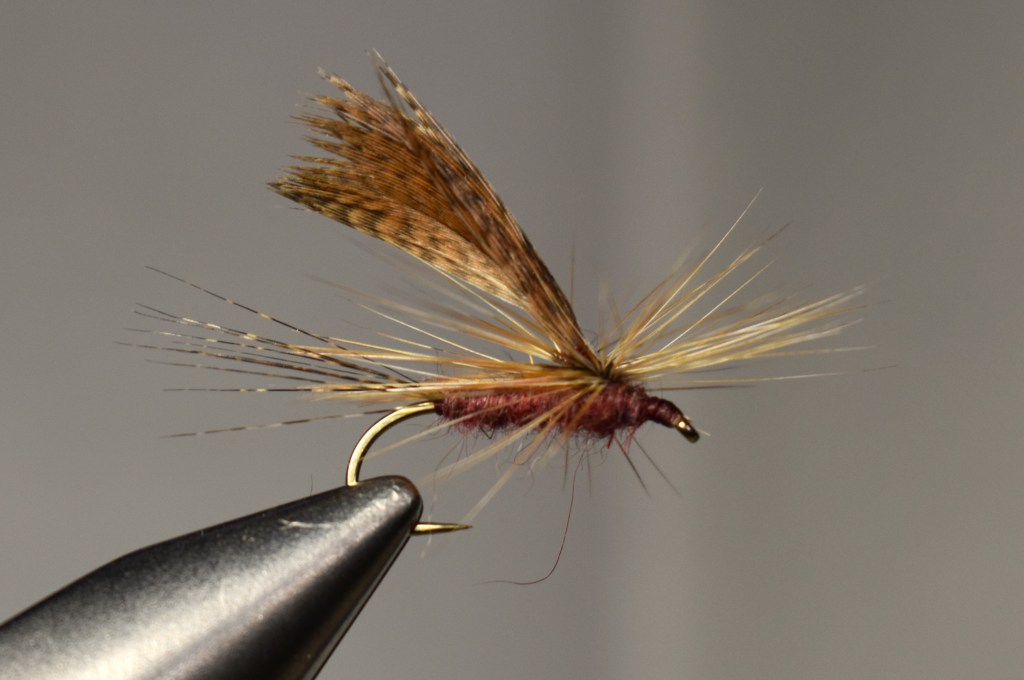
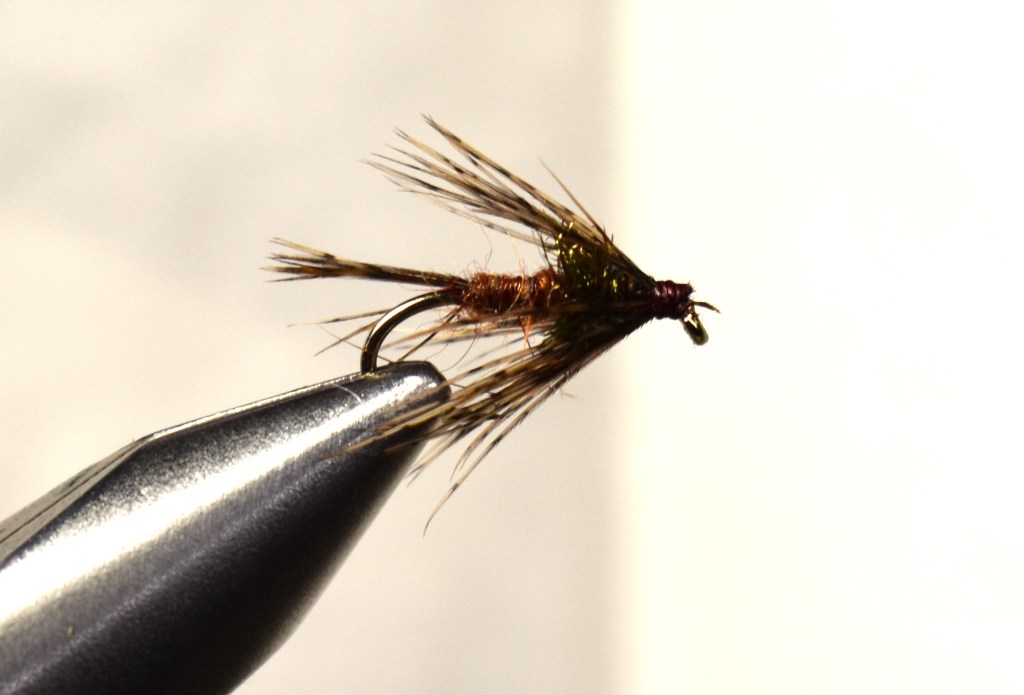
Little of summer’s sunshine can be expected to find me these final days, and Friday’s high is forecast at fifty-three degrees. The change in seasons will be easily noticeable. I am prepared, for I have seen the signs throughout these past few weeks. Yet I hope for a few weeks more with rising trout! I do not wish to surrender to the long months without life upon the surface.
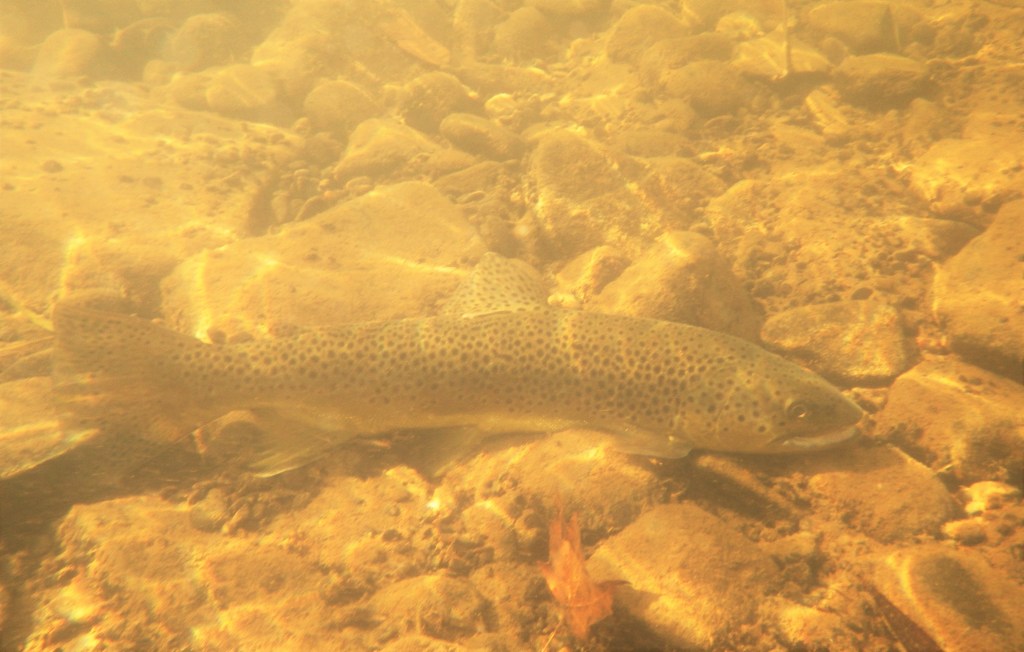
The golden glow of October sunlight bathes the shallows as the 2020 season’s last big dry fly brown trout recovers from his bout with the boo.
Search
Archives
- October 2026 (11)
- September 2026 (16)
- August 2026 (14)
- July 2026 (15)
- June 2026 (13)
- May 2026 (6)
- April 2026 (12)
- March 2026 (10)
- February 2026 (9)
- January 2026 (14)
- December 2025 (14)
- November 2025 (10)
- October 2025 (10)
- September 2025 (9)
- August 2025 (10)
- July 2025 (10)
- June 2025 (8)
- May 2025 (12)
- April 2025 (12)
- March 2025 (9)
- February 2025 (10)
- January 2025 (15)
- December 2024 (12)
- November 2024 (13)
- October 2024 (12)
- September 2024 (10)
- August 2024 (12)
- July 2024 (10)
- June 2024 (12)
- May 2024 (11)
- April 2024 (14)
- March 2024 (11)
- February 2024 (13)
- January 2024 (14)
- December 2023 (16)
- November 2023 (11)
- October 2023 (11)
- September 2023 (8)
- August 2023 (10)
- July 2023 (9)
- June 2023 (12)
- May 2023 (13)
- April 2023 (13)
- March 2023 (14)
- February 2023 (15)
- January 2023 (15)
- December 2022 (13)
- November 2022 (5)
- October 2022 (10)
- September 2022 (10)
- August 2022 (8)
- July 2022 (9)
- June 2022 (10)
- May 2022 (10)
- April 2022 (13)
- March 2022 (14)
- February 2022 (13)
- January 2022 (13)
- December 2021 (10)
- November 2021 (9)
- October 2021 (7)
- September 2021 (9)
- August 2021 (12)
- July 2021 (11)
- June 2021 (12)
- May 2021 (15)
- April 2021 (16)
- March 2021 (14)
- February 2021 (14)
- January 2021 (12)
- December 2020 (11)
- November 2020 (13)
- October 2020 (14)
- September 2020 (13)
- August 2020 (14)
- July 2020 (13)
- June 2020 (16)
- May 2020 (16)
- April 2020 (18)
- March 2020 (13)
- February 2020 (11)
- January 2020 (8)
- December 2019 (6)

