
-
Three Days of Salvation
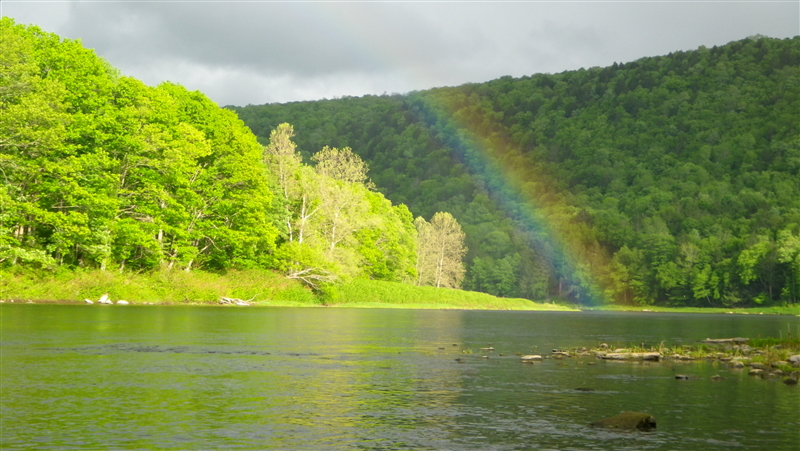
At last a real break from the monotony of winter! The sun is blinding me once again, bearing down through my little window and glaring on my fingers as I write. I welcome that sunshine heartily, though I’d love to have a little curtain to shade my eyes. Yes, another day of sunshine and warm weather: salvation from the ceaseless grip of winter!
I have spent the past three days on the rivers, and my spirit has been lifted by the experience. Indeed I carried a rod and reel, and plied the waters with sunken soft hackles, what passes for fishing during the off season. It isn’t fly fishing to me, not in the honest meaning of the term that is, though it is as close as I can get right now. Fly fishing necessitates the use of the dry fly, is predicated upon there being rising trout, and should best be practiced with a lithe split bamboo fly rod.
Not that I mean to insult anyone who thinks that fishing with nymphs and streamers and what not is the be all and end all of sport. To each his own; though I see too many who have a bad day if they are not catching some predetermined number of trout on their chosen gear. I count every day I am blessed to spend along trout rivers as a good day, and I hate to see others missing out on those good feelings.
There was a time when I was more of an all around fly angler I guess, at least when dictated by circumstances. I was always happy to cut off a weighted whatever and rebuild my leader for fishing a dry fly with the slightest provocation. I fished streamers quite a bit down in the limestone country, for I fished all through the year, and likewise nymphs, or more likely shrimp and cressbugs, would spend a lot of time at the end of my line. I studied those primary trout foods, thought about them and imitated them, often fishing new patterns to prove their effectiveness; but I lived for May and the sulfur hatch!
If I had wanted to go out this week and pound the bottom of the rivers I probably would have taken a few trout. I simply don’t care to practice that kind of hard core nymph fishing anymore. I was a student of Joe Humphreys and I know what it takes to get the job done. Effective nymph fishing means carrying a box full of split shot and constantly changing the weight on your leader to be certain your fly is bouncing along naturally, right along the bottom. It means turning over rocks and checking to see what nymphs are there, which ones are most abundant, and then matching them closely with an artificial fly. Serious concentration is required every second you have a fly in the water too. I mean, if you’re going to do it, you might as well do it right.
I enjoy fly casting, the way it becomes an art to place your fly in a terribly difficult lie, gently and naturally, and get it to drift right down to Mr. Trout like the mayflies he’s been sipping. There’s a poetry in that, a beauty and delicacy that I have always appreciated. I started out self taught, and got some excellent help along the way from some of the best in the business, but achieving that art requires a whole lot of practice and determination. You have to go out and welcome the challenges you encounter, to keep trying to make the casts you cannot, until one day you find that you can make them.
I am glad that I embraced that early on. I put down some great fish, and I put a fortune in dry flies in every kind of bush and vine and tree that grows along trout streams. I used to break snagged flies off from my casting position, never wading over and scaring the fish if there was still a chance to catch it. That meant re-building the leader and tying on a new fly every time, before I got to try that cast again, but I was OK with that. Fly fishing teaches you patience. There were many times I went through that little ritual two or three times for one trout, and I didn’t always get him, not by any means. Those things still happen once in awhile, as I continue to challenge myself on the river. I wouldn’t have it any other way.
How many things have been sold to fishermen to “make it easy to catch trout”? Man I’d love to have a penny for each of them! The best of it isn’t easy. It’s not supposed to be easy. Fly fishing is supposed to be fulfilling, contemplative, pleasurable; it’s supposed to rescue us from all of the crap that life throws at us, and it can and will if we let it. Challenge yourself, immerse yourself in the experience and learn, grow and smile. Laugh at your foibles, its good for you, and its always a good day!
 1 comment on Three Days of Salvation
-
First Day
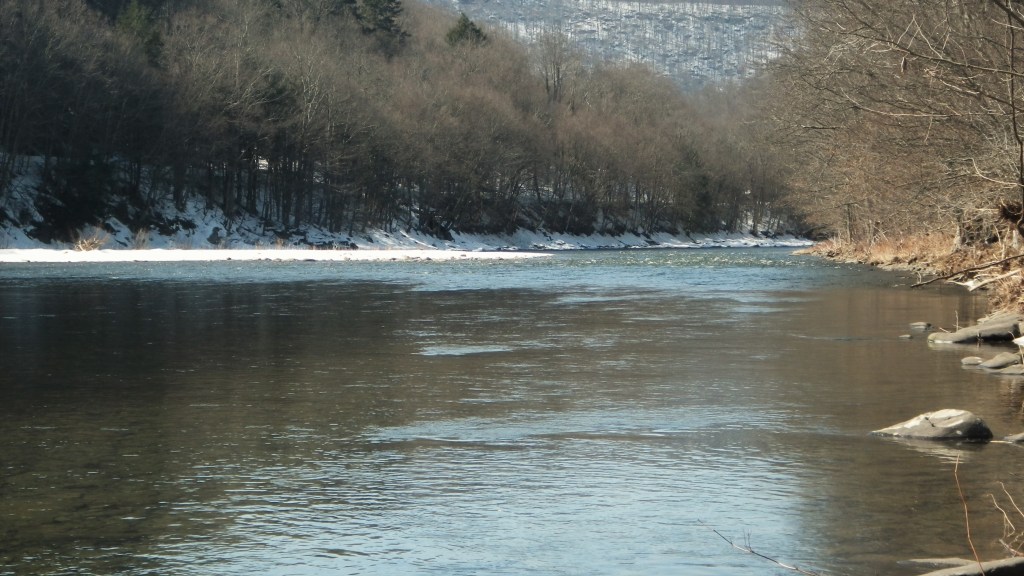
The First Day of the 2021 Fishing Season I felt the excitement as I pulled the old waders over my feet; I was finally going to walk a river bank again, test the warming water with a fly. Nearly three months have passed since I felt that excitement, the same feeling I get every time I go fishing. Certainly that feeling is part of why I go, even now, when I really don’t expect to catch a trout; there is always the possibility.
The sun had quickly warmed the air, though the wind rose before I could put my jacket on and reminded me it was early March. I had prepared for the weather, and as soon as I got that old Windwall over my shoulders I felt pretty comfy. I pulled the wader suspenders up, pulled a sun gaiter over my head and re-adjusted my shades; then I reached for the rod case. I had planned to fish bamboo, wanting to begin the season properly, but the wind forecast for fifteen miles per hour caused me to consider the open water of my destination and choose the Thomas & Thomas graphite instead. I have spent too many days on parts of the Delaware River system where the wind laughed at the forecast and blew just as hard as it pleased, and yes, it is March. It turned out to be a better day, with far more periods of extended calm and sunshine than winds.
My hike helped me feel the past three months indoors. It wasn’t that long, about six tenths of a mile, but between sloshing through melting snow and clambering up and down questionable river banks it gave me the exercise I craved. The river is low, a good part of the reason that Tuesday’s sunshine resulted in a nine degree jump in water temperature, so I waded in slowly, drawing upon memory to try to decipher the places an awakening trout might seek to hunt if he was so inclined.
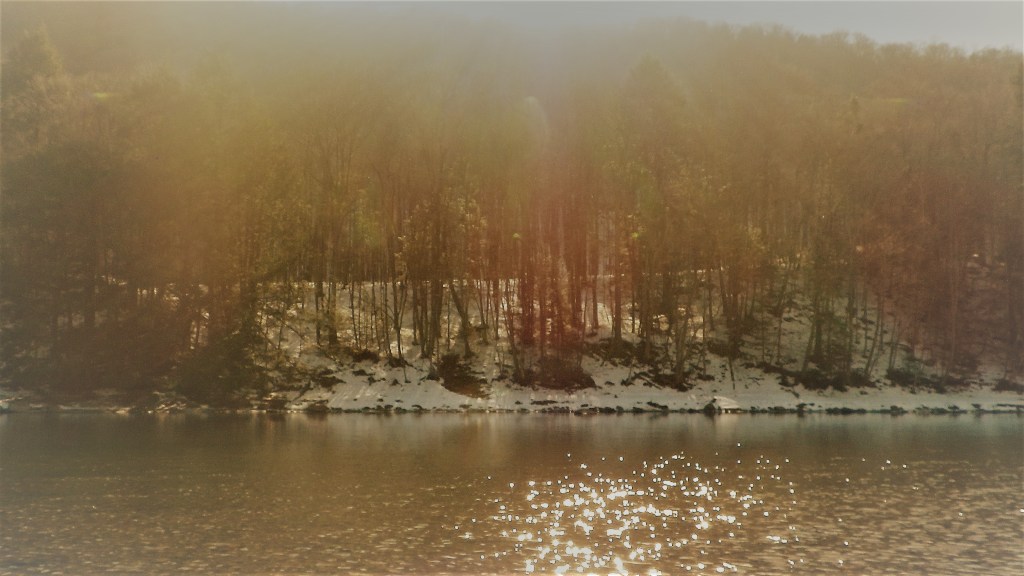
Winter sunshine competes with the snow to create spring warmth in the calmer moments, accented by the bite of the wind blowing across the frozen landscape. I am very thankful for this early glimpse of spring! I knotted a Hen & Hare’s Ear to my leader and started to cast and swing the fly, across and downstream, through the deeper water bathed in sunlight. The water shallowed as I worked down the pool, and I changed to a smaller fly, though one still tied with the hidden life concept the H&E began last autumn.

The Grouse & Squirrel: another tie with the hidden life idea I have experimented with. The Prizm thorax, loop dubbed with moving fibers and flashes from behind the screening, moving soft hackle fibers. I offered this fly on the swing too, the slow yet ceaseless current drawing it through all of the water I hoped might conceal a hungry brown. Once it paused, with a welcome rubbery feel that was gone as soon as it began. Bringing the fly to hand I found the familiar green glob on the hook bend: not a trout after all.
I was standing for a time, looking across the river for some evidence of life when a stonefly passed in the air. Looking harder I eventually spied a couple, appearing as little puffballs out there on the glittering surface, and stared after them; wanting so badly to see a dimple where one of those little stones had fluttered, though I knew it was not to be.
Once I had seen the stoneflies I changed again, hoping that a small unweighted soft hackle might raise something from the uneven rocky bottom in the tail of the pool: look at me, I’m a helpless little insect quivering here, I cannot fly! This ruse failed utterly as well, for in truth there did not seem to be a trout out there, not one awakened by the rapid rise in water temperature. Too soon.
I sat down on a log and let the warmth soak in a bit. I struggled with the wader pocket to free the little fly box hidden there, the wish box, the one secreted away, hiding it’s stash of tiny dry flies, midges, olives and stones. The black CDC stonefly looked proper there, it’s hook point pricked lightly into the cork as I passed the warmest moments of the afternoon. Wishful thinking, though more than that: a thank you to the day, a simple salute to the spring that awaits!
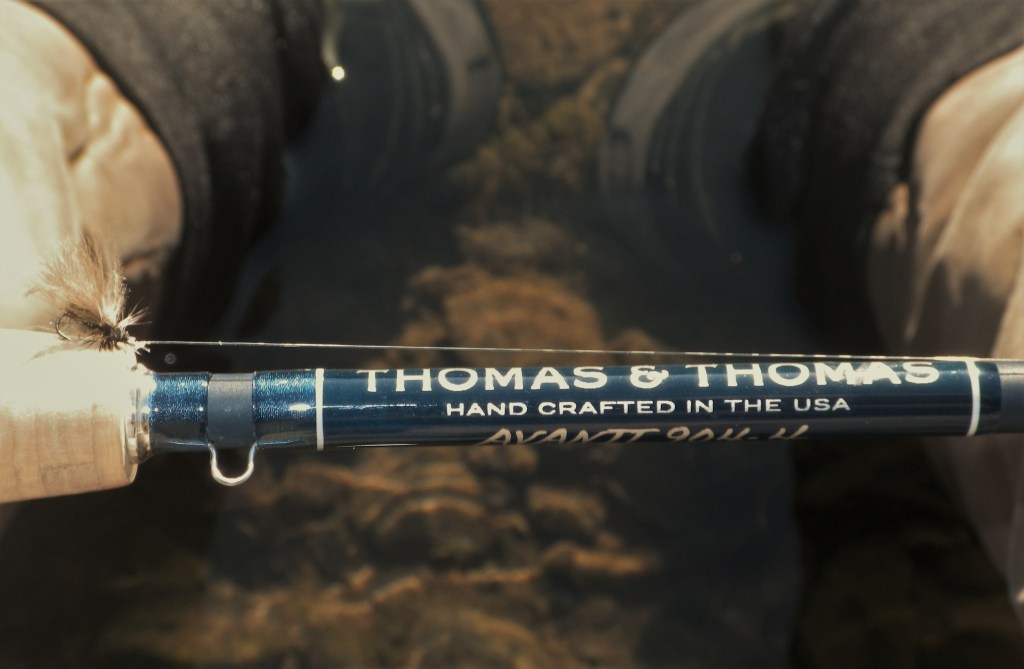
My thoughts wandered back in time, back to warm March afternoons on Big Spring. The stones were a real beginning there, and they would bring the wild rainbows to the surface, intrigued by their fluttering, and tempted to release their caution and divulge their hides down there along the weed beds. The little feeding frenzies were generally brief, though at times intense! As soon as I saw the first ones, little puffballs fluttering on the water, I would hastily rework my leader and tie on one of my CDC stones: time to hunt!
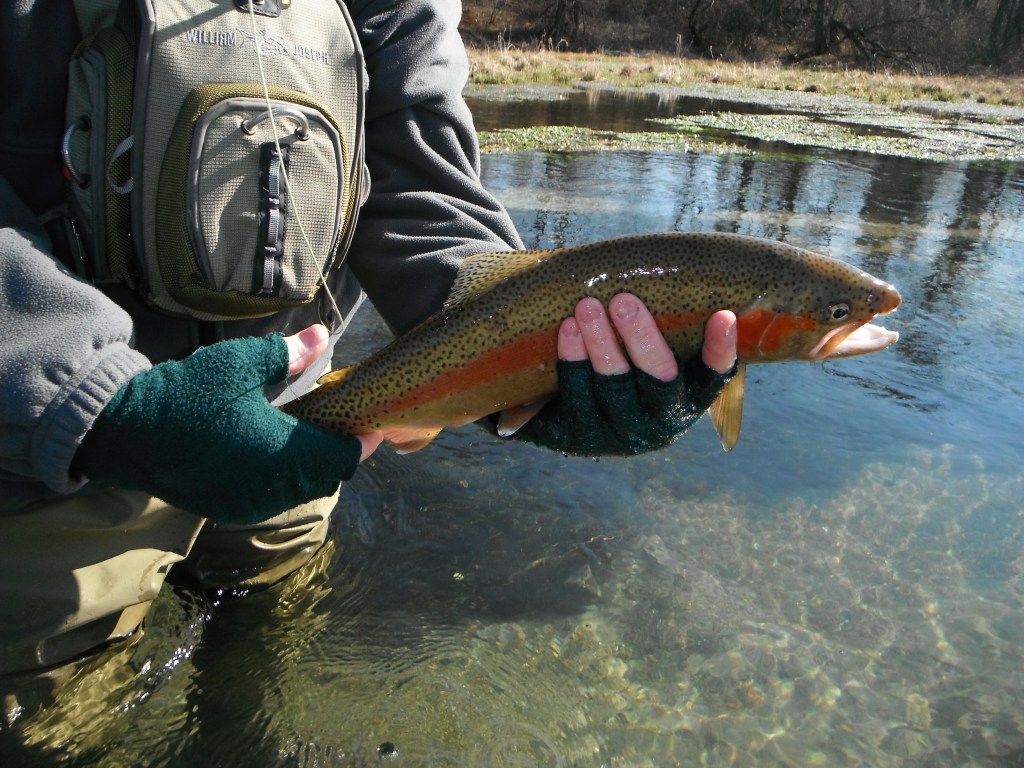
A red banded Big Spring winter rainbow from nearly a decade ago! Photo courtesy Andrew Boryan. My first Catskill winter I saw a number of those same little black stoneflies on the West Branch Delaware, on sunny, calm afternoons in March. They drifted along the surface, wings buzzing furiously and begging a trout to rise for a snack. Just as I had back on Big Spring I hurried to rig a dry fly, but there was no rise forthcoming. Here it seems they are far more of a tease for the angler than the trout.
Yet I still find myself thinking back, and tying on a dry fly; just in case. I remember those brief flurries of rises on the gin clear currents of the limestoners; and the rewards they sometimes offered when an angler’s expediency and presentation became in a moment entwined.
-
Waiting at the Bench
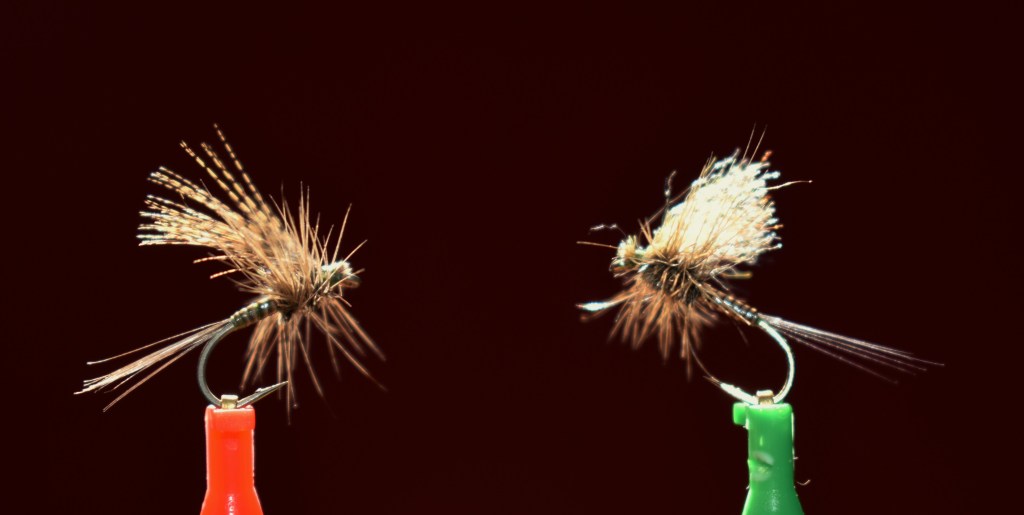
The morning light catches a pair of Quill Gordon dries, one traditional and very Theodore Gordon inspired, the second enlivened with a sparse synthetic wing, both beautifully tied by my dear friend John Apgar. The warming trend appears to be official now, with temperatures forecast to be in the fifties for four straight days next week. Fishing seems more likely than at any time since mid December’s violent descent into winter, though waiting is still required before we get there.
I had a visit yesterday, when my friend John decided to take a drive along Route 17 so we could stand outside and shiver while we talked for awhile, socially distanced. He brought me some flies he had tied recently, some intricately ribbed soft hackles, Weemoc Adams that would make creator Mike Valla blush, and these lovely Quill Gordons that made my smile widen. We both appreciate the history of the Catskills and have studied the original flies of Theodore Gordon, patron saint of American dry fly angling, and we have both experimented with Gordon’s original single clump wing design.
I love the contrast between the classic and modernized versions depicted in the opening photo. The late morning sunlight comes straight to my bench through a small, high window and it lit the classic pattern beautifully. The modern style with synthetic fibers for it’s wing simply explodes with light! I think this provides a perfect model for a discussion of traditional versus synthetic materials and flies, and how they perform in various fishing situations.
The natural lighting along a trout stream varies continuously throughout the day, and lighting should be considered when choosing the fly you present. The color, translucency and barring of the traditional wood duck gives a lovely impression of life and movement, particularly when well lighted. The synthetic really pops in bright light, and it could be too bright to suit a wary trout rising in flat water in full sunlight. Back in the shade however, or on a dark day, that fly may be your best choice, its startling light reflections tempered by the conditions, yet providing enough flashes to mimic a moving natural.
The mood of the fish you are casting to is another vital component in the fly selection puzzle. In his groundbreaking opus Selectivity, author Matthew Supinski defined three stages of trout behavior that result in variable types and levels of selectivity toward our flies: Aggressive/Active, Selective/Reflective and Passive/Dormant. An aggressive feeder, a fish actively rising and taking insects during a hatch or spinner fall may require a lifelike imitation, but not necessarily a higher level of attraction. I feel more comfortable staring with a subtle fly tied with traditional materials like John’s wood duck winged Quill Gordon, particularly if the area is well lighted. If the traditional fly isn’t accepted, then I will begin to consider something more attractive, either a CDC dun or cripple with more movement, or a brighter synthetic enhanced pattern such as John’s modernized Quill.
Supinski’s Selective/Reflective trout is well known to Catskill anglers. This behavior often results from heavy fishing pressure, and/or a diverse and abundant food supply. Catskill trout have both. When I feel certain that this situation prevails I’ll tend to start with a low floating CDC pattern, a movement fly, and I will make the effort to capture a natural to be sure I match the form, size and color of the insect with my fly. I’ll let the lighting conditions determine whether I go for a lot of sparkle or little to none. If the natural approach fails, I will eventually offer a brighter fly to bring more attractiveness to my presentation.
The Passive/Dormant trout is a tough one. I relate this behavior to a lot of my summer fishing, when there are not a lot of flies about and the water is warmer and slower with less dissolved oxygen. I love to hunt trout during those long summer days. Terrestrials can be my favorite flies, and I tie a lot of patterns that combine subtlety with attraction: think sparkle and brightness, but not from a spotlight. I messaged a friend about my Baby Cricket patterns this morning, and that fly is a good example of what I’m talking about.

The Baby is my own smaller modified version of Ed Shenk’s classic Letort Cricket. I use a peacock herl chenille body, tied by spinning the herl in a dubbing loop, fold black Antron yarn for the underwing, and tie my wing and head with black deer or elk hair just like Ed’s original. The herl gives off some subtle reflections as the fibers move a bit in the current, and the black Antron reflects light, though quietly. I confess I have not taken any nine pound browns on the Baby Cricket like Ed Shenk and Ed Koch did on the original Letort Cricket, though I did get one that was better than five!
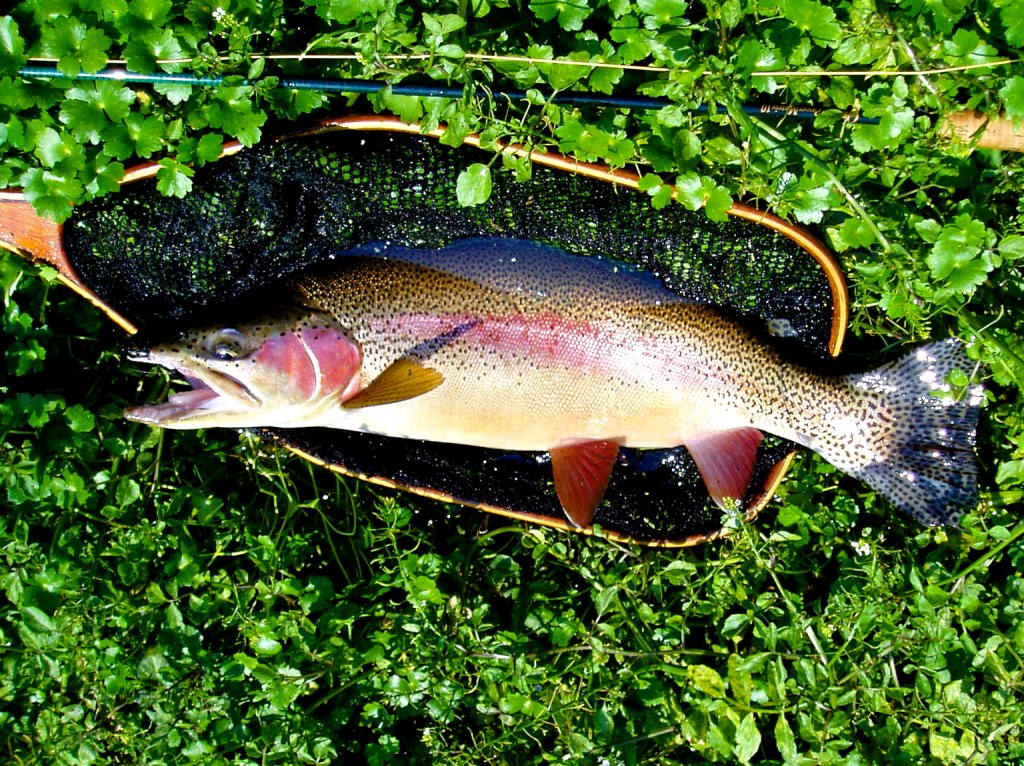
My best trout taken on the Baby Cricket, somewhere in excess of five pounds. This one was a real hoot on a small fly and a two weight rod! If you have not read Selectivity, I highly recommend that you get a copy. Read it several times, as there is a lot to be learned within its pages. Matt is a brilliant angler and writer and he put a lot of his considerable knowledge and passion into that book.
I have been sitting here at my bench thinking about the week to come, and the balance between warming water and snowmelt. There is still plenty of the stuff on the ground down here in Crooked Eddy and there’s more up in the higher elevations where our rivers are born. The more sun we get the more it will warm the rivers, but the more sun the more snowmelt. There may well be a point in which the negative effect outweighs the positive.
I am resigned to the fact that I’ll be working my flies past a few passive/dormant trout at best, though still hopeful that the warming trend will activate their feeding urge before snowmelt brings high, cold, off-color water and shuts them down again. While my angler’s soul may be begging for a rising trout, I know that plea will remain unanswered. I’ll have to present something with the right combination of movement and attraction and hope a few of my casts will bump off one of the rocks that has a trout behind it. I’ve got an idea…
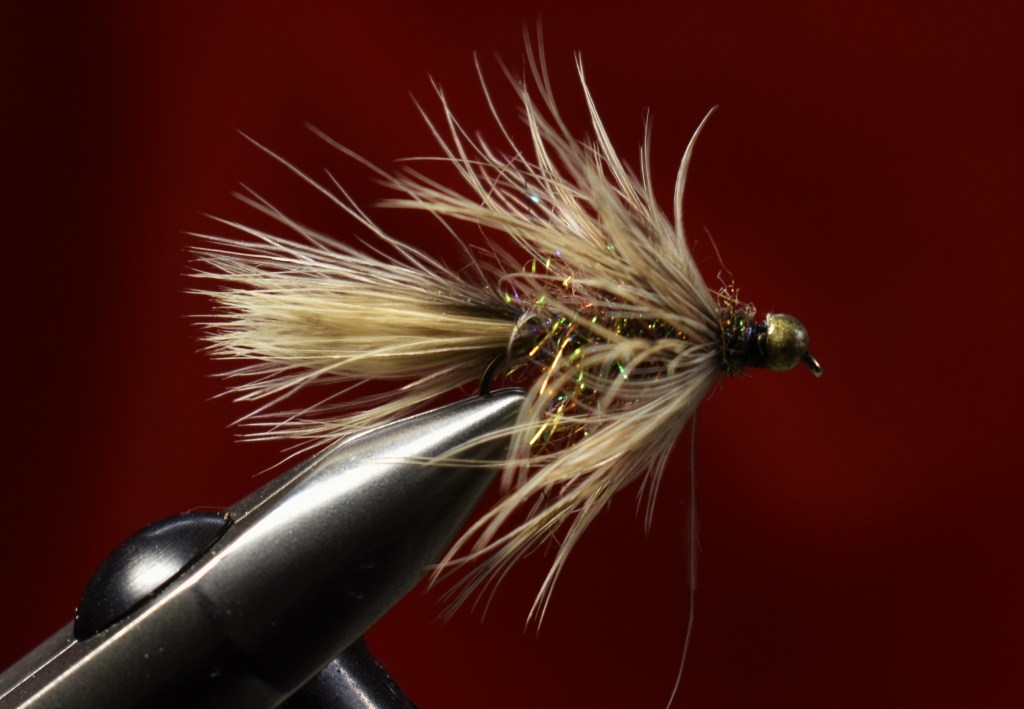
The Hen & Hare’s Ear
-
A cold snap, with hope
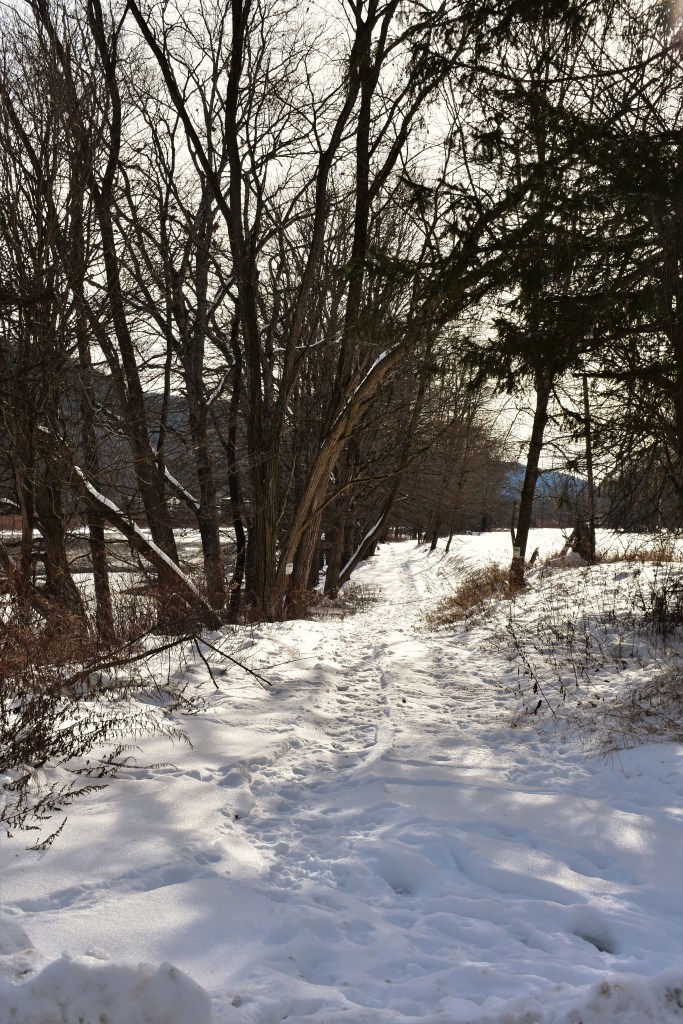
Yesterday’s sunshine has been forgotten, and our landscape clings to its snow and ice. Yet another cold snap will be ushered in today, with temperatures dropping through the twenties where they will stay for a few days. I had hoped to fish yesterday, when the afternoon sunshine raised the air to forty degrees. Instead I listened to the ballgame on the radio and watched the river gage to see if that sunlight would warm the water to a fishable temperature. I listened to the entire game. There is light snow flying about as I write.
The cold snap will continue through the weekend, but there is hope for the following week, and enough warmer air and sunshine to bring about fishable conditions.
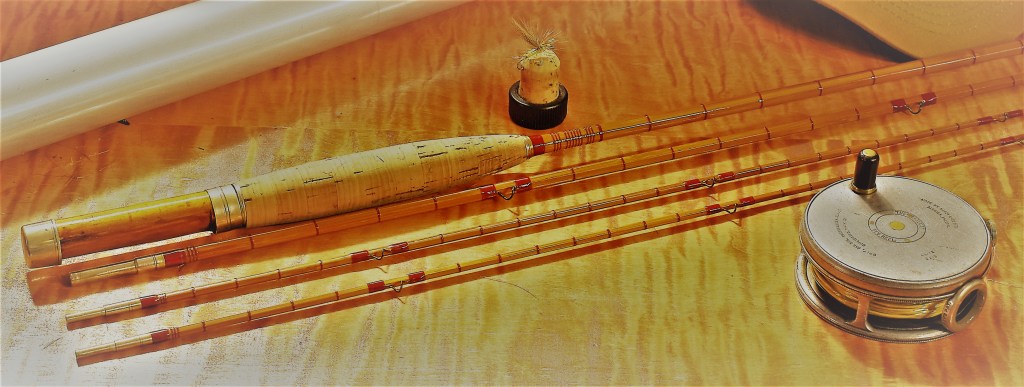
I’ve busied myself with some reading, Hewitt’s rewritten version of “Telling on The Trout”, browsing cane rods and classic British reels and spending some time just thinking about spring. I plan to get back to filling a pill bottle for a friend today, though I want to bring my tying desk back to order first. A fly tyer’s station tends to acquire objects as flies are produced. Mine has scattered materials, notebooks, mail, a hat for when the sun appears and blinds me through the small window above the desk. I like to see the curly maple table, smiling underneath all of that clutter.
When I was getting this little house up to par before the full fledged move, I searched first for some sort of affordable antique desk. I learned something about antique dealers in the process: they don’t seem to keep regular hours. It took several trips to catch even those with published hours “in” so that I could browse. I found nothing, then decided to build my own fly tying desk. I found a local hardwood mill and drove up early one summer morning to see what they had available. That’s when the curly maple caught my eye. They glued and planed a large and beautiful top for me, leaving me to square it up by cutting the ends, build four hardwood legs, sand vigorously, and apply my antique maple stain and several coats of polyurethane. Curly maple has been my favorite wood since I first laid eyes on it!
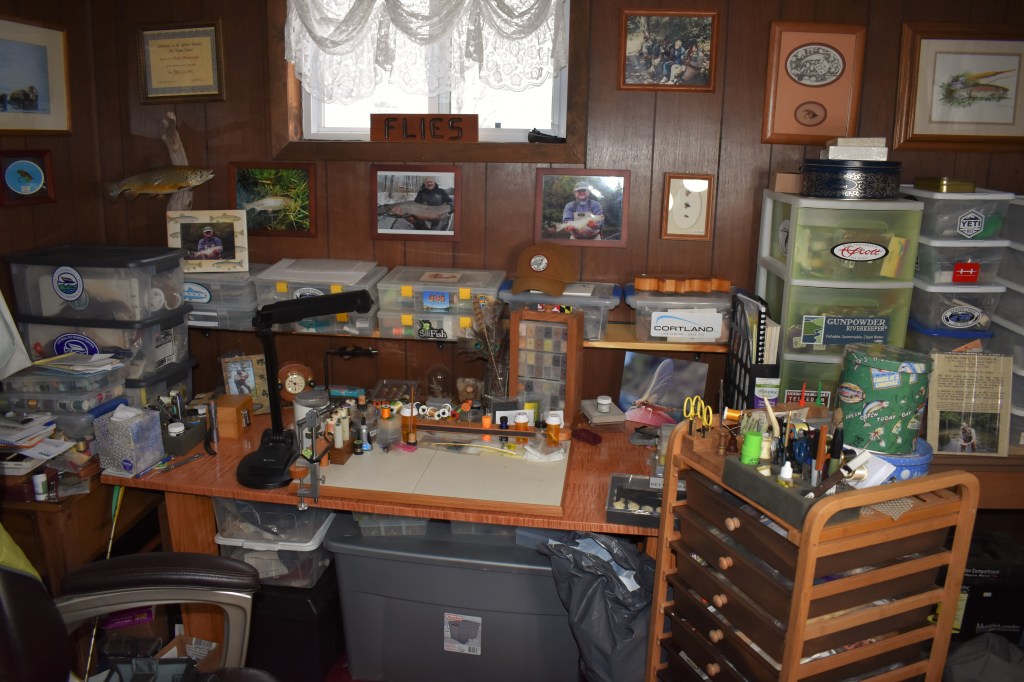
Even when everything is in order, there’s more of that gorgeous maple covered up than I would like! Perhaps one day I’ll add another shelf that will hold more of the sundries that collect on the table top. There are too many feathers and furs and hooks and hair stored around my desk, one of the problems of passing thirty years as a fly tyer. Of course there are still boxes of items left over from the fly shop, materials I carried but don’t regularly use in my own flies, particularly now that the majority of my creations are dry flies. I store them, give some away when I have the chance. I still find it hard to pass a fly shop without stopping in, browsing, and adding something to my store of materials. My walls are filled with pictures and shadowboxed flies, shelves with books and magazines, some with memories attached; the trappings of a life outdoors.
I came upon another old fishing log yesterday, perhaps the first I ever kept…
October 18, 1991 Gunpowder Falls: Beautiful day! 75 degrees F. Fished with Pap’s bamboo rod for the first time! Four brown trout on an Elk Hair Caddis #18. 4 to 5 inches, riffles and runs. One brook trout on a Blue Winged Olive #18 10″, riffles. One brown trout (the olive again) 12″, riffles. Reading the entry I am back there, feeling the sunshine on my face and the grin as that gorgeous wild brookie puts a good bend in that old H-I!
July 12, 1992 Letort Spring Run – Barnyard & Bonny Brook, 5 to 10 AM, Muggy & hot! Only one riser seen in a castable lie – he was taken. A few others were heard but not seen. Saw one 5-7 lbs. at old concrete @ Stone House in Barnyard. German brown trout, #16 Letort Cricket, 18″. Oh I remember that morning, my first big trout landed from the hallowed Letort! There used to be a big deadfall tree right in the middle of the Barnyard Pool, clustered with watercress and odd clumps of water weeds trapped among the snags, and I saw the rise, a tiny, brief little ring on the surface just at the edge where the current swirled and dove beneath the clustered weeds and branches. There was a tiny whirlpool there, and my fly danced slowly around it just long enough for the trout to take it! He was fully beneath the weeds and the tree, and my rod doubled over when I struck him! I was proud when I turned him in my net, dark and beautiful.
Back then I would travel from Maryland in darkness, timing my arrival in the meadows for first light. The huge, legendary Letort browns would still be out feeding as the sky gradually lightened in the southeast. How many times I was crouched in the tall grass, motionless and watching, when a big vee wake came streaking fifty feet downstream! On those days I’d get a glimpse of two or more feet of brown trout as they rushed past over top of the weeds, my heart pounding. Those were the trout The Master would catch, fifty years on the Letort telling him where they would be foraging before wicked daylight sent them fleeing for sanctuary. Where I fished with my eyes, he fished with knowledge and instincts.
I appreciate that even more now, as after nearly thirty years on these Catskill rivers I sometimes pull it off: knowing where a trout will rise, and knowing what he will take and when before he reveals himself.
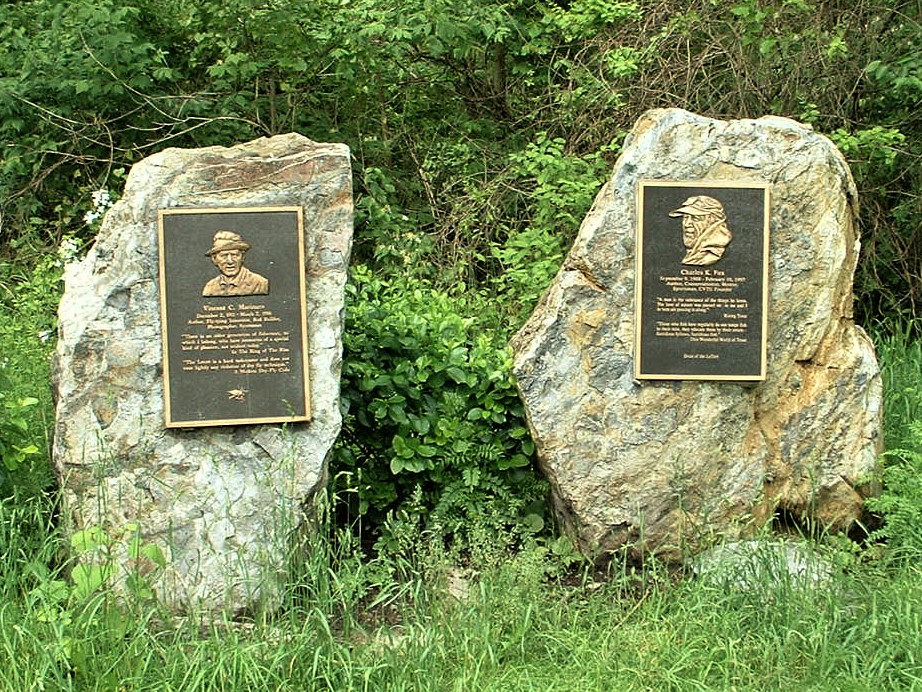
-
Thirty Days

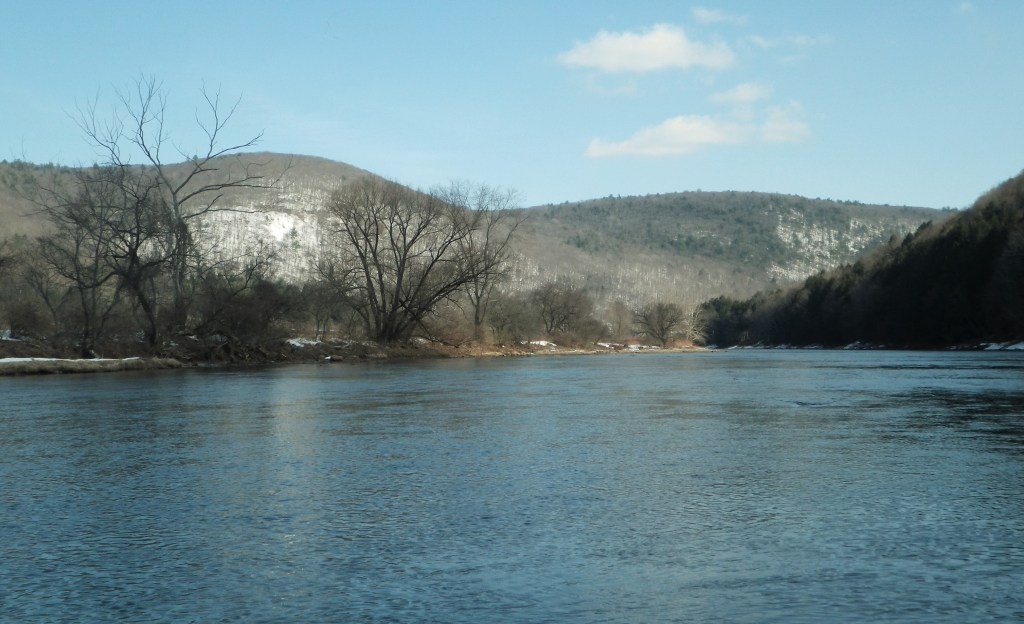
A Delaware Evening The rain flirts with us, and disaster, at least for my hopes for an afternoon on the river. Any significant rainfall will bring rapid snowmelt and flooding. If we can get through the day we will avoid the floods for now, with freezing temperatures predicted by sunset, along with an overnight low of eleven degrees. Imagine me, praying for a hard freeze.
There are thirty days to endure before the Opening Day of trout season, New York’s last Opening Day it seems. New regulations will take effect creating a year round season, something many of us are not all that happy about. I would like to do some fishing during these next thirty days, for it has been far too long since I walked along a river.
My dry fly season began on March 27th last year. I was out on the Mainstem doing my winter thing, and the sun warmed the air and water just enough to awaken a handful of blue winged olive mayflies. I saw a couple of pop up rises in open water, one here, one there, and then a trout actually began rising where the still frigid current roiled over and around a fallen tree. I watched the little olives dancing down on the roll of current as I built my leader out to dry fly capabilities, and every once in awhile one of them disappeared in a bubble. After several casts, a few just to get back the feel of the right subtle check to the rod that puts some slack in the tippet, my size 20 CDC sparkle dun disappeared in one of those bubbles too. There was never another foot long brown trout so appreciated and so lauded with praise as that one: a rising trout taken on a dry fly a good three weeks before I had any right to expect it!
I was so jonesed I started fishing seriously the following week: April 5th, 45 degree water and a few flies but no rises; April 6th the magic 50 degrees, what looked to be Quill Gordons, and no rises; April 7th sunny and 67 with the water at 50, a few little olives and caddis and…no rises! The next day I dropped the boat in and floated solo on a cloudy windy day, finally finding a couple of fish rising half heartedly at the last stop, after four o’clock. I got one hookup, but the fly pulled free. Once again an early spring simply teased me until the rising and catching phase of fishing started in the third week of April.
Over all the years I fished the Catskills as a visitor there seemed to be a pretty regular pattern. Finding mayflies and rising trout in the third week of April is what I have come to know as a normal spring. An early season hatch or a late one deviates from that norm by roughly one week. My two retirement years have followed the pattern, with the good fishing starting during that third week, even though I was free to get out there earlier and did.
I guess the point of this is that the thirty day wait is truly, honestly something like fifty days long for the dry fly fisherman. Then again, most of us just want to get out on the river and go fishing; particularly during a long, cold winter like this one. That is why I hope the snow melts slowly and recharges the mountain springs and fills the reservoirs; what’s good for the trout is good for the angler in the long run.
Let’s face the fact that high, cold, muddy water isn’t conducive to any kind of fly fishing. If I have to sit inside for another couple of weeks and knaw on an old cork rod grip, so be it.
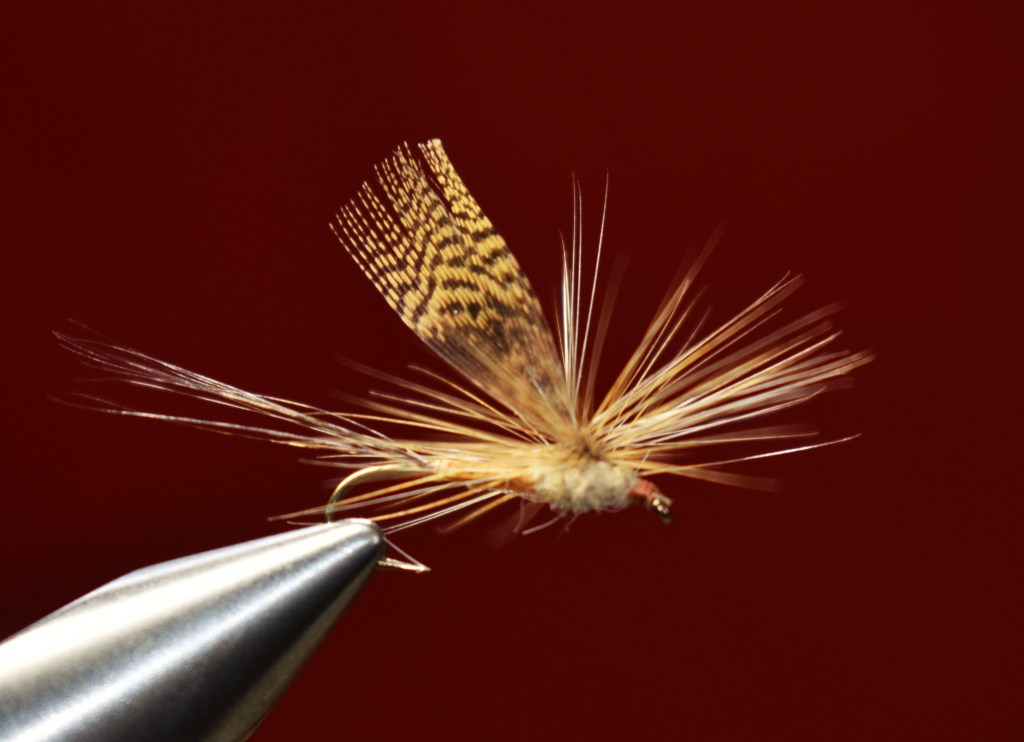
I can always pass the time by tying up some more of these March Browns I have talked recently with one of my good friends, and we are very hopeful that he will get a chance to come up and fish this year. Memory fails me a bit, but I don’t believe we have fished together for more than four years. Of course the pandemic still dictates the majority of both our lives, so we’ll need more than some fair winds to make that happen. I have started a pill bottle for him to promote a little good mojo in that direction. Old guys have a lot of empty pill bottles lying around and they make perfect “fly boxes”. I filled a few of them up for friends last year, even though we didn’t exactly get a chance to fish together. There were at least a couple of chances to fish apart.
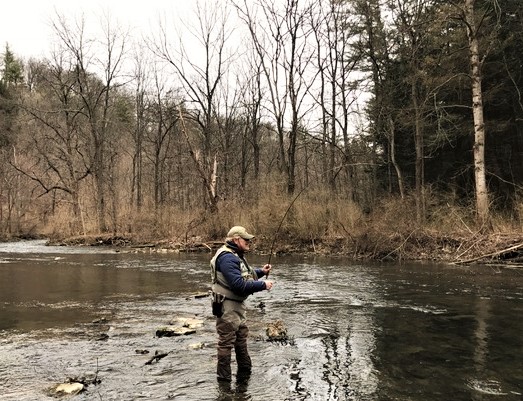
Andy snapped this photo of yours truly bending the 8642 Granger Victory to bring a small Spring Creek brown trout to hand in February 2017; the last time we had a chance to fish a bit. Here’s hoping there will a lot of nice new photos for 2021, photos with both of us smiling in the sunshine on our gorgeous Catskill rivers with some big trout bending both of our bamboo rods!
-
The Magic & Mystery of Bamboo

My one hundred and four year old Thomas Dirigo and it’s young companion, a Hardy Perfect from the 1930’s Old fish poles, tomato stakes, them old wooden poles… they have been called many things by the modern fly fishers. Like so many in our society today, they are obsessed with technology. Why study the old masters, why learn the traditions when one can pull up some app on their phone to tell them where to catch a fish? They miss so much of what makes fly fishing a lifelong passion!
Certainly, I began this journey with a graphite fly rod, though the history and the traditions of the game enthralled me from the outset. That history, and the people who made it, drew me first to Pennsylvania’s Cumberland Valley, the pivotal site of the second great revolution in American fly fishing. Following that history along the highway north, I came at last to the Catskill Mountains and stepped into the hallowed waters of the Beaverkill. Along the way I read, groundbreaking works by current anglers, thinkers and experimenters, and always the classic tomes by those who came before us; the teachings of the dry fly.
After a few years of fishing, split bamboo entered my world when my uncle handed me my late grandfather’s fly rod. I fished it with reverence and an appreciation of my own humble history. More than twenty-five years ago I made a new friend, Tom Smithwick, and acquired a beautiful little bamboo rod that he had designed and made with his own hands. That rod truly awakened me to the magic of bamboo.
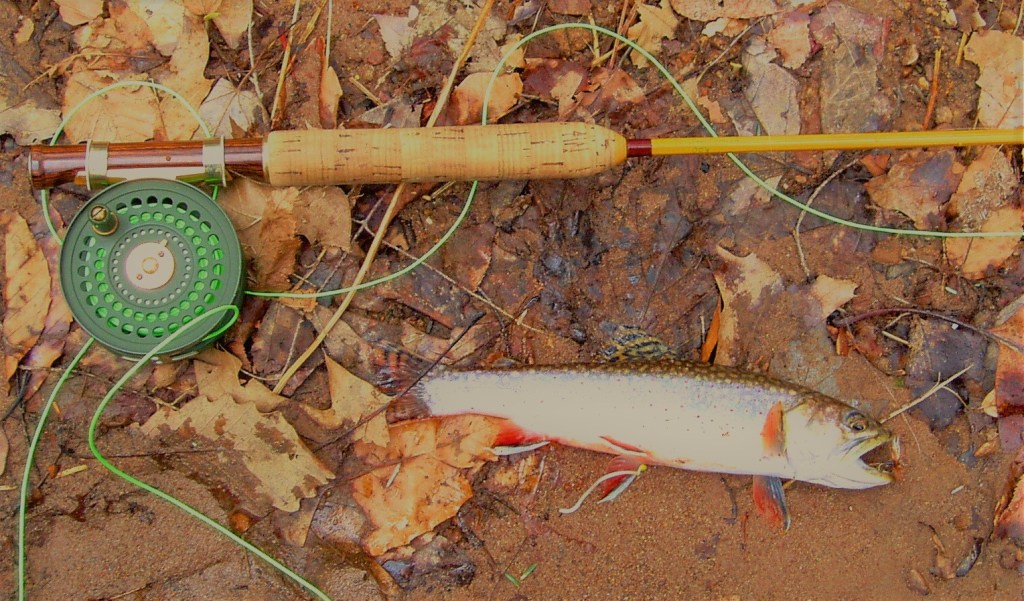
My five and a half foot Tom Smithwick bamboo fly rod, and a fine, wild eastern brook trout from a tiny mountain stream. Ed Shenk had already opened my eyes to the pleasure of fishing short fly rods, and Tom’s amazing craftsmanship taught me what care and tradition could produce. The beautiful little rod was crafted in one piece, as lithe and light as the quicksilver streams I trod with it. It was designed for a four weight fly line, so I spooled one half of a double taper Cortland line upon my smallest CFO reel for a perfect balance.
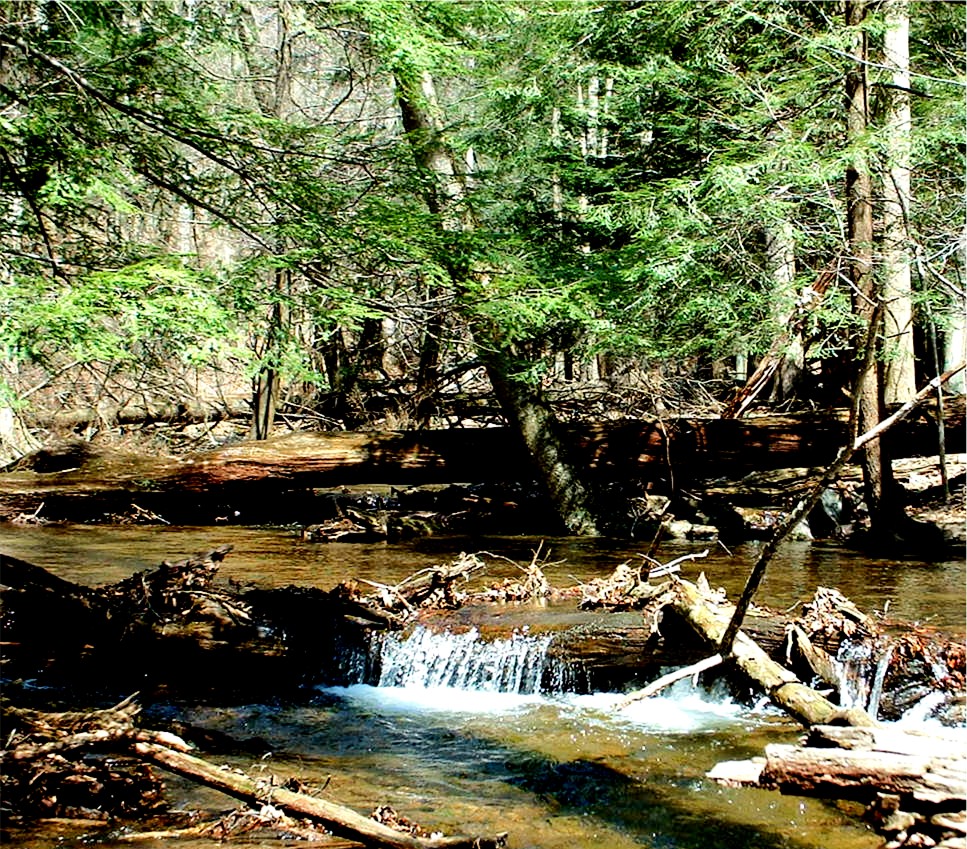
My favorite wild brook trout stream, where the short, quick Smithwick rod proved the perfect foil! I learned Lee Wulff’s oval casting technique from reading the classics, and the rod’s performance astounded me in the tight quarters where the speckled trout waited secretly for my carefully presented dry fly! Tom’s masterpiece was not limited to close quarters work. On the meadows of the Falling Spring I made pinpoint casts and battled wild browns and rainbows much larger than my mountain trout, and learned the power of the magical golden grass that rod makers call Tonkin cane.
As my interest grew I found a young rod maker in eastern Pennsylvania, travelled to meet him and wrote a feature for the newspaper about his journey in discovering the craft. I was talking about that meeting at the Fly Fishers Club of Harrisburg when my companion mentioned another young rod maker right back home in our town of Chambersburg. Meeting Wyatt Dietrich drew me deeper into my quest for cane, as his youthful enthusiasm was equaled only by the skill and craftsmanship displayed in his gorgeous, deeply flamed fly rods. I began to long for an all around dry fly rod, one I could fish on the classic Catskill rivers, as well as our limestone springs.
Wyatt and I met on one of the Falling Spring’s meadows, an open area perfect for casting. He brought several rods for me to cast, his Dream Catchers, and one 7 1/2 foot 5 weight stole my heart. The taper he told me was taken from an old F.E. Thomas rod, one of the classic makers from the Golden Age, and he agreed to make one just for me. I chose a special reel seat hand made here in the Catskills, my own little mojo to make the rod at home here as well as in the water meadows. That rod has visited all of my favorite waters. It has landed the largest wild trout I have ever been blessed to cast a dry fly to, and my two largest Catskill browns since retiring here beside the rivers of my heart.

The Dream Catcher SDF with it’s first twenty inch Catskill brown trout. Nature has since removed the grassy island where they laid, but the memory burns as bright as if it was still that misty June morning! Eventually the ghosts of the past called me and I let some vintage rods seduce me. Whether one of those accompanies me, a Dream Catcher, or one of Dennis Menscer’s masterful wands, I feel the magic and the history each time I walk along the rivers of my heart, a treasure born of the lovely reed in my left hand.
I long ago heard the siren call of the dry fly, and there is no better, more perfect way to offer it to the shy trout than with some lithe rapier of cane!
-
Selective Trout and the Spark Of Life – April 2, 1999
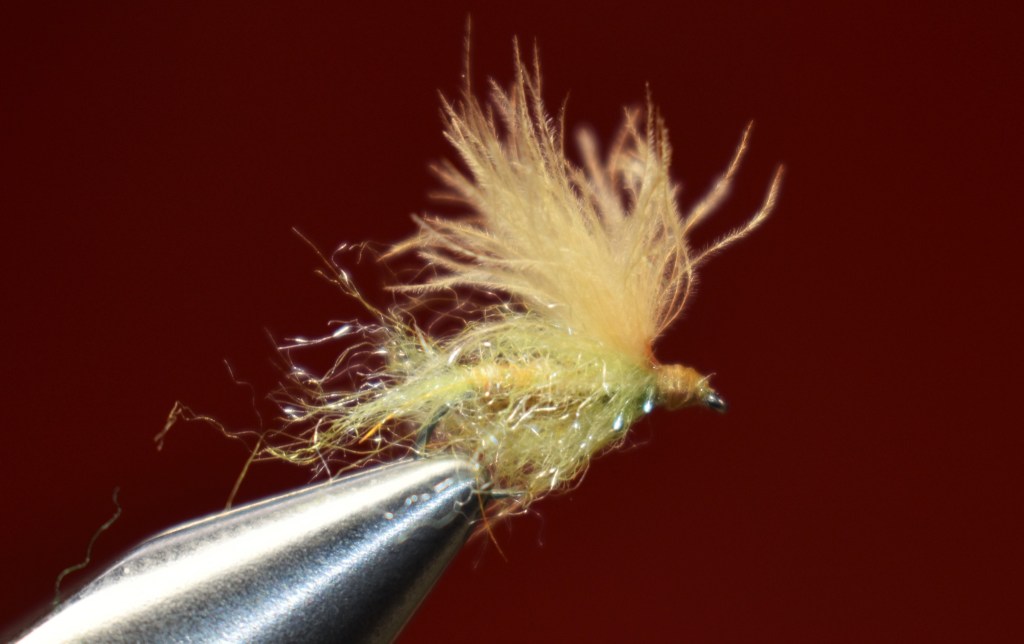
My first fly design of 2021, The Shad Fly Emerging Caddis. Can’t wait for May! The Fly Fishers Club of Harrisburg is one of the oldest and most unique angling clubs in the United States, begun by Charles Fox and Vincent Marinaro with a luncheon in the winter of 1947. A dinner banquet was included the following year, attended by Fox and Marinaro and an estimable group of fly fishers from the region and elsewhere including Edward Ringwood Hewitt, George Harvey and Alfred W. Miller, aka Sparse Grey Hackle. The club became noteworthy for the papers presented by various members at the annual luncheon, as these men proved to be some of our nation’s most forward thinking anglers.
In 1997, the club published the papers from the first half century in a book entitled Limestone Legends, that year embarking upon its second half century. During my years in Pennsylvania’s Cumberland Valley I was a regular attendee at the dinner banquets, though I had always been interested in the smaller gatherings for the luncheons. Having fished the limestone springs albeit daily for six years, and having written a weekly outdoor column for the Chambersburg newspaper for four, I stated my desire to present a paper myself. I was warmly received and offered Selective Trout and the Spark of Life to the luncheon gathering on April 2, 1999.
Since those days, and with more than two decades of additional experience in chasing and deceiving selective trout, or not, I find myself more firmly entrenched in my own theories as shared in that paper. I would like to share it now with any who choose to visit this blog and read a bit. Perhaps it will inspire thoughts and ideas and lead some of you to observe and experiment.
I have been a fortunate angler. I have enjoyed the privilege of learning much of what I know of this divine avocation on one of Nature’s grandest stages; the limestone springs of our Cumberland Valley.
These waters have been an inspiring classroom, their intricate currents, astounding bounty of trout foods, and sleek, shy wild trout have offered an amazing mixture of beauty, challenge, thrill and bafflement! These trout are truly wild, as wary as any the fisher might find, yet they are also schooled in the ways of man: the looming predator with is skinny sticks.
I have been blessed with the knowledge of many of our sport’s finest anglers. Hundreds have freely given their words, all through the great literature of fly fishing. Fewer in number, but having even greater impact, are those with whom I have shared time on bright waters, and precious moments in conversation in lesser environs. Ed Shenk, Joe Humphreys and Gary LaFontaine are chief among these, and to them I offer my sincere thanks for sharing their insights and friendship.
Selectivity: Classic and Modern
What is a selective trout? By the classic, and purely scientific definition, he is a creature acting at the peak of his marvelously adapted instincts. He feeds on that specific stage of one specific aquatic organism which is most abundant during a discreet interval of time, and which, through a combination of it’s behavior and the existing stream conditions, requires the least expenditure of energy to capture.
The primary demonstration of classic selective feeding that anglers are apt to encounter, occurs during an emergence of aquatic insects. A superb example: an emergence of baetis mayflies experienced last winter on a Pennsylvania limestoner.
Emerging in a riffle, where it diffused into a flat pool, caused many of the tiny flies to struggle to cast off their nymphal shucks. The trout of the pool found these struggling, half emerged nymphs the most easily available fodder. Various duns, both hackled and otherwise were refused, until a CDC emerger of my own design was offered, changing the tide abruptly.
I caught wild browns readily for close to an hour, then found the fly had lost favor. Scrutinizing the surface, I found primarily drowned, yet fully emerged duns scattered in the film. A change to a CDC comparadun brought several more trout to hand. Classic selective feeding; met, observed and mastered!
I believe that many of our fisheries have evolved another form of selective feeding behavior, which I shall refer to as modern selectivity. If you angle the hallowed waters of the Letort and Falling Spring, I feel assured you have born witness to this modern selectivity, whether you have considered it as a phenomena or not.
I define modern selectivity as a behavioral response, and I believe it is a learned response created by the trout’s marvelous adaptive abilities and the ever increasing angling pressure found upon our catch and release waters.
How many times have you observed trout feeding ever so selectively on a specific natural which is anything but abundant at that point in time? Perhaps you have encountered some of the Letort’s curious sippers; fish who take only three naturals in an hour’s time. A prime example comes to mind.
The scene is Centre County’s Spring Creek, three weeks into the sulfur hatch on that stream, and a lovely procession of duns floats through a large, flat pool; a picture book hatch. The trout take a natural only occasionally, with no rhythm or regularity. Three anglers combine to take one small trout during two hours of intense and careful fishing.
After trying thirteen distinctly different sulfur patterns representing various life stages and shades of color, all to no avail, I contented myself with close observation of the scene before me. Perhaps one or two of every few hundred duns exhibited movement, a slight tremor of the legs and wings, and only those were taken!
I do not make this assertion based upon casual observations. I watched dozens of duns drift exactly over the lie of a particular trout with no response whatsoever; nary an inspection rise was revealed. I observed several different trout from a distance of a few feet, and noted the identical behavior for each individual. I believe this was indeed a learned response, induced by three weeks of nightly, heavy fishing pressure.
Few anglers of experience would dispute the notion that that we educate our catch-and-release trout with poor casting, unduly heavy lines and leaders, and poorly tied flies. But think for a moment of our wildlife’s wonderful natural ability for adaptation – do we not also educate them to our better presentations, flies and finer tackle?
In five years of intense fishing on the Falling Spring, I have seen the trout become more difficult to deceive. I have had to continually adapt my tackle, flies and techniques to take these fish consistently. Gentlemen, I believe in this phenomenon of modern selectivity because I have lived it!
An Approach, Perchance A Solution
As I alluded to in my opening statements, my theories and approach to fly design have been shaped in no small way by my association with three of our finest anglers and writers. My own inquiring nature has led me to explore the topic further, and the pursuit has been the seed of great joy for me.
If asked to describe my approach to fly design, I would synthesize it’s essence with the phrase, the heart of imitation and the soul of impressionism. I firmly believe that consistent success on wild, yet educated trout, can only be achieved with due attention to producing patterns that are good imitations of the natural food organisms. Yet imitation alone is not enough.
To consistently fool difficult trout, our flies must give a strong impression of life! Wary, heavily pressured trout see far too many common, yet well tied imitations. While some take them at times, many have learned to be more selective. Life, more simply movement, is the key to triggering the more reticent, modernly selective trout to take a fly.
The traditional approach to tying lively flies has involved the use of soft, natural materials: marabou, various aftershaft feathers, ostrich herl and soft hackles are standards in this regard. More recently, cul-de-canard feathers have triggered a small revolution in tying. CDC feathers move, and offer natural flotation and wonderful translucence, due to their ability to capture thousands of tiny air bubbles within their matrix of fibers.
Bugginess, that wonderfully spiky, disheveled appearance derived from dubbing with hare’s mask or squirrel furs is successful because the tiny guard hairs and bits of underfur move, not because these flies appear nondescript!
Today we are blessed with innovation from many quarters. Synthetic materials offer new and remarkable properties to enhance our fly patterns. Some tiers have gone the route of making all synthetic imitations, while others have used only dry fly hackle as a concession to tradition in their synthetic based patterns. I have found my needs best served by combining the attributes of both natural and synthetic materials to create my original trout flies.
I developed an early affinity for blending dubbing furs, due primarily to my attempts to match the subtle coloration of naturals without buying every shade of dubbing ever marketed. Meeting Gary LaFontaine increased my interest in Antron, and I began to incorporate some of the material in most of my dubbing blends. Our conversations caused me to think more about light reflection, and I realized that tiny glints of light, and streams of air bubbles emanating from a drifting fly created the impression of movement and thus life.
When I first saw Lite Brite in a fly shop in the early 1990’s, I immediately seized it and incorporated a small amount into various nymph blends. Multiblending was born! Blending Antron and Lite Brite with a base of fur of natural or dyed squirrel gave me the ultimate nymphs. My flies were buggy with natural mottling, thanks to the short barred guard hairs of the squirrel, and the thin Antron and Lite Brite fibers both moved and reflected light!
Observing the wonderful translucence created by the combination of fur and Antron made me delve further into this aspect of blending. When I set out to create a better, more realistic imitation of the ubiquitous Gammarus scuds of the limestone springs, I sought to replicate both the clear exoskeleton and the colored internals of the natural with a dubbing blend.
The blend derived utilized three materials, and is so clustered with air bubbles when wetted that it perfectly duplicates the effect of the natural’s olivish underbody, viewed through it’s clear exoskeleton. Imitation achieved, with a strong impression of life, and strong properties of attraction! Mark’s Limestone Shrimp has become my most productive and reliable fly for the limestone springs.
As I continue my personal inquiry into solving the puzzle of modern selectivity, I concentrate my efforts toward replicating both the appearance and movement of the natural. CDC has been invaluable when working up improved dry flies, cripples and emergers. It is a material best suited to scruffiness and disarray! That is to say it is most effective when not clipped just so.
While natural furs predominate in my dubbing blends, it is rare that they don’t include a little Antron or similar synthetic; something to add some sparkle, collect a few air bubbles, or quiver a little as the fly drifts by.
Ed Shenk’s influence is felt every time I form a dubbing loop, and I use the technique frequently in my tying. Furs, feathers, synthetics: all can be utilized to great advantage with a dubbing loop technique. The key is the fact that the fibers of whatever material you use are anchored to the hook on one end, and free to move with the subtleties of the currents on the other.
My thousands of hours of on-stream observations and experiences have convinced me that this approach, utilizing both natural and synthetic materials to produce lifelike and lively imitations, is a key to the future of angling in the face of modern selectivity. A second avenue exists to dealing with this phenomenon, that of modifying our tackle and techniques of angling.
Clearly, despite great strides over the past two decades, there are solid limitations inherent in our tackle. We fish today with lighter and more buoyant lines than a decade ago. Four weight rods are common on our Eastern streams, replacing the sixes once though ideal. Two and three weight outfits have become increasingly common among serious fly fishers, as the need for improved presentations has evolved. Orvis’ One Weight, considered an affectation at it’s introduction, has been joined by an ought weight today, but there is very little frontier left in that direction.
The same hold true for fly lines, the gentlest tapers available today being near the minimum needed to present long leaders, long tippets and a fly. 6X tippet is routine for most anglers today, even for larger flies. Five years ago I sold very little 7x in my fly shop. Today it is a constant seller, and 8X gathers no dust. A new player in the tackle arena has introduced 10X tippet material for 1999, but is it 10X in truth? By the existing standard of 0.001″ difference in diameter per “X” it is not. Measuring 0.0027″ it is only 3 ten thousandths thinner than 8X – another frontier exhausted. We must connect the fly to the leader with something.
If we accept that our tackle has reached the practical limit of refinement, only our angling techniques offer hope for advancement. Fly casting is a lifelong pursuit, and challenging oneself to improve is requisite. The process, once a reasonable level of skill has been achieved, is a slow one, though certainly worthwhile. The tactics of approach and wading offer some room for improvement, and patience and streamside observation may be the best teachers of these lessons.
When all is considered, creativity at the tying bench may indeed be our best avenue for advancing the art of fly fishing into the future. Our goal is simply the adaptation of our practiced art of deception to match the marvelous capacity for adaptation inherent in our finned adversaries.
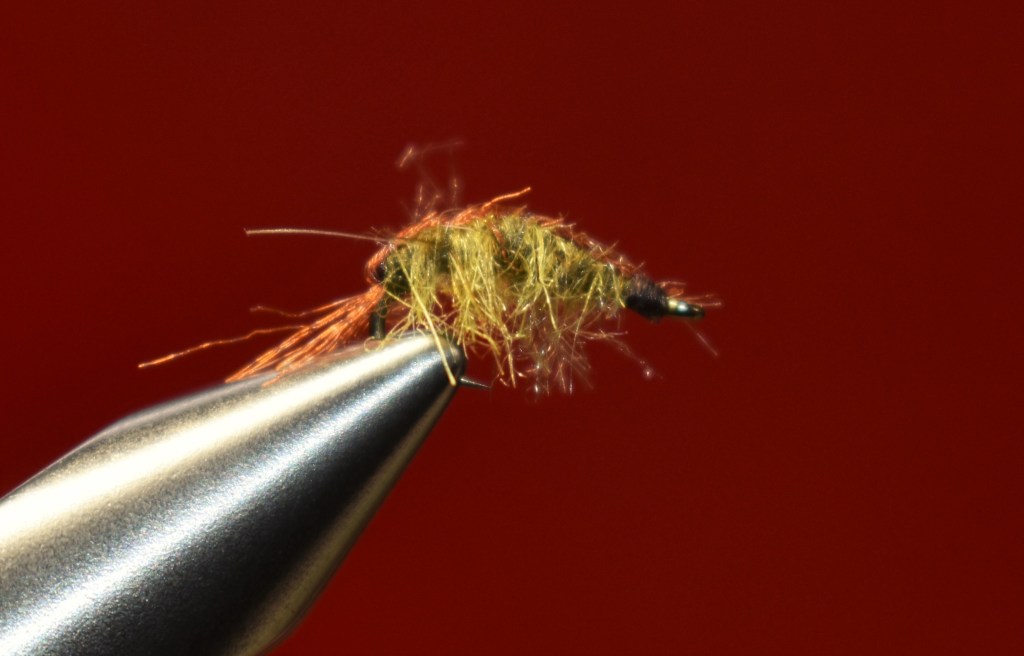
Mark’s Limestone Shrimp: the pattern that lead me willingly down the garden path.
-
Biding my time…
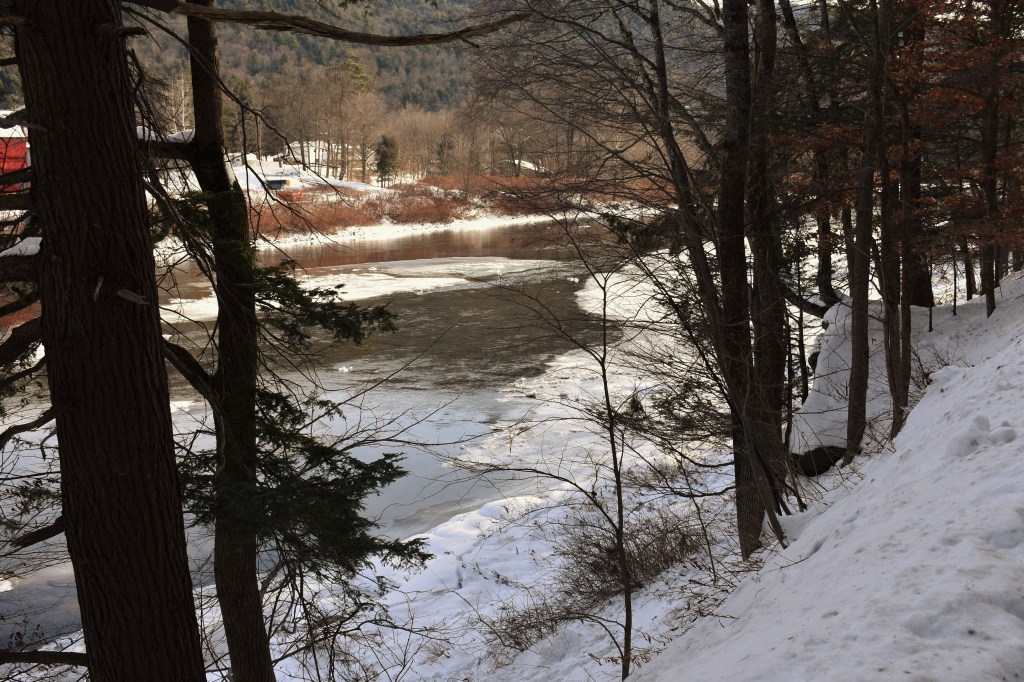
Winter continues, though the light brings a touch of hope… I awakened to four inches of fresh snow, the beginning of a new week and a new weekly total. That brings us to about a foot accumulated over the past week, causing me to don knee boots to wade over to my drift boat to dig it out and free the tarpaulin from it’s sheath of ice. There is a lot of the stuff in my yard, and it has demonstrated staying power with the sustained cold.
The Postal Service is having their fun with me again: promising my packets of fly tying materials, even showing my long awaited silk on its tracking to be expected yesterday, and then failing to deliver. Perhaps tomorrow.
There are some new colors of the silk that lets me craft beautifully translucent flies, a couple of Charlie Collins’ gorgeous dry fly capes, and an assortment of hooks and threads, all headed here from points west and east. I would love to see a mass landing tomorrow afternoon, as these treasures would give me the spark to get my fly tying going once again. Some tiny hooks have found their way into my vise this past week, leaving as a dozen tricos, a few Shenk Doubles and half a dozen little rusty spinners. Such have been the fruits of my summer dreaming…
I hesitate to mention the forecast, lest I somehow jinx the possibility of a little respite. There’s snow tomorrow you see, though the daily highs could begin a brief warming trend for this last week of February, and it could be enough to get my legs back into waders, my feet into boots. We will see what develops.
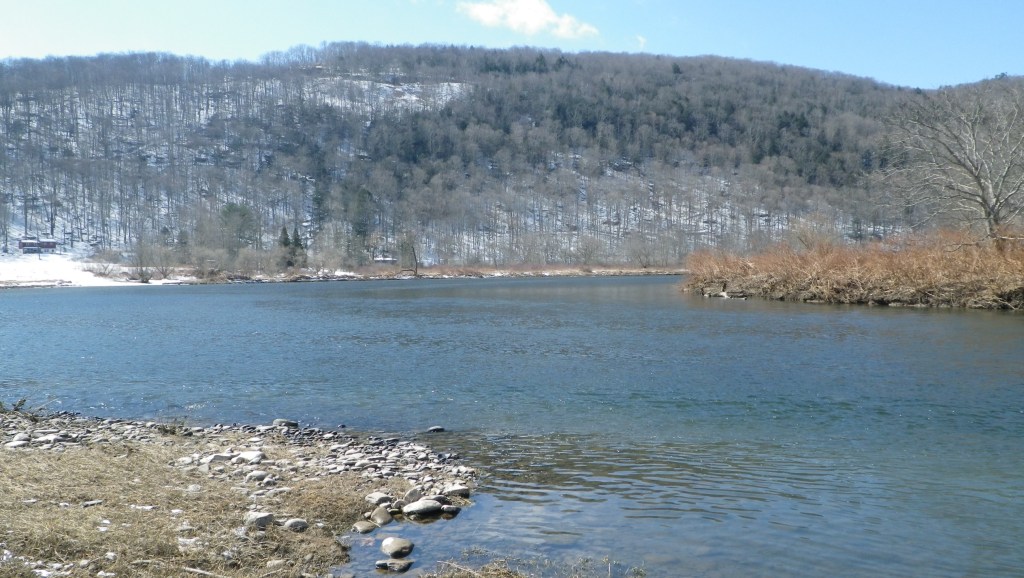
A Winter Warmup – They do occur in the Catskills. I came upon an old fishing journal yesterday while sorting through my bookcases. My fishing library grows a bit each winter, thanks to the used book dealers, and it becomes necessary to do some moving and rearranging. The hunting titles here in my tying room have dwindled, as more have been moved to the living room case to make room for the fishing tomes.
That old journal contained my thoughts and notations from my first trip to the lovely Deerfield River in the Massachusetts Berkshires, the hills from which our clan flowed. The Deerfield was my grandfather’s river. Born in the mountains near Savoy, Al had fly fished the various brooks that fed the great river, as well as the Deerfield itself. He laid the footsteps along the water, the tracks that I would eventually follow.
I never had the chance to fish with my grandfather, though his last bamboo fly rod was handed down to me as a bridge to that part of the family history. I wanted to take that rod back home, to angle the Deerfield with Pap’s fly rod, and catch a trout to complete the crossing.
I had planned the trip with the help of a customer from my fly shop. Joe hailed from the Berkshires and still travelled back to visit and fish the river from his home in Hagerstown, Maryland. He put me in touch with his friend Paul who lived further east in Massachusetts and angled the Deerfield regularly. We met there on Labor Day weekend 1998, below Fife Brook Dam, and I rigged Pap’s 9 foot Horrocks-Ibbotson fly rod with a big Medalist reel and one of the Royal Coachmen dry flies I had tied for the occasion; my grandfather’s favorite fly. My journal entries for the trip read as follows:
September 6, 1998
This lovely afternoon I stood at last in Alfred’s river, the Deerfield. I knotted a size 16 Royal Coachman to the tippet and cast it upon the bright waters with his rod. The fishing was difficult after the water receded from the day’s release, and I rose only two, landing a beautiful fourteen inch bow on the rod with a size 18 BWO CDC comparadun.
Thursday morning and the sun is with us again! I am late this morning, as a fine New England cold has blurred my head and cost me sleep: my reward for hard fishing through Labor Day’s downpour; with both rain jackets in the car.
Backlighted by the window, I fumbled through tying three little 22 dries, which I hope might entice the reticent Fife Brook trout. Sparkle yarn and dun CDC, so simple really, yet a task to tie when you cannot see. I’ve carried a portable light on every trip but this one, and never needed it until now.
My quandary is whether to fish the Deerfield this morning or explore some smaller streams, leaving the great river until afternoon.
I tried a lovely stretch of open water on the Deerfield, casting a cricket along likely bankside lies. No trout were encountered, and the wind soon rose with a fury. As it blew my hauled line back at me, I surrendered to the obvious, and drove up and over the mountain to Adams.
At dinner last evening, Fred and Marilyn Moran invited me to use their tying bench at their Points North Outfitters fly shop. Their hospitality was welcomed, as I fashioned five size 20 olive ESP’s. I was directed to a lovely tumbling little brook, the South Branch of the Hoosic along Route 8, and spent the afternoon raising browns and brookies to my Letort Cricket and Fox Squirrel Special. I landed ten to thirteen inches, loving every moment of it!
The Deerfield has been a harsh taskmaster. She has tried my patience with her recalcitrant trout. They have followed no rhyme or reason, one responding to one fly, the next to another.
Last evening, Saturday, I returned to the river after spending the day fishing some smaller brooks near Windsor. I found a stretch to myself , somewhere above Florida Bridge, and angled for an hour or so. Once again the habitat looked wonderful, and not a single trout showed himself. I was tired and weary with this confounded cold, and let my mind lapse momentarily. I started back toward town then panicked, realizing I had not taken down my rod and put it in the car. A return and frantic search yielded nothing, and at last darkness and rain overtook my efforts. An additional search on Sunday proved fruitless as well. Perhaps it was left behind for a reason. Perhaps my subconscious left the rod and reel behind that Alfred’s spirit might have its use to angle eternity.
Sunday, my last morning’s fishing of the trip. I awoke late, having turned off the alarm at five, then drifting off for an hour and a half. The clouded sky seemed appropriate for my clouded head, and I grabbed coffee and donuts as I hastened to the river.
The sun burned through the clearing sky as I donned waders and boots, deciding my course would be upstream to the second pool.
The pool lay in shadow as I entered it, and at first betrayed no activity. I took a moment simply to savor the beauty before me, dwelling upon the fact that my Deerfield oddysey was coming to a close. Stringing the four weight, my five being in the hands of another, I noticed the first quiet rise. Cashing my bets, I knotted one of my size 20 LaFontaine Emergents to the long Mirage tippet.
My efforts were in vain, as the few occasionally rising trout ignored my flies. Confounded drag! Long casts across too many variable currents made good floats problematic with the experimental leader system I have been using. I dug into my vest for the Spring Creek line and Harvey leader I hoped would make the difference. Re-rigged, my drifts improved, and at last I raised a fish! The rainbow tugged and ran, and I enjoyed every moment of him, such interludes being far too spare on this journey.
After catching my “one fish” for the morning, I embarked upon a mission to miss more strikes than I have had at any outing on this river. I asked the gods to grant me just one big fish, a fish to take the fly and run strong and free, a fish to pin my memories upon! And the gods obliged. On my next cast upstream, a cast to open water searching, not covering a rise, a fish took the fly. He pulled hard, much harder than any trout I had tasted on this river, and he started away upstream, strong, the rod throbbing as he moved, the line slipping grudgingly through my fingers.
In the short span of time before his run took the last of the slack line from my hands, fate caused me to look down, down to see the fly line tangled in the tub of floatant dangling from my vest. Frantic fingers tried for microseconds to undo the tangle…and then he was gone.
And so ended my longed for search for my grandfather’s ghost upon the mighty Deerfield, the trout river of dreams. When I was very young, I recall my grandfather going north on fishing trips, and I recall the great rewards of those trips when he returned. This was back in the days before styrofoam coolers, and he carried a large round, galvanized tub. It was filled with huge rainbow trout in layers separated by ice and newspaper.
The family legend has it that Pap once spent six hours on a rock in the middle of the river, caught by the fast rising water when the Fife Brook power dam started generating early. The Deerfield is paved with rounded cobblestones, large ones and small ones, and all as slippery as eels! The tricky wading was a major factor in my making those long casts that proved the undoing of my drag-free drifts when I did find a few rising trout. River flows rise quickly from 125 cfs “fishing flow” to somewhere between 800 and 1,200 cfs during the daily generation period.
I found my grandfather’s spirit as I had hoped, made some new friends, and developed a fondness and a respect for Alfred’s river. I even added my own small hard luck story to the family legend. That was a heck of a trout that headed north with my fly before my tippet succumbed to the knot the coiled fly line tied round my floatant.
-
Ladies of the Morning
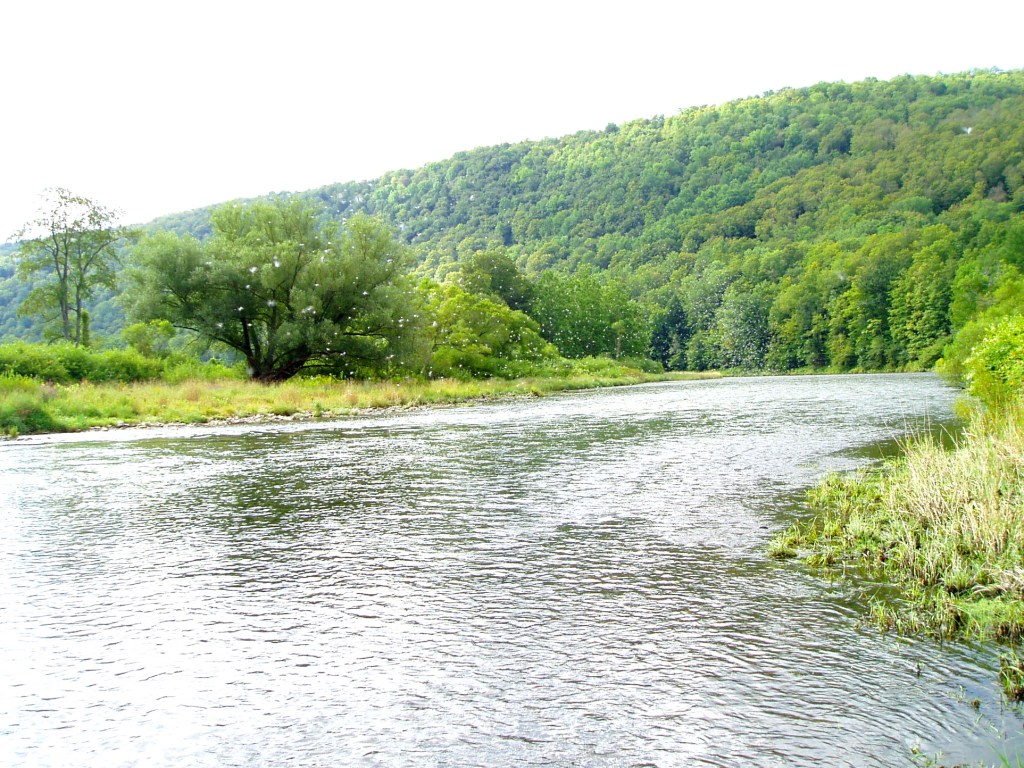
Tricos massed on a summer morning. Rise early, not long behind the sun, and take the road to a favorite pool; for the ladies of the morning are waiting!
In the limestone country of Pennsylvania they were first called Caenis, the tiny ephemera the English had dubbed the white curse. It was George Harvey, Penn State’s great teacher of fly fishing, that identified them properly as Tricorythodes when he angled with these ladies of the morning on Falling Spring Branch. Harvey was teaching at Penn State’s Forestry School in nearby Mont Alto, Pennsylvania when he began frequenting the little spring creek and enjoying its wonderful morning spinner falls.
Years later the heavy emergences and mating flights had declined by the time I opened Falling Spring Outfitters, though there were still flies to tempt the stream’s wild rainbows and browns. I fished the tricos on calm, humid summer mornings from July through September.
During more than two decades of visits to the Catskills I found spinners on the West Branch and the Mainstem Delaware, though even a light breeze on these larger waters prevented good swarms of mating spinners. Sometimes a few trout could be caught, but it was not an occasion to expect rising trout. Where I found larger masses of spinners one summer, I observed for two hours, not witnessing a single rise. I had been convinced that Catskill trout didn’t care for these tiny little mayflies, at least not in the numbers available to them.
In 1997 I fished Montana’s Bighorn River, finding swarms of trico spinners so thick they appeared as fog over the water. Other than a pod of fingerling browns sipping along a protected bank the morning I arrived, I was not to find the legendary trophies of the Bighorn eating tricos. Oh how I would love to see mating swarms like that on the Delaware!
The intense crowding on our Catskill rivers last summer lasted throughout the week all season long, and I became a morning angler as my best way to avoid them. When trout began sipping one morning I expected the tiny olives I had seen coming off in twos and threes as the sun burned off the mountain mist. Being ignored compelled me to hunker down and stare at the surface to solve the puzzle. Among little clusters of bubbles I found tricorythodes spinners in the drift. There weren’t a lot of them though, since they were the only insects I could find, I dug into my fly box and produced an Ed Shenk Double Trico.
I had a great morning, landing several very nice brown trout. The later risers required me to rummage through the fly box again, fortunately finding a single size 24 spinner, as they refused the larger double pattern once the numbers of naturals began to peter out. The best brought to the net was a fine, fat nineteen incher, my new personal record on a size 24 trico imitation. As the summer wore on the trout I found taking tricos became increasingly selective, requiring 7X tippets and various patterns to dupe, just like those trout on Falling Spring twenty-five years ago.
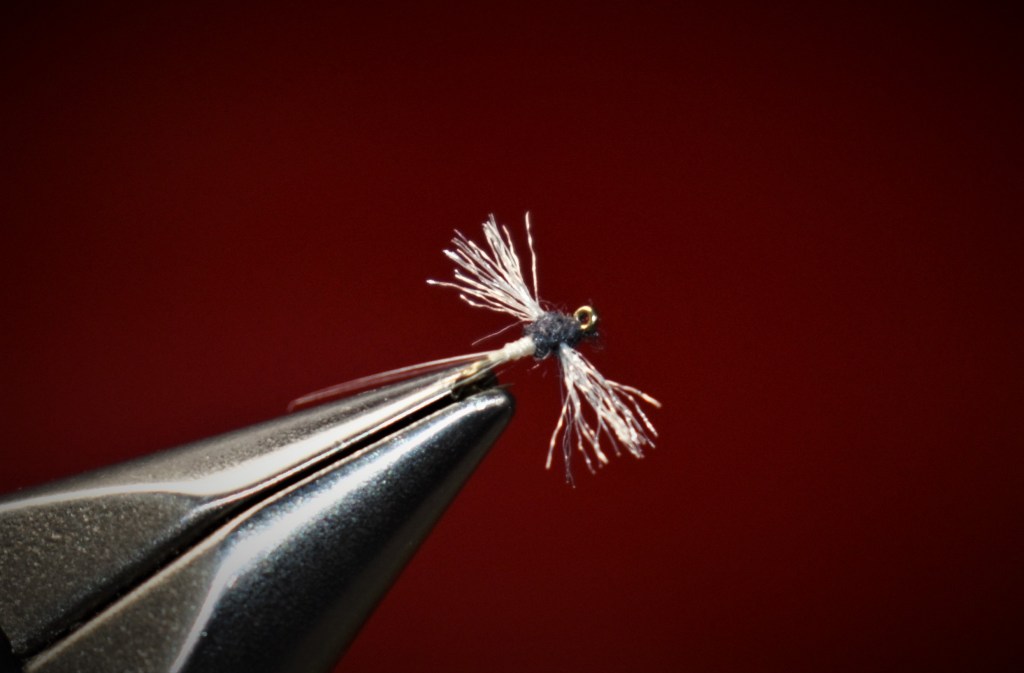
A Female Trico Spinner in Size 24: just enough to make a trout very, very selective! In the limestone country I fished the hatch with my short, light line graphite fly rods, 6 1/2 footers for 2 and 3 weight lines. Today on the much larger Catskill rivers, I opt for one of my favorite bamboo rods, casting either a 3 or 4 weight fly line. Depending upon the day I might choose my 7 1/2 foot Garrison taper with a DT3 line when the winds are expected to remain light and variable. If breezes are going to be a factor I rig up an eight foot 4 weight. Leaders are very long and their tippets fine. Size 24 dry flies require 7X, and a gentle hand to land wild trout of significant size. I love bamboo for its ability to make the perfect presentation whether I need to lay a size 22 or 24 dry fly down at 60 feet, or shoot a larger terrestrial out and under overhanging trees and brush.
I tied the first trico spinners of the winter this morning, half a dozen size 24’s and three of the Shenk Doubles, all females. For those unfamiliar, the female trico has a thin whitish abdomen and a chunky black thorax, the males being all black, except for the clear, sparkling wings. I have read and heard various tales recommending tying tricos in sizes 20 and 22 “for better hooking”. On Montana’s Bighorn some of the sages even called for size 18 spinners. Every trico spinner I have ever sampled has been a size 24 mayfly, period. When there are enough spinners on the water, trout can be snookered by Shenk’s Double: two abdomens, thoraxes and sets of spent wings tied on a size 18 hook. When flies are thin, you’ll need the 24.
I’ve been thinking too much of summer these past few days, wishing myself right on through spring it would seem. I love the Catskill summers. Spring offers all of the great hatches, and that special intensity that only a large number of sizable trout rising in congress can. Summer is more relaxed, though it has its own kind of intensity for those who love to stalk wild trout. It’s longer too, seeming to last forever, where the spring rush has been known to come and go in a month.
-
Dreaming of Terrestrial Time
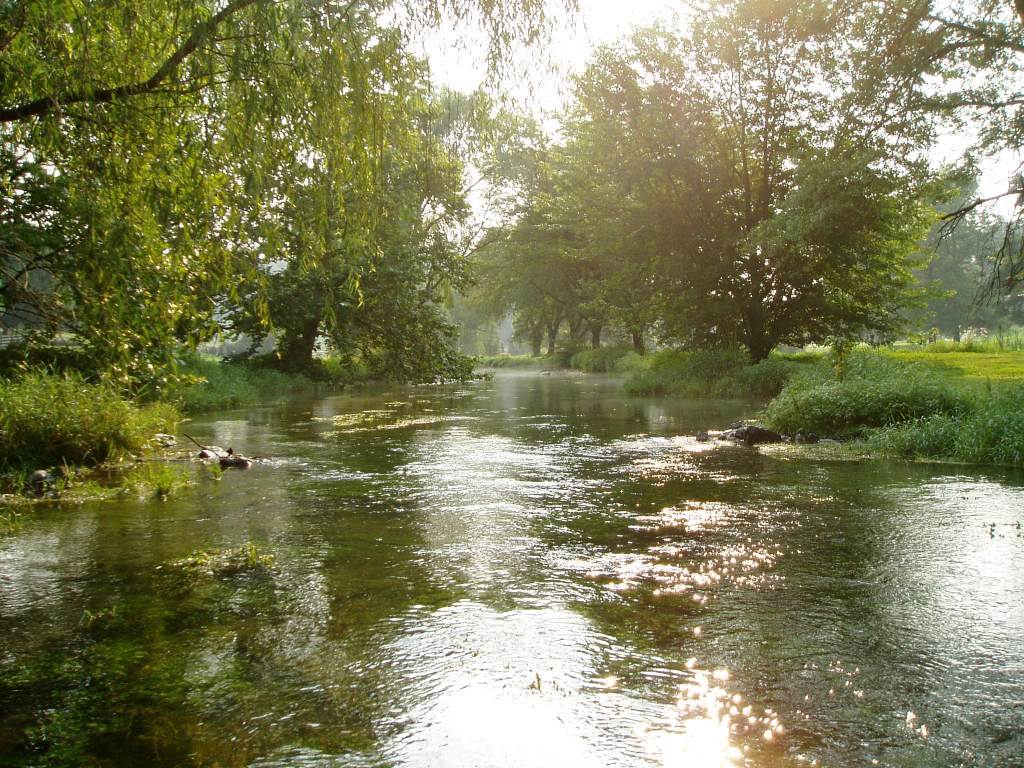
Terrestrial Time : The Falling Spring Branch… back when all was lovely and the wild trout abounded. The snow has been falling steadily this afternoon, big flakes lying soft on the trees as I read and dream of warmer times. My book today is a favorite: Ed Shenk’s Fly Rod Trouting; a bible and my introduction to The Master and the history of his bright home water. Like Ed I grew to love terrestrial time on the limestoners, and everywhere!
The small waters with their open meadows required a different kind of stealth. One would creep along the banks, staying back until the chosen casting position was reached, and only then drifting slowly toward the edge. Experience told where the trout would lie in wait: deeper pockets among the weed beds, undercut banks, or edge water overhung with grasses, bushes or the occasional tree.
For me the Letort Cricket was my first choice, except in August when the hoppers came into play, particularly on those hot breezy afternoons. Ever the experimenter I tied a smaller version after a time, the equivalent of a size 18 Letort Cricket, my Baby with a peacock herl body and black Antron yarn for an underwing. That pattern became my favorite dry fly for many seasons. Light tackle was the common armament, one of a few 6 1/2 to 7 foot rods for 2, 3 or 4 weight lines, though I was never afraid to go lighter. When I was still fishing mostly graphite I ordered one of the Sage “ought” weight (line weight 0) rods and took it to Falling Spring on an August afternoon as soon as it arrived. An affectation? There was but one way to find out.
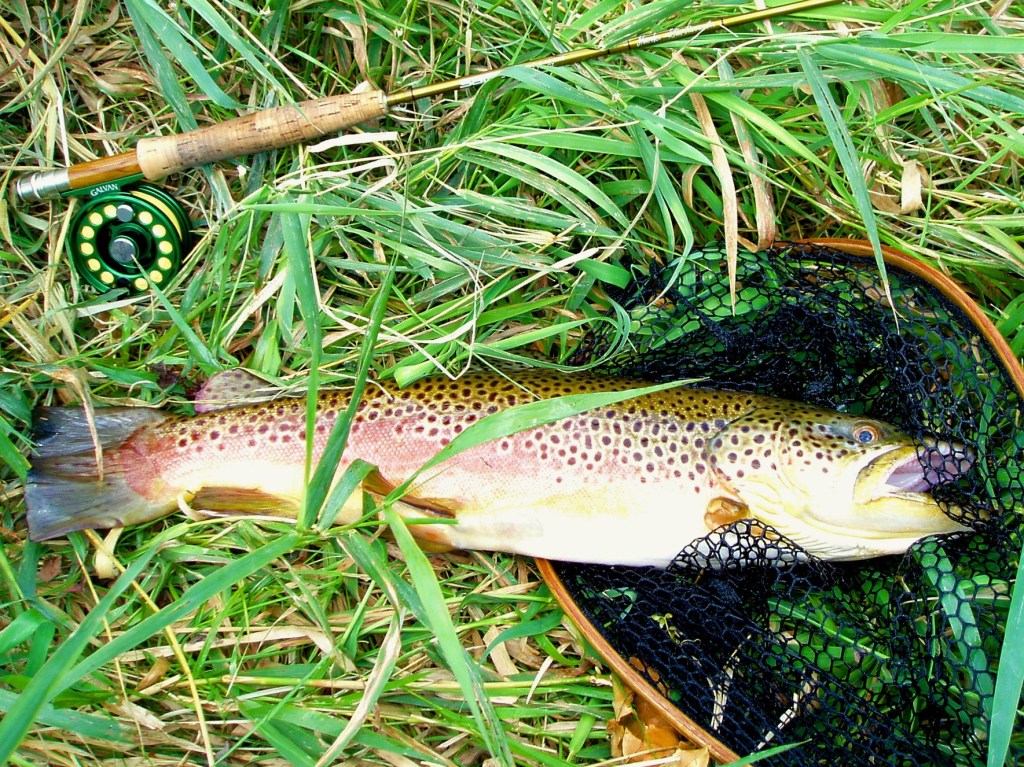
A 21″ Falling Spring brown trout, fooled by a Baby Cricket on my very first outing with my new Sage zero or “ought” weight rod. I was sneaking through the Quarry Meadow when I spied a disturbance amid some shallow watercress. My eyes scanned carefully and made out the outline of a very large trout, lying between the leaves and just a yard from a snarl of fallen tree branches. “Oh, I know where you’re going if you’re hooked” I thought as I lifted a backcast high to avoid fouling in the meadow grass. The cricket dropped a foot above him and he tipped right up and took it. Within a second he was into those branches, and my zero was bent in a “u” shaped arc. Unbelievably I managed to extricate him not once, but three times from that tangle without a break in my 6X tippet. Once the net secured him I put the tape along his flank: twenty-one inches, my largest trout on a dainty fly rod casting no line weight at all!
There was another Quarry Meadow spot that years earlier proved more than challenging. The stream narrowed below a shallow gravelly flat, and deepened beneath the shade of an old spreading willow. Not only were there scattered rocks and watercress there, but the prime holding lie was right along the exposed roots of the grand old tree. The only cast that would reach the lie was a long, low pitch from a downstream wading position. It had to sail in there forty feet gently, and no more than two feet above the surface to clear the drooping branches and, when it did, the line would fall over a tangle of sunken branches. There were many tries that put a fly in the willow, or a couple of feet short. On those days the result would be a bulging wake headed deep into the tree roots, or streaking upstream into the weeds, if a trout was there at all. One day, it all came together perfectly.
I had tied a new hopper pattern, the final “keeper” version of a design I called the kick leg hopper, and I was out late that August afternoon to test it out. It was hot and breezy and I managed a couple of smaller rainbows as I worked my way up the meadow. When I reached the dreaded willow pool I stayed back and watched for a while. Things got serious when I saw a ring under there a foot away from the exposed roots. I checked the knot on my hopper and slipped into the water as quietly as possible, moving into casting position without pushing any waves up into the shade. This spot was one cast and done, and my fly alighted perfectly, gently and way up ahead of the lie. It seemed long moments for that fly to float the foot and a half it had to cover drag free, but a heavy bulge caused a quick reaction and a wicked bend in my 7 foot fly rod. That big boy tore up some weed beds, but I kept him out of the pile of sunken branches and finally brought him to the net; a heavy and beautifully colored brown better than twenty inches long.
The limestone summers are behind me now, though I still look forward to terrestrial time each summer. Timing for the best fishing varies considerably from year to year. Lacking the stability of the Cumberland Valley’s spring creeks, the freestone and tailwater rivers of the Catskills are affected by the seasonal variations in temperature and rainfall. Terrestrial time may come in June, July, August or September; or occupy a niche or two somewhere within that period. All depends upon Nature’s whims.
Here the stalking must be done within the river, and fishing fine and far off will be of utmost importance. Much of this fishing is native to placid flows, thus stealth demands an agonizingly slow approach. The impatient angler that rushes into the pool will find no trout where his flies land.
Perfection in presentation is the domain of the light line bamboo rod, and an eight footer casting a 3 or 4 weight line is ideal. Leaders are long, 14 to 16 feet, and the caster must manipulate this fine tackle to place small terrestrial patterns delicately with pinpoint accuracy. There are days I take one of my shorter light rods, but on those days my patience must be longer to make up for it.
Reaches of river must be learned throughout the season, not just for taking lies where trout rise to a hatch, but for the resting lies where comfort and security will draw good trout come summer. The reward for patience and stealth may be the uniqueness of solitude, as one may finally have a pool to himself, and there are other rewards.
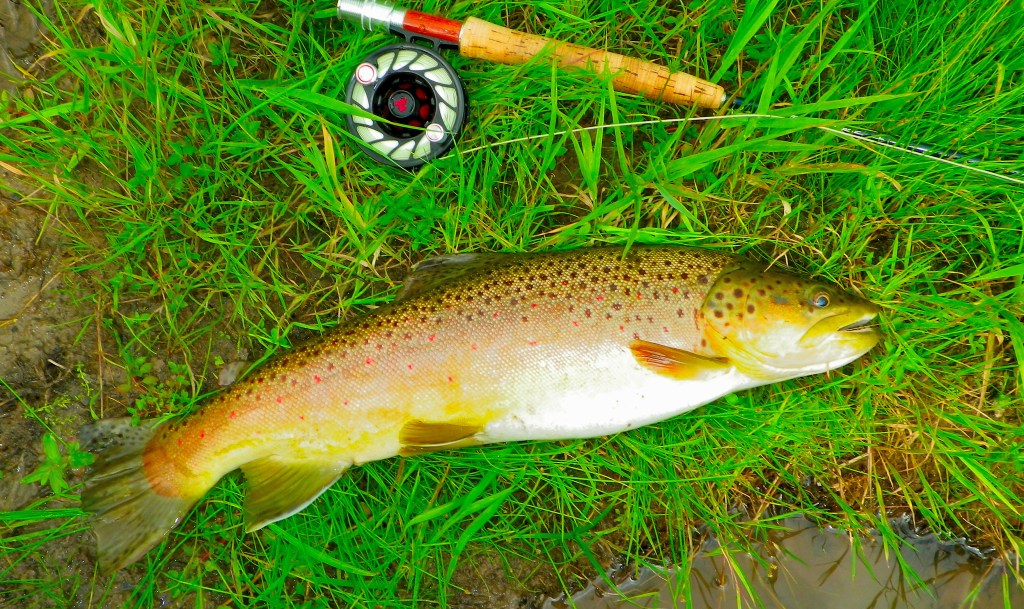
A 24 1/2 inch wild Catskill brown trout, taken on a terrestrial in August 2019 Past five now, and I can barely see the fine snowflakes in the dimming light of a winter evening. The amber glow of the single malt in my glass reminds me of the amber light of late afternoon along a summertime river. Winter makes it easy to remember, and dream.
At best it will be sixty days until the dry fly season may be expected to begin, perhaps the hardest sixty days of the entire winter for the dedicated dry fly angler. Harder still, should that span prove insufficient for the snow and howling winds to diminish and give way to budding trees and greening grasses, and the first mayflies of the new spring. Hope waits amid the soft snowfall of a winter evening…
-
A Little Time With A Classic
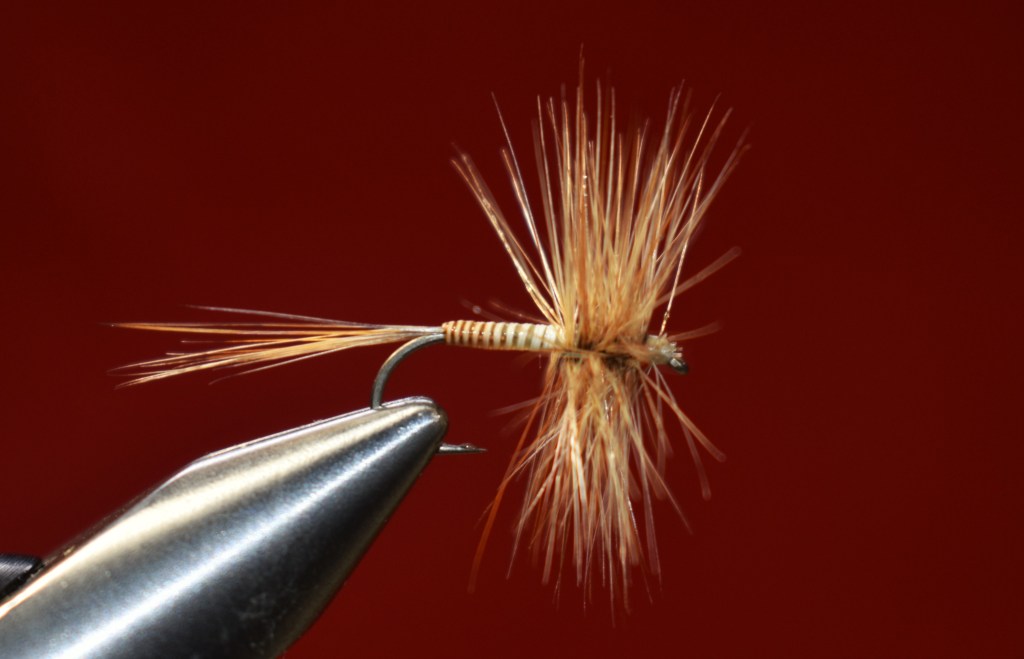
Art Flick’s Favorite Fly: The Gray Fox Variant I was thinking about some of the classic Catskill dry flies I tied early in my career as a fly tier, patterns that struck me with their beauty and promise. Art Flick’s variants drew my attention along with the Hendrickson, Red Quill, March Brown and Light Cahill, and of course the Dette’s Coffin Fly. I still tie and fish many of them, though I have tied a simplified Coffin Fly these past few seasons, using a white turkey biot body. Today even Joe Fox of the Dette fly shop ties biot Coffin Flies. Clipping the white ribbing hackle is a painstaking process, and I could never do it quite like Mary Dette Clark.
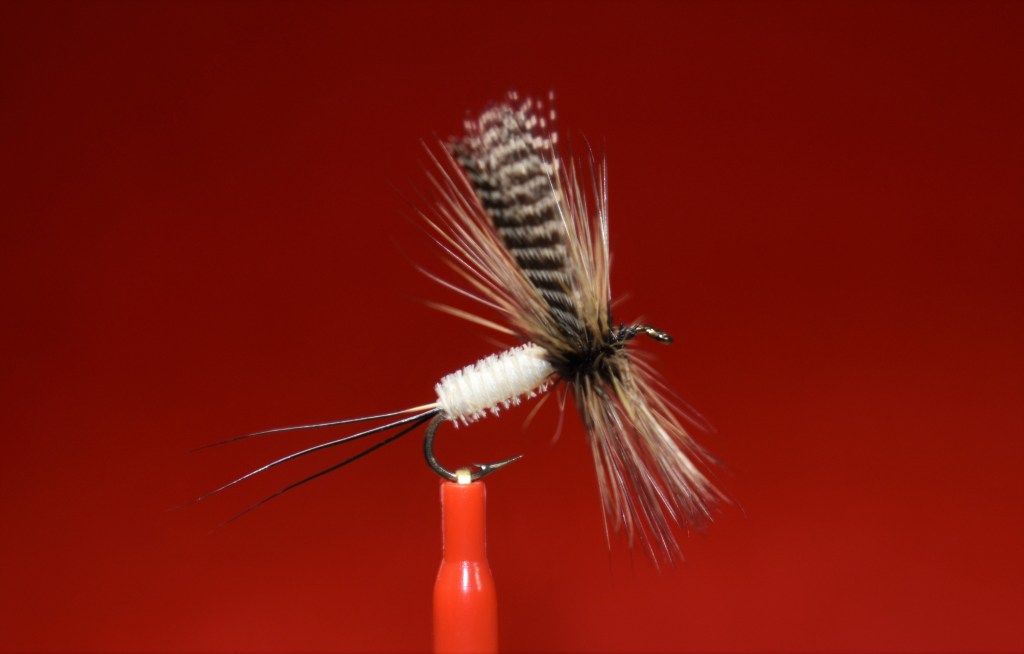
The Dette Coffin Fly inimitably tied by Mary Dette Clark 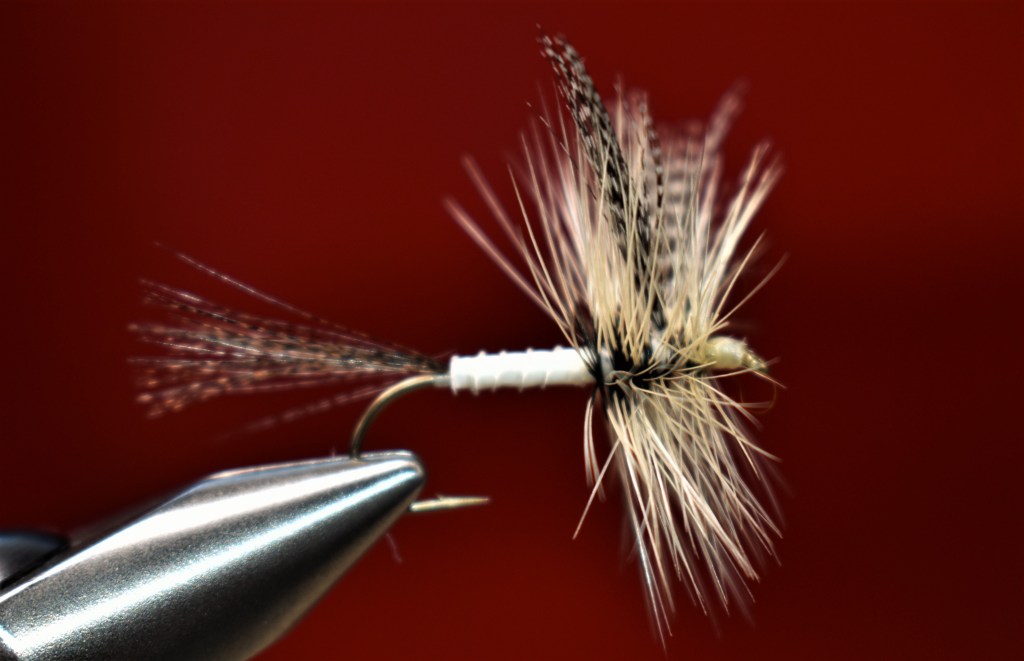
My own Biot Coffin Fly – Faster to tie and effective, though it certainly lacks the cache and museum quality beauty of Mary’s original classic tie. I fish these as I will not risk any of the half dozen Mary tied for me nearly thirty years ago! I tied a couple of Flick’s big variants last winter, but I never got them wet, missing the Green Drake hatch, other than a couple of brief encounters with the advance guard. I decided that I was going to give them their due this spring, and I stripped and soaked some quills and prepared the ginger, grizzly and light ginger hackles to tie a few. There are days when the big brown trout cruise and ignore some of my favorite low floating duns, and I want to see if a new look at these Catskill classics might draw their interest.
A superb fly tier and Catskill Guild member, ‘Catskill’ John Bonasera, wrote an interesting article for the Guild’s newsletter last year concerning his repeated success fishing little used classic fly patterns. He has also found that it pays to show the trout on our hard fished rivers something different and made the point that old is new. There are a lot of great traditional flies that have been ignored by the majority of fly fishers for one, two, even three decades or more. The wild trout swimming in today’s Catskill rivers have likely never seen them. These flies became popular when they were first tied because they were effective, and they can be effective today.
I have fished hackled Catskill style dries on the Delaware and her branches for as long as I have fished these rivers, and I have caught a number of great fish on them. I have had guides float past and tell me I needed a low floater if I had any hope of catching one of the river’s trout. I just smile at them while they poke fun at my fly and my bamboo rod. They don’t know nearly as much as they think they do.
I recall a tough day floating the West Branch and Mainstem during the Hendrickson hatch the spring I was recovering from heart surgery. My young guide had worked hard but neither bugs nor the trout were cooperating and the gusty winds had played havoc with my presentations when we did find a fish or two rising. Later that afternoon I put away my boron rod and strung up a nine foot Edwards bamboo. When we finally found a small run with Hendrickson duns on the surface and a good trout rising, I knotted a Dette tied Light Hendrickson to my tippet and presented that classic with a classic. The nineteen inch brownie Kevin netted for me after a lightning run and spirited fight approved. I think Kevin was a little surprised that the fish had greedily taken that “old school” hackled fly.
I finally acquired a Coq-de-Leon saddle which is supposed to be suitably stiff for tying Hewitt’s skater spiders, and I’ll be tying a few of them for the coming season very soon. The advances in genetic dry fly hackle have made stiff, broad spade feathers on the edges of a dry fly cape a thing of the past. Hackle growers have bred their roosters to produce long web-free hackles in smaller sizes, and we are extremely lucky to have the results of their efforts, but you won’t find hackles for spiders.
I look forward to the chance to dance a skater spider across a still flat when the trout are hidden. I’ll bet those big flies will still bring large trout to the surface once I learn the technique my friend Ed Shenk called “the Skater’s Waltz”.
-
Memories of Gunpowder Falls

Maryland’s Big Gunpowder Falls in winter I had fished the stream once or twice with an ultralight spinning rod, the only trout worthy tackle I owned at the time, and seen a fly fisher catching the wild brown trout that made the reputation of the place. He fished carefully, with delicacy and supreme concentration, and the trout responded on a day when my Rooster Tails had failed utterly. That day I vowed to buy a fly rod!
Phil Darr was a friend from work, and we talked of hunting and fishing when we had our lunch breaks sometimes. Phil had fly fished a bit and directed me to an old tackle shop in North Baltimore where I could purchase a fly rod and the basic necessities of fly fishing for trout, without the fear of serving time in debtor’s prison. I had been in the Orvis shop in Ellicott City, and choked at the price of the three hundred dollar graphite fly rods they offered.
I procured an eight foot St. Croix rod and a 5 weight Cortland fly line, a basic fishing vest, leaders, tippet and a fly box, then embarked upon my search for trout flies. I spooled the line onto my old Martin fly reel and donned a pair of rubber hip boots and voila, I became a fly fisherman.
The local cable station had a channel that featured Scientific Anglers’ program entitled Fly Fishing Mastery, which I had watched on Saturday mornings even before I was so thoroughly equipped. The episodes with Doug Swisher helped me teach myself to cast once I got that real trout rod in my hands; others revealed the makeup of flowing streams and trout lies, and the marvelous insects that made it all work. They didn’t teach me just how slippery a rocky streambed was for a guy in rubber boots, something I learned abruptly on an early expedition to the Patapsco River, which handily flowed right through Ellicott City. Stream water is quite frigid in March.
I returned to the Gunpowder quickly, finding a little gunsmith and fishing shop nearby. Wally Vait was an impassioned angler who shared space with a gunsmithing friend, christening his realm On The Fly, my first fly shop. Wally freely imparted his knowledge of the Gunpowder and gave me my first glimpse of tying trout flies. His Gold Ribbed Hare’s Ear nymphs were distinctive and deadly, even for a newcomer. I bought them by the dozen. It was one of Wally’s GRHE’s that I drifted deep beneath a bankside boulder to take my first big trout, an eighteen and one-half inch monster that made me feel I had truly arrived that first season as a fly fisher.
Though I fished other Maryland trout streams, the Gunpowder was the best wild trout water of them all and truly my first love as a trout river. In those days the fishery was a rather new one. Local conservation minded anglers involved with Maryland Fly Anglers and the Maryland Chapter of Trout Unlimited had worked hard to forge an agreement with the City of Baltimore to maintain a minimum flow of cold water for the section of stream between their Prettyboy and Loch Raven Reservoirs. Once an agreement was achieved, they created artificial redds and planted brown trout eggs to jump start a viable wild trout fishery.
By the time I first visited the Gunpowder Falls the stream was entering its heyday of productivity. Reproduction was firmly established for the browns, as well as some wild brook trout that dropped down from the tributaries. During the early 1990’s the average browns I caught would be foot long fish, beautifully colored and difficult to catch. Despite the allure of Wally’s Hare’s Ears, dry fly fishing became my passion. The first original fly pattern I ever designed was a dry fly: a two bug special that fooled trout taking the ubiquitous midges and microcaddis. There were good caddis hatches in the spring, and the sulfurs of May and June brought out many anglers.
When my Uncle Al learned of my infatuation with fly fishing, he gave me an old split cane flyrod that belonged to my Grandfather. Wally put me in touch with a Southern Maryland Gunmaker who restored the rod to fishing condition, and I cast my first flies with bamboo on Gunpowder Falls. On a mild September afternoon I cast the big 9 foot H-I rod and brought a brace of nice brook trout to hand on a brown nymph I had tied myself.
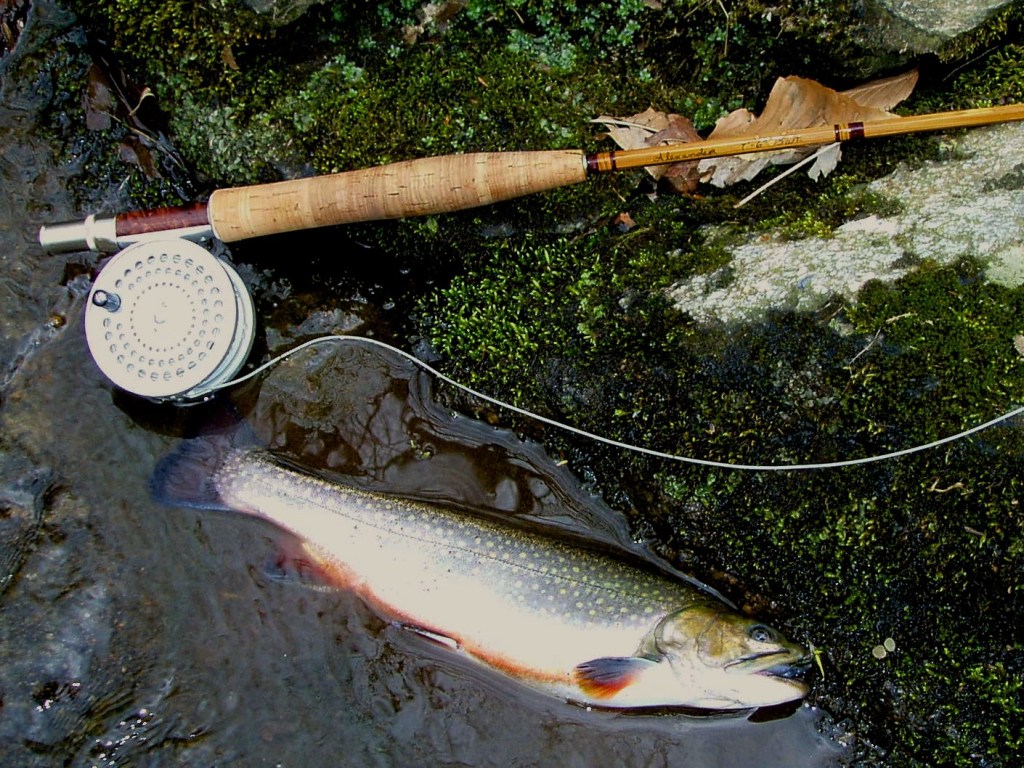
Bamboo and Brookies The nature of the fishing caused me to learn quickly, for the little river typically offered low, clear water, and very skittish trout. Presentation was learned early by necessity, and enhanced with reading and seeking out the great anglers of the day at every opportunity. Though much of the stream was easy to wade, the areas that held the larger trout were festooned with uneven rocks and logjams, usually in deeper, slower water, where even the small fish were challenging to catch, spawning a fascination with difficult trout that has lasted to this day.
For several seasons, rainbow trout began to spawn and grow in the upper mile or two below Prettyboy dam. Small, brilliantly colored parr marked bows were common, and they grew rapidly. I fondly recall the late autumn and winter fishing in that first mile, the reach I called The Canyon. Midge hatches were a regular event, along with tiny microcaddis imitated with size 22 to 24 dry flies, and the wild rainbows could be maddeningly selective. There were pods of football shaped rainbows in that water, fourteen to sixteen inches long, that sipped incessantly. I would stalk as close as possible to defeat the variable currents, pick out a particular fish, and work it thoroughly. Success was hard earned but there were always lessons, whether I released a good trout, or felt the pain of utter rejection.
The browns seemed less inclined to take advantage of the midge biomass, and I caught the Canyon dwelling browns nymphing, on my little olive caddis larva or a pheasant tail. On a typical winter day I would work the runs and pockets with my nymphs until I spotted the little rings of a midgeing rainbow. Once absorbed by the fishing I worked part time at that local Orvis shop, and added an eight and a half foot three weight rod to may quiver, so taken had I become by the midge magic! Sadly that amazing winter fishery would not endure.
After a few seasons the rainbows rather suddenly disappeared. Bows became a rare catch as it was the day I landed my largest Gunpowder trout. It was September, a weekday that allowed me some solitude there in The Canyon. By this time Ed Shenk’s LeTort Cricket had become my favorite dry fly, and I knotted one to my tippet in hope of changing my luck on a fishless day. There was a particularly tough spot in the Canyon, where a large tree had fallen atop some boulders, crossing the river at a pinch point. Over time, part of the tree had sunk, though much remained suspended across the boulders: fouled above and fouled below.
I had the long three weight that day, and stayed back to allow my casts to shoot the fly underneath the branches and through the low window crafted of wood and rock. The Cricket made it through on the second try, drifting down beneath Nature’s arch until it was intercepted. That light rod doubled over completely when I struck, and my heart jumped with excitement and fear. The heavy bow in the rod convinced that wonderful trout to swim downstream and away from the tangle, and I managed to keep the advantage he had given me. Shaking when I finally saw him in the net, I waded to the bank and laid my tape along his flaming crimson flank.
That twenty inch trout, my first to reach that hallowed threshold, was the last rainbow I was to catch on Gunpowder Falls. The following season I encountered two DNR biologists along that favored Canyon reach. They were searching for evidence as to the rainbow’s exodus, finding none. As far as I know they never found an answer to that puzzle. I asked frequently for news when I visited the fly shop.
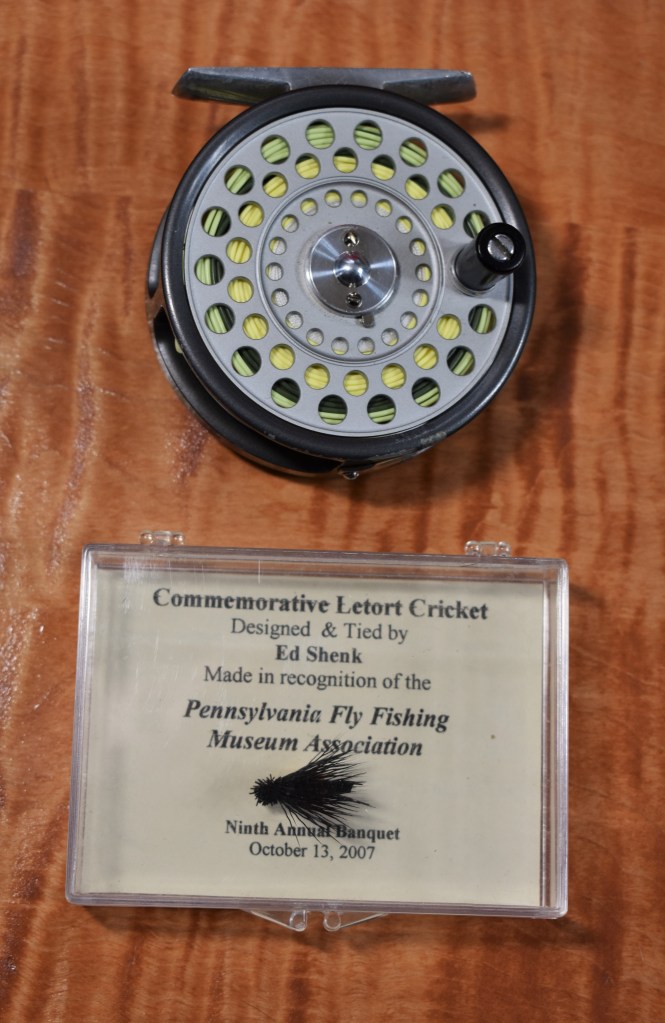
Ed Shenk’s Hardy Featherweight and Letort Cricket If the Canyon was my favorite fall and winter haunt, the area upstream and down from York Road was my spring and summer haven. There were more anglers there, as well as hikers frequenting the popular trails on either side of the river, but the sulfur and caddis hatches there offered wonderful dry fly fishing. I spent many beautiful April mornings there, with caddisflies swirling and darting around my head and shoulders, while lovely wild browns slashed at them escaping the water.
Come evening the sulfurs demanded my full attention. Walking back from a favorite pool, I can still see the last rays of sunlight filtering through the trees above a long riffle. My favorite sulfur memory came on a warm, gorgeous evening, when the heavy hatch brought every trout in the pool to the surface. At the peak of the emergence the spinners had gathered over the riffle and begun to fall. Trout were slashing in the riffle and I took a beautiful eighteen inch brown on my six and a half foot three weight rod, the rod I had built upon Ed Shenk’s recommendation, to fish his fair LeTort. The rises and slashes continued feverishly and I lost count of the trout hooked; some brought to hand, others played frantically until they leaped and shook the fly.
Twilight caught me fumbling, trying to change my dun for a spinner, but I managed it. Some trout would still take the dun, but others refused. There was one fish rising heavily where the riffle had cut a deeper trough near the bank. I could barely see his take, but when I lifted the little rod the reel screamed in the darkness and the rod bucked violently. The trout charged upstream, showing me only white water amid the gloom as he leaped again and again. Had he turned down and run into the boulder pool he could have easily broken my 6X tippet among the rocks, but he seemed to crave the energy of the fast water that had brought him sustenance.
He was larger than the first big brown, nineteen inches of quivering gold, there in the shallows with the glow of my flashlight upon the tape, and I thanked him as I gently turned the barbless hook from his jaw. He raced away when I pointed him toward midstream and the riffle he loved.
Sometimes life leads us away from the thing we love, and my infatuation with the limestone springs of Pennsylvania eventually led me away from the Gunpowder. I returned of course, though each season the visits were fewer. Rivers change, and even those we know well become less familiar with time away. Four or five trips a year didn’t bring the success enjoyed in those early halcyon days; much less one or two. At first I thought the decline was my own, perceived, due to my own scarcity of time on this water I had so completely adored. Sadly I saw the later posts on the fly shop’s website, anglers truly excited with a nine inch brown, and accustomed to working hard for six inchers.
Didymo was blamed, and the crowds of anglers. The rock snot was bad the last time I visited the Canyon in winter, but there was heavy fishing pressure thirty years ago. The average size of those lovely wild browns began to decline before the invasive algae took hold though. Kayaks and canoes, too much guided fishing bringing too many people to this small, gentle stream too often, too many feet upon the lifegiving gravel; everyone has their theories. Perhaps the reasons are as unknown as those behind the sudden disappearance of the stream’s wild rainbows.
There is better news these days from the winding strip of bright water known as Big Gunpowder Falls. The gentleman who owns the fly shop today is an advocate for the river, the Gunpowder Riverkeeper, and he has gathered enough support to win several victories for water quality and conservation. I hear that good fisherman are catching foot long browns once again. I am pleased to hear that the pendulum is swinging ahead.
The Gunpowder, and yes, I fell in love with the name even before I fished her, was a wonderful classroom, a treasured first love. I would not trade the memories, the experiences there. She gave me the gift of wild trout, of bright water and the joy of angling with the fly.
-
John Atherton’s Inspiration
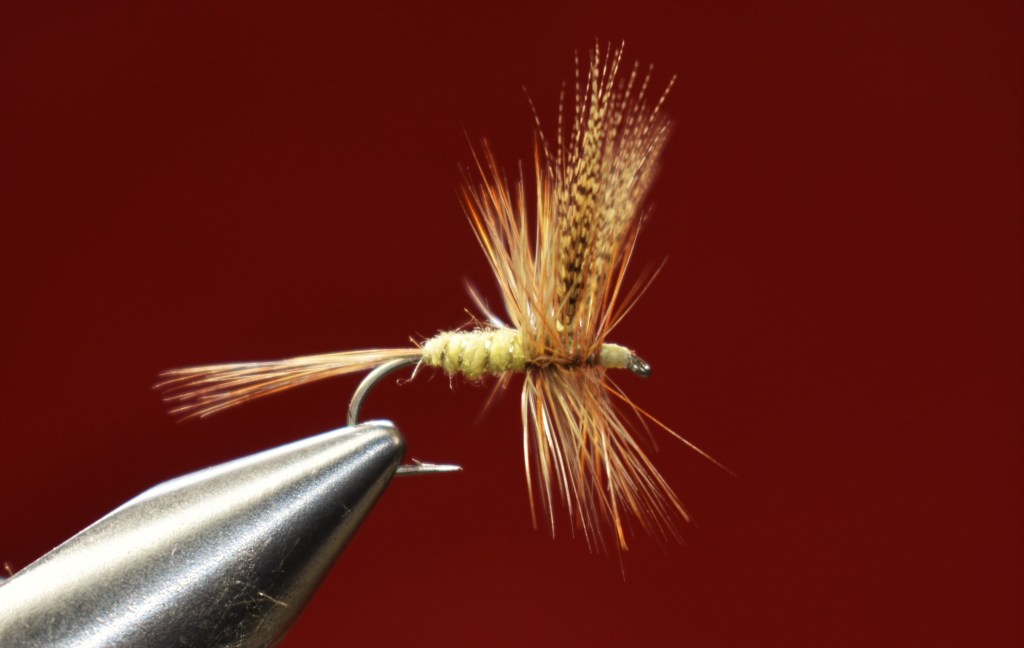
My own rendition of John Atherton’s iconic Catskill dry fly, the Atherton No. 3 I received a comment the other day mentioning John Atherton’s dry flies, another bit of fly fishing history that gentleman and I share an interest in. Atherton the artist conceptualized the color and lifelike appearance of trout flies with the paintings of the impressionists, an intriguing and insightful revelation presented in his classic “The Fly and The Fish” published in 1951.
I have been leafing through the book recently, thinking about some of the ideas that have bounced around in my own head, and some of the commonalities with John Atherton’s impressionistic style of fly tying. We both appreciate flies that give an appearance of motion, and share a preference for barred hackle. Translucency is important to the image of life concept, and so of course is color. Examining natural insects reveals a mixture of colors in their wings, legs, tails and bodies. Atherton blended multiple materials and various shades to achieve a natural effect, something I have done since my earliest beginnings as a fly tier.
I finally sat down late this morning to bring some of these thoughts together at the vise. I enjoy a great deal of fishing to hatches of the various yellow mayflies: the March Brown and Gray Fox, sulfurs, invarias, etc. so I set out to design my own tribute to John Atherton’s No. 3 dry fly.
During my quest for enhanced translucency, I have been working with a material I carried in my fly shop twenty-five years ago: Kreinik’s pure silk dubbing. I was pleased to find it still available, and have supplemented my own supply with additional colors. This morning I set out to blend some silk dubbing for Atherton’s No. 3. His original blend used natural seal’s fur in bright yellow and natural tones, thus I blended bright yellow silk with pale yellow, cream, and pale tan.

My silk blend and two of Charlie Collins’ gorgeous barred dry fly capes provide my own touches to honor the artistry of the late John Atherton. The classic recipe calls for medium Cree hackle fibers for the tail, which I honored, though I modified Atherton’s choice of medium dun and ginger hackle in accordance with our shared love of barred feathers. From my store of Charlie Collins wonderful capes, I chose a subtly barred medium dun, and a striking barred ginger with both light and medium ginger tones. I really like the result, finished with the characteristic gold oval tinsel rib.
Come May I plan to offer these flies to some outsized and wary Catskill brown trout. They will be properly presented with a fine bamboo rod and a classic reel, and chosen when the time is right for something both classic, and decidedly different from the flies they are used to seeing. I believe it will prove very effective, as the original has been for many anglers.
I offer this fly to honor the tradition of a fine angler and artist who was called away much too early in life. The Fly and The Fish is an excellent book, one that belongs in every serious angler’s library, and I feel certain that John Atherton had much more to contribute to the sport he loved, had he not been called to fish around the bend so soon after its publication.
Search
Archives
- September 2026 (3)
- August 2026 (14)
- July 2026 (15)
- June 2026 (13)
- May 2026 (6)
- April 2026 (12)
- March 2026 (10)
- February 2026 (9)
- January 2026 (14)
- December 2025 (14)
- November 2025 (10)
- October 2025 (10)
- September 2025 (9)
- August 2025 (10)
- July 2025 (10)
- June 2025 (8)
- May 2025 (12)
- April 2025 (12)
- March 2025 (9)
- February 2025 (10)
- January 2025 (15)
- December 2024 (12)
- November 2024 (13)
- October 2024 (12)
- September 2024 (10)
- August 2024 (12)
- July 2024 (10)
- June 2024 (12)
- May 2024 (11)
- April 2024 (14)
- March 2024 (11)
- February 2024 (13)
- January 2024 (14)
- December 2023 (16)
- November 2023 (11)
- October 2023 (11)
- September 2023 (8)
- August 2023 (10)
- July 2023 (9)
- June 2023 (12)
- May 2023 (13)
- April 2023 (13)
- March 2023 (14)
- February 2023 (15)
- January 2023 (15)
- December 2022 (13)
- November 2022 (5)
- October 2022 (10)
- September 2022 (10)
- August 2022 (8)
- July 2022 (9)
- June 2022 (10)
- May 2022 (10)
- April 2022 (13)
- March 2022 (14)
- February 2022 (13)
- January 2022 (13)
- December 2021 (10)
- November 2021 (9)
- October 2021 (7)
- September 2021 (9)
- August 2021 (12)
- July 2021 (11)
- June 2021 (12)
- May 2021 (15)
- April 2021 (16)
- March 2021 (14)
- February 2021 (14)
- January 2021 (12)
- December 2020 (11)
- November 2020 (13)
- October 2020 (14)
- September 2020 (13)
- August 2020 (14)
- July 2020 (13)
- June 2020 (16)
- May 2020 (16)
- April 2020 (18)
- March 2020 (13)
- February 2020 (11)
- January 2020 (8)
- December 2019 (6)
 Bright Waters Catskill