
-
Winter continues…
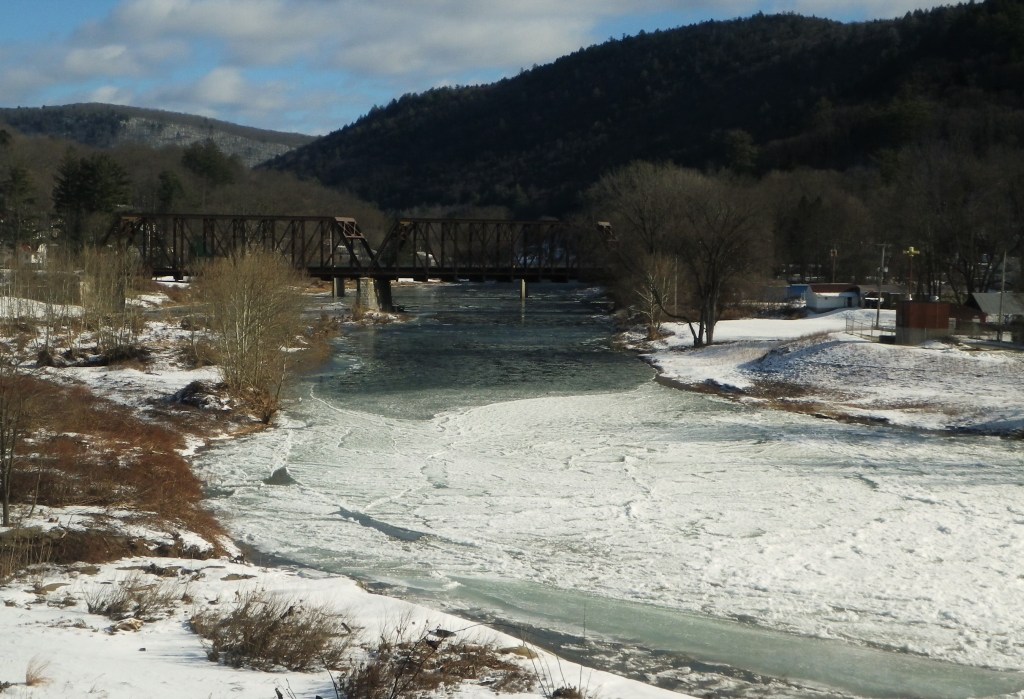
A recurring scene… It is beautifully clear this morning, with a lovely orange tinge in the south, blending to soft blue at sunrise. It is deathly cold here though: two degrees in Crooked Eddy. The Super Bowl lies behind us, and thoughts of the angler are wont to run to spring, but those thoughts seem frozen in place. There are no days above freezing in our ten day forecast.
I long for a break from the clutches of winter, one of those two or three day warmups with temperatures kissing fifty! Three such days betwixt milder nights would find me at the river’s edge, with a smile as broad as the horizon. We had a few little breaks from the icy oppression during my first two Catskill winters, and though I didn’t bring many trout to hand my soul was freshened and my spirits reborn.

February 3rd, 2020: Sunshine and warmth and no curse upon the land to diminish the joy! I crawl back into the blankets of my memories as this ice age drones on, to soft afternoons where spring teased in February.
Walking in the shallow currents of the Little Juniata one February day, the sun flirting late in the afternoon, I came upon the glassy tail of a pool… with dimples! The leader lengthened and a tiny midge secured, I played the game with half a dozen sipping browns, hooked them all, and brought five to hand! They were cold and firm between my fingers, wild and alive, and they shared that with me.
Finding Spring Creek uncrowded on another February day, I plied her runs with my little olive shrimp. With the sun in my face I squinted to follow the leader as the little fly bounced along the bottom, pausing enough for my reaction: a bent rod, running line, and eventually an eighteen inch brownie wriggling in the mesh of my net. The limestone waters offered such gifts readily in winter.
Our Catskill rivers have proven stingy, even when those lovely hints of spring part winter’s clouds, but their beauty and the freedom they provide are gift enough: walking shallow riffles as an eagle circles aloft, and the soft glow as the sun kisses the mountain tops goodbye.
No comments on Winter continues…
-
The Connoisseur
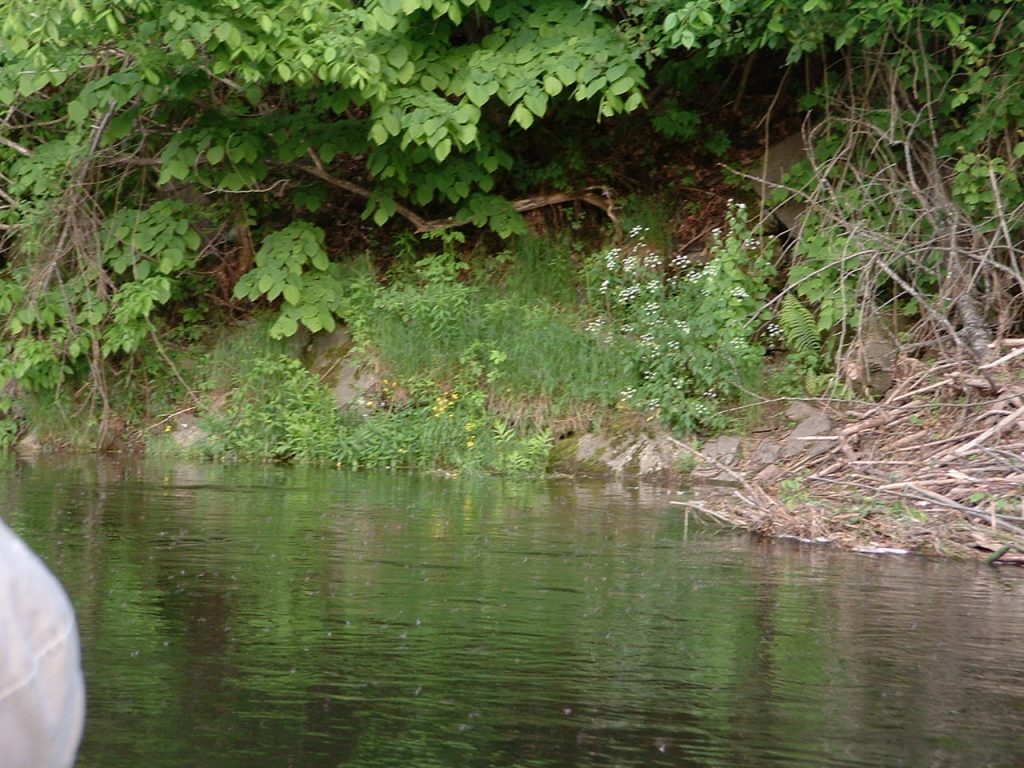
Ah the mystery and excitement of the unknown! There are moments in our fishing lives that we will never forget. Such moments are often not taken from a scene of victory.
There is a short run along the West Branch Delaware that has received a great deal of my angling attention over the years. The casual angler will not often see activity there, thus it receives a perfunctory cast or two in passing, though at times it is outright ignored. It is one of my favorite places.
I have taken many fine trout from this place, generally all of them requiring time and effort: stalking, study to identify the species and stage of various naturals, changing flies, and casting repeatedly. These fish do not come to hand easily, and some do not come to hand at all. There is one that stands clear in my memory, a great fish, a connoisseur of the tiny mayflies; a foe I have engaged many times over a period of several seasons.
The trout that lived along this inconsequential little run would take the flies nature offered them, tending toward a high degree of selectivity to a particular stage of only one of the insects currently occupying the drift. Over the years I fished there I took many brown trout of twenty inches or more on sulfurs, various olives, Blue Quills, Hendricksons, Gray Fox, Isonychia and at least four species of caddis. On a given day, those caught would invariably be taking only a certain stage of one bug, though it was not unusual to find at least two or three species of insects in the drift. A few were even more discriminating, like my friend The Connoisseur.
I can recall at least four epic battles with this fish, and a few pricks and misses after an hour or more of painstakingly careful angling. Many times when he appeared to be on the fin, he was simply untouchable, utterly ignoring every fly and presentation I offered. Of the times we engaged physically, or nearly so, he never accepted a fly larger than size 20.
That first encounter was taxing. For two hours I crouched in fast, frigid water under skies ready to unleash a storm of storms, fishing to this tiny, sporadic little ring in the fast and broken current near the top of the run. The fish had taken what I would learn was his favorite position behind one up thrust, angular chunk of rock, and would glide left and right behind it as he fed daintily. It took intense concentration just to see his rise, to identify that two inch diameter ring that dissipated as soon as it formed, as the wink of an eye.
There were olives beneath those stormy skies, dark little size 20 olives with grayish wings, tossed hither and yon by the flow that cascaded over and around his rock, but also a half drowned sulfur or caddis now and then, just to keep me guessing I suppose.
My fishing was methodical, working two or three patterns of olives, then the sulfur and caddis, before edging a step upstream or step out toward deeper water to change my angle of presentation slightly, to modify my drift.
My neck was aching, the arthritis firing through all my nerve endings bolstered by the chill and dampness, and I stretched a bit as I changed to a slim thread bodied CDC olive, moved a step and a half deeper into the run, and cast again. The take was quick: that tiny spurt of bubbles, the recognition that my spot of gray had vanished from the froth, and the rod rising into a horribly acute bend for my whisper of tippet. Then it was all line slashing for deep water, the reel spinning wildly, and a great powerful force streaking away and downstream, first with my fly line and then my backing.
I stopped him finally, or rather he chose to stop and turn sideways to the substantial current, and I regained what line he allowed, before charging down again. He came around then, running toward me as I tried to keep tension, reeling as fast as my pained body could muster. I felt him deep in the gut of the run then, shaking his head and darting left then right as I relaxed the pressure just a bit. Hope began just then, though this demon trout was not yet controllable. I had fly line back on my reel and was inching him closer, a turn at a time. I knew I couldn’t let him rest, despite my fear for the small hook and slender tippet, down there amid the rocks, and my pressure incited another lightning run downstream, my backing surrendered once again.
Those who angle the West Branch are familiar with the moss, the green veil that coats the bottom where the current slows. That was my adversary’s destination it seems, down and across the breadth of the river, leaving me with too long a line to have hope of pulling his head away from the bottom. That gooey moss has the habit of collecting on the leader during battles such as these, coalescing and sliding down in a ball against the fishes mouth. One turn of the head and the current will catch it and pull the hook as cleanly as any tool contrived by man, and so it did. I was left breathless, my heart pounding with eighty yards of lifeless line to retrieve. The fly was there, buried beneath that glob of slime.
We danced three more times over the next few seasons, and that great fish never changed his preferences or his tactics. Once more with the olive, a time with a thread and CDC sulfur, the last with a little sulfur spinner, each retrieved in its glob of moss. I saw him only once, his head at least, and he was indeed a brown trout like the other residents of my little sanctuary.
As I slid onto the big leather sofa that evening, thrilled and dejected, those emotions sharing equally all the space available in my exhausted brain, the television barked of the earth quake that had shaken the East Coast that afternoon. The announcer said it was felt in New York at about the right moment, the moment I recalled getting that one and only glimpse of my mythical trout. I had a quick vision of his head, there behind his favorite rock, that still lives in my memory. The head that appeared, lifted close to the surface with his nose out into the air for a split second, was half a foot wide between the eyes. I swear those eyes were twinkling, ready for our last battle.
-
The fleeting warmth of sunshine
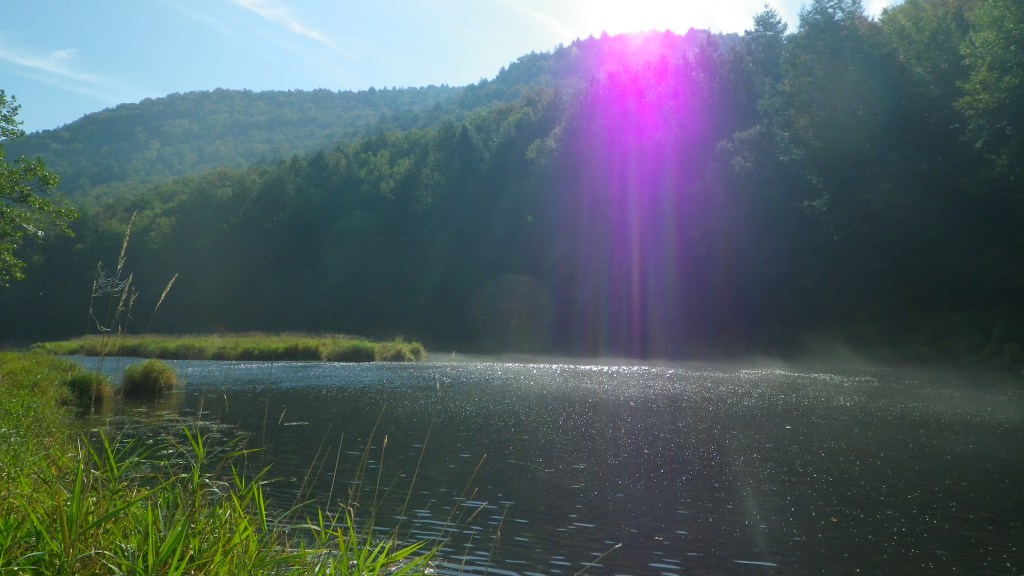
I was enjoying a book by the late Frank Mele when the sun glared through my window and into my eyes. I decided to take a break, the sun being fleeting this time of year, and make myself a sandwich. Looking out the front door the sun on the porch looked so inviting that I had to walk out. The south end of the porch was bathed in warmth and brilliance, and I decided to lunch right there.
Forty-four degrees is a verifiable heat wave in the course of this winter, and I enjoyed the moment to the fullest. Leaning back, I sipped a small gift of the brewer’s art emblazoned Cold Snap, bringing thoughts of all the spring and summer evenings I have enjoyed sitting on that porch, the grill crackling and an icy beverage close at hand.
I have passed the week craving the fishing that I cannot have, though I’ve shared a bit of that passion electronically. The Catskill Fly Tyers Guild recently assembled an archive of angling books, those depicting the history, rivers, trout, fishers and fly tiers of the region. Upon distributing it to the members, the gentlemen who complied the list welcomed suggestions for other titles, and I have a few in my library deemed worthy of inclusion.
One of the committee members who compiled the archive is Edward Ostapczuk, a gentleman angler and sage of the Esopus most qualified to converse on Catskill fly fishing and its history, as he has been a part of it for five decades with rod and line, and pen. I knew a little of Ed from his regular column in the Guild’s Gazette, and from his fine book “Ramblings Of A Charmed Circle Flyfisher” published in 2012. We had corresponded briefly via a post on the Classic Flyrod Forum last winter, and I had hoped to meet him at Guild meetings come spring. All were of course cancelled due to the pandemic.
Messages between the angling archive committee members and myself gave birth to a number of emails from Ed. I heartily replied, and we have shared a few anecdotes, photos and flies these past few days. It has been as close to sitting down and talking fishing as I have gotten during this quarantine year, and a source of much enjoyment.
Ed has a special place in his fly box for the Dorato Hare’s Ear, a dry fly I had heard of, but never fished or researched. Memory seemed to be telling me I had seen a fly by that name in some pattern book, with white wings and a buggy Hare’s Ear fur body. Ostapczuk provided the history, as well as the recipe, and I learned that the DHE is a Catskill pattern in the truest sense, conceived and tied for these rivers by the late Bill Dorato.
I too have confidence in buggy looking flies, particularly for mountain stream fishing. Twenty years ago I had tied my Fox Squirrel Special with a buggy fox squirrel fur body, Cree hackle, and bright yellow calf hair wings. It was a great fish catcher and easy to spot with it’s yellow wings amid the frothy white water that brook trout are drawn to.
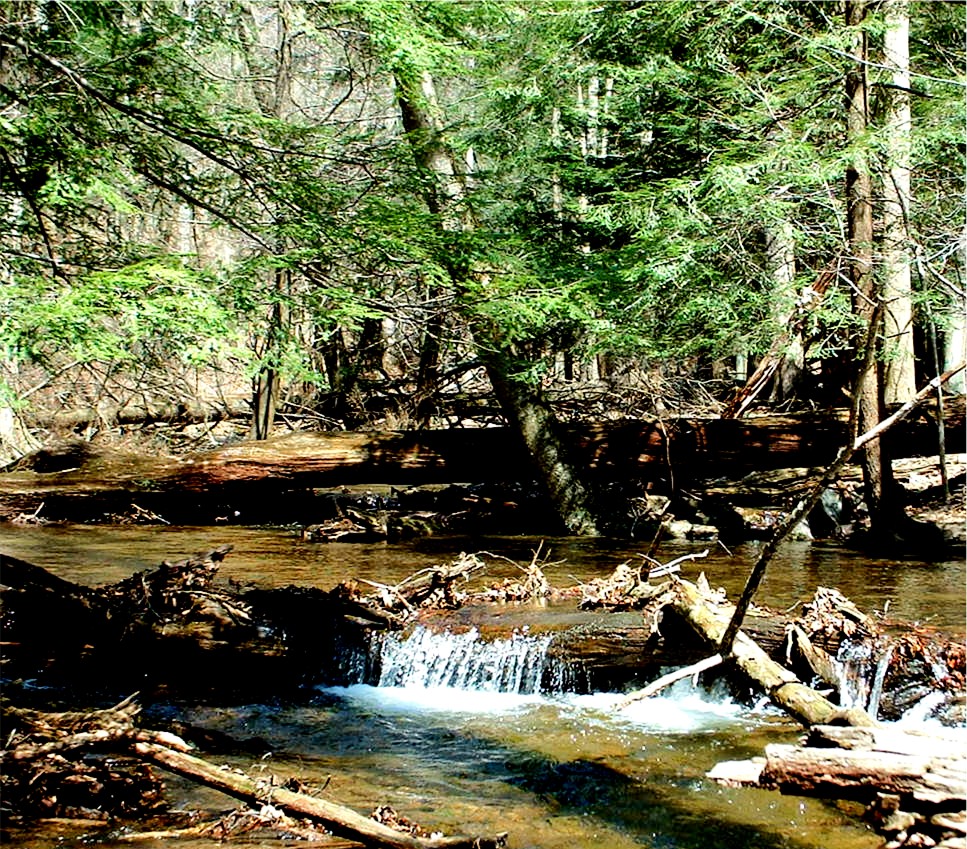
Broad Run: brook trout water, South Central Pennsylvania style. I have tied the fly Catskill style, with a divided wood duck wing, and commercially packaged fox squirrel dubbing, but the spiky appearance of the Dorato Hare’s Ear inspired me to blend up some appropriate dubbing and tie some buggy Fox Squirrels.

The blend is heavy on the guard hairs from a fox squirrel skin, both the heavily barred fur from the back, and the reddish ginger belly fur. Use less of the soft underfur, just enough for a binder, and a small amount of light brown Antron dubbing to lend some light reflections. A coffee bean grinder is a perfect dubbing blender, though you can do it by hand. Squirrel has been a mainstay for my nymph blends for nearly thirty years, due to its wealth of short heavily barred guard hairs. The spiky appearance makes a very lifelike fly, and the natural mottling provided by those guard hairs looks like a lot of trout stream insects. Natural squirrel fur is great, and the availability of dyed colors make it even more versatile.
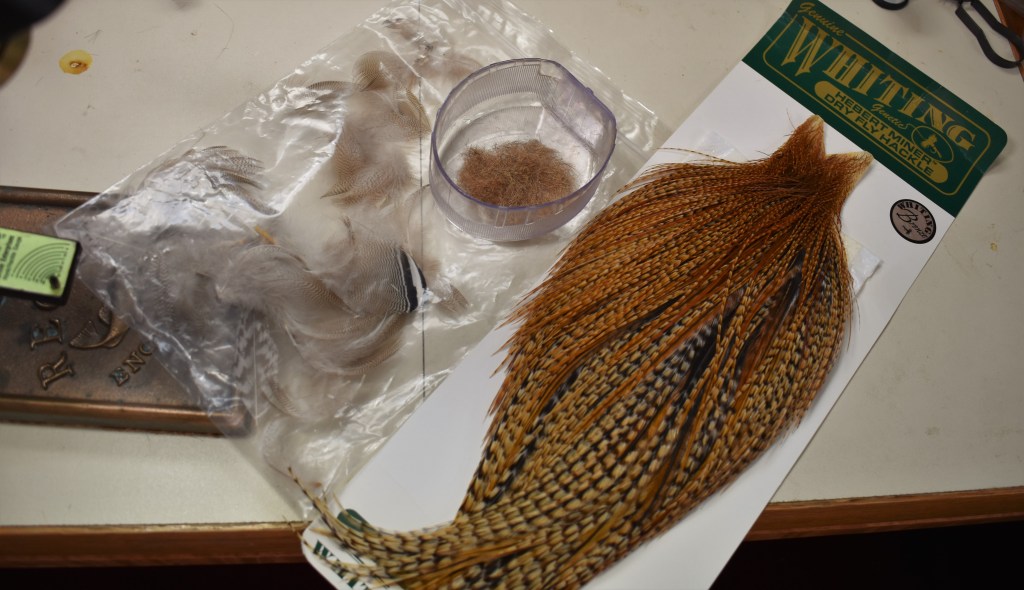
My Catskill Style Fox Squirrel is tied with the natural fox squirrel and Antron blend, natural Cree hackle, and wood duck flank. I believe that Cree is the most beautiful rooster hackle in existence, and I use traditional Cree (above) and some beautiful Collins Dun Crees for many of my Catskill dry flies. The resulting flies are lovely and I believe that the barred hackle imitates movement, and thus, life! 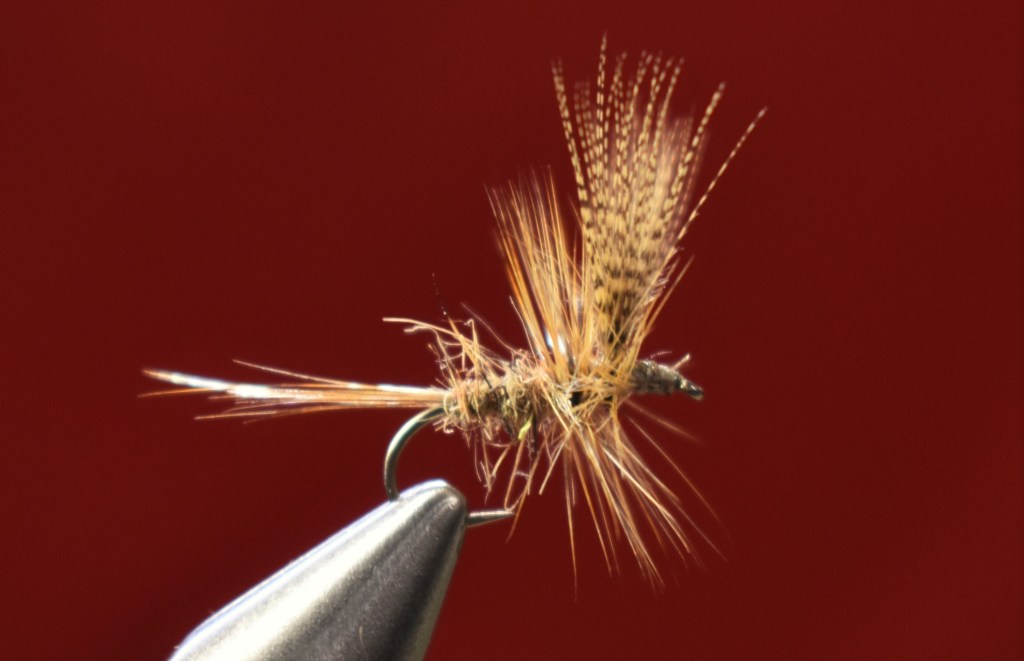
The Fox Squirrel, Buggy Version as inspired by the Dorato Hare’s Ear. Ed’s Gazette article tells me that Bill Dorato tied and fished his pattern as a caddis imitation, but it has proven to be a great all around dry fly whether caddis or mayflies are about. I can attest to the effectiveness of the Fox Squirrel and Fox Squirrel Special for the same reasons that Dorato’s fly has become a go to pattern for experienced Catskill anglers like Ed Ostapczuk. The combination of a spiky, mottled body and barred hackle combine to give a great impression of life!
I’ll be tying more of these in sizes 12 and 14 for the early spring hatches. Ed loves his Doratos in size 18, so I’ll tie a few smaller ones too. That way I can cover Hendricksons, Quill Gordons and Blue Quills with a single pattern.
-
February Blues
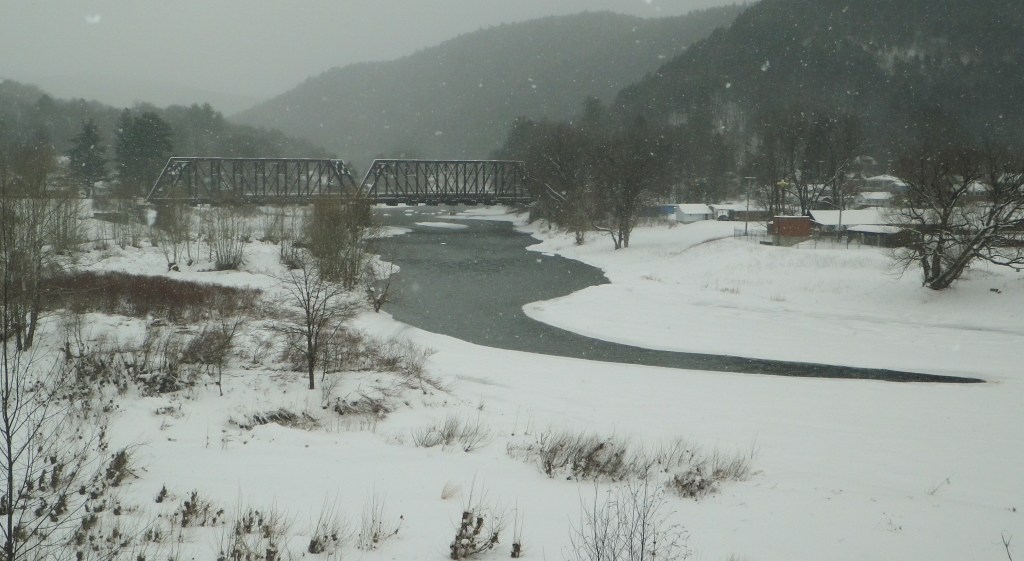
A river walk at last, and I enjoy a few minutes of freedom from the confines of these old walls! I did get out yesterday, Groundhog Day, though just to shovel away the fourteen inch snowfall February’s debut gifted. The East Branch seems to disappear as it slows from the Hancock riffle, swallowed by the ice and snow entering Crooked Eddy. Back inside now the sun glimmers through the icicle hanging above my window. Where were you when I needed you?
Last year the great prognosticator, Punxatawney Phil promised an early spring, and we had snow to herald the second week of May. I truly hope he hasn’t established an overly generous frame of mind, less this years “six more weeks of winter” ends up lasting until July.
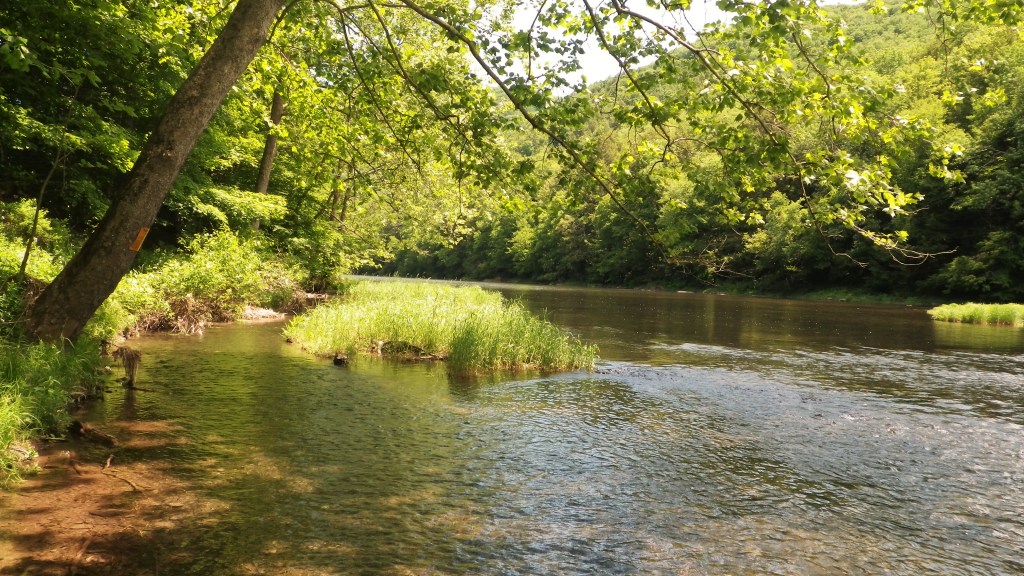
I have designs on July you see, and they most certainly do not include snow, ice, wind or anything similar. What they include are a box of tiny olives and terrestrials, a certain pentagonal cane rod hailing from Montana, and a very special reel crafted much farther away in the opposing direction.
Waiting For Summer… It is summer, when the rivers become low, and clearer than the air, that the wild trout prowl and sip the little bits of nothing many anglers ignore. The late Art Flick tied his Blue Winged Olives with a hackle and a tail, allowing the whirl of hackle fibers to suggest the moving wings of these diminutive mayflies. I have great sport with them, tied in sizes 20 to 24.
The angle of the morning sun can be a boon to this fishing, as the trout will cruise in the flat, still eddies, their soft rises hidden in the mist. For a while each morning, the climbing sun illuminates the whirl of hackle on my miniature duns, letting me follow them downstream after a sixty-foot cast! I have learned to fish different reaches at different times of day, taking advantage of the low angle of the rising sun at morning, and the comfortable shade after midday and apogee.
A Catskill summer is truly sublime. The endurance of the Catskill winter is the price paid for those long, glorious days from June through September. That price is dear.
February makes me long for the limestone country, fond memories looking beyond the decline in it’s quaint little spring creeks, though it was that wholesale decline that convinced me to take hold of the dream, to retire to the Catskills and make a life surrounded by the rivers of my heart. Winter is a cruel mistress!

A February brown puts a bend in my 8642 Granger amid the canyon stretch of Spring Creek, Bellefonte, PA (Photo courtesy Dr. Andrew Boryan)
-
Snow falling…
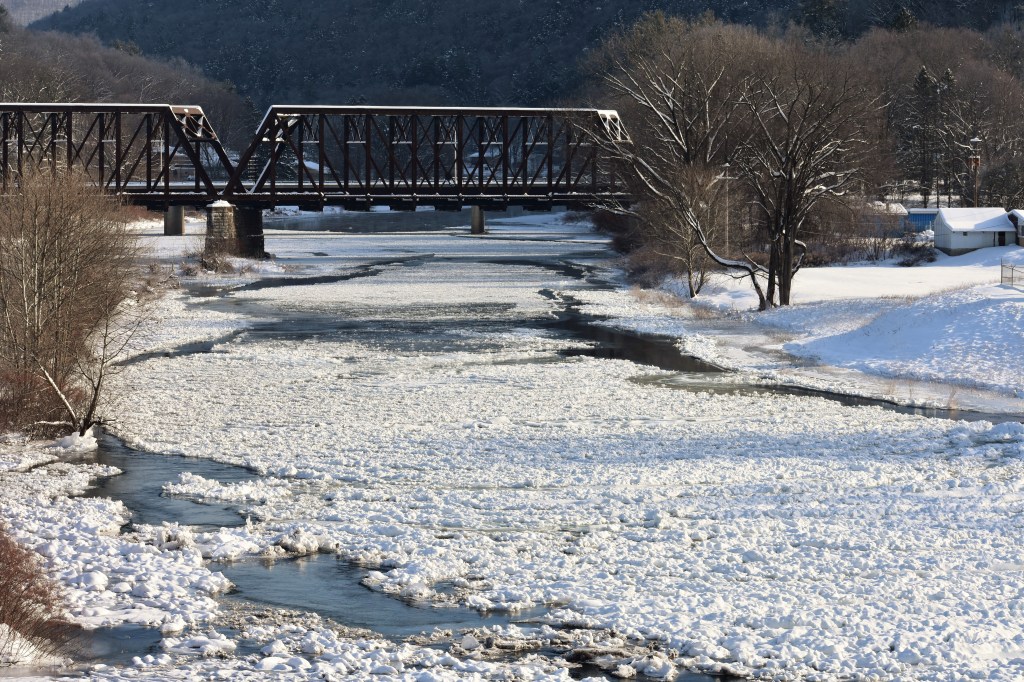
Crooked Eddy in December: alas it looks much the same for February’s premiere. Snow is falling at Crooked Eddy, and the river pulses unseen below the ice. I have been trading emails with kindred souls I wish could join me for a drink and conversation. I have no doubt we could talk for hours of trout, flies and bamboo.
I dream of a forty degree day, a bit of sunshine, just enough relative warmth to keep the rod guides from freezing solid with the line. I have not walked a river bank for a month and a half, a terrible spell for one used to regular fishing, even in winter. My Kiley eight footer sits beside me in the rod rack, ready to feel the reel snugged into its seat and send the seven weight line out to prospect with a Hen and Hare’s Ear. That fly seduced my last trout of 2020, a Beaverkill brownie tucked behind the boulders in the Cemetery Pool, and begs to bring the first of twenty-one to hand.
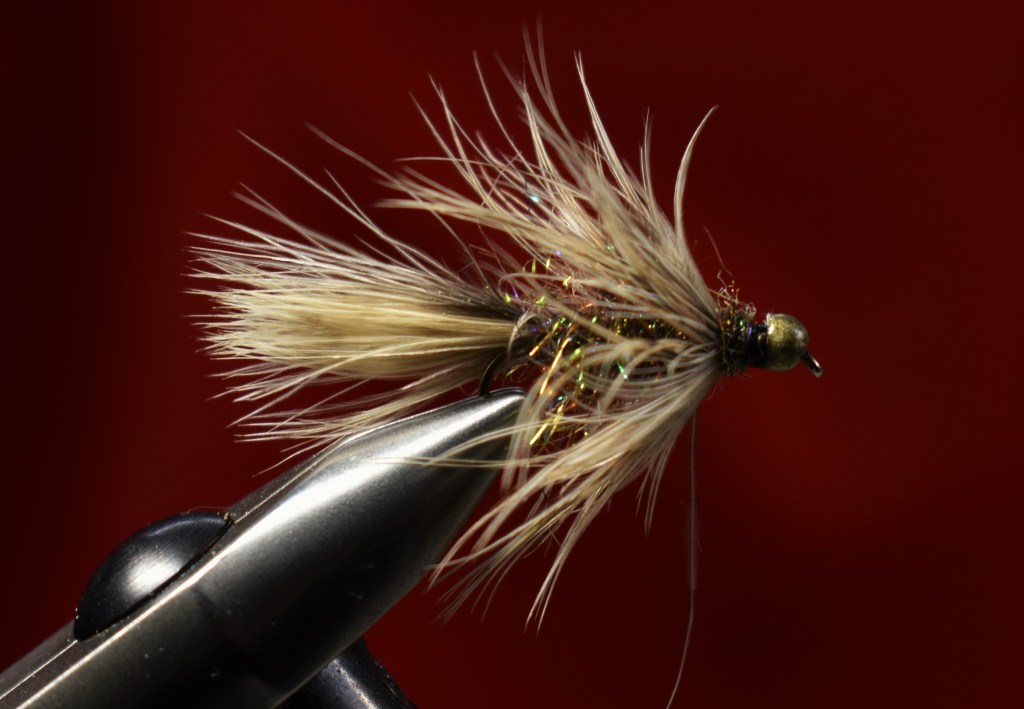
Hen and Hares’ Ear, Size 12 I have tried a sink tip line with bamboo, a safer solution than using any weight in the fly, but I hated losing so much of the feel of the cast. Too I harbor an inner fear that, so armed and restricted to a sunken presentation, I will finally round the bend and confront the impossible dream: a rising trout in the midst of a Catskill winter. The ubiquitous bead is my compromise.
I tie dozens of smaller flies for swinging in winter, tiny tungsten beads ahead of a partridge and something, a squirrel and grouse. One day, while working with one of those beautiful pheasant skins a good friend so graciously provides, I took a fancy to the small gray aftershaft feathers, leaving a tuft for a tail and winding it along the hook shank for a fly body. A partridge hackle finished it: movement personified. Swung down a popular West Branch riffle two winters past, it led to a deep bend in that Kiley rod, and a nineteen inch brown that gave me faith to endure; until spring came once again.
It is a strange emotion for me, this longing for December. It wasn’t the abode of the warm sunshine that delights, but I was fishing! I feel exhausted facing another long run of days below freezing, with snow to begin the week, and more to finish it.

A sunny December afternoon on the Beaverkill My vise sits empty and idle, for when I leafed through the fly boxes I found them stuffed. I have tied more flies these past two years than ever before. The luxury of time is mine, and the fishing has been well, life itself. My concentration slips now between books and vintage tackle lists, and I seem unable to direct it to my store of materials and tools. Ice and snow intrudes into each waking moment…
Clear thinking is required, a page by page search through the past year of thoughts and impressions from days on the water, my goal to mold the fragments of ideas, colors and impressions into a living, breathing trout fly. My brain needs the balm of fresh air, the music of bright water to once again open my conscious thought to those vaults that contain the past season.
-
To Fool A Trout

My fly tying bench when cleaned up; and no, you can’t see even half of the material storage in this photo. The angler, and specifically the fly tier’s goal is simple: to fool a trout. The opinions of how that may be best accomplished are widespread and multitudinous. Some tiers prefer traditional patterns, some the latest product from the current internet guru. Get them in a room together and you might have anything from friendly discussions to heated arguments erupt. Fly fishers are a passionate bunch.
I have met everything from the guy that ties and fishes “nothing but the Adams”, to the guy who carries a backpack on stream to supplement the severely stretched capacity of his fly vest. I myself hate to be caught without the right fly to match a hatch, though I have worked to downsize the number and size of fly boxes residing in my vest for several years.
In truth, a lot of us spend most of our time actually fishing a fairly small selection of flies. Whether that means an Adams or a couple of large fly boxes filled to match the hatches of the season misses the point. We may carry a lot of flies, but actually fish only a few of them on any given day.
As a fly tier, I am always experimenting. One reason for that is it interests me. I am intrigued with the idea of finding a new material, or a new way to use an old one that produces a more lifelike fly. The other reason relates to fishing pressure. Whether during the twenty-three years I lived in South Central Pennsylvania or during my recent seasons as a smiling resident of the lovely Catskill Mountains, the waters I fish see a lot of anglers.
The average trout in our heavily fished northeastern streams sees a lot of flies, and my experiences have proven to me that heavily fished catch and release trout do show some avoidance behavior. Call it pattern saturation or whatever you like, but I’ll bet you have noticed that a hot fly can be really productive for a while, then eventually stops producing the number of fish it did when it was new to your favorite piece of trout water. I tie different flies partially to be able to show them something different.
Trout have been caught on all mater of flies. Lets face it, stomach samples show sticks and cigarette butts and what-have-you when taken from trout kept for the table. Several years ago I volunteered to act as a guide for a Project Healing Waters outing in Western Maryland. The stream was small, and the stretch chosen for the day was heavily stocked club water. More fish were caught with pellet flies or very plain brown un-weighted nymphs than anything else. Those stocked trout were used to pellet feeders and that is what they responded to. They didn’t seem to recognize the natural stream fare. Cockeyed selectivity isn’t it? Though when considered, it is very logical. Those trout were conditioned to rise and take small brown pellets sprayed onto the water from above. A fly that looked like a pellet that was cast and dropped on the surface looked like, and was presented like the food they recognized. Automatic feeders are very common in hatcheries.
There are a load of theories as to why trout feed selectively, and some completely reject the concept. Going by my own experience, selective feeding is very real and very common on our hard fished eastern wild trout waters. I have observed trout feeding on various insect hatches, where they would key on a single stage of the naturals, sometimes duns, sometimes cripples or emergers, but most importantly only the insects that moved in their window! To me, that is a learned behavior resulting from years of heavy fishing pressure.
Movement, and the appearance of movement, is a key factor in tying a lifelike fly, and a lifelike fly is more likely to fool a trout, particularly a wild trout in a quality river with a good natural food base.
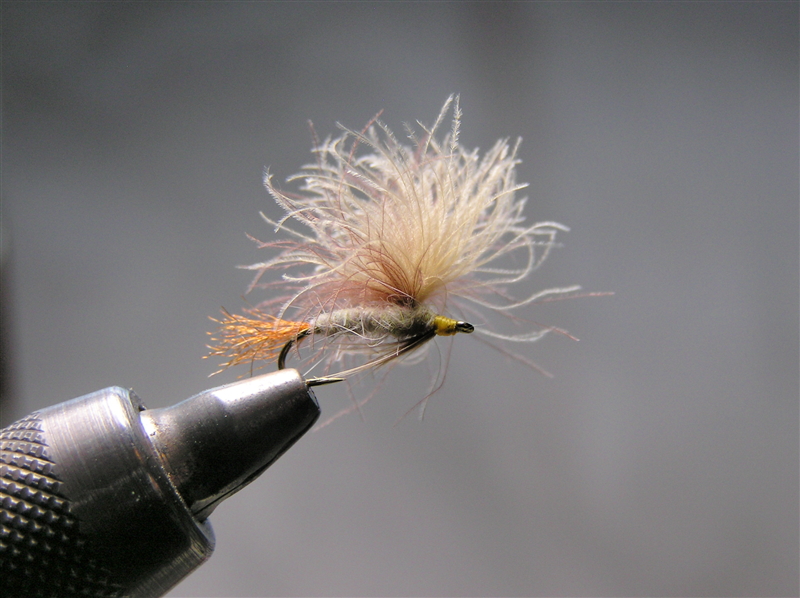
A Light Cahill CDC emerger. Take my little Cahill emerger. It has a short, ragged trailing shuck of Antron yarn and a dubbed body of natural fur blended with a bit of Antron dubbing. Those features provide natural colors and light reflections, and the Antron fibers hold tiny air bubbles on their surface. The wing is tied with CDC fibers that also trap a lot of tiny air bubbles to provide floatation and movement where the fibers touch the surface currents. A few soft fibers of hen hackle simulate the legs. All of the components of this simple fly combine to look like something that is moving and thus alive.
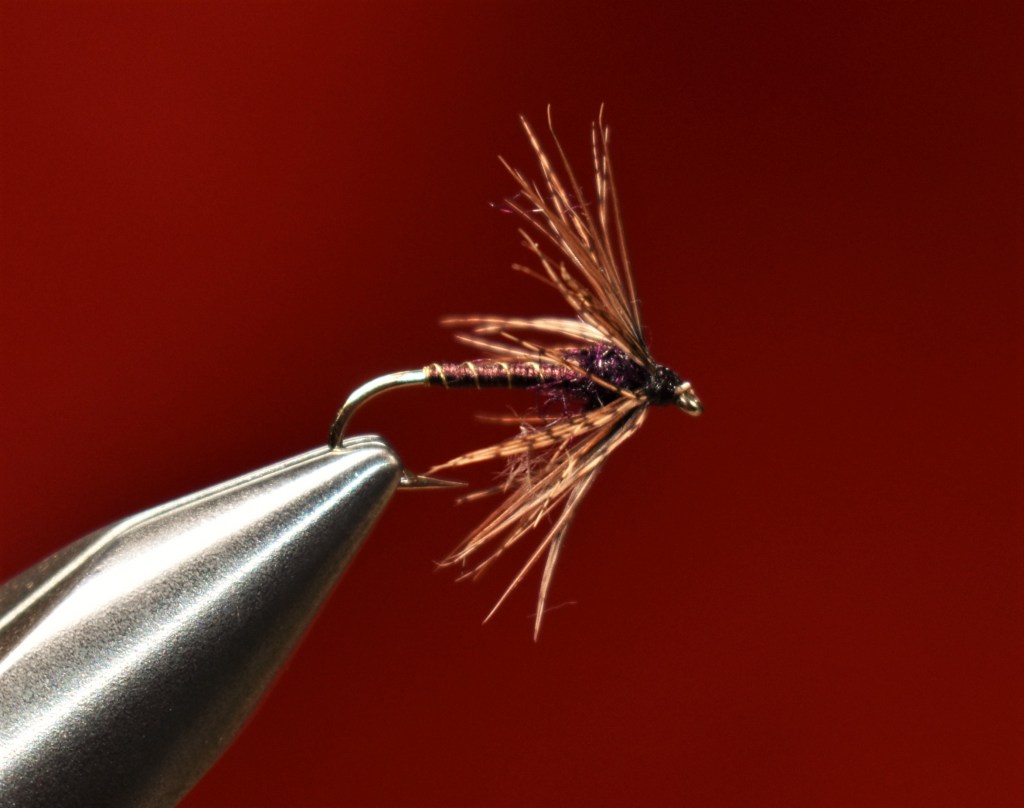
Claret & Partridge Soft Hackle The classic soft hackle wet fly is a traditional example. The traditional silk body displays a nice translucency when wet, the wire rib and the natural/synthetic dubbing blend for the thorax reflects light, and the Hungarian partridge feather fibers move seductively with the current. This is another very simple tie which does its job admirably, it is subtle and it looks like something alive in the water.
What about the Adams guy? Well that fly features muskrat fur for the body which, like most water mammals, has a natural sheen when wet, brown and grizzly hackle for a vibrant mix of natural colors, and Grizzly hackle tip wings. Barred materials like grizzly hackle do a pretty nice job of imitating movement when viewed through moving water. So the venerable Adams dry fly is a neutral color and it imitates movement. Easy to see why it catches trout under a lot of conditions when you break it down like that isn’t it.
One gentleman I knew who used to say “all you need is an Adams” confessed he tied them with pale yellow and tan bodies, as well as the original gray muskrat. Those three colors do cover a majority of the mayfly hatches we see during the season, and several of the most prolific caddis.
I don’t run into that many “Adams guys” as I did years ago, so perhaps it helps that the trout aren’t seeing them hour after hour, day after day. Sometimes something old is something new to the trout rising in front of you.
You will find a lot of experienced fly fishers who will tell you that presentation matters, not the fly. I agree with them; and I disagree. My decades with the fly rod convinced me long ago that both matter most of the time. The fact is, we should all strive to be presentationists. There is no situation in which a good presentation of your fly won’t help you catch a trout. Making a great presentation with a really lifelike fly that moves in the current on a natural drift will help you catch the difficult ones.
-
Almosts: The Spice of Angling
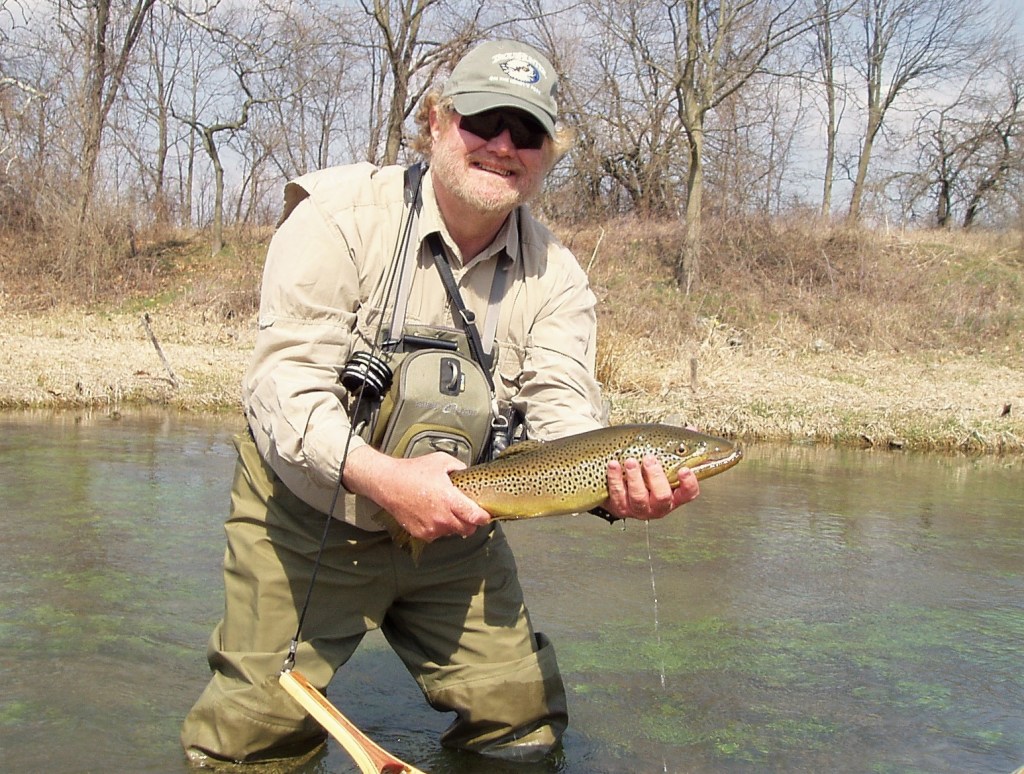
An old resident of the Falling Spring Branch from a decade ago. Anglers all, we love to catch trout, and most assuredly big trout. The big fish is a dream believed in by all fishermen, and we are all mesmerized by the unobtainable: the one that got away!
Think about them, those moments that truly stand out as the most exciting memories in your angling career. I’ll bet a majority of them involve a huge fish that managed to escape before you got your shaking, dripping hands upon him. No matter how many trophies you have landed, those that didn’t make it to the net are the ones your dreams, or perhaps your nightmares, are made of.
Like any angler, I can recount plenty of them…
The first time I fished Ohio’s Conneaut Creek I was working my way upstream and fishing each likely spot I thought might hold a steelhead. The lip of one gravelly tailout looked unimpressive, but it was right in front of me, so I popped a cast ahead before I stepped out of the deeper, faster water below. Though the water was clear, I never saw what hit my fly, but whatever it was shot straight across the river like a bullet, and broke my 2X fluorocarbon leader on a straight pull. My best Conneaut steelhead weighed 13 pounds, but I will forever wonder about that unseen chromer that left me shaking with a broken line!
I remember the spring day I took a walk down a heavily fished reach of the West Branch. A fast moving storm had passed through just before I arrived, the thunder still rumbling off in the distance, and the sky black. There wasn’t a soul out there, as everyone had abandoned the river during the fierce downpour. The next few moments of solitude still live in infamy for this fly fisher.
Looking toward the river as I walked, I spied an enormous bulge in the surface out past midstream. I glided straight toward the river’s edge and stalked slowly into the pool. Before I could cast to the location that got my heart pumping, another bulge appeared closer to my position. My mind raced: another fish? A moving fish? I pulled line from the reel in time to see that monstrous bulge come a second time. I lifted the rod and placed my Blue Quill parachute gently above my target, and leviathan came to it like manna from heaven!
Oh what a battle! He leaped clear of the surface three times within thirty feet of me, ran me twice into my backing, then jumped again. Eyes wide, I had no doubt this brown trout was well over two feet long, and he was mine, lying on his side on the surface fifteen feet away as I reached for the net. I am sure you all know the sickening sound, the heartbreaking feeling of that little ping when a hook gives way. I will swear that fish was easily 28 inches long, perhaps longer, but I will never, ever know. I’ll never forget that moment either.
Just this past season I was surprised to see some trout cruising and sipping something small while good mayflies drifted past them. One of my sulfurs had been hot, and I offered several perfect presentations to one of those cruisers to no avail. It was late in the spring, and the weather had been hot, so I cut off my sulfur and knotted a silk bodied black ant to my tippet. One cast and the fly was gently accepted; then lightning struck as I raised the rod!
The old bamboo took an awful bend, and my Hardy reel screamed at the run he made, deep into my backing. The fish was powerful, and headed for the submerged boulders near the bank. I stuck the rod as high in the air as I could, the blank now “u” shaped with the strain, but the tippet held. The strain turned him thankfully, as the bamboo had no more quarter to give. I retrieved backing and fly line grudgingly and wondered what was coming next. The reel’s next chorus answered my inquiry, as the unseen foe nearly emptied it again. Gradually his runs grew shorter, though his power never seemed to diminish. At last he was within twenty feet, though still holding deep enough that I couldn’t see him, and then, yes that sudden and awful ping!
It is a wonderful feeling to hold them in your hands, to work the fly free and slide them into the current to revive. It is certain, victory, and the spoils are right there to be measured, photographed, admired. Ah, but those battles that are left at as best a draw!
Pat Schuler had anchored the drift boat along the shore, and tied on a size 16 caddis fly for me to fish the heavy riffle in front of us. It was one of those hot, bright Catskill afternoons on the Delaware so many years ago, and the flies weren’t showing. I made four, five, perhaps half a dozen casts, until a tiny spurt of water appeared where my fly was drifting just a moment ago. I struck hard to make up for my delay, and the disc drag reel spun so hard and fast I reached for the palming rim, sure this mystery fish would empty the reel in seconds at his current rate of departure. My thumb glanced off the spinning handle ever so slightly, and fly and fish were gone.
Back when finances allowed a prime season float trip, I fished annually with Pat. I used to banter back and forth with him, saying all I needed was a twenty-five inch rainbow. Pat would shake his head and tell me they simply didn’t grow that big in the Delaware, though he guided me to plenty from nineteen to twenty-two inches long back in those days. I will always wonder about that fish in the riffle though; always…
-
Unquestionably Winter

January 24th, and the East Branch Delaware is halted entering Crooked Eddy Sunlight always raises my spirits, even the frigid sunlight of a winter morn. Staying inside and looking out, it appears welcoming. Even as that sun cheerily lights the snow covered landscape the wind howls. I donned my thickest goose down jacket for my river walk this morning, reading sixteen degrees as I pulled my woolen hat down and my hood up on the porch. It is unquestionably winter in the Catskills.
The river has been cold but flowing this week, save for a fringe of ice along the mountainside bank where it slows at Crooked Eddy. I was curious what I might find this morning, and a bit surprised when I discovered the river halted in place by the icy tentacles of winter. A great trout river paused in mid flow, posing for my photo.
Each week I look to the long range forecast, hopeful for a bright day or two in the forties or, dare I to hope, fifty degrees. On a sixteen degree morning it seems an impossible goal: the chance to walk the rivers and cast a fly, to break the spell of indoor seclusion.
I decided that today I should begin the task of sorting fly boxes. There are new patterns waiting in storage boxes for their turn in the thin compartment boxes to be carried in my vest. Like most fly tiers, I tend to carry far more flies than needed on the river. The pockets of my old vest once protruded so badly I was constantly hitting them with the butt of my rod. I found the solution several seasons ago in the stacks of Wheatley fly boxes displayed at Catskill Flies.
At three quarters of an inch in depth, I can carry half a dozen of these in my vest pockets without getting in my own way. A single box carries more than enough patterns to fish a hatch, even the most trying ones, for several days before flies need to be added. Once a year I sit down and go through my assortment, some dedicated for specific emergences and marked as such, others having their contents revised as the season progresses.
For the long awaited premier of springtime I’ll have dedicated boxes for Quill Gordons & Blue Quills, Hendricksons, Blue Winged Olives and a multitude of rusty spinners. By the beginning of May I’ll add a box of Shad Fly (caddis) patterns, with a few small black caddis tucked into one or two compartments for eventualities. Often there’s an assorted caddis box holding Grannoms, the little blacks, and a few patterns that match less often seen down wings.
As the month progresses the Quill Gordon box will be replaced with a March Brown box and another with Gray Fox and larger sulfurs. By mid-May a couple of Green Drakes will be nestled into a compartment of the March Brown box, just in case. If I keep to my system, I’m generally never caught unprepared.
I’ve used this system for a number of seasons now and it works well, though my vest is still heavier than my neck and shoulders would prefer. Like I said, a malady common to fly tiers.
Last spring I threatened to carry a separate box for new designs, but instead I crammed some new creations into the appropriate hatch box and made do. There is an advantage to the new design box, in that it saves time looking through other full boxes when I feel like experimenting a bit. There are times I simply tuck a pill bottle in a wader pocket with a few new patterns, but trying to get a particular fly out of the bottle on a windswept river tends to be an exercise in frustration, and waste.
I know that I need to get the annual sorting taken care of before I can really get myself into the right frame of mind to tie. I finished up last year’s feathery efforts in December with 185 dozen flies tied in 2020. Since then, I’ve only tied a fly here and there, knowing I don’t really need anything. Going through the sorting procedure will uncover some flies I have forgotten I ran low on last year, so I’ll have a goal to sit down at the vise. Anything to get rid of that fidgety feeling cabin fever spawns.
If I can keep myself busy, I figure that I can bounce through a couple more weeks of winter, maybe get a couple of those warmer, sunny days out on the river, then get back to work to pass the next cold snap. If you can get into a rhythm like that, the three months between now and the first hatch of the season can melt away without loosing your mind.
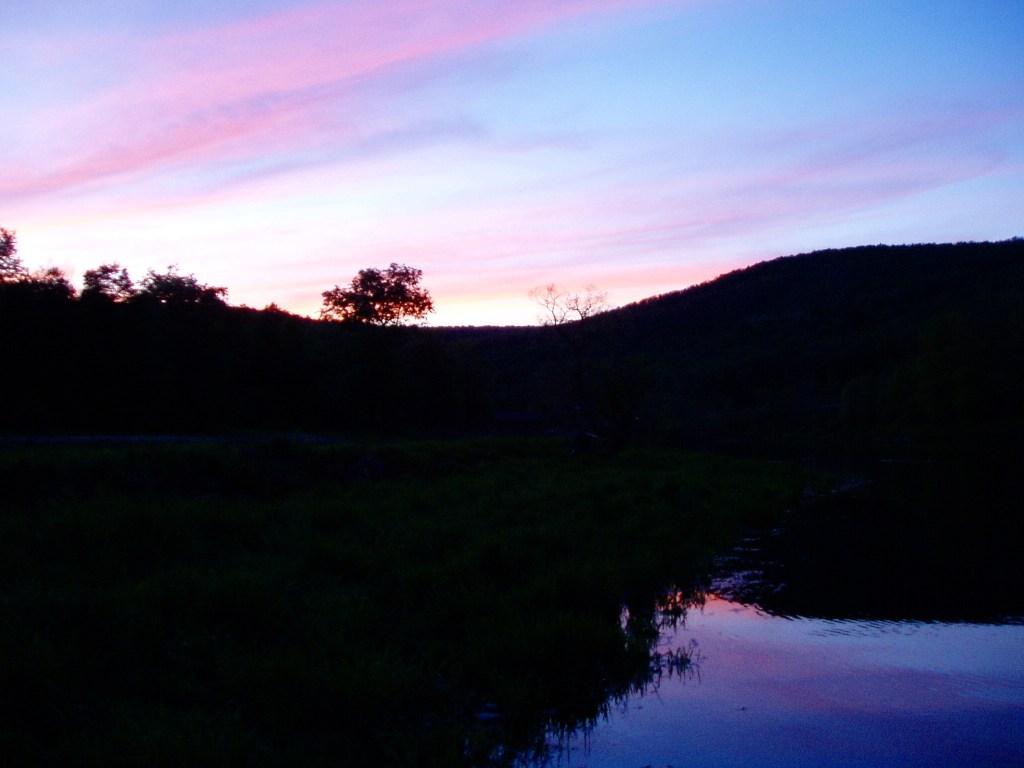
Day’s End
-
Musings On A Catskill Afternoon
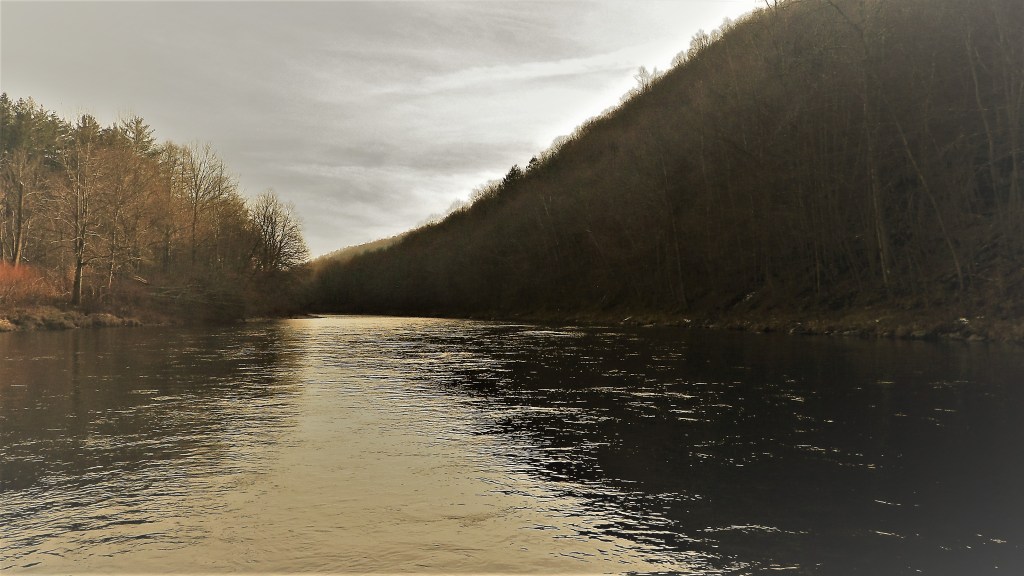
There was some sunshine today as I took my river walk, and I appreciate the bit of cheer it encouraged. Returning I sat down with a fine old book: William Shaldach’s The Wind On Your Cheek. Though this first edition was published in 1972, the stories therein were written during the thirties, forties and early fifties, during and passing through the Golden Age of American angling and gunning. Shaldach’s tales and sketches put me in a delightful frame of mind.
The sun, shining from the west reflected vibrantly from a block wall on the neighboring property, and I ducked down in my chair and held the book high to shade my eyes, as Shaldach’s tales of the Golden Age took me away. Finishing the book, I closed it with a smile and sat up to see all trace of that sunlight had vanished, and snow was falling as if it meant it. Laughing at Catskill mountain weather, I made a cup of coffee, then turned to see the snow still falling and the sun once again lighting up the landscape.
Half a day’s drive south of here, my friend Mike is tying cicada patterns in the hope of finding some of the crazy fishing their emergence can bring come June. I recall seeing something about one of the Pennsylvania broods emerging this year, in Southeastern PA I believe.
It would take some research to pinpoint the year that we fished the emergence of one of the Central Pennsylvania broods. We had searched for them on Western Maryland waters, the Savage River perhaps, and though we heard the droning of them in the surrounding forest, there was no sign of them getting to the water that day. The trout were not interested in the imitations.
It must have been the following weekend that we trekked to the Little Juniata River, and found a use for those ungainly black and orange monstrosities of deer hair and foam. The Commonwealth of Pennsylvania had defeated a particularly hateful individual’s attempt to privatize much of the best trout water there for his wealthy clients when the Court declared the river as navigable water, so Mike and I decided to visit the previously closed reach of the river flowing through the Espy Farm below the village of Spruce Creek. The excitement of new water and huge dry flies was palpable as we waded downstream from the village.
Even with six weight rods and 3X leaders, cicada patterns take concentration to cast and present properly, particularly in the low water we encountered that June. The flies are bulky enough that they will splat upon landing, and you don’t want any extra energy from the cast to drive them down harder. We found that sticking near mid river and making long casts to the shady banks allowed us to present the flies naturally without spooking the big browns laying in wait in those shallows.
We caught some great fish that day, nice brown trout from eighteen to twenty inches long, though there were plenty of explosions to those flies that didn’t result in hookups. Its hard to wait that extra second before reacting to a splash reminiscent of a concrete block being thrown on top of your fly, and that is what you have to do to get a secure hookup. Being trout, there would be one every once in awhile that sucked the fly in so gently it took a moment to notice that it wasn’t floating anymore. The best one I caught was one of those stealthy takers.
Mike sent me a text today, asking if I had ever seen cicadas in the Catskills, and I told him I had not. Doing a little quick research shows that Brood II (the six 13 year and 17 year species of periodic cicadas are divided into broods indicated by Roman numerals which are known to inhabit various geographical regions) is the only one that may emerge in a portion of the Catskill region. The maps I found are very large scale and inaccurate. If I had to guess I’d say there’s a chance they might emerge in the forests around the Neversink tailwater, though Brood II will not emerge again until 2030.
I don’t know if I’ll still be haunting the Catskill rivers in 2030, at least not in the living, breathing physical sense, though I hope so. It would be neat to dig out my box of Hoover’s Cicadas, string up a six weight cane rod and go hunting for them, and the big, explosive rises they coax from our otherwise careful brown trout.
I looked up the Pennsylvania Court case, and the decision was announced in late January 2007. Our cicada trip would have been either that season or the following one. That was a 17 year cicada species emerging, so it can be expected to emerge again in either 2024 or 2025. There’s a better chance that we will both be around for that one, so Mike should be able to use those flies, even if he doesn’t run into an opportunity this year. I wouldn’t mind driving down to spend a couple of days on the Little J just to watch the spray flying when we plopped our cicadas in the shade.
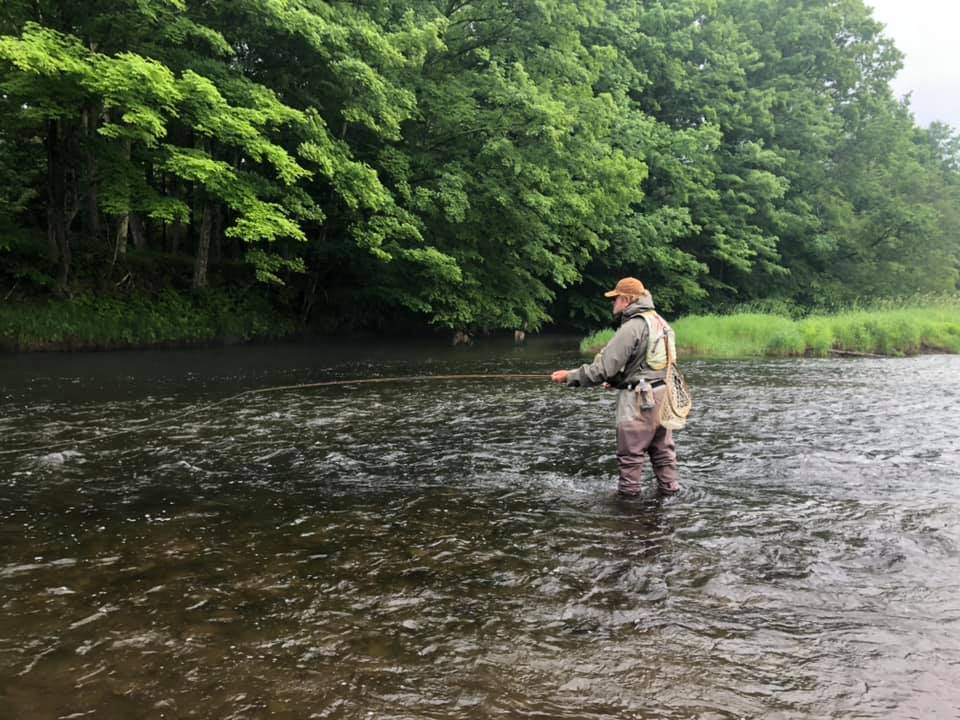
Summer On The Neversink (Courtesy Matt Supinski)
-
Paired!

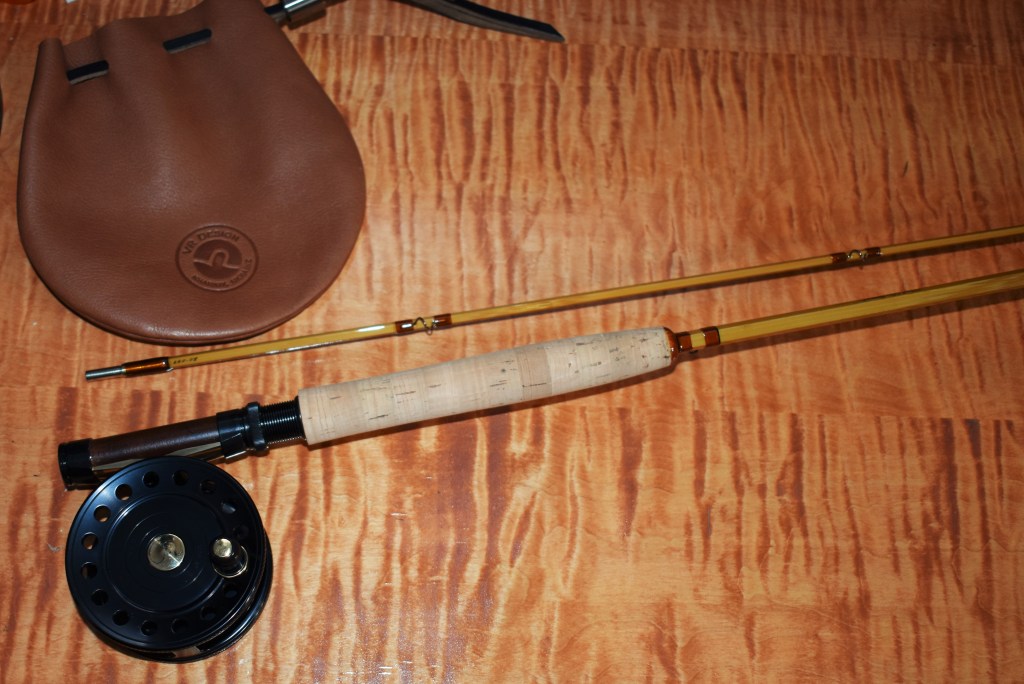
Paired Jewels: VR Design’s Trutta Perfetta and Sweetgrass Rods’ 8′ Pentagonal Bamboo Rod When you have the perfect summer trout rod made to order, choosing the reel it is paired with is an important decision. I considered a classic Hardy St. George, for a vintage fly reel and it’s spring and pawl drag are ideal companions for bamboo. My Sweetgrass pent is classic, made of the finest Tonkin cane, but it is a modern rod in every sense, and that broadened my thinking.
My summer dry fly fishing is in essence very simply described: stalking large wild trout in gin clear water. The rivers are fished heavily, and the trout that grow to trophy size are among the most wary and well fed salmonids you will find in these United States. Catskill hatches are voluminous and varied, and the best of our wild browns and rainbows require stealth and delicacy. To me, these fish, and these rivers deserve the respect of classic tackle.
Despite my fondness for old Hardy reels, I find the venerable Orvis CFO reel to be a near perfect tool for delicate fishing. The Bogdan design included a palming rim to complement the traditional spring and pawl drag, and that is a valuable feature indeed. Sadly, the exquisite lightness of the CFO does not succeed in balancing longer bamboo rods. The old Hardy’s I like do that well, the St. George’s, Perfects and Bougles. Lacking the palming rim, they leave the angler with a choice between balance and the capability for reserve drag, to prevent being spooled.
Perusing the Classic Flyrod Forum recently I came upon an announcement from Vlad Rachenko of VR Design. Having built an international reputation for excellence in the design and manufacture of titanium fly reels, Rachenko has just premiered an aluminum version of his classically styled 3″ diameter trout reel, the Trutta Perfetta. The design was brilliant and simply beautiful, and I decided that the Trutta Perfetta would be the perfect pairing for my new pent.
I literally jumped out of my seat when I heard the knock at the door this afternoon, knowing it was the Fedex driver bearing my reel to the end of its 4,855 mile journey from Kharkiv, Ukraine to Hancock, New York.
The Trutta is indeed Perfetta; perfect for stalking the trout of our Catskill Rivers. With my choice of a brass reel foot and screws, this 3″ trout reel balances my 8′ two piece Sweetgrass rod “in the cork”, and the beauty and workmanship are equals to the elegant work of Mr. Brackett and Mr. Kustich. The advanced design spring and pawl drag feels silky smooth, and the palming rim allows that extra protection when a big fish decides to run. I cannot wait to hear this reel in full song!
Three months of winter remain. Three months before there is a reasonable expectation to find flies in the air and rising trout at the surface. Though conceived and paired for summer angling, this lovely outfit of fly tackle will not wait for July. It will find it’s target come spring, once the high waters recede and delicacy of presentation comes into it’s own.

Dreams of Springtime, dreams of Summer! I was intrigued by the prospect of purchasing a unique fly reel from a talented reel maker in old Europe, a new experience for me. I dealt with Vlad personally via email and found his service to be excellent. He seems a very personable gentleman, and is clearly a wonderful craftsman and gifted designer.
-
Taking Stock of the Year
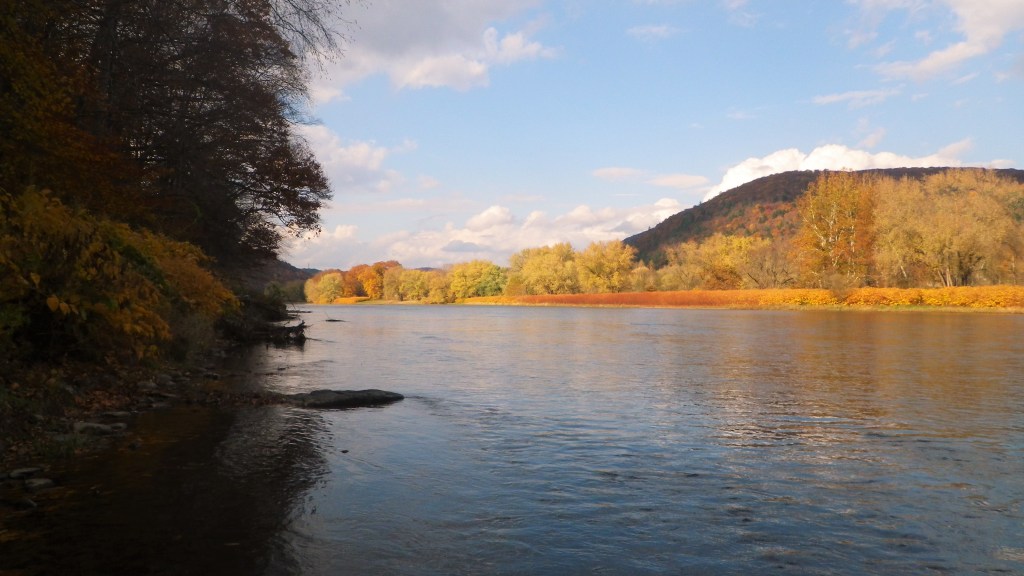
A Beautiful Afternoon Along The Delaware Ah twenty twenty…too much has been said, and little of it good, but I shall not linger on the negative aspects: it was a grand year for fishing! Aren’t they all?
Winter was long, though a few flirtations brought springtime to mind, and my dry fly season started early. The twenty seventh of March found me prowling a favorite reach of the Delaware, happy for a touch of warmer air and fitful sunshine. Though I could scarcely believe it, I found a rising trout. Staring hard at the surface I made out a few dark gray wings struggling along a run of current, knotted up a size 20 olive and raised that wonderfully early foot long brown! It was good to feel his struggles against the rod and slip the fly from his jaw with a smile.
I pushed hard for spring that next week, wading the rivers, even rowing down the West Branch to bid welcome to the season, but the trout weren’t as ready as I. By the middle of April I was frantic for action, but the fifty degree water I had found early on had cooled. Winter teased again with two and a half inches of snow one morning, and spring raised her head with afternoon sunshine to melt it all away. The very next day I found springtime’s big three on the water and in the air: Blue Quills, Quill Gordons and Hendricksons!
It was nearly perfect that day: solitude, the cold, high water gripping my legs while the wind whipped away the warmth of a 61 degree afternoon; and all those mayflies. One trout began to rise, a lone warrior as anxious to greet the season as I. The Quill Gordon beckoned to him and, when the wind allowed the right bit of slack, my drift was true. Big fish screamed my winter addled brain, and then I heard the screaming from the reel itself, the brute fleeing full into my backing. It was a glorious fight! Nearly mine he was, net in hand with the rod fully bowed, until he jumped one last time…and won the day.
Spring continued as it had begun, a mixture of sun and cold and wind and calm warm afternoons, and through it all the mayflies. The mystery of the Catskill rivers was sustained, with some of the best hatches failing to reveal a single rise, while days with but a few sparse flies seemed destined to produce good catches. Early in the second week of May I awoke to find the snow flying once again, and the river temperatures continued their rise and fall.
Come June the weather was fair and the fishing sublime. Though I was prepared to worship at the alter of the Green Drake, I was cast out of Nature’s temple, the great hatch never revealed to me. It was the year of the sulfur though, and the great browns I would have stalked with my 100-Year Drake, fell repeatedly to a simple size 16 CDC and silk. The memories of June will haunt me for decades, bringing a smile with each recollection.
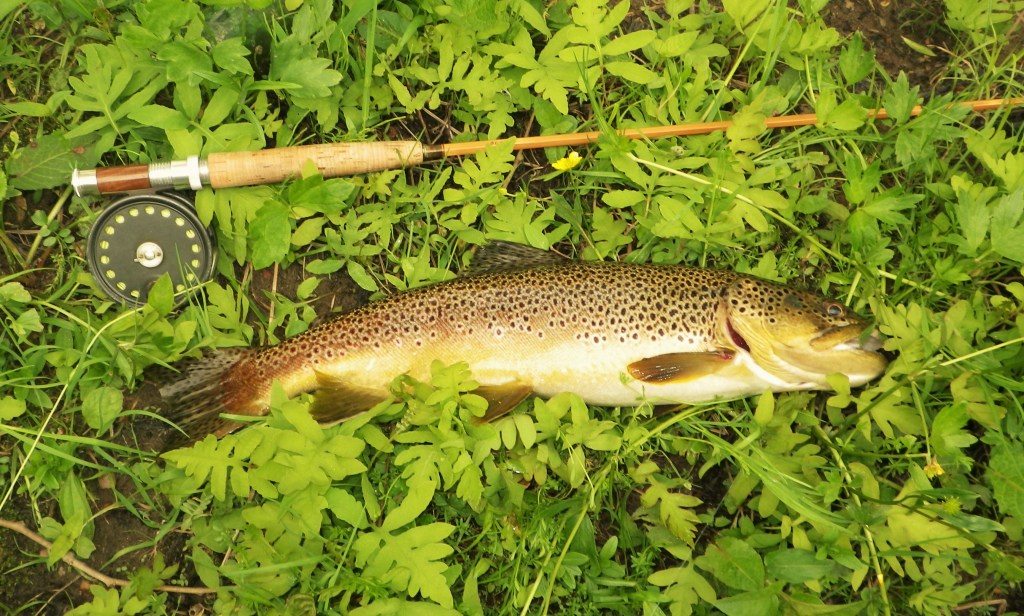
Bamboo, dry flies and June! I have always harbored great desire for trophy specimens of the Delaware rainbow, and June would bring the two largest the river has ever offered to my hand. The memories are vivid: the long stalk in flat water, the cast perfectly formed and true, and the low sun glinting upon golden bamboo as the Hardy’s own orchestra announced the nature of my foe. When at last she turned, close in as I brought her to the net, I gasped at the pale emerald back and crimson band along her flank: a magnificent trout, five pounds, perhaps more. My notes reveal I lost four big fish that day, but that is not the memory I retain. My memory is of a grand Delaware rainbow that lit the fire in my heart!
Two weeks later I crept into another fair reach water, careful not to disturb the calm amid the morning mist. My vintage Granger rod stood against another magnificent rainbow, and my Bougle` brought the music, rising in the stillness in a crescendo of speed and power! I have sought the wild runners of the Delaware for many years, always hoping for one to defy the tales the old river guides have told: “they just don’t grow much past eighteen inches”. I know of two that did.
The Catskill Summer was a treasure as it always is for the stalking angler. The long hot spell was trying, but I worked hard to find my rewards. They came as earned, the glory of the challenge enough reward in itself. I got back to trico fishing, something not done for nigh on twenty years, and flustered with the madness of good browns wolfing size 28 flying ants.
Summer waned into a gloriously beautiful autumn. Some days that exceptional natural beauty was enough, and on some the shy trout added their own layer to such exquisite interludes. I caught up with an old friend and met a new one. Though the days offered more walking than fishing I found I could not tear myself away from the rivers, even when rising trout had become as ghosts from the past. Summer was gone though I refused to let it go from my heart. I resorted to swinging soft hackled flies, looking for life in the riffles, still needing desperately to be out along the rivers.
One warm afternoon in late October I swung my fly through the low water tail of a special pool. It was another day when Nature teased, with the sudden appearance of a few tiny mayflies drifting downstream unmolested. All at once I saw a ring, scrambled to extend my heavy leader and knot a tiny dry fly, my grip tensing on the handle of the old cane rod. The little rings subsided, until a soft bulge made me tense and pull line from my reel. A long, gentle cast, another bulge, and the delight of a heavy brown trout brought to hand!
Longed for to be sure, though not expected, the river’s gift of a final dry fly trophy brings gladness to my heart, and thanks for the season. Autumn’s last kiss, long remembered, always cherished.
-
A Glimpse of Sunlight
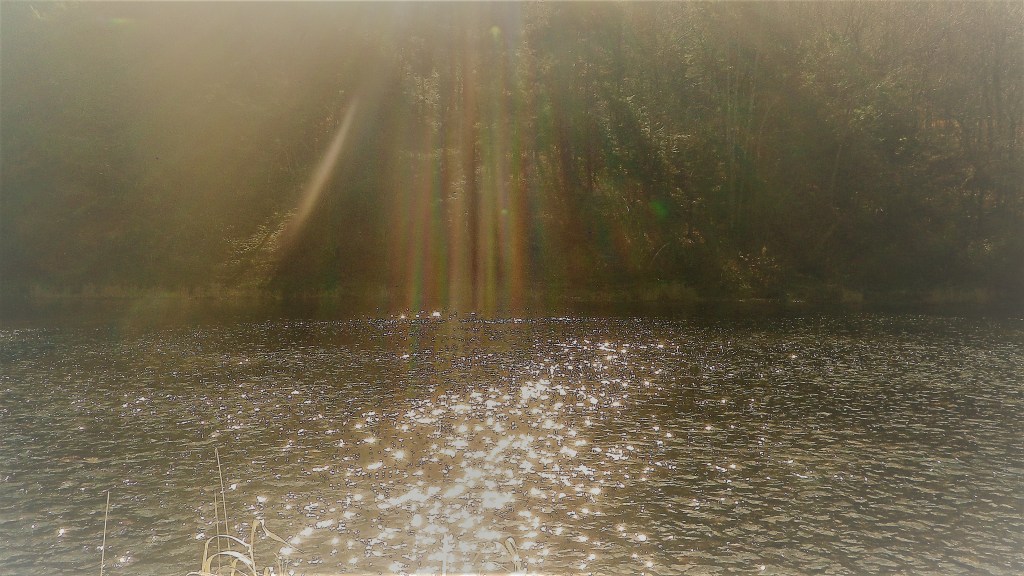
Quite simply, remembering and wishing for fishing is what we have in the winter months… It has been a dour week at Crooked Eddy, freezing or close to it and gray. While trying to fill the crock pot with the makings of stew this morning the sun, that nearly forgotten glowing orb in the southeastern sky burned through a little hole in the gloom. Flipping the switch on the pot at last, I tripped into my boots and grabbed my down jacket, heading for the river.
The air felt more welcoming than the thirty degrees registering on my porch, and my aching bones relaxed a bit as they warmed. I walked briskly, anxious to reach the river road and bid hello to the East Branch Delaware.
The river is clear this morning, with the flow reduced enough that familiar rocks have returned, marked by little vees in the current. There’s no fishing there in winter, and my river walks are restricted to the road by private holdings, but it lifts my spirits simply to walk along and take stock of conditions. The Eagles of Point Mountain haven’t shown up this winter, though I am always hopeful that they will. I watch the pair from my porch on summer evenings, circling high above the ridgetop as the sun kisses the trees with its last direct glow. Some evenings they circle northwest toward the West Branch valley, some they remain here to the east or fly south toward the widening valley of the Delaware. I wish them good hunting as they glide.
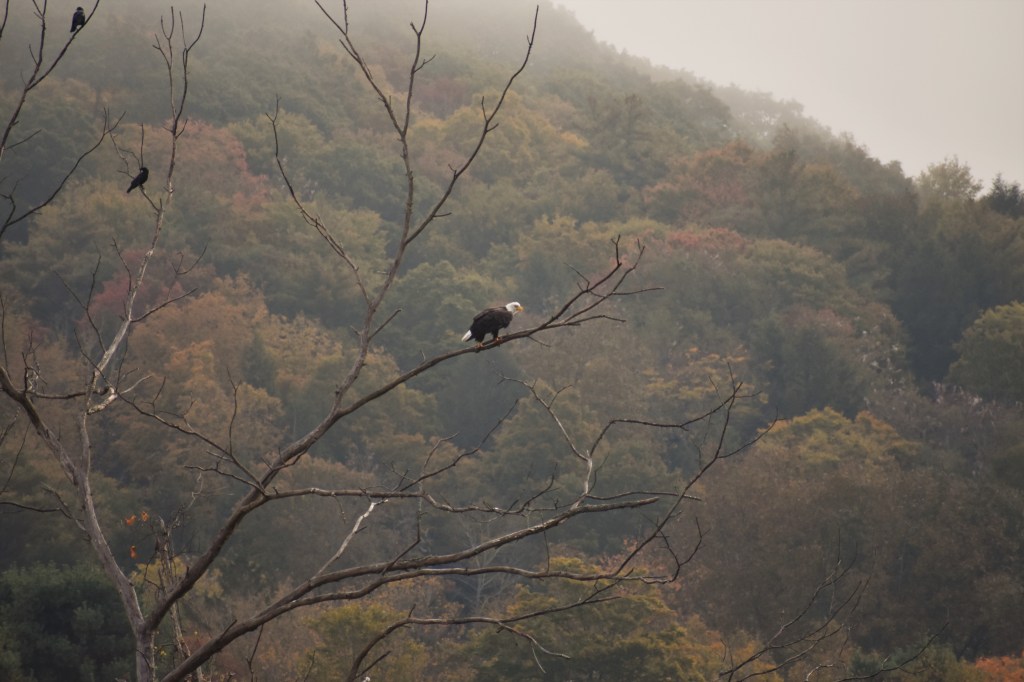
Watchers In The Mist I’ve a friend in my former haunts who has achieved one of my old dreams; he owns a reach of the Falling Spring. He hopes to restore it to its former glory over time, though he’s now content to walk the banks with his children, showing them the darting forms of the shy wild trout. There was a time that was my favorite reach of the gentle limestone spring. Bright gravel and watercress harbored the mayflies: sulfurs, olives and the tiny tricorythodes. I loved to stalk the undercuts in summer, casting a LeTort Cricket or LeTort Hopper tight to the edge! When everything was right, big trout would nudge their noses out from under the grass and chose my fly for supper.
My largest Falling Spring trout taken on a trico came to hand one sunny morning along that same lovely stretch of bright water, one of the wild rainbows that nearly disappeared in that shallow, sunlit, gravelly glide. Delicate tackle was required, a dull gray two or three weight line, it’s long leader tipped with 7X nylon. The game required judging the perfect compromise in distance, ranging each cast so nothing but tippet and fly would land near those long shadows painting the gravel, while ensuring the fly could still be tracked.
On a perfect morning the trout would spread out across the glide, and with luck, two or three could be taken. Starting with the nearest bow on the outside and working upstream and closer to the bank, turning each toward midstream the very instant it was hooked; it was easier with a ten inch trout, much less so with those stretching to sixteen inches or more. Such fish wanted back beneath the undercut banks, and had to be finessed on 7X tippet and a size 24 hook. If they were packed too tightly, or the largest were the outside risers, it was a one fish game.

Shimmer: a grand limestone rainbow lurks in a run of bright gravel, a sheltering weed bed inches away. I wish my friend luck and success with his dream for that lovely reach of stream. Oh the joy and wonder he might reap upon re-building that undercut bank! Given their old sanctuary, the eighteen inch browns and rainbows would return in time. With the cooperation of neighbors, the entire stream could be narrowed, allowing the pinched current to carve new holding lies. Cattle widened much of the stream long ago you see, leaving shallow water and no shelter for the trout there.
A lot of that work occurred during the years of Falling Spring Greenway, and things looked brighter. The Greenway donated land to the Pennsylvania Fish & Boat Commission, who thanked them by ignoring the stream and failing to protect it from poaching. Small water can be so easily damaged by a handful of selfish souls.
My friend’s reach is protected by the neighbors, a cluster of homeowners who appreciate the bright little spring creek. There are eyes ever watching for it is a beautiful centerpiece for their circle of country homes. Perhaps one day I might return, my three weight cane rod swishing tricos to dimpling rainbows on a summer morning! Dreaming…
-
Dwindling Possibilities
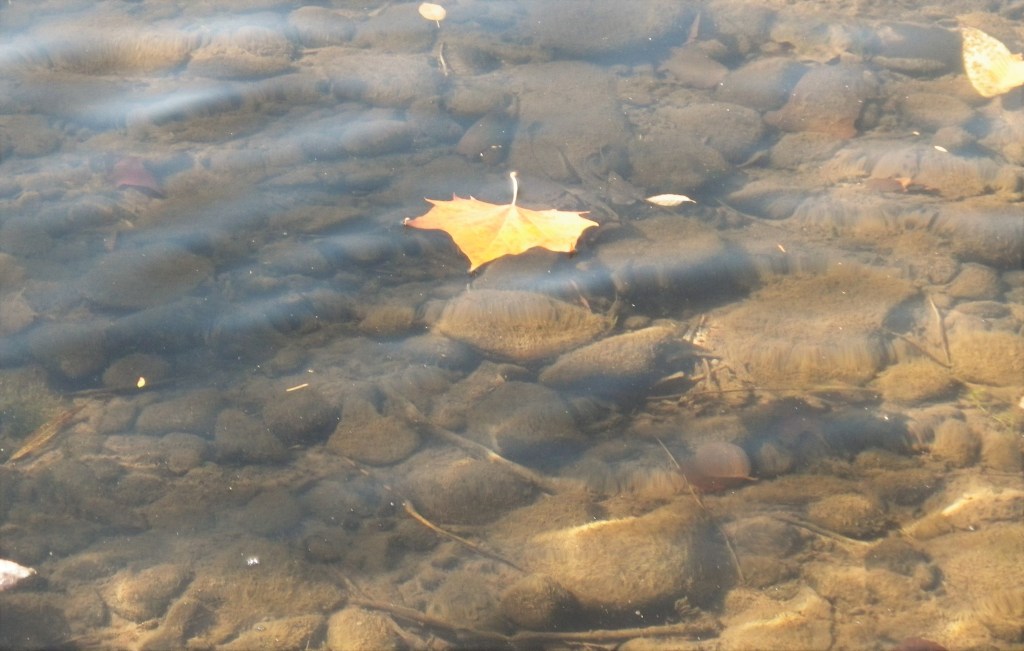
Another week of watching the forecasts and checking river temperatures, as the cold season teases me; offering glimpses of hope, then whisking them away. Before the weekend, yesterday looked to be a fishing day, though it wasn’t, and this week’s other promises are likewise retreating with the forecast’s highs. Ah for a bit of sunshine and temperatures far enough above freezing to enjoy a couple of hours on the river! I don’t need a fish to attend, though I’d welcome the diversion.
Driving east yesterday I saw ice in the flow of the Beaverkill and the Willowemoc, the snow still ruling the landscape, mountains and plains. Roscoe looked sleepy and quiet. I was headed to Dette Flies, deciding I’d rather get out for a drive than wait for the Postal Service to send my bag of tying materials round and round the northeast for another week. Livingston Manor is roughly thirty miles east of Hancock, but my parcels have travelled from the shop to New Jersey, the last one had multiple stops there, then Rochester or Syracuse and sometimes both, before making the turn toward Hancock. Modern “efficiency” I guess. I did enjoy the ride through the snowy Catskills.
Time to concentrate on a new challenge before me: choosing a favorite fly pattern to submit to the Catskill Fly Tyers Guild. There’s a call for members’ favorite patterns, and I have many, but picking just one requires thought. In twenty-eight seasons of fishing in the Catskills one of the chief facts I’ve learned is how variable the fly hatches are for me from one year to the next. Some years are caddis years, when a species or two will hatch in grand abundance, then nearly vanish the next season. Mayflies are the same. I can recall a number of seasons when I found very few instances of Blue Quills on the water, and barely any of a trout taking them; yet there are seasons when they came by the millions, and their imitations took the largest trout of the season, or nearly so. Change is the great constant in Nature. Truth be told, I acknowledge the flies hatch every year, simply not when and where I happen to be fishing. I thought that would change as I fish most days throughout the prime season now, but it hasn’t.
As a result, my favorite fly pattern depends upon the variability of the season at hand. Last year the sulfurs were the big ticket for me, bringing my best days and many of them, but there have been years when they seemed more like ghosts along the rivers of my heart. In truth, my favorite fly might well be a particular design, a style of tie rather than a single pattern imitating one species.
As I tie flies through the winter, I wonder which flies will emerge in abundance during my travels, when spring comes again. There are patterns in storage boxes from the past two seasons that have spent all that time there, as I found no reason to even put them in my vest. Saved for another time; perhaps next year.
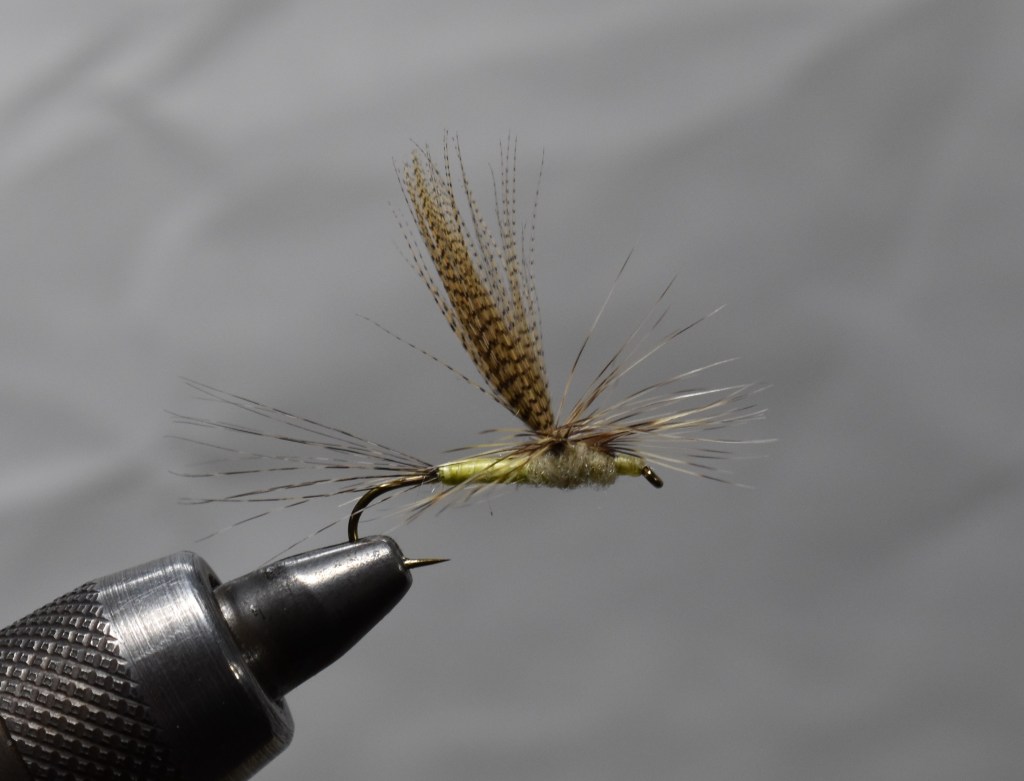
The 100-Year Drake tied in my current, more or less, standard version. 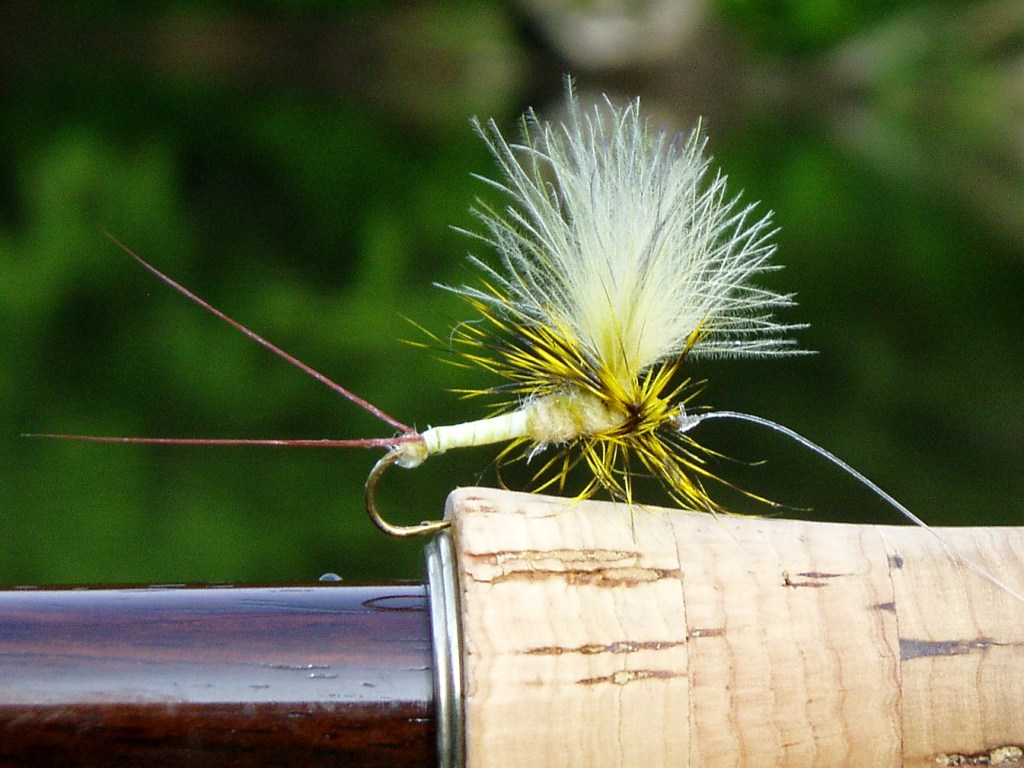
A fly from a dozen years ago with a blended color CDC wing and biot body, hackled in Marinaro’s thorax style with yellow dyed grizzly. This one combined elements of my early 100-Year dun with the CDC winged flies I have loved for thirty years. Big browns liked it! The other difficulty in such a choice is the fact that I experiment continuously, changing proven patterns to keep them fresh, or to expand upon an idea that’s been buzzing around in my head. The 100-Year Dun has certainly become a favorite fly of mine, but it has a long and evolving history since it first took shape in my vise.
I had studied the original Theodore Gordon flies in the Catskill Museum more than once, and the canted wing with a single clump of wood duck flank made a lasting impression: the picture that lingered in my memory is the same one that I saw countless times on the water. Gordon’s style was a century old, and had been quickly evolved to an upright divided wing style by a cadre of hallowed Catskill fly tiers, but his original spark of imitation still rang true.
I began my canted wing experiments with the Green Drake, our premier eastern mayfly hatch, and the one that offered the greatest excitement. I have always believed that the larger the fly the more critical the imitation, so I combined Gordon’s single clump canted wing with Vincent Marinaro’s thorax style some fifteen years ago. With my firm belief in color matching, I chose dyed mallard flank for the wing, but it absorbed too much water and lost its shape regardless of the floatant I employed, so I eventually returned to the Catskill tradition and wood duck.
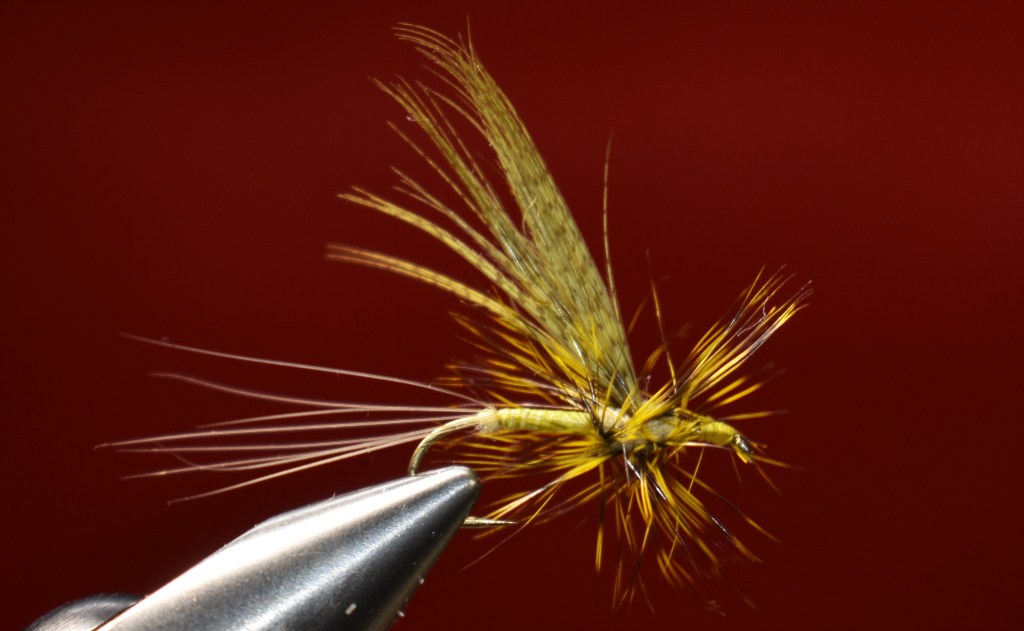
An early 100-Year Dun, the original design circa 2005 The early imitations were successful, both with biot and dubbed bodies, and hackle variations from the original dyed grizzly to barred ginger and cree, but as always I continued to experiment. Perhaps a decade ago, I came across a book that made me aware of another Catskill angler and fly tyer with a similar idea. “The Legendary Neversink” included an article by the late Phil Chase entitled “The 100 Year Fly” in which Chase offered his thinking on Gordon’s legacy and a parachute hackled dry fly with a canted single clump wing. That fly used a post in addition to the wing to wrap the hackle in the horizontal parachute style. The book got me thinking about a parachute hackle, but I liked the way my thorax hackled flies sat in the surface film.
I decided to wrap my hackle around the reinforced base of the wing, canted to the rear. I moved the wing forward, somewhat ahead of the traditional position for a Catskill tie, and well forward of the mid-shank position for the thorax tie. The fly rode the surface just as I’d hoped, and the canted parachute hackle was easier to tie and more durable. I still experiment with the fly body, though turkey biots have become the standard material for the abdomen. The original synthetic tail fibers have been replaced by dark pardo Coq-de-Leon hackle fibers which offer a more natural appearance.
Barred hackles have always been paramount for this pattern. I have settled upon one of Charlie Collins’ Golden Grizzly dyed capes as my standard in the last few years. I like the way the light passes through these feathers, and the trout have proven they agree with with my choice. I carry a box full of Green Drake imitations during their season but the most difficult fish always seem to come to the 100-Year Dun.
Search
Archives
- April 2026 (10)
- March 2026 (10)
- February 2026 (9)
- January 2026 (14)
- December 2025 (14)
- November 2025 (10)
- October 2025 (10)
- September 2025 (9)
- August 2025 (10)
- July 2025 (10)
- June 2025 (8)
- May 2025 (12)
- April 2025 (12)
- March 2025 (9)
- February 2025 (10)
- January 2025 (15)
- December 2024 (12)
- November 2024 (13)
- October 2024 (12)
- September 2024 (10)
- August 2024 (12)
- July 2024 (10)
- June 2024 (12)
- May 2024 (11)
- April 2024 (14)
- March 2024 (11)
- February 2024 (13)
- January 2024 (14)
- December 2023 (16)
- November 2023 (11)
- October 2023 (11)
- September 2023 (8)
- August 2023 (10)
- July 2023 (9)
- June 2023 (12)
- May 2023 (13)
- April 2023 (13)
- March 2023 (14)
- February 2023 (15)
- January 2023 (15)
- December 2022 (13)
- November 2022 (5)
- October 2022 (10)
- September 2022 (10)
- August 2022 (8)
- July 2022 (9)
- June 2022 (10)
- May 2022 (10)
- April 2022 (13)
- March 2022 (14)
- February 2022 (13)
- January 2022 (13)
- December 2021 (10)
- November 2021 (9)
- October 2021 (7)
- September 2021 (9)
- August 2021 (12)
- July 2021 (11)
- June 2021 (12)
- May 2021 (15)
- April 2021 (16)
- March 2021 (14)
- February 2021 (14)
- January 2021 (12)
- December 2020 (11)
- November 2020 (13)
- October 2020 (14)
- September 2020 (13)
- August 2020 (14)
- July 2020 (13)
- June 2020 (16)
- May 2020 (16)
- April 2020 (18)
- March 2020 (13)
- February 2020 (11)
- January 2020 (8)
- December 2019 (6)
 Bright Waters Catskill