
-
A River Walk
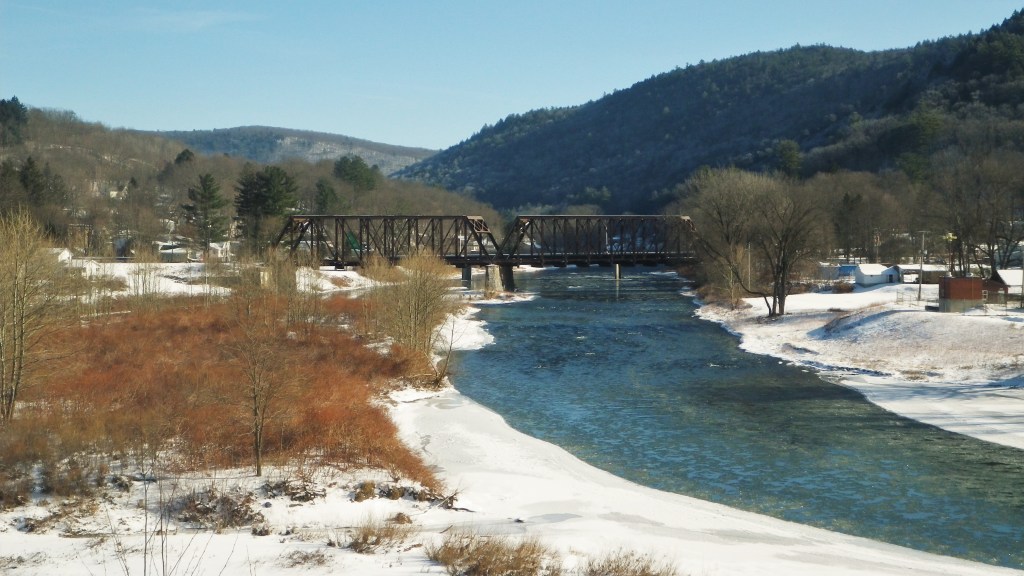
I like to take my winter walks down along the East Branch of the Delaware, down at Crooked Eddy. The sunshine the other morning got me out and about early. There is something about that sunshine, even on a fifteen degree morning!
The river was bordered by ice along either bank, with slush flowing down the main run of current, courtesy of the current cold spell: it was seven degrees at six o’clock that morning. I walked briskly and warmed right up in my down jacket, enjoying the simple beauty of a calm, bright winter morning.
Most of my daytime hours have been spent here at the tying bench, or kicked back with my winter reading. The books have fueled my interest with classic Catskill flies and tiers anew, so I have been tying a few of those. Yesterday it was the Cross Special that caught my fancy.
I was fortunate to have secured copies of the late, great Rueben Cross’ classic little tomes “Tying American Trout Lures” and “Fur, Feathers and Steel”, purchased from the collection of the late Terry Finger. Mike Valla talked about Mr. Finger in “Tying Catskill-Style Dry Flies” (Headwater Books 2009). As Valla learned to tie flies from the legendary Dettes, so too the young Terry Finger learned to tie flies from legendary Catskill fly tier Ray Smith. In both men, these early influences shaped their lives and passions for fly fishing in the Catskill tradition.
I appreciate how much those experiences mattered to both young men.
I started my own fly tying with a class taught be Joe Bruce, a well known Chesapeake Bay area fly tier. Once I started, my quest for knowledge kicked into overdrive, and I availed myself of every opportunity to learn from a master tier. Larry Duckwall, a student of Elsie Darbee, taught me to tie the Classic Catskill style, Ed Shenk walked me through his historic spring creek patterns, Gary LaFontaine revealed the techniques for his Emergent Sparkle Pupa as well as the theory behind his innovative fly designs, and A.K. Best instructed me in crafting delicate quill bodies and parachute dries.
Many of these encounters occurred through local fly shops and the first Fly Tier’s Symposium held in western Pennsylvania nearly three decades ago. That was an exciting time! That symposium exposed me to countless ideas and techniques. Rather than the overtly commercial atmosphere common to many trade shows, the energy of that weekend was centered upon sharing our passions for fishing.
Shenk and LaFontaine became the greatest influences on my own developing ideas for fly design. I recognized that movement within the fly itself was the key to imitating life. Ed taught me to tie with soft materials using techniques that allow them to move with each subtle stirring of current, while Gary championed unique materials that would subtly reflect light to mimic actual movements.
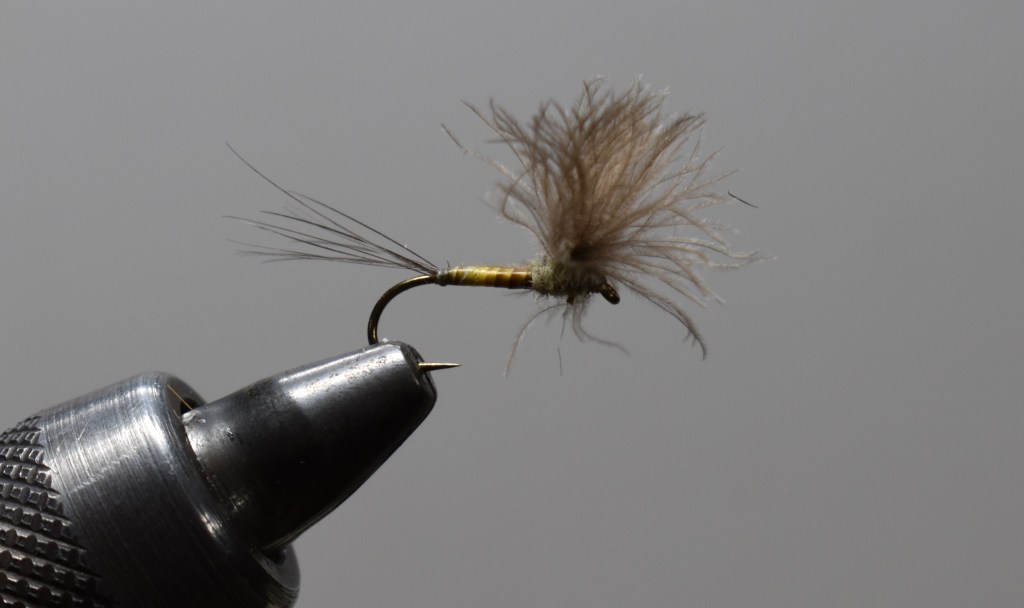
Turkey Biot Quill Gordon I took my newfound knowledge and enthusiasm to the stream as I fished, collecting a sample of each hatching insect I could catch, choosing materials and blending dubbing to match the color and translucence of the naturals that excited the trout. Through it all the passion grew.
Years on the water have reinforced the idea that simple flies can work wonders! Too many times the solution to maddeningly difficult trout feeding upon tiny flies has been nothing more than a few wraps of thread and a wisp of cul-de-canard.
Last summer I re-discovered the beautiful silk dubbing made by the Kreinik Company. Tying a simple sulfur with a tail of hackle wisps, a silk body and a CDC puff created a wonderfully translucent, lifelike fly! The hard fished wild browns were convinced, choosing them when they shunned other more involved patterns.
It seems that many of the current hot fly tiers are building very involved patterns. I certainly respect their ideas and execution, but the trend runs contrary to my own way of thinking. I once watched a very famous English tier build a “model insect” at a demonstration. The fly was a work of art worthy of display in any fine collection of sporting art. If I recall, he told me it takes him about an hour to tie one of those flies, and he intends them for fishing. The gentleman no doubt has a tiny fly box. The detail in that stonefly was extrordinary, but it was hard and unyielding, making me wonder if it would actually catch many trout.
I never tried model insect building, and now, with carpal tunnel assaulting my hands I most certainly am not going to start. A few summers ago I landed a deep bodied wild brown trout that stretched the tape past 25 inches, my Catskill best. I worked on that fish for some time. Selectivity and an impossible lie made for quyite a challenge. What did he finally take? A size 20 CDC ant tied with two bumps of black muscrat dubbing, two turns of hackle and a tiny puff of cdc. Simple.
No comments on A River Walk
-
Dreaming…
The sun hasn’t risen yet here in the Catskills and I already have nearly half a day under my belt. Wide awake at three o’clock, and nowhere to go. One weather outlet claims it is 7 degrees outside, but I haven’t ventured out onto the porch to check my own thermometer. I think you will understand why I defer.
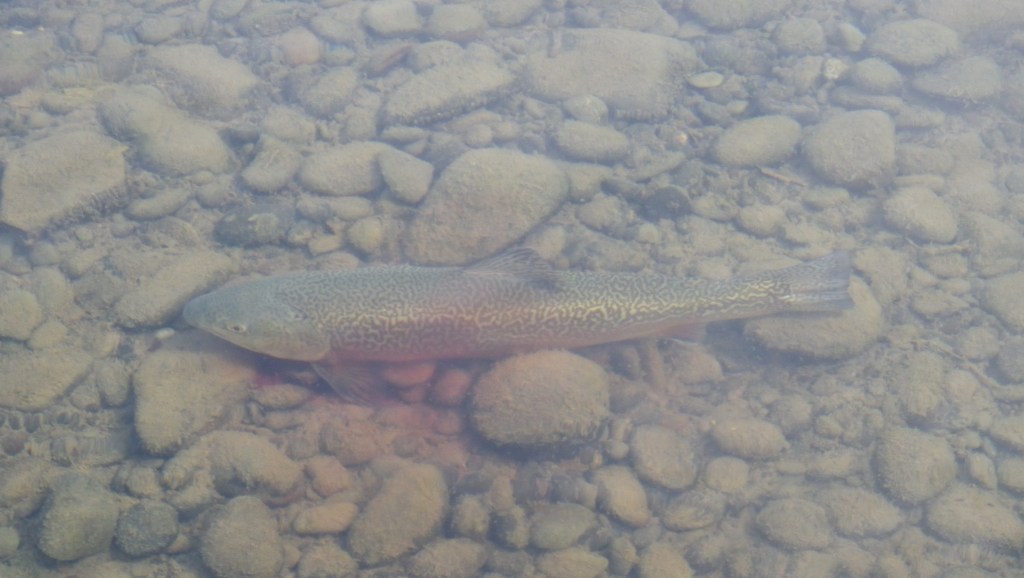
Restlessness is a frequent companion at this time of year, and sometimes it intrudes upon sleep. I need to get out, despite the cold and the snow squalls, just out!
I should wander over and visit my friend Dennis Menscer. I have had some wonderful talks with Dennis, as he is a wealth knowledge regarding life in these mountains, the rivers and the people who helped make up the lore of Catskill flyfishing. I especially enjoy his stories about the classic bamboo fly rods and their makers.
I feel a little guilty about stopping by just to visit, for Dennis makes some of the finest bamboo flyrods in the world. Invariably he will be working when I stop by; either building new rods or working his magic in restoring one of those classics so they might again do battle with Catskill trout. Please understand these are not five minute conversations I am talking about, they easily span four or five hours, yet I always leave wanting for more: friends and shared passions!
I can’t help but feel that I am depriving someone of time on the water with a new Menscer flyrod when I take Dennis away from his work simply to enjoy his company. I hold a certain reverence for the rod makers I know.
Yesterday I started tying boat flies for that longed for spectre of spring. If the past three seasons are any indication, there will be plenty of high water to deal with, but this time I will be ready. Boat flies are a little different from the usual contents of my vest. I tie and fish a lot of CDC patterns for selective trout on flat water, but they can be frustrating to fish from the boat. Drift boat fishing involves almost constant long casts downstream and extended floats which require stripping the fly upstream over and over, drowning even the best CDC feathers.
I tie a pattern I call the “poster” that is ideally suited for drift boat fishing. Posters have a single upright wing post tied with Antron yarn, and they are hackled like a typical Catskill dry fly. They float well on choppy water, they are easier to see on the water at distance, and they catch fish. Find a picky riser in a quiet pocket that demands a low floating imitation? One snip of the scissors and the poster rises to the challenge.
I tie other patterns a little differently when I tie them for the boat box. My drift boat parachutes have 4 or 5 turns of hackle rather then the customary two, and the CDC flies will have extra full and fluffy feathers that can stand up a little better to the repeated dunking. The sparseness I prefer takes a back seat to durability.
Filling that fly box helps me get a little closer to springtime.

It is easy to sit back and daydream, to walk the rivers of my memory…
It was a gorgeous May afternoon, perfection after a day of cold, howling winds that made it unfit for even the most ravenous fly fisher. That first day of my spring trip to the Catskills had been more punishing than the entire winter, but the second day was blissful!
I wandered the banks of the Neversink completely alone, and I reclined on the grass to revel in the luxury of sunshine and solitude. The I watched the pool for a while, fingering the old Granger on my lap, and waited for a rise.
There was a large flat topped boulder near the middle of the river that drew my attention, and it was there that I saw the first Blue Quills bouncing on the roll of bright current where the far edge of the boulder met the flow. As the minutes passed, the flies became more numerous and at last a gentle ring appeared along that rippling edge. I knotted a Blue Quill to my tippet and eased into the river, working slowly within casting range for the 60 year old rod in my hand.
The Granger offered the little dry fly gently, but the trout wasn’t yet feeding in earnest. He sampled only a pair of the naturals during the twenty minutes I waited in the cold water, showing no interest in my fly.
Larger flies began to show, Hendricksons that promised more enticement for the object of my desire, and the promise was fulfilled. The rises came again, still soft, but with a telltale bulge in the surface that quickened my heartbeat. My first offering was a classic Catskill tie, fitting for the tackle and the river, but ignored by my quarry.
There are probably more different patterns of fly in my Hendrickson box than any reasonable man would carry, but I love this hatch and anticipate it like no other. I selected a half and half style CDC emerger that rides with its’ wing awash in the film, tested the knot an extra time or two, and lifted the line into the air behind me.
The first cast alighted, drifted and was ignored; the second was taken with that soft bulge and dimple, and spring arrived with a splash and a surge for deep water. The Granger arched deeply as the Perfect sung its welcoming verse, and I stepped down and across stream to angle the fish away from the protection of the boulder. He ran freely then, heading for the rocky bank across the river, but the pull of the rod turned him, bringing him to midstream well below the rock he had chosen for his table.
The clear water revealed a gorgeous brown as I drew him closer, but he was no where near ready to succumb. I tensed each time he pulled that deep arc in the old cane rod, fearing some unknown fault might allow the heavy fish to escape, but the old classic proved more than equal to the task.
In the net I marveled at his color, then gently laid him along the long net handle on the grass. He reached the twenty inch mark and a bit more, so I hurried to snap a photo of my old Granger’s first Catskill brown.
A memorable moment, a day so cherished and beautiful it was a fit reward for enduring the long, brutal winter, and the perfect way to open a new season on the rivers of my heart.
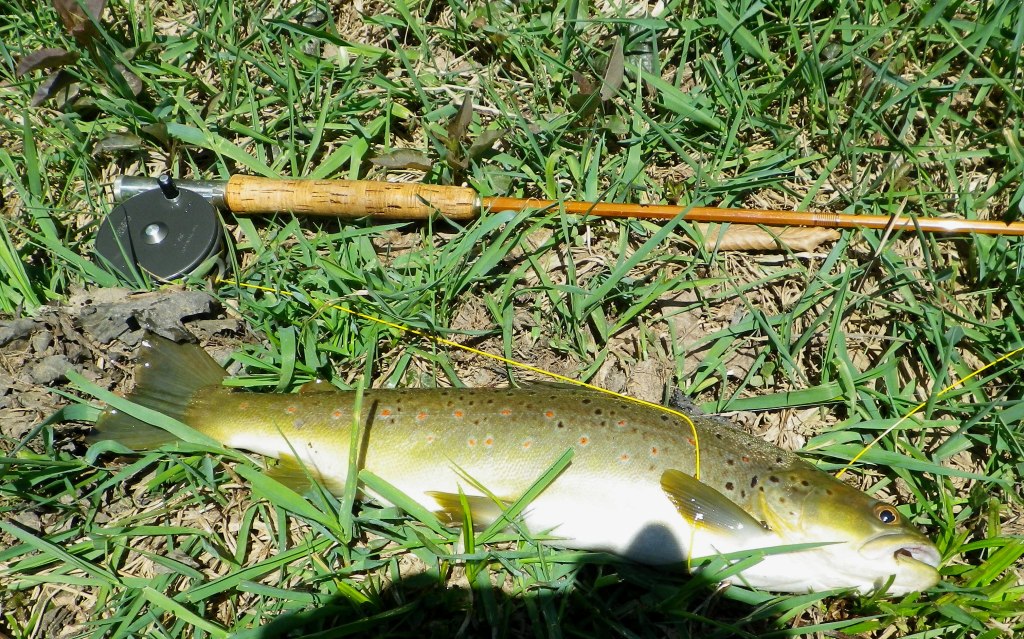
Granger called this model “Victory”. Indeed! Yes, it is so easy to sit back and daydream…
-
Tying Season
Winter has returned to the Catskills with a dusting of snow and a hearty blast of frigid temperatures. It was just midweek when I enjoyed a good long walk through the grouse woods with forty something degree sunshine and a glorious blue sky. Now the forecast maintains we won’t get above freezing for a while. It is back to the tying desk for me!
I have been working with a few new ideas off and on over the past year, always trying to capture a bit of life in the flies I offer to our wary wild trout. Often this amounts to a little pattern tinkering with the hope of improving a reliable design.
One such fly is a Green Drake dry fly I call the 100-Year Drake. The general idea was not my own, it was born of a chapter in an enjoyable book entitled “The Legendary Neversink”, edited by Justin Askins (Skyhorse Publishing 2007). There is a chapter in the book called “The 100-Year Fly”, authored by Phil Chase. It seems that Mr. Chase had been inspired by the early Theodore Gordon flies tied with a single clump of wood duck flank feather barbs, and had adapted that style to a parachute dry fly.
I had likewise studied Gordon’s style and, sometime after reading of Chase’s experiments, I began my own. I felt that the reclined wing style was particularly suited to the Green Drake duns that provide the most intense and thrilling angling of the year. There have been a number of variations on the theme in the seasons since I tied the first such flies, and it has been proven time and again on the Catskill rivers.
The 100-Year Drake is particularly suited to deceiving those big, educated brown trout that refuse or ignore all of the other drake imitations I might offer.
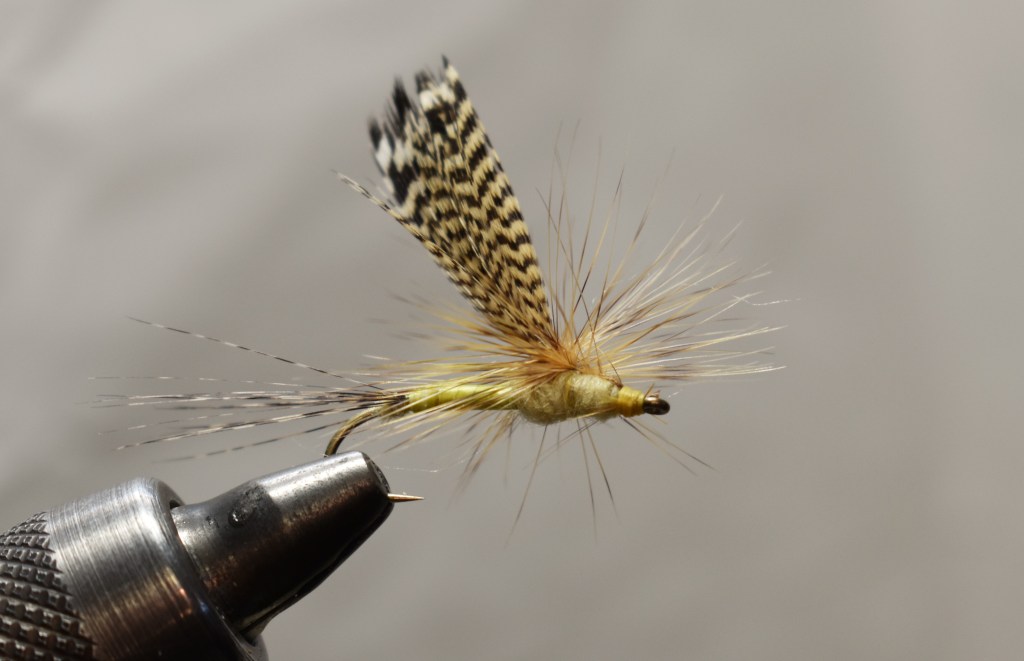
The 100-Year Drake
\The new version retains many of the materials from my best previous ties: heavily barred wood duck, Charlie Collins’ Golden Grizzly hackle, dark pardo coq-de-leon split tails, and turkey biots in Green Drake or Cream colors. The enhancements involve a few tweaks I am trying to increase translucence, both with dubbed bodies and the biots. One of these fooled a heavy 22″ brown on a bright day late in the drake hatch, a fish who had ignored a lot of naturals that wiggled right through his window, to say nothing of a good dozen well presented imitations. Translucence is my watchword for fly design this season!
I have threatened to design another 100-Year Dun over the past few seasons, the March Brown being a prime candidate. This mayfly carries its wings slanted back as does the drake, so it seems to be begging to be tied in this style. Our March Brown hatches are quite variable from year to year, so it might take a few seasons to give the fly a proper trial by fire.
The strangest March Brown I have ever seen appeared on the Beaverkill this spring. The trout were ignoring the traditional amber and pale yellow colored flies, while taking the live duns heartily. As we were leaving, Mike Saylor picked one up, the only fly we captured that day. My best description would be “road sign yellow”. It had the heavily blotched wing one expects, and it carried them at a rearward slant, but they were the brightest mayflies I have ever encountered.
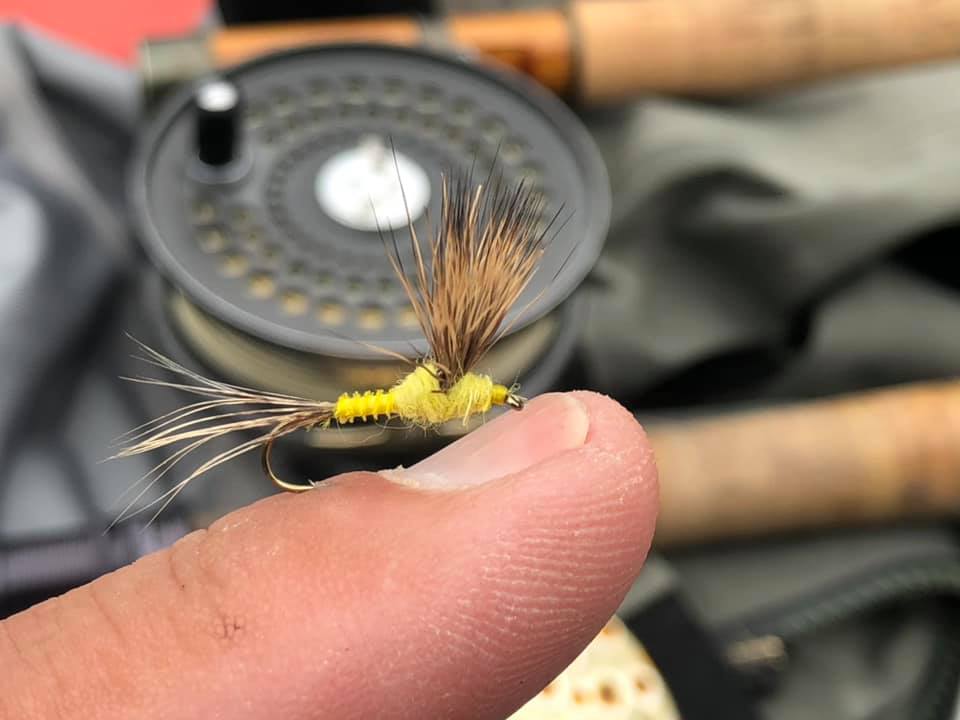
Photo courtesy Matt Supinsky It wasn’t just a fluke that day, because I tied the monstrosity above and caught those fish for the duration of the hatch with that godawful bright yellow bodied comparadun and a similar parachute. I have seen this mayfly in amber (what I think of as caramel tan) and a pale tannish yellow, but never in day glo yellow. The flies looked very strange to us but the fish obviously weren’t put off by them, even showing selectivity to the bright color.

Mark’s Cricket 2020 The new cricket has taken shape, after waiting impatiently for some 1mm razor foam to arrive via mail order. There are two color variations at this stage, and either one or both may win a place in the terrestrial box this summer. The decision is up to those “disappearing” trophy trout.

Though the winter fishing I have been doing has amounted to swinging soft hackles and little streamers, I have been rounding into dry fly mode at the bench. I keep hoping that the first taste of fishing a few of those dry flies isn’t going to be three and a half months away.
Last winter I ran into a few early black stoneflies hatching on the West Branch. I searched so hard for a rise I think I may even have hallucinated one; just one. I spent too many winters fishing limestone spring fed waters where there were fish rising all winter to midges, little blue-winged olives, and some of those same black stoneflies. The water in our Catskill rivers is a bit colder, and I have yet to encounter a midge hatch. Still there is hope with a more stable flow regime so far this winter.
Last weekend we had a couple of days that warmed up to the low sixties. This was warm air, as it was windy with heavy cloud cover most of the time. The tailwaters jumped from 35 degrees to 43 degrees, so I can’t help but imagine what might happen if another little zephyr of unseasonable warm air wafts through accompanied by some sunshine.
Maybe I should get to tying a few midges and stoneflies…
-
Eighty Days
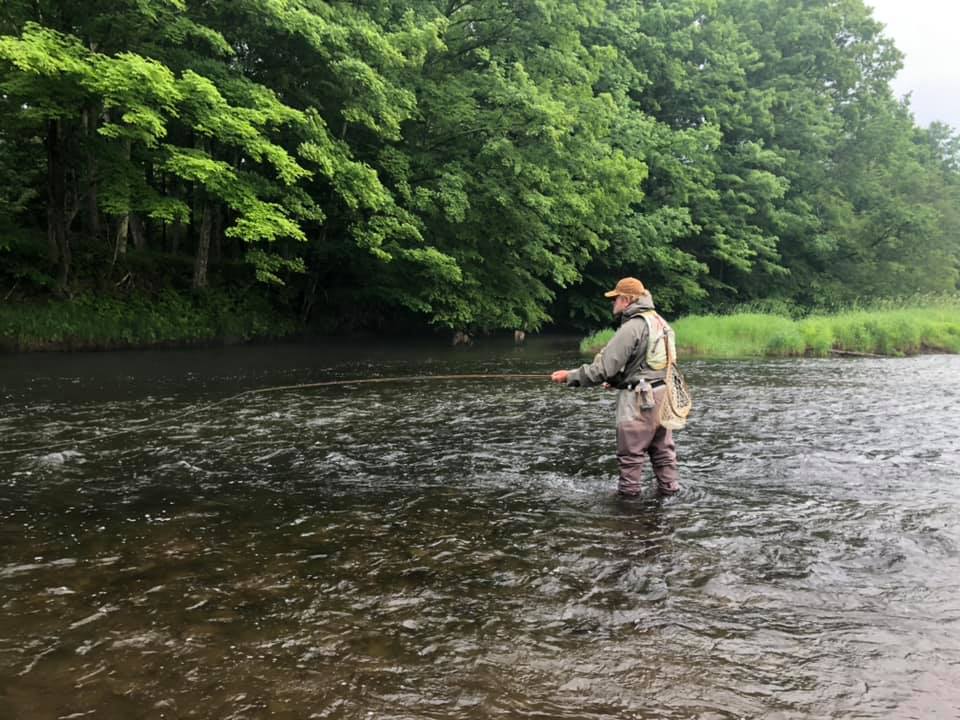
Photo Courtesy Matt Supinski There are eighty days to go before the opening of New York’s trout season, eighty days before spring smiles upon us once again.
Despite stormy skies, yesterday certainly felt like spring. Temperatures rose to the low to mid sixties in the southern tier, and the strong breeze was warm and invigorating, with no trace of the iciness typical to January in these mountains. It is 55 degrees on my porch this morning and the moon, nearly full, hangs in a low pocket of blue sky to the northwest while the sun struggles to peek through the clouds over the mountain to the southeast. That breeze still feels lovely.
The West Branch of the Delaware flows at 42 degrees this morning, her waters warmed seven degrees in two days time! I should be fishing; I want to be fishing, despite the warning that this vision of spring will all dissolve in hours.
Our winter has been mild so far, with breaks of forty degree days to offset the weather’s short stays below freezing. The reservoirs are filling nicely after last summer’s drought, bringing hope for a fine season on our tailwaters. But what will that season bring? Nature has given us so much variety over my two and a half decades of fishing these Catskill Rivers.
Last spring I experienced some new hatches, not unexpected in my first year of residency, some wild variations in the timing of favored hatches, and some wonderful if cryptic fishing.
The most celebrated but confounding day came during the last week of May. My Green Drake boxes were filled with some additional patterns which I fully expected to debut that afternoon, but they were to remain in my vest for nearly a month before I found the need to open one. I found rising fish, more than enough to make the day a memorable one, though I could never identify a single insect the trout were feeding upon.
I would cast to a rising trout with my best guess as to the correct fly until I either caught the fish or was convinced he would not take that pattern. I would scan the water and see a couple of mayflies, but always much to far to identify. Whatever hatched, they seemed to come in little brief flurries through out the afternoon, then cease as soon as I had tied on a dry fly I hoped would match. The hatches frustrated me, though the river’s wild browns did not.
When I located the first good fish rising steadily, I had not seen any flies on the surface. I began with a March Brown, changing to a large pale yellow sulfur when that was ignored. I finally tried my Quill Gordon comparadun, a fly that had worked well a month prior, though I felt sure that hatch had concluded for the year.
I confess to a bit of surprise when the brown took it hard, jerking the rod from my weakened hand with a headlong rush! I grabbed the rod with my right hand as it splashed into the river, saving my tackle and my trout, who quickly ran out all 105 feet of my fly line and started into the backing. With the rod back in my left hand I stuck the butt against my vest lest my aching fingers fail me again. That brown battled hard, coming to me, then streaking away twice before I could bring him over the net, a twenty inch beauty who nearly earned himself a fine rod and reel as a souvenir.
I dried and fluffed the comparadun, confident now despite the calendar, and cast to the next riser with a smile. That trout of course flatly refused to show interest in any number of perfect drifts. I fluffed the wing a bit more, gave it a final try, and the 15 inch brownie finally obliged.
There were several very good fish rising along the far bank by this time, though there was still no evidence regarding their menu choices. Whatever flies were floating down that bank remained a mystery, as the currents within reach of my position proved barren.
I resorted to a little rotation of patterns, trying everything experience told me should be or might have previously been emerging on that river around the last week of May. If you are a Catskill angler, then you know that is a lot of flies. We call that period around Memorial Day “Bug Week” for a reason after all.
One of my Hendricksons brought a nice 18 inch brown to the net during the next hour or so, but the puzzle was still far from solved. My “new” hatch for the season was a little size 16 mayfly I had encountered one morning on the mainstem, it’s body a dark, dirty yellow. The dark gray wings and tails convinced me it might be one of the lesser species of “Hendricksons” Al Caucci had discussed in his classic “Hatches II”, so I noted it as the little dirty yellow Hendrickson and had tied a few imitations. I chose the “poster” version of that fly and tied it to my tippet.
For half an hour I had watched one far away location carefully. Two or three times there had been a tremendous bulge there in a little eddy behind a huge boulder, finished with a little spritz at the surface. I checked the knot an extra time or two and pulled the rest of my fly line from the reel. The cast alighted perfectly, as I dropped the rod tip just as the last of the line unrolled and recoiled from the shock of the line against the reel. Soft curls of tippet allowed the little dun to dance slowly in that eddy, bringing the bulge and spritz I awaited.
At the strike the great fish turned the quiet eddy into a froth, boring away downstream toward another boulder with it’s accompanying deadfall tree. I carried a strong 6 weight rod that day, and it enabled me to steer the fish just shy of that sunken tree trunk, and away from the next huge boulder he sought to win his freedom.
It was a hell of a fight, me working that brute closer and closer to my waiting net, only to have him streak away, to writhe near the rocky bottom while I strained to keep his great head and the fragile tippet away from each jagged lip of rock. At last the mesh sagged with his weight and I was able to work the little dry fly free and measure his length. A 24 inch wild Catskill brown trout is a wonderful thing to cradle in the current at your feet.
Surely the dirty yellow Hendrickson must be the fly! No, at least not for the next riser or two I offered one to. Another big, bulging riser refused that fly with impunity, pushing it away with his nose. I countered with a size 16 olive parachute, and another battle was joined. That bronze warrior taped 23 inches.
A remarkable day, though it remained a puzzling one. A 19 inch brown came to hand with my Hendrickson para emerger in its jaw, and a fish easily longer than 20 inches loosed the fly as I attempted top guide him into the net.
I fished for four hours to rising fish, some steady, others sporadic, hooking seven and landing all but one. Four very different dry flies turned the trick, while a dozen or more others failed to draw the interest of the trout. Half a day of continuous activity, and not a single mayfly captured and positively identified.
-
Terrestrial Madness

End of a Summer Day During my years in the Cumberland Valley, terrestrial fishing provided the bulk of my dry fly fishing. On some streams, terrestrial time offered the only significant dry fly fishing of the year. Much of the lore of terrestrial flies and fishing was developed there by the likes of the Letort Regulars. Fox, Marinaro, Shenk, Koch and Schweibert all shared their insights and their brilliance through their writings, much to the benefit of all who came after them.
Fishing beside Ed Shenk I learned how to fish the gentle limestone springs with his classic patterns and techniques, stalking trout and presenting the fly in tight quarters. I can never repay my debt for his friendship and mentoring. During my summer trips to the Catskills, it was only natural to experiment with terrestrial flies when the ubiquitous mayflies proved scarce on hot afternoons.
On the big water of the Delaware and its tributaries, many think first of long distance casting, but the calm stalking approach to select cover still has merit. That style of angling can be very effective when fishing hatches, and it is essential for fishing terrestrials. Some of my largest Catskill browns have fallen to terrestrial dry flies delivered by this stalking approach.
Thinking about last summer’s success and my limestone roots caused me to pull Harry Steeves’ and Ed Koch’s “Terrestrials” off the shelf and give it a read. Thinking of that book as a “new” title, I was a little shocked to note the publication date of 1994, twenty-five years ago. I clearly recall sitting down in my fly shop with the two of them, talking fishing and flies and congratulating them on their collaboration. Ed was somewhat of a regular visitor to the shop in those days, and I had met Harry at one of the first fly tier’s symposiums in western Pennsylvania a few years earlier
Reading their words and remembering our talks inspired me to tie some of the patterns they showcased in the book, flies I look forward to presenting to our Catskill browns next summer. I am particularly interested in seeing how they react to Steeves’ Firefly when it alights beneath an overhanging branch.
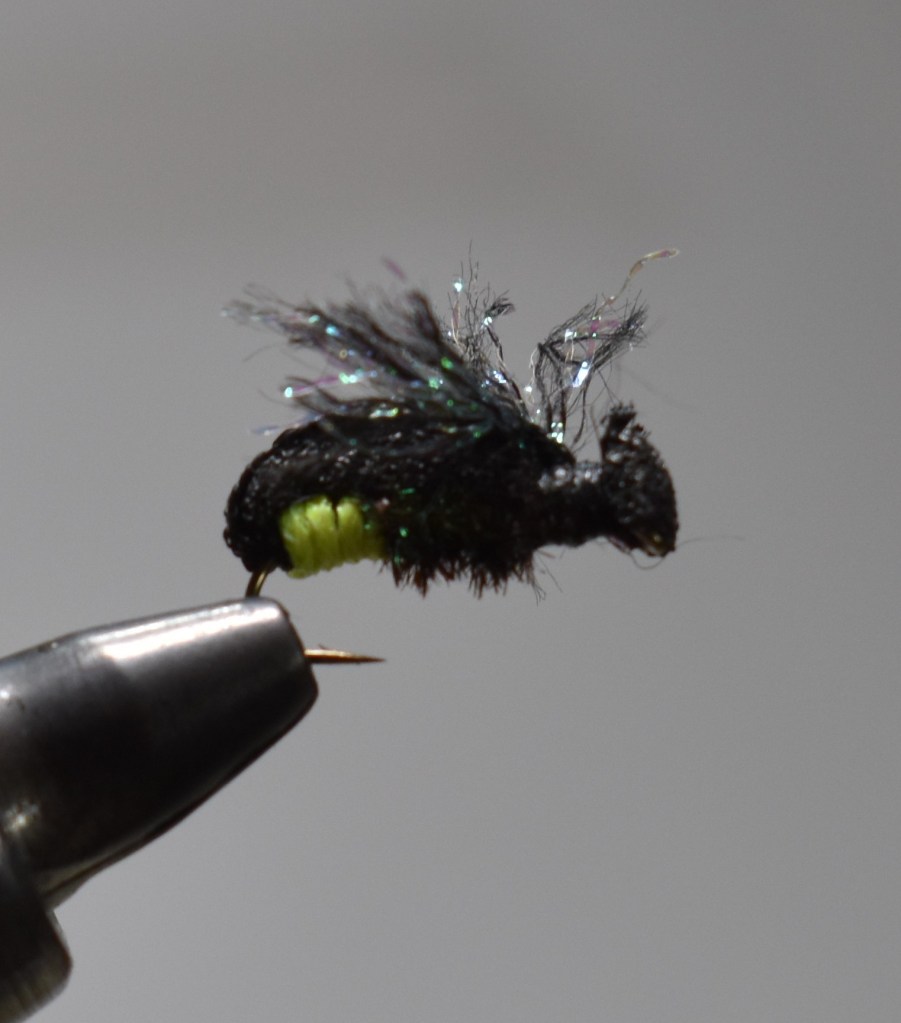
Steeves’ Firefly One fly I have used very little in the Catskills is the grasshopper, though I have certainly seen them in the fields. There are grassy areas along the Delaware that beg to have a hopper cast to them from a passing drift boat. I hope conditions are favorable when August comes around to give that idea a try!
During my little flurry of terrestrial tying I managed to bring back and update one of my patterns developed on Falling Spring years ago. The fly was tied with Kreinik metallic braid for the body, a material I discovered courtesy of Harry Steeves. Friends fished the fly in Montana that summer and returned with big smiles and fish tales, and I fooled several big Falling Spring browns with it over the years. It is high time I introduce it to the rivers of my heart.

Mark’s Hopper 2020 Thinking about high summer in these mountains has me thinking about designing a new cricket pattern to complement that hopper. The sun just glared through my window making it difficult to sit here and write or to tie. It’s time to take a walk!
-
Meandering through the off season

We were blessed with one warm, sunny day this first week of the new decade, alas it came on the heels of some frigid nights. The river temperature dived again, so I chose to spend the morning chasing grouse in the headwaters of the Beaverkill. The higher elevations had a fresh touch of snow when I arrived, and the landscape glittered under a glaring sun in the cleanest blue sky you could imagine.
I hunted the covers hard, putting several miles on my boots, and taking the glorious mountain air deep into my lungs. With deer season behind me, of course I found fresh tracks throughout the area. The grouse though had chosen other quarters.
The river looked clear and welcoming as I drove along the hallowed reaches of the upper Beaverkill, foretelling a fine season ahead for those members of the historic Catskill angling clubs who still fish these waters. I confess I harbor a desire to wade those bright riffles, an old Thomas rod in hand; to wander back in time in my thoughts.
Angling history drew me to the Catskills as it drew me to the Cumberland Valley and the charming Letort long ago. There is a special charm to these waters. Walking there I cannot help but hear the whispers of the past. The swishing of the wind through the pines becomes the swishing of a rod and its silken line…

Red Quill The classic Catskill flies intrigue me as well. Soon I will be tying Hendricksons, Red Quills, March Browns and Cahills, though there are plenty in my fly boxes already. I’ll fish them too, most certainly with the same confidence I fish my own creations of CDC, biots and blended dubbings.
Some Delaware anglers swear that only such low floating flies will produce. Do the trout scorn the beautiful history of the region? No, they accept the classic flies as they do the modern creations when artfully presented. Should leviathan refuse a Catskill Hendrickson, a clip of the scissors will offer the classic pattern with a brand new perspective, flat water or rushing chute.
I love dry flies, and I have learned the patience to enjoy them to the fullest. I once frothed the water with nymphs and streamers for hours, where now I sit on the bank and enjoy the view until a rise becomes evident. I love the stalk, particularly on flat, unforgiving water. I approach with agonizing care, studying subtle currents and visualizing the perfect cast. Patience.
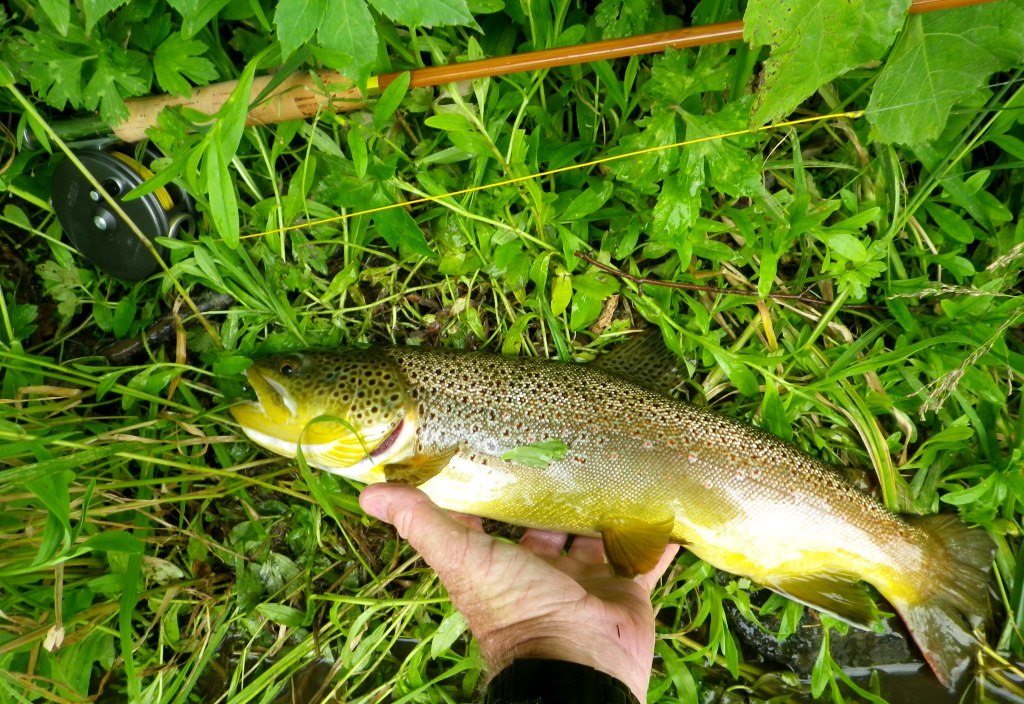
West Branch Bronze A vintage bamboo rod and a classic fly is at once an homage to the history of our sport and our lovely rivers, and an efficient means to an end. Presentation is not all line speed and power.
-
Summer, and the Great Debate

Ah the beauty of a Catskill summer! Though there will be some hot weather, you may count on plenty of glorious, sundrenched days in the seventies, a gentle breeze, and wild trout to be caught.
Summer hatches like the sulfur mayflies draw anglers on a daily basis whenever there is a substantial reservoir release. The cold water draws the hatch out over a month or two, sometimes more, and it is consistent. I have always felt it provided some of the most challenging fishing of the season, at least for those in pursuit of the Catskills’ trophy brown trout.
The best fishing is restricted to the upper reaches of rivers where the dam releases regulate river temperatures, keeping them in the forties and fifties on the hottest July afternoons, and that tends to create crowded fishing conditions. For years I would fish among the throngs for a few days, then head for some uninhabited reach for a little exploration and solitude. Most of the time I found little surface activity, and turned to fishing terrestrials in the style of the Pennsylvania limestone springs that I lived near and haunted regularly.
During those travelling years my time was invariably much too short, and those exploratory days consequently few, the fishing most often leaving me wanting for the pods of rising trout in the crowded zones. Terrestrials would produce a trout here and there and I oft debated their general lack of effectiveness with a fellow Keystone expatriate in a local fly shop. The gentleman always maintained that the trophy fish disappeared after the Green Drakes and the abundance of “Bug Week”.
The debate never turned either way, each of us maintaining his position, and unable to prove his theories. If anything my lack of terrestrial trophies lent more credence to my adversary’s position, though I always believed my limited time was the deciding factor.
Last year I bought my house here and explored a bit before the rains came in August and drowned the rest of my first summer as a Catskill resident. One steamy morning I stalked a familiar reach with my Baby Cricket knotted to me leader, determined to unlock the mystery. My go to summer fly for the Cumberland Valley produced a pair of 19″ brown trout that morning, convincing me that the better fish did not disappear. One morning did not prove the theory, but the rains turned the tables on me before I could wander further afield.
The spring and summer hatches this year seemed chaotic, and before the river stabilized July had arrived. The sulfurs drew the big crowds, bigger than usual to my mind, and the fishing became frustrating. I took a break from the madness late in the month, packed my terrestrial box and a light rod and resumed my quest.
There is a certain joy wading a quiet reach of water and being completely alone. I wrapped myself in that feeling, picked the best times of day for the rivers I visited, and began to take those wonderfully invisible browns on terrestrials. The numbers weren’t springtime numbers, as there were no significant hatches to bring trout to the surface with any regularity; but the trout themselves regularly passed that special 20 inch mark!
I enjoyed a month of some of my favorite kind of dry fly fishing: hunting and stalking the trout most anglers pass unaware. It was sublime. This summer was as dry as last year’s was wet, and September didn’t offer good fishing. Flows became quite low and water temperatures high, shutting down much of the water I had enjoyed fishing.
Relief finally arrived in October, and the terrestrial fishing blossomed again after the rivers receded from the storm. Between walks through the grouse covers, I was back to picking my spots and times of day, and catching gorgeous browns from mirrored pools flanked by the autumn blaze on the mountainsides.
One afternoon my good friend Dennis Menscer stopped by with one of his beautiful creations: 7 1/2 feet of flamed bamboo begging for a four weight line and one of those spectacular pools of bright water. I answered the call and christened that masterpiece fly rod with a 20″ autumn brownie. Perfection!
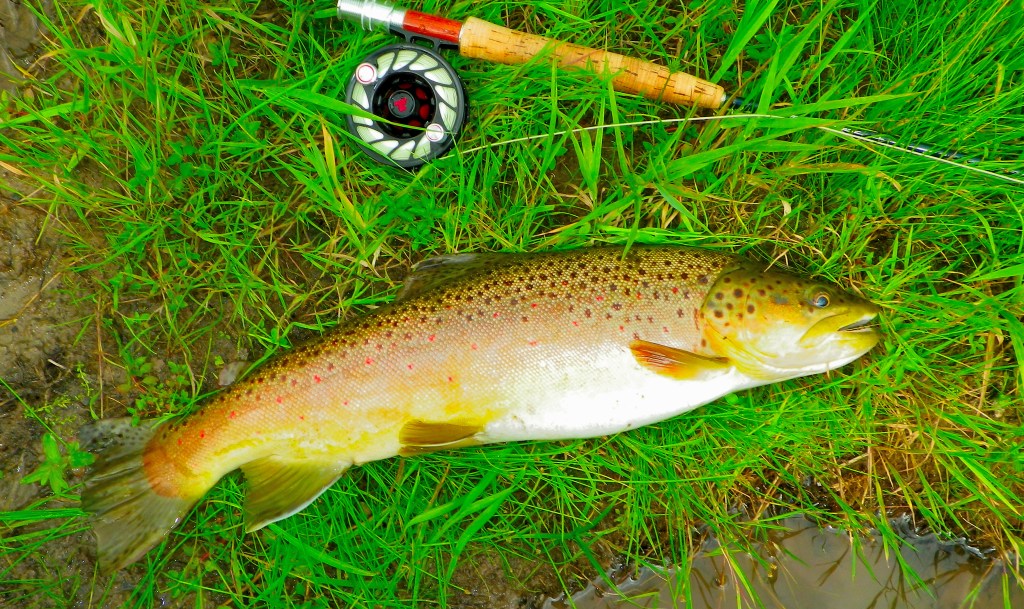
A bit more than two feet of Catskill Brown
-
Celebrating The Season

Photo courtesy Andrew Boryan Memories of winters past, like the one captured above, haunt me. A bright morning on a limestone spring, and two friends taking the day to stalk wild trout seems blissful, but thoswere to be the last days of that short lived fishery. That place was my winter retreat, until the state fisheries people decided to “improve” it and destroyed that reach.
I began this winter walking the banks of my new winter retreat, the West Branch of the Delaware River. It beckons with miles of bright water as opposed to the few hundred yards of my former respite. The scenic beauty is captivating, but it doesn’t have the magic of limestone springs to keep the water temperature hovering near 50 degrees.
I carried the new trout spey outfit out to greet the season, figuring to save wear and tear on my casting hand and wrist at least until the doctors figure out a solution. It is a new and novel way to swing the soft hackle flies previously reserved for an old bamboo rod.
It is a different world since the day I began fly casting, with the internet offering hundreds of videos sure to make one an Olympic caster. I have watched a few, some worthwhile, some too filled with salesmanship and repetitive rants to be useful, all unfortunately taught by right-handed casters. That leaves me struggling not only to recall the techniques when I am on the water and adjust for the direction of river flow before me, but to turn things around in my head; all while trying to catch a trout.
I managed to get the line where it needed to go though I won’t be counting style points.
With sock liners, my heaviest wool socks, and neoprene wader feet, I seem to be good for about three hours until my feet become two blocks of ice. The gap between 50 degrees and 35 is tremendous. That time limit fits nicely with the warmest portion of the day.
There is still hope and a learning curve for Catskill winter fishing where I am concerned. Though I haunted the West Branch last winter, most of those days featured high water. With the wettest year anyone could remember, Cannonsville dam ran maximum release from August until February. I looked for midges and tiny olives, and I quivered with excitement when I saw the first little black stoneflies fluttering on the surface, but my anticipation was never rewarded with the rise of a trout; not one. I enjoy the quiet peace of swinging soft hackles, but I am a dry fly fisherman in my heart.
The log on my tying bench shows 2,000 flies tied during 2019, more than 167 dozen. I can say confidently that 160 dozen of those were dry flies.
With the spey rod I run the risk of being caught unprepared should the magic of any sort of hatch appear. Frank at the Whitetail shop tells me he has fished dry flies with his trout spey tackle and had some success, but only with large flies such as March Browns. I feel very confident I won’t be witnessing any size 10 mayflies taking wing toward the snowy riverbanks.
The dichotomy of this spey game is belied by the “3 weight” designation of the rod. A 3 weight is after all a perfect tool for winter midges. Ah but the scandi line you cast with that “3 weight” has a 210 grain shooting head, the equivalent of an 8 weight. Just try to pinpoint a 22 midge emerger on a brown trout’s nose in flat water with that. Spey fishing is an either/or proposition for the dreamer in me.
It was 35 degrees at five o’clock this morning. That means my waders and boots might not be frozen solid again this morning, swinging in the pre-dawn breeze out there on the porch. I had been thinking about a grouse hunt, but I guess I’ll have to take a look at the river temperature before I decide.
-
Winter’s Glory

There is something spectacular about a winter’s morning. The sunlight belies the ten degree temperature, so that even with ice along the river’s edge there is a promise of fishing. The day may blossom or, like today, that gorgeous sunshine may not defeat the rush of artic air, keeping that ice secure.
It is a good day to spend time at the bench. The soft hackle box has been filling this past week, as has the box of tiny streamers. Swinging flies: wet fly hooks, silks and game bird feathers. I wander back and forth between classic patterns: Partridge and Orange, Grouse and Green, and my own. My Red Squirrel Sparkle dubbing traces back to my fly shop days, and an article penned for Fly Fisherman some two decades ago. A slender dubbed body with a bit of copper wire and a brown partridge feather makes for an enticing little fly I know will wake the interest of a cold water brown.
Invariably the streamers feature marabou, the quest for movement within the fly burned into my psyche by my friend Ed Shenk, Master of the Letort. Even the simple Wooly Bugger is tied spey; a shorter hook and a wide, webby palmered saddle hackle, at times collared with a large game bird feather. In the cold water of winter’s Delaware, each fly must convince the trout it is a living thing.
Last year I stalked the margins of the bank full river with an old Steve Kiley bamboo. Reported to be a modified Dickerson taper, its maker marked it for a DT6 or WF7 line, with which it works fully when I extend the line. Being bamboo though the tip retains that life, that delicacy that can gently flick a size 20 olive to some imagined ring on the leaden surface. You never know when a bit of magic might develop after all.
There is a new madness on my horizon, born of that spring obsession with distance casting. My wrist and hand paid the price for too many of those 100 foot casts, and now I wait for tests and conversations with doctors.
Spey casting seems to offer the opportunity to swing those lovely old soft hackles without the wear and tear on my infirmed hand and wrist, so I am preparing to embark on the whimsy of “trout spey”, something I once joked about. The local fly shop has a line on order for me, one I hope will arrive before the short weekend warmup the weathermen are touting.
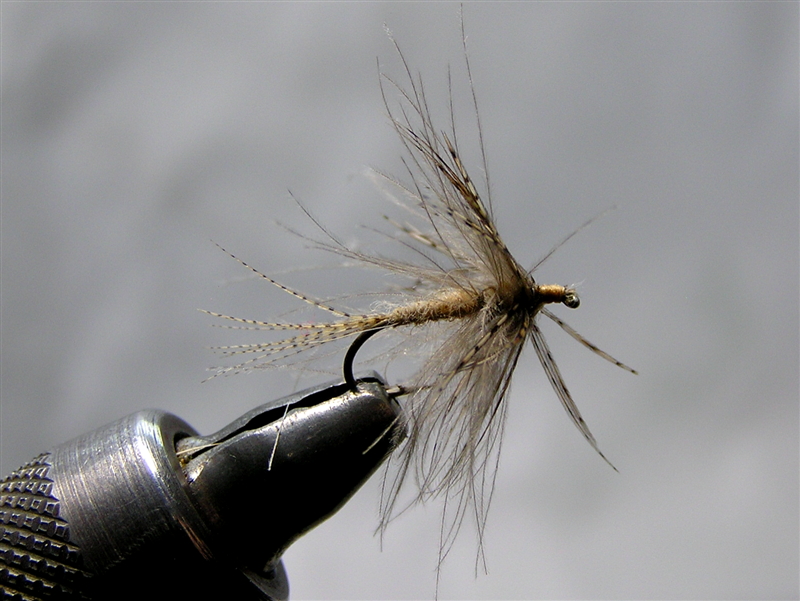
The Drowned Hendrickson Just now I cannot help but linger here by the window, entranced by the blaze of sunlight across the snow and the shock of blue sky framing the northern mountain.
-
Looking Back
The year is drawing to a close, my first full year at home in the Catskills. It was a fishing year, though I knew not what to expect as I ventured forth on those initial winter outings.
I had found my little house in July of 2018, looking forward to a summer of fishing between projects as I readied the new homestead for the final move from Pennsylvania’s Cumberland Valley. There were a handful of afternoons on the West Branch before the deluge.
Rainfall is vital for the health of wild trout and trout rivers, but the rainfall gracing the Catskill Mountains in late summer was relentless. The Delaware River reservoirs filled and spilled, and the rain kept coming. The idea of wading and fishing was washed from my mind by the torrent of swirling water encountered at every access on every river.
It was January before I dared set out to fish a little back channel on the West Branch, swinging soft hackles and small streamers with my “off-season” bamboo rod. The river still flowed at the reservoir’s maximum release, but it was possible to wade some of the shallowest water. It was refreshing to be on the water after months of high water, enjoying my first winter days on the rivers of my heart. There was even an occasional trout willing to interrupt the swing of my fly.
I continued my search for an affordable used drift boat, resolved not to be undone by high water again, but as spring beckoned the rivers rose again, and it seemed there was no boat to be had.
The Beaverkill finally came down to 1,000 cfs during the later part of the month, and I took my life in my hands to wade. Quill Gordons pouring off of a little riffle brought the year’s first rises and a 16″ brown to hand on a dry fly. I explored some new places along the river, finding a bit of wading, all the while hearing tales of hatches on the West Branch despite a flow thrice what could be considered wadeable.
The high flows demanded I work at my distance casting. With the right rod and line, and plenty of attention to line handling, I reached and exceeded the hundred foot mark, presenting a dry fly well enough to fool a number of larger browns. Long range fishing became somewhat of an addiction.
On a visit to the Neversink I made an unexpected contact that finally led me to that drift boat, and on April 29th a friend and I floated the West Branch from Deposit to Ball’s Eddy. The fishing proved less than memorable.
As my familiarity with rowing increased, the catches improved, and I enjoyed the new freedom, though I have never been a big fan of drift boat fishing. My best catches still came on wading days when the flows relaxed and I could stalk trophy trout with the stealth they demanded. It was my best spring in 25 years of fishing the Catskill rivers, provided by the freedom of retirement and the opportunity to call this region home.
My first Catskill winter included an unprecedented amount of time at the tying desk, and I began a log to keep track of new ideas, dubbing blends and patterns, and a few notes to chronicle the most interesting days on the water. I expect to have tallied 2,000 flies before the New year dawns. Professional fly tiers would yawn at my output, but these are flies for my own fishing, with a few shared with good friends.
Months of higher than normal flows, and my new obsession with long distance fishing kept my favorite bamboo rods out of my hands on too many days this year. That is something I will have to rectify in 2020. Cane rods have more personality than graphite or boron, and they demand a bit of courting to deliver their best. I feel there is a fly line out there that will coax an honest hundred foot cast out of one or two of them, at least if I can overcome the “graphite rush” and allow them the time to load when trying for that distant rise.
I need to allow myself more time for photography as well. My Nikon didn’t spend a day on the boat this year, and I never gave up an evening of fishing just to walk the river banks with my camera; something I had promised myself I would do.
It will officially be winter in a couple of days, and I hope to get out on the river before the New Year. Fishing and tying are priorities now that deer season and those golden October mornings in the grouse woods have passed. If the snow doesn’t leave the mountains too icy though, there are still some grouse to be hunted.
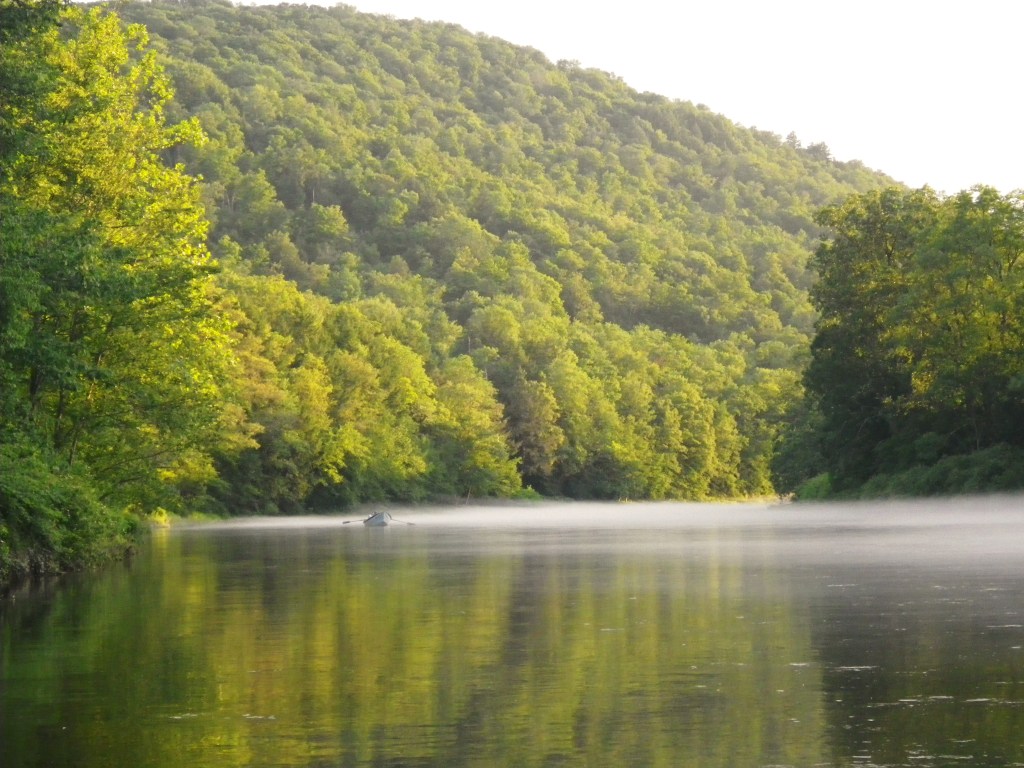
-
Joy
Ah the joy of starting a blog for the first time! Seems my icon identifier is not too functional. I guess this is to be expected going from print media to electronic. Bear with me, I like bamboo rods and dry flies much more than computers, and I won’t own a smart phone…
-
An introduction…
I fell in love with the Catskill Rivers more than 25 years ago. The combination of the sheer natural beauty, the quiet simplicity of the hamlets scattered throughout the mountains, the glorious wild trout and stunning insect hatches that sustain them left an indelible mark on my soul.
I wrote often of the fishing here in my weekly Outdoors column during 22 years in Chambersburg, Pennsylvania, talking myself into retiring here so to savor the seasons along the rivers during the best years of life. I am inspired to continue, to share the wonder of a winter’s morn, the struggle of a spring mayfly to take flight from the rippled surface of these bright waters, and the rise of a trout to the fly.
Search
Archives
- April 2026 (8)
- March 2026 (10)
- February 2026 (9)
- January 2026 (14)
- December 2025 (14)
- November 2025 (10)
- October 2025 (10)
- September 2025 (9)
- August 2025 (10)
- July 2025 (10)
- June 2025 (8)
- May 2025 (12)
- April 2025 (12)
- March 2025 (9)
- February 2025 (10)
- January 2025 (15)
- December 2024 (12)
- November 2024 (13)
- October 2024 (12)
- September 2024 (10)
- August 2024 (12)
- July 2024 (10)
- June 2024 (12)
- May 2024 (11)
- April 2024 (14)
- March 2024 (11)
- February 2024 (13)
- January 2024 (14)
- December 2023 (16)
- November 2023 (11)
- October 2023 (11)
- September 2023 (8)
- August 2023 (10)
- July 2023 (9)
- June 2023 (12)
- May 2023 (13)
- April 2023 (13)
- March 2023 (14)
- February 2023 (15)
- January 2023 (15)
- December 2022 (13)
- November 2022 (5)
- October 2022 (10)
- September 2022 (10)
- August 2022 (8)
- July 2022 (9)
- June 2022 (10)
- May 2022 (10)
- April 2022 (13)
- March 2022 (14)
- February 2022 (13)
- January 2022 (13)
- December 2021 (10)
- November 2021 (9)
- October 2021 (7)
- September 2021 (9)
- August 2021 (12)
- July 2021 (11)
- June 2021 (12)
- May 2021 (15)
- April 2021 (16)
- March 2021 (14)
- February 2021 (14)
- January 2021 (12)
- December 2020 (11)
- November 2020 (13)
- October 2020 (14)
- September 2020 (13)
- August 2020 (14)
- July 2020 (13)
- June 2020 (16)
- May 2020 (16)
- April 2020 (18)
- March 2020 (13)
- February 2020 (11)
- January 2020 (8)
- December 2019 (6)
 Bright Waters Catskill