I fished the limestone springs of Pennsylvania's Cumberland Valley for a couple of decades, founded Falling Spring Outfitters, guided, tied and oh yes, fell in love with the Catskill Rivers I can now call home.
I am wondering, has the dry fly season come to it’s end? Nearing mid-October and the improvement in fishing that tends to bring has left me waiting and yes, this morning included the S word in the weekly forecast. Saturday lists a high of forty-two degrees and a low of thirty-one, it’s introduction is listed as “rain/snow”. Not winter… not yet!
This afternoon is lovely, sunny, colorful and nearing eighty, yet this lull will mark a fortnight tomorrow. I have wandered, searched and found wanting.
I am torn toward walking the mountains, now at their most beautiful, a scattergun taking the place of split and glued bamboo. The river was swelled by blessed rain, but how quickly it is dissipating. Might tomorrow be the best chance for that afternoon delight, rising trout to a final show of mayflies? My confidence shrinks at the thought, for the winds are expected to return. No trout will rise to tiny olive mayflies between whitecaps!
Each year, I cling to each possible moment of my angling season. Once the dry fly ceases to be the answer, much of the joy for fishing passes unto the cold, dark hours, a prisoner of another winter.
Nothing good shall come of this pondering aloud, so I shall seek a brief, fading moment outdoors. Sitting amid the sun’s fading warmth, I watch the clouds, as if they have the answers I do not.
It is still shy of dawn here, and I am hopefully listening to soft rainfall above my head. Our rivers are terribly low, the freestones crying for rain, and the usual refuge of the tailwaters suffering the city’s idea of management by dropping the releases on the first of the month.
A friend and I shared a beautifully calm day astream yesterday, hopeful that one of the spare soft rises we found might transform to a fine trout, but those hopes were unrequited. Dry fly fishing has been, missing since turning the page of my calendar.
Indeed, my thoughts inevitably turn to the possibility that this dry fly season has run it’s course, far too early for my own preferences. I cling to some thrilling memories from Octobers past.
Walking in, I had shared this summer’s sightings of at least two different black bears along that reach of river, one a cub, the other assumably it’s mother. I told of them laughing, with some surety that those neighbors had since moved on. Not long after we began fishing though, my friend quietly said “we’ve got a bear”. Turning, and expecting another river crossing well down river I came up blank and asked “where”. The reply brought a bit of a chill: “right behind me”.
Sure enough, in the tall grasses on the bank I made out the black curve of the head and two rounded, well separated ears, the rest obscured. Not a little fellow there, not at all.
There was little for us to do but quietly continue our fishing and keep an eye on it, who obligingly turned and moved up the bank, vanishing in the knotweed. Uncertain if I felt better not seeing it right there than knowing just where it was, we both relaxed a bit and continued our quest for trout.
We had no more of that bear but the memory, and that was preferred. It did continue to supply some conversation.
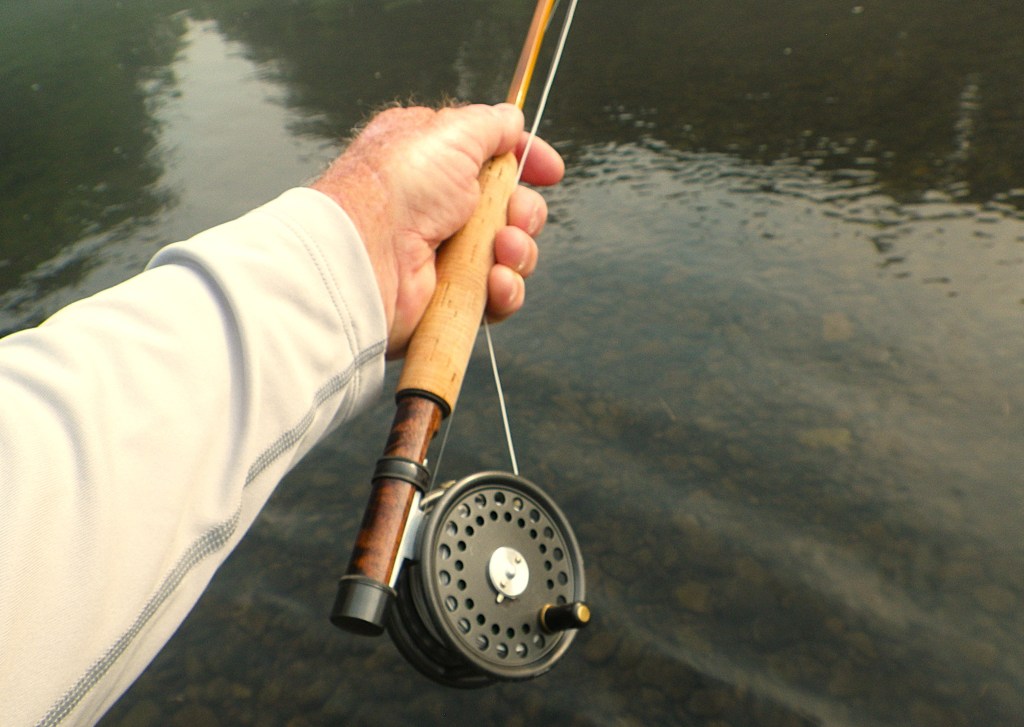
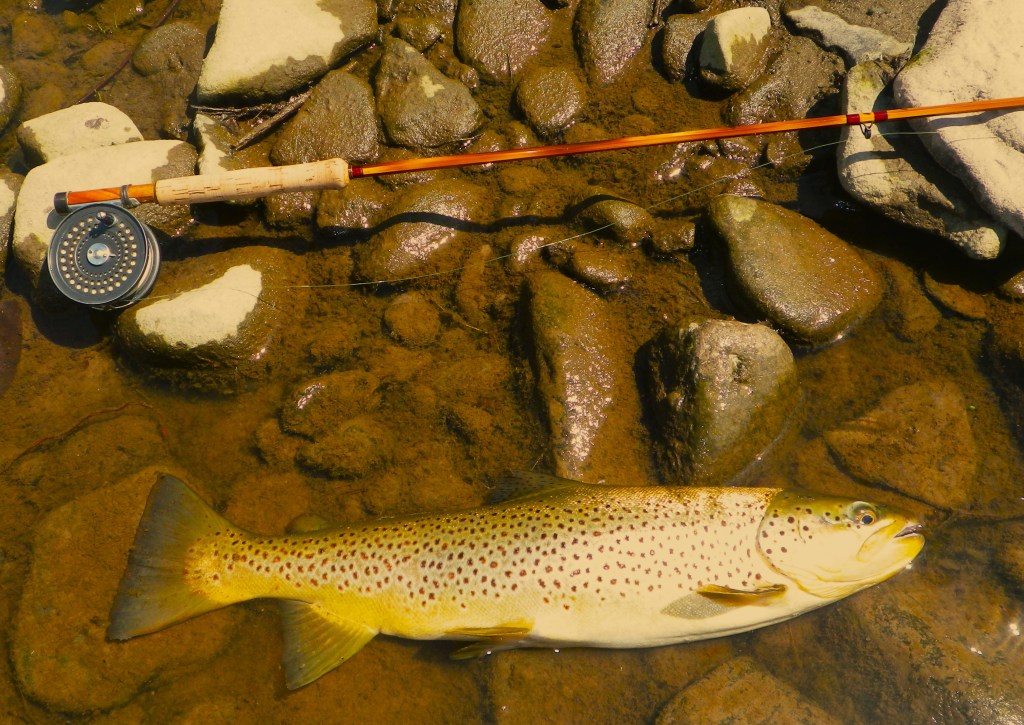
Dennis Menscer’s Hollowbuilt 8′ three weight & St. George: a wonderful trout outfit, a terribly poor bear rifle substitute.
I was pleasant to wade the placid waters without a breath of wind. Most of my river days this month have been more than blustery, rendering dry fly fishing basically impossible in many places, and highly difficult in others. I enjoyed fishing the 803 Menscer again, ideally suited in the thinnest water of the year, and I had hoped to feel it alive with just one stocky brown trout or a surprise rainbow. Moreso, I had hoped such a trout would favor my friend, but the fates resigned to tease us with a couple of almosts. A classic beautiful October fishing day with a stern absence of the catching aspect.
I still cling to harboring my thoughts for a spell of fine dry fly fishing to close the season, an October to remember. If this gentle rain continues, perhaps…
I had read the forecast, fooling myself that an early start might grant me a couple of hours of at least looking for dry fly fishing. Perhaps I did not even trust my own judgement, bought with many hours of battling Nature’s changes amid these mountains, for I carried an old vintage graphite fly rod afield.
The riverscape was a swirling display of floating leaves, drifting upstream with the wind and downstream with the meager currents. No sipping rise could ever be found amid this colorful, whirling disarray had there been one, and recent proof told me that any would be likely given a soft mirror of a surface.
I walked, quite a way, swung a Partridge & Pheasant Tail through the pool and the runs, all of them shallow at this diminishing flow. No signs of life anywhere, no signs of rain throughout the week, and the winds rattled the trees along the mountainsides throughout the day while I withdrew.
They promise better things today, if bright sun and clear shallow water are your cup of tea, but dry fly fishing? Fat chance. Experience knows what “10 to 15 mph” really means along Catskill Rivers anyway. Still, I’ll be out there somewhere, for time is short and my soul craves bright water, even if it barely laps at the toes of my boots…
That old graphite is out there in the SUV, but I’ll pick a sweet bamboo wand to carry when I go. Wishing that gesture might appease the Red Gods, at least for a time, I know more likely they will view it a challenge.
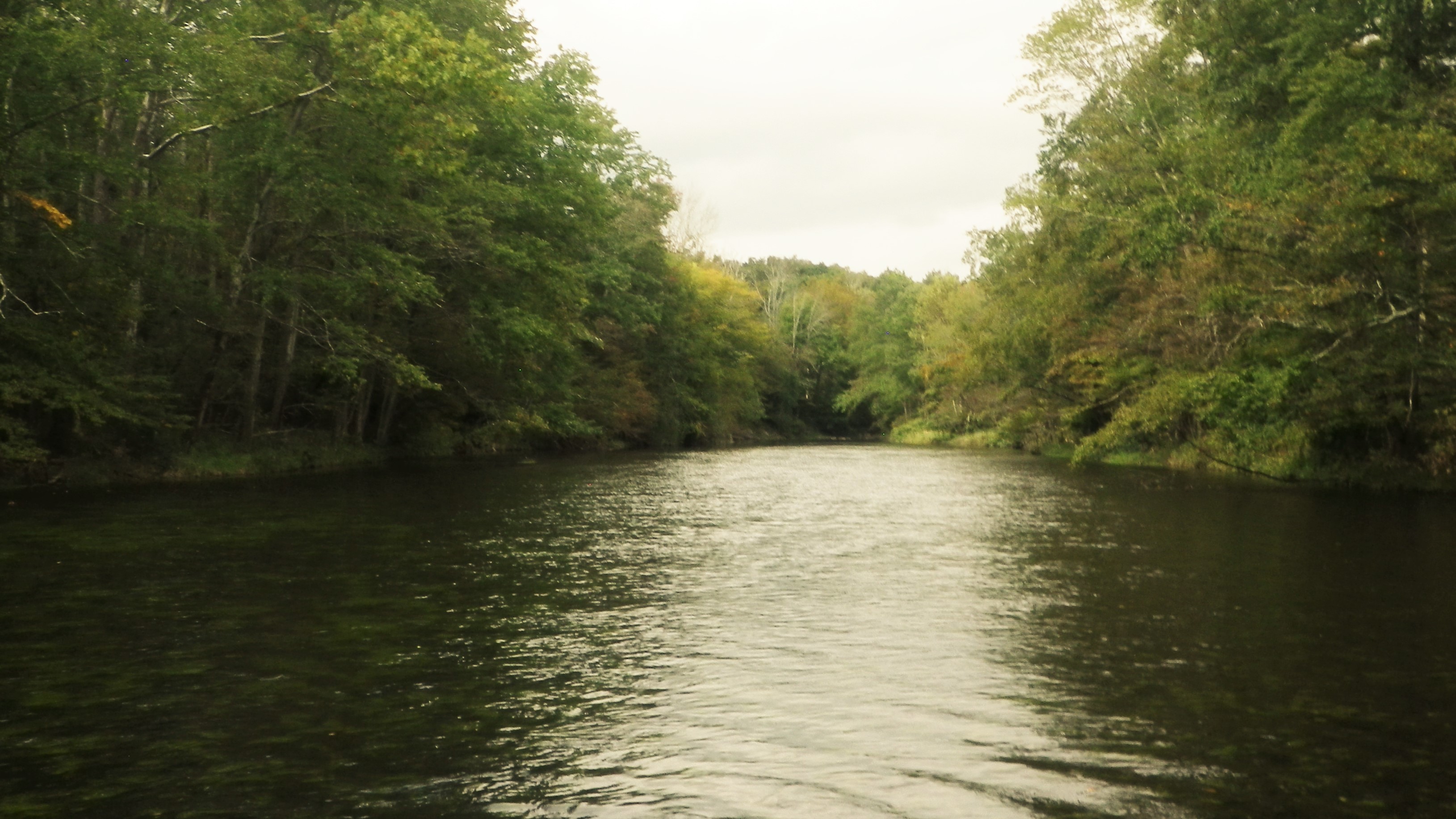
A placid pool, flowing right to left… the whitecaps, counterpoint provided by the Red Gods!
Of course, there is always a touch of hope in my heart. One cast is all that one needs. A rise… not even that! Just a discrete shimmer, a subtle turn of a ripple in the water, and that one cast…
The reel I’ll need is right here to my left, the line cleaned and lubricated just yesterday. That old CFO reel has belonged to one rod, the rod inside that first tube which came to me more than a decade ago, labeled D.W. Menscer, Maker. That rod was born for this, for these Delaware rivers!
Fishing is picking up, though the catching still lags, so I hedged my bet this morning. Getting ready for the day ahead, I took the Leonard 66 ACM from the rod rack. I untied the leather laces of the deerskin reel pouch that holds my vintage Hardy LRH, the reel that simply belongs to the ACM. I was certain that the line had been cleaned and slickened before I put it in that pouch, but I ran it through a pad of USL just to be sure, to be as ready as I could be. That rod has a spirit in it you see, at least one, perhaps more.
I do not know the history of the rod, but I know that it has a great and special power, mojo some of us call it. The rod came to me at Summerfest in 2025, through a gentleman dealer in classic tackle who I have known for a while. Paul is a friend of Wyatt Dietrich, the Chambersburg, Pennsylvania bamboo rodmaker who made my first custom rod. Paul was the source for the taper Wyatt followed for my rod, so he and I had a connection well before we ever met. I do not know whom he bought the rod from, nor anything about that person, though I know that this rod has powerful spirits of it’s past angler or anglers within. It is truly more than simply a bamboo fly rod; it is a magic talisman.
A split bamboo rod is a living thing, and it holds some essence of those who wield it.
The Leonard Model 66 ACM rod was not a catalogued rod, made only on special order for a specific customer. I wonder who that customer might have been some 55 years ago, for now we have a connection, though I will likely never know his name.
I felt the power of this 66 ACM rod on the first day I ventured on the water, the Beaver Kill River back in April. I had nearly lost my life in March, and by the third week of April I was not truly ready to take my place upon these bright waters for the beginning of the dry fly season.
My doctor told me that I should decide when I was ready, but warned me not to do any “work”. “Do nothing that would work up a sweat”, he said. A regular, full day upon these rivers is work in that sense of physical activity, so I had waited through the month of worry, and then the surgery, and on into the recovery. When I could no longer stand to be apart from these Catskill rivers, my Cathy drove me to the Beaver Kill, set up a lawn chair on the riverbank where she could watch my progress and run to my rescue if I faltered, and let me fish for a couple of hours.
In my weakened hand that day was the very same Leonard 66 ACM fly rod. I waded gingerly into the shallow edge of the fast water there and tied a Quill Gordon 100-Year Dun to my leader. There were flies on the water, and fish rising, but there was one single rise that caught my eye. I was certain that was a good trout, but he did not rise again.
Perhaps an hour later, once the rod returned some strength and control to me, I saw a swirl below a rock, right where I had seen that good trout. The ACM and I laid that Quill Gordon right on target and, when I saw the take and raised the rod, a big old trout went berserk. After two runs downriver, deep into my backing and with myriad tense moments, I was finally able to bring that trout to my net: twenty-one inches of broad-sided wild rainbow trout.
That moment, and that fish, was my salvation.
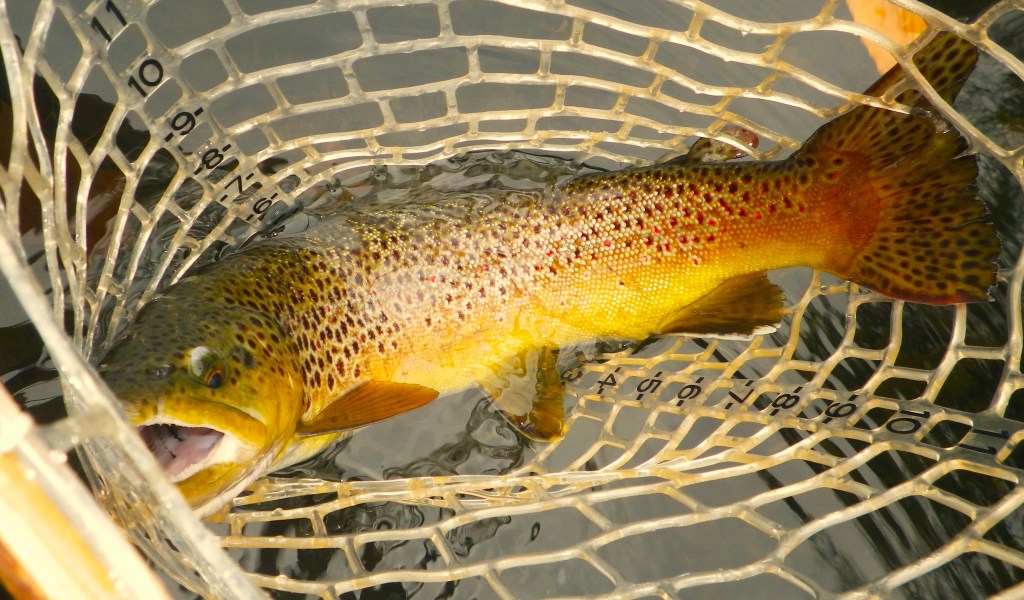
During one of my best Catskill summers, the ACM showed me it’s power again. During one pivotal day wielding that rod, I landed three exceptional wild brown trout, a pair each measured at twenty-four inches long, and a third barely an inch shorter. The magic, the strong spirit and power in that rod is very real.
My fishing had finally slowed down at the end of summer, and I had been searching for a sign that the good autumn days I used to enjoy on the Beaver Kill would return. We have enjoyed a summer with more normal rainfall after the prolonged droughts and heavy ice accumulation over the winters in 2024 and 2025, and it has been three years since I found wild trout returning to my home pools during autumn.
I found a few mayflies and a few rising trout this week, but I had not caught any of them, thus I called once again upon the mojo of the 66 ACM.
I walked into the river before Noon, finding the pool quiet. I set about tying a new tippet to my leader, and while I busied myself with that, I saw a rise just where I had fished to a riser for a barren hour on Monday. By the time I had the tippet and a size 20 olive tied on, the Red Gods bid me good day, raising the wind from nothing to ripple the entire surface of the pool, putting my old friend down.
I stalked further into the pool, getting in position should the winds lie down and that trout resume his rising, and waited.
The blow lessened after fifteen minutes and gradually the river’s surface began to calm. Sure enough, I saw a swirl and unhooked my fly from the frame of the stripping guide, stripping enough line from the reel. When the trout rose again, I made three or four casts, walking my fly across the current as the flirting breeze still obscured the exact bubble line he fed along. On my last cast, he came for my fly. The Leonard rose to meet him and the effect was a shot of lighting, a big silvery trout leaping into the air and charging away toward the boulder field nearby.
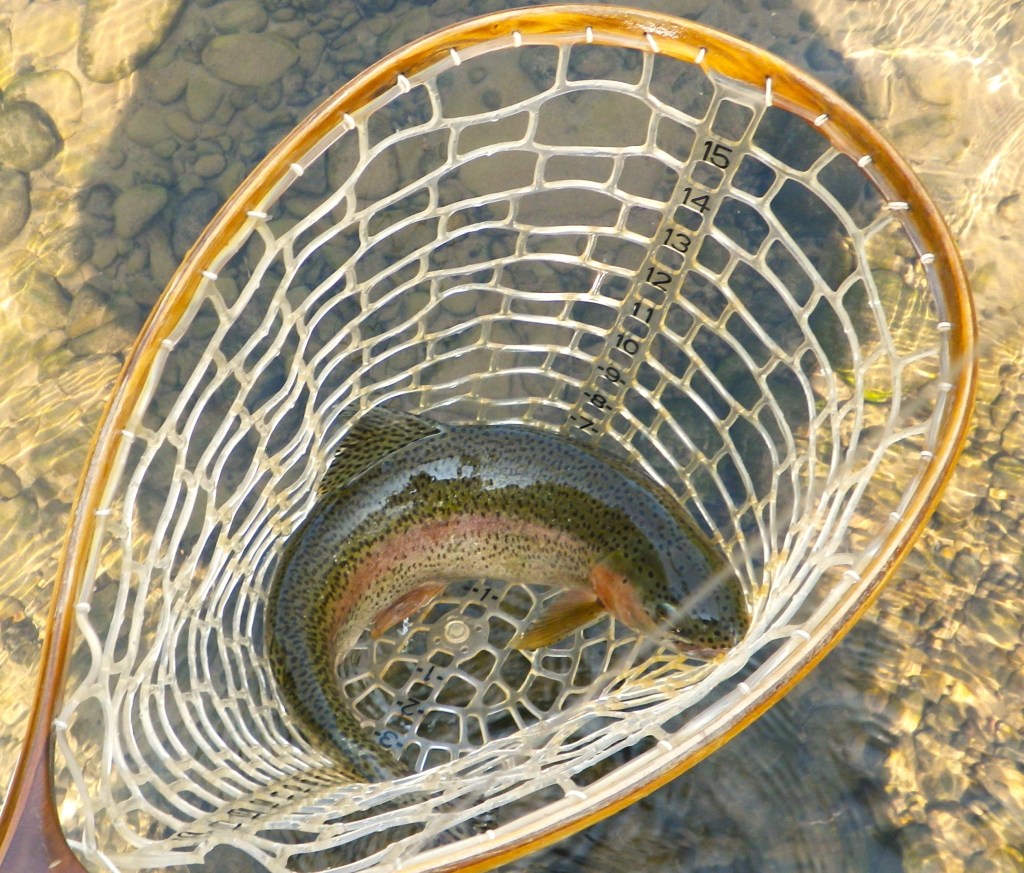
The spirits and I kept him on the reel, played him well, and kept the frail tippet away from all of those ragged edged boulders. At last, I led him into the net: a beautiful, broad-sided wild rainbow measuring twenty-one inches long.
My mind flashed back to April on another pool more than a mile and a half upriver. Could that possibly be the same trout that magic rod had delivered to my hands back then?
No other trout would rise throughout the day, and there would be no more little olive mayflies after our encounter. The river returned to the calm, serene, glassy vista as when I arrived. I cannot shake the belief that this fish was meant for me, the wielder of this living fly rod, this Leonard 66 ACM.
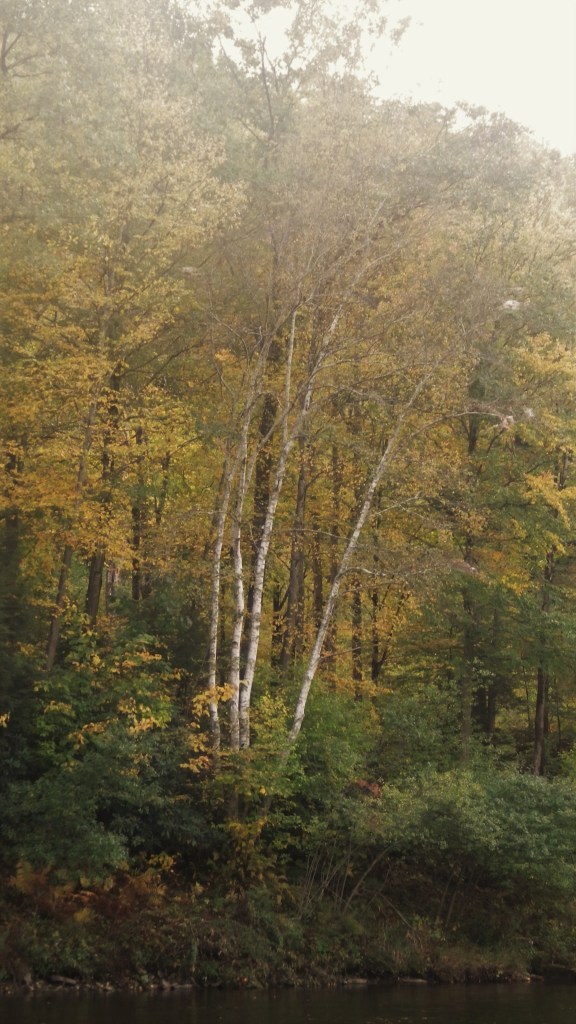
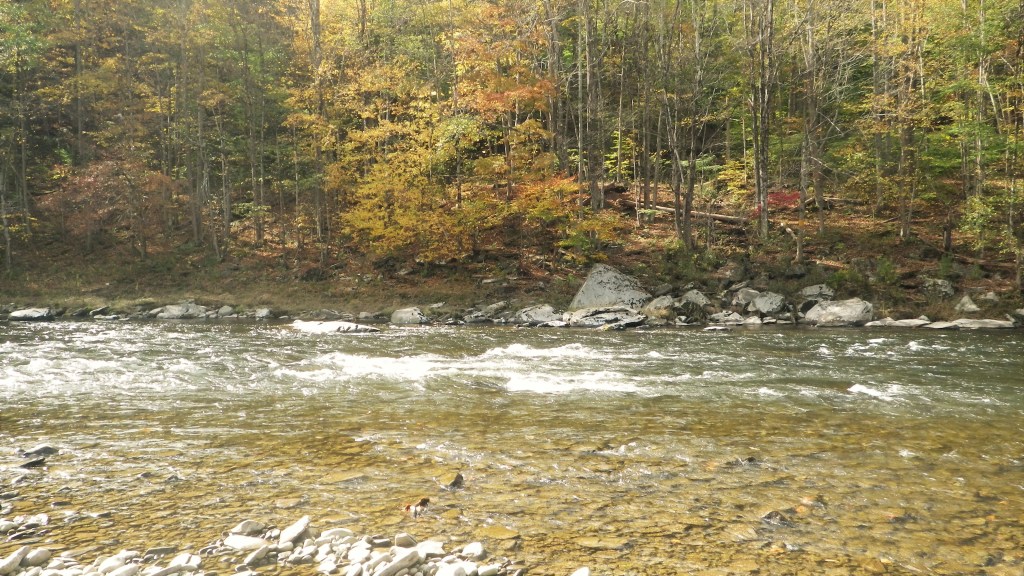
A fine mist permeates the air as I wade out into a broad pool. No rain was forecast, but I am glad to have worn my old SST jacket to keep that mist at it’s distance. The pool is quiet, so I stop just a few steps into it’s edge and wait.
My eyes are straining, but I cannot find evidence of insect life. The time, the season, this chilly misty weather, all insist this is the time.
First, it appears simply a crease in the film, out there along the far bank, but long experience leads me to begin a slow, measured approach. Getting closer, that crease has repeated once or twice, and now it seems somewhat further from the bank. Still, it could be a rogue current thread, twisting between the jumbled rocks of the riverbed, emerging fitfully, for a river is in itself alive.
The river has risen slowly, and my approach must stop short of my ideal casting range, but I set my feet and wait to see if my suspicions prove true. At last, that spirit of a crease in the flm does indeed wander out from the riverbank, punctuated with the tiniest wink of light and a ring the size of a half dollar.
Larger rivers often demand our maximum casting efforts, but this game screams for delicacy. Those two ends do not necessarily meet. The delicacy is paramount here, and yes, this infrequent delicate little excuse for a rise tries to tell me that it emanates from a fingerling, but I know better.
For a moment of time, the movements cease, and I extricate myself out of deeper water and reposition. I find a perch closer to the bank, but further upstream, the cast requiring a bit more distance, but allowing a longer more downstream drift. Once in what seems a long while, that quiver of movement precedes another half dollar ring.
Failing from my second point of attack, I extricate myself again from the depth that threatens the dry pockets of my vest and reposition again. When that ring appears again, I force my tense muscles to relax and flick the rod more gently, feed the slack line perfectly through my line hand and watch the tiny fly drop on the goal, a barely visible thread of current, and watch it ride…
The ring finally envelopes my fly, and, though it seems my slight pause is correct, I raise the rod smoothly and feel nothing.
The game degrades from that apex, my offering various different flies, and the fish simply demurs to rise to any of them. Still though, he sips something invisible every now and then, just to assure me that he has won.
Before I go, I see a lone rise amid faster water, and I make the long walk of shame. Stalking to deal with the quick, jumbled currents, I make the one cast that lands perfectly and the trout meets the fly amid the spray!
Another dance, this one lasting but a moment. This trout is big and he knows exactly where he is. The lovely little classic reel affixed to my Friendship Rod screams violently, as he dives into the rocks and hangs my fly in the bottom, debris. Retrieved, it bears a wisp of water weed, a consolation prize?
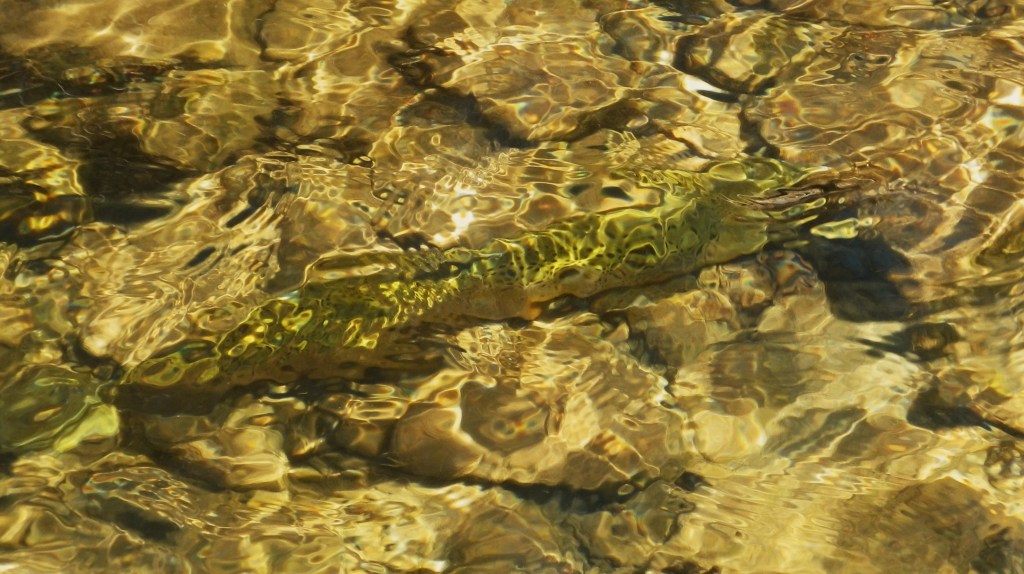
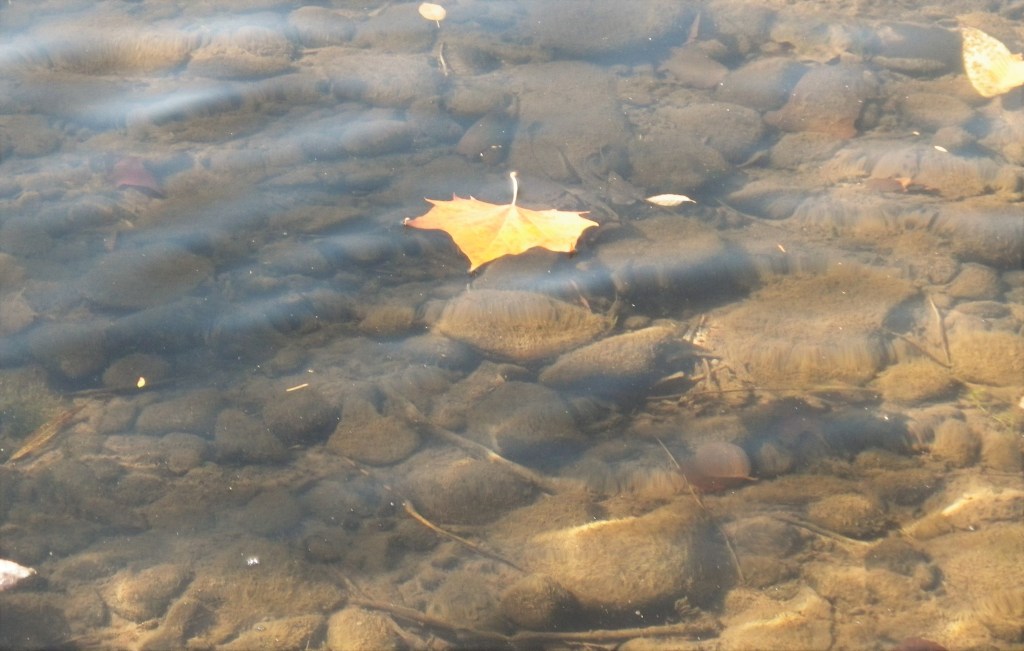
Seen, though unseen, even in inches of crystal clear water
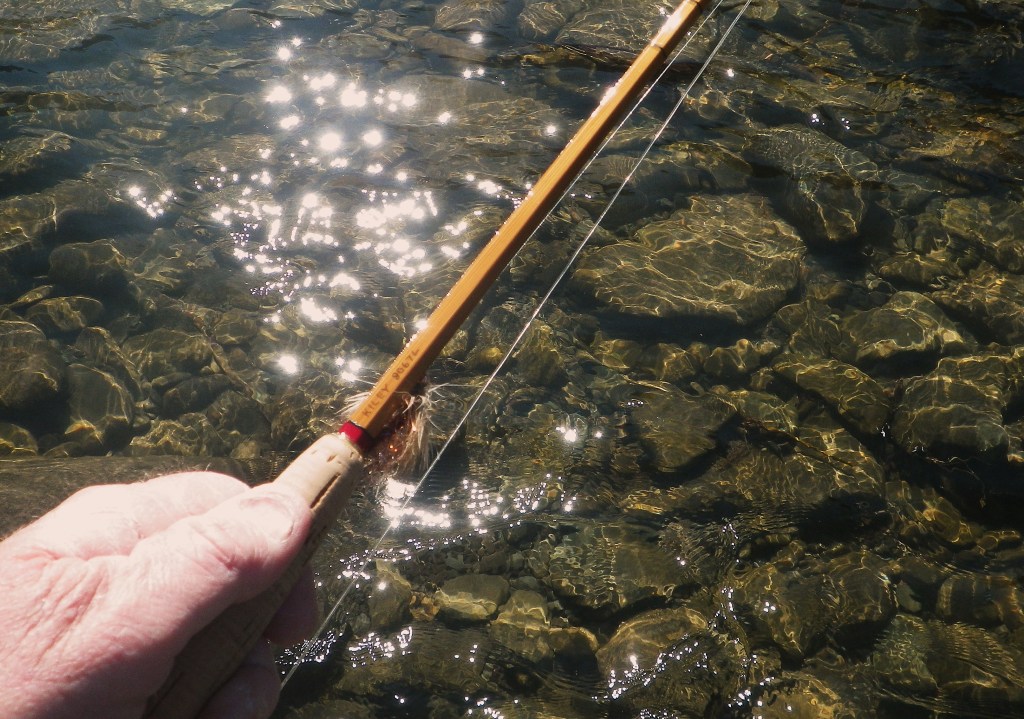
So, I rigged up the old Kiley rod, married it to a vintage Hardy Princess, and started my walk along the river’s edge. I believe they will be very happy together.
There was a little rain still lingering among the slopes of the Catskills, the soft, almost misty kind, but I didn’t see any signs of life on that wide expanse of the pool. I was headed to determine if the fast water, the heavier stuff, had enough depth to hide a trout. The rain was still around you see, but it failed to do much for our rivers throughout this long, nor-easter weekend.
Stopping to watch one of the better stretches, I looked back down over the pool once that misty rain had stopped, and there it was: a soft, twinkling rise!
I took my time of course, walking the stones along the edges, and slowing to a crawl once it was time to work into the pool proper. One doesn’t want to blow an opportunity one has waited for three years to meet. I watched that rise, stopping every slow, gliding step. I didn’t see anything where the trout met the air, though I had marked a handful of whitish mayflies – the summer Cahills, and a few discrete significantly smaller drab mayflies – the olives. The Cross Special has done some good work this season, and it had already been tied on, so…
The float appeared perfect, down gently with the leader and tippet to my side, plenty of distance between the fish’s bailiwick and the leader butt and that fly line. Two casts, three… nothing. So, stop and watch a moment. Still cannot see anything on that surface when he takes something; an emerger?The CDC cripple? No. The olive, it’s always the olives…
The tippet is checked, 5.5X in deference to the clarity of the water, and the little olive T.P. Dun is offered. Multiple drifts… nothing. He’s moving, and he’s not alone! Work on the one though… not having it.
A smaller, darker olive ignored. A winged ant, also ignored and he stops for a time, so I look at the insects showing. Eventually, a few larger mayflies are spotted and tagged as isonychia. A size 14 Pale Isonychia 100-Year Dun is offered to the next riser after he lunges half out of the water after something. That’s definitely a trout, 18, 20… silvery, a bow? Whatever it is they are taking, they are not my dry flies.
They are getting skittish from casting. That first one is down. What are they eating? It’s always the little olives this time of year, always…
Whatever they wanted seems to have stopped, so I withdraw, head back upriver. I find one rising at the head of the run, see a few more of the big mayflies and offer the isonychia, and he ceases rising and vanishes. I walk a long stretch beside the faster water and decide that it’s flow is too thin. All of the measurable rain has fallen east of the Catskills it seems.
Coming back downriver I see one ring when I get close, right there where that first fish rose earlier. I stalk in again and repeat. No sale. The others have not started up again (and they will not). I am smiling though, perhaps with a somewhat crooked little smile, but a smile indeed. They have arrived…
The last threads of the weekend’s nor’easter are passing through our Catskills, leaving us flat clouds and not nearly as much rain as we’d liked. Cool, dampish, the kind of day not promising to make an angler feel comfortable, though the kind of day which should look good to a trout.
I have spent a couple of days doing autumn tasks, painting my porch, ordering the new tarp to cover the drift boat, keeping my mind away from the water. A few thoughts have strayed to the imminent opening day of our grouse season.
Dreary, damp, unsettled weather; but the rivers are calling me. I cannot walk away once a whisper of hope remains for this stalled dry fly season.
I am thinking of one of my older, less glamorous rods, thoseI think of as my off-season rods. There’s an Orvis 99 very nearly as old as I am, and the original, back when I was still plotting the break toward retirement, that Steve Kiley rod that will throw wet flies, winter’s small streamers, yet with a simple adjustment to it’s leader transforms itself into a lovely dry fly rod. Sometimes the rod regulates the mindset. A classic dry fly rod insists that I fish a proper dry, whether any flies deploy or not. The off-season rods don’t make such demands, allowing me to try to find a trout in questionable water with a soft hackle, before considering the rigorous approach pure dry fly water demands. There are still favorite reaches that have not proven trout have returned there, once waters have cooled.
I recall an afternoon when I fished the Kiley with an autumn searching pattern, convinced that my dry fly season was completed. I caught a hand size smallmouth bass and felt that end was assured, so when I watched a tiny little blip beside an emergent boulder, I simply smiled that they were more of the same. Moments later though I watched a significant bulge in the flat surface of that low water run and the kiss unmistakably made by a sizeable trout!
The change to the leader was quick and sure, for I saw a few tiny olives drifting there. With leader lengthened and tippet lightened, I secured a size twenty comparadun and studied the currents for the one pitch this scenario would allow.
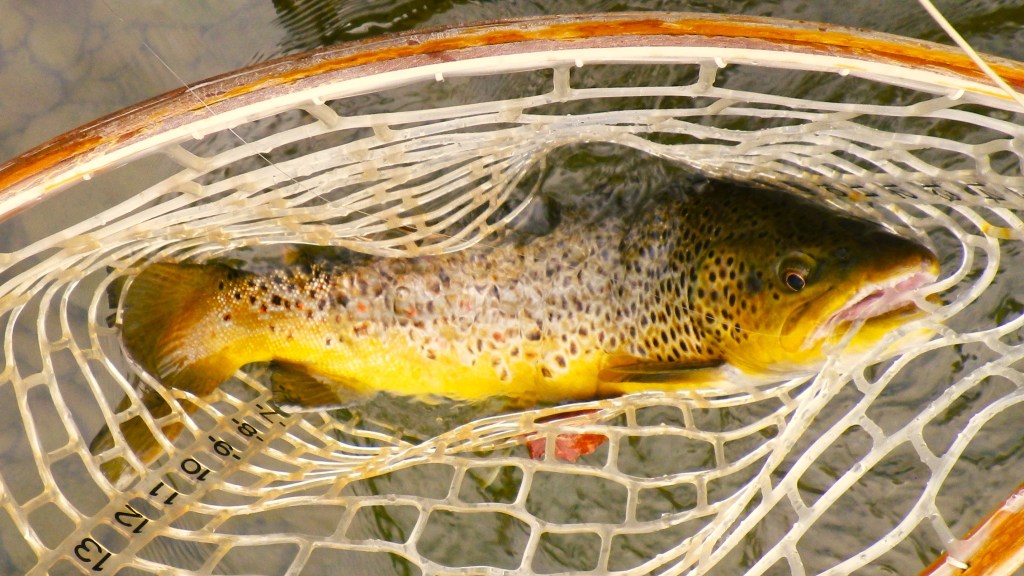
Perfectly aimed with controlled slack and a gentle touchdown, that little fly drifted right downstream to destiny! The brown gave me a terrific battle, maneuvering him away from sharp edged rocks and snags, and at last into my net. A gorgeous twenty-two inch wild brownie brought a smile to my face, while shaking hands removed the fly. Dry fly season over be damned!
Sometimes that change of attitude, the relaxation which envelopes me when I shed my expectations can alter the fates I believe.
A quiet day before the season’s first nor’easter brings discord. I am leaning to a four weight rod this morning; perhaps my Sweetgrass pentagonal will fit the bill. The rod’s russet-colored silks against it’s lovely blond cane speaks to autumn, and it has fewer days than some along the turns of this frenetic summer.
I have the reach of water foremost in my thoughts just now, one I know as intimately as any. Fishing has been quiet there too. I have wandered the wide riffles and flats of the Delaware, but the signs of feeding trout have diminished as the month advances. September’s moods…
There are other favored bends, other rivers who are calling, and I have stopped and, inquired, but there are no answers yet.
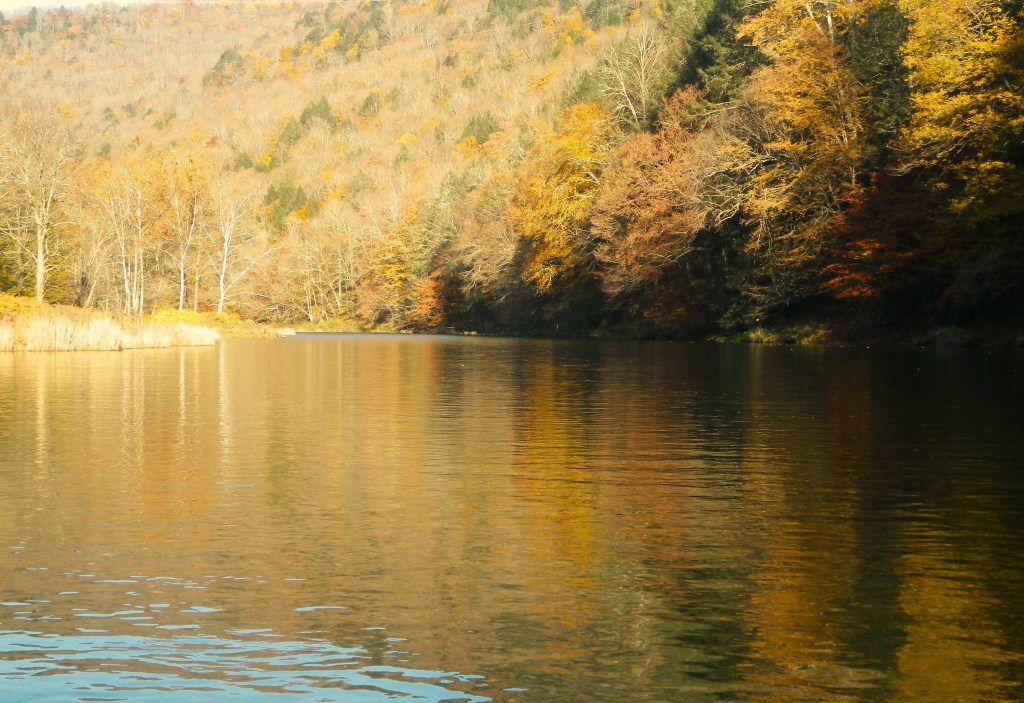
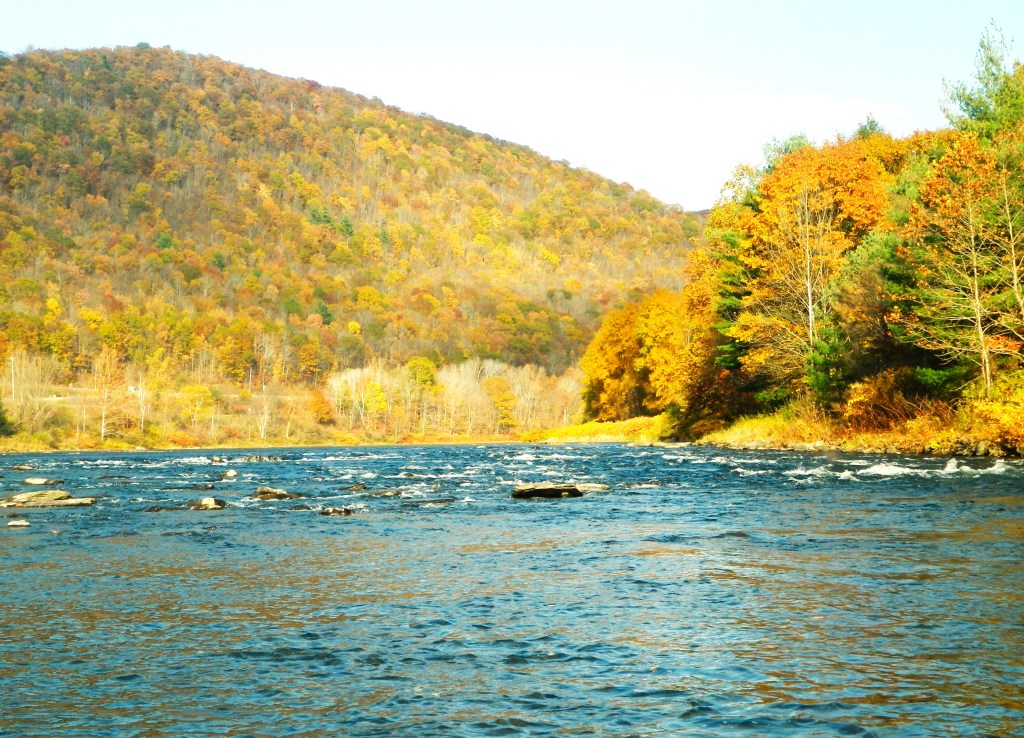
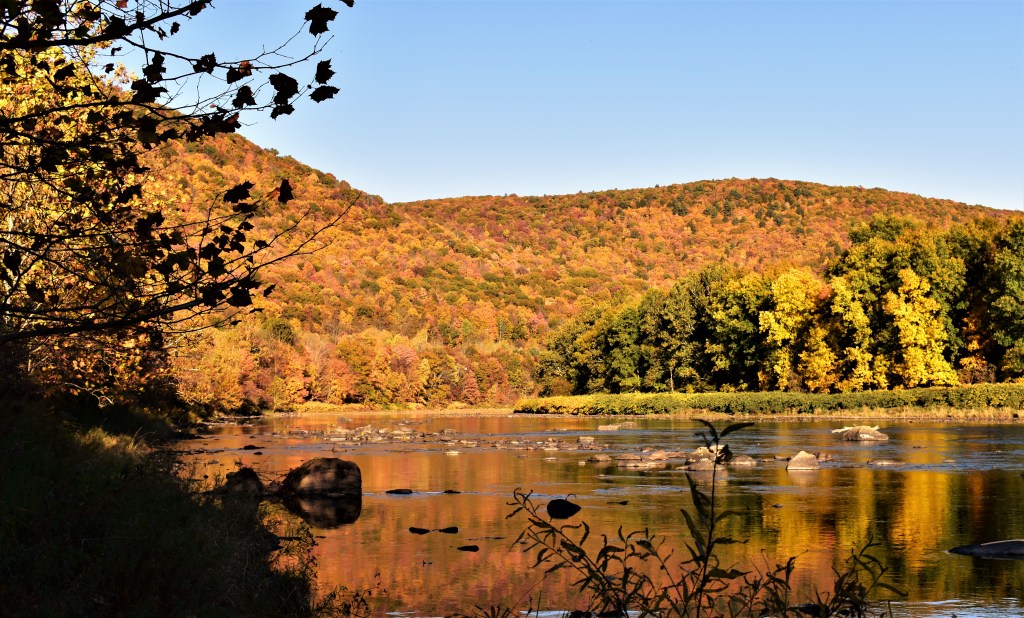
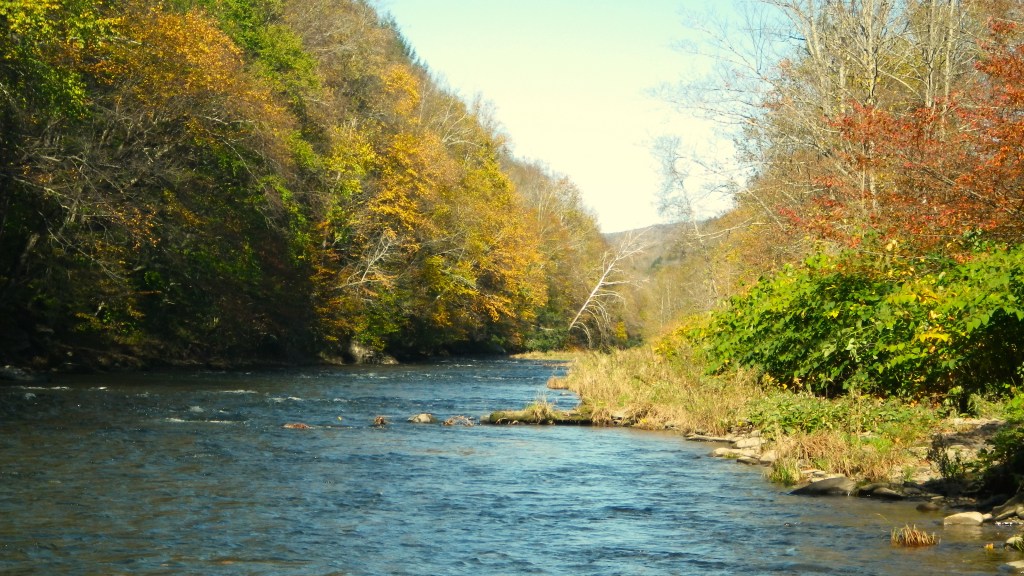
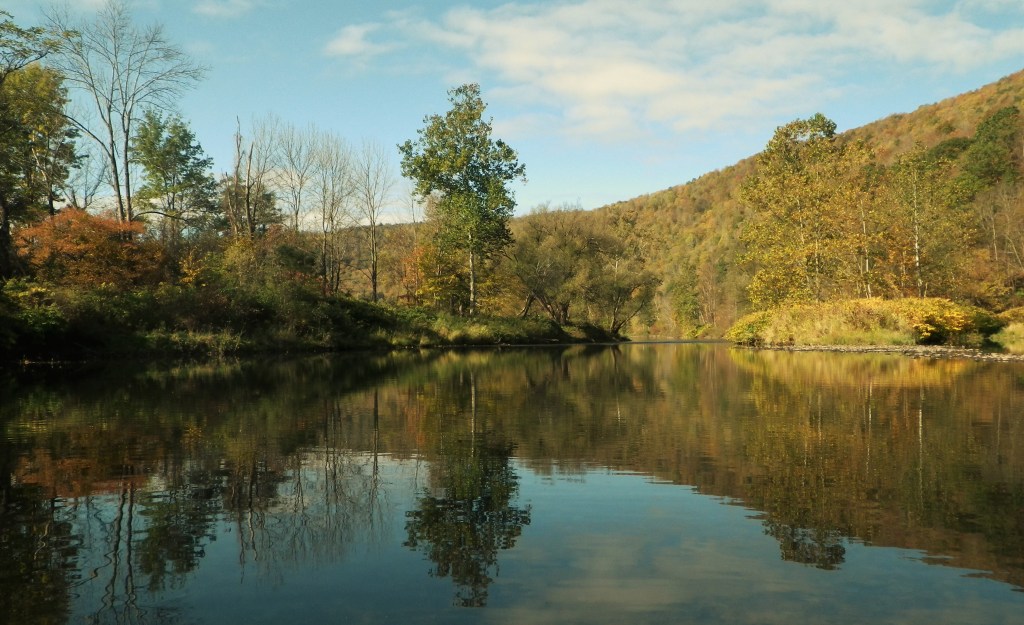
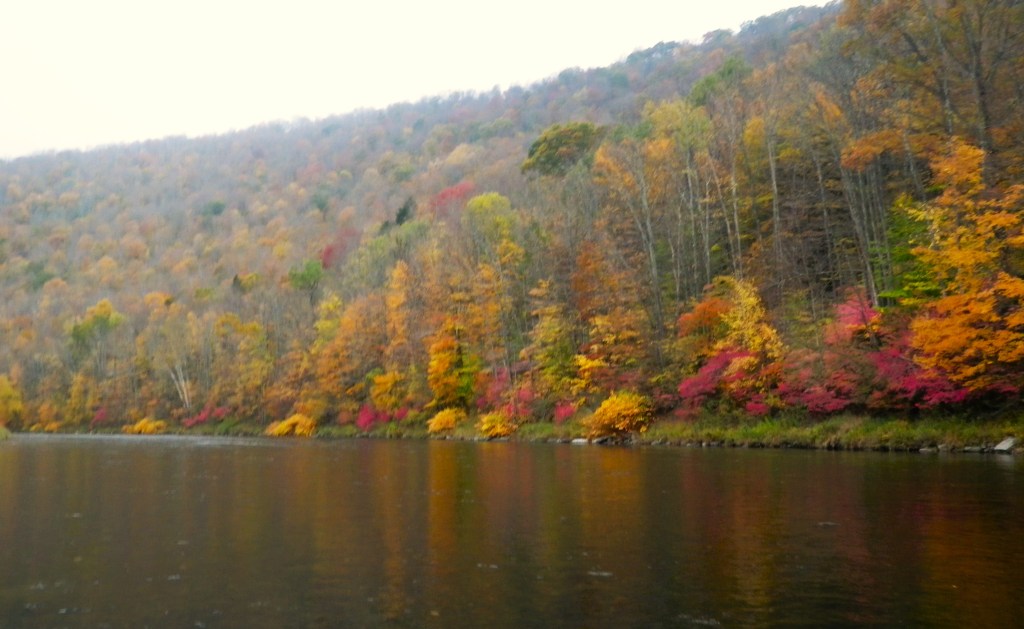
There is no hook in the vise today, for there are more flies in my light, summer vest than upon the water. My mood is thankful for a bounteous summer, yet harboring wistful thoughts of the gifts might offer as autumn wraps me in her brilliant colors. With the mountainsides aflame and the calm waters reflecting that glory, a fish has a great deal to compete with.
Each day when I feel the afternoon sun upon my shoulders, I know that moment could be the last. Winter here descends as she wishes, ignoring the calendar, but just yet there is still time. I long to feel that warmth, clutch the cork again and feel the cane taught and throbbing with the life of the river!
Our forecast tells us that summer will pass down the river today under cool, overcast skies. My long rod, eight-and-a-half feet of five strip bamboo, is ready and waiting. I just cleaned and dressed the number five line which adorns a vintage Hardy St. George, most suitable for the task. Though I have flies aplenty, perhaps I will still tie a few fresh ones, something to bring a touch of angler’s luck, for summer will be gone tonight.
Autumn is waiting, and this dry fly season has it’s days numbered as it turns.
There is hope for October though, for there are often warm, bright days amid the mountainsides aflame, with bright wild trout sipping the last winged flies that will flutter about until spring. The rush of spring and summer fishing has faded, so October days have a fine opportunity to fix themselves in our memories, often with the assistance of a single, special fish!
Nature’s palette of flies can be varied on a given day, one reach of river. Insects of the land, borne upon autumn winds may cause the angler to grab for his summer fly box for ants, beetles or even larger fare. The tall wings of an isonychia mayfly might be spotted on the afternoon drift, and evening casters could thrill to a hatch of huge October Caddis, rushing to change their leaders from the finest tippets they fished to near invisible olives until dusk. Adaptation and observation will best serve the angler’s needs.
The trout are moving at this time and finding them on one reach today will not guarantee a top spot for tomorrow. A dose of luck is good in any season!
Sitting here and pondering whether that, if I tied a few size 22 olives on one of those “big eye” dry fly hooks, might I be able to see it well enough to tie it onto a slender tippet on the water…
I have reached the age where the deconstruction of time has limited my tableau of tackle and tactics, becoming one of those guys who fishes nothing smaller than a size 20 fly regardless the size, or the lack of size the naturals before me display. Granted, there is a respected school of thought among practitioners of this art that presentation can overcome such trivialities as feeding a size 14 neon yellow “sulfur” to a trout dutifully inspecting every size 24 dark hued olive mayfly passing his station to determine if there are the proper number of grayish bands apparent on his six legs before opening his mouth. While I count as presentation of the fly paramount, I also count as equally vital the quality of the imitation as to the naturals being fed upon.
So, shall I forego the opportunities provided by the smallest aquatic insects to limit failures? I shall not.
Hendricksons, our favorite and hopefully once again our most populous mayfly, flanked by two of my answers to the selectivity puzzle.
I have always expounded the belief that presentation and imitation go hand in hand, neither taking an overall priority in the catching of wild trout. I will qualify that, as I am a product of the Eastern United States where the vast majority of America’s population resides, and fly fishes if they are so inclined. I was struck very early on in my journey to fall completely in love with difficult trout: large, wild, well-fed, trout gifted with great experience in the meanderings of human beings armed with sticks and a great deal of varied concoctions of fur, feathers, hair, plastics, and assorted sparkly things, all bearing fishhooks. Who I am, who I have become as an angler has formed my thoughts, opinions and beliefs.
So, I embrace this season of transition in my own best operative mode. I will not spend ten minutes failing to thread my tippet through the eye of a hook that I cannot see. I shall look to other flies of the season, all of whom are not miniscule, if not invisible to me. A size 18 winged ant can be threaded onto my chosen tippet, given my abilities, and has a good chance at tempting a fine, old brown trout settled off to the side of those youngsters smacking down 24 olives. His even larger cousin hidden back along the eddy eyeing a slender thread of current off apart from the main flow, might still relish a Grizzly Beetle, or a drowned isonychia dun or spinner, should a fine imitation might happen by.
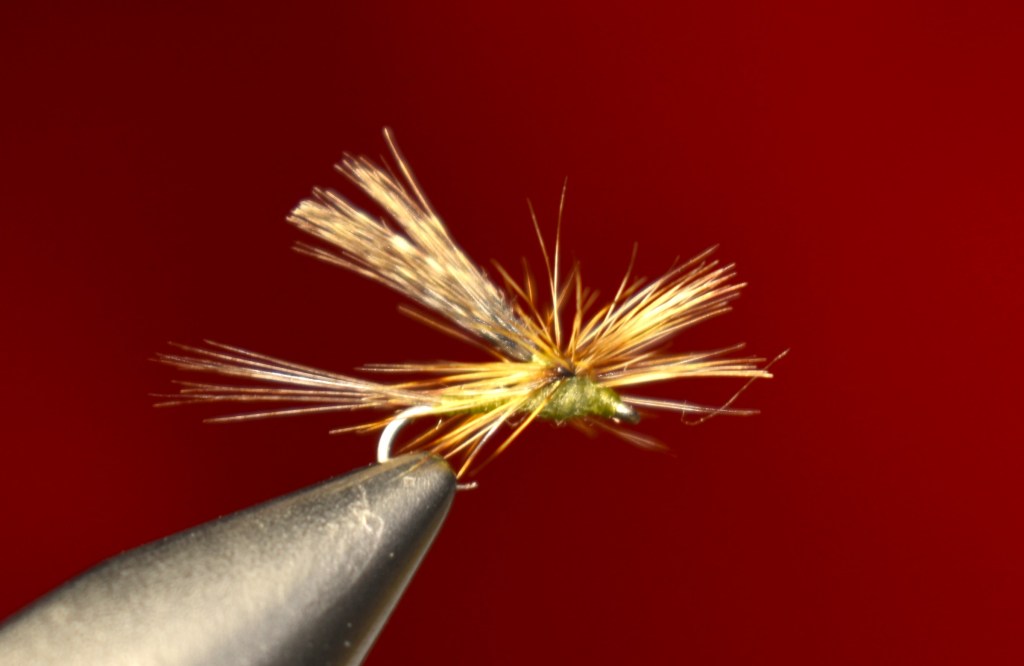
I do also maintain a good supply of those old, trusty size 20 olives, the ones with the bright, sparkly gray wings that I can track as they drift in and out of the shade at sixty feet. They have become quite a staple.