Summer, and the Great Debate

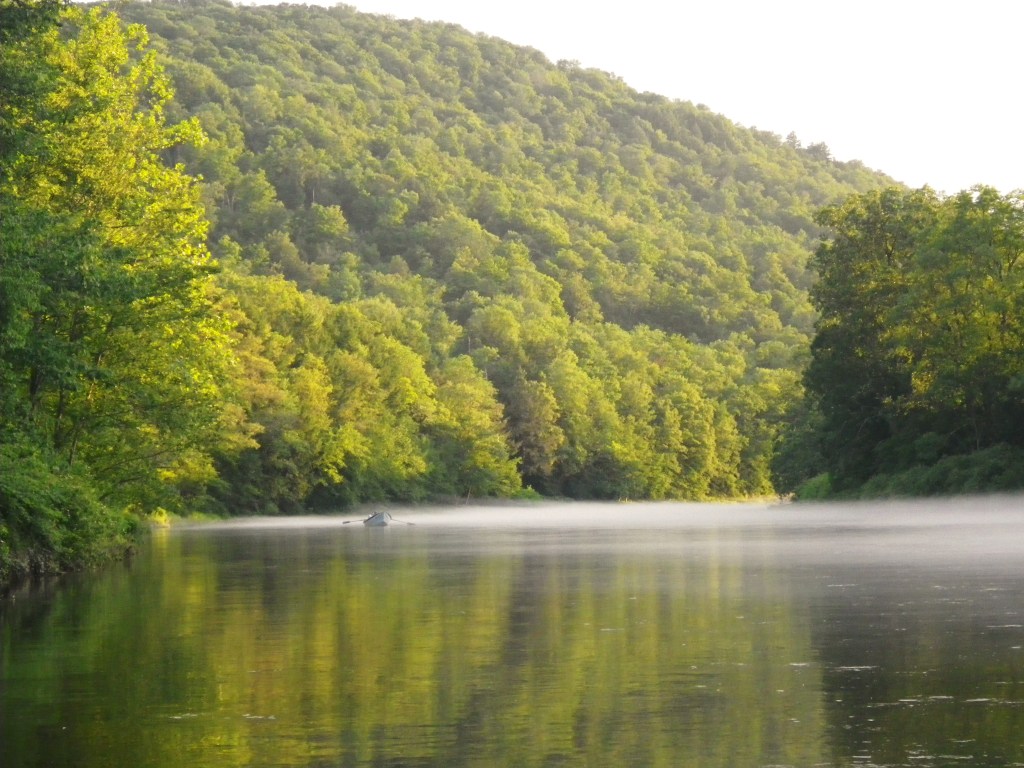
Ah the beauty of a Catskill summer! Though there will be some hot weather, you may count on plenty of glorious, sundrenched days in the seventies, a gentle breeze, and wild trout to be caught.

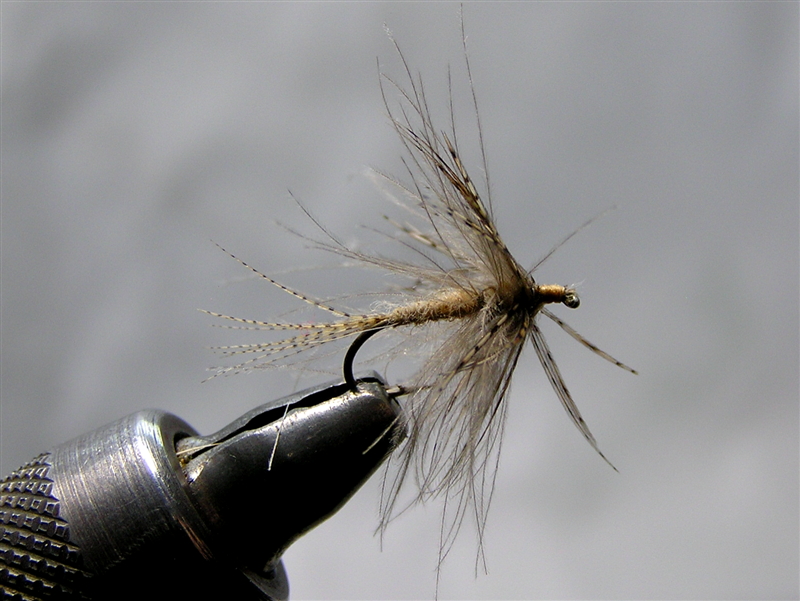
Summer hatches like the sulfur mayflies draw anglers on a daily basis whenever there is a substantial reservoir release. The cold water draws the hatch out over a month or two, sometimes more, and it is consistent. I have always felt it provided some of the most challenging fishing of the season, at least for those in pursuit of the Catskills’ trophy brown trout.

The best fishing is restricted to the upper reaches of rivers where the dam releases regulate river temperatures, keeping them in the forties and fifties on the hottest July afternoons, and that tends to create crowded fishing conditions. For years I would fish among the throngs for a few days, then head for some uninhabited reach for a little exploration and solitude. Most of the time I found little surface activity, and turned to fishing terrestrials in the style of the Pennsylvania limestone springs that I lived near and haunted regularly.

During those travelling years my time was invariably much too short, and those exploratory days consequently few, the fishing most often leaving me wanting for the pods of rising trout in the crowded zones. Terrestrials would produce a trout here and there and I oft debated their general lack of effectiveness with a fellow Keystone expatriate in a local fly shop. The gentleman always maintained that the trophy fish disappeared after the Green Drakes and the abundance of “Bug Week”.

The debate never turned either way, each of us maintaining his position, and unable to prove his theories. If anything my lack of terrestrial trophies lent more credence to my adversary’s position, though I always believed my limited time was the deciding factor.

Last year I bought my house here and explored a bit before the rains came in August and drowned the rest of my first summer as a Catskill resident. One steamy morning I stalked a familiar reach with my Baby Cricket knotted to me leader, determined to unlock the mystery. My go to summer fly for the Cumberland Valley produced a pair of 19″ brown trout that morning, convincing me that the better fish did not disappear. One morning did not prove the theory, but the rains turned the tables on me before I could wander further afield.

The spring and summer hatches this year seemed chaotic, and before the river stabilized July had arrived. The sulfurs drew the big crowds, bigger than usual to my mind, and the fishing became frustrating. I took a break from the madness late in the month, packed my terrestrial box and a light rod and resumed my quest.

There is a certain joy wading a quiet reach of water and being completely alone. I wrapped myself in that feeling, picked the best times of day for the rivers I visited, and began to take those wonderfully invisible browns on terrestrials. The numbers weren’t springtime numbers, as there were no significant hatches to bring trout to the surface with any regularity; but the trout themselves regularly passed that special 20 inch mark!

I enjoyed a month of some of my favorite kind of dry fly fishing: hunting and stalking the trout most anglers pass unaware. It was sublime. This summer was as dry as last year’s was wet, and September didn’t offer good fishing. Flows became quite low and water temperatures high, shutting down much of the water I had enjoyed fishing.

Relief finally arrived in October, and the terrestrial fishing blossomed again after the rivers receded from the storm. Between walks through the grouse covers, I was back to picking my spots and times of day, and catching gorgeous browns from mirrored pools flanked by the autumn blaze on the mountainsides.

One afternoon my good friend Dennis Menscer stopped by with one of his beautiful creations: 7 1/2 feet of flamed bamboo begging for a four weight line and one of those spectacular pools of bright water. I answered the call and christened that masterpiece fly rod with a 20″ autumn brownie. Perfection!
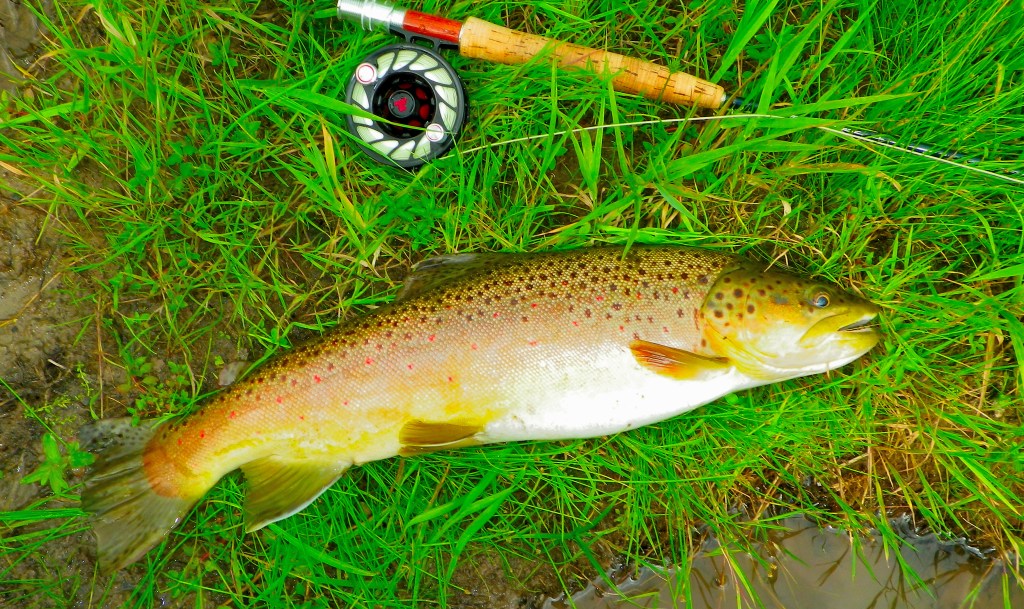
A bit more than two feet of Catskill Brown

Celebrating The Season

Photo courtesy Andrew Boryan

Memories of winters past, like the one captured above, haunt me. A bright morning on a limestone spring, and two friends taking the day to stalk wild trout seems blissful, but thoswere to be the last days of that short lived fishery. That place was my winter retreat, until the state fisheries people decided to “improve” it and destroyed that reach.

I began this winter walking the banks of my new winter retreat, the West Branch of the Delaware River. It beckons with miles of bright water as opposed to the few hundred yards of my former respite. The scenic beauty is captivating, but it doesn’t have the magic of limestone springs to keep the water temperature hovering near 50 degrees.

I carried the new trout spey outfit out to greet the season, figuring to save wear and tear on my casting hand and wrist at least until the doctors figure out a solution. It is a new and novel way to swing the soft hackle flies previously reserved for an old bamboo rod.

It is a different world since the day I began fly casting, with the internet offering hundreds of videos sure to make one an Olympic caster. I have watched a few, some worthwhile, some too filled with salesmanship and repetitive rants to be useful, all unfortunately taught by right-handed casters. That leaves me struggling not only to recall the techniques when I am on the water and adjust for the direction of river flow before me, but to turn things around in my head; all while trying to catch a trout.

I managed to get the line where it needed to go though I won’t be counting style points.

With sock liners, my heaviest wool socks, and neoprene wader feet, I seem to be good for about three hours until my feet become two blocks of ice. The gap between 50 degrees and 35 is tremendous. That time limit fits nicely with the warmest portion of the day.

There is still hope and a learning curve for Catskill winter fishing where I am concerned. Though I haunted the West Branch last winter, most of those days featured high water. With the wettest year anyone could remember, Cannonsville dam ran maximum release from August until February. I looked for midges and tiny olives, and I quivered with excitement when I saw the first little black stoneflies fluttering on the surface, but my anticipation was never rewarded with the rise of a trout; not one. I enjoy the quiet peace of swinging soft hackles, but I am a dry fly fisherman in my heart.

The log on my tying bench shows 2,000 flies tied during 2019, more than 167 dozen. I can say confidently that 160 dozen of those were dry flies.

With the spey rod I run the risk of being caught unprepared should the magic of any sort of hatch appear. Frank at the Whitetail shop tells me he has fished dry flies with his trout spey tackle and had some success, but only with large flies such as March Browns. I feel very confident I won’t be witnessing any size 10 mayflies taking wing toward the snowy riverbanks.

The dichotomy of this spey game is belied by the “3 weight” designation of the rod. A 3 weight is after all a perfect tool for winter midges. Ah but the scandi line you cast with that “3 weight” has a 210 grain shooting head, the equivalent of an 8 weight. Just try to pinpoint a 22 midge emerger on a brown trout’s nose in flat water with that. Spey fishing is an either/or proposition for the dreamer in me.

It was 35 degrees at five o’clock this morning. That means my waders and boots might not be frozen solid again this morning, swinging in the pre-dawn breeze out there on the porch. I had been thinking about a grouse hunt, but I guess I’ll have to take a look at the river temperature before I decide.

Winter’s Glory

There is something spectacular about a winter’s morning. The sunlight belies the ten degree temperature, so that even with ice along the river’s edge there is a promise of fishing. The day may blossom or, like today, that gorgeous sunshine may not defeat the rush of artic air, keeping that ice secure.

It is a good day to spend time at the bench. The soft hackle box has been filling this past week, as has the box of tiny streamers. Swinging flies: wet fly hooks, silks and game bird feathers. I wander back and forth between classic patterns: Partridge and Orange, Grouse and Green, and my own. My Red Squirrel Sparkle dubbing traces back to my fly shop days, and an article penned for Fly Fisherman some two decades ago. A slender dubbed body with a bit of copper wire and a brown partridge feather makes for an enticing little fly I know will wake the interest of a cold water brown.

Invariably the streamers feature marabou, the quest for movement within the fly burned into my psyche by my friend Ed Shenk, Master of the Letort. Even the simple Wooly Bugger is tied spey; a shorter hook and a wide, webby palmered saddle hackle, at times collared with a large game bird feather. In the cold water of winter’s Delaware, each fly must convince the trout it is a living thing.

Last year I stalked the margins of the bank full river with an old Steve Kiley bamboo. Reported to be a modified Dickerson taper, its maker marked it for a DT6 or WF7 line, with which it works fully when I extend the line. Being bamboo though the tip retains that life, that delicacy that can gently flick a size 20 olive to some imagined ring on the leaden surface. You never know when a bit of magic might develop after all.

There is a new madness on my horizon, born of that spring obsession with distance casting. My wrist and hand paid the price for too many of those 100 foot casts, and now I wait for tests and conversations with doctors.

Spey casting seems to offer the opportunity to swing those lovely old soft hackles without the wear and tear on my infirmed hand and wrist, so I am preparing to embark on the whimsy of “trout spey”, something I once joked about. The local fly shop has a line on order for me, one I hope will arrive before the short weekend warmup the weathermen are touting.

The Drowned Hendrickson

Just now I cannot help but linger here by the window, entranced by the blaze of sunlight across the snow and the shock of blue sky framing the northern mountain.

Looking Back

The year is drawing to a close, my first full year at home in the Catskills. It was a fishing year, though I knew not what to expect as I ventured forth on those initial winter outings.

I had found my little house in July of 2018, looking forward to a summer of fishing between projects as I readied the new homestead for the final move from Pennsylvania’s Cumberland Valley. There were a handful of afternoons on the West Branch before the deluge.

Rainfall is vital for the health of wild trout and trout rivers, but the rainfall gracing the Catskill Mountains in late summer was relentless. The Delaware River reservoirs filled and spilled, and the rain kept coming. The idea of wading and fishing was washed from my mind by the torrent of swirling water encountered at every access on every river.

It was January before I dared set out to fish a little back channel on the West Branch, swinging soft hackles and small streamers with my “off-season” bamboo rod. The river still flowed at the reservoir’s maximum release, but it was possible to wade some of the shallowest water. It was refreshing to be on the water after months of high water, enjoying my first winter days on the rivers of my heart. There was even an occasional trout willing to interrupt the swing of my fly.

I continued my search for an affordable used drift boat, resolved not to be undone by high water again, but as spring beckoned the rivers rose again, and it seemed there was no boat to be had.

The Beaverkill finally came down to 1,000 cfs during the later part of the month, and I took my life in my hands to wade. Quill Gordons pouring off of a little riffle brought the year’s first rises and a 16″ brown to hand on a dry fly. I explored some new places along the river, finding a bit of wading, all the while hearing tales of hatches on the West Branch despite a flow thrice what could be considered wadeable.

The high flows demanded I work at my distance casting. With the right rod and line, and plenty of attention to line handling, I reached and exceeded the hundred foot mark, presenting a dry fly well enough to fool a number of larger browns. Long range fishing became somewhat of an addiction.

On a visit to the Neversink I made an unexpected contact that finally led me to that drift boat, and on April 29th a friend and I floated the West Branch from Deposit to Ball’s Eddy. The fishing proved less than memorable.

As my familiarity with rowing increased, the catches improved, and I enjoyed the new freedom, though I have never been a big fan of drift boat fishing. My best catches still came on wading days when the flows relaxed and I could stalk trophy trout with the stealth they demanded. It was my best spring in 25 years of fishing the Catskill rivers, provided by the freedom of retirement and the opportunity to call this region home.

My first Catskill winter included an unprecedented amount of time at the tying desk, and I began a log to keep track of new ideas, dubbing blends and patterns, and a few notes to chronicle the most interesting days on the water. I expect to have tallied 2,000 flies before the New year dawns. Professional fly tiers would yawn at my output, but these are flies for my own fishing, with a few shared with good friends.

Months of higher than normal flows, and my new obsession with long distance fishing kept my favorite bamboo rods out of my hands on too many days this year. That is something I will have to rectify in 2020. Cane rods have more personality than graphite or boron, and they demand a bit of courting to deliver their best. I feel there is a fly line out there that will coax an honest hundred foot cast out of one or two of them, at least if I can overcome the “graphite rush” and allow them the time to load when trying for that distant rise.

I need to allow myself more time for photography as well. My Nikon didn’t spend a day on the boat this year, and I never gave up an evening of fishing just to walk the river banks with my camera; something I had promised myself I would do.

It will officially be winter in a couple of days, and I hope to get out on the river before the New Year. Fishing and tying are priorities now that deer season and those golden October mornings in the grouse woods have passed. If the snow doesn’t leave the mountains too icy though, there are still some grouse to be hunted.

Joy

Ah the joy of starting a blog for the first time! Seems my icon identifier is not too functional. I guess this is to be expected going from print media to electronic. Bear with me, I like bamboo rods and dry flies much more than computers, and I won’t own a smart phone…

An introduction…

I fell in love with the Catskill Rivers more than 25 years ago. The combination of the sheer natural beauty, the quiet simplicity of the hamlets scattered throughout the mountains, the glorious wild trout and stunning insect hatches that sustain them left an indelible mark on my soul.

I wrote often of the fishing here in my weekly Outdoors column during 22 years in Chambersburg, Pennsylvania, talking myself into retiring here so to savor the seasons along the rivers during the best years of life. I am inspired to continue, to share the wonder of a winter’s morn, the struggle of a spring mayfly to take flight from the rippled surface of these bright waters, and the rise of a trout to the fly.