Thoughts of Spring

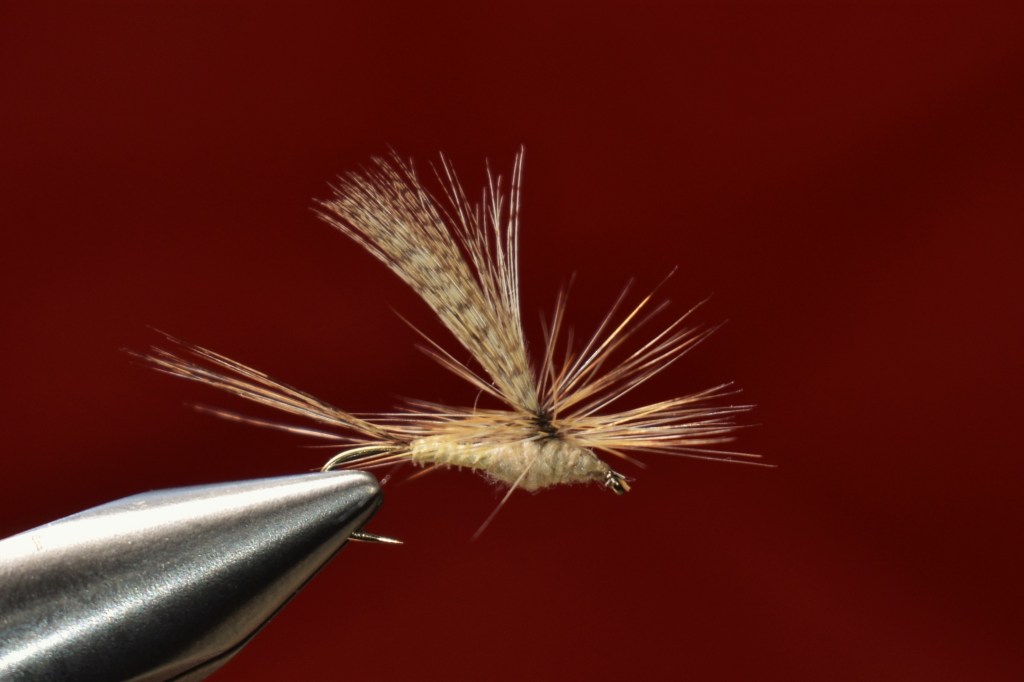
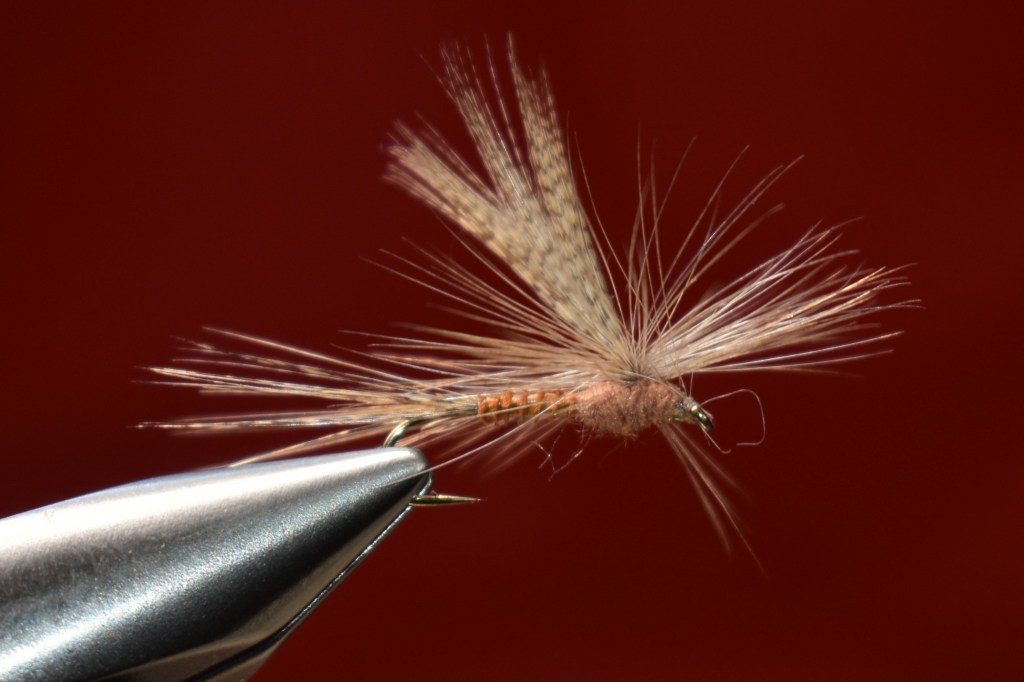
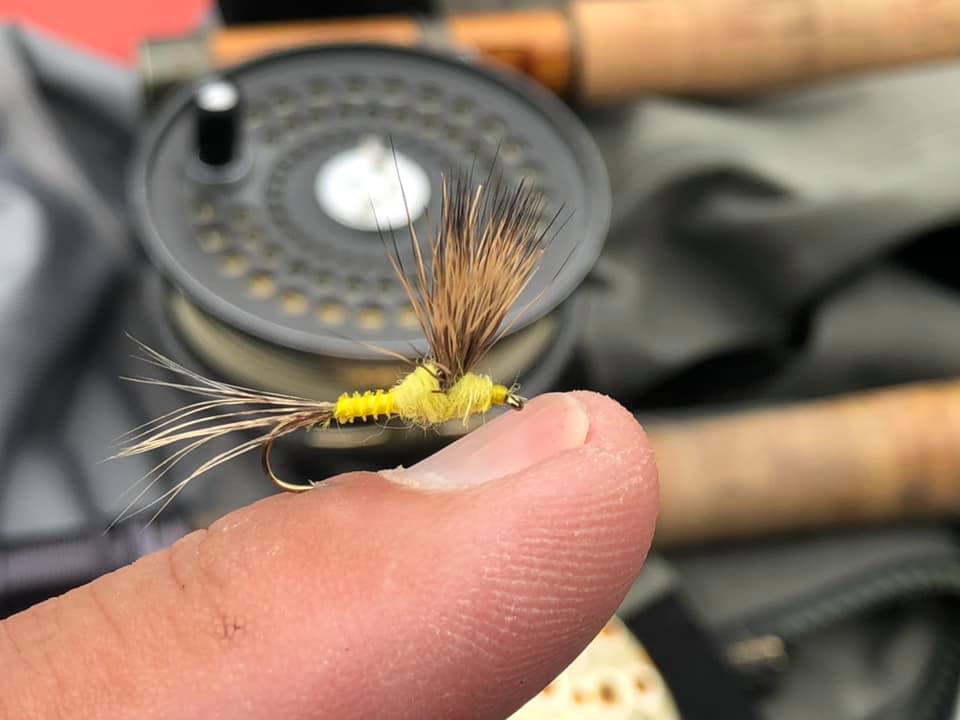
Winding thread this morning with meandering thoughts of spring hatches and the mysteries of cane. The mahogany duns I have tied are pretty little flies: splayed dun tails, smooth biot bodies with a fan of natural dun CDC and a soft dubbed thorax. They should present an interesting alternative to the spring risers when the little blue quills are about. Experience has shown this tie can copy both the duns and the upright winged spinners that may be encountered.

Spring Blue Quills can be prolific, and an interesting hatch to match. At times these dainty little flies provide better fishing than the Hendricksons. I tie a wide variety of patterns: different flies with very different colorations and appearances, yet they are all effective.

For a number of years my standby pattern has been an Antron winged parachute tied with a natural wild turkey biot body and medium dun hackle. The natural black and white primaries of the turkey provide terrific segmentation, but they are not at all close in color to the brownish mayflies themselves. Perhaps the striped effect excites the trout more than an accurate shade.

During 2018 I enjoyed less fishing than in any year out of the past twenty. I was still working while running back and forth between Chambersburg, PA and Hancock, trying to find a little house to retire in. The house search had been difficult, and then on one trip I was forced to turn back by the most horrendous pain I have ever experienced, courtesy of a kidney stone.

Once spring arrived and the hatches got underway, I tried to get a couple of hours on the river between visits to houses for sale. There was a lot of high water and that and my time constraints really squelched most of my fishing. There was one moment that stood out though, thanks to those reliable little blue quills.

I had visited one property that morning and made an offer that was verbally accepted. I was relieved and anxious to find a wadeable reach of water to relax. I knew one area I hadn’t fished in years, but that had been very good once in spring high water.

I worked along upstream letting the frustrations of house hunting be carried away by the current, and I started to see a couple of rises. Sure enough there were a few blue quills on the water. I carried a beautiful rod that my friend Wyatt Dietrich had made for me, his memorial to his friend and mentor George Maurer. The rod was Maurer’s Trout Bum model, 8 feet in three pieces for a five weight line.

I had fished the rod a handful of times, though always on days when the bugs and the trout refused to cooperate. At last I had the rod in my hands with a good trout rising to a mayfly hatch, and I wanted very much to christen this gorgeous work of art. I knotted my old reliable turkey striped parachute to the 5X tippet and worked into position to cast.

The lie was difficult, with strong current deflecting off a pile of bankside brush and then a sizeable rock, spreading the flow into a jumbled fan of percolating water with a fast chute between me and that fan. The trout took a few flies, but always in that fan of bubbling water below the obstruction. I waited, for I knew that one impulsive cast into that lie would drag immediately and ruin the opportunity. At last a bit of fortune smiled upon me.

The hatch intensified a bit, and the trout moved over into the chute and began picking off mayflies as they rushed past. It took half a dozen casts to time him just right before he took my little parachute solidly. The sting of the hook brought that big fellow right off the bank in a hurry. He shot past me and ran hard downstream against the drag.

My rod was bent and straining with both the fish’s strength and the heavy current, so I lowered the angle to bring the rod’s powerful butt section into play and turned him. I reeled with everything I had as he raced toward me. He dove for a sharp shelf of rock and I turned his head downstream, using the current to help pull him away from his target. Another long run against the drag, another turn, and we continued to spar there in the river’s crystaline flow. Finally I felt the stogy head shaking of a tired fish as I walked down to him recovering line.

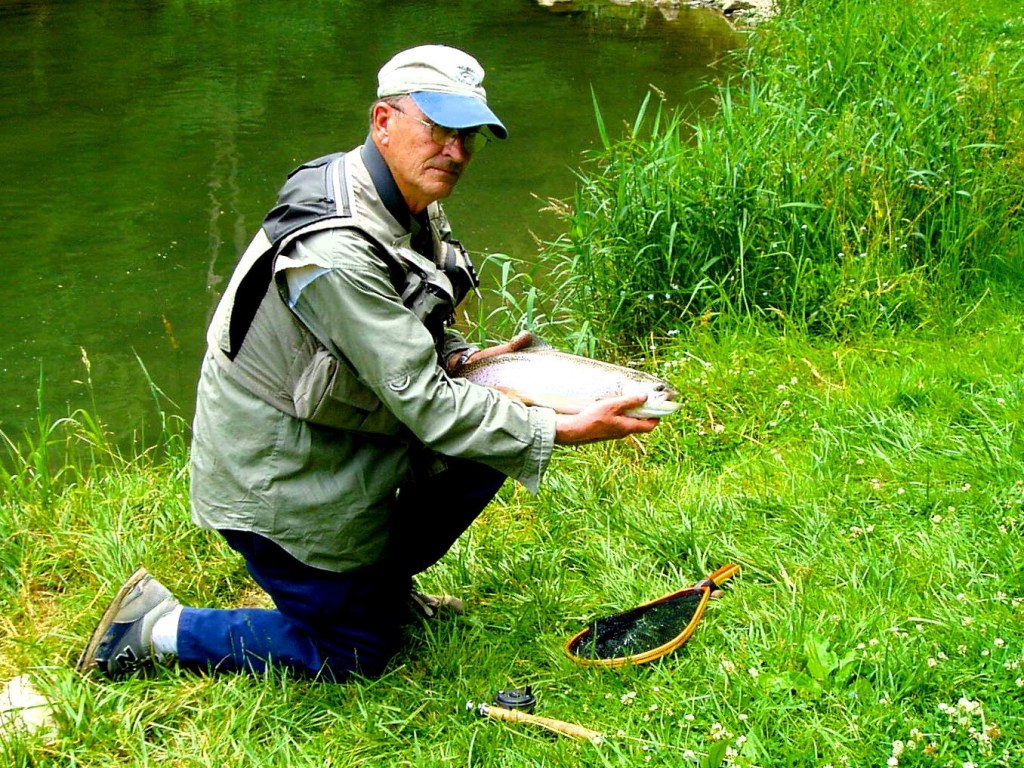
In the net I admired a brilliantly colored, wide flanked brown trout just a shade over 22 inches long. The Trout Bum had been christened, and I enjoyed a moment of elation and joy as I revived the brownie and watched him slip away.

Moments later my phone buzzed me back to reality with a call from my realtor explaining that the seller had changed her mind, rejected my offer, and taken her house off the market.

That brown proved to be the lone highlight of my season. I didn’t find a house until the end of June, and didn’t really get in any fishing until after I settled in late July. After a couple of frustrating, windy afternoons on the West Branch the rains came at the beginning of August and washed the rest of the season away. It would truly have been a lost season were it not for the blue quills!
Storm’s Coming!

A few years ago I visited the Wulff Gallery at the Catskill Fly Fishing Center and Museum to feed my bamboo addiction. Hoagy Carmichael had donated the tools and artifacts from Everett Garrison’s rod shop to the museum and the exhibit had been opened. I was anxious to see and touch those pieces of angling history.

My friend, rodmaker Dennis Menscer, had told me about a documentary film that a young couple were producing, a film about bamboo roadmaking. Dennis had brought together several of the greatest living masters of the art who had agreed to participate. As it turned out, they were filming at the Gallery the day I visited. I had an interesting conversation with Producer Jan Jensen Davis while her husband Mark was filming rodmaker and museum trustee Jed Dempsey, and thus began my anticipation for viewing their film “Chasing The Taper”.

In documentary filmmaking, film festivals are the venues to debut these works, and Dennis travelled to Montana last winter to see debut of “Chasing The Taper”. He told me that there would be more festivals before the film would be released locally.

On Wednesday afternoon my DVD copy of “Chasing The Taper” arrived and I had it in the DVD player within minutes. My long wait was amply rewarded with a wonderful portrait of the history and passion of bamboo and the artisans who live to continue the magic of the craft! The film is beautifully done and a must see for those who appreciate the history, beauty and traditions of fly fishing. https://tinboatproductions.com/chasingthetaper
Spring Indeed

The Delaware

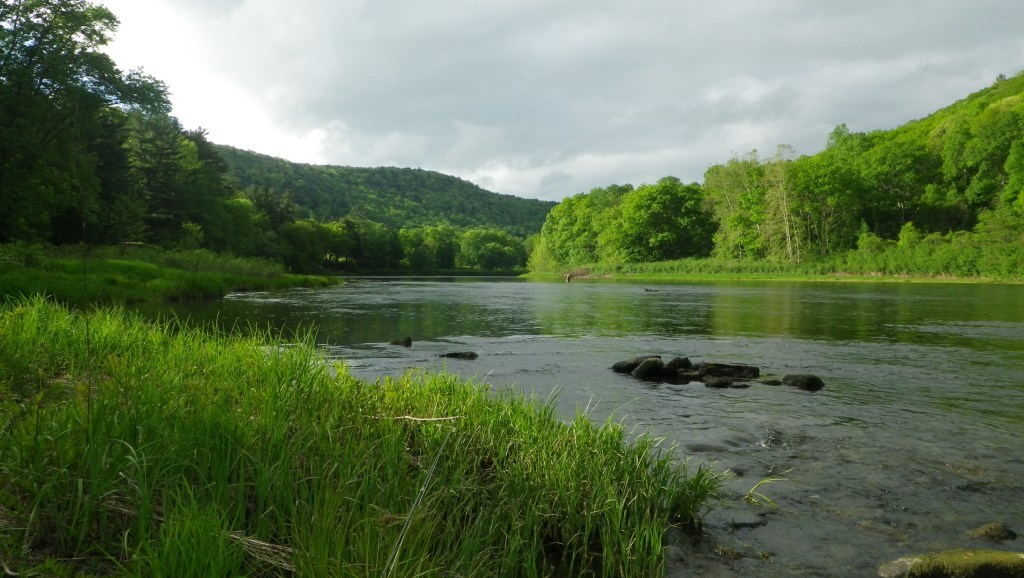
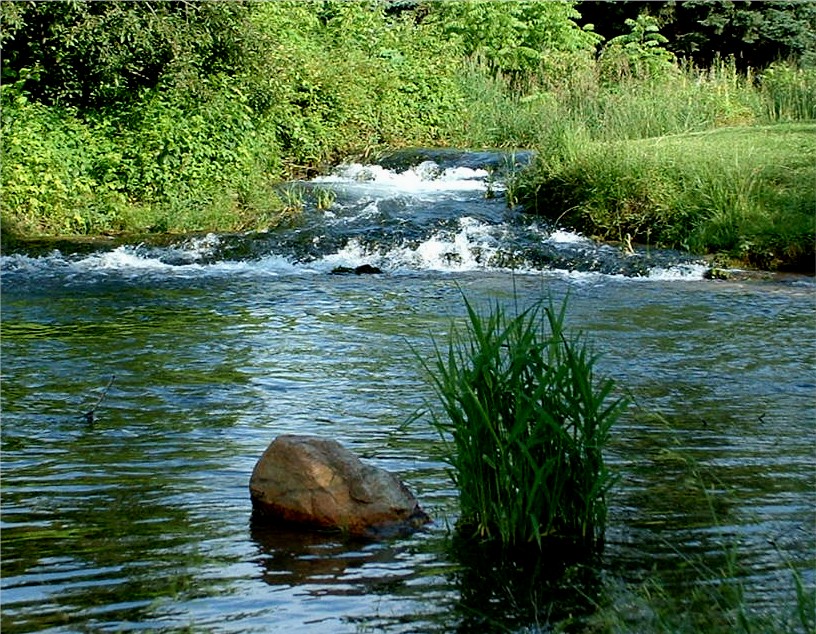
The first wild trout of the season came to a size 20 blue-winged olive at 3:45 PM on the Delaware River. With the rainy day forecast being revised this morning, I returned to the same reach of the river I angled yesterday. I had seen five rises yesterday afternoon, those one time only affairs that leave you breathless after a long winter, but never provide the solace they promise. They were out of reach for the most part, though one got me up and bucking the crosswind for an hour or more in vain.

While the West Branch and Beaverkill had dropped 5 degrees over night, the Mainstem held at 43 degrees, a single degree below its afternoon peak. With a second day of full sunshine, I hoped that the water temperature might inch a little closer to that magic 50 degree mark, and urge a trout or two to actually feed on the surface.

It was after 2 pm when I dangled my stream thermometer in two feet of water and read 57 degrees. There had been a few sporadic rises, put off for a while when the same drift boat that squeezed past me yesterday, came through on top of me again. There were a pair of occupants today, three yesterday, obviously none of them aware just what “solitary outdoor recreation” entails.

Once the run settled down, my fish rose again. He wasn’t what you would call a feeder, rising once perhaps on the half hour at best, but it gave me a bit of sport to try the flies I had tied this morning.

There were some early stoneflies about yesterday, and a couple of little black caddis had landed on my hand, so I had spun up a few of each this morning with some Trigger Point fibers and CDC. My persnickety riser wouldn’t touch them. Every once in awhile he would sip something I couldn’t see 50 feet away, staying in his back eddy along the far bank while the wind driven current pulled my fly through his lie after a short but seemingly adequate looking float.

It must have been close to half past three when I could suddenly see something on the surface that looked like wings. At this time of year it pretty much had to be little olives, since the stoneflies and caddis had drawn a solid blank. I tried a size 18 CDC emerger with no response, then grudgingly cut back my 5X tippet and knotted three feet of 6X to the end.

I dug around in the olive box for a size 20 sparkle dun, one with a Trigger Point fiber wing that I could see at a distance. I tried a few downstream casts, throwing my backcasts low and away, straight into the wind, and then something wonderful happened. Calm. But not just calm, calm with a rise upstream, right where I could spy those intermittent little groups of dark wings on the surface!

I turned and laid the fly right in that line of drift, and I’ll be damned if that trout didn’t rise up and take it. I hadn’t cast a dry fly to a rising trout since mid-October, and I finally got to feel the old, familiar throbbing in the rod grip. My friend put up a good scrap, even taking off a couple of times downstream and making my old CFO sing.

I let myself enjoy his struggles until it was time for the net, then scooped the foot long brownie and slipped the tiny fly from his lip. I offered my thanks as I let him dart away over the bright gravel.

Its a good omen when the first trout of the season takes a dry fly, coming at a time when a good omen is very much needed and cherished.

I didn’t see any more of those little dark wings bouncing on the current, so I took a seat on a grassy hump on the bank and waited. I said a little prayer for my loved ones and our group of friends, and for all of us, asking that there be many more bright days like this one and for an end to these difficult and dangerous times.

An April Morning on the Falling Spring

Falling Spring

I often think back to the years I spent my days in my little fly shop and my mornings and evenings stalking the sparkling run of a spring creek that provided the name for that shop: the Falling Spring. Those memories are dated now, for despite the efforts of concerned anglers, the fishing there declined abruptly in the past decade.

I ran the shop from 1993 until October 1999, and enjoyed many friendships and many hours of fishing at its best. Fishing that difficult little limestone spring could take you from highs to lows in a moment, though each cast was made with excitement and anticipation, for we who new her were well aware of the trophy size wild browns and rainbows that sheltered there, hidden from view by the water weeds.

During those years stalking the historic waters of the Cumberland Valley, I often thought of those who had passed before, at times my neck tingling as if a watcher was near.

One April morning found me longing for some early dry fly action, and I almost had it…

FOOTSTEPS

The morning has dawned with promise, and the warm, calm air gives me hope for some early midge fishing. My careful walk through the meadow pauses when I find just what I am looking for. A few trout rise softly in the weedy flat immediately upstream, as I kneel in the dew drenched grass to rig my tippet and fly.

It is not often that I find fish rising during these brief, early morning outings, and I am surprised and pleased as I embrace this odd spring morning. The sky has the stormy, windswept look of an April blow, yet it is ghostly still. The day feels as if someone is watching, waiting.

The risers in the flat see fit to ignore me, despite several perfect drifts through their feeding lanes. I change to a smaller, sparser midge pattern, little more than a biot and tuft of CDC, yet this too they let pass. Rather than continue to play the “what am I eating” game, I decide to look elsewhere for a more eager quarry.

Upstream I pass several prime spots, finding no activity, until at last the dimpled surface of an impossible lie tells me the resident trout is in business. The bulge in the current, which precedes each rise, means this is no yearling in search of his morning meal. This one is well worth some time.

Ten minutes; ten minutes spent moving cautiously into the one position which would allow a cast to the fish without spooking him. When all is ready, I throw the line up behind me, false cast once to the side, and aim my delivery three feet above the last ring. The wind gust comes as if the lever of the rod is a great switch on Mother Nature’s fan!

Coming as it had, on my delivery stroke, the gust catches me off guard and blows my line a little off target: three feet, just enough to lay the fly line right across the trout’s eyes. Have you ever seen flat, shallow water explode?

That perfectly timed wind gust was only the advance guard. The sky howls with the voice to match it’s appearance, and all hope for dry fly fishing has vanished in an instant. I look up at the sky and nearly speak to it, wanting to ask why the front could not have waited a minute before it tried to blow me into the creek.

I consider calling it a morning and heading toward the fly shop early, but I value these moments along the stream dearly. I change reel spools, and select a streamer from my fly box, knowing I can lob the weighted fly accurately despite the wind. As I walk down meadow, I notice footprints in the waving grass, evidence of another who has passed this way.

Every angler who frequents a particular piece of water knows a few mysterious places on the stream, spots which offer everything a big trout could ask for, yet have never yielded so much as a strike. At times I have felt drawn to those places.

I approach one of those spots with my usual “why not” attitude, knowing I’ll never catch a fish from such places if I don’t fish them, and cast the streamer upstream and tight to the bank.

The heavily weighted fly sinks into shadow as I swim it downstream, twitching it slightly every couple of feet. I see the brown just as he wheels from his hiding place to engulf the fly and set the hook with authority, putting a wide arch in the one ounce four weight rod.

He puts up a hell of a battle in tight quarters, fighting to snag the offending line in the roots protecting an undercut, and slapping at the fragile tippet with his tail. The water boils with his frantic efforts to escape. In the end, I lead him to shore and lay him in a bankside bed of watercress.

Catching my breath, I work the barbless streamer free from his jaw, and quickly draw my tape along his length. A shade over twenty-three inches, the deep bronze of his flanks blending with the butternut gold of his belly, he is as fine a specimen of a limestone brown trout as anyone could hope for.

As I pause in releasing and admiring the trout, I notice a momentary hush in the air and turn, half expecting to see someone there. The spell is broken quickly, as the howling of the wind once again envelops the meadow.

There behind me, in the grass laid flat by the gale, I see another movement; one at odds with the direction of the blow. It is there and it is not, as if a shadow were walking away.

Remembering the Cumberland Valley

Big Spring, Newville, PA

As I wait for the first hatches of the year to raise my heart and soul from the claws of winter, I cannot help but fish in memory and recall the good times in the Cumberland Valley.

I was drawn there thirty years ago by the promise of difficult trout and the wealth of angling history that evolved there. I had devoured Marinaro ‘s Code and peered into the mystery “In The Ring of the Rise”, and I wanted more; boots on the ground. I came to Allenberry on the Yellow Breeches to meet two of the legendary Pennsylvania anglers: Joe Humphreys and Ed Shenk. Their fly fishing school polished my casting and technique.

Talking to Shenk and reading his “Fly Rod Trouting” lured me to Bonny Brook on the hallowed Letort and I was amazed. The crystalline water gushed beneath beds of watercress and curled around and beneath a maze of stumps and branches shadowed by hardwoods and willows and the head high grasses in the meadow. I gazed in wonder and questioned, how in Gods name do you fish this?

When spring came I returned to the Valley to walk the meadows of the fair Letort with the Master as my guide. Ed Shenk led me through the water meadows, marking the places where some of the history that had captivated me had occurred, as well as the places where we might encounter the legendary wild browns of the Letort.

I had built a small flyrod from a blank Ed had recommended, and he showed me how to take full advantage of it’s 6 1/2 feet to work his Shenk Sculpin through the pockets in the weeds and to prospect the undercut banks. It was a bright day in May and the trout were lurking beneath the weeds. A good cast let the sculpin sink into the upstream edge of a pocket, and a gentle twitch of the rod brought it to life. Then the game began as, in a few of those pockets, a large brown would glide out from beneath the vegetation and follow the fly for an instant.

My nerves were on edge when we crept to the streambank near a tangle of branches and Ed directed me to cast straight up the edge. The sculpin swung in the current as it sank and was pulled back beneath the bank at our feet. On command I began to twitch it back upstream, inches at a time. Suddenly a huge, brilliantly colored brown came out from the undercut chasing my fly. I will never forget the next series of events.

Mesmerized I twitched the fly again, drawing the great trout fully out into the sunlight, Ed screaming “for God’s sake let him take it!” But my brain had already sent the message to my left hand, and I twitched it once more, pulling the fly out of the behemoth’s open mouth before he could close his jaws upon it. Catching himself in full sunlight, he abandoned his chase, wheeled and disappeared with a puff of silt!

We fished the sulfur hatch at Bonny Brook that evening, and I caught five beautifully colored wild browns. It was an evening I will always treasure, though none were to be measured in pounds.

In late June I received the following letter from Ed:

” ‘Your’ fish is a little over 26 inches long and probably 7 1/2 to 8 pounds: one hell of a nice colored male brownie. Apparently he travels because I caught him about 200 yards upstream from where we saw him, and I’m sure I’ve seen him another 200 yards further up. After all, I’m sure there are not 3 or 4 fish the same size and distinguished markings in the area. As a matter of fact, I recall seeing such a bright colored big fish upstream early in the spring.”

“I got him on a sculpin (what else) on a rainy Tuesday morning, so naturally I left my camera in the car. I was fishing in the rain without a raincoat.”

Your friend,

Ed

I have dreamt of those moments many times, and played back the sequence such that I can feel the little rod bent double with the great splash of that legendary brown trout as the sculpin sinks into his jaw. The trout of a lifetime, almost.

The Barnyard Meadow

An Overdue Evolution

The 100-Year Drake 2014

I have written previously of my 100-Year Drake pattern and its inspiration in the flies of Catskill Legends Theodore Gordon and Phil Chase. The pattern evolved over a number of seasons as I searched to improve upon a fly that worked marvelously for me from the outset. Yes, like most fly tyers I tend to tinker with patterns and techniques.

By the spring of 2014 I was tying the drake with turkey biots, and predominately with natural wood duck flank feathers for the wing. I had started with mallard flanks dyed both pale yellow and green, and though both versions caught big brown trout for me, I wasn’t satisfied with the amount of water the mallard wing absorbed, regardless of the floatant applied. Wood duck seems to stay drier and is more beautiful to my eye. It also is an integral part of the tradition lying at the heart of this fly.

The biot body has remained, though I still experiment with different dubbings, pure silk most recently. Biot bodies have been tied both smooth and ridged, both with success, and I have settled at last on one of Charlie Collins golden grizzly dyed capes for hackling.

I had promised myself to tie additional imitations, to start a series of patterns, and I finally took the time to work on that this winter. There have been some Hendricksons so far, all dubbed bodied flies tied with my tan fox, pink enhanced fox and brick red “Beaverkill Hendrickson” blends. I look forward to the hatch with fervor each spring, and this year moreso due to the stress of the virus outbreak and the anticipation to try these new 100-Year Duns.

I have also tied a few March Browns, today adding to that family with light and dark versions tied with tannish yellow and March Brown colored biots and natural silk dubbing. I like these two, tied with cree and dun cree hackle respectively. One can never tell whether the Red Gods will grant us a good March Brown season or a poor one. I can only hope this becomes a good year for the big mayflies.

100-Year Dun March Brown (Light)
100-Year Dun March Brown (Dark)

Color is a funny thing when it comes to stream insects. For nearly 25 years, every March Brown dun I captured on the Catskill Rivers was an amber or caramel brown bodied bug. A couple of years ago I began to see some with a pale tannish yellow body, a different looking insect from the “March Brown” we all recognize as the Gray Fox, so I tied them too.

Last year Mike Saylor and I were stymied on the Beaverkill when the hatch appeared and trout fed happily. On the way out Mike finally snatched a fly from the surface revealing a size 10 mayfly with the heavily blotched wings and two barred tails of a March Brown, and a body color I have to call road sign yellow. It was a ridiculously bright shade of safety yellow and the trout were selective to it.

I proved that to myself by tying some neon yellow imitations and catching several large browns on subsequent trips to that pool. When I switched to the old pale tannish yellow or amber flies they were refused. Changing back to the “Woodstock March Browns’ allowed me to catch those same fish. I wonder if I will ever see anything like that again?

Photo Courtesy Matt Supinski

I guess to be thorough I should tie a couple 100-Year Woodstock Duns but I just can’t bring myself to do it. Maybe the mayflies were simply celebrating the 50th Anniversary of the Festival last year, and things will get back to normal this May; at least for another 50 years.

In Love With the Catskills

Morning at West Branch Angler

It was 25 years ago when I first visited West Branch Angler and fished the West Branch of the Delaware River. My Catskill fishing trips had taken me first to the Beaverkill and Willowemoc, like many who have read their histories put down by the writers of the Golden Age. On a trip cut short by a storm I had found my way to the East Branch tailwater and marveled at the frigid waters during the heat of summer and the beauty of her brown trout. I loved the rivers and the mountains here, though I had not yet found a home.

Al Caucci wrote a story in Fly Fisherman magazine about that wonder of cold water and the great summer fishing available on the West Branch and the Delaware that inspired me to make that my next stop in my Catskill adventure. The great rivers of the Catskills were a new adventure for me, for my Cumberland Valley fishing was all enjoyed on intimate waters. The wide expanse of these classic trout rivers provided a bold new challenge.

My trips were limited in those days. Operating a small fly shop leaves little time and less income for traveling, but I managed to take a brief holiday during early July when my business was slow. I wrote the story I am about to share after my return.

West Branch Reverie

There is something about a big trout river. Miles of meandering currents, endless pools and boiling riffles speak to the angler of hidden promise; but where? Where in all that beautiful water lie the trout?

The West Branch of the Delaware River has a reputation as a fine wild trout fishery, one of the best in the east. Some even say the Delaware rivals the great rivers of the west. I admit the big, cold tailwater reminded me somewhat of Montana’s Bighorn, it is a big river with limited angler access, but it’s clear currents, flowing over a cobblestone bottom, tells me it belongs right here in the edge of the Catskills.

The verdant mountainsides descend to meet the river, which winds its way between the Endless Mountains of Pennsylvania and New York’s Catskills. It is a gorgeous setting, and peaceful at this time of year. Summer is not thought of as the prime season for the great mayfly hatches which bring the river to life.

The spring hatches bring throngs of anglers, and I’m told the fishing can be magnificent. I liked missing the crowds and enjoyed the peace of July. I rented a little log cabin by the river at West Branch Angler and Sportsmen’s Resort, a pleasant camp for fly fishermen, just half a mile north of the Pennsylvania line. There were a number of anglers in camp, but the pace was relaxed, just like summertime should be.

A friend who has floated this river a couple of times with local guides, told me the guides didn’t fish until an insect hatch started. The river has a reputation for being tough when the trout aren’t rising, and I can testify that it is well earned.

I nymphed hard all day Sunday with nary a strike. I could see the flashes of trout nymphing in one run, but they successfully ignored my offerings. I took a break in late afternoon, relaxed and ate a nice dinner, then returned to the river hoping for an evening hatch.

A few of the anglers were fishing the head of the camp pool, so I moved downstream a bit to some unoccupied water. It was a fine, soft summer evening, with a nice sulfur hatch from dusk until twilight, and I fished to dainty sippers spread out over a broad expanse of water. They seemed to like my little TSD Sulfur.

As I settled into the groove of casting to far off, gentle risers, a long downstream cast was taken by a hard fighting wild brown of some 16 inches. I fished until it was too dark to see the faint rises, landing two more browns of 17 and 18 inches.

I was truly impressed with how hard these trout fought the rod, making run after run against my reel drag. The 45 degree water certainly must agree with them! All in all, it was an evening of good dry fly fishing on a gorgeous river, more than making up for the slow fishing during the day.

I slept well after my long day on the river, and awoke to cook breakfast with the sound of the rushing river just outside my cabin door. To say that I didn’t want to leave there would be a gross understatement. Sometimes the best and most pleasurable experiences don’t necessarily include catching every fish in the river. There are a lot of fly fishers out there who haven’t learned that lesson yet, and I think they are missing out on a lot this sport has to offer.

I had a fine summer getaway, sweetened as it was by lovely wild trout, and a captivating interlude on a gorgeous river. I don’t know what more anyone can ask for.

Camp Pool

In a day and an evening I had a truly wonderful introduction to the challenge of the West Branch and more; I had found my home away from home in the Catskills.

A Solitary Pursuit

Little J Morning

Social distancing: isn’t it just typical for someone to come up with a cutesy buzzword for something as basic as keeping to one’s self. Under threat of disease and even death, the simple, time honored act of keeping to one’s self has become a thing.

Angling has always been a solitary pursuit. Many of us enjoy gathering after fishing, sharing tales and a meal or libation, but the fishing itself is best accomplished in a solitary state. A man alone on a river can best commune with nature, his thoughts, and the power that guides him.

Let us hope that moments alone on favorite rivers shall help us weather the challenge of this swarming virus that we may gather again in health and celebration of the lovely wild trout and the bright waters which unite us.

It is the final day of winter and spring awaits. I have not quite decided which Catskill river I will walk today, but I will walk one of them. There is sunshine now and birds are singing outside the window above my fly tying desk. If the sun remains through afternoon the water should warm into the forties, and the early black stoneflies might just come out to play.

We are still two weeks from the opening of New York’s trout season, but the border waters of the West Branch and the great Delaware allow fishing all year, and there are No Kill reaches on the Beaverkill and Willowemoc open for fishing. The wonderland of the Catskills still provides choices even in winter, though winter is a long season of want for the dry fly fisher.

Perhaps today that long sleep will be broken.

My last dry fly day was a bright, breezy day in mid-October, after the rains early in the month had revived the freestones. I had found some fine fishing with ant imitations when the sun shone and autumn breezes swirled and shook the trees!

The river was still very low and clear, but cool and comfortable for both trout and angler after summer’s drought. I carried the flamed bamboo my friend Dennis Menscer had recently crafted: seven and one-half feet of perfection wrapped in his trademark burgundy silks! My classic Hardy LRH, held tightly by Dennis’ hand made nickel silver cap and ring, was spooled with a somber toned four weight line and a long, fine leader and tippet.

I stalked a favorite run, working down to a glassy little pool, intent upon finding a tiny surface ring in the shallows along the bank, masked by shadow and a touch of dappled sunlight. There! The lithe rod formed a tight but gentle loop and sent the fly to alight with a whisper, and the trout sipped my fraud like any other wind blown natural.

The cane, arched into a deep bow, and the staccato music of the reel left no doubt that this was no ordinary fish. He abandoned the shallows for the deeper current of the run and ran downstream in a rush. I checked him finally and reeled when he turned, maintaining pressure, though ever conscious of the limited capabilities of the fine 6X tippet.

After a few more runs in the current, the great trout tired, and the supple cane brought him to net; twenty inches of bronze and gold! Dennis’ masterpiece had been suitably christened.

More than five months have passed, and I have tied hundreds of dry flies remembering that day, and dreamed of my next opportunity to see a subtle ring on the surface, and my fly disappear!

Chores to be done

According to my calendar, Spring will arrive in four days, so there are some chores to be done to get ready for the season. Other than stocking the new boat box with freshly tied flies, I have spent the winter tying and tossing the results into storage boxes. The time has come to get out the thin plastic boxes I carry in my vest, sort through the patterns in them, and refill the compartments with the usual characters. Being an experimenter, I will have to find room in say the Hendrickson box for some of last year’s experiments, then put this year’s into the box I reserve for new patterns.

I should sort through all of the early season boxes, early stoneflies, Gordon Quills, Blue Quills, Hendricksons, olives and black and Shad Fly caddis. Those will keep me fishing for the first month. The tag sticker has to be put on the trailer tag and the boat checked out, cleaned up a bit and readied for the river. It’s hard to say whether we will have high water or not. The monthly rainfall has been up one month and down the next this winter, and we are still in the deficit column. I suspect the folks in NYC believe we will get a lot of rain at some point, as they seem to be keeping the reservoirs down about ten percent.

The forecast for the first day of Spring is for a high of 53 degrees with half an inch of precipitation in the form of both rain and snow showers. Snow wouldn’t surprise me at all, as I can recall a number of late April mornings when I awoke to find frost and my waders and boots frozen solid hanging on the porch of my cabin at West Branch Angler.

The river temperatures seem to be topping out in the low forties now, though I have not checked them this morning after a night below freezing. There’s no telling when they’ll get to that magic fifty degree mark, or if they will stay there once the milestone is reached.

I want to try out a couple of different reels and fly lines on a couple of my bamboo rods, just to see if they like the classic tapered 406 fly line better than the lines I have fished on them previously. I find bamboo to be more sensitive to fly line composition and tapers. Good rods are versatile, and will generally cast several different lines in a couple of weights satisfactorily, but finding just the right line and taper can make them really sing!

I have debated all winter whether to replace the aluminum bars on my West Branch wading boots. After five seasons the edges are worn and they don’t bite as crisply into the algae covered rocks. The West has a lot more slippery algae, silt and vegetation on the bottom and the rocks are more angular, making wading more difficult than the rounded cobble of the Beaverkill or the East Branch, so I like the grip those new, sharp edged bars will give me. Time to stop procrastinating.

Lastly I need to try and find myself a comfortable wrist band, something in neoprene perhaps that will support my wrist and help me fend off the inflammation and pain of my carpal tunnel. That malady is going to make me have to force myself to become even more patient with rising trout. When I get charged up working a good fish I tend to put a lot of casts over it; too many I think. The method works, but it puts a great deal of wear and tear on that infirmed wrist and hand. I think more patience, and a more relaxed approach will catch me just as many fish and save me a lot of pain and some down time.

Of course another winter storm system could blow through any day and turn the calendar back a couple of weeks. I have seen plenty of Catskill seasons when the “April” hatches didn’t start until May. Lets hope this isn’t one of those years.

Remembering Charlie Meck

Mike, Charlie and I at Spruce Creek Rod & Gun Club

I spotted a post on the Classic Flyrod Forum the other day wondering who might fish The Patriot dry fly. I logged in to read through the various replies and added my own remembrance of a friend who introduced that red, white and blue attractor to the rank and file of fly fishers, the late Charlie Meck.

I met Charlie originally through his books. I can recall one particular early spring when I was fighting through the lingering effects of cabin fever, desperate for some dry fly fishing. I had been reading through “Pennsylvania Trout Streams and their Hatches” and came across the story of Clark Creek north of Harrisburg and the Great Olive Speckled Dun, Siphloplecton basale.

I tied some Catskill style dry flies to match the color of the size 12 mayfly Charlie described, and headed to Clark Creek on a Monday morning. I had the stream virtually to myself and, come afternoon, the hatch appeared and trout began to rise. I caught quite a few browns and rainbows that day, thoroughly lifting the veil of winter from my spirit. I owed Charlie Meck a debt of gratitude.

During my fly shop years, Charlie would stop in whenever his writings and travels brought him to Chambersburg. We became friends and Charlie even got me on television. He was working on his limestone stream book and was to be interviewed by the Harrisburg ABC affiliate. He set it up down along the Falling Spring and had me on camera fishing and talking about the stream as an addition to his interview. It was a lot of fun and great to watch myself on the news.

I talked with Charlie about the current state of the stream for the book, and Mike Saylor and I suggested he take a look at Beaver Creek down near Mike’s home in Hagerstown, Maryland. Beaver Creek was once a well known limestoner, written about by Charlie Fox, Joe Brooks and Lefty Kreh. Mike was a leader of the Beaver Creek Watershed Association that had been working successfully to restore the stream.

Charlie accompanied us to Beaver Creek for a little fishing trip and a tour, and Mike updated him on the restoration work and the players that cooperated to make it happen. Charlie recounted the stream’s recovery in “Fishing Limestone Streams” (The Lyons Press, 2005).

That summer he insisted we join him on some of the legendary private water on Pennsylvania’s Spruce Creek. The stream is known as the water of Presidents and angling sages, and Charlie hosted us at the hallowed Spruce Creek Rod & Gun Club. We had two great days of fishing for some trophy sized trout. I had the biggest laugh of the weekend when a mammoth rainbow I hooked screamed off downstream and pulled the braided loop connector right off the end of my fly line, keeping my entire leader and fly! Mike and Charlie had some fun razzing me that evening over dinner.

A highlight of the evening was sitting with Charlie as he tied some flies for the next day’s fishing, entertaining us in his quiet way with stories of his fishing travels. The same quiet, gentlemanly personality has always characterized his writing.

The Patriot

Reading that forum post on the Patriot brought back a lot of nice memories. I wanted to add my thoughts in tribute to my friend, and clarify the question raised as to the origins of the Patriot. The pattern and idea was indeed Charlie’s own, spawned by a scientific article he once read about the rainbow trout’s attraction to the color blue. He experimented with materials as most fly tyers do, finally settling on the Smolt Blue Krystal Flash that adorns the published pattern. It is a fish catcher!

I sat down this morning and tied half a dozen size 14 Patriots I will fish this spring in homage to a fine gentleman angler whose company I enjoyed. I’ll put a few in my boat box so I have some handy when I’m floating, and the rest in one of my dry fly boxes that never leave my vest.

It was a sad day when I learned of Charlie’s passing, one that began with a strange occurrence. I was sorting through various fishing memorabilia that morning and came across Charlie’s business card. I wondered how he was doing. A couple of hours later I got a call from Mike Saylor telling me that Charlie had died the day before. I am convinced that my finding that card that morning was his quiet way of saying goodbye.

Charlie Meck with a Spruce Creek Rainbow taken on a Patriot

Awakenings

Honest warmth… and wind; but still delicious! The second week of March began with a 64 degree day on Sunday and an amazing 71 degrees of sunshine yesterday afternoon. My morning was trashed by a wasted errand, but I headed out to the Beaverkill around lunchtime. Yes the wind was bad, but I simply couldn’t not go out on the warmest day of the year.

In truth the wind was strong enough and constant enough that it prevented the full pleasure all that sunshine could provide. Out on the river it picked up the cold from the water and redistributed it to the wayward fisherman. But oh the sight of the river!

I stepped out to witness flies in the air, hundreds and hundreds of flies buzzing in the air, rising from the surface and glistening in the sunshine! They were midges, at least for the most part, though there looked to be a tiny mayfly too, now and then. I started scanning for the first rise immediately.

I found none, and reasoned that it was still early, and the sun needed more time to warm the water. I tied on a little bead head soft hackle and started to cast and swing it through the best holding water. Patience was thin, so it wasn’t too long until I cut that fly off and rebuilt the business end of my leader to make a change.

I had received a copy of Mike Valla’s new book last weekend at Flyfest, “The Classic Streamer Fly Box”. I started reading as soon as I got home and during the next few days picked a couple of patterns to tie. Sometimes even a dedicated dry fly fisherman has to face the facts of high cold water in the tail of winter. One of those was a classic Rube Cross bucktail called “Beaverkill”, so I am sure you can understand the necessity of fishing it.

I swung and twitched the bucktail through that lovely stretch of holding water, lengthening the line a bit with each cast. At more than 700 cfs the run was fast, but crystal clear, so I hoped that the shallow swimming fly might just awaken a brown trout still too cold to rise all the way to the surface for midges. On one swing over a pocket of boulders I twitched the fly gently and paused, and felt a single hard pull with a wiggle, my first actual strike of the winter!

I would love to be writing about the battle joined and the giddiness experienced as I brought a fine brownie to the net, but that will have to remain a dream. The hook didn’t catch hold.

I don’t know why this winter has been devoid of trout. It has been mild enough overall to provide little windows of warmer days, and I have fished diligently through the warmest parts of those days to no avail. Yesterday was the first time I found any sort of insect activity, so I have to believe it was some sort of awakening. The weather is supposed to stay mainly in the fifties this week until cooling down for the weekend, and there is rain coming. With warmer air about the rainfall will hopefully warm the rivers somewhat, easing us slowly into the cycle of spring. Barring another onslaught of winter storms, we just might see that early spring the groundhog promised back in February.

As much as I long for dry fly fishing, I don’t want to see Hendricksons on April Fools Day. A spring like that just messes up the hatches for the entire season. We had one of those a decade ago, with grannoms and Hendricksons hatching in March down in Central Pennsylvania. I remember fishing here in early April and never seeing a concentrated hatch all year, the bugs trickling off over a month or more instead of hatching heavily for a week. Some midge activity, and some of the early stoneflies, both bringing a handful of trout to the surface on the warmer days would be the perfect gift. Mid April has always been the perfect time for mayflies to herald an early spring in my estimation. I’d just like a taste over the course of the next month!

Early Black Stonefly