I was watching “Chasing The Taper” and glanced out the window to see snowflakes flying. It was 27 degrees on my porch this morning when I ventured out to check around seven o’clock. May 9th, and there should be Hendrickson spinners swarming over the riffles this morning rather than snowflakes swarming here in Hancock.
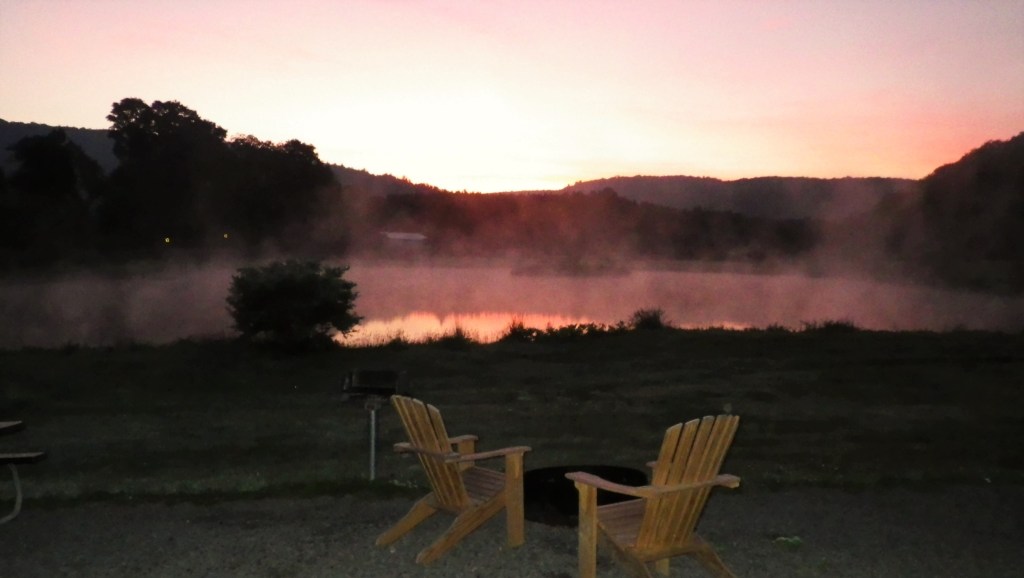
It is supposed to warm all the way up to 38 today. The sunrise was pretty despite the chill, and I am thankful for each one I enjoy.
It seems like a good day for fly tying. My boxes are full, many of them overflowing, but I am drawn to the craft.
I already polished the Menscer rod this morning, a little thank you for the joy it gave me yesterday afternoon. It is important to care for these handcrafted jewels, particularly when fishing in the rain. I wiped it down when I put it in the Jeep of course, then again when I brought it into the house. The rod spent the night in the rack and was polished and returned to its tube this morning; ready to make another memory.
Fly tying, yes, and a chance to begin reading Ernest Schwiebert’s magnum opus “Trout” which arrived from a book dealer in California. My thanks to Planet Books for packaging it so securely and shipping so quickly.
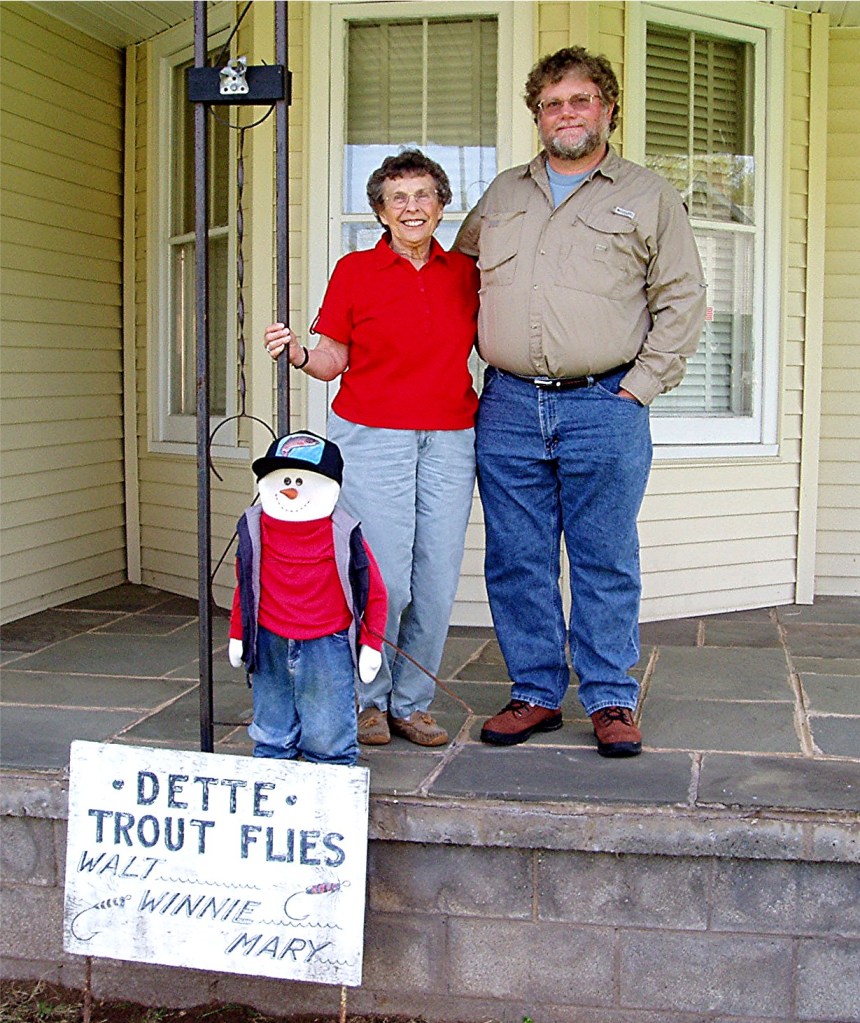
A Visit with Mary Dette Clark, the Grand Lady of the Catskill Fly
My love affair with the Catskill dry fly began many years ago as a neophyte fly tier. Like most, I had some troubles with winging and proportions starting out. My flies didn’t look like the example photos, but they caught trout.
I really learned how to tie them properly on a weekend visit to Wally Vait’s On The Fly shop in Baltimore County. Wally had invited Catskill fly tier Larry Duckwall to demonstrate his art, and I was eager to learn. Larry had learned from Elsie Darbee, so he was a direct line third generation Catskill fly tier, and a very entertaining instructor. Sadly I have learned that Larry passed away in 2014.
Beginning with my first trip to Roscoe, New York in 1993, I made it a point to visit the Dette Fly Shop on Cottage Street, hallowed ground for fly fishermen. I was fortunate to meet and watch both Walt and Winne tying flies, and often stopped to spend an hour watching Mary tie and talking with her. She is one of the loveliest and most generous ladies I have ever met, and an absolute master at the vise. I fondly recall the kind compliment she offered when I displayed the Dette Coffin Fly I had managed to tie at my own vise.
My style of tying was modified somewhat through the teachings of Pennsylvania sage George Harvey, and has evolved using a variety of techniques learned in George’s class and book, building upon the Catskill foundation acquired from Larry and from watching Mary Dette during my Roscoe visits.
I offer my own simple video on tying Catskill dry flies in the hope that the results of my learning will be helpful to others.
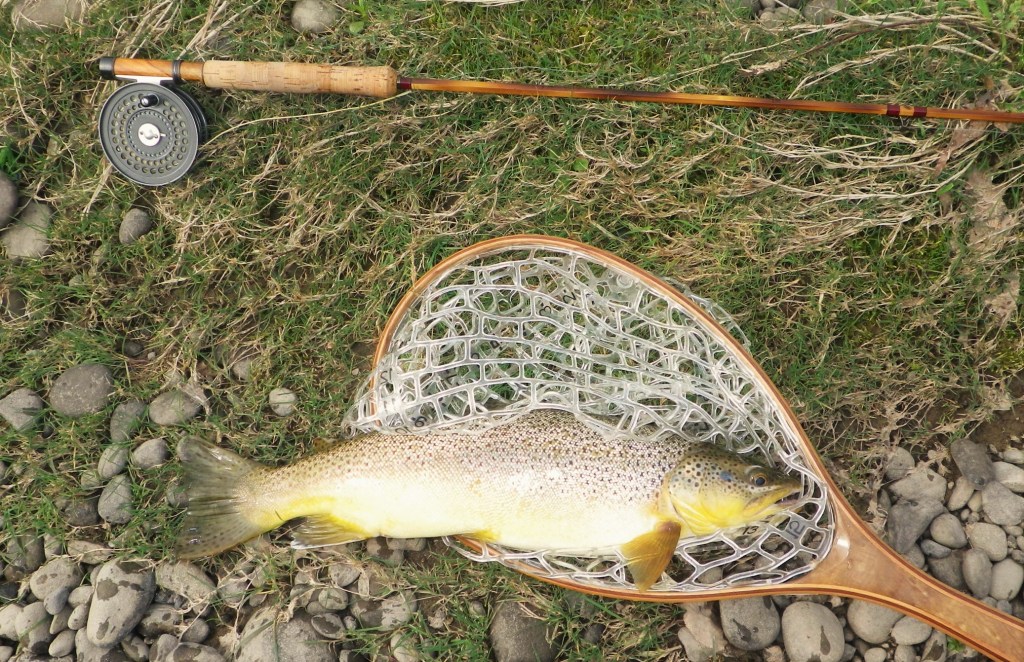
The Dennis Menscer 8′ 5 weight Hollowbuilt and Hardy made classic CFO IV with a brownie a bit larger than today’s 20 incher. The man builds a GREAT rod!
With rain and snow threatening I headed to the river today with an old friend in the back of the Jeep. Dennis Menscer made the 8′ hollowbuilt bamboo rod for me four years ago. I paired it with a classic Hardy made Orvis CFO IV, 100 yards of backing and an Airflo WF5F line from the beginning and have stayed with that combo. We have many fine memories.
Between fishing from my drift boat and taking my life in my hands to wade a few spots at ridiculously high flows, my spring fishing has had to rely upon a couple of Thomas & Thomas graphite fly rods. Eventually I hope to devise a suitable rod holder so I can fish bamboo from the boat, but for now I have to stick with my old faithful T&T LPS 905. I was eager to fish this afternoon as the river had finally come down to a more tractable wading level and I was finally going to fish dry flies on a favorite bamboo rod.
Dennis’ hollowbuilt got the call as it is a unique rod that is suited to angling all the rivers in the Catskills. The taper is easy casting and has the subtle power for reaching out when needed. All I need do is relax and cast.
I arrived earlier than necessary due to my anticipation and the declining nature of the weather forecast. Leaving home near noon it was a comfortable 55 degrees. The rain was expected to begin near two and the forecasters did an enviable job. Thankfully, a handful of mayflies came out to greet the raindrops.
I didn’t get the heavy hatch that I did yesterday, when the sun managed to raise the water from the mid forties to nearly 52 degrees. A few sporadic Hendricksons floated downstream, but nothing rose to show interest. I knotted a 100-Year Dun to my 5X tippet and waited, feeling the chill deepen in my bones. I guess it was the second or third little flurry of flies that finally raised a trout, and I shot a cast that alighted just upstream of his lie. The old boy must have followed it down, as I was about to pick it up and cast again when he erupted in a burst of white water!
I stripped the line with the rod high until I got him on the reel, then lowered the tip to use the powerful middle and butt of the rod against him. There was plenty of give and take, as the fish bored for the boulders along the bottom of the pool, but the arc of bamboo finally bested him. Measured in the net at 20 inches, he was my first dry fly trout on cane for the season, and a fine omen for the months ahead.
That bronze flanked brownie would be the only trout I would fish to, as the hatch never materialized into something more than a few sparse handfuls of flies. The chill had penetrated by the time I waded to the bank, the air temperature having dropped 9 degrees in a couple of hours. Perhaps we will see that snow this evening.
Wild trout taken on dry flies and fine bamboo are special to me, as there is no other way I would rather fish. The history and traditions of dry fly fishing drew me to the Catskills, and my heart has never left!
The first week of May is behind us, and an inch of show is expected tonight. I guess I should be used to fishing in two jackets and a hoodie by now.
We did get two days that reached 60 degrees this week, and none were forecast, but the wind has been relentless at times. Yesterday they called for 10 -15 mph and I went wading, not expecting anything in the way of hatches unless the sun brought a few caddis to the surface. I was certain that the Hendricksons were finished where I was heading. They had started fully two weeks ago and then the high water and cold flushed the rest of them away right? Apparently not.
I pulled up a stream gage yesterday morning and the temperature field was stuck on early April when the site loaded. Water temperatures were in the low forties, with the better peaks near 44 or 45 degrees, the same thing I saw when I refreshed the page to get the current data. Basically the rivers have not changed significantly over the course of the past month.
I marveled at a heavy Hendrickson hatch yesterday afternoon as I stood waist deep in cold water and worked both of the rising trout I would encounter for the day. There were Blue Quills in abundance and some caddis too, and a new player. I was fortunate to fool the first fish, a stocky 19″ brownie, before the wind got worse. The velocity and frequency of the gusts seemed to increase with the intensity of the hatch. Not the first time I have lived that phenomena on a Catskill river.
I worked that second riser with various flies and adjusted tippets, but the winds refused to let me consistently make the perfect presentation. Too many casts, as the desire to grab a little of that trout’s energy for a moment and a dance around the river overcomes logic and reason. If the winds allow 15% of your presentations to be just right, there is no reason to make the other 85% of those casts. I know this and yet…
I am still seeing plenty of out of state license plates along the rivers, small groups of guys close together, without any masks or semblance of good judgement. I guess we as a people have taken the idea of American freedom too far. So many believe they can do whatever they want and nothing can touch them. More than 75,000 have learned they were wrong.
I am fortunate to be fishing, for that is what I retired to do. The idea was to spend the last few years of my life on the rivers of my heart, the one place where things seem right, where Nature’s energy and serenity envelop my weary mind. I resent the fear each time I hear a car door along the river bank. Fly fishing was once about courtesy, the pursuit of gentlemen, and each of us left his fellow angler to fish in peace when coming second to a pool. To hope that, under penalty of death at least, such courtesy and common sense might prevail again seems a foolish thought.
Yesterday felt like a little daylight was peeking through after a long, dark night.
May had finally arrived, but I had been forced away from the rivers by dangerously high water. After months of tension with the virus lurking and weeks of colder than normal temperatures, May was supposed to be better. It was supposed to be spring: warm and sunny with mayflies in the air and trout rising; something to take the edge off. Instead, May had debuted with more of the same.
Yesterday I was finally able to hitch up the boat and get back on the river. The water was still high, though it finally came down to the point I felt it was safe to float. I expected the morning sunshine to disappear about the time I began my float, and I wasn’t too sure about finding many rising fish with all that cold water rushing down the channel, but I was out there.
Just before I headed out I checked the weather one more time to find the 10 to 15 mph wind forecast had been upgraded to 10 to 20 mph. Oh joy. I nearly called it off at that moment but hope kept me on course.
There were plenty of boats on the river, with plenty of social distancing violations, but the sun stayed with us and the wind stayed down. The fact is it was a beautiful day, an unexpected one and thus, appreciated all the more.
The high flow and lack of rising fish made for a quick float. You basically dip an oar tip now and then to correct your line and the current speeds you on your way. Sit back and enjoy the sunshine! Once early afternoon rolled around I stopped at a number of spots and anchored to look for flies and rises. A handful of Blue Quills started to show but there was no sign of a trout.
By prime time I had reached some great water for Hendricksons, and did my best to play leapfrog with the other driftboats and anchor where there was some softer water collecting insects. Still nothing working the top. The soft water wasn’t all that soft, and the bugs weren’t coming en masse. There were plenty of quills, but I guess the math wasn’t working for the fish: too much effort for too little return.
The magic hour passed with no more than an occasional Hendrickson drifting past and I figured my day was about done. Between the enhanced current speed and the need to pass other boats, I was further down river than expected with nothing to show for it. I hadn’t made a cast.
Finally I saw a little rise along the bank. Instinct told me it was only a youngster, but hey, at least it was a fish, and all wild trout are worthy. The edge was shallow so I anchored up a little further upstream, and the fish dropped down a bit and rose again. Long downstream casts can be tricky when it comes to getting the right float along the bank. I made several casts, extending my drift, but that fish just didn’t see anything he liked. I tried to lift the anchor and let the boat down a little closer; and put him down.
I sat there for a long while, enjoying the sunshine and staring downstream hoping for another rise. The flies were getting sparser as I sat there, but I finally saw one little ring. I repositioned, but that guy never rose again.
When I pulled the anchor and grabbed the oars I figured that my fishing was over for the day. I had just one stop ahead and I fully expected that another boat would be sitting there. When I floated into view, sure enough, I saw the flash of oars in the afternoon sunlight.
He passed, rowed right by, so I rowed across the river as quickly as possible without creating too much of a ruckus. Once upstream of the spot, I slipped the oars under my knees, picked up the anchor rope and drifted silently into position for a long cast to the first rise.
The fish looked big, pushing plenty of water as he foraged on the quills and odd Hendricksons scattered along that bank. I had tied three flies immediately before leaving that morning, and one of them was secured to my tippet, a sparkle dun with a Trigger Point wing. Four casts, five, still he kept eating, and no take. I pulled some more line from the reel, shocked the rod and twitched the tip back as the leader unrolled, putting more slack in the tippet to improve the drift. Nothing!
He pushed up another bulge of water and his little round nose came out, I saw the whiskers and the flipping tip of his tail: muskrat! I couldn’t help but laugh at my own intensity. Perfect casts to a rodent. It would have been quite a fight.
Wait, there’s something else there. Mama muskrat? No, a bulge and a sipping rise. Two casts and I had him! He pulled a deep bow in my old Thomas & Thomas and my mind flashed to the tip that had been savaged by a low hanging branch while I fought for control in standing waves and white water earlier in the day, but the rod held.
The fish bored away from the bank and into the stronger flow, pulling line from the reel and shaking his big head. Definitely not a rodent. He fought hard, as Delaware browns are wont to do, but I finally led him into my net. Twenty-one inches of wild energy, his sides heaving in the mesh as I slipped the Hendrickson from his jaw. I admired him for a moment then slipped him back over the side.
Funny how a day can brighten so suddenly, and now there were a pair of fish sipping the errant mayflies in the line of quiet water along that bank.
The fish were cruising, working their way upstream and weaving in and out as they found a morsel to their liking, then diving and re-surfacing back where they had started. At last my fly caught one’s attention and he tipped up and took it. The rod bowed, I felt his weight and then nothing. Should have checked the tippet better after landing that first big boy.
I clipped the rough end of the tippet and knotted the morning Hendrickson number 2 to the hook, then looked for another candidate. I guess the fish along that bank had seen too much of my comparadun, for I could draw no more interest. I changed to a Blue Quill parachute, for I could see more of the smaller flies in the drift. That too proved unwelcome. My eye caught the form of a spinner in the glare beside the boat, and brought a smile to my face.
I checked the tippet one more time, tied on a size 16 biot-bodied rusty spinner, and began to play the game with the cruisers once again. It took several casts before I guessed which way the trout would turn and laid the fly perfectly in his path. He sipped, I tightened, and the big trout boiled the water and headed out of town!
He ran hard toward a snag and I turned him just short of it. Coming my way, it was all I could do to reel fast enough to keep up with him, then it was down with the current, twists and head shakes. In the net he was a solid 20 inches, another lovely big, wild Delaware brown.
The drift of flies had lessened, and there were no more cruisers picking off the remaining strays, so I took a moment to reflect on how quickly the day had turned, let the warmth of the sun ease my tired shoulders, and floated on toward home.
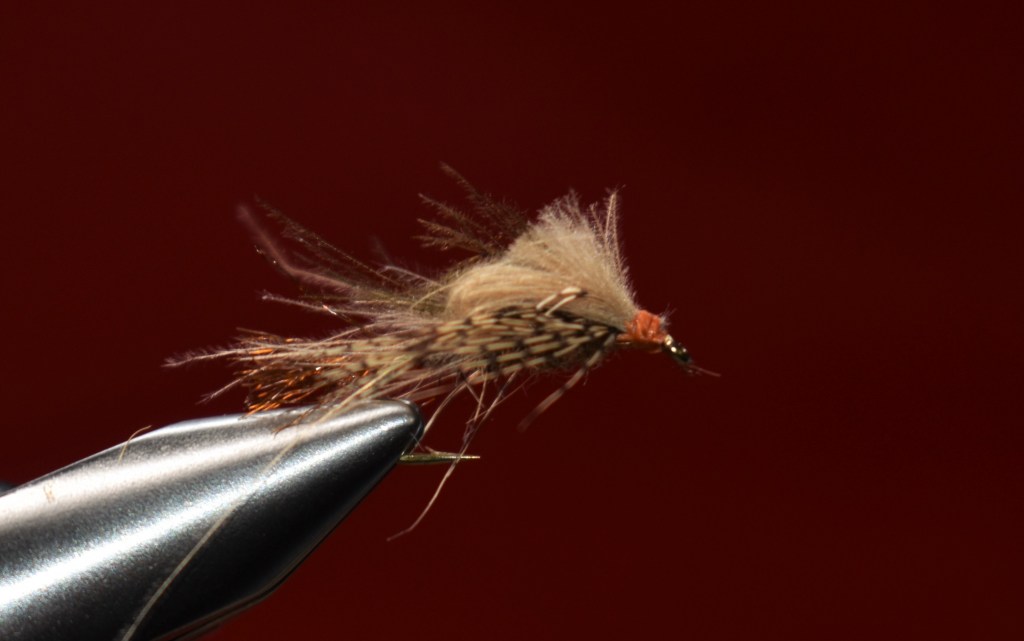
Somewhere in the vicinity of thirty years ago I developed a series of emergers tied with CDC feathers. The premise was to tie a good match for a specific mayfly nymph, incorporating CDC feathers in the insect’s wing color. The CDC was tied in in a low loop to trap air bubbles that would hold the fly in the surface film, and the loose fibers that escaped the thread were allowed to trail and move in the current.
Since I was chasing the Hendrickson hatch on the Gunpowder back then, the first emerger I tied was the Hendrickson. It was followed by sulfur, blue-winged olive and white mayfly (Ephoron leukon) variations. All of these caught trout; difficult wild trout in clear heavily fished streams like the Gunpowder and the Pennysylvania limestoners.
When I began fishing the Catskills in 1993, I tied versions to match the March Brown and the Green Drake. While I missed those hatches in the Catskills that season, I got to try both flies on Penns Creek. Both were effective when the trout would key on emerging nymphs and refuse to take the duns.
After amassing a track record of success on different rivers matching different hatches, I finally published this style of fly in the Mid-Atlantic Fly Fishing Guide. I hadn’t published any of my original fly patterns previously but I ended up being thankful that I did decide to write the article on the CDC emerger series. Later the same year Fly Fisherman magazine carried an article by Rene Harrop where he offered several of his original CDC patterns, among them a loop winged emerger very similar to my tie. Neither of us was aware of the other’s experiments, yet we came to similar conclusions. Mr. Harrop certainly needs no introduction.
So there were at least two of us who were convinced that this style of emerger was a great idea, though I don’t doubt that there are other tiers that have had kindred ideas and tied similar flies. Such is the nature of fly tying.
My CDC emergers can be fished effectively as tied in most situations. When you encounter a trout who still isn’t convinced, there is a little trick that can turn the tide in your favor. Pinch the CDC loop as tightly as you can with your thumb and forefinger, then submerge the fly and squeeze the body to thoroughly wet it. If you get any water in the loop wing, blow it out and cast. The fly will hang deeper with nothing but the loop wing caught in the film, and that trout will probably take it.
I have chosen the March Brown pattern to tie for this video, since that should be the next mayfly to appear this month. It is May after all, even though our ten day forecast shows our high temperatures won’t get out of the forties and fifties here in the Catskills.
Dark Skies and Rising Water Have Been The Mark of Spring 2020
It has been a few years since I last witnessed one of the epic Catskill Hendrickson hatches. Every spring I look forward to the possibility. Considering that it is the first major hatch of the season, there is no doubt that the dry fly man’s anticipation is at its annual peak as the second week of April approaches.
Yes I have seen it that early, though I have endured the long wait on the brink of too many seasons when the flies did not come forth until May. This year had all the appearances of an early spring, one in which the hatch would appear during the third week of April, but a push of persistent colder air after a warm weekend to begin the month seemed to stall things; or did it?
The water temperatures rose to the magic 50 degree mark that first warm weekend, then plummeted back to the thirties as we were battered with snow squalls and frigid nights thereafter. The last blast brought us a 2 1/2 inch snowfall on April 18th. Though river temperatures were in the wrong half of the forties, I saw the big duns on the water the following day, April 19th. The flies have been here for nearly two weeks, but there hasn’t been a big showing of rising trout to greet them.
As I watched a handful of those beautiful ruddy duns blown with the gale two days ago, I feared that might be the last I will see of them for the season. The rain clouds have had their way and the rivers are all blown out once again; and more rain is coming. Anticipation unfulfilled and hopes dashed once again!
Memory assures that I have had great days fishing the Hendrickson hatch, though upon reflection there have been more that have been frustrating. Wind and high water have most often been the culprits to take the blame. I see visions of dark, cloudy days, the surface filled with flies as far as I could see, and pods of trout feeding furiously on them. Wading deeper than reason I still needed a long cast to reach those pods and the winds defied a presentation. Such is fishing, lest we forget.
I have grown as an angler passing those years that flood my memory, something we all do if we are dedicated to the sport and strive to improve. I can fish effectively under conditions I once considered hopeless, yet Nature is still the great equalizer. She reminded me, standing in the river just the other day, watching big trout pound those last few Hendricksons while I laughed out loud amid the rush of 35 mph winds that defied my casts.
So, another season begins, and though conditions do not suit the dreams that guided me through the winter I am thankful. I am here, alive and breathing despite my own health issues and the devastation of a global pandemic. There is still a tomorrow.
I had a reminder of that too, as I drifted through the tail of a pool early this week. Suddenly I saw a splashy rise and let the anchor as quickly and quietly as possible. Rises erupted toward midstream and below my position. The display seemed to coincide with the appearance of a few larger duns on the surface. I had just tied on a Hendrickson and thought myself ready for Nature’s little gift, but the fish were moving with each rise. I cast to each target immediately, only to drift my dry over vacant water. It lasted all of five minutes, and then the surface was still.
Teased, I sat down and let my heart rate slow a bit. That little flurry of fruitless activity brought a smile and a chuckle too. It was fun without feeling a tug.


 Bright Waters Catskill