Sunshine

It doesn’t look like spring, though it certainly feels like it…

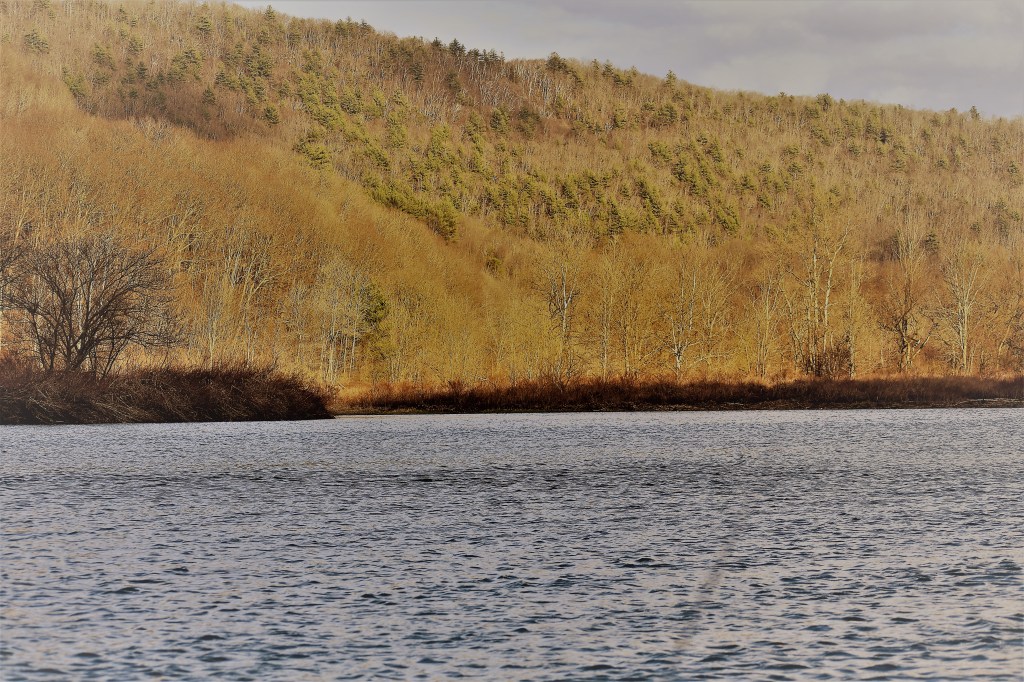
After the first real blast of winter weather, complete with snow and howling winds, a miraculous thing has appeared in the first week of November: sunshine! With the sun has come the warmth, and a run of days with highs in the mid-sixties. When all hope seemed lost I grabbed my gear and hurried to the river! The flows are reminiscent of spring time as are the brief, warm afternoons.

I set about swinging flies, certain that the forty degree water would surrender nothing on the surface, yet my faith in that conviction was tested. I was casting and swinging, mending and swinging, all the while dreaming that a nose might break the surface when I saw them; wings in the slick current, and more than a single pair.

There seemed to be a number of mayflies floating down, the rays of the sun lighting their wings – an advertisement, a tease, and I fell for it. I reeled in the fly line, cut the wet fly away and measured four feet of 5X tippet, extending my leader with hands trembling with excitement. A few flies took wing, guaranteeing those were really mayflies I was seeing and not bits of leaves lighted by the sun and animated by the breeze and my imagination. They looked light, and I fumbled for one of the September peach flies still amid the tumble of my summer chest pack.

Every once in a while the quick current would bulge and flip droplets into the air as it slid over a submerged boulder. I wanted it to be a trout, wanted it so badly, coveted the thought of one more dry fly experience. I cast, mended in the air, and watched my fly bob through that little blurp of water with every sense on edge. Nothing; I saw no nose, no flash in the sunlight, so I changed the fly and cast again…

The boulder never rose. Though that little blip of current was irregular, it was current alone that deceived me, twisted the wanting in my heart to make my eyes see something that wasn’t there.

The flies continued; tiny ones, larger ones, flies taking flight from the bright, slick current, though none were interrupted in their journey. Warm sunshine and cold water are not the prime conditions for rising trout in November, no matter how badly I want them to be.

It was early when the sun dipped behind the ridge, bathing the water in shadow, and the breeze betrayed a hint of chill once again. I watched, waited, still clinging to the hope that one fin might break the glassy surface, turning away at last as the shadows crossed the water to envelop me. November…

A Southwestern Flavor

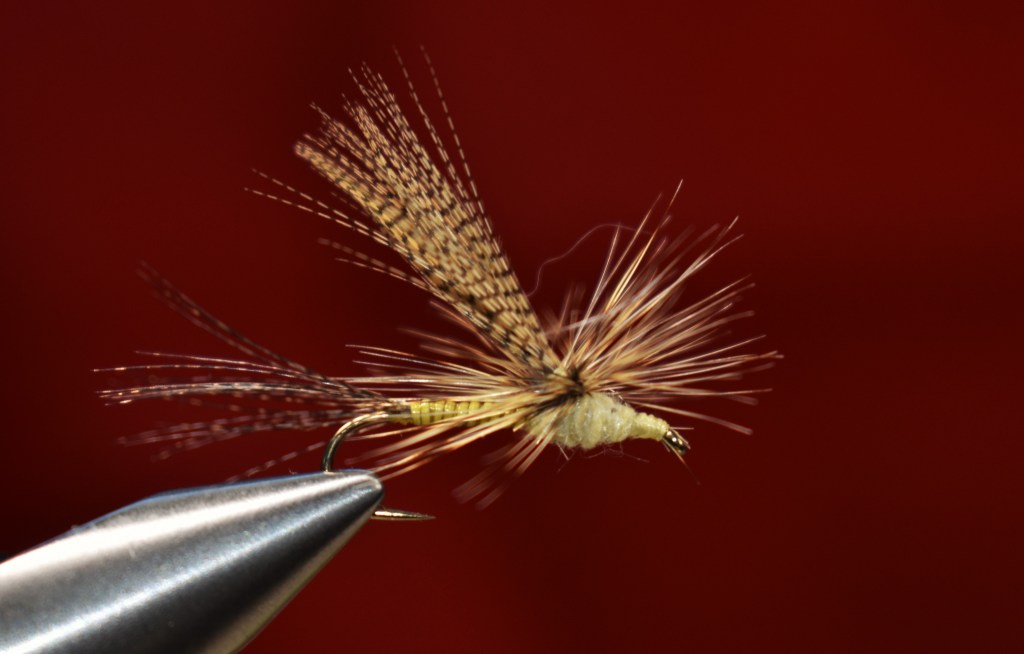
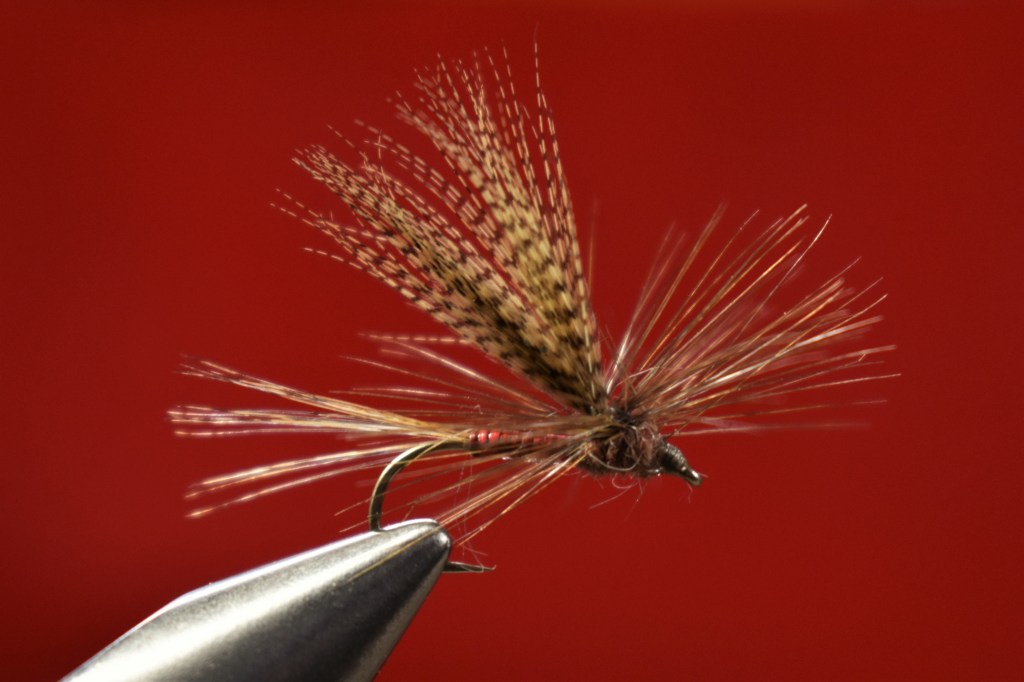
My 100-Year Dun Jave Red Quill, waiting for spring…

My friend John is an extremely talented and innovative fly tier, one who has an explorer’s streak when it comes to materials. He is also one of the finest men I have ever known. John has been sharing unique fly tying materials with me since our meeting two decades ago, most recently one with a distinct southwestern flavor. If you pay any attention to hunting, chances are you have run across the Javelina. They have been a popular bowhunting quarry as long as I can remember, and thus the subject of articles in sporting magazines and today, television and video.

When I was a youngster, javelina’s seemed to be thought of as a species of wild pig, which they are not. Their appearance explains that to some extent, particularly the ruff of brown and whitish hair around their shoulders. I don’t know if western fly tiers have ever appropriated this javelina hair, but some of John’s friends from the southwest certainly figured that he could find a use for it. Being a creative tier, John set about dying the hair, which is barred brown and creamy white, in a variety of colors.

John had used the hair for quill bodies, and was impressed with its ease of use, appearance and durability. Being the kind of friend he is, John provided me with a bunch of dyed javelina hair and suggested I go wild.

Among that first batch was a pale greenish color that simply screamed Green Drake to me, and it found its way onto a variety of my drake patterns. Sadly I did not hit a significant hatch this season, though there were a couple of days when a handful of duns appeared. The quill body was a natural for my 100-Year Dun pattern and it was the fly that fooled a pair of very large trout, the only two I witnessed taking one of those sparse Green Drakes. If you fish the hatch, you know that big, wild Catskill trout can be extremely picky when it comes to the flies we use to convince them a real Green Drake is floating overhead.

100-Year Drake Jave Quill

The fact that this fly was accepted by two monster trout, each on the first cast, impressed me, and I plan to tie a lot of jave quill patterns for 2021.

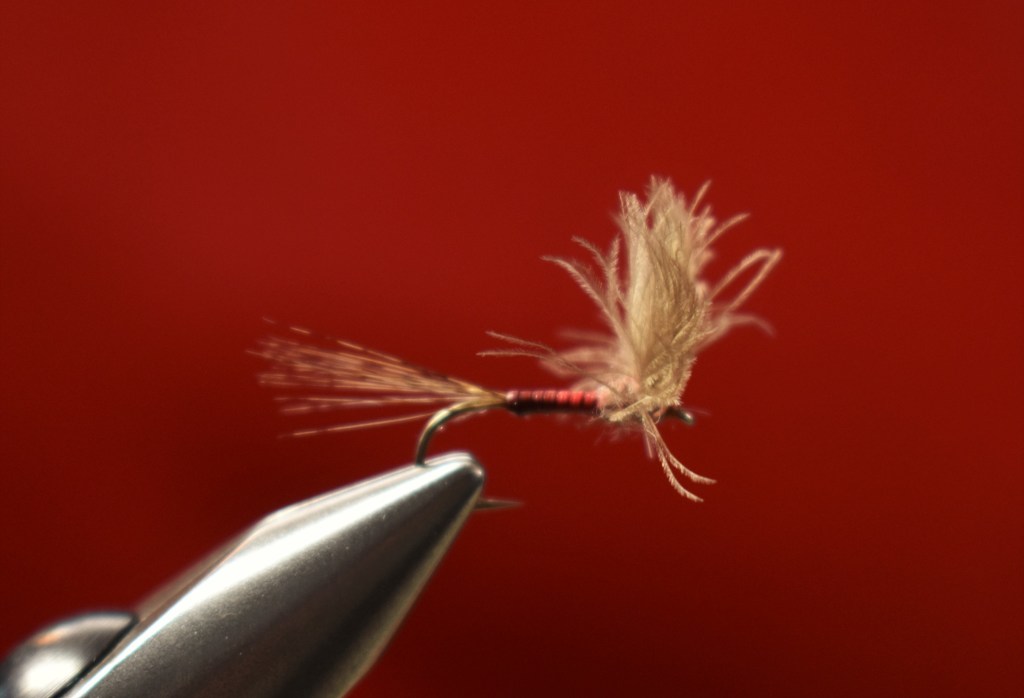
I wrote a passage about Hendricksons the other day, and thinking about the hatch got me working out a few Hendrickson and Red Quill variations featuring John’s dyed javelina “quill” bodies. My anticipation for next spring grew substantially as I tied.

Pink Hendrickson Jave Quill Poster
Jave Red Quill CDC Comparadun

I have more colors suited to Hendricksons, March Browns, Sulfurs and more, and have already tied some Isonychia which I unfortunately didn’t get a chance to try; another great bug that didn’t show me a lot of activity this season. There will be a lot of experimentation over the long Catskill winter. John told me he has had interesting results coloring the dyed javelina hair with a Sharpie, achieving an overwash effect. That can open even more doors at the tying desk. I have an idea for ribbing a hair quill body with very fine thread dubbed with sparse silk, to take advantage of the halo effect devised for my effective Halo Isonychia. The quest for imitation marches on!

November

A November morning on Ohio’s Conneaut Creek.

November and, as an angler, I am on the wrong part of the map. November is steelhead time, time to watch the fronts moving through the Great Lakes in an attempt to catch one’s favorite tributary the morning after its apex. It becomes a science unto its own, this search for chrome, as each tributary has a unique drainage area and its own timetable.

A significant rainfall event will raise the flow markedly and bring steelhead waiting near the river mouths upstream. High, muddy water isn’t fishable, though it brings urgent fish upstream in a rush. It is that period just after the apex, when the flows drop and the streams just begin to clear, that fresh fish turn aggressive: angler’s nirvana. In the flat shale bottomed streams like Pennsylvania’s Elk Creek, that window is two days long. The larger, more varied watershed of the Conneaut lengthens the span: more time is required to go from too high to just right, and the span of great fishing conditions is likewise extended. If this sounds somewhat predictable, keep in mind that each rainfall event is different in volume and duration, and each small watershed has a wealth of variables. Too, the best predictions go out the window when a second or third shot of rainfall follows the first by hours or days.

It can be a grand game just determining when and where to fish. Local steelheaders have an inside track of course, but only if they can find time off from work to get on the water when its perfect. For the traveling angler, it is a roll of the dice; but oh the rewards when you don’t roll craps!

Mike Saylor and I hit things just right once in about ten years of trying. We made the five and a half hour drive to Elk Creek after work, arriving close to midnight. After a few fitful hours of sleep we were on the water at the moment. We each hooked a couple of dozen fresh run chromers, landing about half of those we battled. Man it was an electric day! The next morning much lower and clearer water greeted us at daylight, and our hookups and landings were still thrilling, though reduced by nearly fifty percent. On day three the low clear water we had fished for nine of those ten years was the rule. I think we managed a fish apiece, perhaps two, but my memory is still marked by those first two days and everything else is fuzzy.

Low water can still produce fish, but it is a very different game. Think trying to catch a five to ten pound silver bullet hunkered down under the branches of a sunken tree with 5X tippet. On a good day you might land a couple, but the odds are very strongly against you.

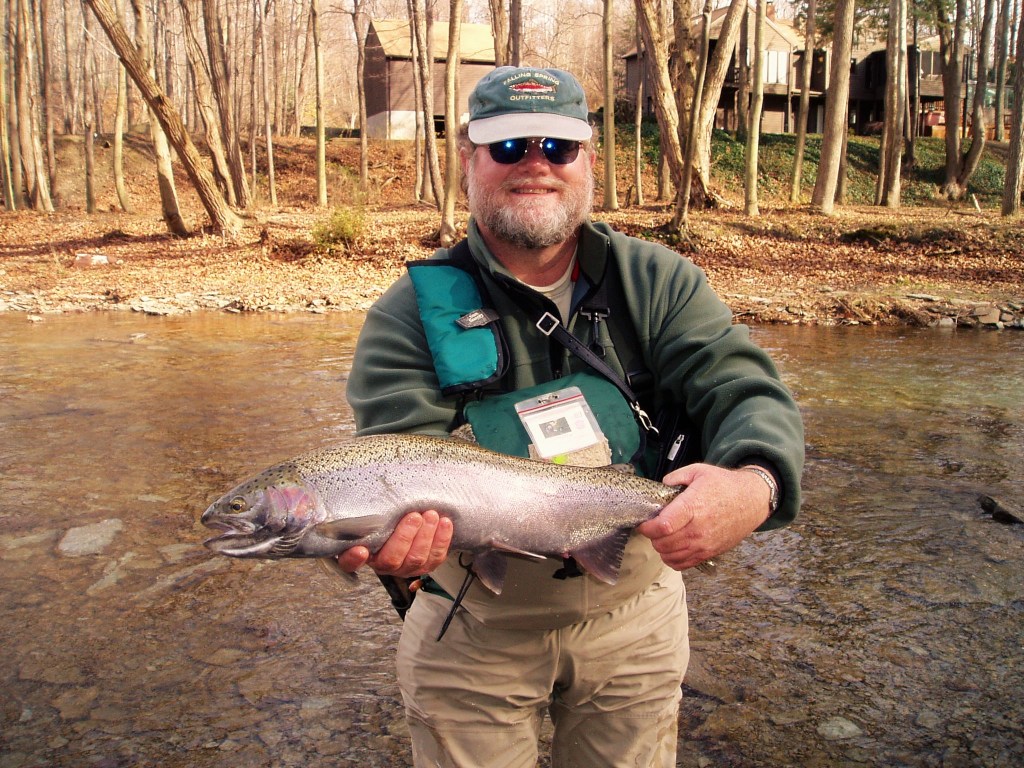
A low water eight pounder from Walnut Creek in 2003

Ah yes, November is tributary time, but not for me, not this year. Mike nearly made it, until the unwanted effects of an ill timed flu shot derailed his plans.

Being retired, we both hoped we would be able to take better advantage of the autumn run, but then there is the pandemic to be concerned with. Erie tributaries are small streams and they draw a huge throng of anglers, some of whom think nothing of fishing right on top of you. I recall a guy with a spinning rod walking up and standing on the opposite bank, exactly above the spot where my short casts were entering the water. My polite suggestion that he move on just drew a stupid grin and some mumbling about “public water” as he drifted his bait through the same run. It wasn’t until I hooked my third steelhead on a fly during his “visit” that this fellow finally shuffled off grumbling. My Covid fearing psyche isn’t up to that this fall. There is simply no way to avoid crowds of people during the steelhead run.

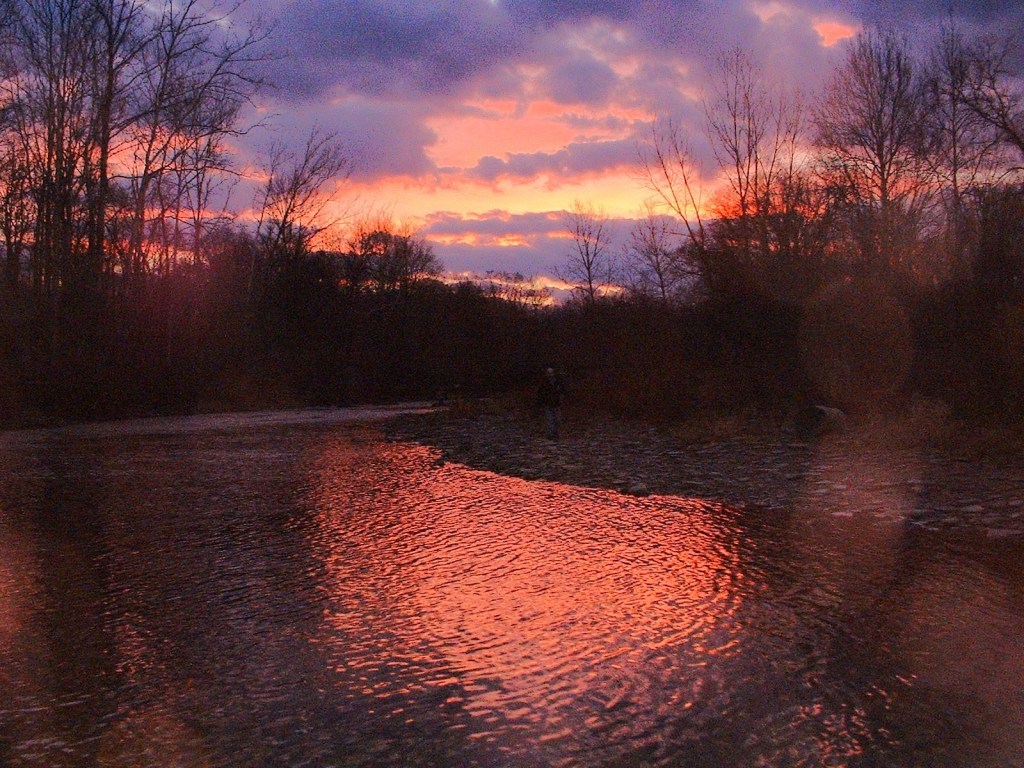
Sunrise on Elk Creek…maybe next year!

I still want to get back to Michigan for some autumn steelheading. My friend Matt Supinski has a river full of wild steelhead at the doorstep of his Gray Drake Lodge, and I want to get back up there to fish with him before old age catches up with me. The photo of my twenty-one pounder, my personal best taken with Matt in 2012, hangs on the wall above my tying desk, and I think about going back every time I look at it. Our plan had been to fish the summer Skamania steelhead in August of 2011, but Mother Nature sent a deluge to the region just days before the trip, washing away any chance for fishing. I still want to do that too!

For now I have to navigate a couple more days of wind and rain and snow flurries before a promised run of sixty degree days finds me back on one of my Catskill rivers. I don’t expect to be casting dry flies to rising trout, but I’ll still enjoy that sunshine as it twinkles upon the surface of bright water!