
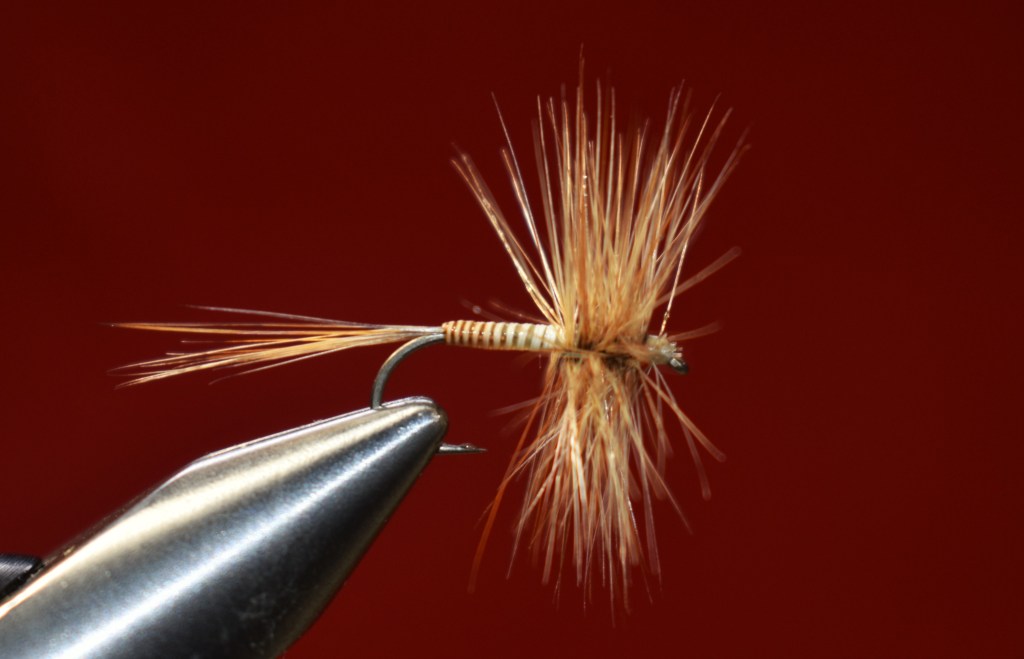
I was thinking about some of the classic Catskill dry flies I tied early in my career as a fly tier, patterns that struck me with their beauty and promise. Art Flick’s variants drew my attention along with the Hendrickson, Red Quill, March Brown and Light Cahill, and of course the Dette’s Coffin Fly. I still tie and fish many of them, though I have tied a simplified Coffin Fly these past few seasons, using a white turkey biot body. Today even Joe Fox of the Dette fly shop ties biot Coffin Flies. Clipping the white ribbing hackle is a painstaking process, and I could never do it quite like Mary Dette Clark.
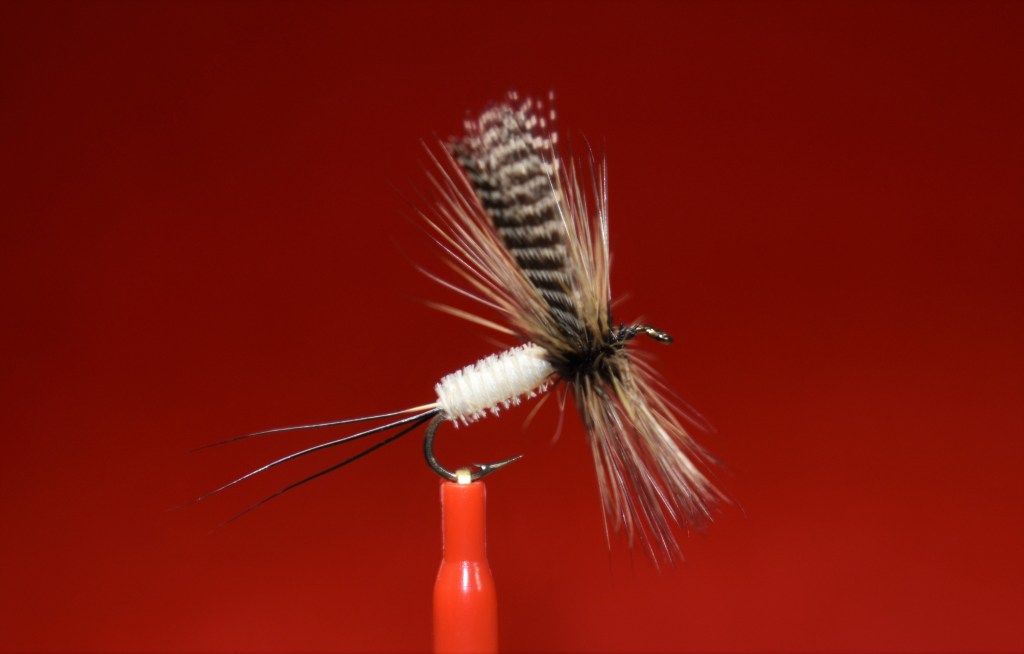
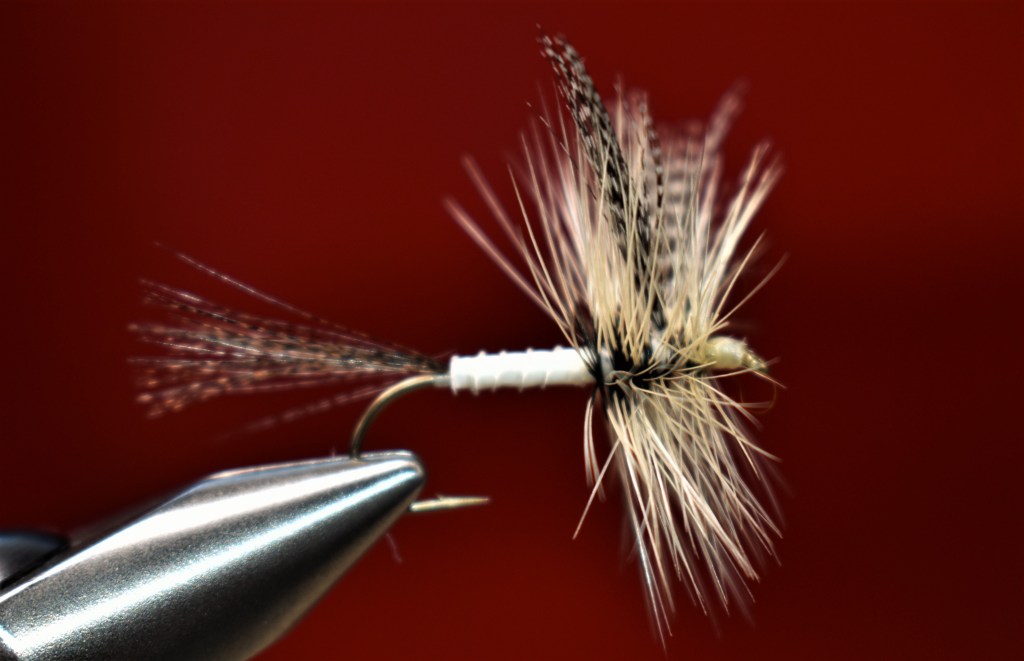
I tied a couple of Flick’s big variants last winter, but I never got them wet, missing the Green Drake hatch, other than a couple of brief encounters with the advance guard. I decided that I was going to give them their due this spring, and I stripped and soaked some quills and prepared the ginger, grizzly and light ginger hackles to tie a few. There are days when the big brown trout cruise and ignore some of my favorite low floating duns, and I want to see if a new look at these Catskill classics might draw their interest.
A superb fly tier and Catskill Guild member, ‘Catskill’ John Bonasera, wrote an interesting article for the Guild’s newsletter last year concerning his repeated success fishing little used classic fly patterns. He has also found that it pays to show the trout on our hard fished rivers something different and made the point that old is new. There are a lot of great traditional flies that have been ignored by the majority of fly fishers for one, two, even three decades or more. The wild trout swimming in today’s Catskill rivers have likely never seen them. These flies became popular when they were first tied because they were effective, and they can be effective today.
I have fished hackled Catskill style dries on the Delaware and her branches for as long as I have fished these rivers, and I have caught a number of great fish on them. I have had guides float past and tell me I needed a low floater if I had any hope of catching one of the river’s trout. I just smile at them while they poke fun at my fly and my bamboo rod. They don’t know nearly as much as they think they do.
I recall a tough day floating the West Branch and Mainstem during the Hendrickson hatch the spring I was recovering from heart surgery. My young guide had worked hard but neither bugs nor the trout were cooperating and the gusty winds had played havoc with my presentations when we did find a fish or two rising. Later that afternoon I put away my boron rod and strung up a nine foot Edwards bamboo. When we finally found a small run with Hendrickson duns on the surface and a good trout rising, I knotted a Dette tied Light Hendrickson to my tippet and presented that classic with a classic. The nineteen inch brownie Kevin netted for me after a lightning run and spirited fight approved. I think Kevin was a little surprised that the fish had greedily taken that “old school” hackled fly.
I finally acquired a Coq-de-Leon saddle which is supposed to be suitably stiff for tying Hewitt’s skater spiders, and I’ll be tying a few of them for the coming season very soon. The advances in genetic dry fly hackle have made stiff, broad spade feathers on the edges of a dry fly cape a thing of the past. Hackle growers have bred their roosters to produce long web-free hackles in smaller sizes, and we are extremely lucky to have the results of their efforts, but you won’t find hackles for spiders.
I look forward to the chance to dance a skater spider across a still flat when the trout are hidden. I’ll bet those big flies will still bring large trout to the surface once I learn the technique my friend Ed Shenk called “the Skater’s Waltz”.
 Bright Waters Catskill
Once again you mentioned two gentlemen that I wish I could have dinner with , Art Flick and Mr. Hewitt. Imagine what that would be like !
LikeLike