The Connoisseur

Ah the mystery and excitement of the unknown!

There are moments in our fishing lives that we will never forget. Such moments are often not taken from a scene of victory.

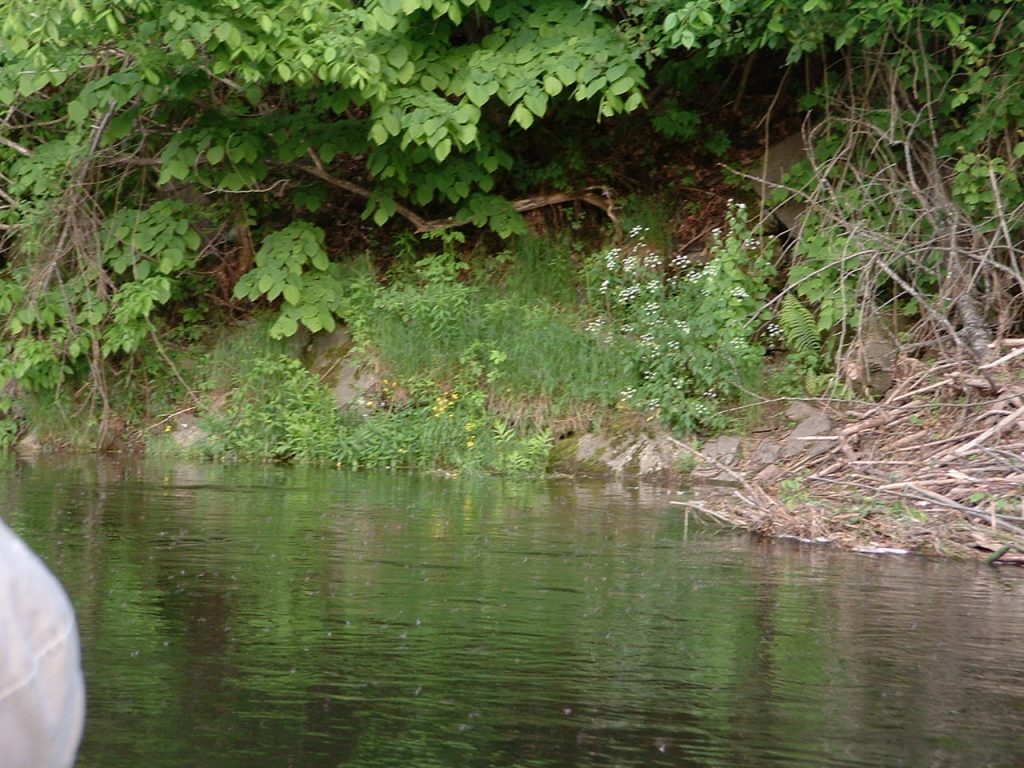
There is a short run along the West Branch Delaware that has received a great deal of my angling attention over the years. The casual angler will not often see activity there, thus it receives a perfunctory cast or two in passing, though at times it is outright ignored. It is one of my favorite places.

I have taken many fine trout from this place, generally all of them requiring time and effort: stalking, study to identify the species and stage of various naturals, changing flies, and casting repeatedly. These fish do not come to hand easily, and some do not come to hand at all. There is one that stands clear in my memory, a great fish, a connoisseur of the tiny mayflies; a foe I have engaged many times over a period of several seasons.

The trout that lived along this inconsequential little run would take the flies nature offered them, tending toward a high degree of selectivity to a particular stage of only one of the insects currently occupying the drift. Over the years I fished there I took many brown trout of twenty inches or more on sulfurs, various olives, Blue Quills, Hendricksons, Gray Fox, Isonychia and at least four species of caddis. On a given day, those caught would invariably be taking only a certain stage of one bug, though it was not unusual to find at least two or three species of insects in the drift. A few were even more discriminating, like my friend The Connoisseur.

I can recall at least four epic battles with this fish, and a few pricks and misses after an hour or more of painstakingly careful angling. Many times when he appeared to be on the fin, he was simply untouchable, utterly ignoring every fly and presentation I offered. Of the times we engaged physically, or nearly so, he never accepted a fly larger than size 20.

That first encounter was taxing. For two hours I crouched in fast, frigid water under skies ready to unleash a storm of storms, fishing to this tiny, sporadic little ring in the fast and broken current near the top of the run. The fish had taken what I would learn was his favorite position behind one up thrust, angular chunk of rock, and would glide left and right behind it as he fed daintily. It took intense concentration just to see his rise, to identify that two inch diameter ring that dissipated as soon as it formed, as the wink of an eye.

There were olives beneath those stormy skies, dark little size 20 olives with grayish wings, tossed hither and yon by the flow that cascaded over and around his rock, but also a half drowned sulfur or caddis now and then, just to keep me guessing I suppose.

My fishing was methodical, working two or three patterns of olives, then the sulfur and caddis, before edging a step upstream or step out toward deeper water to change my angle of presentation slightly, to modify my drift.

My neck was aching, the arthritis firing through all my nerve endings bolstered by the chill and dampness, and I stretched a bit as I changed to a slim thread bodied CDC olive, moved a step and a half deeper into the run, and cast again. The take was quick: that tiny spurt of bubbles, the recognition that my spot of gray had vanished from the froth, and the rod rising into a horribly acute bend for my whisper of tippet. Then it was all line slashing for deep water, the reel spinning wildly, and a great powerful force streaking away and downstream, first with my fly line and then my backing.

I stopped him finally, or rather he chose to stop and turn sideways to the substantial current, and I regained what line he allowed, before charging down again. He came around then, running toward me as I tried to keep tension, reeling as fast as my pained body could muster. I felt him deep in the gut of the run then, shaking his head and darting left then right as I relaxed the pressure just a bit. Hope began just then, though this demon trout was not yet controllable. I had fly line back on my reel and was inching him closer, a turn at a time. I knew I couldn’t let him rest, despite my fear for the small hook and slender tippet, down there amid the rocks, and my pressure incited another lightning run downstream, my backing surrendered once again.

Those who angle the West Branch are familiar with the moss, the green veil that coats the bottom where the current slows. That was my adversary’s destination it seems, down and across the breadth of the river, leaving me with too long a line to have hope of pulling his head away from the bottom. That gooey moss has the habit of collecting on the leader during battles such as these, coalescing and sliding down in a ball against the fishes mouth. One turn of the head and the current will catch it and pull the hook as cleanly as any tool contrived by man, and so it did. I was left breathless, my heart pounding with eighty yards of lifeless line to retrieve. The fly was there, buried beneath that glob of slime.

We danced three more times over the next few seasons, and that great fish never changed his preferences or his tactics. Once more with the olive, a time with a thread and CDC sulfur, the last with a little sulfur spinner, each retrieved in its glob of moss. I saw him only once, his head at least, and he was indeed a brown trout like the other residents of my little sanctuary.

As I slid onto the big leather sofa that evening, thrilled and dejected, those emotions sharing equally all the space available in my exhausted brain, the television barked of the earth quake that had shaken the East Coast that afternoon. The announcer said it was felt in New York at about the right moment, the moment I recalled getting that one and only glimpse of my mythical trout. I had a quick vision of his head, there behind his favorite rock, that still lives in my memory. The head that appeared, lifted close to the surface with his nose out into the air for a split second, was half a foot wide between the eyes. I swear those eyes were twinkling, ready for our last battle.
The fleeting warmth of sunshine

I was enjoying a book by the late Frank Mele when the sun glared through my window and into my eyes. I decided to take a break, the sun being fleeting this time of year, and make myself a sandwich. Looking out the front door the sun on the porch looked so inviting that I had to walk out. The south end of the porch was bathed in warmth and brilliance, and I decided to lunch right there.

Forty-four degrees is a verifiable heat wave in the course of this winter, and I enjoyed the moment to the fullest. Leaning back, I sipped a small gift of the brewer’s art emblazoned Cold Snap, bringing thoughts of all the spring and summer evenings I have enjoyed sitting on that porch, the grill crackling and an icy beverage close at hand.

I have passed the week craving the fishing that I cannot have, though I’ve shared a bit of that passion electronically. The Catskill Fly Tyers Guild recently assembled an archive of angling books, those depicting the history, rivers, trout, fishers and fly tiers of the region. Upon distributing it to the members, the gentlemen who complied the list welcomed suggestions for other titles, and I have a few in my library deemed worthy of inclusion.

One of the committee members who compiled the archive is Edward Ostapczuk, a gentleman angler and sage of the Esopus most qualified to converse on Catskill fly fishing and its history, as he has been a part of it for five decades with rod and line, and pen. I knew a little of Ed from his regular column in the Guild’s Gazette, and from his fine book “Ramblings Of A Charmed Circle Flyfisher” published in 2012. We had corresponded briefly via a post on the Classic Flyrod Forum last winter, and I had hoped to meet him at Guild meetings come spring. All were of course cancelled due to the pandemic.

Messages between the angling archive committee members and myself gave birth to a number of emails from Ed. I heartily replied, and we have shared a few anecdotes, photos and flies these past few days. It has been as close to sitting down and talking fishing as I have gotten during this quarantine year, and a source of much enjoyment.

Ed has a special place in his fly box for the Dorato Hare’s Ear, a dry fly I had heard of, but never fished or researched. Memory seemed to be telling me I had seen a fly by that name in some pattern book, with white wings and a buggy Hare’s Ear fur body. Ostapczuk provided the history, as well as the recipe, and I learned that the DHE is a Catskill pattern in the truest sense, conceived and tied for these rivers by the late Bill Dorato.

I too have confidence in buggy looking flies, particularly for mountain stream fishing. Twenty years ago I had tied my Fox Squirrel Special with a buggy fox squirrel fur body, Cree hackle, and bright yellow calf hair wings. It was a great fish catcher and easy to spot with it’s yellow wings amid the frothy white water that brook trout are drawn to.

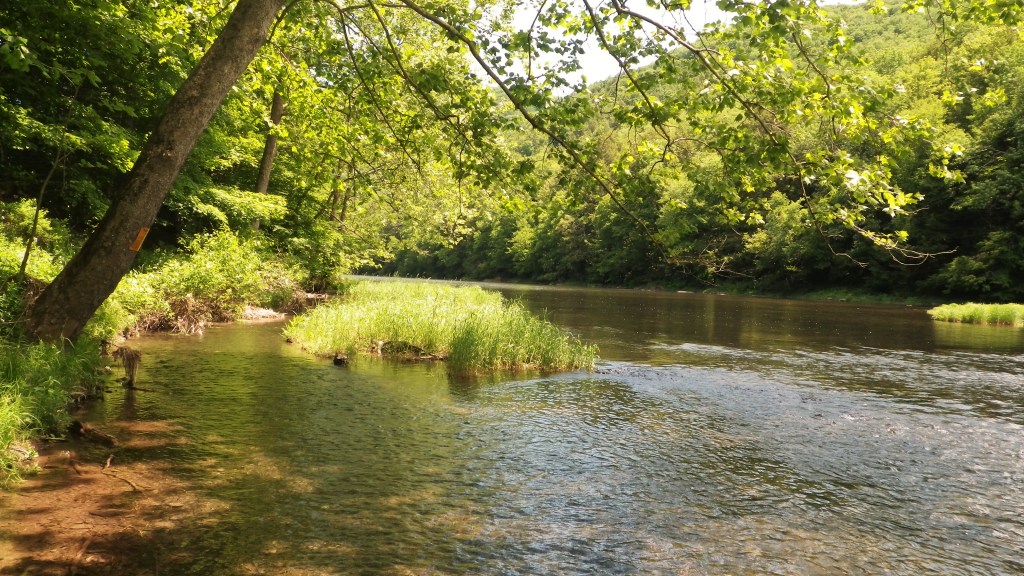
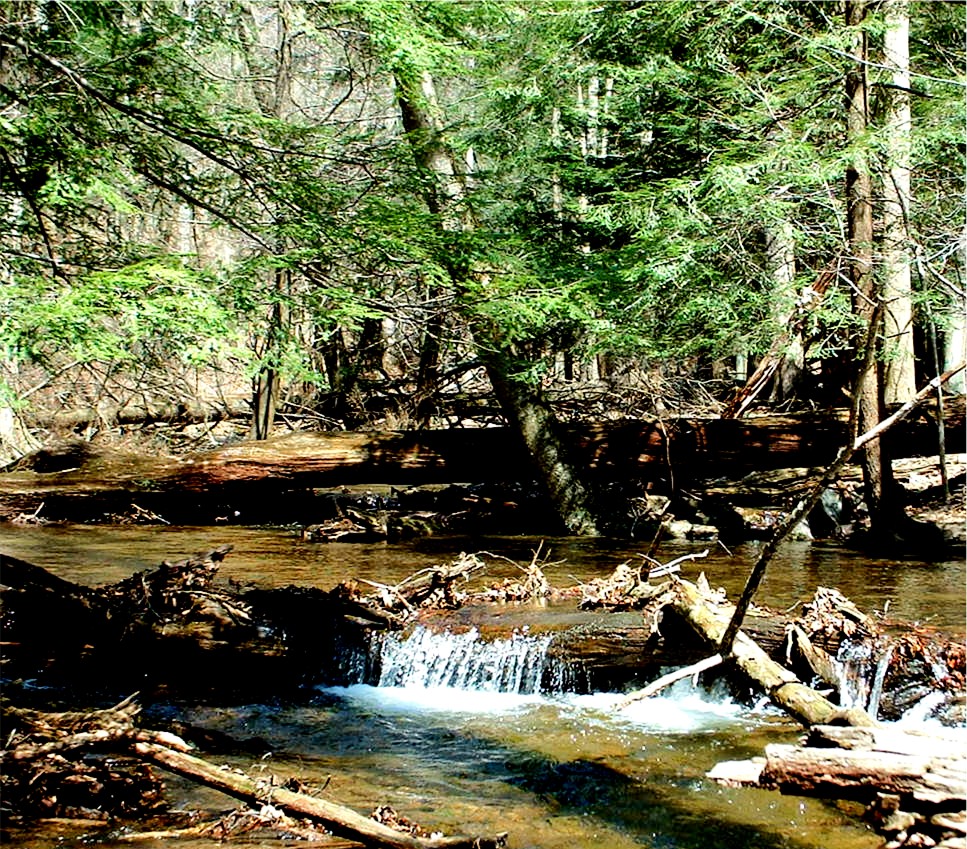
Broad Run: brook trout water, South Central Pennsylvania style.

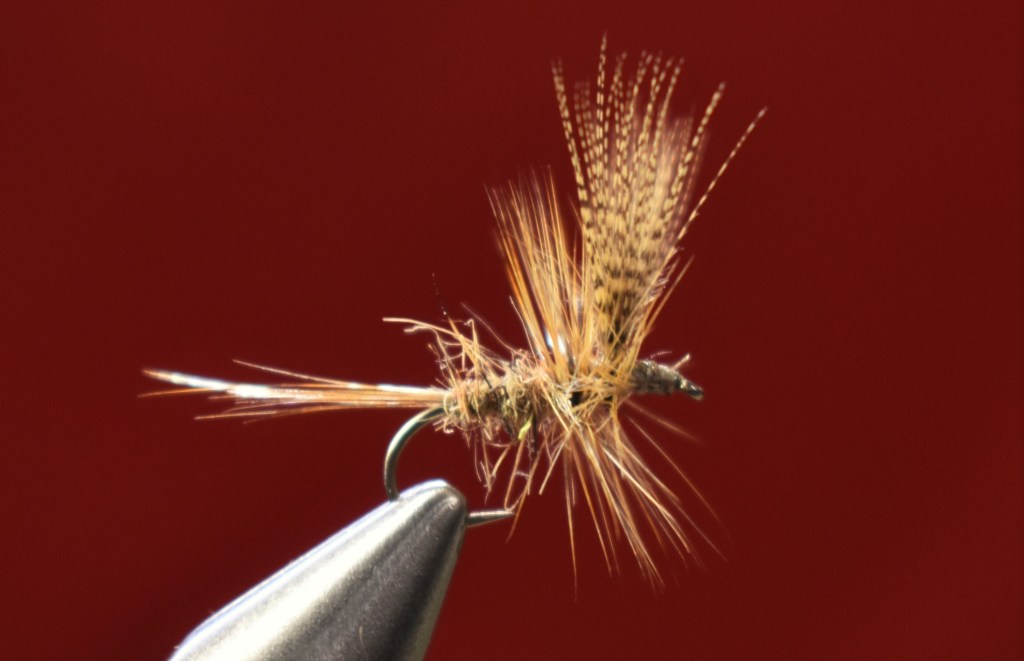
I have tied the fly Catskill style, with a divided wood duck wing, and commercially packaged fox squirrel dubbing, but the spiky appearance of the Dorato Hare’s Ear inspired me to blend up some appropriate dubbing and tie some buggy Fox Squirrels.

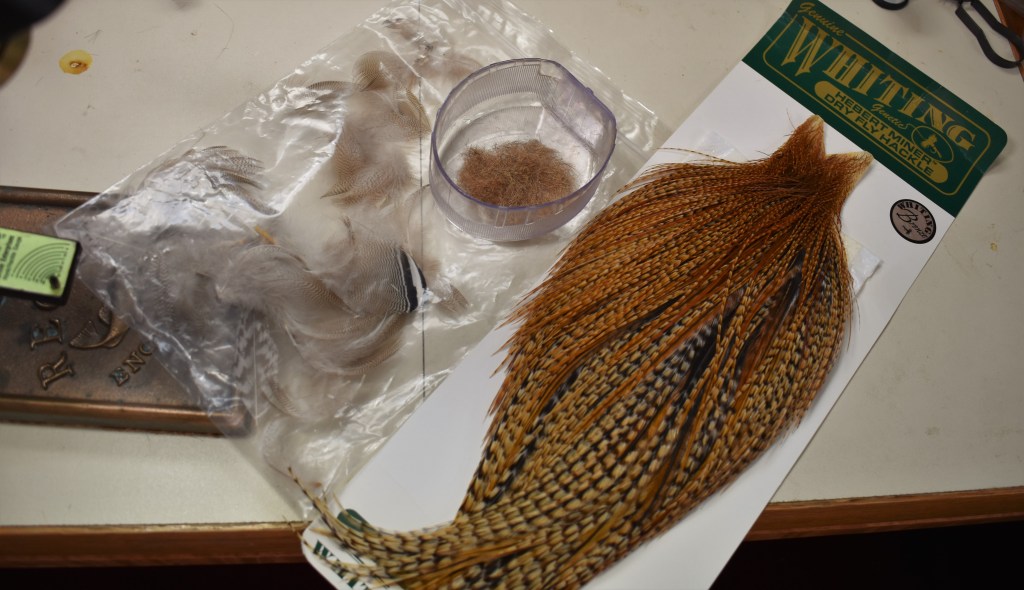
The blend is heavy on the guard hairs from a fox squirrel skin, both the heavily barred fur from the back, and the reddish ginger belly fur. Use less of the soft underfur, just enough for a binder, and a small amount of light brown Antron dubbing to lend some light reflections. A coffee bean grinder is a perfect dubbing blender, though you can do it by hand.

Squirrel has been a mainstay for my nymph blends for nearly thirty years, due to its wealth of short heavily barred guard hairs. The spiky appearance makes a very lifelike fly, and the natural mottling provided by those guard hairs looks like a lot of trout stream insects. Natural squirrel fur is great, and the availability of dyed colors make it even more versatile.

My Catskill Style Fox Squirrel is tied with the natural fox squirrel and Antron blend, natural Cree hackle, and wood duck flank. I believe that Cree is the most beautiful rooster hackle in existence, and I use traditional Cree (above) and some beautiful Collins Dun Crees for many of my Catskill dry flies. The resulting flies are lovely and I believe that the barred hackle imitates movement, and thus, life!
The Fox Squirrel, Buggy Version as inspired by the Dorato Hare’s Ear.

Ed’s Gazette article tells me that Bill Dorato tied and fished his pattern as a caddis imitation, but it has proven to be a great all around dry fly whether caddis or mayflies are about. I can attest to the effectiveness of the Fox Squirrel and Fox Squirrel Special for the same reasons that Dorato’s fly has become a go to pattern for experienced Catskill anglers like Ed Ostapczuk. The combination of a spiky, mottled body and barred hackle combine to give a great impression of life!

I’ll be tying more of these in sizes 12 and 14 for the early spring hatches. Ed loves his Doratos in size 18, so I’ll tie a few smaller ones too. That way I can cover Hendricksons, Quill Gordons and Blue Quills with a single pattern.

February Blues

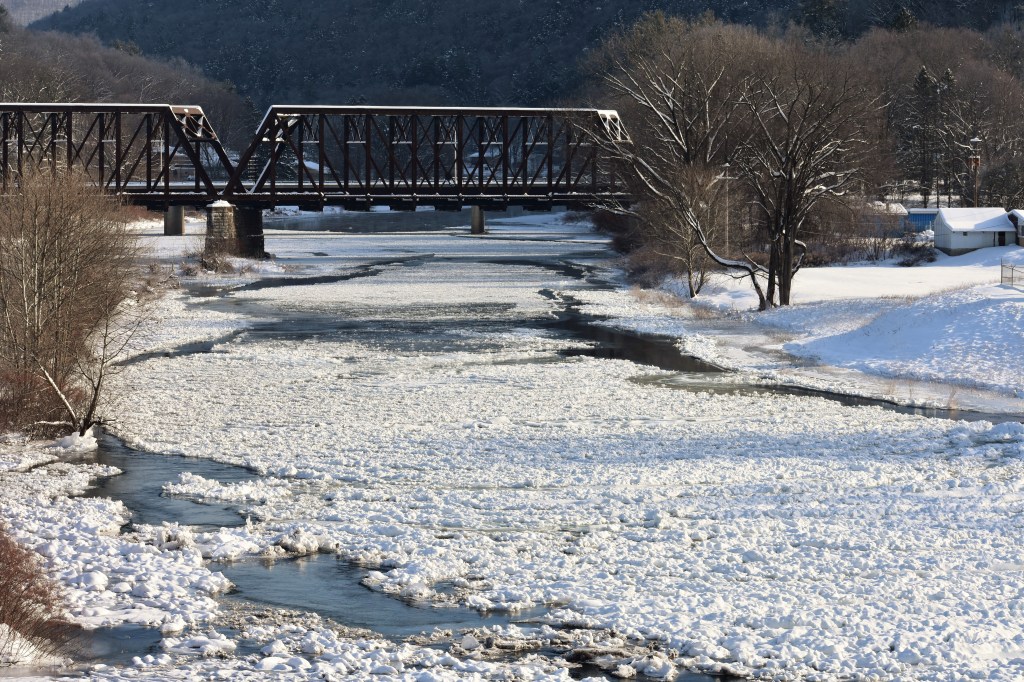
A river walk at last, and I enjoy a few minutes of freedom from the confines of these old walls! I did get out yesterday, Groundhog Day, though just to shovel away the fourteen inch snowfall February’s debut gifted. The East Branch seems to disappear as it slows from the Hancock riffle, swallowed by the ice and snow entering Crooked Eddy. Back inside now the sun glimmers through the icicle hanging above my window. Where were you when I needed you?

Last year the great prognosticator, Punxatawney Phil promised an early spring, and we had snow to herald the second week of May. I truly hope he hasn’t established an overly generous frame of mind, less this years “six more weeks of winter” ends up lasting until July.

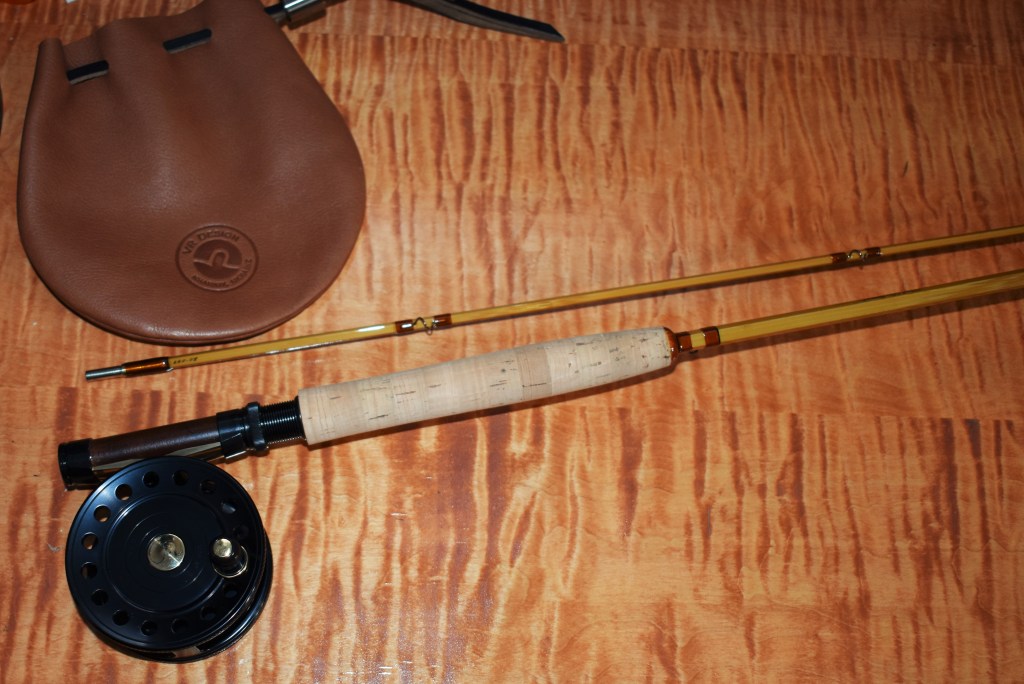
I have designs on July you see, and they most certainly do not include snow, ice, wind or anything similar. What they include are a box of tiny olives and terrestrials, a certain pentagonal cane rod hailing from Montana, and a very special reel crafted much farther away in the opposing direction.

Waiting For Summer…

It is summer, when the rivers become low, and clearer than the air, that the wild trout prowl and sip the little bits of nothing many anglers ignore. The late Art Flick tied his Blue Winged Olives with a hackle and a tail, allowing the whirl of hackle fibers to suggest the moving wings of these diminutive mayflies. I have great sport with them, tied in sizes 20 to 24.

The angle of the morning sun can be a boon to this fishing, as the trout will cruise in the flat, still eddies, their soft rises hidden in the mist. For a while each morning, the climbing sun illuminates the whirl of hackle on my miniature duns, letting me follow them downstream after a sixty-foot cast! I have learned to fish different reaches at different times of day, taking advantage of the low angle of the rising sun at morning, and the comfortable shade after midday and apogee.

A Catskill summer is truly sublime. The endurance of the Catskill winter is the price paid for those long, glorious days from June through September. That price is dear.

February makes me long for the limestone country, fond memories looking beyond the decline in it’s quaint little spring creeks, though it was that wholesale decline that convinced me to take hold of the dream, to retire to the Catskills and make a life surrounded by the rivers of my heart. Winter is a cruel mistress!

A February brown puts a bend in my 8642 Granger amid the canyon stretch of Spring Creek, Bellefonte, PA (Photo courtesy Dr. Andrew Boryan)

Snow falling…

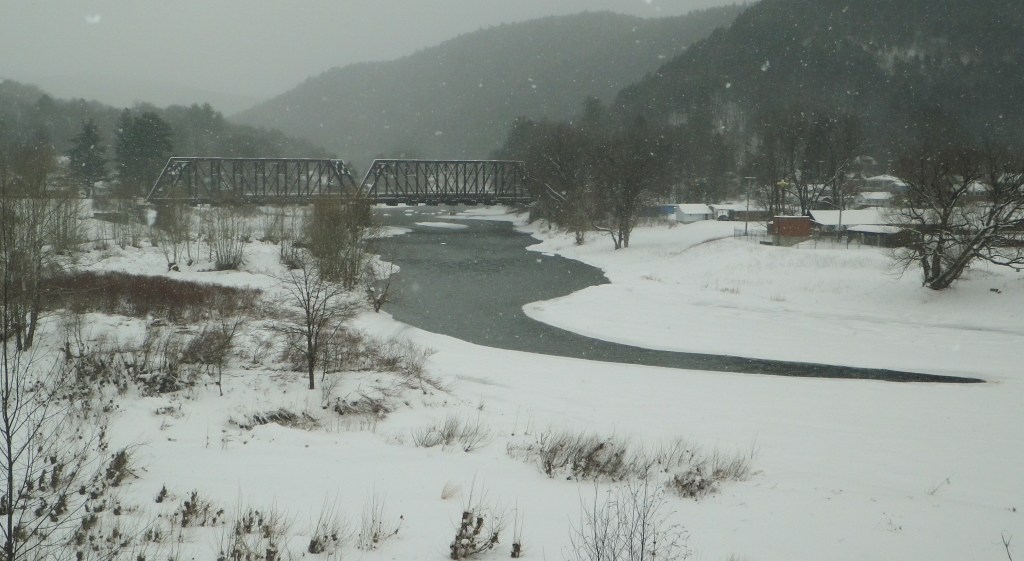
Crooked Eddy in December: alas it looks much the same for February’s premiere.

Snow is falling at Crooked Eddy, and the river pulses unseen below the ice. I have been trading emails with kindred souls I wish could join me for a drink and conversation. I have no doubt we could talk for hours of trout, flies and bamboo.

I dream of a forty degree day, a bit of sunshine, just enough relative warmth to keep the rod guides from freezing solid with the line. I have not walked a river bank for a month and a half, a terrible spell for one used to regular fishing, even in winter. My Kiley eight footer sits beside me in the rod rack, ready to feel the reel snugged into its seat and send the seven weight line out to prospect with a Hen and Hare’s Ear. That fly seduced my last trout of 2020, a Beaverkill brownie tucked behind the boulders in the Cemetery Pool, and begs to bring the first of twenty-one to hand.

Hen and Hares’ Ear, Size 12

I have tried a sink tip line with bamboo, a safer solution than using any weight in the fly, but I hated losing so much of the feel of the cast. Too I harbor an inner fear that, so armed and restricted to a sunken presentation, I will finally round the bend and confront the impossible dream: a rising trout in the midst of a Catskill winter. The ubiquitous bead is my compromise.

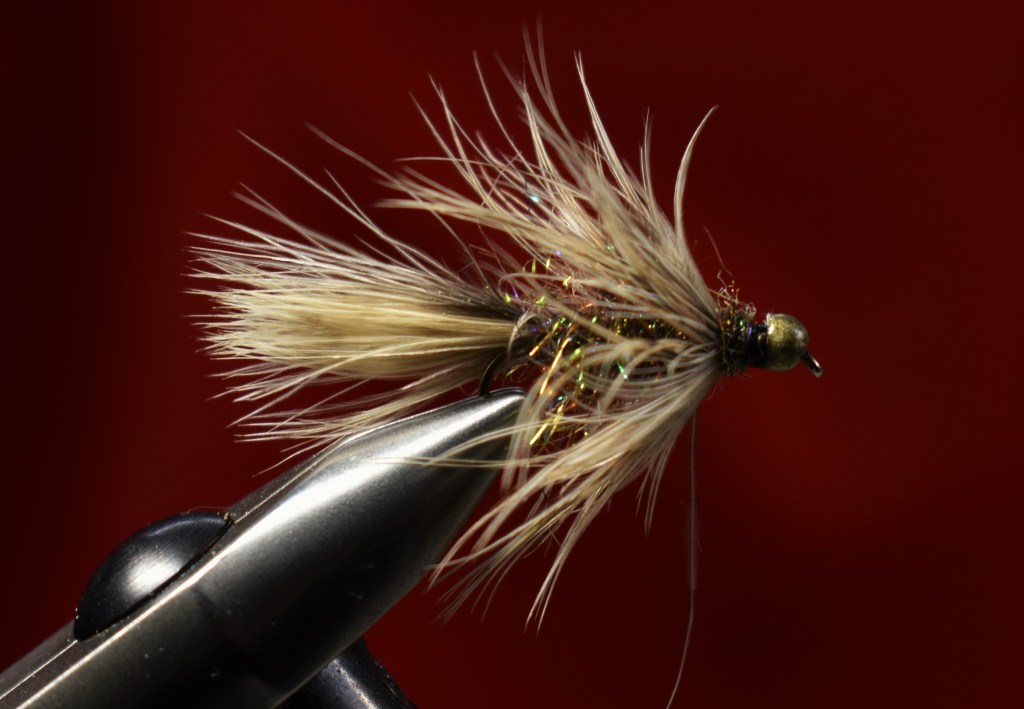
I tie dozens of smaller flies for swinging in winter, tiny tungsten beads ahead of a partridge and something, a squirrel and grouse. One day, while working with one of those beautiful pheasant skins a good friend so graciously provides, I took a fancy to the small gray aftershaft feathers, leaving a tuft for a tail and winding it along the hook shank for a fly body. A partridge hackle finished it: movement personified. Swung down a popular West Branch riffle two winters past, it led to a deep bend in that Kiley rod, and a nineteen inch brown that gave me faith to endure; until spring came once again.

It is a strange emotion for me, this longing for December. It wasn’t the abode of the warm sunshine that delights, but I was fishing! I feel exhausted facing another long run of days below freezing, with snow to begin the week, and more to finish it.

A sunny December afternoon on the Beaverkill

My vise sits empty and idle, for when I leafed through the fly boxes I found them stuffed. I have tied more flies these past two years than ever before. The luxury of time is mine, and the fishing has been well, life itself. My concentration slips now between books and vintage tackle lists, and I seem unable to direct it to my store of materials and tools. Ice and snow intrudes into each waking moment…

Clear thinking is required, a page by page search through the past year of thoughts and impressions from days on the water, my goal to mold the fragments of ideas, colors and impressions into a living, breathing trout fly. My brain needs the balm of fresh air, the music of bright water to once again open my conscious thought to those vaults that contain the past season.