First Day

The First Day of the 2021 Fishing Season

I felt the excitement as I pulled the old waders over my feet; I was finally going to walk a river bank again, test the warming water with a fly. Nearly three months have passed since I felt that excitement, the same feeling I get every time I go fishing. Certainly that feeling is part of why I go, even now, when I really don’t expect to catch a trout; there is always the possibility.

The sun had quickly warmed the air, though the wind rose before I could put my jacket on and reminded me it was early March. I had prepared for the weather, and as soon as I got that old Windwall over my shoulders I felt pretty comfy. I pulled the wader suspenders up, pulled a sun gaiter over my head and re-adjusted my shades; then I reached for the rod case. I had planned to fish bamboo, wanting to begin the season properly, but the wind forecast for fifteen miles per hour caused me to consider the open water of my destination and choose the Thomas & Thomas graphite instead. I have spent too many days on parts of the Delaware River system where the wind laughed at the forecast and blew just as hard as it pleased, and yes, it is March. It turned out to be a better day, with far more periods of extended calm and sunshine than winds.

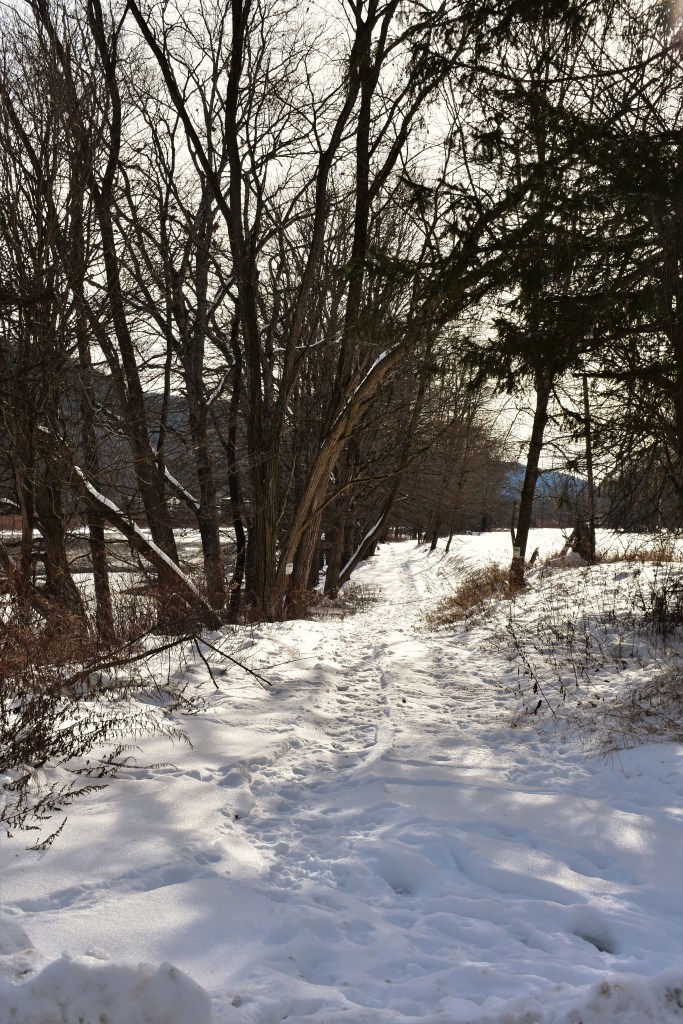
My hike helped me feel the past three months indoors. It wasn’t that long, about six tenths of a mile, but between sloshing through melting snow and clambering up and down questionable river banks it gave me the exercise I craved. The river is low, a good part of the reason that Tuesday’s sunshine resulted in a nine degree jump in water temperature, so I waded in slowly, drawing upon memory to try to decipher the places an awakening trout might seek to hunt if he was so inclined.
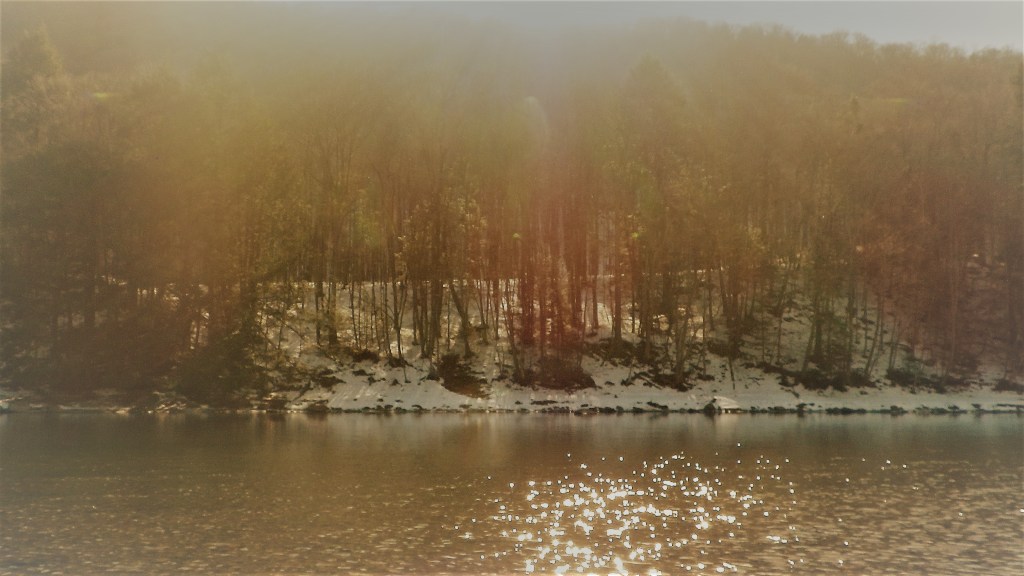
Winter sunshine competes with the snow to create spring warmth in the calmer moments, accented by the bite of the wind blowing across the frozen landscape. I am very thankful for this early glimpse of spring!

I knotted a Hen & Hare’s Ear to my leader and started to cast and swing the fly, across and downstream, through the deeper water bathed in sunlight. The water shallowed as I worked down the pool, and I changed to a smaller fly, though one still tied with the hidden life concept the H&E began last autumn.

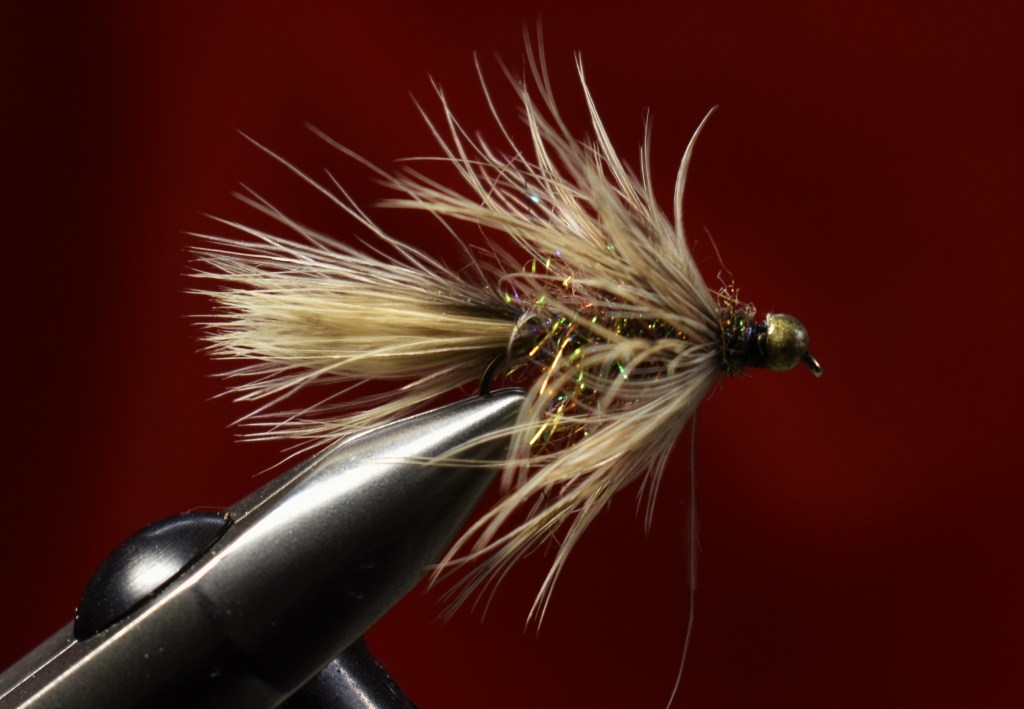
The Grouse & Squirrel: another tie with the hidden life idea I have experimented with. The Prizm thorax, loop dubbed with moving fibers and flashes from behind the screening, moving soft hackle fibers.

I offered this fly on the swing too, the slow yet ceaseless current drawing it through all of the water I hoped might conceal a hungry brown. Once it paused, with a welcome rubbery feel that was gone as soon as it began. Bringing the fly to hand I found the familiar green glob on the hook bend: not a trout after all.

I was standing for a time, looking across the river for some evidence of life when a stonefly passed in the air. Looking harder I eventually spied a couple, appearing as little puffballs out there on the glittering surface, and stared after them; wanting so badly to see a dimple where one of those little stones had fluttered, though I knew it was not to be.

Once I had seen the stoneflies I changed again, hoping that a small unweighted soft hackle might raise something from the uneven rocky bottom in the tail of the pool: look at me, I’m a helpless little insect quivering here, I cannot fly! This ruse failed utterly as well, for in truth there did not seem to be a trout out there, not one awakened by the rapid rise in water temperature. Too soon.

I sat down on a log and let the warmth soak in a bit. I struggled with the wader pocket to free the little fly box hidden there, the wish box, the one secreted away, hiding it’s stash of tiny dry flies, midges, olives and stones. The black CDC stonefly looked proper there, it’s hook point pricked lightly into the cork as I passed the warmest moments of the afternoon. Wishful thinking, though more than that: a thank you to the day, a simple salute to the spring that awaits!
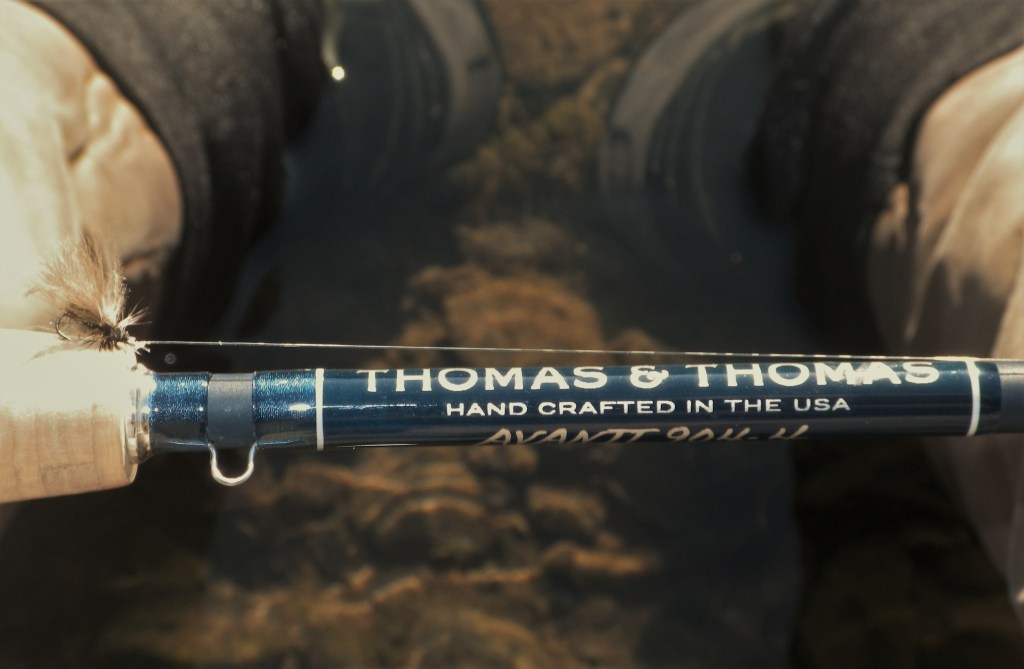
My thoughts wandered back in time, back to warm March afternoons on Big Spring. The stones were a real beginning there, and they would bring the wild rainbows to the surface, intrigued by their fluttering, and tempted to release their caution and divulge their hides down there along the weed beds. The little feeding frenzies were generally brief, though at times intense! As soon as I saw the first ones, little puffballs fluttering on the water, I would hastily rework my leader and tie on one of my CDC stones: time to hunt!
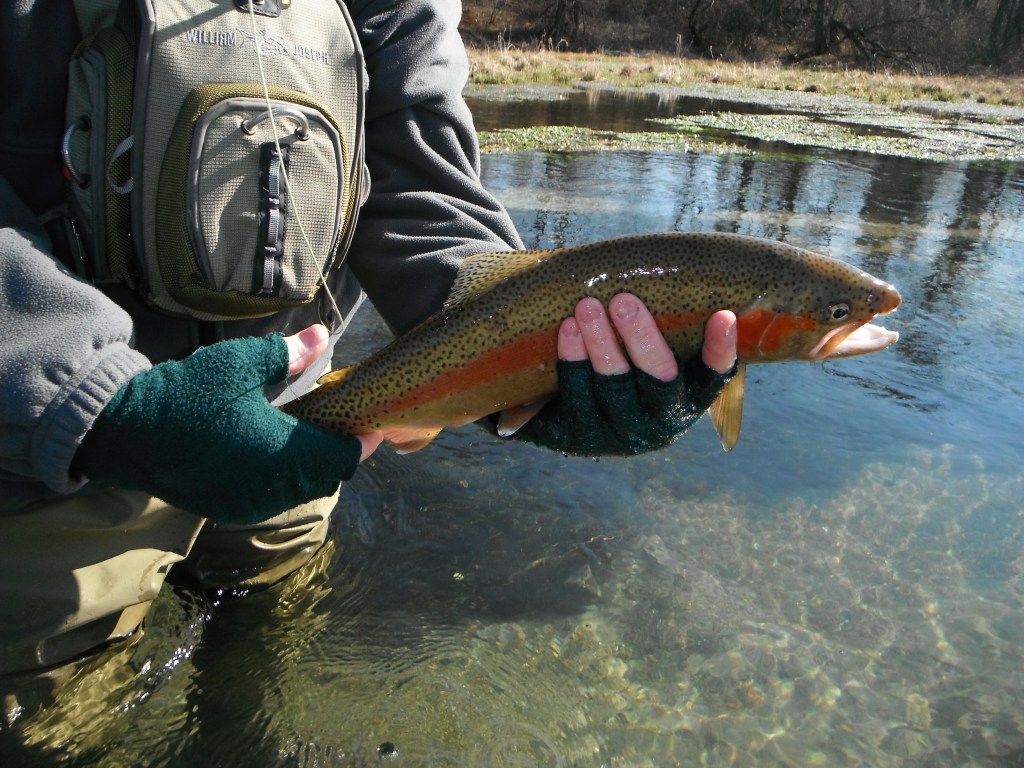
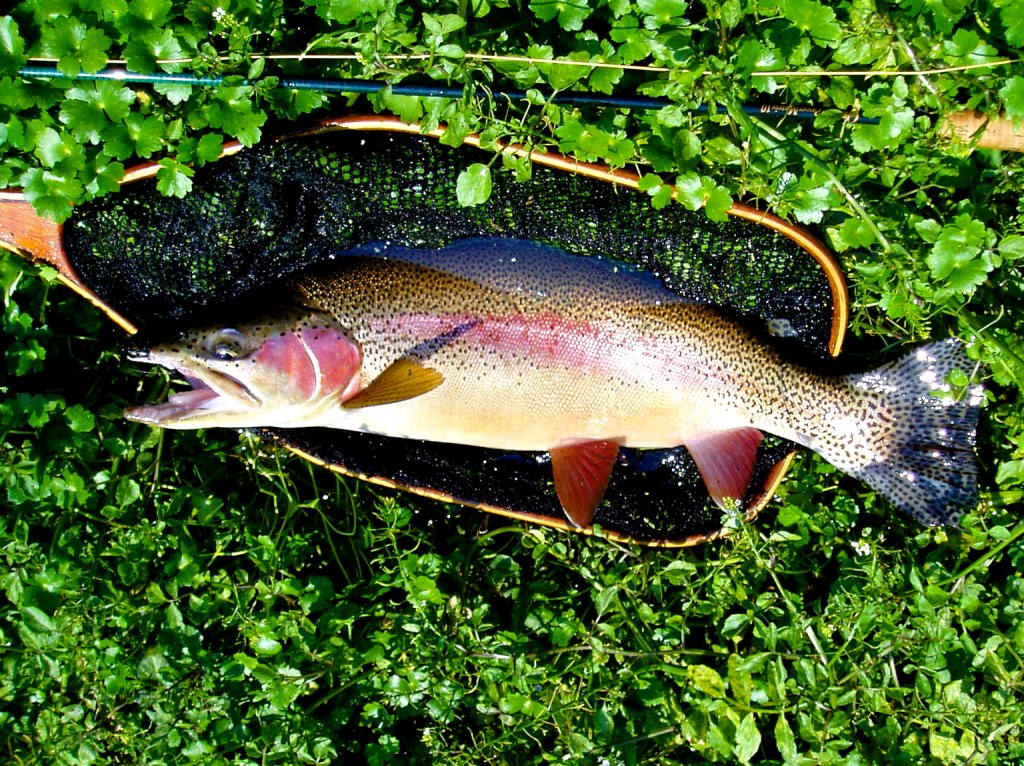
A red banded Big Spring winter rainbow from nearly a decade ago! Photo courtesy Andrew Boryan.

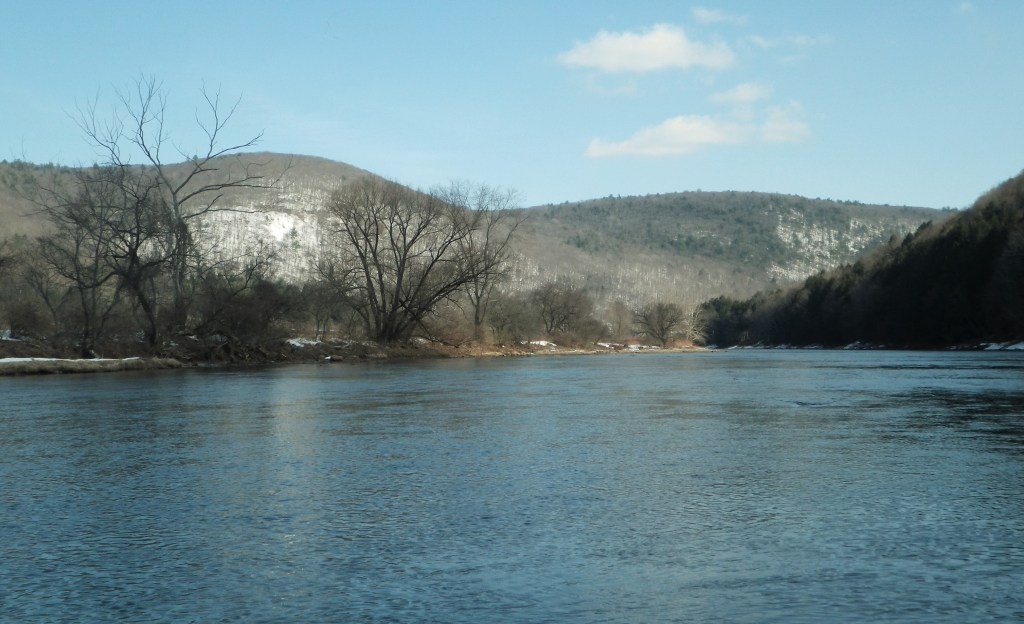
My first Catskill winter I saw a number of those same little black stoneflies on the West Branch Delaware, on sunny, calm afternoons in March. They drifted along the surface, wings buzzing furiously and begging a trout to rise for a snack. Just as I had back on Big Spring I hurried to rig a dry fly, but there was no rise forthcoming. Here it seems they are far more of a tease for the angler than the trout.

Yet I still find myself thinking back, and tying on a dry fly; just in case. I remember those brief flurries of rises on the gin clear currents of the limestoners; and the rewards they sometimes offered when an angler’s expediency and presentation became in a moment entwined.
Waiting at the Bench

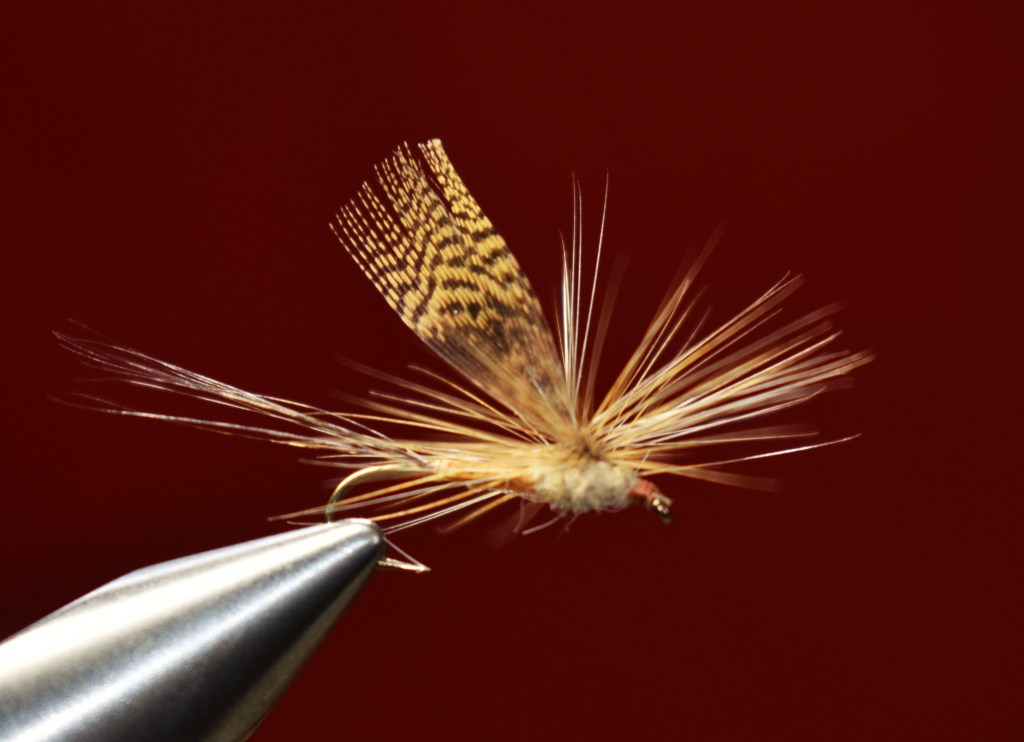
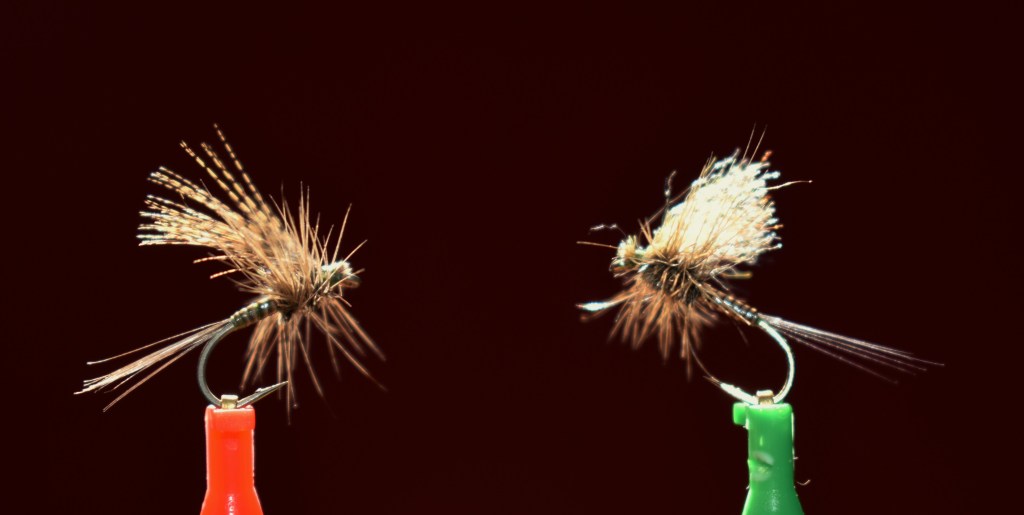
The morning light catches a pair of Quill Gordon dries, one traditional and very Theodore Gordon inspired, the second enlivened with a sparse synthetic wing, both beautifully tied by my dear friend John Apgar.

The warming trend appears to be official now, with temperatures forecast to be in the fifties for four straight days next week. Fishing seems more likely than at any time since mid December’s violent descent into winter, though waiting is still required before we get there.

I had a visit yesterday, when my friend John decided to take a drive along Route 17 so we could stand outside and shiver while we talked for awhile, socially distanced. He brought me some flies he had tied recently, some intricately ribbed soft hackles, Weemoc Adams that would make creator Mike Valla blush, and these lovely Quill Gordons that made my smile widen. We both appreciate the history of the Catskills and have studied the original flies of Theodore Gordon, patron saint of American dry fly angling, and we have both experimented with Gordon’s original single clump wing design.

I love the contrast between the classic and modernized versions depicted in the opening photo. The late morning sunlight comes straight to my bench through a small, high window and it lit the classic pattern beautifully. The modern style with synthetic fibers for it’s wing simply explodes with light! I think this provides a perfect model for a discussion of traditional versus synthetic materials and flies, and how they perform in various fishing situations.

The natural lighting along a trout stream varies continuously throughout the day, and lighting should be considered when choosing the fly you present. The color, translucency and barring of the traditional wood duck gives a lovely impression of life and movement, particularly when well lighted. The synthetic really pops in bright light, and it could be too bright to suit a wary trout rising in flat water in full sunlight. Back in the shade however, or on a dark day, that fly may be your best choice, its startling light reflections tempered by the conditions, yet providing enough flashes to mimic a moving natural.

The mood of the fish you are casting to is another vital component in the fly selection puzzle. In his groundbreaking opus Selectivity, author Matthew Supinski defined three stages of trout behavior that result in variable types and levels of selectivity toward our flies: Aggressive/Active, Selective/Reflective and Passive/Dormant. An aggressive feeder, a fish actively rising and taking insects during a hatch or spinner fall may require a lifelike imitation, but not necessarily a higher level of attraction. I feel more comfortable staring with a subtle fly tied with traditional materials like John’s wood duck winged Quill Gordon, particularly if the area is well lighted. If the traditional fly isn’t accepted, then I will begin to consider something more attractive, either a CDC dun or cripple with more movement, or a brighter synthetic enhanced pattern such as John’s modernized Quill.

Supinski’s Selective/Reflective trout is well known to Catskill anglers. This behavior often results from heavy fishing pressure, and/or a diverse and abundant food supply. Catskill trout have both. When I feel certain that this situation prevails I’ll tend to start with a low floating CDC pattern, a movement fly, and I will make the effort to capture a natural to be sure I match the form, size and color of the insect with my fly. I’ll let the lighting conditions determine whether I go for a lot of sparkle or little to none. If the natural approach fails, I will eventually offer a brighter fly to bring more attractiveness to my presentation.

The Passive/Dormant trout is a tough one. I relate this behavior to a lot of my summer fishing, when there are not a lot of flies about and the water is warmer and slower with less dissolved oxygen. I love to hunt trout during those long summer days. Terrestrials can be my favorite flies, and I tie a lot of patterns that combine subtlety with attraction: think sparkle and brightness, but not from a spotlight. I messaged a friend about my Baby Cricket patterns this morning, and that fly is a good example of what I’m talking about.

The Baby is my own smaller modified version of Ed Shenk’s classic Letort Cricket. I use a peacock herl chenille body, tied by spinning the herl in a dubbing loop, fold black Antron yarn for the underwing, and tie my wing and head with black deer or elk hair just like Ed’s original. The herl gives off some subtle reflections as the fibers move a bit in the current, and the black Antron reflects light, though quietly. I confess I have not taken any nine pound browns on the Baby Cricket like Ed Shenk and Ed Koch did on the original Letort Cricket, though I did get one that was better than five!

My best trout taken on the Baby Cricket, somewhere in excess of five pounds. This one was a real hoot on a small fly and a two weight rod!

If you have not read Selectivity, I highly recommend that you get a copy. Read it several times, as there is a lot to be learned within its pages. Matt is a brilliant angler and writer and he put a lot of his considerable knowledge and passion into that book.

I have been sitting here at my bench thinking about the week to come, and the balance between warming water and snowmelt. There is still plenty of the stuff on the ground down here in Crooked Eddy and there’s more up in the higher elevations where our rivers are born. The more sun we get the more it will warm the rivers, but the more sun the more snowmelt. There may well be a point in which the negative effect outweighs the positive.

I am resigned to the fact that I’ll be working my flies past a few passive/dormant trout at best, though still hopeful that the warming trend will activate their feeding urge before snowmelt brings high, cold, off-color water and shuts them down again. While my angler’s soul may be begging for a rising trout, I know that plea will remain unanswered. I’ll have to present something with the right combination of movement and attraction and hope a few of my casts will bump off one of the rocks that has a trout behind it. I’ve got an idea…

The Hen & Hare’s Ear

A cold snap, with hope

Yesterday’s sunshine has been forgotten, and our landscape clings to its snow and ice. Yet another cold snap will be ushered in today, with temperatures dropping through the twenties where they will stay for a few days. I had hoped to fish yesterday, when the afternoon sunshine raised the air to forty degrees. Instead I listened to the ballgame on the radio and watched the river gage to see if that sunlight would warm the water to a fishable temperature. I listened to the entire game. There is light snow flying about as I write.

The cold snap will continue through the weekend, but there is hope for the following week, and enough warmer air and sunshine to bring about fishable conditions.

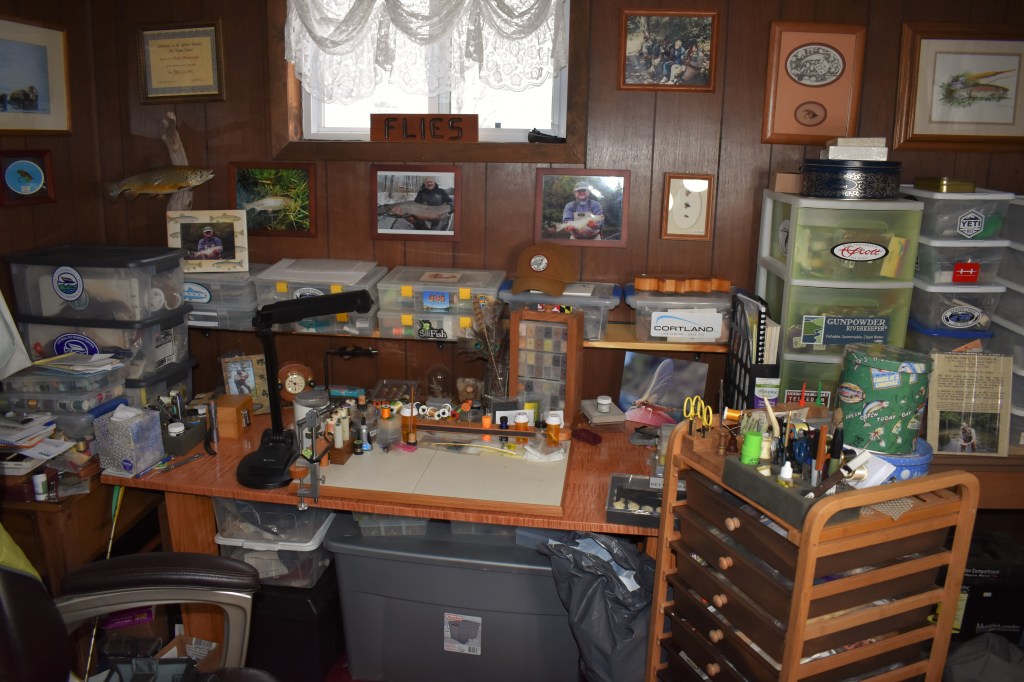
I’ve busied myself with some reading, Hewitt’s rewritten version of “Telling on The Trout”, browsing cane rods and classic British reels and spending some time just thinking about spring. I plan to get back to filling a pill bottle for a friend today, though I want to bring my tying desk back to order first. A fly tyer’s station tends to acquire objects as flies are produced. Mine has scattered materials, notebooks, mail, a hat for when the sun appears and blinds me through the small window above the desk. I like to see the curly maple table, smiling underneath all of that clutter.

When I was getting this little house up to par before the full fledged move, I searched first for some sort of affordable antique desk. I learned something about antique dealers in the process: they don’t seem to keep regular hours. It took several trips to catch even those with published hours “in” so that I could browse. I found nothing, then decided to build my own fly tying desk. I found a local hardwood mill and drove up early one summer morning to see what they had available. That’s when the curly maple caught my eye. They glued and planed a large and beautiful top for me, leaving me to square it up by cutting the ends, build four hardwood legs, sand vigorously, and apply my antique maple stain and several coats of polyurethane. Curly maple has been my favorite wood since I first laid eyes on it!

Even when everything is in order, there’s more of that gorgeous maple covered up than I would like! Perhaps one day I’ll add another shelf that will hold more of the sundries that collect on the table top.

There are too many feathers and furs and hooks and hair stored around my desk, one of the problems of passing thirty years as a fly tyer. Of course there are still boxes of items left over from the fly shop, materials I carried but don’t regularly use in my own flies, particularly now that the majority of my creations are dry flies. I store them, give some away when I have the chance. I still find it hard to pass a fly shop without stopping in, browsing, and adding something to my store of materials. My walls are filled with pictures and shadowboxed flies, shelves with books and magazines, some with memories attached; the trappings of a life outdoors.

I came upon another old fishing log yesterday, perhaps the first I ever kept…

October 18, 1991 Gunpowder Falls: Beautiful day! 75 degrees F. Fished with Pap’s bamboo rod for the first time! Four brown trout on an Elk Hair Caddis #18. 4 to 5 inches, riffles and runs. One brook trout on a Blue Winged Olive #18 10″, riffles. One brown trout (the olive again) 12″, riffles. Reading the entry I am back there, feeling the sunshine on my face and the grin as that gorgeous wild brookie puts a good bend in that old H-I!

July 12, 1992 Letort Spring Run – Barnyard & Bonny Brook, 5 to 10 AM, Muggy & hot! Only one riser seen in a castable lie – he was taken. A few others were heard but not seen. Saw one 5-7 lbs. at old concrete @ Stone House in Barnyard. German brown trout, #16 Letort Cricket, 18″. Oh I remember that morning, my first big trout landed from the hallowed Letort! There used to be a big deadfall tree right in the middle of the Barnyard Pool, clustered with watercress and odd clumps of water weeds trapped among the snags, and I saw the rise, a tiny, brief little ring on the surface just at the edge where the current swirled and dove beneath the clustered weeds and branches. There was a tiny whirlpool there, and my fly danced slowly around it just long enough for the trout to take it! He was fully beneath the weeds and the tree, and my rod doubled over when I struck him! I was proud when I turned him in my net, dark and beautiful.

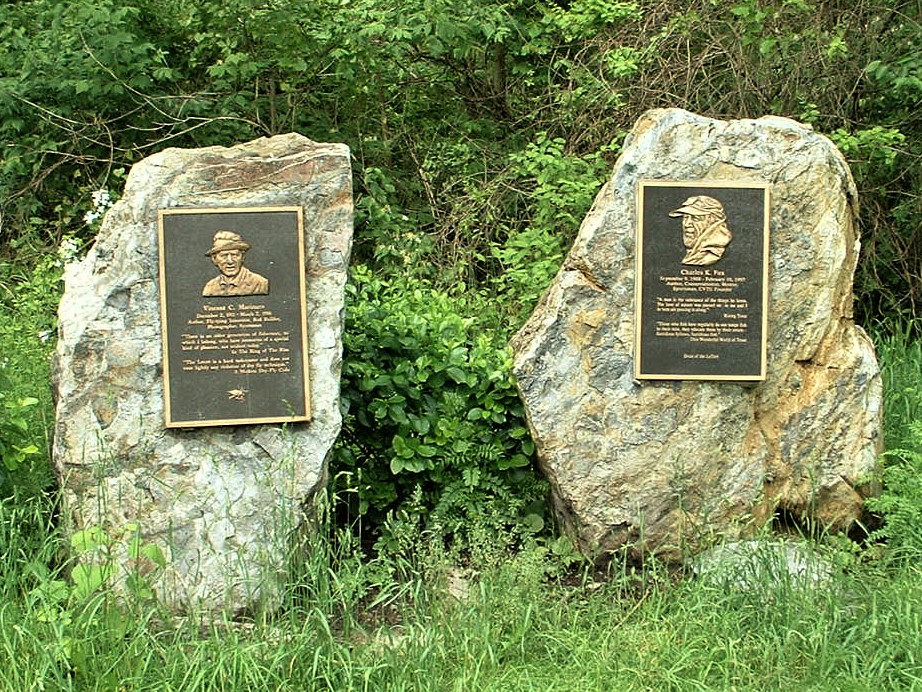
Back then I would travel from Maryland in darkness, timing my arrival in the meadows for first light. The huge, legendary Letort browns would still be out feeding as the sky gradually lightened in the southeast. How many times I was crouched in the tall grass, motionless and watching, when a big vee wake came streaking fifty feet downstream! On those days I’d get a glimpse of two or more feet of brown trout as they rushed past over top of the weeds, my heart pounding. Those were the trout The Master would catch, fifty years on the Letort telling him where they would be foraging before wicked daylight sent them fleeing for sanctuary. Where I fished with my eyes, he fished with knowledge and instincts.

I appreciate that even more now, as after nearly thirty years on these Catskill rivers I sometimes pull it off: knowing where a trout will rise, and knowing what he will take and when before he reveals himself.

Thirty Days

A Delaware Evening

The rain flirts with us, and disaster, at least for my hopes for an afternoon on the river. Any significant rainfall will bring rapid snowmelt and flooding. If we can get through the day we will avoid the floods for now, with freezing temperatures predicted by sunset, along with an overnight low of eleven degrees. Imagine me, praying for a hard freeze.

There are thirty days to endure before the Opening Day of trout season, New York’s last Opening Day it seems. New regulations will take effect creating a year round season, something many of us are not all that happy about. I would like to do some fishing during these next thirty days, for it has been far too long since I walked along a river.

My dry fly season began on March 27th last year. I was out on the Mainstem doing my winter thing, and the sun warmed the air and water just enough to awaken a handful of blue winged olive mayflies. I saw a couple of pop up rises in open water, one here, one there, and then a trout actually began rising where the still frigid current roiled over and around a fallen tree. I watched the little olives dancing down on the roll of current as I built my leader out to dry fly capabilities, and every once in awhile one of them disappeared in a bubble. After several casts, a few just to get back the feel of the right subtle check to the rod that puts some slack in the tippet, my size 20 CDC sparkle dun disappeared in one of those bubbles too. There was never another foot long brown trout so appreciated and so lauded with praise as that one: a rising trout taken on a dry fly a good three weeks before I had any right to expect it!

I was so jonesed I started fishing seriously the following week: April 5th, 45 degree water and a few flies but no rises; April 6th the magic 50 degrees, what looked to be Quill Gordons, and no rises; April 7th sunny and 67 with the water at 50, a few little olives and caddis and…no rises! The next day I dropped the boat in and floated solo on a cloudy windy day, finally finding a couple of fish rising half heartedly at the last stop, after four o’clock. I got one hookup, but the fly pulled free. Once again an early spring simply teased me until the rising and catching phase of fishing started in the third week of April.

Over all the years I fished the Catskills as a visitor there seemed to be a pretty regular pattern. Finding mayflies and rising trout in the third week of April is what I have come to know as a normal spring. An early season hatch or a late one deviates from that norm by roughly one week. My two retirement years have followed the pattern, with the good fishing starting during that third week, even though I was free to get out there earlier and did.

I guess the point of this is that the thirty day wait is truly, honestly something like fifty days long for the dry fly fisherman. Then again, most of us just want to get out on the river and go fishing; particularly during a long, cold winter like this one. That is why I hope the snow melts slowly and recharges the mountain springs and fills the reservoirs; what’s good for the trout is good for the angler in the long run.

Let’s face the fact that high, cold, muddy water isn’t conducive to any kind of fly fishing. If I have to sit inside for another couple of weeks and knaw on an old cork rod grip, so be it.

I can always pass the time by tying up some more of these March Browns

I have talked recently with one of my good friends, and we are very hopeful that he will get a chance to come up and fish this year. Memory fails me a bit, but I don’t believe we have fished together for more than four years. Of course the pandemic still dictates the majority of both our lives, so we’ll need more than some fair winds to make that happen. I have started a pill bottle for him to promote a little good mojo in that direction. Old guys have a lot of empty pill bottles lying around and they make perfect “fly boxes”. I filled a few of them up for friends last year, even though we didn’t exactly get a chance to fish together. There were at least a couple of chances to fish apart.

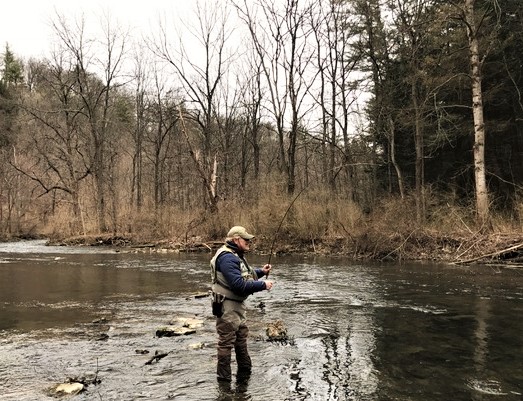
Andy snapped this photo of yours truly bending the 8642 Granger Victory to bring a small Spring Creek brown trout to hand in February 2017; the last time we had a chance to fish a bit. Here’s hoping there will a lot of nice new photos for 2021, photos with both of us smiling in the sunshine on our gorgeous Catskill rivers with some big trout bending both of our bamboo rods!