Take A Breath

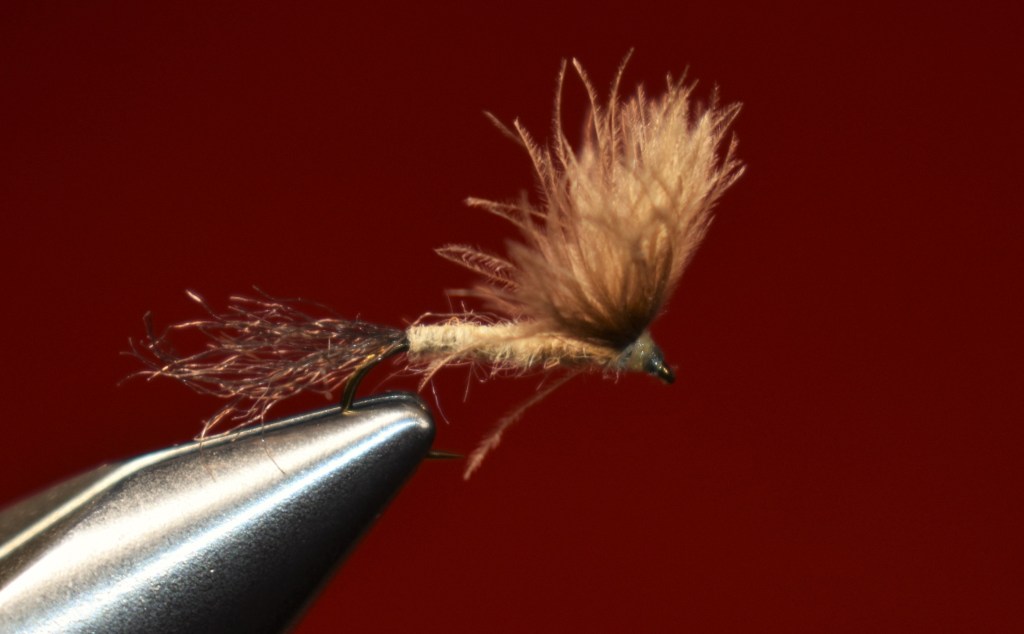
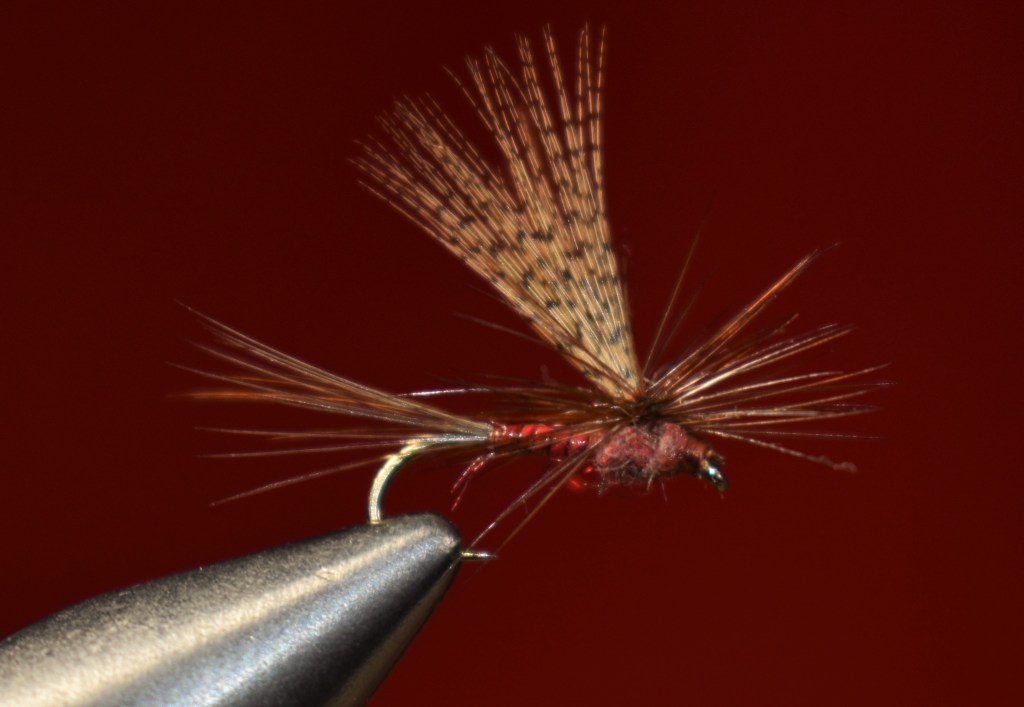
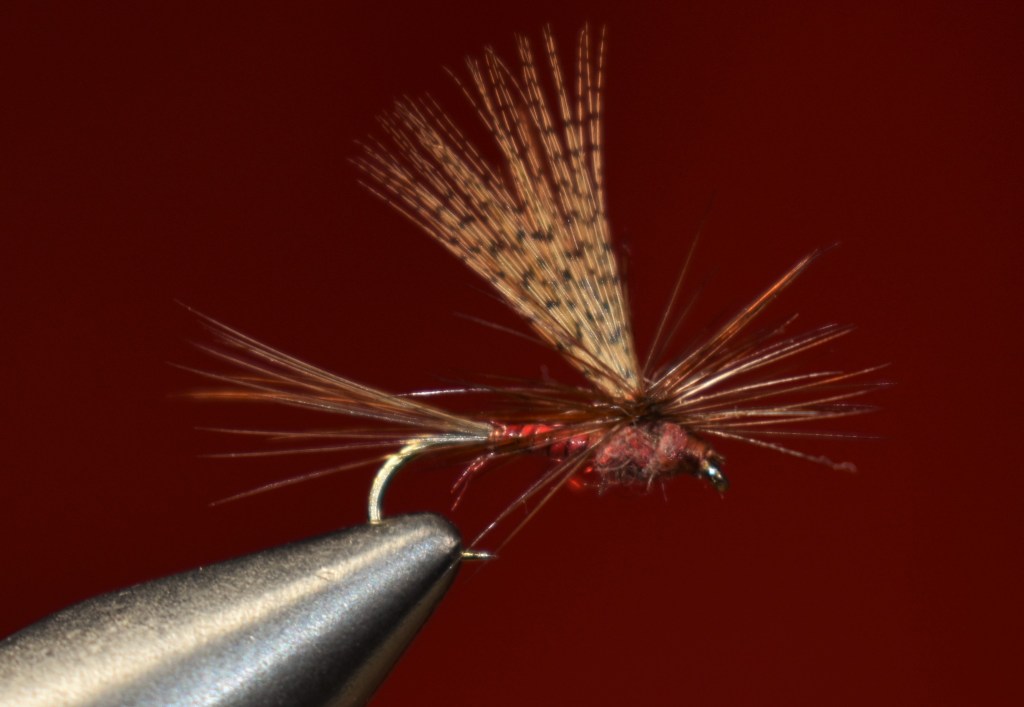
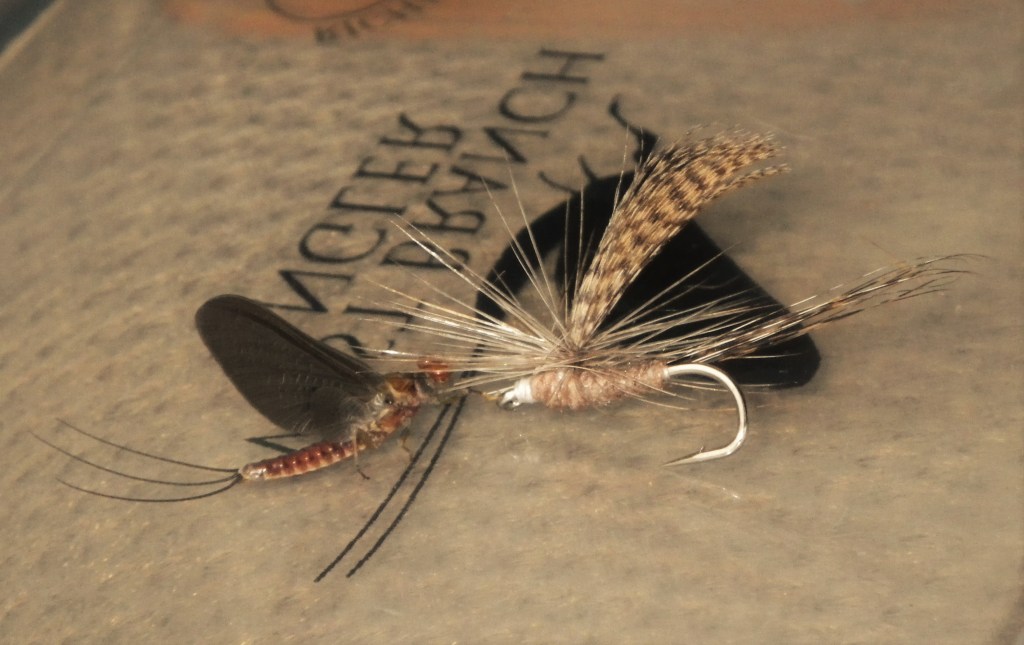
My 100-Year Translucense Dun is a size too big for this sixteen Dark Hendrickson. Tied on a size 14 hook, the fly’s attitude on the water and blended silk coloration equal a good imitation, but I should have tied them in both sizes to imitate both the lighter and darker Hendrickson naturals. There were other patterns in my box to match both of the duns encountered, as well as the Red Quill

It is raining here in Crooked Eddy, a sorely needed rain that I hope lasts throughout the day. The rivers need a recharge, and I do not mind the break from a busy week living the joy of spring and the Hendrickson hatch. It has been quite a week.

My first encounters with the lovely April mayflies were typical for the cold waters of early spring in the Catskills: brief emergences of flies with the trout taking no notice of them, and then gradually sampling this new buffet as it is spread before them. Conditions changed rapidly through the week, ending up with two days of stalking wary wild brown trout in low, clear, warming water.

I celebrated some relief from the fear of Covid, appreciating the safety of the vaccine as I fished comfortably with my two best friends. John joined me to begin this oddysey, fully insulated to wade the cold forty-five degree water, and we found the trout difficult to fool as always, but receptive to our best presentations and patterns. That first week’s fishing started well before its interruption by a quick return to winter weather. Better spring conditions slowly returned as the next week dawned, as Mike arrived from Maryland to sample the Hendrickson hatch.

That first day brought cold temperatures and brutal wind conditions, though we each found our moment of triumph in the midst of the maelstrom, Mike wrestling a trophy brown from the Cauldron, while I hunted one down in wind rippled shallow flats.

Our second day began with perfect conditions, though a couple of early arriving anglers camped on the choice water for the duration. We separated and worked secondary locations, the more difficult quiet, shallow waters, while the river continued to drop.

I had good hunting that day. As temperatures warmed into the seventies, stalking the low, clear pools became much more like summer fishing than early spring.

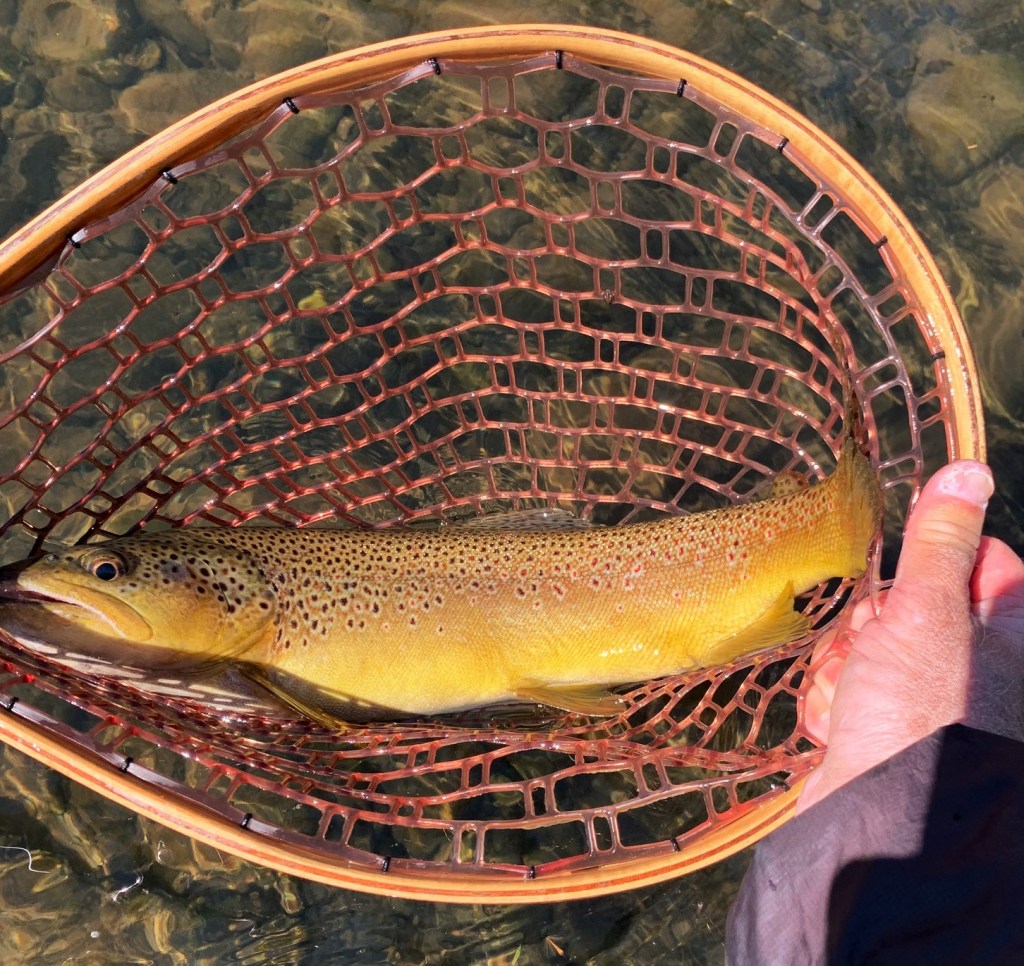
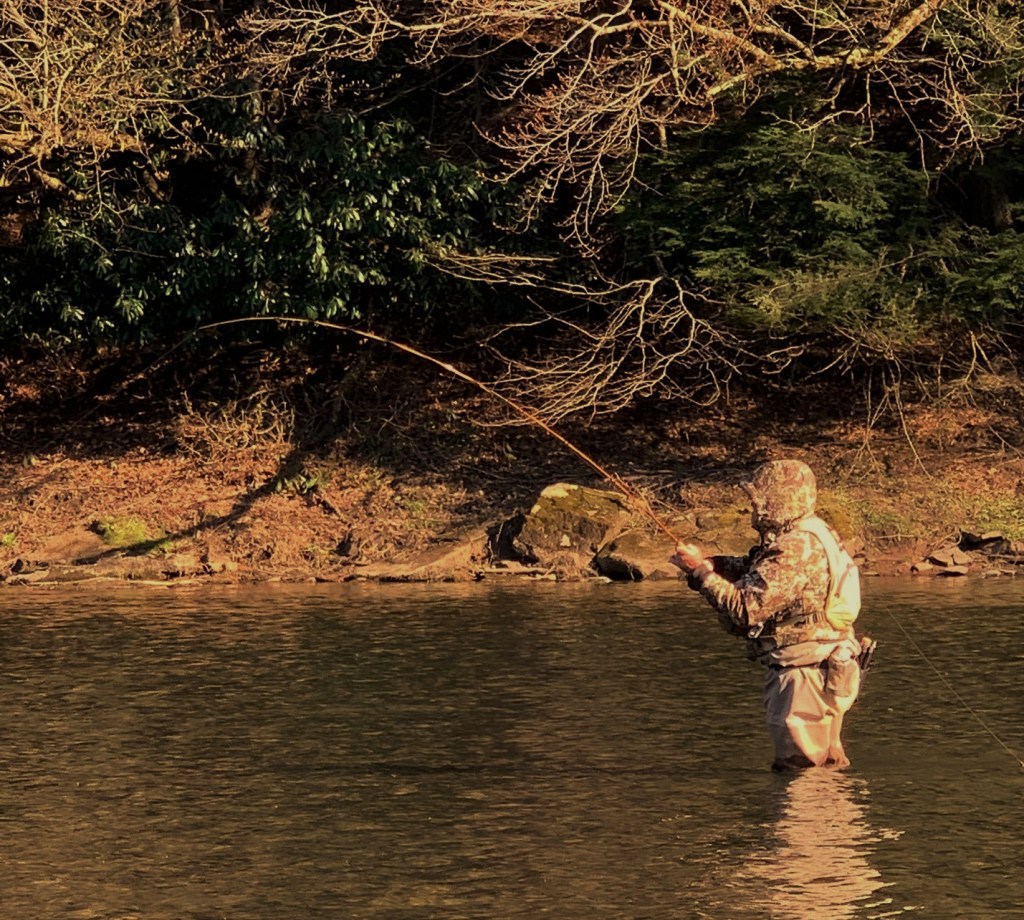
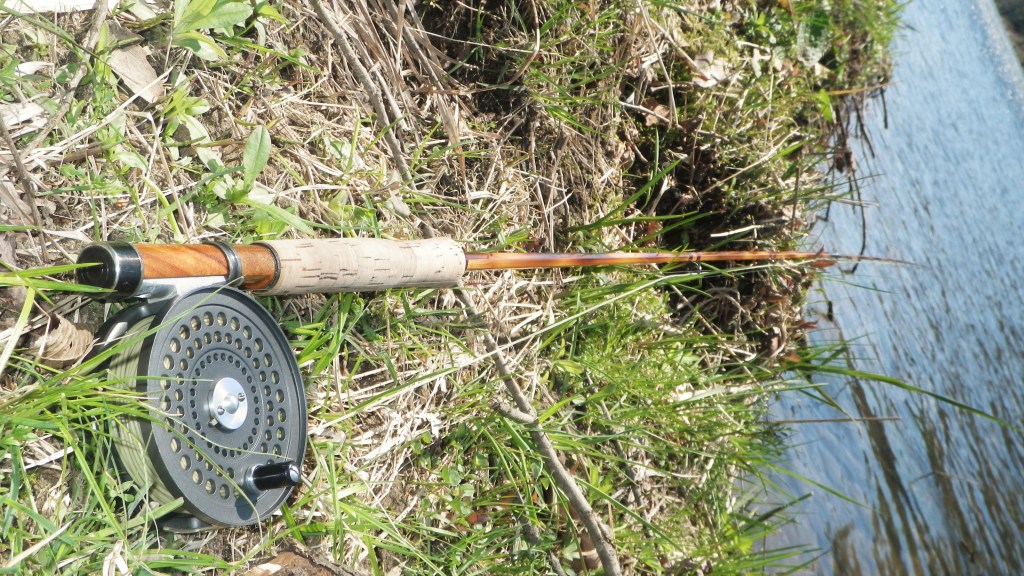
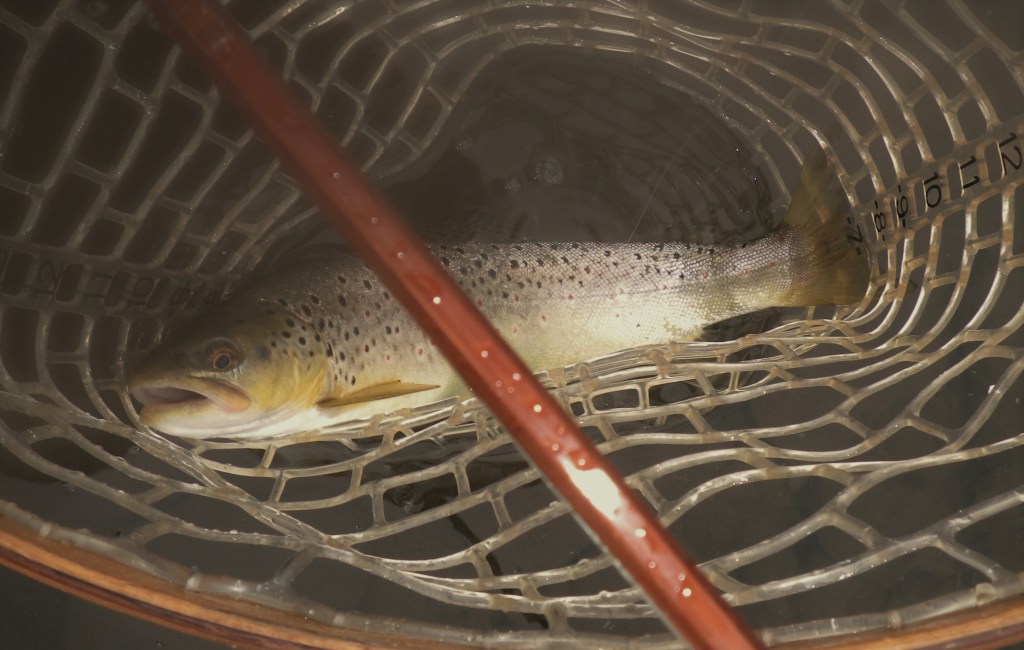
I spotted the first delicate sipping rise while taking a break for lunch, zipped my half eaten sandwich back into it’s bag, and began my stalk. The combination of the conditions and riseform led me to knot a Hendrickson spinner to my tippet, waiting after a few carefully chosen steps for a second rise. When it came, one cast brought a sipping take and a large Catskill brown streaking for the far side of the river, my Thomas & Thomas Hendrickson in full arch and classic CFO reel in full song! It is hard not to celebrate a day that begins with a spirited battle and a brilliantly colored twenty-one inch trout writhing in the mesh!

As the afternoon unfolded, various species of mayflies appeared sporadically: a few Blue Quills, small dark Hendricksons, then Red Quills. Now and then over the next hour and a half, I noted a few single rises within 50 yards of my position. If a trout rose a second time, I moved to it, though invariably there were no repeats once I entered casting range.

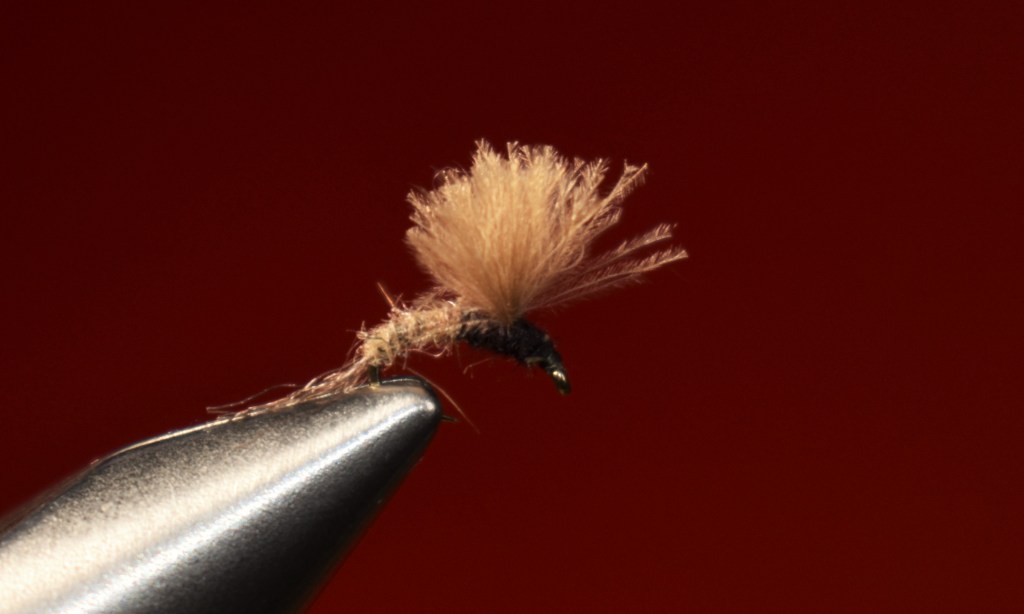
Eventually I spied a sipping rise within a thin line of shade along the far bank and moved in as stealthily as possible. Watching I noted three distinct trout sipping tight to that bank, all within a foot wide band of shade perhaps fifteen feet in length. Summer fishing indeed. I worked those trout for perhaps an hour. Their rises were sporadic, but they kept at it, as the mixture of flies in the drift varied. When the drift along that edge exposed somewhat taller, darker wings, I captured the next two duns that passed my position. The size sixteen dark Hendricksons were familiar from the previous day, and I had done my work at the vise in early morning.
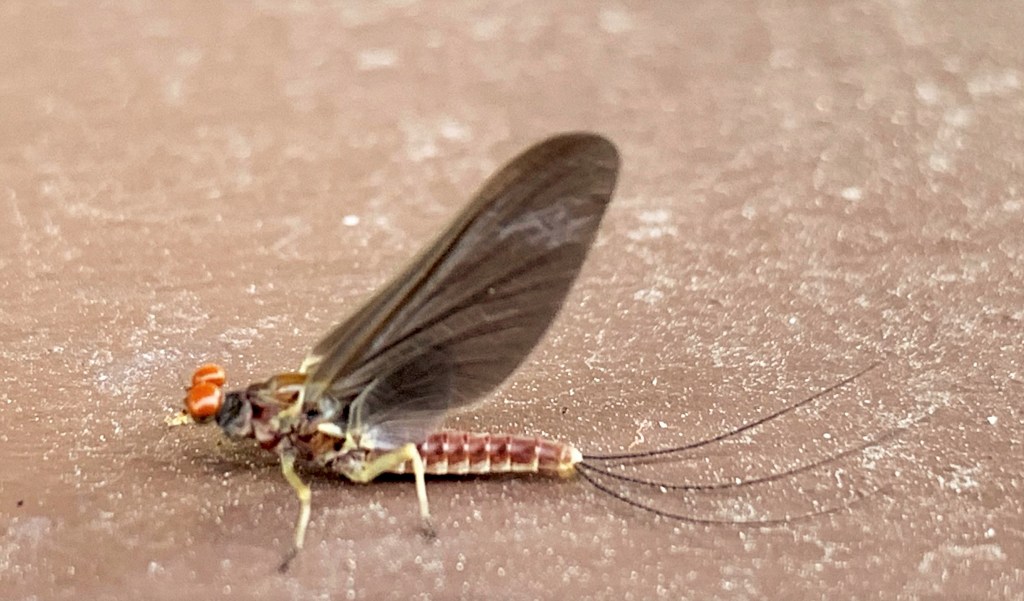
The Mayfly: A Dark Tan Hendrickson Dun, Size 16
…and the dry fly: my Jave Dark Hendrickson CDC Dun

Like most tiny bankside feeding lies, obstructions play games with presentation. Fishing trophy trout with the fine tippets required is a chess match of subtlety and control. Finally, one of my perfect drifts entered that trout’s tiny shallow water window at the right moment and the battle was joined. He was the first in line and put a big bow in the warm caramel colored cane as he ran straight downstream along the bank, scattering the other two that had been tucked into that shade. I wouldn’t expect anything less.

He ran all around me, the fine tip of my Hendrickson alive with his energy and cushioning each surge of power and speed. At last I led him close, scooped gently, and took a measurement of an irridescent hued trophy Catskill brown.

The next player reminded me of the other side of light tackle angling, as he turned with a rush and cut my tippet in an instant. I never really even felt the pressure, though my eyes confirmed his size.

The afternoon lengthened with more of the familiar sporadic, here and there activity, until a quick flurry of Red Quills offered me another chance. The new flies appealed to a sporadic brown hugging the bank below a brushpile, and he sipped them with increased regularity. The obstruction made perfect drifts difficult, but my Jave Red Quill finally seduced him. A strong fighter, he just missed the coveted twenty inch mark, though his wildness and power made for an exciting closing act.

Each evening I wondered if the hatch would last for Mike’s visit. Our last morning brought that answer. We arrived earlier and found trout podded up and cruising to sip a mixture of morning spinners and duns. Their jockeying for postion made casting fruitless and it wasn’t long before all of the action subsided. In that brief interlude I’d identified both dark Hendricksons and Red Quills on the water, and I believed we had arrived just in time to witness the last of those hatches on that water. The remainder of the morning and early afternoon tested our patience.

I’d gone hunting again later in the day, while Mike chased the ephemeral sporadic sippers in deeper water, breaking off a large fish when his careful casting was finally rewarded. I too found sporadic risers, both delicate sippers and heavy rises to moving insects, but found nothing consistent that would come to the fly.

It was eighty degrees, and the first clouds of the incoming front softened the light a bit, when my summer hunting became interesting for the last time. The larger, lighter Hendricksons began to emerge in the shallow flats I’d been stalking, and swirls and a few heavy rises greeted them. I offered my darker size 16 fly until more of the emerging duns reached the surface, and I identified the change. I knotted a size 14 CDC sparkle dun, pausing as I wrapped the knot in the fine 6X tippet. I don’t like to go that light, and the cut off from a couple of hours earlier nearly made me go up one size, but the conditions demanded the extreme delicacy.

As so often in this type of situation, the feeding trout were cruising about the flat, some taking nymphs with subsurface swirls, while a few agressive rises marked the fish targeting duns. A quick cast to one of these made my heart jump, as the take was savage. He gave me everything he had, a raging bull of a brown trout, excited by the hatch, and I thanked Mssrs. Dorsey and Maxwell many times as their exquisite taper protected that 6X tippet from his powerful rushes. Deep flanked, and wide through the shoulders, that brownie taped twenty-three inches and easily weighed five pounds, more than a fitting end to a challenging but miraculous Hendrickson hatch, the best I had enjoyed in a decade.

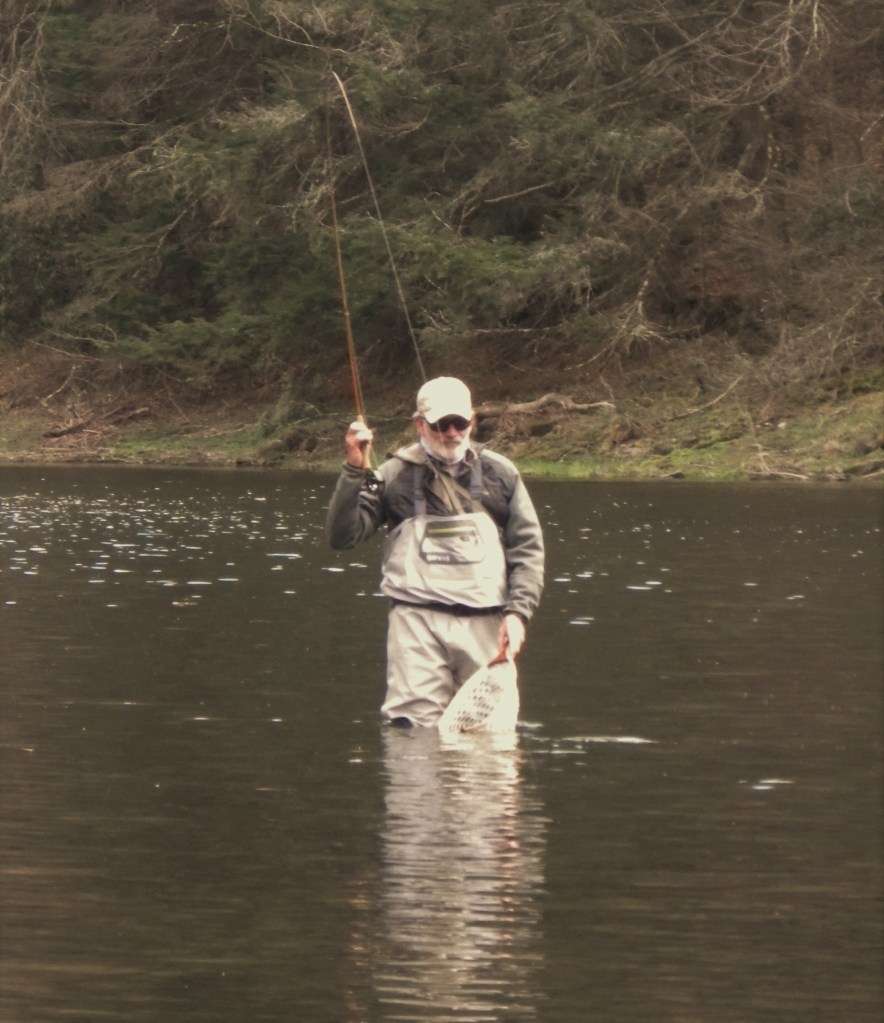
A fine Hendrickson hunter shares the end of a challenging day.

I was fortunate to enjoy my best Hendrickson hatch in a decade, with flies in abundance I thought I might never see again. Half a dozen valiant Catskill brownies, each exceeding twenty inches, shared their energy with me and my obsession with dry flies and classic tackle over eight days of fishing. I feel more than blessed for the experience. The rivers varied from forty-five degrees to nearly sixty in that brief and tumultuous span, and wind driven waves zeroed out one day and nearly another. Weather like that amounts to a taste of everything you might hope (or fear) to encounter in a week of Catskill Mountain springtime if you stop and think about it, however; fishing like that is about as close to perfection as you can get!
The Hendrickson, circa 1974

Fishing In The Cauldron

Another breezy Catskill Spring day on a “protected” reach of water. The mountains have a unique ability to twist, turn and redirect the prevailing winds, effectively eliminating the protected areas. This is not a riffle. This is a flat, glassy pool that flows from right to left in the photo, thus the wind is pushing small whitecaps upstream, making for some interesting fly fishing. Yesterday was far worse, with rather large breakers pushing upstream on another “protected” reach hence, The Cauldron.

Back when we both used to travel to fish the Catskills, I teased my friend Mike Saylor about his (our) miraculous ability to foul the weather at our destination. We are both retired now, enjoying life, but we have not slowed down when it comes to those dubious magic powers.

Last week, when Mike announced he would be able to come up on Monday to fish the Hendrickson hatch, the forecast for his three day visit included three clear, sunny days starting in the low sixties and coming to a balmy crescendo near eighty; angling paradise! What welcomed us on Monday morning differed slightly. Temperatures were skirting freezing at dawn with a predicted high of fifty-one, oh, and winds from ten to twenty miles per hour. We got sunshine, as opposed to the cloudy skies forecast, though despite my best efforts to pick a location that would be somewhat protected from the prevailing winds, we really got the big blow.

Ten to twenty would not begin to do this little breeze justice. When the rushing air currents hit the bowl of the mountainside along the river it turned sharply, aimed straight upstream, and took advantage of the venturi effect to increase it’s strength and speed. If I had had a wind indicator I believe the readings would have been in the range of twenty-five to thirty miles per hour. It whipped up some upstream whitecaps to put those in the photo to shame, and some darn impressive breakers! When I thought back about the day, the phrase fishing in the cauldron came instantly to mind.

If you are a dry fly fisherman, you know that the key to convincing a trout to take your fly, as opposed to one of a few hundred actual mayflies drifting past his nose, is a natural presentation, a drag free drift. Winds of the magnitude we enjoyed on Monday afternoon do not allow a drag free drift, nor do they allow accurate casts, tracking one’s fly amid the froth and wavelets, or generally, catching fish.

However, when your best friend drives three hundred miles to fish, you give it your best shot, despite the weather. Turns out our best shot was good enough.

While I tried my best working upstream with a wind-straightened leader, Mike waded right down into the worst of the waves. Somewhere between the tenacious gusts, he managed to find a wild trout rising, and put his fly in front of him just right. I could barely hear him above the rushing air, but I turned and saw his rod aloft and heavily arched. Success! He shouted again when he got that big boy in the net, a beautifully colored, heavily muscled trophy Catskill brown well in excess of twenty inch standard.

Mike’s Big Brown From The Cauldron (Courtesy Mike Saylor)

I was happy with our day at that point, despite my own foibles with a couple of decent trout rolling on my wind skated, dragging flies. My buddy had fished hard in very tough conditions and caught the kind of fish we both dream about. It seems the Red Gods had a reward in store for my perseverance too.

I hiked around a slight bend in the river and found calmer water, there was still wind to deal with, but the surface was rippled, not a sea of crashing waves. I figured that was an improvement and set about hunting trout. There were a few scattered Hendricksons on the water, the hatch nearly completed for the day, but I saw no sign of rising trout. I continued walking, then finally spotted a splash about seventy-five yards up river near the opposite bank.

It was a long stalk, but the wind rippled surface actually allowed me to get there faster than normal, as the wind washed the disturbance from my wading straight upstream. As I neared casting range there was one more heavy rise and I was able to mark the fish’s location. Turns out he wasn’t holding that lie, but cruising, looking for those straggling duns as the hatch petered out. My casts to the lie I’d stalked brought no answers, but then a little blip of a rise right in front of me triggered a quick pickup and a short, accurate cast.

He popped my Hendrickson right away and exploded when I put the steel to him with my Menscer Hollowbuilt! This was a heavy brownie that was out of the water as much as he was in it during our battle. One of those jumps brought an exclamation from behind, as Mike had hiked upriver behind me. Another gorgeous wild Catskill brown trout in the net, though he jumped out of it before Mike could snap a photo for me. The Leaper simply wasn’t going to quit. Measured at twenty-two inches, with a fat belly, this fellow completed our day of fishing in the cauldron with another smile!

The Leaper gets the backbone from my Dennis Menscer 5 weight Hollowbuilt. Who says you can’t fish bamboo in the wind? (Courtesy Mike Saylor)

One Fish

Reclined With Dry Fly

After two days of pop up winter, spring has returned with all it’s bluster. The sun feels good, with enough layers of clothing to keep the worst of the wind at bay, and I am glad for it as there is a lot of waiting to do today. With water temperatures dropping from the low fifties to some forty degrees, it is anyone’s guess whether I will find a target for my dry fly.

Two and a half hours of contemplation, broken up with a couple of short walks, even a brief wading foray or two, just to test my leader for the wind. Fly fishing teaches patience; at least if you let it.

There was a time that I was like the multitudes, rushing in to beat the water to a froth. Trout were caught so surely this must be the way – or isn’t it. The gentle spring creeks taught me the value of time, observation, and the contemplation that brings understanding of just what it is that one is seeing.

I knew the odds were stacked against me when I saw him, suddenly rising four or five times in a pocket of dead water tight to the far bank, the full width of the flow between us; and the wind. A hard upstream blow, strong enough to reverse the current in that pocket, it really thrived as soon as I entered the water. Stalk and wait; nothing else to do. One trout to fish for, a lone player for the game.

The sun filtering through the budded tree limbs lights everything upon the surface with a glow, but there, among the seeds and detritus there are tiny wings! Blue Quills? My bright winged pattern hides between the flies and seeds and I still can’t track it on that brightly lit stage, and what’s this; he’s moving. Perhaps he doesn’t like that wind current playing with his dinner any more than I like it inhibiting my cast.

He’s got himself a fine little milk run now, fifteen feet of bank with a five foot wide dead zone. No, not dead, just very, very slow, just past the seam of the fast water. Slower still when the gusts reverse the flow and everything swirls. He doesn’t rise then, but he moves, follows things in toward the bank, but only sometimes. When the whim strikes him he follows something out to the seam and plucks a morsel there, right there where I can get him easily; but he doesn’t stay, won’t linger in that seam. There’s no pattern to deduce!

Those first happy rises, the ones that brought me over here to stand in the deep cold current, had me thinking he was a smaller trout, but the milk run and his sipping changed my mind. This is a big trout, a wily old brown taking advantage of the habitat he knows so well. He’s really eating, working upstream and down, back and forth along the five by fifteen foot alley. He pauses when the hard gusts blow, then starts hunting all of the bugs that got blown back upstream.

I can see larger flies out here in the current, Hendricksons, perhaps Red Quills. I’ll try one of them, yes this cripple ought to look vulnerable to him. Floating low, everything I put over there is tough to see. So many naturals, and all of those damned seeds – what I wouldn’t give for this wind to quit!

I can track the Hendrickson better, and its calmer now, but he won’t touch it. Has to be eating the small stuff. Red Quill? No. He won’t touch that either. Here comes the wind!

Back to the Blue Quills, a different pattern this time. I hate this wind. Come on… eat it! I’ll try a different one. Wait for the gusts to subside, yea that’s a nice float, but he ain’t buying. Maybe he’s only eating the ones with their legs crossed. Could they be olives? Don’t think so, not mid-afternoon on a bright sunny day. Spinners? Not in this wind.

Let me get a couple of steps closer, shorten the cast, give the wind less time to blow it off course. I think I can manage it with the staff. There, that’s better. Down and across would be better but I can’t wade there. Let’s try that Blue Quill Poster, maybe I can see it better now…

It’s not so brightly lit over there now. The sun’s going over the ridge a little. What’s it been, two hours? He got feisty a few times, stuck his nose out a couple of times and waggled his dorsal. They’re not as far apart as I expected. He’s not as big as I thought, but he will be if he keeps eating like that; a very worthy opponent. Not so many flies now, the hatch is dwindling.

Another calm spell and he’s moving again, sliding back downstream below his alley. Picking up stragglers. Let’s try this dark little mahoghany dun… yes, I can see that light CDC wing better. Not so much on the water either; time is short if I’m going to get him. Better drift down there with the downstream cast… but he still doesn’t want it.

I think he’s done. The drift looks clean now. Bravo Mr. Brown! You ate your fill and avoided my efforts. I’d like to find you running that alley on a calm day!

The Vagaries of Spring

Well, not this bad but it no longer feels like the fourth week of April…

Just took a walk to the Post Office to get a breath of fresh Catskill air. Two hours after sunrise and it is still only 29 degrees in Crooked Eddy, with snow flurries skidding about on the wind. Tuesday evening was perfection, but spring gives you a hiatus just when you are about to get comfortable with warmth and fly hatches.

I would be on the river anyway, but forty mile per hour wind gusts do not agree with fly fishing. I know this for a fact, as I have fished in forty, and even fifty mile per hour winds more than once. I honestly do not recall ever catching a trout in such conditions, though I may have caught a steelhead; once. Steelhead fishing on the Lake Erie tributaries is of course not dry fly fishing. It is chucking weight, and a lot of it, to bounce estaz eggs and Sucker Spawn flies along the bottom of the deepest, fastest, nastiest current you can find. Fly fishers use fly rods to do it, but it isn’t fly casting, so strong winds may be uncomfortable, but they don’t create impossible conditions either.

Retirement in the midst of the Catskills allows one to practice sanity on days like this. When I travelled to fish these rivers, I did so knowing I had a limited number of days each season. If I was up here, I fished, and did my best to try to fly cast no matter how bad it was. With fifty mile per hour winds that included several hours of standing huddled on a river bank, or out in a windswept river, for every half-hour of actual casting. Gusts of fifty seem to happen on days with at least twenty mile per hour sustained winds, so casting isn’t pretty, but it can be possible with a lot of patience and careful positioning.

Two days out of a young season isn’t a bad price to pay for the good days, and I look forward to a lot of them. Besides, I have friends coming and there is work to do.

I replenished my supply of Hendrickson Sparkle Duns and my Blue Quill Cripples early yesterday, but there are friends to consider. I am hoping these flies will still be hatching when they arrive, though one can never be too sure, particularly during a fitful spring. I will tie some extras today so I can hand them out without raiding my own boxes, and there is always the next likely hatch to get ready for.

There are fly lines to be cleaned and a reel to be adjusted, so I can fish trouble free and enjoy the company of friends that I barely saw last year. Yes, we will still fish safe and apart, but with everybody vaccinated we will all be able to relax just a little bit.

It’s kind of a shame that the winds will be horrendous today, as I like to use non-fishing days to cast some different fly lines on different rods; check reels for balance and feel on different cane, that kind of thing. I sort of like to fish period reels on classic rods, one of my own little eccentricities, but there are practical considerations that prevail.

I can keep myself occupied for the day all right. Tying flies and adjusting tackle is good work, and I went a little too crazy this winter to do a lot of it. Who likes to go out in a foot and a half of snow and cast in 25 mile per hour winds? Not me.

Redemption

JA plays the first trout of the day, flexing the bamboo on a beautiful morning. John doesn’t just fish bamboo. He made his rod, a crisp 7 1/2 footer planed to the classic Payne 101 taper, and designed and artfully tied the fly. It is always a great pleasure when we have a chance to share the water.

Another variable and spectacular spring day in the Catskills: sunlight, gathering clouds, mayflies on the wing and finally a lovely bright and clear evening to pause and appreciate friendship and the beauty around us. John and I have too little time to share on the water, so it is always special when we enjoy one of those opportunities. To combine our friendship with the natural beauty of a favorite reach of river, and the joys of Hendricksons and rising trout, is truly sublime.

We spent some time in conversation, then each began to survey the water before us. Our early arrival left us with some time to wander and get a feel for the river, to prospect with swinging wet flies while we anticipated the main event. We rejoined on the bank for lunch, sharing some of John’s jerky and comparing flies as the day moved slowly into afternoon.

The big mays had not made their appearance when a few interested trout began to test early samples of the drift. John squared off above the first pair, while I studied an occasional soft rise fifty yards downstream, a smile growing on my face. I was just beginning my stalk when John’s voice betrayed the joy of a hooked trout, and I watched while he played a nice, jumping brown on his handmade cane rod. I snapped a couple of photos, sharing the victory, before turning back to my own destination.

The first of the day, cradled in the net before a smiling release. John fooled this trout on one of his new patterns, an innovative Quill Gordon dry using Trigger Point Fibers and a special dual, trimmed hackling style that presents a very natural pose on the water. This choosy brown eschewed various flies but fell for JA’s artful Gordon.

My stalk followed the edge of the river, gently avoiding the subtle wake that would end my game before it began. There was something interesting about this riseform, the kind of patient sipping rise that betrays a large trout intent upon maintaining his anonymity. Eventually I drew parallel to his mid-river hide and slowed my pace again as I worked deeper, gaining the important distance from the brushy bank to allow my backcast.

I worked on that fellow for quite a while, never seeing him take a visible insect. After a couple of casts with the expected fly du jour, I went smaller, first with a Blue Quill Poster and then a beaver fur bodied CDC comparadun. Good fish have an innate ability to select a feeding lie where drag-free drifts become difficult to say the least. I watched my perfect floats get a bit funny as the fly reached the taking area, until resigning myself to make the change to three and a half feet of 6X tippet. I remembered my quick, “toothy” release from the previous afternoon with each turn of the knot.

The tippet change improved the drifts, but the fly still wasn’t right. Among the plentiful seeds and detritus occupying the drift, there were just a few smaller mayflies. Olives were a possibility, but the time of day and the season still said Blue Quills to me, so I searched my “Grays & Gordons” box for a tiny crippled dun that would sit low in the film. That simple little fly turned the game.

He took it gently and confidently, and my raised rod was met with power and speed, the mottled cane of the Menscer Hollowbuilt bucking as I worked to keep maximum pressure on the fish and protect the frail tippet. He gave me a show, a few long runs that spun the CFO with the bright staccato the marque is famous for, numerous boils and changes of direction, but all leading to one final dip of the net, and one large and very tired wild brown trout nestled safely in the mesh. He nudged twenty-one inches against the scale, but he may as well have been thirty for the warm glow he brought to my heart.

The first big brownie of the season is a celebration for me, after months shuttered behind frosted windows dreaming of bright spring days, and the fits and starts as I paid my pennance, the gladness and the release of those tensions is unequaled, a spirit reborn. Feeling that glow inside I know just why I am here, cradled in bright water.

As I released my new friend, my eyes caught movement on the surface. Wings fluttered nearby as the Hendricksons came forth in numbers, from nothing to a full blown hatch in the fluid moments of battle. I reached for the zipper and brought my Hendrickson box out, choosing one of yesterday morning’s cripples as a pod of trout began working below me. I considered changing the tippet back for the larger fly, but stayed with the 6X as I calmy attached the fly.

The fish were working as the duns passed overhead, taking them with the solid thump fly fishers long to hear. They were moving, each tracing his own little pattern left and right, upstream and down, to intercept the particular flies that caught his eye. A cast to a rise was not necessarily a cast to a trout in this situation, as their motion was unpredictable. I offered the cripple at last to one that seemed steadier in holding a lie after playing this hit and miss game, but he paid no attention.

If they want duns, give them duns. The cripple was exchanged for a CDC sparkle dun, a very reliable pattern always found in my Hendrickson box, but the hit and miss movement continued. Its amazing how you can see every stone on the river bottom in clear flat water, yet cannot see a moving trout until his rise breaks the surface. Perhaps my eyes remain instinctively trained too much upon the surface to penetrate the transparent mystery of the river.

There was one riseform further out that left no doubt about its maker. My cast would surely place line over some of the fish in the jockeying pod, but I did not care. The first cast kicked the loop over just as a little gust caught the leader and blew my fly upstream. Fearing drag might put him down I nearly lifted it then, but a pickup too close is more likely to spook the quarry than a bit of drag. The next cast was true, reached upstream and stopped with a touch so that the long leader kicked perfectly and laid the fly on line ahead of it’s tail of slack leader.

He took it cleanly, confidently, leaving no doubt he wanted it; fooled completely. I tempered the strike in deference to the fine tippet, allowing the soft bamboo of the rod’s tip to absorb his violent reaction. He fought well, though with heightened confidence I put more pressure on this warrior, kept him off balance, and subdued him somewhat sooner than his brethren. Twenty-three inches of irridescent bronze and gold peppered with dark umber and blood red spots, testaments to his lineage in these Catskill rivers, writhed in the haven of the receiving mesh.

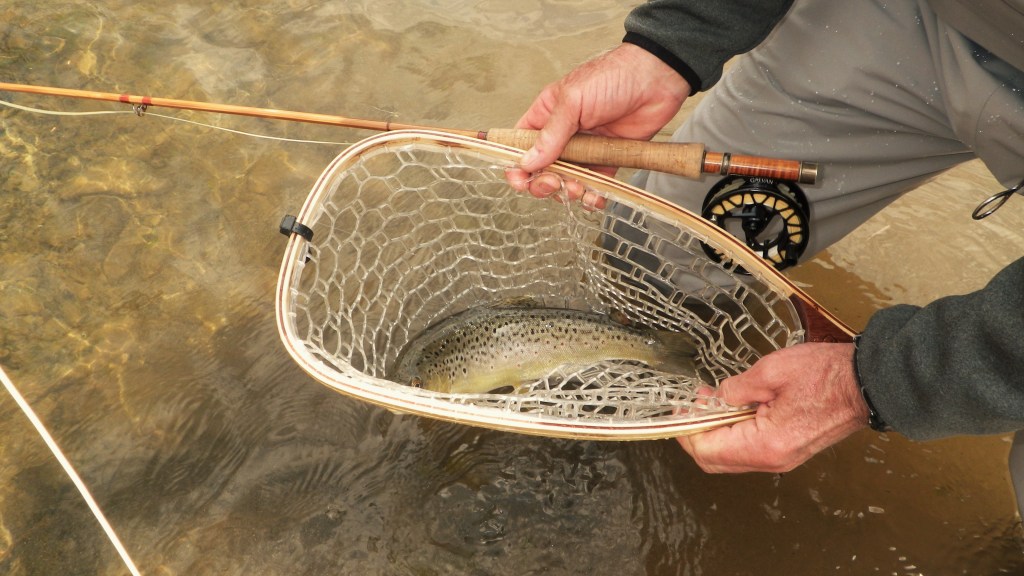
Foibles prevented me from securing the photo I wanted badly. Standing there on an uneven river bottom, shaking just a bit with rod crooked beneath my arm, holding the heavily laden net, my right hand fumbled to retrieve the camera for a shot. Somehow I managed to turn the camera at the moment of truth, as I fumbled to press the shutter with my thumb, and the fish I saw on the view screen wasn’t what the pixels captured. I did get a lovely moving shot of the edge of a net and part of a trouts belly, that I will share for artistic statement.

Notice the centerpoint sparkle of the water, the lovely curl of the wood in the net handle, and the mottled flaming of hand crafted bamboo. Artful don’t you think? Gladly I will keep the shot I hoped to secure safe, in memory.

I stalked a few more risers, and took a pair while the hatch continued, as did John upstream. Late, as the rises subsided and but a few stray duns fluttered on the surface, we stopped to notice the clouds had vanished and we were surrounded by clear, bright blue skies above the walls of our mountain hall. The winds had subsided too, and the sun’s reflections on the glassy surface helped radiate the warmth we felt as we surveyed the scene. It had been a perfect day, and we were not quite ready for it to end.

Looking harder, we found a half interested riser here and there, fish languidly taking the stragglers on a full belly. Our dry flies had no more appeal for them at that point, though I did draw one quick reaction rise as soon as the fly touched water. I promptly missed with my own quick reaction.

At last we acknowledged it was time to walk out, to bring a grand day to its close. It is finally spring, a fact we will both remember as this afternoon’s rain turns to snow, and the winds howl.

Careful what you wish for…

A Heavy Hendrickson hatch

I had been dying for a good hatch of mayflies, struggling with the fact that, while the weather said early spring, the rivers decidedly said no, it isn’t. I would walk along the river toward my chosen fishing spot for the day, saying a little fisherman’s prayer for a good hatch and rising trout. You do have to be careful about gathering all of that mojo along a nice trout river, because you can overdo it.

I had seen a few flies one day last week, right before the weather decided we needed some more winter days. I hadn’t been back since, trying to give the trout and the bugs a chance to acclimiate to the five to ten degree drop in water temperature. When I visited the other day it became very clear that the stream life had acclimated.

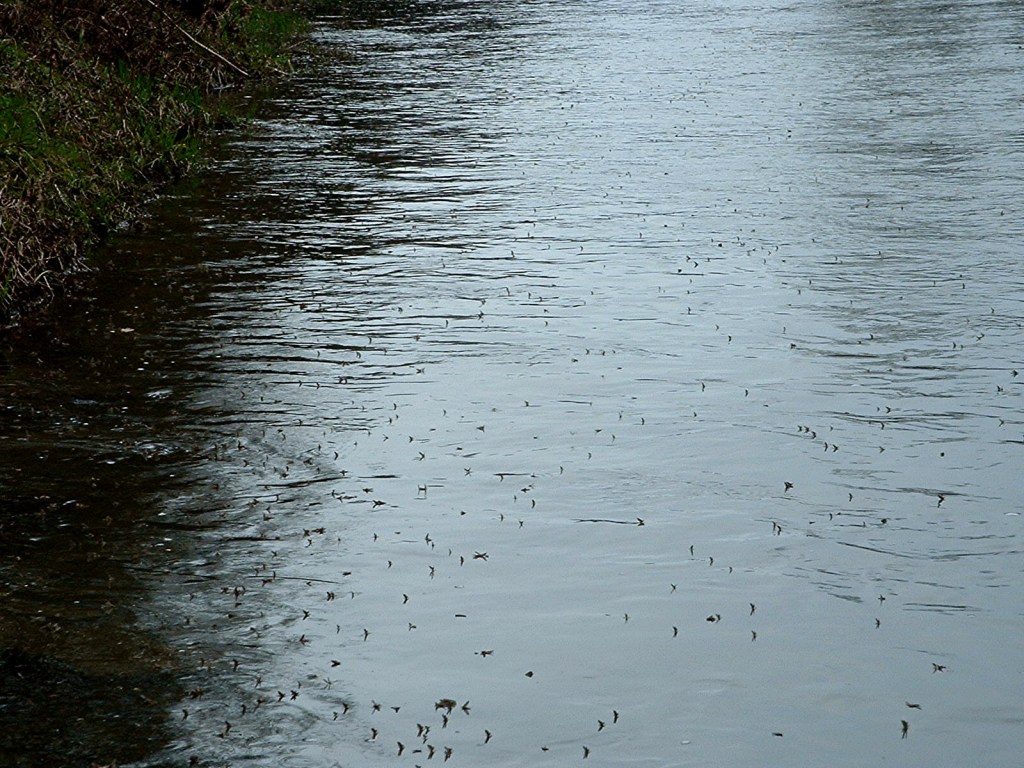
I saw a rise at a distance, then another in a different location, but the black clouds overhead made me think that those splashes might have been rain drops or sleet. I saw no flies on the water, but then one of those splashes repeated and I was certain it was a trout. I have not seen a hatch like the one that began to unfold in a decade or more. Red Quills and Hendricksons by the thousands came bobbing down the current for several hours. There were so many naturals on the water, all wiggling and fluttering as they tried to fly off, that I expected every trout in the river to be gorging, but that wasn’t the case.

Individual trout would rise from one to three times and then stop. If they were in casting range I covered them, and if they weren’t I simply looked for one closer. There was no point in moving toward a rise, as that trout would quit before I got within range. Those I did cover ignored every fly I put over them. There were simply far too many naturals to compete with. As the afternoon continued the flies in the drift would change a bit. As it got later, the smaller Red Quills seemed most abundant, and a few trout began to feed more steadily. The skies became darker and I cursed my dark sunglasses as I couldn’t track the somber winged flies I had in the correct size and pattern.

When my dry gets lost among the naturals I get a bit too quick on the trigger, particularly with the level of excitement a mega hatch creates, and that was my undoing on this day. Three good trout took my fly and my quick strike only pricked them. The most I got was the beginning of a strong pull from one of them, before the fly popped free.

I spent some time at the bench the next morning, tying two dozen flies in hope of a rematch. Plenty of lifelike CDC flies and some bright Trigger Point wings that I could spot amid a maze of insects. There were flies the next day, though the hatch was much more reserved. The trout stayed with their sporadic rises for the most part. I saw a nice bulge at distance and let the Thomas & Thomas have it’s head. The long reach cast laid that small Red Quill down perfectly a few feet upstream of the open water target. The bulge came and I tightened into a nice trout that tugged sluggishly a couple of times then turned and hit the afterburners. Gone!

No one ever likes to loose a really big fish, and we immediately question why. I got my answer when I lifted the end of the tippet from the water. The very end was shaved neatly to a point. My tippet caught a tooth when that big boy turned and cut it. I did find an acrobatic brownie that liked the fly I showed him after a bunch of casts. That trout cleared the water at least half a dozen times! I ended my day with a smile after all.

Walking out, I wistfully took stock of the events of the past 48 hours. I had witnessed one of the greatest hatches I had ever seen, the kind I was beginning to think I wasn’t going to see again. I had pitted my skills against tremendous odds and had another dose of the wonder and humility that this sport gives you sometimes. I had managed to figure out which fly had the best chance of tempting a big wild trout to take a chance amid a plethora of mayflies, so I’ve done some more tying to be fully prepared with enough of those for me and my friend.

I hope today brings another terriffic hatch for John’s benefit, though not one of the same magnitude as the hatch I witnessed. You can get wonder and humility all through the trout season, but it would be nice for the two of us to catch a couple of those big fellows this time!

Missing A Bullet

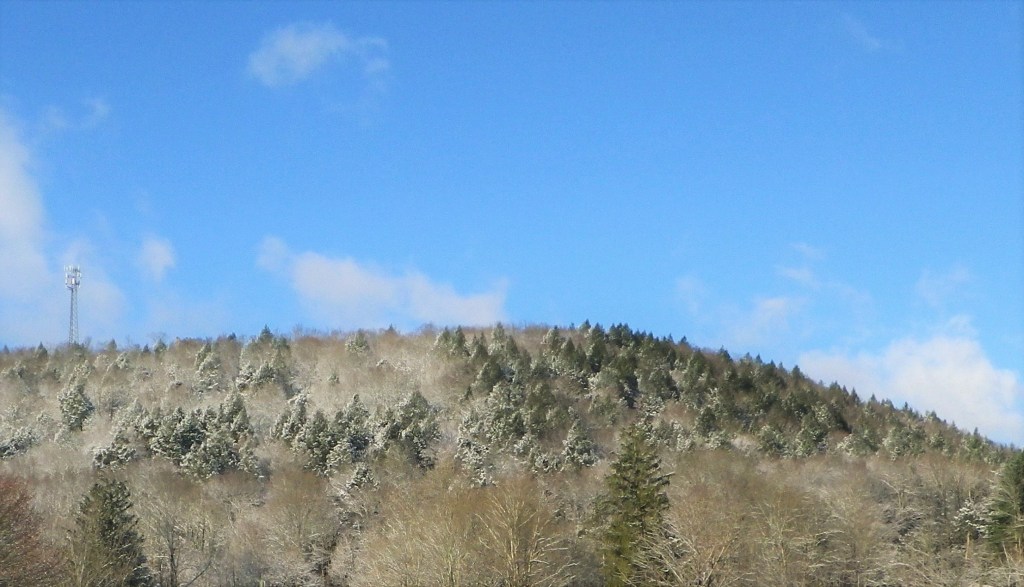
The summit of Point Mountain wears a coat of fresh snow on April 16th, 2020. We will not have a repeat this morning, though it will not be warm and pleasant today either. The weather forecasters are squawking about as much as fifteen inches of snow for “Upstate New York” – thankfully much further upstate than the Catskills!

Funny but the forecast high for Hancock today is a damp, breezy forty-six degrees, the identical conditions I encountered Monday afternoon when I finally found and caught my first rising trout of the season. I guess I need to go fishing today rather than on more of those sunny, warm and glorious days the last several weeks have provided.

I did find a nice hatch the following day, when conditions were far more perfect in terms of delightful spring weather; plenty of sunshine and temperatures a full twenty degrees warmer. I watched various Hendrickson mayflies flying around and bouncing down the current, all of which failed to entice even a single trout to rise. The next day was markedly different, somewhat inhospitible in fact, but there was little activity to fascinate the angler. Spring in the Catskills: Nature offers a different stage each day.

There have been dozens of fine fishing stories crafted around the, the worse the weather the better the fishing theme, absolute classics. It does happen that way sometimes too, though I have spent a lot of miserable days shiverring in trout rivers watching and waiting for hatches that never appeared, and trout that never rose. Not that any day spent along bright water is truly miserable. There are certainly wide ranging outcomes possible in regards to creature comforts. Chances are I’ll be out there again today.

A friend down in Maryland braved high water to fish the Grannom hatch on Pennsylvania’s Little Juniata River yesterday. He reported several trout landed, though he qualified his report with the revelation that he simply couldn’t get to a lot of them. I’ve done the same, and I know there is a special satisfaction when we fish in chancy conditions and come out on top. The little bit of risk is exhilarating, though we’re careful not to do anything stupid.

As we get older, I think we crave that little bit of exhilaration, but we have to temper those desires with common sense and safety. Fishing is far too beautiful a lifestyle to let it end prematurely.

I have passed up on casts to some real brutes, feeding ravenously on early season mayflies, because I realized that the one or two more steps I needed to get close enough to make a perfect presentation were two steps too far. As galactic hero Jean Luc Picard once said, “I have become increasingly aware that there are fewer days ahead then there are behind”. No point in shifting the balance on that scale in the wrong direction.

At the time, those good decisions were agonizing. We never know when the fish we see rising is the trout, that mythical fish of a lifetime that lurks in each angler’s subconcious, and that makes it very, very hard to turn away. I try to reflect upon the pure fact that my greatest trophies did not require risking my life to capture. Rather they required stealth, patience and skill, often in low water conditions; and that is more satisfying than that little thrill from some risky wading.

There is going to be a lot of cold water around for the next few weeks, and cold water is the enemy of careless fishermen. We have to dress for the colder water even on the sunny days, something that is very easy to do in this age of hi-tech gear, and make sure we stay on our feet at all costs. Dunkings in forty something degree water are not conducive to enjoying many long years of fly fishing retirement!

The unequivocal reluctance of Spring

Warmth in March and early April can make us believe spring is in full bloom. But things can turn in an instant!

I was enjoying a gorgeous day yesterday, the brilliant sunshine clearing away Monday’s damp chill. The glory of springtime in the Catskill Mountains was all about me, the mountainsides carrying a warm reddish glow from budding trees, and the grasses greening and sprouting more each day.

My test for that ephemeral early spring was passed at last, with mayflies fluttering on the warm air as I prepared for some spectacular fishing! It has been more than five months since the last dry fly angling for 2020 passed into memory, and I am more than ready, standing in the edge of the river with an old cane rod at my side.

The hatch came forth earlier in the afternoon than expected, and I changed flies a couple of times in anticipation, guessing at the identities of those winging skyward before me. Alas no patterns I carried would produce a rise this day, for every trout in the river patently ignored all of those fluttering naturals.

Anglers ponder the reasons for such days. The river’s flow was nearly perfect, its waters clear, and the temperature was right there in the good range. I counted at least three different mayflies, capturing a Red Quill and a Light Hendrickson in size 14, and seeing larger tannish flies on the water as the hatch progressed. No trout would rise under these seemingly perfect conditions, not one.

The old line is often uttered in excuse: well the trout just don’t recognize those mayflies when the hatch first begins. Hogwash! Trout have been found to have eaten bits of sticks and leaves, discarded cigarrette butts, seeds and all manner of detritus. They are quite willing to sample things that might be food. Their instincts do not simply disappear in the absence of regular mayfly hatches. Hundreds of wriggling, ascending, emerging and drifting insects all around them and not one trout feels compelled to sample a taste?

The other patent excuse, well they must have been feeding upon the nymphs, may seem to hold water, though I have seen dedicated nymph fishermen go fishless on similar days while I stood by with dry fly at the ready, watching. Late in the hatch I took that excuse to task, swinging a weighted soft hackle nymph down through the water without a touch. If there had been fish feeding upon nymphs I should have at least encountered one of them momentarily. No sale on that excuse either.

Anglers hate to admit that they don’t know. We love to talk endlessly of our thoughts and theories, but the truth is such events are as much a part of the magic of fly fishing as the days when every rise intercepts our fly. May those discussions continue, even though we will never figure it out; and secretly, don’t want to.

What’s he thinking?

Our beautiful, balmy early spring makes ready to demonstrate her reluctance with but two days out of ten expected to reach sixty degrees, more rain clouds than sunshine, and snow showers peeking back into the forecast on Friday. Seems like a perfect Catskill spring to me. Time to reach out and touch that magic!

Firsts

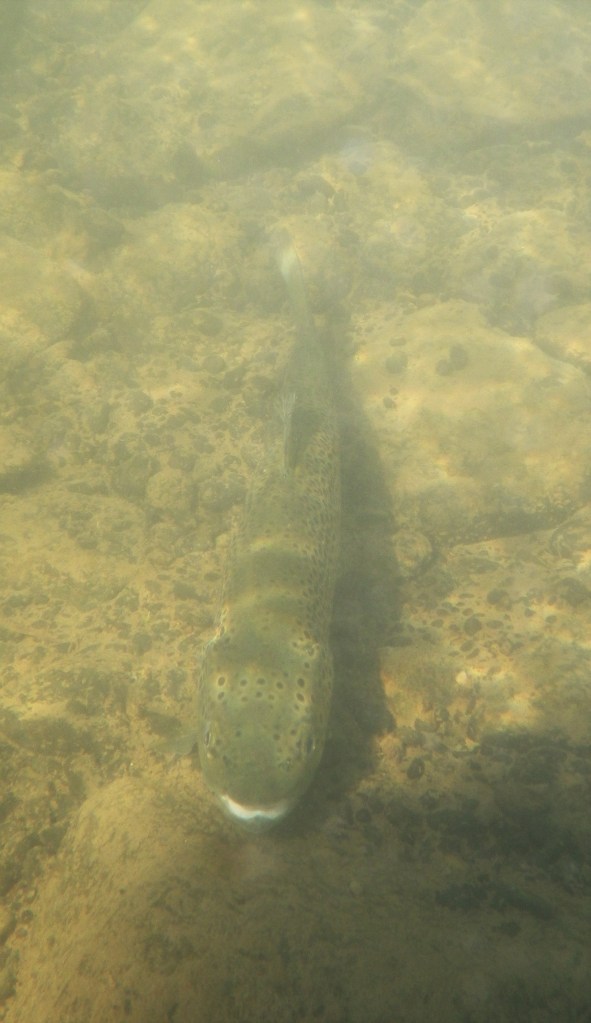
This seventeen inch Delaware brown became the first dry fly trout of the new season on an unlikely April afternoon.

I took a break from fishing to begin the new week yesterday. The rain they predicted came later in the morning, a downpour at first, though it soon evened out into just the kind of spring rain the rivers and their anglers welcome. The rivers rose a little, but nothing drastic, and the on and off showers through early afternoon today were more off than on. The warmth I enjoyed throughout last week had vanished.

The forecast called for steady rain throughout the afternoon, and that wasn’t happening as it got close to two o’clock, so I decided to take the short ride down to the Delaware and fish a bit. I changed my cotton pants for a pair of warm polyester sweats and layered my Nano Puff vest beneath a thick sherpa fleece jacket. With my waders on I pulled my heavy duty rain jacket over everything and proclaimed myself ready for the river on a wet, forty-six degree afternoon. The half-mile walk got me warm and cozy.

There were no bugs on the water, and the current in the bend was slower than I like it, but I started swinging a Hen & Hare’s Ear, letting it sink deep where the exposed rocks lined the channel. Eventually I had a pull, tightened up and pulled in about two pounds of chub. Yep, the river had dropped enough that the trout had moved out of the bend, leaving old rubber lips in their former domain. Time to walk out I reasoned.

I took a while walking along the pool, noting the birds buzzing the surface and expecting some sort of hatch might come off. I don’t know what had them excited, but I never saw a sign of an insect. I did cut the weighted soft hackle off and replaced it with a size 16 olive that was just sitting there in the vest, a remnant from last season. I walked further upstream, still seeing birds darting low over the water, and wondering just what they thought they were going to eat. The rain would fall steady for a few moments, then slack up, and nearly stop. Every time it stopped I would strain my eyes for some glimpse of mayfly wings. Nothing.

I had passed the head of the pool and come upon the transition zone where the light riffled water began to diffuse as the depth increased, walking a few steps, and then stopping to search for something, any sign of life. I was on the bank now, hoping that the elevation might let me see what those birds found so interesting. I never solved that puzzle, for I spotted a little ring just ahead and froze in my tracks.

The line was pulled from the old St. George and out through the eight foot Orvis’ tiptop and dropped off the bank into the water. I pulled a few more feet of line out, lifted the rod into a high backcast to avoid the stalks of dead knotweed, and made the cast. I couldn’t see my olive, but I knew where it was. When the second little ring appeared, this time with more oomph, I raised the rod and hooked my first dry fly trout of the season.

That trout was as surprised to find himself tethered to an old stick of bamboo as I was to have found him and had him eat my fly on the first cast. We did our little dance, and I realized pretty quickly that he was a nice fish, not an over eager tiddler lazing where the water slowed below a jutting point of land. I worked my way down the bank and found a spot to get in. He charged for the middle of the river a couple of times, but the relentless big bend of the Orvis turned him around and coaxed him into a jump or two. Scooping him in the net my grin was a mile wide.

That seventeen inch brownie amounted to a gift from the river, as I never did see anything on the surface that might have triggered that initial rise. I never saw another rise out there either, and I looked, believe me. One rising trout on a cold, rainy day, the most unlikely day of the month so far. Firsts. My first dry fly trout of the year, taken on my first cast, after spotting his first rise. He was also the first trout I have taken on a dry fly with that venerable old Orvis Battenkill.

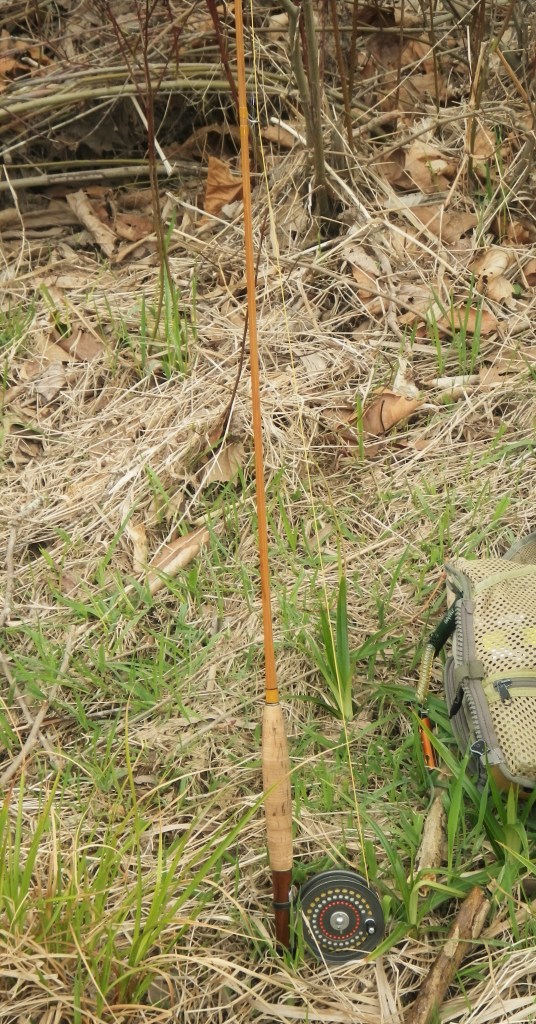
This 8 foot 4 3/8 ounce Orvis Battenkill first wandered the Catskill rivers with me in November, too late for last season’s dry fly activity. The classic impregnated Orvis cane rods be fished without worry in wet, cold weather.

The Test is not an English chalk stream

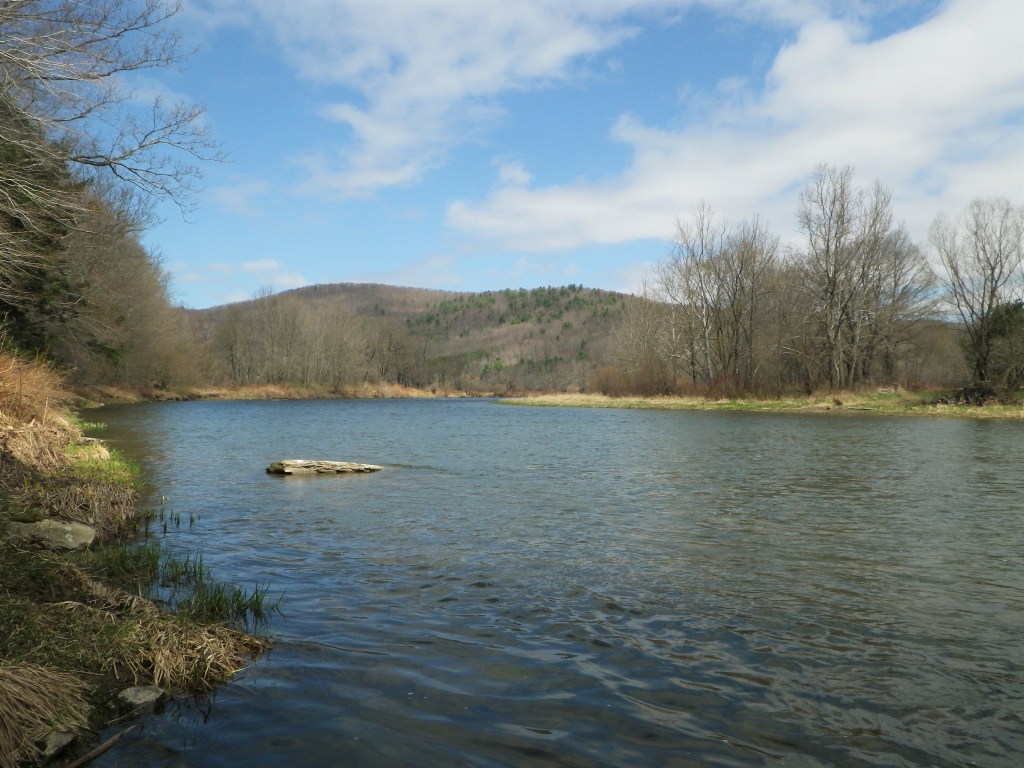
Springtime on the Neversink

Indeed the Test that I refer to will develop over the next five days. My test for an “early spring” revolves around the early mayfly hatches; the Blue Quills, Quill Gordons and the Hendricksons appearing during the second week of April. The calendar reports this weekend lies amidships in that second week, so it is clearly time for something to happen.

I have haunted rivers for five of the past six days and I have encountered no hatch. I have seen one large mayfly, several tiny ones too small to be Blue Quills, and two red bodied insects that zipped past in fast water before my fingers could close upon them. I am telling myself they were Red Quills, the so called male of the Hendrickson clan, though a fly not possessed is a fly not identified. I have not encountered a single bit of clear evidence of a trout’s rise, that is, none of those lovely spreading rings in the surface we fly fishers adore.

We have been blessed with a run of beautiful weather, and it has been a great pleasure to haunt those rivers during a warm and inviting week, but now it is time for Mother Nature to close the deal. Dry flies have been tied, rods polished, lines cleaned and reels lubricated; and all have been given a test upon these warming springtime waters. Madam, kindly proceed to the Main Event!

My smallest 100-Year Dun, a Jave Red Quill size 16, tied to copy the solitary flies I think I saw bobbing down a bright riffle on two occasions. I am guessing, as only one drifted close enough for a grab, and my fingers failed in the attempt.

Similar reports have filtered in from some friends angling different Catskill rivers. Only one of these intrepid souls has managed to find a Catskill trout willing to inhale his dry fly, and I salute him. Another, further southeast in the warmer climes of New Jersey has had a bit more action. If it was safe enough for us to gather, I envision a group of older gentlemen standing around with blank stares and fidgeting with their assorted bamboo rods. We share a similar affliction, the love of bright waters, and the desire to angle same with the grace of the dry fly. Retirement is a wonderful thing. What better way to celebrate it than to wander the myriad of trout streams and rivers arrayed here in the Catskills. All we ask are rising trout. We don’t even demand to catch them, as we celebrate the glorious intricacies of the opportunities to try!

True devotees of the dry fly can talk for days about the trout they tried to catch, to say nothing of the volumes of tales available regarding the ones they actually brought to hand. I have thirty years of memories to draw from, and despite taking more than my share of fine wild browns, brooks and rainbows, some of the best tales from those memories involve trying as opposed to catching.

It is the trying that ignites the thirst for knowledge and the spark of creativity that results in new and better flies in the vise. We all have countless flies that catch trout for us and for our friends, though we have no flies for the trout we cannot catch! The same condition applies to casting techniques, designs for special leaders and even our approach to the water.

I have been known to spend two hours working on a trout I cannot catch. That time includes a lot of study of the insects in the drift, the riseform, the way my line and leader move on the water, and how my fly floats and behaves in the current. I confess to a passion for complex currents. A great deal of thought and effort is condensed into two hours of fishing to an uncatchable trout, and when the solution is found, it can be glorious.

Many times the solution is something very subtle: a more sparsely tied or ragged version of the same fly, two steps upstream and one to the right to change the angle of the cast ever so slightly, or a tippet three inches longer, or shorter. Sometimes the solution is that special fly, the one designed and tied the last time I tried to take a trout in this lie, and failed. I often think and refer to these pursuits as The Game. It is a game with changing rules, some that forever remain unclear and thus provide a grand fascination.

The casual fly fisher encounters a difficult trout, makes half a dozen casts, and then moves on if he doesn’t catch it; covering water, a perfectly acceptable approach. Take such fish as a challenge however, and let your passion grow: enjoy The Game!