Art Flick’s Schoharie

At long last, in my twenty-ninth season angling Catskill rivers, my boots finally trod the gravel of the great Art Flick’s beloved Schoharie Creek, completing a long delayed homage to a Catskill Legend.

I have often visited the Schoharie in print. The late Art Flick was a giant among Catskill anglers, a bright light from the Golden Age, and a champion of conservation. Many times I have dreamed of a walk back in time and drinks at the Westkill Tavern, and of course an afternoon on the stream with it’s proprietor. I have an audio recording of Flick reading from his Streamside Guide, and I have played it while my hands fashioned his pink bodied Hendricksons and Red Quills at my vise, imagining I am there in the bar just as Schwiebert described it, listening to the tales and pronouncements of how best to approach the hatch.

Fleeing the dangerously high waters of my own western Catskills, I made the long drive northeast as clouds gathered to soften the morning sunshine. Winding along the Pepacton I smiled at the greening of the landscape and glimpses of bright water right up to the boughs of the overhanging evergreens. Our rivers will run high for some time.

My route took me through Big Indian and I stopped to spy on the Esopus, finding it indeed “tan” as the river’s sage had promised. It was he who remarked that the Schoharie had looked “beautiful” up in Hunter the day before. I had hoped to fish the smaller West Kill, it’s reputation for wild trout drawing me as much as Flick’s reverence for his home water. Alas near the village the river ran chalky with silt, from the evident bridge work I thought at first, until my glance found clouded water coming down from upstream. My introduction to the West Kill would have to wait for another day.

In Lexington the Schoharie finally came into view, clouded itself, so I turned upstream to make for Hunter. Around Jewett a sign directed me to a short loop road and a parking area overlooking the stream. It’s river bed seemed a mixture of the angular rock I find in the West Branch Delaware and Pennsylvania, though with edges rounded by the fast flows as the little river seeks the Hudson. There was a slight stain here, and no visible pools of holding water, so I drove on to the bridge in Hunter. I like the name.

The access map showed perhaps half a mile there with PFR’s, and I found a pulloff just over the iron bridge. With an eye toward the smaller West Kill, I had chosen Tom Smithwick’s very capable seven footer for a five, and the short, crisp taper would prove a proper choice as a steady downstream wind greeted me as soon as I waded in near the bottom of the reach.

The Schoharie appeared tan here too, though its water was quite clear, the color coming from the rock and stones of it’s bottom. There being neither flies nor rises in evidence, I knotted an Atherton Number 5 to my tippet and began probing the deeper areas behind a few scattered rocks. I had been concerned about high flows, but the river ran at a very comfortable level through the flats below the iron bridge. I found no trout in that flat, but smiled as the first Hendrickson dun lifted off and posed midair for my inspection.

The Red Fox pelt hanging beside my tying bench has none of Art Flick’s urine burned fur from a Red Fox vixen as specified for his iconic version of the Hendrickson dry fly. To fashion the pinkinsh imitations he championed, I have to resort to blending my fox fur with a bit of fluorescent pink Antron. I called the blend Pink Enhanced Hendrickson when I conceived it, and it has proven itself on my home rivers. I hoped it would suffice for these waters, tied in an otherwise standard Catskill style.
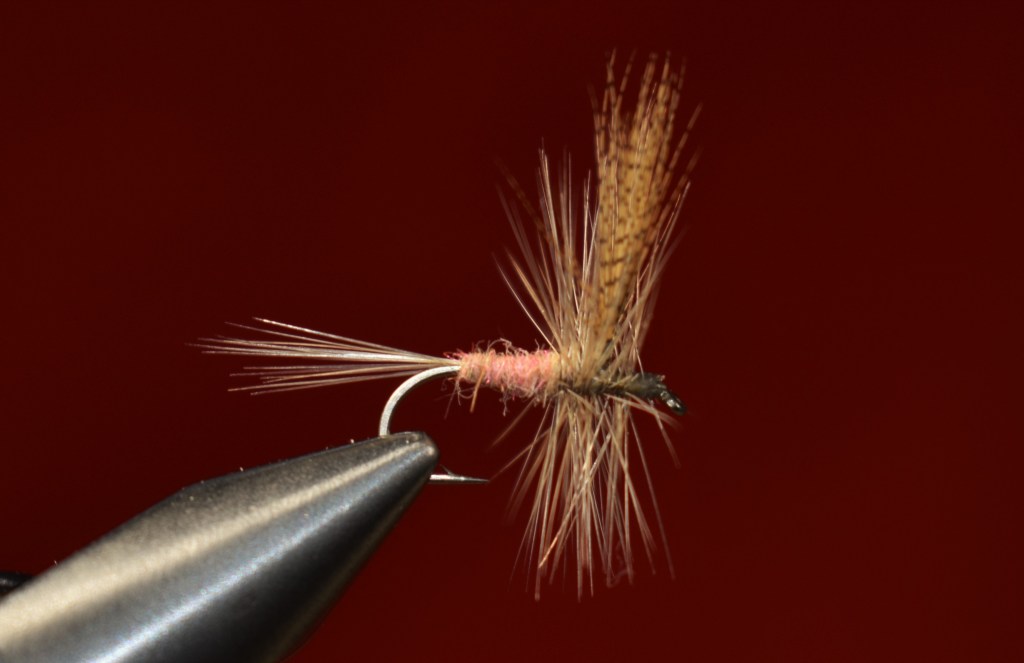
The Pink Enhanced Hendrickson, in homage to Art Flick’s iconic Catskill dry fly.

Wading close to the bridge, I noticed a few more duns bouncing down the thread of current closest to the left bank, though no rises appeared. I waited as the flies continued, then resigned myself to continue upstream into faster water. There had been one bulge in the current, half seen out of the corner of my eye while I’d waited, and I sent a few casts downstream over that spot, one of them interrupted by a strong pull.

The trout gave a good account of himself, using the bright current to resist the pull of the bamboo, and coaxing a flourish or two from the ancient Hardy to accompany the music of the water. Eventually I brought him round with light but steady pressure and slipped him into the net. I noted his color immediately, a tannish gold overwash reminiscent of the unique hue of the Schoharie’s bottom. I hope Art was satisfied that I’d landed “one of the good ones a foot long” that he spoke about in that audio recording.
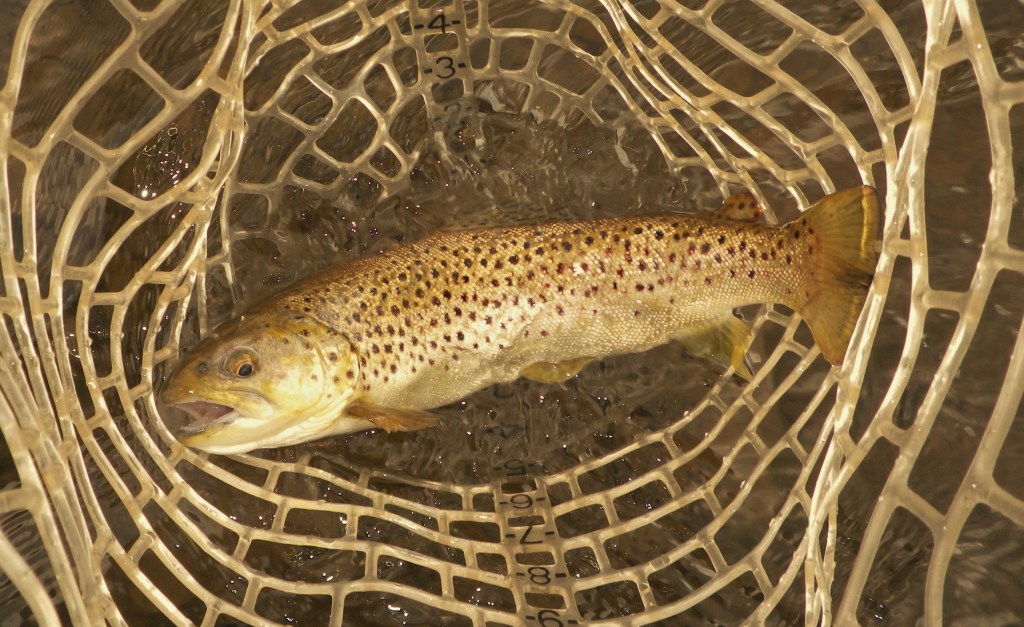
My first, and only foot long Schoharie brown. He accepted my improvised pink Hendrickson imitation, fashioned in homage to the great Art Flick’s iconic pattern.

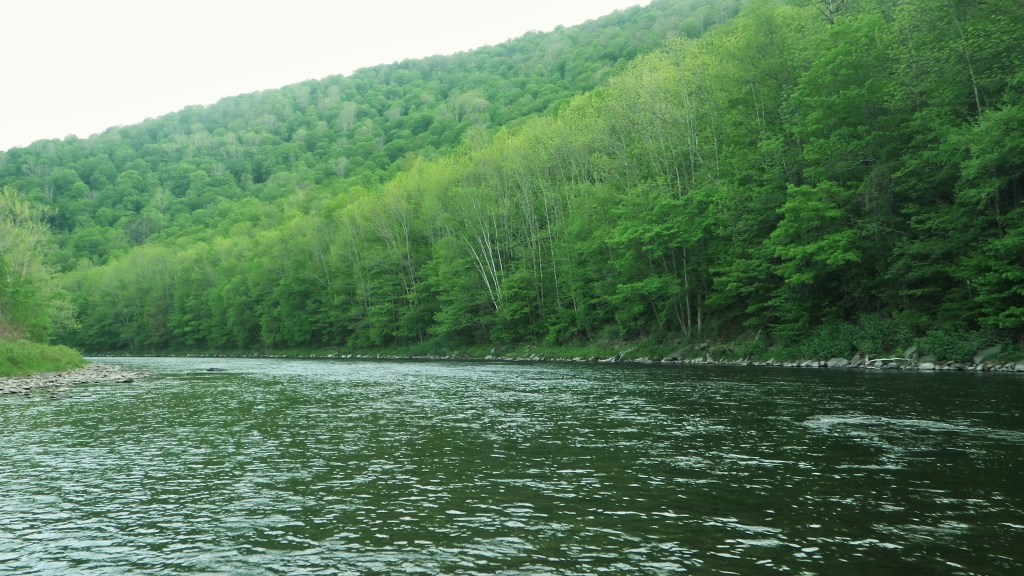
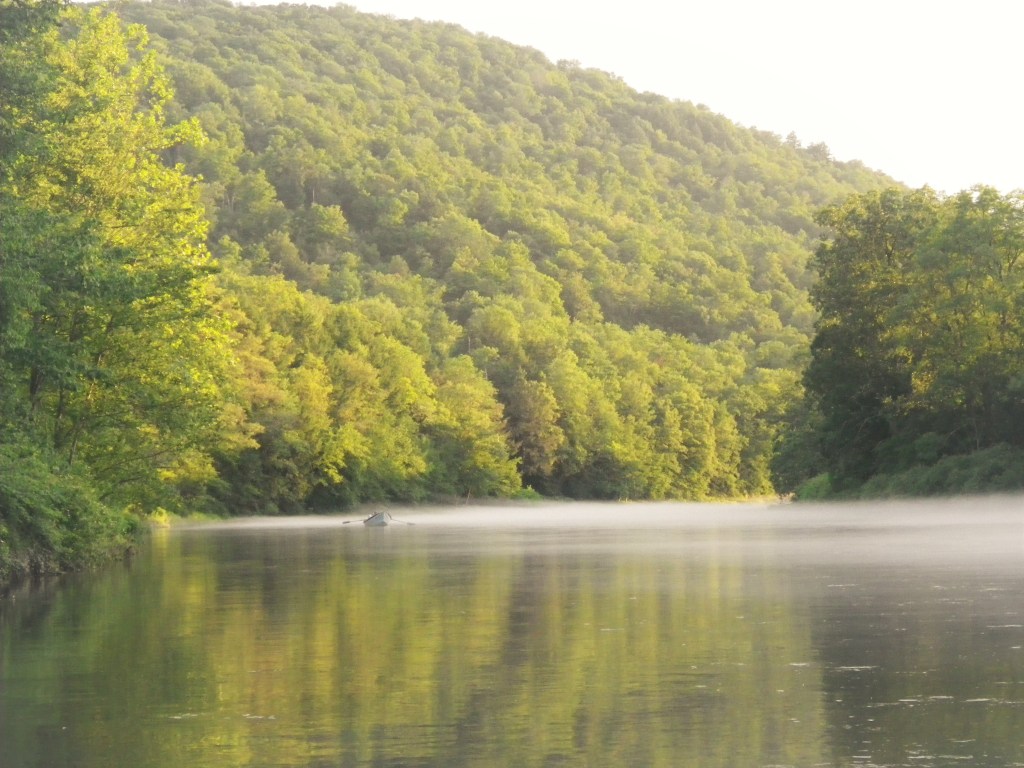
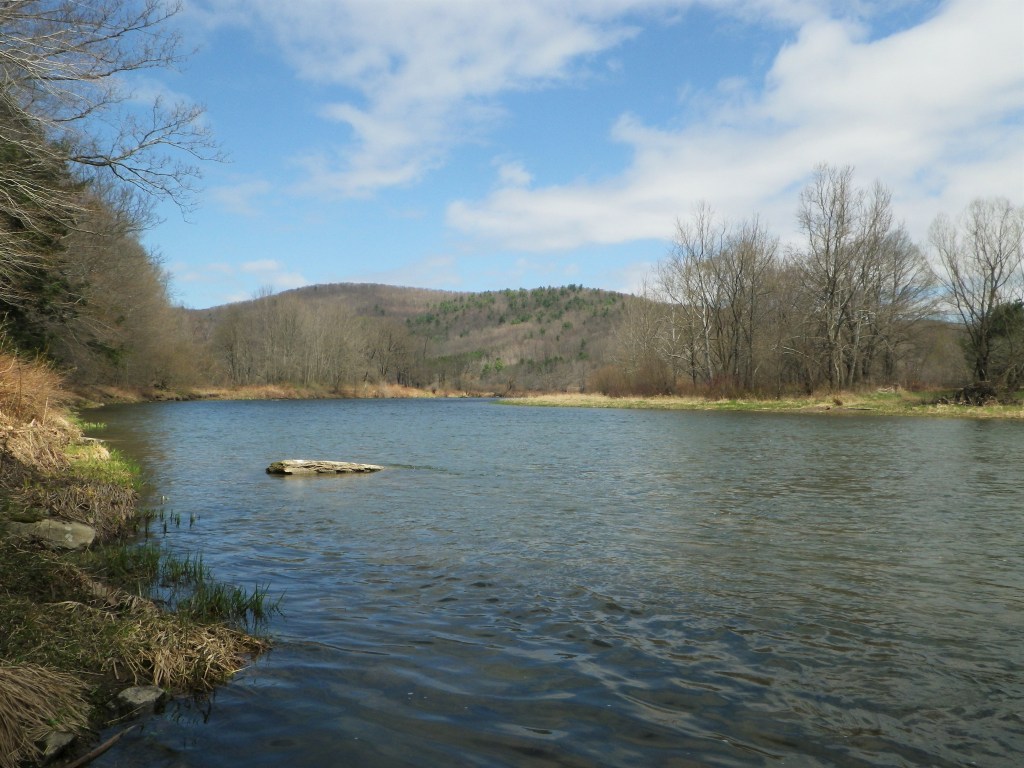
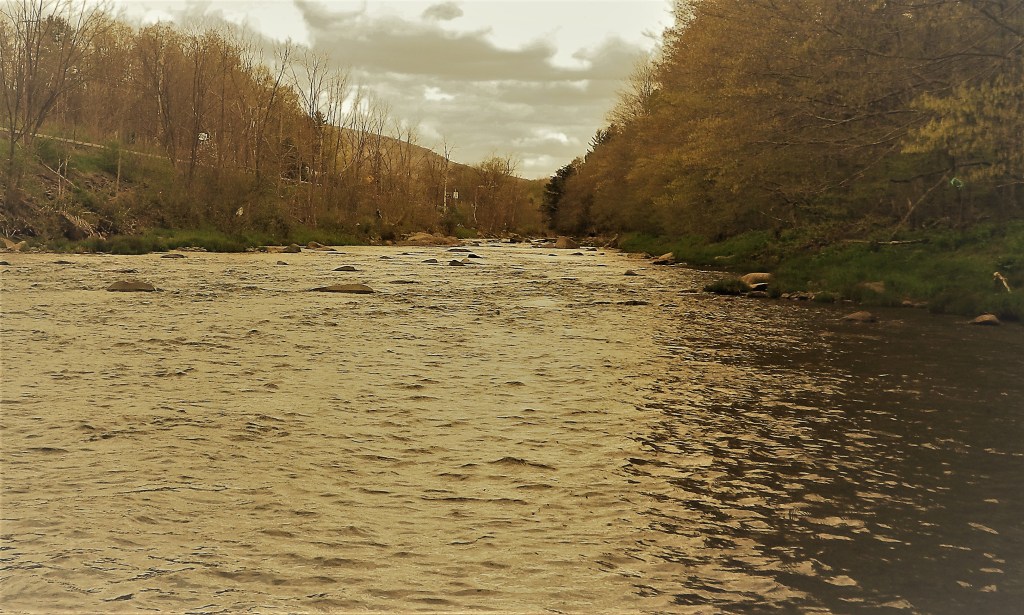
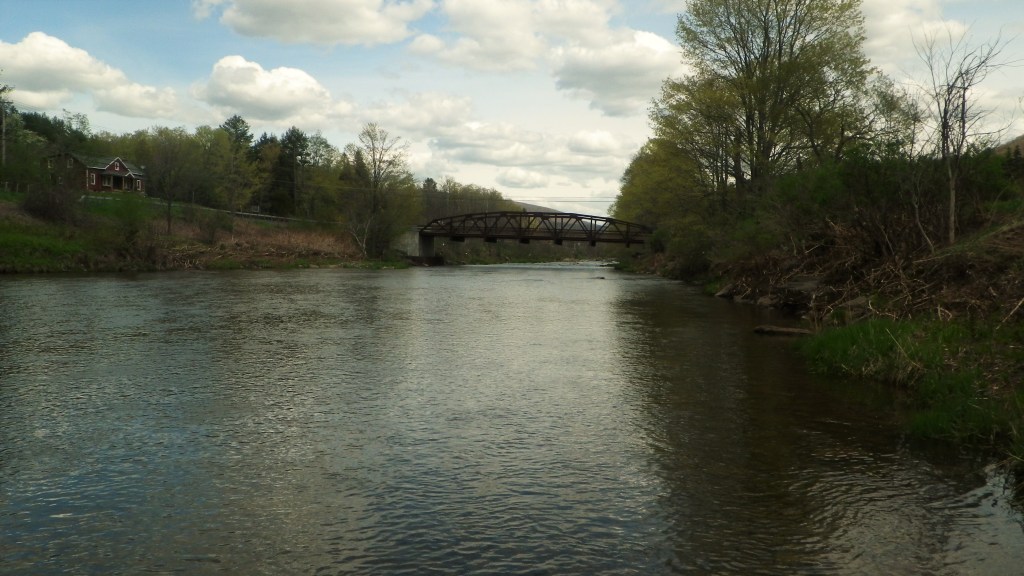
I would fish all of that lovely, rock strewn, broken water in the photo with no further glimpses of trout. The sparsely hatching Hendricksons seemed confined to the moderate riffle just above the iron bridge, and I fished that water well a second time when I walked back downstream.

I bowed my head in thanks to the memory of the legend. At last I had waded his Schoharie, found a hatch of Hendricksons, and taken a trout on a pink Catskill style fly, enough to pay my respects. Home lay two hours distant, and heavy clouds were gathering. I bid the Hudson River Catskills adieu, and enjoyed the pleasant scenery as I retraced my morning drive.
Searching for Rivers

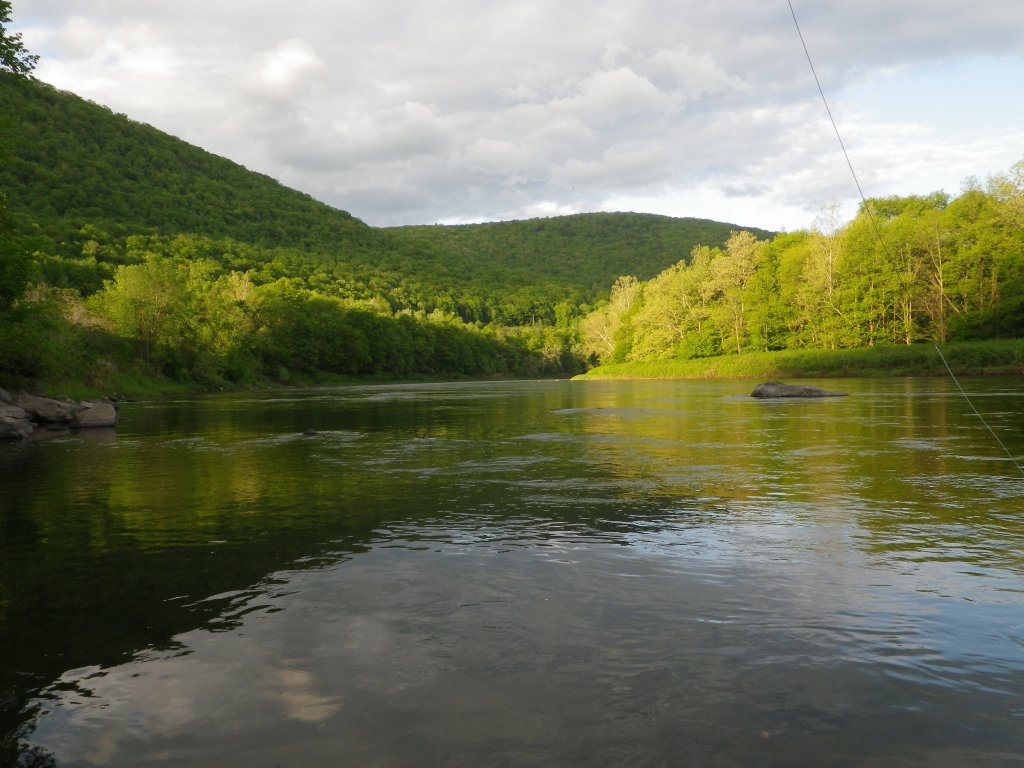
The Mighty East Branch Delaware above Cadosia Riff and the Village of Hancock

Seven AM, and I step out onto the porch to the heady scent of new mown grass and the incandescence of clear blue skies and sunlight; but the grass is frosted white and the thermometer hovers just below freezing. It is another spring morning in the Catskill Mountains, and I am searching for rivers.

The Delaware tailwaters are terribly high, above the dangerous range for waders and the experts only range for boaters, and I neither take life for granted nor fool myself with ego when it comes to my experience behind the oars. In short, there is no fishing.

Perhaps somewhere, in one of those high mountain streams I have neglected, a trout will rise today, but the prospects are incredibly low. So still I search, asking questions, sending inquiries over the wire to those who may know distant waters. Stream gages are a wonderful tool, though useless without practical experience to bring the numbers into real focus. One hundred cfs can be a delightful, somewhat low flow here, and a raging torrent there. Everything depends upon the river channel, its depth, gradient and bottom composition.

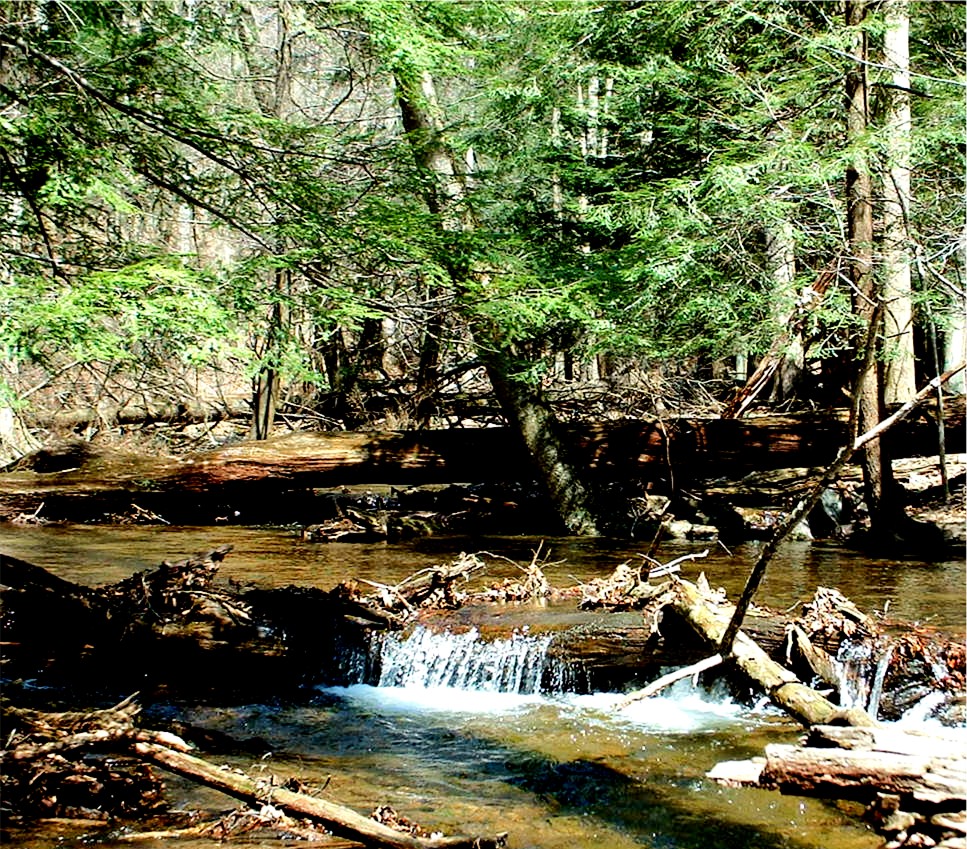
A favorite mountain stream, a small tight channel with undercut banks and log jams, where deep water comes to your knees.
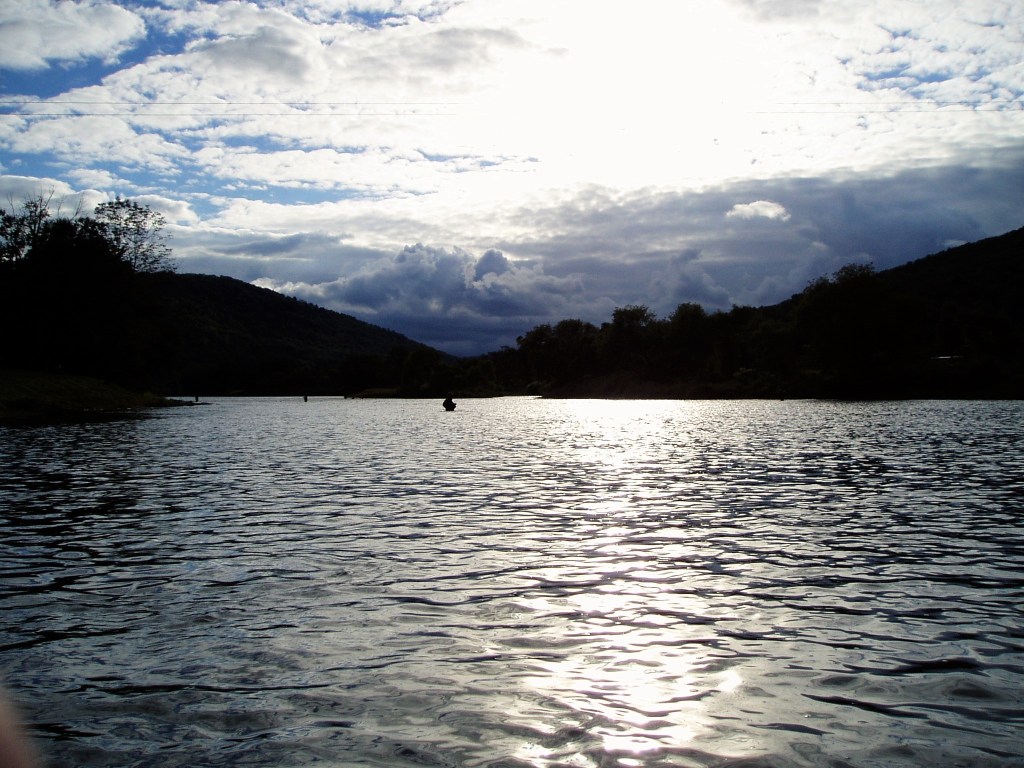
The wide Delaware River near Buckingham, Pennsylvania where 1,000 cfs is the beginning of low flows.

With freezing nights and days in the fifties, the high mountain streams are still icy cold, their trout not conditioned to rise. The larger rivers, while more resistant to the cold, offer little in the way of surface feeding lies in high water flows. Neither welcomes the dry fly angler under current conditions.

Forecasts call for more than an inch of rain over the next four days, something I would welcome under different conditions. The City kept their reservoirs near capacity in April, as the rainfall for the first months of the year was less than normal, and there was no place to store the rainfall from recent events. Things balanced nicely for April, with perfect wading flows and plenty of feeding lies available to the trout as the Hendricksons heralded a new angler’s year, but nothing lasts forever.

My window is shrinking; it may be a mirage after all. Is there one smaller stream I could visit, one that reaches that just right flow and temperature on this afternoon, one where I could steal a few hours with wild trout rising to the fly? The tools are available; the little one piece Smithwick stands in it’s wooden case, nearly as tall as I am. It has been far too long since I cast a line with that magic wand!

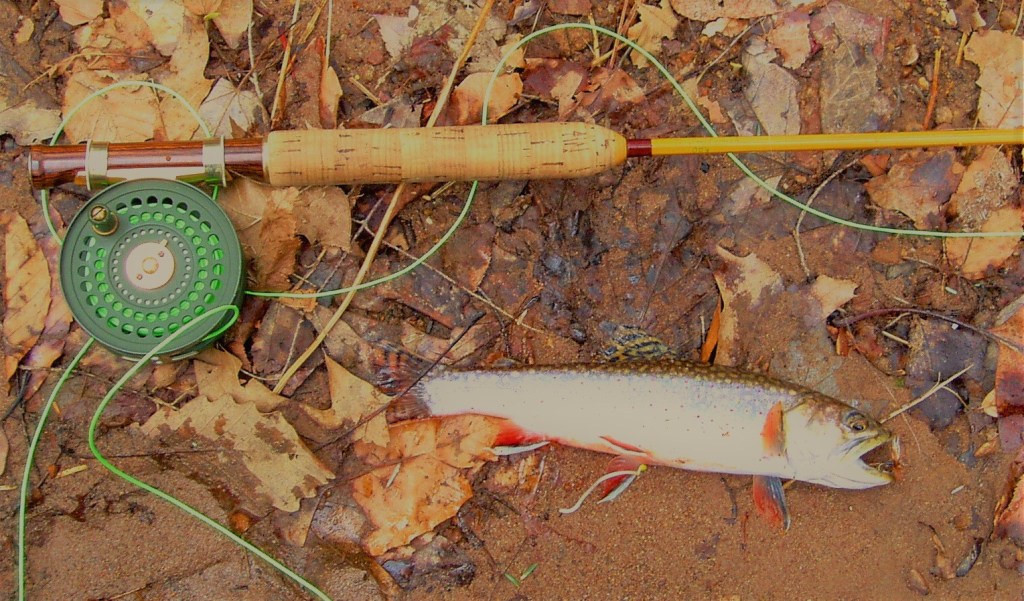
Sixty-five inches of classic cane, the smallest CFO, and a lovely wild Appalachian Brook Trout

I have been seduced by trophy trout prowling broad rivers, places where half the game is finding the niches where such fish rest and feed, and live their lives in avoidance of casual anglers. As the unwanted result, I have left the Brook Trout to their mountain rills, forsaken the pure joy of weaving along these bright ribbons through the forest, ducking beneath the fallen branches ever watchful for the wink of a quiverring fin. Brookie streams are secret places, tight quarters where each cast, and each backcast must be planned, mapped out for their prospective paths through the understory. It is too long since I have listened for the sparkle of water within a solid hedge of rhododendron, and wondered…

Water

Strong flows in big rivers challenge the wading angler, but provide plenty of oxygen and insects in the drift for trout.

I started out yesterday morning with the idea of fishing some different water. My first choice was a drive to the Neversink and the opportunity to meet a fellow fly fisher, a Covid Friend. No he doesn’t have that virus, it is simply a term which applies to a number of guys, most members of the Catskill Fly Tyers Guild that I have corresponded with via email during the past fourteen months of coronavirus forced solitude. I think we all helped one another through the winter by talking fishing via our keyboards, when personal contact was too risky to consider.

I was looking forward to the chance to meet face to face and share the water, but the beginning of this rainy week had other ideas. Monday’s rain pushed the Neversink up to 300 cfs by early morning, and neither of us thought it would be good wading. That river won’t see either of us for a while, as the heavy rain they expected last night has the river roaring with the discharge closing in on 2,000 cfs with their reservoir spilling.

Our Delaware reservoirs were spilling already and rose further overnight. With more rain today, Friday and on into the weekend, wade fishing is pretty well over for a long time. It looks like time to get the drift boat wet. Floating has its charms, but I am a wade fisherman at heart.

A drift boat appears out of the gathering fog as evening nears on the West Branch

I like to float when the river isn’t busy. That can be quite peaceful, an introspective day gliding along, searching for mayflies and rising trout. Of course our Delaware and its branches gets very busy this time of year. I remember when there were a handful of river guides running float trips. Now there must be a hundred of them. Even when they spread out throughout the system, that’s a lot of traffic, and many of the newer guides insist upon floating even in low water and on the smaller reaches of the upper tailwaters, intimiate environs suited to wading only. Trying to navigate a busy river takes the joy right out of fishing.

In mid-May last year, I floated the West Branch on a weekday with the river still carrying an unfriendly wading flow in excess of 1,000 cfs. The morning was quiet, uninterrupted by either people or trout, but the afternoon was like running a gauntlet. In several reaches where I had hoped to fish, there were so many boats and waders squeezed into every inch of river that I had to row a zigzag pattern back and forth across the river just to try to get through without ruining anyone’s fishing. There was no spot for me to fish myself. At one pinch point, I had to drop the anchor and sit there to maintain a little courtesy, as there were waders stringing out into the narrow passage within casting distance of three anchored guide boats. It’s fly fishing folks, not a mob scene.

I was sitting there for half an hour when the Red Gods seemingly appreciated my patience and threw me a consolation prize. A trout rose to eat a Hendrickson a boat length in front of my bow, so I tossed him a fly and caught him, a nice 18 inch wild brown. After I slid him from the net into the river, his cousin rose very close to the same spot, and I caught another one an inch or two smaller than the first. By the time I released that trout, the waders to my right had backed out of the water and two of the boats had lifted their anchors and were moving on. I pulled my anchor and rowed through that crowded pinch point as quickly as possible.

When I got home that evening I parked the boat and proclaimed my West Branch floating season completed for the year. I honestly don’t understand the reasoning behind this crowd mentality. Fly fishing is the ultimate one man outdoor pursuit. Quiet solitude was once it’s hallmark. I particularly don’t understand some of these guides. Do they actually believe they are providing a quality experience to their clients? Back when I travelled to the Catskills for my fishing I treated myself to a day or two of drift boat fishing on the big river when I could afford it. The guides I fished with, Pat Schuler, Ben Rinker and Sam Batschelet prided themselves on providing a quality experience. I enjoyed some wonderful fishing, and got to appreciate the quiet and solitude of a beautiful, wild river. These gentlemen worked very hard to get away from the crowds.

More anglers need to learn to be flexible in their fishing. When you find a group of cars parked at your intended pool, keep driving, try another reach of water. If you fish with a guide, insist that they provide a quality experience, not a game of bumper cars in drift boats on the most crowded section of river they can find. If flows are low at your destination, tell your guide that you would prefer to wade fish and leave the boat in his driveway. Everyone’s fishing will be better and more enjoyable with a retuirn to courtesy, sportmanship and common sense.

The Little Dirty Yellow Hendrickson

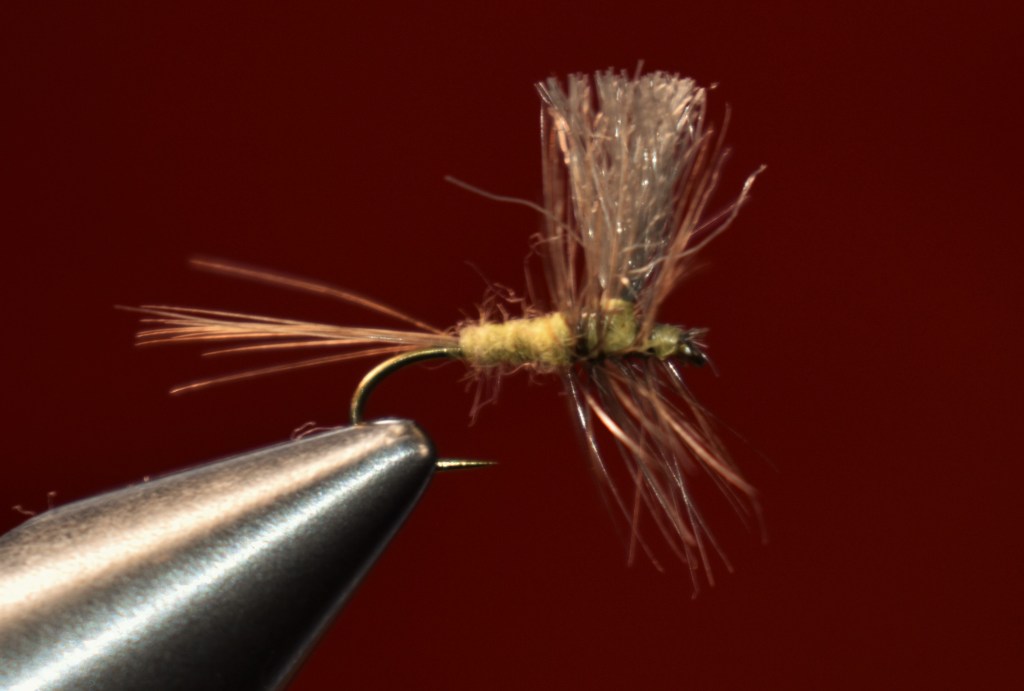
The first pattern, a Poster: The Little Dirty Yellow Hendrickson
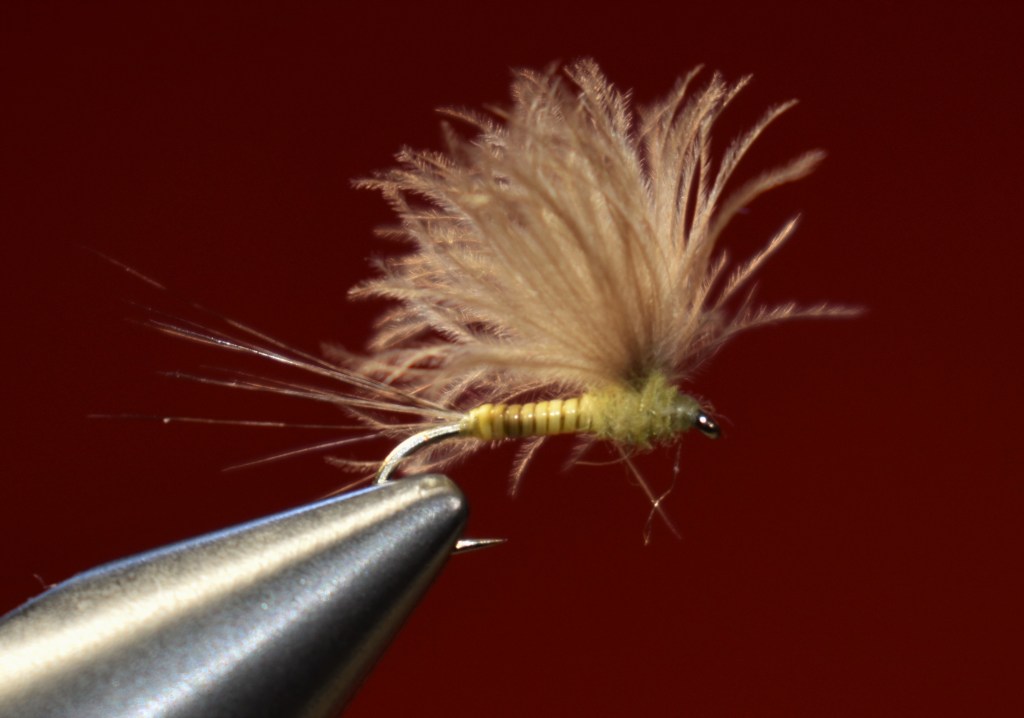
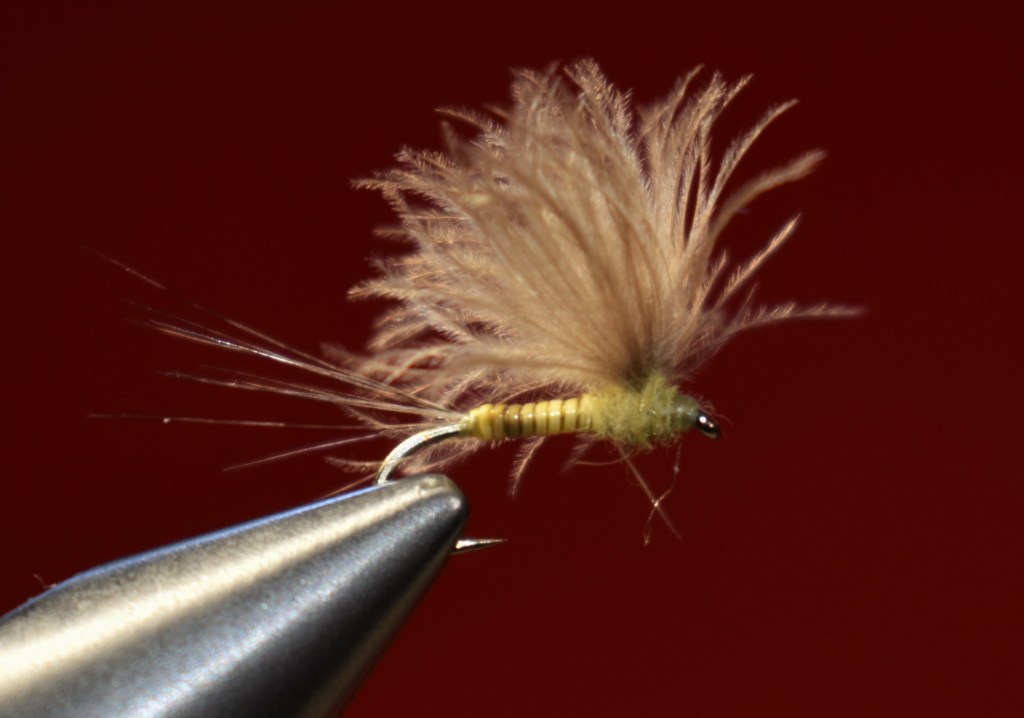
The Jave Quill version of the LDYH in a CDC dun pattern awaits testing.

I have been doing my mayfly research for the next hatch I hope to be fishing, and the more I read from my references the more interesting things have become. I first encountered the mayfly I dubbed the Little Dirty Yellow Hendrickson on the Mainstem Delaware in 2019, then my friend John and I plucked a few from the waters of the West Branch during a float trip that same spring. They showed up after the main Hendrickson hatch was over, though the first duns I got my hands on certainly looked like Hendrickson duns to me, though smaller duns of a decidedly different color.

Once upon a time, if you went into a fly shop for a package of sulfur dubbing, you got a fur blend that was reminiscent of sulphur, a dirty, dark yellow with a golden overtone. Where I fished, sulfurs were a major hatch, but they varied from a fairly pure sunny pale yellow to a pale yellow/ pale orange mix, like most of the sulfur dubbing you see today. When I first captured the “new” mayflies, I dug out a thirty year old package of Orvis sulphur yellow dubbing and started blending from there.

My name for these size 16 mayflies was purely descriptive. They had the gray tails and fairly dark gray wings of the Hendricksons, along with the same distinct rather blocky thorax. The back of the abdomen and thorax shared a dirty gray tone, and the underside was that darker, dirty, sulfurious yellow.

In talking with fellow anglers, several chimed in with an “oh, those are Invarias”, meaning Ephemerella invaria, commonly called Big Sulfurs. I accepted that for a while, until I did a little bit of research and decided these were not E. Invaria mayflies. Angler, author and Catskill legend Al Caucci maintained that he and Hatches co-author Bob Nastasi had sampled several different unidentified species of mayflies in the Delaware system that appeared to be closely related subspecies of the Hendrickson (Ephemerella subvaria), some of which they referred to as Ephemerella X. From Caucci’s description, I don’t think these are his X bugs, but I do believe they are Hendrickson relatives. I will stick with Little Dirty Yellow Hendrickson or LDYH (Lady H).

Though I have more curiosity regarding the science, I am not an entomologist. I am a fly fisher, and I have the knowledge I need to find them, tie them and fish them effectively, whatever species they may actually be.

The Poster pattern above is the first pattern I tied to imitate the Lady H hatch, and it has been well proven on a number of selective trout. Best of all, I landed a pair of two foot long wild browns on that fly last spring. I tie a parachute version too with the same materials.

Since I started seeing these duns coincident with the apparent end of the Hendricksons this week, I gathered the appropriate flies into one box, and then decided to try a quill bodied version of the CDC duns that have been some of my top flies this spring. The Jave Quill Lady H should be a killer as well. Just to be safe, I tie a few of my patterns in a size 14, though most of them are 16’s.

Perhaps one of these days I will make the acquaintance of an active professional entomologist who will know the species of this mayfly, or take a few back to his DNA lab to solve the mystery. It does seem that every time those guys do DNA tests they rewrite about a century of accepted fly fishing literature in regards to hatches, something I am not necessarily in favor of. After all, does it really matter all that much if we have a brand new Latin name for the bug tied to the end of our line? If we know the appearance, habits and habitat to encounter these mayflies, then we ought to be able to have some success fishing the hatch.

I kind of like Lady H as opposed to Ephemerella schmotium delawarus once Dr. Joe Schmo actually identifies and names this new species anyway.

Winter to Summer to Winter again

The mountains continue their greening as the roller coaster weather of a Catskill Mountain spring rolls on. We fished in summer conditions mid-week – 81 degrees, low, clear water and sparsely scattered mayflies, but the rains and winds transformed the rivers quickly. Talking with my friend John this morning he told me “everything is covered in white” at his cabin high in the headwaters of the Beaverkill.

It was close to freezing here in Crooked Eddy, and the rivers are high and clouded. Both Delaware reservoirs are spilling and, with showers expected regularly over the next week, that seems likely to continue. I expect to need my drift boat when the hatches begin in April, and often park it as good wading conditions herald the lovely month of May. This year looks to be a reversal of those norms.

My boat has been ready to go since March, when long stretches of warm weather had me itching to row and drift my way to some early dry fly fishing. To date, it has only been wetted by rainfall; and the dry fly fishing, though early, didn’t happen in March.

I prefer wade fishing, always have, as I like to stalk the riseforms that speak to me. Floating allows a pair of anglers to cover a great deal of water, though that perceived advantage is offset by the ever lurking decisions to be made. To stay or go; might the hatch begin on this pool as we drift downstream and enter the next one? One rule overshadows each choice: you cannot go back. A wading angler can walk both upstream and down, and he may take the time to study the water closely as opposed to wandering. That is often how I find the prize.

Neither fills my palette today. There are flies to design, a continuation of the trend, and tackle to maintain. Let the weekend crowds frolic in the cold, muddied waters. I will bide my time, perhaps try that rod that has been waiting five months to see water for the first time. There’s a new line spooled upon it’s designated reel, one not yet cast. It nearly got the test in last week’s fleeting summer-like conditions, though I blinked and the moment vanished! We’ll both be ready for the next time…

Jave Quill Invaria CDC Dun