

Those of us who hang around the Catskills call it Bug Week, that fortnight period that generally runs through the transition from May into June. If you spend time on the rivers, the moniker becomes amazingly obvious: Green and Brown Drakes, sulfurs, March Browns, Gray Foxes, Isonychia, Cornuta olives, and spinners galore for all of them. There are caddisflies as well, Hydropsyche and Psilotreta can be very prominant, and I am sure there are others. The Catskill fly fisher will carry more fly boxes than he knows what to do with, and may still find himself unprepared.
The chances of running into a true megahatch are at their best during Bug Week, but that doesn’t mean it will happen. Every season is different, and those truly astounding events are well, ephemeral, just as the name implies.
I have smiled at many an article or chapter in some fly fishing book, where the author plays it up for his audience: show up at River X the first week of June and tie a Superba Dun to your tippet, and you are in for the day of your life... I smile as I am wondering if anyone who ever read those words and followed the writer’s instructions to the letter, ever showed up and had things happen like that. Probably not. The real world of fly fishing isn’t so predictable; and it’s a lot more interesting.
The more seasons under our belts, the more things we notice; the changes from season to season, and month to month. Nature isn’t static. Some changes are grand, others very, very subtle.
The Hendrickson hatch was terrific this spring, and I noted some variations in the makeup and complexity of the hatch. The Catskill standard Hendrickson, the mayfly the late, great Roy Steenrod’s iconic Catskill fly pattern was conceived to match was present in force. A properly proportioned size 14 dry fly tied with fawn colored fox fur in Steenrod’s, or one of several other styles caught a lot of trout for me and others. I saw a lot more Red Quills this season than I have previously, and a sweet little darker tan Hendrickson in size 16 that was new to me.
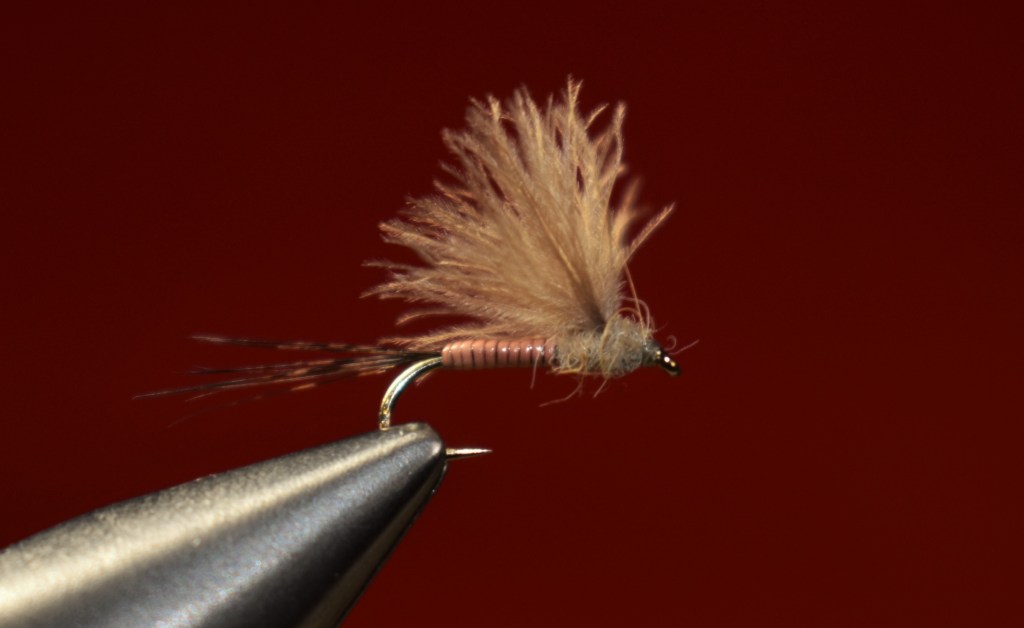
My little Jave Quill pattern was a real winner when it came to dealing with some very selective browns when that new, smaller and darker Hendrickson was on the water. Will it be indispensible next April? Nobody knows, and that bit of mystery is a big part of the charm of this game.
The next change that made an impression on me came about when the Shad Fly caddis took center stage as the peak of the Hendrickson’s passed. While I have noted changes in the relative abundance of this species over the years, I have always matched them with a size 18 fly. On my first solo float on the West Branch in early May, there were millions of them laying on the water. My guess is they hatched and hit the surface only to be stunned by the cold. My thermometer read 34 degrees when we headed to the boat launch that morning. The radical change was the fact that the millions of bugs carpeting the surface were tiny size 20 flies. I tie a few 20’s to hedge my bets, but they were not in the boxes riding in the boat with me. I trimmed my size18 fly down just enough to have a great day of fishing. I continued to see tiny Shad caddis, along with the normal 18’s throughout the hatch, and I started carrying those twenties..
Changes seem to be a constant, though not all of them are permanent changes. For years our March Browns were well, brown; a nice dark amber caramel color. All of them I seem to pluck from the surface recently are yellow, everything from safety yellow to a slightly tannish pale yellow shade. Will brown ones show up again?
Change applies to the pinnacle too. So far this year I would have to call this edition of Bug Week a rounded pinnacle to our dry fly season. I have not witnessed any truly heavy hatches from any of the represented flies. I have seen a lot of exceptionally wary wild trout cruising around and gently picking off sparse, scattered mayflies and caddis. This behavior has been standard for the few big mayflies, the March Browns and Green Drakes, as well as the small caddis and sulfurs. Large, predatory brown trout used to take the big size 8 and 10 mayflies like a boxer punching the surface from below. I have not seen any of that once typical feeding behavior this season. I have taken some great fish, but most of them have been very hard earned.
Now I am quite sure that there are a few angler’s out there who have been in the right place, when the conditions were perfect for that location, that have witnessed some bumper hatches. There always are, though listening to fishermen reminds me a lot of those writers I smile about. There are a lot of fly fishermen out there who have never really seen a heavy hatch of anything. I hear guys all the time saying something like there’s plenty of bugs so I don’t understand why they’re not rising. Most of the times when I have heard that kind of comment there definitely were not plenty of bugs on the water. Hatches have declined on a lot of our Eastern rivers and streams, so out of town anglers can tend to assume the Catskill rivers will furnish a similar experience. When they see a few sporadic flies on the water they think everything is normal, where Catskill veterans know it is simply a slow day bug wise.
I am uncommonly happy that our rivers are still healthy. For most of my three decades of Catskill fly fishing, I travelled here from my homes in Maryland and Pennsylvania, where the fly fishers weren’t so lucky. I fell in love with this region because of the bugs and the incomparable natural beauty. Fishing is always great here, just look around and see where you are! Fishing and catching are two different things, and it ain’t like you read in those stories Mack.
I think that success comes as we build knowledge and skill through our years of fishing. This truly is a thinking man’s game. It isn’t all banner hatches and big catches, high fives and hollering. Thank God. I find a great deal of pleasure in solving the little mysteries that Nature presents each day. Part of that process involves the days like a friend and I enjoyed yesterday. Flies of the season were on the water for several hours, and trout were pretty much holding to their lies and feeding selectively. Perfect right, except we couldn’t touch one of them.
Last night I fished late, not because the catching had been great during the long afternoon standing in the river, but because it was such a beautiful evening. Walking the bank in the general direction of the car I slowed and watched a group of trout making the soft, repetitive rises that say spinners. Shallow, flat water is not a prime spot to step in from an elevated bank and stalk within casting range, so approach was a challenge. It was getting dark, and these were obviously big fish, so time was short and anticipation high. I just cooled it, and inched forward a slow half step at a time.
That approach used up about half of my remaining fishing time, but I got in casting position without spooking that pod of trout. The big boys eased over a little further into deeper water, but they kept rising. I pulled some line from my old Hardy and knotted a big size 10 March Brown spinner to my tippet. The rise forms told me they were taking a substantial bug, not something small like the 18 sulfurs that have been hatching this week. My fly was ignored.
I pulled it in and looked at the length of my tippet: two and a half feet of 4.5X. I cut that off and tied on about four feet of 5X fluorocarbon, then retied that same spinner. I knew the fly was right. I pulled some more line out and lofted the Paradigm again, shooting some line and stopping the rod high, with a strong check. The trout took a natural eight inches from my fly. I made the cast again, dropping the big spinner gently about a foot further upstream than my previous cast. There was just enough light to track my spinner, all the down to the point it disappeared in a nice big bulge in the surface.
The trout exploded as the arch formed in the vintage cane, jumping high right toward me and creating the kind of slack that makes your heart jump up into your throat. I stripped line madly until I pulled up solidly, and then he jumped again, covering several feet in the air! That trout was all over that reach of river, splashing and spinning that ancient click drag, the sweetest kind of music to close an evening on bright water. The battle put down the rest of the risers, but light had faded by the time I finally led him to the net anyway. He measured twenty inches, but had a profile that reminded me of a largemouth bass. Huge head and shoulders with a deep, deep belly, I honestly believe that brown may have weighed five pounds. I admired him in the fading light, then slipped him out of the net and back home. I was headed there myself.

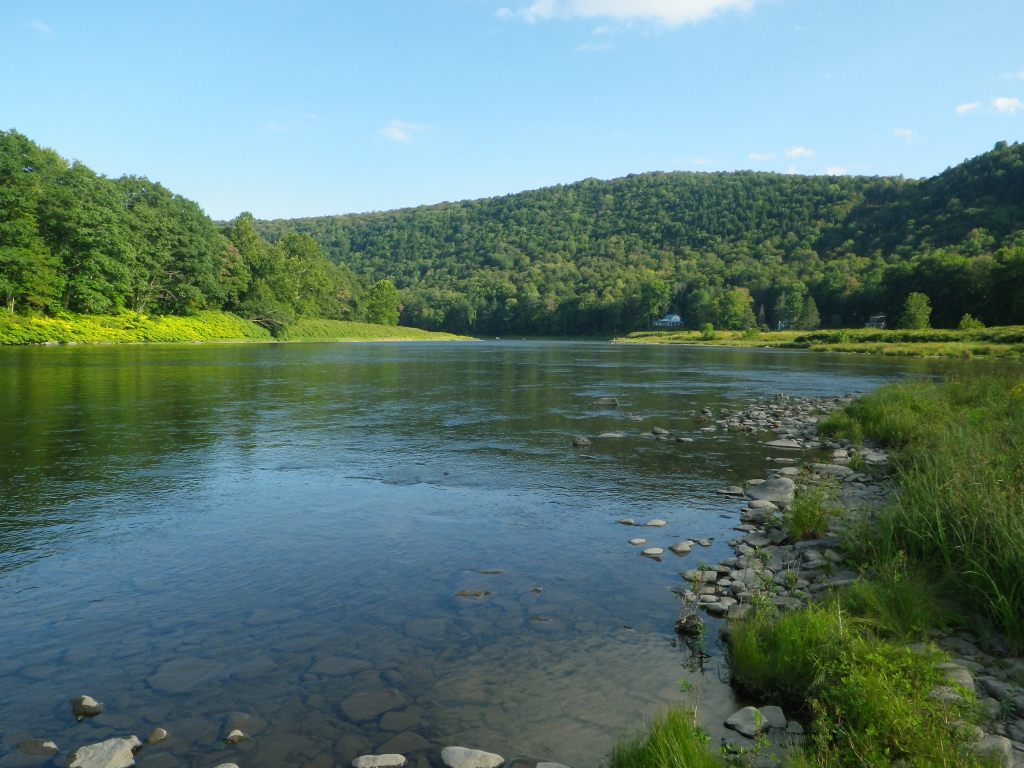

 Bright Waters Catskill