New Haunts and Old

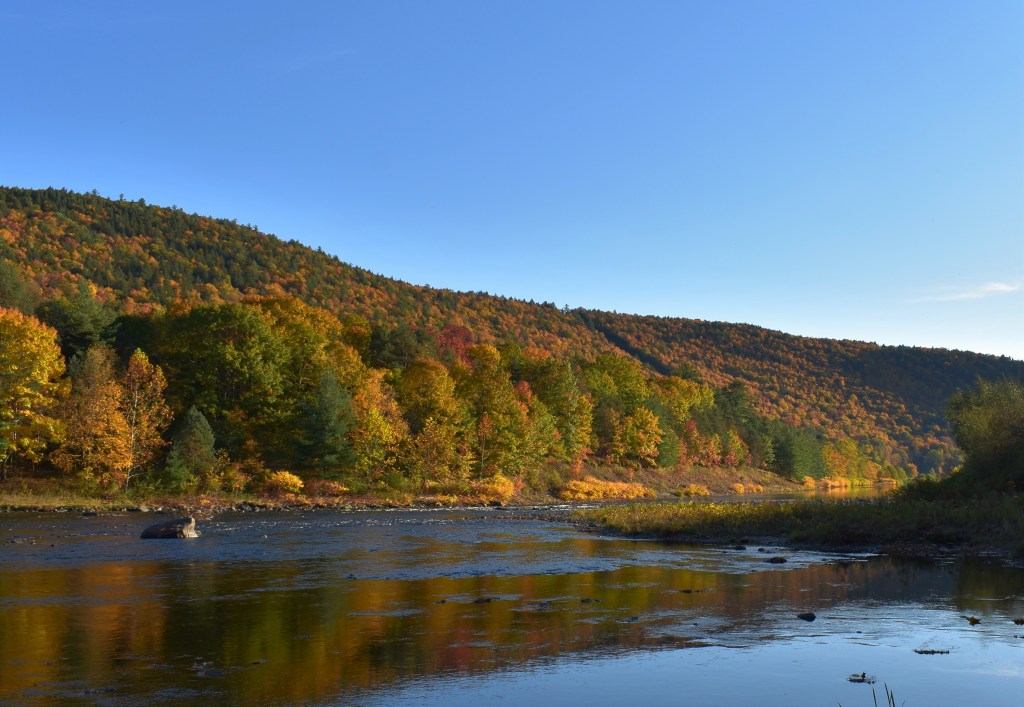
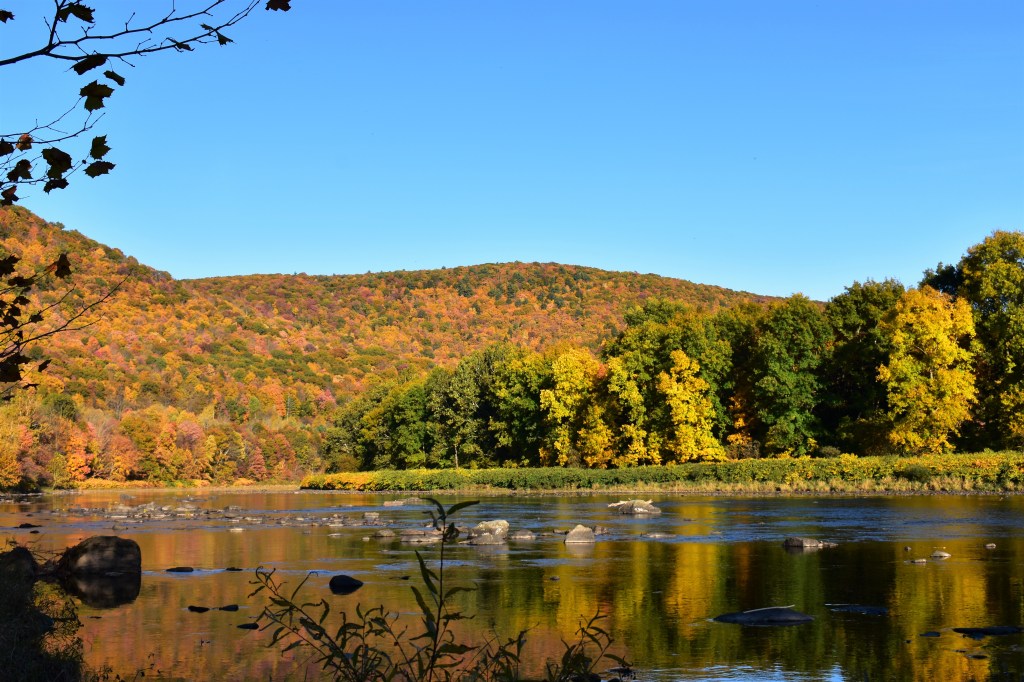
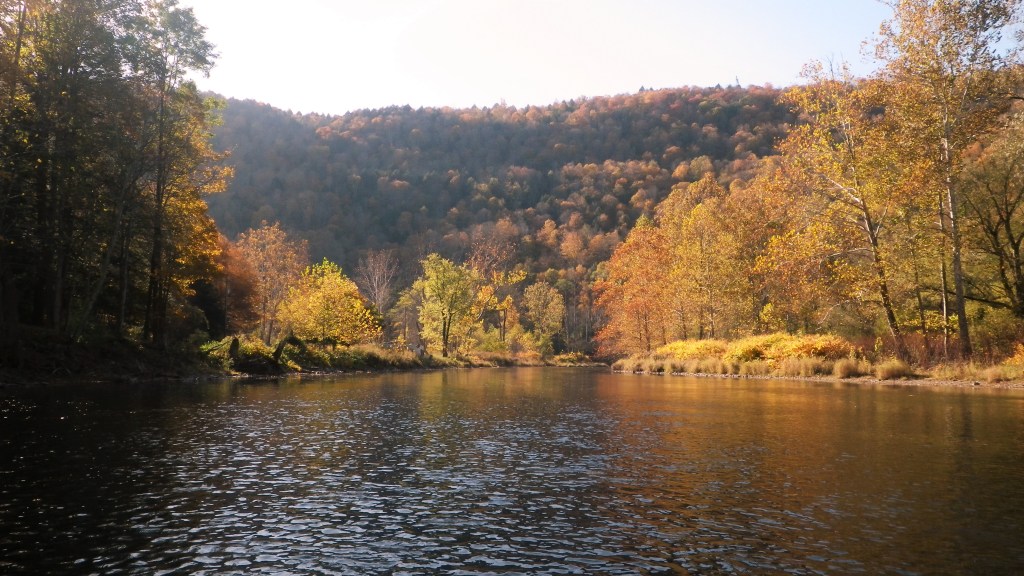
Autumn Along the Beaverkill

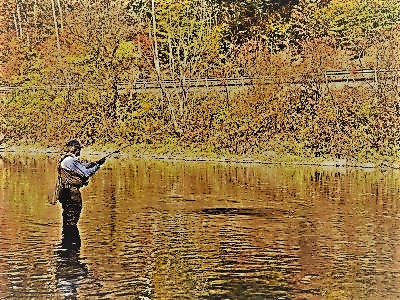
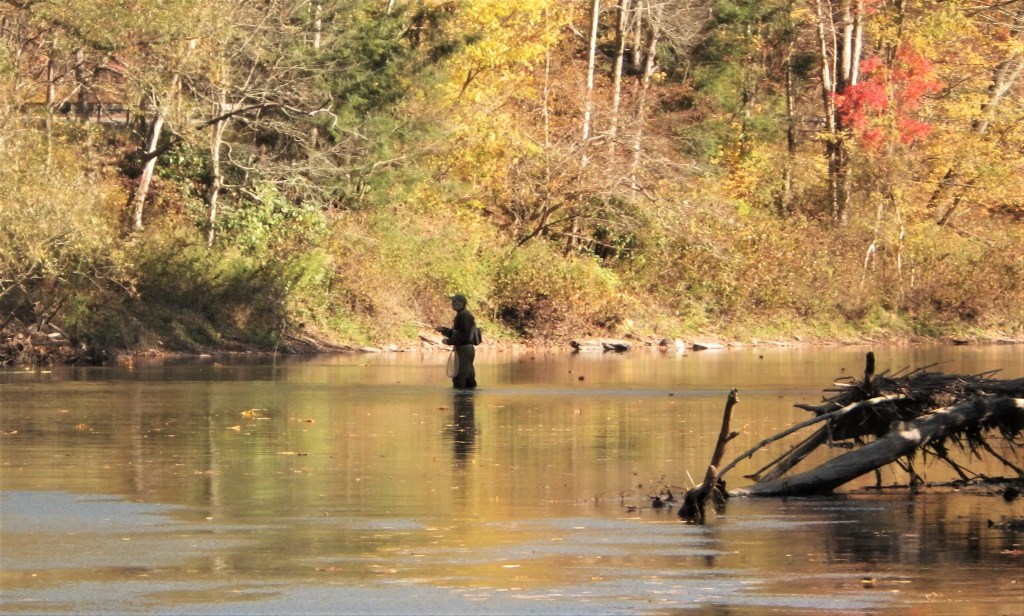
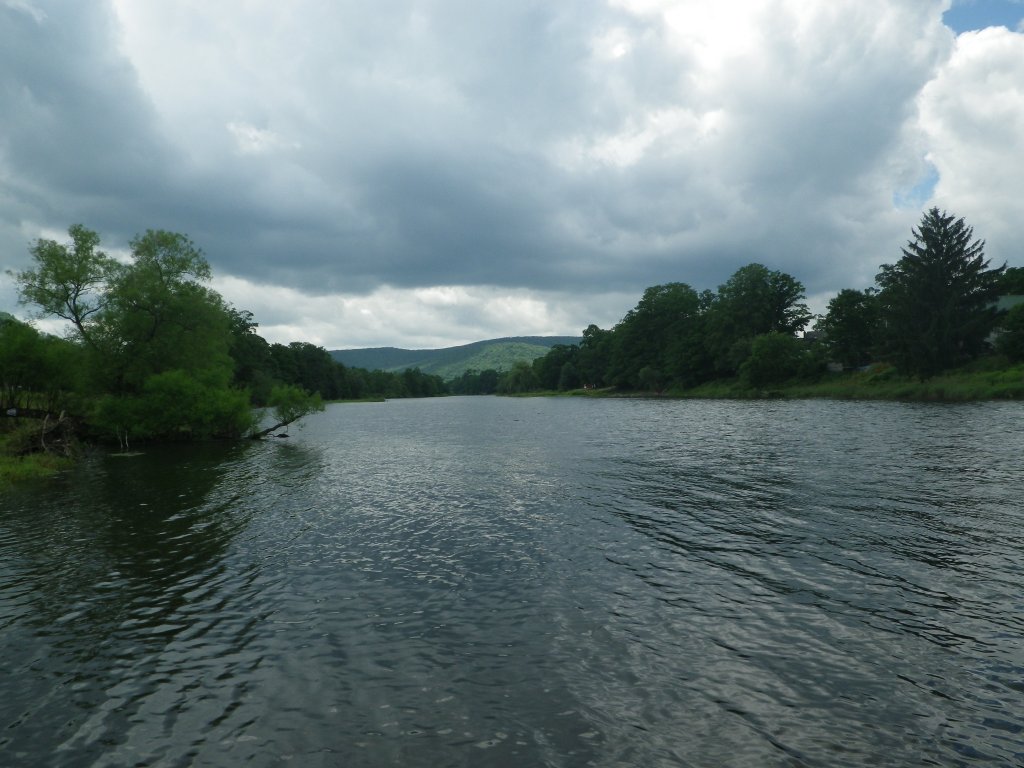
I missed a lot of fishing through the first week of autumn. Between high flows and blustery winds, it has been downright inhospitable for the wading angler. The rivers have been dropping slowly and I decided to begin the task of finding some interested trout yesterday, cane rod and dry fly in hand. The wind would prove to be a factor once again.

The first pool I visited is a newer destination for me, as I have prospected that water for the past couple of seasons. I have yet to enjoy any kind of significant hatch on that reach, though it seems to have everything a mayfly and a trout would wish for. I return as I did see a good hatch of Hendricksons in the early season two years ago. The winds were blowing thirty miles per hour that day, the gusts even stronger, when I spied the big duns from the bank. A couple of good fish were pounding those duns out there in the fray. I waded into the high, roily flow and tried to cast, but it was hopeless. The pool has been filed away in memory though.

Yesterday the forecasters called for NW winds from ten to fifteen miles per hour. They were off the mark a bit, something that has been commonplace all season. The river was high, too high to get close enough to the single rise I saw and make any kind of presentation. Winds like that will put some terrestrials on the water, and I offered a big meal with that in mind, but that lone riser never returned to the surface. Eventually the wind and the current chased me back to the car.

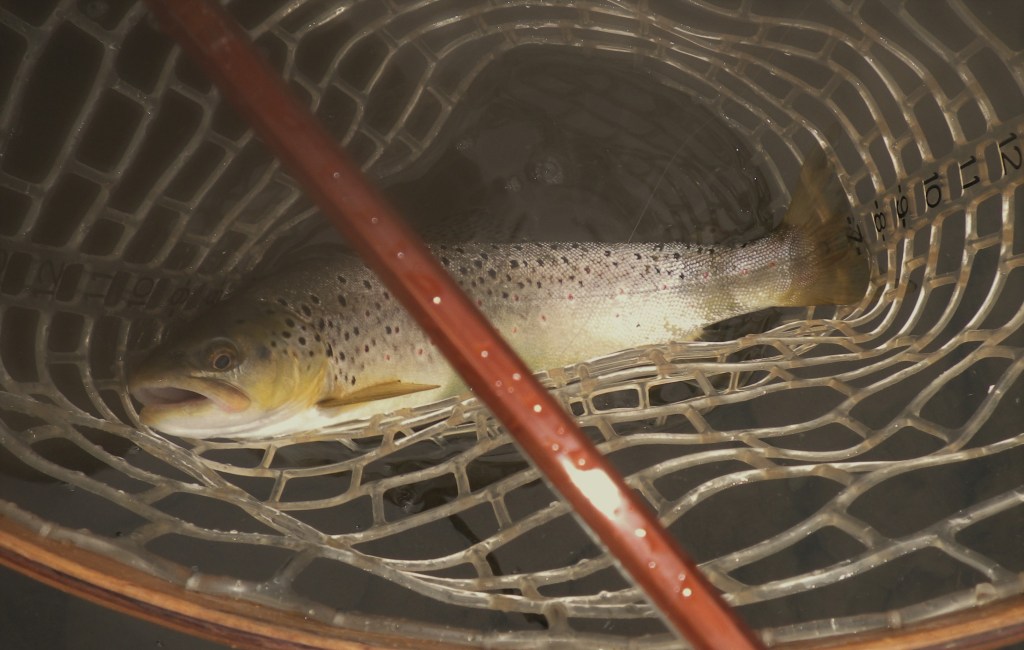
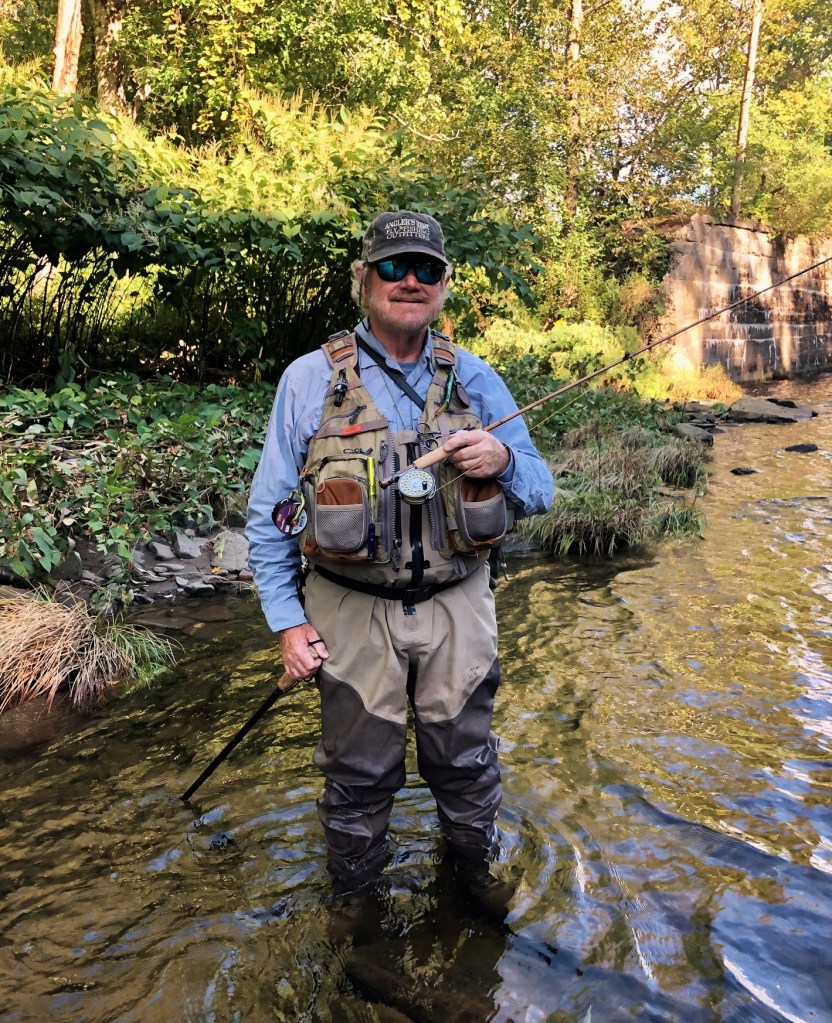
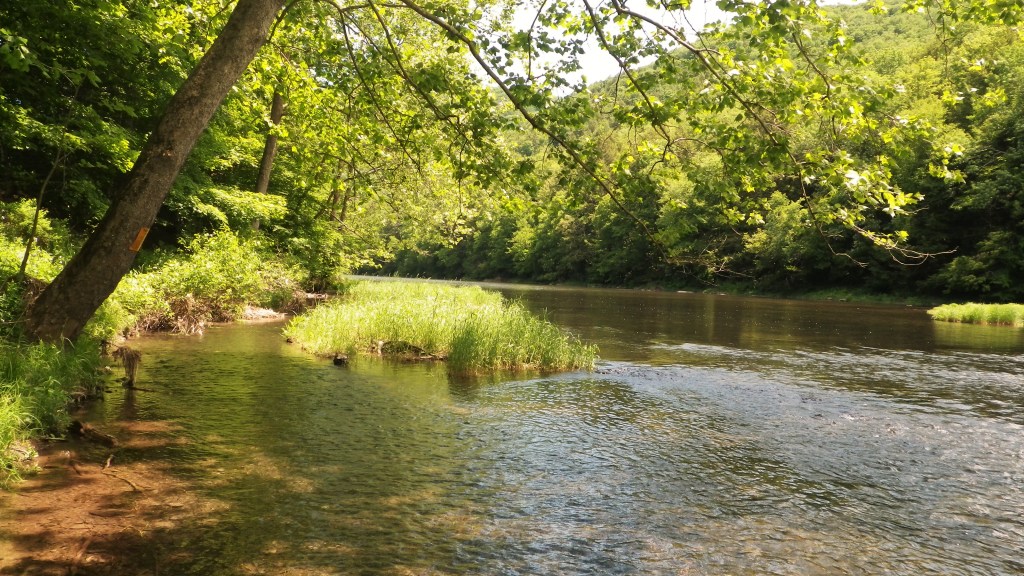
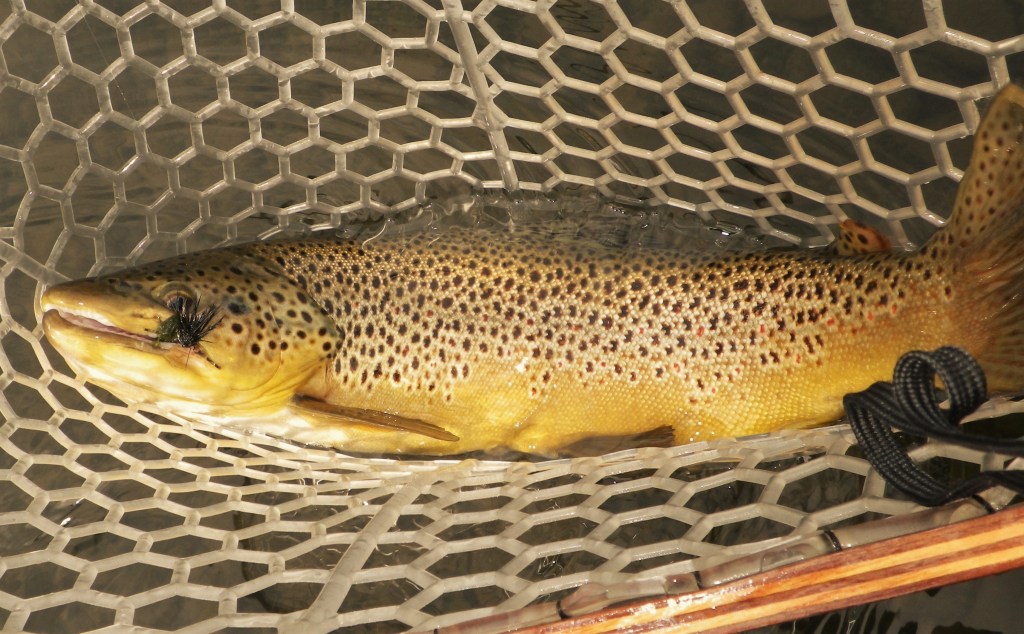
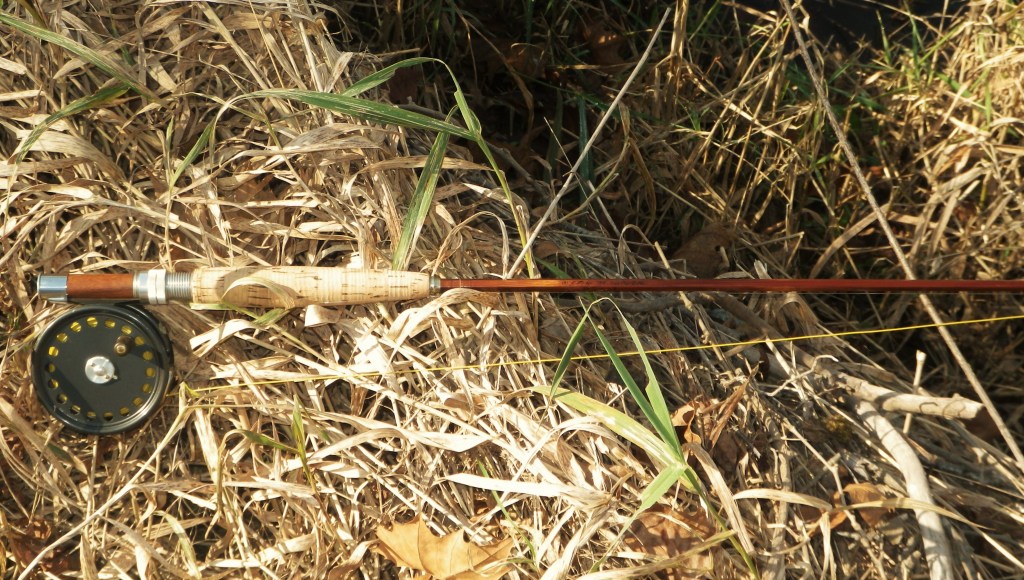
I visited another relatively new haunt next, hoping the curves and bends of the river valley might shelter the water a bit better. I have fished this pool in high water a number of times, so I was able to at least get to the edge of the better holding water. I was hoping for some decent activity, fondly remembering my first October there catching nice trout sipping ants. Too much blow and too much flow today, so there was no quiet water for that kind of fishing. I did spy one rise out in the current, and found a nice brown more than willing to take my fly. He fought well in the heavy current, putting a deep bend in the old Battenkill, and testing Dennis’ repair. The rod is sound my friend, and it’s nice to have it back on the water.

Orvis made a lot of bamboo fly rods during their heyday. Curiously, most of them are rated for heavy fly lines. It is not uncommon for most anglers to drop down one or two line weights from those ratings and enjoy a fine casting trout rod. My old 4 3/8th ounce Battenkill is marked for a DT7 or WF8 line, and I fish it happily with a WF6. Even in strong winds it casts that line with authority. This was the right day to have chosen the Battenkill.

With no more rising trout encountered, I found myself back on the road again, this time visiting an old haunt. I used to fish Lower Mountain Pool quite a lot in earlier years, finding some solitude beneath the mountain’s slopes, and a few good browns among it’s varied currents. Springtime crowds drove me elsewhere years ago.

I waded the strong current to access my old favorite reach, water that has surrendered some fine trout in the past. I worked the area thoroughly this time, fishing the edge of sun and shade and the pockets of deeper water behind each sizeable rock all the way to the bank. My fly drifted without interruption.

One final drive found me watching the river from the pull off, then wading in to a never fished reach of a pool I fished often nearly thirty years ago. I made my way out into the main channel with the water lapping at my vest pockets, until the next step became too deep. The winds had calmed somewhat since morning, though the gusts were still a factor. A heavy rise greeted me, tight to the bank of course.

I let the old rod work, pitching the big fly out there, but the light 5X tippet wasn’t willing to unroll properly at distance in that wind. My fly drifted down a foot and a half from the bank, unmolested.

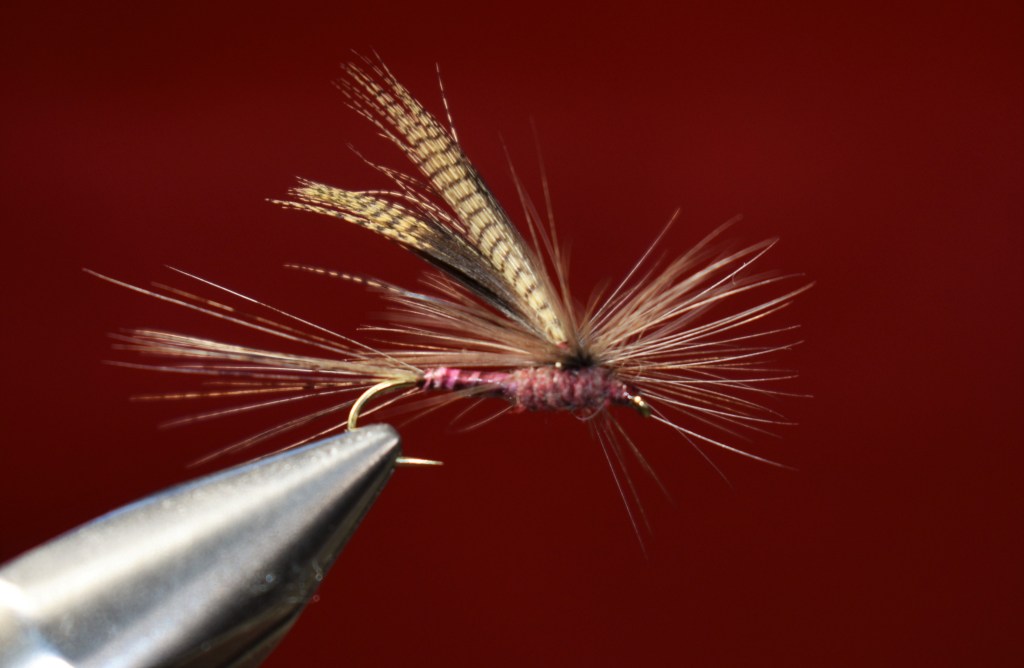
I reeled in my line and set to work on the leader, cutting it back, then knotting a fresh four foot section of 4X fluorocarbon in place. The total leader was a tad shorter now, around twelve feet, and I knew it would deliver that chunky dry fly all the way home.

I waited for a moment between gusts, then lofted the line for a cast. The fly shot in tight this time, under the tree limbs, and nestled in the softer water less than half a foot from the bank. I extended my drift, and it was not until the fly was on the verge of dragging that the little blip in the surface signaled the take. The Battenkill bowed heavily as I lifted sharply and pulled the hook home!

The rod was bouncing in my hands with each heavy head shake, and I had no doubt I had found the kind of trout I was searching for. I stripped line as he came out into the current, catching my first look when I pulled him into full sunlight, a brown that would easily go twenty inches. I worked the reel handle when he turned away, trying to get back all that excess line I had stripped in so I could play him from the reel. My next thought was to work myself back into shallower water where my footing was sound.

I have made that maneuver many times while playing a big trout, and it usually works out just fine. In unfamiliar water, with a strong flow, I had to grab my staff and turn upstream to start back. The brown moved closer, enough that the rod nearly straightened for just a moment. I dropped the staff and stripped some line, pulling it tight to my foe again, but the damage was done. I made it back into shallower water, the trout still battling at the end of my line, but when I tried to work him closer the fly simply pulled out.

I saluted the old warrior, wondering how many other anglers had he outlasted on this historic river. I had a good section of bank to fish, and I felt certain I would have another shot at the catch of the day. As I worked down river the clouds gathered and the wind grew colder. I felt my chances escape with the sunlight.

Big browns are where you find them, and the search begins anew after each flush of high water.

Each encounter with a fine wild trout becomes sweeter as the season wanes, for I never know which rise to my dry fly will be the last of the year. October still holds promise, but these last days of the dry fly season will pass far too quickly. I will cherish each moment that the golden autumn sunlight warms my shoulders, each cast along bright water, each drift and take until winter comes.
A Walk In The Woods

All roads lead to waters… or at least they should!

I paid a visit to my friend JA yesterday, toting my bird gun instead of my fly rod. The wind in the mountains was blustery and carried a chill despite the sunshine when I found him sitting on the deck, relaxing for a moment after an active weekend. Our goal was to sharpen our eyes and our skills with October’s grouse season on the doorstep, but the talk of trout and dogs and birds and deer was as welcome as that first report of the shotgun in the crisp mountain air.

It has been a good summer. We fished together quite a lot, tossing whatever dry flies we had tied and exchanged to those wonderfully wild Catskill trout. We both cast fine bamboo rods, and JA enjoyed the distinct pleasure of taking trout with the rods crafted by his own skilled hands. That is an art that I covet, yet we must all know our limitations. More than thirty years of arthritis warn me away from the countless hours of hand planing, straightening and wrapping required to craft such a wand. Sadly I know that passion does not overcome the pain.

JA set up the trap and I reacquainted myself with the Model 101. As expected, those first “birds” flew past unscathed, but I concentrated on my gun mount and swing and improved my score somewhat. It is a simple thing to watch that spinning bit of clay puff into dust and fragments at the gun’s report, but immensely satisfying. JA is a practiced wingshot, and scored well as we traded places.

Throughout our target shoot, we could hear the barking from the cabin. Finley the Lab knew what those shotguns were for, and she was more than ready to hunt up some real birds for her master. She wasn’t at all happy when left indoors while the guns boomed. After cleaning and casing the guns and picking up unbroken clays we took that noble dog for a walk through the grouse covers.

Her exuberance was clear, for she smells the same autumn air that we do, in far more intricate detail, and she knows what the guns and orange caps mean. It is nearly time! As we walked, Finn worked the covers close at hand, never straying far from her handler and best friend, and always responsive to his whistle despite her pent up excitement. Grouse, woodcock, ducks or pheasants, Finley hunts and retrieves them all: one impressive lady.

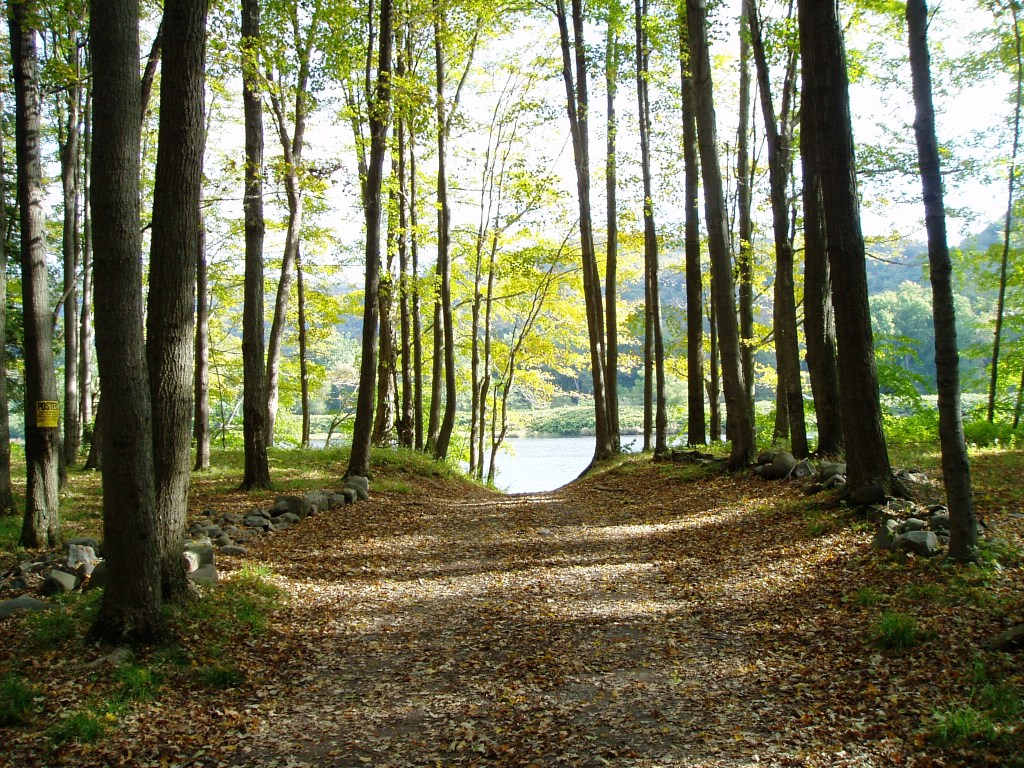
My legs were tight when I arrived that afternoon, too little time along rivers of late, but they loosened as we climbed and coursed through forest and field. October promises crisp mornings afield and sundrenched afternoons along the water, perfection in a word!

The rods and guns are ready, Finley is certainly ready. Judging by the afternoon’s shooting, JA and I are as ready as we are going to get. May the birds flush in the clearings and the rivers bring forth the autumn hatches and the last rising trout of the season. I feel certain that JA will shoot straight, and I hope that I might swing true at least a time or two this fall. Roast grouse would be lovely, as would a nice pelt for tying winter soft hackles. There is strong magic in flies tied with the fur and feathers harvested by the hands that tie them!

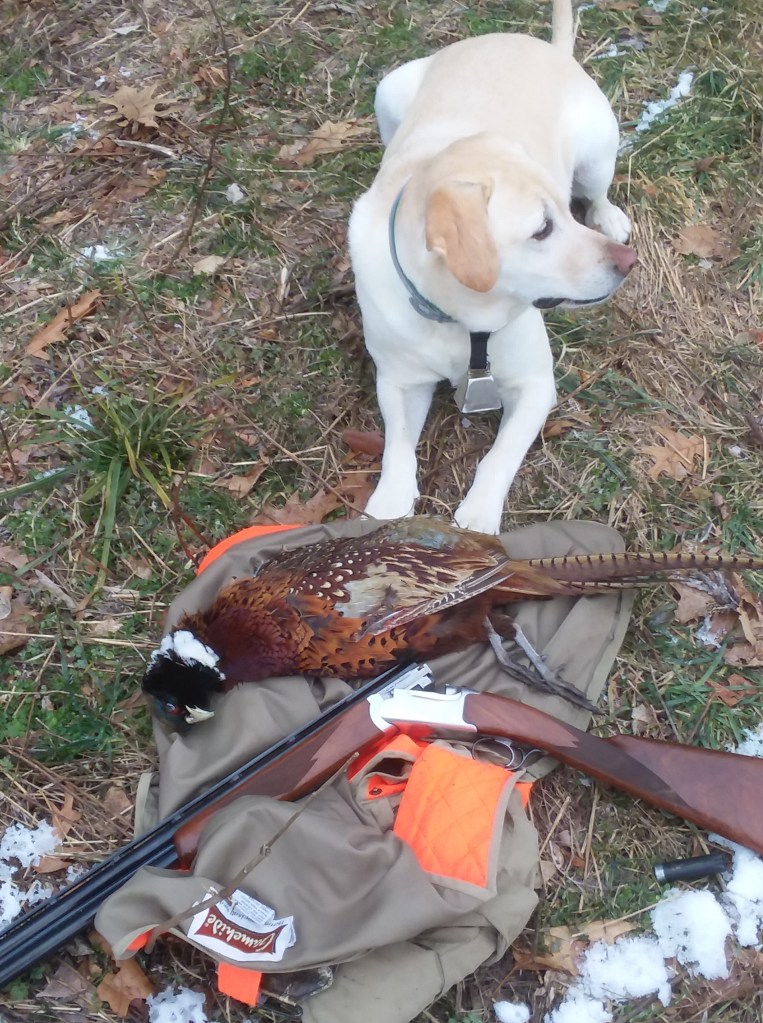
Mistress Finley with a winter pheasant (Photo courtesy JA)

Autumn Winds

A lovely October afternoon at Cadosia

I hear them outside my window as I write this morning, the howling winds of autumn! We are braced for heavy rain once again, though we neither want nor need it. This week has featured a rolling forecast, with that threat of rain moving into the future day by day, and today seems to mark the point where reality catches up with predilection.

Summer’s last kiss came with a warm but rushing wind yesterday, as my best friend and I tried to get a few hours more fishing out of his seasonal visit. Between us, a single trout was raised before we surrendered to the inevitability of the swirling gusts. I surmise that splashy greeting was a refusal born of an imperfect drift, with those winds as much in control of our fly lines as we were.

We had enjoyed a gorgeous day on the Neversink when Mike arrived on Monday: perfect air temperatures, a hint of breeze, and clear, cold water beneath the bluest skies! It was so perfect, the trout took a day off to travel and relax. In a pool where I stalked a dozen risers just a week before, we found no evidence that a trout of any size even lived nearby. I can only assume that the rush of high water separating those two trips caused the trout to relocate and modify their habits, for the measurable conditions on each of those days were nearly identical.

We visited a couple of different pools, finding barren water at the first location, and a lone angler walking the bank at the second. We left him to his sport.

Mike had his heart set on a float trip, though the south winds made me shy from heading my own boat down the upper mainstem of the Delaware. I made that mistake once on a southeast wind, dragging my boat more than a mile back upstream when the winds turned due south and intensified. Mike cajoled guide Ben Rinker into a day’s fishing and invited me along.

We covered some beautiful water and fished hard most of the day despite the lack of fly life and rising trout. Ben worked his usual magic on the oars to position us for success when a few risers appeared late in the afternoon. Mike managed a pair of trout, and I had one halfway to the boat when it shook free, all smaller fish, but welcome. We fished a lot of prime cover throughout the day, but the high water seemed to have caused the trout to relocate from their summer haunts. Still we enjoyed the challenge and good company. I had not fished with Ben since June of 2015, and our reacquaintance was welcome.

So summer passed away without the epic catches I hoped for. Change is a constant on rivers, and even the most successful patterns succumb to it. I had hoped that the great fishing I had enjoyed would hold until Mike arrived, but it was not to be.

So what will autumn bring? Judging upon past experiences and this season’s dearth of significant hatches, I expect that rising trout will come as a premium, earned through hours of observation and careful stalking, at least if the more typical low water conditions return. If the eventful rainfall episodes continue into winter, well, I prefer not to ponder that eventuality.

I am a dry fly fisherman, my choice and my passion. The encroachment of late autumn and the inevitability of winter may force me to angle below the magic surface of bright water, but I will fight that turn of the season with everything I have, wringing each spectacular moment from these last weeks of the season of the dry fly.

Memories of the dry fly… (Photo courtesy Chuck Coronato)

Alas, the rain has arrived…

Pondering The Equinox

October Riverscape: East Branch Delaware, Cadosia, New York – a model Stonehenge in a dry season, 2020.

I took a few moments just now, sitting on the porch with a chilled draught to enjoy the evening sunlight. Appropriate for this very damp year that a cloud quickly obscured that sunlight and paused to offer a little squall as I sat and drank. As of yesterday morning’s tally, the Catskill watersheds have received 18.77 inches of rainfall this summer, 173 percent of the historical norm. Tailwaters remain high as New York City is dumping water from it’s full reservoirs as a guard against hurricane season flooding, while the freestone rivers are rounding into shape to offer good fishing for the onset of autumn.

I count a little more than three summer days remaining. The autumnal equinox arrives at 3:20 PM on Wednesday, allowing a last summer morning with the added bonus of the first evening of autumn. Imagine fishing two seasons in one!

At this juncture, it appears that autumn will begin with rainfall, well more than an inch and a half through Friday morning. That would have been a blessing last year, though it is clearly an excess at this time. My friend JA told me last week that there was “water running down the mountain everywhere” not simply in the brooks and streams, a scene I remember seeing frequently during the autumn of 2018. I tried to traverse some clear cuts in hope of flushing a grouse or two and found a latticework of tree cuttings with their own bog underneath; and the bog was flowing.

With the reservoirs full, it seems like a good season for a light snowpack. Winter rainfall would be good for the rivers, maintaining an adequate base flow to prevent deadly anchor ice, methinks a good part of the answer to our sparse season of fly hatches this year. The floods around Christmas scoured the rivers, for they were iced over until the flood waters cleared them, grinding the river banks and bottom in the turmoil. When flows on the Delaware receded, the city leaned out the reservoir releases with flows too meager to prevent anchor ice during the frigid cold snaps that followed. Of course thin hatches of a given mayfly this year cannot magically become heavy hatches next year, no matter how favorable the winter. Recovery will take time.

Stalking a rise in autumn’s low water, Chuck Coronato waits for a clear path to cast between the drifting leaves.

In 2020 I enjoyed seven months of dry fly fishing, capturing the first riser I encountered on March 27th, and my last on October 26th. This season began later, though I was out fishing in early March. Warm weather and hatching stoneflies promised everything, and failed to deliver. It was not until April 12th that I walked up on the Delaware River’s first run and spotted that single telltale ring. One cast, one rise and the first dry fly brownie of the season came to hand. Dare I hope that the end of this season will come later as well?

The first dry fly trout of the season is always special!

I won’t be stalking ankle deep water to begin this autumn season, and that is the one thing I can be certain of. Beyond that, Nature will have her way.

The equinox this week and then October in the blink of an eye! Mornings on the mountains, and afternoons in the rivers at their feet, a sublime existence if there ever was one. Perhaps the Red Gods will smile upon me this year and I will swing true and caress the mottled feathers that will become winter soft hackles. What a feast roasted grouse can make! Time to buy a new hunting license, rub down my field boots with mink oil and walk about town to soften them up, and past time to swing the Model 101 at flying clays.

I know winter lies off in the distance, and I’ll do everything I can do to keep it there for the next three months!

September on the Delaware

Ah September, still the gentle sunshine of summer lingers, though the air becomes crisper each day. Even the infernal Japanese Knotweed adds color to the river banks, enhancing the glory of autumn along the Delaware.

September seems a perfect time to float the wide Delaware, to enjoy the cool morning air and stretch out in the warm sunshine of afternoon. The rush of springtime has passed, and but a few boats will be encountered along the way. Fast fishing? No, certainly not in this year of sparse hatches, so why hurry.

JA and I headed out on Monday morning, looking to enjoy near perfect weather and prospect here and there with a dry fly. We were surprised to find dimpling trout before I had even gotten used to the oars. Urgency crept into our consciousness, as the first cast had the trout shying from our intrusion, rising further from the boat with each cast thereafter. We had rigged with larger terrestrials, not expecting a morning rise in flat water. Olives, scattered tricos? We saw something here and there, but the vantage point from the drift boat makes it tougher to see small insects in the film. The mystery remains…

Substantial reservoir releases and still more rainfall has made late summer a more comfortable season for the trout in the Mainstem, and we were hopeful that the cold water would spawn a bit more insect activity. Isonychia, Hebes, tiny olives and pseudos are the hatches of September, and we looked for the cloudy forecast to bring substance to our search.

Spending a day in the drift boat with a good friend is reward enough for the effort behind the oars. We talk, we laugh, we fish. In short, we enjoy life on one of the country’s most scenic rivers, with the possible bonus of a high flying Delaware rainbow, or a broad shouldered brown.

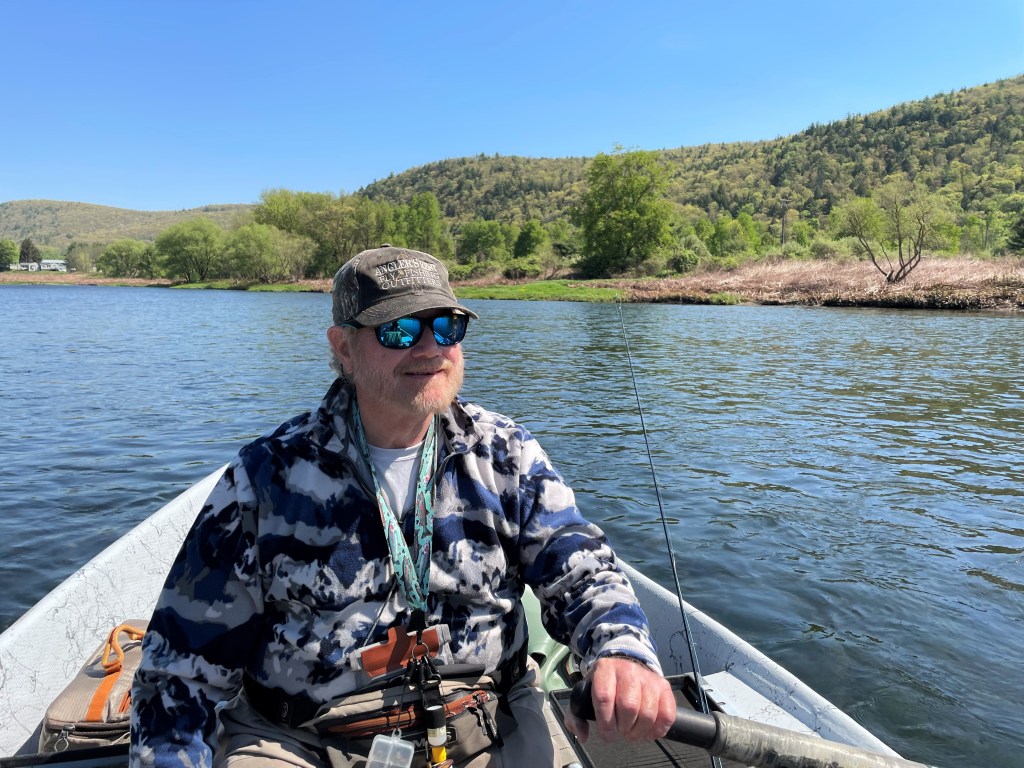
A postcard perfect day in May found me afloat with another friend. (Photo courtesy Andy Boryan)

It was still early in our drift when I heard my name called from a passing boat. Lee Hartman, one of the river’s very first and most venerable guides was out with a pair of anglers. They drifted past with salutations, and I joked with JA that we seemed to be fishing the same spots, figuring I must be doing something right. Lee’s boat would remain in sight for hours. They fished quickly, there being little but experience to direct an angler’s casts. If there was an opportunistic trout about I’ll bet that Lee got him!

Afternoon brought a mid-river lunch break, and renewed hope for a mayfly sighting. The isonychia dries were knotted to our tippets as we drifted through the riffles, casting to the boils around the scattered boulders. John drew the first take, and played a Delaware bow to the boat, raising our energy level immediately. My isonychia drew interest in the next trailing current, though not until my drag free drift ran out. The fly twitched slightly with the onset of drag, the trout inspired to take it just as I relaxed for the pickup. My hookset was no thing of beauty, though the trout obviously had the fly, taking it around one of those submerged rocks and jumping ten feet upstream from the point my line entered the water. A good fish, he surprised me by opening my hook, just when I thought I had him under my control.

Got him under control now; only a matter of time before… he opens up my hook and escapes! (Photo courtesy J. A.)

And though we hoped those first two hookups were a preamble to an afternoon of drifting Halo Isonychias from one episode of rainbow acrobatics to another, it was not to be. The most anticipated riffle had a couple of small trout toying with JA’s fly, while my casts proved fruitless. Success eluded me until at last we floated into the Rainbow Pool, and JA pointed out a dimple to our south.

Just as a quiet September afternoon blossomed there two years ago, so once again a looked for fall of flying ants brought dimples to the surface. Ah, but this time they were cruising, passing within casting range momentarily, then retreating, taking the tiny ants trapped and dying in the film where they found them. I managed to intercept one of those crimson flanked ghosts, and my rod bent with his drive for the bottom. A bit more finesse in the handling this time, less the ant’s size eighteen hook meet the same fate as the Halo’s twelve.

JA handled the net deftly when the time was right, then captured the moment with his trusty phone.

A little faith and a flying ant. (Photo courtesy J. A.)

A trout for each of us, a sparing gift some might think, though any gift from this river is accepted fondly. Let us not ignore the gifts of sunshine and friendship, of the anticipation of the cast, and the sight of that first tinge of color along the mountainsides. These are gifts the river bestows with the gentle rocking of the current and the sound of quicksilver.

Honor Thy Teacher

Late summer on the Neversink, and the river runs deep and cold from bountiful releases from it’s reservoir in this rain blessed year.

Growing up in suburban Maryland, I lived for each new issue of Field & Stream, Sports Afield and Outdoor Life, dreaming of trout and fly fishing, a mystical art once practiced by my grandfather. I knew, as I devoured every article I could find, that one day I would catch a trout, that I would become a fly fisherman.

That journey took decades as it turned out. Pappy passed in 1970, never having the opportunity to pass the torch. There was no trout fishing where we lived, and it was not until the 1980’s that I first spent time on a wild trout stream. That little unnamed brook in Massachusetts Berkshire Hills held treasures; beautiful wild brook trout that I caught on an ultralight spinning rod. The fire burned hotter, but southern Maryland was still far removed from those mountain streams. Around 1990 I discovered the Gunpowder Falls and purchased my first trout rod and a small selection of flies, and truly began the journey.

The first day of Autumn will mark thirty years since the doorway was flung wide and I was truly welcomed into the magical world of fly fishing. I had fished two seasons on my own, but that September I attended the fly fishing school at Allenberry On The Yellow Breeches, taught by Joe Humphreys and the man who would become one of my greatest influences as an angler, the late Ed Shenk. Ed lured me into the world of difficult trout, taught me to tie and fish the iconic flies he had created to draw the leviathans from the hallowed waters of the Letort. He became a friend and mentor, and I have never stopped learning from his example.

We lost Ed in April last year, and the bitter reign of Covid prevented me from attending the services and honoring a great angler and teacher. During the following winter, I acquired a special treasure from Ed’s estate, his Hardy Featherweight fly reel. I knew that I was meant to fish the reel, not place it upon a shelf, and my thoughts turned to an appropriate fly rod to pair it with.

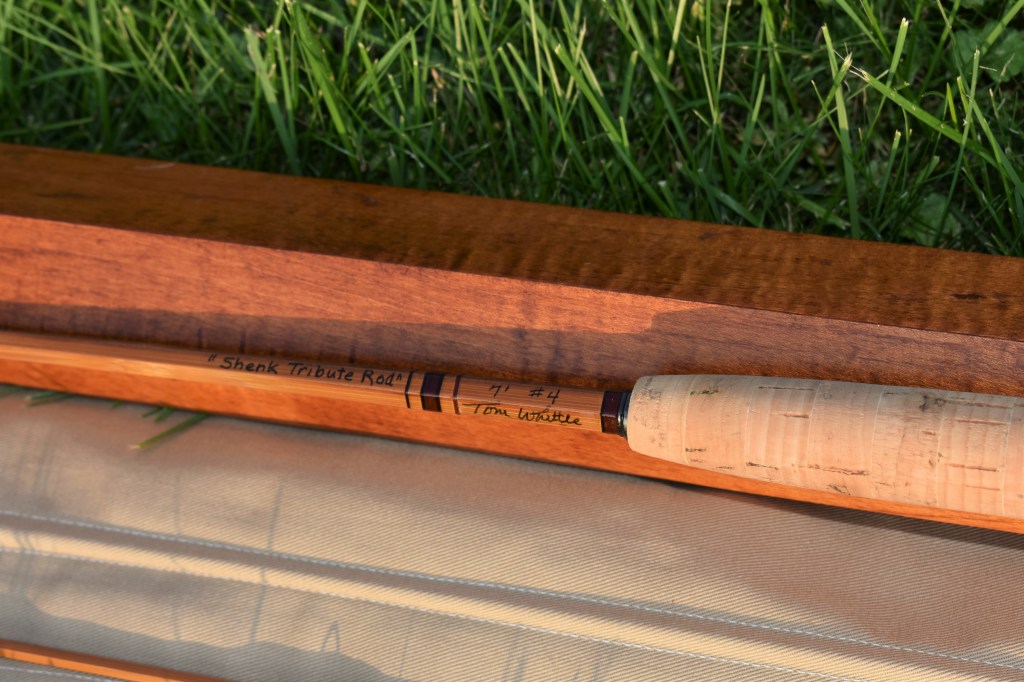
The rod had to be bamboo and it had to be a short rod. The Master of the Letort was known for his love of short fly rods, and his diminutive bamboo rods were his special favorites. My fishing here generally requires longer rods, as the lessons I learned from the Master have been adapted to the larger rivers of the Catskills, so this special commemorative rod, the Shenk Tribute Rod, had to be capable of the longer casts that stealth requires here. I recalled Ed’s teasing me as I wielded my favorite seven foot four weight rod on the Letort and her sister streams, laughing “it’s all right, but about a foot too long”. I could tell he appreciated my choice by the smile on his face.

I spent a great deal of last winter studying rod tapers, and learning how to interpret rod maker’s graphs and relate the numbers to the feel of the bamboo in my hand. When my task was complete, I called Tom Whittle to discuss making a rod to honor my mentor. I had known Tom for more than twenty-five years and long coveted one of his Stony Creek Rods, and it was more than appropriate that Tom was a founder of the Pennsylvania Fly Fishing Museum Association and a Cumberland Valley angler himself. Shared roots.

The rod was commissioned and Tom developed a new taper for this special seven foot four weight fly rod, building one to test to ensure he had captured the unique qualities we envisioned, before setting his hands to work on the Shenk Tribute Rod itself. Tom attended the Catskill Rodmakers Gathering last weekend, and passed the rod to me on Friday afternoon beside the Willowemoc Creek.

The Shenk Tribute Rod and The Master’s Hardy Featherweight are introduced to Catskill bright water at Buck Run on the Willowemoc Creek, the oldest named pool in the Catskills. (Photo courtesy Tom Whittle)

Tom and I enjoyed a short time fishing the riffled waters of the Willow, and I was immediately stricken with the rod he had crafted for me. His cane work is impeccable and the design of the taper provides the delicacy that stealth demands and the crisp power to cast a long line accurately.

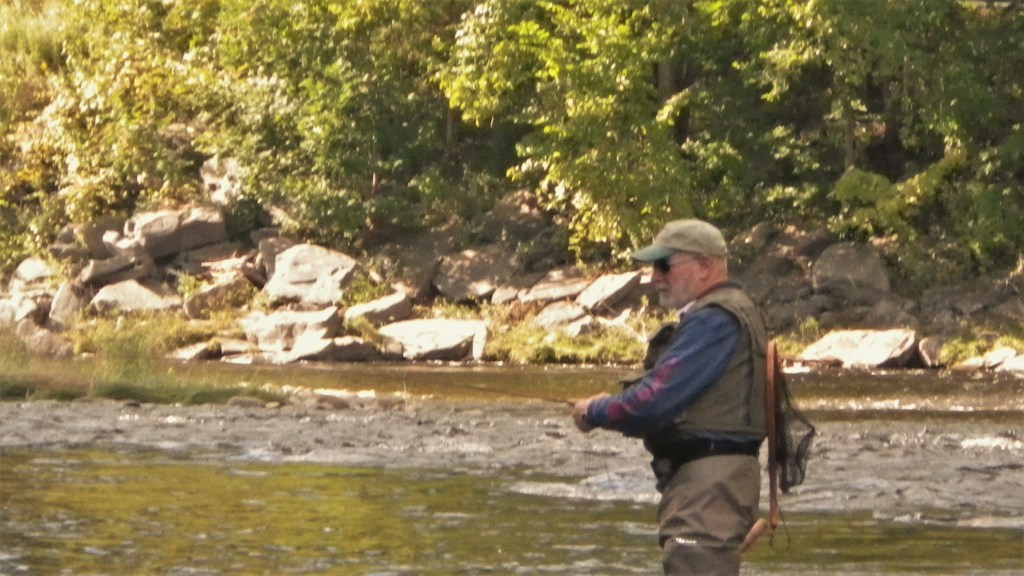
Tom Whittle of Stony Creek Rods fishes the riffles at the head of Buck Run, appropriately with the prototype rod he made to test the new taper he designed for the Shenk Tribute Rod.

I knew that Tom would make an amazing rod, and I appreciated the fact the he shared the feelings of respect and honor for Ed that I have. This project was important to both of us. I look forward to another fishing trip with the man whose stellar craftsmanship has allowed me to honor my teacher, my mentor, my friend.

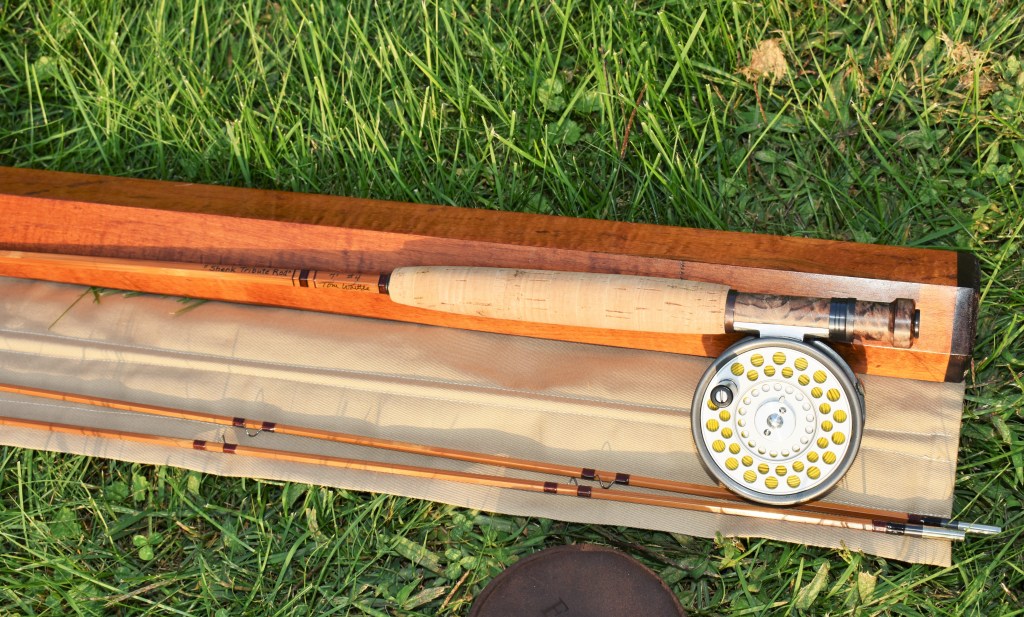
The late summer sun graces the flamed caramel tone of the Shenk Tribute Rod and Tom’s unique curly maple rod case. The reel seat is special too: a gorgeous stabilized maple burl carbon dated at more than eight hundred years old.

One of the things that most amazed me about Ed Shenk was his ability to hunt and capture the elusive trophy brown trout, those that haunted the historic waters of his dear Letort, or those swimming in both small and large rivers from the West to Argentina. His tutelage set me upon a lifetime course of trout hunting. I am still learning from his example. The thought that guided the conception and making of the rod was a perfect foil to hunt the trophy browns of the Catskill rivers of my heart; to hunt them on his terms, with a short, light rod and the dry fly. And so the journey has begun…

With high releases on our tailwaters, and slowly receding flows on the freestone rivers, I began my search on the Neversink, mother river of the dry fly in America. I noted the first tinge of approaching autumn on the trees lining the mountainsides as the miles rolled by on the Quickway. Along the river there were signs too. It is the last week of summer, and even a warm afternoon such as this has a different feel than high summer.

I came upon a long pool with dimples scattered like the floating leaves: ants! I plucked one from the film to determine the size and color, an eighteen, black with a slight reddish brown tinge to the gaster; and this ant was still quite alive. I knotted a matching fly and stalked the first riser. Three perfect casts, gentle accurate…and fruitless. The rises ceased. Another required just a few careful steps upstream; there perfect! Again there was no take and the rises subsided after a handful of casts.

Leader lengthened to include a long 6X tippet, then another sample from the drift, this time smaller, perhaps size 22. Once again a matching fly is chosen, and consistently refused. The game continued in that vein until a rogue wind rose and put an end to it. No trout came to my flies, though the rod made the presentations exacting and delicate: bravo Tom!

I rested once the wind fell, and before too long there was another rise, and then two more further upstream, and I started in again. The ants were lively, and I suspected the marvelous adaptation of our wild Catskill browns was the culprit. Surely a CDC ant would provide enough movement to trigger the rise, certainly with the help of the remnant breezes that came and went. Utter failure once again.

I decided that fishing the ant fall was not going to succeed on this day and clipped the tippet, knotting a new four foot strand of 5X fluorocarbon and my cricket securely. Owing homage to Ed’s classic Letort Cricket, the pattern I designed in January 2020 was conceived to deal with our most difficult trout, to trigger their obsession with movement; proof of life. It has been more than up to the task this summer.

The trout I stalked now wasn’t in the center of the pool. It rose beneath an overhanging branch, it’s sparse leaves turning the reds and yellows of autumn. It rose from deeper water, down among the rocks and eddies. I lengthened my line and the Tribute flexed crisply and silently to drop the fly above the secretive lie. A bulge formed at the surface and the fly disappeared in a bubble; I waited then struck!

Ah the joy, the emotions I felt as that venerable old Hardy caught its voice once again, the cane throbbing with weight and power! I saw the flash, and I knew: one for the Tribute Rod.

First Tribute: a fine Neversink brown, a bit over twenty inches, broad strong and golden, proved a fitting first fish for the Shenk Tribute Rod.

The last week of summer, and the rivers are flowing high for a wading angler, with storms in the forecast. I hope I am granted the grace to wade bright waters with the Tribute rod and find another fine trout to continue building its history. For now I relish this first conquest, dedicated to the man who led me down this road, who invoked the passion of a trout hunter. Bamboo and the dry fly, bright water, stealth and observation meet the art of the rod maker and the fly tier. Honor thy teachers. Honor the history and tradition of fly fishing, and the legacy of those who have made it great.

Ed Shenk, Master of the Letort: may your legacy continue, and may you always angle that great river just around the bend!

Summer’s Finale

Summer’s glow on a beautiful Catskill morning.

Walking along the river yesterday afternoon a few of those early falling leaves got to me once again. Though it seems hard to believe, here we are amid the last two weeks of summer. My favorite season has felt much shorter this year, thanks to Mother Nature’s breaking things up with a healthy dose of roller coaster weather. The entire year has followed that pattern: an array of disarray.

Sixty degree sunshine in March, eighty and low water in April, and let’s not forget Memorial Day weekend with it’s daily highs of forty-eight very damp degrees as the lady’s coaster climbed and fell. Should we have expected anything different for summer? Between those gorgeous stretches of sunny days in the seventies, cool nights perfect for a good, sound sleep, it has been a stormy season.

I remark as an observer, not a complainer, for the changes have forged my best season of fishing thus far in my short retirement. During the early years I travelled to visit and fish the Catskills, I generally assumed the wide variations in weather and conditions had a lot to do with my luck. Over time, as my trips increased in both length and frequency I began to realize just how different each and every season can be. After three years living here I expect a wide array of new experiences each season, adopting an attitude to simply sit back and enjoy Nature’s full tableau of experiences.

The passing hurricane system gave us enough rain to shut down my fishing for a week, though the western Catskills fared much better than the eastern side of the region. I spent a couple of hours here and there late last week and early this week, but yesterday I finally headed out for a day of fishing. There were warnings in the forecast again, so I expected to fish until the storm clouds gathered and Nature invited me to leave.

Rivers and the life within them change after each run of hazardous weather. High water finds trout relocating somewhat, and the insects are at the mercy of the stronger currents, so the fishing can change markedly, bringing a new challenge. I fished carefully and diligently from mid morning into early afternoon without moving a trout, until I noted a couple of light colored mayflies riding the surface. There were reports of orange Cahills being sighted, so I had tied a handful that morning. I knotted one to my tippet as I observed the first rise.

The consistent hatch and feeding I hoped for did not appear though I managed to cast the fly quickly over one of the sporadic rises and take a foot long brownie. I waited and cast to another that betrayed his presence once or twice, but there simply weren’t enough insects to get them excited. Walking along the river’s edge I had my moment with those leaves and, noting the time, decided to fish one more reach that has been kind to me this summer. Wading into range I spotted a dimple along the bank, and let my impatience lead to a tactical error.

The rise was below me, and there was a productive stretch between us, so I made a few presentations as I moved gently into position. I was thinking that trout would stay right where he was, that he had found a lie to his liking with some tidbits in the drift, and I made one cast too many as I closed in on that lie. My fly reached the end of it’s drift twenty feet above the observed rise and slowly began to swing away from the bank. I was about to draw it back toward me when a bulge appeared just behind the fly: my trout had closed the distance. In the shade at distance, I took the bulge for a take and reacted, touching nothing, and letting that trout reconsider his immediate need for a snack. Such is fishing.

I decided it was time to visit another piece of water entirely and, after several vain attempts to get that warned away trout to sample my fly, I retired from the place, lamenting my missed opportunity, believing it might well be my only one for the day.

Another angler arrived at my destination at the same time as I did, so I gave him time to walk down to the river and choose his spot. Once he was settled I decided my game plan and walked the bank upstream, figuring on fishing two lies fairly quickly. The dark clouds had begun to gather, though any actual storm threat seemed an hour or more away.

It took some time to make an approach, as I fully appreciate the necessity of stealth. Hunting trout is indeed hunting. Just as in stalking any game animal, if they sense you coming they will be on guard at the very least, and gone if you do anything dubious to alert them. I reached a casting position after fifteen minutes and readied my tackle. My impregnated Thomas & Thomas Hendrickson had the duty today in anticipation of getting caught in an afternoon downpour. I was thinking about that first cast when a tiny dimpling rise showed tight to the bank, right on cue.

There are moments when it seems you will never catch a break, much less a trophy trout; and then, once in a while, there are those when everything aligns like magic. One cast, one take, and the battle is joined.

The veteran CFO opened with it’s characteristic purr before I stripped line to catch up with that big brownie racing from the bank. When he got to deeper water he found the pull more direct, so he headed back where he came from, the reel sounding off enough that the angler downstream looked up from his fishing to see what was happening. We fenced, that trout and I, with the orchestra of that old English made spring and pawl punctuating each gain and loss. There were several more looks from down river, and then when there was no immediate landing, a question: “is it a nice one”? “Yes”, I answered, and my chance companion replied “great”. A brief conversation, for I was otherwise engaged.

At last I led the old boy into the net and scooped him triumphantly with a surprised expression from that nice young man below. He was not aware that this thick flanked twenty-one inch brown was a milestone fish for me. I made a few more casts, working my way to the second spot, then reeled up and walked slowly to the bank.

I stopped and talked with that young fellow a moment, letting him know what fly that trout had accepted when he asked. He was working over a sipping trout and finding them adept at ignoring his flies. He thought they were eating olives, and I mentioned that the few in evidence were very, very small, adding that a simple fly in a size 24 or 26 might be the right choice. He had “18 and 20”, he told me, and he was too far out in the flat water for me to offer him a fly. He said he did have a flying ant, and I remarked that they had been around in summer and that one might do the trick. I hope he solved the puzzle and enjoyed the pull of a nice trout too.

A fine, heavy late August brownie willing to accept my offering.

The Battenkill Lives!

My vintage Orvis Battenkill lies river side in the November sunshine. A jolting SNAP! filled the air as I tried to sting a big Neversink brown that obliterated my hopper on my last outing with the rod. Broken rods are a tragedy, particularly when they cost one a trophy fish. Luckily a broken bamboo rod can be repaired!

Talking with my friend Dennis Menscer at the West Branch Festival yesterday, he mentioned that he had finished the repair on my Orvis Battenkill fly rod. Anxious for a return bout with a certain brown trout, I sent him a quick text early this morning to inquire as to a good time to retrieve it, and so it goes that I ended up sitting in the master rod maker’s West Branch shop this afternoon. I ended up flanked by Dennis and Jed Dempsey, and that’s a lot of Catskill bamboo rod making talent to share a room with.

Telling me my tube was behind me against the wall, Dennis told me I had better check it out to make sure it’s right. I told him I didn’t need to because I knew it was right. He insisted, and when I slid the repaired tip out of the bag I understood why: a shiny new male ferrule gleamed in the shop’s light. He wasn’t satisfied with the fit and condition of the original ferrule, so he expertly crafted a new one in order to make a better repair. The Battenkill is ready to stand up to that Neversink soaker and any trout that swims in a Catskill river!

The talk settled into the goings on at the weekend festival, a first for host John Shaner at his Laurel Bank Farm in nearby Stilesville, New York. Jed and Dennis had stopped in again today, saying the light rain held down the crowd, but we all agreed yesterday’s gorgeous weather and a well organized event brought out a very good crowd. All in all the first festival was a success.

I checked out a pair of George Halstead rods Dennis is preparing for restoration. The three of us smiled knowingly at the amount of history right there in my hands. Many fly fishers are fortunate that Dennis has both the expertise and the interest in restoring these Catskill classics for his customers, even during the midst of a very busy rod making season.

I mentioned the new 8’6″ four weight rod Dennis had designed, and asked that he let me know when it was ready for casting. He promptly reached onto the bench by the front window and picked up the two long, lithe sections of beautifully flamed bamboo, telling me it was varnished and I was more than welcome to take it outside on this misty afternoon. No one ever has to ask me twice if I want to cast a new bamboo rod, especially a D. W. Menscer rod!

“Did you hollow the butt?”, I asked. “Hollowed in the butt and the tips’, he replied, handing me the assembled prototype while he reached into a cabinet for an LRH sporting a four weight line. The rod felt very light and quite delicate, flexing progressively deep into the butt. I couldn’t wait to see what she would do!

Lined up in the yard the rod felt extremely smooth, delicate but sure, turning over a loop beautifully with no effort. A very gentle wrist stroke sent fifty feet of line out perfectly and dropped the tip of the leader right on the spot I aimed for. There is no need to power this girl for distance, the rod builds power smoothly throughout it’s length, laying the “fly” down softly regardless of the range. Dennis designed the taper for a customer bound for Idaho’s legendary Silver Creek, and though I have never fished that big western spring creek, I could picture the work this rod would do on similar water that I have angled, the Railroad Ranch of the Henry’s Fork. The longer length and smoothness this rod exhibits will be perfect for flat water fishing on the Delaware system, making it easy to reach trout from long distance and still make a perfect presentation.

Rod making is alive and well in the Catskills, with a very bright spot right here in Hancock, New York!

Rainy Day Wonderment

What will the rain clouds bring to the Catskills? Too soon to know.

It has been raining all day, a gentle rain, not the heavy downpours I feared; a quiet contemplative rain. The rivers in the Delaware system have just begun to rise, none of them sharply, so I do my best to remain guardedly optimistic. With more than fourteen inches of rainfall in July and August, the Catskills are fairly saturated. Would that we could send our excess to the other coast, where a drink is sorely needed.

For now it appears as if the heavy rains have circumnavigated our western end of the Catskills, though I noted a sharp rise in the Neversink over on the eastern side. It may be that the remains of Hurricane Ida have passed more easterly than the television maps foretold. Tonight will tell the tale, as Hancock remains under a flash flood watch until eleven tomorrow morning.

It has been a fly tying day, and my production soared beyond my typical output. Three dozen dries are sitting in the drying racks and tucked into plastic cups, everything from the size 24 midges my friend Dennis mentioned he’d like to have to my 100-Year Duns crafted to imitate the September Isonychia. I saw one the other day, doubling my sightings of that mayfly for the season. I have taken a few trout on them, but I certainly haven’t encountered any kind of hatch. Another local resident told me they were all over his exterior walls several evenings ago, though on a reach of river still far too warm for trout fishing.

The first version of my 100-year Iso, with a biot body. Today’s featured my Halo style of body with a mixture of hackle: barred dun and cream. I haven’t decided if I like the mixed colors. Although the Isonychia duns have creamy back legs and dark front ones, I have never tied a fly that way, a fly like the old White Gloved Howdy. The technique is much better when applied to a conventionally hackled fly than the canted parachute hackle of the 100-Year Dun if your aim is to imitate the legs of the insect.

I have yet to offer a 100-Year Iso to a Catskill trout, as this is the second consecutive season in which I have failed to encounter the hatch. In truth, the Halo Isonychia has been so effective for me, it is my go to fly during the typical timeframe for Isonychia mayflies, whether I see any or not. The fly has produced fish for me in both of these hatchless seasons.

This handsome fellow was all over my Halo Isonychia, fished in fast water in early morning. Evening flies can be good patterns to try on morning’s after, even of you don’t see any naturals. Trout can respond to flies of the season any time of day if they are in the right mood and state of activity.

I don’t plan to tie a box full of the new duns, there are plenty of Halos already in my vest, but I’ll welcome the opportunity to drift one over any trout I see rising to Isonychias. I have some special memories of those big claret mayflies.

Brightest among those past days is one Mike Saylor and I spent on a difficult reach of water. It was the last day of our trip, and we had encountered tough conditions and very few rising trout during our previous days and nights on the water. That last morning brought heavy skies and hundreds of Isonychia mayflies drifting on the surface throughout the day. The trout were the typically difficult wild Catskill browns so they demanded our best. We landed twenty-one brown trout between fifteen and twenty inches long, and had any number of others jump, cartwheel, thrash and throw the hook. There is a picture in the corner of my desk with me holding a big, wide bodied fish that I really worked hard for, the last fish of the trip.

Another spring I floated with Ben Rinker and had a heart stopping Iso encounter. It was early in the float, just below The Jaws, and I was casting a big Iso Comparadun to likely looking cover as we drifted. We were talking casually and I mentioned to Ben that I was surprised that some of his smallmouth weren’t coming up from all of the wood I was hitting with that big dry fly. I no more than got those words out of my mouth when the head of a huge rainbow rose out of a tangle of branches and gulped my fly. Of course I overreacted due to my lack of attention and missed the hookup!

I hope we have a nice September hatch. I am looking forward to some beautiful late summer and early autumn days along the Mainstem, fighting hard running Delaware rainbows with an Isonychia in their jaws!

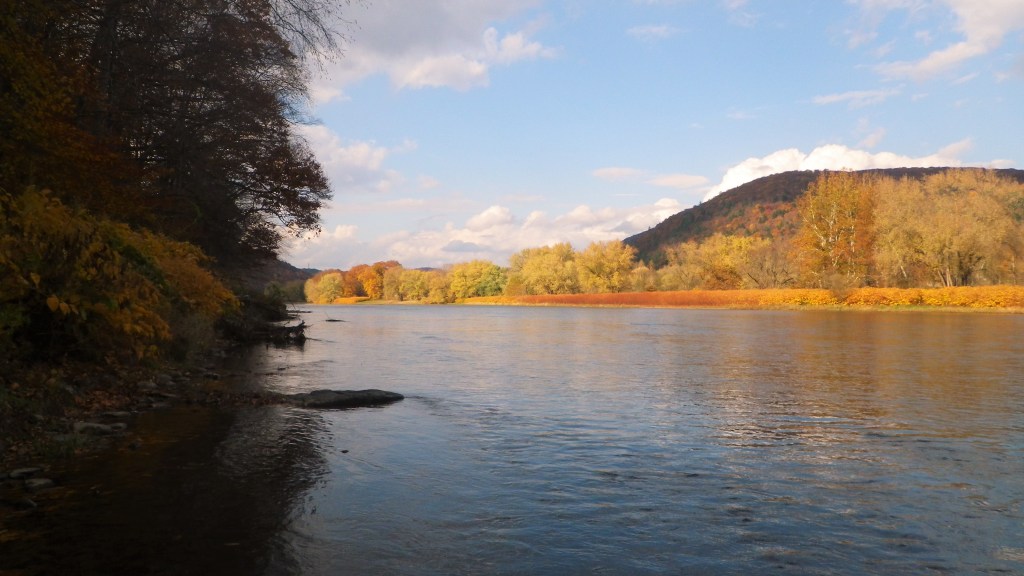
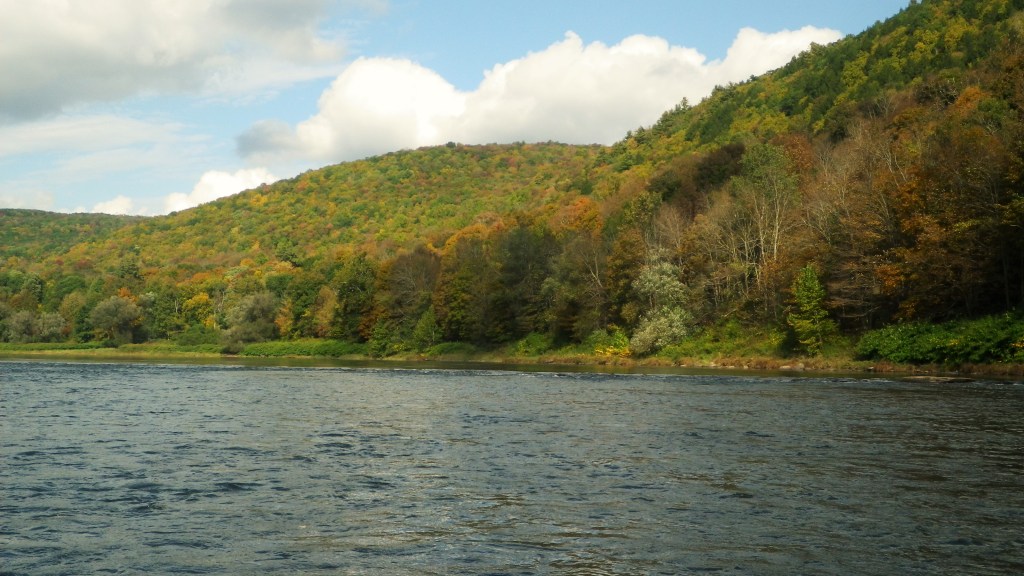
Autumn color lines the majestic Delaware River