Icy Morning, Steaming Cup and a Tup’s

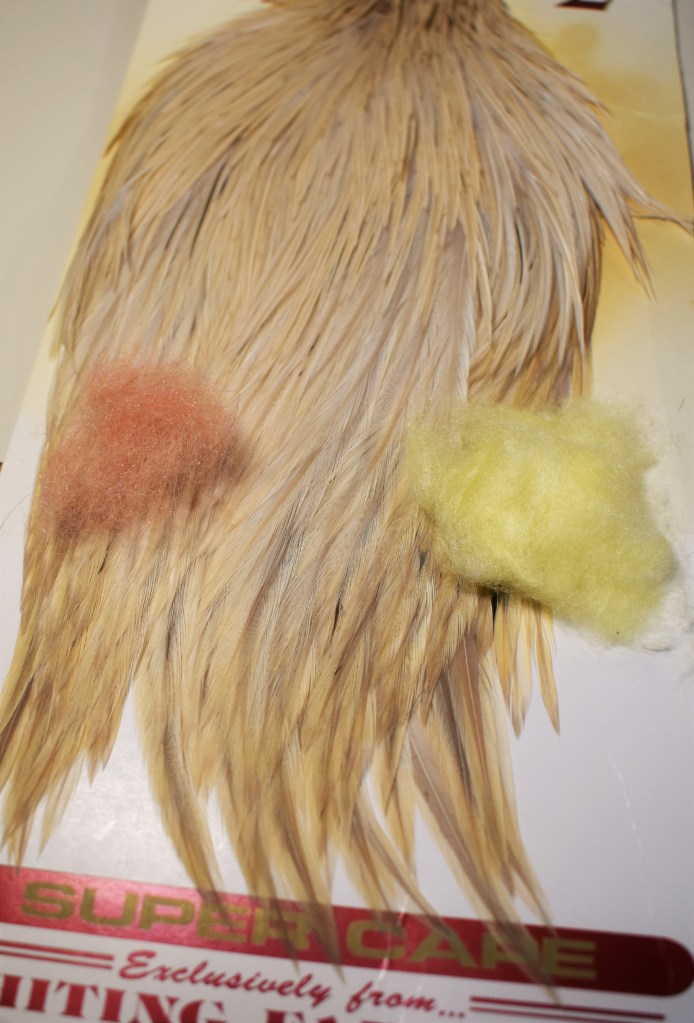
My twenty plus year old Honey Dun cape flanked by my own Tup’s blend and the blended silk dubbing I use frequently in my sulfur dries.

Well into my winter reading, I found another bit of inspiration that lured me to my tying desk this morning. Yesterday I began working through Mike Valla’s wonderful “Tying Catskill-Style Dry Flies” (HeadWater Books, 2009) and enjoying the result of his passion and research. His treatment of an iconic old English pattern, the Tup’s Indispensable, included his own blend of dubbing materials to recreate the alchemy of the old fly’s secret ingredients. Considering Valla’s rendition got me thinking about one of my blends and how that might be the perfect platform to craft my own Tup’s.

Fresh off my read of Theodore Gordon’s writings, I recalled his fashioning the fly when provided with a sample of the originator’s mixture, which had got me to remembering the pattern’s inclusion in various writings from the Cumberland Valley sages: Fox, Shenk and Marinaro. All recommended the Tup’s as an excellent fly for the sulfur hatch, the predominate mayfly in the Valley’s limestone springs.

I once puzzled as to where I might find the revealed secret material, the highly translucent wool from the testicles of the male sheep (a tup in the British countryman’s vernacular), long ago abandoning any search for the stuff. Valla’s research led him to a creamy pink color with a touch of dark orange, and armed with that color I determined just what to do.

My Flick inspired pink Hendrickson dubbing is a blend of cream and light reddish fur from the skin of a Red Fox, enhanced with a special pink Antron dubbing. The Pink Enhanced Hendricksons I tied for the past two seasons have proven to be very attractive to our Catskill trout, and I was sure a bit of that blend could be easily modified to craft my own Tup’s with the addition of a touch of dark orange Antron and some more of the cream-colored fox fur.

My tie of the Tup’s Indispensable has borrowed from Mike Valla’s research. He credited the originator, Mr. R.S. Austin, with sometimes tying the fly with a tag of yellow silk. I also followed the teaching of my Cumberland Valley mentor, the late Ed Shenk, by wrapping the hackle over a dubbed thorax. Ed tied his Shenk Sulfur Dun wingless in this manor, and it is the first sulfur pattern I learned to tie more than thirty years ago.
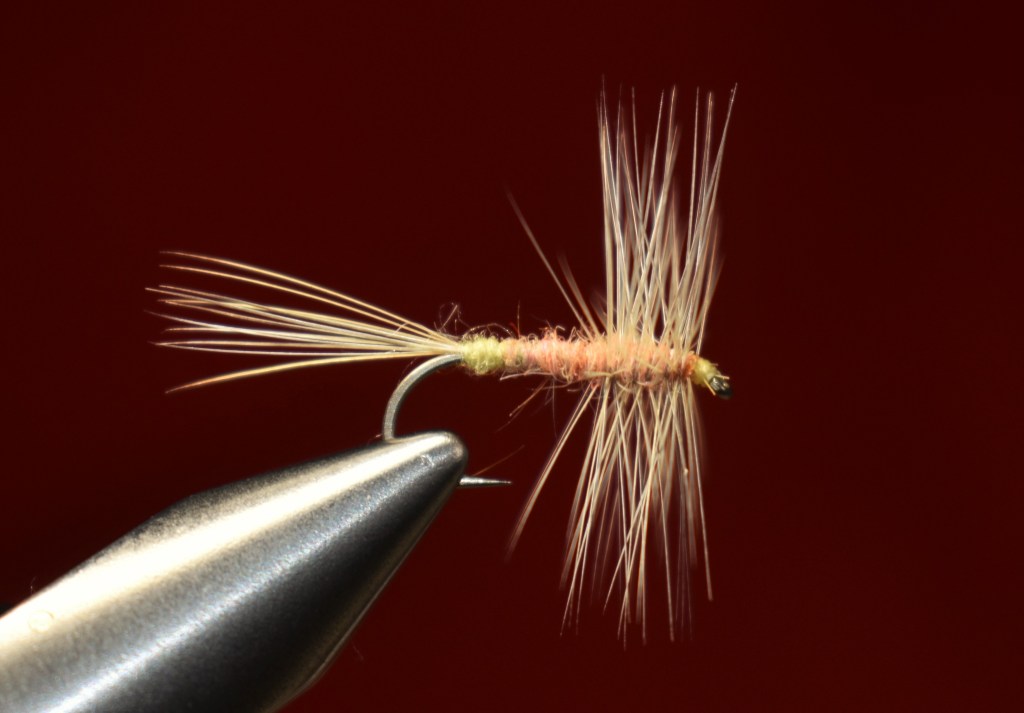
My variation of the classic Tup’s Indispensable: tails of long, splayed Honey Dun hackle barbs, four turns of blended yellow silk dubbing as a tag effect, then the abdomen and thorax dubbed loosely with the Tup’s blend I have described. The Honey Dun hackle is slightly oversized as wrapped over the dubbed thorax of the fly. Here, the fly is tied on a size 12 Sprite dry fly hook for photographic clarity, though for fishing I tied the pattern in sizes 14 and 16.

I can picture the soft colors of May and feel the tingle of anticipation as I knot my little size 16 Tup’s to a 5X tippet. The lovely yellow mays are drifting quietly on the surface and, at intervals, a soft broad ring forms on the glassy surface where a trout has gently taken one of them. My old cane rod flexes smoothly, and my Tup’s is the next in that same line of drift…
The Catskill Adams

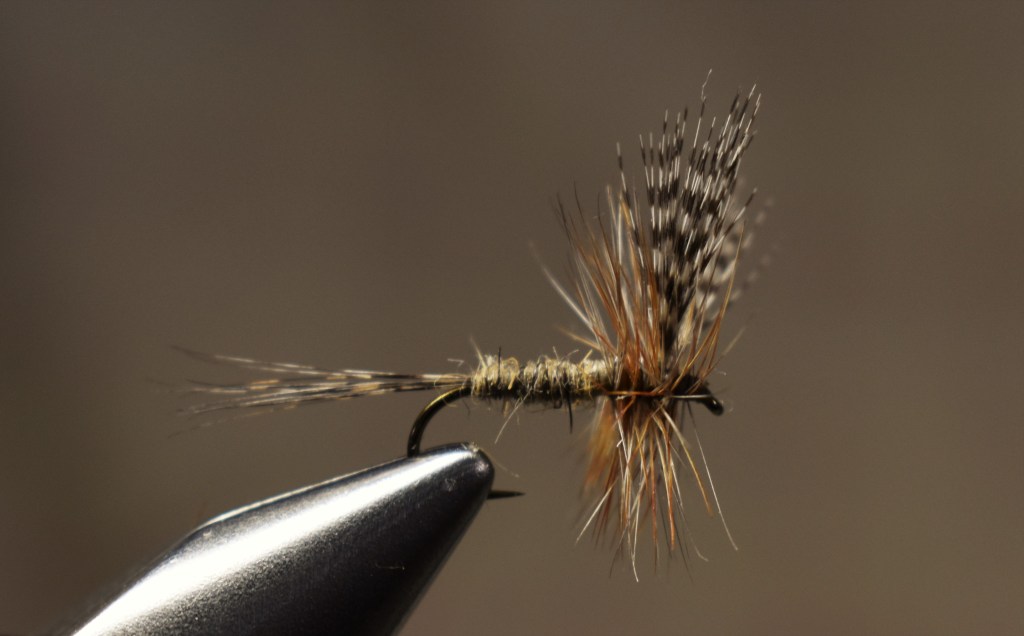
The Catskill Adams: Buggy and with a little contrast for visibility.

There are times when it makes sense to fish a general-purpose dry fly, something that looks enough like several different mayflies that could be on the water but aren’t. A long time ago that guy in Michigan developed a “caddis” that was renamed The Adams and became a legendary general-purpose fly. There is no denying that the Adams is a great fly, and some fish the pattern almost to the exclusion of others, but it has never been a favorite of mine.

I have never been a fan of hackle tip wings. They look nice sitting there in the vise, but they are not particularly durable once you start squeezing on some floatant and fishing them. Opinions vary as to what type of hackle tips to use. I have an old non-genetic hen neck that has pretty good color and the nice, rounded feather tips most Adams tyers prefer. The downside of hen is that the stems are soft and thin, so the wings tend to get pushed and bent out of position when fished. Dry fly hackle tends to have sharper contrast in the barring and may have stiffer stems, but the current genetic dry fly hackles have sharp pointed tips.

My other complaint with the Adams is the plain gray body. I like some mottling and roughness in the body of a general-purpose fly, that quality fly tyers refer to as “bugginess”, and the gray muskrat fur doesn’t deliver. I am a fan of barred hackle, though grizzly isn’t my first choice when I reach into my hackle box for a cape. So, as I said, the Adams isn’t a favorite.

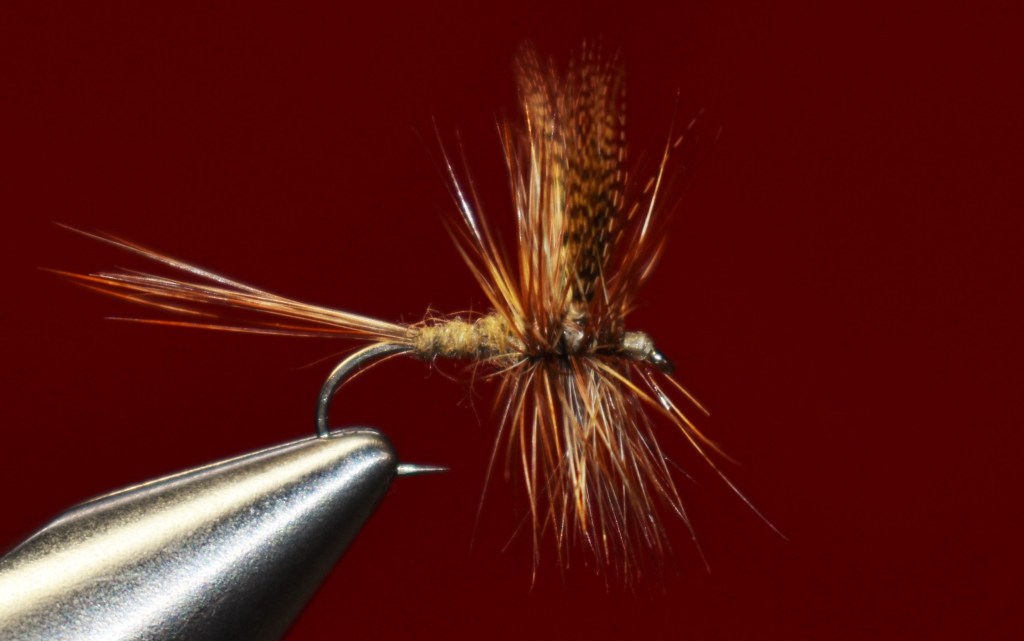
I was thinking about all of this and my own general-purpose fly, the pattern I call the Fox Squirrel. It’s buggy, close enough to most of our early season mayflies, and has the classic Catskill look to it. I tie it with natural Fox Squirrel fur dubbing and Cree hackle, winged with wood duck. As with a lot of wood duck winged flies, there are times when visibility isn’t perfect. On dark, cloudy days when fishing at a distance against a dark background, the fly can be a little hard to see. The black and white barred wings of the Adams show up better in such difficult conditions, and that gave me the idea for my Catskill Adams.

The Fox Squirrel.

Wanting to avoid those hackle tip wings and preserve a Catskill style, I decided to wing the new pattern with teal flank to get the contrast of the black and white barred wing of the Adams. The body remains natural Fox Squirrel, a beautifully buggy tannish, grayish fur that helps the fly look alive in the water. Squirrel fur has short, barred guard hairs that produce a spiky, rough dubbed body that traps air bubbles. I wanted nice, stiff traditional tailing with speckling, so I chose the Grizzly Variant Coq-De-Leon hackle barbs that have become a favorite of mine.

I wanted the hackle to pop, to reinforce the impression of life and movement and, at the same time, I wanted my fly to be a little lighter in tone. My solution was to choose two barred hackles: a barred ginger and a dark, rusty toned dun barred with pale gray. I like the way the fly turned out. The only drawback I can see with my Catskill Adams is the three and a half months of winter remaining before I can expect to be able to fish it!

A New Year

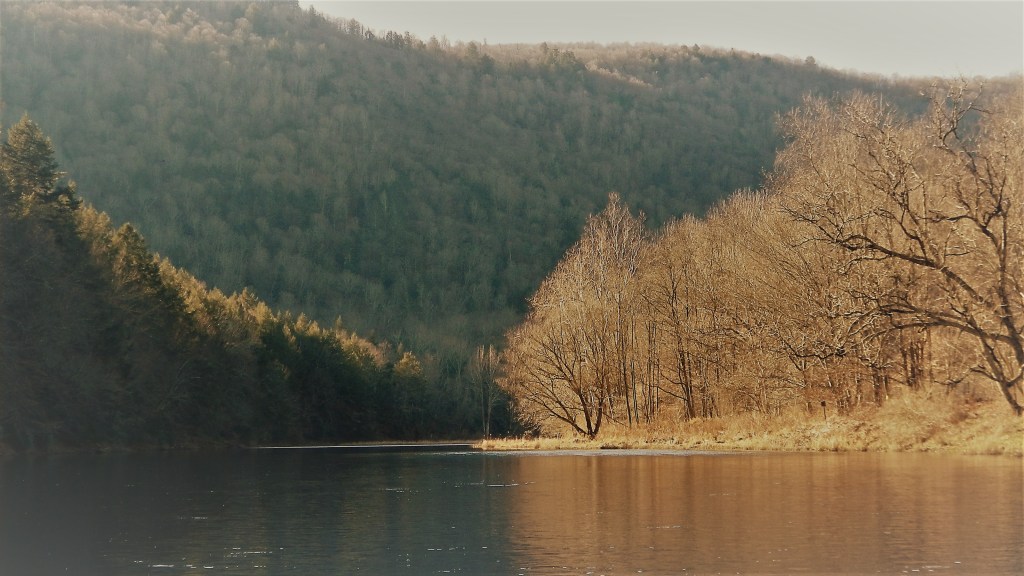
Though there is a starkness to winter landscapes, the outdoorsman relishes the beauty of all seasons.

I greeted the new year in the company of friends. JA and Donna had already taken a two mile walk with Finley, but the Lab was still quivering with excitement as we loaded the guns and began our morning in the Catskill uplands. JA said she had flushed two grouse on their morning walk.

Our quarry were pheasants and chukar partridge, though always with an eye toward King Ruff should we find a few on this warm, damp winters’ day. Mostly we came to celebrate another year in these mountains and the friendship we enjoyed.

JA is a fine wingshooter, having enjoyed a lifetime of bird dogs and the waterfowl and upland birds that allow those dogs to shine. A bird hunter’s dogs are the most important figures in the painting of their lives in the wild. I have always appreciated this alchemy from afar, the special bond between hunters and their dogs, myself seemingly destined to remain a dogless hunter. This New Year’s Day I would be particularly fortunate, not simply to be invited into this world, but to enjoy the role of featured guest. You see, JA and Finley were committed to finding birds for me. I prayed my shooting would prove equal to the honor of their toil.

Though I have read the great books and walked miles through these mountains with a fine over and under across my arm these three seasons, I still cannot call myself a wingshooter. As a boy in Southern Maryland, I thrilled to the occasional September outing in search of the fleet winged mourning doves. There were quail there too all those seasons ago and walking up to the heart racing detonation of a covey flush is a memory that has stayed with me for more than half a century. These moments were uncommon, and as such few birds ever fell to my gun. It takes time, perseverance and practice to master the fluid swing right through a speeding blur of feathers, to become a skilled wing shot, and even as an elder gunner I am still learning.

We worked the cover with my heart rate climbing, both from the Lab’s enthusiasm and the terrain, but when that cock pheasant exploded from the brush just feet from Finn’s nose I shouldered the 101 smoothly, swung short and true, and felled the bird. She and her master were as jubilant as I!

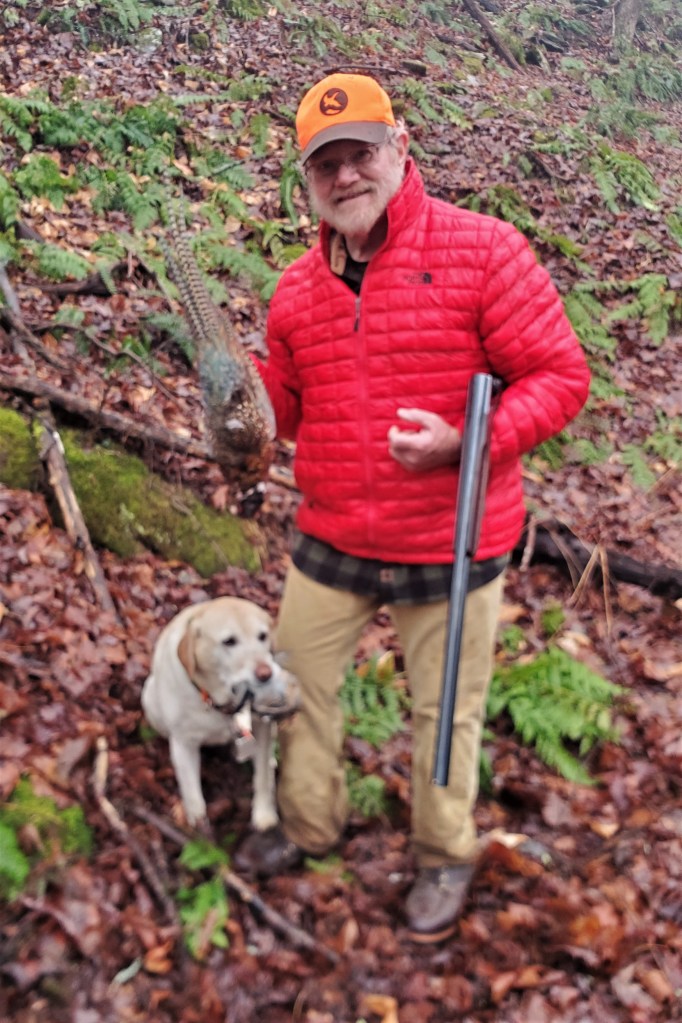
A New Year’s Reward (Photo courtesy JA)

The early snow having melted, and with rain still frequent in the Catskills, we found a lot of springy ground, covering three miles uphill and down behind Finn’s marvelous nose. On one wooded flat, she rousted a chukar from the edge of a deadfall, but the bird stayed low, too close to her to risk a shot. JA marked the bird, but despite two thorough passes through the area it eluded us, perhaps flying onward low and out of sight, rather than landing where we thought he did. There would be another partridge to test my swing.

Drawing quick, deep breaths of the cold, damp mountain air, my heart rate jumped again when Finn put that bird up, angling away. I shouldered and swung but his timely turn let my charge pass harmlessly by. I stayed on that bird though, swinging through a wide arc as the distance between increased with each wingbeat. When my barrels covered him and began to pass his flight line, I let loose the second barrel’s charge. The bird hitched suddenly and set his wings for a final glide.

God bless the Labrador Retriever, particularly the lovely blond girl that followed that broken winged bird as he ran and brought him back to my feet.

The Old Man and the Blond Girl (Photo courtesy JA)

Walking back to the cabin, Finn had her bath in the brook, emerging rinsed and content, oblivious to the chill of the air. Resting our tired legs, we reminisced and dressed the birds, before retiring to the warmth beside the wood stove for steaming cups of coffee.

Roasted pheasant proved to be as fine a New Year’s dinner as I can recall; and now there are feathers drying here to be crafted into flies to tempt the trout lying deep in the rivers fed by these mountains. There is a magic in that too, as there is in friendship and the bond between a bird hunter and his dog. May that magic continue to bless us all in the coming year!