
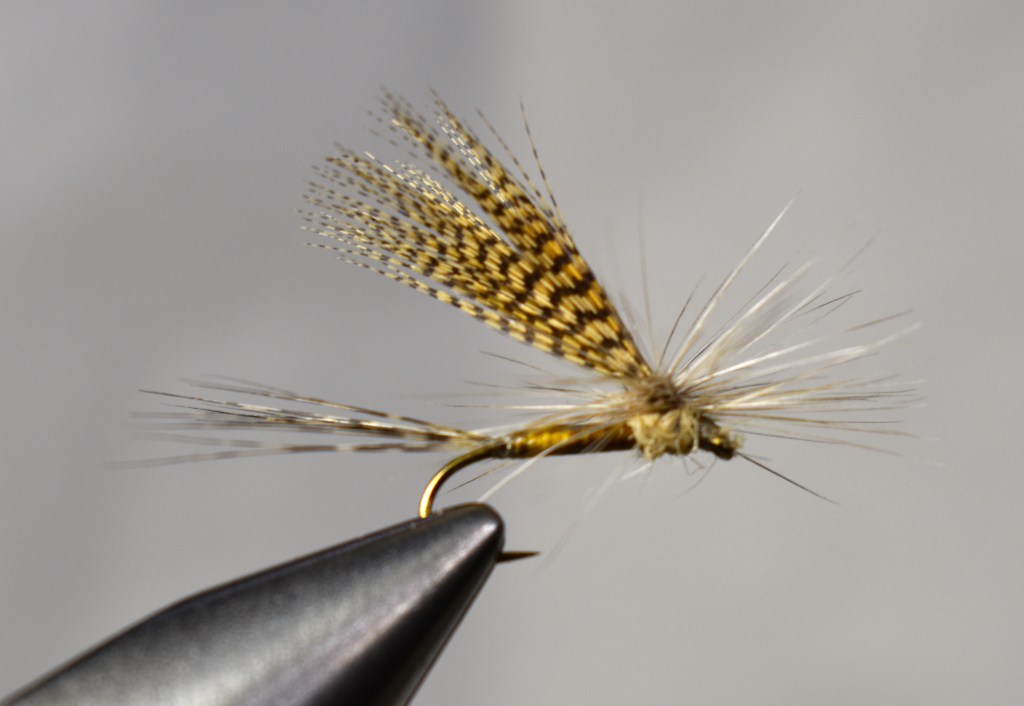
Old dogs can learn new tricks, even this one, thanks to my friends. I have been tying trout flies for better than thirty years, but my friend JA has been at it far longer. He counts his experience at five decades! For many years, JA has been an elite commercial fly tier, turning out hundreds of dozens of perfect patterns for a number of fly shops, and he also has a long history of gathering and processing his own fly-tying materials. The man is an artist on both accounts. You are never going to find materials of this quality in a fly shop.
My Dyed Wild series dry flies owe their existence to JA’s expertise in dying wild turkey primaries, as well as his generosity in providing me with a wide array of colors. Recently, he suggested I should try the other side of the feathers, the wide side as opposed to the biots found on the thin leading edge of the primaries. Once I began tying with these fibers, I found even more versatility in some of my favorite feathers.

Some anglers complain that biot bodies are fragile, and indeed rough handling with forceps, or the teeth of a big trout can damage the body of your fly. A simple solution is coating the finished body with Hard As Hull polymer head cement. Tie your fly bodies, a quick whip finish, then clip your thread and coat the fly body, setting it aside to harden. Make a dozen or so and let them dry thoroughly, then you can finish your flies. You can also tie the complete fly and coat the body afterwards, though you will have to take care not to get cement on the wings, dubbing or hackle.
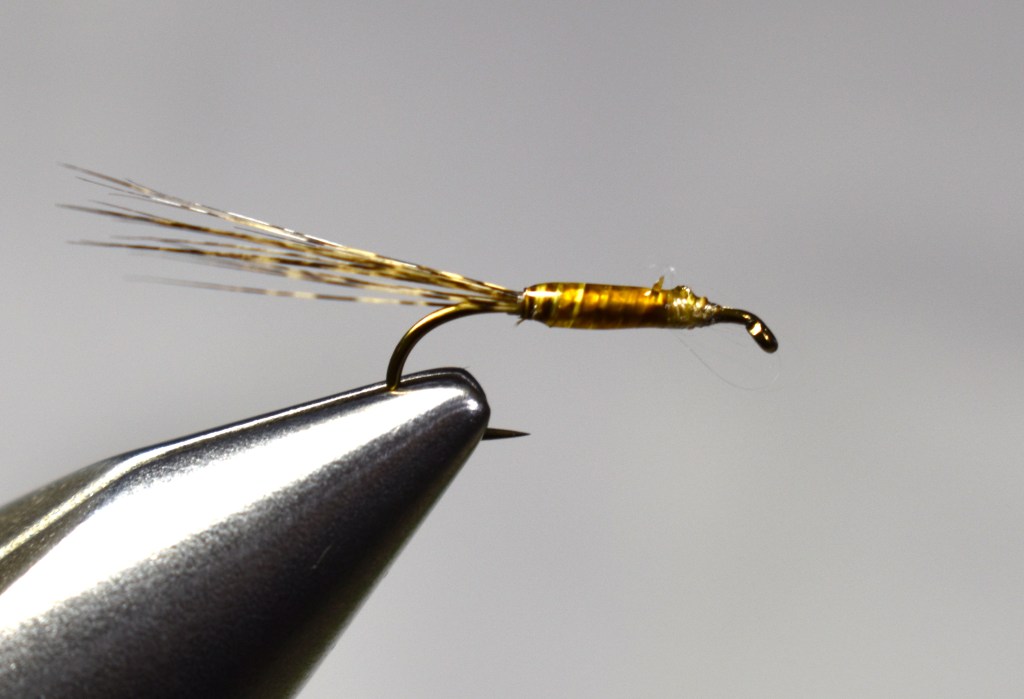
The trailing edge fibers (notabiots?) have a thin trailing edge and a ridged leading edge just like the biots, so they can be wrapped with either edge forward for ridged or smooth body segmentation effects. I guess it might be reasonable to call these little feather fibers trailing edge biots, but that is a long name for a thin little slip of feather.
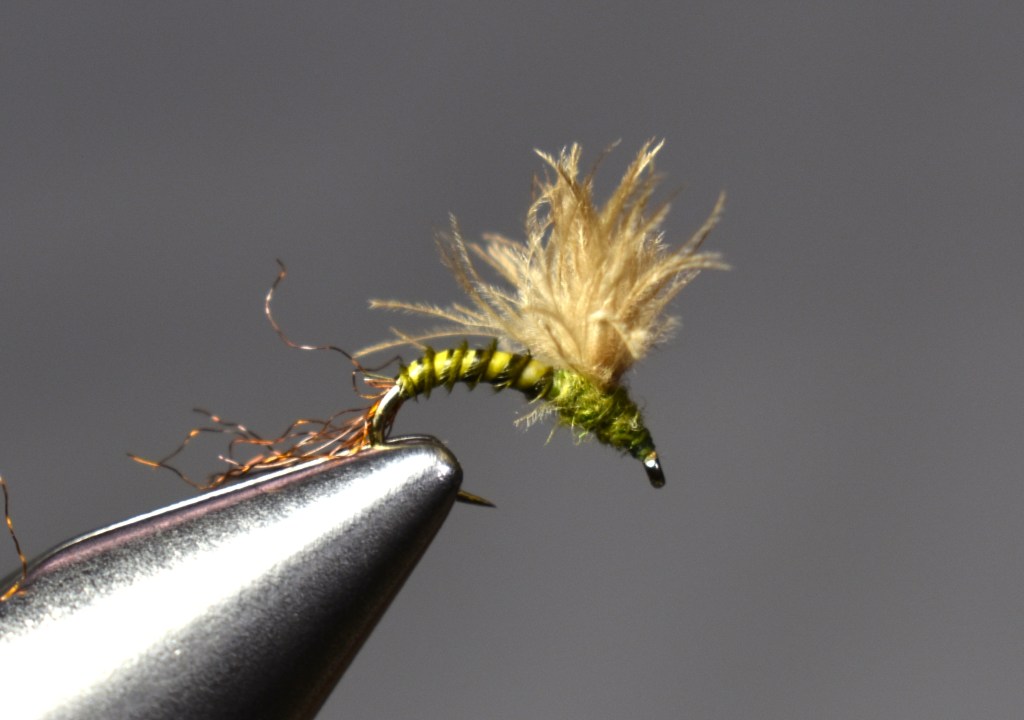
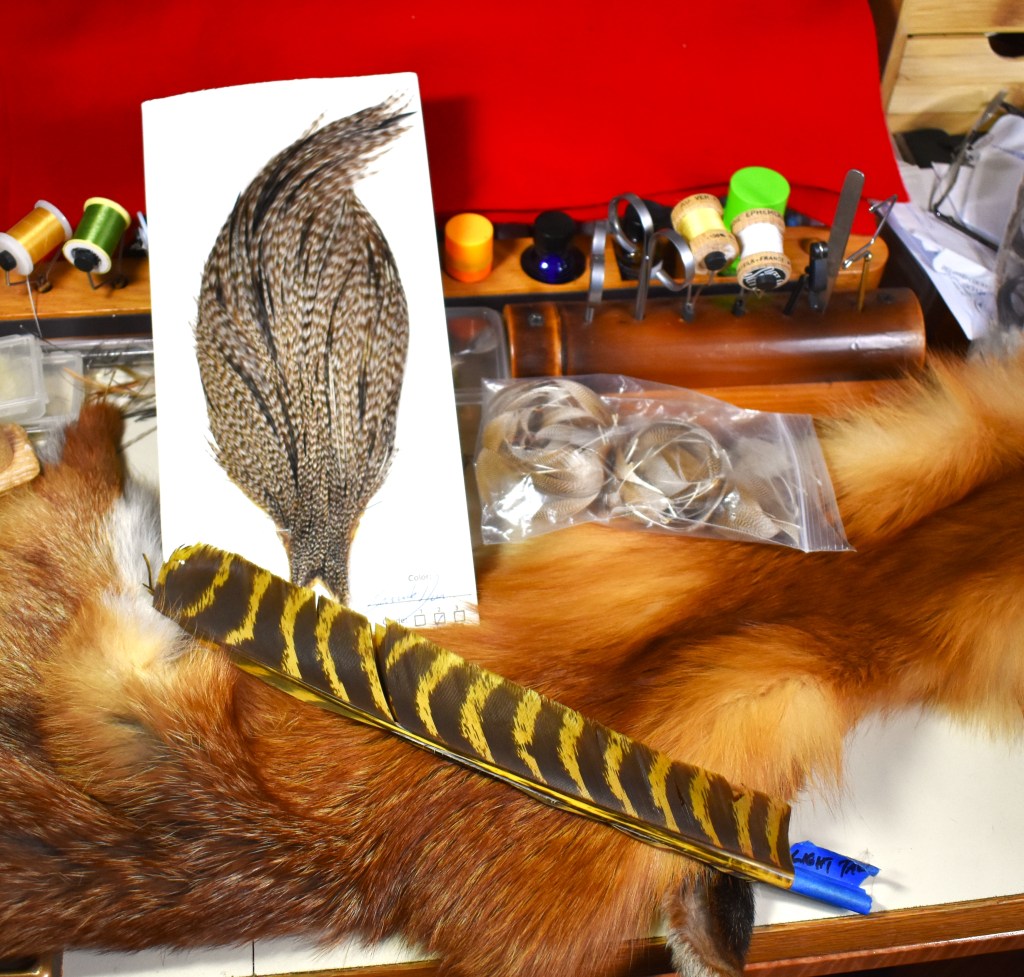
There is a lot of versatility in natural fly tying materials without even getting into the realm of synthetics. Many of the traditional Catskill dry flies call for red fox fur dubbing, and a lot of those patterns vary widely in coloration. If you tie a lot of Catskill flies, it is worth buying a complete, tanned red fox pelt so you have everything you need for all of those classics. You will find white, buff, cream, tan, reds, browns and grays as you look over that pelt. Mixing and blending fur in these different shades will give you many combinations, and the ability to alter your blend to match specific insects on the waters you fish.
 Bright Waters Catskill