June continues to be a month of changing moods. All but perhaps its first week typically brings summer weather patterns to the Catskills, however this year has been quite different. Though we have had a handful of warm weekends since Memorial Day, there have been more chilly days and some very cold nights. A blessing to the rivers as far as water temperatures, these cold spells have kept the angler guessing.
I began fishing summer patterns and tactics mid-month and have concentrated on them since. The first couple of days produced admirably. Enter the last cold front, complete with a pair of 42 degree mornings and some much needed rain. Expecting some mayfly activity on the cool, cloudy days, I found very little. The clouds cleared and the sun shone on Thursday evening, and Friday dawned bright and a bit warmer.
My friend Henry was in town again, and we took a chance that the runoff strengthened flows might invigorate the trout and hopefully, the insect life. The sun warmed quickly, and we found ourselves with another summer day, with neither bugs nor trout on hand. I suggested to Henry that we try summertime tactics and flies, at least until the river told us otherwise.
Summer is classic terrestrial time, but cold, damp weather isn’t conducive to making these various insects active like a hot, breezy day. That’s the kind of weather an old spring creek angler like myself likes to see come summertime.
As morning drifted into afternoon, we compared notes. Neither of us had anything to show for our efforts. Henry had been fishing a sulfur emerger, since we had begun to see the odd dun flying around about Noon, but the only rises spotted had been a few one-timers scattered around the pool. I had fished a variety of proven summer patterns, flies that tend to provoke a response from hunting trout, but I had drawn a blank.
We separated and continued to fish, wading back together after another fruitless hour or so. While we were talking, we both saw a decent rise along the far bank. I told my friend to “go get him”. Henry worked the lie expertly, first with the sulfur and then a beetle imitation. The trout rose again, just downstream of a bank side bush, and I knew that Henry should do some good with that beetle.
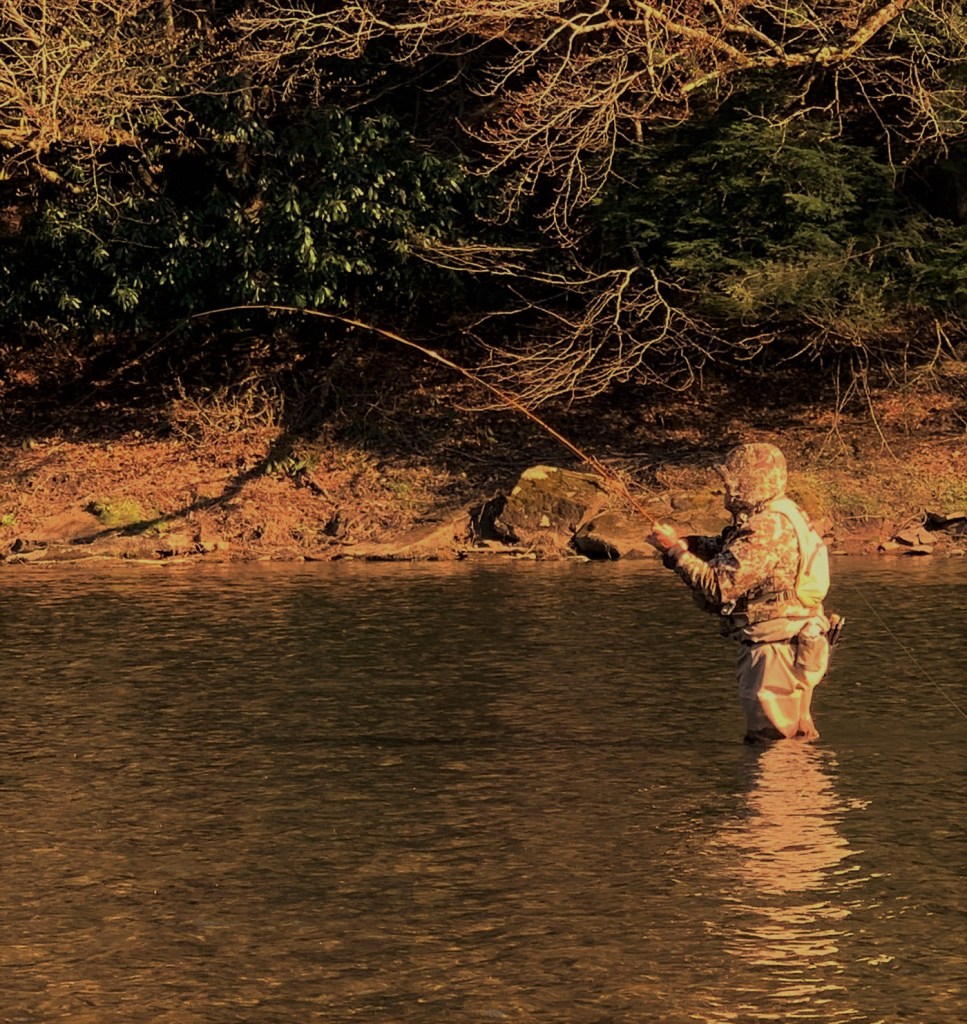
I had begun to look for some evidence of my own when Henry exclaimed ” I’ve got him!” The fish fought well, and Henry’s old favorite Winston four weight matched every move. Netting a solid eighteen-inch wild brown lifted both my friend’s spirits and my own. If one was eating along the riverbank, there ought to be another. It took some time to find him, but find him I did.
There was no rise, simply a brief disturbance of the water that put me onto that fish. I waded in deeper to be sure I could put the fly within that magic inch. The soft curls in my tippet were nearly spent, the fly having drifted some four feet along the bank. The take was almost a surprise, coming so late in the drift, but I set the steel in him solidly and enjoyed the fight!
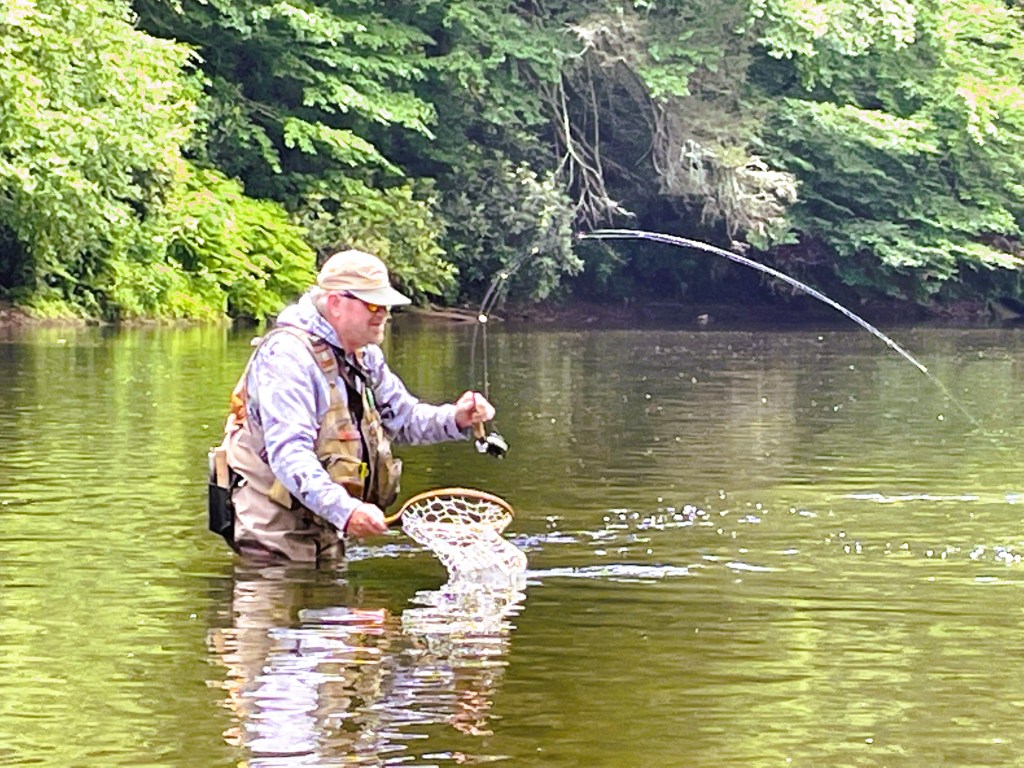
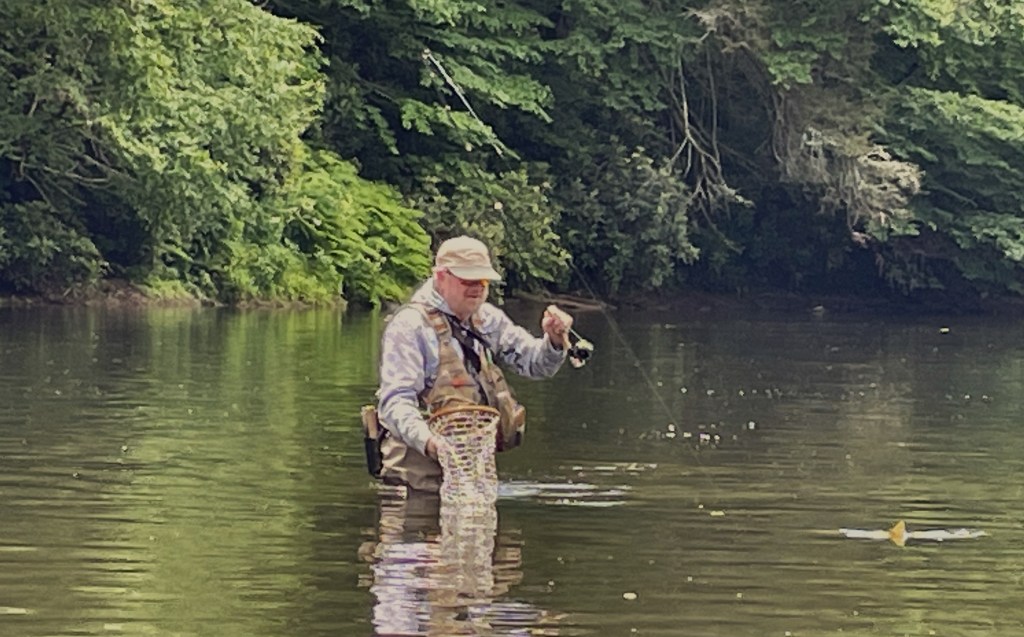
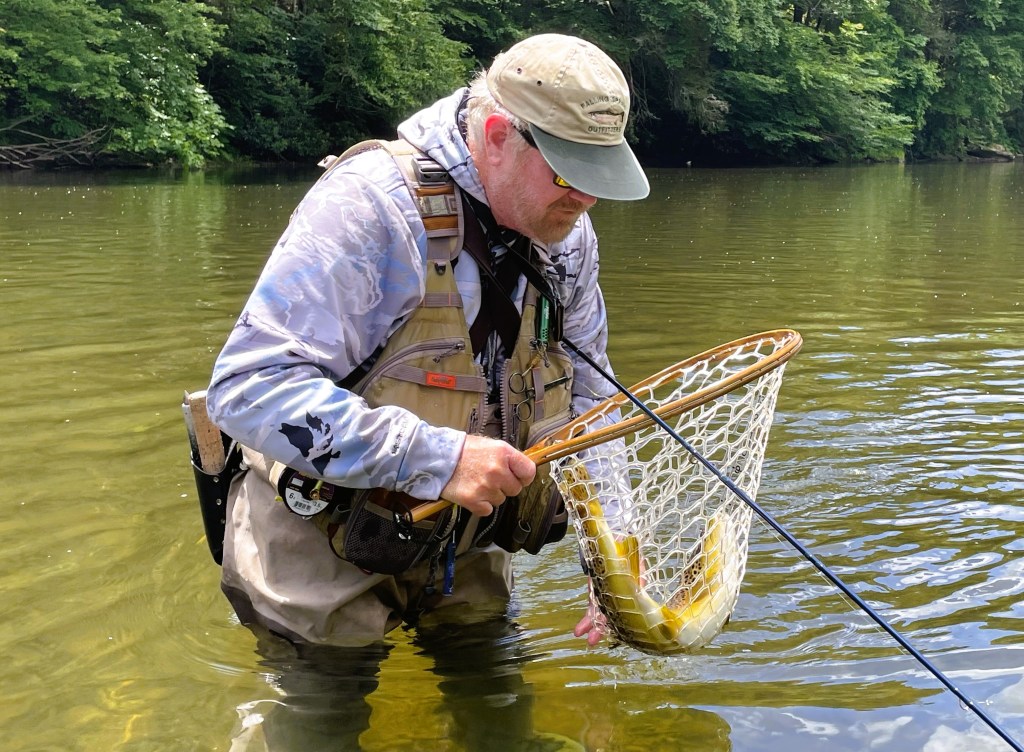
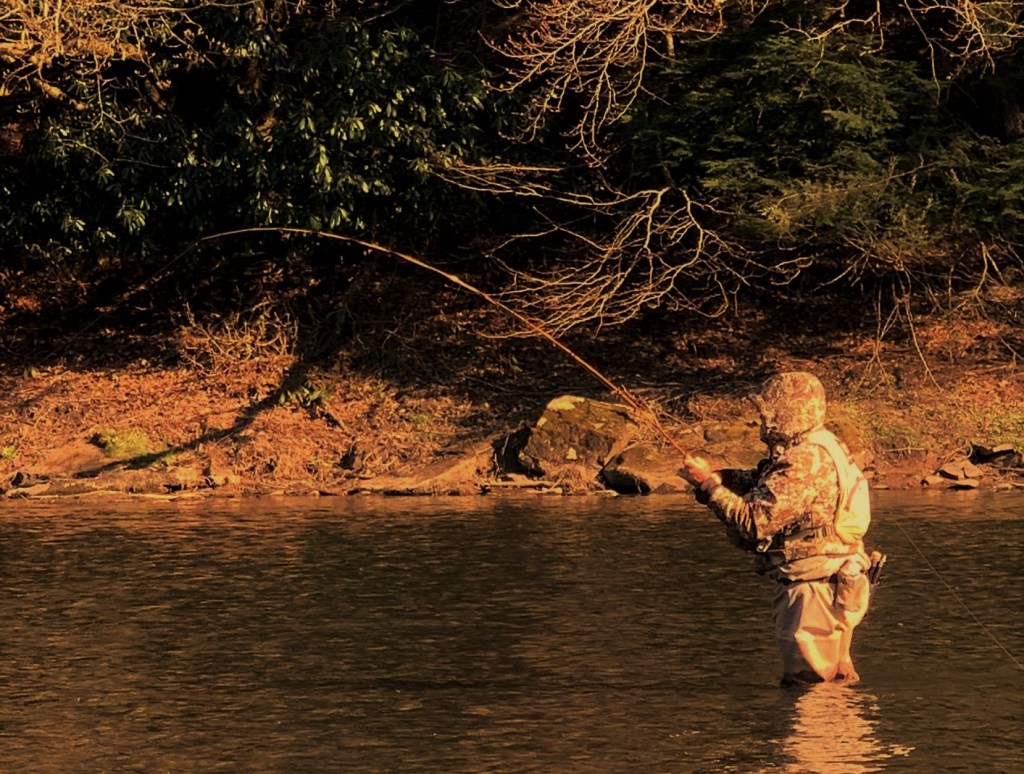
Henry was kind enough to take a sequence of photos as the game neared its conclusion, thus:
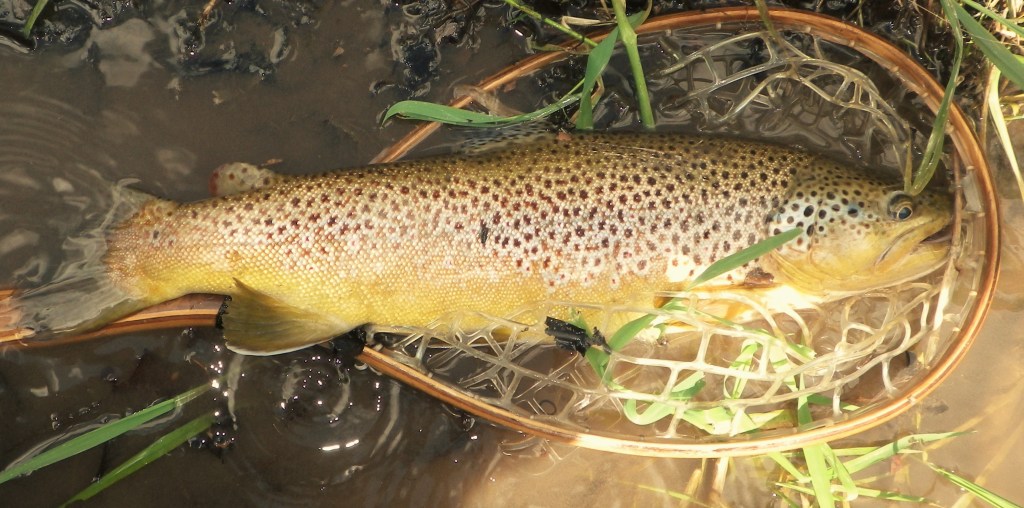
Whoa! My decades old four weightParadigm has a big bendas I work a hefty brownie close. Indeed, fly rods are supposed to bend!T&T Paradigm rods have always featured what some term a parabolic action, perfect for presentation and playing fish.Come on in! The trout is at the surface, and I feel confident he will earn a place in my log.In the net at last and I’m checking the measurements…A beautiful heavyweight Catskill brown trout, twenty-two inches long. (All photos courtesy Henry Jaung).
This was a unique experience for me, having a companion shoot a sequence of the fight and capture of a trophy trout, and I though it should be shared here.
We enjoyed our fellowship and a gorgeous day on a Catskill river, and each managed a fine trout to remember on a day when we really had to work for an opportunity. Henry and I spent a day back in May sitting on a riverbank and talking while we waited all afternoon for the hatch that never appeared. We enjoyed that day immensely. I have always said: “You have to take what the river gives you”. There are days the river offers one fish, days it offers many, and plenty of days that it offers only the experience of natural beauty and contemplation. I come back to the river day after day and find that I am always blessed.
Summertime and the livin’ is easy… fish are jumpin’… well maybe sippin’ once in awhile.
Our general cold front has had some legs, and our days and nights are still chilly. That has helped the rivers to be sure, as will the rain that has lasted all night long and shows no sign of stopping today. The weather radar shows a long, long band running remarkably south to north so our chances of fishing today seems to have washed away.
I have guessed wrong on the weather the past couple of days, wearing my rain jacket all day Tuesday and letting some early morning sunshine send me on the river in my shirtsleeves on Wednesday. I counted maybe two dozen raindrops Tuesday and spent an uncomfortably muggy fishless day on two rivers. Yesterday I froze until I finally waded back to the car and donned a fleece jacket. I did manage some productive fishing despite my case of the shivers.
The chilly, cloudy conditions finally put a few sulfurs on the surface, not a lot, even giving a variety of sizes, but just enough to entice a few of our more difficult trout to cruise around and pick off the ones that looked vulnerable to them. Technical dry fly fishing is my passion, and this day certainly fed my passion.
The cruising phenomena has become more frequent during the past season or two, and it presents a unique challenge, particularly in gin clear, slow pool environments. Our Catskill wild trout have evolved, no doubt finding new ways to succeed amid increasing fishing pressure and more limited hatches.
The bottom line is, the angler cannot chase them in flat water. Every movement sends pressure waves which puts the trout on higher alert, so the game requires good long range casting ability. The guy that makes a dozen or more false casts before delivering his fly isn’t going to win this game. By the time his fly arrives where he spotted a rise, that trout has moved on.
Repetitive casting to the site of a single rise isn’t a winning technique either. It takes judgement and a bit of luck to determine when a fish is taking a break from perpetual motion and hanging out in one place. Two rises in the same location get my attention, and I will make one good cast to the fish immediately after each rise. If he rises again in that spot, I will cast again and continue casting until catching him or instinctually believing that he isn’t going to accept my fly.
This can be a frustrating way to fly fish but casting over and over when trout are cruising means you are likely lining your target fish or others that are moving through unseen. Often you will simply turn them off their already limited feed and the water will grow very quiet. Patience and experience are necessary, along with the casting skills to take advantage of the opportunites offered.
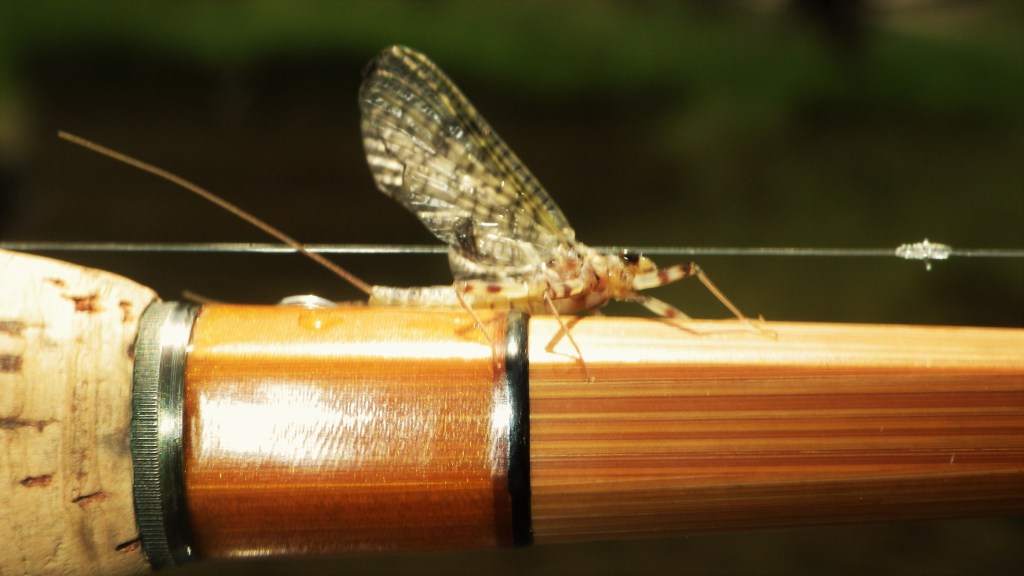
I fished and shivered for a couple of hours without moving very much at all. It took me a long time to stalk into a position where I could cover the section of the pool where I noted a few sporadic rises. I started with a size twenty sulfur dun with a wispy trailing shuck and stayed with that fly until I had offered it to two or three different cruisers. There were twenties on the water, but there were also some larger size eighteen naturals and a few sixteens. The eighteens seemed to have become the most numerous, so I knotted one of my standard CDC duns in that size.
That fly was offered to a couple of different fish before I noted one that was hanging out in the same location. I worked him carefully, satisfied that my Thomas & Thomas Paradigm bamboo rod was giving me good distance capability with a much more delicate presentation, and finally got the take I had waited for. That was a quality trout, and he fought very hard for his size; seventeen inches in the net.
I stayed with that same fly as morning evaporated into early afternoon, but I wasn’t finding any more risers that weren’t constantly on the move. There’s no telling how many seconds a cruising trout will remain in the same location after rising and taking a mayfly, some swim up, take the bug and never stop moving. Even an immediate, accurate cast isn’t going to catch that fish.
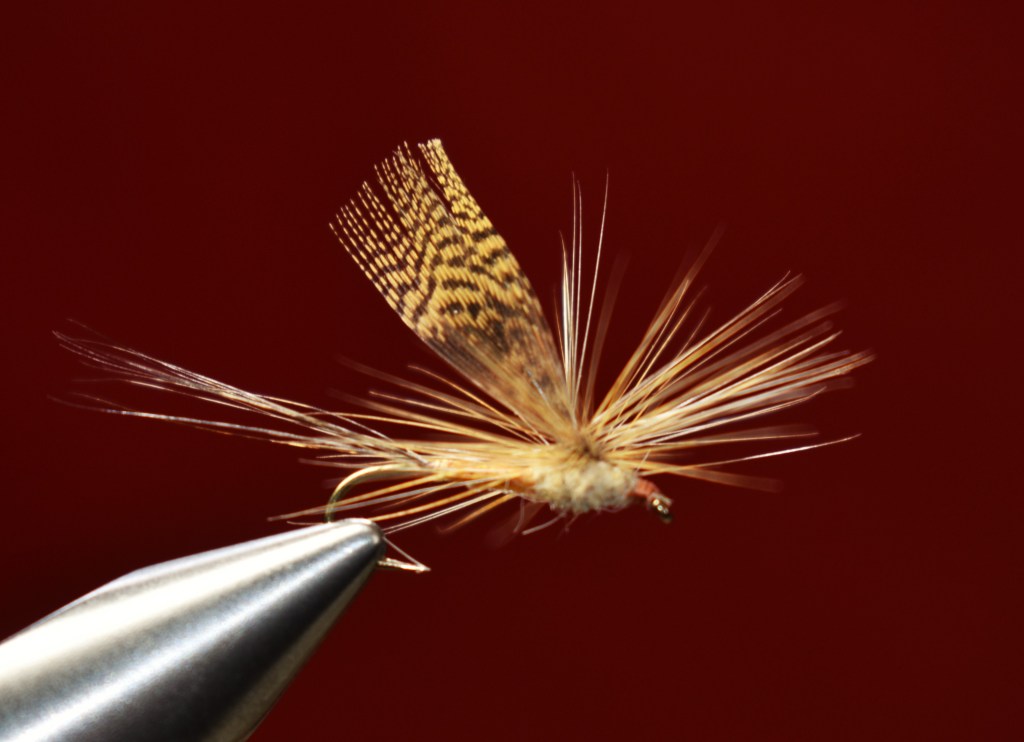
Eventually I figured that most, if not all of the trout cruising through the water within my casting range had seen enough of my CDC dun and chose to alter the game. I chose a size sixteen 100-Year Dun, tied with one of my orangey dubbing blends, figuring the strong profile would be hard for one of these cruising trout to resist. Cruisers seem to be attracted to moving insects, but I reasoned that the sparse little sulfur hatch had been going for an hour and a half or more, and the trout were now actively looking for them, wiggling or not.
I had a close look from one cruiser, then saw a strong rise just out of range along a sheltered bank. I took four smooth, cunning steps as I stripped out several more feet of fly line, then delivered my signature fly a couple of feet up current from the riseform and a foot from the riverbank. It drifted about four feet and was engulfed in another heavy rise.
The old Paradigm arched boldly, leaving no doubt I was into a heavy fish. He headed my way quickly, forcing me to strip line as fast as I could, all the while trying to drop each coil away from my body on my downstream side. Slack fly line loves to tangle, and the consequences from those tangles can be lost trout or worse: a broken tip to a cherished rod.
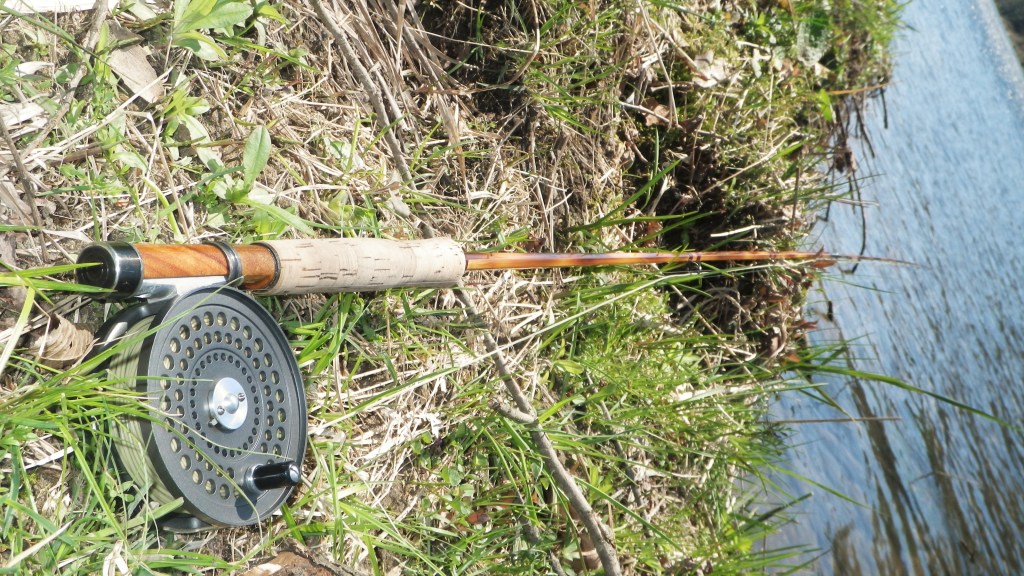
I kept that brownie under control thankfully and managed to get that slack line back on my little 3″ Hardy St. George. Yea, large arbor reels are what the marketing machine wants everyone to have, but none of them match a vintage bamboo rod, nor sing with a running trout like a classic Hardy!
Trout number two measured out to twenty inches, before I slipped him back into that cold, clear pool. The cruising and rising seemed to slow considerably after another quarter hour, and that’s when I waded out to grab that jacket. I was to get one more shot before calling it a day.
An old favorite lie beckoned, and I stalked close enough to watch for any sign of activity. Within ten minutes, I saw two un-mistakeable little silvery winks of light deep on the edge of the shadowy bank. Three careful steps put me in range for a long, graceful cast, and I watched that little 100-Year Dun drift, drift, drift; right into another silver wink.
When that big old brownie took, it would have been easy for him to turn and break my line in the submerged tree trunk a foot behind him, but he chose to shake his heavy head vigorously and swim out of the cover toward me. Maybe he was in the mood for a little exercise. Stripping line again to keep up, I managed to drop all of that slack fly line to the side and downstream. I started reeling in that slack when the trout seemed to be holding and head shaking in one place. I would quickly learn that was the wrong call. Better to risk problems with trailing line than to rest the fish mid-fight.
I felt a dodge and a weave and suddenly the load on my rod was much lighter. I retrieved my line to find three golf ball sized globs of mossy goo on my leader, one for each knot. I was light half of my 5.5X tippet and fly and of course, a fish. He had laced my leader through some emergent weeds shrouded in goo and used his lacework to break the tippet without my even feeling a surge.
Just fishing, the good comes with the not so good, though it is always great to tangle with a wily old wild leviathan! Who knows, maybe he will get a taste for 100-Year Sulfur Duns after chewing on it for a while.
June 19, 2022, and it is forty-two degrees here in Crooked Eddy. I fired up the furnace last night, at least for the upstairs. Wishing I had hit the downstairs thermostat too. It has been colder here at my tying desk, yes certainly much colder, but perhaps it is my recent acclimation to sunshine that makes it feel downright icy. It was eighty degrees on Friday afternoon.
I trust that Beaver Kill anglers are benefitting. There seemed to be plenty about yesterday morning as I drove to The Manor. It was good to see some friends at the Museum. I have missed fishing with JA since April’s abundance of mucho grande Argentine trout recked his casting arm. Mine has continued to hold up thankfully, despite the advance of arthritis, carpal tunnel, and the various intricacies of age. I credit the magical properties of bamboo with cushioning the stress of casting five to six days per week.
Long and recurring bouts with high, cold water and overzealous winds have found graphite in my hand too often this season, though I continue to shun the stiff, fast action rods the fly fishing industry seems to insist we torture ourselves with. In truth I have minimized the damage thanks to a pair of Thomas & Thomas Paradigm graphites that have passed their twentieth birthdays. Funny how they will present flies so perfectly at distance when they aren’t anywhere near being fast action rods.
Nothing beats bamboo though. My only regret is that I learned on graphite and, like many, believed too much of the hype as rods became stiffer and less tractable. Fly fishing for wild trout is not about power.
Daydreaming fantasies find their way into my consciousness every once in a while, particularly dealing with the chance to walk back in time. Imagine it is say, 1960 and you have five hundred dollars in your pocket; you stroll into Jim Payne’s rodshop, visit Fred Thomas and perhaps Leonard, walking out with money in your pocket and a few of the greatest bamboo trout rods ever made. Though the economies of time are vastly different, there are a multitude of choices today.
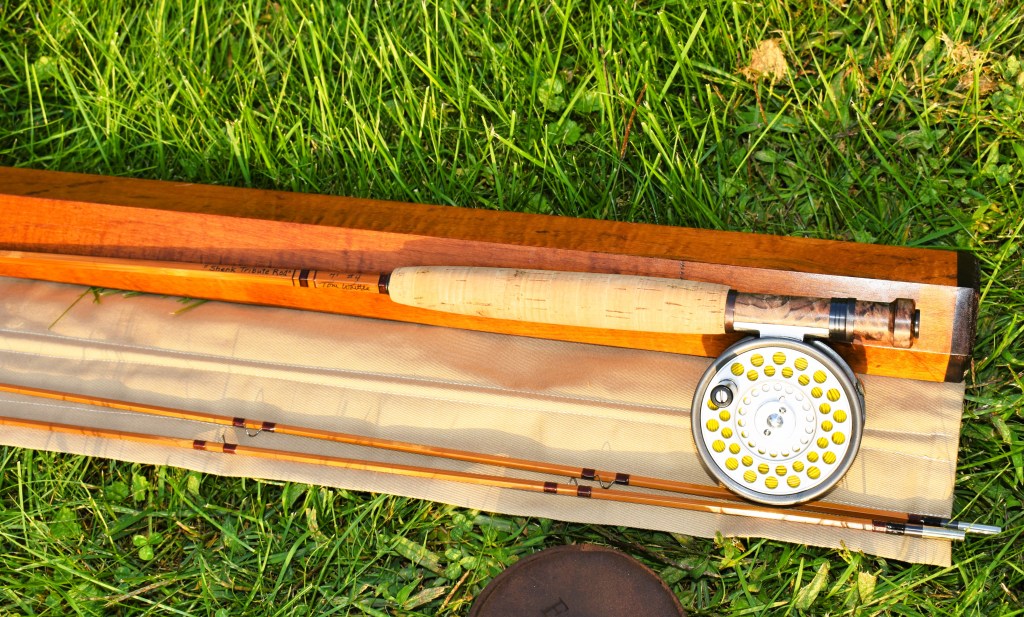
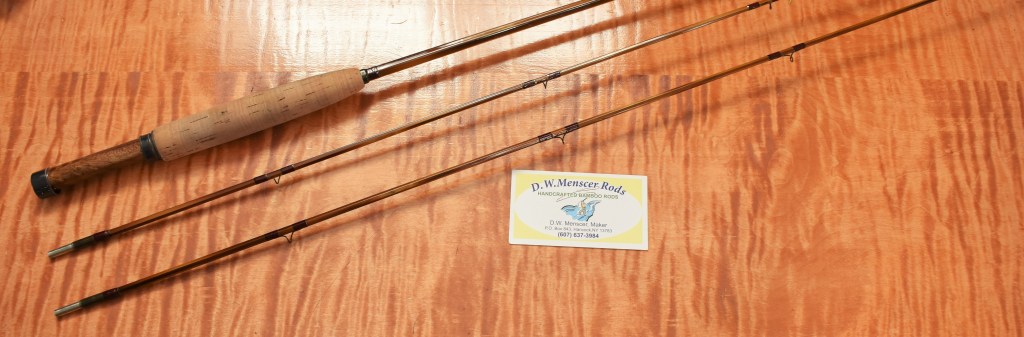
You can still buy a Payne, Thomas or Leonard, though of course you won’t be visiting with Jim, or Fred, or Hiram. There are a lot of truly gifted rodmakers out there today that you can go talk to. My friends Dennis Menscer and Tom Whittle will be pleased to make you a rod you will truly enjoy for the rest of your days. This spring I cast a three weight Per Brandin rod that stole my heart, and Dennis made a new model last year that took my breath away: an eight and half-foot, fully hollow built four weight that feels like the ultimate summer Catskill rod for fishing fine and far off as I love to do.
Fantasies are entertaining, but the art of bamboo rod making has advanced. Modern makers like the gentlemen mentioned have learned from the cherished old masters, using their own ingenuity, taste and skill to create amazing fly rods!
Well, time to get back into the warmer part of the house…
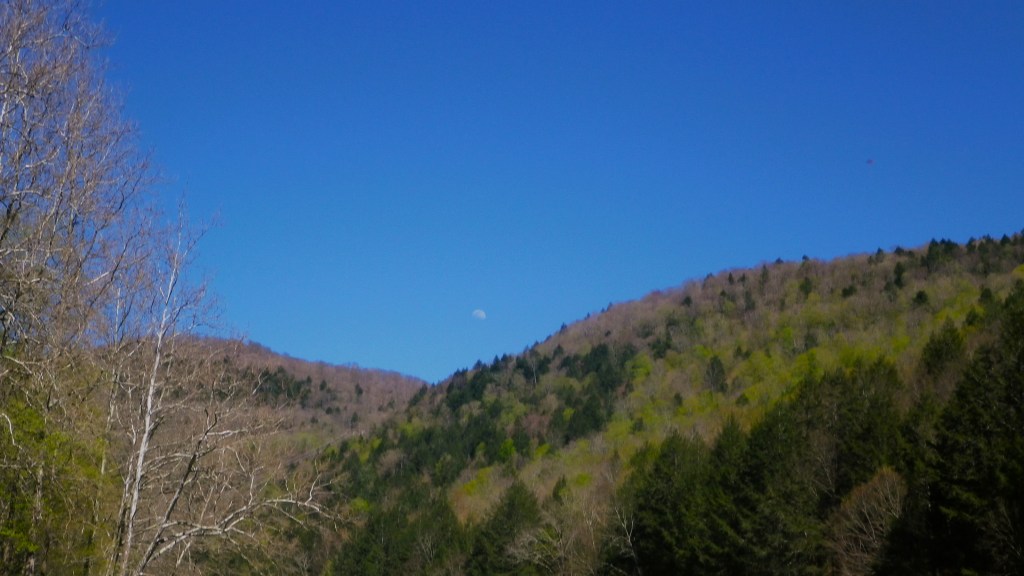
May’s full moon catches the sun’s rays on a gorgeous afternoon.
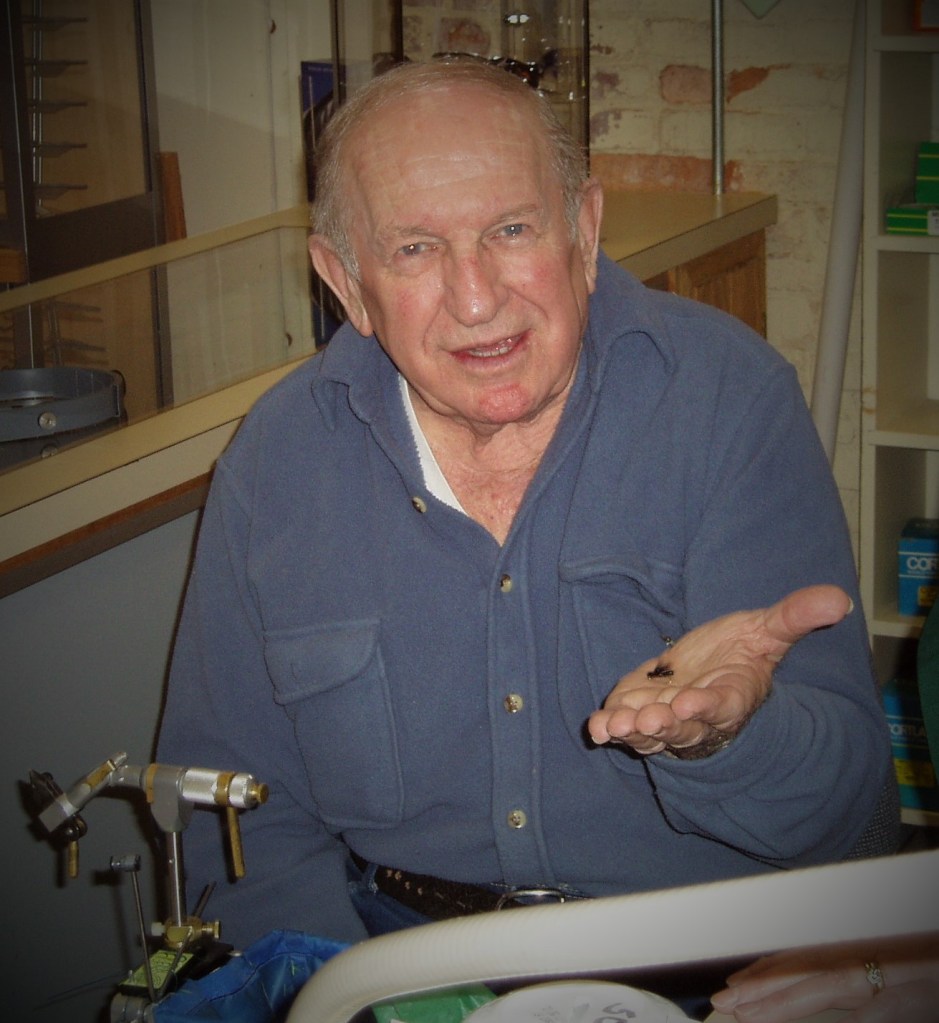
Saturday, a quiet day for me. Hundreds of anglers will be heading out to the rivers, but for me the weekends are about relaxation. I’ll visit Dette’s fly shop to pick up some odds and ends, then stop by the Catskill Fly Fishing Center and Museum to kibitz as my good friend JA will be their guest fly tyer today. This afternoon, the Catskill Fly Tyers Guild will gather for our summer meeting, comparing notes on sulfurs and terrestrials. In all a quiet, enjoyable day.
Fishermen will find unusual conditions for the middle of June. The chilly northwest winds were already blustery at daybreak, and despite yesterday’s eighty-degree sunshine, today’s high temperature is forecast at a chilly fifty-seven degrees. It may look like summer, but it will feel much like early spring.
With the difficult spring, I have been hitting it hard, first to try to be on the water in case there was a ray of light on many of those tough days and, since fishing has improved somewhat, trying to make up for all that I missed. That statement captures the sentiment, though I know full well that those fleeting moments of perfection on trout rivers once missed, can never be recaptured. The angler simply moves on and looks for the next such moment that he may be blessed to capture.
Funny how this sudden chill wind makes summer seem quite fleeting when it has barely begun. I always hope for a long season, chasing moments deep into October, living the glory of those days we call Indian Summer. Twenty twenty-two has been a cold year so far, and I will certainly welcome a cooler summer. I have no love for ninety-degree days and steamy nights. Sunshine, a gentle breeze and highs in the seventies grace us often during a Catskill Summer, and I love every moment of it. Save a bit of that extra warmth for October Lord, and parcel it out each afternoon as the leaves herald the coming of autumn!
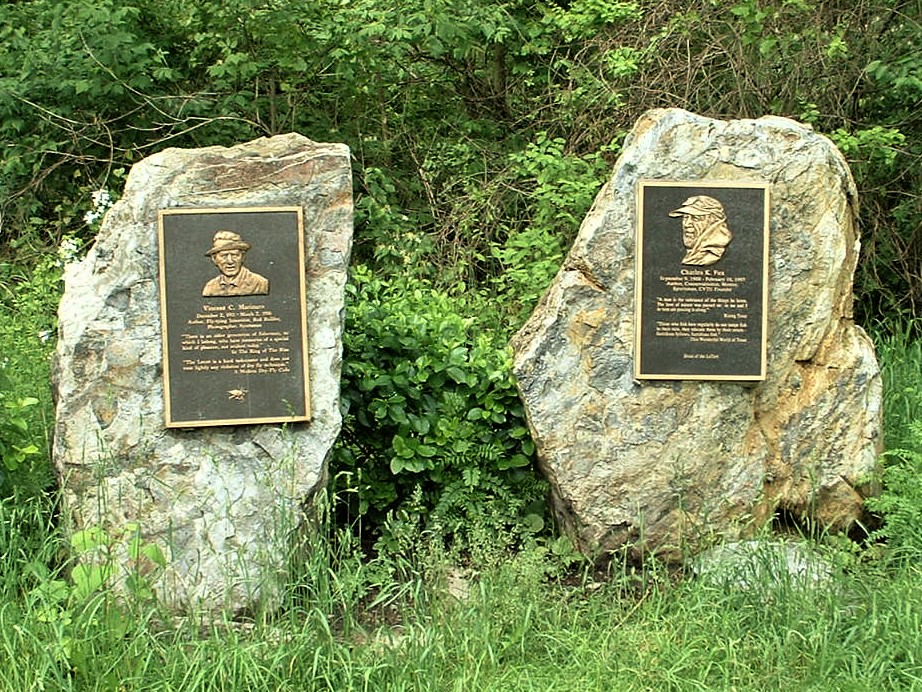
The winds have quieted now, though I am certain they will return. The new day takes a breath. I should check my fly tying kit, in case I choose to tie a few flies at today’s meeting. I am thinking about the Letort Cricket, one of The Master’s classic, crowning achievements. The Letort Regulars can still testify to the feats this dry fly has performed. Their words live on in the pages of the classic books from the halcyon days of Pennsylvania’s Cumberland Valley, works by Shenk, Fox, Marinaro, Koch and Schwiebert.
The late Ed Shenk, Master of the Letort, with a size fourteen Letort Cricket fresh from the vise. March 2007
The Master once took me to a willow shaded, brush pile enveloped, deep hole in the hallowed Letort, pointing out the lie of a brown in the nine pound class he wrestled from that impossible mass of cover on a size fourteen dry fly: the Letort Cricket.
The late Ed Koch struck similar gold decades before, when the pattern was new, taking a few from Shenk’s hand for the next morning’s jaunt along the Letort. That day is history too: nine pounds, brought to hand on a size fourteen. The black fly’s legacy leaves a lot to live up to.
It gave me my first larger brown from those holy waters, cast above the eddy where the silver current slid beneath a great mid-stream log jam, a dark, deeply colored fish of eighteen inches. Though a yard short of nine pounds, that trout was special to me in my formative years prowling those historic limestone currents.
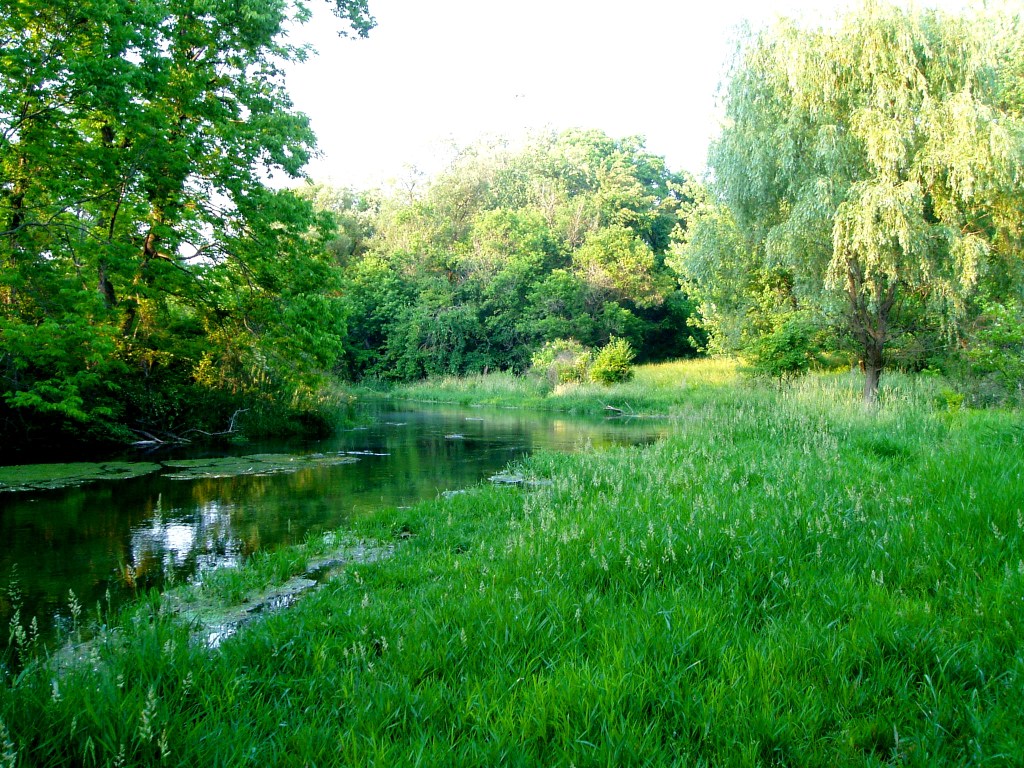
The Barnyard reach of the Letort Spring Run
All the Regulars rest now beneath the limestone, though their history, their words and their memories endure.
Yes, there is another week remaining in the season according to the calendar, but the last cool days and nights of springtime are behind us. I had not floated the Mainstem even once this season, and the pleasantly cool water temperatures early this week beckoned me come hither and enjoy a day on the big river. I convinced myself there would be mayflies and caddisflies about, enough to make some interesting fishing, but alas this final salute to spring proved as beautiful and barren as the season had been.
My best chance at a trout came relatively early in my trip, when I found a pair of little rises along a deep, fast water bank. To the casual observer, it was clear these were small fish, popping something invisible to me in the film amid the micro-eddies caused by bankside boulders and submerged rocks. I know that such easily dismissed little rises can betray more than little trout, for I have cast to many over the years, often hooking up to larger than normal brown trout.
I kept that in mind as I worked that fish popping in the eddies, and his companion that showed himself only after I had anchored. He was so close to me I could not stand to cast to him less I spook him thoroughly. I never caught a glimpse of what it was these fish were sampling, nor did I provoke any interest with the plethora of flies I offered.
The downstream wind that rose in early afternoon would have made it tough to present a fly to any other rising trout, but it kept the sun’s warmth in check and made for a very comfortable drift. I stopped and fished a few riffles of my acquaintance, those I know will hold some sizeable rainbows, but managed but one feeble take on a downstream drift. My reflexes were too quick, my energies saved for hours by that point, and I failed to touch that fish, my only take of the day.
I had just enough cell signal to send and receive a text, letting Cathy know I’d prefer a six o’clock pickup rather than the one planned for eight.
Perhaps it is fitting that the Mainstem float trip, something I never seem to make enough time for, was a mirror of my most difficult spring.
The spring’s best hatch of Hendricksons drifts unmolested down the wide currents of the lower Beaver Kill’s 46-degree water.
And so hail and welcome to a Catskill summer, leaving the house at six for a cool, quiet morning of stalking trout. Summer is my season indeed, the time I find the solitude my soul covets.
Hunting trout before the sun climbs the mountains that shelter the river, the sweatshirt is welcome on this fifty something degree morning. My sole companion: an eight-foot four weight bamboo fly rod rigged with a light spring and pawl trout reel. I pass the first two hours sending casts to cruising trout, hoping that my fly will arrive before they have turned away. Eventually I find what I am looking for and the game turns very serious.
My approach becomes even stealthier, barely a short step at a time, with frequent pauses. The trout are hunting too you see, their senses on high alert. Maurer’s Queen sends the fly out there, a long cast with little effort, the dry fly settling gently with just a tiny little plop. It doesn’t drift much more than a foot before the explosion comes!
I strip line frantically, holding the rod away from the potential tangles of my vest, as he’s coming toward me. As he turns that first time I feel his power, his weight. He takes line now, and I seize the opportunity to reel in the slack line. When it has been gathered, he bucks hard and the reel screams.
The fight is long and tense, rod high when he’s running, rod low to use the power of the butt when he goes to cover and must be turned, my fingers feathering the rim of the reel’s spool to add resistance each time the line melts away. As I bring him close his size nearly rattles me, this is not a brown to trifle with.
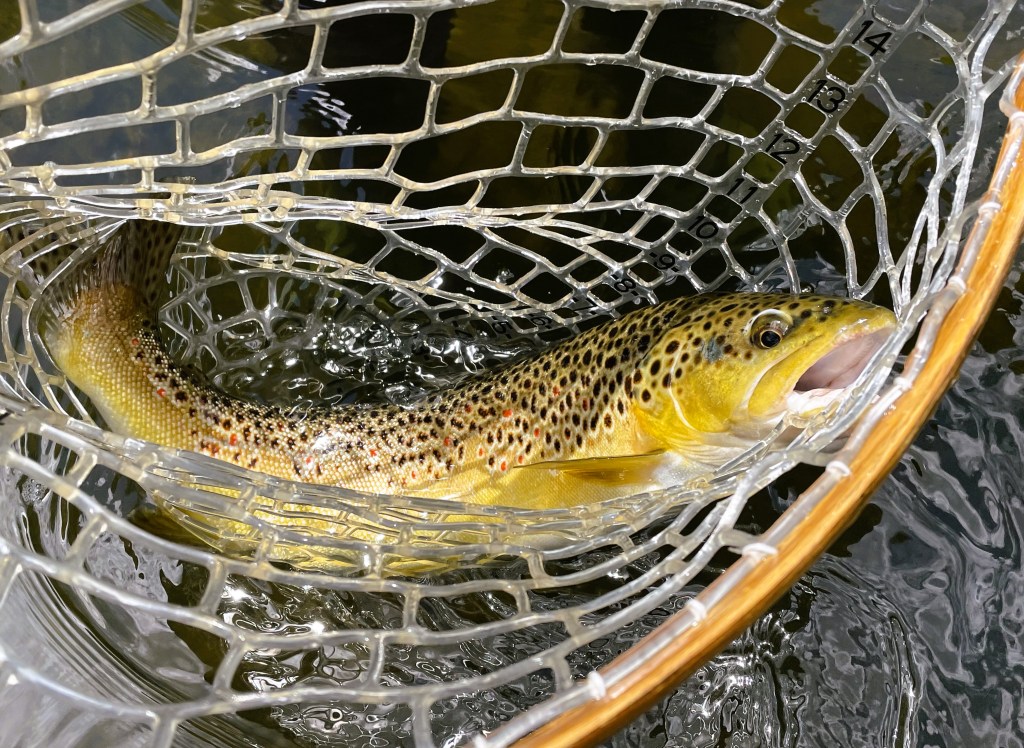
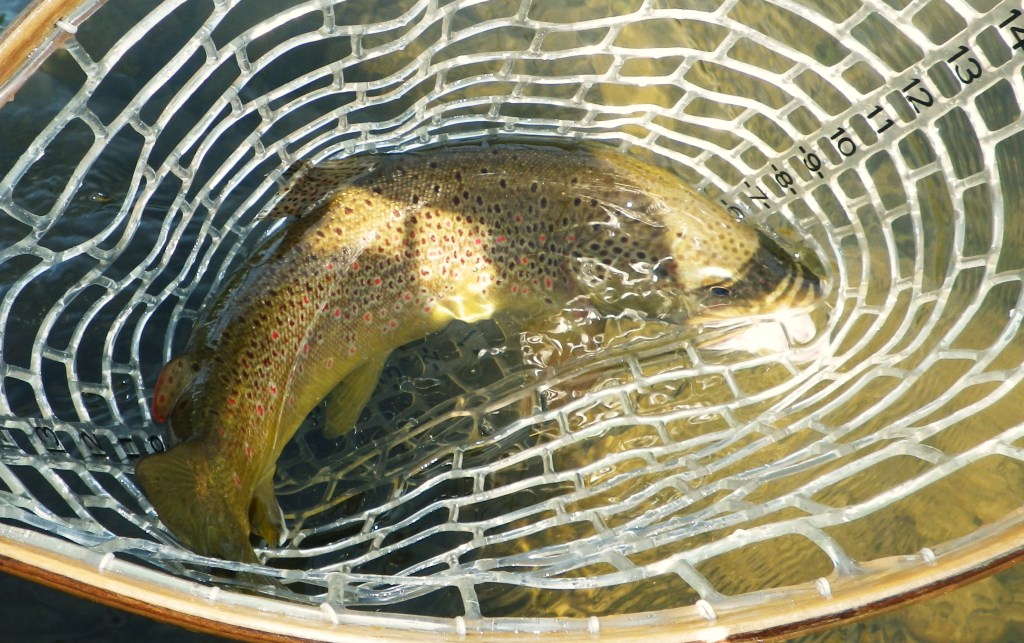
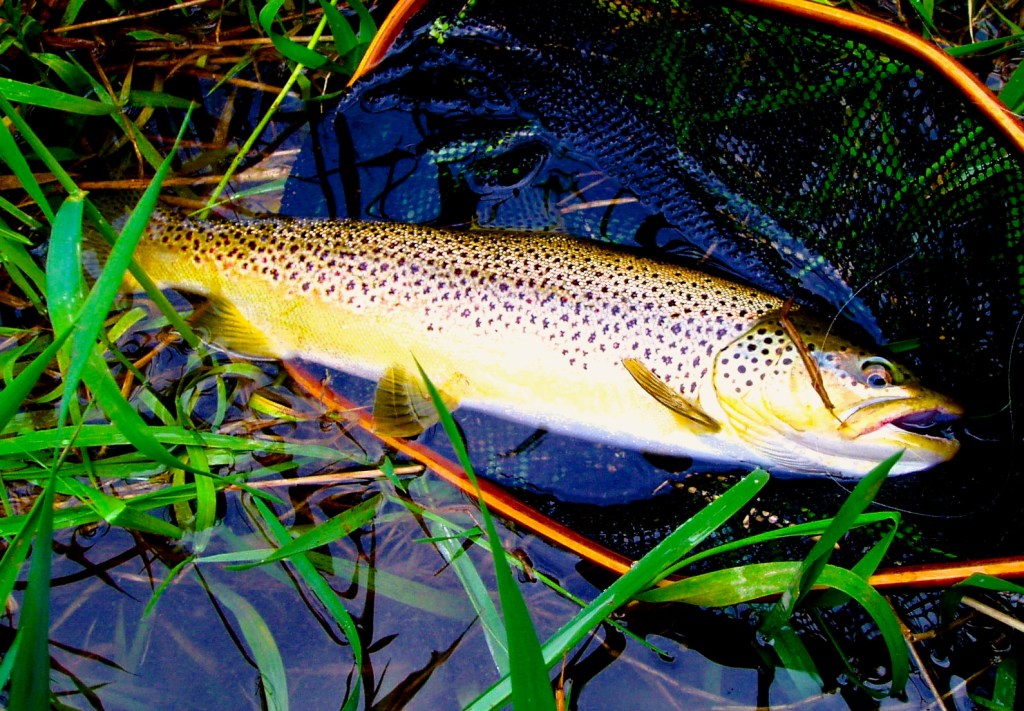
Safe at last in the net, I free the fly and try to line him up with the marked centerline of the mesh: 13 and 11, he’s better than two feet long! I submerge the net and reach for my camera, then snap a quick photo before I slip him back into his river. Couldn’t get him lined up straight, he’s between 24 and 25 inches, a hell of a brownie! Can’t ask for a better first hunt on a summer morning.
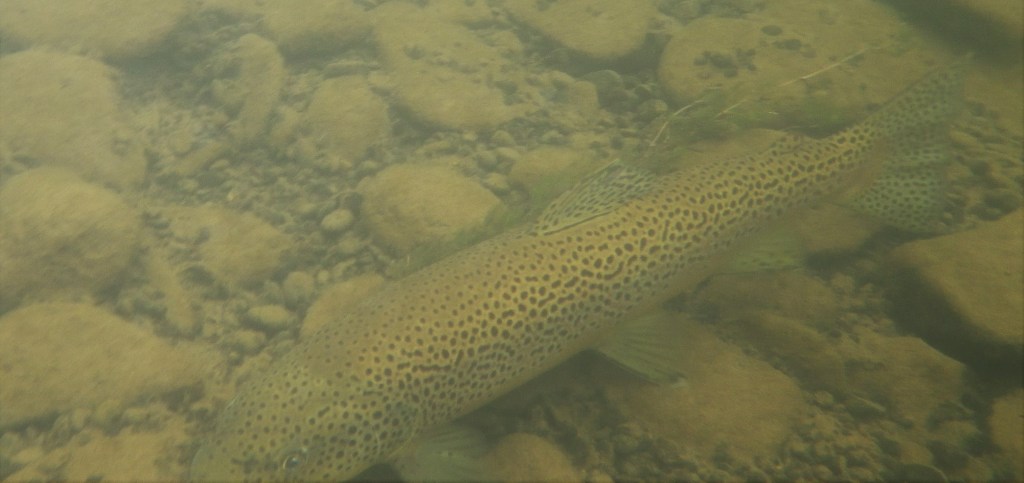
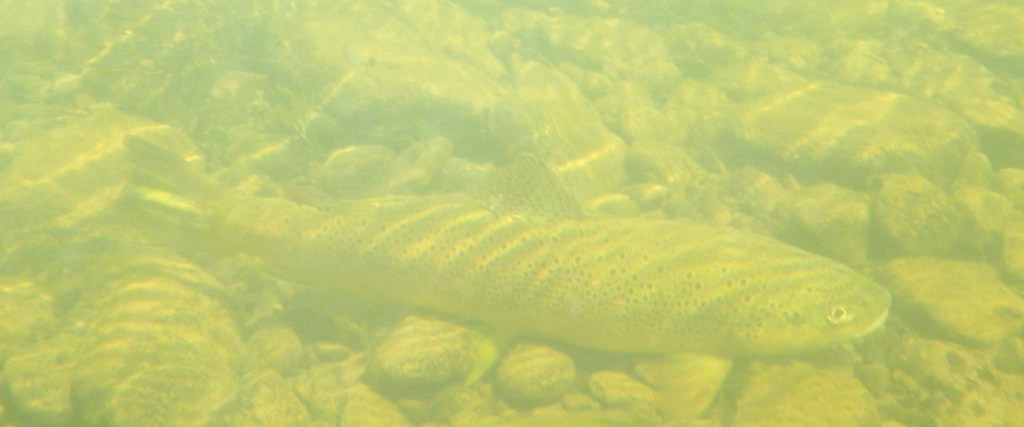
I let myself calm down once he’s back at home, settled tight to the bottom. I tuck the rod under my arm and ease forward, submerge the camera and snap a couple of underwater shots. I let him rest there while I check the leader and replace the 5X tippet, then step toward him so he shoots away!
Two more eventually pop the fly, though neither feels the steel when the cane reacts. I reason that the fly must have started to drag, unseen, back tight to cover. Cest` la vie!
Rivers change constantly. No matter how familiar, they are never the same from day to day.
Morning number two, a few degrees warmer as I arrive an hour later to perfectly still water. No rises in sight, and no reason to cast to distant cruisers. Watch and wait…
Once again, the game’s afoot, hunters on the prowl. Stalk within range, cast fine and far off, concentrate to follow the fly through dappled sunlight and shade. This one takes so softly I have no choice but to hesitate, to pause and then give him the rod. Boom! Another powerhouse!
The music of the click pawls is loud in the clear morning air, echoing against the rock of the mountainside. The Queen handles him with her mixture of power and finesse: twenty-two inches, a fine Catskill brown!
I check the fly, tug on the tippet and slick it through my fingertips to check for abrasions – all good. But no! Another cast, another soft take and I never even feel him, yet my fly is gone! The tippet knot gave it up. I never checked that end of the four-foot strand. Such is fishing…
Better than two feet of wild, Catskill brown troutrecovers from his dance with The Queen!
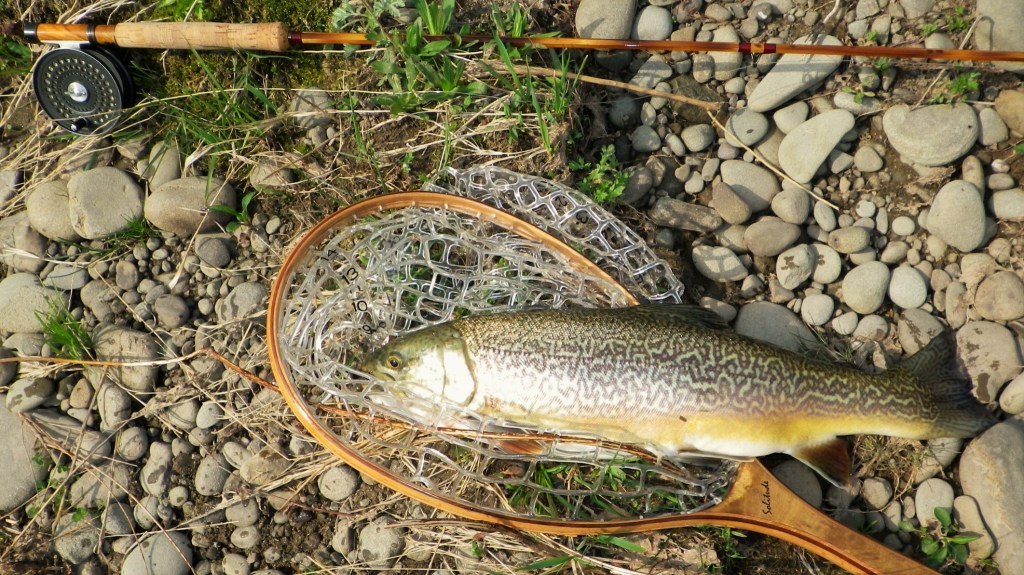
My eight-foot Dennis Menscer Hollowbuilt five weight bamboo rod has been a favorite since I first laid my hands upon it. This is the rod that does it all for me on our Catskill rivers! This Mainstem surprise Tiger Trout is not a fan of the rod’s fish catching abilities!
I enjoyed a couple of hours of talking bamboo this morning, gathered in Dennis Menscer’s rod shop with my friend Henry and his buddy Dave. Our common interest in bamboo fly rods was the initial catalyst for our friendship when Henry and I chanced to meet a decade or more ago at West Branch Angler. It was good to get my friends together at last!
Dennis has been hard at work on a growing list of rod orders, a list that grew again this morning thanks to Dave. We enjoyed the late morning sunshine beside the West Branch as the three of us cast Dennis’ eight foot and eight and a half foot hollowbuilt trout rods. I could see the lights go on in both of these guys eyes as they sampled the master rod maker’s craft.
Dave finally decided on an eight and a half foot five weight and discussed his preferences for the ideal rod grip with Dennis before writing down his particulars on the order sheet. I know he is going to love that rod when he first takes it out of the tube, inhaling the sweet aroma of varnish and poplin. His first cast to a rising trout will be a moment he remembers fondly for a long time. I know from personal experience.
I clearly recall a warm spring evening there on the West Branch when the rod seemed to deliver my Quill Bodied Spinner to a dimpling rise near twilight, without any conscious effort on my part. The brown that gently sipped that dry fly measured twenty inches long after he tested the flex of my new hollowbuilt wand!
My most recent Menscer rod is the 7’6″ four weight he makes to a classic Payne taper. This rod was also christened by taking a big Catskill brown trout, with a twenty incher during early autumn on the Beaver Kill.
I always enjoy my visits to Dennis’ rod shop and some of the long talks we have had about bamboo rods and their histories. Besides making some of the finest bamboo fly rods you can fish, Dennis does a lot of remarkable restoration work on classic rods from Paynes to Leonards to Thomases and Kosmic’s, he has an incredible knowledge of rods and the historic rod makers that have become legends.
Fishing bamboo enriches our angling experiences and discussing rod techniques and tapers both past and present draws us further into the mystique of the craft. Breathe the varnish and feel the cast!
Of course, the long awaited taste of the excitement of the Drakes led me to return. Who would not hope for another bite of the apple.
I still mourn the loss of the grand abundance of two decades ago, though I welcome whatever return to that unique feeling I am given. Our rivers have been ravaged by numerous floods, ever intensifying traffic, and the whims of the water hoarders, so it is something of a victory to witness Nature’s small attempts at renewal.
Everything about the fishing changed on my second evening. There were no Coffin Flies to sweeten the mix, early, late or otherwise. Indeed, there was little in the way of early fishing throughout the beauty of the early evening hours. That is not to say that there was not a player or two.
During those golden hours, I witnessed the occasional dimple, typically hard to interpret. The rises were exceedingly sporadic, generally of the softer variety, and to no visible insect. I scanned the surface for spinners, tiny emergers or hanging nymphs, finding that at least whatever drift line I was standing in appeared devoid of anything. It was classic, that moment we have all lived over and over on trout rivers.
The angler’s reactions typically find their base in logic and experience or pure chance and whimsy. Often it seems that one path is as ineffective as the other. My tendencies are to take the high road, offering imitations of the various flies of the season. In June, that can be a long term avocation.
Observation finally bore fruit, and I saw a small yellowish blur of motion escape a rushed dimple. Applying the logic and experience – it is sulfur season, and many of the flies of the season have been smaller than normal, led me to knot a sparsely tied, size 20 CDC sulfur dun and offer it to an otherwise totally reluctant companion of two evenings running. No, I cannot swear it was the same trout both Sunday and Monday, but his location and behavior certainly suggested that. He dimpled away sporadically both evenings, never seeming to change his attitude, not even when the big mayflies made their appearances; and he simply ignored everything I offered.
That tiny little sulfur unmasked the gentleman for what he was, obviously one of the noted small fly connoisseurs that have become somewhat common on these rivers. He took it gently on my second drift and then lost all semblance of his haughtily maintained decorum. He leaped, ran and cavorted maniacally all over the shallow flat, vexing my identification with an unusual mixture of light and dark coloration. It can be hard to form an accurate picture in the mind of a blur.
Reduced at last to a momentary rest in my net, he was revealed as one of the more unique brown trout of my memory, silvery and heavily spotted from his gill plate to just past his pectorals, and dark and miraculously colored from that point astern. Vibrant, unique and a respectable eighteen inches long, he was appreciated for his ability to elude me for two days as well as for his vigor and aerial display.
As said, that was my main entertainment for the early evening. What Drakes came did not appear until the fabled last half hour of daylight. I cannot count the times that last half hour has provided the only fishing for the day over more than three decades of angling. The flies were not numerous, but there were enough of them emerging to finally bring the other lurkers in the pool on the feed. I set about fishing them as efficiently as my excitement and sense of the rapidly ticking clock would allow.
After trying a couple of different patterns, I knotted a 100-Year Drake to my 5X tippet, having gone down earlier in deference to the skittish behavior of the trout and ever lower and clearer water. The first taker in the gloom fought enviably, as I showed him no mercy in light of the lighter tippet. Netted, measured and released, he was an inch longer than my multicolored leaper and noticeably heavier through his body. Catching my breath, I checked the tippet for abrasions and defects, then began searching for my next opponent.
There was one good fish moving, taking two or three Drakes in rapid succession, each in a different location. My casts never seemed to catch up with him. The sporadic nature of the hatch caused a lull while I searched for another trout on station. The one I finally found was nearly even with me, and I knew my drift would be shorter without the advantage of a sharp downstream angle for my cast.
I made half a dozen pitches, checking the rod low to throw as much slack as possible into the leader, before my Drake vanished in a white flare followed by a quick explosion as the hook sunk home. He ran immediately, the rod arching and throbbing, then turned back as if remembering the advantage of cover. A bit of artful rod manipulation kept my fragile tippet from the rocks, until he was off again on another sustained run. If a tactic doesn’t work the first time, try it again was clearly his game, though he was using precious energy running back and forth; advantage angler. Thrashing in the net, I measured him at an easy twenty-one inches!
It was dark now, with moments remaining in my magic half hour. One terrific boil ninety feet away caught my attention despite the gloom, and I knew there wasn’t time for an approach. Curbing my enthusiasm’s tendencies to push the rod too hard, I concentrated on the timing that allowed the twenty-year-old Paradigm to do what so many modern rods cannot. The big Drake alighted gently out there, barely visible at that distance, but the boil was more than big enough to see even in the dark. A long, wide flanked silver gleam erupted several feet into the air, and it was finished. I was left standing there in the darkened river, laughing.
Nine o’clock, and the boils here and there throughout the pool quickly diminished. Stillness reigned. With but a final, faint glow in the sky, the magic time passed into memory.
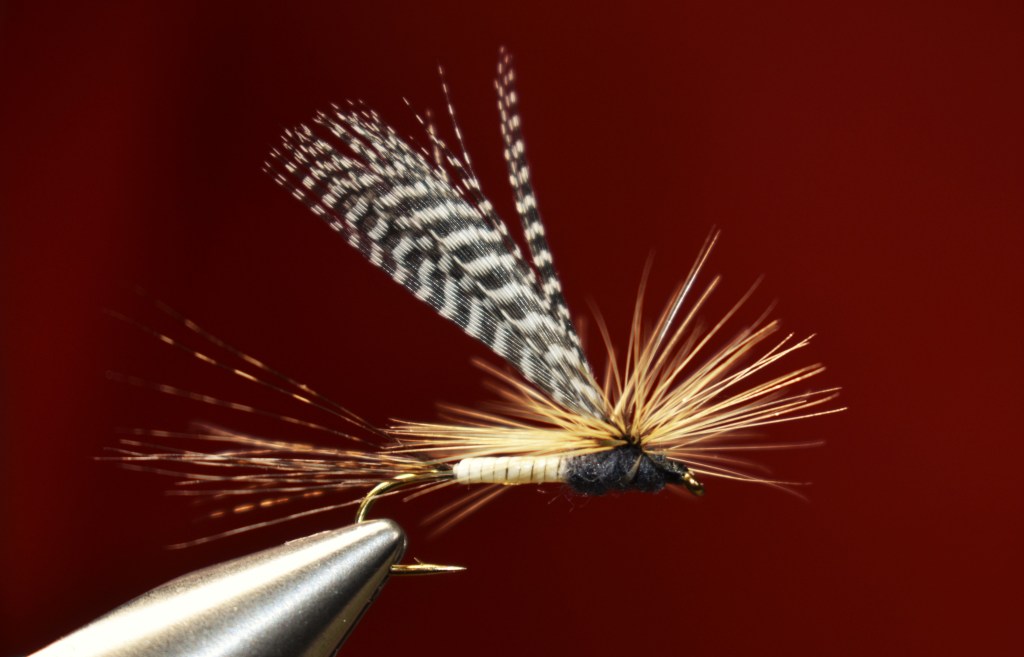
Sometimes, when I am really reaching to touch the magic, I make sure to tie a few specific flies for the day ahead.Yesterday morning, as I contemplated a hoped-for last chance for any Green Drake activity, I tied a pair of Coffin Flies in the style of my 100-Year Dun. Did I mention I really needed to touch the magic?
I have long been a card-carrying member of the Cult of the Green Drake. Membership requires devotion, hours and days of waiting along riverbanks, hoping to see those first big, lumbering mayflies lifting from the surface. The Cult also requires the acceptance of certain facts: that there will not be a good hatch every year; that if the hatch comes it may not bring trout to the surface until darkness envelopes the river; and that the trout that do feed upon the Drake may spend their energy chasing only the nymphs struggling to the surface, never touching a dun.
I was inducted long ago on the hallowed Beaver Kill, mesmerized forever as the Coffin Flies danced above the riffle. As they neared the water’s surface, they touched their white abdomens to the river, depositing the precious cargo that would seed the next generation, two years hence. The trout became frenzied as such big meals literally danced on their rooftop, slashing and leaping for the huge flies. My induction ceremony was completed when a nineteen-inch brown trout slashed my hesitatingly tied Dette Coffin Fly and rocketed into the evening sky!
Our meetings have been limited over the past few years, as I have not found the hatch in fishable numbers, and this year appeared to be the worst yet. I had seen only a few duns, and not a single one had been taken by a trout in my presence. A respected friend had told me he had stopped even carrying Green Drake imitations a decade ago, further cementing my belief that this once great tradition of fly fishing was dying out.
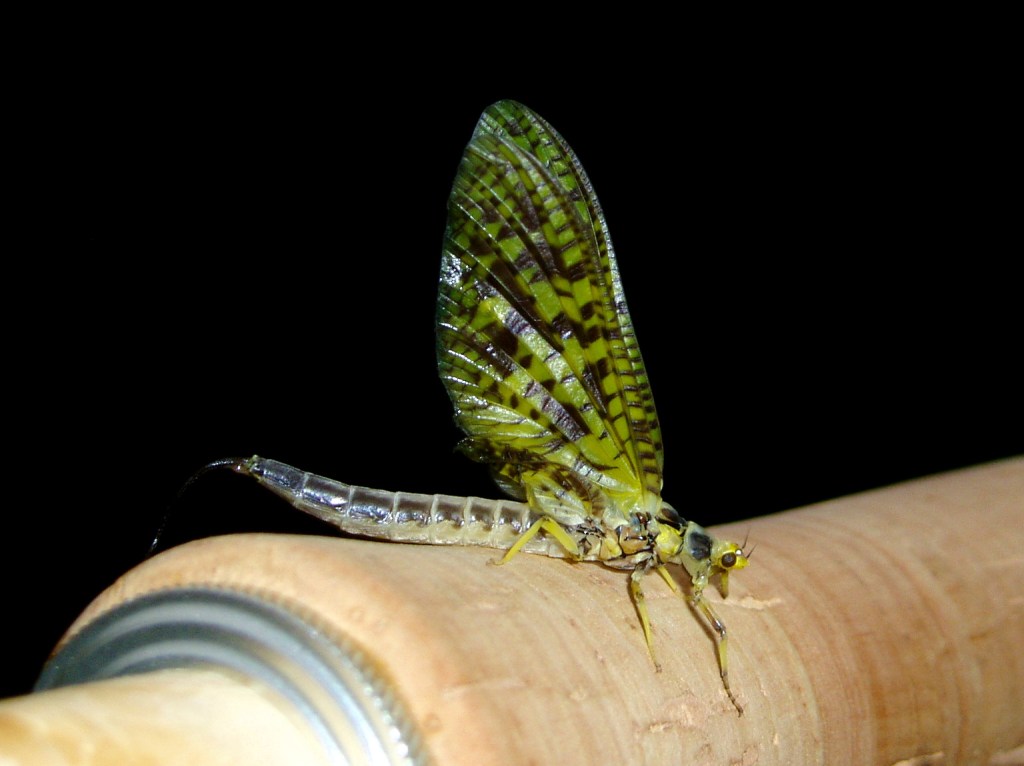
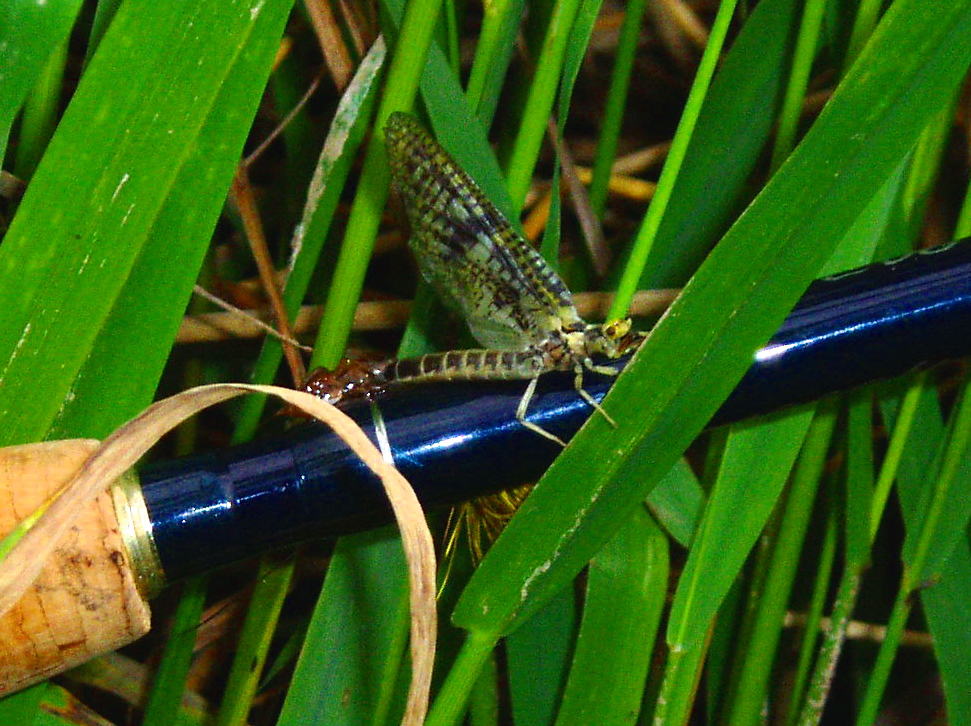
Many times, I have sat in the grass of the riverbank and plucked the lusciously huge black and green duns from the margins of the river, this one still wriggling to free himself from his nymphal shuck!
Our Catskill rivers were once home to a magnificent wealth of large mayflies, and the Green Drake was the king! I recall one night many years ago when I was chasing the hatch on the Beaver Kill. The pool I had selected became overly crowded with anglers, and very few flies appeared. I waited, finally deciding too late that the hatch would not materialize that night on that reach of water. I walked briskly to my truck and drove to another pool on another river as daylight dwindled. When I arrived at the small, round pool I sought, the site was staggering: the surface was covered with Coffin Flies and Brown Drake spinners, with trout rising everywhere!
One cautious step into the pool put down every trout within casting range, and as each step increased the magical safety zone around me, I bowed my head in the dying light, stopped casting, and silently watched the spectacle. As darkness fell and the sounds of the feeding trout quieted, I met another starstruck angler in the parking area. John Randolph was Editor Emeritus of Fly Fisherman magazine, a man who had fished all over the world and written marvelously of rivers I will never see, and as he described his evening his excitement and sense of awe was palpable. Those were the days of plenty, of high magic upon clear, quiet pools, and I fear I shall not see their like again!
Last evening, I suited up and headed to the river, my pair of 100-Year Coffin Flies tucked into a special compartment of my Wheatley fly box. Two anglers were just beginning their walk when I assembled my old Thomas & Thomas Paradigm. They took a path downstream, so I turned up and eased along the edge of a great empty expanse of quiet water. Perhaps seventy yards upriver, my eyes caught movement at my feet: one wriggling Coffin Fly, preceded by two fully spent companions drifted down in inches of water.
I spotted a single soft rise and began the slow, gentle stalk into casting range, knotting one of my precious magic flies to four feet of 4X fluorocarbon. It took several minutes to reach a casting position without sending notice of my presence to that trout, occasionally sipping out there. Just a few Coffin Flies were visible, even with the full glow of the sun on the trout’s lie, but every few minutes another soft rise would appear.
I had made several casts, the long line unrolling well above the water, then checked that the leader would fall in sinuous waves of slack. When the delivery was perfect, the rise met my fly and I raised my rod to an explosion! The great trout darted up current and away, bent upon reaching some hidden snag, but as he turned toward my pressure, victory instantly became defeat. The retrieved fly was perfect, its hook sharp and unbent, but its hold had betrayed me in my moment of perfection. As I dried the hackles, I could not help but feel the doubt borne of this most difficult spring.
After I had settled back to my vigil, another soft rise finally welcomed me back to the game. I checked that hook point again, to be doubly sure, and sent a long loop of fly line and leader into the glimmering, sunlit path of the drift. The rise came gently, and once more my old rod raised into a straining arc which touched off an explosion. He gave me everything he had, and I gasped a bit to myself when I got the first full profile view of him: God that’s a big fish!
A wild Catskill brown trout measuring two feet or more is a very special gift. When such a fish comes to hand with a special dry fly in its jaw, the moment remains in memory forever.
I caught a few more lovely trout that evening, but had five very big, hard charging bullies part company with my fly during our dance. Never was a hook blunted or bent open, each seemingly perfect upon inspection after retrieval of my suddenly, achingly limp fly line. Nature’s and the Cult’s membership dues I expect, though I had some wonderful streaking runs and a wildly throbbing rod to remember when darkness finally brought the interlude to a close.
At one point the beauty and wildness of the scene was accented by a chorus of howls from coyotes away on the mountainside, sending a chill down my spine from the inside to meet the chill of cold water penetrating from my outside.
Well, George Thorogood had a great hit under that title anyway: moanin’ the blues my brother! As far as fishing, I am wondering if I should change my habits. During my travelling years, I fished late every night, stalking the darkness in search of great trout and great moments. Retired and living the dream at last now, I tend to be a daytime fisherman.
Part of that is practical. I awake before dawn each morning and get started with my day, catching up on the baseball scores, tying flies, cleaning fly lines and ferrules, and generally getting ready for my fishing day. Depending upon conditions and destination, I am usually out by late morning to start my fishing. By five o’clock I am tired, as being at the end of a twelve-hour day is reason enough to hang up my waders and relax.
The other part of my daytime fishing regimen is the fact that I have spent many dark hours upon rivers, and for too many of them to count I was standing around and waiting for the big event. Yes, those classic evenings do happen, flies appearing, closely followed by the soft rings of rising trout as the direct rays of the sun leave the water, but a lot of those long nights on the river have resulted in a fifteen-minute flurry of activity just at dark. When it is dark enough that you can’t really see what you are doing, there is finally something to do.
Since we were blessed with some badly needed rainfall, followed by a cooler, cloudy day, I decided to spend an evening on the Upper Delaware on Thursday. I checked river gages upstream after three o’clock and decided the water temperature should be pretty good down as far as Stockport. The first thing I did when I got there around four was to wade in and dunk my thermometer. When I pulled it up and read sixty degrees, I figured it was going to be a great evening.
Indeed, standing around in a river as beautiful and impressive as the Delaware has the makings of a fine evening on its own, but my focus was to find some flies on the water, followed by those lovely soft rings in the surface. I did find some flies in the four hours I prowled up and down the river: one Green Drake and two Psilotreta caddisflies. Other than the occasional shad jumping, the surface remained unbroken. It was after eight and I asked myself whether I wanted to stand there another hour: the answer was no. Might I have missed an epic fifteen minutes, half of which can be spent trying to change the fly? That’s always possible, but after thirty years on these rivers I have my doubts.
Anglers have been talking about the lack of hatching insects. A couple mentioned a magazine article about some new corn seed with built in pesticide that, once washed into our rivers, never dissipates. I firmly believe that two straight winters of extreme, prolonged cold with ultra low river flows have been more than hard on the Delaware system. It could be both, and other factors we are not yet aware of. Nature is amazingly resilient, and I hope that, whatever the cause for this apparent downturn in insect life, she works her magic and fixes the problem. As anglers, we need to be vigilant, and do our best to give her a helping hand.
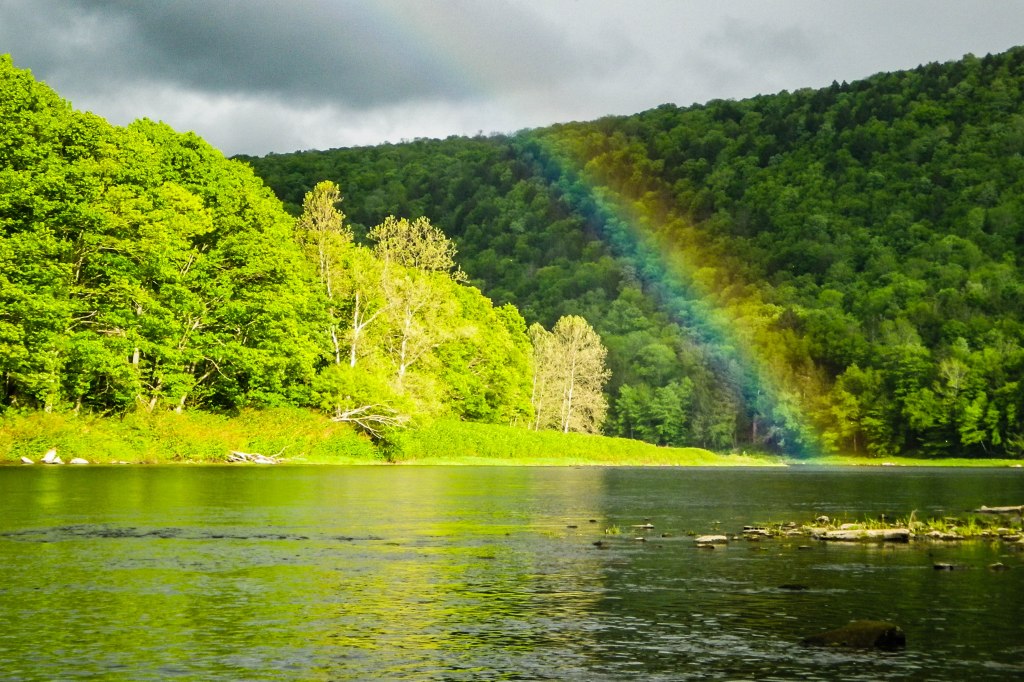
Rainbow Bridge – Delaware River
I may try to re-adjust my schedule and spend a few more nights on the river, just to prove to myself that I am not missing all of the usual daytime action because the trout and insects have decided to work the late shift. If I could only sleep until ten each morning, that would work out wonderfully, but that will remain an unfulfilled wish. I’m getting a little old for eighteen-hour days.
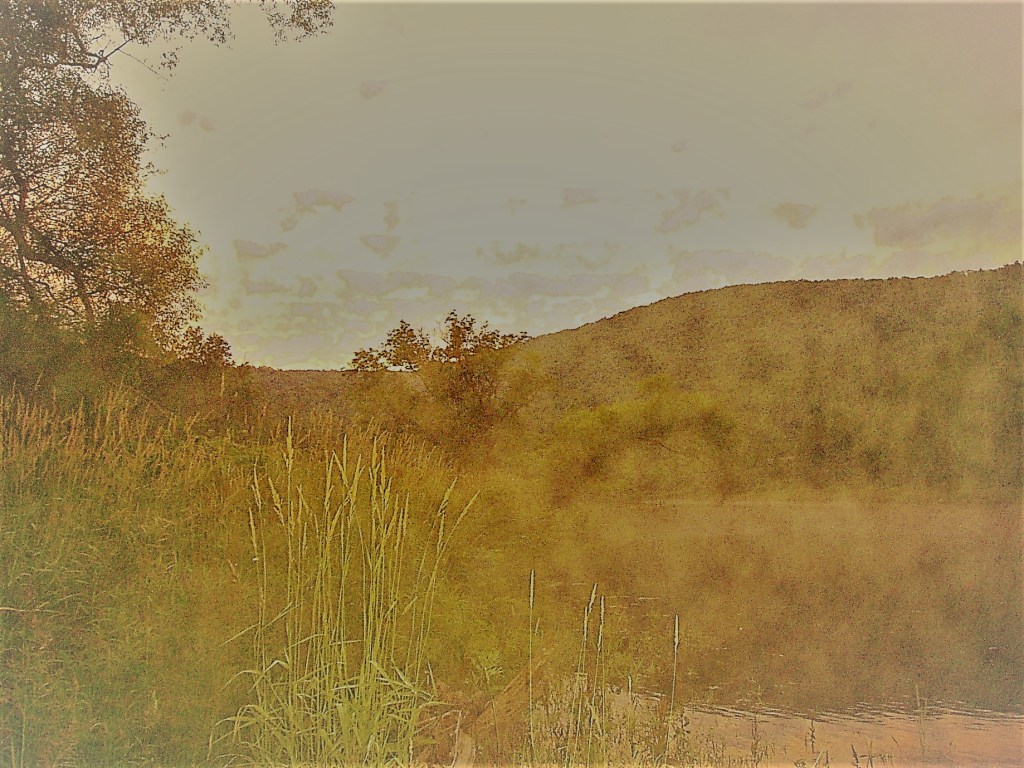
Through the fog of memory – I have been here before…
Welcome June, the next rung in the ladder of the season lies before us. It should be utter madness, with drakes green and brown, sulfurs, isonychia, cornutas… but it isn’t. Looking more like the doldrums, I have begun to approach this spring fishing like it is summer.
The first step was a positive one. Catching a popular pool unmolested the other day, I slipped into the quiet water and started my search. Stalking, watching, intent upon subtle clues along the recesses of the calm surface. There, a movement, subtle and constrained, though clearly a sign of life.
I stalked that sign, moving slowly and carefully, taking advantage of the breeze whenever it ruffled the water. Sure enough, there was a little dimple in that hidden lie. Other than the omnipresent couple of bouncing caddisflies, the river betrayed no insect activity. Consistent with my revamped thinking, I knotted a small beetle rather than a juicy March Brown.
The cane rod delivered it gently once I waited for a moment between gusts of wind. One cast, two, and then my fly met that dimple. He fought me with vigor, darting and stripping line from the Bougle`, the reel’s protests shrill and exciting there in that moment of solitude. The beauty of the river, the sheltering forest, the trout and I captured the moment.
He was a fine specimen that brownie, thick flanked and belligerent when his quiet brunch was interrupted, still vigorous and golden as he thrashed in the clear meshes of the net. The forceps proved handy to grasp the small fly before returning him to the quiet of the pool. A blessed gift! Summer conditions, summertactics, yes… I felt quite smug when I had stalked the next little obscure disturbance, and perhaps that was my mistake.
There was another dimple you see, but I failed to convert my subterfuge to arching cane and the shrill music of the Hardy click and pawl. He was no more inclined to sample this summer fare than the next one, and so my theory collapsed.
Here and there for the next hour or so, and on another reach of water the next day, and another the day after that there was nothing but the occasional cruiser. Wiggling bug syndrome is my name for the phenomena, when the general paucity of insects causes idle trout to suddenly rise hard just once, never to come again in that location. WBS has been the character of the rivers I haunt during recent weeks.
There is hope for refreshment this week, rumors of tailwater releases, even good, honest rainfall, but will it change the character of the hatches? We are fortunate that Memorial Day’s interlude of hot weather has been brief, and yes, cooler water can bring about an increase in mayfly activity. Still, this season seems all too familiar.
The early hatches were wonderful in 2021, with each successive species of mayfly becoming increasingly sparse and fleeting. By summer, it was rare to see more than a museum sample of the typical drift. I looked back to winter, and the low flows during its coldest duration. Sadly, that scenario was repeated: low flows, and the weather even colder for longer durations.
Nature is resilient, though the magic of her rebirthing powers takes time. She works on her own clock, not ours, and aging dry fly fishers can only mourn the loss of another season of those precious moments. The grand hatches of April, May and June, those that simply astound us, are indeed magical moments in a fly fisher’s life, and they become more rare as man’s manipulations bring damage and disarray to Nature’s miraculous canvas.
Forgive us our trespasses Mother, and shine your light upon our beautiful rivers that we may witness your grandeur!



 Bright Waters Catskill