Easing Back Into Winter

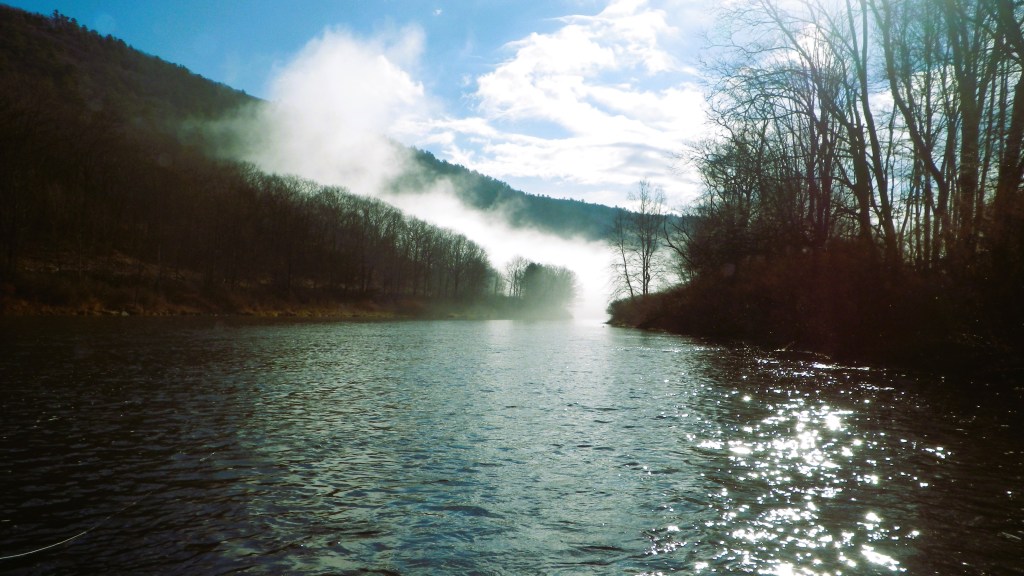
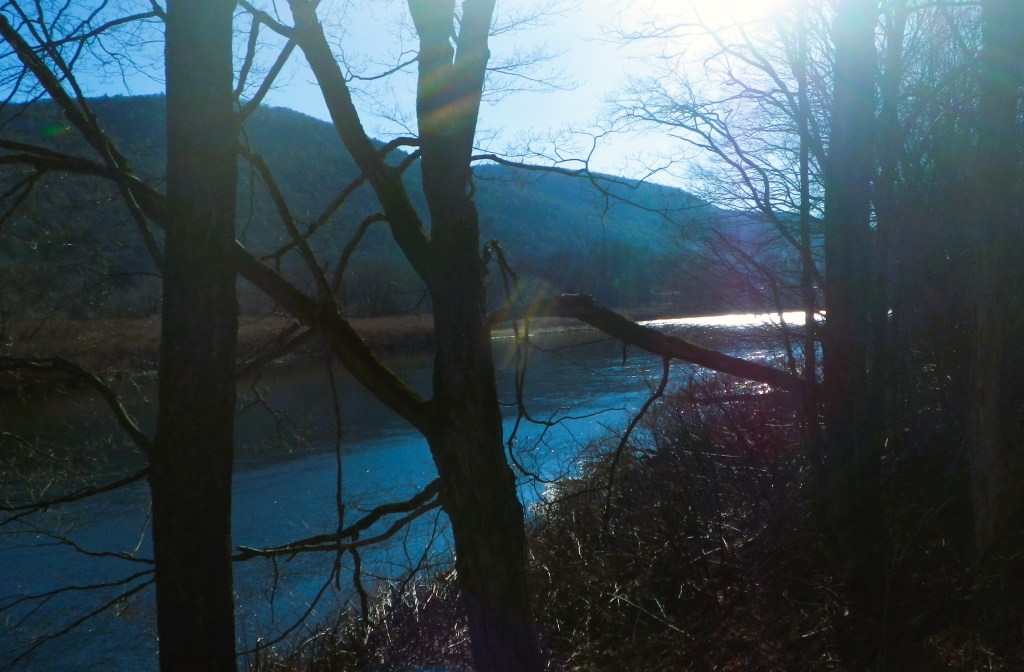
The river is ice-free on a 28 degree January morning…ah sunlight!

It seems we are easing back into winter this week, our spell of upper forty, even fifty degree days now a memory. I am back to tying a few dry flies, though still watching weather trends and river temperatures. Today we reach and pass the ninety-day mark in my personal countdown to the nirvana of the dry fly season; the time that my soul finds its freedom once more.

I talked with a good friend from Chambersburg on Sunday night, catching up after a long stint. He has been busy with family and the increasing responsibilities of his profession, typical of many young men of his age, and I with my fishing, tying and general enjoyment of life in the Catskills. He asked if I had tied a Translucence Coffin Fly, and I told him that, while one was on my radar, I had not yet placed the hook in the vise. Sadly, I explained, Daiichi does not make their Crystal Finish dry fly hooks in a size larger than #10, a size short of our typical Catskill Green Drake. In searching through my hooks yesterday though, I found a single package of size 8 Sprite dry fly hooks, a hook that has a dull silvery finish. While it won’t give the same effect as the Crystal Finish hook, it will not darken the silk as a standard bronze or black finished hook will. I believe the Sprite will allow me to include the big Drakes in my Translucence Series without too much loss of performance.
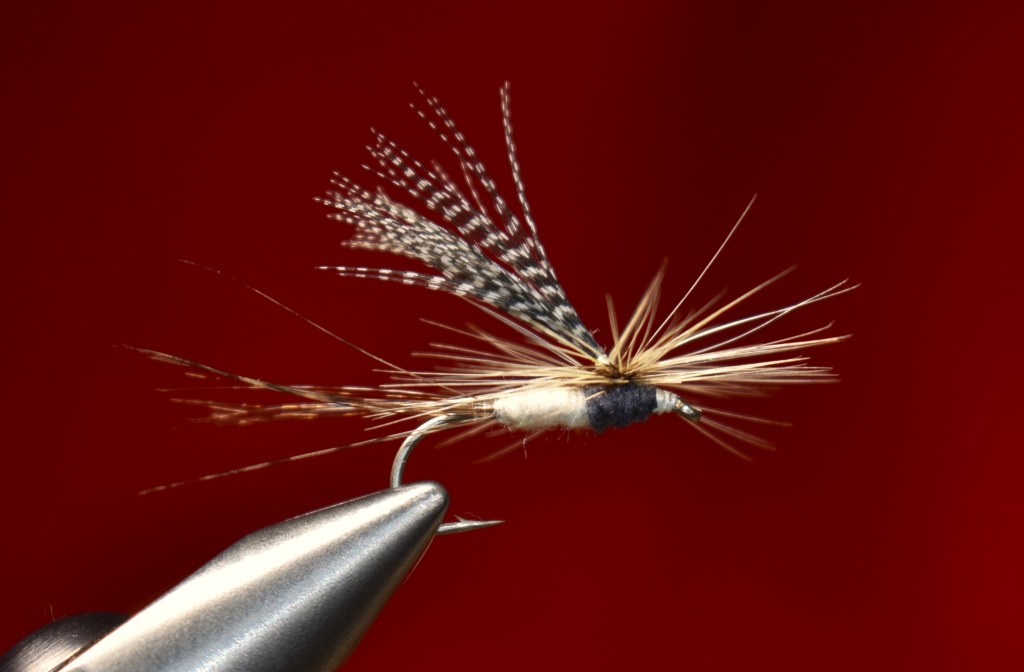
So, my lineup of patterns to be tested grows by one, Translucence flies all: Olive, Paralep, Isonychia, Light Cahill, Drake and Coffin Fly. It looks to be a busy season! I sit now pondering the hatches, some of which have been rather sparse these past two years, and hope that 2023 will be a very fruitful year upon the rivers of my heart!

I still need to get back to my silk blending, for I hope to prepare some dubbing for the Lady H next!

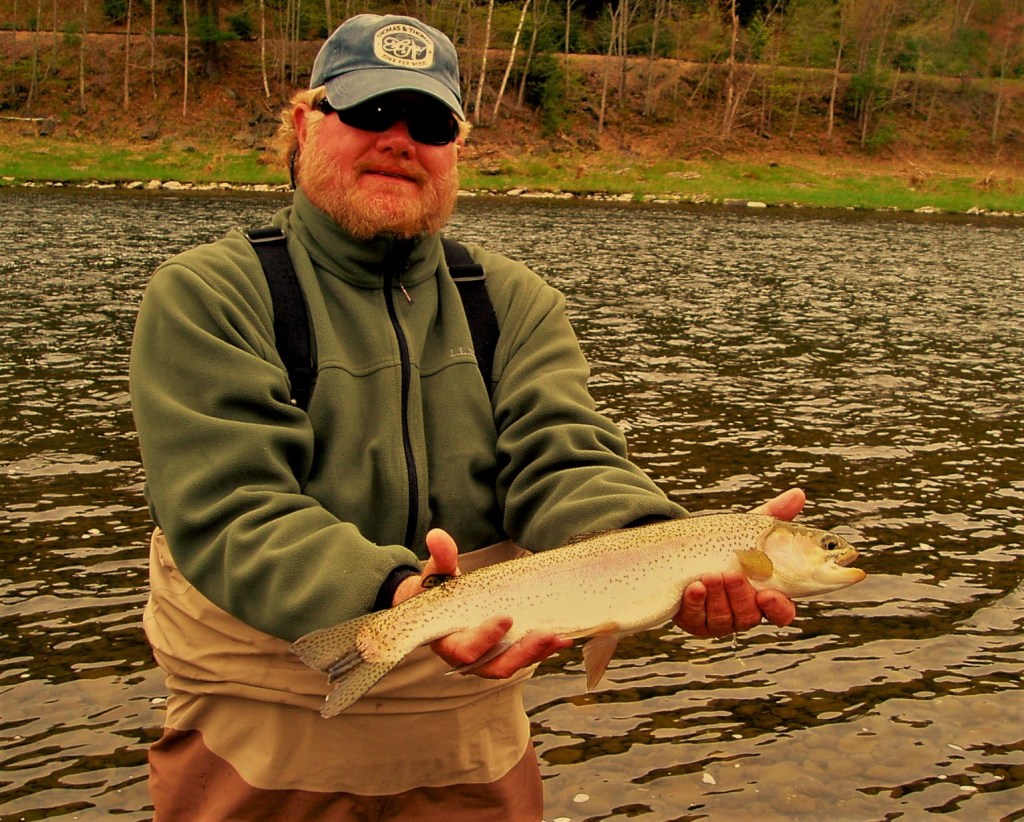
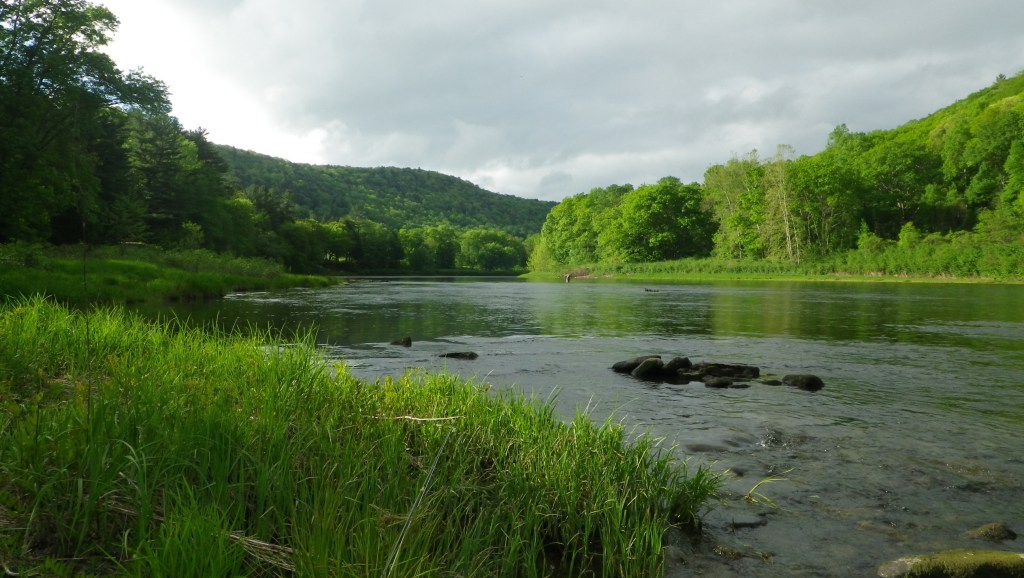
Drifting the Mainstem amid the glory of June…
…though give me a cloudy day for the best catching!
(Photo courtesy of Pat Schuler)
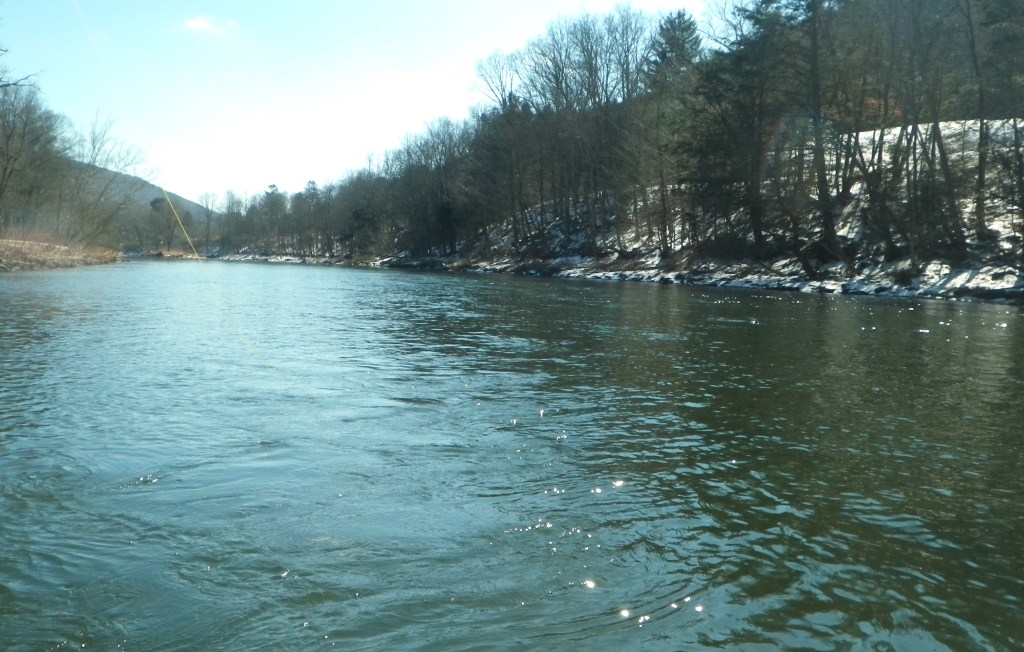
Searching for the Dry Fly

A gorgeous January morning during our recent winter respite.

Dr. H. B McCaskie, in his The Guileless Trout (London 1950), pondered the breadth of time required for anglers to finally rise to the dry fly given the records of authors who confirmed the relatively widespread understanding and recognition of the habits of trout with respect to the ephemerids: “Knowing all this our forefathers were content to watch the trout picking the natural insects from the surface of the water, to study these insects and copy them with anxious care, and to let two hundred summers go by before they were inspired to put their imitations where they were most likely to be taken.” Given we anglers’ penchant for taking credit for our own little discoveries, it does seem rather amazing that such a large one got away for two centuries!

Then again, fishermen are well known to be secretive.

Perhaps the resistance of human beings to change is to be blamed as well. Even though well established in England in the nineteenth century, the dry fly was little used or respected here for a long count of years. Interest grew in the Catskills due very much to the inquiries and correspondences of Theodore Gordon and his contemporaries. Gordon was a fly tier, and very much interested in the tools and tactics for the dry fly to apply to his home waters of the Neversink and other Catskill rivers. His observations of American ephemerids inspired his own creativity to tie flies well suited to our rivers.

Gordon wrote in British and American sporting publications of the day and shared his flies and thoughts with those he fished and corresponded with. From his simple life in the Catskill mountains, Gordon greatly influenced American dry fly fishing, becoming the seed for what we know today as the Catskill school of fly tying. The stories are interesting, and I shall not recount the details here, there being too much charm in our angling history to brush it aside with broad strokes. The anglers of today are fortunate to have wonderful avenues to learn and appreciate our own angling history. We are fortunate to have the active efforts of the Catskill Fly Tyers Guild, the Catskill Fly Fishing Center and Museum and the Jerry Bartlett Angling Collection as repositories to keep our region’s history alive!

The dry fly and the Catskills are synonymous due to this history and the beautiful brooks, streams and rivers that still wind through these mountain valleys, and the hearts of fly anglers. Wild trout rise throughout the season to the wondrous mayflies, stoneflies and caddisflies that inspired Gordon, Christian, Cross, Steenrod, Dette and Darbee, and continue to inspire us today.

My own passion for the dry fly has drawn me here for thirty years, first as a visitor and finally as a resident. I revel in the new mysteries revealed as each season passes!

Commencement

Danneker’s Pool, West Branch Delaware, Now Posted Limiting Access

There is always something good, something right about beginning a new fishing season. Though we avoided yesterday’s forecast sixty degree high by the smallest of margins, it was certainly wonderful weather for January.

I had driven to the Route 191 bridge to check the water clarity, as all rivers have risen since the New Year commenced, and was pleasantly surprised to be able to see some river bottom beneath the rushing currents of the West Branch. My fate thus sealed, I returned home to dress for the high, cold water and prepare my tackle.

Seeking more wadable flows, I aimed for Deposit with an eye toward swinging my wares through Danneker’s Pool. Surprised to find no anglers in sight, I assembled the Kiley rod and began a pleasant walk down river. Nearing the head of the pool, I came face to face with a shiny new posted sign staked right in the middle of the well worn fisherman’s path. Alas, another casualty of entitled fishermen I suppose. It is hard to blame a landowner when one recounts all of the various bad behavior witnessed along the rivers. I turned wistfully and walked back the way I had come.

I ended up fishing shallower water than I had planned, keeping my attention focused on the deeper pockets of the run I was resigned to fish, and quickly got used to my little Dazed Dace bumping rocks as it swung along close to the bottom. My growing familiarity with those frequent sharp bumps proved to be my downfall.

My concentration lapsed a bit and caused me to react a second late when one of those sharp little bumps proved to be something other than a rock. By the time I tightened the line against the wiggle following the bump I was late, and I knew it instantly. The rod tip got very heavy as it bowed menacingly, and a great boil of water rose upon the surface. I had not fully appreciated the apparent size of the trout that had taken my fly when it and the wet fly line came flying suddenly right back at me, splashing my face with cold water as the entire rig fell in a tangled heap at my feet. The Dazed Dace had done it’s job, caused leviathan to rise, and I was caught sleeping at the wheel.

I worked more thoroughly after that, but of course such chances are never repeated.

As the afternoon drew along, I decided it was prudent to change my fly and make another pass through that run. Where there is one trout, their ought to be another; and there was.

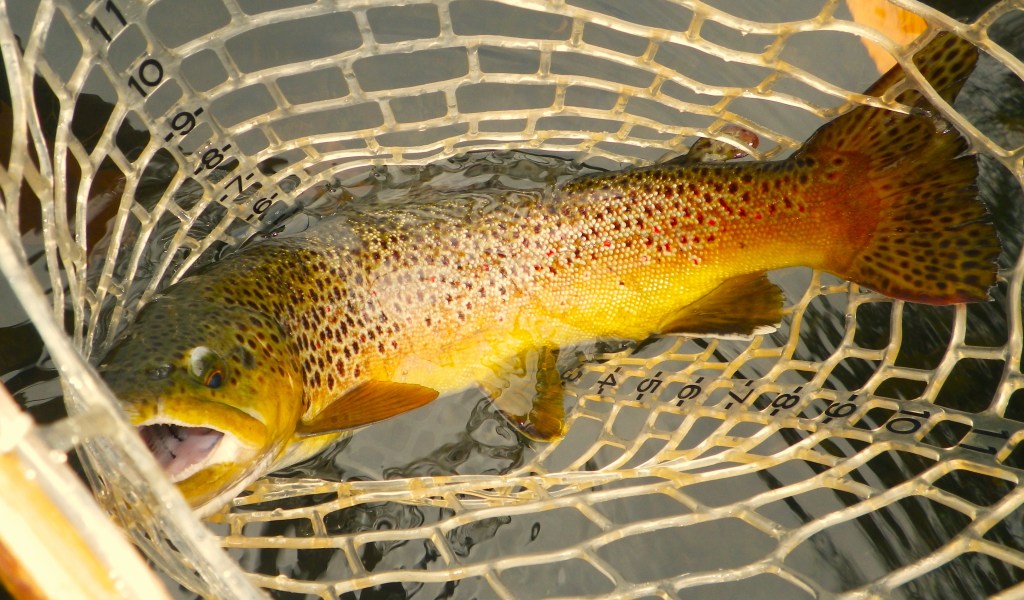
A small Copper Fox was rudely interrupted in it’s swing and this time I allowed the hook to take hold before bringing the arch of bamboo smoothly into play. The tip bowed once more as I played the first trout of the year to the net. The silvery, winter hued brown was an energetic, foot long specimen, and I thanked him for his service. Perhaps with the ritual completed I will find myself more prepared should another big lurker be encountered.

There a is a pair of size 8 dace hanging here in the drying rack, and my thoughts have already wandered from river to river in an effort to choose my destination for today. A final fifty-degree day remains in this unseasonable early break from our Catskill winter, and I shall not waste it. If this was spring or summer, doubtless I would return to that same shallow run, confident that big fish would remain. If this was spring or summer, there is a good chance I would cross swords with leviathan once more, but such trout do not feed regularly in the chill rivers of winter.

Morning is upon us, time for breakfast and a decision. As always, I hope for sunshine, plentiful sunshine and a bump and a wiggle!

Warm & Wet

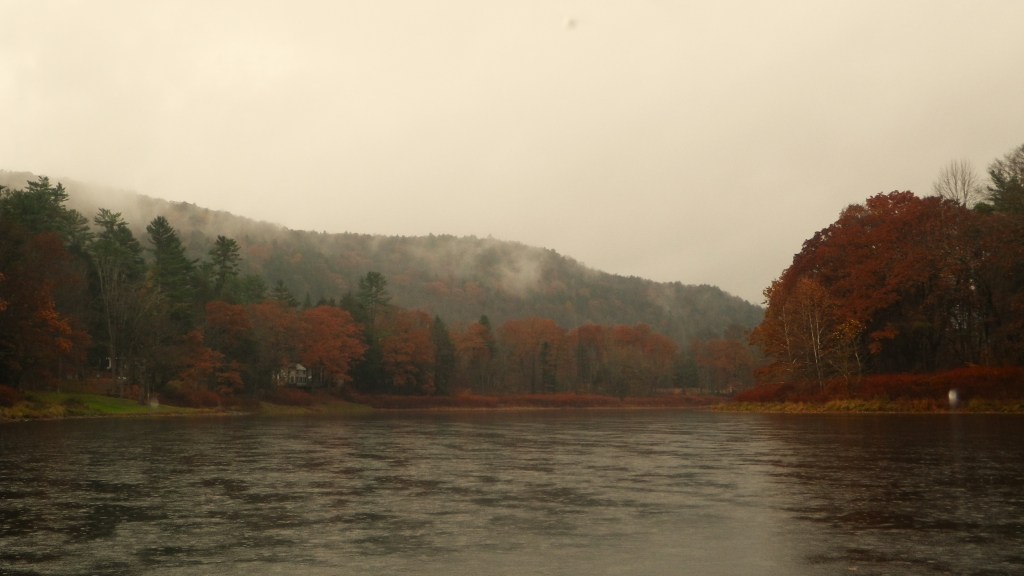
An Unseasonably Warm November Afternoon In The Rain

Sixty? Are they kidding me? That’s the high temperature forecast for tomorrow here at Crooked Eddy. It isn’t time to panic though, for winter will return for the weekend. What I wouldn’t give for some sunshine to go along with that sixty-degree day!

In truth I doubt we will see 60 and, if we do, I will be looking hard at a couple of river gages and toying with the idea of spending a couple of hours swinging flies. The warm air helps, it will keep the water temperatures hovering around forty degrees, but it would take several hours of sunlight to give them the kind of kick that would lead me to expect to find a feeding fish or two. With more seasonable weather returning Saturday, this could be the last chance to wander a riverbank for an extended period of time.

In the more southerly climes of Southcentral Pennsylvania, the weather tended to be more variable through the course of the winter. Yes, there were some very cold stretches, but there were little warmups too. If the warmups lasted into the weekend, I could generally expect to find a few active trout on the limestoners, for their water temperatures rarely dipped below 50 degrees. My favorites were the February warmups, for they came when cabin fever was reaching a peak!

Last February, we got an honest warmup here in the Catskills. Daytime highs ran in the mid-forties and into the low fifties for a handful of days. That was a first for me since moving to Hancock in 2018. We are having that kind of spell now, and it did get me out on the river for a day, but I missed the sunshine. Even in January, a bright, sunny day can punch up the river temperature three degrees or so in a few hours, and that quick little rise just might allow me to introduce my new Dazed Dace to a big old brownie! The rapid rise has always seemed more likely to get a few trout moving than a long gradual rise over a couple of days.

Don’t mind me; just dreamin’…

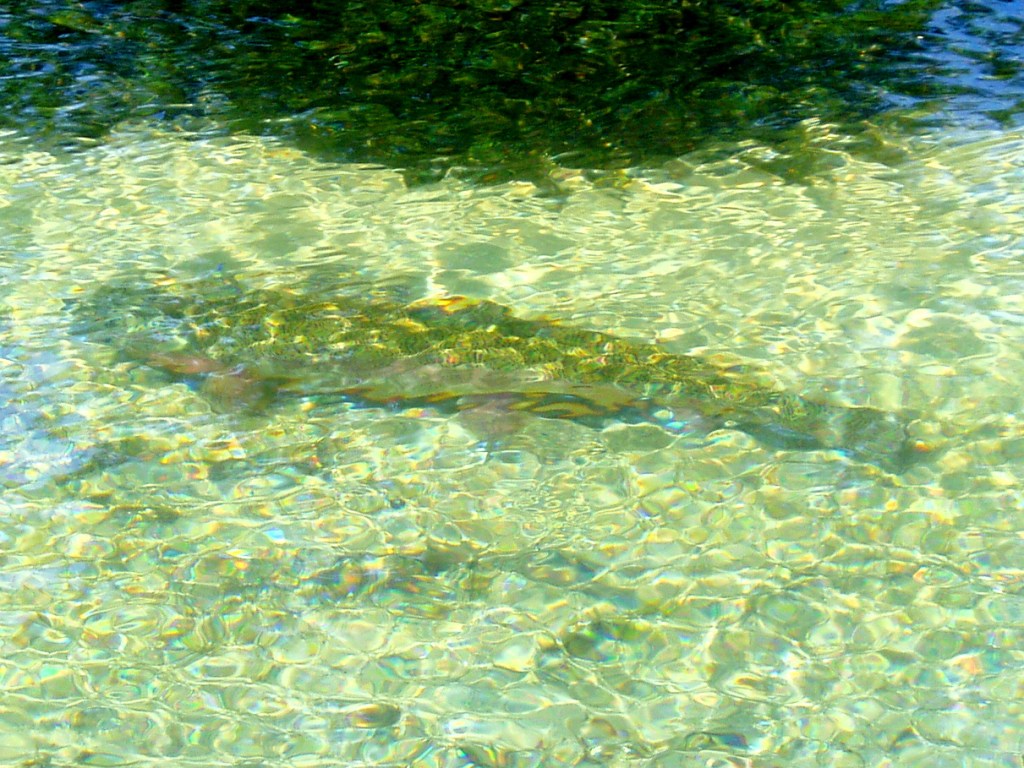
Shimmer: A limestone rainbow better than two feet long.

Its hard not to daydream this time of year. I live for dry fly fishing and I know I won’t see any of that until mid-April. A run of really warm weather we had in March of 2021 had me hunting rivers early. I found early black stoneflies and midges buzzing around, but nothing, absolutely nothing disturbed the surface. Those early stones had me fishing dry flies on the limestoners in February, and the little olives joined the party in March, but that was thanks to those fifty-something degree water temperatures I mentioned.

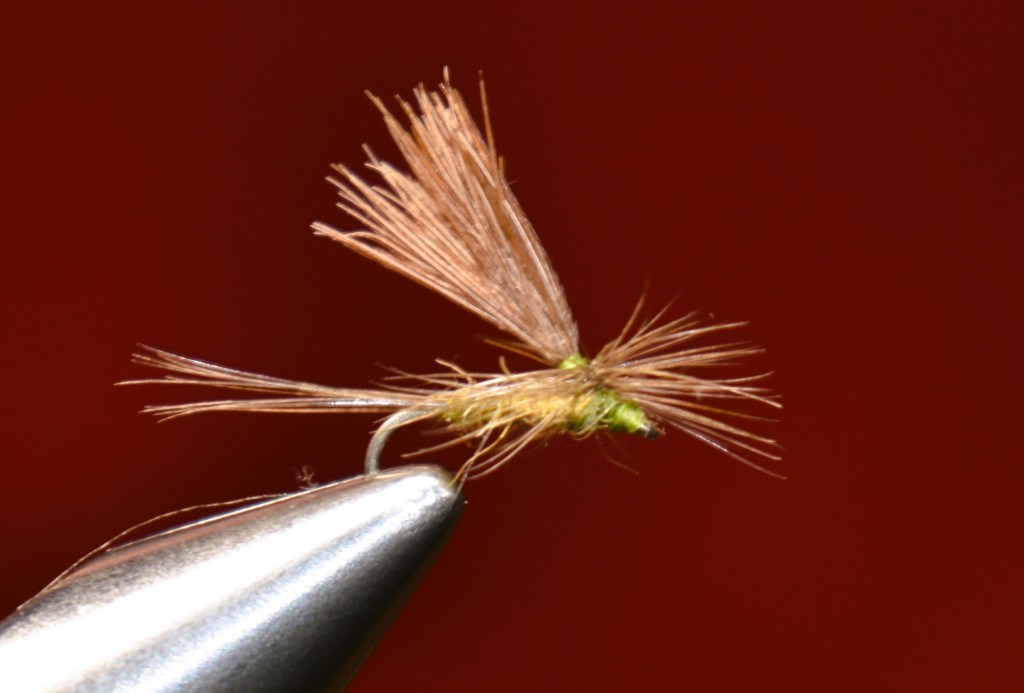
I did get started on the new small flies for my Translucence Series today, blending dubbing for BWO’s and Paraleps, commonly known as Blue Quills. I will tie a few more when the chill returns. Snowfalls tend to be better for my concentration than rain.

A New Year On The Horizon

The Delaware in Spring’s Full Bloom

Well, well, it seems we have made it to another year. It is a gloomy New Year’s Day here at Crooked Eddy, but the pictures in my mind are more like the one above than the one outside my window. As of this morning there are 100 days until my target: the second week in April. When that week arrives, I maintain the highest hopes to witness the beginnings of our spring mayfly hatches.

I hope that the New Year brings us a beautiful and bountiful fishing season, with good, cold flows in all of our rivers, plentiful hatches, and many wild trout eager to rise to take advantage of them. Let our rivers be free of floods and drought, and may the trout prove none too easy to deceive that we anglers may earn our rewards with patience, humility and skill.

While I have no resolutions, I do have plans, foremost among them to adapt to all that Nature weaves into the magic of angling. The greatest single lesson of my thirty seasons fishing Catskill waters is the realization that every season will be spectacularly different from the last. Nothing is predictable in Nature, despite all the literature of our grand sport that has sought to make it so. There are always changes and new challenges; that is the very essence of the magic of trout and fly!

Each season we learn from Nature’s incredible variety and add to our store of knowledge that we might be better prepared for the new discoveries of the next season and the next. I am already working on expanding my assortment of translucence dry flies to cover more of the season’s mayfly hatches. These are flies intended for the trout too wary to be caught!

A new supply of silk has just arrived allowing the creation of dubbing blends for the Green Drake and Isonychia, the two pinnacle mayflies of spring’s grand finale. No sooner had these dubbings been mixed than the first hook was fixed in the vise, for even in the chill of winter I am energized by the prospect of difficult trout!

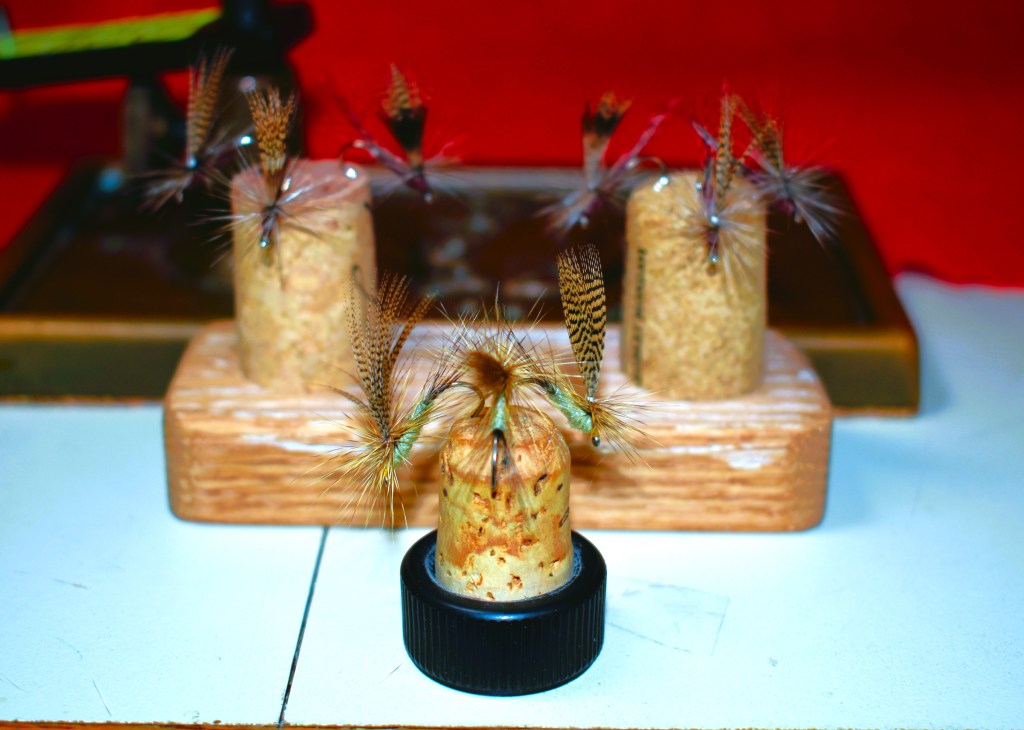
The new dubbing blends have found their way to the vise quickly. These Translucence 100-Year Drakes and Isonychia Duns will rest until guttulata and bicolor emerge at the height of springtime!

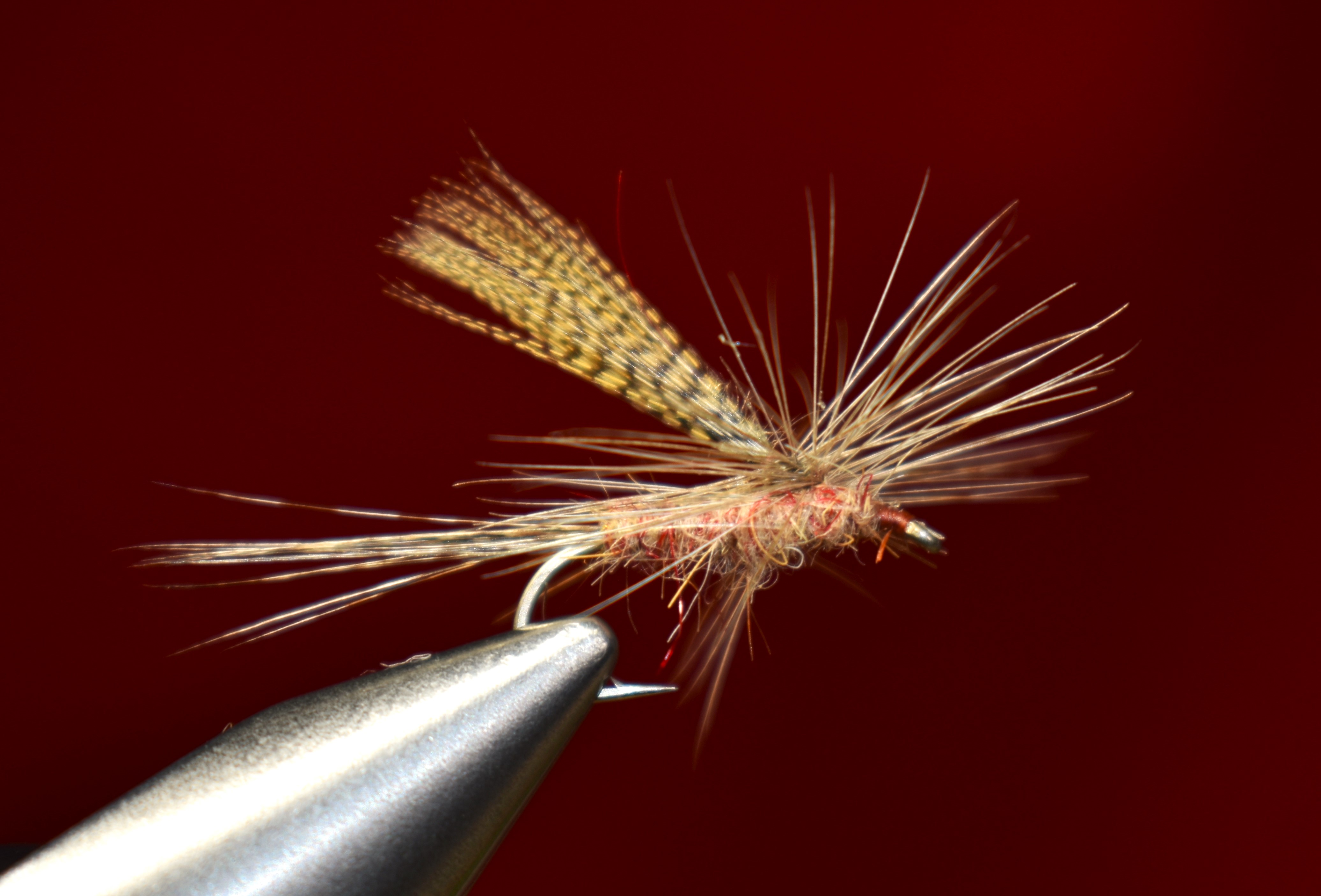
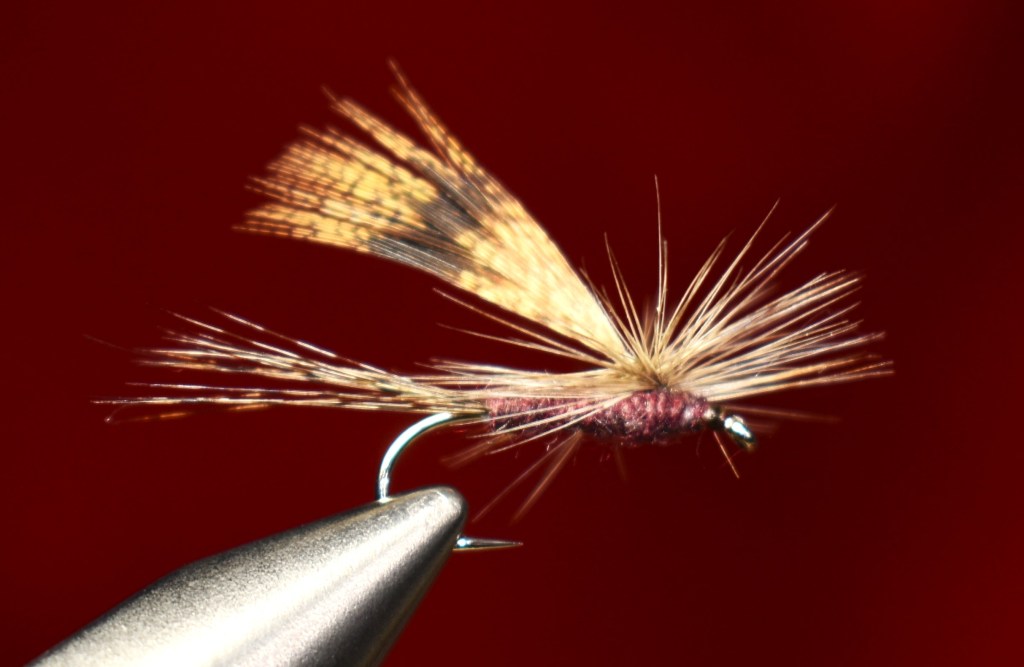
The new Translucence Isonychia will compete with my Halo Isonychia, a fly that that has proven itself on Delaware browns and rainbows. As with all of my experimental designs, their debut will be triggered by a trout who refuses to be duped by proven flies. The Halo pattern took advantage of the translucency of natural silk dubbing to mimic the color change of the natural mayflies soon after emergence. The new dun follows the design theme of the Translucence Series flies imitating the deep claret tones of the duns once that early color change has been completed.

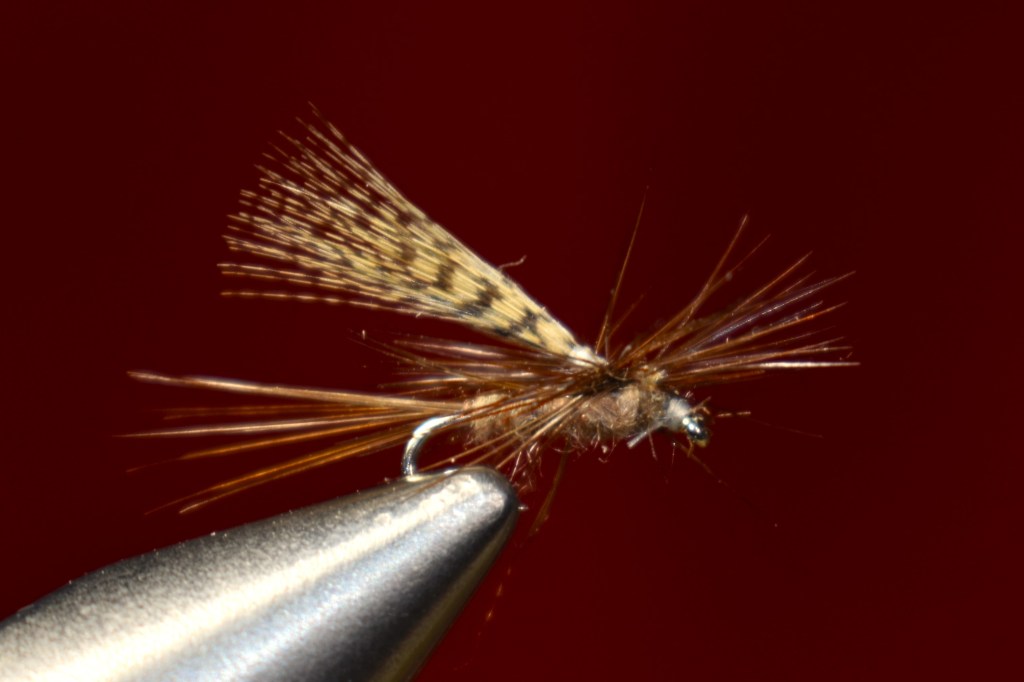
Translucence 100-Year Dun Isonychia, my first flies of 2023.

The olives will get more attention during my winter fly tying, as I fondly recall the beautiful result of tying my first Little Blue Winged Olive 100-Year Duns. The gorgeous trout that took that fly was the last of my dry fly season, stalked amid the low, clear water of late October. Last summer’s success with the tiny 100-Year sulfurs will drive my focus to include the major small mayflies in that design series. The little olives will be joined by Blue Quills, flies that are often a mainstay of our early spring fishing; and yes, both will figure in my expansion of the Translucence Series.

Tie your flies and make your plans, for 100 days will pass more quickly than you think!