

The Catskill Fly Tyers Guild enjoyed another Thursday night fly tying session via Zoom last night, and we found our way around to a bit of the Great Debate. Many of us are soundly packed into our respective corners when it comes to fly color and even materials ideas and theories, so we had a lively discussion. I just wrote a blog about color matching, so I will leave that topic alone; well maybe. What I wanted to put out there today is sort of my case for the CDC fly, at least the styles of CDC flies that I prefer to tie and fish.
I saw my first little carded baggie of CDC feathers better than thirty years ago in the late Wally Vait’s “On The Fly” fly shop near Maryland’s Big Gunpowder Falls. European tyers had been using this material for a while I gathered, but I think that Umpqua Feather Merchants had just begun offering it here in the U.S. I know that I was attracted to that little baggie of wispy gray feathers immediately and bought them. Going back to my roots, Ed Shenk was my major influence in fly tying and design, and it was he who impressed upon me the importance of movement in the fly itself. Ed taught me about various soft materials that produced such movement, as well as special tying techniques that let other materials move. When I saw that first bag of CDC feathers I envisioned “tiny marabou that floats” in my little inexperienced fly tyer’s pea brain, and I have never looked back.
As we tied a variety of Hendrickson comparaduns last night, someone asked the question “how many CDC feathers are you using”. I answered simply in my turn: “two puffs”. That statement ignited another chapter of the Great Debate! For some reason, most of the tyers I have talked to about CDC flies have the same idea, namely “I don’t like CDC puffs”. Some say they sink, some feel they are unruly on the fly. I happen to think that CDC puffs, particularly the large ones taken from geese are the greatest material ever harvested from a waterfowl. I say that despite my overt fondness for the glory of the Catskill fly, the lemon woodduck flank feather.
This is about my passion for CDC flies in general, though I understand completely any tyer that hates CDC puffs. If you have wasted your money buying them, particularly the large dark and light natural dun variety, please contact me and I will buy or trade you for your unwanted puffs.
Cul-de-canard has a number of attributes as a fly tying material. It has remarkable floatation and fish attracting capabilities. The feather structure holds multitudes of tiny air bubbles which not only provides that flotation but reflects light, simulating movement and life. Most importantly, in my opinion, is the fact that those soft, air encrusted fibers move in the current when they are in touch with it. Movement of the parts of the fly itself is a primary indicator of life!
Primarily, I tie three styles of CDC flies, and I prefer puffs for all of them. Why? Lacking stems, puff feathers are softer and provide more movement. They are ideally shaped and sized for an instant wing, thus making your tying faster and simpler. They also have a hidden property which has at times tempted some very special trout that otherwise proved content to ignore flies in general. My number one CDC fly is a puff comparadun or sparkle dun. Whether you choose tailing or a shuck, these are quick to tie, realistic, and known to be devastating to picky trout.
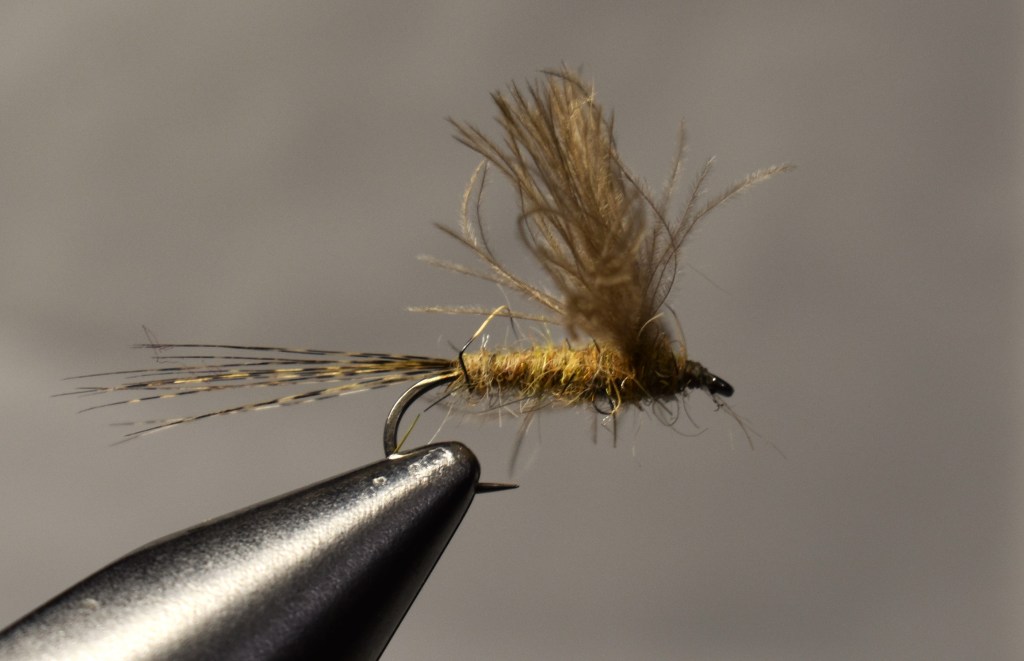
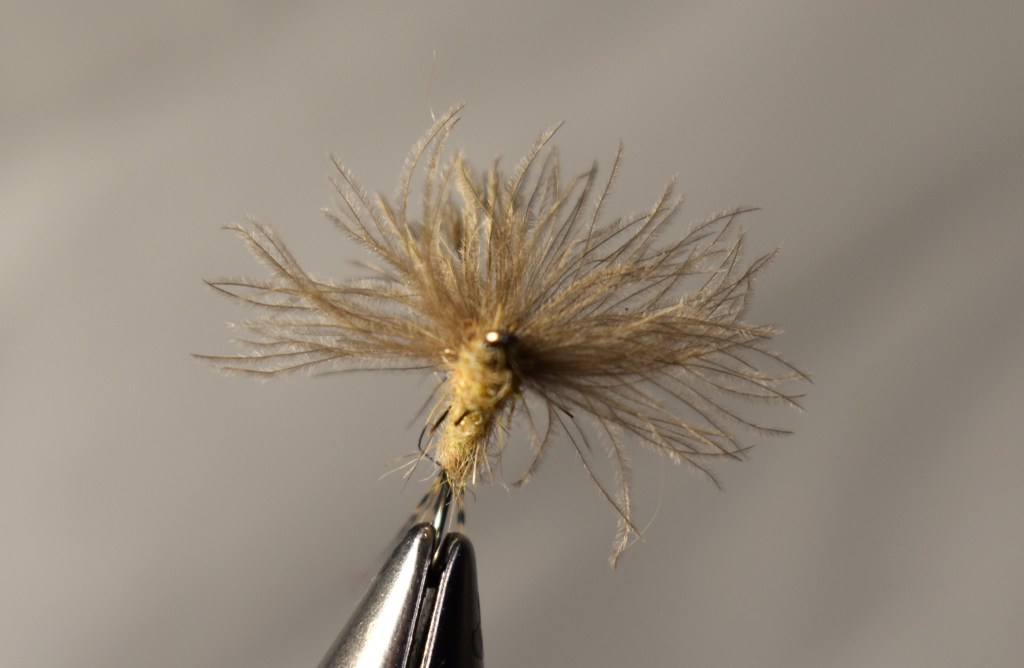
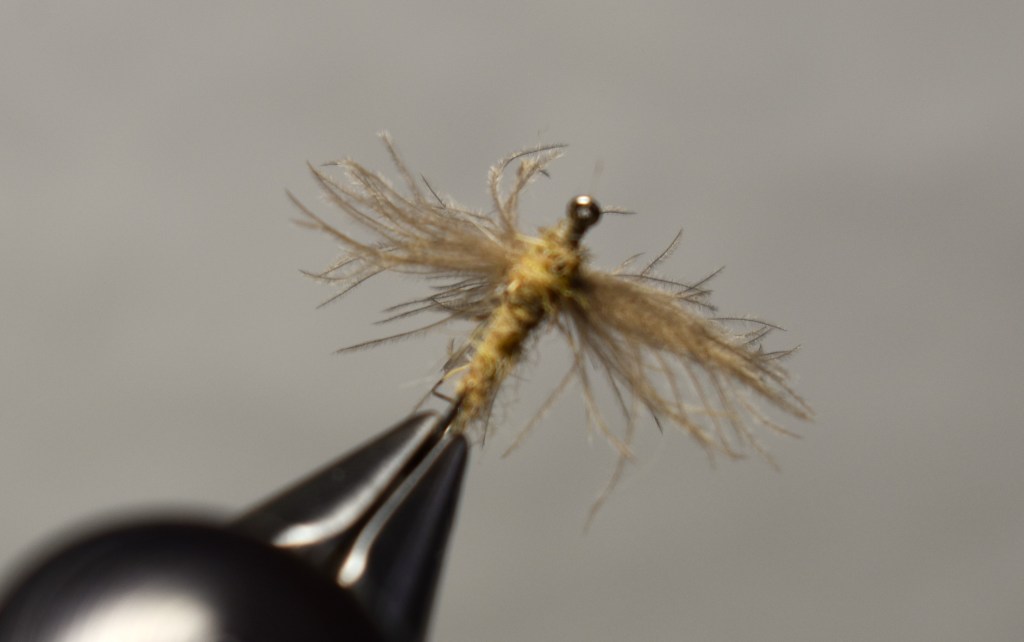
The second most used design of CDC fly in my boxes is the emerger/cripple style fly, and I tie them in a wide range of sizes and complexities, to match different stages of mayflies and produce different effects.
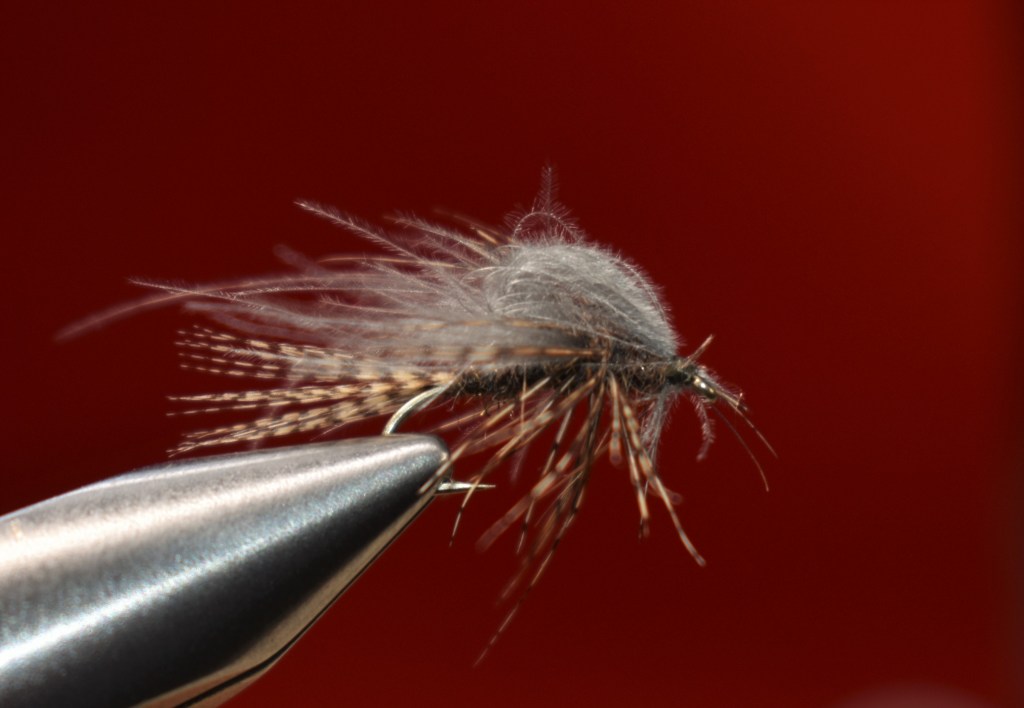

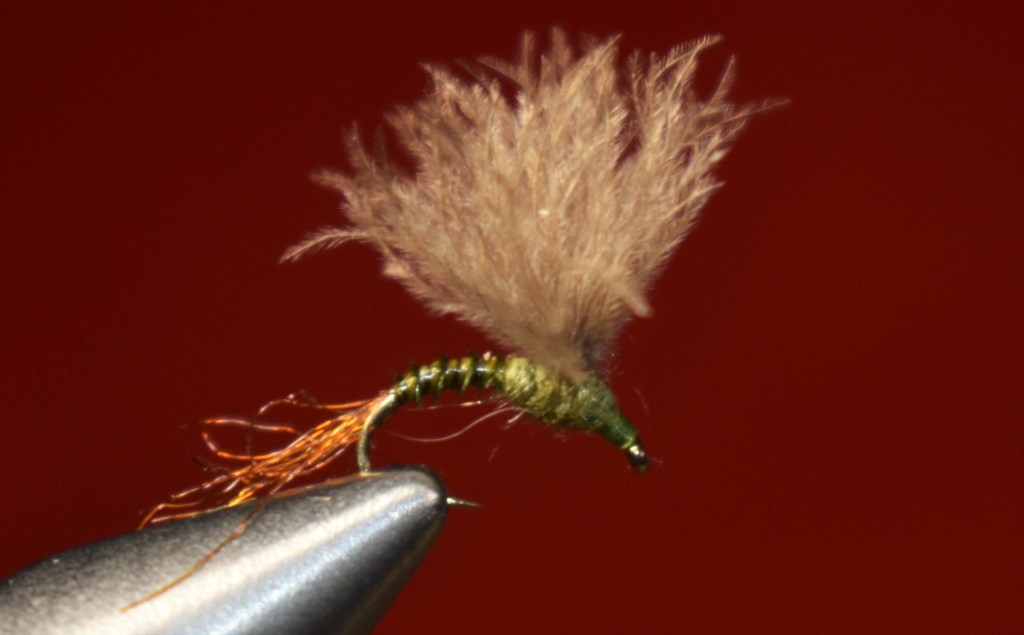
The old faithful loop wing emergers were one of my first uses of CDC feathers. I published my series of these in the old Mid-Atlantic Fly Fishing Guide back in the early nineties. A couple of months later, Fly Fisherman magazine ran a feature by a guy named Rene Harrop who was tying a very similar style of fly. I had never heard of the guy or seen his flies, but we all know his name today! Damn, I coulda been famous!
The crippled emerger style with the high puff wing has proven to be very versatile for imitating emerging mayflies during the early stages of a hatch as well as crippled duns that can show up on the water at most any time during a specific species annual emergence cycle. This is the fly with the bonus that has tipped the scales a few times, particularly with the large mayflies. There are generally three of the largest puffs in the wing of these size 8 and 10 flies and that has a lot of floatation and a lot of movement. Some fish though like to chase emerging nymphs and just don’t want to take anything even partly on the surface. At the end of my drift, I will lift the rod tip high and twitch one of these flies and sink it. Sometimes I let it swing slowly for a time, then raise the rod and twitch it lightly once more before mending and feeding slack immediately. The fly hovers and then rises, all the way to the surface again, though it doesn’t always make it that far!
Do puff dry flies sink more than other CDC flies? I don’t know that that is the case, at least not if they are tied with enough of the material. The size 14 Hendrickson in the first photo gallery is tied with two medium size puffs. These are the medium sized puffs in a bag of the large ones previously marketed by that Harrop fellow under the Trout Hunter name. The total length of these is about the same as the length of a size 14 dry fly hook. A bag of feathers will have various sizes of puffs, some long enough for size 10 and 12 hooks, even size 8 hooks at their largest, and some better suited to sizes 14 or 16, even 18. A particularly full medium length puff might be enough to tie a size 14 dry fly all by itself, but most of the time two of them will make a better floating, more effective fly.
A full CDC puff wing doesn’t overburden a fly, though I have seen commercial patterns that looked like a big white fuzz ball. Think about fluttering wings when you tie your flies and size those wings, and you should end up with the right amount of material.
Durability can be a concern for some tyers. I prefer very strong fine tying thread for my CDC flies, with 14/0 being a favorite. Giorgio Bennecci and Veevus both offer very good threads. I wax my thread when tying, rubbing a bit on my index finger and running that up and down my thread. Fine thread allows me to tie my puff wings down with more tight wraps without building up unwanted bulk. You can cut feather fibers if you overdo it, so don’t go crazy with thread tension. I typically catch a lot of fish on one of my CDC flies before it gets thrown away. If you don’t grab the wing with forceps, or try to yank a fly out of a trout’s mouth by the wing, your CDC flies won’t come apart.
Some may look at my CDC comparadun and scoff that it looks messy. Thank you; so does a fluttering mayfly! Difficult wild trout are my passion, and they are thus the only judges I give a damn about when it comes to evaluating my fly designs and tying. If I am in the mood to tie a show fly, that’s fine, and it is something I enjoy. I don’t tie those for fishing.
I more or less promised to stay away from the color debate, but…
CDC flies are designed and tied to sit partially in and partially on the surface, some even partially under the surface. In light of that, I believe that matching the color of the natural flies as well as we are able is important to success. Light, sky and water conditions all play a role in that equation, as does the depth and current. Tie the best fly you can tie to imitate a living mayfly, or caddisfly or stonefly. It certainly cannot hurt your chances if it happens to be the right color.

 Bright Waters Catskill