
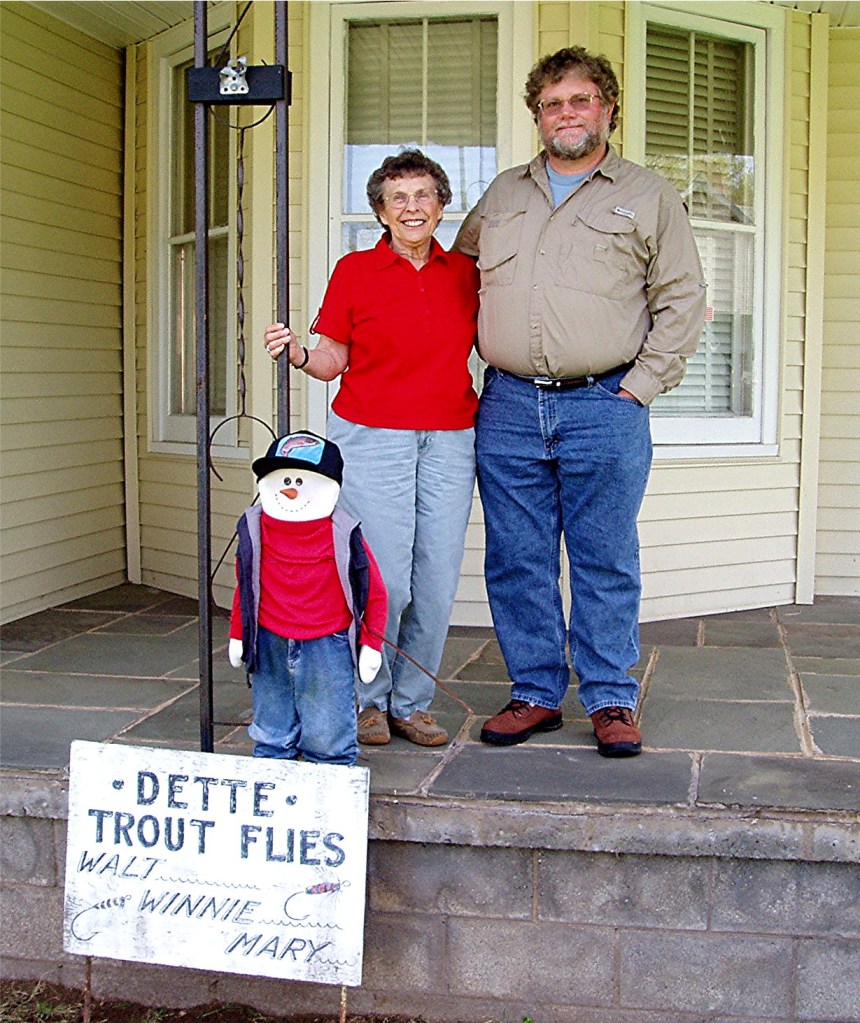
I was fortunate enough to meet all of the legendary Dettes when I first journeyed to Roscoe, New York to fish. I had done a good bit of reading on Catskill fly tyers and the history of the region and was justly in awe to step inside the front room there on Cottage Street and say hello to these legends. Walt, Winnie and Mary, all very kind, gentle people with no trace of the egotism I had encountered among fly fishers and tyers elsewhere. I made it a point to stop in every time I came to fish the area and visit with Mary as she tied.
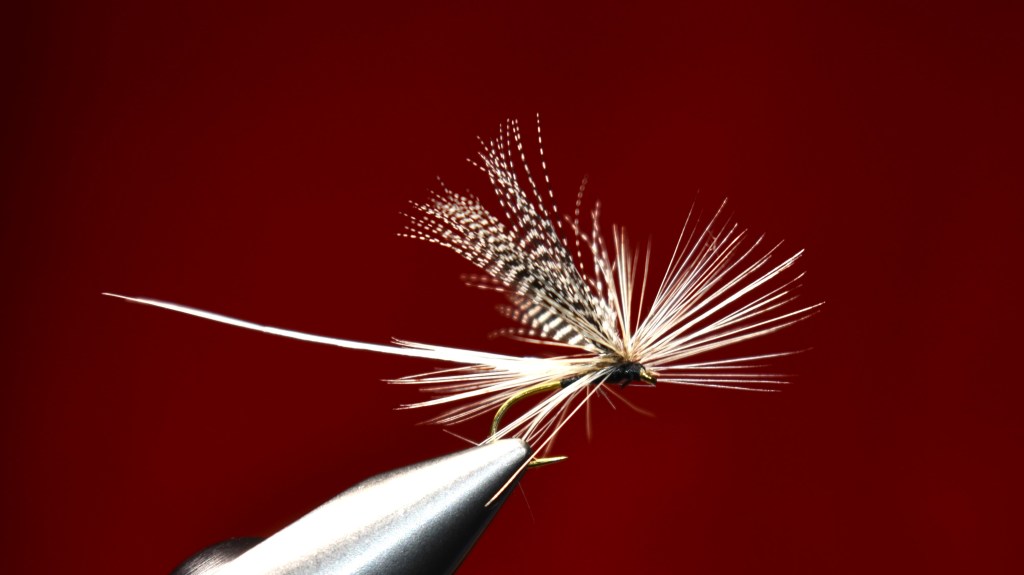
The Dettes were known around the world for their classic Catskill trout flies, and last evening the Catskill Fly Tyers Guild appreciated a unique and little-known pattern designed by Walt Dette. David Brandt, one of the foremost modern master tyers of classic Catskill flies, told the story of the fly that would come to be known as Walt’s Riffle Dun in December 2019, during his last appearance before the Guild. Though Walt was quiet about the design, many thought of this style of fly as his answer to Harry Darbee’s Two Feather Fly. The name was affixed by the late Ted Neimeyer, for a magazine article he wrote about it. With Walt’s approval, this unique design became the Riffle Dun.
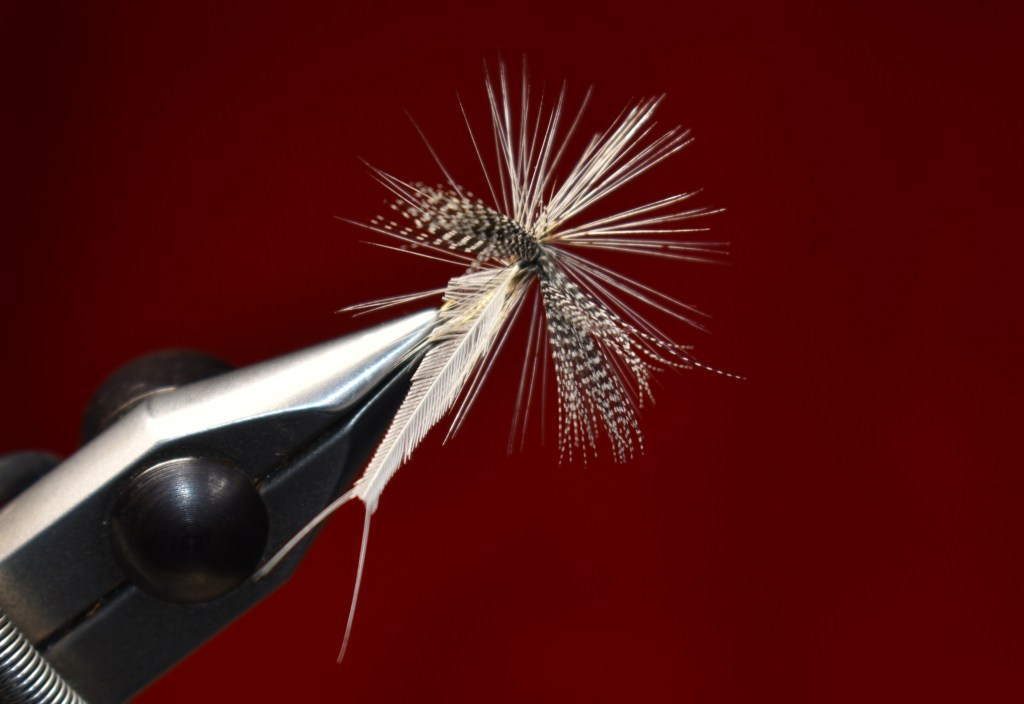
I thought the name chosen somewhat belied the strength of the design, as this seems the perfect style of fly to present gently to some leviathan lurking in shallow still water, a fly that might be wafted upon the quiet surface and then drift temptingly straight into dramatic memory! The extended body with tails is cut from a hackle feather, wings affixed Catskill style, and a stiff barbed hackle wrapped parachute style with two turns. We all tied a few as the discussion roamed a bit, typical for our informal winter Zoom gatherings.
I tied some two and a half dozen flies yesterday, which is one of my more prolific daily outputs. I am no longer a production tyer. I break up these winter days with some reading between sessions at the vise. Still rounding out my Translucence Series of dry flies, I blended some silk for a mellow orange sulfur dubbing, tying a trio of 100-Year Duns to await their turn in the Wheatley that has been given the duty of carrying these patterns.
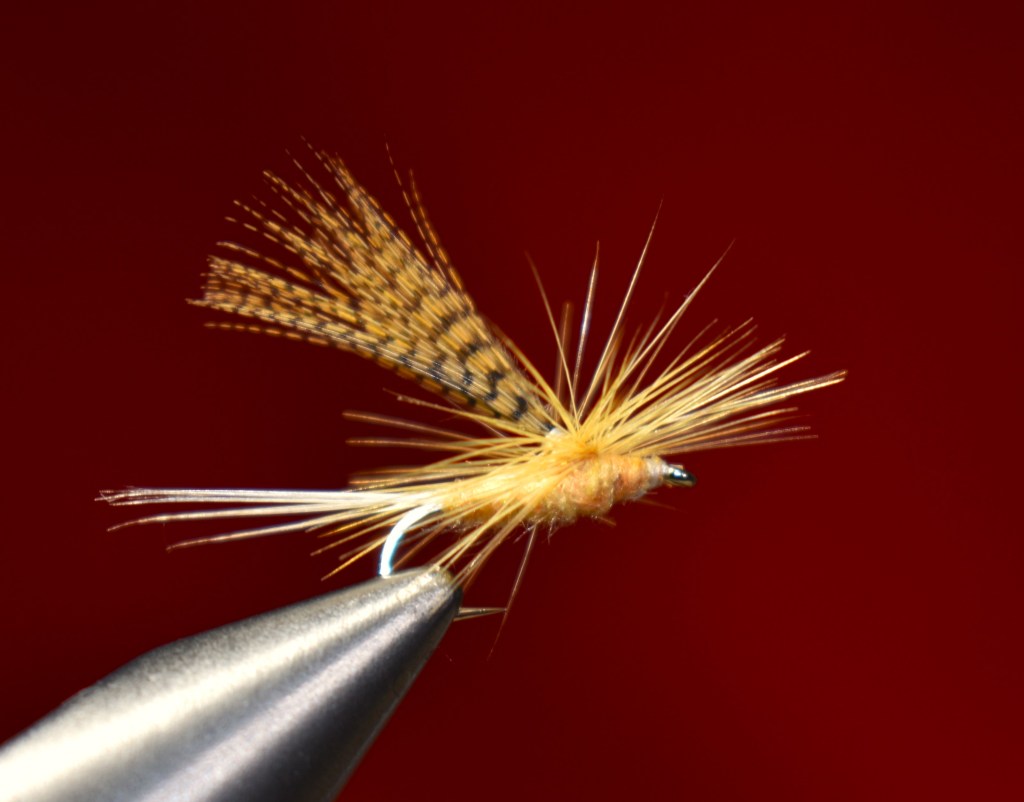
May always finds me with a wide assortment of flies to match the various sulfurs, the name that Letort legend Charlie Fox gave the little Ephemerella flies native to that hallowed limestone spring. Deep in my store of blended dubbing there is a small plastic bag marked Letort Sulfur, containing a few pinches of a delicate orange-yellow to match the flies I sampled from the stream. A size 16 Comparadun tied with that blend finally seduced my largest Letort brown trout to be taken on a dry fly, a maddeningly selective sipper that required great patience over the two hours of our encounter! The Catskill orange sulfurs tend toward a different shade, along with both extremely pale and warmer yellows. I tie them in sizes from 12 to 20 as these assorted mayflies are a staple of our fishing from May through August.
 Bright Waters Catskill