
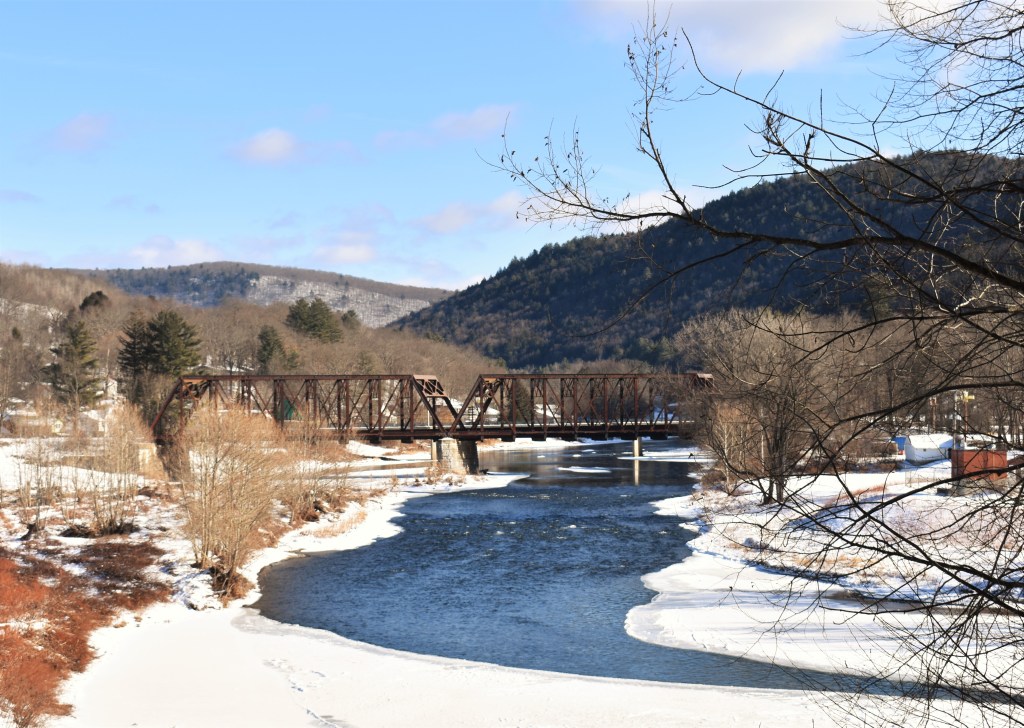
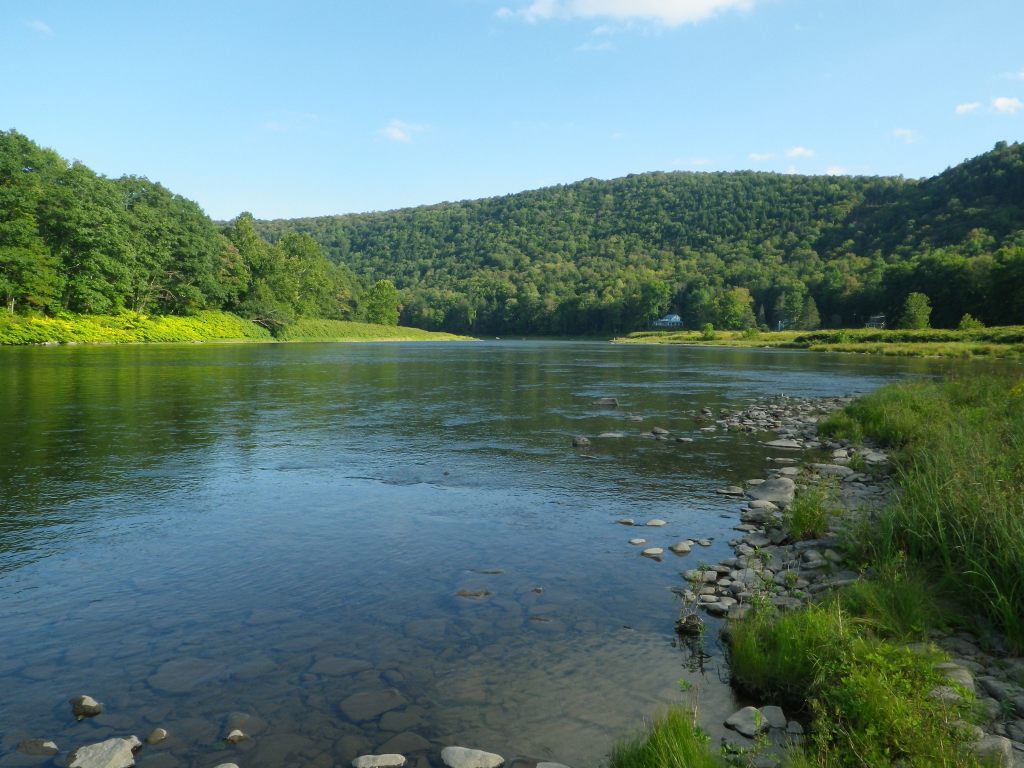
This has been another unusual winter, and the topsy turvy run of our weather seems destined to continue. After fishing Wednesday afternoon, I relaxed on the porch in sumptuous sunshine. Direct sunlight pouring over Point Mountain and the 66-degree air temperature bolstered one another to give me a true taste of springtime, my porch thermometer recording 74 degrees! This morning snow has dusted that familiar terrain at daybreak. It was 18 degrees at Crooked Eddy.
There is some work to be done on my house, but the solution requires varnishing, something I cannot accomplish either inside or outside under these conditions. Well, there are always those flies to sort…
Thinking about readying things for spring reminded me that I should tie a few little black caddis. They are the flies we often forget, being less than visible, they are easy to overlook. I remember back in my days on the Falling Spring when trout would ignore little olives, ants, etcetera. At times I would look down at the legs of my waders and see specks of black; moving. Even on clear glides over a bright bottom they proved almost impossible to see lying there in the film, but a change to a size 20 CDC caddis often found me fighting a rising trout as opposed to casting over it.
The darker bottoms of the West Branch make it truly impossible to see Chimarra on the surface, but they can be around for a long time. As with those days on the limestone water, I have fished to West Branch risers with various Blue Quills and Hendricksons only to be ignored, until I thought about the invisible caddis and tried one.
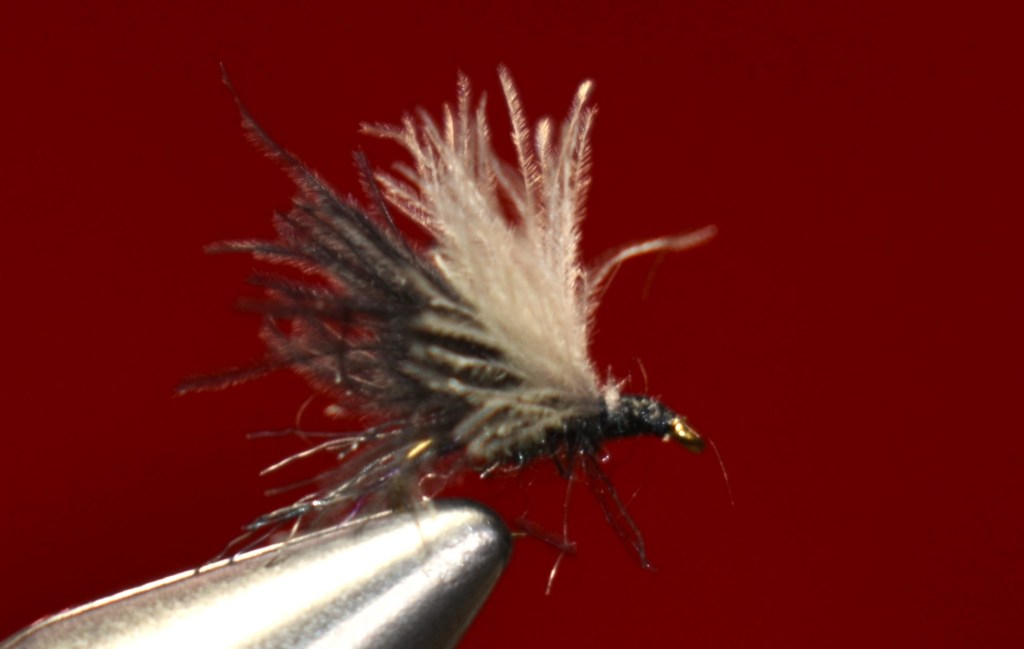
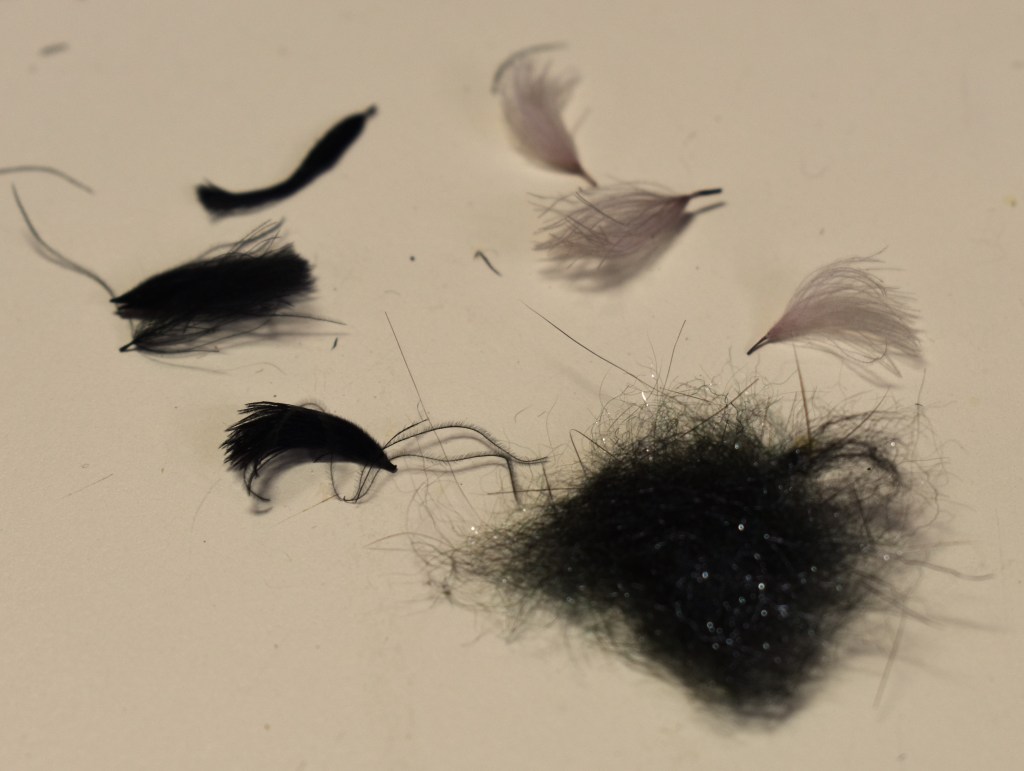
Most of the fishing I have found with these tiny black caddisflies has involved struggling or dead flies stuck in the film, so a simple CDC fly is perfect. It sits low in the film and the wing fibers will move with the micro eddies of the current. I always blend a little Antron, either darkest green or black, with my fur to sparkle and hold a few air bubbles. Back on Falling Spring I tied them with an underwing of dark olive CDC and a sparse black elk hair overwing, with just a little dubbing, and took some nice trout that refused every other fly of the season. Chimarra crawl out of the water to emerge on bankside vegetation, so don’t expect to see thousands of tiny black flies in the air.
The American Grannom is another caddisfly that I have fished with great success, though not on our Catskill rivers. I have seen them here only a handful of times, while on Pennsylvania’s Little Juniata River and Penns Creek, their hatches are a highlight of the early spring season. We used to look for Grannoms just after the middle of April there in a normal year. Paul Weamer’s “Pocketguide to New York Hatches” states that the first week of May is the typical emergence time for the Catskills. I usually see plenty of Shadflies or Apple Caddis at that season, but the larger Grannoms have proven rare in my experience.
My Pennsylvania old reliable Grannom imitation is a black bodied X-Caddis with a black Antron shuck and a darker tan elk hair wing. Ideally, I prefer the hair with the dark tips. Thought I carry a few size 14 flies, they are greatly outnumbered by the 16’s in my fly box.
Honestly, I would love to encounter the kind of heavy, extended Grannom emergence I used to experience on Pennsylvania’s Little J on one of our Catskill rivers. More than once I have arrived on the river at seven in the morning to find caddis in the air and trout rising, and fished emergences throughout the day! Perhaps Nature will smile upon me one of these days. She always has surprises in store.
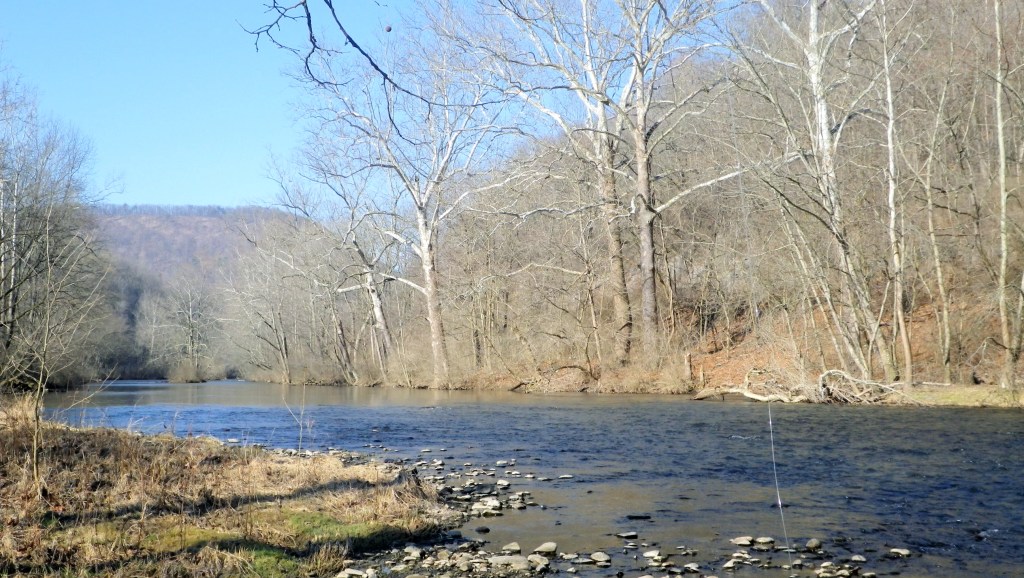
on this reach as early as April 17th.
The sun shines brightly now with blue Catskill skies, and will soon dissolve that dusting of snow. Our outlook is for rainy days through midweek, with some measurable snow for next weekend. Hopefully we will have safe driving conditions for Flyfest, at Roscoe’s Rockland House. Have vise, will travel. I simply need to decide which patterns I expect to tie this year and assemble the required materials. I always have a vise and tools in the travel kit.
The Catskill Fly Fishing Center and Museum sponsors Flyfest, and offers tickets via their website: http://www.cffcm.com
 Bright Waters Catskill