
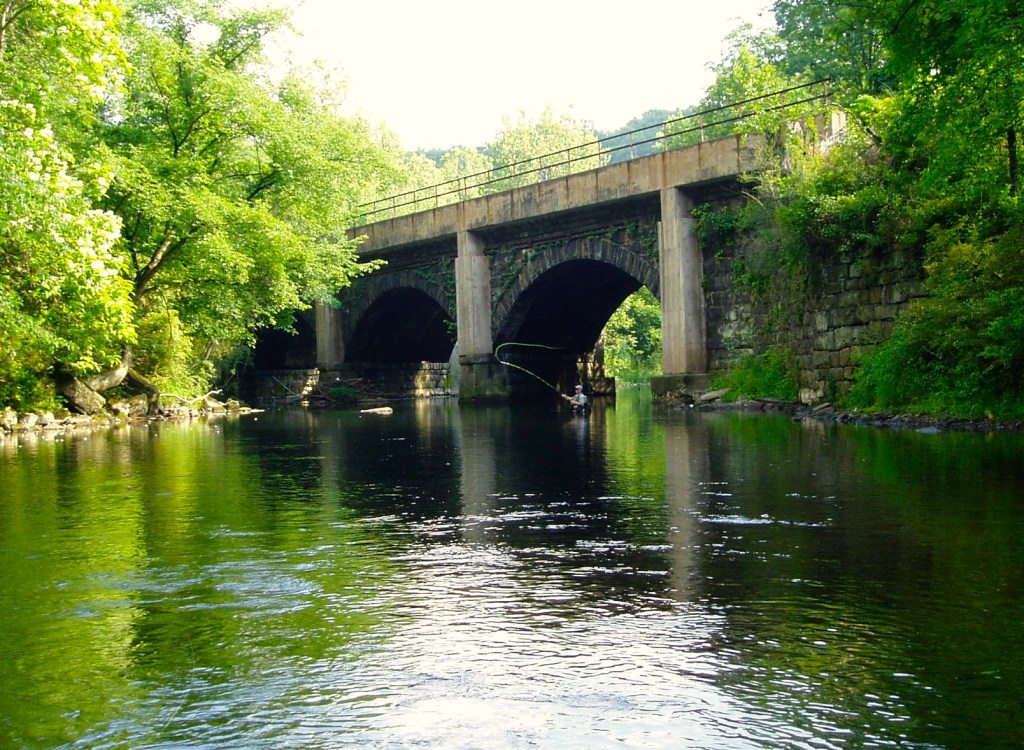
My but writing about those Grannom caddis got my mind to wandering the other day; right back to the urgency of springtime and chasing the Grannom hatch on the Little J!
My Southcentral Pennsylvania home waters were the various little limestone spring creeks of the Cumberland Valley Falling Spring Branch, Big Spring and the Letort chief among them. During the more than twenty years I lived in the region, dry fly fishing on those spring creeks was mainly a summertime affair, the time for terrestrials. If I was jonesing for a chance to fish any significant hatch, a road trip was called for. The closest place to find those mayflies or caddisflies was the Little Juniata River in the vicinity of Spruce Creek, PA.
The drive to the Lil’ J would take about an hour and a half, depending upon traffic. No cities enroute, but two lanes through some small towns and farming valleys sometimes had their own lackadaisical charm. That drive time kept me from fishing the river as much as I would like, often missing some great fishing to the sulfur hatch. On most days, the sulfurs were strictly an evening thing. Chances would be pretty good that the hatch would start to get a number of trout up around 8:30, leaving only a half hour to take advantage of the opportunity, and then that drive that seemed even longer than the morning trip to get back home.
The sulfurs were the main event when it came to mayflies, though the J had some Blue Quills, olives, Cahills, Tricos and Isonychia. Thanks to decades of pollution events and a still unknown chemical spill that killed all of the insect life in the early 2000’s, none of those other mayflies appeared in big numbers. Caddisflies proved much hardier, and even after all of the ups and downs the Grannom hatch was pretty terrific. My buddy Mike and I would always try to spend some time up there during the last half of April, looking to catch the hatch. We found some great fishing!
I recall two or three times over those years that the flies continued hatching throughout the day, from seven in the morning until five that evening. You could drive along and visit several spots and find bugs and rising trout everywhere. On one weekday I had a day off and Mike didn’t. I arrived at my favorite pool around seven fifteen and could not get my waders on fast enough! When I waded out to the top of the pool, the air and water were filled with Grannoms, and there were trout rising, others swirling and boiling as they chased the rising pupa beneath the surface!
I went to work where the current cut a deeper trough along the far bank, and I began to find some takers for my X-Caddis. These trout were tough, for the little river was very popular with Pennsylvania’s burgeoning population of fly fishers, and there were thousands of caddisflies hatching. The J had a decent population of wild brown trout back then, and the state stocked fingerling browns that grew up in the river and fished more like wild trout.
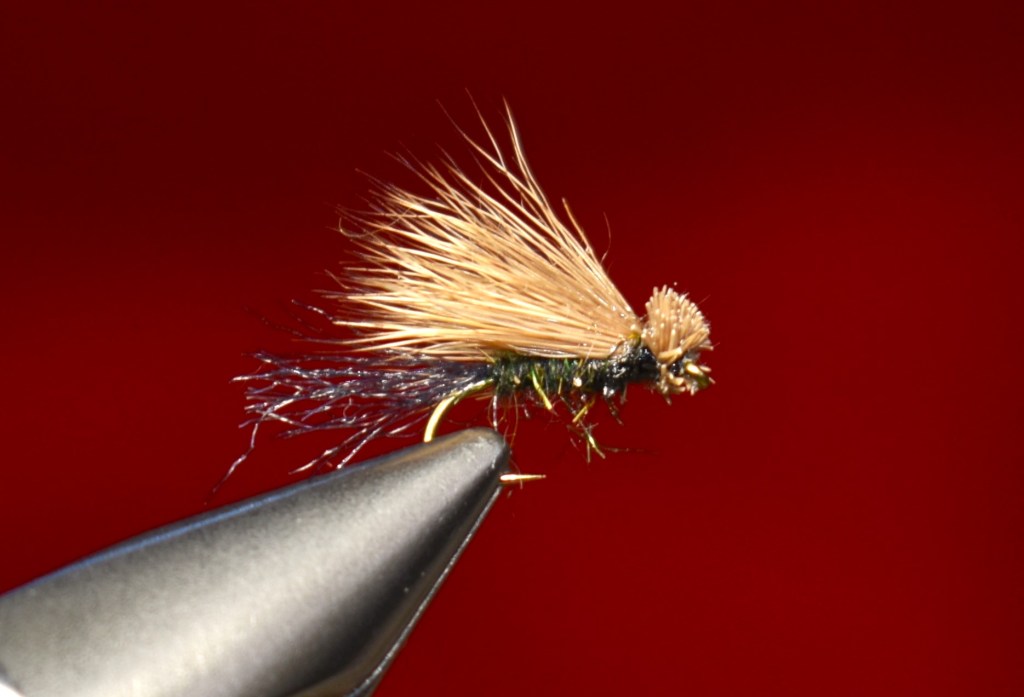
Through the course of that day, I stayed with the dry fly and fished four or five different pools. I landed somewhere over thirty brown trout, colorful, hard fighting fish from just under a foot long to fifteen or sixteen inches, and by five thirty I was tired out. There were still trout rising to Grannoms, but I had caught enough to fulfill my winter long lust for dry fly fishing. At one point I caught more than a dozen on the same size 16 fly, finally retiring it when there were no more than half a dozen fibers of soggy elk hair left in the wing. I had hatching flies and rising fish at every place I stopped, covering maybe six or seven miles of river. Crazy!
There were sadly quite a few seasons when we missed the hatch. Late April often brings heavy rains to Central Pennsylvania, blowing out all of the streams. There were times we found good water but simply missed the peak of the hatch by a couple of days. Whenever we hit it though, we had a ball. There’s no better way to begin your spring season than to fish a big hatch of flies!
I am surprised that I have never encountered many Grannom caddis on the Catskill rivers. The little bright apple green caddis we call the Shad Fly is a related species, Brachycentrus appalachia, and I look forward to seeing a lot of those each season. Maybe I simply haven’t found myself at the right place at the right time, something I learned to take for granted years ago on the Little J!
 Bright Waters Catskill