I was sitting in the living room just now, reading a bit, when I realized it was getting on to five o’clock. Looking out, there was still plenty of light in the sky, part of the tangible change as the days lengthen gradually toward spring. It wasn’t that long ago that it was nearly dark at this time of day.
Though the days are actually growing longer, it seems somehow easier to pass them than it has all winter. Having the goal so much nearer is a factor in that perception, as is the continual march of the years. My paternal grandmother lived to be 96, and we used to talk about the passage of time, and its habit of quickening as we get older. I remember her saying that “the years passed like lightning”.
As an angler, I get the opportunity to move back and forth in time so to speak. When I tie a Catskill dry fly in the vintage style, or thread my fly line through the guides of a classic bamboo rod, I step back, perhaps fifty to one hundred years in thought and deed.
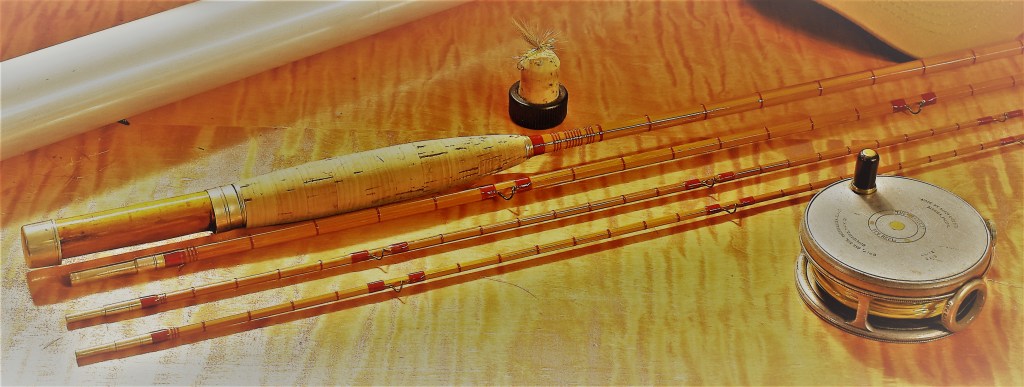
The F.E. Thomas rod was first wrapped and varnished in 1918, while the Hardy Perfect is a comparatively brand new product of the 1930’s. The fly is my own tie, quite recent, though inspired by Theodore Gordon more than a century ago.
When I cast one of these fine old rods, I bridge the gap in time as it bounces with the lively energy of a trout as it did when it was young; the rod is the conduit, a fragment of yesterday, the trout very much alive and running wild with the energy of today. This is but a part of the special magic that graces those of us who angle with vintage tackle, that chance to live in both the past and the present for those golden moments when a trout takes the fly.
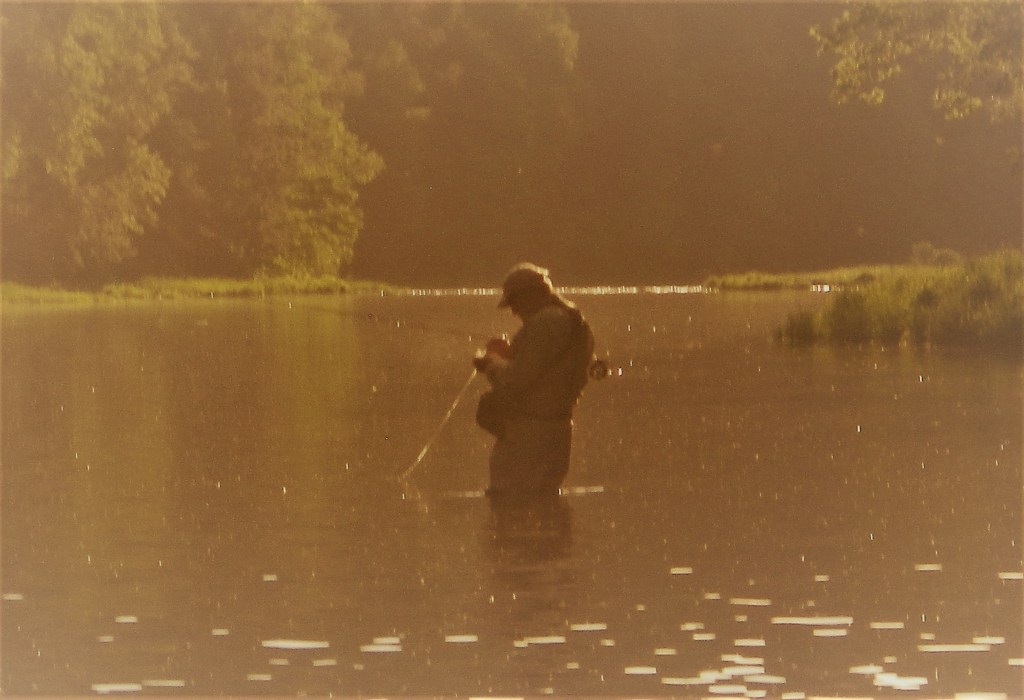
Memory is one of the most cherished gifts of a life spent in angling, and there are times when I pause to notice the special beauty of the afternoon light upon the water and wonder if what I feel might be some connection to the past. Is there some of the life energy of a past owner of the vintage rod and reel I carry still there in the golden bamboo?
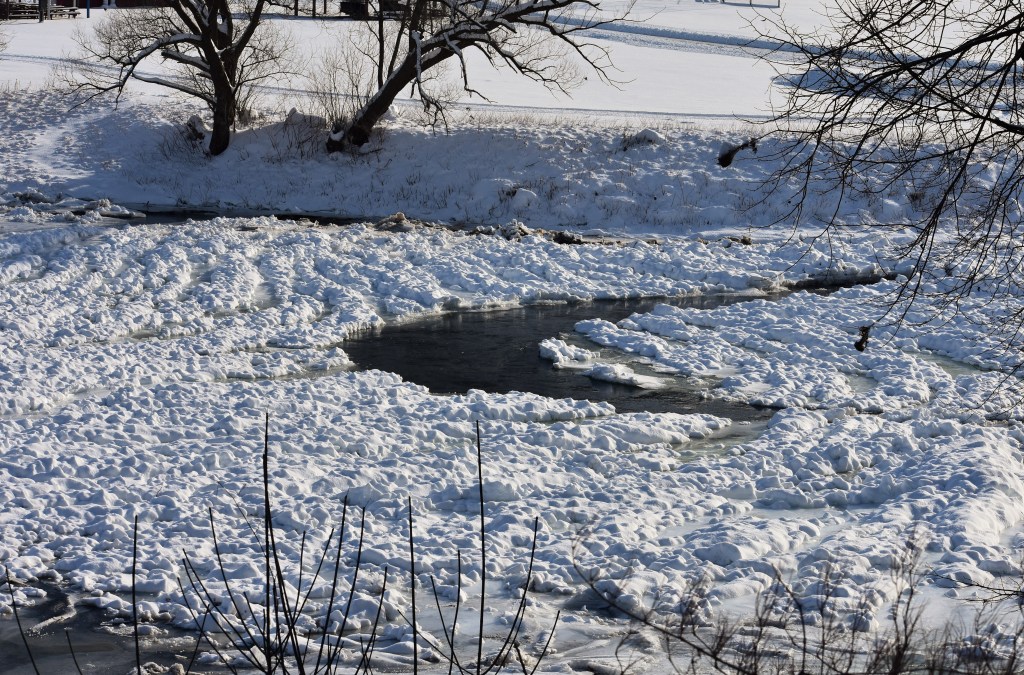
Ha! Fooled Ya! This thankfully is not the state of our rivers this year.
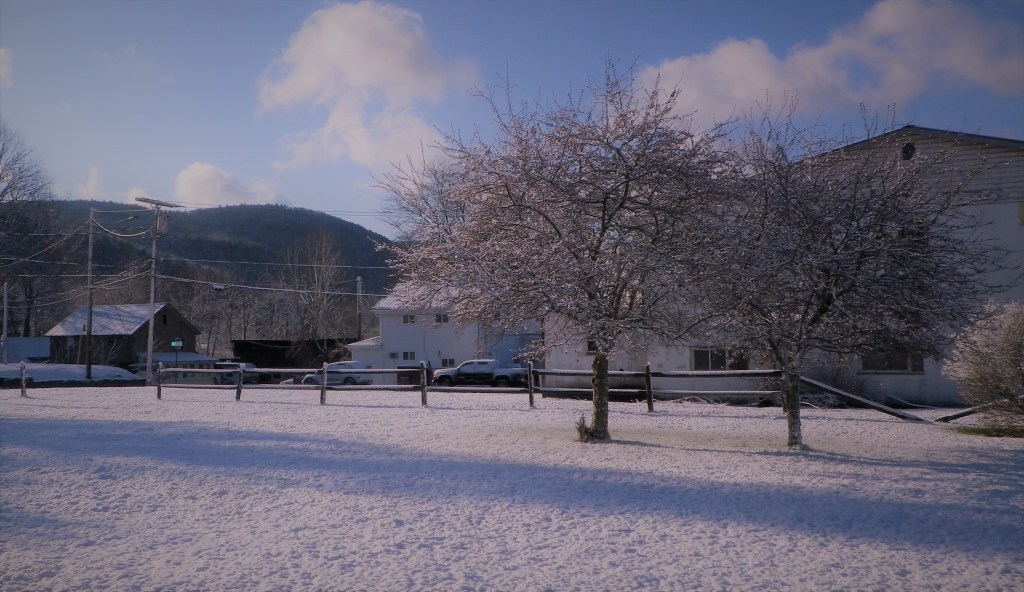
There are still a couple of inches of wet snow lying around the yard, but there is a little unexpected sunlight filtering through the clouds as it rises over the mountains to the southwest. A nice winter morning, all things considered.
It is finally March, the final push to get through another winter and take those first tentative steps into springtime. We are three dozen days short of that hopefully magical week when a few mayflies ought to be noticed fluttering on the chilled surface, a ring appearing beneath one that didn’t come from a falling raindrop.
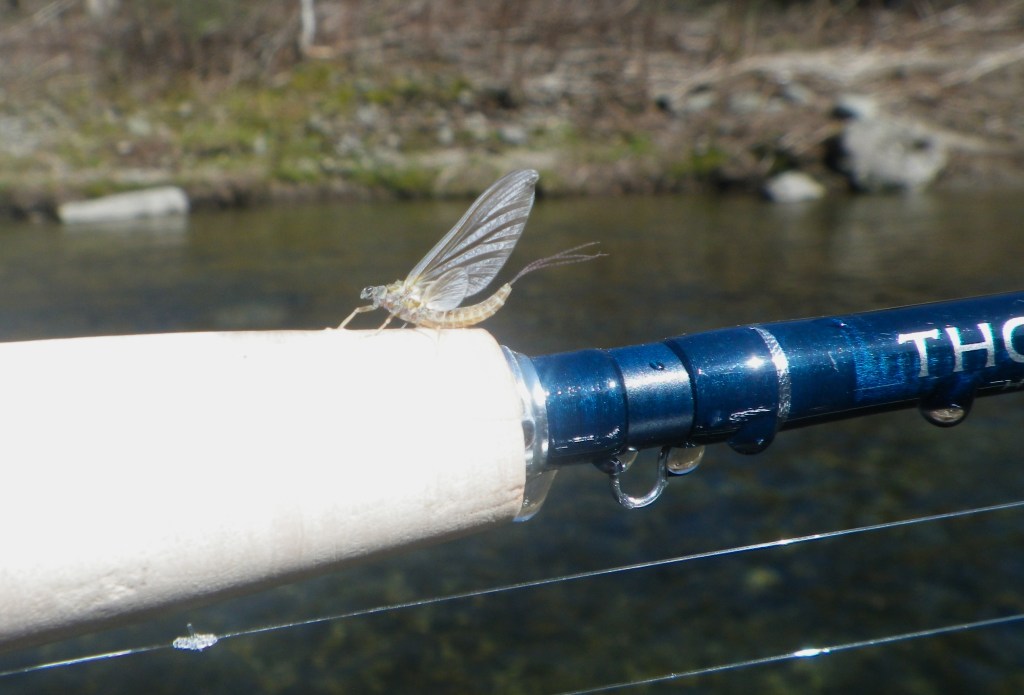
April 12, 2021, 4:32 PM: the result of the first rise of the year, and having a Blue Winged Olive tied on a ready to be cast!
True, the middle of this week is expected to stay right near the freezing mark; I mean the run of warmer winter weather we have been having can ‘t be expected to just flow on into spring, now can it? Looking at my anchor box as I brushed the wet snow off the drift boat yesterday, I noted that the lid is going to need a new coat of varnish. Either that, or I may simply have to resign myself to abandoning the natural wood look I like and paint it black like the rest of the trailer.
I will have to get past this coming week before I get into that. Neither painting nor varnishing goes particularly well in freezing temperatures. When I do uncover the boat, I’ll do a careful inspection of the trailer. Two years ago, I had everything cleaned and ready to go, then found that the front bunk had pulled up from the frame, requiring a major re-build before I could take it fishing.
Just now, things look to be shaping up for wadable conditions when that countdown ticks to zero, though the weather here in the Catskills has a history of surprising me.
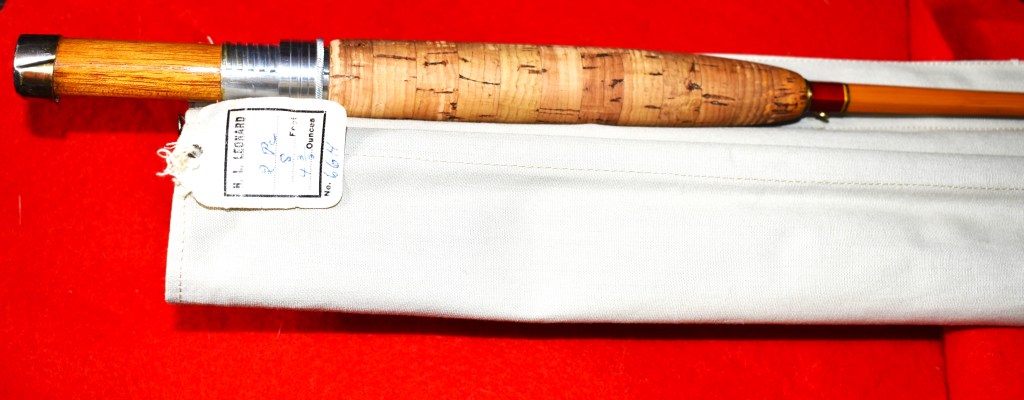
There are a bunch of things to do, things I have put off as winter wound slowly along. Small stuff mostly, digging out the boat bag and making sure the right fly boxes are in there, along with a few new leaders, floatant and tippet spools. I still use graphite rods when I float the rivers, and I like to get them out and put a little wax on the ferrules, check the fly lines on the appropriate reels. The old Granger 9050 still keeps pleading with me from it’s place in the rod rack. If I take an hour to install the bamboo rod holder I built some time ago on the front storage box, it can finally assume it’s role of boat rod. That fine old, bamboo will look good out in the spring sunshine!
The worry in the back of my mind as this month ticks past is the chance of a dreaded March blizzard. That happens some years, and I really don’t want to see another flood coming down through Crooked Eddy as April comes calling. It may have been a warm winter, but its still been a long one.
I’m still basking in the fun had at Fly Fest, while looking forward to the Angler’s Reunion at the end of this month, and then April first! It may not be opening day for legal fishing anymore, but its still an Opening Day tradition for a lot of old time Catskill anglers.
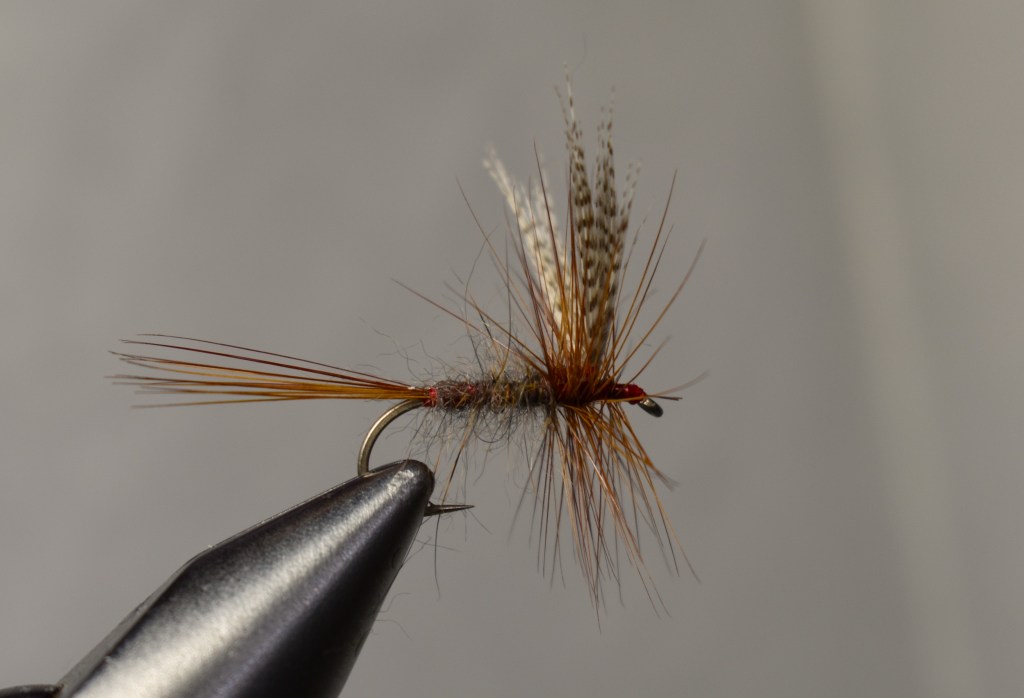
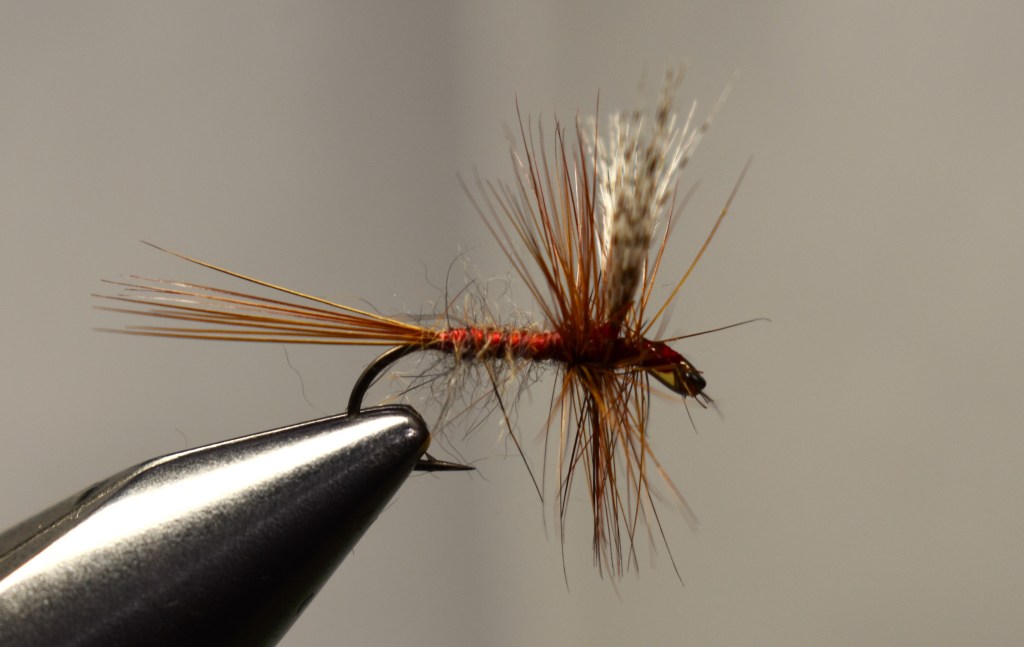
Considering the “Bradley Special“: A body of Red Squirrel spun on red silk, mallard for the wings, slightly flared, and hackle and tails from a Rhode Island Red rooster.
As the Catskill Fly Tyers Guild worked their magic in salute to Rueben Cross’ Catskill legacy through tying his signature fly the Cross Special, talk eventually got around to continuing our search through history for next week’s pattern. John suggested one of the more interesting and obscure dry flies, the Bradley Special.
Though I instantly recognized the name, it took a bit of searching through my library, to find some details in the late Eric Leiser’s wonderful book “The Dettes-A Catskill Legend”. The pattern is found in the notes and samples from the Dette fly shop, one of the custom patterns they tied to order for one William Bradley. The design seems to have originated with Bradley and angler William Chandler. It seems Mr. Bradley tried the patience of the Dettes with requests for many variations he liked for changing water conditions and times of the season, but the standard pattern is the fly that John had discussed with our group last night.
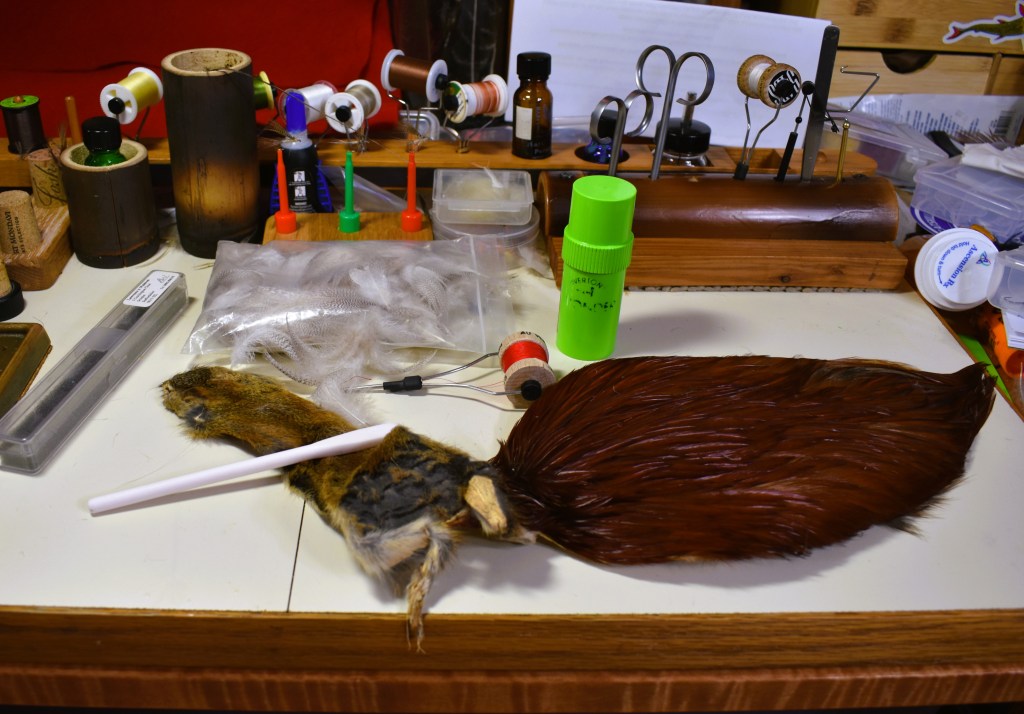
Of course, I grabbed a Red Squirrel skin and my Rhode Island Red cape and tied a pair. The Dette notes called for the fur from the back of the Red Squirrel spun between two strands of red silk which can be made easily with a dubbing loop and spinner. The result is quite full in the body, though it can be thinned out with care, clipping individual guard hairs and inserting them sparingly in the loop. An alternative, proffered by Tom Mason is a touch dubbing method, which produces a lovely sparse body and reveals plenty of red silk.
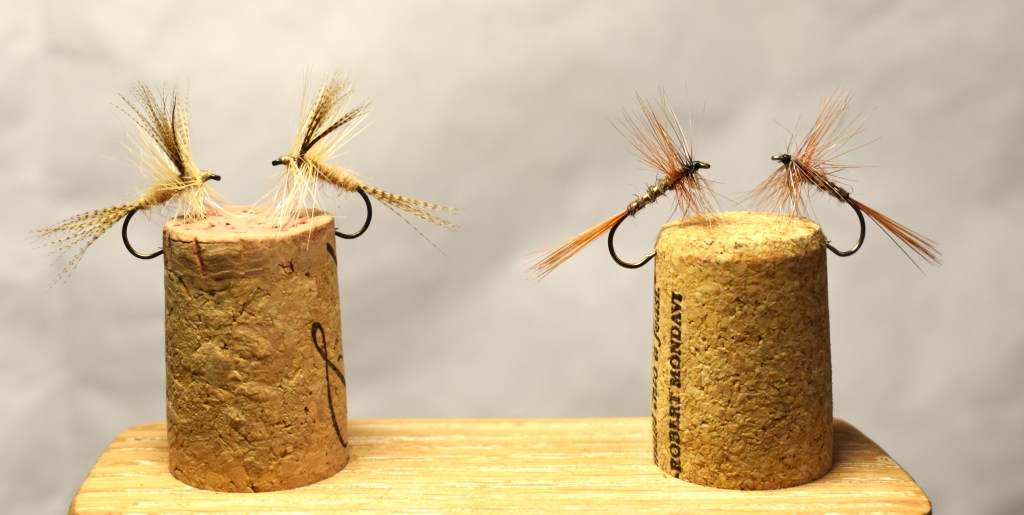
The Bradley Special tied with a fuller, dubbing loop body on the left, and with the touch dubbing technique on the right. A dubbing rake is a handy tool for the touch dubbing method, removing a slight amount of underfur and guard hairs with a single light stroke along the hide.
This recent concentration on older Catskill patterns, flies which have not retained their original popularity, piqued my interest and had me reading about and tying another old original that very much suits my style. Theodore Gordon had his name associated with another fly besides his venerable Quill Gordon. The fly he originally called the Golden Brown Spinner became popularly known as The Gordon, building a reputation among both trout and Atlantic salmon fishermen.
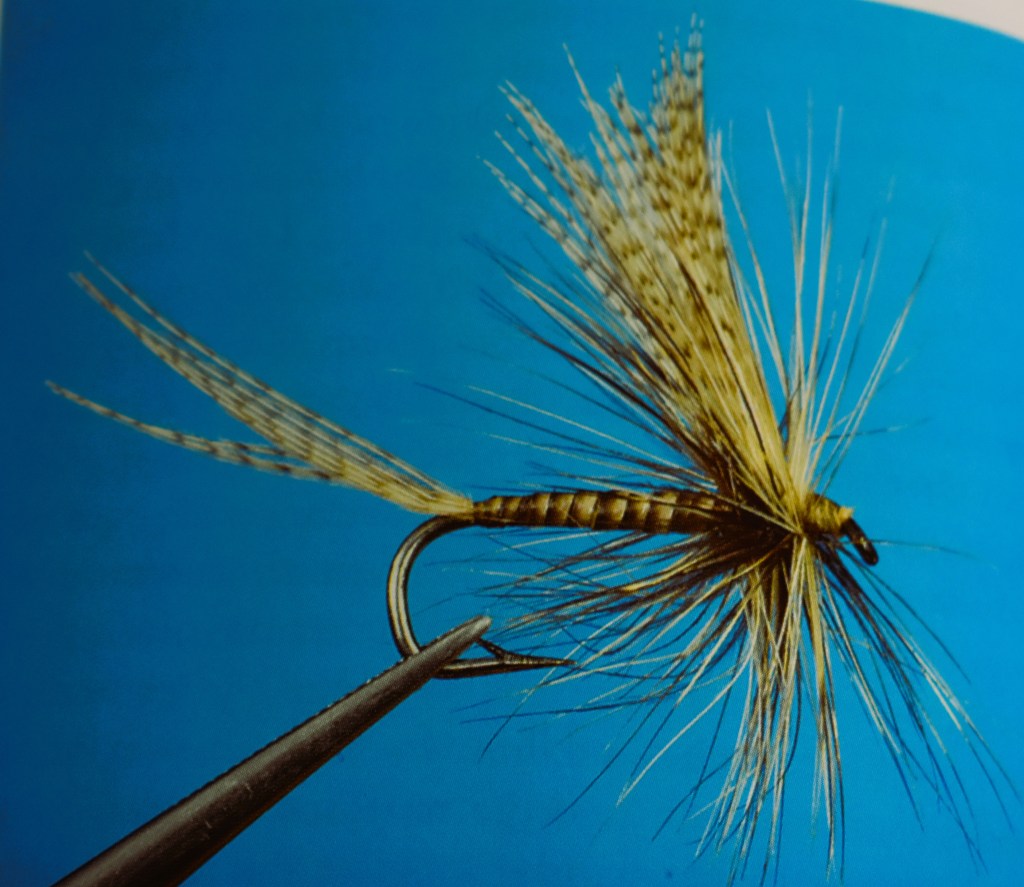
Mike Valla’s wonderful “The Founding Flies”, published a decade ago, includes a photo of Theodore Gordon’s tie. His Golden Brown Spinner reveals the canted single wing of wood duck flank that inspired my 100-Year Dun dry flies, prompting me to tie a few in that style this morning.
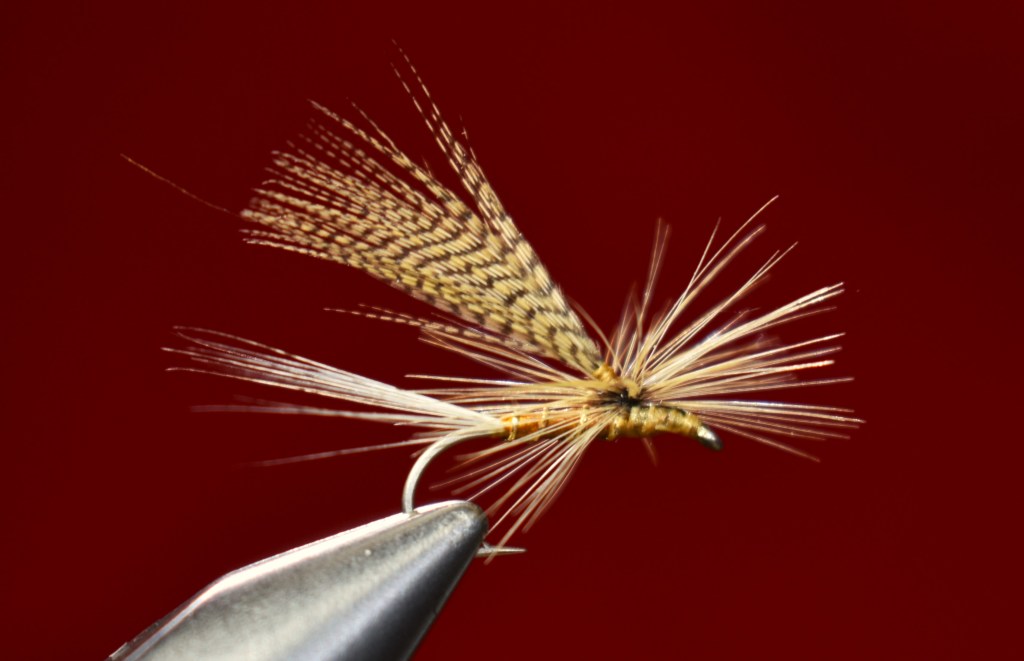
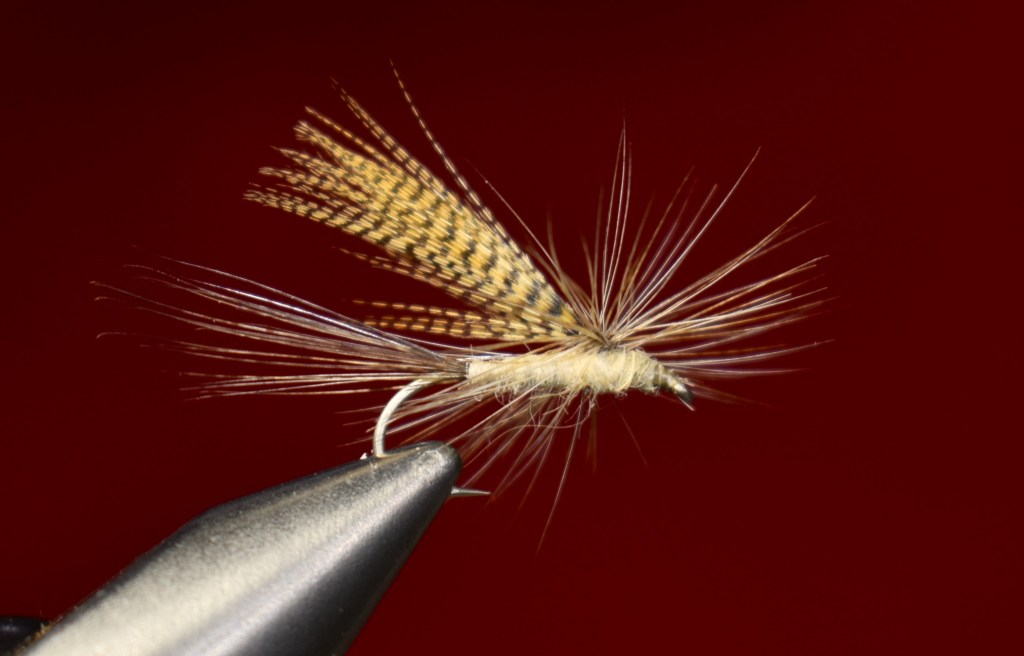
The Gordon 100-Year Dun: Tails and hackle of cream badger, gold floss ribbed with fine gold oval tinsel. I will be anxious to offer one to a rising trout come spring!
I take a little historical tour of flies each winter as I work my way through five or six months without the bliss of casting the dry fly on my Catskill rivers. Last year, I studied two flies from the eastern slopes of the Catskills. Ray Smith was a well known angler and guide on the Esopus Creek, and a prolific fly tyer. His Red Fox became his signature pattern.
Edward Ringwood Hewitt remains a legendary figure in fly fishing as an angler, author, fly designer and inventor, as well as for his remarkable achievements in stream habitat improvements and management. The Beaver Kill Red Fox was one of Hewitt’s secret flies that gained a strong reputation on the Beaver Kill after a lost fly was given to Harry Darbee for a sample. Harry and Walt Dette “tied them by the gross” for eager Beaver Kill anglers.
Smith’s Red Fox (left) and Hewitt’s Beaver Kill Red Fox were both tied from fur taken from the pelt of a red fox, but they are very different flies. Smith desired a light creamy fawn colored fly, choosing to mix the cream, white and reddish furs, while Hewitt clipped the dark grayunderfur for his bivisible hackled fly (ginger faced with medium dun).
I enjoy studying the history of this magical region I am fortunate to call home, and I enjoy tying the flies that helped create that magic for countless anglers. One advantage worth having in fishing our popular trout rivers is the ability to offer the fish something unique, a fly they have not seen day after day. Tying a few old classics in a couple of different sizes will give you that something different!
A Quill Gordon, tied by Theodore Gordon, from the collection of the Catskill Fly Fishing Center and Museum. Photo from “Tying Catskill Dry Flies” by Mike Valla, Copyright 2009 by Headwater Books.
We do not know how many fly fishermen had fished for or taken a trout with a dry fly in America by 1890, though it is certainly possible that some had. Not a dry fly tied specifically to be fished on the surface perhaps, but there were earlier recorded mentions of anglers whipping or false casting their wet flies so that they settled upon the surface to be taken by fish before sinking. A slight, consumptive recluse of a man, a man of breeding and education consigned to live alone, turned his attentions to the wild and beautiful rivers of the Catskill Mountains and to fishing of the fly for their trout. We shall be forever grateful.
Theodore Gordon inquired; he wrote, corresponded, he studied the works of others obsessed with this angling as something more than a simple matter of subsistence. His correspondence with one Frederick Halford, England’s Grand Master of the dry fly, brought him not only the celebrated Britisher’s thoughts and theories, but samples of his many dry flies. Gordon experimented with the English flies and, noting they were not well suited to the bright, tumbling waters of his adopted mountains, he modified them. Gordon used his knowledge of fly tying to create the first true American dry flies, imitating the insects he found along his beloved Neversink, Beaver Kill and other rivers; and thus, Gordon gets the blame for starting all of this madness!
In my own quest for imitation, I went back to Gordon, back to the fly pictured in the beginning of this post, viewed countless times over three decades of visits to the Catskill Fly Fishing Center and Museum, and with that fly I have fueled my own obsession.
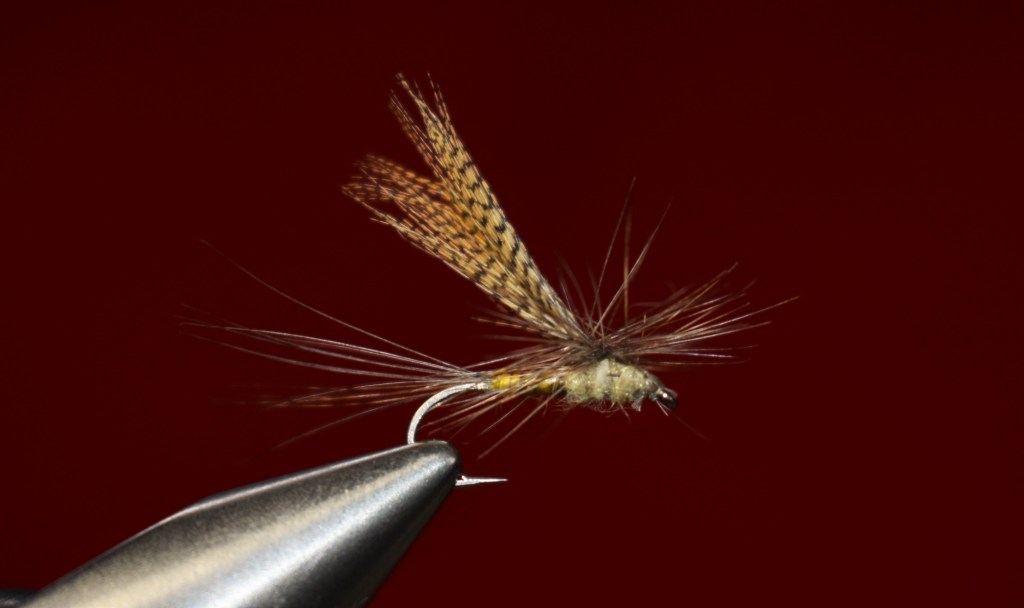
My 100-Year Dun tied with a dyed wild turkey biot to imitate the spring mayfly we routinely name for Theodore Gordon’s signature fly, the Quill Gordon.
My own experiences long ago convinced me that fly design is the avenue to expand our enjoyment of angling and deal with the evolution of our wild trout. Fly fishers like to argue about many things, and among these are the far extremes touting pattern versus presentation. I often wonder why so many of us fall into one or the other of those camps.
I am a dry fly fisherman, and I began to design my own dry flies from the very beginning of my experiences with fly tying. I am a bold proponent of fly color, another heavily debated subject among anglers, and I will be the first to stand with the fellows in the presentation camp, though I doubt they will welcome me as a member. Presentation is everything, though in my mind fly design, color, movement and the overall image of life is a vital part of presentation.
Presentation encompasses both what we offer to a feeding trout and how it is offered. There, I have said it, clearly and bluntly. So why are we anglers so often arguing about two ends of the same stick?
Yes, I did my thing with the classic Cross Special that has been occupying my thoughts as well as my fingers of late. I think I will call my 100-Year Dun version the CrisCross, for it isn’t an imitation of a specific mayfly.
Rather than choosing to believe that a few nondescript fly patterns are the ultimate dry flies, to be fished to the exclusion of all others, I maintain that many of these flies work well under certain conditions. There are elements of their design that provide the essential image of life that is the key to enticing a trout to take an artificial fly.
I tie some of my own patterns to take advantage of the characteristics I recognize in some of the patterns the one fly anglers tout. We tend to talk about the quality of bugginess in many of these flies: the Adams, the Gold-ribbed Hare’s Ear, etcetera. These flies have elements of design which imitate movement, and movement is life!’
There is nothing wrong with carrying a single box of flies stocked only with these patterns, and there is nothing wrong with carrying a half a dozen fly boxes with specific imitations of available insects tied in different styles and sizes, though some of us walking the latter path may suffer a bit with the weight of our fly vests.
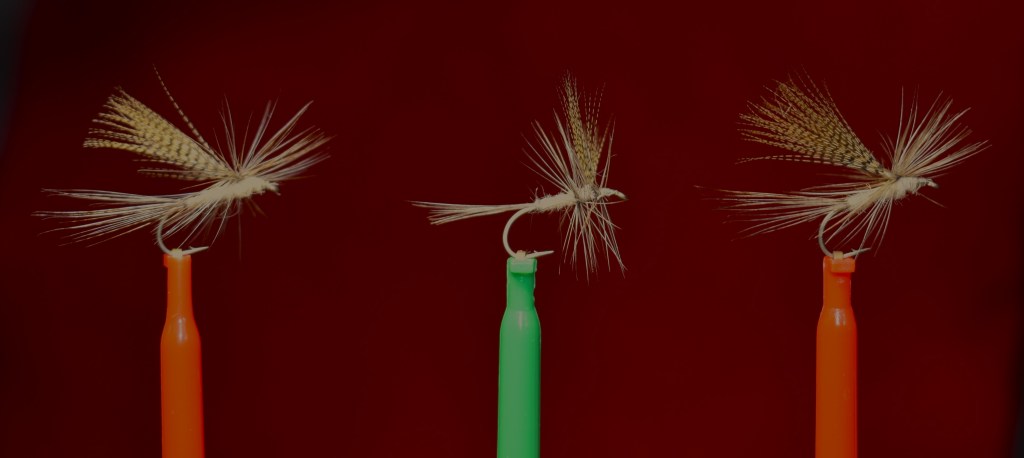
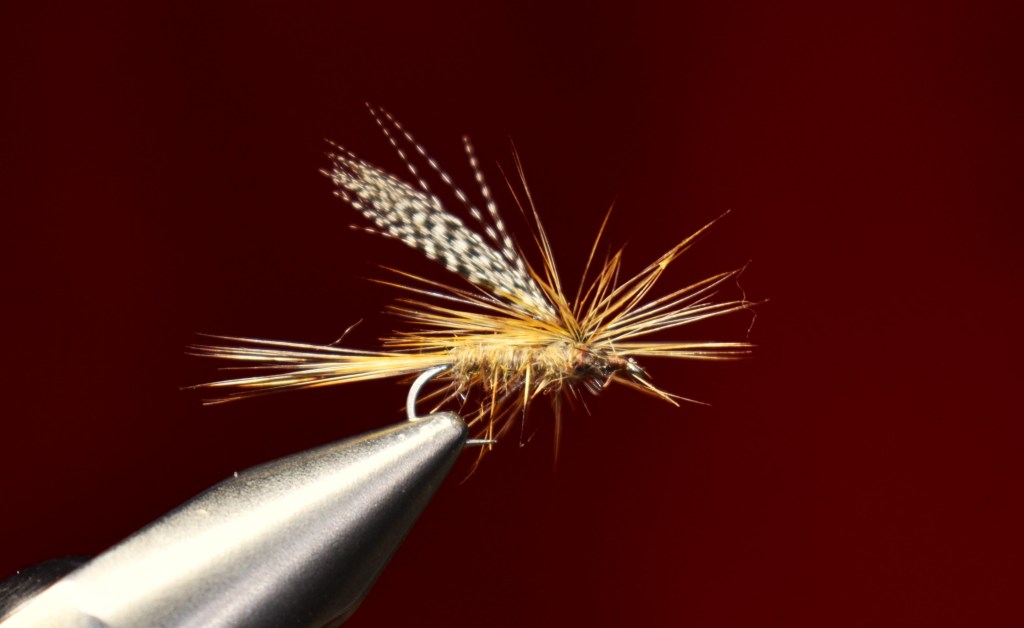
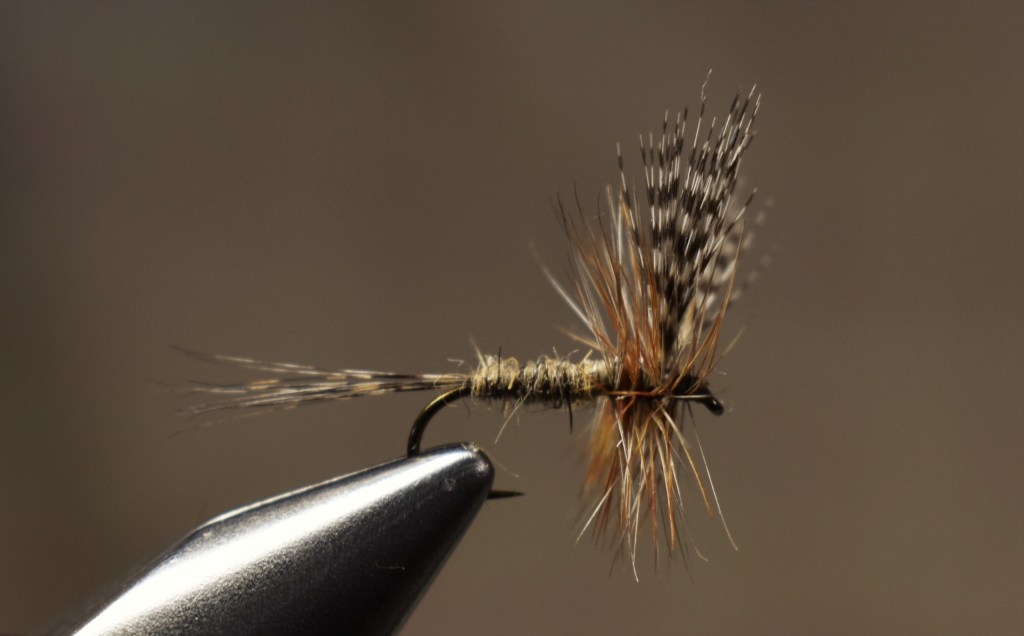
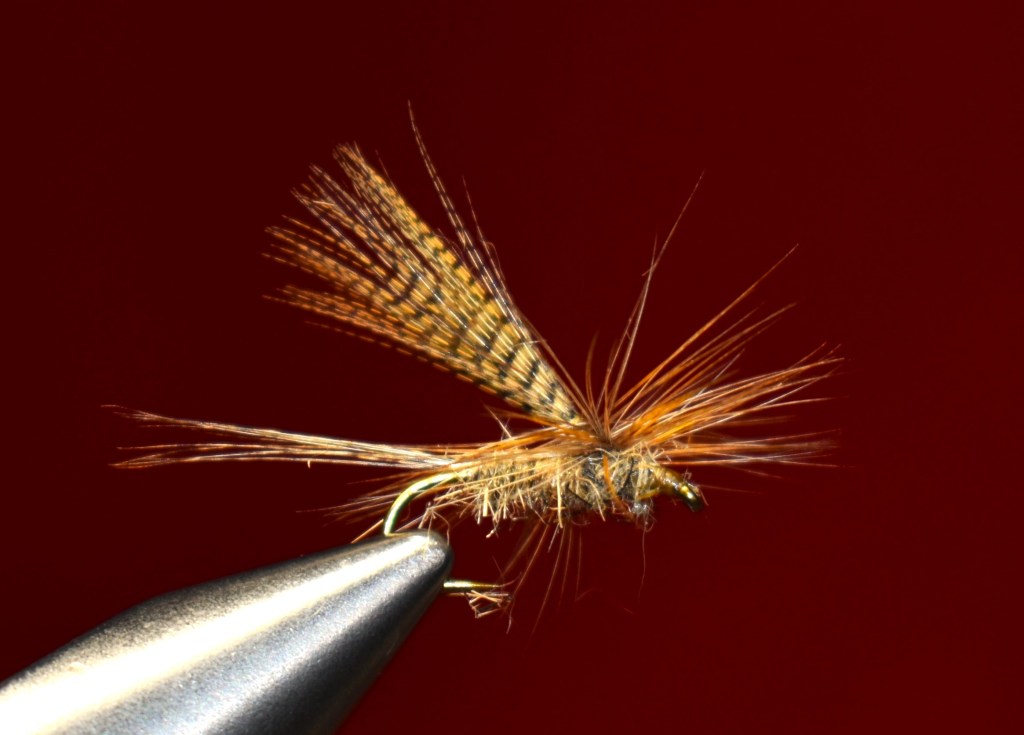
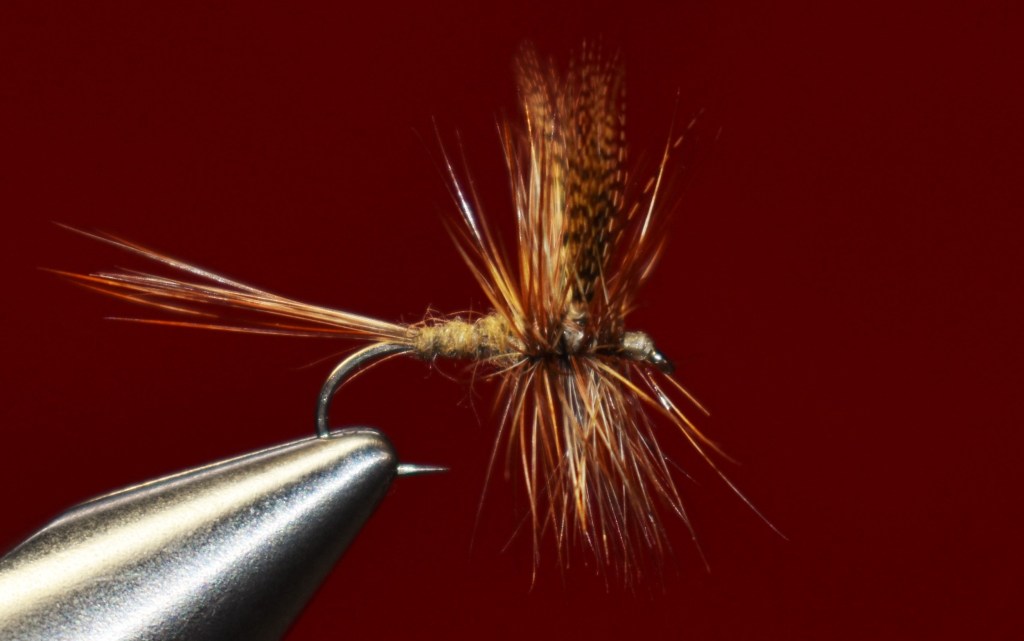
My ‘Catskill Adams’ tied as a 100-Year Dun and as a traditional Catskill dry, the CrisCross 100-Year Dun(top row), and my Fox Squirrel (bottom row) tied as both 100-Year Dun and a Catskill dry. None of these flies are specific hatch matchers, though all have that elusive quality of bugginess and a strong image of life.
I believe strongly that we learn to be better anglers by thinking and experimenting. Appreciate the tradition and learn the lessons it teaches. Spend as much time as possible on the water with your eyes and your mind open to Nature and inspiration.

 Bright Waters Catskill