Red Gods Hello

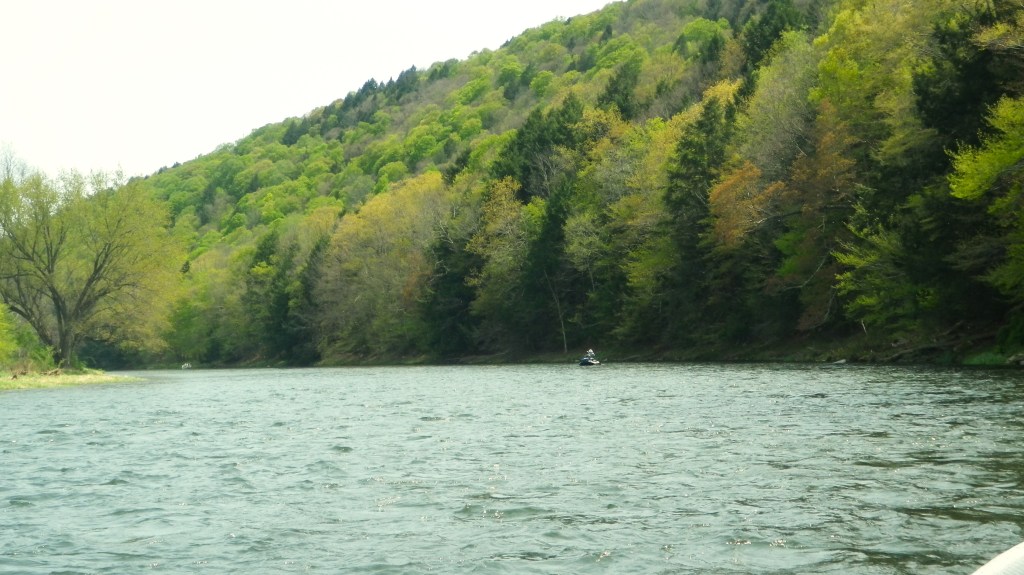
Early wading, primetime high water and poor reports put off my first float of the season until May 9th, but this was going to be a great day!

I did my best to pick a perfect day for my first solo float of the season, favorable temperatures, some cloud cover, and the bonus of very attractive changes in the flow regime, but, you know what they say about best laid plans…

I was excited at the prospects! The City had lowered the release into the West Branch, allowing the water temperature to climb into the fifties, even sixty degrees by afternoon, and there was a very nice dry fly flow provided by reservoir spill. It looked like chances were very good for fly hatches, and my boat bag was loaded with Hendricksons, Shadfly caddis and Blue Quills. Throw in that cloud cover with a day in the upper sixties and northerly winds of just 5 to 10 miles per hour and it all seemed too good to be true! It was.

I saw a few shad caddis early on, but just a few, and they were tiny. This caddisfly is typically imitated with a size 18 dry fly. Yes, I know the fly shops tell you 14 to 16, but it is important to look at the insects closely. Caddis have long wings that extend back past their bodies, and they look larger in flight. You select your hook sizes based upon body length and you find that an 18 dry fly hook is just right for the Shads, or Apple Caddis depending upon the locality of your fishing. Mother Nature though, likes to throw some curves.

I tie some smaller caddisflies just to cover my bases, and for the Shadfly and tan caddis, that means some size 20 patterns to complement the standard size eighteens. I was well prepared with twenties, but the naturals weren’t even close to being that big. Too small to catch, these flies appeared to be in the range of size 22 to 24, and for most of the day they were the only fly consistently on the water. When I found a trout sipping these guys, my twenties were regularly ignored or refused.

Having your best efforts at matching the hatch soundly defeated by Mother Nature’s twists is part of the game, but it is frustrating. No matter I told myself, and kept rowing, this day still looked perfect for a big hatch of all of the Hendricksons that hadn’t been seen on the West Branch this season!

After a couple of hours of the morning had passed, I noticed the wind beginning to build. This was supposed to be a calm day remember? Ah yes, the Red Gods were joining the game early. Let’s see if we can make the fly fisherman crazy!

I encountered more boats as I made my way down the river, a little surprised because there had been a single trailer parked where I launched. I took my time, stopped at a lot of places where I should have found some good trout working, and fought the urge to rush to my sure-fire spot for a Hendrickson hatch. The wind kept building, though there were calm spells. The way the Red Gods play this game the calm spells come when you are moving from place to place, saving up the wind gusts to blow when you actually find a rise. They are used to winning.

After a stop for lunch I made my move, as there were now boats up river and more below me. As I drifted toward my target spot, I saw one anchored and thought I was out of luck, but it turned out he was 100 yards or so above my spot. I glided past him, left him some water to fish, and eased into the target zone. By the time I had anchored, I saw two or three rises, so I slipped the anchor to drift a little closer. It was easy to do, since the wind was blowing directly into my stern.

Initially, these fish looked to be eating the tiny caddis. The wind accelerated and made casting very interesting, as I had to throw downstream at a very sharp angle, requiring my backcasts to go directly into that wind. One fish finally appeared to take my fly, just after a big gust blew the line out of my fingers in the middle of a mend. Refusal, or a miss? I will never know, since I didn’t get an honest hookset while chasing those loops of slack line.

The wind roared right down the pipe, as I eased along that bank wishing for a bend that might offer me some sort of windbreak, and then the Hendricksons finally appeared. There was one little pink dun sitting right on the boat’s fly holder. I quickly changed from the caddis to a pink Hendrickson, and continued my battle with the wind. That wind tried to be helpful though, it put several flies into my sweatshirt, so I’d have spares.

As predicted, there were several trout rising along that one severely windblown stretch of riverbank, the only feeing activity I would find this day.

One good trout took the fly, I lifted the rod and felt nothing. Couldn’t spot my fly on the next cast. Oh, there is no fly on my leader !#x&!!

And so it went, a beautifully frustrating day. Red Gods 4,356,203, angler nothing. Like I said, when they play they generally win.
Better Days

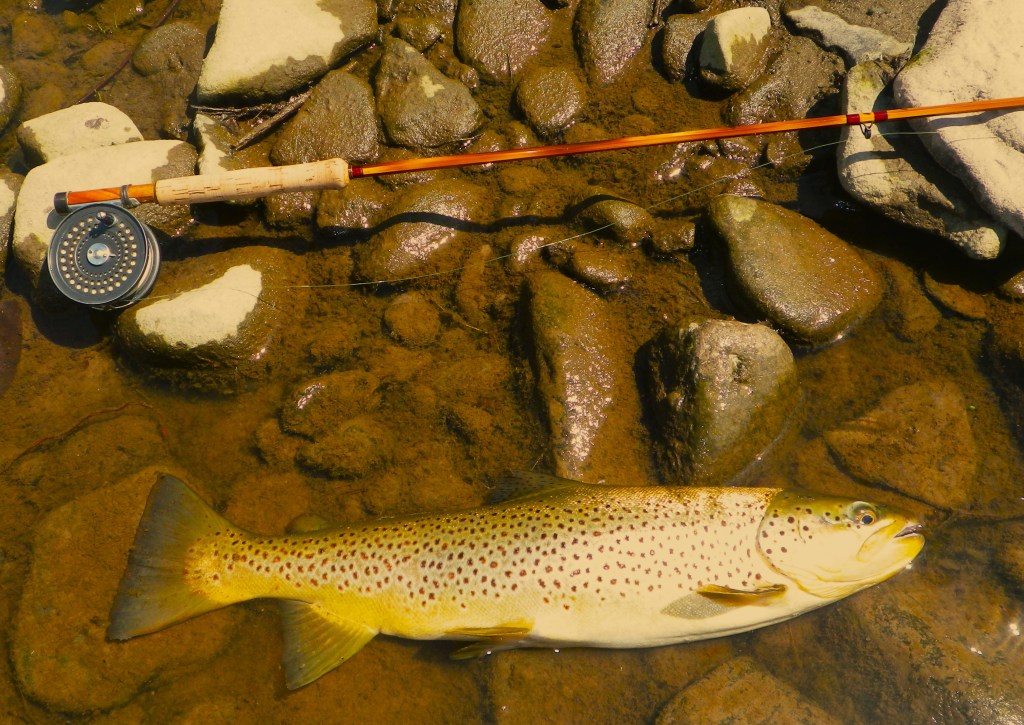
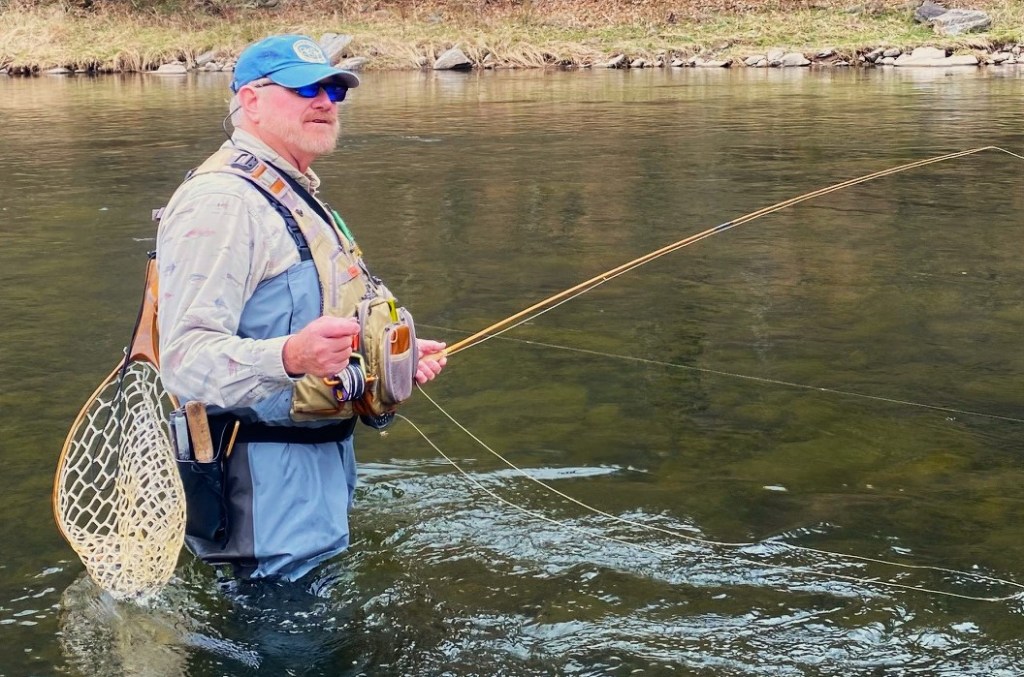
Sunshine, bright water and bamboo!
(Photo courtesy Chuck Coronato)

A full week has been lost to the power of weather and water, though at last I find myself on the cusp of better days!

I awakened this morning with a new fly design in my head, the full pattern crystalized in my sleep. I think the lack of fishing, of missing a week out of the prime of the season, must have spurred my resting mind to work it up. Some outlet is necessary for all of the stifled passion!

It is a Saturday, and the rivers remain unwadable, but relief is in sight. Morning sunshine is streaming in my window, and this seems the day we may finally expect it to last. I rushed to mow the lawn yesterday afternoon, finishing under the chill of light rainfall when a big, dark cloud settled right over Crooked Eddy, so today will be a day of ease and preparation.

I took straight to the vise this morning, eager to tie a few examples of that new March Brown. You may be puzzled at the name, though I have mentioned the changes observed in this large mayfly during three decades of Catskill angling. Though I have observed color variations in mayflies as long as I have carried a fly rod, the history of our March Browns intrigue me.

For twenty years, every March Brown mayfly I plucked from the waters of Catskill rivers was the classic caramel brown colored fly, with dark venations and blotches in wings shaded with a translucent brown. During the past decade, these flies have appeared pale yellow, with lighter wing markings within a pale translucent yellow background, with one remarkable exception.

The now common pale, dirty yellow fellow we call March Brown.
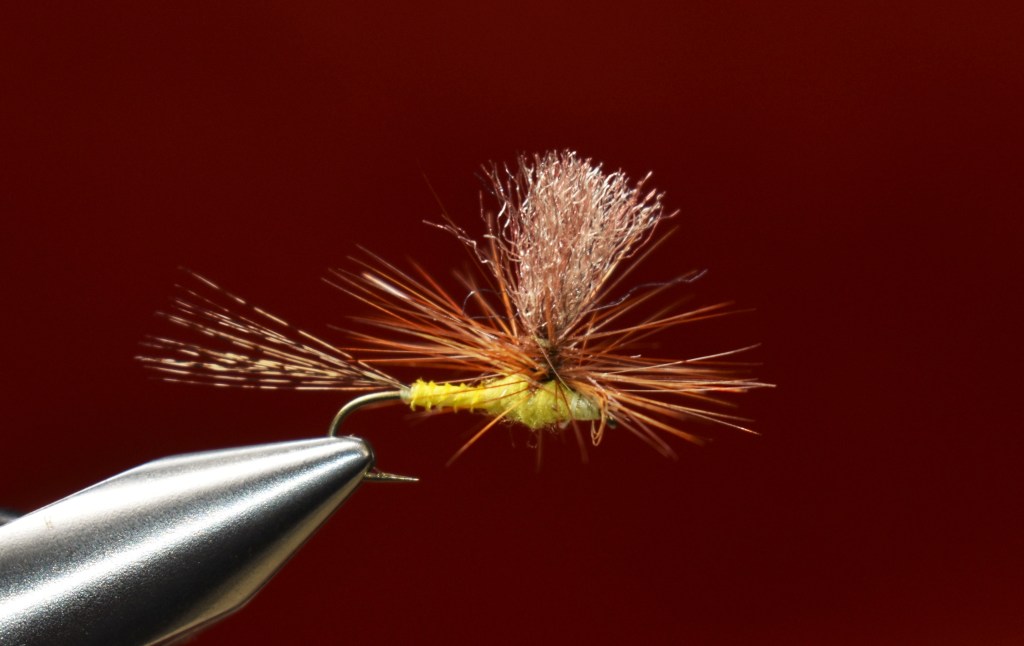
The original parachute fly tied to match Nature’s latest twist: the Woodstock March Brown.

It was late May, two thousand nineteen, and Mike Saylor plucked a remnant dun from the water as we waded out after fishing fruitlessly during a nice March Brown hatch on the Beaver Kill. The fly in hand was a bright canary yellow, an unnatural safety yellow, though clearly a March Brown dun upon examining the wing markings and verifying it’s twin tails. All of the rising trout had refused every pattern we could offer while feeding freely, even exuberantly on these wildly colored naturals. Being the 50th anniversary of the Woodstock Festival that year, the name was a natural!

The garish yellow bodied parachute was tried a few days later when I found one substantial trout taking in that same pool, after he ignored all of the usual patterns. That 21-inch brown accepted the Woodstock Parachute as freely as he took the naturals. I have tied and carried them every year since.

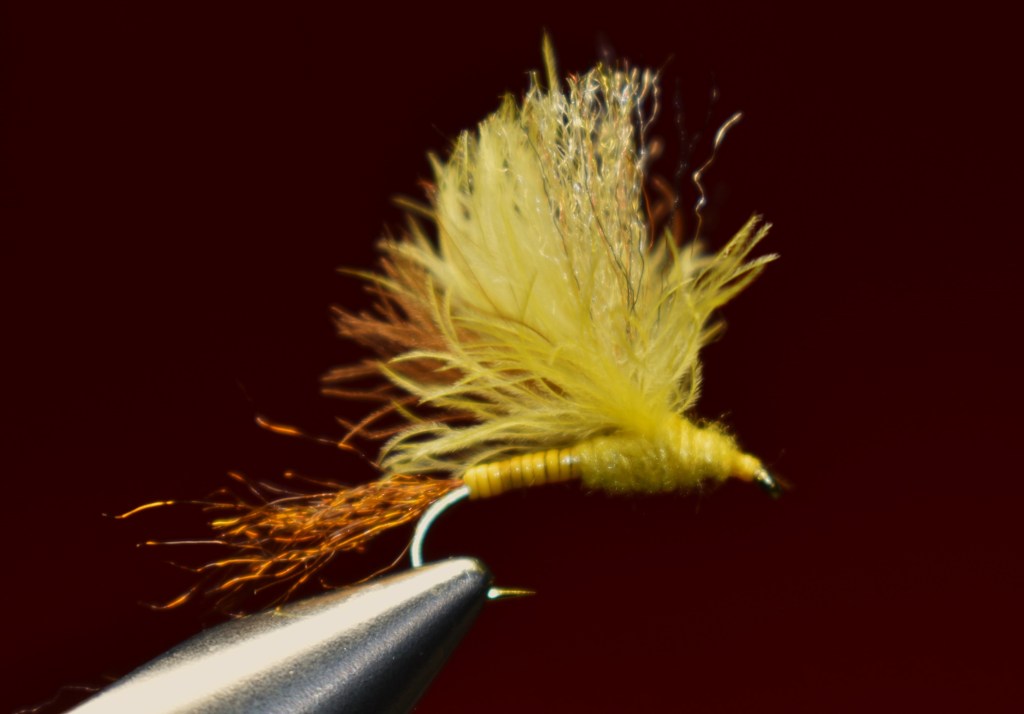
Invented in my dreams, the Jave Quill Woodstock Emerger awaits a date with Maccaffertium vicarium Hendrix!

I have a feeling this new Woodstock fly will bring me some luck when the river finally returns to a normal flow. I am hoping that a good hatch will appear this year. I have not enjoyed a good one since 2019, though I have seen a few flies. Warm water kept trout from feeding on them during the single season I did see fair numbers of flies, but this season looks to be cooler and wetter. I can almost hear the riffles playing counterpoint to a Jimi Hendrix guitar solo, the bass line provided by the plucking sound of big trout eating big mayflies!

Withdrawal

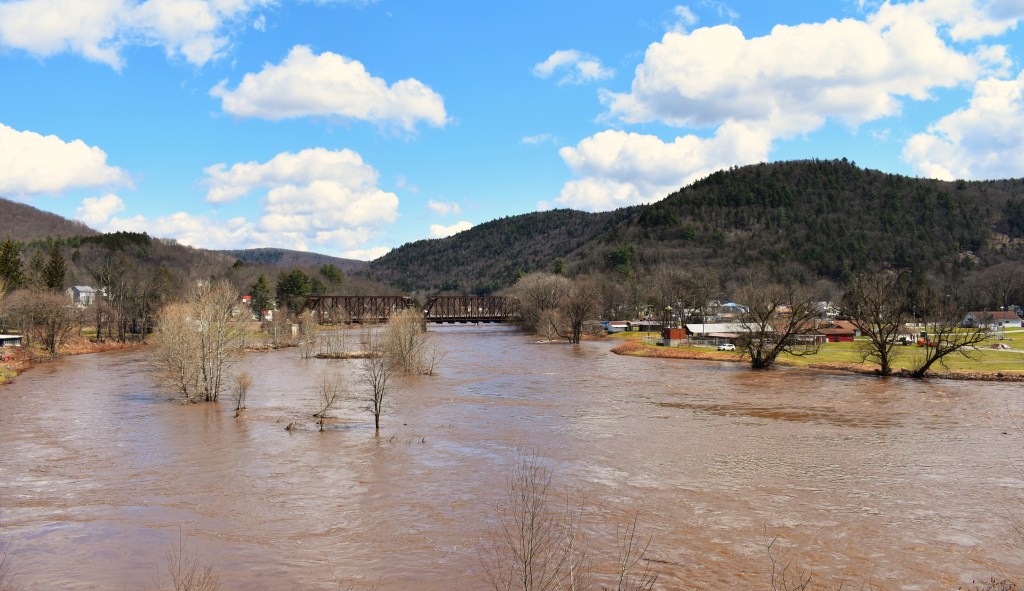
April 9th, 2022 – May 1st, 2023 isn’t at the same “official” flood level, but the result is pretty much the same: No Fishing!

Twenty-two days have elapsed since my seasonal countdown hit zero, and I had fished sixteen of them, enjoying some great times during the Hendrickson hatch. West Coast steelheaders have a saying: “the tug is the drug”, and I can sympathize with the sentiment. Right now, as my favorite month begins, I have been forced into fishing withdrawal.

These precious May days shouldn’t find us with flood conditions on the Delaware tailwaters, but NYC finally plans to fix the millions of gallons per day leak in their Delaware Aqueduct. They have been hoarding water in the reservoirs that discharge to the aqueduct this spring, leaving no room for the inch and a half of rain the weekend delivered. I cannot fault them for fixing their wasteful leak, though I can for waiting so many years to address it. The engineers who designed the system should have included some valving or a release gate apparatus to be able to shut off discharges to the aqueduct for maintenance, but they either didn’t have the common sense and foresight, or the City determined it wasn’t worth the cost.

Cannonsville and Pepacton reservoirs were both over maximum capacity and spilling before this latest rainfall event occurred, and no one knows if wadable flows will return this month, before NYC begins drawing them down via high releases so construction may begin in October.

At any rate, here we are at peak season and the Delaware system is unfishable with dangerous flows and muddy runoff. The rivers should clear, barring another significant rainfall event, but it will take time for that, and for the flows to recede to safe, fishable levels even for drift boat fishing.

I confess, I am a wade fisherman at heart, even though I own a drift boat. I am a bamboo rod toting, dry fly junkie – and I need a fix! My only hope lies with the freestone rivers, however long it takes for them to recede and clear to wadable levels.

The famous freestone rivers of the Catskills still hold trophy size wild trout, but they can be hard to find and harder to deceive given the heavy fishing pressure.

Weather remains the great question hovering over the viability of our freestoners. More rain, at least when it comes an inch or more at a time, means fewer days with fishable conditions. Hot weather can arrive here in May and very quickly warm up our freestoner rivers to the seventy-degree mark, reducing the river miles that are suitable for trout fishing. The angler’s ideal would be a balance between warmer days with cooler nights and weekly rainfall in quarter inch increments, but Mother Nature rarely offers such an ideal balance. I am hoping she might consider it this spring!