

I was sitting at my bench just now, tying a couple of variations on my standard beetles, when I let a thought find it’s way to the vise. At first, I palmered a hackle tightly up the hook shank and tried to put a flat piece of foam over the top. Uninspiring to say the least, and then the right concept crystallized, and a new fly design was born.
Though a little rainfall has given our rivers a breath once again, they dropped quickly, soon to return to the slow flows and low water clarity that has dictated the rules of the game in recent weeks. Our trout have been slow in recovering from the mad onslaught of our peak fishing season, these low, still conditions keeping them moody and loathe to feed in daylight. I wanted a dry fly that might just perk one up now and then, at least when the approach and presentation challenges of these conditions could be surmounted.
A good dry fly needs a strong image of life and, at times I think imitating life can be more crucial than closely imitating any specific species of insect. This morning’s idea may indeed fulfill that promise!
I liked the palmered and clipped hackle, for it allows the fly to fall lightly and to be twitched gently if needed to attract the attention of a resting trout. Rather than try to add some opaque body silhouette, I thought of allowing light reflections to pass through the hackle fibers intermittently. I had a short piece of Kreinik braid on the desktop near my vise, and I unwound the fibers to fray roughly 1/4 inch of it’s end. This would be my wing.
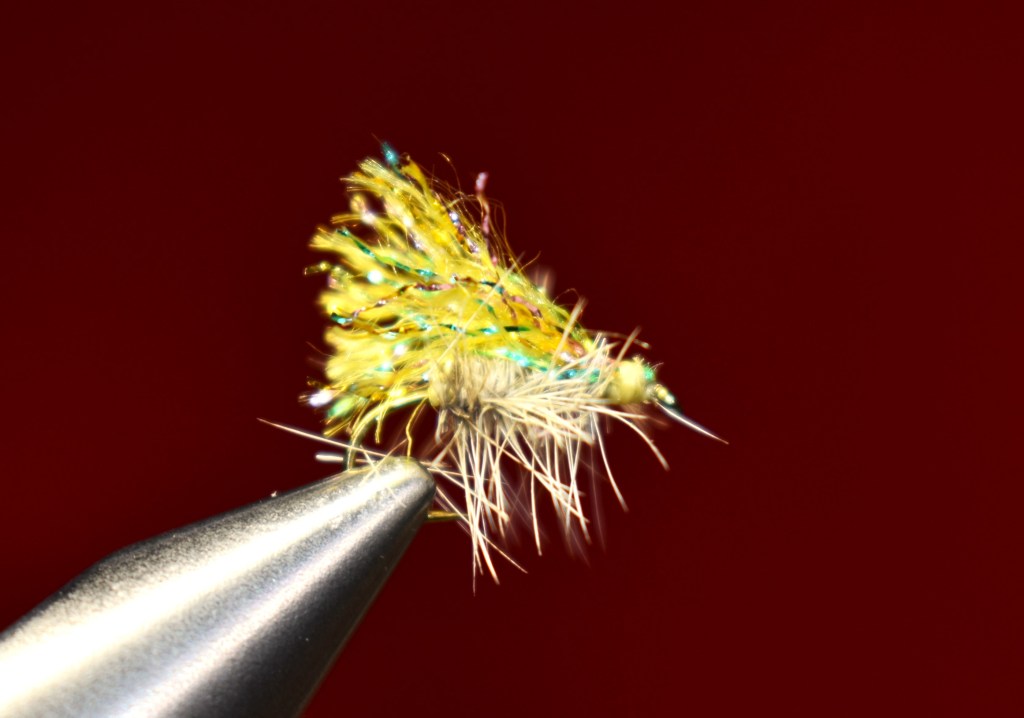
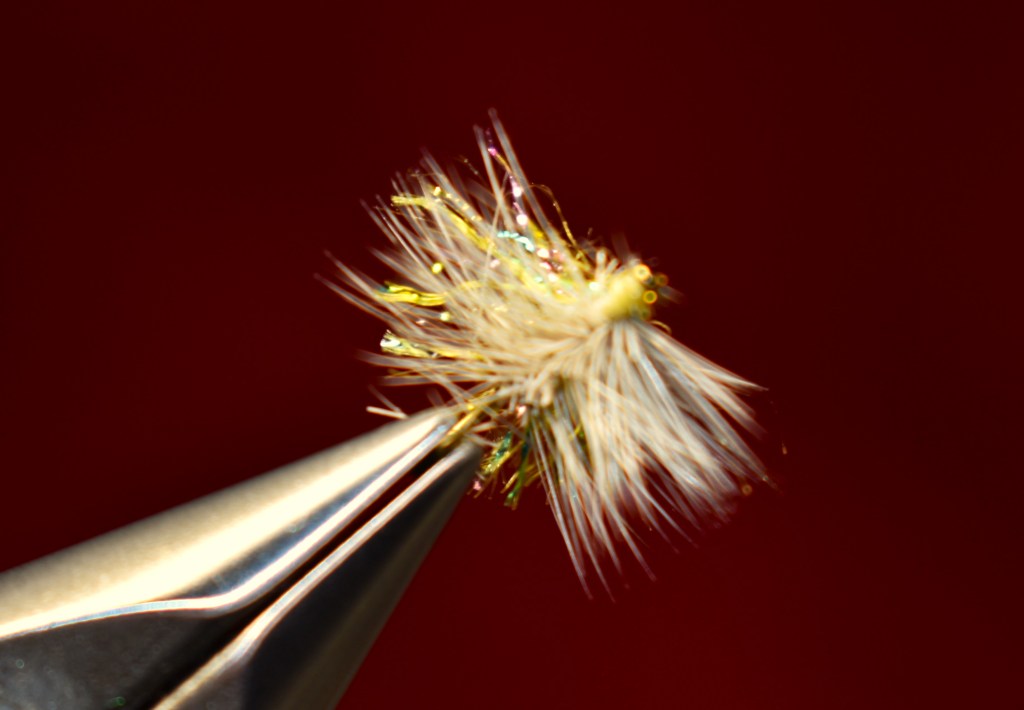
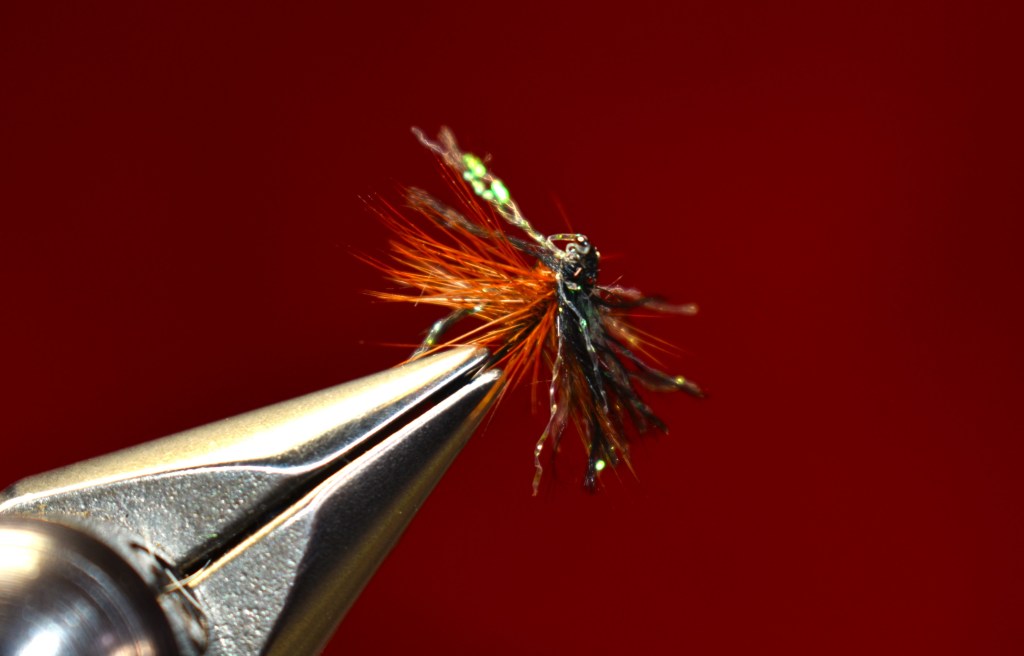
With light and dark versions, this fly may be presented as an imitation of some of the pale aquatic and terrestrial moths that appear during the summer, as well as any number of dark beetles and assorted terrestrial flying food.
Of course, like any fly, these moths could be an utter flop, but I have a good feeling about the design. The trout will tell me whether any modifications are necessary. In his masterwork Selectivity (Stackpole Books 2014) my friend Matt Supinski described the three phases of trout behavior intertwined in the mystery of selective feeding. He named these trout moods “Aggressive/Active”, “Selective/Reflective” and “Passive/Dormant”. As trout move from one mood to another in this order, fishing becomes far more difficult, as trout feed less and with greater care and discretion. “Passive/Dormant” fish may not feed at all until extreme fishing pressure or unfavorable environmental conditions change. The flies conceived this morning are squarely targeted toward trout stuck in Matt’s S/R and P/D moods.
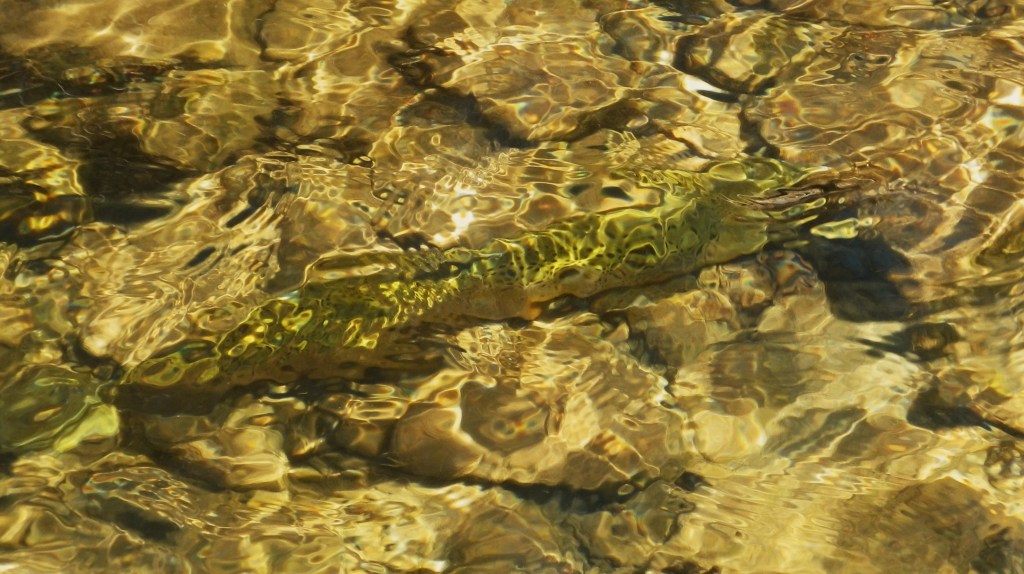
I think a certain amount of attraction can be helpful in a trout fly, but it shouldn’t be too blatant. Thus, my idea of allowing a bit of flash to peek through the palmered hackle fibers for a glimpse of movement. I’ll let you know just how it fares…
 Bright Waters Catskill