I’ve been sitting back today, reading a bit, and enjoying the freshness of new mown grass on the cool air wafting through the window. It is hard to beat the fragrance and the feeling of rain washed mountain air!
At last, that endless run of dark, stormy heat and humidity has departed the Catskills, and all seems lovely and new again. It is a Sunday and the rivers are high and off color, doubly not a fishing day, and there isn’t much of anything I have to do.
I watched a Canadian TV show on YouTube this morning, one showcasing Atlantic salmon fishing on Nove Scotia’s Margaree River. My friend Dennis Menscer recently returned from his own trip there and I wanted to see some of the places and people he told me about.
I have always been intrigued by the thought of salmon fishing, it’s great history and literature have entertained me through the long days of winter, particularly the tales of the Golden Age recounted by the late Dana Lamb and his contemporaries. Cape Breton Island and it’s Margaree are beautiful, and I have seen the magic of the Atlantic salmon touch people like Dennis and my old friend Ed Shenk.
I sat and talked with Dennis about a week after his return, and the energy of the place was still strong within him. I could hear the excitement in his voice as he related his experiences and spoke about building new bamboo rods for next year. Of particular interest was the summer dry fly fishing on the Margaree, a special kind of magic that would easily captivate me!
I have long dreamed of a salmon fishing trip, but that remains as much a fantasy as a mythical sojourn for Labrador brook trout. I have no expectation of being able to experience either, though the dream still lingers…
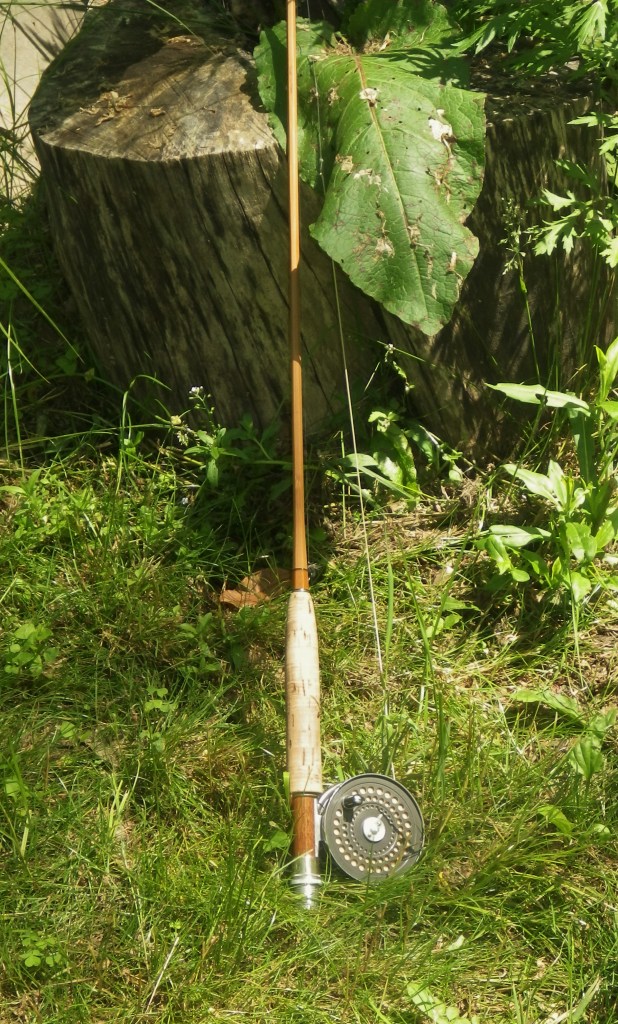
Across the room there is and old, dented aluminum rod case that bears some split cane with a salmon angling history. That 5-5/8ths ounce Orvis Battenkill was owned by an author, Dr. Livingston Parsons, who shared his years at a family salmon camp in his book “Salmon Camp: The Boland Brook Story”. A classic Hardy Zenith reclines nearby in a tackle bag, the perfect compliment to that fine old rod. Sitting back and smelling the freshened air with pictures of the lovely Margaree in my mind, it is easy to imagine myself casting that Battenkill on one of her famous salmon pools.
It has been more than a week since I last stalked a Catskill river or wielded a fly rod; a time for taking care of many of the other necessities of life. For most people, nine days away from fishing would not be abnormal. Most anglers fish a weekend or two during the course of the year, the most fervent perhaps half a dozen weekends from spring through early summer. In retirement, I am more fortunate, for it is from these rivers that I draw the essence of life.
Now I am acutely aware that it is not the prime-time fishing that I have missed. In fact, heat and spotty storm systems have made this last half of July less than productive. Even though time on the rivers may not have resulted in memorable fishing, I miss the energy of the flow, the magic of the hidden rise, and the mental challenges of solving Nature’s puzzles.
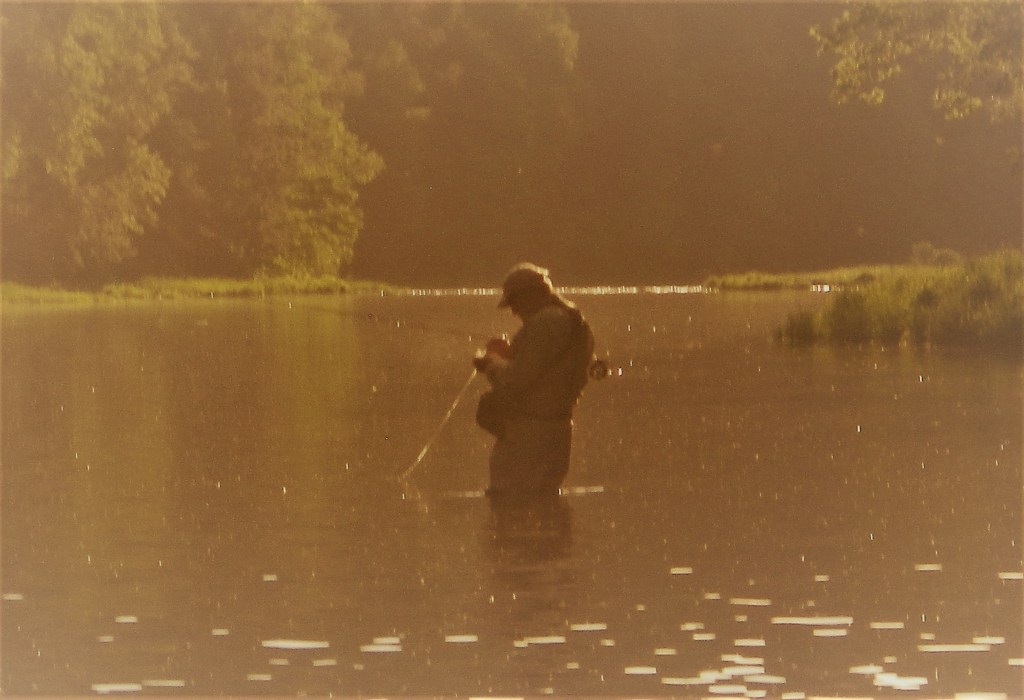
Photo courtesy Matt Supinski
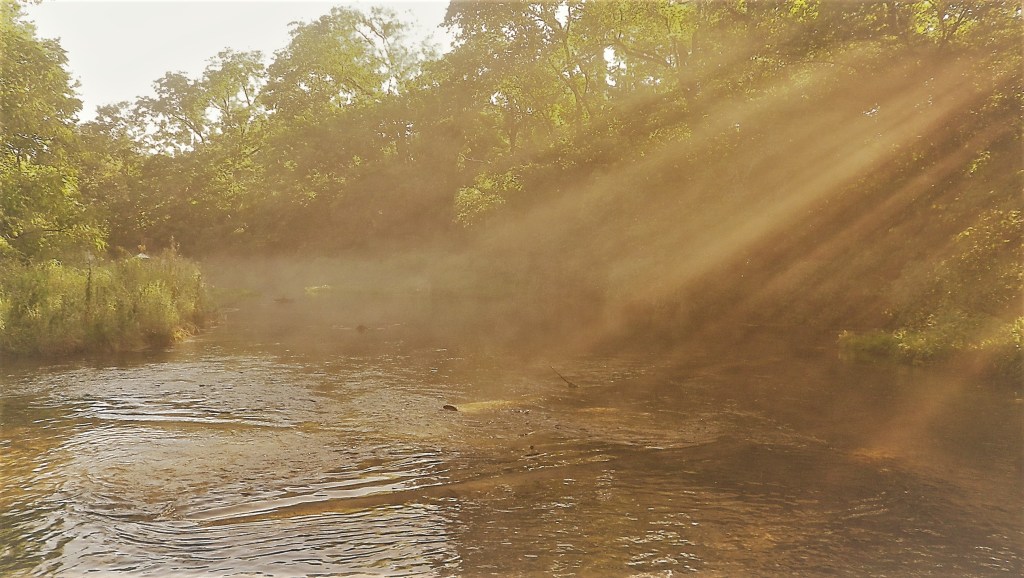
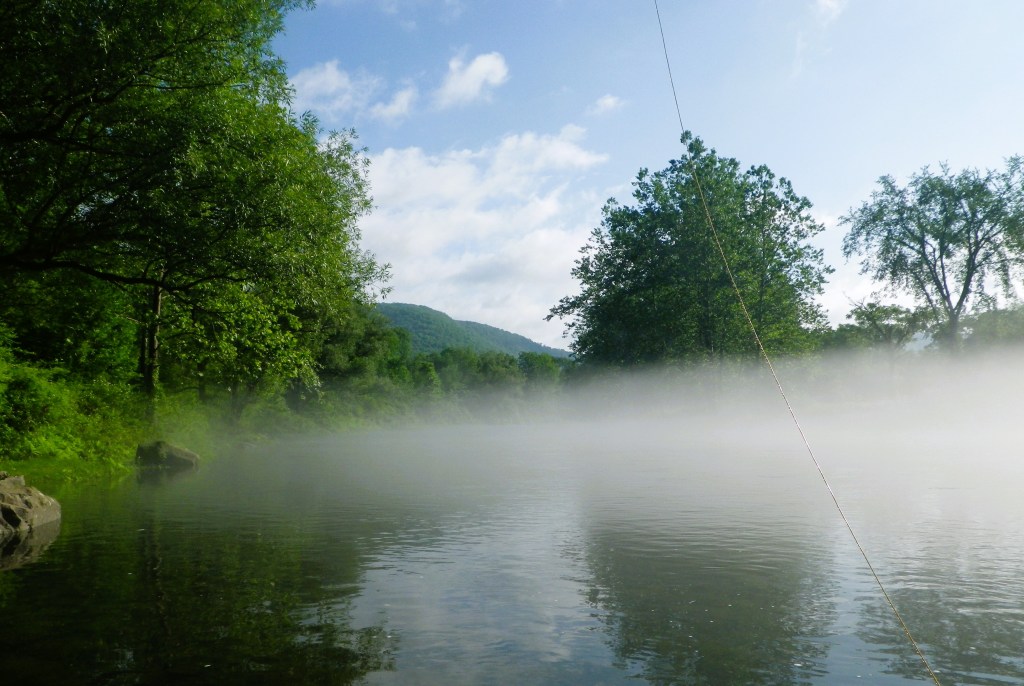
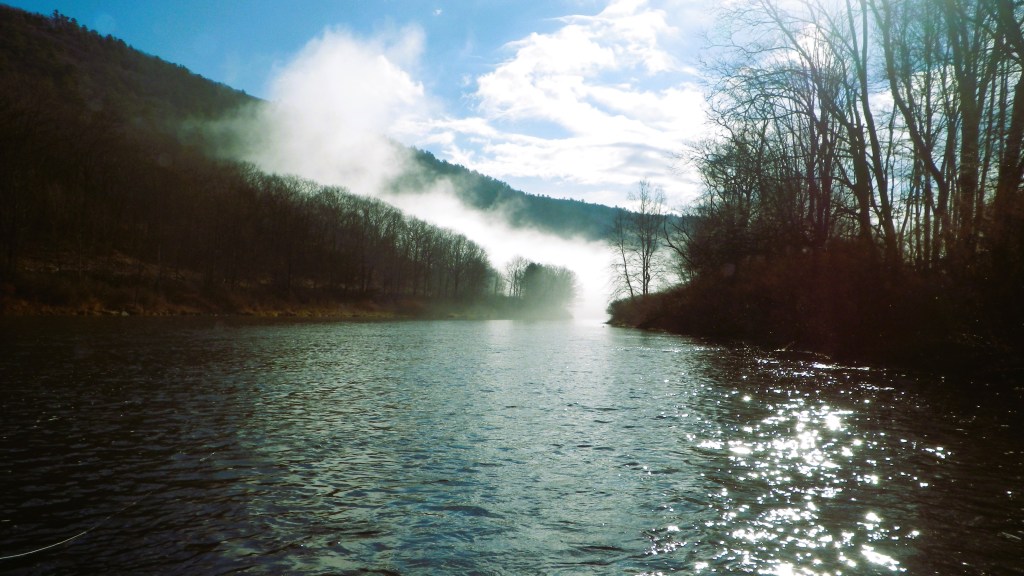
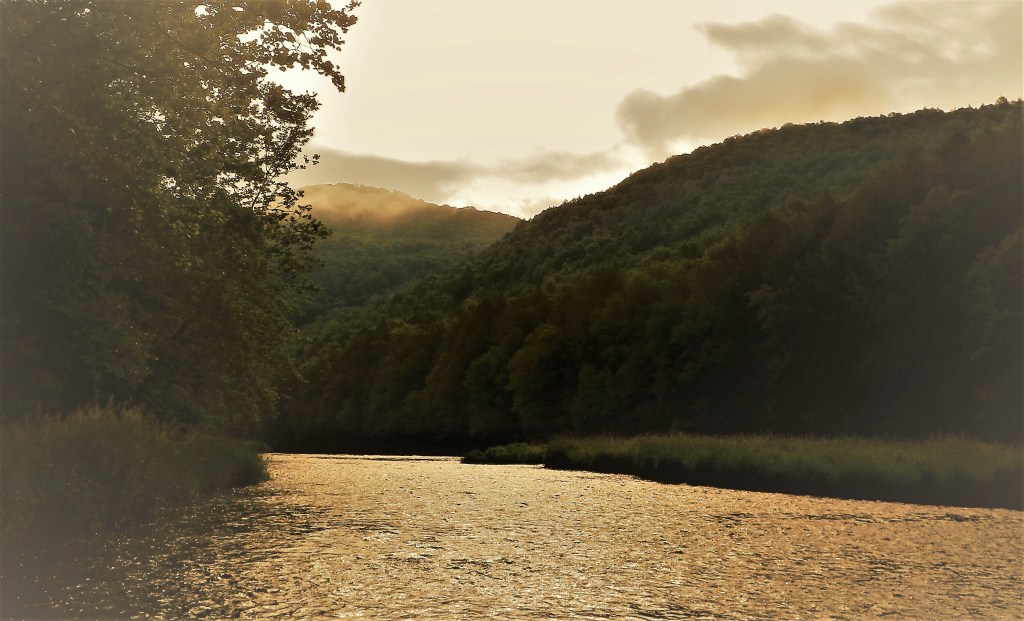
I am very much looking forward to August, and it’s first week bringing the quintessential Catskill summer weather I love! Summerfest comes to the Catskill Fly Fishing Center and Museum in Livingston Manor on the first weekend, when the faithful gather to browse vintage tackle and share thoughts and memories of their seasons. August is corn on the cob at farmers’ roadside stands, misty mornings stalking trout, the first rays of golden evening sunlight that says it’s high summer and the season is turning.
Such golden light brings me hints of autumn and grouse on the wing, warm, breezy afternoons with ants or hoppers touching down to send the trout into an impromptu feeding frenzy.
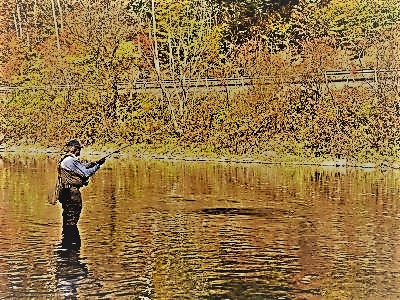
Photo courtesy Chuck Coronato
For today, another stormy day is promised, but we hang expectantly on the cusp of change. Perhaps I will even tie a few flies to move closer to that first warm embrace of August!
The first month of summer, and the first month and a half of summer fishing conditions lies behind us, and we shall soon embark upon that lovely turn of the season known as high summer! Cornfields tasseling in the sunshine, morning mist upon the rivers, and the gradual increase in that golden cast to evening light are the signs, and the drier air and cooler nights provide the feelings.
I have not written in a while. Summer fishing has reached a low ebb and other things have taken my attention, but I am looking forward to the grandeur of the Catskills in high summer and stalking wild trout in the quiet of the mornings.
Summerfest is just two weeks away, when angling souls will gather upon the Museum grounds to share tales of leviathans hooked and lost, favorite flies and fine old bamboo rods. Fairs and village festivals bring music, food and laughter throughout the mountain valleys. Fishing too will improve, for it is just the beginning of the second half of our dry fly season.
High summer is the time for tiny flies and light rods! The mayflies are there, though they are not the meaty specimens of springtime. Sulfurs and olives in the twenties, perhaps the miniscule tricorythodes, flying ants too small to see when they pepper the film on an August afternoon, these are the hatches of summer. It is time once more to open the chest of fly boxes and select those packed with these tiny high summer patterns.
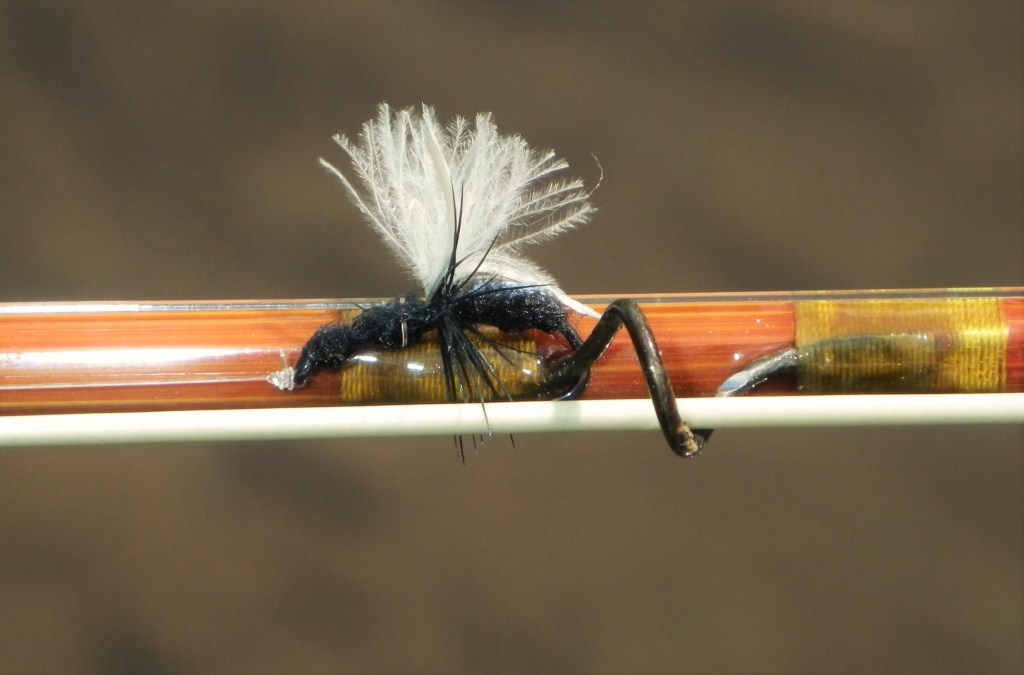
I hope to haunt a few grassy banked runs before the season runs it’s course, so there will be one box with hoppers tucked inside: Shenk’s Letort, my own Baby Hopper and the limestone creation from decades ago that wooed them East and West!
Fairs, festivals and fishing! ‘Tis a grand season to be sure!
When fishing is difficult, I like to keep my mind open and consider any patterns of trout behavior I encounter. I note what I find on the rivers on any given day and look to repeat my hard-won successes when similar situations occur. Sometimes though, it is easy to fall into a pattern myself.
I was fishing yesterday afternoon, looking to find a good trout or two hunting once again. The water conditions looked very favorable, and there were periodic strong winds as little storms in waiting wandered around the Catskills looking to join forces as thunderstorms like the one that awakened us at four this morning. It was hot too, when that wind was not blowing, and that tends to be a recipe for terrestrials.
I failed to move a single trout, though I did see one good rise behind my shoulder in a piece of water I had fished very thoroughly a few minutes earlier. I cannot say whether that trout had been sitting there throughout, or if he was a traveler. I do know that he paid no attention to a number of casts that I immediately put over him.
Wading downstream in the heat, it occurred to me that those wonderfully educated Catskill trout might be patterning me. Perhaps they had become accustomed to my approach and tactics. No matter how slow and stealthy my approach, I never fool myself into believing that my quarry doesn’t know I’m there. Sure, I can usually avoid alarming them, but their awareness of their watery realm is sublime.
That was the second time in a couple of days that I had that feeling of being patterned by the trout. I was fishing over a known lie, where a trout had risen softly once or twice, while I watched from a distance. Once I cast to him, he had quietly stopped rising and ignored my careful presentations. On that occasion, I considered that the fish might be getting wise to my tactics and employed a little reverse strategy.
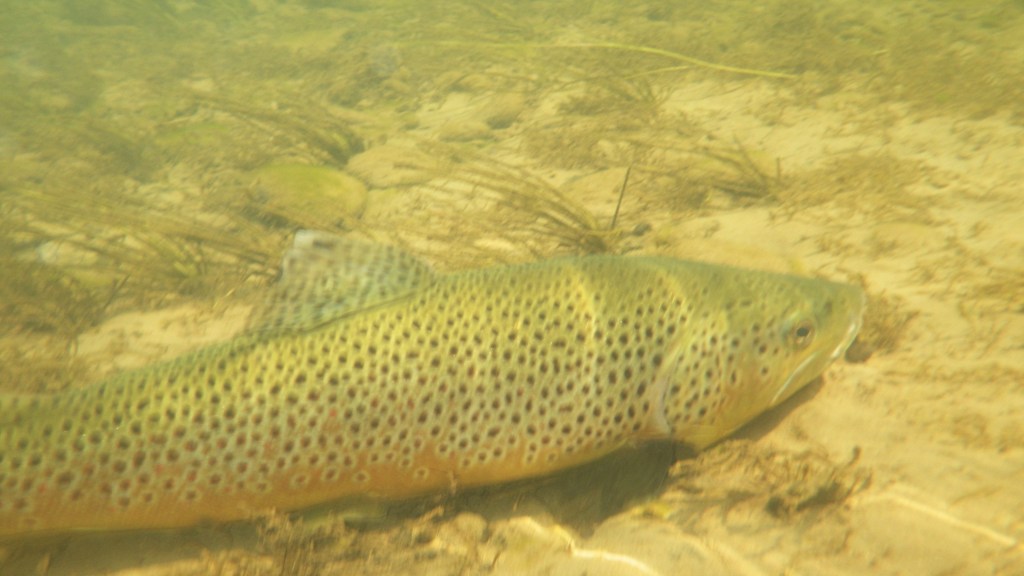
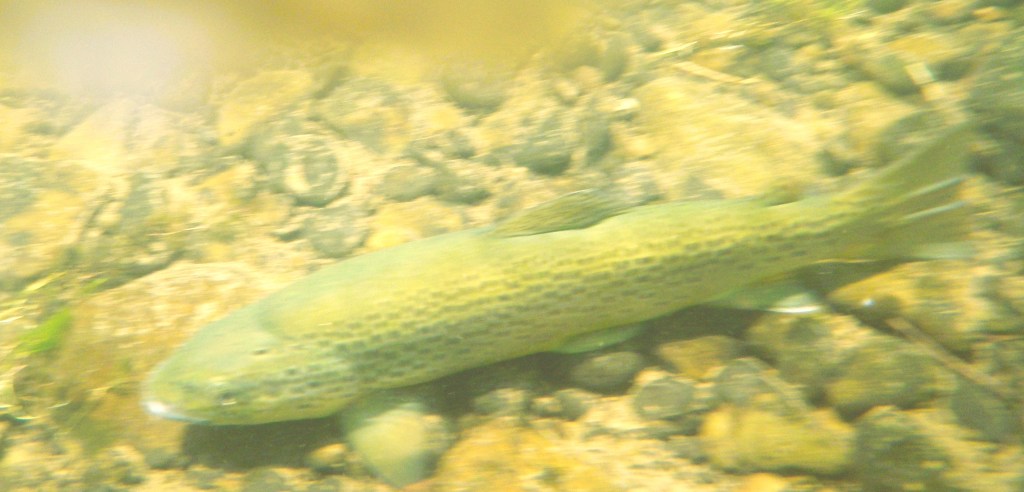
Was this limestone torpedo aware of me? Of course he was!
I gave that area a rest and moved carefully away. I fished another spot, one that never seems to hold a fish, and didn’t again on this day. When I returned, I approached as stealthily as I could, and stayed well away from that trout’s lie. When I reached a suitable position, I fished from a completely different angle, with a very long cast and an extended drift. I worked the cover surgically, sending my fly deeper into the money zone with each cast and drift. When I presented my fly to the lie where that earlier riser had been sitting, I extended my float and waited.
I watched that fly drift slowly for a long time. Finally, there was a weak little burble in the film and then a soft little ring. He never knew what hit him! I fought that trout hard to get him free of the cover he had felt so secure within, but I managed it. Once out of his realm, he took to running and spinning the Trutta Perfetta!
I am convinced that the only reason I caught that twenty-inch brown was because I recognized the reason for my failure and changed tactics drastically!
Angling for the wild trout of the Catskills is always a challenge. Their beauty and wildness, and that challenge, are what make the experience magical!
There are trout that truly demand you earn the right to fool them with a dry fly. I earned two, well, let’s call it two and a half yesterday, on a hot, sunny, and overly weedy reach of river. The fish I will call the best of the day demanded perfection, accepting nothing less.
He was situated along the riverbank immediately below a submerged branch with current bubbling over and around the remaining twigs. In a foot wide swath of flowing water, there were three very distinct bands of current: bubbling fast, a smooth quick glide path, and ultra slow, turning back upon itself. The trout was not feeding. At best he was taking in a very occasional snack from the procession of sulfur duns dancing down those three bands of current. He took some of them in the middle band of flow, the glide path, and one or two from that far band, the one turning back upon itself and swirling slowly.
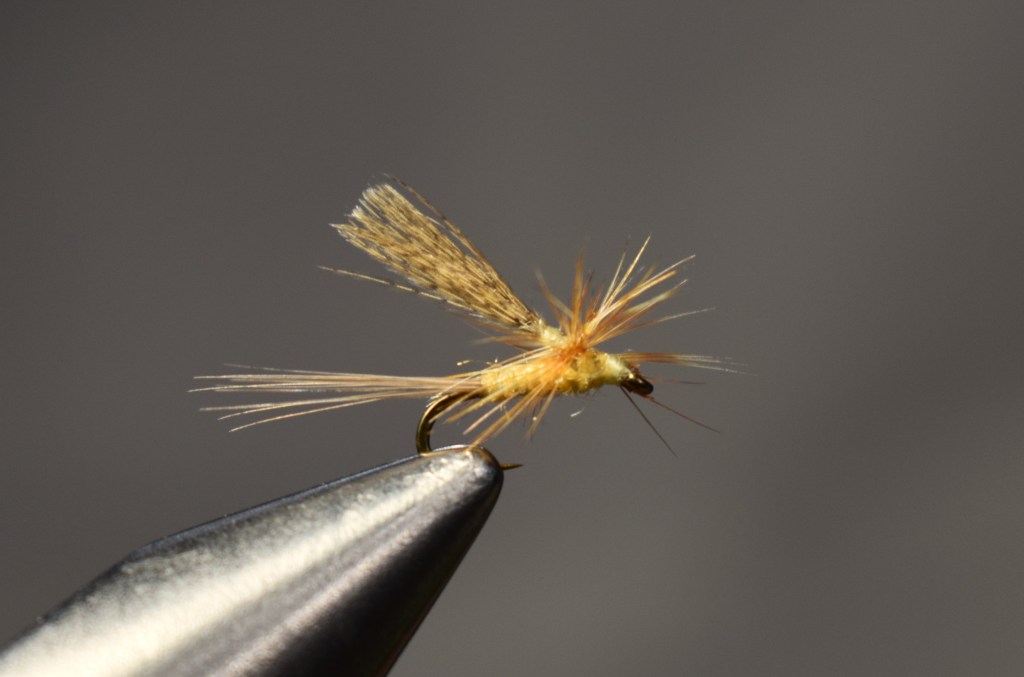
I felt very confident that I had the right fly, for my little Classic Sulfur 100-Year Dun has proven itself time and again. Throughout this tenuous game, I never changed the fly.
The smallest of my selection of 100-Year Duns are tied on size 18 and 20 dry fly hooks. They have proven to be a better imitation, consistently fooling large, wise trout that refuse various otherwise effective patterns.
Now, no sunny summer day here in the Catskills would be complete without a befuddling breeze. This one was intermittent, but fully capable of playing with the fly and tippet as they reached their target.
I played this game at something on the order of fifty feet, knowing better than to approach too closely. The distance helps keep the fish from spooking, but it allows more time for the breeze to screw with the cast. I consider that a necessary evil, since we all know we cannot catch a trout that isn’t there.
I did not time our engagement, nor did I count casts, but there were a lot of beautiful floats that landed an inch or two short and bounced down that nearest bubbly band of current. None of those ever got a look from Mr. Brown. There were also a good number of casts that danced down the seam between the near and middle bands, and those too proved fruitless. The only snacks this guy entertained had to slip down that glide path unencumbered, and such perfection of float seemed the unachievable goal.
This is a game where a step or two can make a difference, little adjustments of casting position to deal with the breeze or the currents between angler and quarry. I made a lot of those little adjustments too. It can be wonderfully difficult to lay a dry fly on a four-inch-wide band of quick gliding current fifty feet away with the perfect amount of slack in leader and tippet to allow two or three feet of perfect drift before the fast water between whisks the fly away. Without the wavering breeze, I would have managed it with fewer casts, but the result may not have been quite as sweet!
Yes, he took the fly, my Sweetgrass Pent coiled into a deep arch, and I swung him away from the remains of that tree branch. It was one of those slugfests, head shaking, darting and diving for masses of the weeds we know affectionately as “green slime”, and making short, powerful runs countered by the resilience and life of cane. Like all trout over twenty inches in length, this brown made me earn the privilege.
I found another opponent after half an hour or so of stalking down the river, this one likewise hanging close to cover and snacking on the occasional sulfur. No, check that. After a few moments of study, it became clear there were two, one a bit upstream of the other and rising more frequently in the same location. The second held below the first, and he was rising far less frequently and moving around. I recognized that I could show my fly to both of them on a single cast, at least with the right extended drift.
I know it seems greedy to try to fish two fish at the same time, and apparently the Red Gods agree. That is how I managed my half-a-trout for the day.
I made a number of casts, with long, beautiful drifts, and I was justifiably proud. The mover below was impressed, as he ate that little 100-Year Dun and lost his composure completely, rocketing out of the water no less than three times between runs and trips through the thickest beds of green slime he could find. It is hard to judge the size of a trout in the air sixty feet away, but I feel pretty confident that this guy was larger than the one I had already measured in the net. I will never know since the green slime performed even better than the fish and I.
I have long experience with the green slime. It is a tremendously effective hook disgorger contrived by the Red Gods to humble fly fishermen. As the trout runs back and forth through water choked with beds of green slime, the stuff collects on the leader in large gobs. Eventually, those gobs of slime slide down the leader to plaster themselves against the trout’s mouth, and the tiny fly hook. If the trout turns just right into the current, the mass of slime whisks the hook right out of the trout’s jaw. The angler lands a great big glob of slime! Inside, he finds his little dry fly which he spends five minutes pulling slime off of before washing it in the current. The smaller the fly, the more effective the disgorger effect. I could tell you stories of size twenty dries and absolute freight train trout, but I won’t.
I continued stalking down the river once I cleaned off my fly and regained my composure, but I didn’t find another fish on the fin. Eventually though, I saw another rise back upriver; the first in line of the pair I dared to fish to with a single cast.
I have failed to mention that, though there was never a heavy hatch of sulfurs, there were three different sizes of the little yellow mayflies: 16, 18 and 20. I had managed to interest my trout-and-a-half with my size 18 fly, but this trout wouldn’t buy it any more the second time we engaged than he did on the first. Did I change to another size? No, I did not.
I cut off my sulfur and dug a size 15 Grizzly Beetle from my chest pack, knotting it securely to my tippet. He took it on my second cast. This was another good, strong brownie who didn’t appreciate the hook included with his delectable terrestrial snack, and he let me know it. I luckily kept him away from the worst of the slime beds and finally scooped him and his medium sized glob of slime into my net.
I fished another hour or two after that little victory, still regretting the big one that got away, the high flyer that slimed me. I saw one trout rise twice a long way down river, but he wasn’t interested in a bug wearing a hook.
A hot, breezy day, a quintessential Catskill summer day, and yea, two and a half big trout to show for it. Well, the half-a- trout did show himself in the air, right?
The storms seemed to have passed, leaving our river flows only slightly improved, though that has been a good sign for the fishing amid this young summer season. Waiting to determine what the weather might have in store put me on the water later than I would have preferred, but conditions looked good for a productive hunt.
I set to work, ignoring the odd rise here and there as a handful of mayflies drifted through. I was looking for bigger game.
Prospecting turned up nothing, and those occasional scattered rises seemed to have become more frequent, so I stalked an area where two or three had shown more than once. They seemed to be cruisers, a mode of operation that has become common for our wild trout during meager hatches. I found no response until one rise came nearly underfoot, and a quick flip of the fly brought a take. The fish was small and energetic, exactly the trout I expected to be cruising about and picking off a wiggling bug here and there, so it was time for me to get back to the hunt.
The hunter’s goal: a subtle sipper tucked into a bankside pocket of slow water.
I exhausted the morning and half of the afternoon in my relentless pursuit and found nothing. Well, conditions looked good this morning… The wind had risen, and some dark clouds had gathered, and then the sun began to peak through the rushing cloud banks. It felt like rain was imminent, so I chose that opportunity to take a break and head elsewhere.
At my new hunting grounds I encountered a solitary angler packing up his gear. He said he had not fished very long, made no claims for either success of failure, and I didn’t ask. As I headed in, I hoped he had not disturbed the water I intended to work.
Sun and shade had replaced the mist and clouds, but the results remained the same. I found no evidence of life as I stalked a good reach of river. By three o’clock, I had nearly resigned to quit early as I approached the last lie with a bit of history.
The cast was long, the drift longer, the old Thomas & Thomas mending slack to extend it down, down to it’s limits. I could no longer see the fly and hesitated when the soft ring was revealed, then tightened just in time. When I felt that rush of life, I set the hook firmly and got my fingers away from the flying reel handle just in time!
There are trout that like to slug it out in close quarters, head shakers, trying to rub the fly from their jaw on the rocky riverbed, and then there are those who must like to hear the reel scream as much as I do. He had me to the brink of my backing quickly enough, leaving me to reel as fast as my hand could fly when he turned. It would go like that for a long time.
He took a tour of the pool you might say, and there were critical minutes passing while he inspected each corner. Light tippets get abraded, hooks widen their holes and pull out, reasons why I work hard to beat fish quickly, but some will not yield.
After a time, I had him closer, though still running in short bursts; back and forth. Even once I got him into roping range he simply refused to come to the net. I had turned the rod over to equalize the strain, and even then, I began to worry about the continuous strain.
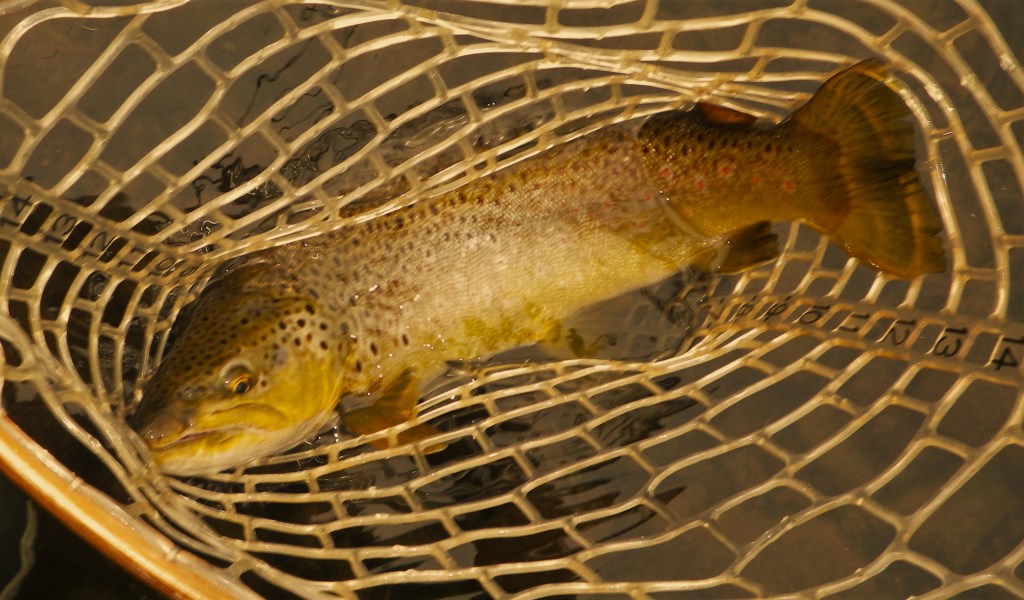
He did come to the net at last, a scoop and a quick lift, and I was marveling at the weight, and the vigor he showed thrashing against the mesh. I dipped him back into the water as my forceps closed on the hook. Nose and tail aligned on the scale: just better than twenty-three!
I returned him nose first into the gentle current, and he darted right down to the bottom and sulked. With the water at sixty degrees, he had given me a hell of a battle. I watched him for a while, finally stepping closer to see him swim away.
I held the rod aloft and noted the reverse curvature lingering throughout the length of the tip section; a memory of a battle hard won. A short cast and the supple bamboo returned to its prescribed state of straightness, bringing a sigh.
Game taken, and game returned; a successful hunt in the eleventh hour. Ah summer!
It is Sunday evening, the ninth of July, and it is 68 degrees in Crooked Eddy. A gentle rain has fallen intermittently throughout the day, a far cry from the storms predicted. This morning’s forecast called for a stormy day and night, continuing tomorrow, and some two and a half inches of rain. Such weather would have changed our rivers violently. Most of us here are happy to avoid the flash floods, and I and my fellow anglers would gladly bow to Mother Nature bringing perhaps an inch of rain over that same period; gentle and continuous, the lifeblood of our rivers.
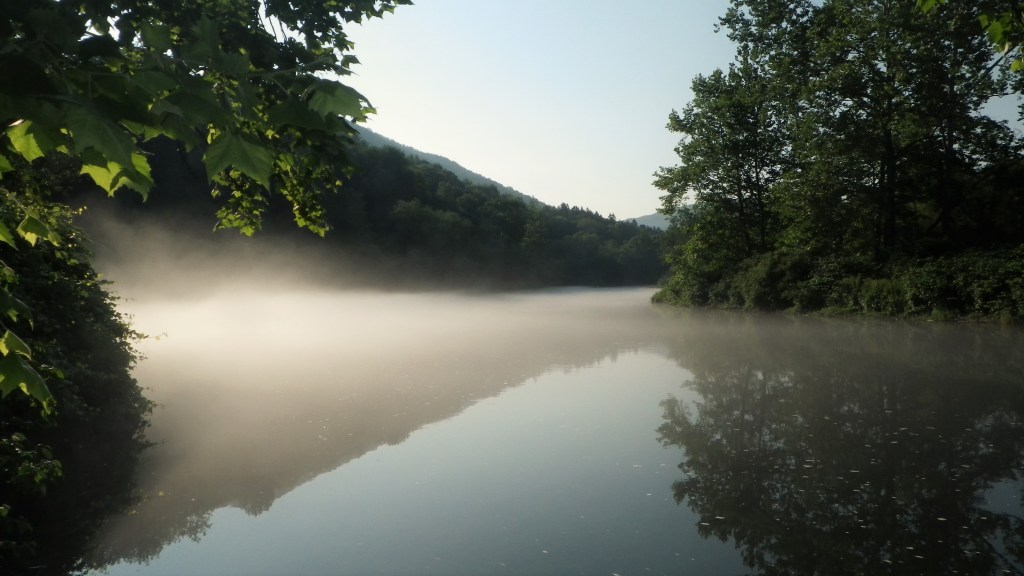
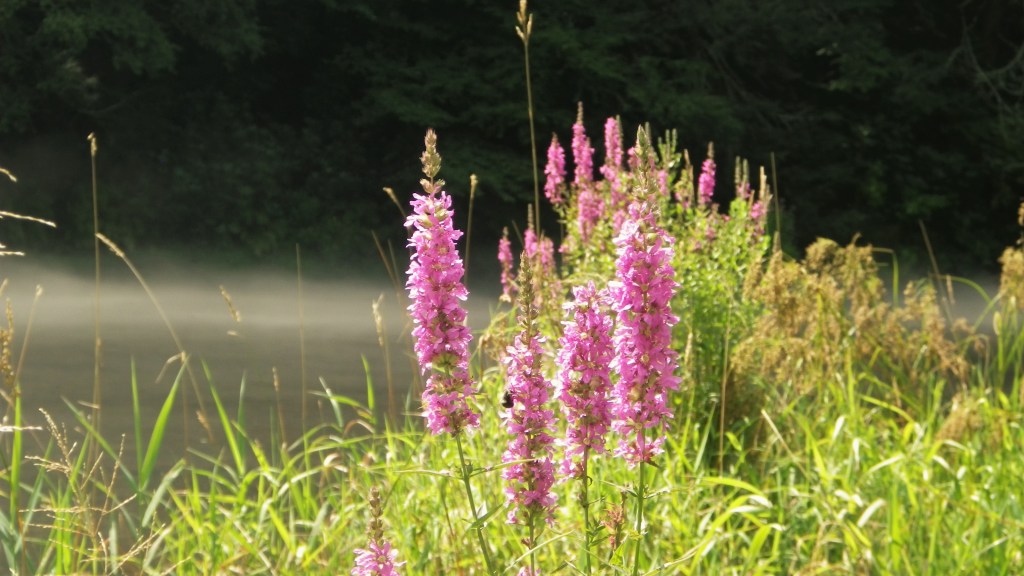
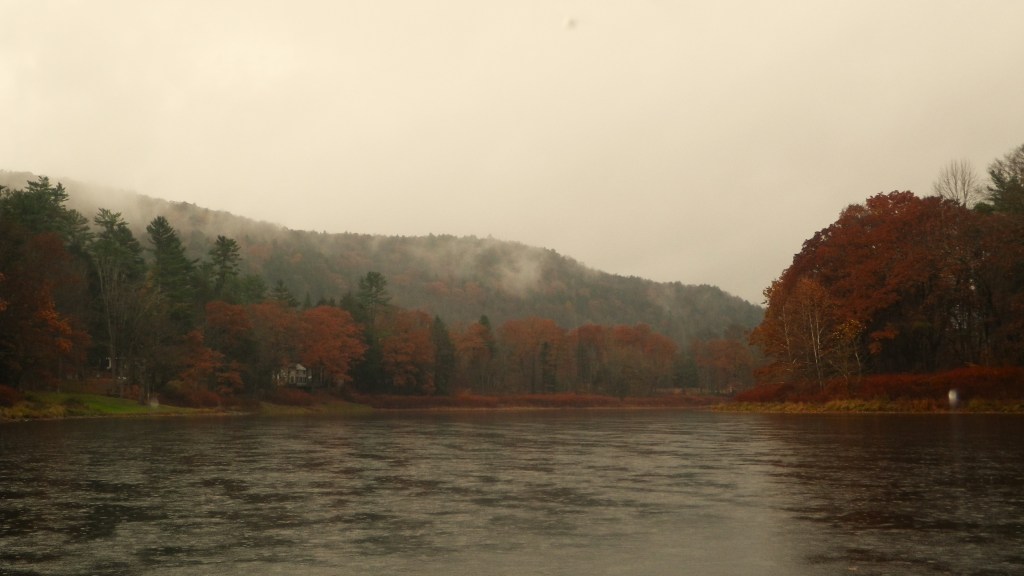
I was sitting on the porch just now, the grill crackling as I watched the mist wraiths glide o’er the slopes of Point Mountain. I thought of the rumbles of thunder heard a couple of hours ago, and how close we might have come to those flash flood inducing downpours. The gentle rain is soothing, the cool dampness a welcome break from ninety-degree heat. We are two and a half weeks into summer by the calendar, closer to a month as measured by the moods of the trout and their rivers.
Rain, and mist wraiths from a day last November that was warmer than this one!
I am dreaming of light line rods, tiny mayflies and terrestrials, of bright sunshine and clusters of sulfurs sought by large, wild brownies often too cautious to take them. Good times lie ahead: warm bright mornings stalking trout in the mist, gatherings with the Fly Tyers Guild and Summerfest; perhaps another Rodmaker’s Gathering. I saw my first trico the other day and my heart jumped a bit hoping its the first of many!
If you asked me I would tell you I wished a Catskill summer might last half the year, for it is my favorite season. Though perhaps really having no greater duration than spring, summer has a permanence in the absence of the wild blustery weather that springtime brings. Sun one day, and snow the next – is it April? May?
I wish too that I might be allowed to program the rain: a quarter inch every two nights, taking the weekends off, should do quite nicely! Imagine how bright, lovely and cool our rivers would run!
Morning’s Moods
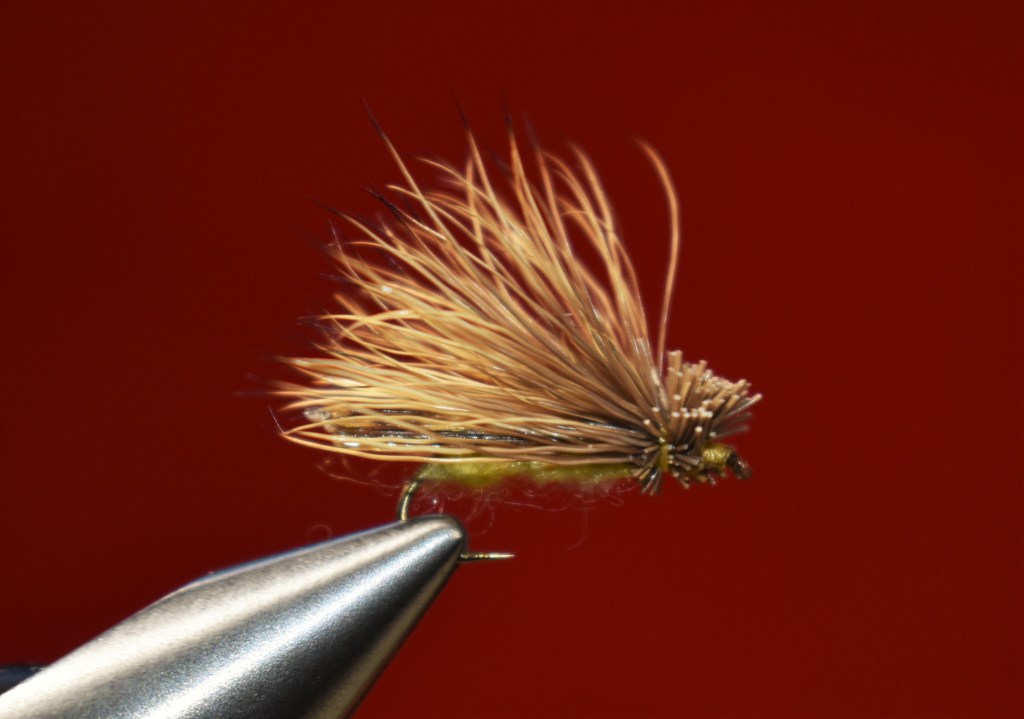
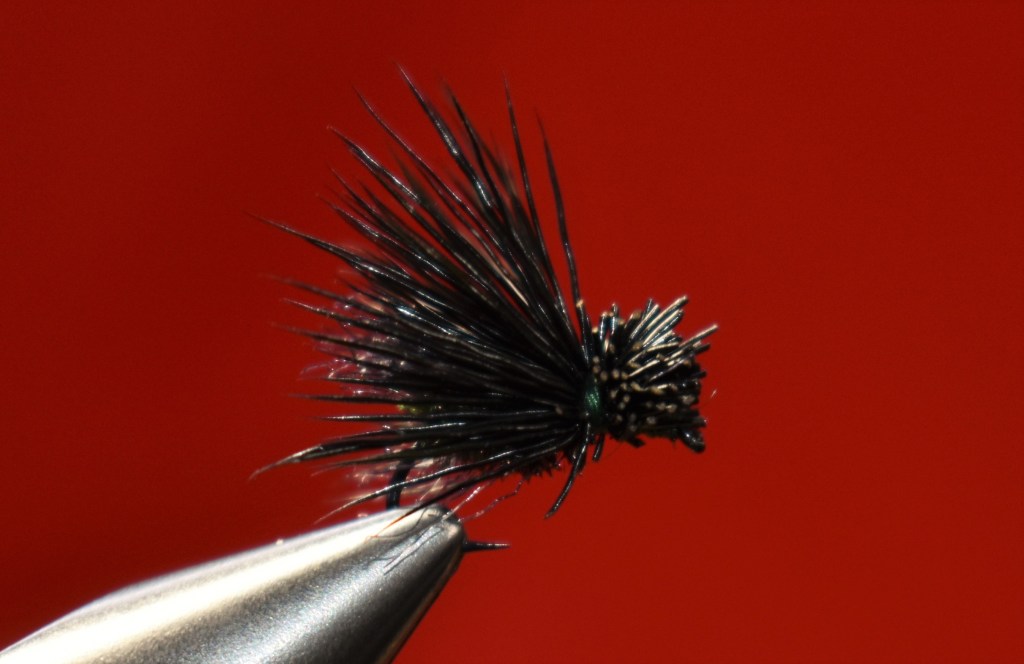
I’ve a puck full of flies tied during this weekend at ease; ants and beetles, crickets and more, and there are lovely old rods waiting for their next opportunity to grow their histories. Though I do not know their past, it remains a source of wonder and content as I build upon their secret, individual legacies.
Will tomorrow bring rain or shine? I will greet it with a smile no matter how it dawns, for I rejoice in the opportunity to live another day among wild trout, bright water and the challenge of Nature’s magic!
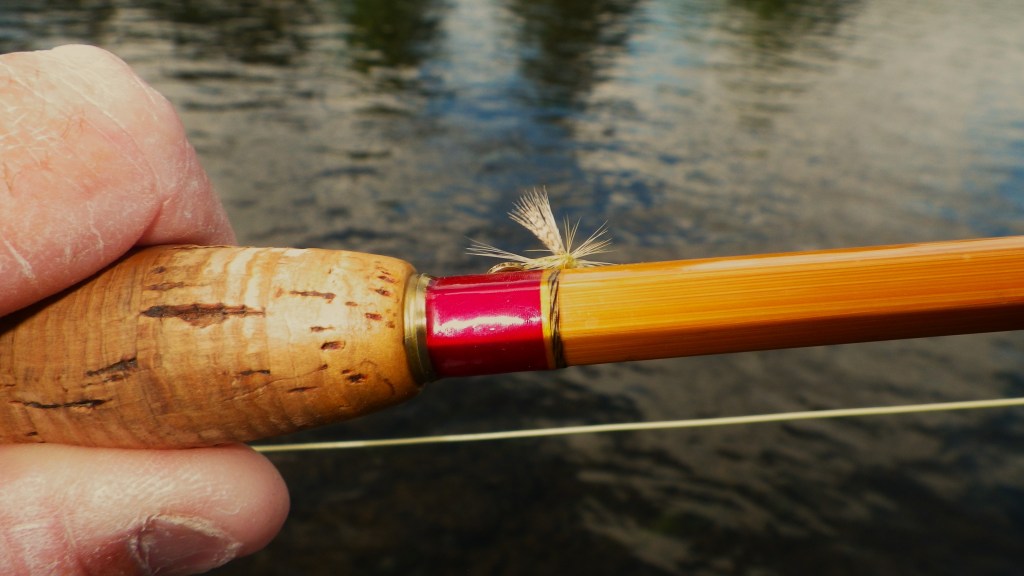
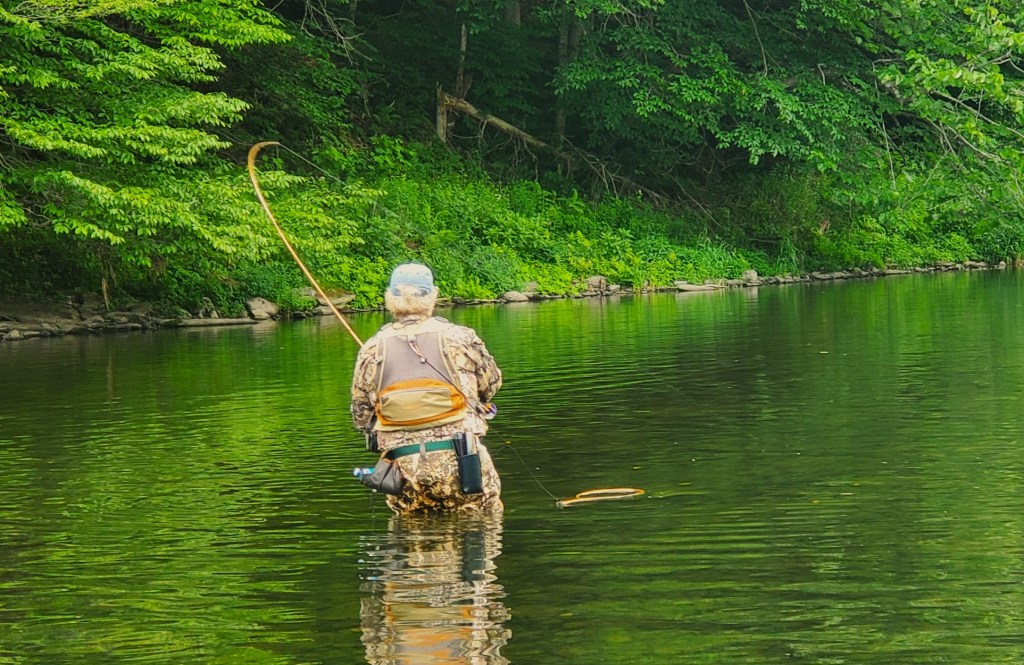
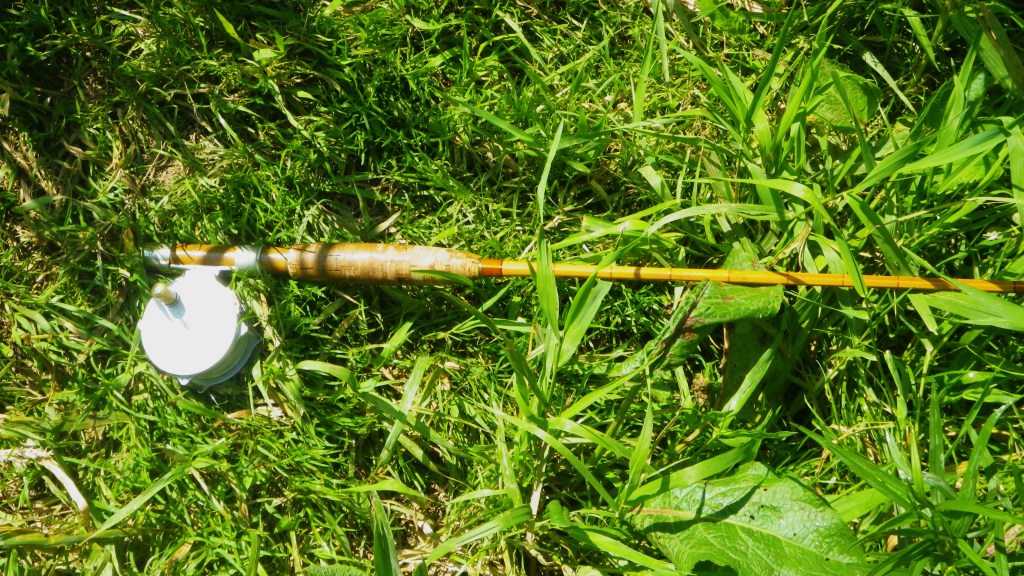
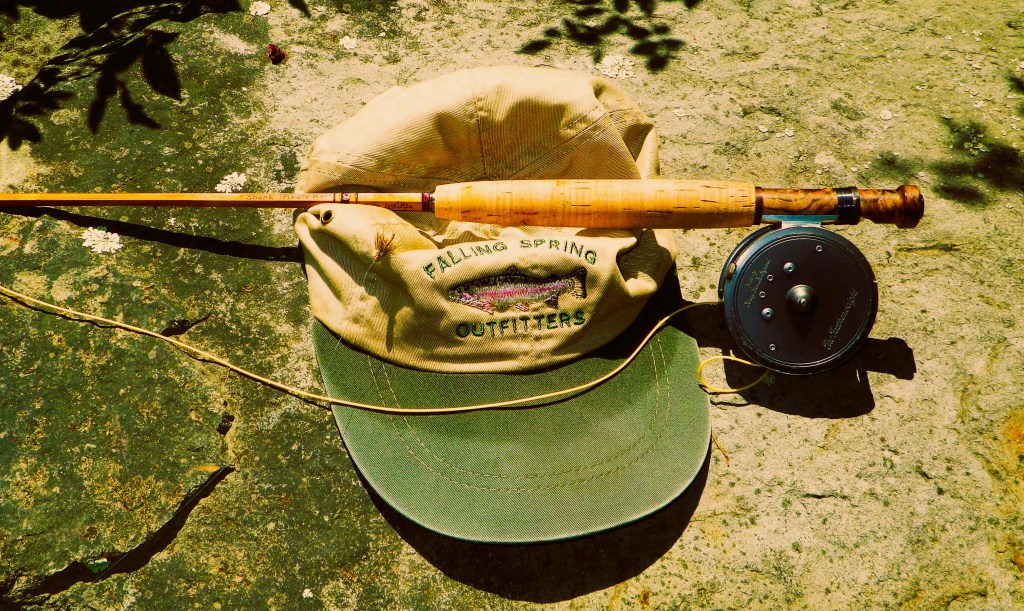
Ah the simple joy of a summer day on a Catskill river with a classic Catskill rod in hand! Leonard’s 50 DF is certainly one of the all-time classic rods crafted by gentlemen who began the lineage. From Hiram Leonard’s shop sprang the fountain of talent that would define Catskill rodmaking and inspire all of those who came afterwards. The 50 DF is smoothness personified! Even cloaked in the workaday garb of the Mills Standard, the taper that some feel defined the classic Catskill dry fly rod is perfection on the water.
I had fished the rod with a five-weight line, the more typical choice, despite the advice from rodmaker extraordinaire Dennis Menscer that this model 50 was a four weight. Yes, an eight-footer for a number four line is my quintessential summer dry fly rod, so it is only fitting that I explore the master’s recommendation. Dennis knew this rod and it’s eight decades old bamboo, as only it’s restorer could. I should have followed his sage advice from the beginning.
Outfitted with a lovely little 3″ Bougle` and a new 406 weight forward fly line, the smooth and capable old Leonard became pure magic!
With temperatures climbing during this second week of July, our summer fishing remains dependent upon Nature’s gifts of rainfall, and hatches of fly have been meager to say the least. True to my roots, I knotted a little modified Grizzly Beetle to 6X tippet and took to hunting.
As I began to cast with that four-weight line, the smile on my face broadened into what my Dad might have called a shit eating grin.
I prospected the cover surgically, giving the fifty a smooth, delicate touch to ensure the little fly alighted gently on the flat water. One perfect cast in the shade would make my day. The beetle touched softly, and I tracked it’s drift by the subtle glint of it’s two turns of grizzly hackle. The bulge in the surface met it softly and I slowly brought the old rod up to engage my foe.
He was heavy, and irritated that the sweet little snack he had so quietly selected had bitten back! The lithe arch of bamboo urged him out from his sanctuary, just enough that his turn and initial run came clear of disaster. One does not force twenty-inch wild brownies from cover on 6X tippet!
This was the first time fishing the 3″ Bougle`, so I had not been treated to the timbre of it’s voice. Mr. Beetle-eater remedied that in grand style, with half a dozen searingly musical runs to the cusp of my backing. That wonderful old Leonard taper protected the tippet beautifully!
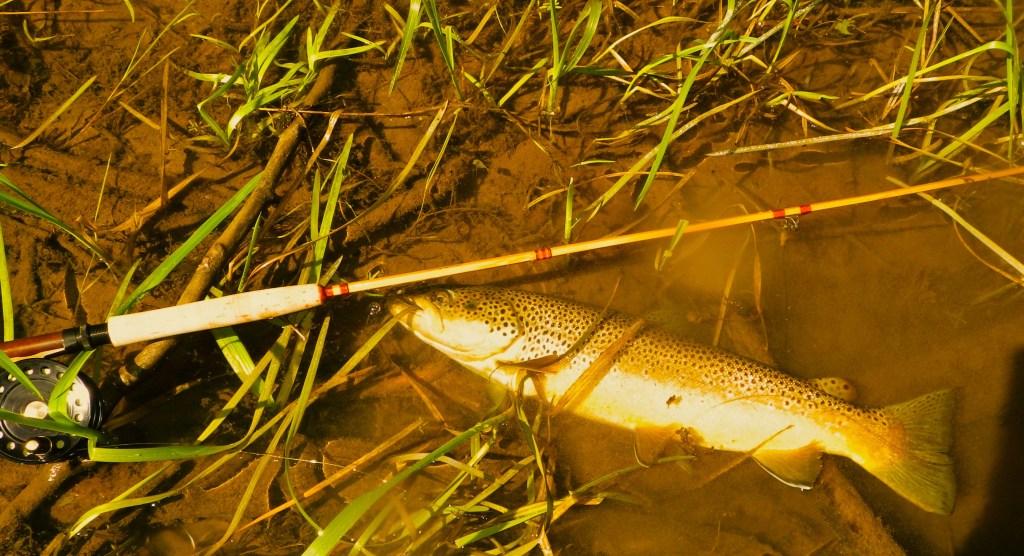
It is important to play my trout hard, to use my tackle to it’s limits, and there is great satisfaction when vintage tackle that has served anglers for more years than I have drawn breath does so with such aplomb. I snapped my photo as that fellow recovered on the bottom of the cold, bright water, and thanked him for his spirit!
Ah July! For many of my travelling years it marked the grand finale of my Catskill fishing season: the scenery and experiences, the ubiquitous West Branch sulfur hatch, and quiet times at West Branch Angler provided a glimpse of just how perfect life could be. Certainly, the fishing was challenging, but it was that challenge that lured me to the Catskills.
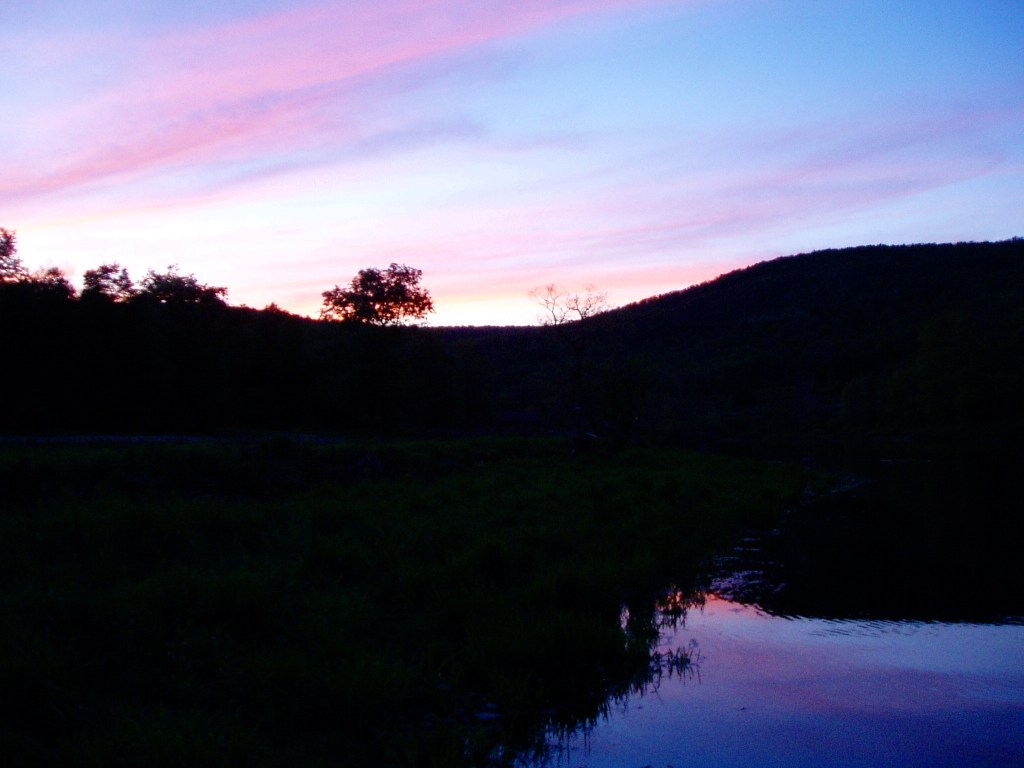
I remember sitting alone in the Troutskellar come evening, sipping a wee dram of Macallan after a long day of chasing wild trout, ending in a fiery sunset. The bustle and noise of spring lay behind, and it was time to reflect and appreciate the gifts of another season. Those emotions still surface at this turn of the calendar, though my season ends now in October.
I have been fishing summer patterns now since mid-June, so I have adjusted early to summer’s slower pace. The early beginning has left we wanting for the brightness of those fair yellow mayflies, and the supreme challenge of fishing to evolved wild brownies sipping amid their multitudes. July is here at last though, can the sulfurs be far behind?
The right fly this past week seems to have been the Isonychia, though I have not seen enough of them to capture and identify even one. My 100-Year Dun duped most of the trout I led into the net though.
There are new variations of sulfurs this summer, as well as a good stock of the reliable patterns from last year. I should count the twenties though, just to be sure they are fully represented in my boxes.
It is time to hang up my faithful fishing vest, to remove the fly boxes and re-sort the flies of the season into a pair of boxes that will nestle in my small chest pack. I always feel under gunned upon that transition. There is after all some psychological comfort to be taken from a vest full of flies to match all comers. Nature does visit little surprises upon Catskill anglers! There is always room for a stopgap, an extra box tucked into a shirt pocket, just in case.
That process of downsizing to lighter rods and fewer flies has the melancholy flavor of goodbye, a farewell to another marvelous spring, but it has another familiar flavor too. Catskill trophies are always hard won, and summer has provided a full share, so there is the taste of satisfaction to be savored.
I don’t often linger past early evening in summer nowadays, more a creature of light in my old age, but I miss something!
The morning rain seems to have quieted now, though I hoped it would continue. The trout respond when the rivers are freshened. Perhaps the changing conditions keep them alert; so too the angler.






 Bright Waters Catskill