
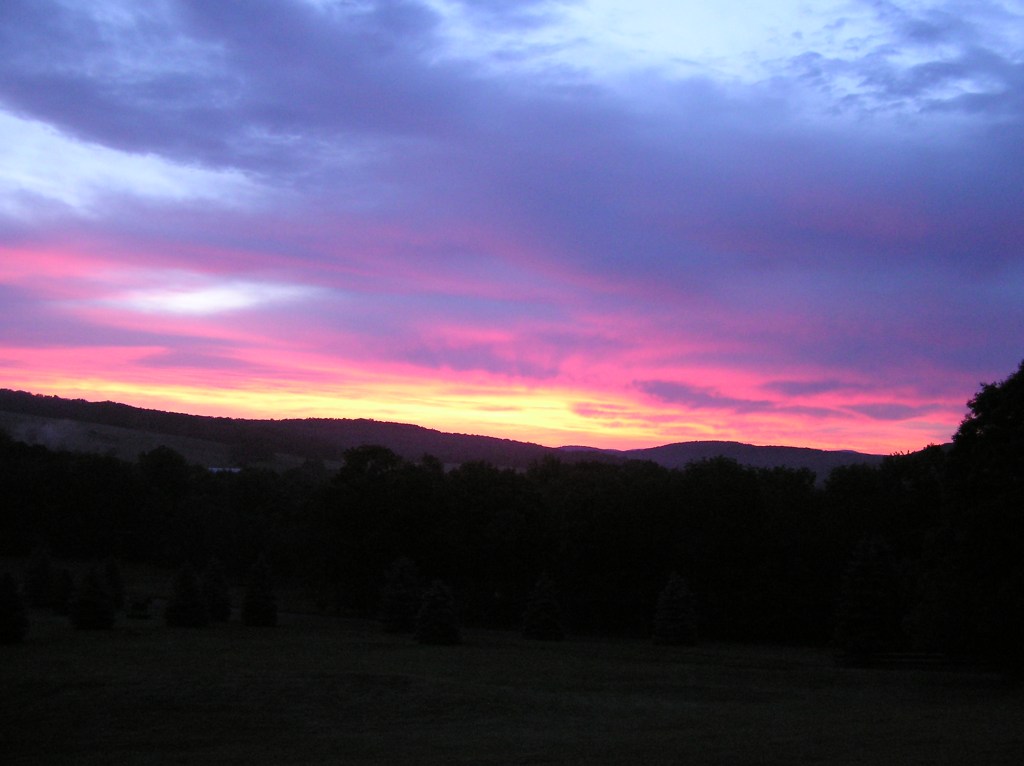
I was wandering the river just the other day when I noticed a brilliantly colored mayfly skittering across the surface. There were no trout rising, but my curiosity led me to step forward and pluck that fly from the water anyway.
This fellow was roughly a size 16 with colors ranging from an extremely bright yellow to a brilliant light orange. I have handled the flies we know as Hebes, (Leucrocuta hebe as currently classified) and a few anglers call the Orange Cahill, yet this one didn’t fit my recollection of either species. The mixture of yellow and orange brought to mind sulfurs, but there was something un-sulfur like about it’s wings too. I put it down as another of those little puzzles filed under the infinite variety of Nature, and tied on the brightest yellow and orange sulfur pattern I could find, just in case.
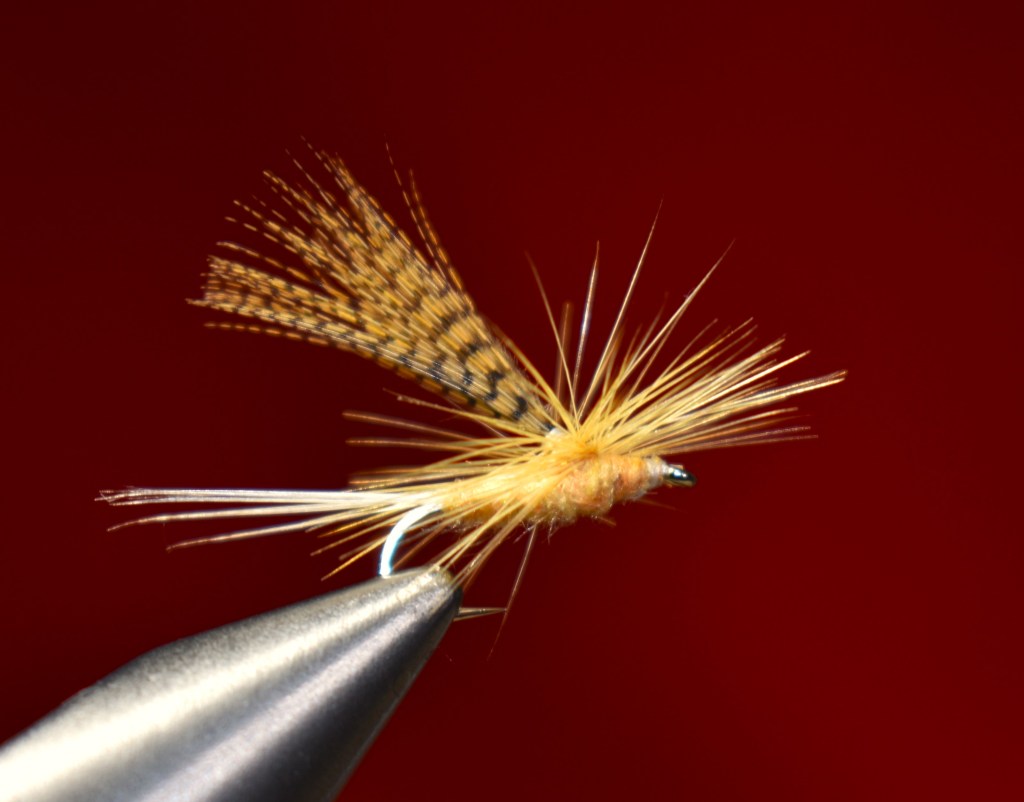
The total lack of rising trout persisted, though I did try that fly over a handful of choice locations, just in case there was a nice brown resting there in the mood for an impromptu snack.
I have been knocking around on trout streams and rivers now for a third of a century, and I have sampled a lot of the bugs encountered. Each season, I still see something new that surprises me. Color variations are particularly striking, notable to me as I am of the company of fly tyers that believes that matching the color of the natural flies that are hatching is an important component of fishing success. I often wonder if some of our mayflies are getting adventurous and doing a little crossbreeding between species, so dramatic are some of the variations in familiar hatches. Perhaps it is simply another game the Red Gods have devised to vex fly fishers for their amusement.
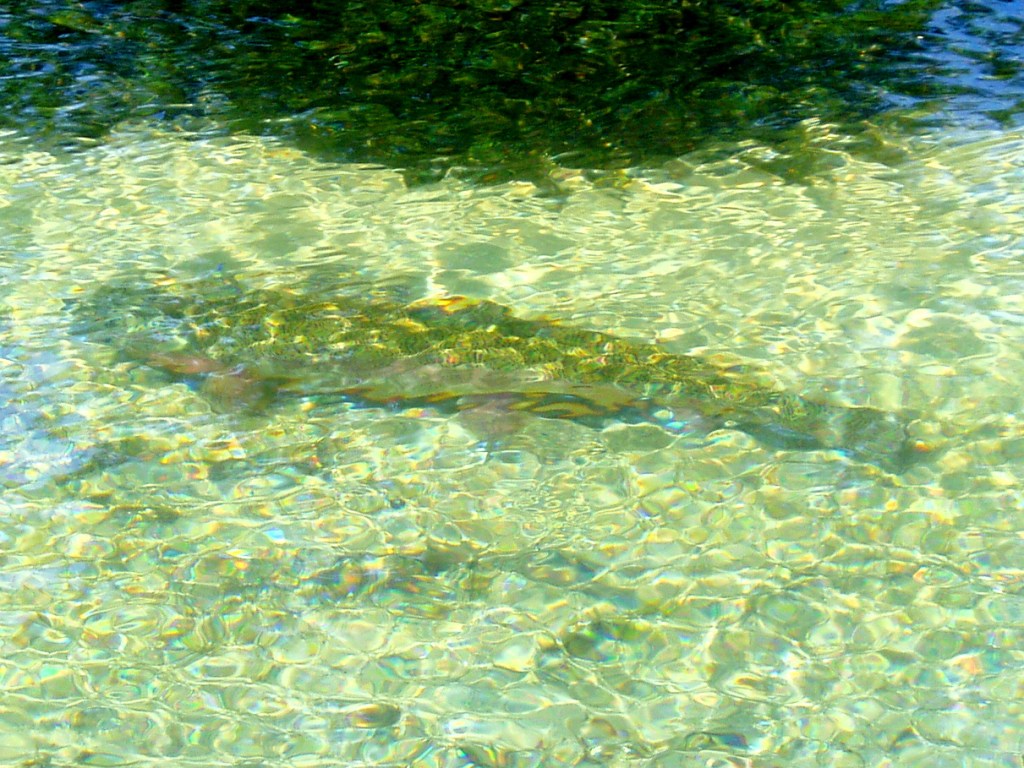
I can cite hundreds of examples of situations when changing the color of my fly turned an uninterested trout into one cavorting at the end of my bowed rod and straining line, yet I cannot assure you that it wasn’t some other imperceptible trait of that second fly, or some other unseen stimulus that caused that trout to take it as opposed to the offering in another shade. I firmly believe that color can be highly important, at times the singular most important feature of your fly, though I cannot convince those of the other camp whose experiences have led them to the conclusion that color matters not. It is a long running debate among fly fishers and fly tyers, and perhaps the amazing color variations in aquatic insects I have encountered is simply Mother Nature’s way of laughing at us!
I just tied three quarters of a dozen Hebes, all in my 100-Year Dun style with gray barred mallard flank wings, the brightest yellow silk bodies, and golden grizzly hackles. They look quite fetching to my eye, and I believe they will appeal to the trout. All I have to do is find a nice trout partaking of a few Hebe mayflies and…

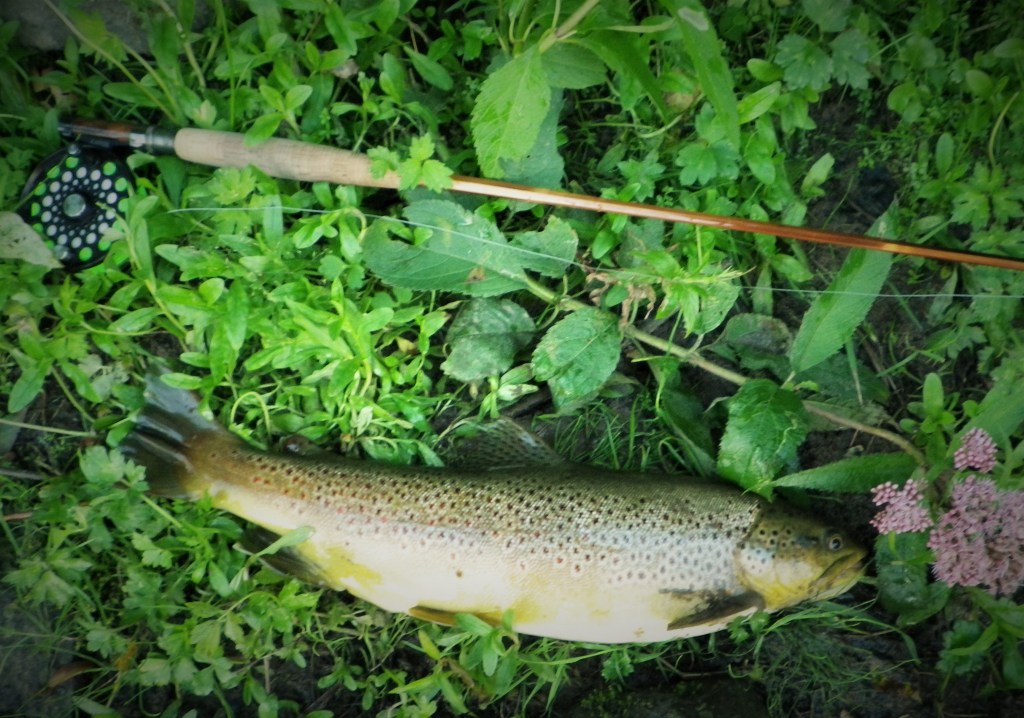
It is the time of year when there is no escaping the realization that our dry fly season is waning. Yes, there are two months left, nearly a third of the season, but the prolific hatches that delight us in springtime are far behind us now. It is also a time when I get to thinking about a bamboo rod or two that I haven’t fished this season. I hope to remedy that situation soon!
 Bright Waters Catskill