

They weren’t always so hard to find, those beautiful big claret colored mayflies, but the past few seasons I simply have seen very few. Under normal conditions, they are not overly obvious despite their size, typically a size 10 in June and size 12 come September.
You see, the Isonychia bicolor isn’t prone to showy hatches and long surface drifts through placid pools. The book on them says they prefer to crawl out of the water on a rock and hatch in the air. You can find their spent nymphal shucks on the rocks if you look for them, long and slender with a white stripe down the back. That racing stripe gives anglers another clue, for those nymphs are fast swimmers!
There are times when Isos will rise to the surface, hatch and drift on top like the majority of our big Catskill mayflies, and they can be magical. I recall a day some two decades ago when they were everywhere from ten in the morning until four in the afternoon. Ah, that was something to behold!
Most of what you will read about fishing the Isonychia hatch will tell you to rig up with a wet fly, the classic pattern being the Leadwinged Coachman, and swing and twitch them through riffles and runs. That’s good advice and brings to mind the absolutely massive rainbow that erupted from the Delaware one morning with my own Leadwing fixed in his jaw. His scorching run left me breathless, and sadly fishless as the hook failed to hold. Yes, wet flies and nymphs for the swimmers, but I am a dry fly fisherman.
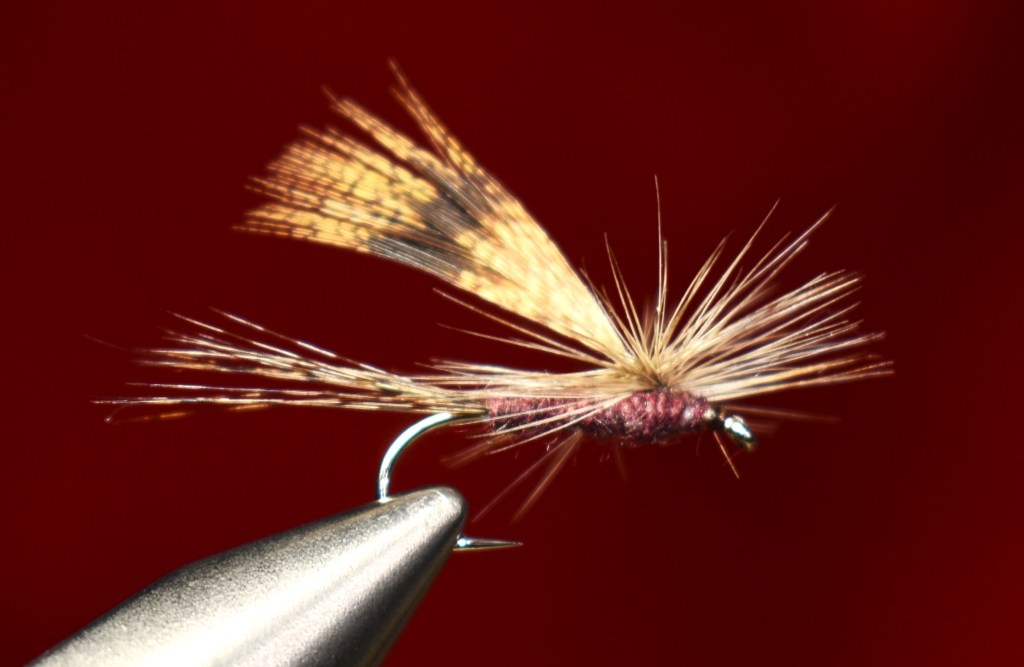
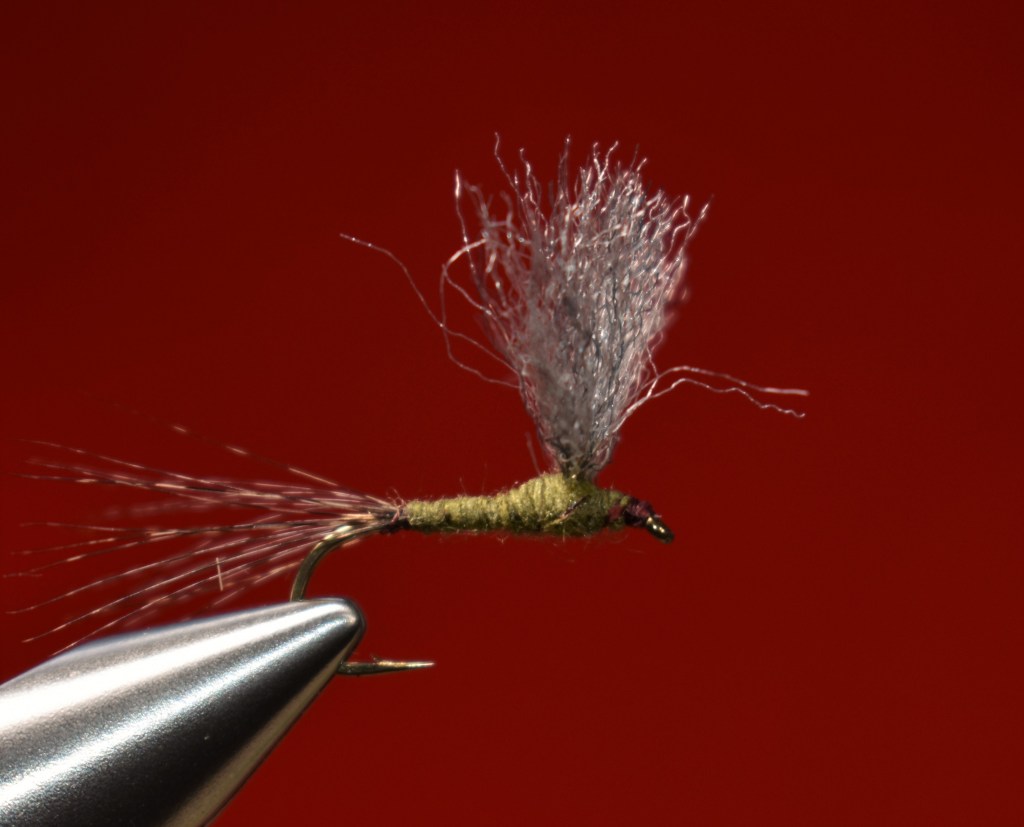

I fantasize about another day like the one long ago, with phalanxes of big claret duns bobbing down the surface of a run and big trout rising greedily, but generally I simply tie on an Isonychia pattern during the times they are around on Catskill rivers, otherwise known as June through October. If I am going to prospect for good trout on a cloudy day during that period, a size 10 or 12 Iso is a good bet when there isn’t any other hatch going on.
Yesterday was the first high summer day that looked and felt more like autumn had arrived. The rain threatened, though didn’t fall until the drive home. I got deathly cold, being unexplainably underdressed for the conditions, and I caught a couple of nice brownies on an Isonychia 100-Year Dun.
There were a few scattered rises where a riffle became a run, and I worked that run for perhaps an hour with my little 7 and 1/2-foot Orvis Madison. There was a quick plop as my fly bounced past the protruding tip of a rock, and I set the hook into a good fish. He showed no intention of leaving the tumbling currents of that run, but the pull of arcing bamboo finally convinced him. At nineteen inches, he was the first and largest fish of the day.
I kept hitting every spurt rise that popped in that fast water, all the way down until it smoothed out into a deep glide. Those trout may have been moving, chasing some of those swimming nymphs, or even swiping at the few tiny olives that persisted throughout the afternoon. I didn’t get another hookup until I landed my fly above the rapidly dissipating ring from a soft rise in the glide. While not as large as his predecessor, he put up a respectable fight against the short bamboo rod.
Were those two brown trout taking the invisible mayfly? Can’t be sure, though they certainly took mine!
 Bright Waters Catskill