
It was one of those days that seems unable to decide upon a course. Clouds and spitting rain, then sunshine breaks through. Ten minutes later another mass of clouds drifts through and the rain returns. These can be good fishing days, and this particular one was.
I saw more mayflies than I have seen since early May and found a few good trout that were interested enough to come to the table. Weather is changing here, as summer rapidly wanes, and autumn comes nigh the doorway. Once this morning’s rain passes, the nighttime lows will dive into the low fifties, even the forties, with the daytime highs through Saturday in the sixties. We have come to the final week of another Catskill summer.
Amid the recent hatches of mayflies, I have found something new, and taken the time to craft a dry fly to fish the hatch effectively. Sunshine can offer wonderful detail to the eye, but it may also deceive. The dark wings of mayflies may appear quite brilliant when lit by the sun, backlit as they often are by the reflection of that sunlight from the surface mirror. The entire fly can appear lighter in color when drifting by. I became aware of this new mayfly color phase by chance encounter.
Fishing one afternoon a week ago I was wading down river when I felt something touch my hand. I looked to find a mayfly there, and quite a curious specimen. The wings of this size 12 mayfly were immediately familiar – Isonychia, but the body appeared tannish rather than the oliveish hue of a freshly hatched dun or the darker claret tone we are accustomed to. The claret color did appear, but only as a fine ribbing along the abdomen. From that moment forward, I considered there was more reason than sunshine for the pale appearance of many of the larger flies I had been seeing on the drift and in the air. The next morning, I hastily tied a single tan 100-Year Dun, size 12, with a claret thread rib on the abdomen.
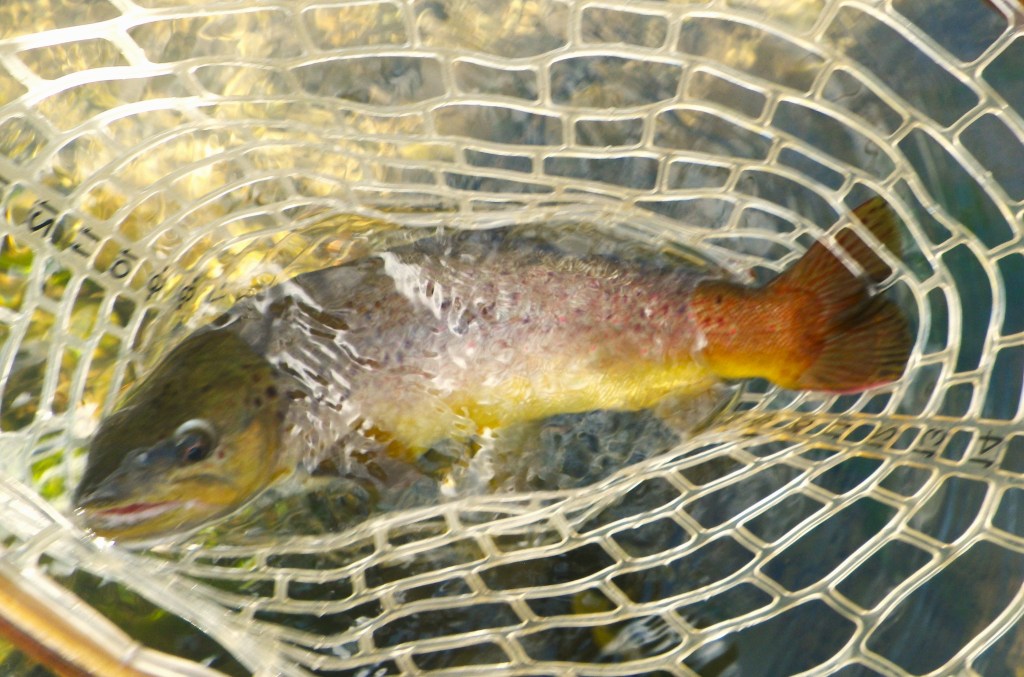
My typical claret bodied 100-Year Dun has been fishing well since the Iso’s began to appear in late August, but it wasn’t the answer during Monday’s variable weather, when more flies were about. I knotted that lone tan fly, the pale iso with the claret rib, and gave it a try. September Bronze pictured above was the best of five trout that fly brought to hand, two of them exceeding that magic mark of twenty inches! That fly still rests in the foam of my summer chest pack, though it is so well chewed as to be barely recognizable.
Suffice to say that dubbing has been carefully blended, and a half dozen flies tied to be added to the Isonychia patterns I carry.
 Bright Waters Catskill