
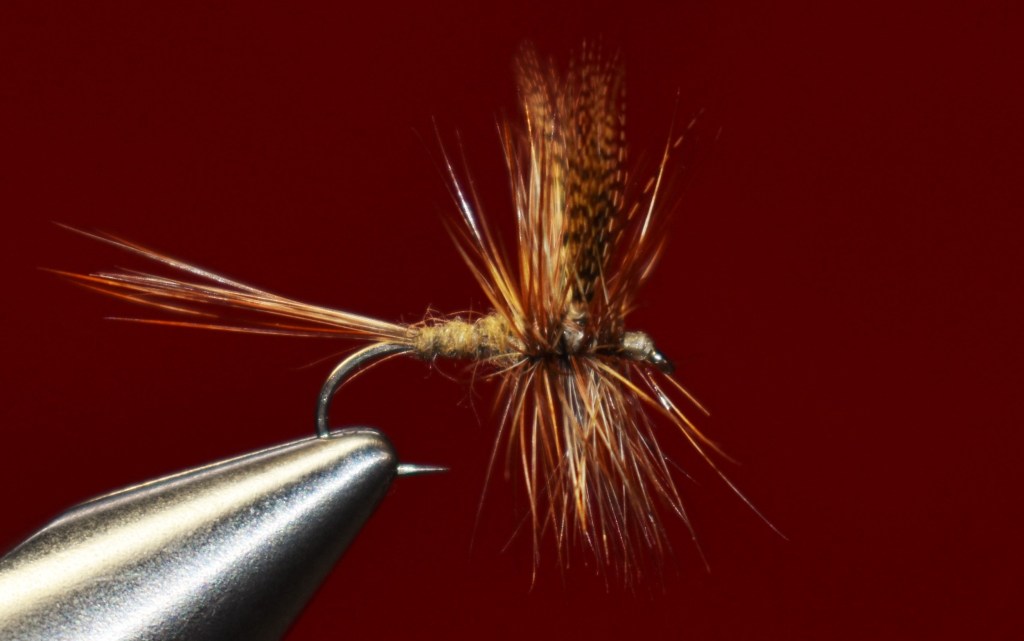
I have been moving on with my thoughts of expanding my “A.I.” or Atherton Inspired dubbing blends and flies, looking to take advantage of the multi-toned, sparkling and buggy combinations created to represent individual species of mayflies. Yesterday, I mixed a dubbing blend for an A.I. March Brown, and today another for the Blue Quills or Paraleptophlebia adoptiva.
I have recounted the success this past spring fishing the first such pattern, the one dubbed the A.I. Hendrickson. There are simply times when a buggy, more impressionistic fly gets better responses from the trout. Whether it is something to do with light intensity or penetration, or insect behavior on a given day, I will never know. The results were impressive enough that I will give the recently created Isonychia, March Brown and Blue Quill versions significant time on the water come spring 2024.
My best guess is that a buggy, bubble encrusted fly body may visually suggest a struggling, emerging mayfly, an easy target for a trout feeding efficiently on a hatch. Going back to English writings from a century ago, I have seen that theory applied to the classic Hare’s ear flies, both dries and wets. I think those gents were onto something!

To date, I have used the A.I. blends to tie some of my 100-Year Duns. Trout have taken them hard on many occasions, furthering my belief in the struggling mayfly idea. The next step in the process will be to tie a few CDC duns in A.I. garb to see what our Catskill browns will think of them. If they take the buggy, muti-toned blends as struggling emergers, the addition of a CDC wing’s movement ought to excite them even further.

 Bright Waters Catskill