
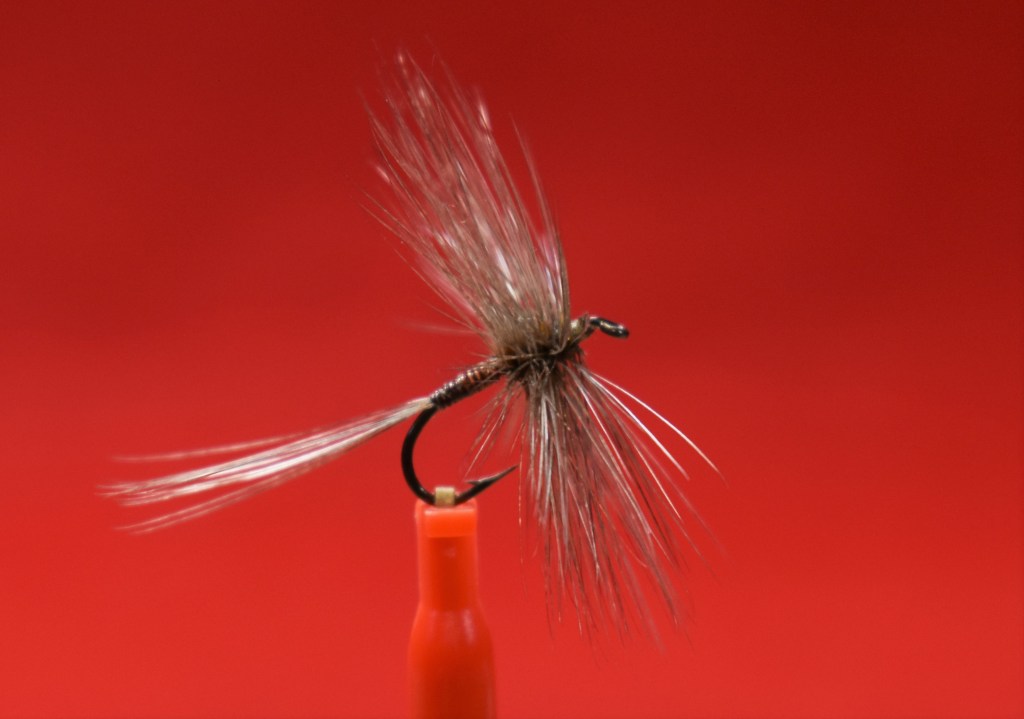
It seems I have had variants on my mind of late. They have ghosted through much of my recent reading including Art Flick’s biography, and the stories of Gene Connett, Dana Lamb and others. In fact, I was moved to tie a quarter dozen quill bodied Hendrickson Variants just this morning.
I remember these beautiful big dry flies drawing my interest very early in my fly-tying career. When I first visited the Catskills more than three decades ago, I came armed with Mr. Flick’s favorite fly, the Gray Fox Variant. His Dun Variant was another pattern that was stored in one of my big compartment fly boxes, one that had seen some use back home in Pennsylvania, where the Isonychia mayflies Flick designed these big dries to imitate were found on waters such as the Little Juniata River.
I confess that my fascination with these flies waned over the years, enthralled as I was with my own patterns and experimentation. I have stashed a few variants in my big fly boxes in recent years once more, and my plan is to give them some time on the water.
One the recurring themes with classic fly patterns is that their reputations as trout catchers have been earned through decades of seasons and thousands of anglers. A majority among the new guard seems drawn to the latest conglomeration of materials, foam, synthetic flash, bug eyes and rubber legs that gets featured in magazines and videoed on YouTube. As a result, our heavily pressured wild trout do not have the familiarity with the classics that their ancestors did. That lack of familiarity often results in a lack of the avoidance behavior frequently observed on our popular rivers.
I would guess that there are a lot of brown trout out there that have never had a variant dry fly floated over them, and that makes me think I should have them on my tippet rather than sitting in a fly box!
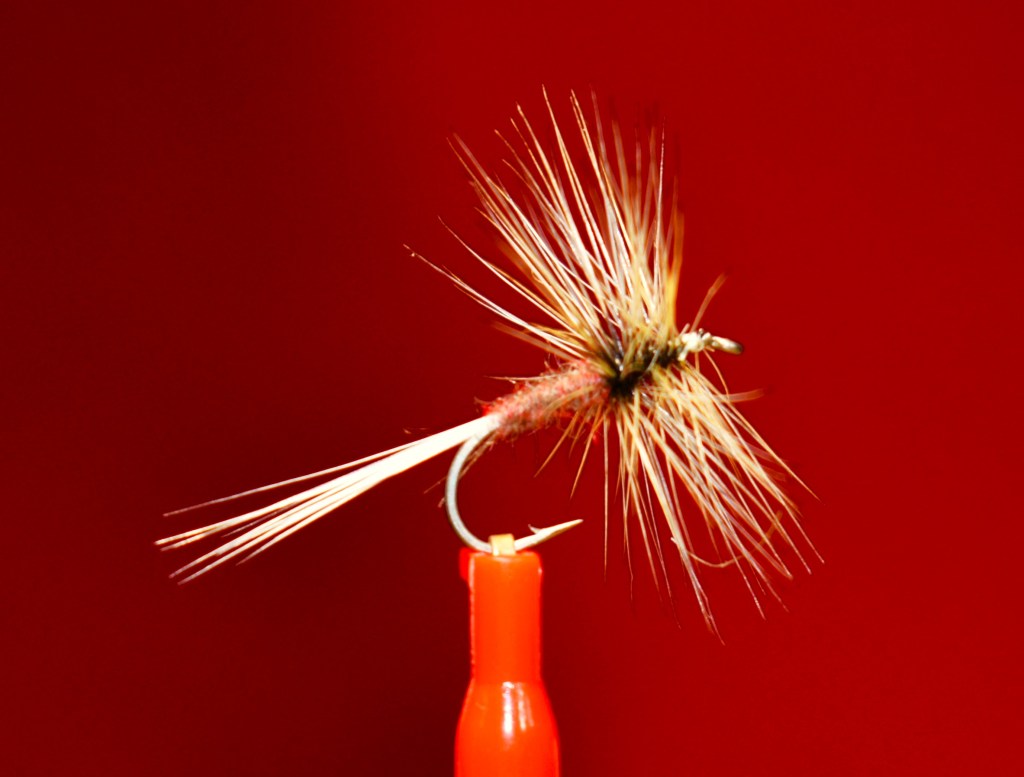
Art Flick considered his Gray Fox Variant to be a good imitation for the Green Drake, as well as pale Potamanthus mayflies, but it was his favorite pattern to fish regardless of the presence of these two giant mayflies. If you think about it, there do tend to be a few big bugs around through a long stretch of the trout season and, while a Gray Fox Variant may not be the best hatch matcher’s choice when trout are rising to sulfurs, these big flies might just be golden when cast and twitched around cover when there is no hatch going on. How many times have you seen or heard a terrific splash on one of those dead days?
I plan to fluff up the hackles on some of my stored variants and make sure they are handy once those long, sunny days of spring and summer roll around.
Come to think of it, there is one Art Flick variant that I have been fishing regularly. The Flick Blue Winged Olive is really a scaled down variant tie. I have had some great success in recent summers fishing the sparse little pale olives I find on summer mornings. I tie a thin thread body on size 20 and 22 dry fly hooks with a long, sparse hackle fiber tail and an oversized rusty dun hackle. I have taken some big browns on these and found them surprisingly visible even on long casts across flat, featureless pools.
Besides enjoying great writing, reading old, classic angling books can give you some fresh ideas and expand your knowledge of the wonderful pursuit of dry fly fishing.
 Bright Waters Catskill