
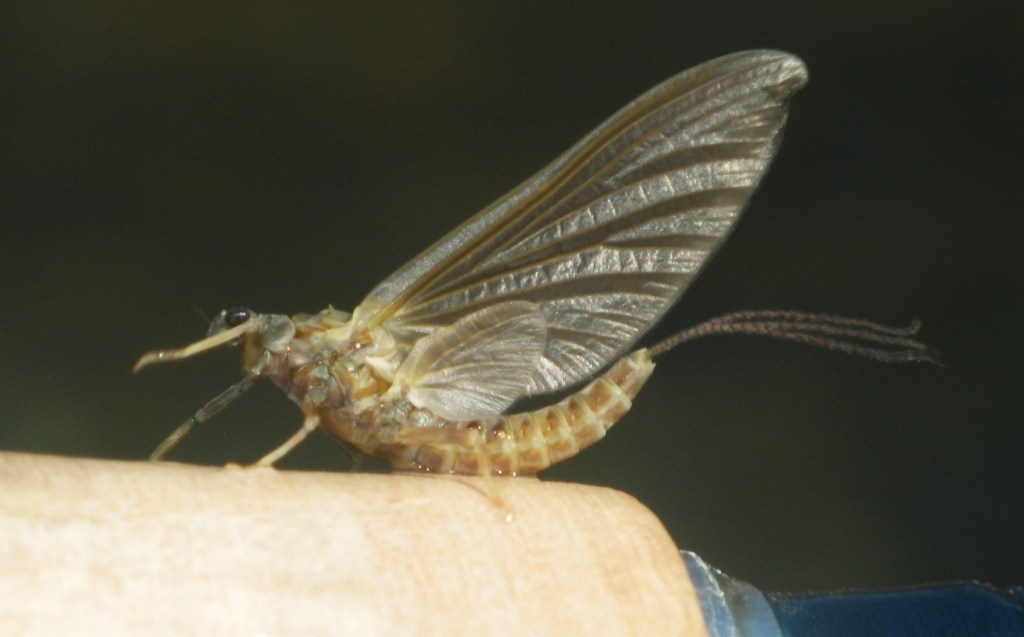

Another cold day here in Crooked Eddy, colder than I would like, though not as cold as Mississippi yesterday morn. I have set half a dozen quill bodies aside to dry that I might complete the flies this evening when the electronic variation of the Catskill Fly Tyers Guild convenes. I am partial to the luster and protection provided by a coat or two of Hard As Hull polymer head cement and tying a clean fly demands time to allow the potion to harden. I find it fish proofs the delicate quill bodied flies, though beware that a grasp and a twist with forceps can still ruin your fly.
The lead photos dramatically demonstrate why I so miss the natural dun toned CDC. Compare the play of light (my daylight spectrum tying lamp) on both natural and imitation. Dyed feathers simply cannot give a tyer that! I eschew dyed hackle capes for the same reason.
This evening’s gathering will discuss many of the classic patterns designed to match the various mayflies recognized as the Hendrickson hatch, featuring the Red Quill. Art Flick’s original is a beautiful fly, and I regret that I do not encounter these “males of Ephemerella subvaria” every season. My most reliable reference for mayflies remains Al Caucci’s and Bob Nastasi’s Hatches II which, if memory serves, maintains that long held conclusion. The authors do discuss several different species of Ephemerella flies they all consider to be Hendricksons.
Currently, on Catskill rivers I find the tan bodied flies to be most common, usually a rather uniform size 14, though I once saw a large number of them in size 12 on the Neversink tailwater, and a few of these on the Beaver Kill. The Red Quills are indeed smaller, matched with a size 16. I have plucked them from the surface to find dark red bodies like Flick’s fly, bright red bodies and even what I relate to a powdery antique brick red. I have not seen this variation within a single emergence, and cannot say if all of these, or indeed any, were subvaria males. I do tie separate imitations for each!
I have noted a very large tannish brick red fly on the Beaver Kill which seems a lit larger than a size 12, and might be better matched by a size 10 standard dry fly hook, and on each occasion, there were the ubiquitous tan bodied size 14’s on the water with them. Have I noted new species of mayflies? I don’t think so, rather some of Nature’s very unique variations that I guess may be attributable to changes in water chemistry.
Though I once suggested to anyone who asked that they carry the venerable Red Quill in size 16 on these waters, seeing so many variations would lead me to recommend they might catalog that classic fly from size 18 up to size 10, just in case.
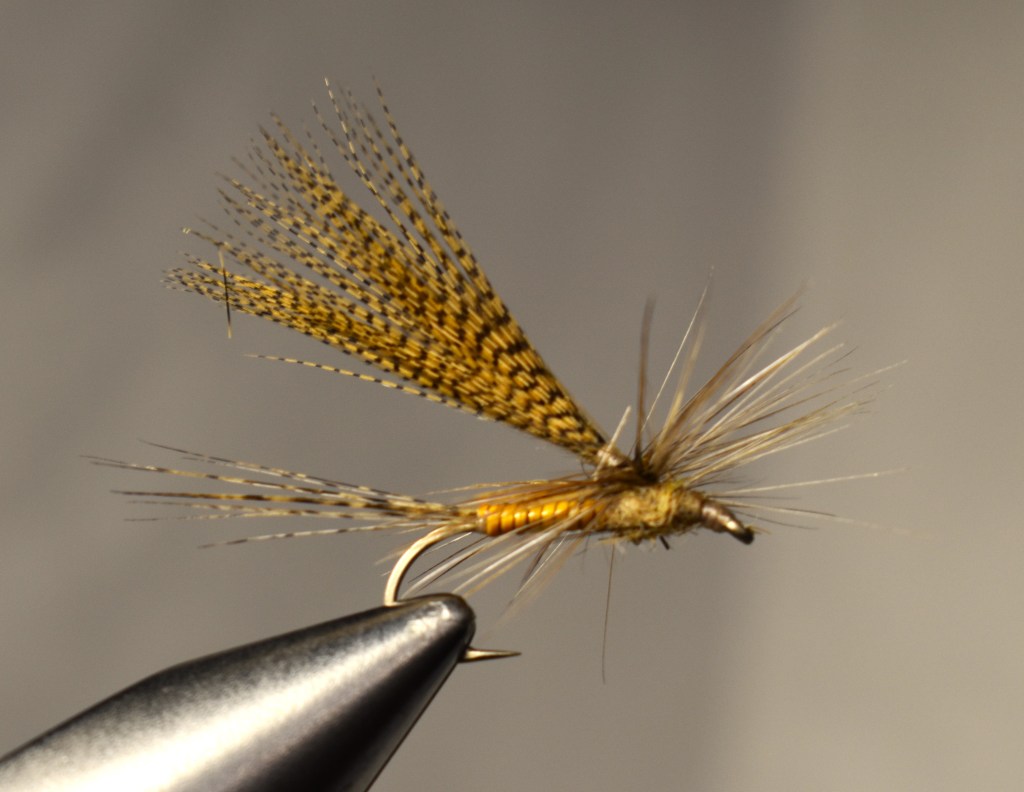
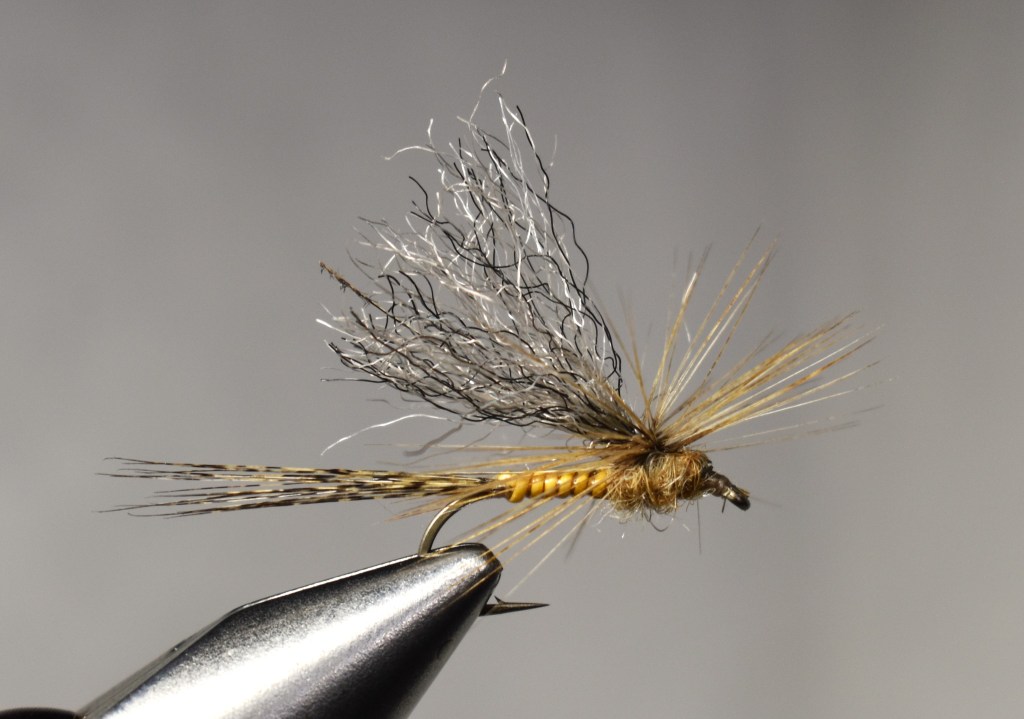
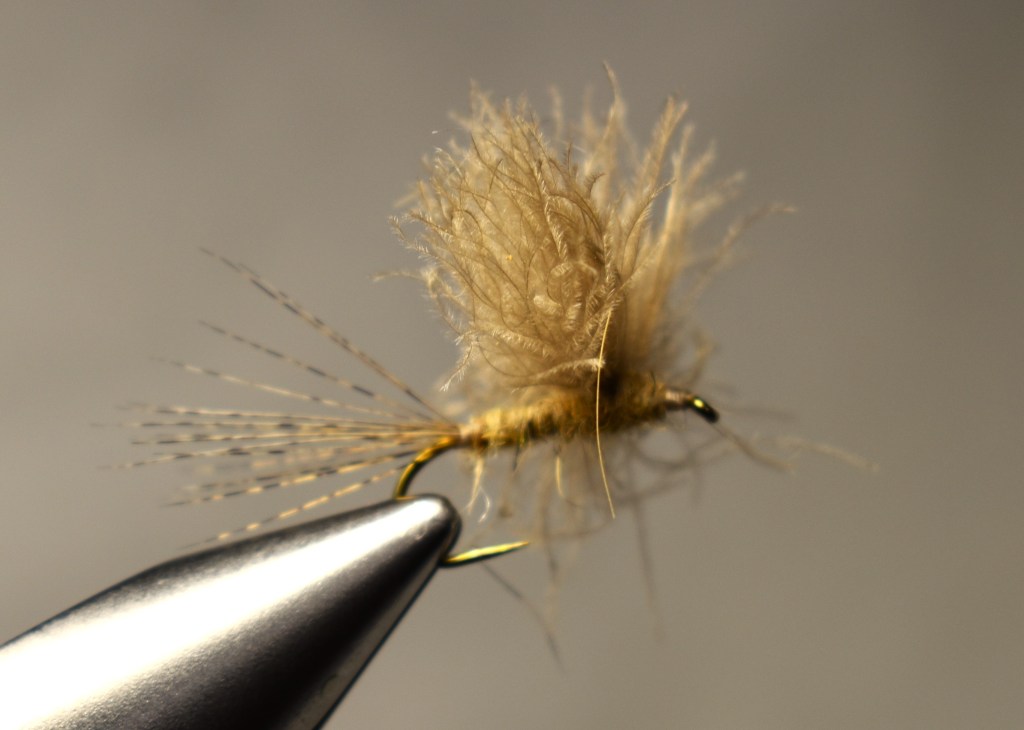
Here in the Catskills, the Hendricksons are my favorite hatches, and seem to be less variable in their intensity from year to year. In light of that, I tie, and have tied, far more than I my ever use. There are always new ideas, and of course I don’t ever wish to run out of the hot pattern during a hatch!
It is likely that I will reorganize my main fly boxes once more this winter, relegating the flies to fish over the Blue Quills and Quill Gordons to their own box, sharing some space for a few choice olives. After last April, a few size 18 ants will be tucked into the box’s foam lid! The Hendricksons have more than earned their own fly box, a special, classic Wheatley!
 Bright Waters Catskill