
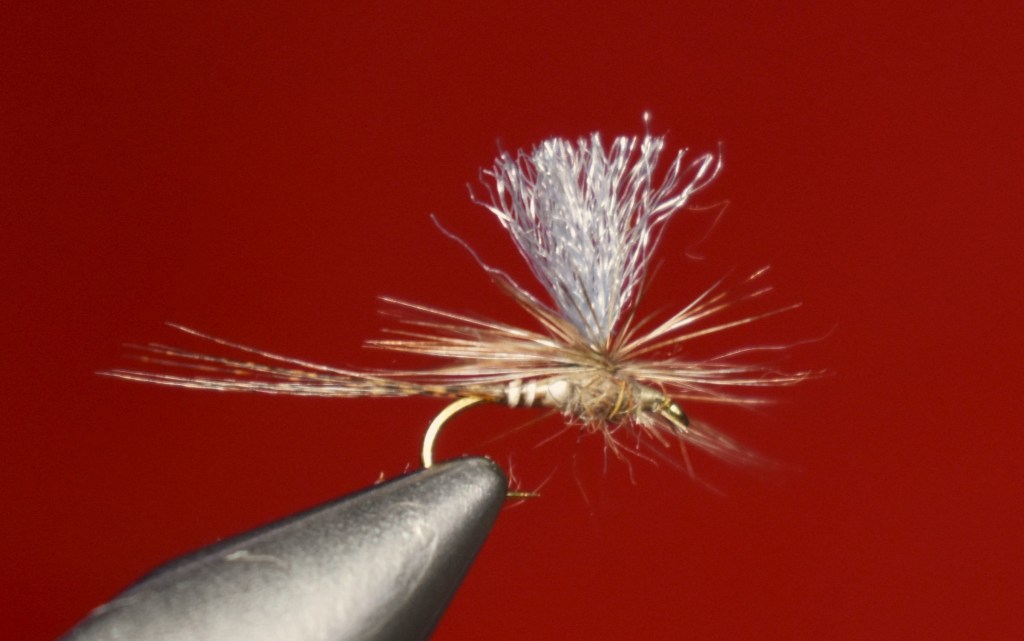
Yes, I am a true believer in matching fly color to the mayflies and caddisflies I find on my favorite waters. The preponderance of my own experiences convinced me long ago that matching the color and the translucency of the insects I seek to imitate is a lofty but worthwhile goal.
I enjoy the various discussions whenever this topic comes up. Within the Catskill Fly Tyers Guild, there are many talented fly tyers, some who I accord the title of scholars in deference to their broad knowledge of the history of dry fly fishing and the art of enticing our quarry to the surface. I often find these fellows stacked against me in the color debate. As much as I respect their knowledge and opinions, I simply cannot ignore my own experiences.
In the broad realm of our immersion in angling though, there will always be instances that run counter to each of our accepted theories and beliefs. In discussing a featured fly for next week’s online gathering, the Blue Quill dry fly was suggested and embraced. I offered my own derivation pictured above for those interested in a non-traditional and easy to tie pattern that has proven itself time and again. It happens to be though, one of those proofs against the color theory.
Throughout my decades angling the Catskills, I have been a fly tyer, fishing almost singularly with my own flies. During all of those years, I did occasionally purchase some flies to fill an immediate need. These flies came from only two sources: the Dette shop on Cottage Street and flies tied by the late Dennis Skarka of Catskill Flies. It was Dennis’ pattern for the Blue Quill that inspired my own tie.
Dennis was a perfectionist at the vise, and took the time to bleach his own peacock eyes to secure lighter quills with the dark ribbing he desired for his pattern. He tied a synthetic winged parachute with dun tailing and wrapped hackle, a simple, beautiful fly that was very well received by the trout. I changed the body, being unwilling to endure the bleaching of peacock eyes and turning to the black and white barred primaries of our eastern wild turkey. The biot fibers vary, and the tyer can alter the general appearance of the dark ribbed body from a stark black and white to black with a light to medium gray, by selecting the biot fibers carefully. Blue Quill hatches can be remarkably heavy, and the reflective properties of the steel gray Antron yarn wing post make these small flies visible when light is difficult, the windblown surface is choppy, or the naturals are overwhelmingly numerous.
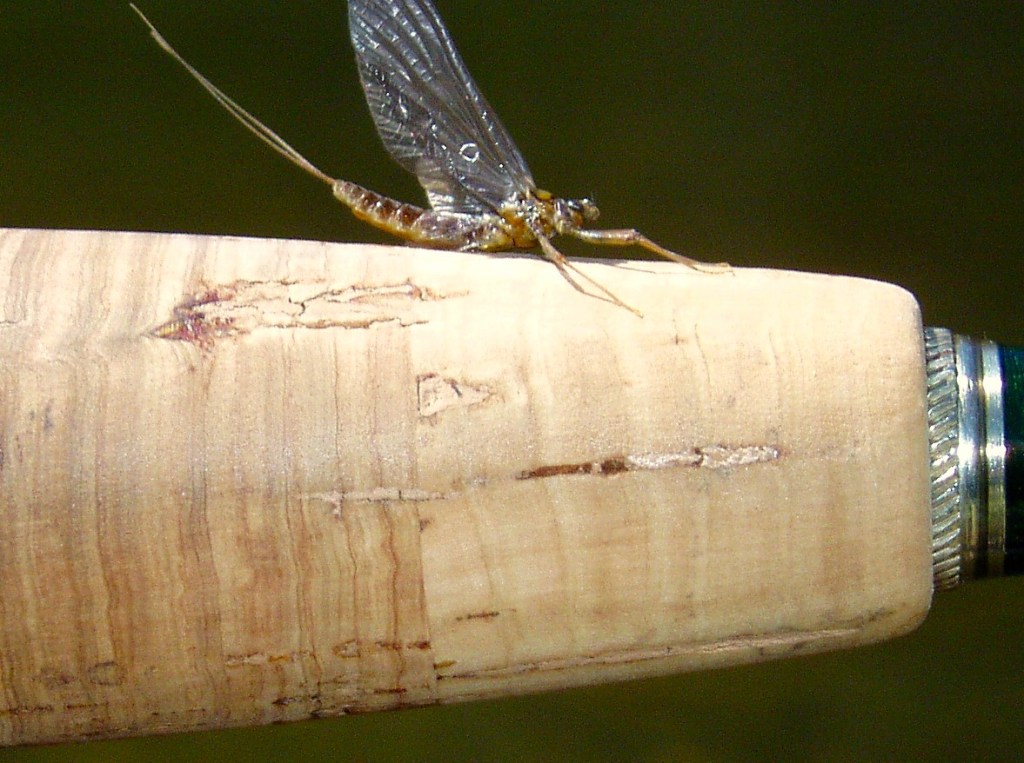
The underside of the natural mayfly varies also, from shades of brown to brownish gray, so to fit my own color theory the fly requires a brown abdomen, not one of black and white or banded shades of gray. The trouble is this fly, like Dennis Skarka’s original, is a deadly taker of trout feeding upon Blue Quills.
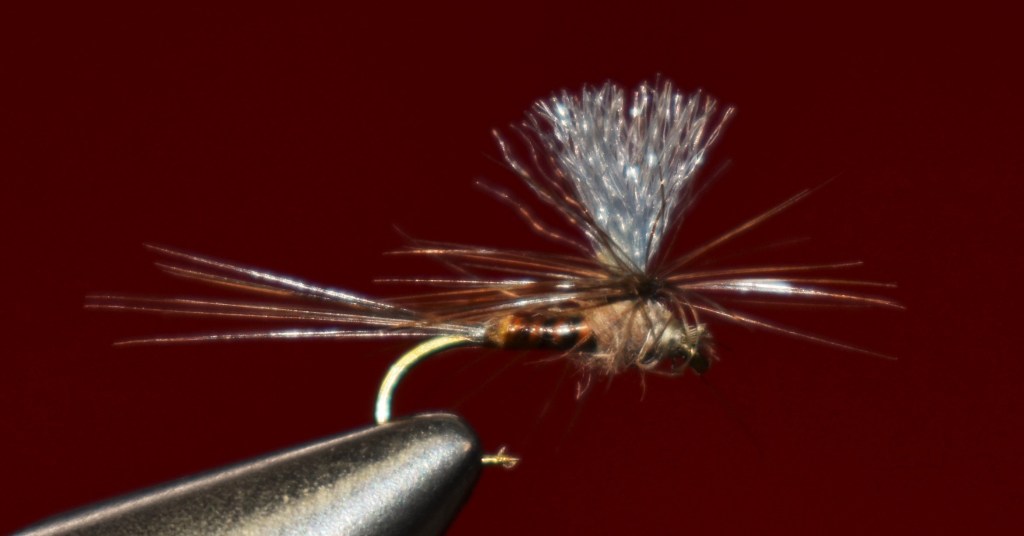
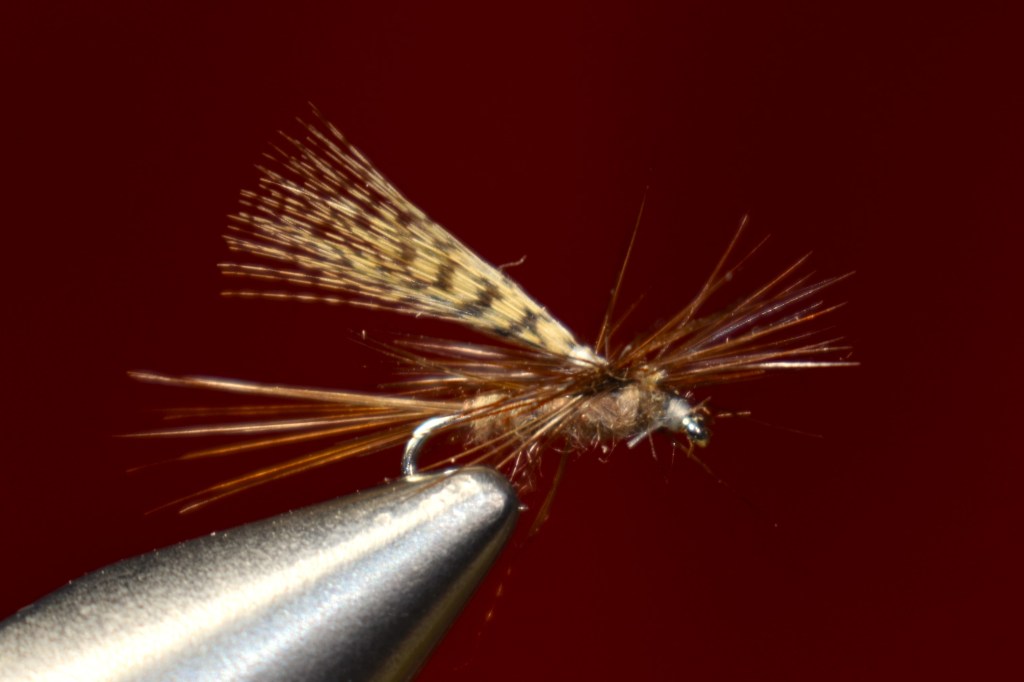
Nearly all of the dry flies of my own design sit low on the water, their bodies in the film, something I tend to remind my contemporaries when discussing (arguing?) the color theory. Many maintain that color matching is vital in wet flies, but needless in dries. I find my belief in color matching is reinforced season after season, though there are exceptions. If I force myself to set aside the Skarka influenced Blue Quill and fish brown bodies, I might find reinforcement in even better performance, but that is going to take some time. The old turkey biot fly isn’t going to be replaced with a dyed biot or Translucence Series fly until it fails, one day when I am certain the refusing trout is taking Blue Quills!
The fly carries a lot of memories including the capture of the hard charging twenty-two inch West Branch brown that christened my “Trout Bum” bamboo rod, a gorgeous three-piece eight-footer crafted by my friend Wyatt Dietrich in tribute to his mentor, the late George Maurer. That moment came amid the turmoil of trying to find a home here in the Catskills in early 2018, a season that didn’t end up granting me a lot of time on the water.
That same parachute allowed me to tangle with the one of the largest brownies I have ever battled, a fish I believed would have topped 28 inches if the little size 18 hook would have held for that last fifteen feet to the net! We never forget those that remain almosts.
Thank you Dennis, may they rise frequently for your beautiful flies as you angle around the next bend. I miss our talks and fondly recall the gift of our last one!
 Bright Waters Catskill