
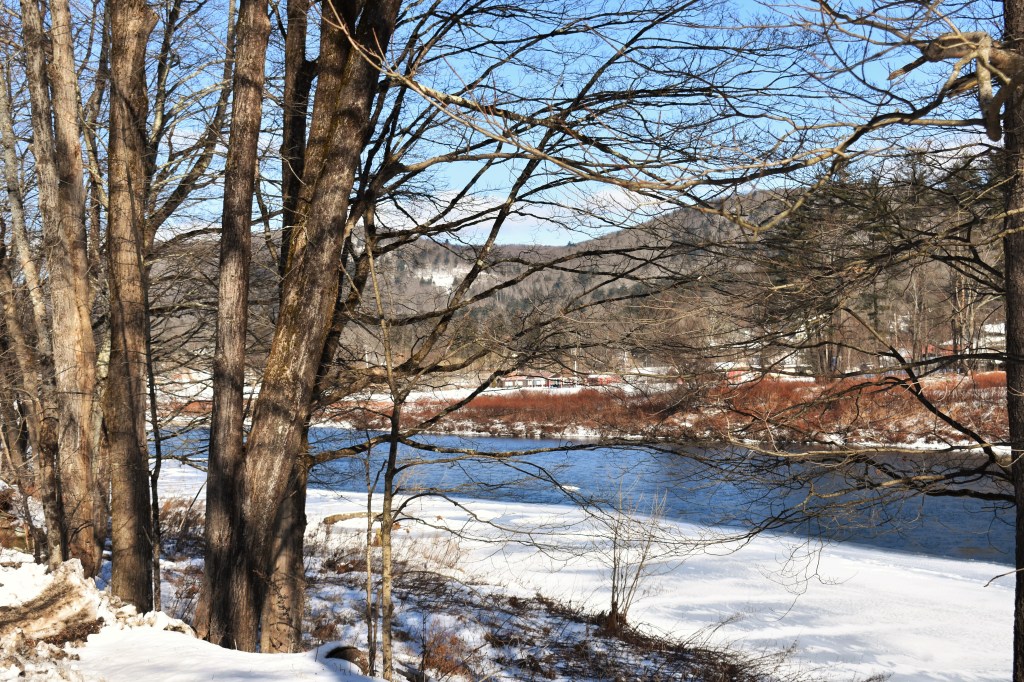
Morning at Crooked Eddy, and I hear the dripping of snowmelt from the high roofline onto the low metal roof above my station. I walked out to look for the freezing rain we have been warned about and found the temperature somewhat less than a full degree above freezing. The rain is expected closer to midday, more than half an inch by tomorrow morning, and I do not doubt it will flush the light snow cover we have into the rivers.
The Delaware reservoirs have spilled on and off since the heavy rain of December, and now linger just below capacity. Releases are higher than we have seen these past few Januarys, and I am thankful for that. Better for the trout as well as the mayflies, caddisflies and their brethren, and I pray that good flows continue through February and March.
Hope remains for a little warmup between spillings, a chance to visit bright water, swing a fly and soothe my already winter weary soul.
I have volunteered to tie my simple Blue Quill Parachute for Thursday evening’s virtual gathering of the Fly Tyers Guild, and have settled on tying a size 14, that my simple webcam will allow acceptable visibility. What to do then with a fly twice the size of the natural? Not a hatch matcher, though it is a fishy looking fly, so I’ll simply toss it into a spring fly box to be trotted out on one of those spare days.
Perhaps I should set aside a small box for the dries that aren’t intended as close imitations, the Atherton’s, Fox Squirrels, Catskill Adamses and the odd variants I sometimes tie with an extra length of oversized hackle. That seems a fine idea.
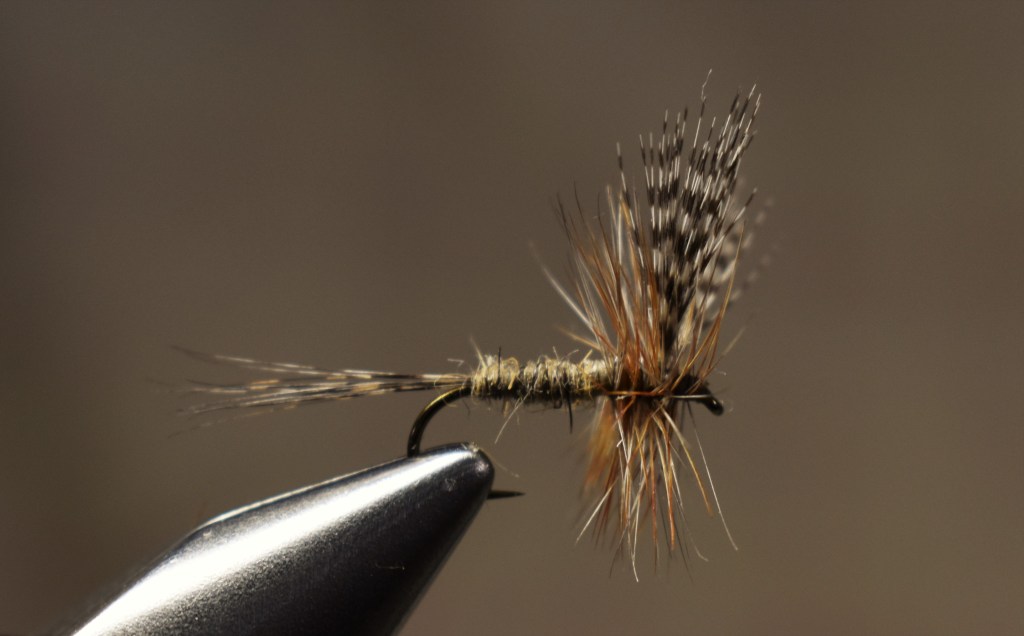
In the past I have tucked these fishy flies in beside the proper imitations, where they have oft been overlooked just when a perfect opportunity to try them appears. To me they feature some bit of attraction, whether the dark, subtle bugginess of the Catskill Adams or the glint of golden tinsel on an Atherton No.2, and that impressionistic quality of life. Strictly speaking, species specific imitative patterns are conceived for the hatch, while these other fellows are cast with a more general appeal. Exuding an impression of life and generality, they seem to be able to appeal to a trout that happens upon them. There are many such hours along spring rivers.
Long vigils are common, particularly until the river temperatures ascend to the high side of the forties. Fifty degrees is the classic, magic number, but there are many days when weak sunlight seems more vibrant to the river starved angler, though the sunken thermometer struggles to betray 46 degrees.

It is funny how I always carry a small box of the early stoneflies which brought the first dry fly fishing to the Big Gunpowder Falls and the Pennsylvania limestoners, though I have never seen a single trout rise to one on an early Catskill river. I did imagine one though, that first hopeful winter, when the calendar said spring. The little black stones were buzzing half in inch above the surface, skittering and skating along screaming eat me! I wanted that first taste of dry fly fishing so badly, I tried to convince myself a reflection flashed in the corner of my eye was a swirl!

Seventy-five days of wishing and waiting lie ahead. Each one will linger perhaps two minutes longer than the one before; a few breaths! I’ll tie no stoneflies as those days pass, though, despite my best experience, that little fly box will find its way into some vest pocket come March. Old habits… well, you know what they say.
 Bright Waters Catskill