
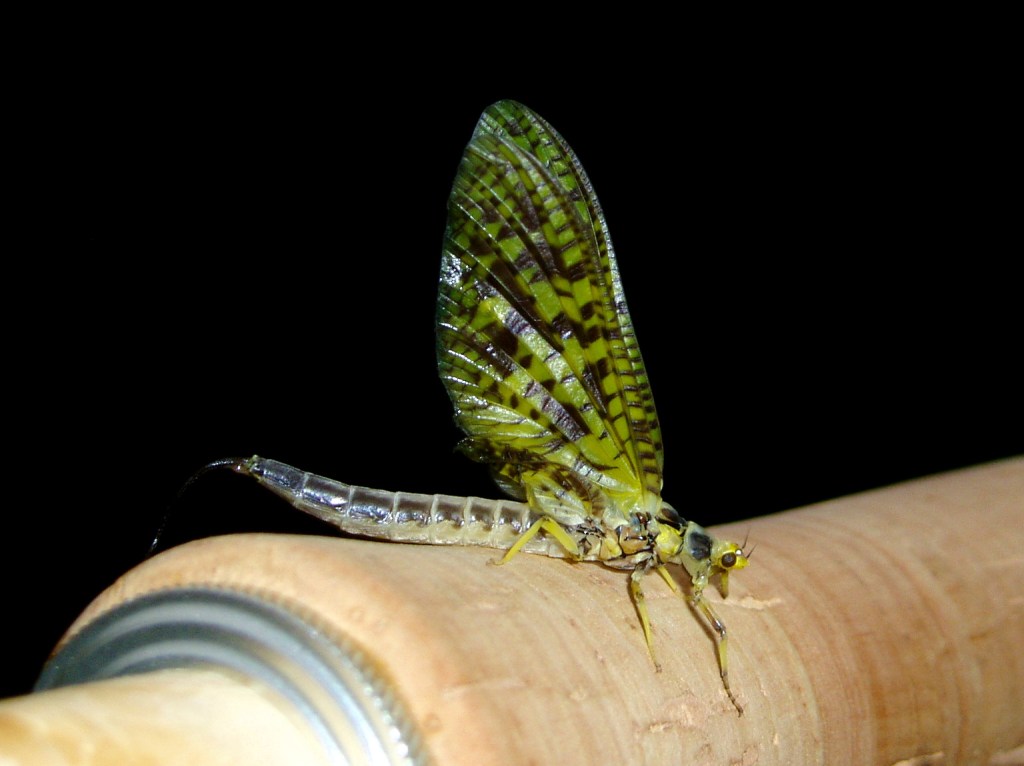
More than twenty years have passed since my first experience with the Green Drake hatch here in the Catskill Mountains. Mike Saylor and I had made the trip up to stay and fish with Pat Schuler at his beautiful lodge in Starlight, Pennsylvania, and we arrived early on a soft, fog shrouded spring morning. In talking with Pat, he mentioned that “fishing had been pretty good” and asked if we wanted to take a half day float trip. We were scheduled to float the next day but jumped at the chance for an extra afternoon and evening with the best guide on the Delaware River.
I had fished the Drakes on Penns Creek a decade earlier, witnessing the spectacle of the hugely crowded stream and the huge mayflies hatching while listening to the boils of rising trout in the darkness. There was some more productive fishing early in the mornings, stalking the odd trout taking leftover flies from the previous night, but the great hatch was a pitch-black affair on the big limestoner; in short, a guessing game.

After fishing through morning and early afternoon on the Beaver Kill, Mike and I met Pat at four o’clock that afternoon. I guess we had floated half a mile when the first epic burst of white water catapulted skyward – a good Catskill brownie had taken a Green Drake!
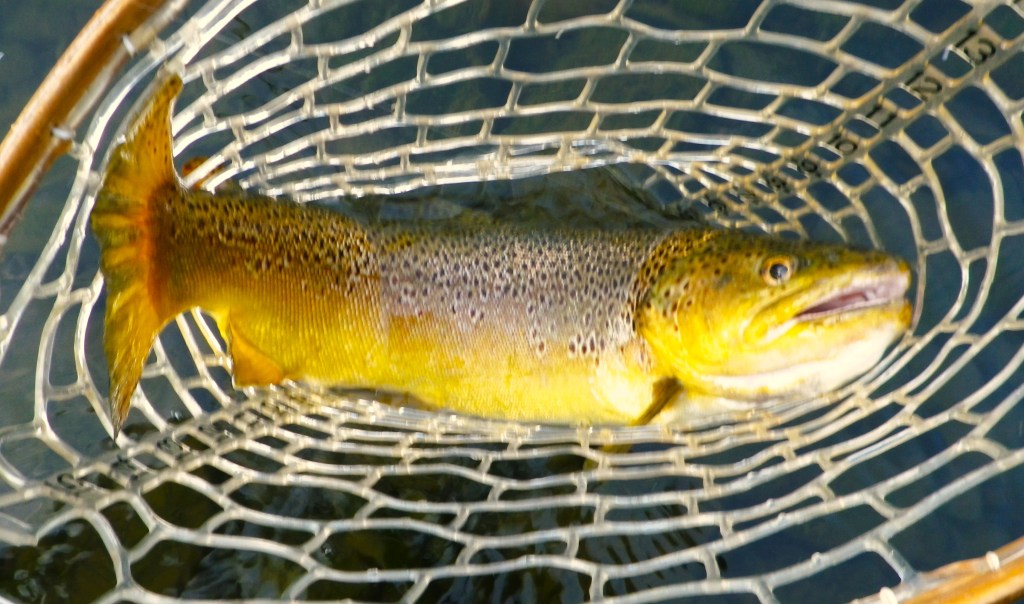
We landed ten fish apiece that afternoon and evening, the smaller ones measuring better than eighteen inches. Most of those trout weren’t small ones. The inset photo at the top of my blog page shows my best of that day, a brown measured at twenty-three inches. Mike’s best was twenty-one. These big trout were all taken on the big dry flies, Green Drake Comparaduns and Brown Drake Comparaduns that Pat provided. It was an epic beginning to a truly epic trip.
The Catskill Drake fishing wasn’t the guessing game under full darkness I had witnessed at Penns Creek. Here the flies hatched sporadically throughout the afternoon, and the rises were anything but subtle. My angling life was changed forever that day.
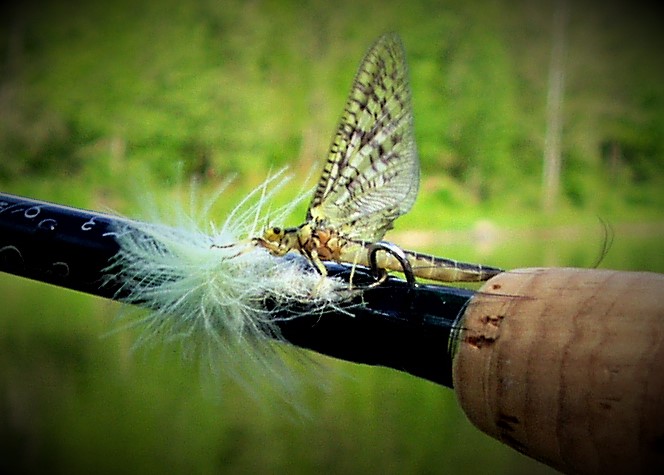
Throughout some fifteen seasons beyond that day, I devoted myself to the Cult of the Green Drake. I designed new fly patterns, modified them, tested them, and reaped the rewards whenever the Red Gods allowed me the grace of finding the right pool to meet the hatch. The CDC flies were mainstays early on, though it seemed as if more innovation was needed. There were years when the hatch was sparse, and the trout reluctant to take the duns reliably. They chased the nymphs swimming toward the surface, making deep boils when they captured them inches below the film. I remember one emerger I designed that solved a number of those days, but there was always a drive to find the perfect dun, the fly that would take the uncatchable fish that ignored all my best flies.
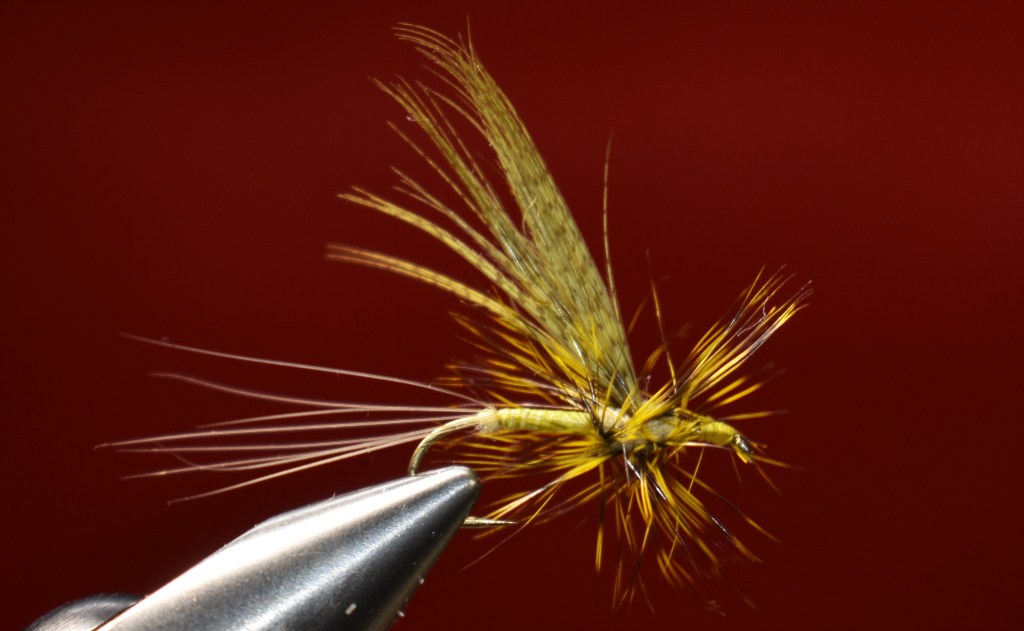
The canted single wing derived from studying Theodore Gordon’s flies showed immediate promise, hackled in the thorax style it proved somewhat difficult to tie, and I continued to refine it, finally settling upon a canted parachute style that sat on the surface provocatively. The 100-Year Drake proved itself over and over again, taking big reticent browns who refused my other duns.
Twenty years have passed in a blur, and the amazing hatches I once witnessed are now a memory. The decline occurred in fits and starts, but seems all too real these days. Yet I am still captivated by the magic of the Green Drake and what has been. New patterns evolve, part of my quest to make the most of scarce and dwindling opportunities. I hope the decline in these great mayflies is cyclical, that their numbers will rebound, and the hatch return to prominence.
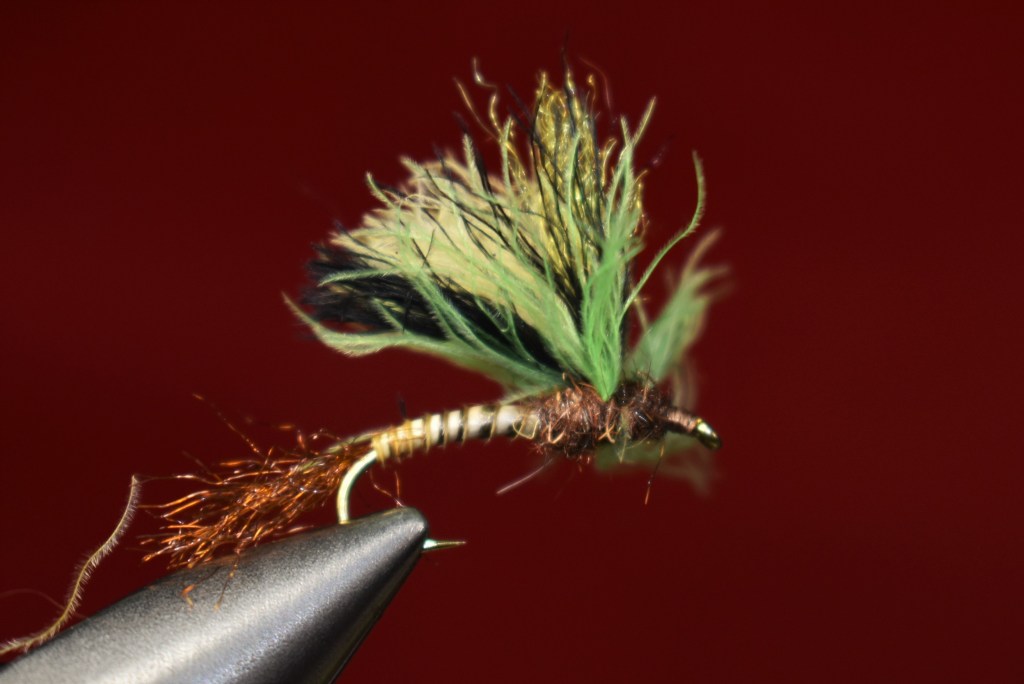
Last season, the hatch I encountered was no more than a trickle, a tease compared to the wonderful fishing of two decades ago. A handful of trout were attracted to the sparse appearances of Drakes as darkness gathered, and all duns were ignored. Very low, clear water coupled with the tiny number of flies that hatched made the fishing nearly impossible. My most recent variety of a CDC Cripple was the only fly able to bring a trout to hand.
As I wander the dreamscape of the past twenty years in memory, I crave the opportunity to continue my quest, though I must accept that there may be no more of the great flies in my future. One cannot imitate that which no longer exists.
 Bright Waters Catskill