

Ah, here we are nearly on the doorstep of spring! The calendar says we are a week and a half away, while my angler’s instinct expects dry fly fishing within a month.
We wrapped up our second winter of Thursday night Zoom gatherings of the Catskill Fly Tyers Guild last evening and are looking forward to a live meeting at the Museum’s Wulff Gallery next Saturday. In person, we will be trading patterns for early season flies, though those of us fortunate enough to be enjoying retirement are likely finished with those. If you are not, and are within a reasonable drive, consider joining the Guild and attending the meeting. I am sure you will make some friends and pick up some new ideas to fill out your early season fly boxes.
Here in the Catskills, some of the first insect activity we find are the little black stoneflies. These are typically a size 18 with a longer wing. I don’t generally find trout taking them on the surface, though with this winter’s mild weather and warmer water temperatures it could be worthwhile to carry a few with you.
The mayflies are the bugs that get the better trout interested and, depending upon your choice of river, the first hatches will usually be Quill Gordons and Blue Quills. Theodore Gordon’s signature fly is still a productive trout pattern, and I complement my own selection of patterns with biot bodied and dubbed dries, both those bound to the Catskill tradition and several parachute and CDC winged, low floating duns.

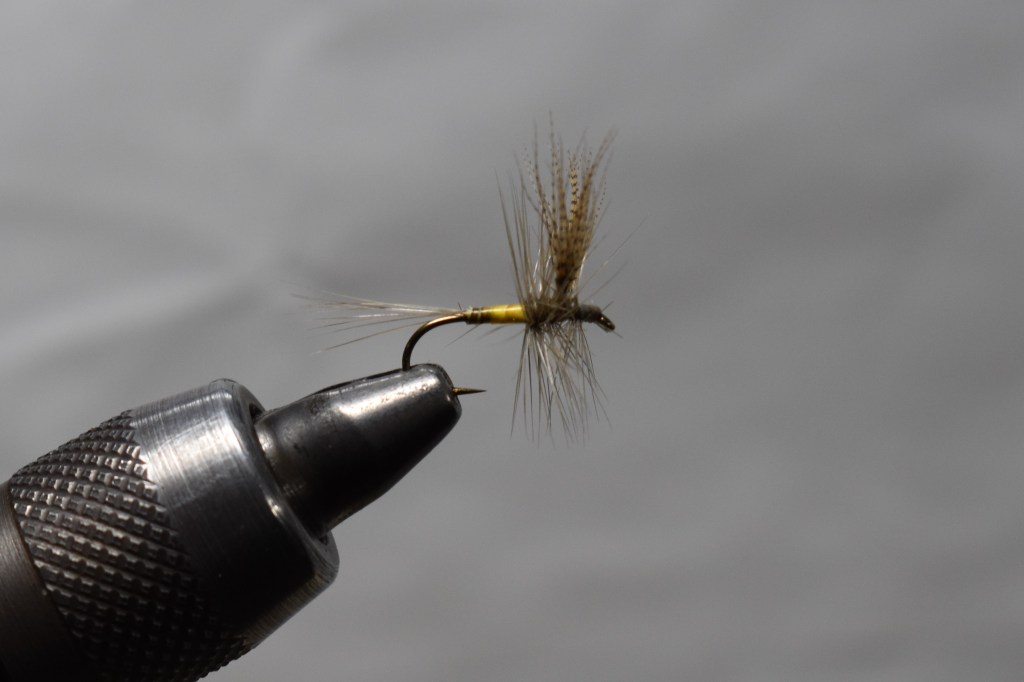
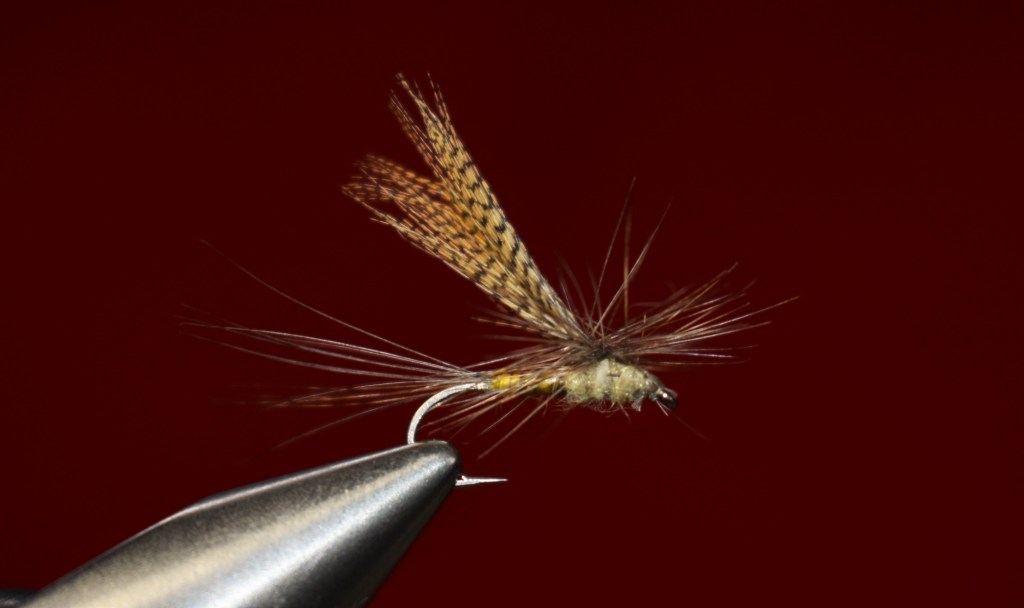


My Blue Quill selections follow a similar progression, from hackled Poster dries through 100-Year Duns and CDC’s. In some seasons, Blue-winged olives are mixed in, and can be difficult to spot when there are also Blue Quills on the water. If your quills are refused or ignored and your drifts are good, consider tying an 18 olive to your tippet.

Once the Hendrickson’s begin to hatch in earnest, you will find the trout keyed in upon them in various stages. I carry far too many patterns thanks to my need to experiment, but angler’s should have hackled duns, low-floating CDC or parachute duns, a reliable emerger or cripple and a Rusty Spinner as a minimum selection. Tie a few of each in a smaller size as well!
Our most abundant Hendrickson species seems to be the tan bodied mayfly that inspired Roy Steenrod’s legendary Hendrickson dry fly, typically seen in a size 14. Tie at least a couple of your favorite styles in sizes 12 and 16 just to be prepared. Nature writes her own playbook!
Red Quills are generally smaller, copied by a size 16. I don’t see as many of these as the larger tan duns, the females in accordance with conventional wisdom, but do not get caught without them.
I see two additional variations that I expect are related subspecies, though not as reliably as the tan size 14 flies we call Ephemerella subvaria. One of these, which I find on the water at the same time as the larger flies is a cocoa brown size 16. The other hatches after the main event subsides, another size 16 colored a dirty golden yellow that I refer to as the Lady H.

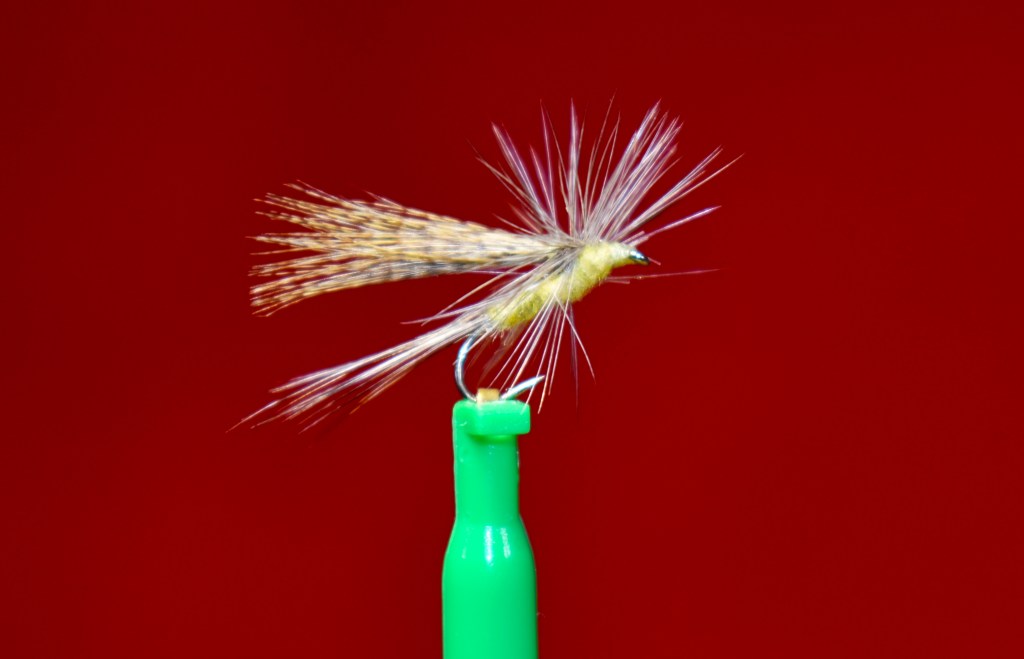
The flies discussed above get me through the early portion of the dry fly season, taking us into May when caddis hatches and March Browns loom on the angler’s horizon.
You will want some of those Rusty Spinners in April and early May of course, sizes 12 to 18, and last year I was surprised with a brief appearance of flying ants during a hot second week of April. A tiny plastic hook box is still tucked into my vest with a handful of size 18 winged black ants, just in case.
 Bright Waters Catskill