
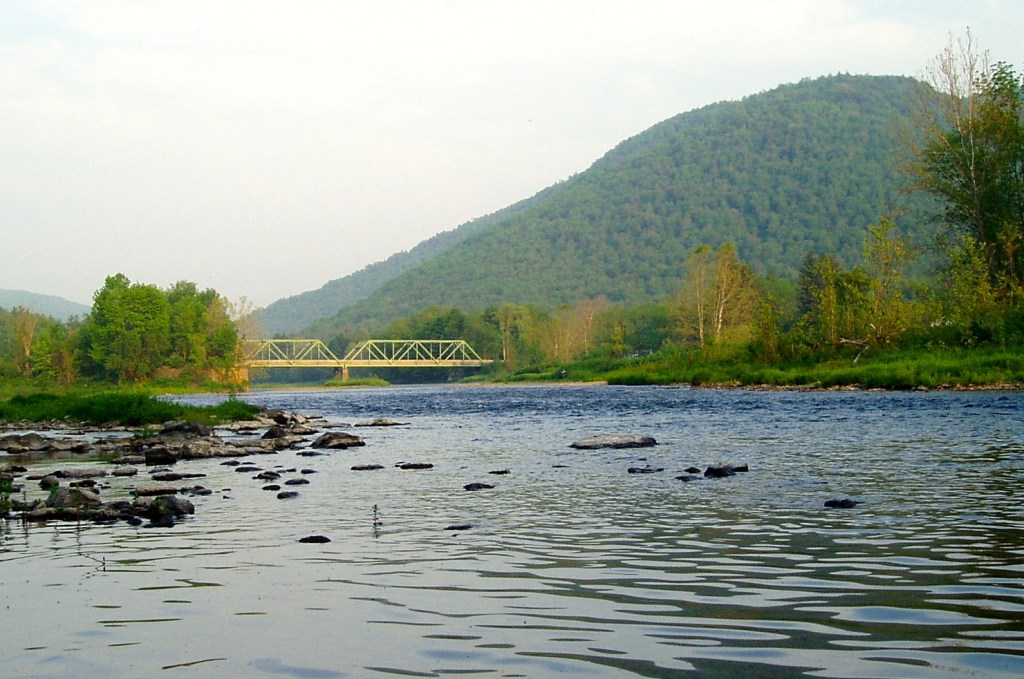
I had one of those tough days late last week, the kind where the opportunities you hoped for just refused to materialize. The trout were spread out and there were very few flies on the water even as prime time rolled around, so I wasn’t doing much fishing as I was fruitlessly waiting. I found myself with a brief and difficult window, eventually.
The water I was trying to fish was low as were most of our rivers, and that restricted my movement significantly. Wandering around in low water just alerts all of those trout you don’t see rising, with the result that they don’t rise when the day’s sparse allotment of mayflies finally gets going.
I waded very slowly and set myself up to be able to reach a long line of drift where the main current carries most of the stuff on the surface, bubbles, miscellaneous vegetative matter and bugs over some of the best bottom habitat in the area. That is usually the right plan under tough conditions like these, but it wasn’t on that day.
There is a secondary current that spreads down along the near bank of that pool. It is very subtle, unnoticeable in low flows, unless there happen to be flies on the water. As I was standing stone still and carefully watching the prime lies across the river, I heard a little plop or two that sounded like it could have been behind me. Thinking a fish might have risen quietly well downstream, I didn’t trust the directionality of my ears, and kept concentrating on that main line of drift. There was simply nothing doing out there.
Eventually, a few mayflies started to show, and I truly expected my patience to pay off. It didn’t, but I did hear another plop or two and turned around to watch that secondary current. Sure enough, there were a few flies coming down through the back door hallway, and a trout was taking advantage of them.
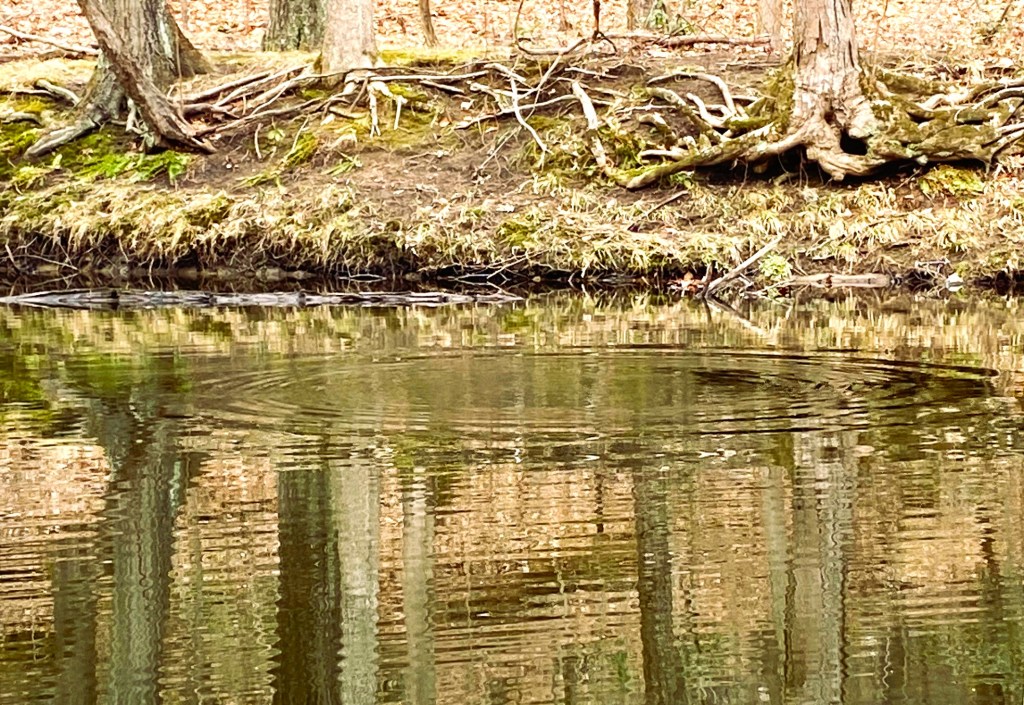
As the number of flies increased, I found four or five trout spread out over an area some thirty feet wide and one hundred feet long, all of them fairly close to the shallow bank. They were not holding position, but each trout was cruising around a small area. Once they got going though, I was pretty well trapped. These were good fish, I know because I encountered this same situation a few seasons ago in this area, during another early spring low water scenario. There was no way these fish were going to allow me to move into a favorable casting position to fish them, leaving me with trying to take advantage of what would be the afternoon’s only opportunity via long casts nearly straight downstream.
It was a flat light kind of day, so I was looking straight into widespread glare as I tried to watch my fly, casting and mending to feed it to one of these moving targets. When I can’t see my fly at the take, I tend to get antsy sometimes, and this was one of those times. On a downstream presentation like this, you have to wait a little longer before you raise your rod to strike a taking fish. I know that very well, but losing sight of my fly and that antsy feeling undoes things.
I was a bit too early when I thought the nearest fish took my fly, and I pulled it right out of his mouth. Of course, that raised my frustration level and made me do the same thing again. Self-defeating prophecy – same result for number three, though he actually started to pull, hard, before he opened his mouth and let go of my fly. I don’t believe he was even hooked. I think he clamped down on the fly and then decided to let go when it pulled back. That is all the time Nature allowed, for the flies stopped coming within moments. That is definitely fishing.
I have found feeding fish in secondary current situations before, though it usually happens in areas where the trout are rarely disturbed and not on our hard fished Catskill rivers. I recognized the possibility before anything happened, but I remained intent upon the more likely water near the other side of the river. The result was really just the luck of the draw; it wasn’t going to be my day.
If I had it to do over again, I would have moved into a position earlier, setting up for the rare chance of the action happening on the thread of that secondary current. If it hadn’t, and that was really the most likely outcome, I would have been easily able to move into position to work the main run without spooking trout beginning to feed in that wider, deeper section of water. Might have turned out to be my day after all.
 Bright Waters Catskill