
July is finally here, and it comes with it’s sack of memories. For many of my traveling years, the July Fourth holiday marked the finale of my Catskill season. The summer sulfur hatch on the West Branch was the draw, along with the open pools devoid of spring’s crowds.
I remember fishing down at the Barking Dog Pool when there was a three-car parking lot offering a two-hundred-yard walk to reach the river. Come July, there were no other cars save mine. If I managed to encounter another angler somehow, the place seemed crowded.
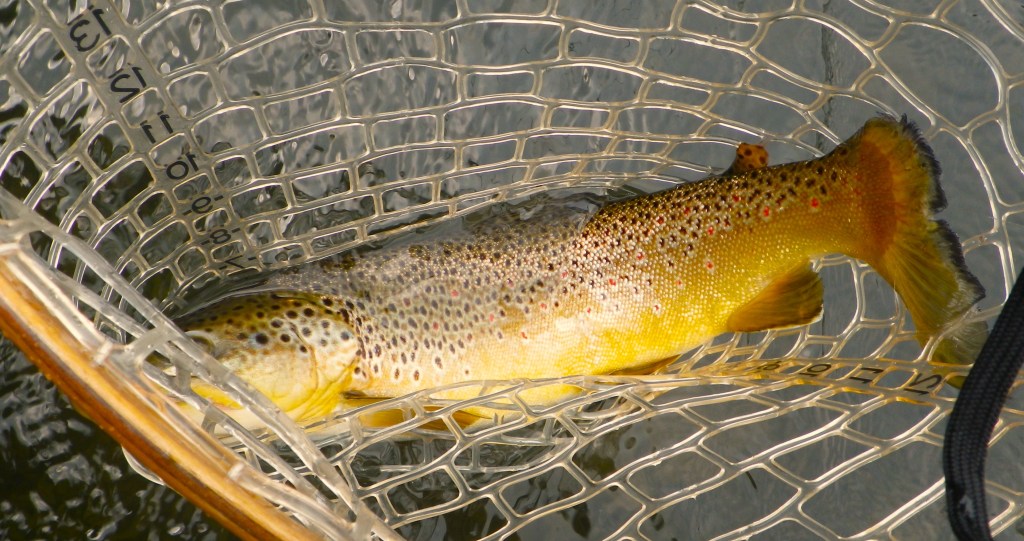
The wild browns were difficult even then, for the tiny sulfur duns would burst from the 47-degree water into the 90-degree air and dance all over the surface; miniature mayflies screaming eat me to the trout. I fished a lot of very simple flies to take the big brownies back then, thread bodies and CDC wings, with either 3 pale hackle fibers for a tail or a few strands of crinkled Antron yarn for a trailing shuck. The flies were light, the CDC wings buoyant, and their fibers offered just a bit of movement as the near weightless little flies bounced on the cold, bubbling current.
It was rare to see a drift boat on that upper reach of river back then, and I waded, immersed in the technical fishing for hours on end. Blissful summer before the long separation of August, September and on through autumn and winter.
Today one gets in line and takes his chances to fish that same water. There is a wader for every fish, and the boats come in flurries, their hurried oar strokes putting down the rising trout along the riverbank. There was a time when large trout frequented the shallows all along the eastern banks, sipping sulfurs. The huge parking lot and boat ramp took care of that activity, and today it can be nearly futile trying to find a rise along the heavily fished western bank. The sulfurs no longer come as they once did either.

The challenge is different these days. There are still large wild trout swimming in the West Branch, and a hunter can find them, though much is wagered on luck to reward his efforts. The torrent of fishing guides know all of the old spots, and they often line up, anchor and wait their turn two or three boats deep. The trout adapt, and I have found them some days in the forsaken waters, too shallow, too lacking in cover to hold good trout and not worth the time of all those professionals.
The difficulty comes from the fact that trout will not stay long in nothing water. A bounty found today may be reaped once or twice, but they will not remain once fishermen discover them. There is always more empty water to be searched; with the feet, the eyes, and the heart.
 Bright Waters Catskill