
The post-flood fishing has been a journey of discovery kind of situation, although I cannot say I have discovered anything more than the fact that the quality wild trout I prefer to hunt seem to have vanished from their likely haunts. Obviously, a blank day of fishing doesn’t mean the trout are not where you are looking for them, however a run of days with compromised water conditions and a complete lack of clues, as well as trout leads to a firm conclusion.
Larger trout have a lot more mass and surface area then the average foot-long fish and flood flows lead them to seek the cleanest water they can find and larger current breaks. The kind of cover that holds such fish under normal flows may not be sufficient during floods, even if we think it is. Little fish can tuck themselves behind smaller obstructions than big fish.
This is all just another facet of the puzzle the angler faces each day on the river. Water temperature, fishing pressure, predation, cover, depth and the availability of food can all change with water flows, and floods are one of Nature’s tools to create change.
I was talking with another angler a few days ago, and he was expounding on all the rises he was seeing. I dismissed these as little fish, eating little bugs. He asked me if I had caught any of them, stating that big trout can make very small rises. I didn’t feel like getting into a long discussion on reading rise forms, so I simply told him I did not bother with them.
It is true that large trout can feed with negligible riseforms. I have caught a number of them over the years that betrayed no riseform at all. Have you ever had your floating dry fly simply vanish? No ring, no bubble, no little spurt or splash or bulge, just there one second and gone the next while you are staring directly at it – this is what I am talking about. I once watched a gorgeous twenty-two-inch brown trout roll halfway onto his side and drift up toward the surface and suck down a caddisfly into the side of his mouth without a trace. He was six feet away from me in crystal clear moving water. I know his size because I cast to him and caught him once he slid back upstream a dozen feet to find another caddis.
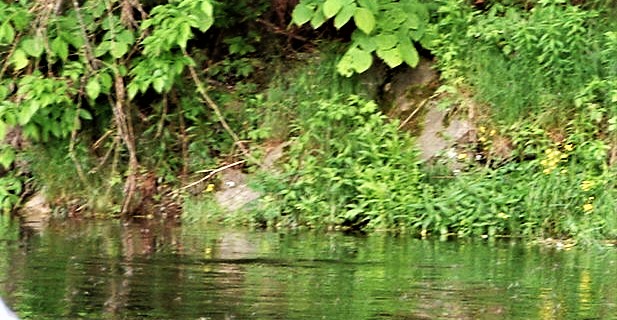
Reading riseforms is a vital skill to cultivate if you wish to spend your precious stream time fishing for larger trout. After more than three decades, I have become pretty good at it, but I misjudge a trout every once in awhile. Just to check my judgement, I did a little experiment at the close of my fishing yesterday.
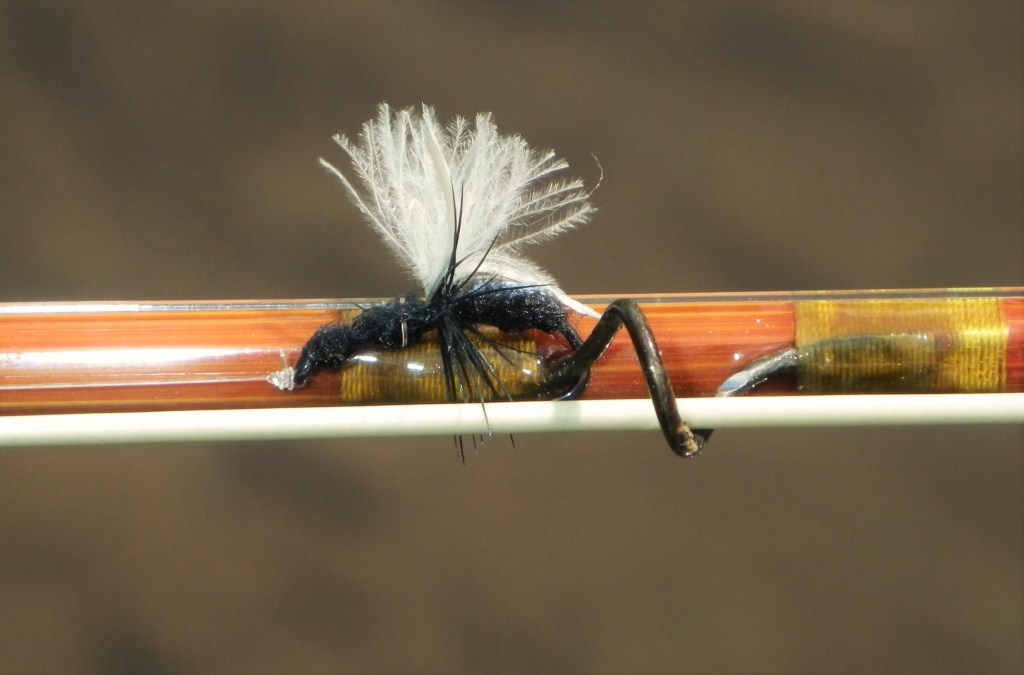
The river had been lit up with soft, little riseforms for perhaps an hour. I had watched them and determined that there were no quality fish feeding, but the little guys were having a field day. I had removed my sunglasses and checked the surface, smiling when I found tiny black flying ants adrift in the film. They looked to be about a size 22, and some where smaller still. I had none with me, the trouble with my depth perception making it not worthwhile to bother with flies I couldn’t see to tie on. I am out more days through the season than most, and I only encounter a nice ant fall once or twice every couple of seasons. I did have a size 19 foam ant with a grizzly hackle between it’s gaster and thorax, and I figured it might be just close enough.
I stood in the middle of the river and cast to riseforms, choosing the ones that looked a little better than most, and I caught and released seven wild brown trout on that ant. All of them were right around seven inches long. Yep, little fish eating little bugs, just as I thought. I hope I am still around in four of five years when those youngsters grow up. Maybe they will still eat that little grizzly hackled ant that isn’t quite small enough to match the naturals, but is just big enough for me to see to tie it on.
 Bright Waters Catskill