

Sometimes it pays to turn the tables a little. Keeping to regular habits will give the trout an opportunity to pattern an angler and his approach, particularly the older, wiser and larger members of the fraternity we prefer to encounter. I have been convinced of that fact on various occasions.
The hiatus proclaimed by Hurricane Debby’s floodwaters ended a fairly long run of dawn patrol fishing for me. As the fishing has begun to improve, I have more or less been keeping more of a spring schedule, starting in mid-morning and fishing on into late afternoon. Initially, that was dictated by colored water, figuring the best chance for dry fly fishing would come once the sunlight was strong enough to provide better fly visibility for the trout.
I tried a relatively neglected reach of river yesterday morning, one I usually reserve for afternoons. This area receives a lot of angler pressure, and I enjoyed the chance to catch it unoccupied. In full sunlight, any reach of river can appear intimidating, and this one was fully bathed in sunlight when I arrived. I know a few good lies in this pool, and there was still a narrow band of shade clinging to life along a couple of interesting places. There was no question in my mind where I was going to concentrate my efforts.
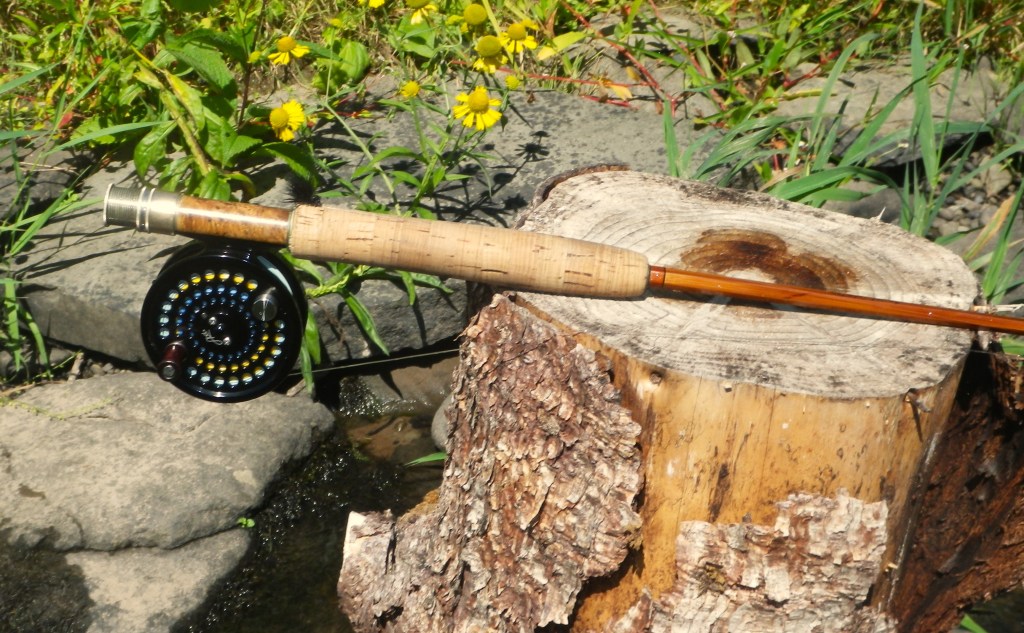
Funny how things happen sometimes, but the first little patch of shade I cast my Baby Hopper into produced a strike and a hard fighting fourteen-inch brownie. That reinforced my fly choice and my strategy. My little bands of shade were vanishing quickly, so I kept moving. A couple of lies with great memories were next in line.
One of those spots has a puzzling history. The first spring and summer of my retirement, this lie was an afternoon gold mine. I tangled with a lot of big brown trout that called this place home. The second year it wasn’t nearly as productive, though I did log a couple of bruisers there, but I haven’t caught a trout there since.
I fished that lie thoroughly, always hopeful that another outsize trout will take up residence, but my hope was once more in vain. The shade was really dwindling now, and I had one more shot before the last of this shelter vanished into midday.
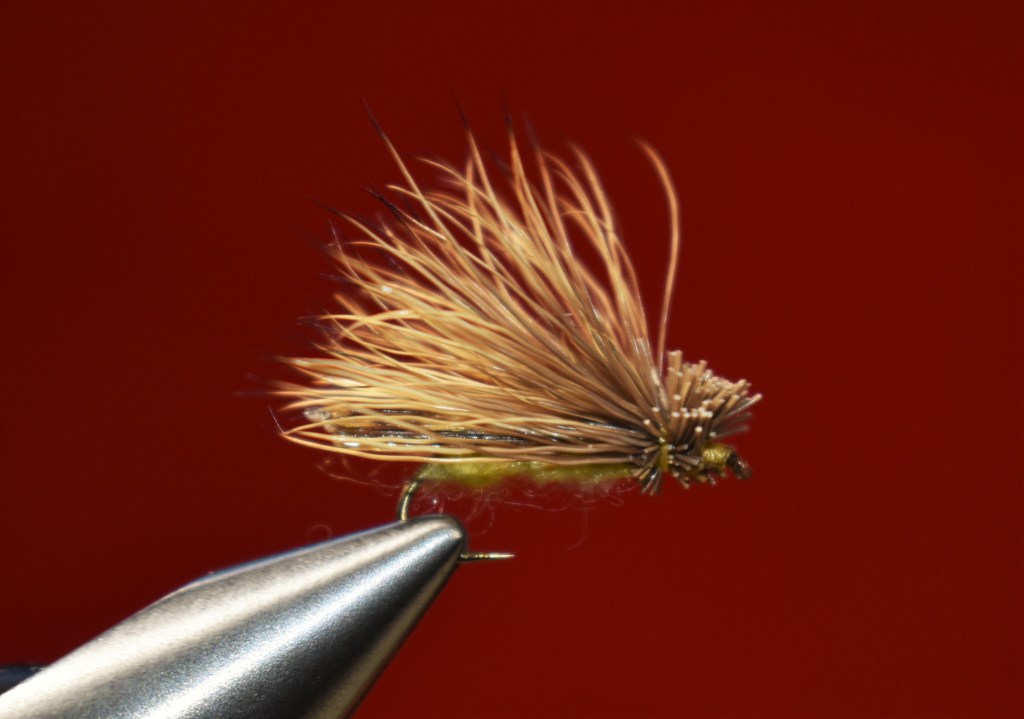
By the time I acquired a casting position, my final band of shade was less than one foot wide. The hopper glided out and landed right on the edge of light and shadow. It drifted slowly past untaken. Successive casts dissected that shade line from the edge all the way back to the bank itself. It seemed that no one was home.
I noticed that flood waters had formed a little subtle pocket downstream another forty feet, so I waded gently past my “last” target area and probed the dappled sunlit pocket carefully. I had made two or three unrewarded casts there when I saw a tiny little spit of water to my left, just on the edge of light and shade at the downstream end of the previous lie. Quickly shortening the line, I let the Queen do her thing and placed the Baby Hopper two inches back into that retreating shade line. The fly drifted a few inches before it was consumed in a chomp!
I still had more line out than I wanted, so I was stripping madly as a very pissed off brownie charged out into the sunlight headed for mid-river. There were loops of line flying as I stripped, gave line to his runs, then stripped again, somehow managing to keep free of tangles. Eventually, I got him on the reel. Distinct from the Hardy’s I so often fish, the Abel TR2 emits its own sweet music when spun by a running trophy brown!
Big, angry, electric golden and bronze, my sneaky shade trout wasn’t too happy in the net, though he shook off his mood when I slipped him back into the cool flow of the pool. I swear he glanced back over his shoulder and glared at me as he drifted back toward home.
I wrote several days ago about ignoring tiny little rises and disturbances in the river. When do I pay attention to them? When they are close to a proven lie!
 Bright Waters Catskill