
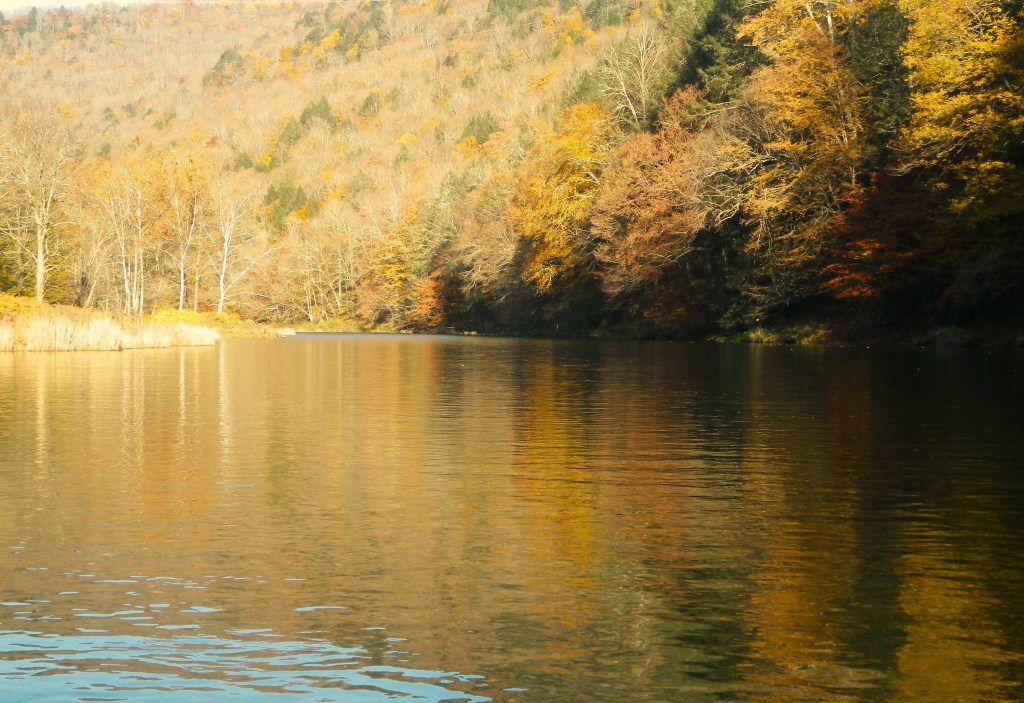
Thursday, October 24th here in Crooked Eddy, and that taste of Indian Summer has passed. Rather than temperatures spiraling toward eighty, this day will settle in close to the mark we have before dawn: fifty-two degrees.
I wandered the rivers throughout this week’s meteorological celebration, taking in the warm sunshine, in search of opportunities for the dry fly. Though a few presented themselves, all were fleeting, from Monday’s brief moving target, to Wednesday’s challenging doorway to bliss.
I cannot say I had no chance on that last day. As I sit and contemplate my fate, I play the moment back in my mind.

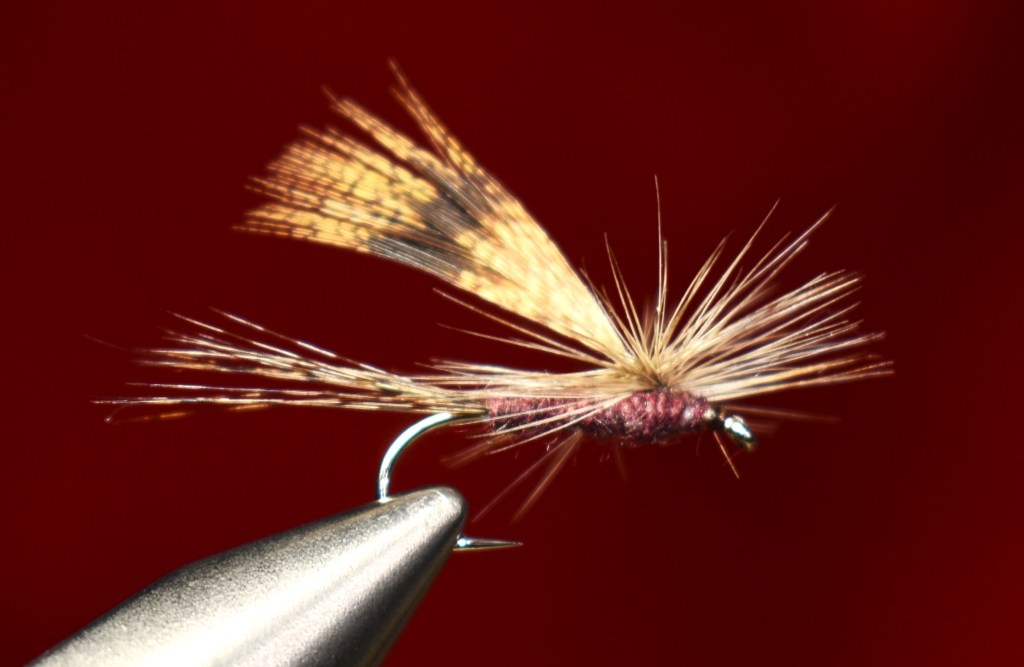
I was working upriver when the winds rose suddenly, turning the calm beauty of the afternoon into a whirlwind of leaves in the air and on the water. I had tied an Isonychia 100-Year Dun to my leader, an act of hope more than a play on some hidden knowledge, but when I saw a tall-winged mayfly drifting between the wind tossed leaves, I knew my choice had been sound.
Moving toward a familiar piece of cover, my eyes searched for pockets of calm along the shoreline. There were few of them, the surface repeatedly tossed by the gusts, and there were very few of those big flies. A handful of mayflies at this time of year, drifting through the closing hours of the dry fly season, spurred me to stalk and cast to each little oasis I managed to find.
My story is an old one, familiar to every angler. The glaring sun in my right eye, the unpredictable gusts accelerating from the steady blow adding challenges to an already unlikely endeavor, but this is the spark that makes the sporting life worthwhile. As one gust ended, I released the line and sent my fly toward a tiny corner along a windblown bank. As my shoulders turned, the hood shifted on my head, exposing my eye to that glare, just as a new minor gust hit my moving fly line. I believed my fly had landed on target, but my compromised vision could not fix it amid the drifting leaves. The take was quick and subtle, a coffee cup sized ring just on the edge of land and water, and my reaction was not the cool, well-planned pause and lift that breeds success.
I saw a few more isonychia duns as I fished on upriver, but no rises came to either natural or imitation there in the full strength of those late October winds. I fished back down that riverbank, though quickly as time was short. I kept asking for a few moments of calm, a second gift with which I might salvage the first one offered.
An Isonychia dun came wriggling past that same tiny corner and the water surged with the rise of the kind of trout I had fully expected to be holding there. I did my best to drift my fly repeatedly through that window, changed the pattern and tried again, but no fly I could offer would skitter and bounce twisting upon the surface the way that lone, irresistible mayfly had.
I struggled to fish out the afternoon, but it seemed as if every leaf in the forest had been directed into all of the primary lines of drift. There would be no second chance, however grateful I might be for the first.
 Bright Waters Catskill