
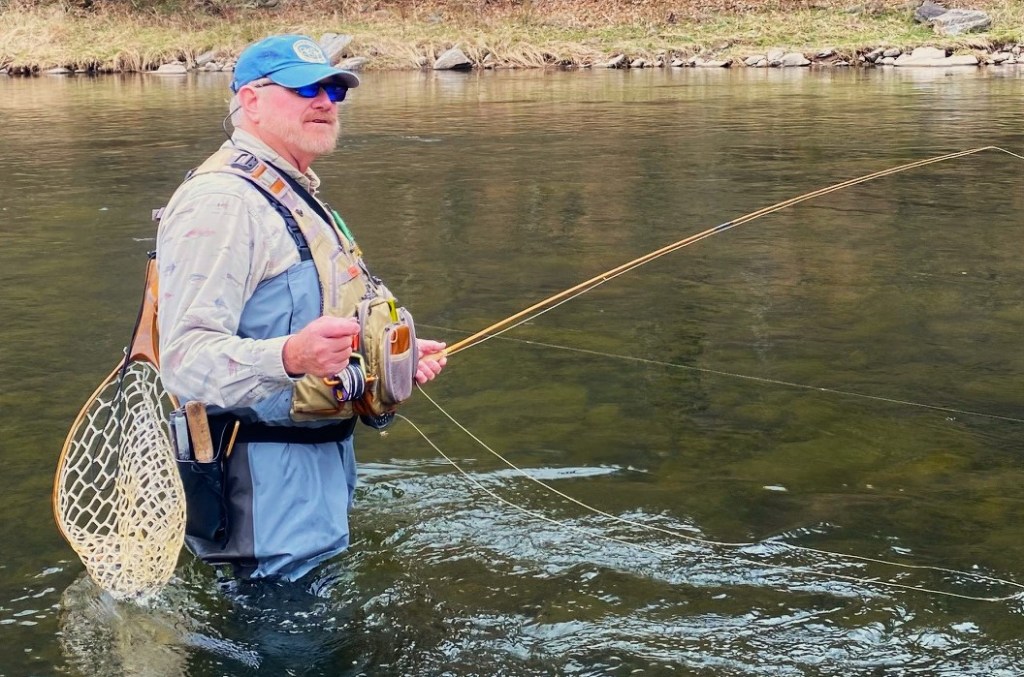
I will soon pass an anniversary date, one counting five years writing this blog. Time rolls by, season after season, and I still look forward to these mainly early morning hours to reflect and share my thoughts and impressions from the shrine of bright water. Retirement is truly a blessing, allowing me not just to achieve my oft uttered goal of fishing one full season upon the Catskill rivers of my heart, but to continue this life for six years running. To all who have visited and followed these meanderings, I thank you.

I should be tying flies today. There are ideas requiring action, and a few display flies to be crafted and photographed, but I am caught in that post-season whirlpool of scattered directions.
Tomorrow evening the Guild will be tying favorite caddis patterns, and at the very least I need to get out the materials I will use to tie a few of mine.
It has been a good expanse of years since I encountered a truly heavy caddis hatch, one of those that cause the trout to become maddeningly selective. The late Gary LaFontaine’s venerable Emergent Sparkle Pupa has proven to be without peer in these conditions! I count myself fortunate to have learned to tie this legendary fly from the man himself, a memory I shall always treasure.
Season in and season out though, I find sparse emergences, a handful of egg layers, or a brief flotilla of spent caddis on the water. One could carry an immense selection of patterns to copy all the sizes, colors and stages of these flies, but I do not. In truth, I designed an all-purpose pattern nigh on twenty years ago that suits my needs season after season. It has taken some prodigious trout!
I guarded this secret for fifteen years, a long span of time during which only four human beings walking trout waters knew the secret. I tied a few idly at Flyfest two years ago, then demonstrated it last winter during one of our Guild’s Zoom meetings. That came back to me with a smile a month or two ago when a young fly tyer pulled me aside at the autumn Roundtable to show me the flies he had tied from my instruction.

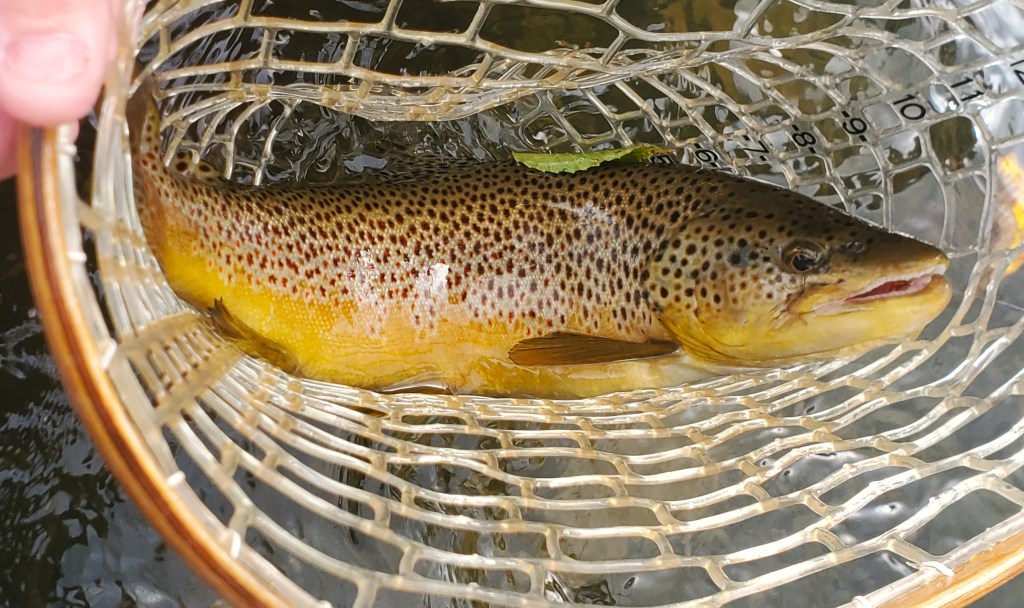
The fly I dubbed the CDX has landed my life’s largest wild trout, a true leviathan exceeding ten pounds. That fish took a size 18 tan pattern like the fly pictured above. A pair of Delaware River browns measured at better than two feet, a 25-inch Beaver Kill brown just last May; there are honestly too many to count. This little caddisfly has been the gift that keeps on giving!
I designed the CDX with inspiration from Craig Matthews X-Caddis, some classic Catskill patterns, and a great deal of fishing and observation. Trout slash at caddisflies because they are excited by their movement, the light sparkling from the gas bubbles that power their emergence, and their easily recognizable profile. My thought was to take advantage of all of these factors, to craft an easily tied pattern that would be versatile enough to fish effectively regardless of whether the natural flies were hatching, egg-laying or spent.
In these Catskills, I tie and fish the CDX for Grannoms, Shad Flies (Apple Caddis) both light and dark, Psilotreta (The Dark Blue Sedge), various tan and cinnamon caddis, springtime’s little black caddis and the tiny green caddis of summer. Color is important to me, and I blend specific dubbings to match each of these naturals. The formulas are generally a spiky fur blend such as fox fur with guard hairs from squirrel, a small amount of Antron dubbing and short chopped fibers of a coarser Antron yarn. All are chosen to get the color of the natural, adult caddisfly just right.
The dubbing blends require most of the work, but I simply blend a good supply of each and store them in small plastic zipper bags or dubbing dispenser boxes, each marked for the matching fly. Wings are CDC puff feathers, something that is still readily available in small sizes, but tougher to find in larger ones. Two puffs are the usual choice, tied in so the natural curve of the plumes depart from one another. If your puffs are too wispy for the size of fly you are imitating, add a third feather on top of the two spread wings that is centered along the hook shank. Match the natural fly’s wing color as best you can with the CDC.
Don’t listen to all of those fishing reports that publicize the wrong size flies for matching the caddis hatch! I have read and heard too much about the Shad Fly or Apple Caddis being sizes 14 and 16. Bunk! Look at the bug! The body length is typically commensurate with a standard size 18 dry fly hook. I have seen isolated cases when the match was a 16 or even a 20. Choose your dry fly hook to match the length of the body. The wings are tied longer to match the naturals and extend well past the end of the body, past the hook bend. Flying caddis appear larger because their wings are much longer than their bodies.
CDC gives the magic of movement, for the splayed wings play in the current and flutter with the breeze. I love barred hackles to complete the image of motion, choosing colors which complement the color of the fly’s wings and body. At first glance, one might assume my pattern has a trailing shuck, but I offer a fine distinction here. You will see trailing shucks on many dry flies and emergers, usually fairly heavy hanks of Z-Lon, Antron or another “sparkle” yarn. I did not design the CDX to have a trailing shuck. I wanted a few trailing air bubbles and a hint of sparkling light and motion. I think of this as a “bubble tail”, tied in short with just a few ragged fibers of crinkly Z-Lon or Antron yarn pulled over the edge of my scissor blade to add some crinkle. I don’t want a thing back there, just bubbles, light and motion!

You can start with a packaged dubbing if you don’t have the color from direct observation of the insects to blend your own. Blue Ribbon Flies’ Z-Lon Dubbing is available in a Hydropsyche Tan color that is excellent for a variety of our tan caddis. Their Brachycentrus is a nice match for the Grannoms. I have never encountered the perfect package of dubbing to match the Shad Flies. A few shops market apple green dubbing in soft beaver or rabbit fur. Start with that and add some short, light squirrel guard hairs, pale tan Antron dubbing and some chopped tan Antron yarn to make it “buggy”, with a little bit of sparkle.
I have many fond memories of days upon Catskill rivers with a Shad Fly CDX in size 18 tied to a 5X tippet on my bamboo rod. Try it out for yourself my friends!
 Bright Waters Catskill