
The sunshine has lit the landscape beautifully this morning and the village looks cheery! I’d rather have the sun melt the snow, allowing it to seep gently into the groundwater reserves than hang around for this week’s rain to turn the mountains’ white blanket into muddy runoff.
The Guild enjoyed a special live meeting yesterday, and afterwards a pot-luck dinner with the ladies and gentlemen of the Catskill Museum’s Board. The morning session got me into tying some quill bodied Hendricksons. Liking what I saw, I started in with a few more this morning.
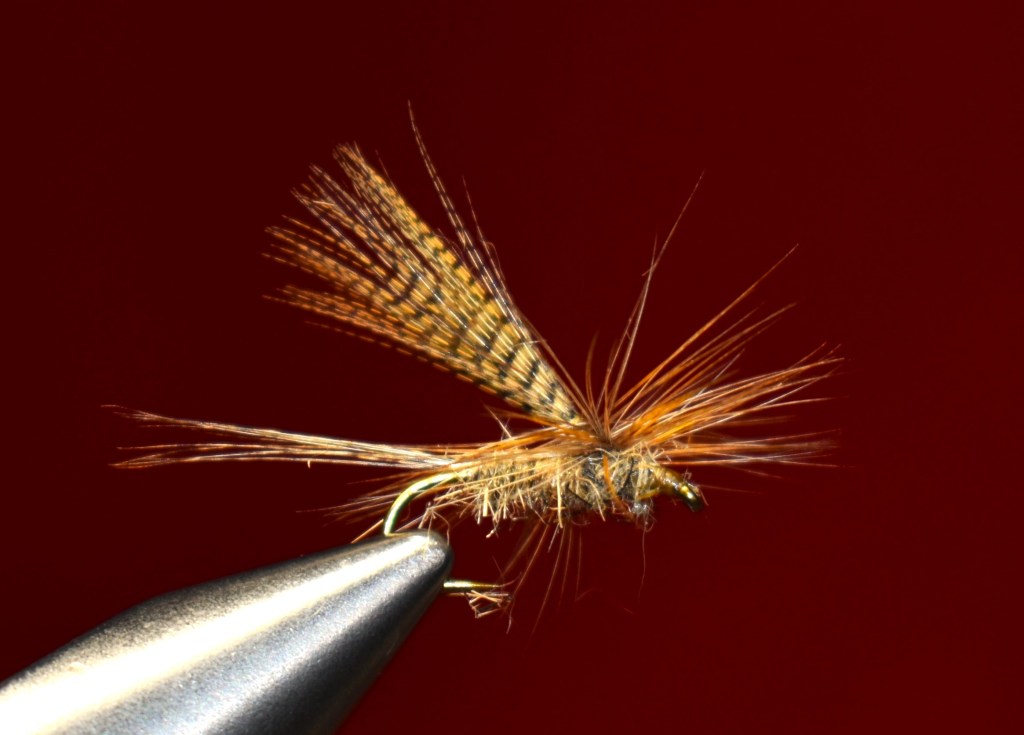
With the luxury of working at my home tying bench, I am free to coat the quill bodies with Hard as Hull cement, protecting them and making then glow! Quills so handled are best tied with a production technique I learned in my tying infancy from the great Ed Shenk. One ties in the tailing and the quill body, then coats that body with the chosen lacquer before setting it aside to dry, moving on to start the next fly. Once all are fully cured, the hooks are returned to the vise for wings, thorax dubbing and hackle. This systematic approach works well for patterns that require any curing time for finishes, glues, etc.

I tie the quill bodied dries in both my 100-Year Dun style as well as CDC Duns; both offering a tantalizing meal for difficult wild trout. I feel they excel in calm, clear water and good light conditions.
There are those times when a buggy pattern is more effective than the very natural appearance of the quills. Cloudy, low light days when there’s some tint to the water, or the trout targeted are rising in faster water often call for a more impressionistic fly. Such conditions make it more difficult for the trout to get a good look at your fly. The air bubbles trapped by a roughly dubbed, slightly sparkly body like my Atherton Inspired blends can trigger a good trout under these conditions. Both styles of fly provide a strong image of life, though I feel they work their best when matched to the variable conditions encountered on the river.

There is no doubt that choosing the right fly for the conditions is a key component to taking quality wild trout on our hard-fished catch and release waters. Science has finally acquiesced to something many of us have long believed: our fish are indeed getting harder to catch! Better and more thoughtfully chosen flies, greater skill in presentation, and stealth in wading and approach are the essential ingredients to success in the angler’s game.
With snowfall, winds and cold, we’ll not be perfecting our wading and casting for many months. Flies however can be designed and tied at our leisure during this indoor season.
I spend a good deal of time thinking about my fly designs and materials, looking to improve their performance. There are hundreds of sage anglers who have shared their thoughts through the written word. Many of the older books provide valuable insights to those who take the time to read them. You might be surprised to find that the most important ideas and techniques have been around for a century! Now doesn’t that fly in the face of the modern obsession with technology?
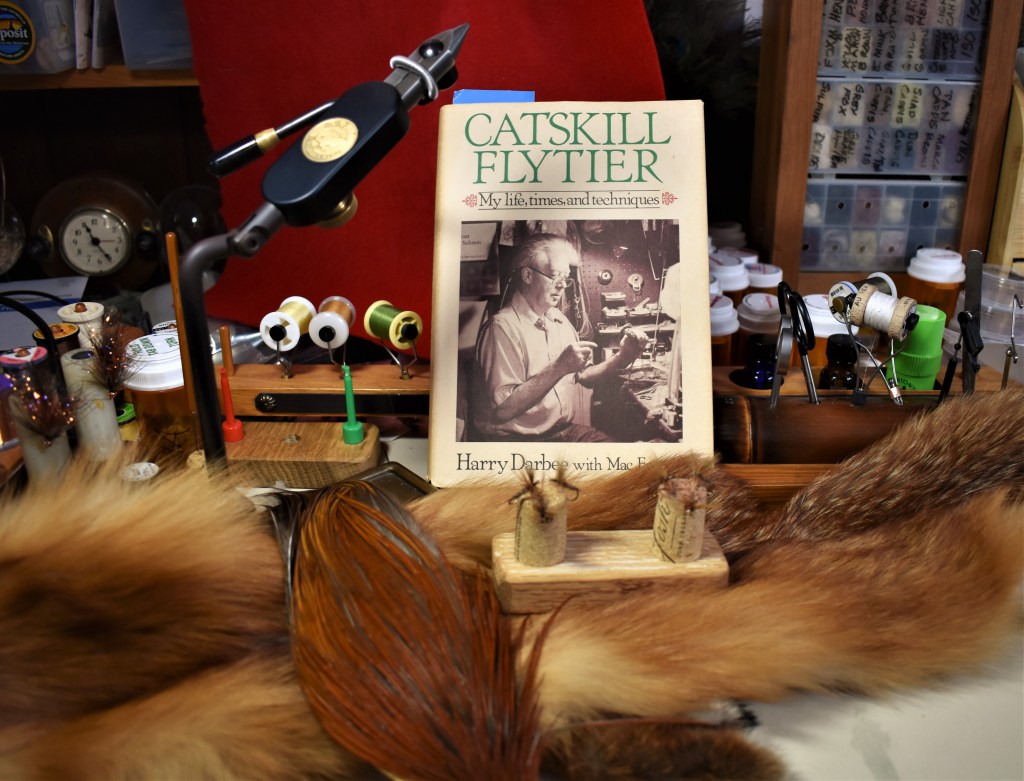
Want to keep your fascination with fly fishing active during the winter? Read an old, classic angling book or two. Study the classic Catskill flies and then take out your fly box and look at your own flies. Are your proportions correct? Colors? Are the bodies and hackles of your flies slim, sparse and well ephemeral? Consider all of the information you’ve gleaned the next time you sit down to tie a fly!
 Bright Waters Catskill