
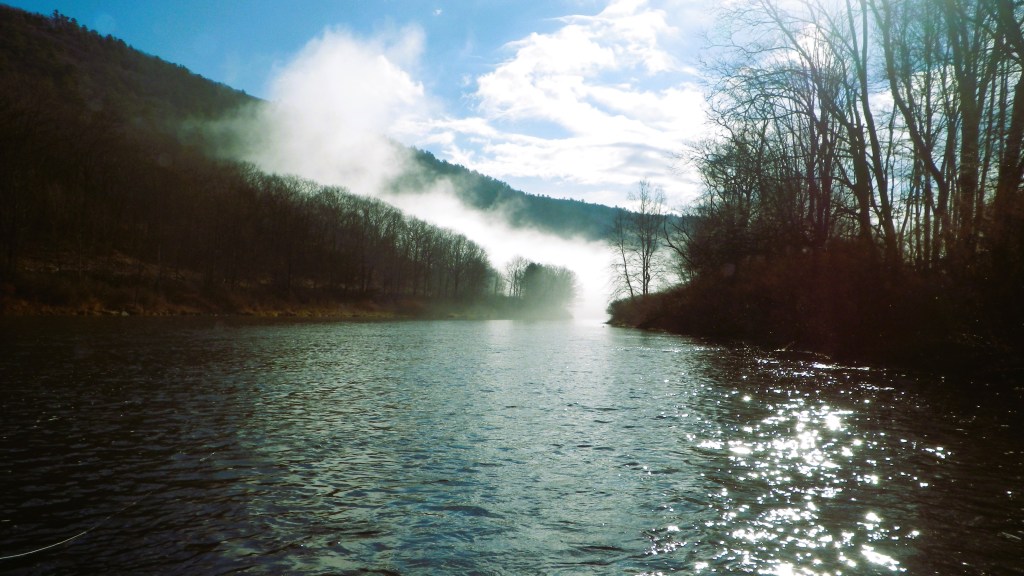
I guess I should have said winter activities are heating up, but I couldn’t resist. The next few days will actually be more frigid than the already cold weather we’ve been having here in the Catskills, with highs in the low teens and lows… well let’s not even think about the lows. I hope some of the next seventy-eight days will bring some sunny days in the forties, and sooner than later!
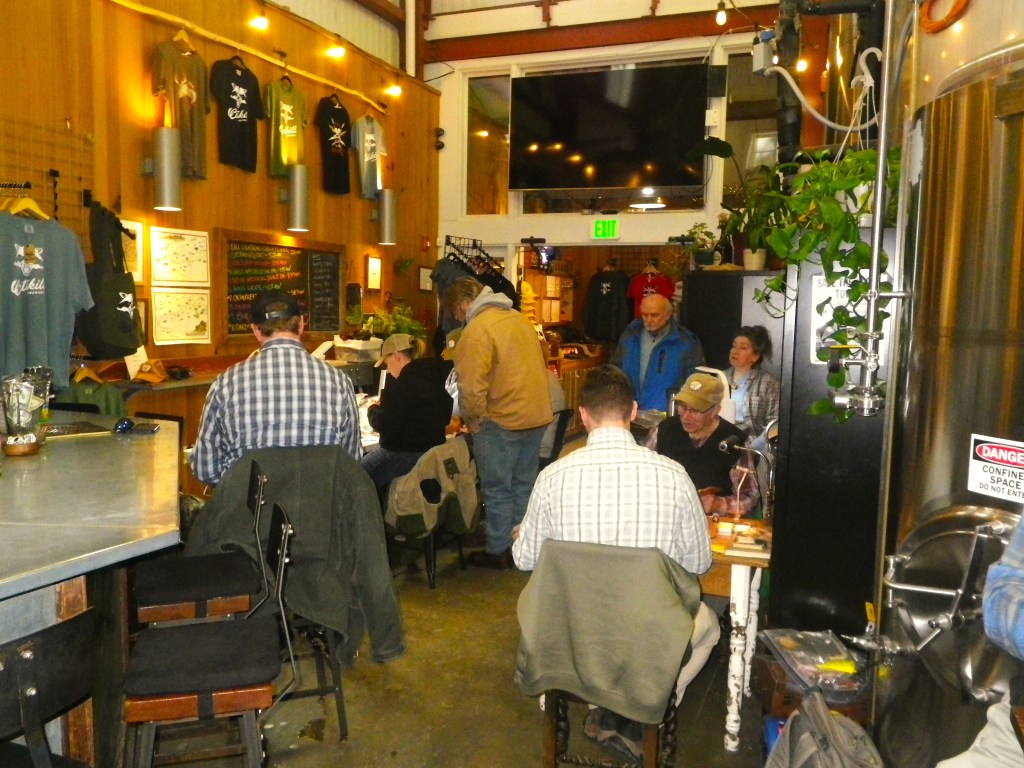
The Catskill Fly Tyers Guild held our first small group winter fly tying session on Saturday, through the kindness of the Catskill Brewery in Livingston Manor, New York. We had a great time, sharing fly patterns and techniques with interested folks and sampling Catskill’s wide array of refreshing craft beers!
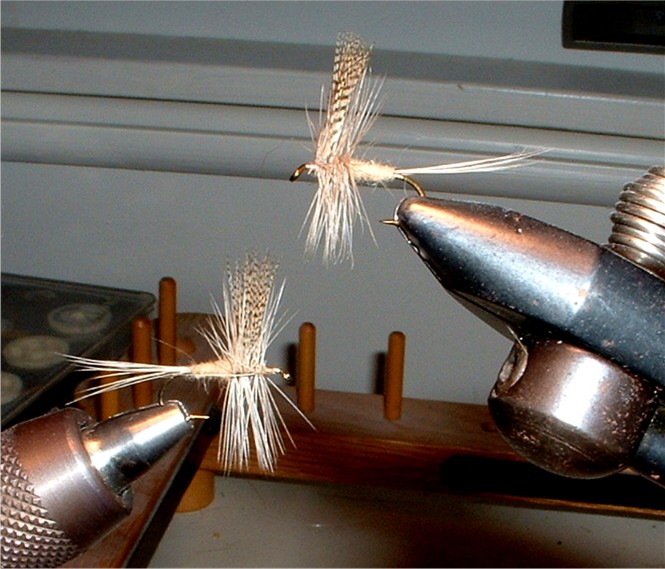
I had to make some preparations this morning for our Thursday evening Zoom meeting, where I will be presenting the classic Hendrickson dry fly to kick off the session. As typical among trout flies and fly tyers, even venerable classics like the Hendrickson are modified over time. I clarified that I would be tying what seems to be the most popular standard as tied by the incomparable Dette family of Catskill legend.
Roy Steenrod tied the original Hendrickson dry fly over a century ago, reportedly on the banks of Ferdon’s Eddy on the Beaver Kill. Fishing with friends, one of whom was noted angler A. E. Hendrickson, Steenrod tied a few flies to match the duns that hatched heavily that afternoon. He tailed his fly with barbules from a wood duck flank feather, winging it with the same, and dubbed the body with fawn colored fur from a Red Fox. His hackle was a scarse medium dun shade from a cock rooster. He named the pattern, which became quite popular, after his friend at a later time.
My standard Hendrickson is based on flies I purchased from Mary Dette three decades ago. I blended various shades of natural Red Fox fur with tan dyed beaver and a touch of Antron dubbing to match the color to the Dette flies, but there are variations even in the same pattern. Mary’s fly shows her beautiful upswept hackle barbs for the tail and a bit of cant to the wings. I purposely splay my tail fibers on nearly all of my dry flies, as I feel they float better and have a more natural light pattern. My wings are perpendicular to the hook shank as I was taught by Larry Duckwall, a well-known Catskill fly tyer and student of Elsie Darbee.
Many tyers think pink when they tie a Hendrickson, drawing on another modification credited to Art Flick, the famed tyer, angler, author, guide and innkeeper of the West Kill and Schoharie. It was Flick, the story goes, who used stiff dun hackle barbs for the tailing, replacing Steenrod’s softer wood duck fibers. He saw a pinkish cast to the duns hatching in his best loved waters, and tied his Hendricksons with the urine burned fur from the belly of a Red Fox vixen, to match that pinkish cast. I often tell people that I have never seen a pink Hendrickson in more than thirty years on Catskill rivers. All have been tan, some with hints of gray or olive or yellow at times, but decidedly tan.


My own primary hatch identifying information stems from “Hatches II”, the Al Caucci and Bob Nastasi classic angler’s entomology. Caucci identified five subspecies of Hendrickson mayflies with significant variations in size and color. In my own fishing, the primary hatches have been the tan fellows as pictured above, most often in a size 14. I have found some of these in size 12 on the lower Beaver Kill and on the Neversink tailwater. I commonly found a size 16 mayfly hatching later in the afternoons on the West Branch Delaware, as the numbers of tan Hendricksons (assumed to be Ephemerella subvaria) decreased. These I describe as being colored as old brick red. Perhaps another man’s pink? These do not match the flies called Red Quills, the males of E. subvaria which are anywhere from true red to a darker red shade.
In some years I have observed another size 16 fly, hatching along with the tan subvaria, these a darker brown with light tan markings and darker gray wings. I tie patterns with quill bodies I call Little Brown Hendricksons both in CDC Dun and 100-Year Dun styles to match them effectively.

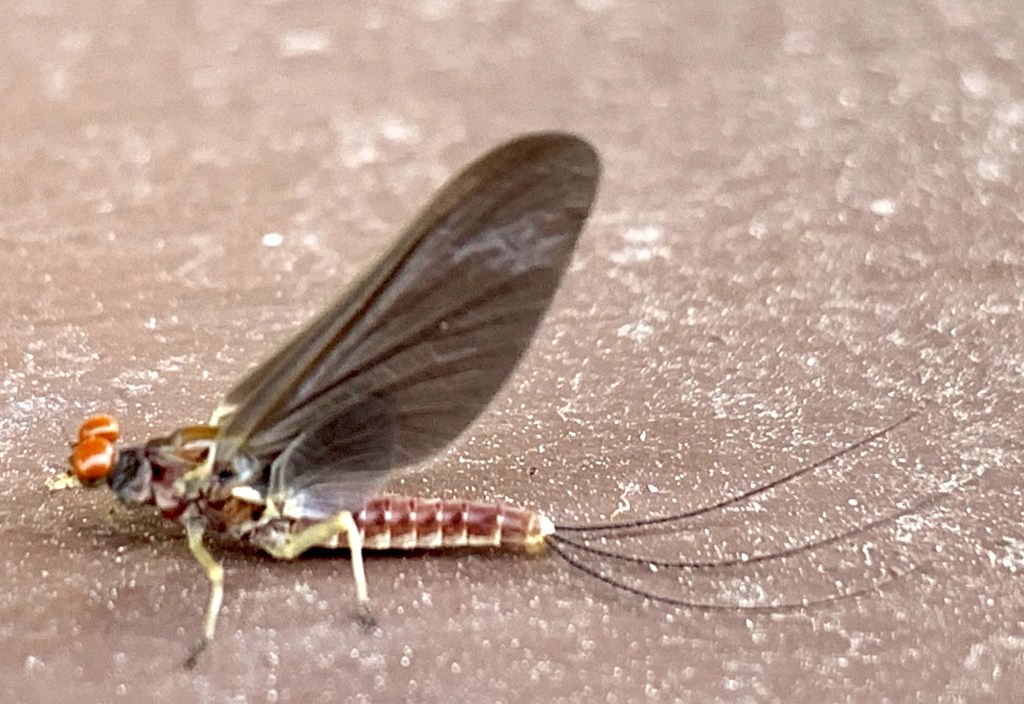
Once the Hendricksons, Red Quills, Little Browns and those old brick red duns have finished their emergences, I look to fish the last of these celebrated Hendrickson flies – the Lady H! A mixture of dark yellow and golden hues, this size 16 mayfly has gray wings and tails and looks much like the other Hendrickson mayflies. It seems they taste like them too, for the trout devour them whenever I find them. I have taken some of my best spring browns, heavy bodied fish of 24 to 25 inches long, when fishing this hatch with my 100-Year Duns, CDC Duns and Posters tied with my little dirty yellow Hendrickson dubbing blend!
I nearly forgot to mention an occasional visitor during the Subvaria hatch on the lower Beaver Kill. This mayfly has a reddish body and gray wings somewhat different from either the old brick red or Red Quills I have encountered. It is also the largest of the group, requiring a size 10 or a 1X long shank size 12 dry fly hook for the match.
Since Nature insists on so much wonderful variation within our best spring hatch, its no wonder that fly tyers craft so many variations of patterns!
 Bright Waters Catskill