Visions of Springtime

Hunting Rises
(Photo courtesy of Andrew Boryan)

I left my buddy to work the first good rises we found and continued my search. A few flies had started wriggling their way to the surface, and we both trusted to patience and stealth to bring rewards.

I waded down river gently, sticking to the edge and taking pains to prevent my passage from sending pressure waves out into the pool. I must have spent half an hour covering 75 feet of river, and the flies began to increase in number once I passed the head of the pool.

When the trout began to rise it was all at once, several of them, all within reach of a long cast. I worked the closest riser with my Hendrickson and he proved to be willing. A nice fish, perhaps fifteen inches, he made me concentrate much closer upon the riseforms scattered throughout the area. The next candidate to bend the bamboo was just a bit larger, the second to succumb to my Hendrickson.

A few Blue Quills mingled with the Hendricksons, and when I finally located a rise with less splash and more bulge, true to form he ignored the Hendrickson. My drift was good, but this fish was obviously interested in the smaller mayflies struggling in the film. A change to a Blue Quill Cripple proved to be just what he was looking for, though not until I downsized my tippet to 6X!

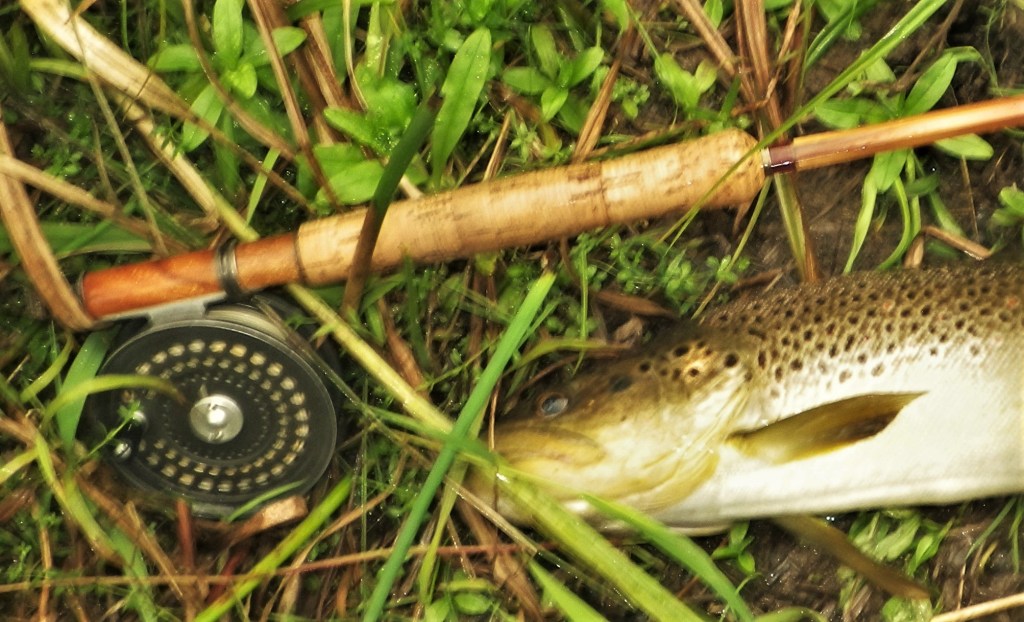
The Menscer bamboo rod bowed heavily when I tightened, and the old CFO sang his praises as he darted away down current. I did my best to pressure him away from the next pod of riseforms, ever conscious of the delicate tether we shared. He obliged by turning away from me, running out to the middle of the river. I was smiling broadly when I finally brought him to the net: twenty-one inches of golden bronze and dark-spotted muscle.
The Hendricksons were coming steadily, and though the battle had pushed several fish downstream, they weren’t so shy as to ignore Nature’s bounty. Ten gradual steps downstream put me within easy casting range of the first in line, and I studied his riseform carefully before casting. I judged this fish to be of decent size and had offered two drifts when my eye caught a heavy swirl and bulge in the next line of drift. A step down and a step out gave me the angle I wanted.

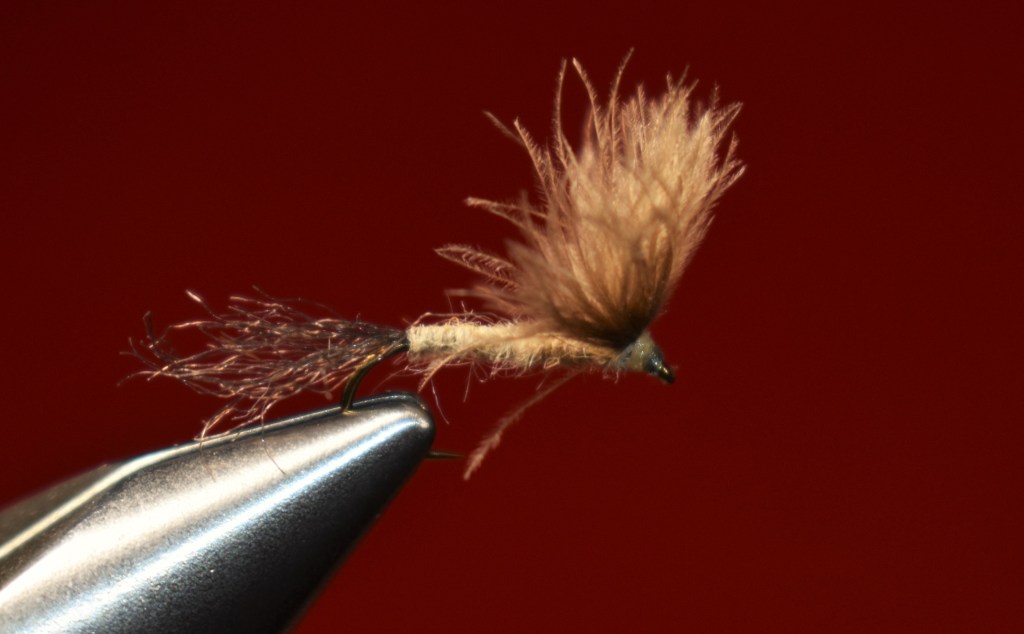
As the trout turned back to the drifting Hendrickson duns, I had knotted one of my CDC Sparkle Duns to my leader, allowing the fever of the hatch to prevent me from changing back to 5X tippet. An angler’s gamble, one born of countless experiences, some of which had led to victory, and others to defeat. I have waded many miles of rivers and well remember the expediency big trout often require.

Conventional wisdom would lead an angler to expect a larger trout to feed longer, taking advantage of a good hatch to take in all of the calories his bulk demands, yet often this is not the case. Perhaps it is their inert wariness that grows with the experience of years. I have found many such fish that rose just a handful of times before vanishing. It seems as if they feel you before you ever offer a cast. On this day, it would be 6X or nothing.

It required a couple of casts to match his rhythm, then perhaps two more to drift the fly teasingly to him, the flecks of light-carrying bubbles in the dubbing and the wavering fibers of the CDC wing convincing him, giving proof of life. When the cane arched, and the reel screamed to life, I knew the greatest finesse would be required to win this battle.

I fought the fish out in the secondary current that washes the shallow bank of that reach of river. There were no logs or brush piles as often populate the main flows at the foot of our steep riverbanks, but this pool has a fine complement of rocks and boulders in it’s gravelly bottom. I kept the rod shaft as close to a forty-five degree angle as possible, reacting quickly but gently to each turn of direction. If I could keep him working in that spring current and away from the sharp-edged boulders, I believed I could win the war; and so I did.

A deep, heavy bodied Catskill brown some twenty-three inches long can weigh in the vicinity of five pounds, and I agreed with that estimation as he lay glistening in the meshes of the net, a glorious gift of spring!
Ninety Days In The Cold

In my mind I’m listening to the power chords and Steve Marriot’s voice singing those words to the tune of the Humble Pie classic “Thirty Days In The Hole”, while my ears hear the gusty winter winds rattle the siding here at Crooked Eddy. Welcome to Day 90 on my own countdown to a hoped for Catskill spring.

Though I have yet to tie any flies this morning, I have some sense of accomplishment. I took care of my secretarial duties for the Catskill Fly Tyers Guild and made myself a schedule to follow up on a possible new location for our Saturday winter fly tying gatherings. The flies will come later.

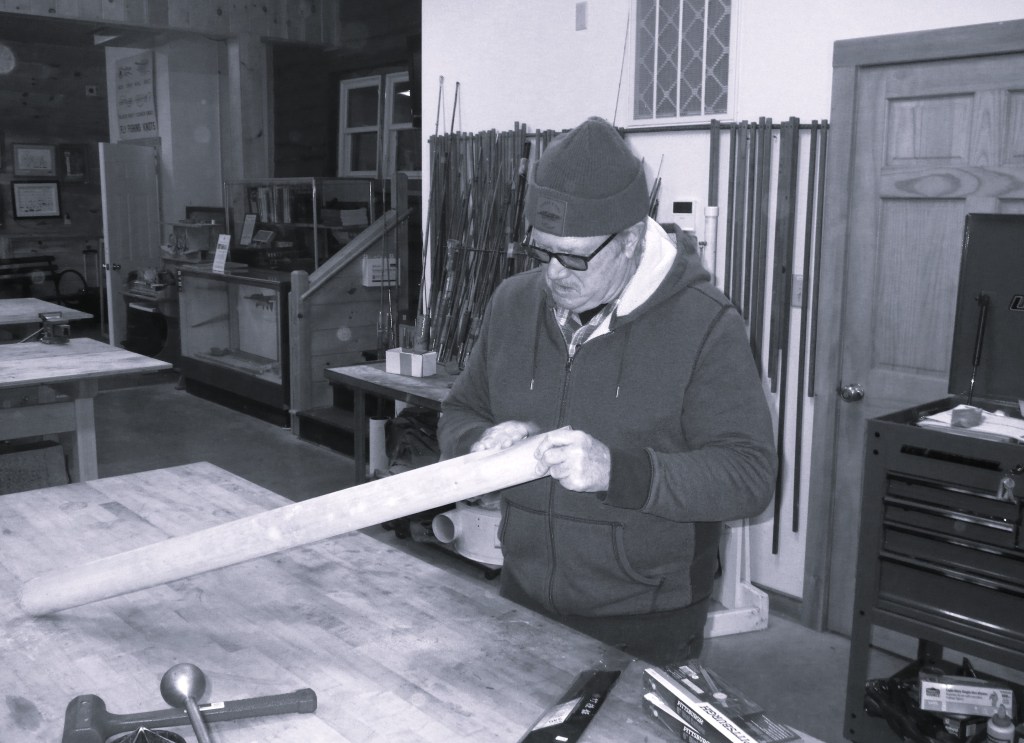
Beginning the journey: Sanding the 40-inch internode of Lo o bamboo that will emerge come springtime as a 7’9″ 3/2 fly rod. (Photo courtesy Ed Walsh)

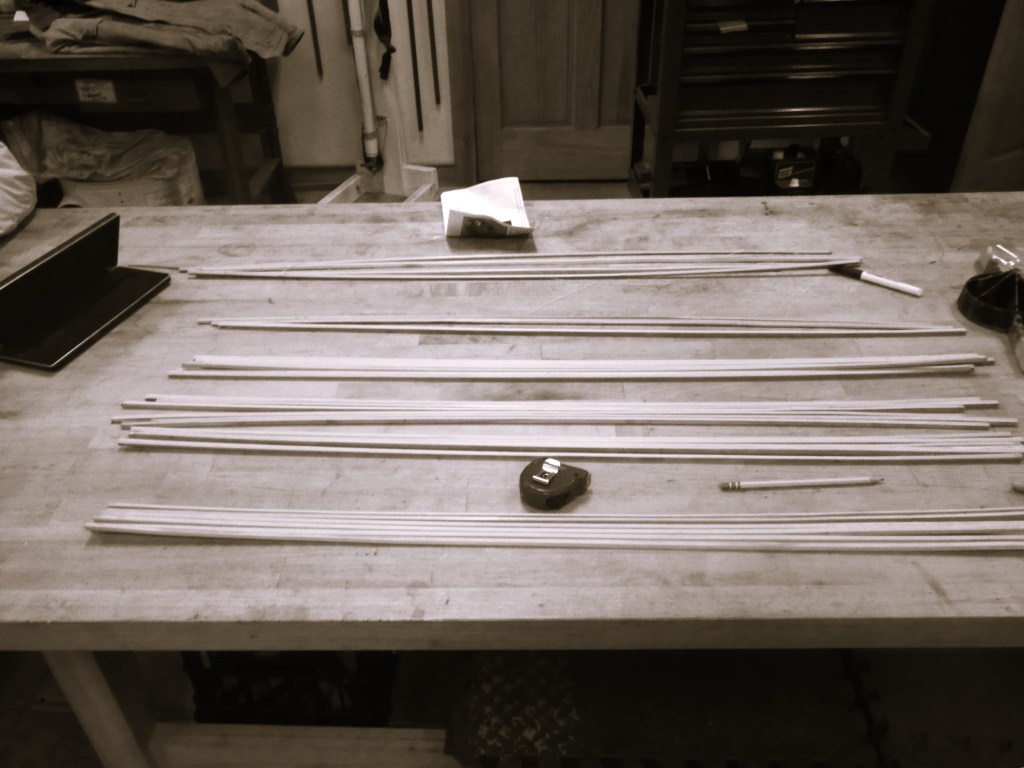
At last, the journey toward making my first split bamboo fly rod has become a reality. Last Saturday the work began with sanding the cane before splitting it into six wide working strips. These were moved to the band saw jig where they were cut into more than two dozen 1/4-inch-wide rod strips. Twenty-four finished strips are required to complete my three-piece rod with extra tip, so there are enough, along with a handful of spares to accommodate the expected mischief of the Red Gods.

Strips – January 4, 2025

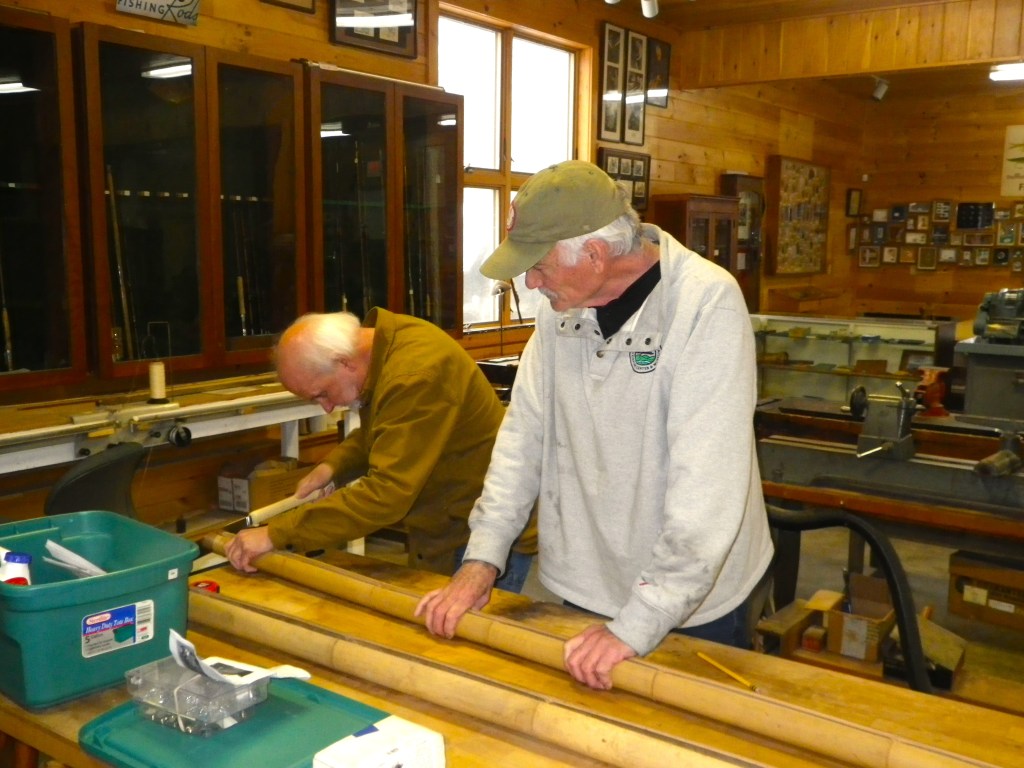
My friend JA guided me through these first processes, also mentoring our friend and Catskill Legend Dave Catizone whose quest is to build himself a rod from Jim Payne’s classic Model 100 taper. Dave is one of the gentlemen I look to as true scholars of Catskill fly fishing and fly tying, having known and worked beside most of the greats in our region’s considerable history. His knowledge and personality are wonderful assets to the Guild as well as the Catskill Fly Fishing Center and Museum.

Catskill Legend Dave Catizone saws a culm of Tonkin cane under the gaze of rod shop steward John Apgar.

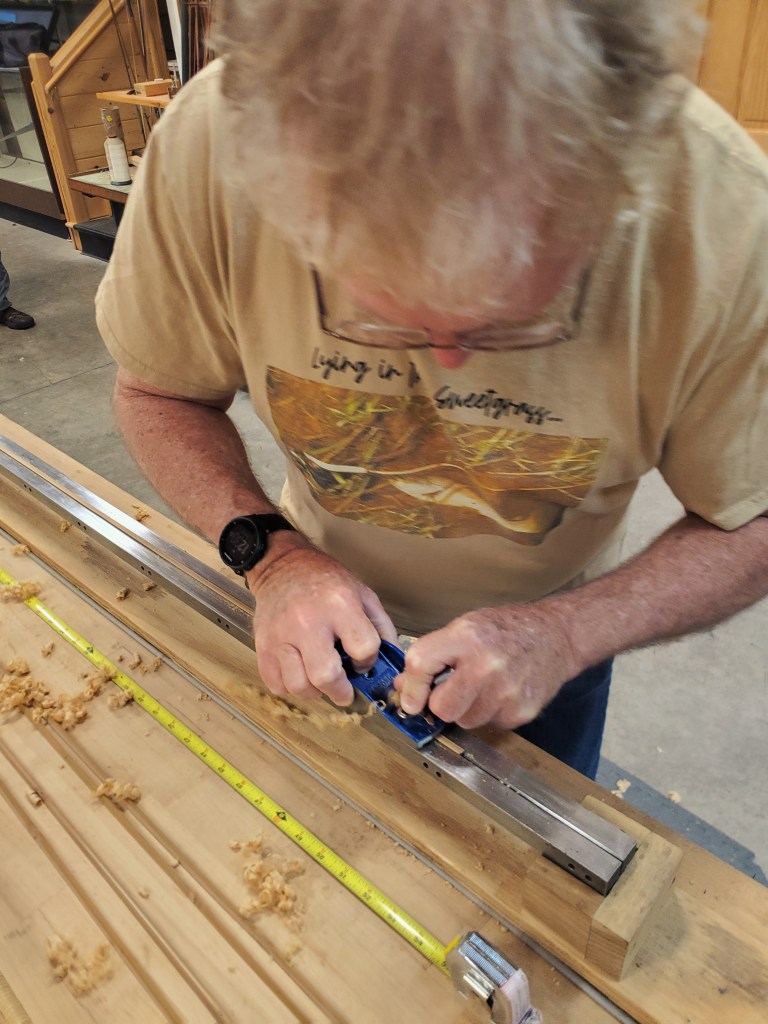
My next stage of rod work will be the initial beveling of those quarter inch rod strips to produce the 60-degree triangular strips that will be bound into four different rod sections: butt, mid-section, and a pair of tips. Once beveled and bound, all strips will be heat treated before the long hours of hand planing may begin.

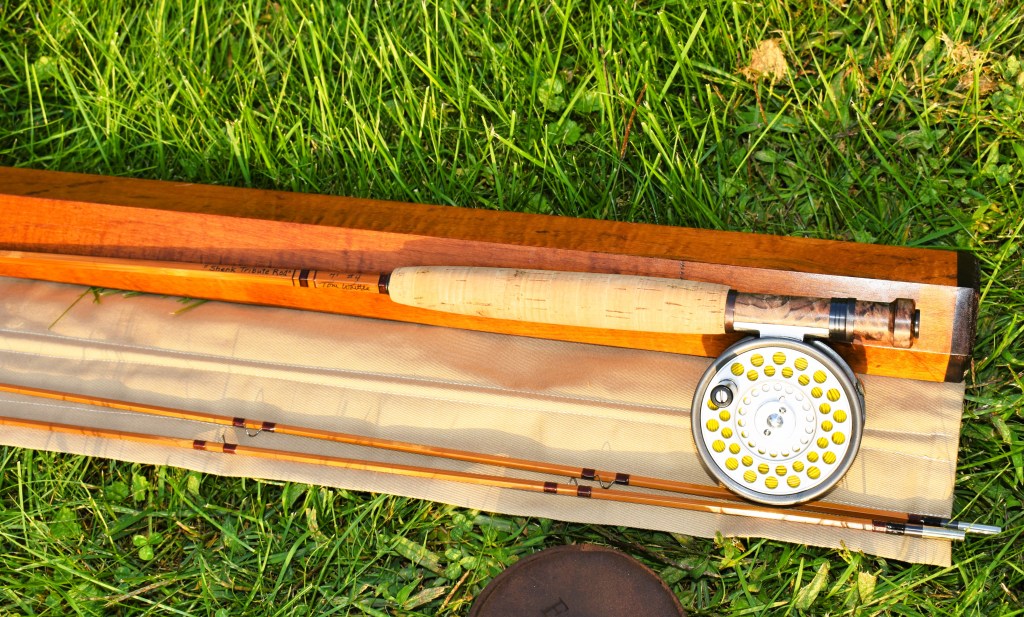
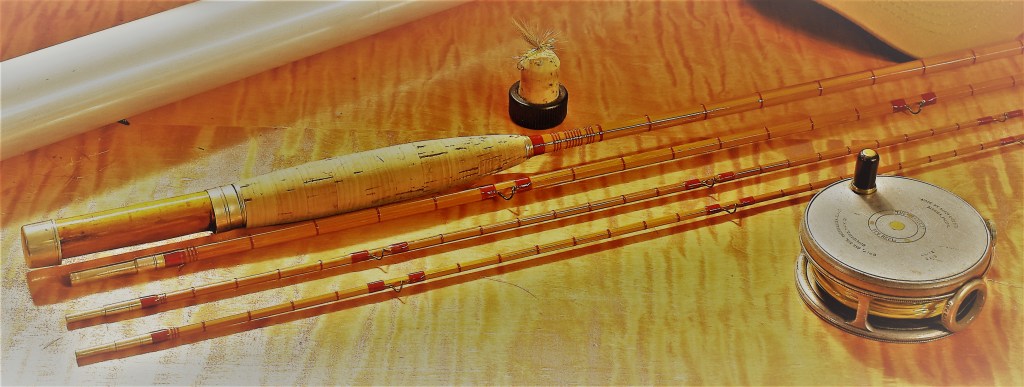
The Shenk Tribute Rod, designed and made by my friend Tom Whittle of Stony Creek Rods. I have chosen another of Tom’s rod tapers to build my 7’9″ fly rod.

I have found a reel to complement my rod, increasing my urgency to move along with the rod making process. That won’t cause spring to arrive any sooner of course, but it does stoke the fires of anticipation that carry me through the long months of ice and snow.

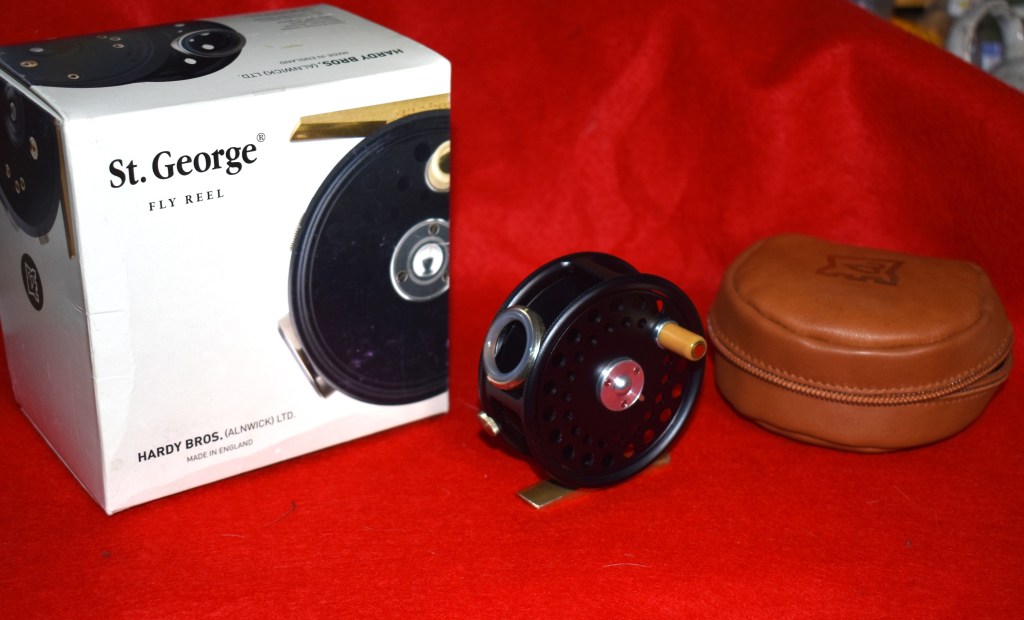
The classic Hardy St. George is my favorite reel, so what else could possibly adorn a rod crafted by my own hands?

Splitting Hairs

The Italian Roast has a chocolaty warmth as it rolls down my tongue, bringing me fully awake. I feel excited this morning, as today I will begin the rod conceived as the Angler’s Rest Special.

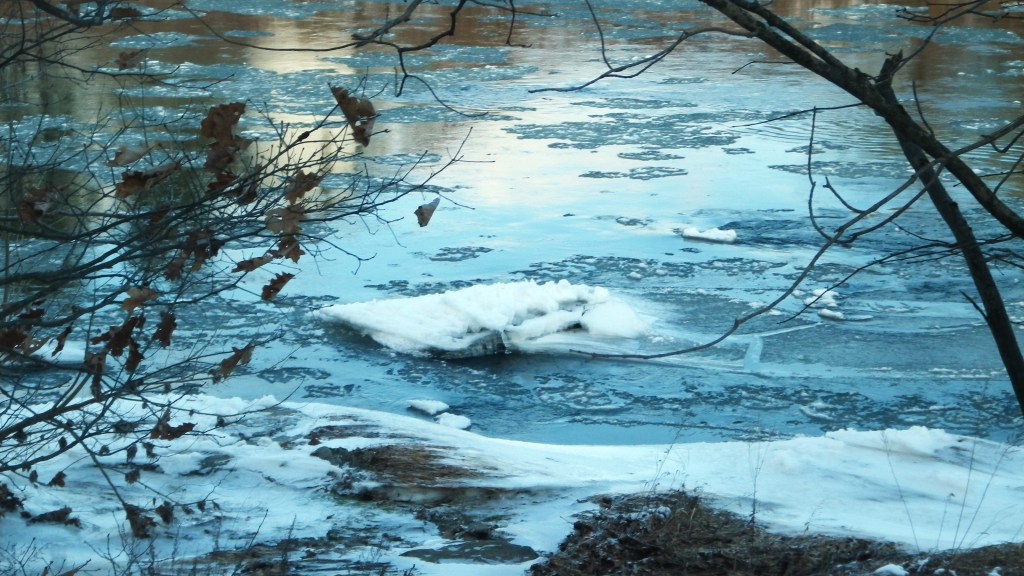
Waiting for the Holidays to pass, the winter has taken a deep hold. Rivers have ranged from icebound to high flows colored by rain heightened snowmelt. Today is not a fishing day; nor will tomorrow be… Yet, the excitement is there: anticipation, plans afoot!

I’ll gently sand the culm, cleaning it, and then begin the first crucial steps – splitting strips. If I execute this task to best advantage, I hope to end the day with somewhat more than 24 strips, enough for my 7′-9″three-piece rod and extra tip. Two tips are traditional, and practical. The diameter of my Lo o bamboo appears to be adequate, though with little margin for error. This Bambusa procera seems to split straight and clean, but my hands must learn this new precision on the fly.

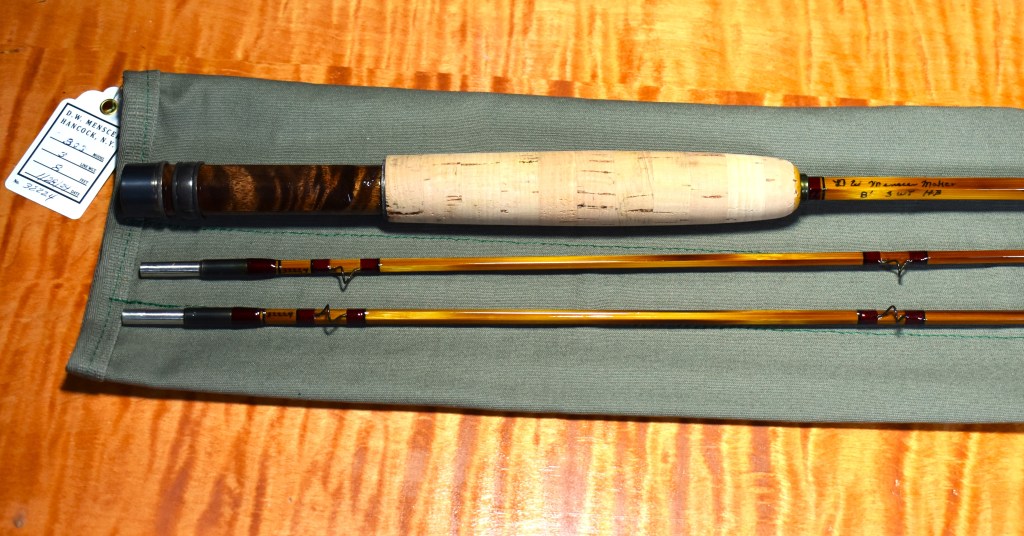
High aspirations: the magical wands of Master Rodmaker Dennis Menscer.

I look at the rods in my quiver, Dennis Menscer’s exquisitely crafted masterpieces, the elegant classic lines of the Leonards, the elegant homage to the Catskill tradition found in the Thomas & Thomas Paradigms, and to such I aspire. I know these are heights I will never reach, as this stage of life lacks the years required to strive for such perfection.

I am thankful to stand here at this juncture, and for the opportunity to try, for the friendships that have made it possible. Might I actually plane twenty-four strips of bamboo to tolerances of a thousandth of an inch? The quest begins…

January

Nature has once more pulled her white coverlet over Crooked Eddy, and I am tying flies with dreams of May…

Caddisflies have my concentration this morning, specifically the little CDX I designed years ago for the prolific Shadflies. Unfamiliar? Well, the name depends upon which valley of the Catskills, in which watershed you find them.

They were the first insects I encountered on the storied Beaver Kill more than three decades ago. Shadflies, named for the timing of their hatching, those weeks which usually brought the first shad migrations into the Delaware River system. The entomologists know the species as Brachycentrus appalachia, and if you’re wandering the West Branch or Mainstem of the Delaware you’ll find Apple caddis.

Up on the Beaver Kill all those years ago, I had found patterns for light shadflies and dark shadflies in the bins in the Dette’s front parlor. One of those lovely flies fooled my very first big Beaver Kill brown, but I wasn’t up to the task of landing him on my introduction to Barnhart’s Pool.

On the front porch of the bed and breakfast inn that housed me that very first trip, I blended a touch of dubbing with the bright green and caramel undertones, crafting a pair of Gary LaFontaine’s Emergent Sparkle Pupas before the rising breeze sought to blow my little store of materials away. Those two flies were the key to an epic day on the Acid Factory Run, and thus began my love affair with Catskill rivers and the Shadflies!

January Shads – CDX and the magic of memories…

The memories come flooding back which each turn of the thread, and shudders run up my spine with every wrap of hackle…

It’s a May morning, sunny, and I decided almost too late to visit a deserted reach of the Beaver Kill. The river here is a beautiful mix of bright, bubbling currents and mirror scape. As if destined to greet me, a good trout rises out where those currents blend. An eighteen CDX Shadfly has already been knotted to my tippet.

The fish takes on my second cast, shows his mettle with powerful runs and a signature leap. Gorgeous and strong when I release him and begin my walk upstream, the river quiet once more.

Along the flat border current of an edge seam, I find a soft and dainty ring! Shaking with anticipation, I work my way into deeper flows, and the cane flexes to propel the fly to Valhalla…

The gentle sipping rise becomes an eruption, and the forty-five year old bamboo arches heavily, bringing the Hardy to full chorus! For long moments we battle – the trout with incredible power, and I with careful leverage and finesse, until at last he is mine. Burnished bronze, gold and pearlescent white, made by God with the grace of Nature’s spotted palette, deep flanks heaving in the net, and I bow as I realize her flanks are better than two feet long…

Such are the memories of the shadflies.

Channeling Ernie

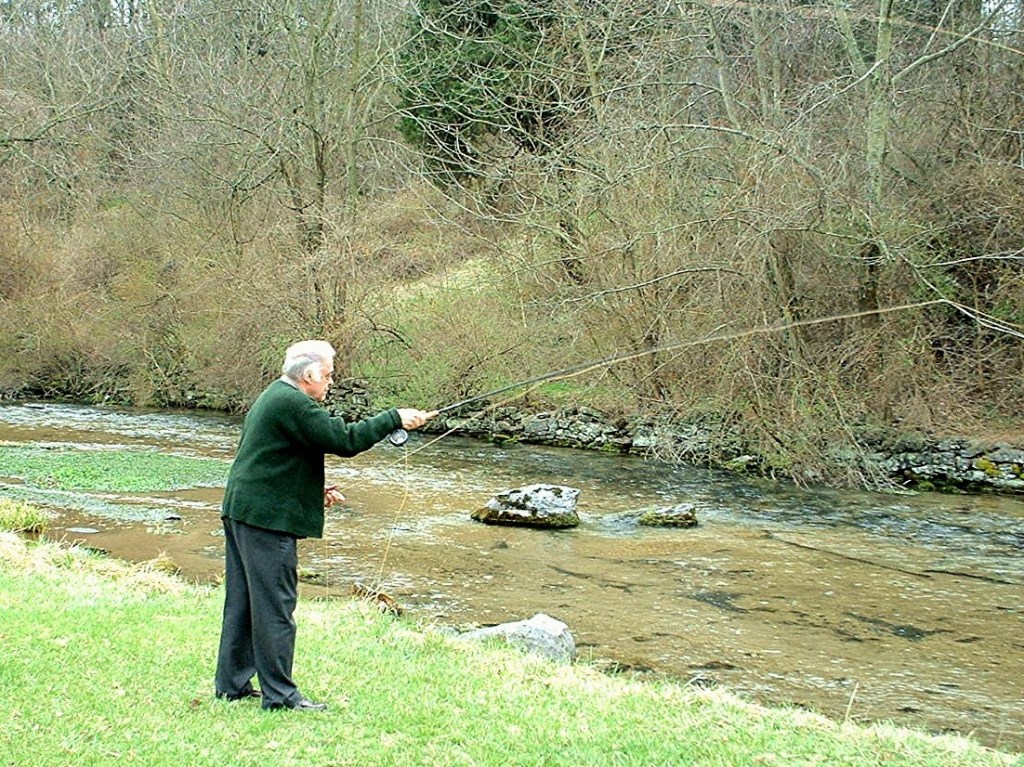
Ernest Schwiebert casting on Big Spring, Newville, Pennsylvania, April 5, 2003

I’ve been lost in his words once more…

Just yesterday the mail arrived with a book to add to my angling library: “The Complete Schwiebert” a 1990 compilation edited by John Merwin. I ripped away the packaging with gusto and settled in immediately!

A legendary angler, scholar, world traveler and captivating writer, Dr. Ernest G. Schwiebert, Jr. passed on just over nineteen years ago, on December 10, 2005. All who dream of tying and casting a fly owe Ernie a great debt, for he more than any other transcribed the essence of the magic we encounter on bright water.

From boyhood spent on rivers and streams in Michigan, he developed the inquiring mind and thoughtful intelligence that would lead him to a wholly remarkable life, a life he was thankfully inspired to share with his brothers of the angle.

I met him three times, the first in the infancy of my own angling journey. Then I found myself so awed that our conversation was brief and respectful. I failed to find the words to engage him in lengthy conversation, though his kind, gentlemanly manner offered the opportunity.

Our second meeting came at an angling book show in Carlisle, Pennsylvania where I was introduced by my mentor, the great fly tyer and angler Ed Shenk. The two were well acquainted from years earlier, seasons spent upon the nearby Letort. This time I managed a bit of small talk, offering praise for his books and questions regarding his current impressions of the fair limestone springs that had so fervently captured my heart.

Our third meeting was truly special. I had sat enthralled with his presentation at the annual banquet of the Fly Fishers Club of Harrisburg the night before and was surprised and delighted when he arrived at a gathering held streamside by the Big Spring Watershed Association the following afternoon. The group had finally convinced the Pennsylvania Department of Environmental Protection of the pollution from the Fish and Boat Commission’s ill-conceived hatchery that had been strangling this legendary limestoner for decades. Schwiebert, ever the conservationist, retained a deep affection for the Cumberland Valley spring creeks, and was interested to see what was being done to protect and restore these legendary waters.

We walked along the stream and talked, one on one for a couple of hours, he borrowing a rod to make a few symbolic casts at one point. We spoke of the troubles of Big Spring and the need to shutter the State’s hatchery, as well as the first positive signs of recovery. He mentioned some successes with restoration efforts on the historic Broadhead’s Creek. As the first President of the Henryville Flyfishers, he had a long history with that hallowed ribbon of trout water.

In his 1998 book chronicling that history, Schwiebert made a valid case for the Broadhead’s place as a focal point for the beginnings of fly fishing in America. It was clear from his conversation that he remained haunted by that lovely stream, and he urged me to fish it when I divulged the deep interest in our angling history which had drawn me to the Cumberland Valley.

The Big Spring restoration worked for a time with Nature’s grace. A decade after my walk with Ernie, my slender bamboo rod brought ten pounds of wild rainbow to hand!

I didn’t manage to find my way to Broadhead’s Creek during those next two years, and my heart sank to read of Schwiebert’s passing late in 2005. I still have not made the journey.

When this New Year 2025 draws nigh to it’s close, the twentieth anniversary of his death will stand before us. Time seems to pass in brilliant flashes. Perhaps this year I will make my way to Ernie’s Broadhead’s at last; to cast a fly and offer thanks for all of the beauty he shared with us!